The Intensifying Crackdown in Russia

Varvara Volkova

“My friends died at the hands of Russian soldiers. Why can’t I talk about it?” 

This question will cost Varvara Volkova 7 years in a Russian penal colony. Here’s her story.

Varvara was a flight attendant, not an impassioned political activist. In a neighbourhood chat, she stated the obvious: Russian forces are killing civilians in Ukraine. The prosecution framed it as “fake news” motivated by hatred toward the armed forces, and the court accepted it.

The mechanism used to go after her relies on a Soviet-style culture of snitching: a Russian tank driver complained about her comments, then a professional informer, who intentionally hunts dissidents, amplified the case and demanded she be jailed.

In fact, there’s a whole network of these informers — they call themselves “SMERSH.” For those who don’t know Russian history, it is a reference to Stalin’s WWII counter-intelligence service. It means “Death to Spies” — a direct revival of the terror methods of the 1930s. They published screenshots of her messages everywhere trying to ruin her life; claimed she called the soldier a “fascist”; said she offered to make tea for Ukrainian soldiers if they reached the Moscow region. For words spoken in anger, the system decided to smash her life to pieces.

There is a grim irony in this tragedy: the regime destroyed Varvara to protect the “honor” of the military and her accuser. But the tank driver who reported her is already dead: he was killed in the war earlier this March. 

Observers abroad often underestimate the price of resistance in today’s Russia. It is not just a fine anymore, but years and years of one’s life. Varvara Volkova shows us the true bill — and it is devastating. 

I track the consequences of speech in modern-day Russia, make sure to follow for more updates.

Source: Khodorkovsky Communications Center (Facebook), 25 November 2025


Preface by the Editorial Board: Below we publish the translation of an article of our Russian comrades about state repression in their country. The article reports, among others, about the situation of comrade Felix Eliseev. He has been in prison for 2.5 years as part of a 14-year prison term. Felix was sentenced for “treason” as he was accused of making propaganda against Putin’s imperialist war against Ukraine and sending money to Ukraine to buy weapons. While the prison authorities do everything to break him, Felix does not lose his spirit and endures his imprisonment stoically. (See https://www.thecommunists.net/rcit/felix-eliseev-a-revolutionary-communist-in-russian-prison/)

We call readers to support Felix by spreading this information about a communist and anti-fascist serving an unjust sentence!

You can also support Felix financially at www.paypal.me/irinablackbook, with the note “for Felix”.

* * * * *

According to the human rights organization Memorial, there are currently over 1,000 political prisoners in Russia, while other groups estimate the number could be as high as 2,500. This number is three times higher than in 2020, more than twice as high as in 2022, and continues to grow. In 2025, there was a sharp increase in criminal cases under articles on “justification of terrorism,” “sponsoring terrorist activity,” and “treason.” This is not due to increased terrorism, but to the fact that the security forces, having perfected their repression mechanisms, have begun to intensify their crackdown on “sponsorship” cases, such as those of the FBK (Anti-Corruption Foundation, recognized as an extremist organization in Russia) or cases related to money transfers to the Ukrainian army, which occurred back in 2022. The term “terrorism” itself has become so vague that even the average person doesn’t always understand what it actually means.

Among political prisoners are many individuals with progressive leftist views, serving time for anti-war activities or “inaccurate” public statements online. The “Foundation for Support of Left-Wing Political Prisoners” provides support to at least some of these individuals. Among them are: defendants in the “Tyumen Case”; defendants in the “Chita Case”; Anton Orlov, a trade union and leftist activist, coordinator of the independent medical workers’ union “Action” in Bashkortostan; Daria Kozyreva, an activist from St. Petersburg known for her anti-war protests and criticism of the Russian army; Gagik Grigoryan, a young activist imprisoned in 2023 at the age of 17; Azat Miftakhov is a Russian mathematician and anarchist, sentenced in 2021 to six years in prison for allegedly setting fire to the United Russia office in 2018. After serving this sentence, he was arrested again in 2023 on charges of “justifying terrorism” in a private conversation with a prison cellmate and sentenced to four years in prison; defendants in the “Kansk teenagers case”; defendants in the “Network case”; Boris Kagarlitsky is a left-wing publicist known in many parts of the world; Ruslan Ushakov is the author of articles published on opposition Telegram channels, sentenced to eight years in prison for posts in a public chat.

The case of the communist Felix Eliseev

Another political prisoner is Felix Eliseev, a Russian communist, blogger, and administrator of the Telegram channels “She Fell Apart” and “Kolkhoznoye Madness.” He was arrested in December 2022 and charged with justifying terrorism. According to investigators, Eliseev posted two anti-war posts on his Telegram channel, one of which endorsed a Ukrainian Armed Forces helicopter strike on an oil depot in Belgorod. The charges were later upgraded, and Eliseev was charged with “treason”. The court alleges that he transferred funds through a cryptocurrency account to a “curator,” who used the funds to purchase equipment and weapons for Ukrainian Armed Forces soldiers.

Felix, like many other political prisoners convicted of “terrorist and extremist” offenses, is serving his sentence under intense pressure from the prison administration. He is regularly placed in solitary confinement cells, where they do everything they can to break him mentally and physically.

However, political repression in Russia involves more than just horrific criminal cases of “terrorism,” “treason,” and other “betrayals of the nation.” It also includes the persecution of undesirable and dissenting youth who dare publicly speak out against the war and the ruling elite, thereby gathering many other concerned young people around them.

The “Stop Time” case

One example of such government abuse is the “Stop Time” case. The “Stop Time” case concerns the persecution by Russian authorities of members of the St. Petersburg street music group “Stop Time” – Diana Loginova (pseudonym Naoko), Alexander Orlov, and Vladislav Leontyev – for their participation in impromptu concerts, including one near the Ploshchad Vosstaniya metro station, where they performed anti-war songs by artists designated by the authorities as “foreign agents.” On October 16, 2025, Loginova was arrested and sentenced to 13 days of administrative arrest for performing a song by an artist unpopular with the authorities. The other members of the band were also arrested and sentenced to 12-13 days. These events resonated in the media (both pro-government and opposition) and society, becoming a topic of discussion in the context of artistic freedom and the tightening of censorship in modern Russia.

On October 29-30, the musicians received another 12-13 days of arrest, and on November 11, two of them were arrested for another 13 days. On November 23, the musicians were released from arrest. The lead singer and one of the band members left Russia that same day.

In many Russian cities, street bands followed “Stop Time’s” example and performed opposition songs by artists-foreign agents to large audiences in public squares. They also faced pressure from the authorities and harassment from Z-Neanderthals.

Also, recently, spiders in a jar have started eating each other. Criminal cases have been brought against several well-known military Z-bloggers for discrediting the army! More than two years after Strelkov’s imprisonment and Prigozhin’s murder, a new steamroller of repression is purging those loyalists who are too undesirable.

All of the above demonstrates that Russian society has no legal means to publicly express its attitude toward the events unfolding around it. For any word “against,” the sword of Damocles of Russian justice hangs over every citizen. Despite this, concerned Russians, especially young people, are finding ways to rally together and show the world that not all is lost in this country.

Meanwhile, cowardly security officials and government officials tremble at the mere thought that the masses will sooner or later awaken from their slumber and rise to deliver justice to the imperialist oppressors in the Kremlin. In Russia, literal punishments are being introduced for thought crimes. Thus, in September of this year, an administrative law punishing “searching for extremist materials” came into force. This law allows the FSB to view any citizen’s internet search history, and if it contains views of materials deemed extremist or terrorist, the user faces a visit from masked officers and a fine. The first cases under this law have already been filed.

Furthermore, the country is introducing a so-called “white list” for the internet—only those websites approved by Roskomnadzor are permitted to be accessed; others are inaccessible, and VPNs cannot be connected. So far, in the spirit of Russian tradition, this system is poorly functioning and flawed, but the day is not far off when Russian society will find itself locked in a “cheburnet.” (*)

Freedom for political prisoners!

For freedom of speech, conscience, and the internet!

Down with political repression!

Radical democratization of the country, not the fascist regime of a dictator!

All power to the working class and the working masses, not to a handful of oligarchic monopolists!

(*) Cheburnet is a mixture of two words: Чебурашка (Cheburashka) and internet. Cheburashka is a character from Soviet cartoon for children. Despite it is kind and helpful, in modern mass consciousness it is associated with Soviet censorship. So cheburnet basicaly means internet under the censorship of Russian government and intelligence agencies.
Source: Communist Tendency (RCIT Section in Russia), “Political Repression in Russia,” Revolutionary Communist International Tendency, 25 November 2025


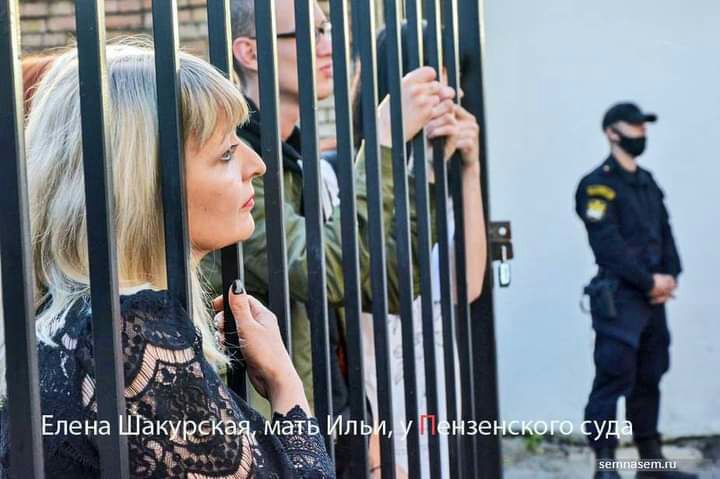
An appeal from Elena, mother of Ilya Shakursky:

My name is Elena Nikolaevna Bogatova, and I am the mother of political prisoner Ilya Alexandrovich Shakursky. I am crying out for help to save my son so that he does not rot away in solitary confinement.

They took my only son away when he was twenty-one years old. He is now twenty-nine. He has been tortured. He has serious health problems that we still cannot solve. He still has eight years to serve, and they could turn him into a disabled person. I cannot help him on my own, so I am asking all caring people to help us.

It is impossible for a mother to know that her child is being destroyed, and that she cannot save him!

Although he committed no crime, he is in prison under the harsh Article 205 [of the Russian Criminal Code; Article 205 proscribes “terrorist acts”], enduring all the hardships of prison life, without ever receiving any encouragement; we cannot even hope for parole. Right now, [the prison authorities] want to turn him into repeat offender so that he cannot have any visits, phone calls, letters, or packages. They want to take everything away from him.

I ask you to write an appeal. I understand that there are many of us now, and everyone is exhausted. But we must stand together for the sake of our loved ones, for the sake of the younger generation, which is currently being destroyed. Hear the cry of a mother who cannot bear the pain for her son and for all those behind bars. If we push with our shoulders, the walls will collapse….

https://t.me/ilyashakursky

Source: Elena Shakurskaya (Facebook), 28 November 2025. Translated by the Russian Reader


OVD-Info Faces a Critical Situation: We Have Lost All Our Ruble Donations

26.11.2025

Russian payment services have refused to continue working with us, without providing any explanation, and have cut off our ability to accept one-time and recurring donations. This has severed our connection to our main source of support—the 12,000 individuals who regularly transfer money to OVD-Info.

The services’ refusal to cooperate with us is one of the many manifestations of state pressure on human rights organizations and independent media. Some of them even had to close due to the loss of donations in rubles.

This is a severe blow to our work. With these donations we were able to pay for the work of defense lawyers and legal experts, travel to the regions, maintain our free hotline, and help those who are politically persecuted in Russia. Furthermore, regular donations allowed us to plan our long-term work and development.

We do not plan to close or reduce the scope of our work, because repression is not diminishing. Any political activity, expressing a view against the invasion of Ukraine, or criticism of Putin instantly becomes grounds for persecution. We simply cannot abandon Russians to face this brutal, repressive system alone. We are defending over 90 defendants in criminal cases, almost every day we send lawyers to police stations, courts, searches, penal colonies, and pre-trial detention centers. We answer dozens of messages and calls daily—and we want to continue doing this.

However, now everything depends on whether we can find another 12,000 people who will regularly support OVD-Info.

You can support us here.

Source: OVD Info


Yulia Lemeshchenko. Photo from the Memorial website

The Second Western Military District court in Moscow last week sentenced Yulia Lemeshchenko to 19 years’ imprisonment for high treason, sabotage, and preparing and training for an act of terrorism.

Yulia, 42, is a Russian citizen, born in Staryi Oskol, in Belgorod region. She lived in Voronezh in southern Russia, until 2014. Then she moved to Kharkiv, Ukraine, with her son and her husband, who had found work there. Later on the couple separated.

Yulia took up powerlifting and in 2021 was named Ukrainian women’s champion.

In 2024 Yulia did military training in Kyiv – firearms, explosives and flying drones – and returned to Russia, via a third country. She sabotaged power transmission infrastructure near St Petersburg, and in Voronezh conducted surveillance on Aleksei Lobodoi, an air force commander responsible for bombing Kharkiv.

Yulia was arrested in January this year. She did not deny the facts outlined in the prosecution case, but told the court that “from a moral standpoint” she considered herself not guilty. This is a translation of her final statement to the court, published by Mediazona.

=

Ukrainian Champion in a Russian Court: Yulia Lemeshchenko’s Final Statement

As you see, I don’t have any sheets of paper and I haven’t especially prepared, but I think I will improvise. I will now probably say a few things that were already said during this hearing, but let this be a sort of summing-up, in a monologue.

So I already spoke here about the fact that, in any war, two sides clash, and each side insists that it is right and that its cause is just. I took one of these sides. I am not a citizen of the country for which I decided to fight, but, all the same, for me, Ukraine is home. I love that country. And I love Kharkiv, with all my heart.

There is a district in Kharkiv called Severnaya Saltovka. About 500,000 people lived there. Half a million. A few people I knew lived there. My hairdresser lived there. After the Russian shelling and bombing, not a single house in that district was left undamaged. Not a single one. And I am not just talking about a few broken windows. I am talking about whole blocks of flats in ruins.

Right next to the block where I lived, there were explosions. In my block, on the ground floor, my neighbour Anya lived with her four-year-old son Nikita. A shell exploded right under their window. Their apartment was completely destroyed. What has happened to Anya and her son I don’t know. I don’t know whether they are still alive.

Friends of mine have died in this war, one relative – my second cousin – and colleagues of mine. War is monstrous. I could not stand aside. When war comes, people who are affected can either try somehow to fight, or they can flee. People flee – I don’t know – maybe because they are cowardly or weak. I don’t consider myself to be a cowardly or weak person. So I decided to fight back – to fight against Russian military aggression.

It is possible that, by saying these things, I am getting myself still deeper into trouble. But my honour, and my conscience, are important to me. I did what I believed to be necessary. I did what I could. To regret, to repent – who knows, maybe I will do that on my deathbed. But for now, what will be, will be. I have nothing further to say.

=

When the court hearing began, Mediazona reported that the judge, Vadim Krasnov, read out evidence that Yulia gave after being arrested in January. After the all-out Russian invasion of Ukraine in 2022, Yulia at first moved to Germany. In 2023 she returned to Ukraine and made contact with the “Free Russia” legion, but did not join.

In 2024, when she did her military training, the instructors – who did not answer questions about which part of the armed forces they served in – said that, by way of payment for her work, she could receive Ukrainian citizenship.

The judge asked if she had done so, to which she replied, with a smile, “not yet”.

During the hearing, Judge Krasnov asked Yulia why she had chosen such a radical method of struggle, rather than, for example, providing medical help to the wounded.

“I can only answer that question with another, rhetorical question”, she replied. “Why did Russia decide to use violent methods to destroy Ukrainian cities? A war had started. Do you understand?”

The judge responded that, by 2022, the war had already been underway for eight years. Yes, but it had become frozen, Lemeshchenko said. After the invasion, she wanted to help Ukraine however she could, and was invited to become a saboteur.

“How far were you prepared to go?” asked the judge. “I did not want to do anything that would take human lives”, Lemeshchenko replied. “They accepted that point. On that we had an agreement.”

The judge said that the sabotage Lemeshchenko carried out near St Petersburg left hospitals without electric light. She replied that the aim had been to paralyse a drone factory, that she was sincerely sorry if anyone in Petersburg had suffered. And that she and her son had many times sat in their apartment, without light, when Kharkiv was being bombed.

Lemeshchenko also told the court that, during interrogation, agents of the federal security service (FSB) had threatened to murder her, and pushed her head against a wall. She had tried to tell them the truth. She said that she did not retract her evidence – and nor would she complain about her treatment, as she did not believe that those responsible would be punished.

□ Here is Yulia’s statement in court, recorded with English interpretation. Yulia is recognised as a political prisoner by Memorial, and her case was reported by the Kharkiv Human Rights Protection Group.

□ The last word in court by Anton Khozhaev, a trainee officer accused of desertion to the Ukrainian side, and more on Russian anti-war protesters

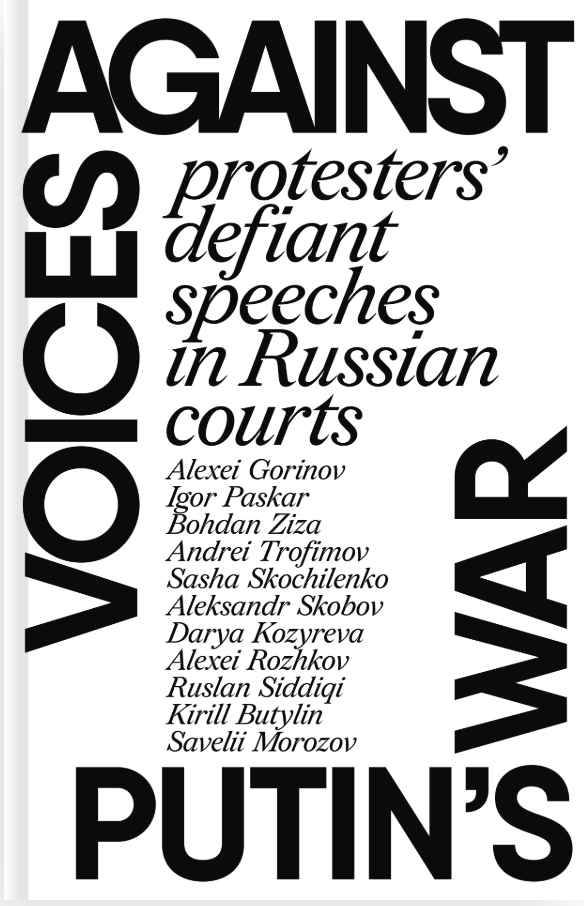
□ Voices Against Putin’s War, just published by Resistance Books, includes 12 statements by anti-war protesters and associated material. The livestream of a launch event is here27 November 2025.

Source: “‘I decided to fight back. Ukraine is my home.’ Yulia Lemeshchenko’s final word in court,” People and Nature, 27 November 2025
Tales of the NTS


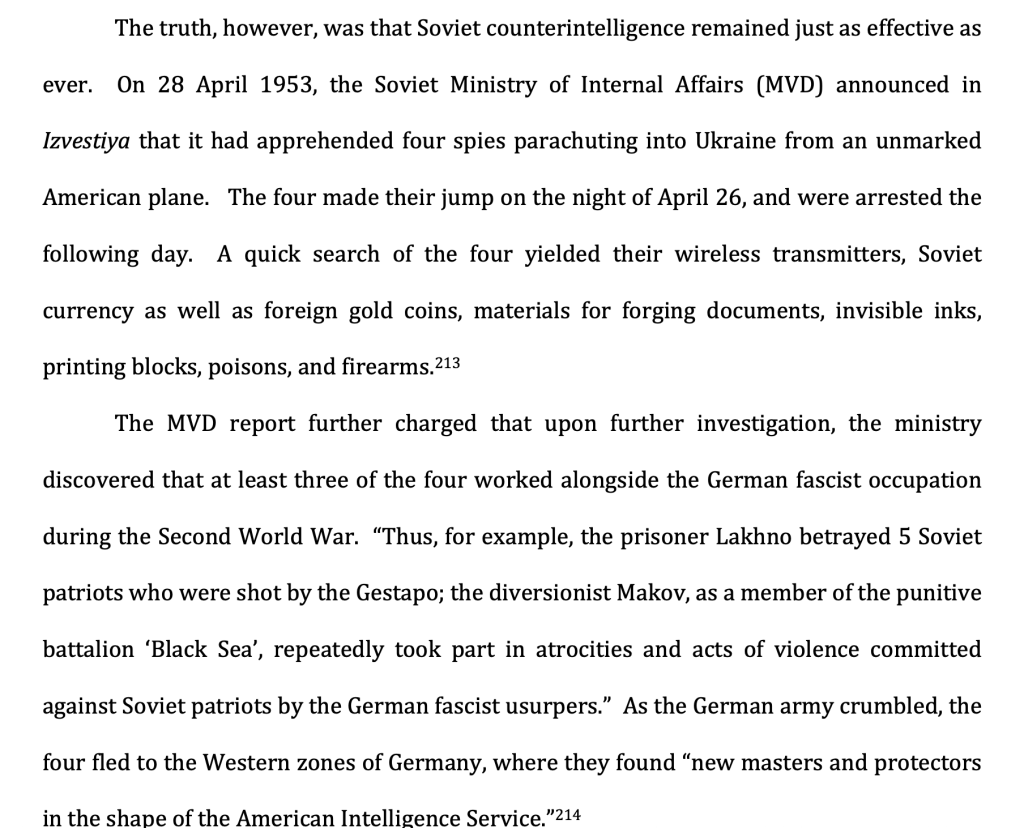
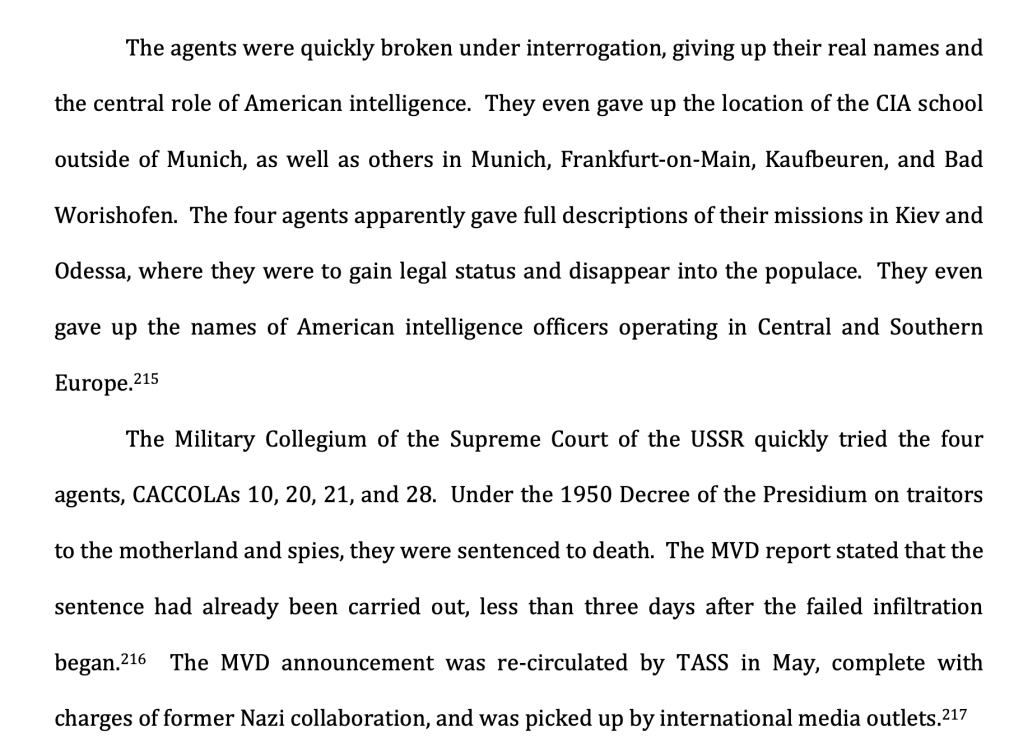
Immediately after Stalin’s death, an American airplane dropped a group of young anti-communists into Maykop. Among them was Alexander Makov, a member of the NTS (National Alliance of Russian Solidarists).

They were soon arrested, and four of them, including Makov, were shot.

Thirty-five years later, in Paris, I made the acquaintance of Makov’s daughter, Natalya. Natalya Makova’s husband was Boris Miller, an NTS leader. Although they had been born in Europe and had never lived in the USSR, they thought only of the Russia which they had lost.

They threw me a luxurious lunch à la russe, featuring vodka, pickled herring, and borscht. After the second shot of vodka, Miller cut to the chase: “When will we be summoned to rule Russia?” He was confident that the Congress of People’s Deputies would hand over power to the NTS.

I decided that this was an endearing eccentricity on the part of people who knew absolutely nothing about the Soviet Union’s monstrosities and whose image of Russia was based on the novels of Lidia Charskaya. But they were quite serious and their efforts ended in a nightmare. Miller and Makova abandoned their comfortable life in Paris and moved to Yeltsin’s Russia, where all manners of horrors and humiliations awaited them. They were roundly windled, and Makova spent the rest of her savings on homeless girls, whom she decided to save in the Christian fashion. The girls paid her back with utter ingratitude, of course. Boris died in 1997, while Natalya died in poverty six years later. She had dreamed of obtaining an exoneration for her father, whom she considered a hero, but her application was categorically denied.

Yesterday, Makov’s interrogation records were declassified and partly published by the FSB—by way of showing that nothing has changed since 1953, either there or here, and nothing ever will change.

If I wanted to write a documentary novel about Russia, I would choose this story (but I don’t want to write such a novel).

Source: Dmitry Volchek (Facebook), 19 November 2025. Translated by the Russian Reader


Source: David C.S. Albanese, “In Search of a Lesser Evil: Anti-Soviet Nationalism and the Cold War,” Ph.D. dissertation, Northeastern University, 2015, pp. 118–119


The methods used by foreign intelligence services to undermine our country have not changed significantly over the years. In particular, enemy intelligence services have always been eager to employ traitors to the Motherland.

Materials declassified

The Central Archive of the Russian Federal Security Service (FSB) has declassified materials from the case files on a reconnaissance team dropped by the Americans into the USSR in 1953.

Much was written about the American saboteurs after their arrest, and their names were at the time mentioned in almost all books about US intelligence operations against the USSR.

In the early 1990s, relatives of the team’s members attempted to obtain a decision from the Russian Prosecutor General’s Office regarding their exoneration, emphasizing that the group’s members did not work for American intelligence but rather “fought against Stalinism.” Nevertheless, even at the height of post-Soviet anti-communism, exoneration was denied.

So who did the Soviet secret services arrest in April 1953, less than two months after the death of the “leader of the peoples”?

“Alec,” “Pete,” “John,” and “Dick”

On the night of April 26, 1953, an aircraft of unknown origin violated Soviet airspace. The pilots managed to safely leave Soviet airspace after completing their mission—dropping a reconnaissance team.

The first two saboteurs were detained a few hours later—they introduced themselves as Vasilchenko and Matkovsky, code names “Alec” and “Pete.” They also revealed that “John” and “Dick” had parachuted with them.

The second pair of saboteurs did not get very far either: they were detained on the same day.

The group was equipped with weapons, ampoules of poison, four radio sets, radio beacons, and other equipment for sabotage and reconnaissance activities. The group also had gold with them, which was to serves as the financial basis for acquiring legal identities and carrying out their planned activities.

The Judas from Lysychansk

All four members of the group were former Soviet citizens who had collaborated with the Germans during the Great Patriotic War.

Vasilchenko, also known as “Alec,” was actually Alexander Lakhno, a native of Lysychansk. In 1941, he completed a course at an intelligence school in the Rostov Region and was sent to his hometown for underground work. But before he could really begin his activities, Lakhno was arrested by the Germans and told them everything he knew. In particular, he betrayed five Soviet intelligence officers whom he had known at the intelligence school.

The Germans liked Lakhno’s zeal and took him into their service. In 1943, as part of a Sonderkommando, he hunted down [Soviet] partisans in the Dnipropetrovsk Region, and then left with the Germans, who assigned him to the “Russian Security Corps”—an organization, established by White émigrés, which fought against the Yugoslav Partisans.

The radio operator from Kherson

Alexander Makov, a native of Kherson, voluntarily joined the German forces after his city was occupied. Initially, he mainly performed administrative tasks for them. During the Nazi retreat, attitudes toward collaborators changed, however and he was sent to one of the punitive units to fight Yugoslav Partisans in the Balkans. Makov applied himself zealously, for which he was transferred to the ROA [Russian Liberation Army]. There, the young man from Kherson was sent to reconnaissance school, and by the time the Nazis were defeated, Makov had completed courses as a reconnaissance radio operator.

The defectors

Before the war, Sergei Gorbunov had been sentenced to a year and a half in prison for theft, but as a minor, he was sent to a labor colony near Kharkov. Gorbunov was finally released at the war’s outset, but he did not want to fight for the Soviet Motherland—either because he was nursing a grudge against. it or because he thought that the Germans had already won. Be that as it may, he went to work for the occupiers and then retreated with them.

Dmitry Remiga, a native of the Stalin Region, expressed his desire to voluntarily go to work in Germany with his father after the occupation of his native land by Hitler’s forces.

All four ended up in the zone occupied by the Western Allies after the Nazis left. None of them wanted to return to the USSR, and they all sought ways to legalize their status in Europe.

From a trident-touting outfit to an American intelligence school

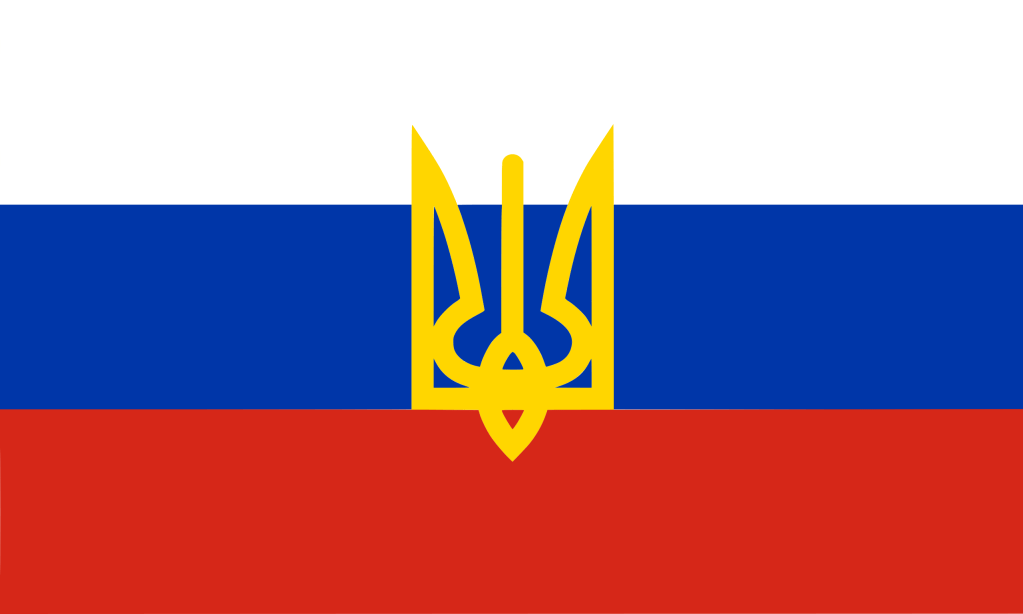
A career path was suggested by agitators from the National Alliance of Russian Solidarists (NTS). Incidentally, the NTS has a truly curious logo: the selfsame trident, so dear to Bandera’s followers, on top of the Russian tricolor.

The NTS explained that the West would soon declare war on the USSR, the Soviet regime would not survive, and those who proved themselves successful in the fight against the communists would live happily in the “Russia of the future.”

The four underwent training at an NTS propaganda school and then special training at the American intelligence school in Bad Wiessee.

As we have already mentioned, however, the preparation did no good—the team was quickly identified and captured.

The saboteurs explained that their mission included obtaining legal identities in Kiev and Odessa and further work with the American recon center. For more reliable legalization, any means were permitted: for example, they could murder a real Soviet citizen and take his papers.

A “reference” from the CIA: the attempt to exonerate the saboteurs

On May 22, 1953, th USSR Supreme Court’s Military Collegium found Lakhno, Makov, Gorbunov, and Remiga guilty of planning sabotage and terrorist acts and sentenced them to the supreme punishment—execution by firing squad.

The wording used to seek their exoneration was a curious sight. In 1993, Vera Lvova, a Petersburg reporter for the Express Chronicle, claimed, “Ultimately, the authorities will be forced to admit that people who gave their lives for Russia’s freedom and American spies-slash-saboteurs are not one and the same.”

In other words, if you graduated from an American intelligence school, parachuted from an American plane and were loaded with weapons and all kinds of intelligence equipment, and had a mission from the US intelligence services, you were simply fighting for Russia’s freedom.

But that’s not all. Exoneration campaigners cited the testimony of CIA veteran William Sloane Coffin, who said with a straight face, “Yes, I trained them, but we never asked them to spy.”

The apotheosis of this nonsense was a statement from the NTS that the saboteurs had been “dispatched to the USSR on behalf of the NTS to conduct patriotic propaganda against Stalin’s dictatorship.”

Credit must be given to the Prosecutor General’s Office, who endured this session of collective madness and refused to exonerate those whom the Americans had used to achieve their goals.

Source: Andrei Sidorchik, “They went to kill for the glory of US: FSB declassifies case of traitorous saboteurs,” Argumenty i Fakty (Federal Edition), 19 November 2025. Translated by Bad Robot with the Russian Reader. Thanks to Mitya Volchek for the heads-up.


More than forty years ago an item [in] the Soviet newspaper Literaturnaya Gazeta described me as “the minder of George Miller and a senior CIA manager.”  The item caused considerable mirth among friends, while my wife pointed out that my salary as director of a modestly funded London-based think-tank seemed scarcely commensurate with my alleged role as a master spy.  Moreover, far from minding George Miller (also known as George Miller-Kurakin), who worked for me at the Institute for European Defence and Strategic Studies as its research officer, I seldom knew where he was, or what he was doing.

Except for the fact that his suits came from Oxfam, George — bearded and with the social ease of a Russian aristocrat — could have stepped out of a novel by Tolstoy.  He was born in Chile in 1955. His father Boris, an engineer, had migrated from Serbia where his own father, a White Russian émigré, had been murdered in front of the family.  So began a pattern of events in which politics shaped the lives and hopes of three generations of the Miller family.

In Santiago, Boris Miller had met and married Kira Kurakin, a member of a distinguished family in Tsarist St Petersburg that had produced ambassadors and senior public servants over more than a century.  In 1959, Boris and his young family moved to Frankfurt where he joined the counter-revolutionary National Alliance of Russian Solidarists (NTS), subsequently moving to London as the organisation’s UK representative. He was somewhat handicapped in his new role by his limited grasp of English. But his son, who knew no English on his arrival in London aged seven, went to a local grammar school, quickly becoming bilingual and speaking the language of his adopted country without a trace of accent by the time he had finished history degrees at Queen Mary College and Essex University. Whereupon he promptly followed in his father’s career as counter revolutionary.

George died from a heart attack in 2009, aged 54, having paid a heavy personal price for his vocation. But fond memories of him recently flooded back as the world marked the anniversary of the failed attempt by communist hardliners to take over the Soviet government in August 1991, an event which was followed  in quick succession by the collapse of the Soviet government and the banning of the Communist Party of the Soviet Union (CPSU) in November of that year — outcomes which George and his father had devoted their lives to help bring about.

In his twenties, George had relied for his income on his day job as my researcher, but he was an increasingly influential NTS member. Founded in the 1930s, the organisation operated underground in Russia but more or less openly in the rest of the world through a network of Russian exiles. Unlike many Western analysts, its members never doubted that the Soviet system would collapse, its spokesmen laying stress on the fact that communism went against the grain of human nature and was therefore doomed. Its declared aim was that of hastening the momentous day when Soviet communism would be replaced by a form of liberal democracy.  

In describing their aims and tactics, George and his NTS colleagues were apt to compare the Soviet Union to an elephant being repeatedly bitten by a mosquito. At first the creature would be oblivious, but after a thousand stings, it would roll over without warning with its feet in the air, and die. The bites inflicted on the Soviet beast by NTS were numerous and unceasing.

Like the British Foreign Office, most British Sovietologists as well as politicians tended not take the NTS very seriously. Harold Wilson said that that the “u” in its title was silent. But the KGB took it sufficiently seriously to make assassination and kidnap attempts on its members and to arrest and imprison its members and contacts inside Russia. Soviet diplomacy was largely successful in pressing the Western governments not to do business with it, even persuading the West German government to close down the organisation’s Russian language radio station in Frankfurt. However, NTS members took evident comfort from General Secretary Andropov’s description of NTS as “public enemy number one.”

Recently, prominent members of the Conservative party and others in senior positions in business and British public life, now middle aged, have described how as young party activists they were recruited by George to take part in a clandestine NTS operation to carry banned literature into the Soviet Union. In this role Miller was assisted by radicals — mainly passionate Thatcherites — within the Federation of Conservative Students (FCS) who relished the high excitement and sense of purpose which their clandestine activities afforded. 

Among those recruited by George were the current schools minister, Nick Gibb, his brother Sir Robbie Gibb (Theresa May’s communications director during her premiership), and Peter Young (founder of the aid contractor, Adam Smith International). Another prominent FCS member, Russell Walters, now an executive with Philip Morris, echoed the sentiments of his fellow subversives when he commented, “it was the noblest act I have ever performed. I remain very proud of what we did.”

Posing as tourists, the couriers took in medical supplies, money and office equipment as well as books, all strapped to their bodies under baggy clothes. They brought out uncensored accounts of the harsh realities of Soviet life, the imprisonment of dissidents and the evidence of economic failure as well as literary works which for political reasons their authors could not publish in Russia. 

In all, George recruited around 60 couriers, a handful of whom were arrested and briefly held by the Russian authorities. On those occasions their arrest was effectively used by him to attract headlines in the international media in order [to] drive home the totalitarian nature of the Soviet system and the violation of the Helsinki Final Act of 1975 which pledged the signatories to respect fundamental freedoms.

The couriers’ task took nerve as well as idealism but the risk they took was less great than that taken by their contacts. Simon Clark, another of George’s couriers, said recently, “we could leave the Soviet Union on the next plane. Our contacts couldn’t. The risks they took every day were enormous and potentially life changing. My principle contact was arrested a year or two after my visit. He received a three year prison sentence. I don’t know what happened to him after that.”

The materials brought out were used by NTS to brief Western newspapers, the Russian service of the BBC, Radio Liberty and any parliamentarian who was prepared to listen. Sharing seemingly little of his FCS friends’ ideological zeal  — he had joined the young Liberals rather than the Conservative Party for what I suspect were tactical reasons — George, personable, humorous and pragmatic,  provided an increasingly trusted source of information. This was stored in the NTS’s British office, the semi-detached home of George’s parents in Baring Road, Lee, an unfashionable part of south east London. 

George used his growing influence in London to arrange for a weekly summary of extracts from Russian opposition publications to be published in The Times. He also persuaded large numbers of friends and contacts to send pamphlets through the post to individual Russians identified from Soviet phone books.

Shortly after the Russian invasion of Afghanistan in 1979, George travelled there to gather first hand evidence of the use of poison gas against the Afghan fighters. Forging links with National Islamic Front of Afghanistan, he subsequently drew up detailed analysis of the role of the different elements of the gas attacks. With others, he is believed to have persuaded the Foreign Secretary, Lord Carrington, to provide anti-aircraft weapons to the Afghan resistance.

Some three years after his first visit to Afghanistan, George asked my permission to leave immediately for a few days’ holiday, a request which seemed quite out of character. Eight weeks later, he returned smiling with a Boots folder containing what he described as his holiday photos. These turned out to be pictures of him in company of members of the mujahidin over whom he towered as he waved a Kalashnikov.

I later discovered that George — who had been accompanied by other NTS members including the novelist and historian, Vladimir Rybakov — arranged for two captured Russian soldiers to be allowed to be released and given safe passage to the West, an act which may well have saved their lives. George also provided me with a compelling account of how US military aid was falling into the hands of anti-Western factions. This, as he pointed out, necessarily had the effect of strengthening them in in relation to relatively pro-Western rival groups. 

I arranged for him to meet a well-connected American friend who was as impressed and alarmed as I had been by George’s detailed and authoritative account. As subsequent events have demonstrated, it was advice that should have been heeded, but my contact later reported, “it’s no go. The US State Department regards the enemies of America’s enemy as its friend. It lacks the imagination to grasp that this particular enemy of our enemy might also be America’s enemy.”

George’s range of anti-Soviet activities was more extensive than most of his friends realised at the time and demonstrated imagination as well as George’s ability to inspire trust from those with whom he worked. Julian Lewis, the chairman of the Parliament’s Intelligence and Security Committee with whom Miller worked to counter the activities of the Campaign for Nuclear Disarmament (CND), described him “as compassionate and courageous. He was mystical, spiritual, selfless and humane, a hero of our times.”

When a tiny Moscow-based “Group for Establishing Trust” was cited by members of CND as evidence that a peace movement could be built inside the Soviet bloc, George sent FCS members to Moscow to distribute anti-nuclear leaflets on the Moscow underground. One was arrested and kicked out causing just the kind of publicity that was needed to demonstrate the stupidity of the CND position. He subsequently arranged for one of the group’s advisers, Oleg Popov, to visit London where he was enthusiastically welcomed by CND as well as by George. But the latter evidently made a bigger impression on Popov than the CND leaders. At a press conference, Popov thanked the disarmers for their support but declared, “unilateral disarmament is no answer. It is nonsense and potentially dangerous.”

Other activities included the creation of the Association for Free Russia and the editorship of Soviet Labour Review, a detailed and authoritative bimonthly journal of labour relations in the USSR.

In 1986, Miller successfully sabotaged what was intended as a major Soviet propaganda coup to weaken support for Western nuclear deterrence. The occasion was the Copenhagen “Peace Congress” staged by the Soviet controlled World Peace Congress. His wrecking strategy had been worked out in cooperation with the Coalition for Peace Through Security, an anti-CND outfit run by two future Tory MPs, Julian Lewis and Edward Leigh. As the event opened, George and two others could be seen on the platform unfurling a giant banner on the platform which read “This is the KGB’s Peace Congress.” Photos of the trio being manhandled off the stage dominated the following morning’s Danish press. And when on the final day of the event dozens of activists who had been mysteriously provided with delegate credentials mounted a vociferous campaign against Soviet occupation of Afghanistan the resulting mayhem received worldwide media coverage.

George was in London at the time of the Communist hardliners’ botched August coup of 1991. But his father — sensing that dramatic change might be imminent — had flown to Moscow and made contact with those loyal to Boris Yeltsin, standing besides Yelstin as he faced down the Russian tanks outside the Russian parliament. Yeltsin subsequently passed a special decree making him a Russian citizen. 

George arrived in Russia for the first time shortly afterwards, kissing Russian soil on his arrival, keenly anticipating a process of democratic reform and the privatisation of the Russian economy in which he hoped to play a significant role. His wife, Lilia, and two children were to follow him from England.

But subsequent events did not evolve as he would have wished. In January 1991, a meeting of the NTS council, of which George and his father, Boris, were members, was split on whether or not its representatives should join the new Yeltsin government. George argued powerfully that the historic opportunity should not be missed to help shape Russia’s democratic future. An opposing faction, which included his father, argued that the offer was a trap set by its old KGB enemies and that it would be better to wait for a more propitious moment to enter government; perhaps both proposals contained an element of wish-fulfilment. Boris’s faction won by a single vote, resulting in a lasting rift between father and son, and George’s immediate resignation from the NTS.

Boris died penniless in a Moscow hospital following a heart attack in 1997. He had spent his last years as the Russian head of an international human rights body, appearing regularly on Russian television to denounce various human rights violations. 

Although he had little practical knowledge of privatisation and of business, George went on to work to in the Economics Ministry under Anatoly Chubais, the privatisation minister. But he grew rapidly disillusioned by the emergence of crony capitalism. Several of the reforms he sought did not materialise and he grew increasingly aware that a new class of oligarchs, many with KGB backgrounds were exclusively concerned with personal enrichment.    

George complained to friends that Russia now resembled America’s Wild West. But as the historian, Norman Stone, pointed out, the difference was that in America’s Wild West there was a judge, a sheriff and a preacher. I had often teased George by suggesting that he might not like living in the Russia that would emerge if he and his friends succeeded in destroying the Soviet system: the sad truth is that he did not.

Keenly aware that he had neglected his family’s material interests and his own health by the single-minded pursuit of political aims, he now sought consultancy work advising Western companies on business opportunities. But by this time his wife had returned to Britain and what funds he had saved went on a divorce.

I last saw George about 18 months before his death after he rang to suggest a meeting. George remained cheerful and showed no sign of bitterness. He declared his intention to remain in England where his children were being educated and asked me whether I would run a new think-tank for which he would find funds. Its purpose, he explained would [be] to analyse threats to liberal democracy, including those posed by the country which he had struggled to free from communism, as well that posed by China. The money would come from backers of various environmental projects in which he had become enthusiastically involved, including one with plans develop the means to turn pig dung into energy. Companies were set up in his name, but little progress was made and there was no income stream. As we parted, I pondered on whether the project had come to fill the place of an earlier vision that had died.

Like me, the couriers recruited by George Miller remember him with fondness and respect. The Soviet elephant did indeed roll over and die. The proximate reason for the Soviet collapse may have been Western policies vigorously promoted by Reagan and Thatcher which in turn prompted the Soviet leadership to attempt to modernise, unleashing forces which it was powerless to control. But George, along with a relatively small number of anti-communist activists and scholars shaped the environment which made those Western policies possible. Although he had been given ample reason to reflect on the need to think carefully about what he wished for, I don’t think he regretted any of his counter-revolutionary activities.

Nor do those who helped him.

Source: Gerald Frost, “George Miller: Anti-Communist,” The Critic, 22 August 2021


The grave of NTS founding chairman Duke Serge von Leuchtenberg de Beauharnais (aka Sergei Nikolaevich Leuchtenbergsky)
at El Encinal Cemetery in Monterey, California. Photo courtesy of Comrade Koganzon

Duke Sergei Nikolaevich Leuchtenbergsky (1896, St. Petersburg–June 27, 1966, California) was a Russian politician, translator, founder and first leader of the National Alliance of Russian Solidarists (NTS), and great-great-grandson of Russian Emperor Nicholas I.

He was born in 1896. In the Civil War, he served under his father, Major General N.N. Leuchtenbergsky, during the formation of the Southern Army and the Don Army. In exile, he graduated from the noncommissioned officer school of the Russian All-Military Union (ROVS). From 1930 to 1933, he headed the National Alliance of Russian Solidarists (NTS).

During World War II, he served as a translator in the German 9th Army, then headed the propaganda department and was a translator for the Rzhev Commandant’s Office and the headquarters of the German VI Corps.

In 1925, he married Anna Alexandrovna Naumova (born 1900), and they had four children. A year after his divorce (1938), he married Kira Nikolaevna Volkova (born 1915), but their marriage was annulled in 1942. In 1945, he married Olga Sergeevna Wickberg (born 1926), who bore him two children.

He died on June 27, 1966, and is buried at El Encinal Cemetery in Monterey, California.

Source: Wikipedia (Russian). Translated by Bad Robot with the Russian Reader

Peace for Our Time

Trump didn’t win the Nobel Peace Prize, but he’s a lock for the Kremlin’s Employee of the Month.

Source: Andy Borowitz (Facebook), 22 November 2025


The 28-point Russia–Ukraine peace plan—put on the table this week by Steve Witkoff, President Donald Trump’s emissary, and Kirill Dmitriev, a Kremlin aide equally inexperienced at diplomacy—grants Kyiv two favors but otherwise amounts to a Moscow wish list.

It is worth noting that neither Ukrainian President Volodymyr Zelensky nor any European leader was consulted in the backroom drafting. Spokesmen for Russian President Vladimir Putin say, a bit improbably, that they haven’t seen the deal either. Even if its outlines were acceptable to both sides, several of its planks are ambiguous, requiring extensive negotiation. Still, Trump has demanded that Ukraine accept the plan before Thanksgiving.

This timetable seems unlikely, as does the notion that peace is now at hand.

The plan allows Ukraine to apply for membership to the European Union—a significant point, given that, in some ways, the war began back in 2014, when Putin deposed a Ukrainian president who was on the verge of striking a deal with the EU. The plan also commits $100 billion in seized Russian assets to rebuild war-torn areas of Ukraine.

However, the rest is a shambles. It hands much of Ukrainian territory to Russia—including Crimea and the eastern Donbas districts of Luhansk and Donetsk. It reduces the size of the Ukrainian army to 600,000 troops (it currently has about 880,000), while putting no cap on the number of Russian troops on Ukraine’s borders. It demands that Ukraine revise its constitution to prohibit membership in NATO, bars NATO troops from being stationed in Ukraine, and forbids Ukraine from attacking Moscow or St. Petersburg with missiles (a peculiar clause—as Lawrence Freedman asks, “But [attacking] Rostov is OK?”), without barring Russia from firing missiles at cities in Ukraine.

Finally, Ukraine must hold elections within 100 days (nothing about how security might be kept at polling stations in areas still under dispute), all combatants and politicians are granted amnesty (so much for war-crimes trials), and Russia “will be reintegrated into the global community,” complete with restored membership in the G8 and the dropping of sanctions.

A few other articles seem to favor Ukraine at first glance, but not so much upon scrutiny. For instance, “Russia is expected not to invade neighboring countries” (italics added), which sounds like a courteous request, not a legal demand. (By contrast, the same plank—in fact, the same sentence—states, “NATO will not expand further.”)

Another: “Ukraine will receive reliable security guarantees,” but there isn’t a hint on what Moscow would find acceptable in this department. Similarly, “Russia will codify a non-aggression policy toward Europe and Ukraine,” thus allowing Putin to load the codification with whatever loose language and loopholes he’d like.

The plan calls for the creation of a “humanitarian committee” to oversee an “all for all” exchange of prisoners, detainees, and kidnapped children. That’s good, but there’s nothing about who appoints the committee members or how the trades are enforced; for instance, who sends police into Moscow homes to retrieve Ukrainian babies and adolescents? Even assuming the best of intentions (a dubious assumption), this will take a while to formalize.

Similarly, the plan says that Donetsk will be turned into a “demilitarized zone,” with no Ukrainian or Russian troops allowed to enter. Again, fine, but who supplies the armed peacekeepers to enforce this rule—and why should Moscow accept it, given that the deal recognizes Donetsk as Russian territory?

These are not small points. Article 28, the plan’s final plank, states, “Once all parties accept this memorandum, a ceasefire will take effect immediately after both sides withdraw to the agreed points for the start of the agreement’s implementation.” In other words, all of the plan’s ambiguities, loose ends, and remaining disputes have to be settled—and then troop withdrawals have to be completed, not merely started—before a ceasefire takes hold.

This is the opposite of the 20-point peace plan that Trump helped impose on Israel and Hamas in Gaza. It shrewdly demanded a ceasefire and hostage exchange as the deal’s first steps. It is not at all clear that details about the remaining points will ever be negotiated, much less implemented (in fact, most of those points seem politically dead on arrival), but the important thing—Trump and his Arab partners realized—was to stop the killing and to keep it stopped for as long as possible.

The Russia–Ukraine plan does the opposite: It imposes a ceasefire after agreement and action on all the other steps toward a peace—and an unjust peace at that.

The main problem with the plan is that, like its American authors, it fails to recognize the true nature of the war: namely, that Ukrainians are fighting for their sovereignty as an independent nation, while Putin is fighting for the restoration of the old Russian empire, which entails, among other things, the total subjugation of Ukraine.

A Kremlin spokesman said as much on Friday, when he said that any peace deal must address the war’s “root causes.” Putin has made clear a number of times that he regards, as the war’s main root cause, the insistence by the government in Kyiv—which he denounces as an illegitimate “neo-Nazi dictatorship”—that Ukraine exists as a nation with its own history, culture, and language.

The best way to end the war is for Trump to realize this fact—and to convince Putin that the West will not let this imperial dream come true. Short of that, all the rest, including the 28-point peace plan, is at best a distraction and at worst a recipe for democratic Ukraine’s surrender.

Source: Fred Kaplan, “The Closer You Look at Trump’s Ukraine Peace Plan, the Worse It Looks for Ukraine,” Slate, 21 November 2025


Ukraine’s president Volodymyr Zelensky addressed the Ukrainian people today. The current moment, he said, is “one of the most difficult” for the country. “Ukraine may soon face an extremely difficult choice. Either the loss of dignity or the risk of losing a key partner. Either 28 complicated points or the hardest winter yet—and the risks that follow,” Zelensky said.

Zelensky’s use of the word “dignity” recalled Ukraine’s 2014 “Revolution of Dignity” that ousted Russian-aligned president Viktor Yanukovych and turned the country toward Europe.

Zelensky was responding to a 28-point “peace” plan President Donald J. Trump is pressuring him to sign before Thanksgiving, November 27. The plan appears to have been leaked to Barak Ravid of Axios by Kirill Dmitriev, a top ally of Russia’s president Vladimir Putin, and reports say it was worked out by Dmitriev and Trump’s envoy Steve Witkoff. Ukrainian representatives and representatives from Europe were not included. Laura Kelly of The Hill reported on Wednesday that Congress was blindsided by the proposal, which Mark Toth and Jonathan Sweet of The Hill suggest Russia may be pushing now to take advantage of a corruption scandal roiling Ukraine’s government.

Luke Harding of The Guardian noted that the plan appears to have been translated from Russian, as many of the phrases in the text read naturally in that language but are awkward and clunky in English.

The plan is a Russian wish list. It begins by confirming Ukraine’s sovereignty, a promise Russia gave Ukraine in 1994 in exchange for Ukraine giving up its nuclear weapons but then broke when it invaded Ukraine in 2014.

The plan gives Crimea and most of the territory in Ukraine’s four eastern oblasts of Kherson, Zaporizhzhia, Donetsk, and Luhansk to Russia, and it limits the size of the Ukrainian military.

It erases any and all accountability for the Russian attacks on Ukrainian civilians, including well-documented rape, torture, and murder. It says: “All parties involved in this conflict will receive full amnesty for their actions during the war and agree not to make any claims or consider any complaints in the future.”

It calls for $100 billion in frozen Russian assets to be invested in rebuilding and developing Ukraine. Since the regions that need reconstruction are the ones Russia would be taking, this means that Russian assets would go back to Russia. The deal says that Europe, which was not consulted, will unfreeze Russian assets and itself add another $100 billion to the reconstruction fund. The plan says the U.S. “will receive 50 percent of the profits from this venture,” which appears to mean that Europe will foot the bill for the reconstruction of Ukraine—Russia, if the plan goes through—and the U.S. and Russia will split the proceeds.

The plan asserts that “Russia will be reintegrated into the global economy,” with sanctions lifted and an invitation to rejoin the Group of Seven (G7), an informal group of countries with advanced economies—Canada, France, Germany, Italy, Japan, the United Kingdom, and the United States, along with the European Union—that meets every year to discuss global issues. Russia was excluded from the group after it invaded Ukraine in 2014, and Putin has wanted back in.

According to the plan, Russia and “[t]he US will enter into a long-term economic cooperation agreement for mutual development in the areas of energy, natural resources, infrastructure, artificial intelligence, data centres, rare earth metal extraction projects in the Arctic, and other mutually beneficial corporate opportunities.”

The plan requires Ukraine to amend its constitution to reject membership in the North Atlantic Treaty Organization (NATO). It says “[a] dialogue will be held between Russia and NATO, mediated by the US, to resolve all security issues and create conditions for de-escalation to ensure global security and increase opportunities for cooperation and future economic development.”

Not only does this agreement sell out Ukraine and Europe for the benefit of Russia—which attacked Ukraine—it explicitly separates the U.S. from NATO, a long-time goal of Russia’s president Vladimir Putin.

NATO grew out of the 1941 Atlantic Charter. Months before the U.S. entered World War II, U.S. president Franklin Delano Roosevelt and British prime minister Winston Churchill and their advisors laid out principles for an international system that could prevent future world wars. They agreed that countries should not invade each other and therefore the world should work toward disarmament, and that international cooperation and trade thanks to freedom of the seas would help to knit the world together with rising prosperity and human rights.

The war killed about 36.5 million Europeans, 19 million of them civilians, and left many of those who had survived homeless or living in refugee camps. In its wake, communism backed by the Soviet Union began to push west into Europe. In 1949, France, the U.K., Belgium, the Netherlands, and Luxembourg formed a military and economic alliance, the Western Union, to work together, but nations understood that resisting Soviet aggression, preventing the revival of European militarism, and guaranteeing international cooperation would require a transatlantic security agreement.

In 1949 the countries of the Western Union joined with the U.S., Canada, Portugal, Italy, Norway, Denmark, and Iceland to make up the twelve original signatories to the North Atlantic Treaty. In it, the countries reaffirmed “their desire to live in peace with all peoples and all governments” and their determination “to safeguard the freedom, common heritage and civilisation of their peoples, founded on the principles of democracy, individual liberty and the rule of law.”

They vowed that any attack on one of the signatories would be considered an attack on all, thus deterring war by promising strong retaliation. This system of collective defense has stabilized the world for 75 years. Thirty-two countries are now members, sharing intelligence, training, tactics, equipment, and agreements for use of airspace and bases. In 2024, NATO countries reaffirmed their commitment and said Russia’s invasion of Ukraine had “gravely undermined global security.”

They did so in the face of Russian aggression.

Putin invaded Crimea in 2014 after Ukrainians ousted Yanukovych, earning economic sanctions and expulsion from what was then the G8. But Crimea wasn’t enough: he wanted Ukraine’s eastern oblasts, the country’s industrial heartland. Former secretary of state Hillary Clinton, who was running for the U.S. presidency against Donald Trump in 2016, would never stand for that land grab. But Trump was a different story.

According to Special Counsel Robert Mueller’s 2019 report on Russian interference in the 2016 presidential election, in summer 2016, Trump campaign manager Paul Manafort discussed with his business partner, Russian operative Konstantin Kilimnik, “a ‘backdoor’ means for Russia to control eastern Ukraine.” According to the Republican-dominated Senate Intelligence Committee, the plan was for Trump to say he wanted peace in Ukraine and for him to appoint Manafort to be a “special representative” to manage the process. With the cooperation of Russian and Russian-backed Ukrainian officials, Manafort would help create “an autonomous republic” in Ukraine’s industrialized eastern region and would work to have Russian-backed Yanukovych, for whom Manafort had worked previously, “elected to head that republic.”

According to the Senate Intelligence Committee, the men continued to work on what they called the “Mariupol Plan” at least until 2018. Putin has been determined to control that land ever since. And now it appears Russia is pushing Trump to deliver it.

This plan, complete with its suggestion that the U.S. is no longer truly a part of NATO but can broker between NATO and Russia, would replace the post–World War II rules-based international order with a new version of an older order. In the world before NATO and the other international institutions that were created after World War II, powerful countries dominated smaller countries, which had to do as their powerful neighbors demanded in order to survive.

Source: Heather Cox Richardson, Notes of an American, 21 November 2025


Donald Trump’s “peace plan” for Ukraine has caused an international firestorm—perhaps because its origins are surrounded by mystery.

We know the plan is the love child of Trump special envoy Steve Witkoff and Vladimir Putin’s emissary, financier Kirill Dmitriev. But what did Trump know about it? (Apparently not much.) Where does Marco Rubio stand? Did Vladimir Putin greenlight this plan on the Russian side? Does he want it implemented? Can it be implemented? What exactly is in it, and how is it being revised? It’s the proverbial Winston Churchill line about Kremlin politics as a “bulldog fight under a rug”—only now with Jared Kushner under there, holding a leash.

There is widespread agreement that the 28-point proposal is devastating for Ukraine: it would lose the entirety of the Donetsk and Luhansk provinces (including the roughly 15 percent of these territories currently in Ukrainian hands) and the occupied parts of the Kherson and Zaporizhia provinces. The part of the Donetsk province currently controlled by Ukraine is to be converted, after Ukrainian withdrawal, into a “neutral demilitarized buffer zone” de facto recognized as Russian but off-limits to Russian troops. What does that mean? Who will police that zone, especially considering that the proposal rules out NATO troops in Ukraine? Those details are, we imagine, currently being filled in.

The plan also includes a proposed cap on the Ukrainian military that is outrageous in principle since it infringes on Ukrainian sovereignty. The one positive spin may be that the 600,000 cap does not include the National Guard and many other types of troops. And while it’s a substantial reduction from the current 900,000 troop size of the Ukrainian armed forces, that number is elevated precisely because the country is currently at war. Moreover, in their spring 2022 peace talk proposal, the Russians had demanded an 85,000 cap.

Still, many other provisions of the plan are infuriating not only for Ukraine but for the civilized world in general. There is, among other things, the failure to name Russia as the aggressor even once, and Russia’s proposed reintegration into the G-7 and other international structures. And yet some strongly pro-Ukraine analysts, such as expatriate Russian journalist Michael Nacke, argue that the proposal has some equally unacceptable elements for Vladimir Putin. Most notably, it stipulates a guarantee of Ukrainian security similar to NATO’s Article 5: an attack on Ukraine would be treated as an attack on the entire transatlantic structure.

Maybe Russia regards this clause as meaningless and believes NATO will never go to war with Russia over Ukraine. It is also worth noting that Putin has continued to insist that Russia intends to achieve all the goals of the “special military operation”—which would include the demilitarization of Ukraine and its de facto relegation to a Russian satellite. Nacke, like a number of other commentators, believe that whatever Ukraine does, Putin will not sign the Trump peace plan.

So the plan may not be a Kremlin wish list. But it does have a distinct Russian flavor. It’s possible that, as investigative journalist Christo Grozev has suggested, the Russian side of the plan comes not from Putin but from the “dovish” Kremlin faction concerned primarily with trade and improved relations with the West.

In this interpretation, the plan represents not so much a proposal for Ukrainian surrender as Trump administration amateur hour: a plan that was cooked up by a real estate developer and a financier that won’t be acceptable to either side. Will current attempts to revise it yield a better version? They’re happening as we hit send on this email. So stay tuned.

Source: Cathy Young, “Moscow’s Mule,” The Bulwark, 24 November 2025


“Do I understand correctly that there is now a dispute within the administration about whether this ‘peace plan’ was written by Russians or Americans?” foreign affairs journalist Anne Applebaum asked last night on social media.

Applebaum was referring to confusion over a 28-point plan for an end to Russia’s war on Ukraine reported by Barak Ravid and Dave Lawler of Axios last week. After the plan was leaked, apparently to Ravid by Kirill Dmitriev, an ally of Russian president Vladimir Putin who is under U.S. sanctions, Vice President J.D. Vance came out strongly in support of it.

But as scholar of strategic studies Phillips P. OBrien noted in Phillips’s Newsletter, once it became widely known that the plan was written by the Russians, Secretary of State Marco Rubio tried to back away from it, posting on social media on Wednesday that “[e]nding a complex and deadly war such as the one in Ukraine requires an extensive exchange of serious and realistic ideas. And achieving a durable peace will require both sides to agree to difficult but necessary concessions. That is why we are and will continue to develop a list of potential ideas for ending this war based on input from both sides of this conflict.”

And yet, by Friday, Trump said he expected Ukraine president Volodymyr Zelensky to sign onto the plan by Thanksgiving: next Thursday, November 27. Former senate majority leader Mitch McConnell (R-KY) said: “Putin has spent the entire year trying to play President Trump for a fool. Rewarding Russian butchery would be disastrous to America’s interests.”

Yesterday a group of senators, foreign affairs specialists gathered in Halifax, Nova Scotia, for the Halifax International Security Forum, told reporters they had spoken to Rubio about the plan. Senator Angus King (I-ME) said Rubio had told them that the document “was not the administration’s position” but rather “a wish list of the Russians.” Senator Mike Rounds (R-SC) said: “This administration was not responsible for this release in its current form.” He added: “I think he made it very clear to us that we are the recipients of a proposal that was delivered to one of our representatives,” Rounds said. “It is not our recommendation, it is not our peace plan.”

But then a spokesperson for the State Department, Tommy Pigott, called the senators’ account of the origins of the plan “blatantly false,” and Rubio abruptly switched course, posting on social media that in fact the U.S. had written the plan.

Anton La Guardia, diplomatic editor at The Economist, posted: “State Department is backpedalling on Rubio’s backpedal. If for a moment you thought the grown-ups were back in charge, think again. We’re still in the circus. ‘Unbelievable,’ mutters one [of the] disbelieving senators.”

Later that day, Erin Banco and Gram Slattery of Reuters reported that the proposal had come out of a meeting in Miami between Trump’s special envoy Steve Witkoff, Trump’s son-in-law Jared Kushner, and Dmitriev, who leads one of Russia’s largest sovereign wealth funds. They reported that senior officials in the State Department and on the National Security Council were not briefed about the plan.

This morning, Bill Kristol of The Bulwark reported rumors that Vice President J.D. Vance was “key to US embrace of Russia plan on Ukraine, Rubio (and even Trump) out of the loop.” He posted that relations between Vance and Rubio are “awful” and that Rubio did, in fact, tell the senators what they said he did.

Yaroslav Trofimov, chief foreign affairs correspondent of the Wall Street Journal, posted: “Foreign nations now have to deal with rival factions of the U.S. government who keep major policy initiatives secret from each other and some of which work with foreign powers as the succession battle for 2028 begins, is how one diplomat put it.”

[…]

Source: Heather Cox Richardson, Letters from an American, 23 November 2025


This!

Source: Andy Borowitz (Facebook), 24 November 2025

“We Wanted to Show the Whole Range of Anti-War Resistance in Russia”

Thursday 20 November, 7:00 p.m. UK time: TRY ME FOR TREASON – Readings from anti-war protesters’ speeches in Russian courts, and book launch for Voices Against Putin’s War.

You are welcome to attend in person at Pelican House, 144 Cambridge Heath Road, London E1. Or watch the livestream here on Facebook, or on Youtube.

Source: Ukraine Information Group (Facebook), 18 November 2025


What can courtroom speeches by imprisoned protesters tell us about the breadth of anti-war resistance in Russia? British historian Simon Pirani discusses his new book Voices Against Putin’s War with independent Russian journalist Ivan Rechnoy.

Simon Pirani is a British researcher and author who has written about energy and ecology, the history of the Russian Revolution, the labor movement, and post-Soviet Russia. His recent book Voices Against Putin’s War: Protesters’ Defiant Speeches in Russian Courts compiles and analyzes the courtroom speeches of twelve prisoners who were sentenced for resisting Russian aggression in Ukraine. 

— Today in Russia, hundreds of people are serving prison sentences for criticizing the invasion of Ukraine. Twelve of those people are the subjects of your book. How did you select them?

— We wanted to show that opposition to Putin’s war is widespread. What is striking about these people is their diversity. They come from different generations, have different life experiences, and hold different political views. This diversity demonstrates that, despite the absence of public demonstrations and the lack of any real possibility of organizing an open anti-war movement in Russia, an anti-war movement does exist there. It encompasses a very broad spectrum of Russian society as well as people from the occupied territories. For example, the book features the courtroom speech of Bohdan Ziza from Crimea.

We decided not to include some of the most well-known opponents of the war in the book — people who made brave and principled speeches in court, like Ilya Yashin, for example. Their statements had already been widely publicized in the media here. Instead our goal was to draw the attention of English-speaking readers to lesser-known figures. 

On the one hand, there are those who simply said something or posted statements on social media. For example, Darya Kozyreva, the youngest person featured in the book, was arrested for laying flowers at the Taras Shevchenko monument in Saint Petersburg. On the other hand, these are those who did something, such as throwing firebombs — not with the intention of hurting anyone, but to draw attention to the injustice of the war. Igor Paskar and Alexei Rozhkov are among them. These are people who live in smaller towns far from Moscow or Saint Petersburg, where young men are much more likely to receive draft notices from the conscription service. 

We also included the statement by Ruslan Siddiqi, who sabotaged a railway line to stop munitions from reaching Ukraine. 

The texts for the book were put together by a group of friends who, since the February 2022 invasion, had been translating the courtroom statements and some of the posts from the media or social networks. When we were already well into that process, a lot of new material appeared on the website Poslednee Slovo [author’s note: the project’s name translates as “the final statement”]. It’s a terrific project that does an excellent job of collecting and publishing a much broader range of cases than we could cover. 

We limited ourselves to people who have made explicit anti-war statements about the war in Ukraine. However, as you know, there are many other political prisoners who have appeared in court since the 2022 invasion, as well as many more from before that, especially among the Crimean Tatar political prisoners. They are all represented on the Poslednee Slovo website. Another remarkable thing about the website is that it goes back all the way to the Soviet period. They’ve included the 1966 speeches by Andrei Sinyavsky and Yulii Daniel, perhaps the first examples since Stalin’s time of people using the right for a final statement in court as a form of propaganda. 

Our book includes a chapter that lists seventeen additional cases of people who delivered anti-war speeches, beyond the twelve protagonists whose complete statements we published. We hope that either I or my colleagues will eventually translate all of those speeches as well. 

Unfortunately, the final courtroom speech has become something like a literary genre in its own right. This tells us a lot about the difficult and fearful times we are living through.

— How do you envision the audience for this book? Are they people in the West and elsewhere who already have some understanding of the situation in Russia and want to learn more? Or are they readers to whom you want to convey a political message — perhaps even to persuade them of something?

— The book is in English and is therefore intended for English-speaking readers rather than Russian-speaking readers. Only a small percentage of people in the UK, the US, and Europe can read Russian. Since 2022, many of us have been aware of the fate of the anti-war movement in Russia. As you know, it began with large demonstrations, but protesting soon became difficult and then almost impossible. Next came the firebomb attacks on military recruitment centers — actions not meant to harm people, but to draw attention to the anti-war cause. We then started reading, in Russia’s opposition media, the final statements of opposition figures — the courtroom having become, in effect, the last public forum in Russia where protest is still possible. 

However, I think that many people in English-speaking countries remain unaware of all this. 

So, to answer your question, our aim is to reach a wider audience in Western societies: not only those who have closely followed Russia’s attack on Ukraine and its consequences, but also those whose understanding of it comes only from what they have picked up incidentally through the media.

— One of the central figures in your book is Alexander Skobov. One might say he bridges two eras. He was a dissident in the Soviet Union and is once again among the persecuted today. There is another similar example that is not included in the book: Boris Kagarlitsky. How do people in the West perceive the difference between current repressions and the dissident movement during the Cold War? Also, how do they see the difference between the Russian and Western situations now?

— First, I would like to say a few words about Skobov. As someone who regularly travelled to Russia between 1990 and 2019, I was deeply affected by these courtroom speeches. The first one I came across was by Igor Paskar. I thought, “My God, these are such young people — not the youngest, but still much younger than me — who have entered this fight.” Alexander Skobov’s speech also affected me emotionally, perhaps because he is about my age — a year or two younger — and, as you said, he bridges two eras. 

I was particularly touched by the letter that he wrote to his partner, Olga Shcheglova. It was published in Novaya Gazeta Europe, and we also included it in the book. In the letter, Skobov explains that some of his friends and comrades urged him to leave Russia, but he refused. This made it inevitable that he would eventually face trial and imprisonment. In the letter, he explains that he wanted to communicate to the younger generation that the small group of dissidents he once belonged to — the socialist wing of the Soviet dissident movement — stands in solidarity with them in these difficult times. He wanted this message to be recorded in history. 

I think that is a very important statement, and we all owe Alexander Skobov gratitude for linking these two historical periods through his sacrifice. I hope that including his statements in our book will help people in the West understand this continuity more clearly. 

I will try to answer your question about how these movements are perceived. During the Soviet era, people in the West generally considered the dissident movement to be very small and marginal. Given how communication worked back then, it was very difficult for information to break through. Of course, there were large revolts against Soviet power, beginning with the Novocherkassk uprising in the 1960s and other violent revolts in the 1970s and 1980s. I have a friend in Ukraine who studied the major revolt that took place in Dniprodzerzhynsk. These movements were very short-lived, and we hardly knew about them in the West, even those of us who were interested in what was going on in the Soviet Union. 

Today, Russians — and Ukrainians, of course — have a much greater opportunity to have real conversations with people in Western Europe. I think the powers of that time really succeeded in dividing Europe; there really was an iron curtain. But that’s gone now. Millions of Ukrainians and Russians live in Western Europe, the UK, and the US. People are learning to communicate with each other and work together in new ways. 

We can already see examples of this in Germany, in the UK, and elsewhere. I think this conversation must continue — and our book, I think, is part of that ongoing dialogue. 

Of course, it’s not easy to communicate with someone who is literally in a Russian prison. However, through the friends, comrades, and families of the central figures in our book, I hope this conversation will begin and continue over a long period of time. 

— I wanted to ask specifically about the possibility of connecting the Russian-Ukrainian and Israeli-Palestinian agendas. We are, of course, impressed by the huge mobilization in support of Palestine. At the same time, many on the left are frustrated that active support for Ukraine — a country in a situation in some ways similar to that of Palestine — is far less widespread in Europe and the West. Have there been any positive developments in this regard recently? 

— Since October 2023, we have all watched with horror as Israel’s assault on Gaza has unfolded. It has been widely recognized as a genocide, and we now see a larger and more enduring anti-war movement in Western countries than we have seen in decades — comparable perhaps only to the protests against the US-UK invasion of Iraq in 2003, or even the movement against the Vietnam War in the 1970s. 

One of the reasons I felt it was important to translate these texts into English was to show Western audiences how much the Russian anti-war movement has in common with movements here. Of course, their enemies are different, standing on opposite sides of the geopolitical divide, and there are many other differences as well. Yet the similarities are striking — and deeply significant. The motivations of some of those who gave these courtroom speeches — whose statements we have translated — are very similar to those of activists in the UK who have been arrested for supporting Palestine Action, or of those who joined the flotilla recently stopped by Israeli forces as it attempted to reach Gaza. 

I spent much of last year attending the large British demonstrations against Israel’s assault on Gaza and calling for a ceasefire. Together with friends, we carried a banner stating: “From Ukraine to Palestine, occupation is a crime.” Our group wanted to show our fellow demonstrators that Ukraine’s struggle for national self-determination and the Palestinians’ struggle for freedom from Israeli occupation share something essential — the right to decide their futures, free from foreign interference and military threats. 

We received a very interesting response from other marchers. Those familiar with the politics of the so-called left and socialist movements will recognize the reaction we encountered from a small minority, mostly older people, who said things like: “Why are you siding with Ukraine? Ukraine is just a plaything of the Western powers, a puppet of NATO. Why even talk about this issue?” Yet the overwhelming majority — more than ninety percent — of those who approached us said, “Ah, yes, we hadn’t thought about it that way before, but there really is something in common between these struggles.”

Another major obstacle to unity comes not only from the “campism” of certain leftists — those who focus exclusively on American and British imperialism while downplaying or excusing Russian imperialism — but also from the state, the mainstream press, and government propaganda. The official narrative is consistently supportive of Ukraine and entirely condemnatory of Palestinian resistance. Ordinary people sense this imbalance — the racism and discrimination directed at the Palestinian cause, alongside the establishment’s favoritism toward Ukraine. There is some truth in that: the propaganda machinery of our ruling class here is largely sympathetic to Ukraine. Working-class people in the UK and across Europe notice this and grow suspicious. However, I believe that is a suspicion we can overcome — and that has been our experience. 

All of this is my personal opinion. The purpose of the book, however, is to bring to English-speaking readers the voices of our friends and comrades in Russia — those brave people who have found themselves in court and who, in some cases at the risk of additional years in prison, have chosen to exercise their constitutional right (though not always respected by judges) to deliver a final statement before the court. It is a remarkably courageous and difficult decision. 

— I wanted to thank you for the book, and I also wanted to ask you, since you have been interested in this topic for a long time: how did your interest in it arise, and why has Russia become so important to you?

— My connection with Russia began through the labour movement. I first went to Russia in 1990 — to Prokopyevsk, in western Siberia, where the miners’ strikes of 1989 had first broken out. At that time, I was working as a journalist for the mineworkers’ trade union here in the UK. We saw an opportunity to develop links of solidarity between Soviet miners and British miners. And we had some success. Our friends in the British miners’ union established a very close relationship with the Independent Miners’ Union of Western Donbas, based in Pavlograd. This friendship continues even today.

In those days, I was a member of a Trotskyist organisation, and in August 1990, we organised a meeting in Moscow to mark the 40th anniversary of Trotsky’s assassination. This, too, was part of a conversation between Western socialists and people in Russia and Ukraine that had been practically impossible during the “Cold War.”

I continued to follow what’s going on in Russia and Ukraine, and to write about it, and between 2007 and 2021, I worked at a research institute, writing about the energy sectors of those countries. 

Since the pandemic, I haven’t been back to Russia. On February 24th, 2022, when the invasion began, I was at home and was shocked. We were all shocked. The invasion has changed everything, both in Ukraine and Russia, for many years to come. Together with friends, we began translating these courtroom speeches and posting them online. Gradually, that work grew into the idea of making a book.

I hope your readers will read it. Later this year, we’re going to make the book freely available as a PDF, so that everyone can access it. 

If we do make any money — and I should say it is a very cheap book — all proceeds will go to Memorial and political prisoners. Nobody is making a profit from this project. The whole point is to share these voices with a much wider audience.

Source: Ivan Rechnoy, “We Wanted to Show the Whole Range of Anti-War Resistance in Russia,” Posle, 22 October 2025


 Sale! £15.00 £12.00

VOICES AGAINST PUTIN’S WAR
Protesters’ defiant speeches in Russian courts

Speeches by Alexei Gorinov, Igor Paskar, Bohdan Ziza, Mikhail Kriger, Andrei Trofimov, Sasha Skochilenko, Aleksandr Skobov, Darya Kozyreva, Alexei Rozhkov, Ruslan Siddiqi, Kirill Butylin and Savelii Morozov.

Foreword by John McDonnell, Member of UK Parliament

Edited by Simon Pirani

ISBN: 978-1-872242-45-3 (paperback)
e-ISBN: 978-1-872242-47-7 (e-book)
RRP: £15 (pbk)
e-RRP: £7 (Ebook)
196 pages; 140x216mm.
Publication date: September 2025

The E-book can be purchased at the usual online retailers
Any profits will be donated to Memorial: Support for Political Prisoners https://memohrc.org/en

Source: Resistance Books

Reclaiming Whiteness: In Search of the “Good Russians”

As racial boundaries are constantly negotiated in Europe and across the globe, this book explores how Russian migrant workers navigate racial capitalism in the Nordic region.

Challenging the idea of a ‘race-neutral’ Eastern Europe, the book reveals how Russian migrants actively claim whiteness, often finding themselves on the margins of acceptability. Uniquely combining postsocialist and postcolonial perspectives, the author examines how these migrants, seeking recognition as European, reinforce economic and racial divides shaped by global capitalism.

This timely work offers fresh insights into race, migration and the boundaries of whiteness across Europe’s borders.

Source: Bristol University Press. Thanks to Sergey Abashin for the heads-up.


Before the age of budget airlines and Instagram wanderlust, Russians journeyed west not for leisure but for enlightenment. In March 1697 Peter the Great set off from Moscow to take in the sights of Amsterdam, London and Vienna, among others. Travelling under a pseudonym, but much recognised thanks to his towering height and posse of over 200 hangers-on, the tsar’s odyssey included the expected museum visits and posh balls. But the point of the trip was to experience something that could not be found in 17th-century Russia: modernity. The incognito emperor spent time working as a ship’s carpenter in Holland, took stock of the latest naval warfare tactics in Portsmouth, then studied democracy in action in Westminster. Alas, news of insurrection back home brought the escapade to a close after a mere 18 months. Having experienced modernity on his sojourn, Peter sought to impose it on his people. He promptly decreed facial hair to be “superfluous” and imposed a tax on beards. On the rest of Europe he soon imposed a grimmer fate: the Great Northern war, which embroiled bits of Scandinavia and the Baltics for two decades.

Three centuries after Peter’s odyssey, and three years after his wannabe successor Vladimir Putin launched his own protracted war in Ukraine, Russian tourism is still alive and well in Europe. What it lacks in ambition—the grand tour of yesteryear has been replaced by the more modest Mykonos beach jaunt, Milan shopping spree or week’s skiing in Courchevel—it makes up for in numbers. Over 500,000 Russians were granted visas to the European Union’s Schengen zone in 2024, nearly half of which allow for multiple entry over many years. The visitor numbers are down by 90% compared with 2019. But that is still far too many for those Europeans who wonder how citizens from a country whose army is raining missiles on Ukrainian cities can cavort in its beaches and boutiques. On November 7th the EU announced Russians would no longer be granted multiple-entry visas in a bid to get the number nearer to zero. What seems commonsensical to some is decried as deeply misguided by others—including Mr Putin’s foes.

The ostensible cause for the tightening is security. Beyond invading Ukraine, Russia is needling Europe with subtler forms of aggression. Drones circling airports, Baltic ships dredging cables, cyber-attacks and other forms of mischief have set nerves jangling in Europe. Even if security services there struggle to pin such “grey zone” attacks on Russian operators, to them it makes sense to view every visitor from there as a potential spy, saboteur or propagandist. Ending multiple-entry visas is a way to ensure vetting happens before each visit, a sensible precaution.

But the driving force for the visa ban is moral outrage. “Starting a war and expecting to move freely in Europe is hard to justify,” said Kaja Kallas, the hawkish Estonian who serves as the EU’s foreign-policy chief. Along with others hailing from the bloc’s eastern fringe, she has long lobbied for Europeans to equate all Russians with the regime they live under. Whether oligarchs or mere members of the upper-middle classes, those Muscovites who can afford a jolly in Ibiza are tacitly propping up Putinism. They are our enemy, too, unless proved otherwise. Exemptions to the visa ban will be made for relatives of EU citizens, as well as dissidents and others who can prove their “integrity”.

The security argument seems hard to quibble with, even if GRU goons have plenty of fake Western passports in their double-bottomed attaché cases (and are said to hire locals to do their dirty work, often via social-media platforms). But the all-Russians-are-Putinists argument is trickier. Your columnist has felt the discomfiting “ick” of sharing a Parisian café terrace or Alpine chairlift with Russian visitors, enjoying a carefree interlude before (probably) returning to well-paid jobs back home that will generate tax revenue for Mr Putin’s war. Is this wretched invasion not, at least in part, theirs as well? How dare they enjoy themselves?

But just as discomfiting is to apply the sins of a dictatorship to all 144m citizens who live in it—some of the first victims of Putinism. Not so long ago, Europe promoted the idea that everyday Russians should be separated from the regime that patently does not represent them. Oligarchs and those close to the regime were to be sanctioned, but ordinary Russians were potential allies againstMr Putin. Why not welcome them to Europe? Every rouble spaffed in Milan boutiques drains Russia of resources.

From Russia with visas

With the war in Ukraine dragging on, a more hawkish line has prevailed. In EU circles it is now expected that Russia’s middle class should somehow “do more” to unseat Mr Putin, and that failure to do so amounts to collaboration. Yet for ordinary Russians to be held collectively responsible for “their” leader’s actions is to assume they have the agency to turf him out. Tell that to the thousands languishing in gulags for even the merest of protests. Indeed, some with intimate experience of gulagdom have opposed the EU’s move. Yulia Navalnaya, whose husband Alexei Navalny died in an Arctic penal colony, has argued the visa ban would isolate Russia from Europe in precisely the way Mr Putin has in mind.

As with sanctions designed to target the regime and not the people, it may be that anti-Putinists end up as collateral damage of an otherwise sensible policy. How could it be otherwise? Europeans are being told to expect a frontal confrontation with Russia, perhaps soon. It is one thing to feel no animus towards ordinary Russians, another to host them for a mini-break just as defence spending in Europe is surging to take on a threat from their backyard. To curtail Russians visiting Europe may be to lump the oppressed with their oppressor. But with apologies to (some) Russians, any other outcome would make Europeans appear hopelessly naive. Let’s have you all over when the war ends. 

Source: “Charlemagne: Europe is cracking down on Russian tourists,” Economist, 13 November 2025


Join us for a discussion of Ambicoloniality and War: The Ukrainian–Russian Case with author Svitlana Biedarieva, in conversation with two prominent thinkers on issues of coloniality and Ukraine/Russia, Oksana Yakushko and Mykola Riabchuk.

Biedarieva’s book introduces the concept of “ambicoloniality” to describe the complex relationship between Ukraine and Russia, one in which Russia’s imperial desire to dominate Ukraine has paradoxically placed it under Ukraine’s symbolic influence. The work offers a fresh framework for understanding how colonial and decolonial dynamics have unfolded across shared borders rather than distant colonies, exploring the intertwined histories and cultural hybridities that continue to shape both nations.

Together, the author and discussants will examine how this new model redefines understandings of power, identity, and resistance in the post-Soviet space.

Source: GW Events Calendar


[…]

War-related news from Russia:

Russian man found guilty – posthumously – under LGBT law (Mediazona, 14 November) 

Twenty years on: Timur Kacharava’s murder remembered (The Russian Reader, 14 November)

First arrest under new Russian law over an Internet search for Ukraine’s Azov Regiment (Kharkiv Human Rights Protection Group, November 14th)

Russia feels the heat from oil sanctions (Meduza, 13 November)

Migrant women and the war: new discriminatory laws (Posle.Media, 12 November)

Russian anti-war prisoner: ‘I just did not want to murder Ukrainian people who have done me no ill’ (People & Nature, 12 November) 

The carousel: Russia’s system for re-arresting protesters (Meduza, 12 November)

To force deserters back to war, Russia’s military tortures their families (Meduza, 12 November)

“Thou shalt not idolize your motherland”: Russian Orthodox priests on the war in Ukraine and the degradation of their church (The Insider, November 10th)

Tracked down, coerced, threatened: How Russia hunts down deserters and forces them back to the front lines in Ukraine (The Insider, November 10th)

Source: News from Ukraine Bulletin 171 (17 November 2025)


The August sun was already warming Westlake Village when Anton Perevalov dressed in athletic shorts and decided to take an early morning stroll with his miniature pinscher, Ben, while his wife slept.

As he turned right onto Hillcrest Drive — a route he’d taken so many mornings before — an unmarked car stopped in front of him and a man he’d never met emerged and peppered him with questions: “Are you Anton Perevalov?” “Are you a citizen of Russia?”

When Perevalov, 43, answered in the affirmative, two other men exited the car and approached him. One took his phone and the other slapped handcuffs on him, ushering him and Ben into the car. As they drove toward his home, they instructed Perevalov to call his wife so she could come out and get the dog.

Perevalov pleaded with the men, saying that there had to be a mistake. He had documents proving he was legal to live and work in the United States. It didn’t matter, one of the men told him.

“You overstayed your visa,” he said. “You are under arrest and coming with us.”

Tatiana Zaiko sprinted out of the house in her pajamas and slippers, telling her 17-year-old son that his dad had been arrested and to lock the door. She’d be right back, she recalled telling him.

She wasn’t. Friends would later find the boy huddled under his parents’ bed, fearful that immigration agents may return for him too.

“I never imagined that something like this could happen in this country,” Zaiko, 43, said.

For years, Russian nationals and others seeking asylum in the United States were allowed to live and work here while their cases were being decided. That began to change in 2024 under the Biden administration and has been completely upended in the wake of President Trump’s efforts to boost deportation numbers, experts say.

Under Trump, those with a pending asylum claim aren’t exempt from being detained and deported. In fact, targeting asylum seekers in the United States makes it easier for immigration agents to carry out Trump’s stated plans of deporting at least 1 million people annually because they’re known to the government and easier to find, said Dara Lind, a senior fellow with the American Immigration Council.

“People who have done everything right are arguably easier for this administration to go after and more of a target than people who are actively trying to evade the law,” Lind said.

After Russia invaded Ukraine in 2022, the Kremlin introduced war censorship laws to make criticism of the war an offense punishable by significant jail time. Those who have been critical of the war and sought asylum in the United States are at risk of having property seized, being fined and spending significant time in prison if they were to return to Russia.

It was for this reason that Perevalov and Zaiko sought protection in the United States.

The couple applied for asylum in 2023 during what was initially a family vacation to New York City over Christmas. The trip was a longtime dream of their son’s, who grew up watching the movie “Home Alone 2: Lost in New York”, and wanted to spend the season taking in the sights of the Big Apple just like Kevin McCallister, the film’s lead character. Trump makes a brief cameo in the movie as himself.

But during the trip, the family received word from back home that the Russian police were looking to interrogate Perevalov about his opposition to the war in Ukraine. Perevalov hadn’t been shy about sharing his disapproval and had donated funds in support of Ukraine.

In schools, Perevalov said, they had introduced lessons of “military-patriotic education,” teaching children that Western countries wanted to take over Russia. At one point, their son’s teacher brought an AK-47 rifle to class and forced students to disassemble and reassemble it. The couple voiced their disapproval.

More than a week after arriving, the family decided returning to Russia would be too dangerous, so they contacted an attorney to help them apply for political asylum in the U.S. They filled out the application, Form I-589, and three weeks later received confirmation that their form had been accepted and they were scheduled for fingerprinting.

The document they received stated they were authorized to remain in the United States while their application was pending. They got work permits, settled in the San Fernando Valley and found jobs — Perevalov at a detailing studio and Zaiko as a house manager. They paid taxes and settled into the rhythm of life in America.

When immigration raids began ramping up across Southern California over the summer, the couple figured they had nothing to worry about since the Trump administration had emphasized it sought to deport dangerous criminals.

“We don’t understand,” Zaiko said. “We did everything right. We’re not criminals. We have documents. I thought it was a mistake, but it’s not a mistake.”

The Department of Homeland Security did not answer questions from The Times about the status of the couple’s immigration case.

“Perevalov and Zaiko will receive full due process and all their claims will be heard by an immigration judge,” Homeland Security Assistant Secretary Tricia McLaughlin said in an email. “For the record: a pending asylum claim does NOT protect illegal aliens from arrest or detention.”

The couple’s arrest — along with examples of others in similar circumstances being detained by federal officials — has spread fear through the Russian immigrant community in Southern California.

A Russian national living in Southern California who declined to provide his name for fear he could be targeted for deportation said he rarely goes out anymore. When he does leave his house, he scrutinizes every car that passes, wondering if it’s agents looking to detain him and his family.

His child has spent most of her life in the United States and doesn’t know what it was like in their home country. A return to Russia for him would probably mean death, he said.

“America was like a lighthouse of liberty for us,” the man said. “But it doesn’t feel that way right now.”

Despite the federal government’s assertion that it is targeting dangerous criminals, many of the Russian asylum seekers who have been placed in detention have no criminal records. Some have been victims of crimes, said Dmitry Valuev, president of the nonprofit group Russian America for Democracy in Russia.

Russian asylum applications to the United States rose sharply in the years since the country invaded Ukraine, as many Russians seek to leave for fear of political persecution or being conscripted into the military. This contributed to a growing backlog in immigration courts.

As of 2024 — the most recent data available — more than 14,600 asylum cases from Russia were pending in California, up from 1,771 in 2021, according to the Transactional Records Access Clearinghouse, which publishes immigration data.

In 2024, asylum applicants began landing in long-term detention while their cases were pending, a change that Valuev attributes to concerns about spies from post-Soviet countries infiltrating the United States and creating a national security risk.

After Trump’s inauguration, he declared a state of emergency at the southern border, where many asylum seekers including Russians showed up, allowing the federal government to deny them asylum and deport them back to their country of origin.

“Now they use any excuse, any reason to detain an individual whose immigration situation is pending,” Valuev said.

In June and August, two flights out of the United States involved the transfer of detained Russian nationals to Egyptian government custody. Those individuals were forcibly returned to Russia, including people who had been detained in the United States for more than a year after seeking asylum, according to Human Rights First, which tracks immigration flights out of the United States.

When they arrived at an Immigration and Customs Enforcement facility in downtown Los Angeles, Perevalov and Zaiko were again fingerprinted, had their belongings confiscated and were taken to roughly 1,000-square-foot holding cells separated by gender. On the men’s side, about 50 men were packed into the windowless cell. It felt like the air conditioning was always on and the concrete floor detainees slept on was freezing, the couple said.

They were given foil emergency blankets, which did little to warm them. Zaiko was given a thin mat to sleep on, a luxury not afforded to the men. The lights never went off. They dimmed only slightly at midnight, which was the only way to tell a new day had begun.

Meals were given at random times, sometimes at 1 a.m. or 2 a.m. When Perevalov asked for a toothbrush or other basic hygiene items, an officer told him it wasn’t “a hotel.” Zaiko, who takes medicine daily, had to have friends bring her pills from her home to the facility.

When the men flushed the toilet, the waste would back up into the women’s plumbing, creating a stench that Zaiko said was “unbearable.”

They were both questioned and given deportation documents, which they didn’t fully understand and refused to sign. They said their requests for translators were ignored.

After five days, they were shackled and transferred to separate detention centers — Zaiko to Adelanto and Perevalov to a center in San Diego — where they spent nearly a month before their attorney could get them released on bond.

Perevalov and Zaiko shared their story during a Los Angeles City Council meeting last month, a decision they made so that people could better understand the risks even asylum seekers face as immigration sweeps continue in Southern California, they said.

Standing at the lectern, Zaiko broke down in tears describing being handcuffed by immigration officers, then retreated into her husband’s arms.

Los Angeles City Councilmember Bob Blumenfield called the immigration raids a “crisis” for America during the meeting.

“There are many Russian couples who are here who would potentially be killed if they were sent back to Russia and they’re in this situation,” he said. “This administration is harming our communities and seem to be throwing our constitutional rights out of the window. This is America. This is not Russia.”

As of Friday, Perevalov and Zaiko were still waiting to hear what’s next for them in the immigration process.

In the meantime, they’re focusing on their son, who is still struggling with what happened even after his parents returned home. Zaiko will never forget the first thing he said to her when she arrived from detention — a simple plea that said so much.

“Please don’t leave me alone again.”

Source: Hannah Fry, “A Russian couple were living their L.A. dream. Then immigration grabbed them off the street,” Los Angeles Times, 14 November 2025


The European Union has added new restrictions on issuing multi-entry visas to Russians who live in Russia as a response to the continuing war in Ukraine. Most will now only be able to obtain a single-entry Schengen visa. The decision is not only reasonable, but also a very mild measure considering that there are many exceptions, including family members of EU citizens and Russians residing in the EU, transport workers, and “persons whose reliability and integrity is without doubt,” including dissidents, independent journalists, human rights defenders and representatives of civil society organisations. Nevertheless, prominent Russian opposition activists have responded by condemning the move, which only casts doubt on their claims to genuinely care about the crimes their country is committing.

“You can’t blame a whole country for the actions of its government,” exiled Russian activist Ilya Yashin told the UK’s Guardian newspaper. Meanwhile exiled Russian journalist Sergei Parkhomenko called the EU decision “extraordinary in its idiocy, ineffectiveness and demonstrative helplessness”. Former US ambassador to Russia Michael McFaul posted on X “Progress” in response to the news of the visa restrictions, to which exiled Russian journalist Leonid Ragozin responded, “The man who is trying to make even most pro-Western Russians hate the West because this half-witted policy results in thousands of personal tragedies, ruined families and relationships, people unable to see their elderly parents as well as additional risks and headaches for opposition activists. Not even because he means it, but because he is a vain, unreflective, incompetent ignoramus, a typical representative of the community that handled Russian affairs for the US government over the last 30 years.”

The noise the exiled Russians are making about visas for frequent trips to the EU contrasts starkly with their silence about Russia’s latest attacks on Ukrainian civilians. Last night Russia launched a massive attack on Kyiv, striking blocks of flats with missiles and drones, killing at least six people and injuring 35 others. The Azerbaijani embassy in the Ukrainian capital was also damaged by Iskander missile fragments, which may or may not have been coincidental considering the poor relations between Russia and Azerbaijan in recent months.

“This was the bedroom. If we had been sleeping here we would have been crushed. All of this would have fallen onto the bed,” a young woman in Kyiv told a reporter, pointing to a pile of rubble and broken windows in the bedroom of her flat. “Everything will be fine, because despair is a sin,” her mother said. “Everyone is alive. But we hate Russians.” Last Friday night Russia also struck a block of flat in Dnipro with a drone, killing two people and injuring 12 others.

“Ukraine is responding to these strikes with long-range strength, and the world must stop these attacks on life with sanctions,” Volodymyr Zelensky posted on X in response to the latest attacks. “Russia is still able to sell oil and build its schemes. All of this must end. A great deal of work is underway with partners to strengthen our air defense, but it is not enough. We need reinforcement with additional systems and interceptor missiles. Europe and the United States can help. We are counting on real decisions. Thank you to everyone who helps.”

It is very hard to see why the EU or any other democratic countries should welcome Russians for holidays when so many of them are participating in the war against Ukraine. In the case of Russia, the whole country really can be blamed. And the EU has gone out of its way to help the Russian complainers who are living in freedom while demanding greater leniency and sympathy for their compatriots. If anything, more countries should follow the EU’s example, and the measures taken should be even stricter.

Two sentenced for murder of Kherson Oblast man who criticised war

A court in occupied Kherson Oblast has sentenced two Ukrainians for the murder of a man who criticised the war and Russia. 58-year-old Petr Martynchuk was abducted and strangled in March 2023 because he openly supported Ukraine and spoke out against the occupation of his village. Oleksiy Yansevich and Mikola Antonenkov, described as Ukrainian collaborators, were arrested for the murder, along with Russian citizen Andrei Timchenko. After drinking alcohol the three got into an argument with Martynchuk about the war, took him to a field and strangled him with a wire. When the wire broke they finished the job with a shoelace. Yansevich was sentenced to 16 years in a maximum-security prison and Antonenkov to 12 years. Timchenko, who watched the murder, helped to hide the body and burned the victim’s Ukrainian passport, was given no sentence due to the “statute of limitations”.

Stoptime buskers jailed for third time

Singer from the group Stoptime Naoko (Diana Loginova) and her fiancé Alexander Orlov, the group’s guitarist, were arrested for a third time on Tuesday after serving their second consecutive jail sentences and given third sentences of 13 days for performing the banned music of “foreign agents” in front of a crowd on the streets of St. Petersburg. The group’s drummer, Vladislav Leontyev, was released after serving two consecutive jail sentences. Meanwhile in Perm musician Katya Romanova, who performed in solidarity with Stoptime, was given a seven-day sentence followed by a 15-day sentence. Courts have used the excuse that the musicians organised an unlawful gathering.

More people sentenced for anti-regime activities

A military court has sentenced 56-year-old IT specialist Sergei Pravdeyuk from Irkutsk Oblast to 6 ½ years in prison for justifying terrorism for Telegram posts that supported Ukraine and criticised the Russian government. The same military court sentenced Mark Orlan from Irkutsk Oblast to five years in prison for justifying terrorism for a WhatsApp status that the FSB considered supportive of the ISIS attack on Moscow’s Crocus City Hall in March last year in which 149 people were killed.

A court in Kostroma Oblast has upheld an appeal by prosecutors and changed a suspended sentence to a real five-year prison sentence for bookshop owner Yan Kulikov from Soligalich for “spreading fakes about the army”. Kulikov was not in court for the sentencing because he was taking care of his sick mother, but the court ordered his immediate arrest. He was given the five-year suspended sentence in September, having been sentenced to six months of correctional work in 2023 for two VKontakte posts about the Russian army shelling Ukrainian cities. Kulikov’s lawyer argued that the defendant was not aware that anything he had posted was false. A photograph of Kulikov showed him with handmade signs saying “Turn off the zombiebox” and “War is evil, we know,” highlighting the Z symbol for the invasion of Ukraine.

Source: Sarah Hurst, The Russia Report, 14 November 2025


“When I had decided to study Russia’s history and literature in college, my father warned me that our homeland was a country without a future,” Ioffe recalls. She returned to the United States in 2012 and is now convinced that he was right. She points out that Putin has deployed “traditional values” to consolidate control. Her conclusion is unsparingly bleak. “A new Russia had dawned, and it was a lot like the old one,” she writes. If there’s one change she notices, it’s this: Like the brief efflorescence of emancipation, all the people she loved there are gone.

Source: Jennifer Szalai, “The World’s Greatest Feminist Experiment Was Not Where You’d Think,” New York Times, 22 October 2025


In exile, Bakunina will be free to speak and write what she likes. It is a long and honourable tradition. But it seems unlikely to bother Putin. He calls it “a natural and necessary self-cleansing of society [that] will only strengthen our country.” He could scarcely be further from the truth. The ones who are leaving are the Good Russians.

Source: Quentin Peel, “Voices from the perestroika generation,” FT Weekend: Life & Arts, 15 November/16 November 2025, p. 8


The Courtroom Rebels Standing Up to Warmonger Putin

Voices Against Putin’s War: protesters’ defiant speeches in Russian courts is published this month by Resistance Books. Here is the Introduction to the book, by Simon Pirani, first published online by the European Network for Solidarity with Ukraine.

At the heart of Voices Against Putin’s War are ten speeches made in court by people who opposed Russia’s war of aggression in Ukraine, and were arrested and tried for doing so. Most of them are now serving long jail sentences, for “crimes” fabricated by Vladimir Putin’s repressive machine.

Along with the speeches, we include other public declarations – social media posts, letters and interviews – in which the protagonists made their case; statements by two more persecuted activists, made outside court; and a summary of 17 other anti-war speeches in court. We hope that, by publishing these translations in English, these resisters’ motivations will become known to a wider audience.

Chapters 1-10 are each devoted to one protester, arranged chronologically by the date of the protester’s first conviction. United in their opposition to the Kremlin’s war, they divide roughly into four groups.

First is Bohdan Ziza (chapter 3), who lived not in Russia but in Ukraine – in Crimea, which has been occupied by Russian forces since 2014. In 2022 Ziza filmed himself splashing paint in the colours of the Ukrainian flag on to a municipal administration building. He was tried in a Russian military court and is serving a 15-year sentence.

Second are two young women from St Petersburg, Sasha Skochilenko (chapter 6) and Darya Kozyreva (chapter 8), prosecuted for the most peaceful imaginable protests against the war. Skochilenko, who posted anti-war messages on labels in a supermarket, was freed after more than two years behind bars, in August 2024, as part of a prisoner swap between Russia, Belarus and several Western countries. Kozyreva is serving a two-and-a-half year sentence, essentially for quoting Taras Shevchenko, Ukraine’s national poet, in public.

Third are three young men who deliberately damaged property, but not persons, to draw their fellow Russians’ attention to the anti-war cause. Igor Paskar (chapter 2) firebombed an office of the Federal Security Service (FSB). Alexei Rozhkov (chapter 9) firebombed a military recruitment centre – a form of protest used dozens of times across Russia in 2022. He fled to Kyrgyzstan, was kidnapped, presumably by the Russian security forces, and returned to Russia for trial. Ruslan Siddiqi (chapter 10), a Russian and Italian citizen, derailed a train carrying munitions to the Ukrainian front. He has been sentenced to 29 years, and has said that he can be seen as a “partisan”, and “classified as a prisoner of war”, rather than a political prisoner.

The fourth group of protagonists, jailed for what they said rather than anything they did, have records of activism for social justice and democratic rights stretching back decades: Alexei Gorinov (chapter 1), a municipal councillor in Moscow who dared to refer to Russia’s war as a “war” in public; Mikhail Kriger, an outspoken opponent of Russia’s war on Ukraine since 2014 (chapter 4); Andrei Trofimov (chapter 5); and Aleksandr Skobov (chapter 7), who was first jailed for political dissent in 1978, in the Soviet Union, and who 47 years later in 2025 told the court: “Death to the Russian fascist invaders! Glory to Ukraine!”

Two activists prosecuted for anti-war action, who made their statements outside court, are featured in chapters 11 and 12. Kirill Butylin (chapter 11) was the first person arrested for firebombing a military recruitment office, in March 2022. No record of his court appearance is available, but his defiant message on social media is: “I will not go to kill my brothers!” Savelii Morozov (chapter 12) was fined for denouncing the war to a military recruitment commission in Stavropol, when applying to do alternative (non-military) service.

The ten anti-war speeches in court recorded in this book are by no means the only ones. Another 17 are summarised in chapter 13. These speeches, along with others by defendants who railed against the annihilation of free speech, or protested against grotesque frame-ups, have been collected and published by the “Poslednee Slovo” (“Last Word”) website.

High-profile Russian politicians jailed for standing up to the Kremlin also made anti-war speeches in court, including Ilya Yashin of the People’s Freedom Party, sentenced to eight-and-a-half years in December 2022 for denouncing the massacres of Ukrainian civilians at Bucha and Irpin, and Vladimir Kara-Murza, sentenced in April 2023 to 25 years for treason. Both of them were freed, along with Sasha Skochilenko, in the prisoner exchange of August 2024. Other prominent political figures remain in detention for opposing the war, including Boris Kagarlitsky, a sociologist and Marxist writer, sentenced in February 2024 to five years for “justifying terrorism”, and Grigory Melkonyants, co-chair of the Golos election monitoring group, sentenced in May 2025 to five years for working with an “undesirable organisation”. Dozens of journalists and bloggers are behind bars too.

These better-known, politically motivated people are only a fraction of the thousands persecuted by the Kremlin.

The cases recorded by human rights organisations include thousands of Ukrainians detained in the occupied territories. In many cases their fate, and whereabouts, is unknown: they may be dead or imprisoned.

Thousands more Russians who have spoken out against the war, or been caught in the merciless dragnet by accident, are behind bars. So are “railway partisans” who sabotaged military supply trains, and others who denounced their regime’s support for Putin’s war, in Belarus.

In Chapter 14, we outline the resistance to the Kremlin’s war, the repression mobilised in response to it, and the scale of the twenty-first-century gulag that has been brought into being. Notes, giving sources for all the material in the book, are at the end.

People resisting injustice have for centuries, in many countries, made use of the courts as a public platform. Irish rebels against British colonial violence began doing so at the end of the eighteenth century. In Russia, the tradition goes back at least to the 1870s, when Narodniki (Populists), speaking to judges trying them for violent protests, denounced the autocratic dictatorship. The workers’ movements that culminated in the 1917 revolutions used courtroom propaganda widely. When Stalinist repression reached its peak in the 1930s, the major purge trials were designed to eliminate it: their format was prearranged, with abject, false confessions. The practice reappeared after the post-Stalinist “thaw”, in the 1965 trial of the dissident writers Andrei Siniavsky and Yulii Daniel.[1]

Courtroom speeches have again become a powerful weapon under Putin – and the Kremlin dictatorship is finding ways to get its revenge.[2] It added three years to Andrei Trofimov’s sentence (chapter 5) – for the fantastical, false “offences” of disseminating false information about the army and “condoning terrorism” – based solely on what he said at his first trial. Other anti-war prisoners, including Alexei Gorinov (chapter 1) have had years added on to their sentences, on the basis of false “evidence” provided by prison officers, or prisoners terrorised by those officers.

Why did they do it? Why did our protagonists make protests that carried the risk of many years in the hell of the Russian prison system? Why, when brought to court, did they choose to make these statements that carried further risk? They have weighed their words and spoken for themselves; no attempt will be made here to summarise. However it is noteworthy that all of them addressed their speeches to their fellow citizens, not to the government.

Andrei Trofimov told the court in his second trial that “Ukraine is my audience”, because “Russian society is dead and it is useless to try to talk to it” – but nevertheless went to extraordinary lengths to make sure that his short, sharp message from his first trial, ending “Putin is a dickhead”, was widely circulated in Russian media.

The others had greater hopes in Russian society, including the Ukrainian Bohdan Ziza, who, in the video for which he was jailed, underlined that: “I address myself, above all, to Crimeans and Russians.” In court he said his action was “a cry from the heart” to “those who were and are afraid – just as I was afraid” to speak out, but who did not want the war.

Alexei Rozhkov had no doubt that “millions of my fellow citizens, women and men, young and old, take an anti-war position”, but were deprived of any means to express it. Kirill Butylin appealed to others to make similar protests so that “Ukrainians will know, that people in Russia are fighting for them – that not everyone is scared and not everyone is indifferent.” As for the government, “let those fuckers know that their own people hate them”.

Aleksandr Skobov, now 67 and in failing health, explicitly addressed younger generations. In an open letter from jail, he recalled how as a socialist he had been a “black sheep” among Soviet-era dissidents, most of whom had now passed away. “The blows are falling on other people, most of them much younger.” While “sceptical about ‘pompous declarations about the passing-on of traditions and experience’”, nevertheless, “I want the young people who are taking the blows now to know: those few remaining Soviet dissidents stood side-by-side with them, have stayed with them and shared their journey.”

Given this unity of purpose, of seeking however unsuccessfully to connect with the population at large, we might see the protagonists as practising the “propaganda of the deed” – not in the sense that phrase was given in the early twentieth century by politicians and policemen, as acts of violence, but in its original, broader sense: as any action, violent or not, that stirred one’s fellow citizens to a just cause. For, while some of those whose words are in this book used violence against property, and some specifically justified Ukrainian military violence against Russian aggression, none used violence against people.

Here are two further observations. First: while all the anti-war resisters shared a common purpose, they started with a diverse range of world views. A profound moral sense of duty runs through some of their statements. “Do I regret what has happened?” Igor Paskar asked his judges. “Yes, perhaps I’d wanted my life to turn out differently – but I acted according to my conscience, and my conscience remains clear.” Or, as Alexei Rozhkov put it: “I have a conscience, and I preferred to hold on to it.”

Andrei Trofimov, in a similar vein, said at his second trial that “writ large, it is a matter of self-preservation” – not “the preservation of the body per se, of its physical health” but the preservation of conscience in this difficult situation, “my ability to tell black from white, and lies from truth, and, quite importantly, my ability to say out loud what I believe to be true”.

Ruslan Siddiqi voiced his motivation differently, in terms of political ideas about changing society. In letters to Mediazona, an opposition media outlet, he described his path towards anarchism. Expressing dislike for the “rigidity” of some anarchists and communists, he nevertheless envisaged a transition “from a totalitarian state to other forms of government with greater freedoms and further evolution into communities with self-government”.

The invasion of Ukraine changed things: anyone who opposed it was declared a traitor by the government. “In such a situation, it is not surprising that some would prefer to leave the country, whereas others would take up explosives. Realising that the war was going to be a long one, at the end of 2022 I decided to act militarily.”

By contrast, Alexei Gorinov founded his defence on pacifist principles, and quoted Lev Tolstoy on the “madness and criminality of war”. Being tried “for my opinion that we need to seek an end to the war”, he could “only say that violence and aggression breed nothing but reciprocal violence. This is the true cause of our troubles, our suffering, our senseless sacrifices, the destruction of civilian and industrial infrastructure and our homes.”

Sasha Skochilenko was still more explicit: “Yes, I am a pacifist” she told the court. Pacifists “believe life to be the highest value of all”; they “believe that every conflict can be resolved by peaceful means. I can’t kill even a spider – I am scared to imagine that it is possible to take someone’s life. […] Wars don’t end thanks to warriors – they end thanks to pacifists. And when you imprison pacifists, you move the long-awaited day of the peace further away.”

Savelii Morozov told the military recruitment commission that he would not refuse to fight in all wars, but in this particular, unjust war. A war in defence of one’s homeland could be justified, but not the “crime” being perpetrated in Ukraine.

For Darya Kozyreva, the central issue is Ukraine’s right to self-determination, asserted by force of arms. The war is a “criminal intrusion on Ukraine’s sovereignty”, she told the court. While identifying herself in an interview as a Russian patriot – “a patriot in the real sense, not in the sense that the propagandists give that word” – Kozyreva justified Ukrainian military resistance. Ukraine does not need a “big brother”; it will fight anyone who tries to invade, she said. In Russia, even some of Putin’s political opponents “do not always realise that Ukraine, having paid for its sovereignty in blood, will determine its own future”. She wants to believe in “a beautiful future where Russia lets go of all imperial ambition”.

Aleksandr Skobov expressed the hope that Russia will be defeated militarily in still more categorical terms. He spelled out in court three principles of his political organisation, the Free Russia Forum: the “unconditional return to Ukraine of all its internationally recognised territories occupied by Russia, including Crimea”; support for all those fighting for this goal, including Russian citizens who joined the Ukrainian armed forces; and support for “any form of war against Putin’s tyranny inside Russia, including armed resistance”, but excluding “disgusting” terrorist attacks on civilians. 

Second: these anti-war speeches have much to tell us not only about Russia and Ukraine, but about the increasingly dangerous world we live in, in which Putin’s slide to authoritarianism has been succeeded by right-wing, authoritarian turns in the USA and some European countries. Russia’s imperial war of aggression has been followed by Israel’s genocidal offensive in Gaza, in which multiple war crimes – mass murder of civilians, the use of starvation as a weapon, deliberate blocking of aid, and the targeting of journalists, aid workers and international agencies – have been facilitated by the same Western powers that offer lip service to Ukraine’s national rights.

The two aggressor nations, Israel and Russia, aligned with different geopolitical camps, are subject to analogous driving forces. Nationalist ideology supercedes rational economic management; expansionist violence supercedes democracy; the decline of Western neoliberal hegemony paves the way for militarist thuggery. Capital’s need for social control underpins near-fascist methods of rule. Readers may recognise, in the Russian state’s dystopian efforts of 2022-23 to punish its dissenting citizens as “terrorists” and “traitors”, patterns that are retraced in the unhinged witch-hunts of 2024-25 in the USA and western Europe, against opponents of the Gaza slaughter.

The powers on both sides of the geopolitical divide are frightened of similar things: the defiance and resilience of the opponents of Putin’s war, and the anger that has brought millions of people on to the streets of north American and European cities, in protest at the Gaza genocide. They are frightened of beliefs that are taking shape, in varying forms, that humanity can and should strive for a better, richer life than that offered by the warmongers and dictators. Some of these beliefs are expressed in the chapters of this book.

□ You can buy Voices Against Putin’s War from the Resistance Books website.  

□ Thursday 20 November 2025, 7:00 pm. TRY ME FOR TREASON. Readings from anti-war protesters’ speeches in Russian courts, and book launch for Voices Against Putin’s War. Pelican House, 144 Cambridge Heath Road, Bethnal Green London E1 5QJ. Register free on Eventbrite here. Flyer attached.

□ More about the book here: How protesters use Russia’s courts to denounce the war on Ukraine 

□ There are English-languages pages on the websites of Memorial: Support for Political PrisonersSolidarity ZoneMediazona and The Last Word.


[1] T.D. Sullivan, Speeches from the dock, or, Protests of Irish patriotism (P.J. Kennedy, New York, 1904); Franco Venturi, Roots of Revolution: a history of the populist and socialist movements in 19th century Russia (Phoenix Press, 2001), Marshall Shatz, Soviet Dissent in Historical Perspective (Cambridge University Press, 1980).

[2] “Vykhoda net: kak v Rossii massovo fabrikuiut novye ugolovnye dela”, The Insider, 19 June 2025

Source: Simon Pirani, “The courtroom rebels standing up to warmonger Putin,” People and Nature, 9 October 2025

Timur Kacharava’s Murder by Neo-Nazis Remembered Twenty Years On

Flowers laid at the site where the antifascist Timur Kacharava was murdered: a photoreportage by Bumaga

Twenty years ago, neo-Nazis assaulted Timur and his friend Maxim Zgibay outside the Bukvoyed bookstore on Vosstaniya Square. Today [13 November 2025] a spontaneous memorial arose there once more.

The murder: On 13 November 2005, Kacharava received six stab wounds to the neck and died on the spot. Zgibay was hospitalized in critical condition. Alexei Shabalin, found guilty of Timur’s murder, was sentenced to twelve years in a penal colony. Four of the assailants were sentenced to terms of imprisonment ranging from two to twelve years, while the other three were given suspended sentences.

The plaque: Nearly every year, the inscription “TIMUR, WE WILL ALWAYS REMEMBER YOU” appears on the wall of the building next to the murder site. Today, Yabloko party chair Nikolai Rybakov sent an appeal to [St. Petersburg] Governor Alexander Beglov, urging him to install a permanent memorial plaque marking the spot of Kacharava’s violent death.

The film: Leftist organization RevKomsomol – RKSM(b) has released the trailer of an upcoming film with the working title Antifascists by Calling. The film is being produced with the support of the creative association RevKino, RKP(i), and the nonprofit initiative Food Not Bombs.

Source: Bumaga (Facebook), 13 November 2025. Translated by the Russian Reader

Black Friday

“Black Friday”

Source: Ozon email advertising circular, 14 November 2025


An American World War II cemetery in the Netherlands removed displays focused on Black American soldiers, sparking outrage and compelling Dutch politicians to appeal to U.S. officials this week to restore the information.

The two displays were added to the Netherlands American Cemetery’s visitor center in September 2024 after some historians and relatives of service members criticized the site for not mentioning the unique experiences of Black troops. One plaque featured the story of George H. Pruitt, a Black soldier in the 43rd Signal Construction Battalion, who died trying to save a comrade. The other highlighted how Black American service members were “fighting on two fronts” — for freedom overseas and for their civil rights at home.

The displays’ removal, American and Dutch critics of the move say, signifies an erasure of Black Americans’ contributions in the war and their work to liberate the Netherlands from the Nazis. It also represents an overstep in the Trump administration’s campaign to curb what it deems diversity, equity and inclusion efforts, the critics said.

It’s unclear exactly when the plaques were removed.

The American Battle Monuments Commission, a U.S. government agency that oversees the cemetery, did not respond to requests for comment from The Washington Post. The commission told Dutch news outlets that one panel is “off display, though not out of rotation,” and a second panel was retired. The commission did not elaborate on either decision.

Janice Wiggins, the widow of Jefferson Wiggins, a Black WWII soldier who was quoted in one of the displays, said she had “a gut-wrenching feeling” when she learned the panels had been removed.

“Not only reading about, but actually experiencing, how history and those who shaped it can be so easily and casually erased,” she said. “It was very personal.”

“The removal of the displays is disrespectful to the Black American soldiers who served and to the legacies their families cherish,” Wiggins added.

More than 8,000 U.S. troops who fought in World War II are buried at the Netherlands American Cemetery, a solemn site in the village of Margraten in the southern part of the country. Just over 170 of these service members are Black Americans, a slice of the more than 1 million Black Americans who fought during World War II in segregated forces.

The cemetery is special to the local community, according to the American Battle Monument Commission’s website. Residents have adopted the grave sites, bringing flowers to the cemetery for decades.

The 6,450-square-foot visitor center, where the displays about Black service members were, tells the stories of the thousands of Americans commemorated at the cemetery.

One of the removed plaques described the “horrors of war” that Black service members faced while serving primarily in labor and support positions. In fall 1944, the U.S. Army’s 960th Quartermaster Service Company, a mostly Black unit, arrived in Margraten “to dig graves at the newly created cemetery,” the display read, according to a photo provided to The Post.

Jefferson Wiggins, a first lieutenant, recounted seeing service members under his command crying as they dug the graves.

“They were just completely traumatized,” the display said.

Now there is no textual information provided about Black troops at the cemetery, said Kees Ribbens, a senior researcher at the NIOD Institute for War, Holocaust and Genocide Studies in Amsterdam. Although it’s unclear why the displays were removed, Ribbens said it’s notable that it happened during the Trump administration’s crackdown on diversity efforts.

President Donald Trump signed executive orders on his first day in office banning government diversity, equity and inclusion efforts. The impact has been widespread: Arlington National Cemetery scrubbed information from its website about prominent Black, Hispanic and female service members and topics such as the Civil War. Exhibits related to slavery were removed at multiple national parks. The White House accused the Smithsonian of promoting “race-centered ideology.”

“Given the emphasis the current administration puts on DEI, it doesn’t make it that difficult to start wondering if the disappearance of Black history [at the cemetery] has to do with the current winds blowing in D.C.,” Ribbens said.

In the Netherlands, the public has been baffled that anyone would see a reason to remove the panels, Ribbens said.

Dutch politicians have demanded that the displays be reinstated, appealing to the American Battle Monuments Commission and the U.S. ambassador to the Netherlands.

Alain Krijnen, the mayor of Eijsden-Margraten, where the cemetery is, sent a letter Monday to the commission: “We greatly value the story of the Black Liberators in relation to the past, present and future. In that context, we would greatly appreciate it if the story of the Black Liberators — like the 172 Black Liberators buried in Margraten — could be given permanent attention in the visitor center, and therefore reconsider the removal of the displays.”

The office of the governor of Limburg, the Dutch province containing the cemetery, said it also has “serious concerns.”

“The displayed panels depicted a history we must never forget, and from which we can learn a great deal — especially now, as global divisions are being increasingly magnified,” Bas Alberson, a spokesman for the governor’s office, said in a statement to The Post.

The mayor’s office and the Limburg governor’s office said they had not heard from American officials as of Wednesday.

Janice Wiggins, the 77-year-old widow of Jefferson Wiggins, said she learned the displays had been removed after her friends visited the cemetery in October and noticed the absence. The removal chips away at some of her life’s work, she said.

“Along with [former] US Ambassador to the Netherlands Shefali Razdan Duggal and Dutch author Mieke Kirkels, I lobbied for the inclusion of Black American soldiers in the exhibits at the Netherlands American Cemetery Visitors Center. The original exhibits included only White soldiers,” Wiggins, who lives in New Fairfield, Connecticut, wrote in an email.

Those who have family buried at the cemetery also feel the loss.

Julius Morris is a Black WWII soldier who is buried there. His nephew, Raphael Morris, who lives in St. Louis, felt resigned when he heard the news.

“Business as usual by this administration,” said Morris, 73. “Color me concerned, disappointed, but not surprised.”

Source: Anamita Kaur, “U.S. WWII cemetery in the Netherlands removes displays about Black troops,” Washington Post, 13 November 2025


“Culture Black Friday, 14–24 November. Up to 60% discounts on tickets.”

Source: Bileter.ru email advertising circular, 14 November 2025