Sixty Percent of Russian Doctors Make Less than 360 Euros a Month

IMG-20161117-WA0025It’s hard to say why these alleged Russian doctors are so happy, since sixty percent of them make less than 360 euros a month. Maybe they’re not real doctors, but paid actors.
Survey: Sixty Percent of Doctors Make Less than 25,000 Rubles a Month
Takie Dela
December 11, 2017

Over half of Russian doctors earn less than 25,000 rubles [approx. 360 euros] a month. Only 8.4% of them earn the nationwide average monthly salary of over 50,000 rubles a month.

RBC reports on a survey conducted by the Russian People’s Front and Zrodovye, a health services monitoring foundation, according to which 59.4% of doctors earned less than 25,000 rubles a month. 21.4% of respondents noted that their income from one salary [Russian doctors often work at more than one clinic or hospital to make ends meet—TRR] was less than 15,000 rubles a month. 21.7% of them reported they made between 15,000 and 20,000 rubles a month, while 16.3% reported a monthly income between 20,000 and 25,000 rubles.

13% of doctors reported that their salary varied between 35,000 and 50,000 rubles a month; 11%, between 25,000 and 30,000 rubles a month; and 8.5%, between 30,000 and 35,000 rubles a month. Only 8.4% made more than 50,000 rubles [approx. 720 euros] a month.

According to Rosstat, the current average salary for doctors is 53,100 rubles a month. Eduard Gavrilov, staff member at the Russian People’s Front and director of the Zdorovye Foundation, argues that the difference between reality and statistics has to do with the high amount of moonlighting among physicians. Due to low salaries, doctors are forced to work two jobs or a part-time job in addition to their full-time job.

Among medical support staff—nurses, midwives, paramedics, and others—nearly 80% of employees earn 25,000 rubles a month. Only two percent earn more 50,000 rubles a month.

According to President Putin’s May 2012 decrees, doctors would be receiving double the average monthly salary in their regions by 2018. Achieving this goal would require spending 266 billion rubles [approx. 3.85 billion euros], but officials do not know where to find the money.

In March, analysts at the Academy of Labor and Social Relations found that, as of the end of 2016, the average monthly salary of doctors at their main jobs was 21,700 rubles a month. When part-time jobs were figured in, doctors made 28,500 rubles a month on average.

Over the last four years, less than a third of medical workers have experienced pay growth, and only four percent have seen significant pay rises. A third of respondents said they had felt a drop in incomes, while a fifth of them reported a significant drop in wages.

Translated by the Russian Reader. Photo courtesy of Smolensk State Medical University

P.S. When you read an article like the one above, you naturally imagine the incumbent president would have a hard time persuading voters to re-elect him to what amounts to a fifth term, given his pathetic record when it comes to improving people’s lives, including the incomes of highly educated professionals such as doctors.

But if you imagined that, you’d be forgetting a few things.

First of all, the fix is in, so Putin will be “re-elected” in March 2018 no matter how many promises he has broken during his first four terms or “decrees” he has failed to implement.

Second, despite the new school of unthought that argues Putin is not omnipotent, and we (whoever “we” are) should not be so afraid of him, attributing powers to him that he does not have even on the home front, the problem here has nothing to do with the old “good tsar vs. bad boyars” paradigm.

It’s much simpler than that. Putin and his cronies are gangsters, concerned only with enriching themselves and increasing what they regard as political power. For them, political power has nothing to do with making good things happen for as many people as possible or addressing more specific, urgent matters. They see political power as a means of disempowering ordinary people and all possible constituencies other than their own clique so they have a free hand to do with the country what they will.

To that end, Putin’s so-called May (2012) decrees were so much sand kicked in the face of Russians to blind them to the basic facts of life in their country, of which they could hardly be unaware.

At nearly the exact same time, the so-called Bolotnaya Square Case was launched to show the whole country what the Putin mob did to people who did not like having sand kicked in their face all the time.

As luck would have it, a week ago, I had to have an emergency eye exam at a fairly swishy private medical clinic on the Nevsky. Since I know quite a few Russian doctors personally and have blogged a lot on this website about the rotten state of healthcare in Russia, including pay and working conditions for Russian doctors, and nascent attempts by doctors in Moscow and elsewhere to organize militant trade unions and stop rampant hospital closures and mergers, I dared to ask my new (terrific) ophtalmologist how she liked the swishy clinic and whether she was well paid.

She avoided the second question entirely, confessing only that she liked the good working relationships at the private clinic, where she had worked three years.

The takeaway message is that Vladimir Putin is a very powerful man indeed, perhaps the most powerful man in the world. But that will remain the case only until Russians decide they have had enough of the degradation to which Putin and his mob have subjected them and their country for seventeen years and do something about putting an end to it collectively. TRR

Dmitry Kalugin: Bruce Willis vs. Brad Pitt

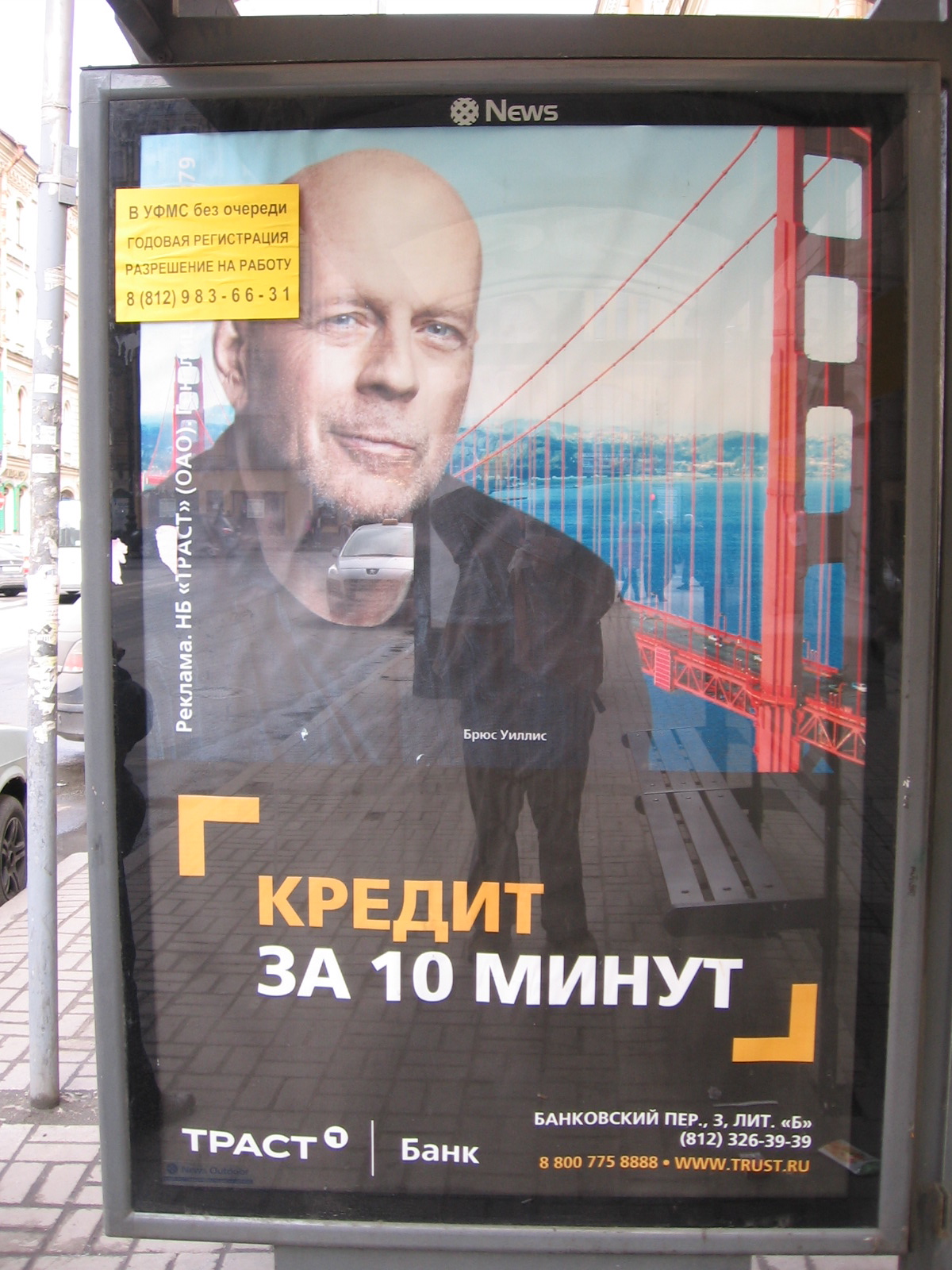
you can trust bruce willis“Bruce Willis. A loan in ten minutes. Trust Bank.” Mayakovsky Street, Petersburg, April 22, 2012. Trust Bank’s managers and employees were charged with fraud in April 2015. The bank received a $500 million emergency bailout from the Russian Central Bank in December 2014. Photo by the Russian Reader
Dmitry Kalugin
Facebook
December 15, 2017

Yesterday, I got chatting with the saleswoman in the basement where I buy smuggled coffee. Looking at my gray face, she saw signs I had not been getting enough shut-eye.

“Yes,” I said, “I’ve been sleeping badly. Nightmares have been messing with my head.”

“Well, the dreams I dream are totally screwed up. Take yesterday, for example. I dreamt I was getting married to Brad Pitt. It was like the thing was settled, the whole megillah. But my heart was topsy-turvy, because I don’t love him.”

“Who do you love?”

“Bruce Willis. I like him more as an actor and as a person.”

“Well,” I said, “if that is the hand dealt you (I’m no expert, of course), Brad Pitt is no bad bet, either.”

“I told myself the same thing. Why you mucking around? You’ve lived your whole life ass-backwards. Finally, a good option comes along: Brad Pitt. What else could you want?”

“Yeah, definitely a good option.”

“On the other hand, no way! Because I like somebody else, Bruce Willis. I realize it looks strange, but I can’t force myself. Basically, things are complicated.”

“So, how did it end? Did you get married?”

“I didn’t get anything. I woke up completely confused.”

Translated by the Russian Reader. Thanks to Mr. Kalugin for his kind permission to translate and publish his feuilleton on this website.

Cotton in Volgograd: An Immigrant’s Story

The White Gold Immigrant
Alexandra Dontsova
Takie Dela
December 5, 2017

Oybek Kimsanbayev’s life is like a Hollywood film: a brilliant scientific career, crushing failure, departure from his native country, work on a construction site, and his first experiments with cotton in Russia.

A heated discussion was underway at Volgograd State Agricultural University. Local and university officials were telling a visiting deputy agriculture minister about the local curiosity: cotton. Imagine, they told the deputy minister, it grows here, and the quality is even excellent. They dreamed aloud how it would be grown on an industrial scale. All that was needed was state support and processing complexes.

While the officials were singing cotton’s praises to the deputy minister from Moscow, a man with a haggard face stood in the doorway of the conference hall. He nervously bit his lips, alternating his gaze between the floor and the audience. Oybek Kimsanbayev heads a group of scientists who have developed varieties of cotton capable of growing in the Volgograd Region’s climate. The region is recognized as the northernmost point in the world where it is possible to grow cotton. Although he was the most important person in the room, Kimsanbayev was not on the list of speakers.

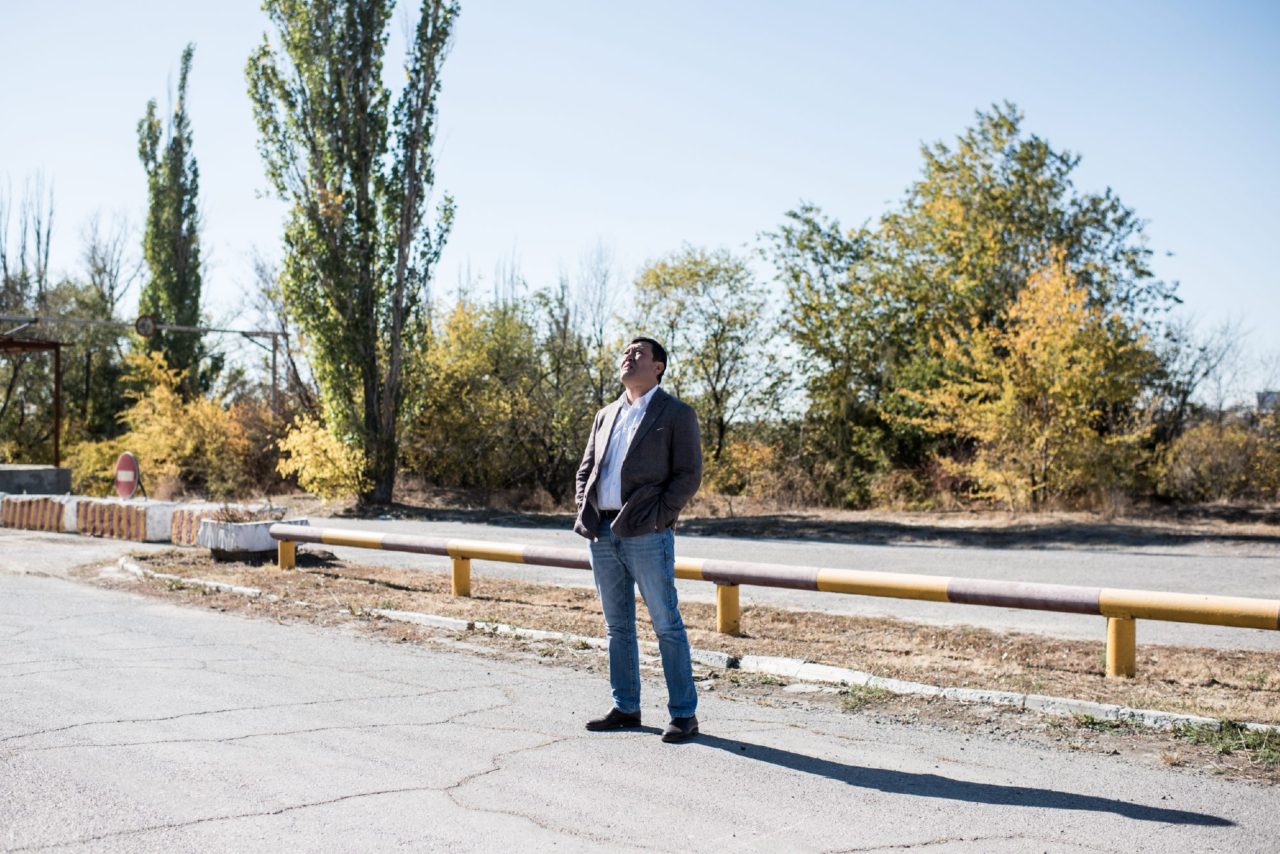
Oybek Kimsanbayev waiting to be interviewed. Photo by Alina Desyatnichenko for Takie Dela
Everyone except the man who had made the conversation possible talked about cotton and the prospects of its cultivation in Russia. (Given a skillful approach, Russian cotton might challenge the US and China’s hold on the market.) However, at some point, the university’s rector realized the discussion lacked something and gestured for Kimsanbayev to come and sit down at the round table at a place that had happily been  vacated.

Construction and Cotton

Kimsanbayev tells journalists nearly the same story when asked why he started researching cotton in Russia, adding that he is very grateful. Were it not for reporters, few people would know of his work, and he scarcely would have been able to get the ear of the authorities.

“In 2006, a cooperation agreement was concluded between Taskhent State Agricultural University and Volgograd State Agricultural University. Researchers launched projects on alternative crop production, meaning cultivatings crops that have not usually been grown in a particular area. One lab worked on reviving cotton growing in Russia. The outcome was a project for generating ultra-early ripening, high-quality varieties with a high fiber yield,” Kimsanbayev says at one go.

“And the non-official story? Why did you start researching cotton in Volgograd?”

We are sitting in small cafe in the Hotel Volgograd. It is pouring rain outside. Opposite our table is a group of foreigners. Judging the by patches on their blazers, they are FIFA officials, who have arrived in the city to monitor construction of the city’sstadium for the 2018 World Cup.

Kimsanbayev is forty-three years old. Aside from Tashkent Agricultural University, he has a degree from the University of Seoul, taught at Columbia University, ran a lab, worked for the president of Uzbekistan in the early noughties, and at the age of thirty-five became the youngest doctor of agricultural sciences in his country. He has published hundreds of scientific papers, and he has developed and co-developed some two dozen varieties of cotton. Until 2012, he led an international project for creating ultra-early ripening cotton varieties.

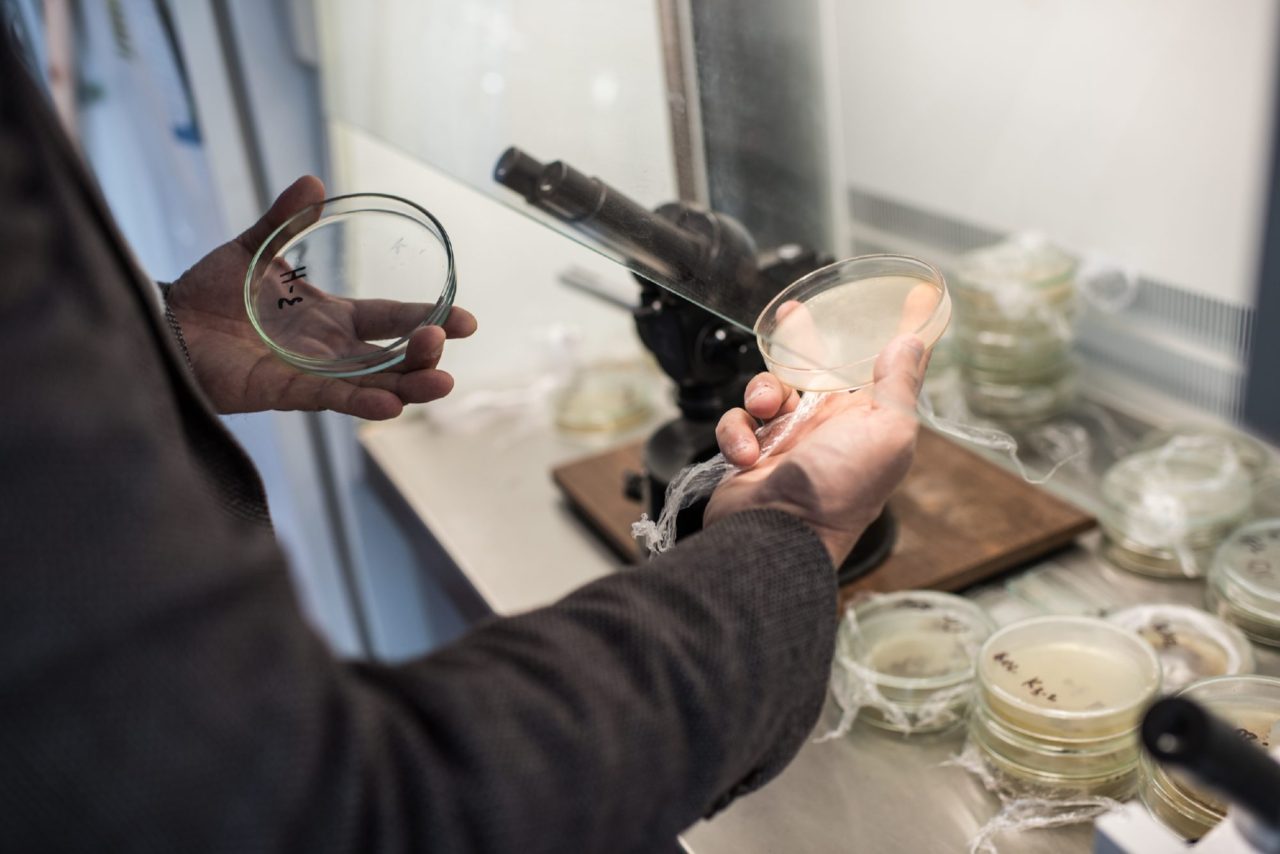
Kimsanbayev shows the work his lab does. Photo by Alina Desyatnichenko for Takie Dela
It was at this high point that Kimsanbayev’s life, chockablock with prospects and ambitious plans, fell apart overnight. Due to a mistake he discusses reluctantly, he was forced to leave Uzbekistan.

“Yeah, I have a big mouth. I was working with a Russian university. We had established a distance-learning platform for Uzbek children. But not everyone liked what we were doing. So it happened I lost my job and could not find another one.”

Professor Kimsanbayev was forced to go to Russia to work as an ordinary migrant worker. An acquaintance in Volgograd hired him to work for his company, to “make some moves,” as Kimsanbayev puts it.

“The helter-skelter was not my thing, and I went and got a job at a construction site. I was an ordinary unskilled laborer, along with other men from my country. I don’t see anything shameful about working with my hands. If I have to, I’ll wash floors. Or work on building the stadium.”

Chance brought Kimsanbayev together with good people who took him to Volgograd State Agricultural University. After a long interview with the rector and after he supplied the university with his academic credentials, Kimsanbayev was appointed a lecturer in the agricultural technology department. Realizing the worth of their new faculty member, the university rented a flat for him. He was given the chance to do what he does best: experiment with cotton.

Not Just Cotton Wool

The first year, Kimsanbayev planted only 25 acres. The professor did everything himself in a field the size of four typical dacha plots. He sowed it, plowed it, watered it, and did battle with weeds and pests. Many people doubted the seeds would sprout.

“I brought an international collection of cotton seeds to Volgograd: 97 varieties from all the cotton-producing countries, from Latin America, the US, China, India, and so on. I selected 25 varieties, which sprouted in the local climate. I narrowed these down to three varieties. That is how we arrived at an ultra-early ripening cotton in Volgograd, a variety that matures between April and September.”

The following year, the experimental cotton field had grown to eight hectares. To help him with the work, Kimsanbayev hired Uzbek agronomists and encouraged the university’s students to join them. The outcome: not only did the cotton seeds sprout, but the field turned into a white carpet in due time.

“As they say, I woke up famous one day. Reporters and local officials came to see me in the field. Now everyone believed Volgograd cotton was a reality. However, we are faced with other problems. We have to convince farmers it is worth growing cotton, that the crop is economically profitable: the price of one kilo of raw cotton is equal to the price of thirty kilos of wheat. In addition, we need specialist agronomists. So, basically, I promote cotton and, of course, train students. I don’t work alone. Several scientists, including Igor Podkovyrov and Taisiya Konotopskaya, have been working on cultivating new varieties with me and training specialists.”

Kimsanbayev now heads the university’s Center for Applied Genetics, Selective Breeding, and Cotton Seed Production. In total, 109 hectares were planted with cotton this year.

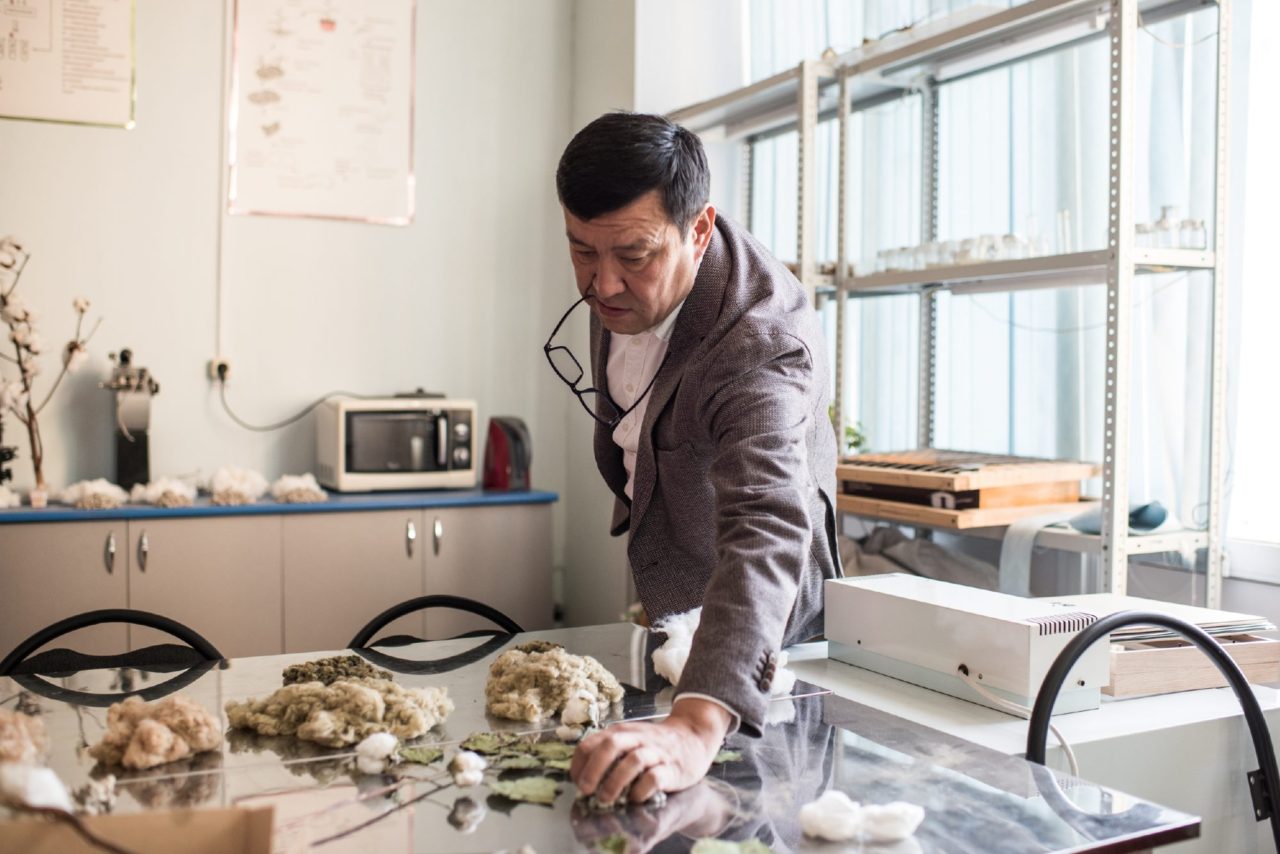
Oybek Kimsanbayev in the lab. Photo by Alina Desyatnichenko for Takie Dela
Kimsanbayev says that Allah loves him. Otherwise, he would not have sent him so many trials and so many people, willing to help him just like that, without asking anything in return.

“There have been deplorable circumstances when my life was not worth a penny. Yet people helped him. But there are things I really regret. I once behaved disgracefully and therefore moved away from my family. So the burden of guilt would not drag me down, I simply shoved off to Russia, frankly. That is why I have worked so hard, so that, down the line, my family—my dad, my brother, my wife and our three children—would be proud of me. That is my own real goal in the work I do.”

“What did you do that was disgraceful?”

“I don’t want to talk about it.”

“When was the last time you were in Tashkent?”

“I constantly have meetings and business trips. My schedule is crazy. I just got back from Astrakhan, where the region’s governor and I discussed a plan for sowing 200 hectares of cotton in the spring. I haven’t been home for four months.”

Kimsanbayev suddenly falls silent. The expression on his face changes noticeably when the conversation turns to family and children. His eldest daughter and son are seventeen and sixteen, respectively, while his youngest son is five.

“I miss them, of course. I’m really afraid of losing my family due to my work.”

“Why don’t you move them to Volgograd?”

“Where would I put them? In a rented flat on a monthly salary of 27,000 rubles [approx. 390 euros]? Listen, your questions are making me depressed, and it’s raining outside as it  is.”

Later, Kimsanbayev confesses he bought tickets for home right after our interview.

Potatoes on Mars

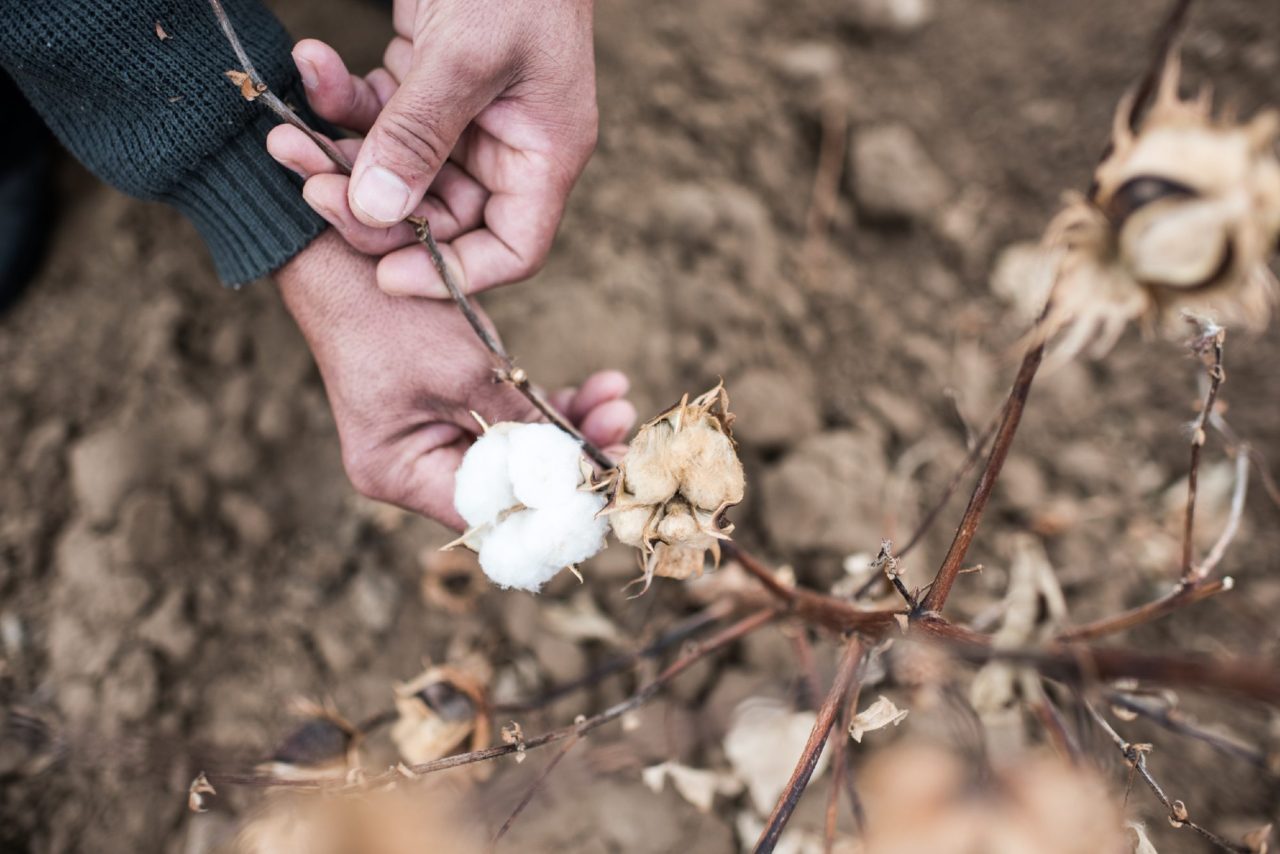
The cotton harvest is nearing completion in the university’s experimental field. The agronomist Bahadir or, as he introduces himself, Boris, specially recruited from Tashkent for the experiment outside Volgograd, shows me how to pick cotton. It is fairly straightforward. You pull the fiber from the boll. If it gives, you keep pulling until you have all the white cotton in your hand.

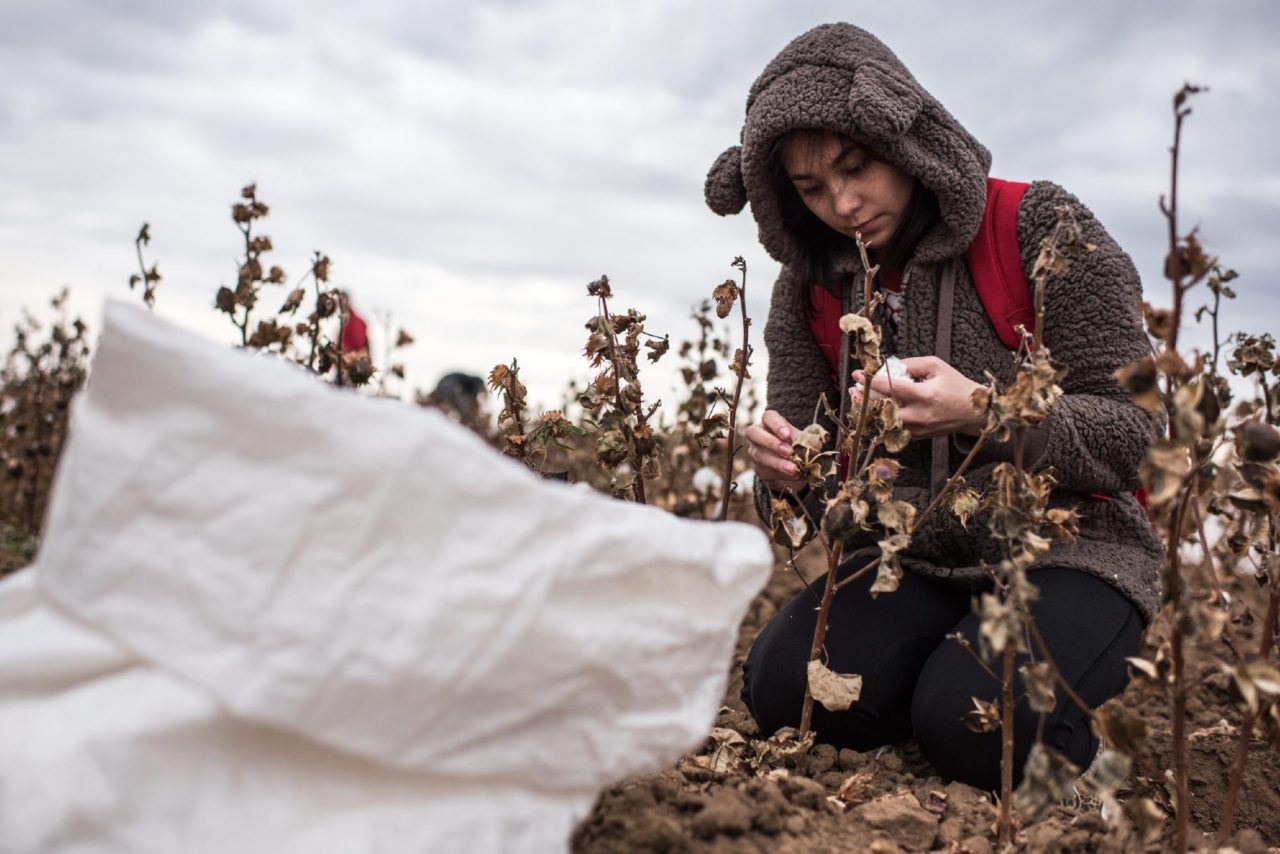
University students help pick the cotton. The white caps from the cotton plants are quickly deposited into sacks. Soft as a cat’s paw, the fiber is pleasant to the touch. The softness is a small reward for one’s efforts. Pulling the cotton from the boll without being pricked is nearly impossible.

A student from Volgograd State Agricultural University picks cotton. Photo by Alina Desyatnichenko for Takie Dela

There are several unusual rows on the edge of the large field. The cotton there is not white, but dirty yellow and brownish green. It transpires that this year the Volgograd researchers bred a special variety of colored cotton. Someone joked the military ordered green cotton for sewing its uniforms.

Since Oybek Kimsanbayev joined its faculty, Volgograd State Agricultural University became the only university in Russia where cotton scientists are trained.

“Do you know how I enticed students into studying cotton? I said they would be rare specialists, and they would especially in demand abroad. But I hope, nonetheless, that Russian farmers realize the crop is quite profitable economically. This year, for example, there was overproduction of wheat in southern Russia. Farmers cannot sell the grain at a good price, while there is simply nowhere to store such yields. Consequently, they are making a loss. And this isn’t the first year we’ve seen this scenario. So, farmers need to switch to other crops, including non-traditional crops. Cotton could be one of those crops.”

“Where else in Russia could cotton be grown?”

“Currently, Volgograd Region is the northernmost area in the world where cotton is planted. The crop could be planted farther south, in Astrakhan, Kalmykia, Stavropol, and Krasnodar. Just imagine, in Volgograd Region, in one of the districts along the Volga River there are one and a half million hectares of cropland lying fallow. If you sow all that land with cotton, and the yield from one hectare is around one ton, Russia could reshape the world cotton market. It would simply crash it. Russia would not be dependent on imported cotton, which is especially vital given ongoing western sanctions and Uzbekistan’s refusal to export raw cotton to Russia. The really funny thing is that cotton was once grown in these parts. However, the technology was lost over the last decades. So now we folks at the university are once again developing techniques for cultivating cotton and breeding new varieties.”

The harvested cotton is loaded into a trailer for the journey to the warehouse. Photo by Alina Desyatnichenko for Takie Dela
The cotton from the experimental field is of very high quality. Its quality has impressed the local textile mill and a Moldovan company, almost the only full-cycle plant in the CIS where raw cotton is processed and fabric produced. It is they who are hurrying the researchers in Volgograd to breed varieties that would yield 3,000 kilos a hectare.

“Next year, six times more cropland will be sown with cotton seed in Volgograd Region alone: 630 hectares. Plus there will be 200 hectares in Astrakhan Region. We are negotiating with Kalmykia. We provide scientific support to all the farmers. Recently, at an ag expo in Moscow, I spoked with your agriculture minister, Alexander Tkachov. He told me a program for supporting cotton growing in Russia was in the works. I think the availability of state support would ultimately convince farmers to take up cotton.”

“Do industrialists try and recruit you? The salaries are definitely higher in industry than at a regional university.”

“I’ve had offers. But I turned them down. I would have to work as an agronomist or seed cultivator whose job would be to increase gross crop yields. I don’t find that interesting. I’m a scientist. I’ve created a variety, I’ve let it go to work, and I’ve set myself a new goal.”

“Do you have a new goal?”

“I do. Roughly speaking, our project aims to study alternative crop production. Meaning that we cultivate crops in places where they usually don’t grow. Have you seen the movie The Martian, in which an astronaut grows potatoes? They took the idea from reality. Thirty years ago, the Soviet cosmonaut Vladimir Dzhanibekov was the first person to grow cotton in outer space. My objective is to cultivate varieties of different crops that would adapt to all natural conditions, so that no amount of frost could damage them. I have proven this is possible. However grandiloquent it might sound, the job of farmers is to feed the world. If plants can yield crops under any conditions, imagine how that would change a country’s economy.”

The agronomist Bahadir shows off Volgograd’s know-how: colored cotton. Photo by Alina Desyatnichenko for Takie Dela
Cotton is the only crop that has several sets of genetic chromosomes. That is why it is perfect for different experiments.

“How do they relate to your work and success in Uzbekistan? Are they kicking themselves for letting such a valuable employee go?”

“I don’t know whether they’re kicking themselves. But I have been offered a prestigious job and a high post. I’m not ready to go back yet.”

Translated by the Russian Reader

Four Last Addresses

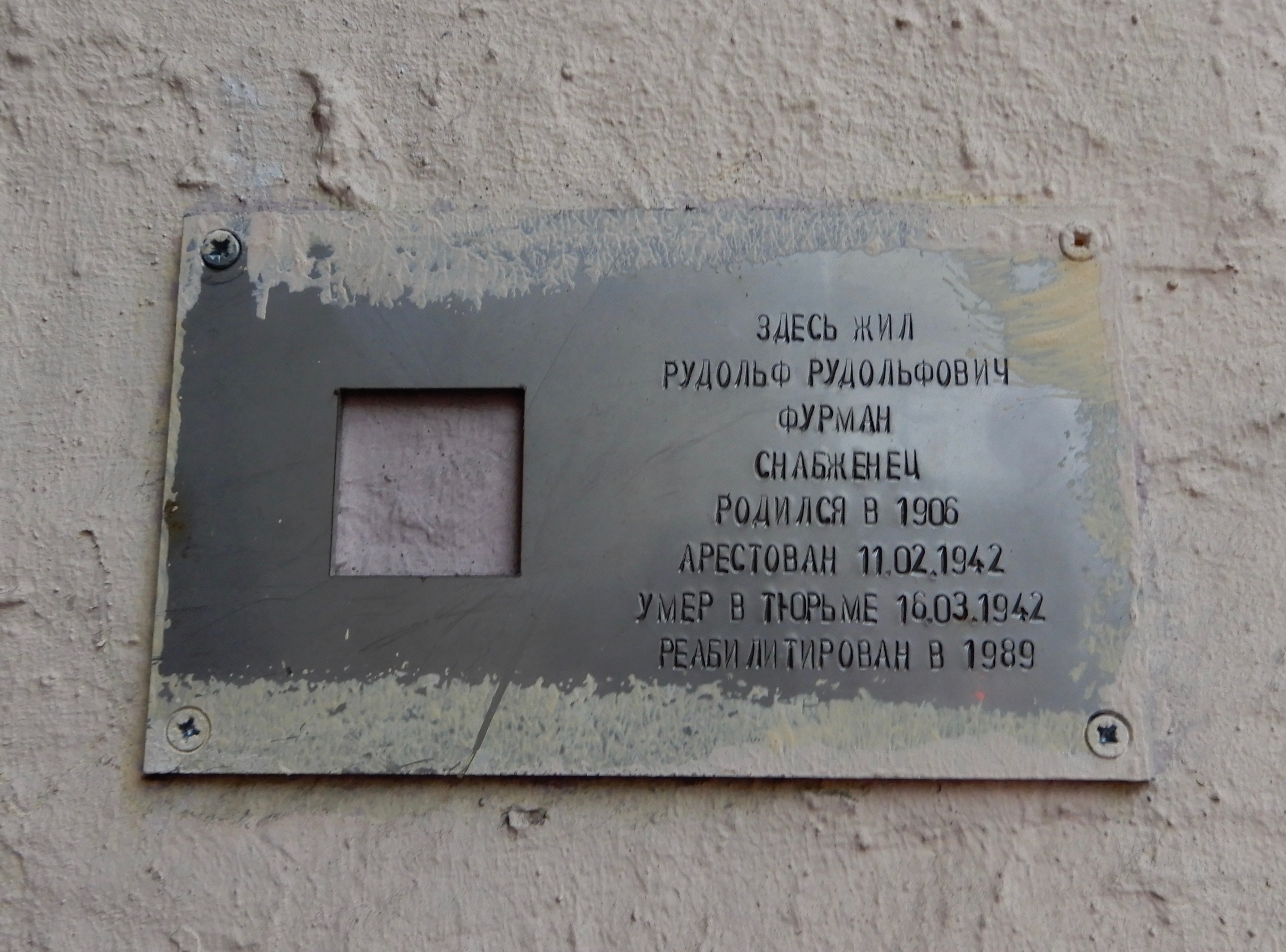
last address-furman-marata“Here lived Rudolf Rudolfovich Furman, purchasing agent. Born 1906. Arrested 11 February 1942. Died in prison 16 March 1942. Rehabilitated 1989.” The Last Address website reveals more details about Furman’s life and plight. A native of St. Petersburg and an ethnic German, Furman worked as an assistant master chemist at the Moscow District’s Osoaviakhim (Society for the Promotion of Aviation and Chemical Defense) Techno-Chemical Workshops. He lived in flat no. 17 at 4 Marat Street. Arrested by the OGPU on 7 October 1931 under Article 58-11 of the RSFSR Penal Code, Furman was exiled for three years to Kazakhstan, where he lived in Alma-Ata before returning to Leningrad. Arrested during the Nazi siege of the city in late February 1942, Furman died in prison a week later. He was rehabilitated on 11 April 1989. Photo by the Russian Reader
__________________

Dear Last Address Supporters:

We will be remembering the victims of Soviet state terror on December 17 in St. Petersburg.

At 12 p.m., a Last Address memorial plaque bearing the name of Rear Admiral Pyotr Nikolayevich Leskov will be placed on the residential building at 26 Mokhovaya Street. Commander of the cruiser Aurora and head of the Central Naval Museum, Leskov was arrested on 2 November 1937, and shot for “espionage” and “terrorism” in December 1937. He was 73 years old.

At 1 p.m., a plaque inscribed with the name of Kirill Petrovich Peterson, an ethnic German and engineer at the André Marty Shipyards, will appear on the house at 9 Mitninskaya Embankment. Peterson was arrested on 2 January 2 1937 and shot for “espionage” on 29 January 1938. He was 22 years old.

At 2 p.m., a plaque bearing the name of Johanna Gedartovna Preiman, an ethnic Latvian and food service worker, will be attached to the house at 30 Labutin Street. A canteen worker who was employed on long-distance sailing vessels, Preiman was shot for “espionage” on 3 January 1938. She was 49 years old.

Subsequently, the cases of these three victims of state terror were reexamined and found to have been fabricated. All three victims were fully rehabilitated. 

By the end of 2017, Last Address will have placed 234 memorial plaques on 140 houses.

Yours,

The Last Address Group in St. Petersburg

Source: Last Address Newsletter


The Affirmative Action Lenin

DSCN1797

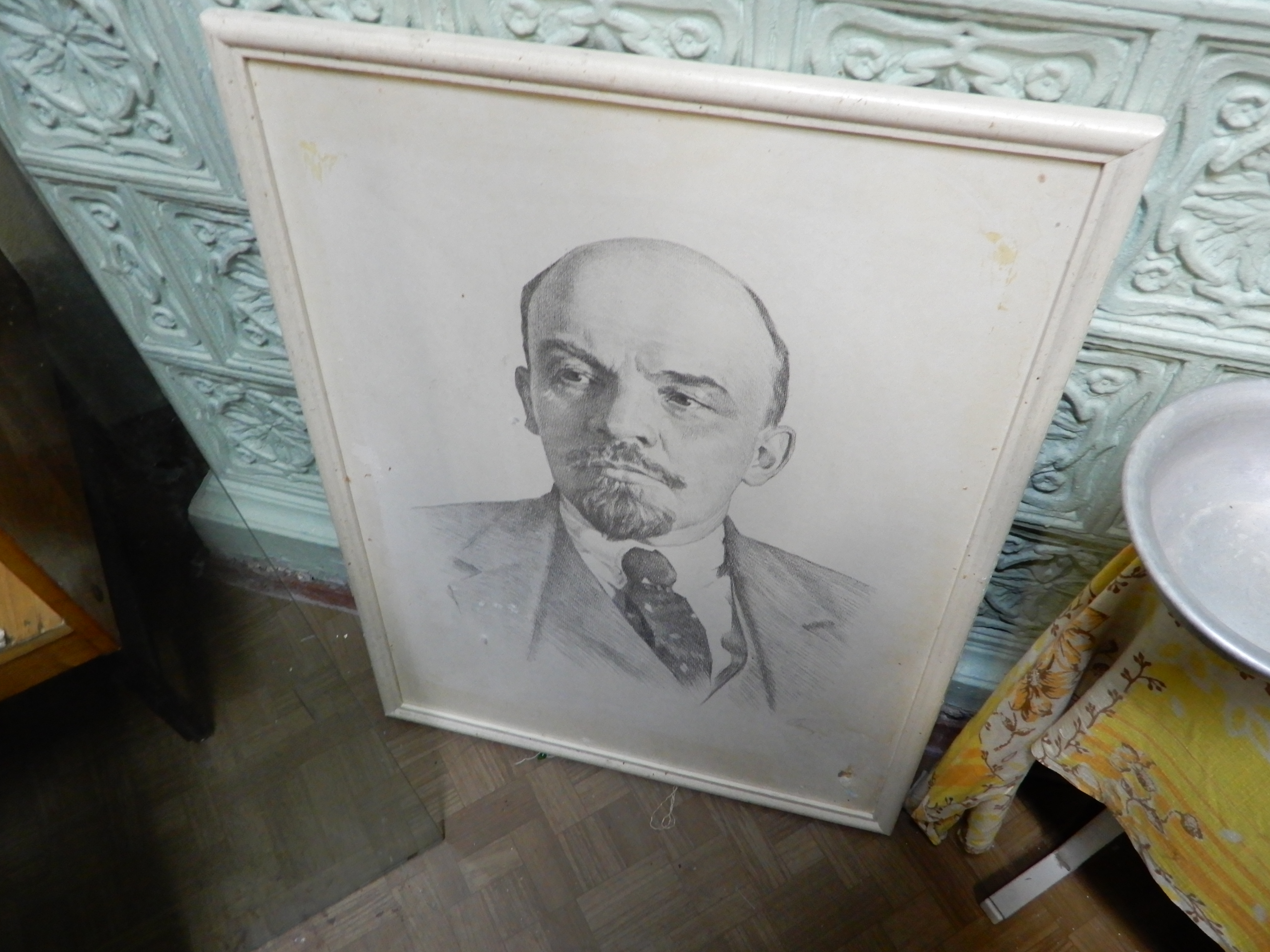
In my writings on the national question I have already said that an abstract presentation of the question of nationalism in general is of no use at all. A distinction must necessarily be made between the nationalism of an oppressor nation and that of an oppressed nation, the nationalism of a big nation and that of a small nation.

In respect of the second kind of nationalism we, nationals of a big nation, have nearly always been guilty, in historic practice, of an infinite number of cases of violence; furthermore, we commit violence and insult an infinite number of times without noticing it. It is sufficient to recall my Volga reminiscences of how non-Russians are treated; how the Poles are not called by any other name than Polyachiska, how the Tatar is nicknamed Prince, how the Ukrainians are always Khokhols and the Georgians and other Caucasian nationals always Kapkasians.

That is why internationalism on the part of oppressors or “great” nations, as they are called (though they are great only in their violence, only great as bullies), must consist not only in the observance of the formal equality of nations but even in an inequality of the oppressor nation, the great nation, that must make up for the inequality which obtains in actual practice. Anybody who does not understand this has not grasped the real proletarian attitude to the national question, he is still essentially petty bourgeois in his point of view and is, therefore, sure to descend to the bourgeois point of view.

— Vladimir Lenin, “The Question of Nationalities or ‘Autonomisation'” (1922), Marxists Internet Archive

Thanks to Ivan Ovsyannikov for the heads-up. Photo by the Russian Reader

NKVD Fantasy Babe Novel

gutkin-instruktor ombsbon.jpg
Our Guys Over There
Mikhail Gutkin, OMSBON Instructor (Tsentrpoligraf, 2012)

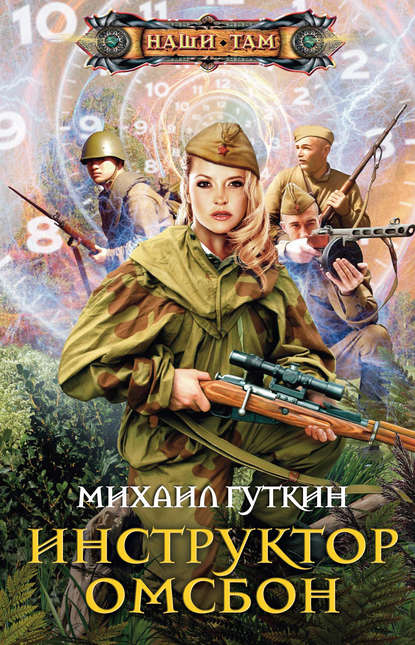
If, a year ago, someone had told Moscow university student Anna that, instead of the usual trip to Grandma’s, she would find herself in the midst of military operations in Byelorussia [sic] in 1941, the young woman would only have rolled her eyes. But now NKVD Lieutenant Severova is already accustomed to the new reality. A liaison to the legendary General Zhukov, Anna spends the war’s first days in the heat of the battle on the border. She is soon involved in the formation of the OMSBON (NKVD Special Purpose Motorized Rifle Brigade). Once again on assignment in Byelorussia, Anna meets another time traveler. Now she is certain a time portal exists, and she even has a rough idea of where it is.

Source: LitRes

The October Revolution’s Other Party

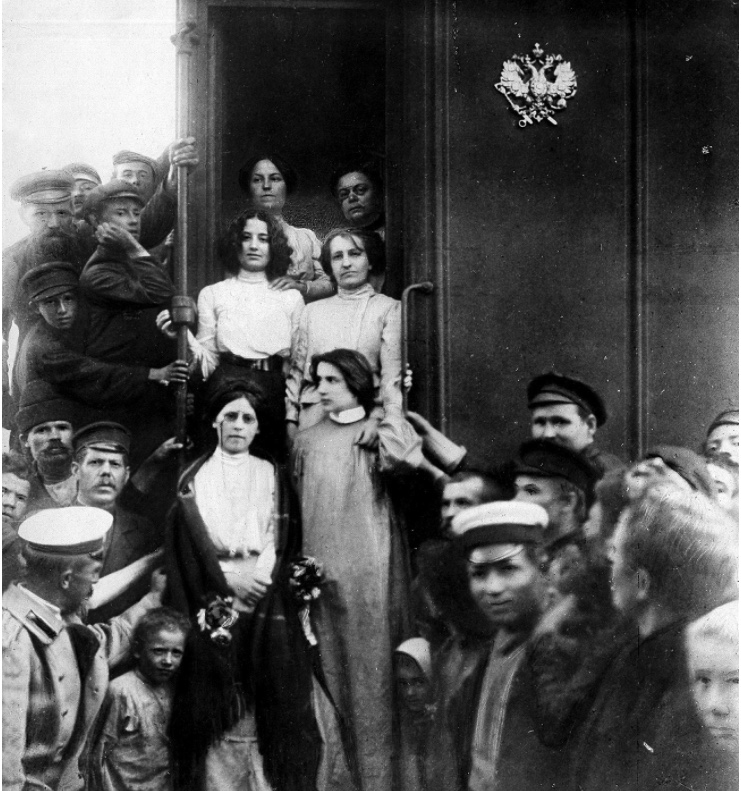
spiridonovaLeft SR leader Maria Spiridonova (center, wearing glasses). Photo courtesy of Getty Images and Russia Beyond the Headlines
October’s Number Two Party: Who Helped the Bolsheviks Prevail?
Yaroslav Leontiev
Vedomosti
December 8, 2017

The First All-Russian Congress of the Party of Left Socialist Revolutionaries (Internationalists) took place a hundred years ago in St. Michael’s Castle in Petrograd. The Left SRs were the second largest force in the October Revolution, providing the Bolsheviks with support in rural areas and amongst rank-and-file soldiers. Sixty-eight SR organizations gathered in the building where writer Fyodor Dostoevsky, physiologist Ivan Sechenov, and engineer Pavel Yablochkov had once studied. [From 1823, St. Michael’s Castle housed the Russian Army’s Main Engineering School. Now a branch of the Russian Museum, the castle is thus still alternately referred to as Engineers’ Castle—TRR.]

“Our party’s first congress was, in effect, not a congress, but a hasty review, as it were, of representatives of a certain mindset,” Prosh Proshyan, a Left SR leader and congress attendee, recalled later.

“If I had not been in Petersburg in 1917, the October Revolution would have happened—if Lenin had been present and in charge. But if neither Lenin or I had been in Petersburg, there would have been no October Revolution. […] If Lenin had not been in Petersburg, I would hardly have managed. […] The revolution’s outcome would have been in doubt,” said Trotsky.

Yet if Maria Spiridonova, Boris Kamkov, and other Left SR leaders had not been in Petrograd at the time, it is by no means a fact the revolution’s victory would have been secured at the All-Russian Congresses of Soviets of Peasants’ Deputies. And victory itself for the Bolsheviks would have been a dubious proposition without allies, if we have in mind the Russia beyond the two capitals and the major industrial cities.

After winning the majority of mandates at the Extraordinary All-Russian Congress of Soviets of Peasants’ Deputies in November 1917 (Spiridonova was elected its chair), the Left SRs were heavily involved in the events leading up to the revolution. When the Military Revolutionary Committee was established in Petrograd on October 12, 1917, Pavel Lazimir, an army paramedic and Left SR, was elected its chair. The field headquarters of the Military Revolutionary Committee, headed by Bolshevik Nikolai Podvoisky, would be established later, right before the armed assault on October 25.

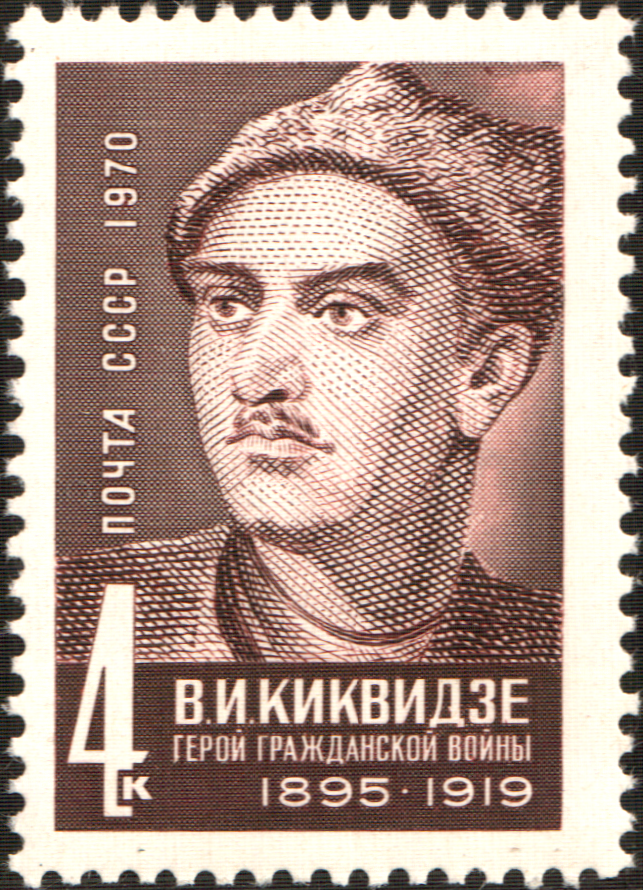
In many cities, Left SRs were heavily involved in coups and the armed seizure of power. This forced the SR Central Committee (which had not yet split into factions) to dissolve the Petrograd, Helsingfors (Helsinki), and Voronezh party organizations. In certain cases, Left SRs themselves headed revolutionary committees, in particular, in Kharkov and Pskov. The chair of the Astrakhan People’s Power Committee, which had taken over the region, was Ensign Alexander Perfiliev, a Left SR. In Smolensk, the Bolshevik-dominated revolutionary committee, which included two Left SRs and one anarchist, joined with the provincial congress of peasant deputies and elected Dr. Yevgeny Razumov, who had attended the founding congress of the Left SRs, head of the local Sovnarkom (Council of People’s Commissars). The chief of staff of the revolutionary military units who took power in Tashkent was Pavel Domogatsky, a Left SR and private in the First Siberian Reserve Rifle Regiment. In Kazan, Left SRs organized and headed the revolutionary committee, which competed with the Bolshevik revolutionary HQ in the battle for the hearts and minds of the masses. During General Kornilov’s attempted putsch in September 1917, the Central Staff of the Red Guards in Moscow consisted of seven Bolsheviks, six Left SRs, six Left Mensheviks, and three independents. Ensign Yuri Sablin, a Left SR member of the Moscow Revolutionary Committtee HQ, commanded a special detachment that advanced from the Strastnoi Monastery to the Nikitsky Gates and captured the mayor’s building on Tverskoi Boulevard. Another famous Russian Civil War commander, Vasily Kikvidze, a Left SR and volunteer in a Hussar regiment, was deputy chair of the Military Revolutionary Committee on the Southwestern Front during the First World War.

The_Soviet_Union_1970_CPA_3921_stamp_(Vasily_Kikvidze)

1970 Soviet four-kopeck postage stamp memorializing Left SR Vasily Kikvidze as a “hero of the Civil War.” Image courtesy of Wikimedia

The Left SRs had a huge influence on the sailors of the Baltic and Black Sea Fleets.

“The only Mensheviks and SRs in our midst were left-wing and internationalist,” midshipman and Bolshevik Fyodor Raskolnikov described the circumstances.

Consequently, the Left SRs headed the Kronstadt Soviet. The main bulwark of revolutionary forces in Petrograd, the Kronstadt Soviet commanded the detachment sent to storm the Winter Palace and to the Pulkovo Heights against Krasnov’s troops. The commander of the Petrograd Military District at the time was the future rebel commander of the Eastern Front, Lieutenant Colonel Mikhail Muravyov, and the city’s air defense was headed by NCO Konstantin Prokopovich. Both Muravyov and Prokopovich had joined the Left SRs.

Although the Left SRs did not immediately join the government (the first Left SR to be authorized by the peasant congress, on November 19, to join the government was Andrei Kolegayev, appointed People’s Commissar for Agriculture), they did share responsibility for the seizure of power with the Bolsheviks: there was one Bolshevik and one Left SR in each of the thirteen departments of the All-Russian Central Executive Committee. At a plenary session of theCentral Executive Committee on November 6, seven Left SR leaders, including Spiridonova, Kamkov, and Mark Natanson, were elected to its presidium, and Grigory Smolyanksy, former chair of the Left SR committee in Kronstadt, was appointed one of the Central Executive Committee’s two secretaries. On December 12, another five prominent Left SRs were added to the Central Executive Committee’s presidium.

1920px-Совет_народных_комиссаров_(Ленин,_Штейнберг,_Комков,_Бонч-Бруевич,_Трутовский...),_1918A meeting of the Sovnarkom (Council of People’s Commissars), circa December 1917–January 1918, featuring (from left to right) Isaac Steinberg, Ivan Skvortsov-Stepanov, Boris Kamkov, Vladimir Bonch-Bruyevich, Vladimir Trutovsky, Alexander Shlyapnikov, Prosh Proshyan, Vladimir Lenin, Joseph Stalin, Alexandra Kollontai, Pavel Dybenko, E.K. Kosharova, Nikolai Podvoisky, Nikolai Gorbunov, V.I. Nevsky, Alexander Shotman, and Georgy Chicherin. Photo courtesy of Wikipedia
The second non-Bolshevik member of the government, appointed by the Sovnarkom on November 25, was engineer Lev Kronik, who was made a member of staff at the People’s Commissariat for Posts and Telegraphs. During December 1917, the Sovnarkom and VTsIK appointed seven more Left SRs People’s Commissars. Prosh Proshyan, only son of the classic Armenian writer Pertch Proshyan, was named People’s Commissar for Posts and Telegraphs. Isaac Steinberg was named People’s Commissar of Justice. Vladimir Trutovsky was appointed People’s Commissar for Local Self-Government, and Vladimir Karelin, People’s Commissar for the Republic’s Property. Two more Left SRs were made people’s commissars without portfolios, working on the staffs of the People’s Commissariat of Internal Affairs and the People’s Commissariat of Military and Naval Affairs, respectively. They had the right to vote at sessions of the Sovnarkom.

Later, in January and February 1918, the Left SRs increased their presence in the central government and local governments. They joined nearly all the regional governments (Moscow Region, the Ural Region, the Siberian Soviet Government, etc.). Alexander Malitsky, who headed the Central Executive Committee of the All-Russian Railway Union, was appointed to the staff of the People’s Commissariat of Railways. Other Left SRs joined the staff of the People’s Commissariat for Food and held key posts in the Red Army, having literally put their hand to the decree founding the Red Army. Left SR Vyacheslav Alexandrovich (Dmitriyevsky) was Felix Dzerzshinsky’s right-hand man in the Cheka, and would be one of the first Left SRs shot by his ex-colleagues in July 1918. The influential Left SR Anastasia Bitsenko was, practically speaking, the first female Soviet diplomat: she was an official member of the Soviet peace delegation at the negotiations in Brest. Meanwhile, Spiridonova was essentially Yakov Sverdlov’s deputy on the All-Russian Central Executive Committee of Soviets. She chaired its peasant section, which had its own staff and published the newspaper Voice of the Working Peasantry (Golos trudovogo krestyanstva). It was in the Voice and the party’s central newspaper, Banner of Labor (Znamya truda) that the whole of Russia read the revolutionary poetry of Alexander Blok and Sergei Yesenin, who supported the Left SRs.

But the Bolshevik-Left SR coalition proved fragile: it did not last long. In January 1918, when, at the behest of the Left SRs, the All-Russian Congresses of Workers’ and Soldier’s Deputies, and Peasants’ Deputies merged, and the Left SR “Basic Law on the Socialization of Land” was adopted, nothing foreshadowed the imminent break between the allies. Rejection of the Treaty of Brest-Litovsky and anti-peasant Bolshevik decrees would move the Left SRs to engage in peaceful and, later, armed struggle against the Bolsheviks. On July 6, 1918, after Left SR uprisings in Moscow and the cities of the Volga region, a full-fledged war broke out between the erstwhile allies. But this is another story.

Yaroslav Leontiev is a professor in the Faculty of State Management of Moscow State University. Translated by the Russian Reader

The No Choice Movement

putin bench

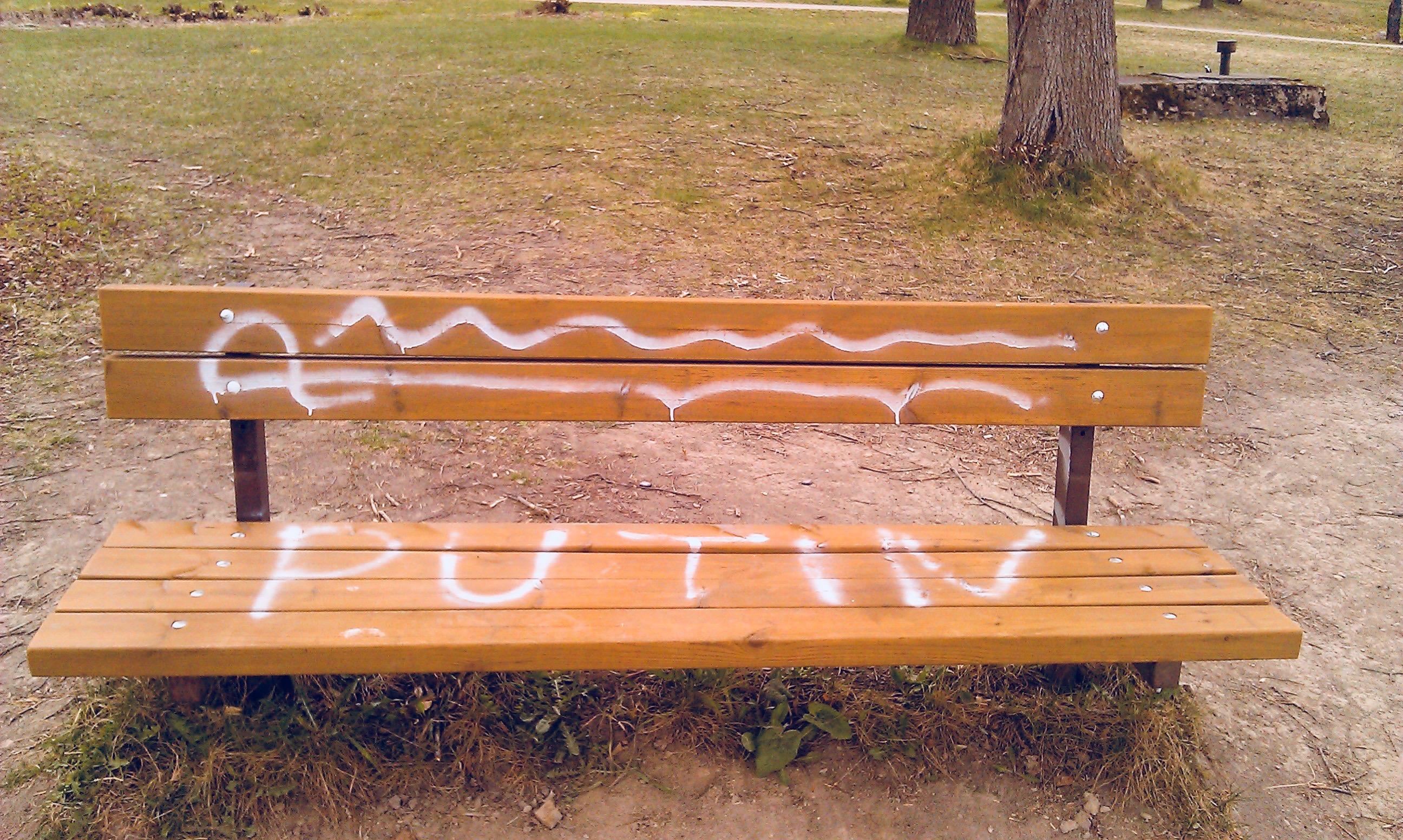
President Vladimir Putin announced he would be running for president in 2018. He made the announcement at a meeting with workers of the GAZ auto plant in Nizhny Novgorod. The occasion was the plant’s 85th anniversary.

“This is always a very responsible decision for any person. Because the motive in making the decison can only be the desire to improve the lives of people in our country, to make the country more powerful, better protected, and forward looking. And these goals can be achieved only on one condition: if people trust and support you,” he said, as reported by Rossiya 24. Photo by the Russian Reader

Why Putin’s Announcement He’s Running for Re-Election Doesn’t Matter
The only mystery of the 2018 presidential election, already purely symbolic, has died
Maria Zheleznova
Vedomosti
December 6, 2017

The deed is done. On December 6, Vladimir Putin told workers at the GAZ auto plant in Nizhny Novgorod he plans to run for a fourth term as president. “GAZ supports you” [GAZ za vas], the workers chanted in reply. Thus the slight suspense generated by the 2018 presidential election came to a trivial end.

No, there was no mystery as to whether Putin would run. The bashful talk about the hypothetical possibility of his not running died several days after it was born, leaving a slight sense of embarassment. The only mystery was when and where he would say he was running. There were many options, and lots of discussion, and the pros and cons of this or that date were numerous, but there was almost no point to any of it. What the GAZ plant workers heard in Nizhny Novgorod on December 6 could have been said today, yesterday or December 31. It could have been said in Moscow, Penza or Tynda. It could have been said to soldiers, schoolchildren or cooks. On the eve of the announcement, his spokesman said we could expect Putin’s throwing his hat in the re-election ring any day. We had to be ready to hear his annoucement every day. The spokesman sure said it. People waited and waited and grew weary of waiting. Now they can cease waiting.

Chechen leader Ramzan Kadyrov dubbed December 6, 2017, a “historic day, a festive day,” of course, but it is unlikely to go down in history as much as September 24, 2011, when it transpired Putin would seek a third term as president, and Dmitry Medvedev would be a one-term president. That was a fundamental choice. Today’s choice was formal, and indeed there is no choice.

On December 6, 2017, the only mystery of the 2018 presidential election, a mystery that was purely formal anyway, died. Yes, we still have the official announcement of election day, the campaign’s kickoff, and the nomination of other candidates to look forward to. (Although Alexei Navalny, who is really trying to win the presidency, is unlikely to be amongst them.) This will be followed by campaigning, the usual refusal to debate the other candidates, voting, and, finally, the vote tally and announcement of the results. But none of it means anything to anyone, except the official election chroniclers and Central Electoral Commission. All these obligatory but purely technical stages and their circumstances are seen by many as a needless hindrance, in particular, by liberal economists, who are forced to wait, first for the election, and then the new old president’s inauguration, as a signal to launch long-overdue reforms (or reject them). Everyone else regards Putin’s self-nomination as something like the coming of the New Year. The next day, life will go on as before, irregardless of New Year’s Eve’s irrational illusions.

Russia faces another six years of life under Putin. We must imagine they will be more or less like the previous seventeen years of Putin’s rule. The workers at GAZ will assemble cars, liberals will talk about the need for reforms, Kadyrov will praise the president to the heavens, and Navalny will fight for the right to get his name on the ballot. While this goes on, people who were born when Putin was already president will become adults, meaning full-fledged voters. An entire generation will come of age, a generation for whom the principal suspense of presidential elections is the choice of the day and the place when the president says he is running for re-election, an announcement they must anticipate every day.

Commentary
Dead Moroze, 7:27 p.m., December 6, 2017
As a “democratic federal state, based on the rule of law, with a republican form of government,” the Russian Federation has ended. So, no announcements regarding Putin really mean anything in this context.

Translated by the Russian Reader

Latifundism in Russia

Land Prices in Russia Reach Five-Year High
Farmland may become cheaper next year
Irina Sinitsyna
Vedomosti
December 6, 2017

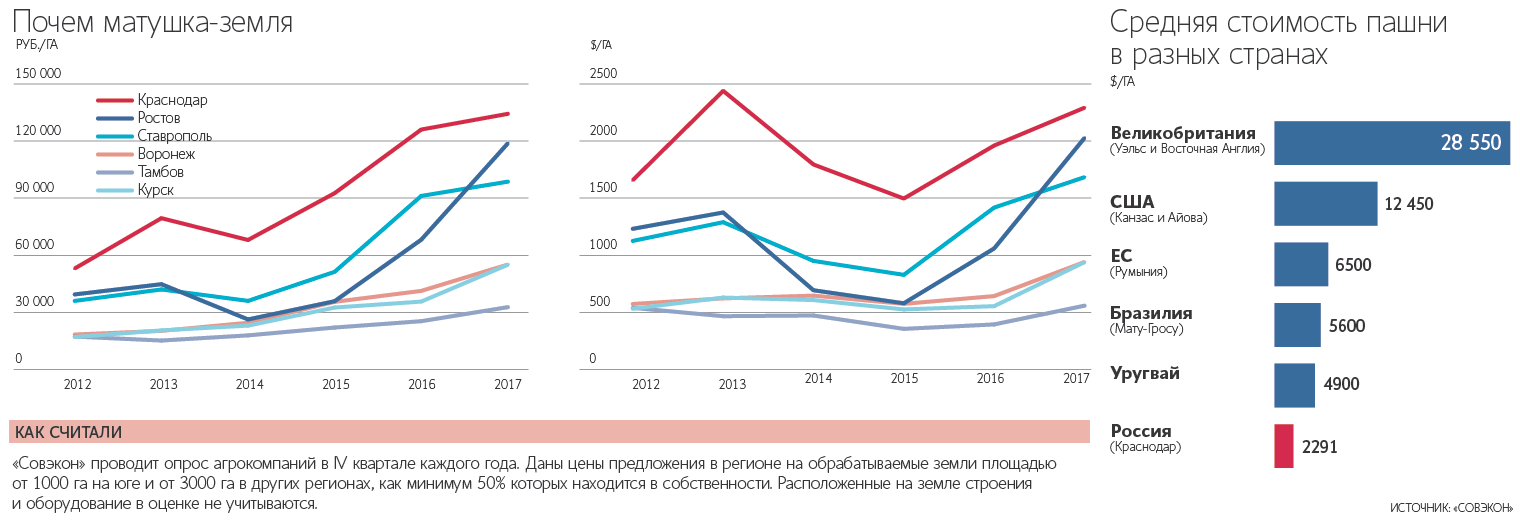
The cost of farmland in Russia’s primary grain-producing regions reached its five-year peak in 2017, as valued both in rubles and dollars. This conclusion was reached by analysts at Sovecon, an agro industry research center, based on the results of an annual survey.

Amongst the fundamental reasons were the record profits made by agricultural producers in the 2016–2017 season, sparked by good harvests and relatively high ruble prices for most commodities, says Andrei Sizov, Sovecon’s director.

In addition, there has been consistently strong demand for land on the part of predominantly Russian capital in the guise of industry-specific investors, Sizov adds. Amongst the most active public buyers, Sizov identified the agricultural division of Sistema, the N.I. Tkachov Agrocomplex, owned by the family of Alexander Tkachov, Russia’s agricultural minister, and Volgo-Donselkhozinvest, owned by the family of Sergei Kukura, adviser to Lukoil president Vagit Alekperov. New players, such as the companies owned by Roman Avdeyev, have also continued to expand into the agro business. On the year, from the fourth quarter of 2016 to the third quarter of 2017, Sistema’s subsidiaries increased their land holdings by one and a half times, from 247,000 hectares to 380,000 hectares. In the spring, Volgo-Donselkhozinvest closed a deal to buy the Russsian assets of the Swedish company Black Earth Farming: a total of 244,000 hectares. In late 2016, Avdeyev’s investment vehicle Rossium purchased 99% of the Lipetsk agro holding Agronova-L, which grows grain and oilseeds on more than 70,000 hectares in Lipetsk and Tambov regions.

At the same time, Russian farmlands are still undervalued compared to agricultural land in other countries, for example in Eastern Europe, adds Sizov. In several regions such as Kursk Region, however, land prices are unjustifiably inflated, argues Alexander Krasnov, head of the legal department at the agro holding Miratorg.

Land has gone up in price in recent years, but this year growth slowed or even halted, notes Vladislav Novoselov, managing director of agro industy consulting company BEFL. According to Novoselov, the main cause of the previous price rise was an increase in agriculture’s profitability, due largely to devaluation.

In the coming year, the growth of the value of land in southern Russia could slow down significantly, and in regions located farther from export ports, land prices could stagnate altogether or even decrease, argues Sizov.

Domestic prices for all major agricultural products, especially grain, fell precipitously this year amidst a bumper grain harvest, explains Sizov. According to Sovecon, in November, the main export commodity, fourth-class wheat, was 10% cheaper in southern Russia than a year ago, 20% cheaper in central Russia, and cheaper by a third in the Volga River basin. In 2017, prices for all major commodities declined significantly, Novoselov agrees, and problems with storage and transportation considerably reduced the incomes of market players. Many of yesterday’s land buyers have taken a break in anticipation of lower prices, says Novoselov.

Especially in Russia’s central regions, land prices have already fallen, Krasnov points out.

“You can now buy land for 10% to 15% less than at the beginning of the year,” he says.

At the same time, he adds, the quality of the land on offer has improved. There is a selection of large land plots of 5,000 hectares to 6,000 hectares, and there is more cultivated land on offer. Earlier, they would have been sold for a premium, he recalls, but not anymore.

In addition, the number of speculators has decreased significantly, continues Krasnov. Holding land in anticipation of price rises is no longer profitable due to high taxes and fines for those who do not cultivate their land.

fullscreen-4ltPrices of farmland in Krasnodar (red), Rostov (dark blue), Stavropol (light green), Voronezh (beige), Tambov (violet), and Kursk (light green) from 2012 to 2017, as valued in rubles/hectare and dollars/hectare, and compared with the prices of farmland in Great Britain (Wales and East Anglia), the US (Kansas and Iowa), the EU (Romania), Brazil (Mato Grosso), Uruguay, and Russia (Krasnodar), as valued in dollars/hectare. Source: Sovecon. Courtesy of Vedomosti

___________________

Agrocomplex Owned by Ag Minister’s Family Fourth Largest Farmland Holding in Russia
It lacks 4,000 hectares to claim third place
Yekaterina Burlakova
Vedomosti
April 25, 2017

The three leaders, as determined by the consulting company BEFL, have not changed over the past year. In first place is Igor Khudokormov’s Prodimex group (including Agrokultura’s assets), which controls 790,000 hectares of farmland. Rusagro surpassed Miratorg: they now own 670,000 hectares and 644,000 hectares, respectively (cf. the infographic, below). Rusagro’s director general Maxim Basov confirms the figures. A spokesperson for Miratorg refused to comment on the list. Nikolai Shevchenko, head of Prodimex’s agro division, cites figures that do not take into account Agrokultura, since it is Khudokormov’s personal project, leaving a total of a little over 600,000 hectares.

The N.I. Tkachov Agrocomplex in Krasnodar Territory has risen from sixth place to fourth place, having increased its holdings by 40% to 640,000 hectares. The agrocomplex lacked a mere 4,000 hectares to join the top three. The N.I. Tkachov Agrocomplex was found in 1993 by the father of the current Russian agriculture minister, Nikolai Tkachov. The company grows grain, is one of the major producers of raw milk in Russia, and the second largest rice producer. The agrocomplex also produces produces pork and beef, and has been developing a chain of stores. It currently runs over 600 stores in Krasnodar Territory, Stavropol Territory, and Rostov Region.

In recent years, Tkachov Agrocomplex has vigorously increased its land holdings: in last year’s BEFL rating, it entered the top ten for the first time. In 2015, it purchased the assets of the major agro holding Valinor, which owned land in southern Russia. A former top manager at Valinor informed Vedomosti the Tkachov family acquired 170,000 hectares in the deal. The agrocomplex continued its acquisitions in 2016. In the summer, it was reported the company had purchased over 30,000 hectares of rice fields, previously owned by the Razgulyay Group. Several months later, the Tkachovs bought Parus Agro Group, a major Krasnodar agro holding, from Andrei Muravyov, ex-president of Siberian Cement and ex-Qiwi shareholder. Parus Agro had controlled nearly 100,000 hectares of arable land in Krasnodar Territory, Stavropol Territory, and Adygea. Over the past three years, Tkachov Agrocomplex has increased its land holdings by 440,000 hectares, more than tripling them, according to BEFL.

Tkhachov Agrocomplex director general Yevgeny Khvorostin declined to comment for this article.

Vladimir Yevtushenkov‘s Sistema increased its land holdings most significantly. Its subsidiary, the agro holding Steppe, added 200,000 hectares over the past year, according to BEFL. Taking into account RZ Agro, which Sistema co-owns with the Louis Dreyfus Company, the corporation’s land holdings have risen to 350,000 hectares. Steppe has continued to increase its land holdings by acquiring assets, as stipulated by its overall strategy, says a spokesperson for Steppe. The goal is to increase its holdings to 500,000 hectares, company management has announced.

The past year was quite productive for major agro holdings, according to BEFL’s survey. The companies included in the 2017 list own a total of more than 12 million hectares of land, which is approximately 14% more than a year earlier. BEFL managing director Vladislav Novoselov says the last three years have witnessed a vigorous consolidation of the market. The fact is that, due to devaluation of the ruble, the return on investment in crop production has increased. Sistema’s spokesperson also agrees with this assessment.

In 2016, for the first time in three years, not only ruble, but dollar prices began to grow, Sovecon reported earlier. In Russia’s southern regions, agricultural commodity prices grew from 31% to 83%; in the central regions, from 6% to 17%; and in the Volga River basin, from 1% to 36%.

Late last year, however, it was obvious that in the future the profitability of crop production would not be so high. Domestric prices for agricultural produce have not been growing, and they have even declined for some commodities, partly because of the ruble’s resurgence, says Novoselov. Rusagro’s Basov confirms this is the case. Nevertheless, his agro holding has continued to acquire land. Taking into account the decreasing margin, land prices must drop for deals to go through, he concludes.

mobile_high-2p72017’s top ten corporate owners of farmland in Russia, in thousands of hectares. The second set numbers (in gray, in the far right column) indicates their places in the 2016 rating. 1. Prodimex + Agrokultura (790,000 ha); 2. Rusagro (670,000 ha); 3. Miratorg (644,000 ha); 4. N.I. Tkachov Agrocomplex (640,000 ha); 5. Ak Bars Agro (505,000 ha); 6. Ivolga Holding (489,000 ha); 7. Rosargo (400,000 ha); 8. Avangard-Agro (390,000 ha); Steppe + RZ Agro (350,000 hectares); Dominant Group (320,000 ha). Source: BEFL. Courtesy of Vedomosti
If you are interested in how this runaway latifundism has affected family farming in Russia, read my series of posts on the Krasnodar farmers’ protest movement and their allies in the Russian independent truckers’ movement.

Translated by the Russian Reader

The Poster Maker

“I’ll Go All Out to Ensure Putin Loses”
Yelizaveta Mayetnaya
Radio Svoboda
December 5, 2017

“Citizen Putin! If there is a clampdown on public liberties under the pretext of terrorists attacks, it will be clear to everyone who is behind them!”

“Putin is war. Say no to war!”

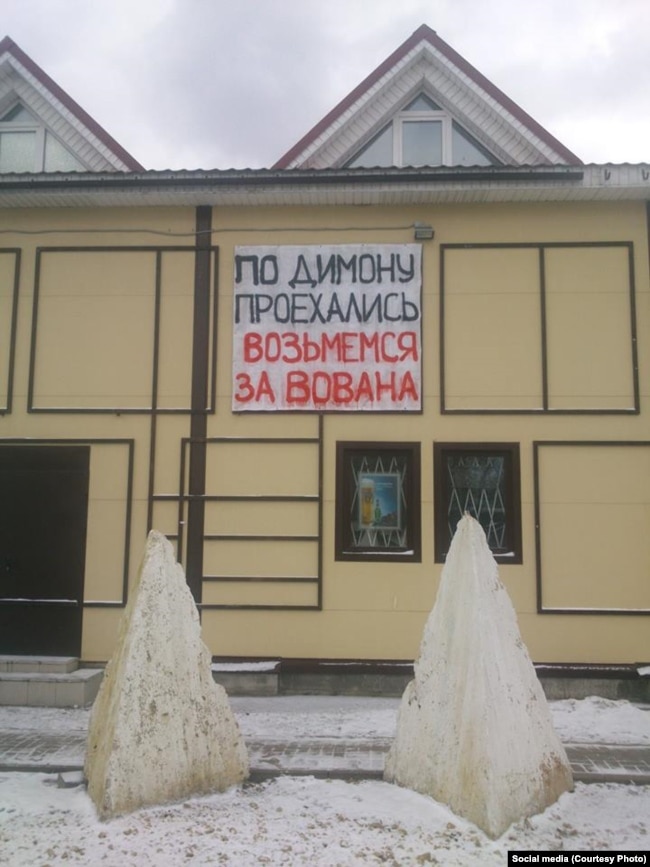
“Dimon got what was coming to him. Let’s go after Vovan.”

“We live the way we vote.”

Dmitry Skurikhin, owner of a store in the village of Russko-Vysotskoye, near Petersburg, reacts immediately and visually to every political event in Russia.

Skurikhin immediately hangs each new poster on the front of the store, a small, two-storey building, so it is readily visible from the nearby bus stop. They usually do not stay up for long, however. The record is held by the slogan “Peace to Ukraine,” which stayed up for two weeks.

На митинге Навального

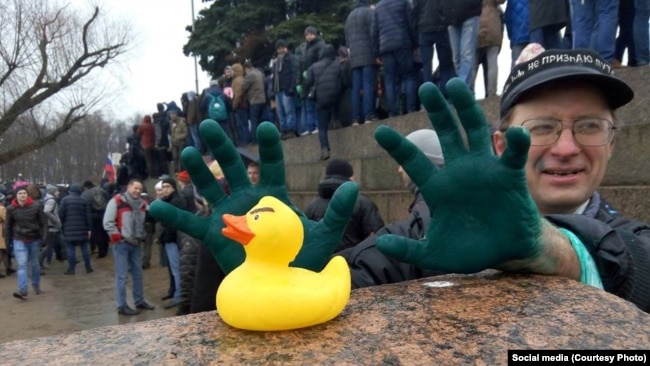
Skurikhin at a pro-Navalvy rally on the Field of Mars in Petersburg

43-year-old Dmitry Skurikhin is a local businessman, whose family owns three village shops. By local standards, he is well off. His family owns several cars, and they have everything they need. However, Skurikhin says the incomes of villagers have taken a nosedive in the past year: “They buy almost nothing, because they barely have enough for food.” Around six thousand people live in Russko-Vysotskoye. Very few of them are holiday cottage dwellers. The majority commute to work in Petersburg. Skirukhin was the first businessman in the village to open self-service stores, but “then the Pyatyorochka and Magnit chains moved in, and we croaked, of course.” He now sells toys, newspapers, clothings, and sundries.

He has been hanging political posters on his store, situated along a road, for almost four years. Before that, he pasted homemade bumper stickers on his car. Skirukhin recalls that the first bumper sticker read, “No new taxes!” The year was 2005.

Skurikhin: They had decided to raise taxes on us local businessmen then. It was one of those taxes you couldn’t avoid paying. Either you worked and paid the tax or you didn’t work and didn’t pay the tax. We businessmen realized they were clamping down on us. We joined forces and beat back the tax. It made such an impression on me that since then I haven’t been able to stop going. There are at least some improvements in our lives, specifically in our village. I’m a local grassroots activist, not even a region-wide activist, but a village-level activist. I was born here, and I live and work here. My kids go to school and kindergarten here. I think I have helped improve life in our village.

Radio Svoboda: How exactly have you improved life in the village?

Skurikhin: As they call it now, I was a municipal district council member from 2009 to 2014. At the time, our district authorities were running this interesting scam. They were “milking” the villages. They would buy heat from the producer and sell it to residents. They marked up the price one hundred percent. When the situation had reached a deadlock, it transpired they were charging residents, but not paying the producer anything. They were getting heat for free. The chair of the district council was mixed up in the scam. Thanks in part to my efforts, the gentleman was conveyed directly from the district chairman’s office to prison. That was in May 2012. Since then we haven’t had any disasters with our supply of heat and water.

We still have problems sometimes, but we are now longer in that disastrous state when a group of people affiliated with district officials were just robbing people by latching onto the flow of payments for housing and utilities. Then we had problems with the road. I organized a decent protest rally. A lot of folks turned out for it: 165 people, which is a huge number for our village. We demanded the road be repaired. The road was repaired. So, by starting with small changes like that, stirring people up, I have been trying to bring them round to the idea that fair elections, free speech, and democracy mean improving the welfare of society. On May 1, we had a rally that wasn’t about the roads (we’ve had the roads fixed), but was about healthcare, fair elections, and responsible authorities. Those were the topics of our rally. 45 people showed up. The rally was authorized. I always try and authorize events with the authorities, but we rallied at the skating rink on the edge of the forest.

Кто будет следующим

“Dimon got run over. Let’s go after Vovan.” This is a reference to Alexei Navalny’s film documentary exposé of Prime Minister Dmitry Medvedev and his untold riches, Don’t Call Him Dimon. “Vovan” is a humorous reference to Vladimir Putin.

In 2014, my time as district council member ended for a simple reason: our team doesn’t pay for votes. If you don’t buy yourself votes, meaning if you don’t pay off the right people during early voting, then you’re out of the race, because your opponents do pay for votes. United Russia paid 1,500 rubles per vote! All the other candidates lost.

Radio Svoboda: Did you prove in court they paid for votes?

Skurikhin: It’s impossible to prove in court, because the scam is quite competently organized. They don’t buy votes, but pay for the services of fake campaign workers, meaning they contract out their campaign. United Russia has a team of between ten and fifteen people, depending on the number of seats that are up for grabs in a specific municipal district, and they hire canvassers. But the canvassers don’t have to canvass. They just need to show up and vote ahead of time, for which they are paid 1,500 rubles a pop. That’s it. It’s perfectly legal. All the evidence is circumstantial. When I tried to get hired as a canvasser in a neighboring village, I was told I would not do, because I wasn’t registered in that precinct.

“How’s that?!” I said. “I’m a local resident. I have a store here. I know everyone in the village, and they all know me. I’ll canvass for you like nobody’s business.”

“No, no, you don’t fit us.”

“What’s the deal?”

“You’re registered somewhere else.”

It’s all clear, guys! You don’t need canvassers: you need voters, whom you buy off for 1,500 rubles apiece. I dubbed the technique “bribing a voter under the guise of paying a canvasser.” It works like a charm in all the villages, where the populace is not too savvy. The populace in general is not very savvy, but in the countryside it’s just unbelievable. The salary in these places is commonly 1,000 rubles a day [approx. 14 euros a day]. People who get a 1,000 rubles a day don’t suffer. I ran a counter-campaign against this.

When the villagers were going to vote, I would say to them, “Guys, are you really unaware that when they get seats on the council, they’ll shake a hundred times more out of your pockets?”

“I toss manure on a farm with a pitchfork for a 1,000 rubles a day. But here I’m getting 1,500 rubles for five minutes of my time. Maybe you’d like to go and pitch manure for me?” one guy told me.

That’s their whole rationale! There’s nothing more to say.

Radio Svoboda: When did you hang the first political banner on your store? How long did it stay up?

Skurikhin: It was the spring of 2014. My fifth daugther was born then. I decided to give my wife a present by building a politicized bus stop opposite the store. I fashioned the frame and the foundation. We didn’t have a stop there. People would always stand outside there, and the buses would stop to pick them up. I built a bus stop and draped it with posters. This was when the annexation of Crimea was happening. We had a couple of posters about Crimea: I demanded an end to the disgrace. Then there were posters demaning pay rises for ordinary doctors and school teachers. I was still a council member. I gathered information on how much doctors were paid in Russia. President Putin had literally just claimed that there were no doctors in Russia who were paid less than the average monthly salary in their regions. That was an outright lie. I wrote it on my poster, because I knew how much our doctors were paid. I had gathered the information in my capacity as a municipal district council member.

Radio Svoboda: How much did doctors really make then?

Skurikhin: The ophthalmologist in our village was paid 14,000 rubles, while the average monthly wage in Leningrad Region was 35,000 rubles. I think this as an absolutely proven lie. I hung it up on the bus stop. The local authorities were completely shocked by it. The stop had been turned into a shelter and was hung with banners and pasted with posters. They didn’t know what to do, so the posters stayed up for three weeks or so, I think. Then a major from Center “E” [the so-called anti-extremism police] in Petersburg came and had a long chat with me. That was April 1, 2014. I remembered the date, because it was the day the Russian State Duma issued a resolution condemning restrictions on freedom of speech in Ukraine. And I was sitting there chatting with this little vampire who was directly threatening me and my business.

“We will shut you down if you don’t stop it!” he told me.

The bus stop stood for a month, and then it had to be demolished. All that’s left is the concrete slab, where locals still wait to catch the bus.

Radio Svoboda: Who demolished it?

Skurikhin: I did, on orders from the local authorities. They told me either I had to demolish it and haul it away or they would do it themselves. Since then I have been hanging posters on the store.

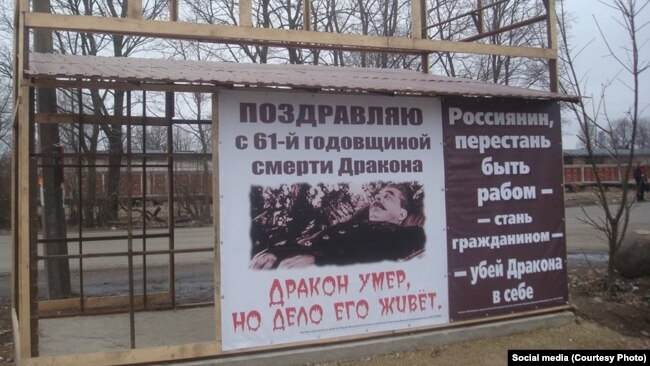
I hung up the poster “I congratulate you on the 61st anniversary of the Dragon’s death. The Dragon is dead, but his cause lives on. // Russian citizens, stop being slaves. Become citizens. Kill the dragon inside you.” The poster, which showed Stalin in his casket, used to be coupled with the second part, about citizens, which was swiped by the polizei. The poster “Peace to Ukraine” broke all the records: it hung for two weeks.

Вторую часть плаката

The second part of this poster, featuring a dead Stalin and a call to “kill the dragon inside you” and “become citizens” was “swiped by the polizei.”

The local authorities, by the way, didn’t know how to react. The poster was hanging on my building. It’s my property and my land, and the poster belongs to me. It hung there for quite a long time. Other events took place, for example, the 2014 elections. I hung my campaign posters there. As a municipal district council member, I was competing for votes. I would hang up a poster. It would become stale, and I would hang up a new one. And then, when I clearly campaigned against Putin. . . For example, I had posted a banner reading, “Putin should resign.” It was 9.4 meters by 2 meters. The banner caught everyone’s eye: my store stands next to the road. Well, they just came and swiped the banner. I decided to hang up another banner. Since it was forbidden to demand Putin’s resignation, I demanded Putin be freed. Since he considered himself a galley slave, I wrote, “Free Vladimir Putin! Let’s free this galley slave. Otherwise, he and his pals will row [rake in] too much.” This banner was also 9.4 meters by 2 meters.

Radio Svoboda: It was probably removed immediately, no? 

Skurikhin: I don’t know why, but it stayed up for nearly two weeks. I saw policemen come and look at it. Maybe they didn’t get it? I can’t say how the authorities make decisions. But then they removed it anyway. I have been doing this on purpose. My goal is to ensure President Putin loses this election. During the last election, in 2012, I printed flyers and ensured that Putin got the least number of votes in our district in our precincts, although he won anyway, of course. Our precinct was among the ten worst precincts in Leningrad Region. Numbers decide everything in a democracy. I worked on the electorate the best I could.

Radio Svoboda: Do the security services often summon your for talks and try to reason with you?

Skurikhin: Earlier they did, but recently they have left me alone for some reason. I think they just realized, probably, that they should be talking to me in handcuffs, whereas talking to me just for the heck of it, what’s the point? Besides my chat with the major from Center “E,” a major from the FSB, a colonel from the FSO (Federal Protective Service), and the Investigative Committee summoned me. Each of my posters has been sent off for a forensic examination. Policemen photograph them, and the photos are sent to Center “E” and Saint Petersburg State University for analysis: they have this forensics examination center there. Their forensics experts study my posters and render their findings. If the findings are neutral, the posters are returned to me, accompanied by an official ruling refusing to file criminal charges against me. I’ve had around a hundred such posters. Each one is also accompanied by a description. The police also try to do everything by the book. In Nazi Germany, they incinerated Jews by the book. Here in Russia, they have been trying to shut me up by the book, to put it crudely.

Radio Svoboda: What grounds do the police have for removing posters from private property? How does it usually happen?

Skurikhin: First, they get a complaint either from the local council or from a resident: someone is unhappy with the poster hanging on my store. The police arrive and write me up for violating the regional law that all posters must be vetted with the local council. This little law was invented in Leningrad Region. I disagree with it, so I simply say it wasn’t so. They write me up, then they bring a slave from the local housing authority, whom they force to climb up and remove my poster. Then they leave. After which the situation proceeds as I’ve described it. Unfortunately, the forensics experts have concluded that two of my posters insulted the honor and dignity of the president and incited social discord. I try not to insult anyone. I think through all my posters and make sure that they are worded as properly as possible, because you don’t help things by insulting people. I want to persuade people to vote against Putin, persuade them we need democratic values, freedom, and liberalism. Yet two of my posters have been deemed insulting to Putin. They were the reason I was summoned to the Investigative Committee to talk with an investigator.

Radio Svoboda: Have criminal charges been filed in connection with the two posters?

Skurikhin: You know, I haven’t asked the police about it. But they did get me summoned to the Investigative Committee, where I was asked for an explanation. I was shown the findings of the forensics experts. The poster in question was “Putin is war. Say no to war.” As you remember, it was Anna Politkovskaya who said, “Putin is war.” The slogan was written with bloody smudges, so there was nothing in particular to interpret. It was clear as clear could be. The poster was deemed to have insulted Putin’s honor and dignity. I don’t think I insulted him, but the Investigative Committee does.

Radio Svoboda: What war did you have in mind when when you wrote the slogan?

Skurikhin: Any war. Because Putin is, in fact, war. We were flattening Ukraine at the time.

Radio Svoboda: Have they threatened to close your business?

Skurikhin: The major from Center “E” threatened me, but no one else has. It’s just I’ve been in business for twenty-one years, and all the agencies they could sick on me, I’ve been working with them for a long time. I have a good relationship with them. Most important, all of them are on my side. As they’re tearing down the posters, the policemen say to me, “Damn, what you write is true.” But they’ve taken an oath, they have their orders, they would immediately get hell from their commander, so they can’t say it that way. I can because I don’t have a commander. Firefighters, the guys at Health Inspection Services, they all understand what is happening in Russia. Most of them are smart people.

Против кого на самом деле надо сакции вводить

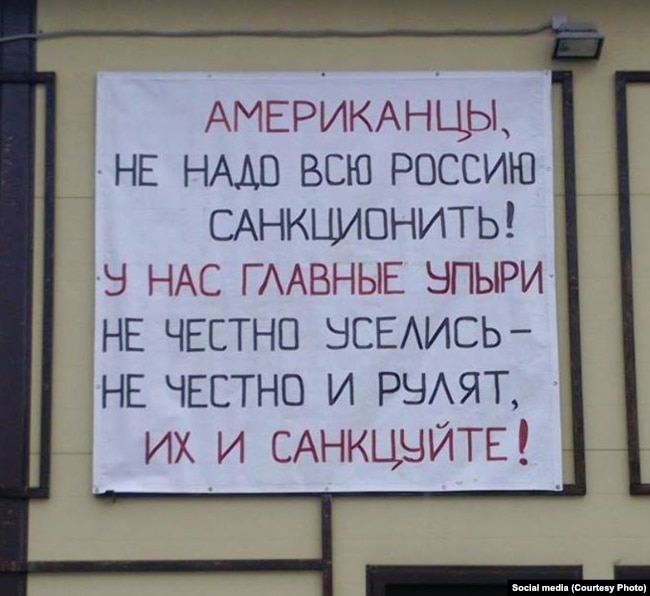
“Americans, don’t sanction all of Russia. Our head vampires got their jobs dishonestly and run things dishonestly. Sanction them!”

Radio Svoboda: Does your family support you?

Skurikhin: Yes, of course. Sure, they worry about me. The situation in Russia is such that the most active dissenters are shot down. My kids are aged nineteen, fourteen, seven, and four. All of them are girls: I live in a flower garden. If I’m arrested, my wife will feed the family: she’ll be like Vassa Zheleznova. I hope it doesn’t come to that, but we’ve talked it all throgh, of course. So that’s why I try and write slogans that are legal. I have studied a ton of material on the subject. What is an insult? It’s when you compare someone with an animal. The rest can be offensive and unpleasant, but it is not insulting in the criminal sense. You can say, “Skurikhin, you’re an idiot.” Yes, it’s possible for you to have this opinion. But I think differently. But if you say, “Skurikhin, you’re a jackass,” that is an insult.

Radio Svoboda: Have other businessmen put up similar posters?

Skurikhin: There were elections to the State Duma in 2016. As a member of Parnas (People’s Freedom Party), I ran in them in my own electoral district, the southwest  district of Leningrad Region. Sergey Naryshkin, now our top spy, ran in the same district. I made the rounds of all my businessmen friends and asked them to support me. I made banners that read, “Skurikhin and Parnas are your only worthy choice.” In our part of the world, most of the shops are village shops, and they are on private property, so I was able to hang them up for free. No other candidate got that kind of support. The rest had to pay for billboards. I spent 150,000 rubles on my election campaign. My wife later gave me a piece of her mind about that. I took second place in the elections in my own village. Only Naryshkin got more votes. I got support for my posters and ideas, for saying “Putin should resign.” My fellow villagers gave me the number two spot. In my native Lomonosov District, I took sixth place, and I took eighth place in the entire electoral district, which has a population of 500,000. What does that tell you? I would argue the outcome shows that liberal and democratic ideas are popular in society, but they simply never get conveyed to the voters, since the media are totally blocked. I have no other way of telling people Putin should have been dismissed from the Kremlin long ago. I only have my posters. But, generally speaking, it’s very hard for a Parnas member to get around United Russia on the first try.

Radio Svoboda: Do you attend all protest rallies?

Skurikhin: Yes, I try to go to all of them. At the last pro-Navalny rally, in June, I was wearing a “Sick of Him” t-shirt and carrying a flag. I was taken to a police station, but I escaped. This year there were also primary elections—Naryshkin gave up his seat in the Duma when he was appointed head of the SVR (Foreign Intelligence Service) in October 2016—and this year there were reelections. We also held events that, in my opinion, were meaningful to our district. I couldn’t let my people down, so I had to hightail it from the police station.

Radio Svoboda: Are you following the presidential campaign?

Skurikhin: Yes, of course. I’ll go all out to ensure Mr. Putin loses the election, at least in my precinct. I support Navalny’s registration as a candidate and Ksenia Sobchak’s candidacy, because we need as many candidates as possible in the first round just to take votes away from Putin and get a second round. If there is a second round, that will be a significant victory in itself.

Thanks to Comrade Uvarova for the heads-up. Translated by the Russian Reader