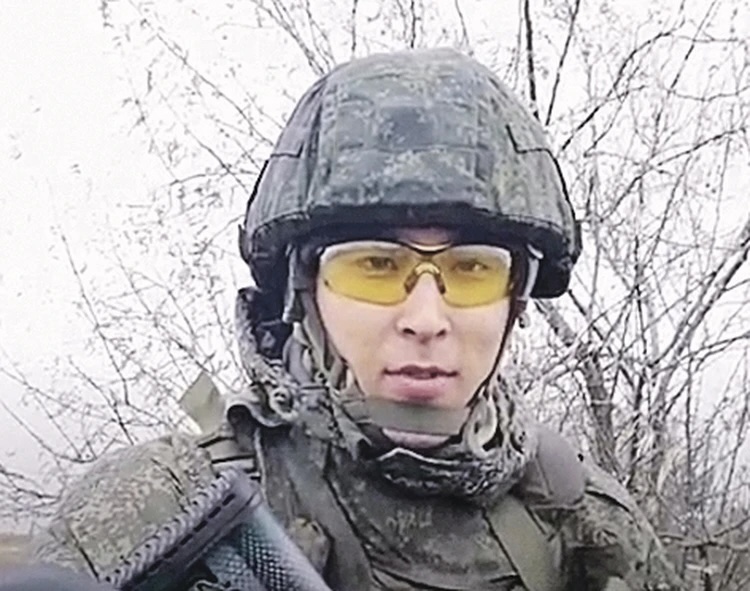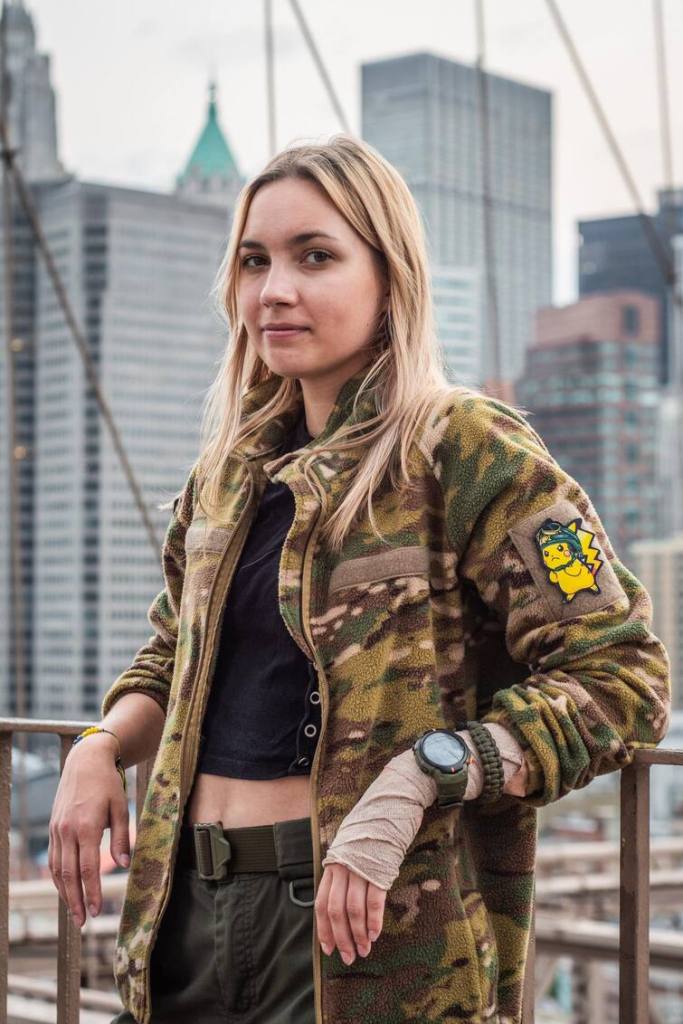
Victoria Honcharuk: Wall Street Investment Banker Turned Ukrainian Combat Medic

Victoria Honcharuk

She had traveled the world, had ambitious plans in business and finance, and worked on Wall Street at a major US bank, but returned to defend Ukraine side by side with her family.

Ukrainian Victoria Honcharuk graduated from the innovative Minerva University in California. Nowadays, however, she is one hundreds of combat medics at the frontline, saving the lives of wounded soldiers as they try to save us.

Ukrainska Pravda: Life recounts how Victoria’s life, full of hope and plans, changed after the outbreak of the full-scale war and how she made her choice for her homeland.

Life before the full-scale war

Victoria grew up in the small town of Baranivka in the Zhytomyr Region in an ordinary family. Her parents never traveled outside of Ukraine, so at the age of twelve she started earning money on her own because she wanted to study abroad. She admits that she could count only on herself to fulfill this desire.

As a teenager, Victoria won a grant from the U.S. State Department’s FLEX cultural exchange program, on which she studied at a high school in the United States and, after graduation, at a university in Lithuania. However, she studied at that university for only a year. Victoria says she realized that she could not spend four years in one place.

That was when she found out about Ukraine Global Scholars, an organization that helps Ukrainian children get a free education at schools and universities abroad, including in the United States.

“I grew up in a small community, and after I learned English and went to America on the FLEX program, I realized that there were so many interesting things outside of Ukraine. I always thought, We are such a big and free country, why can’t we take our resources and use them to become a country we can be proud of?

“I realized that to do this, we needed to learn from the know-how of other countries. That’s why I had a plan to go study, work for a while, gain experience, return to Ukraine, and make it the best country in the world,” recalls Victoria.

At the age of fifteen, she went to study in Texas on the FLEX program, where she lived for a year, and after studying in Lithuania, she enrolled at Minerva University, which Vika calls her “dream university.”

“It’s a university based in California, but the most interesting thing about it is that you travel and live in different countries every semester,” she says.

During her first year of study, Victoria lived in San Francisco. Later, her geography expanded significantly, and she gained knowledge and experience in South Korea, India, the United Kingdom, Germany, Argentina, Taiwan, and elsewhere.

“I had two majors there: computer science and business and finance statistics. I was most interested in combining and using statistics and data science in business and finance.

“During my last two years, I wrote a research paper on M&A (mergers and acquisitions) at large companies. During my studies, I worked in startups as an investment analyst, data analyst, and financial manager. My two specialties have always been intertwined in my work,” says Honcharuk.

After graduating in 2022, Victoria worked with technology companies in Citigroup’s investment banking department, as well as in the investment banking department of Morgan Stanley, a major holding company.

Victoria traveled the world and worked on Wall Street at a major U.S. bank, but returned to defend Ukraine side by side with her family.

From Wall Street to the frontline

When the full-scale war broke out, Victoria’s entire family—her sister, mother and father—decided to join the ranks of Ukraine’s defenders.

In the early months of the Russian invasion, Victoria was involved in volunteer work, throwing her energy into helping her family and the units in which they served.

“My goal was to provide my family and their units with everything they needed. It turned into small project of mine, then into an NGO registered in Britain. That’s what I was doing before I came back to Ukraine,” she says.

Victoria raised funds and was involved in delivering tactical medicine supplies. Thanks to her sister, who worked in medical evacuation, Vika always knew what to deliver and when and where to deliver. However, she could not stay in the United States for long, so in the winter of 2022, she decided that she had to return to Ukraine and “help with her hands.”

She admits that this decision was a “big leap” for her. Mentally, she readied herself for the worst—that she would live “in the open air in a puddle” and not eat anything. Nevertheless, she stresses that she “didn’t think twice” about leaving her warm New York office to help her family and her country.

“I worked on Wall Street at the largest bank in the country. The day before I went to Ukraine, we had a big gala event for clients, and then I got on a plane the next morning, went to Ukraine, put on my uniform and set off. It was winter, it was cold. A very big contrast.

“I had been preparing myself for this, and it was what I really wanted. As soon as I found the opportunity to be on the frontline, to work with my hands, to be part of the units, everything fell into place,” says Victoria after a year of service as a combat medic.

By the way, she acquired the skills for working as a paramedic by training with the Hospitallers. She learned some things from her sister and other combat medics, and the rest was gained on the frontline.
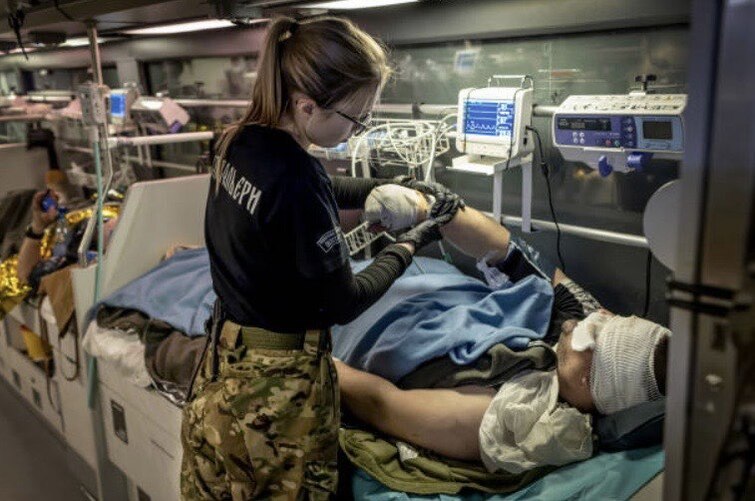
“As soon as I found the opportunity to be on the frontline, everything fell into place,” says Victoria Honcharuk.

The most difficult choice

Victoria serves in one of the hottest areas of the frontline—Bakhmut. Before that, she worked in Avdiivka. Now she is the leader of her crew. For the last six months she has been working as a paramedic in the brigade where her sister serves as an assault rifleman.

As the combat medic explains, there are two stages of evacuating the wounded: “case evacuation” and “medical evacuation.” Case evacuation is the first stage of evacuation from the frontline, when an armored vehicle or pickup truck enters the most difficult areas and evacuates the wounded from the battlefield to a stabilization center.

A medevac unit is a medical crew that takes the wounded from a casevac unit and evacuates them to the stabilization center. Vika initially worked in casevac, before switching to medevac.

“This person often changes. At first, I had a doctor with too much experience, and he was transferred to a stabilization center, and we were given a third person by the battalions we worked with.

“Broadly, we work like a crew, just like mobilized military medics. We are just an additional team. We arrive on the battlefield, take the wounded, and hand them over to experienced medics,” says the paramedic.

According to Victoria, her team has changed several times during her year of service, as the people who make up the team work on a volunteer basis. Many of them have regular jobs, which they alternate with volunteering at the front.

“They are at work for a month, and with me for a month. Right now, the most stable members of my team are my driver and me. My driver’s cousin was my sister’s commander, who unfortunately was killed in August this year, just as we started working with them. The driver and I found common ground and continue to work together. The third person is a doctor,” says Victoria.

Paramedic Victoria Honcharuk

The paramedic also spoke about the most difficult moments she has had to face during her year at the front. According to her, the most difficult thing is to make decisions in circumstances in which other people’s lives depend on them.

“There were moments when we came under shelling and had to decide what we were going to do: move, find shelter, or not evacuate at all. It was a choice between evacuating the wounded or hiding from the shelling. We needed to weigh the chances that we would get injured or that the injured person would die if we didn’t evacuate them,” says Victoria.

There were situations in which they had to approach the battlefield in an unarmored vehicle. They then had to carefully weigh all the risks.

“We drove an ordinary ambulance to within 500 meters of the contact zone. We were on duty together with an armored car and realized that if something hit within twenty meters of us, we were finished.

“My vehicle still has a broken windshield after one of these collisions from ten meters away. After that, we would have to decide what we were going to do, so it can be stressful,” Victoria admits.
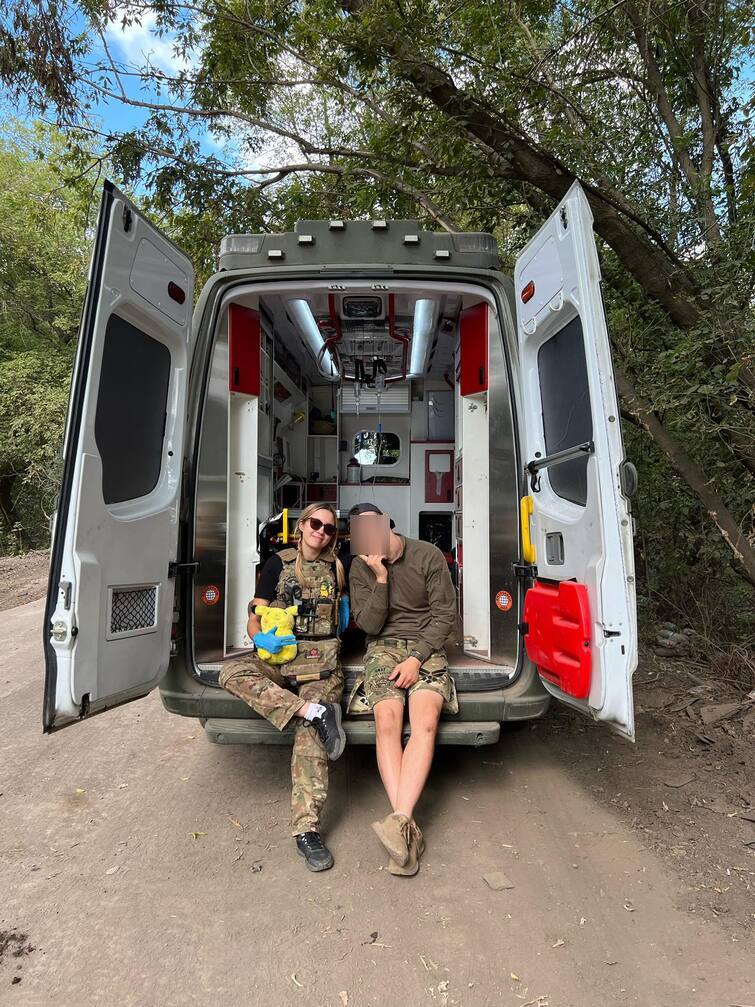
According to Victoria, the hardest part is making decisions in situations in which other people’s lives depend on them.

Amid the challenges she faces today, Vika recalls her studies and experience abroad with gratitude, saying that working on Wall Street toughened her up, because sometimes she had to work hard, to the point of exhaustion. She could not sleep for days or even weeks until she got the job done.

“It’s the same here. If the enemy mounts an assault, we don’t sleep—we work. Sometimes you just have to wait, just like waiting four hours on Wall Street for someone to send you a financial model. Here [on the frontline — ed.] you wait for a challenge. Very transferable skills [in English in the original — TRR],” she says with a smile.

Frequent traveling also played a significant role in her “toughening-up.” Thanks to this, Victoria has all the necessary vaccinations.

“It is a very good thing when you are a combat medic, because I come into contact with blood. When your gloves get torn, you can get infected with something. But I lived in India and Korea, so I have all the vaccinations. I can adapt quickly, and I don’t need much to feel comfortable, so I didn’t need to get used to the minimalist life,” she says.

In addition to her work as a paramedic, Victoria is also involved in military tech projects with Ukrainian developers.

“I consider the development, use, and integration of AI into military operations to be one of my main priorities,” she stresses.

At first, Vika worked in “casevac,” before switching to “medevac.”

“Everyone I want to spend my time with is at war”

According to Victoria, she has short leaves from work, but she lives with her crew. She admits that it is hard to see people in the rear who are “disconnected from the war and think that they will be spared.”

“I have literally two or three friends left. Unfortunately, I don’t even want to talk to them now—all the same, I live with my crew. I need one day to see my parents, another day to eat everything I want to eat, and that’s it, I can go back.

“There is no connection due to this. Everyone I want to spend my time with is at war. We have leave for a couple of days, but we come back to civilian life with the people we live with on the frontline, and we live in our own bubble,” says Victoria.

Given how her life and realities have changed, she underscore that she doesn’t regret any of her choices. When asked what advice she would give to her fifteen-year-old self if she could, Victoria said:

“Well done. I don’t have any regrets. I would have worked harder on my physical fitness. (Laughs.) I would have told her that no matter what your profession and lifestyle is, you need to be strong and in the best shape you can be, because it’s physically hard nowadays.”
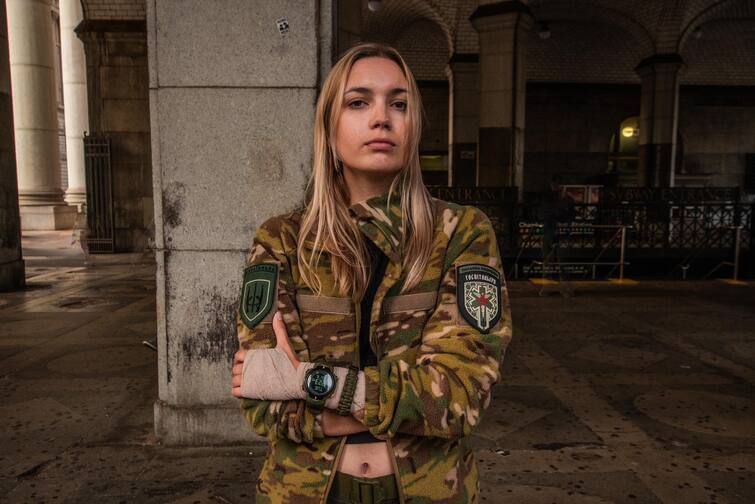
“There is nothing I regret,” the paramedic stresses.

Victoria’s experience as a woman in the military

According to Honcharuk, women in the army need to work “a little harder” at their positions, as there are gender biases there, as well as in the broader society.

“Every newcomer has to work hard to gain attention, but women have a little more difficulty due to prejudice. But if you don’t give up and show that you are a good fighter, that you joined up for the right reason, that you will work hard, you will get respect from people.

“I think the problems in the army are the same as the problems in society. It’s just a smaller version [of society],” Vika adds.

Vika is convinced that the fight for Ukraine is not only the duty of men.

And yet, she denies that men treat women in the army badly.

“I often hear that men treat women in the army badly, but this is not entirely true. Many women in Ukraine, unfortunately, position themselves as weak and needing protection. But we have to stand up for ourselves, stand up for Ukraine,” the paramedic argues.

She is convinced that the fight for Ukraine is not the duty of men, but of every citizen.

“Love for Ukraine is nurtured, and not necessarily from an early age. It’s not something you can kill. My sister and I are probably a very good example,” says Honcharuk.

The interview was recorded by Veronika Harmash, communications manager at Ukraine Global Scholars, and adapted by Diana Krechetova, journalist at Ukrainska Pravda: Life. All photos are from Victoria Honcharuk’s personal archive.

Source: Diana Krechetova, “From Wall Street to the front line: the story of a paramedic who left her job at a major US bank to defend Ukraine,” Ukrainska Pravda: Life, 19 December 2023. Translated by Alien Bio-Robot from the Future. Thanks to TV Rain for the suggestion. You can follow Victoria Honcharuk on Facebook and Instagram. \\\ TRR

Support Solidarity Zone and the Russian Direct Action Anti-War Resisters They Support

Fundraiser for care packages to prisoners

Packages, parcels, topping up personal accounts, and buying prisoners books and periodical subscriptions are a serious expense. Solidarity Zone pays for all or part of these expenses for 17 people imprisoned for their anti-war resistance.

Some of our beneficiaries have no one to support them outside the prison walls. Others have loved ones who are not financially able to provide for a person in prison. We try to support those prisoners, and provide them with at least the basic necessities.

We spend about €1000 a month on parcels, packages and topping up personal accounts for Solidarity Zone’s inmates.

Now our financial resources are running out, and we don’t have the means to provide our beneficiaries with everything they need in the next month. Therefore, we are launching a fundraiser to replenish resources and continue humanitarian support for prisoners arrested for anti-war resistance. We’re sure: together we can do it!

We are launching a fundraiser for €2000 — that would be enough to continue supporting political prisoners to the same degree in September and October. If we collect more, those funds will be used in the following months. Or perhaps, we’ll be able to support someone else.

Support the fundraiser in any way you can!

🪙 PayPal: solidarity_zone@riseup.net

🥷 Cryptocurrency:

Monero: 4B1tm6boA5ST6hLdfnPRG2Np9XMHCTiyhE6QaFo46QXp6tZ7Y6nJjE43xBBTwHM84bWwexR8nS4KH36JHujjc1kC8j2Mx5e

Bitcoin: bc1qn404lrshp3q9gd7852d7w85sa09aq0ch28s3v4

USDT (TRC20):

TRcCUHKSMY7iLJPvbDxLc6ZnvAud72jTgj

📣 Sharing is a way of showing support!
#PoliticalPrisoners#solidarity#fundraiser#english

Source: Solidarity Zone (Facebook), 3 September 2024. I’ve slightly edited the translation above so that it reads more smoothly. \\\ TRR


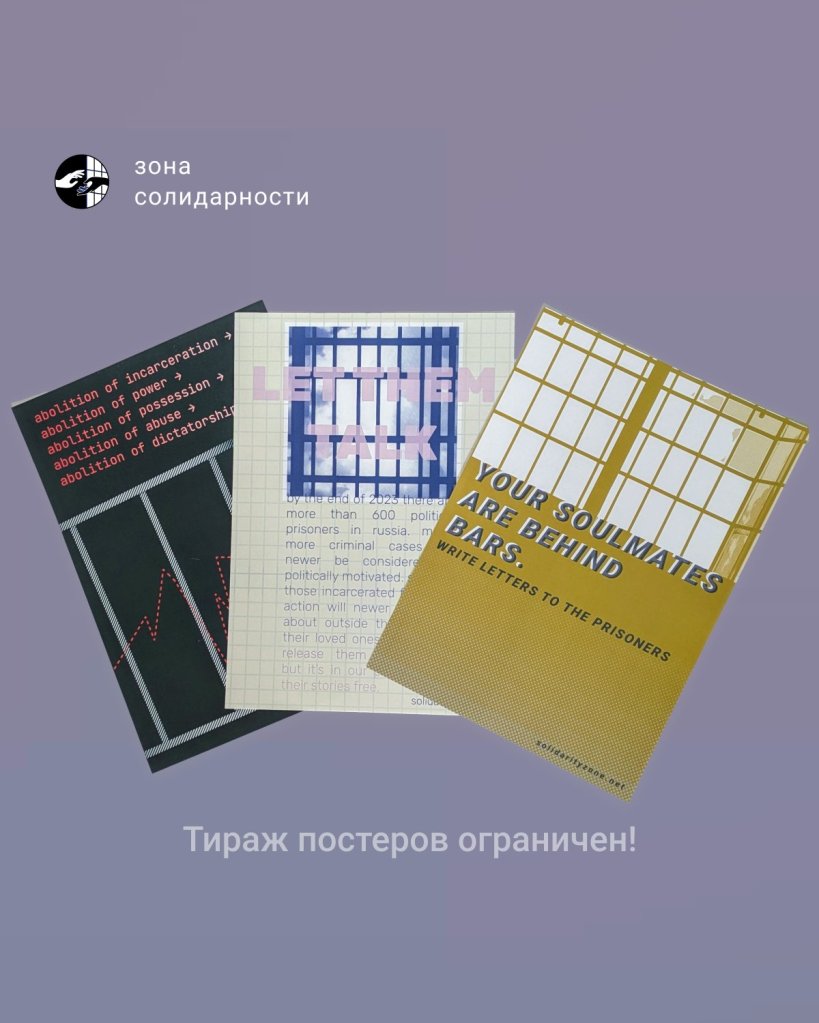
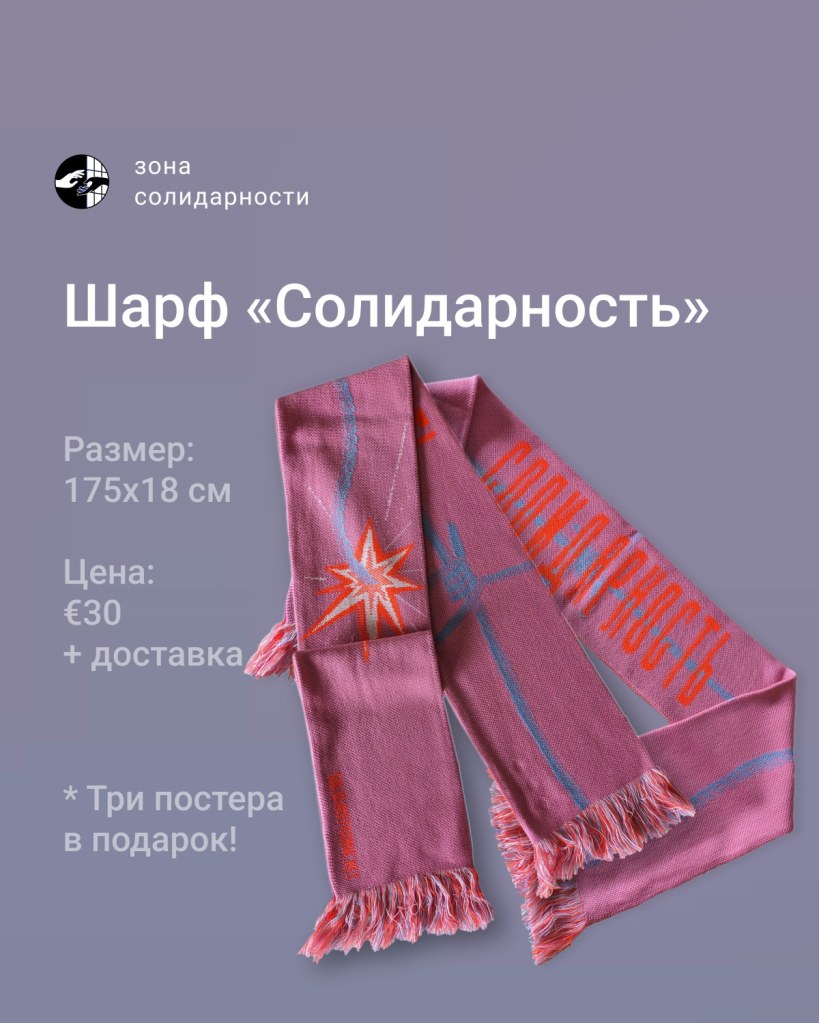
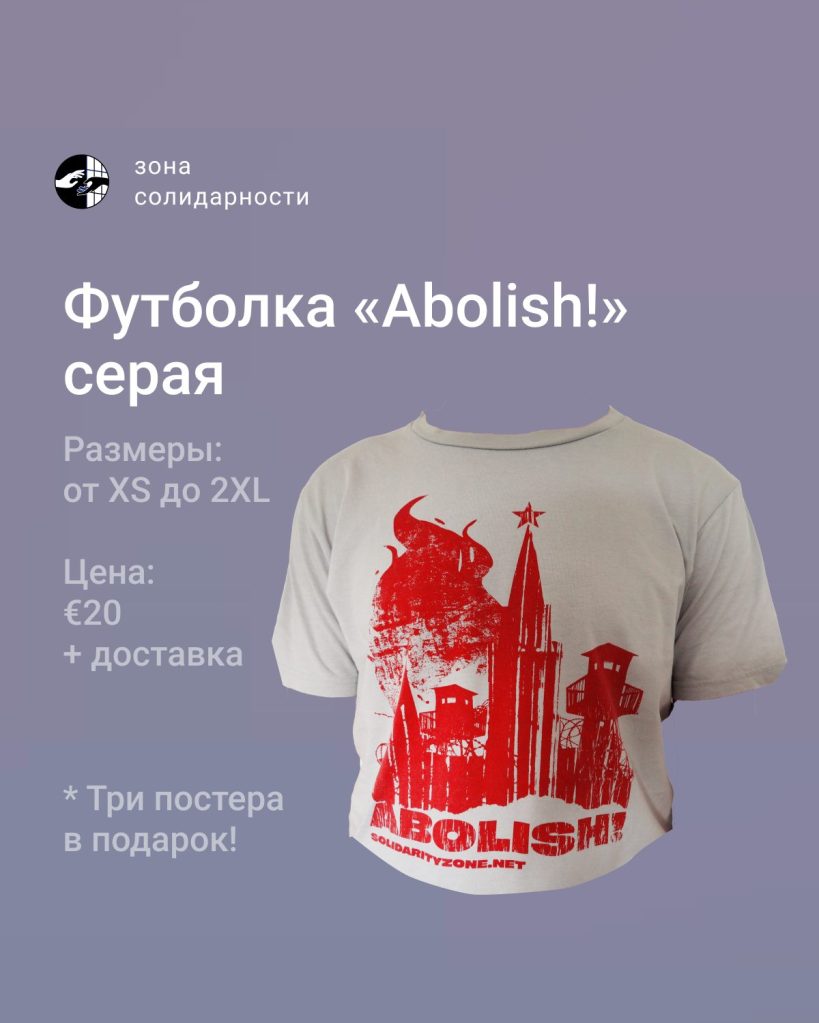
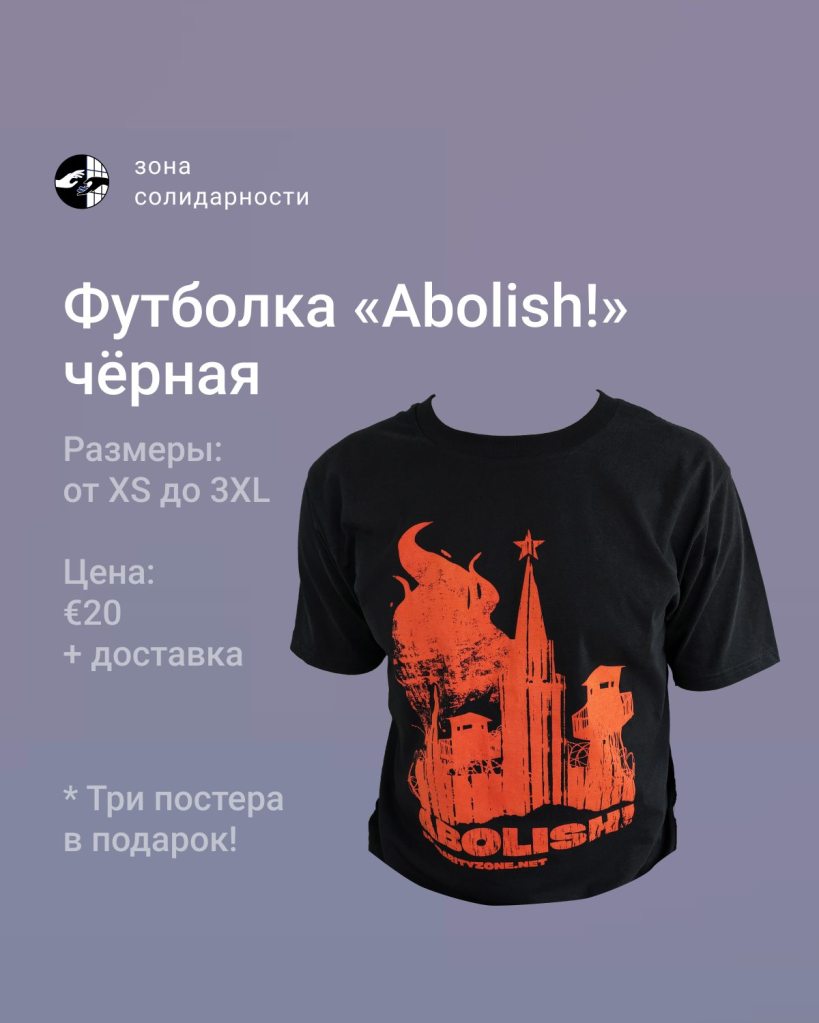
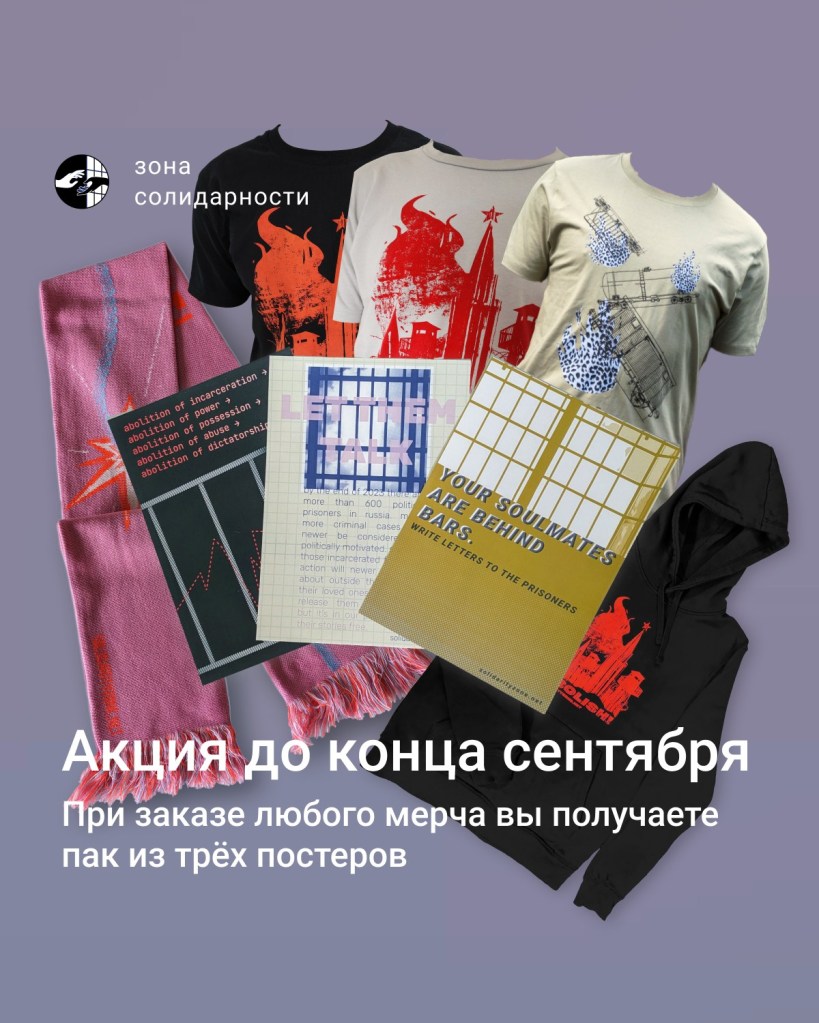
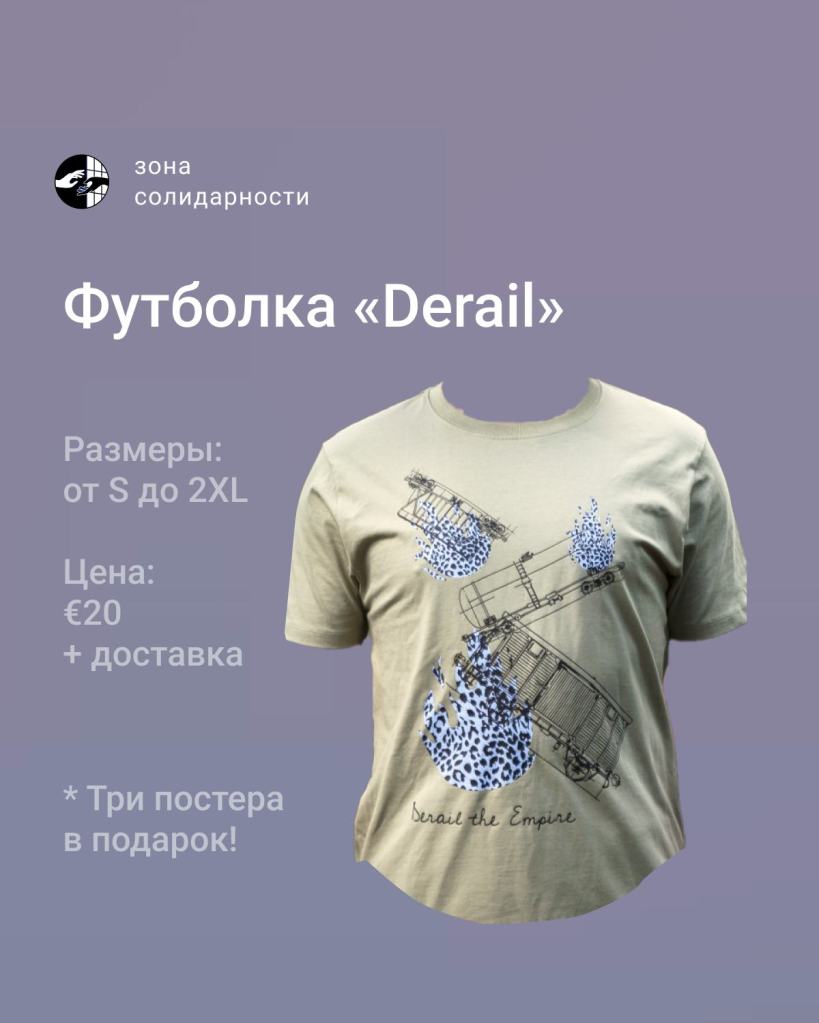
Solidarity Zone has merch and so we are announcing a promotion that runs until the end of September. When you order any of our merch — a t-shirt, scarf or hoodie — you get a pack of three A3-format posters as a gift.

You’ll find more photos of the merch, size charts, and an order form on our website.

✊ All proceeds from sales of our merch go to support the Solidarity Zone collective. We are a horizontal, self-organized initiative and we have no permanent source of funding. So, your support is crucial to us!

📦 The merch is delivered by post from the EU.

❗️For security reasons we do not send merch to Russia and Belarus, nor can we guarantee delivery to Georgia due to the peculiarities of the country’s postal service.
Merch Ordering Zone (in English)

Source: Solidarity Zone (Facebook), 9 September 2024. Translated by the Russian Reader

They Don’t Stay in Their Lane

Bizarre Beasts, “Tenrecs Will Not Stay in Their Lane”

If all crustaceans “want” to look like crabs, then tenrecs “want” to look like basically any other small mammal. These weird little guys are endemic to Madagascar—they’re native to nowhere else on Earth.

Source: Bizarre Beasts (YouTube), 7 April 2023. Thanks to Comrade Koganzon for the link and the BBC Radio 4 programme “Nature Table” for the inspiration.


Prominent Russian liberal in exile Gennady Gudkov wrings his hands over what the “coloreds” are doing to his Russian liberal fantasy “Europe”: “Europe’s new cultural (or multicultural?) code (if that really is Finland).” ||| TRR

Source: Gennady Gudkov (X), 6 July 2024


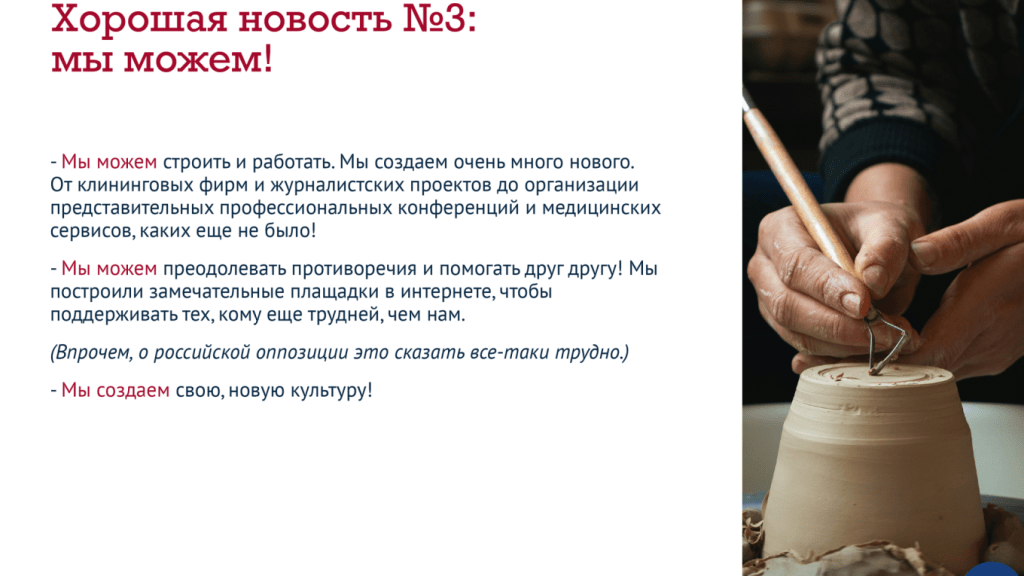
Good News No. 3: We Can Do It!

  • We can build and work. We have been creating many new things — from cleaning firms [kliningovykh firm] and journalism projects to organizing impressive professional conferences and medical services the likes of which have never been seen!
  • We can overcome animosities and help one another! We have built outstanding platforms on the internet to help those who have it worse than we do. (However, it is still difficult to say this about the Russian opposition.)
  • We are creating our new culture!

Source: “A Time Without a Place, or How to Survive New Circumstances,” Moscow Times Russian Service, 5 July 2024. Translated by the Russian Reader


Inside Russia with Ekaterina Schulmann

Sciences Po and its Provost Sergei Guriev, a world-renowned Russian academic and economist who had to flee his country in a day in 2013, were honoured to welcome ‪@Ekaterina_Schulmann‬ for a very exclusive conference on 20 April, 2023. This political scientist and social media sensation guest speaker addressed the serious matters of the Russian regime stability and the dynamics of public opinion.

Source: Sciences Po (YouTube), 8 May 2023. My question, had I been in the auditorium for this fascinating lecture, would have been to the audience: how many of you are neither Russian nationals nor speak Russian? I suspect that the numbers of such non-Russian nationals and non-Russian speakers were quite low. And why was this lecture delivered in English, not French? ||| TRR


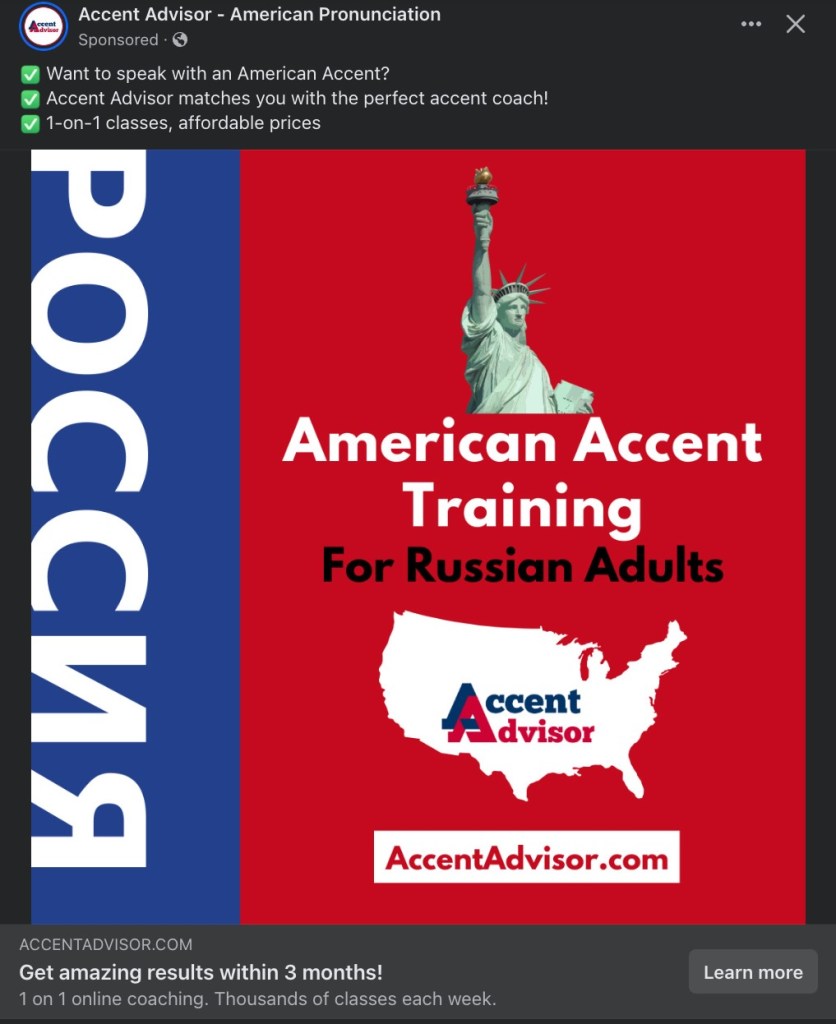
Source: unsolicited ad on Facebook

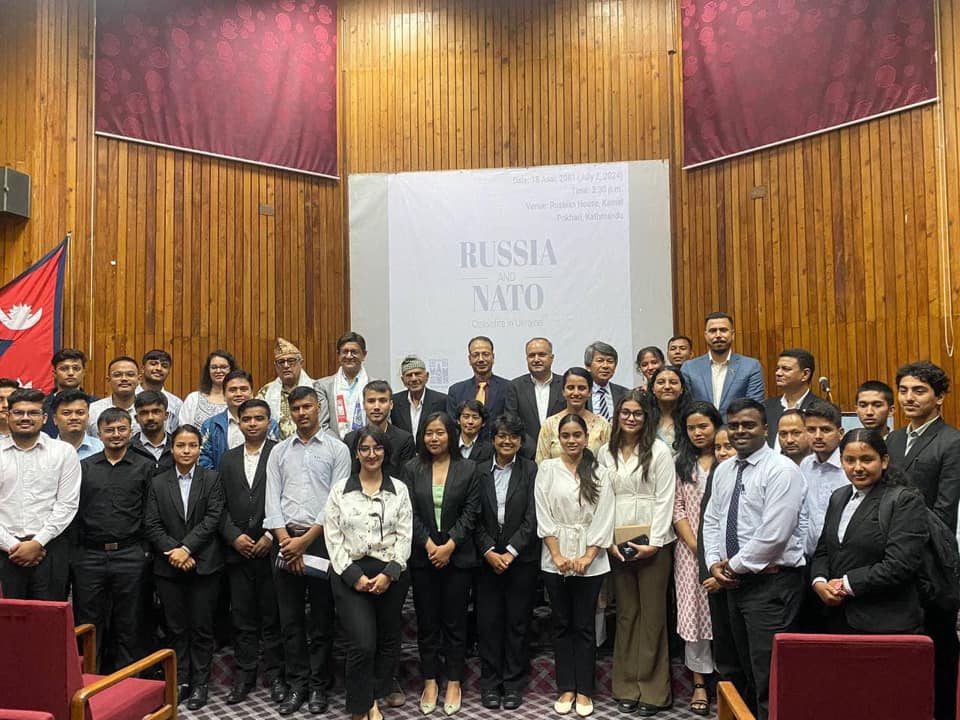
On 2 July 2024, International Law Club successfully organized an academic discourse entitled “Russia and NATO: Ceasefire in Ukraine.”

The speakers for the program included Dr. Yubaraj Sangroula (Professor of International Law), Dipak Gyawali (Former Minister of Ministry of Water Resources, Nepal), Dr. Govind Kusum (Former Secretary of Ministry of Home Affairs), Prem Chandra Rai (From Himalayan Development Affairs Council, Nepal), Yugichha Sangroula (Masters in International Humanitarian Law from Geneva), Dmitry Stefanovich (From IMEMO RAS, Moscow)

The welcoming remarks for the discourse were delivered by Anton Maslov, First Secretary and Director of the Russian House. The distinguished Chief Guest of the program was Seniormost Advocate Krishna Prasad Bhandari.

Dr. Dipak Gyawali provided valuable insights into the historical context of the Russia-Ukraine conflict, emphasizing its longstanding nature within the framework of NATO-Russia dynamics.

Professor Dr. Yubaraj Sangraoula shed light on the hegemonic influences and Western interference in global affairs, highlighting the concept of a rule-based international order that has been divisive.

Assoc. Prof. Yuggichhya Sangroula emphasized the importance of interpreting international law in a balanced manner, noting the significant contributions of Asian nations to its development alongside European nations.

Assoc. Prof. Prem Chandra Rai advocated for adherence to the UN Charter as the foundation of international law, stressing the need for inclusive peace initiatives that engage all relevant parties, including Russia.

Dr. Govind P. Kusum underscored the disproportionate impact of global conflicts on developing nations and emphasized the urgent global need for peace and security.

Mr. Dmitry Stefanovich discussed the inadequacy of mere ceasefires and called for sustainable solutions and increased global cooperation, particularly from the Global South, to address ongoing conflicts.

The subsequent question and answer session facilitated critical discussions on ceasefire strategies and institutional reform. Speakers analyzed geopolitical dynamics, and Western dominance, and proposed measures for achieving global peace and security, with a focus on strategies applicable to third-world nations.

Overall, the seminar provided a platform for robust dialogue and strategic insights into resolving international conflicts and fostering a more peaceful world order.

We sincerely express our gratitude towards the speakers, guests, and participants for their involvement.

The Club would like to thank the Russian House, especially the Director of Russian House, Mr. Anton Maslov for supporting us in organizing this academic discourse and acknowledge the presence of Ms. Alena Danilova, Press Secretary from the Russian Embassy at this program of ours.

Source: Russian House in Kathmandu (Facebook), 4 July 2024. See “How to Escape from the Russian Army” (New York Times, 27 June 2024) for a slightly less sanguine perspective on Russian-Nepalese relations.

When the Soul Can’t Keep Silent

Aydyn Zhamidulov. Photo: Russian Defense Ministry via Kommersant

Kommersant has learned that a military court has begun hearing the criminal case against Senior Lieutenant Aydyn Zhamidulov, a platoon commander in the Airborne Troops, and his subordinate, Private Alexei Dorozhkin. The Russian Investigative Committee alleges that the men kidnapped a young woman who had threatened the officer that she would tell his wife about their relationship and took her to their unit’s temporary deployment point as a Ukrainian spy. There, they stabbed the victim to death and blew up her body in an attempt to conceal their crime. Zhamidulov gained renown for writing patriotic poems during his combat training and was shown reciting them on Telegram channels.

The criminal case against Senior Lieutenant Zhamidulov and Private Dorozhkin was submitted to the Southern District Military Court, sitting in Rostov-on-Don. The men are accused of the kidnapping and brutal murder of a resident of the Luhansk People’s Republic per articles 126.1, 105.2, 30.3, 33.4, and 244.2 of the Russian Criminal Code.

In the file of the case, as investigated by military investigation units at the Russian Investigative Committee, it is reported that Zhamidulov is twenty-eight years old, a native of Kazakhstan, and lived in the Pskov Region. He has a higher education, is married, and was raising two daughters.

In January 2022, Zhamidulov signed a contract with the Defense Ministry and, in the rank of senior lieutenant, served as commander of a parachute platoon in an airborne assault regiment of the famous 76th Airborne Division.

In late 2022, a video was widely circulated in social networks and the media in which Lieutenant Zhamidulov recited a poem of his own about the those involved in the special military operation. At the end of the recital, the officer stated that his family was proud of him and was waiting for him to come home.

Dorozhkin was mobilized on 1 January 2023. Ranked as a private, he served as a senior scout in the Airborne Troops.

According to investigators, at about eight p.m. on 13 January 2023, Zhamidulov and other military men, including Dorozhkin, were drinking hard alcoholic beverages at the Rainbow Cafe in Luhansk. About half an hour later, local resident Valentina Davronova, with whom Zhamidulov had previously been in an intimate relationship, entered the cafe.

A row broke out between the senior lieutenant and the twenty-three-year-old woman. Fearing that Ms. Davronova would report their relationship to his wife, Zhamidulov decided to deal with the young woman, the case file says. He told his subordinates that he would take Ms. Davronova to her current boyfriend.

The young woman was put in the back of a KamAZ truck, and when the truck arrived at the unit, Zhamidulov tied her hands with duct tape. Dorozhkin, who went with them, was ordered by the senior lieutenant to tape Valentina’s eyes, which he did.

To avoid questions from his subordinates and make his actions look legitimate, the investigators note, Zhamidulov told them that Ms. Davronova had served in the Ukrainian army from 2018 to 2021 and had tattoos featuring Ukrainian symbols on her body. He also alleged that she was engaged in intelligence on behalf of the Ukrainian armed forces.

The young woman was taken to a soldier’s bathhouse, where Zhamidulov stabbed her about two dozen times in different parts of her body. At that time, the commander of a reconnaissance platoon combat vehicle, Sergeant Roman Pleshcheyev, entered the bathhouse (his case will be tried separately). Zhamidulov ordered him to finish off the victim. Not wanting to kill her, but fearing negative consequences on the part of the senior lieutenant, Plescheyev stabbed Ms. Davronova with his knife in the area of her left shoulder and right leg.

At 12:20 a.m., Dorozhkin entered the bathhouse, and Zhamidulov instructed him to finish what he had started. Pleshcheyev left the room and Dorozhkin killed the victim by stabbing her in the area of her heart.

Having made sure that the young woman was dead, Zhamidulov ordered his subordinates to take the body outside the temporary deployment point and detonate it with three F-1 grenades so that the deceased could not be identified and the cause of her death could not be determined.

Nevertheless, the crime was solved literally while the trail was still hot. All three defendants were detained and then remanded in custday by a military court.

The case is now in preliminary hearings, and is expected to be considered on the merits this summer. Zhamidulov’s lawyer Natalia Kokhan refused to comment on the case without vetting her answers with her client.

Source: Kristina Fedichkin, “Paratrooper poet accused of murder,” Kommersant, 29 May 2024. Translated by the Russian Reader


[…]

WHEN THE SOUL CAN’T KEEP SILENT

Aydyn Zhamidulov. Photo: Komsomolskaya Pravda

Aydyn Zhamidulov was mobilized from the Orenburg Region. As a civilian he worked as a welder, but now he serves in an Airborne Troops reconnaissance unit. He has a wife, two daughters, and his parents waiting for him at home.

“I was retrained in my specialty. In the short period of mobilization combat training, everything — camouflage, identifying the enemy, working with topographic maps, artillery fire — is very easy to learn,” Zhamidulov said.

All of the things he saw and his interactions with his fellow soldiers inspired Aydyn to write poems. They are plain but honest and poignant, straight from the heart.

Always our ancestors fought evil.
They wrote history with blood, with the pen.
They weren’t afraid to go all the way.
They removed shackles, they united hearts.
Now, our brothers, it’s our turn
To defend our country, our home, and our people.
To do justice, to open their eyes.
The enemy is in deep,
like a needle under the skin.
Let us strike down the puppeteers,
the servants of evil,
Who pull the strings
Of bewildered people,
Of gray-haired mothers
shedding tears
For them, the lives of people
are just a game.
We must put a stop to this
once and for all!

Source: Yulia Reutova, “Victory will be ours! Komsomolka found out what the mobilized are talking about,” Komsomolskaya Pravda, 15 December 2022. Translated by the Russian Reader. Thanks to The Insider for the link.

Julia Stakhivska: Books in the Firing Line in Ukraine

Julia Stakhivska

After talking to relatives in Kharkiv, once again shelled by Russia, and hearing news of the missile strike on one of Ukraine’s largest printing plants, I touch the bindings of the books on my shelves. I think about how many of them were printed in that same city, now very much on the frontlines again. This time it was not only transport and urban infrastructure that were targeted but books as well.

Factor Druk is one of the largest full-cycle printing plants in Europe. It is part of the large Factor holding, which includes, among other companies, Vivat, one of the top Ukrainian publishing houses, which has its own network of bookstores. Factor’s customers include not only Ukrainian publishers but also such global publishers as Penguin Random House, Simon & Schuster, Hachette, and Macmillan.

I look at the kaleidoscope of photos—the burnt-out shop floors, the waves of pages, the scattered covers (one—oh, the bitter irony!—bears the title “The Club of the Rescued”)—and wonder how much a Russian missile costs. The internet, for example, reports that an Iskander runs for around three million dollars. Instead of “liberating” us from twenty thousand books a week before Book Arsenal, Ukraine’s most important book fair, the aggressors could, say, print themselves a few more copies of books by their own classic authors. This is not the first such strike, by the way. On 20 March of this year, Russian forces hit another printing plant in Kharkiv where many Ukrainian publishers also had their books printed.

The Factor Druk printing plant, damaged by a Russian missile strike on Kharkiv.
Photo: Nicolas Cleuet/Le Pictorium/MAXPPP/dpa/picture alliance

Solidarity in response to terror

But the further away they are from Ukraine, the less people in the rest of the world understand the symbolism of these events. As the well-known Ukrainian journalist Kristina Berdynskykh wrote on her Facebook page, “Three days ago, I bought the diary of Volodymyr Vakulenko, as published by Vivat. [Vakulenko’s] shot corpse was found in a grave in a forest outside Izium in autumn 2022. The diary was found by Ukrainian writer Victoria Amelina, who unearthed it in a courtyard near the house where he lived during the occupation. Amelina died [from the wounds she suffered during] the missile strike on Kramatorsk in 2023. The plant where this book was printed was destroyed by a Russian missile strike today, in 2024. ‘Volodymyr Vakulenko kept a diary during the occupation, hoping that you, the world, might be able to hear him. If you are holding this book in your hands, the writer Vakulenko has won,’ Victoria writes in the foreword. Hold books printed in Ukraine in your hands. The world will never understand all the way anyway.”

Ukrainian social networks have been overflowing with solidarity and sympathy. Thousands of people have simply gone and ordered books by their favorite publisher, Vivat, and so for a while, due to the number of orders, the publisher’s website was down, and long queues formed in some bookstores. This is probably the least that can be done now. It is the constructive fact that gathers us every day, in the midst of worries and threats, when just being is a victory in itself.

Bookshops opening in Ukraine during the war against all odds

Against all the odds, new bookshops have been opening in Ukraine amidst the war. Literary events, festivals and book fairs have been taking place. In Kyiv, one major book fair ended a month ago, another is due to start in a week, and two more are planned for the next few months. There are many reports about the growing demand for books. The other day, a bookshop manager I know commented, “People are just jumping on books. This not only furthers the culture but also helps to maintain some level of normality.”

I take one of my favorite Vivat books from the shelf—Lazarus, a novel by Svitlana Taratorina, a Ukrainian author originally from Crimea. It’s a contemporary fantasy set in an alternative magical Kyiv in the early twentieth century. The city is inhabited by both ordinary people and various “impure” creatures such as water sprites, ghouls, and werewolves. Although the book presents an interesting, intriguing and self-contained world of magical adventure, it is not hard to see its political aspect. The human beings in Lazarus come to Kyiv from the Empire. They try to impose their centralized way of life on the city, seeking to neutralizing its peculiarities and nuances, to level anything outside the imperial framework, anything “impure,” that is. This clampdown eventually and inevitably leads to an explosion. Sounds familiar, doesn’t it?

Everything can be restored but people cannot be brought back to life

It is a day of mourning in Kharkiv. Ukrainian President Volodymyr Zelensky has visited the site of the attack.

“The production facility was destroyed, and tens of thousands of books were burned by this strike. A lot of children’s literature, manuals, and textbooks…. Russian terror should never go unpunished,” he said.

Seven workers were killed at the printing plant: five women and two men who were printing children’s books that day. Twenty-one people were injured. As Elena Rybka, editor-in-chief of the publishing house, wrote, “Everything can be restored. It is impossible to bring people back to life. We sympathize with the families of the victims. We pray for the wounded. We support Ukrainian culture, because it will never be beyond politics.”

Julia Stakhivska is a Ukrainian writer who has published books of poetry and fantasy stories for children and co-edited anthologies of Ukrainian poetry.

Source: Julia Stakhivska, “War Diary: Books in the Line of Fire,” Deutsche Welle Russian Service, 25 May 2024. Translated by the Russian Reader


Russia’s strike on the Factor Druk printing house killed seven workers and left 16 wounded, according to Suspilne. The company estimates that 20,000 books were destroyed, of which 40 percent were schoolbooks. 

Factor Druk printed around half of Ukraine’s schoolbooks, CEO Serhii Polituchniy said in an interview with Radio Liberty.

“I don’t know how we will print tomorrow,” he added. The strike on the company’s printing facilities stands to reduce the volume of Ukraine’s publishing industry by 40 percent, according to Polituchniy’s estimates.

Three out of 10 leading publishing companies in Ukraine are located in Kharkiv which is constantly under Russian missile assault. Factor Druk did not evacuate its facilities from its location, around 40 kilometers from Russia’s border, due to the complexities and costs involved.

Polituchniy stated that most publishing professionals have chosen to stay in Kharkiv rather than move westward, where the right skills and knowledge are believed to be harder to find. “One should teach a professional for 4-5 years minimum,” Polituchniy said.

Industry leader

Factor Druk became a founder of Vivat Publishing House, one of the most prominent and popular book brands in the country, printing non-fiction and fiction books in the Ukrainian language. In 2023, Vivat became the seventh largest in Ukraine’s book publishing industry, with Hr. 191 million in revenue (almost $5 million), according to Pro-Consulting estimates provided to Kyiv Post.

Ukraine’s honey exports amounted to almost a third of the commodity’s imports to the EU in the last year, with China taking the leading position.

Vivat’s two bestsellers include Winston Churchill’s biography written by ex-UK prime minister Boris Johnson (50,000 books sold) and “Stus’s Case” – a novel about how the KGB arrested and tried Vasyl Stus, Ukraine’s poet, translator, literary critic, journalist, and an active member of the Ukrainian dissident movement. Around 120,000 copies of the book have been sold.

In addition to books, Factor Druk prints newspapers and magazines, booklets, catalogs, as well as stationery products such as calendars, notebooks and school diaries according to the company’s website.

The company also prints for other publishers, including:

  • Industry leaders KSD and Folio (both also Kharkiv-based)
  • Schoolbooks publishing company Ranok
  • Faith books publishing house Svichado
  • Children’s publishing house Zelenyy Pes

Vivat forms the majority of Factor Druk’s revenues. Overall, between 2017 and 2023, Factor Druk generated Hr. 230 million ($5.7 million) as an annual average, according to the company’s financial statements on Vkursi big data platform. The enterprise did not generate losses even during the first year of Russia’s full-scale invasion of Ukraine. 

Ukraine’s publishing industry includes 385 publishing enterprises of different sizes, 200 of them each generating more than Hr. 1 million (£25,000) in revenues in 2023, according to Pro-Consulting’s data provided to Kyiv Post.

Source: Olena Hrazhdan, “Russian Strike on Major Printing House Jeopardizes Industry Capacity,” Kyiv Post, 25 May 2024


Trampled by Turtles, “The Outskirts” (2004)

Well I turned around in time to see the clouds fade
Running back could only make them stay
Forward now I run down a winding road
Try to pay back everything that I have ever owed

And when your money runs, will you buy a friend?
And when your guns don’t fire, will that be the end?
With no land left to burn, and nowhere left to run
Where then can we stand when it’s all said and done?

Well I hear the thunder roll, I feel the cold winds blowing
But you won’t find me there, ’cause I won’t go back again
While you’re on smoky roads, I’ll be out in the sun
Where the trees still grow, where they count by one?

Well you take from our schools to build a bigger bomb
You tell us fiery lies about the course we’re on
And you’ll kill all the world, and you’ll reverse the sun
And which would you sell first, your soul or your gun?

But I hear the thunder roll, I feel the cold wind blowing
But you won’t find me there, ’cause I won’t go back again
While you’re on smoky roads I’ll be out in the sun
Where the trees still grow, where they count by one?

Source: LyricFind

Simon Pirani: No Path to Peace in Ukraine Through This Fantasy World

The Russian army’s meagre successes in Ukraine – such as taking the ruined town of Avdiivka, at horrendous human cost – have produced a new round of western politicians’ statements and commentators’ articles about possible peace negotiations.

Hopes are not high, because the Kremlin shows no appetite for such talks. Its actions, such as nightly bombing of civilians and civilian infrastructure, speak louder than political and diplomatic words on all sides.

The desire and hope for peace is widely shared, and I share it too. How can it be achieved?

Among “left” writers, the “campists” and one-sided “anti-imperialists”, who deny Ukraine’s right to resist Russian aggression, say that peace talks could start now … if only the western powers did not stand in the way. (By “campism”, I mean the view that the world is divided simplistically between a western imperialist camp dominated by the US, and another camp comprising China, Russia and other countries, in which some progressive potential resides.)

Mariupol, after the siege. Photo: ADifferentMan / Creative Commons

The “campist” case is made by literally ignoring what is actually going on in Ukraine, and Russia, and focusing – often exclusively – on the political and diplomatic shenanigans in western countries.

In this blog post I will look at seven recent articles by “campist” writers. All of them call for peace talks; and all claim that the main obstacle is the western powers.  

I will cover (1) the selection of subject matter by these authors; (2) what little they actually say about peace negotiations; and (3) why the claim that the western powers sabotaged peace talks in April 2022 is less convincing than they believe it to be.

The seven articles are: “Europe sleepwalks through its own dilemmas” by Vijay Prashad (Counterpunch, Brave New EuropeCountercurrents and elsewhere); “Exit of Victoria Nuland creates opportunity for peace in Ukraine” by Medea Benjamin and Nicolas Davies (Common Dreams, Morning StarConsortium News and elsewhere); “Ukraine: Pope pipes up for peace” by Andrew Murray (Stop the War coalition); “Where are the righteous Ukraine partisans now?” by Branko Marcetic (Brave New Europe); “Diplomacy is the art of compromise: that’s what’s needed for peace in Ukraine” by Alexander Hill (Stop the War coalition); “US repeatedly blocked Ukraine peace deals; is it rethinking its strategy yet?” by John Wojcik and C.J. Atkins (People’s World); and “The Grinding War in Ukraine Could have ended a long time ago” by Branko Marcetic (Jacobin).

Selection of subject matter 

None of the seven articles says one word about Russia’s political system, its politicians’ nationalist rhetoric or its war economy, which are among the central causes of the war. Not a word. Only one of the articles (Alexander Hill’s) attempts to assess Russian war aims; one more (Andrew Murray’s) makes glancing reference to these.  

Only one of the articles (Hill’s, again) touches on what Ukrainian people are thinking or doing. None of the other six articles says a word about this, despite Ukrainian popular resistance being, by any measure, a key factor in the war.

Only one of the articles (Hill’s, again) says much about what has happened on the battlefieldOne more (Branko Marcetic in Jacobin) has one paragraph on Ukrainian battlefield losses, but no mention of Russian losses. Two more (Murray’s, and Wojcik and Atkins’s) have very brief references to this.

While saying almost nothing about what is going on in Ukraine, or Russia, all seven articles discuss statements by western politicians, diplomats and/or military leaders. At length.

Five of the articles (by Medea Benjamin and Nicolas Davies, by Hill, by Wojcik and Atkins, and two by Marcetic) focus on a peace deal that was supposedly on the table in April 2022, and claim that western politicians, who twisted president Zelensky’s arm, wrecked it (see last section). On the other hand, only two of the articles (Hill and Murray) make any suggestion about what peace talks might look like (see next section).

Dear readers, I can hear you say: but you have just picked seven articles at random. No. It’s a fair sample. I searched the largest-circulation English language “left” web sites; these were the most visible articles by don’t-support-Ukrainian-resistance writers.  

The key point is that none of these writers mention how the Kremlin works. No reference to Vladimir Putin’s attitude to the world, or whether it has changed. No assessment of the deranged nationalist, even genocidal, rants about Ukraine by him, his close colleagues and high-profile Russian TV personalities. No mention of whether Russia can be considered an imperialist power or not. Not a word about the way that its invasion of Ukraine not only breached international agreements and laws, but also offends the principle of nations’ right to self-determination that socialists have held dear since the 19th century.

It is telling, too, that these “campist” writers have no interest in what Ukrainian people say or do. Nor Russian people. They don’t pretend to look at the interaction of social, political and economic forces. They are concerned largely – some of them, exclusively – with the western elite. They see themselves as its opposite and its nemesis. Russian or Ukrainian soldiers, Russian anti-war protesters, Ukrainian trade unionists on the front line, Ukrainian refugees – these are bit part players in a drama played out in Washington, London and Berlin.

The result is a fantasy world that bears only indirect relation to reality.

When I say “campists”, I mean a very narrow group among “left” writers, who embrace a fake “anti-imperialism”, historically descended from 20th century Stalinism.

They do not speak for the labour movement more broadly, or for the millions of people in western countries who think of themselves as “left wing”, or who vote for Social Democratic parties. These are powerful forces for change. But the “campist” influence is dangerous and divisive.

Of course many journalists in the mainstream press also focus exclusively on this elite world of diplomats and politicians. But they usually see themselves as part of it. The “campists” sees themselves in opposition – but only to the western powers, the US above all. For them, the American empire is the only empire worth fighting.

Whether Russia might have traits of empire, whether China might seek to construct some sort of empire, whether bloodthirsty dictators like Bashar al-Assad are tied to imperial interests – all this is excluded from the conversation. Real struggles that confront the American empire, such as the Palestinians’, are welcomed; those that face other enemies, such as Ukrainians resisting Putin, or Syrians and Palestinians resisting Assad, are shunned.

What could peace negotiations look like

Andrew Murray writes:

Moving from ceasefire to a permanent peace will of course be challenging. Russia will need to accept a sovereign and independent Ukrainian state, and Ukraine will have to accept remaining outside NATO and self-determination for minorities within its borders.

The Stop the War coalition, in which Murray is a leading voice, sets out its policies in the form of calls for UK government action. So it’s fair to assume that this, too, is a call for the UK government to take a particular stance – in this case, the most pro-Russian stance possible. Going through the points in turn:

1. “Russia will need to accept a sovereign and independent Ukrainian state” is meaningless. It did so, in the Belovezha accords that dissolved the Soviet Union (1991), and the Budapest memorandum under which Ukraine gave up its nuclear weapons (1994). Since 2014 Russia has been pounding Ukraine militarily, in breach of those agreements. Any attempts to stop the fighting in Ukraine diplomatically would have to start by recognising that reality – which is why a peace treaty, as opposed to a ceasefire or simply “freezing” the conflict, is extremely unlikely.

2. “Ukraine will have to accept remaining outside NATO” is essentially a demand for NATO to allow Russia to decide which states join (why no objection to Finland and Sweden?!). The UK government may indeed be cynical enough to take such a position, but why should the labour movement encourage it to do so? What sort of solidarity is that with the Ukrainian population – which before 2014 was in its vast majority opposed to NATO membership, but has largely come to see it as the only security arrangement that can prevent their country being invaded again and again?  

President Zelensky in Bucha, April 2022

3. “Self-determination for minorities within its [Ukraine’s] borders.” This is a distortion of the principle of the right of nations to self-determination, historically embraced by socialists. Self-determination includes the right to secession. (It is relevant that Russia killed tens of thousands of people in Chechnya in the early 2000s, to help ensure that this right would not be exercised.)

From 2014, the extreme right in Russia called for the establishment of a new state, “Novorossiya”, in south-eastern Ukraine, effectively a demand for “self-determination” of Russian people there – but the Kremlin refused to support this. Moscow was aware that the vast majority of Russian-speaking Ukrainians neither wanted “self-determination” nor regarded themselves as Russian. The exception was Crimea, where a referendum on annexation by Russia (a strange type of “self-determination”) was held under military occupation.

Long before 2014, there had been support in eastern Ukraine for greater autonomy within the Ukrainian state, and distrust of Ukrainian nationalist politicians in Kyiv. The Kremlin did its best to whip up divisions among Ukrainians on this basis. It engaged in a long campaign of disinformation, claiming to support the rights of Russian speakers in Ukraine. (I wrote about this e.g. here.) But on a diplomatic level, until 2022, the Kremlin pretended that the Russian army was not present in Ukraine, although it was, and left the status of the Luhansk and Donetsk “republics” vague. All this changed in 2022, when the Kremlin recognised the “republics” and invaded Ukraine.

In 2022, people in Donetsk, Luhansk, Kherson and Zaporizhzhyia voted – sometimes literally looking down the barrel of a soldier’s gun, and always under the shadow of the biggest military operation in mainland Europe since world war two – on accession to the Russian federation. This is the Kremlin’s version of “self-determination for minorities within Ukraine’s borders”. The Stop the War coalition has been conspicuous in its failure to denounce this violent abomination.

Why, then, demand that the UK government raise the issue of “self-determination for minorities” in peace talks? Andrew Murray can not believe there is the least chance of them doing so. The point is to preserve the fantasy world in which “campism” lives, in which Russian imperialism, Russian assaults on democratic rights and the Kremlin’s distortion of democratic principles for its political ends do not exist.

Alexander Hill writes:

The key outcome [of peace talks] will be the separation of the Russian-dominated Donbass and Crimea from the remainder of Ukraine – something that will hopefully be the cornerstone of a lasting peace in the region.

Although Hill clearly favours a ceasefire, and the Stop the War coalition opposed the Russian invasion in 2022, that is not what is under discussion here. Hill is envisaging the outcome of peace negotiations. Why endorse the imperial power’s demands in this way? Where is the evidence that, if these demands are met, “lasting peace” will ensue? How is this in the labour movement’s interests or the interests of international solidarity?

What happened in April 2022

The idea that peace talks have been blocked solely by the western powers – rather than by Russia’s war strategy – has been repeated over and over again by the “campists” over the past two years. They claim, in particular, that a deal was on the table in Istanbul in April 2022, that Ukraine was ready to sign, but that Boris Johnson, then UK premier, visited Kyiv and persuaded president Zelensky not to do so.

This version of events was demolished by Volodymyr Artiukh and Taras Fedirko in October 2022. They showed that the single source for the claim, a report in Ukrainska Pravda, had been misinterpreted, and that a mass of evidence suggested that the talks failed due to Ukrainian and Russian political factors, and the dynamics of military operations. Commentators who focus on “a magic turning point when everything could have gone otherwise” ignore that “in Russia’s repertoire, diplomacy has consistently been subordinated to the use of force”, they wrote. I urge readers to read this thoughtful, rounded argument.

Recently, accounts of the Istanbul talks have surfaced from people who were involved: the former Israeli prime minister Naftali Bennett, and the Ukrainian politicians Davyd Arakhamia and Oleksiy Arestovich. The “campists” have cherry-picked lines from these sources to revive their narrative.

Branko Marcetic of Jacobin claimed that an interview given in July last year by Bennett, who had been in touch with the Russian and Ukrainian governments, was a “bombshell”. Bennett said that in April 2022 there had been “a good chance of reaching a ceasefire”, and when asked “had they [who?] not curbed it”, “he replied with a nod”.

While it is unclear what that nod meant, and who “they” referred to, Bennett’s statement that the April deal was killed off by the revelation of the Russian army’s massacre of civilians at Bucha, outside Kyiv, is unequivocal. In Marcetic’s own words:

“Once that [Bucha] happened, I [Bennett] said, ‘It’s over,’” he recounts. Bennett pointed to the potential for such an atrocity to emerge and derail the political prospects for peace in Ukraine as proof of the importance of making haste on negotiations at the time. The Pravda report likewise pointed to Johnson’s visit as only one “obstacle” to peace, with the discovery of the Bucha killings the other.

Marcetic, writing in early August last year, chose not to look more widely at the circumstances in which Bennett gave his interview. Shortly beforehand, in June, the leaders of Comoros, Senegal, South Africa and other African nations had met with both Zelensky and Putin to propose peace talks. Putin had told them that one of their proposed starting-points for talks – accepting Ukraine’s internationally recognised borders – was unacceptable. (During this meeting, Putin held up what he claimed was the draft of the April agreement, although this has not been published before or since.)

A proper account of the failure of peace initiatives would mention not only the western powers, who of course influence decision-making in Kyiv (in recent months increasingly to constrain the war effort), but also Russia’s real intentions. Marcetic ignores that.

In November last year, Wojcik and Atkins sculpted another piece of evidence that Boris Johnson, and the western powers, were the obstacle to peace, from an interview with Davyd Arakhamia, one of the leaders of Zelensky’s Servant of the People party. They quoted Arakhamia reflecting on the Istanbul talks as follows:

“[The Russians] were ready to end the war if we accepted neutrality like Finland once did. And we were ready to make a commitment that we would not join NATO. When we returned from Istanbul, [then-British Prime Minister] Boris Johnson came to Kiev and said: ‘Do not sign anything with them at all; just go to war,’” Arakhamia said.

Now let’s look at what Arakhamia actually said, as reported by the Russian opposition web site, Meduza. Wojcik and Atkins have cut out a key passage, after the words “would not join NATO”. I have put it back, in bold type.

“They actually hoped until nearly the last moment that they could press us into signing this agreement, adopting neutrality. That was their biggest priority. They were willing to end the war if we took on neutrality, like Finland once did, and gave assurances that we wouldn’t join NATO. That was essentially the main point. Everything else was cosmetic and political embellishments about ‘denazification’, the Russian-speaking population, blah blah blah,” Arakhamia said.

When asked why Ukraine didn’t agree to Russia’s terms, Arakhamia was resolute:

First of all, to agree to this point, we would have to change the [Ukrainian] Constitution. Our path to NATO is written into the Constitution. Second of all, we did not and still do not trust the Russians to keep their word. This would only have been possible if we had security guarantees. We couldn’t sign something, walk away, everyone would breathe a sigh of relief, and then [Russia] would invade, only more prepared this time — because the first time they invaded, they were actually unprepared for us to resist so much. So we could only work [with them] if we were 100 percent confident that this wouldn’t happen a second time. And we don’t have that confidence.

Moreover, when we returned from Istanbul, Boris Johnson came to Kyiv and said that we wouldn’t sign anything with them at all, and that we should just fight.

Oh dear! The really important part – that Ukraine needed guarantees that Russia would not once again break its word and invade – went missing!!

This reminds me of Soviet censors who, when a Communist party leader fell out of favour, would cut the unhappy has-been out of official photos. Snip snip snip.

Arakhamia’s statement, in full, suggests that, with Russia’s brutal invasion at its height, the Ukrainian side needed a more substantial security guarantee than Putin’s piece of paper.  

Of course, what Arakhamia said should be treated with scepticism, as should all statements from all politicians. But it shouldn’t have vital parts surgically removed, to make it say the opposite. All the more care is needed, given the efforts by Russian state propagandists to distort Arakhamia’s meaning.

In March this year, Benjamin and Davies cited a third source – Oleksiy Arestovich, Zelensky’s former spokesman – in support of the claim that Putin’s Istanbul deal had been negotiated and “already had the champagne corks popping in Kyiv”. Again a politician, and one whose words need to be treated with special care. Readers should read his interview themselves.

But to pretend that Arestovich’s account shows that the western powers wrecked the peace talks is deceitful. Asked if Johnson twisted Zelensky’s arm, Arestovich says:

I don’t know exactly if that is true or false. He came to Kiev but nobody knows what they spoke about except, I think, Zelensky and Boris Johnson himself. I think it was the second of April, and I was in Bucha the next day. The president got in [to Bucha] one day later. […]

Arestovich here underlined his point that: “The president was shocked about Bucha. All of us were shocked about Bucha. […] Zelensky completely changed face when he came into Bucha and saw what happened.”

My conclusion is not that news of the Bucha massacre alone changed Zelensky’s mind. My best guess is that Bucha, combined with the other brutal Russian offensive operations in progress – especially the attack on Mariupol – focused the minds of Zelensky and others on the issue of security guarantees outside of NATO. And they could not see clearly what these were.

Despite the importance attached to Bucha by Bennett, Arakhamia and Arestovich, none of the “campists” mention it – except for that one dismissive reference by Marcetic (see above). They live in a fantasy world where Russian imperialism is absent, and its crimes of no consequence.

And that is not really a problem about Ukraine, but about the deep political malaise of a section of the western “left”. There is no path to real international solidarity and effective anti-imperialism through this fantasy world. And no path to peace either. SP, 8 April 2024.

Download this article, and a linked one, as a PDF

□ A linked article: Palestine, Ukraine and the crisis of empires 

Source: Simon Pirani, “No path to peace in Ukraine through this fantasy world,” People and Nature, 8 April 2024. Reprinted here with the author’s kind permission.

Sergei Chernyshov: “It Is Impossible to Run a Normal College in an Abnormal Country”

Novocollege, a private educational institution in Novosibirsk, will close, its founder Sergey Chernyshov announced in a video posted on YouTube on Saturday, 27 April. According to him, the college and its subsidiary projects—Novoschool and Inotext Foreign Language School—will close in July 2024, immediately after the academic year is over and all paperwork has been completed.

Explaining the motives behind the decision, Chernyshov said that the college remained the only educational institution in Russia where “there had never been a single propaganda event” and where “[people] spoke openly about their attitude to what was happening.”

“I believed and still believe that my colleagues [at other colleges and schools — editor, DW] bear a huge blame for normalising the war in our country: for [holding] Important Conversations, [making students write] letters to the front, handing out [military draft] summonses, for engaging in propaganda and celebrating former murderers and rapists as heroes. None of this has ever occurred at Novocollege,” he said.

A screenshot of Novocollege’s website

“It is impossible to run a normal college in an abnormal country”

According to Chernyshov, over the past year the college has been subjected to constant inspections from various government agencies, which have made it almost impossible to keep the college running. Meanwhile, many of the college’s lecturers and students would be willing to take part in “patriotic” events in exchange for accreditation and state-issued diplomas, the former head of the institution said.

Under such conditions, Chernyshov sees only two options for Novocollege. The first is to turn it into “a typical Russian college with propaganda that is ingratiating to officials, a beautiful cover, and what they want to hear from it.” The second is to recognise that “it is impossible to run a normal college in an abnormal country.”

In June 2023, Novocollege was denied government accreditation, despite the fact that the college had scored the necessary number of points and fulfilled other formal requirements. Chernyshov himself was placed on the list of so-called foreign agents by the Justice Ministry in May of last year, after which he resigned his administrative duties at the educational institution.

Source: Jean Roffe, “Novosibirsk’s Novocollege announces closure,” Deutsche Welle, 28 April 2024. Translated by the Russian Reader


Sergei Chernyshov, “‘It’s impossible to run a normal college in an abnormal country’:
Novocollege is shutting down” (in Russian; no subtitles)

For a modern and free college to run well, modern and free people are a vital prerequisite.

If we now polled the students and teachers at [Novocollege] about whether they would be willing to hold Important Conversations, invite veterans of the so-called special military operation to visit, applaud the speeches of propaganda ministers, and march to patriotic songs in exchange for accreditation and government-minted diplomas, how many people would vote in favour? I am quite bitter to admit it, but I think it would be a majority.

We acknowledge that it is impossible to run a normal college in an abnormal country. Neither I nor my colleagues (many of whom have left [Russia] due to the threat of mobilisation or arrest; many of whom have had family and friends arrested or killed) can pretend that everything is normal. No, everything is not normal. Even if all our colleagues in education pretend that things are normal, I repeat: no, things are not normal.

Therefore, I am announcing that Novocollege, Novoschool, and Inotext Foreign Language School will cease operations as of July 2024, immediately after the end of the academic year, graduation, and [completion of] all paperwork.

And yet, there are unique teams of students and teachers at Novocollege who have voiced their willingness to continue working, knowing that the external pressure will only increase, that the college will increasingly not resemble the country in which it operates, and that there will most likely never be any accreditation. They are primarily at the Tomsk branch and in the distance learning department. Perhaps there will be other teachers and their students who are willing to continue to live and study with a team of free normal people—and we will help them organise their work.

Source: Sergei Chernyshov (YouTube), 27 April 2024. Annotation translated by the Russian Reader

2 Russia Problem

Boris Akunin

I think that most of us have not yet understood that the world of Russia has once again, like a century ago, split in two, like an iceberg, and its two halves, the bigger and the smaller, are rapidly drifting apart. It’s just that the split happened less dramatically, without the crowding onto the last steamship, without the “we departed from Crimea amidst smoke and fire” [lines from a poem by White émigré Nikolai Turoverov]. The split has been dragged out in time, and the crack wasn’t so wide at the beginning. Some people are still hopping from one iceberg to the other. 

“Endless War”

And yet—that’s it. There are two Russias again. Many people—in both halves—cannot or are afraid to recognize this. It’s time to stop hopping, otherwise you’ll leap to one side and won’t be able to hop back again. 

Hopes for the swift fall of the rotten regime (also just like one hundred years ago) have been disappointed. It’s plenty rotten but rot, as everyone knows, spreads.

Last time it took seventy years to root it out. This time it probably won’t take as much time; time moves more quickly in the twenty-first century, but you still have to unpack the suitcases and settle in for a long wait. 

“Anticipation of White Nights”

What will happen with the ‘little’ Russia, scattered across different countries, is pretty clear. [Russians] who are younger or more active or more professionally cosmopolitan will assimilate with varying degrees of success. [Russians] who are older and professionally tied to the language and culture will sadly sing “while the light has not gone out, while the candle burns” [a line from a famous Mashina vremeni song] and will support that little flame as long as they have the life and strength for it. This work of theirs is not pointless or in vain, because in ‘big’ Russia there are still a great many people for whom that light will be precious and necessary.

In the mother country—goddamn déjà-vu—things will soon be utterly unbearable. In the longstanding two-hundred-year struggle between the Asiatic state and European culture the Horde has triumphed once again, now zealously working to asiatize the culture. (There is nothing malign about Asia and its culture, which of all people I, a specialist in Asian studies, should know; I am talking about political Asia, in which the state is everything and the individual is nothing.)   

The culture of the mother country will be censored, hollowed out, thrust onto all fours and taught to wag its tail. We’ve seen it, we remember. Later, of course, a counterculture will take shape, [yielding] virtuosos of Aesopian language and furtive rude gestures. We remember that too: we had plenty of it. The emigres will coo condescendingly over any vivid manifestations of censored culture—like Nabokov did over Okudzhava. Those in Russia will secretly pass around tamizdat editions. And publish in the West using pseudonyms.  

How dreadful and boring this all is, ladies and gentlemen. Russia’s national anthem: “We sowed and sowed the grain, we will stomp and stomp the grain” [lines from a Russian folk song].

And the number-one national poem: “Everyone chooses for themselves.”

It’s time to choose again: shield and armor, walking stick and patches, a religion, a road, to serve the devil, a measure of final reckoning—and so on down the list.

For some the price will be their profession, for others poverty or emigration. The most noble will give up their freedom. And even their lives. The higher quality the person, the greater the cost. 

And it is all worth it. This is what I’ve been thinking and why I wrote this text, not at all because I wanted to drive you into even greater despondency. 

More so than all of us together, each of us individually is facing a big test. We can’t flunk.

“To the Barricades”

Sergey Abashin

Stop referring to “Asia” and “the Horde.” Why insult millions of people in the world and in Russia itself? You are not helping the “little” Russia” in any way.

“Religion is the opium of the people!”

Ivan Babitski

I see that Akunin has again written something about Asia (where “the state is everything and the individual is nothing”) defeating European values in one particular country.

The point is that Russian intellectuals are, historically, not so fond of anything as repeating German vulgarities. And “Asian” metaphors are the favorites of Germans, and there is no degree of blatant idiocy at which they would stop.

For example, Adenauer explicitly claimed that the “Asian steppes” begin east of the Elbe. (He considered Prussia to be Asian, and so Bismarck’s triumph was an Asian conquest of Germany. Adenauer added the steppe by association.)

No matter how many decades have passed, the pre-war German spirit cannot be taken out of the Russian pamphleteer, and the fear of appearing ridiculous is as alien to them as it was to their mentors.

Pavel Sulyandziga

Quite correct thoughts in general, but there is one big catch.

How does Akunin (Chkhartishvili) differ from those Sieg Heiling in Russia when he starts using “Asia” in such a context, in such a comparison, even with a caveat? Maybe someone will say that I am wrong to try and compare him with the Sieg Heilers. Let me put it another way, then. How does a very good writer differ from those who are called white supremacists in the west?

I recently listened to a very interesting lecture on racism. The lecturer made a rather loose, but interesting ranking, singling out the racism of Soviet people as a separate species.

For some reason, some Europeans, when speaking about Asianness, “forget” about the Inquisition, concentration camps, and many other terrible events in history. Or are these also manifestations of Asianness?

We should also not forget that the current world order is also largely a product of European civilization with all its pros and cons.

One last thing, about why I decided to react in this way to Akunin’s statement, which are quite congenial to my own thoughts. It seems to me that a respected public figure should always think about the consequences of their words and deeds.

[…]

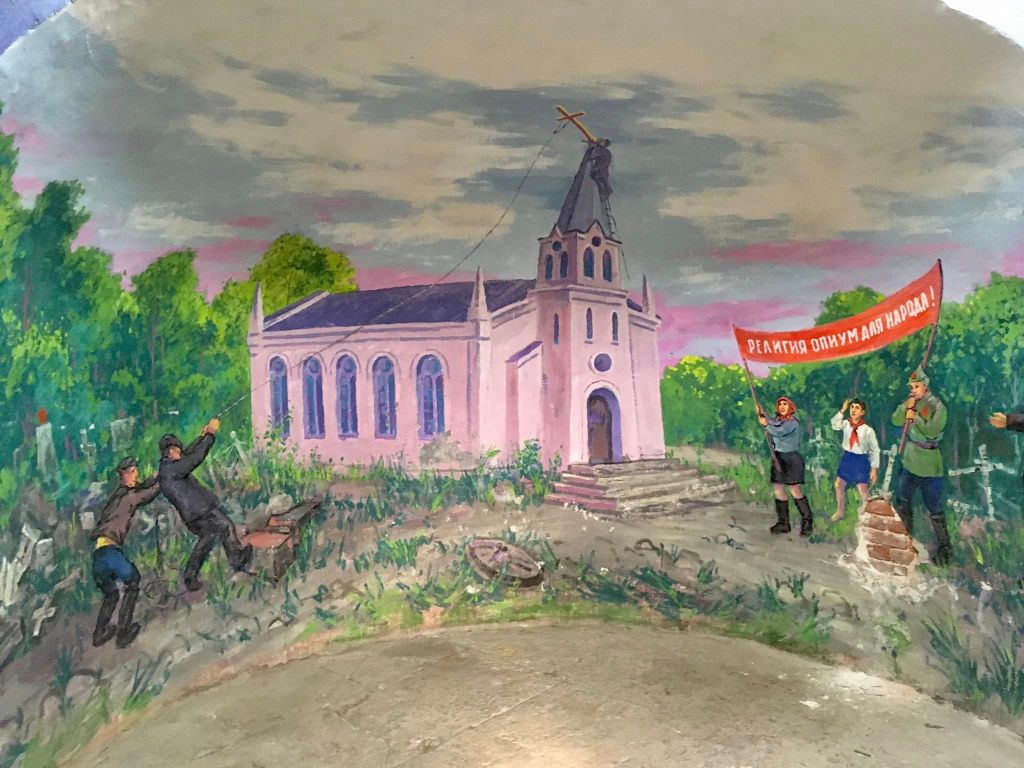
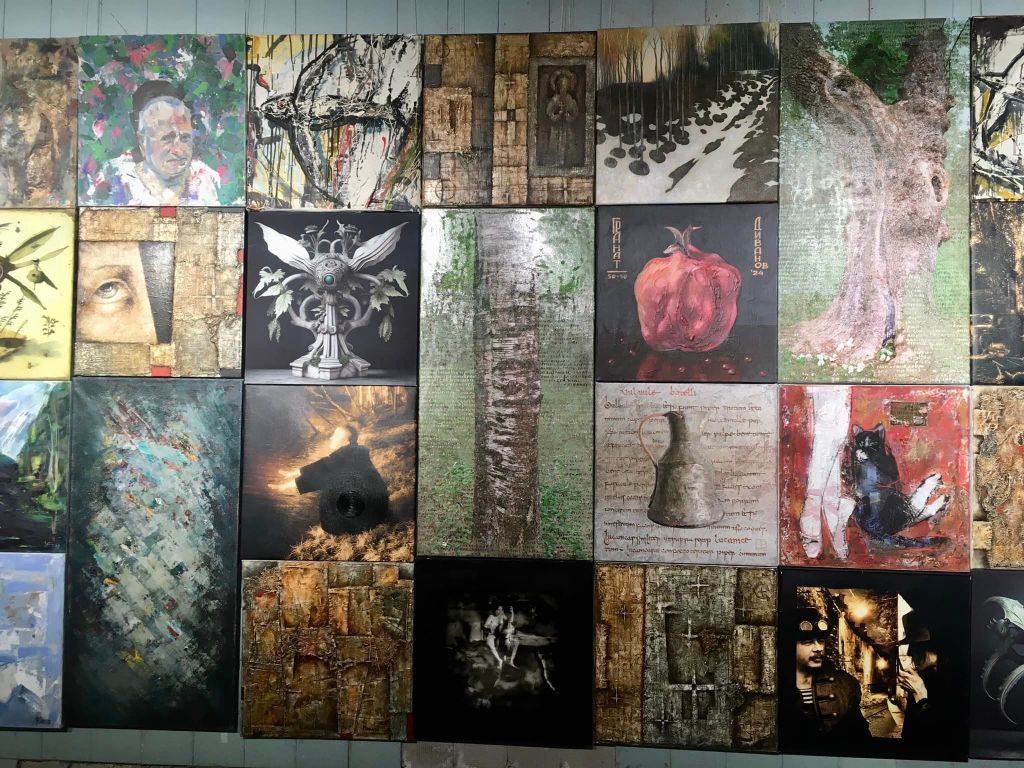
Source: Asya Rudina, “‘The world has split in two:’ the Runet discusses Akunin’s post about the two Russias,” Radio Svoboda, 1 April 2024. Translated by the Fabulous AM and the Russian Reader. The reactions, above, to Akunin’s outburst were not typical. Most of the best-selling author’s fans echoed his sentiments. The photos, above, by our friends V and M, were taken today at an exhibition currently on view in the former swimming pool and catacombs in the so-called Petrikirche on Nevsky Prospekt in downtown Petersburg. They suggest, I think, that the reality on the ground in “big Russia” (and “little Russia” as well) is slightly more complicated than Akunin would have us believe. ||| TRR

Bohdan Ziza: “A Cry from the Heart”

Bohdan Ziza, a Ukrainian artist, poet and activist, is serving a 15-year sentence for “terrorism” after pouring blue and yellow paint – the colours of the Ukrainian flag – on to a municipal administration building in Evpatoria, Crimea, his home town. He made and circulated a video of the action – on 16 May 2022, shortly after the all-out Russian invasion of Ukraine – and for that was also charged with “incitement to terrorism”.

Bohdan Ziza. From his instagram channel

This is Bohdan’s speech from the dock, before being sentenced by a Russian military court on 5 June last year.

Do I regret what I have done?

I am sorry that I over-reached, and that my action resulted in charges under the Article [of the Russian criminal code] on terrorism. I am sorry that my grandmother is now without the care and support that she needs. Apart from me, she has nobody. And I am sorry that I can not now help others who are close to me, who need that help now.

As for the rest: I acted according to my conscience.

And also, according to my conscience, I do not deny or disavow what I did. I behaved stupidly, and could have expressed my opinion in some other way. But did I deserve, for what I did, to be deprived of my freedom for ten years or more?

I would like to appeal to the court: do not follow the regime’s script, do not participate in these awful repressions. But obviously that would have no effect. The judges and other similar political actors are just doing what they are told.

For these reasons, I will continue to protest, even in prison. And I am well aware of the sentence I may receive, and how it may affect my health and even my life.

But am I worthy of the life that I live? Is each one of us worthy of a carefree life, when we stay silent at a time when, every day, innocent people’s lives are being taken?

This was the worst night of my life. I never experienced anything like it. I thought we would die. There were three Kinzhal rockets, and loads of Kalibrs. They fell very close, they were right above our building. The building shook – several explosions, one after the other. For the first time in the war there was a white glow, the sky was white from the explosions. It was as though we were in a trench, not in our own home. At one moment I thought that it was all flying towards us. There was the very clear sound of a rocket, and then a very powerful explosion. But we have been lucky, again, and we are still alive.

That was a message from my sister, in Kyiv, who had to live through another night of bombardment of the city by the Russian armed forces.

When she went out in the morning, she learned that one of the rockets had hit the next-door building.

For many people, this war that is going on now is happening over there somewhere, far away.

One of the staff at the pre-trial detention centre said to me: “Bloody hell, I am sick of this war. Whenever you turn on the TV, it’s more of the same.” I answered that the war is not over and so you can not get away from it. And then he said: “Yeah, yeah, I know. It’s just that everything is getting more expensive. The cost of running a car now!”

And that’s the problem, here in Russia. For you, this war is an inconvenience, an irritation. You try to wait it out, living your usual life, trying to avoid bad news, and in that way simply not valuing simple things, not valuing the fact that you can wake up in a warm bed, in a warm flat, and say to someone who is dear to you, “good morning”. At a time when in the country next door, millions of people are losing their homes, losing their loved ones, when whole cities are being destroyed. Every day. That’s the everyday reality for Ukrainian citizens now.

In theory, Russian people’s failure to act could be explained, if only what is happening was not being done by Russian hands. The hands of those who bear arms, and those who don’t do anything to stop them. Every day that an ordinary Russian person carries on, reasoning that this is all politics and doesn’t concern him, and living his normal life, he adds money to the Russian Federation budget and in that way sponsors this criminal war.

Of course there are those who do not support what is happening, who take action, who are not silent participants: journalists, various activists – those who refuse to keep quiet.

My action was a cry from the heart, from my conscience, to those who were and are afraid – just as I was afraid – but who also did not want, and do not want, this war. Each of us separately are small, unnoticed people – but people whose loud actions can be heard. Yes, it is frightening. Yes, you can end up behind bars – where I, for sure, did not plan to be. Even for these words I could face a new criminal case. But it is better to be in prison with a clear conscience, than to be a wretched, dumb beast on the outside.

I am also an ordinary citizen of my country – Ukraine – who is not used to keeping quiet when confronted with lawlessness. I am not alone here today in this “goldfish bowl” [slang for the glass cage in which the accused appears in Russian courts]. There are more than 200 people with me: Ukrainian political prisoners, serving time in Russian prisons on fabricated charges. Many of them are Crimean Tatars, who are once again faced with repression by Russia. I am myself half Crimean Tatar, and angry at our people’s suffering.

Many Ukrainians are serving time in Russian prisons simply because they are Ukrainians, and were somewhere that the Russian state thought they should not be. In Russian prisons people are beaten up for speaking in Ukrainian. Or not even for speaking it, but simply for understanding it. Bastards among the guards at pre-trial detention centres or other places where people are imprisoned address prisoners in Ukrainian, to see if they get a reaction, to see if they provoke an answer or a response. If a person reacts, they beat him up.

Those who so passionately seek “Nazis” in Ukraine have not opened their eyes to the Nazism that has emerged in Russia, with its ephemeral “Russian world”, with which armed forces have come to us, to try to extirpate Ukrainian identity.

People in prison suffer in the most terrible conditions. Many of them are elderly. More than 40 people [in the pre-trial detention centre] have critical health problems, and can not access the medical treatment that they need. People die in prison. They are not criminals. Deport them from the country! Why do you keep them here?

I am no kind of terrorist. It sounds ridiculous to even say that. I am a person with morals and principles, who would rather give his own life than take the life of another person. But I am not ready to give my life to the Federal Penal Enforcement Service of the Russian Federation.

I declare a hunger strike, and demand that I be stripped of my Russian citizenship. I demand that all Ukrainian political prisoners be freed. If anything happens to me in prison, I want the world to know that it happened only because I am a Ukrainian, who took a stand against the war in his country.

And if this is my last word, let it be my last word in the Russian language. The last thing I will say publicly in Russian in this country, as long as this regime lasts. The reddish regime.

[Ziza then switched from Russian to Ukrainian, and recited this poem. Explanation of names mentioned below.]

I am not Red, I am Crimson!

I am not playing to the gallery!

These are not rhymes, they are wounds!

And I am not Melnik, I am Bandera!

The weather: it’s snowing in my summer,

From Symonenko’s motherland

I go to the end, like Teliha!

And I believe in wings, like Kostenko!

Note. The Ukrainian for “crimson” (“bahrianyi”), was also the pseudonym of Ivan Lozoviaha, a dissident writer and political exile from 1932 to his death in 1963. Andriy Melnik and Stepan Bandera were leaders of Ukrainian nationalist partisan military formations in the 1940s. Vasyl Symonenko was a Ukrainian poet, active in dissident circles until his death in 1963. Olena Teliha was a feminist poet, member of a nationalist underground cell in Nazi-occupied Kyiv, killed by the Nazis in 1942. Lina Kostenko is a Soviet-era dissident who has continued working as a poet and writer in post-Soviet Ukraine.

This is translated from the Russian text on the Graty news site, with reference to the Crimea Human Rights Group report. Thanks to M for help with translation.

What happened next. After Bohdan Ziza made this speech to the Southern District Military Court in Rostov, Russia, on 5 June 2023, he was sentenced by the judge, Roman Plisko, to 15 years in a high-security penal colony. Shortly after that, Ziza wrote to Zmina, the Ukrainian human rights organisation. He ended his hunger strike and then wrote to Uznik on-line, which coordinates correspondence with anti-war prisoners in Russia, to thank them and the many supporters who had written to him.

On 27 September 2023 Bohdan Ziza’s appeal against his sentence was rejected by Maksym Panin at the military court of appeal in Vlasikha, near Moscow.

Bohdan, who marked his 29th birthday on 23 November, was moved to Vladimir prison. On 5 December, the Kharkiv Human Rights Protection Group reported that he had been visited by his lawyer and is in good spirits. He is sharing a cell with Appaz Kurtamet, another Crimean Tatar political prisoner, and was serving time in a punishment cell after stating that he is not a criminal and refusing to wear prison clothing.

What we can do. Advice to non-Russian speakers who wish to write to Bohdan and Appaz is included in this article on the Kharkiv Human Rights Protection Group site. The group also appeals to other countries’ diplomats to help Ukrainian citizens in Russian prisons (although this does not include Bohdan, since he was compelled, as a teenager, to take Russian citizenship after Crimea was annexed by Russia in 2014).

More information. Solidarity Zone (see facebook, telegram and twitter) supports anti-war activists jailed in Russia. The Kharkiv Human Rights Protection Group, Crimea SOS and Zmina are among the Ukrainian human rights organisation that publicise the fate of more than 180 Crimean political prisoners in Russian jails. SP, 17 January 2024.  

□ Bohdan Ziza’s own art and poetry is on instagram and youtube.

Source: “Crimean political prisoner Bohdan Ziza: ‘My anti-war action was a cry from the heart’,” People and Nature, 17 January 2024. Thanks to my friend and comrade Simon Pirani for his outstanding work here and elsewhere, and for his kind encouragement to repost this important document of Ukrainian resistance to Russian fascism.

A Prayer for Peace

IMAG4081

“A Prayer for Peace,” Interior Theater, Nevsky Prospect, Petrograd, March 14, 2014

Russia and Ukraine are on the eve of a fratricidal war. This is madness! During these terrible days, it seems that words and actions have lost their meanings. We suggest praying for peace. By dedicating this day to praying for peace, we would like people, regardless of creed, nationality, and political views, to unite and say no to war.