Russia’s Trash Flashpoint

Landfills Become a Problem for the Kremlin
Environmental Protests Move from Local to Federal Level
Yelena Mukhametshina and Yekaterina Bryzgalova
Vedomosti
April 1, 2018
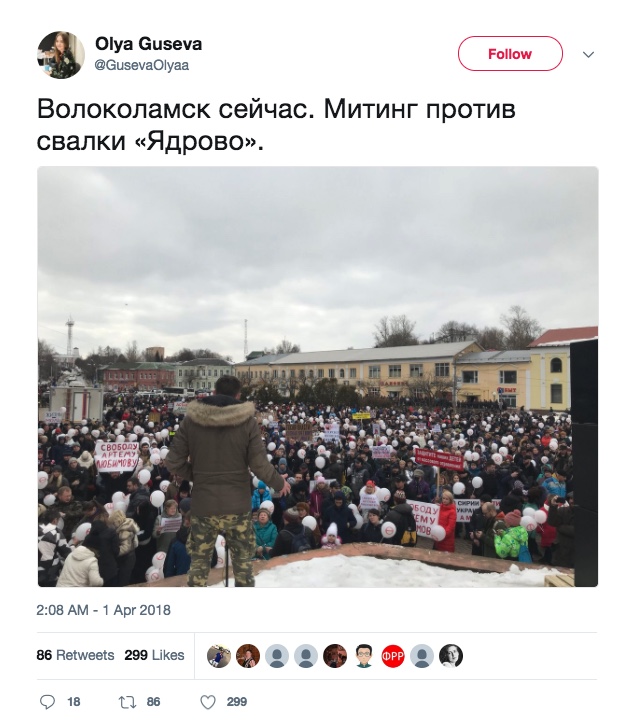
guseva“Volokolamsk right now. Protest rally against the Yadrovo Landfill.” Screenshot of Olya Guseva’s Twitter page. Courtesy of Meduza

According to various estimates, 6,500 to 7,000 people attended this past Sunday’s protest rally in Volokololamsk against the Yadrovo Landfill. This was more than the number of people who attended the rallies on March 3 (approx. 5,000) and March 29 (6,000). (Volokolamsk’s official population is less than 21,000.)

Among the demands made at Sunday’s rally were the closure of the Yadrovo Landfill, the declaration of an emergency, the resignations of Moscow Region Governor Andrei Vorobyov and Andrei Vikharev, acting head of Volokolamsk District, and the release of activist Artyom Lyubimov, who was detained by police a day before the rally.

Protesters at the rally held up placards addressed to President Putin, including ones  bearing the message, “Putin, Help!”

On March 21, a strong release of landfill gas took place in Volokolamsk, causing schoolchildren to say they felt sick. Fifty-seven children were hospitalized in the Volokolamsk Central Hospital. Subsequently, Governor Vorobyov fired the head of Volokolamsk District.

Volokolamsk has not been the only town in Moscow Region protesting landfills. During the past year, people have taken to the streets in such towns as Balashikha (after the local Kupchino Landfill was closed there on direct orders from the president, the garbage that used to be transported to the landfill was redirected to Yadrovo), Kolomna, Klin, Sergiev Posad, Tuchkov, and Serpukhov.

A former federal official explained why garbage has recently become a hot-button issue.

“New laws were passed obliging the regions to adopt local waste handling schemes and select regional contractors. A market is emerging. There are different disposal strategies: incineration versus separate collection of recyclables. Different strategies require building different processing facilities, and the stakeholders backing the different strategies are also different, from the federal to the municipal level,” he said.

The stakeholders are in conflict with each other and with the regions. This is especially true of Moscow and Russia’s other major cities, he claimed.

Last week, it transpired that Tver Region Governor Igor Rudenya had warned all heads of municipalities in his region that if the regional authorities found garbage from other regions in local landfills, the municipal heads responsible for this would have problems with law enforcement and Governor Rudenya’s administration.

“You will not import garbage from other Russian regions for any amount of money at all,” said Governor Rudenya, as quoted by Tverigrad.ru.

The president’s retinue is to blame for the flare-up in Volokolamsk. When they were getting ready for his annual Direct Line program, they insisted on underscoring the subject of landfills by way of speeding up the construction of processing facilities. It was then the president ordered the closure of the landfill in Balashikha, argues a source close to the Kremlin.

“The landfill was closed. The garbage from there was shipped to nearby landfills, and the flow of garbage to these landfills increased manifold. First it was necessary to put the infrastructure in place, and then close the landfills,” he said.

Environmental protests by people concerned with specific issues are a considerable risk to the system’s stability, and the regime is very concerned about them, saif another source close to the Kremlin.

“The president pays great attention to the environment. Last year, he personally telephoned activists in Chelyabinsk to show he supported them. This is quite important, especially in circumstances when environmental measures are given short shrift to save money.”

Last year was officially the Year of the Environment in Russia. During the presidential campaign, Putin held meetings in Krasnoyarsk on improving the ecological situation and  reducing the emission of pollutants into the atmosphere.

Political scientist Andrei Kolyadin argues the issue of landfills cannot be solved quickly. Several years would be needed to do that.

“This abscess has long been ripening, and now it threatens people’s lives. As the risks to people’s live increase, the risks to the regime increase as well.”

A final decision on the future of Governor Vorobyov, who faces elections in the autumn, has not yet been made, said Kolyadin.

“If the protests balloon, he could be made their scapegoat. He has been doing his best to wiggle his way out of the subject politically, but he has not been able to do this economically. If the elections are handled by the authorities, he will not have complications, but if they are run more or less honestly, the districts in which anti-landfill protests have been taking place will not turn out to vote for him.”

Political scientist Mikhail Vinogradov argues such protests ordinarily wane quickly. In this case, however, the boiling point has not yet been reached. Various grievances, such as Governor Vorobyov’s less-than-happy appointment of a new head of Volokolamsk District, have been building up.

“I get the feeling there will be a new wave [of protests] that will help solve the problems that have accumulated. People feel they are in the right, and it gives them a strong impetus to protest,” he said.

Given current conditions, in which protests have been de facto banned, any socio-economic protest takes on political overtones, Vinogradov concludes.

Translated by the Russian Reader

Search and Intimidate

“Court approval of search warrant requests, 2007–first quarter of 2017. Red=number of warrant requests; gray=warrants issues. || In the past 11 years, Russian courts have approved, on average, 96.3% of search warrant requests. 67% of the requests concerned searches of private premises as part of surveillance operations, while 33% of searches were part of specific criminal investigations. ||Numbers and kinds of intimidation during so-called political searches (based on an analysis of 600 searches conducted in the homes of grassroots activists and members of persecuted organizations): violence, threats – 97; breaking down doors, forced entry through windows – 70; search performed at early hour of the day – 63; search conducted at homes of relatives – 47. Sources: International Agora and Russian Supreme Court Judicial Department.” Courtesy of Vedomosti

How Police Searches Have Become Tools of Political Intimidation
Agora International Says Privacy in Russia Has Nearly Vanished
Anastasiya Kornya
Vedomosti
March 29, 2018

Over the past ten and a half years, Russia courts have issued law enforcement agencies 1,976,201 warrants to search or investigate private premises. This number constitutes 96.32% of all such requests, according to calculations made by analysts at the Agora International Human Rights Group, which on Thursday will release a report entitled “Politically Motivated Police Searches: The Specter of Inviolability.” Often police investigators manage to obtain search warrants after the fact. During the period, the number of requests for search warrants has increased by nearly fifty percent. With respect to Russia’s 54 million households, this means that, over the last ten years, every twenty-seventh home in Russia has been searched.

The report’s authors note this is only the tip of the iceberg. Searches and inspections of non-residential premises, such as offices, warehouses, etc., do not require court warrants, and data on the number of such incursions has not been published by anyone.

The exception to this rule are law offices. Since April 2017, they have enjoyed greater formal protection than the residences of ordinary citizens. Law offices cannot be searched without a court order, and a representative of the regional bar association must be present during the search. Andrei Suchkov, vice-president of the Federal Bar Association, says they have not specially kept track of the statistics, but his sense is the number of searches in law offices has decreased during this time. There have been cases when police investigators tried to carry out searches without permission, but the courts have nevertheless mainly sided with lawyers, he notes.

Agora’s report reminds its readers that, in the early 1990s, the term “mask show,” meaning a police search carried out with backup from masked and armed special forces soldiers, came into common usage. Such searches were an effective means of coercing business partners and business rivals alike. Subsequently, the tool came to be used against the regime’s political opponents.

Recently, the practice of “serial” searches has been widespread. Thus, according to Leonid Volkov, head of Alexei Navalny’s presidential election campaign, police have raided the offices of the Anti-Corruption Foundation and Navalny’s regional campaign offices no less than 150 times. Police have raided the offices of Mikhail Khodorkovsky’s Open Russia around fifty times over three years. Agrora’s analysts note the most frequent targets of large-scale, systematic searches have been members of opposition organizations and Crimean Tatars.

Another goal of police searches is the confiscation of electronic devices and subsequent unauthorized access to personal data, correspondence, and social media accounts. For example, during a June 2012 search of Alexei Navalny’s home, police seized a laptop, tablet computers, and mobile phone. Two weeks later, Navalny’s email and Twitter account were hacked.

In recent years, as Agora’s report underscores, police searches have been a vital element of campaigns against not only political opponents but also government officials. State-controlled national TV channels extensively covered searches in the homes of ex-regional governors Alexander Khoroshavin and Vyacheslav Gayzer, Federal Customs Service chief Andrei Belyaninov, and members of the Dagestani government.

Pavel Chikov, head of Agora, says they took an interest in the numbers of police searches after analyzing the state of privacy of correspondence and telephone conversations. If we recall that, on average, the courts have approved 98.35% of wiretapping warrants, we must admit judicial oversight in this area is illusory, and there is no privacy in Russia, claims Chikov.

Expanding the remit of law enforcement agencies to ever broader areas of daily life has transformed searches from investigative tools to signals broadcast by the regime and received by everyone involved in politics, government, and business, concurs political scientist Mikhail Vinogradov.

“What matters nowadays is not the outcome, but the search per se. We have been seeing an increased number of searches whose point is just that,” says Vinogradov.

Translated by the Russian Reader

No Contest

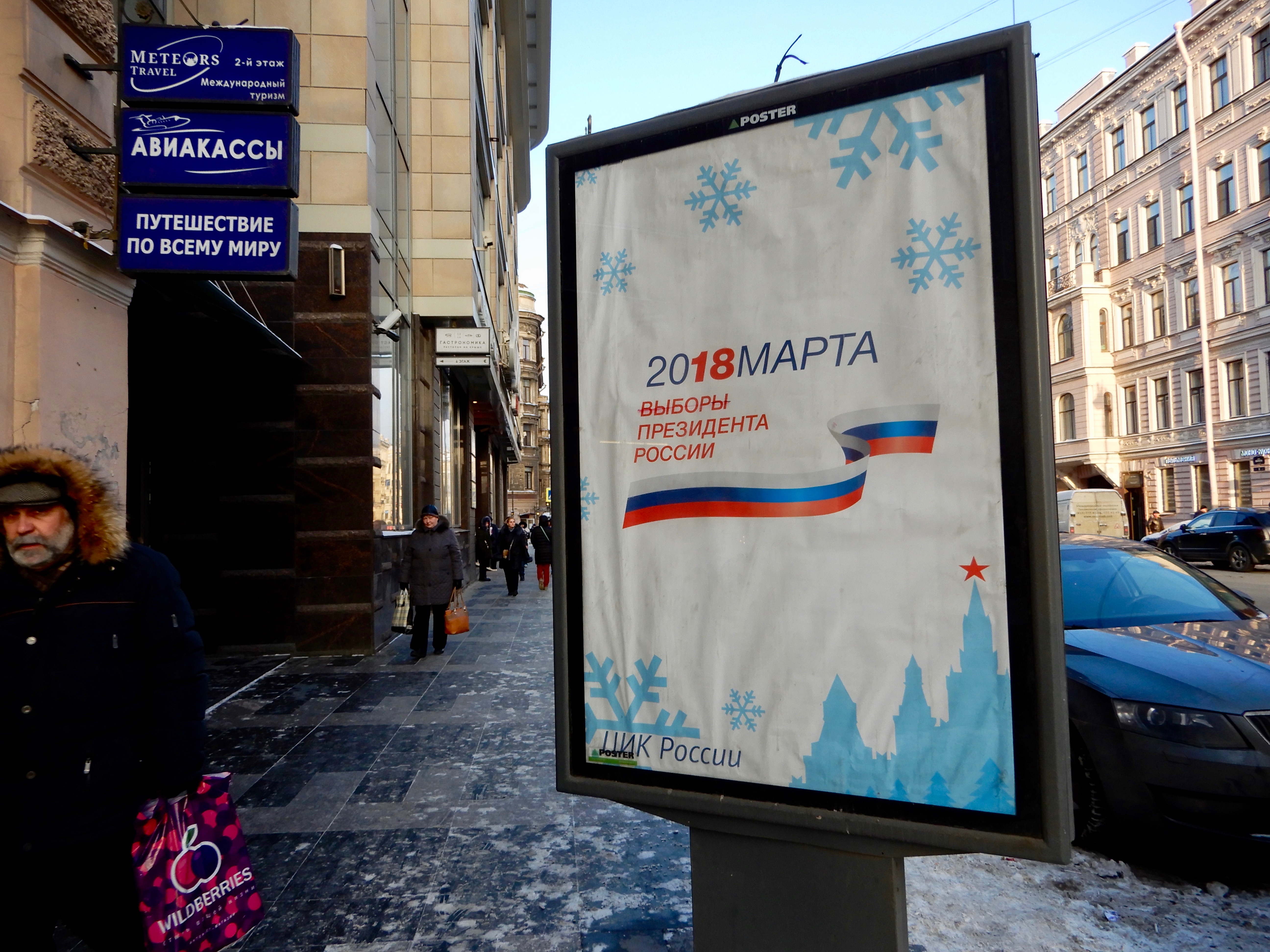
DSCN4290“March 18, 2018. Russian Presidential Election. Our Country, Our President, Our Choice! Russian Central Election Commission.” February 19, 2018, Ligovsky Prospect, Central Petersburg. Photo by the Russian Reader
Valery Dymshits
Facebook
March 4, 2018

I am somewhat surprised to see the ongoing discussion on whether to vote in the [Russian presidential] election or not. Some people write that if you don’t vote, your ballot will be used, and so on. Meaning it is assumed in advance the election commission is a band of brigands. If this is so, however, they can do whatever they want and, most important, at any level they can enter any figure they like in their official count. What difference does it make, then, if they use your ballot or not?

Actually, there is no election. Why be involved in something that does not exist? I think it is important not only to avoid attending this strange event oneself but also to explain to everyone why they should not attend, either.

DSCN2984On this “get out the vote” billboard, recently photographed somewhere in central Petersburg, a “vandal” has lightly crossed out the word “election.” Photo by the Russian Reader

Cities with populations over a million will have voter turnouts just over 50%, says a person close to the presidential administration.

All polling is a tool for actively shaping reality. Figures are used to try and suggest a particular interpretation of events, notes another source close to the administration. In his opinion, the downturn in Putin’s support rating can be explained by a lack of activity and mistakes during the campaign.

“In reality, the figure are much lower. The actual turnout is expected to be between 55% and 60%. Putin’s result will range, depending on the region, from 50% to 65%. It will be an accomplishment if the turnout in Moscow is over 50%.”

The difference between the turnout in major cities and the provinces could be as much as 20%. Usually, on the contrary, the turnout in the provinces is between 10% and 12% greater, says another person close to the presidential administration.

“What happens next depends on the whether the mechanism for penciling in votes gets turned on or not. If the election is staged with the full use of the administrative resource, something I do not rule out, it does not matter who gets what in reality. If the elections are staged fairly, Putin’s result in cities with populations over a million will be lower, while his opponents’ will be slightly higher.”

The turnout in cities with populations over a million will be between 45% and 55%, the source believes.

Source: Yelena Mukhametshina and Olga Churakova, “Putin’s Rating Has Dropped Abruptly in the Major Cities,” Vedomosti, March 7, 2018

Translated by the Russian Reader. The emphasis, above, is mine.

Russia Set to Fall Further Behind US in Terms of Living Standards

DSCN2995“Change Yourself for the Better.” If you read the following article, about the OECD’s forecast for economic growth in Russia, between the lines, you will discover a takeaway message that has been apparent to numerous observers for a long time. Until Russia does away with official kleptocracy, rampant corruption, outrageously bad governance, and the shock-and-awe policing of politics and business by the siloviki—i.e., unless it renounces Putinism and all its ways—there is little chance the living standards of ordinary Russians will improve much in the next forty years. Photo by the Russian Reader
Russia Set to Fall Further Behind US in Terms of Living Standards
OECD’s Experts Have Predicted the Futures of the World’s Major Economies
Tatyana Lomskaya
Vedomosti
March 7, 2018

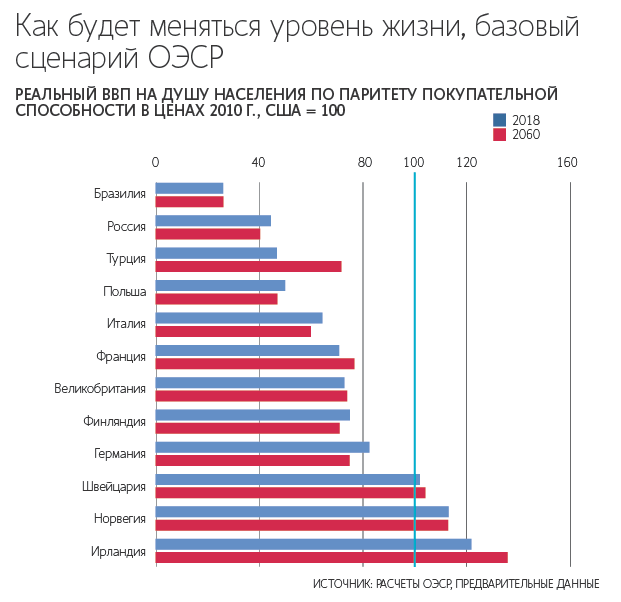
Russia is one of the few member states and parters of the Organization for Economic Cooperation and Development (OECD), in which real per capita GDP will fall by 2060 relative to the benchmark, the United States, according to an OECD reported entitled “Long-Term Prospects: Scenarios for the World Economy, 2060.” Vedomosti has had access to the eport. A source at the OECD confirmed its authenticity while noting it was a preliminary draft.

In the absence of reforms, Russia’s per capita GDP will grow only 0.7% in the next twelve years, predict OECD economists. The stumbling block is low workforce productivity. In recent years, it has not increased at all, and it will accelerate to a mere 0.5% in the period 2018–2030. Another brake on economic growth is poor demography: the economically active and able-bodied segment of the populace has been declining. By way of comparison, due to its positive demographic circumstances, Turkey’s standard of living will increase considerably by 2060 to about three fourths of the figures for the US, write the report’s authors.  In Russia, it will increase to 40% of the benchmark before decreasing slightly.

It is hard not concur with the diagnosis, notes Alexander Isakov, VTB Capital’s chief economist for Russia. Demography and workforce productivity are the biggest constraints on economic growth in Russia.

In his March 1, 2018, address to the Federal Assembly, President Putin promised to increase per capita GDP by 50% by 2025. He said = Russia must firmly gain a foothold among the world’s top five economies by then. Putin meant GDP at purchasing power parity (PPP), Economic Development Minister Maxim Oreshkin explained on the TV program Pozner. According to the IMF, Russia is now in sixth place in terms of GDP (PPP), four percent points behind Germany. The goal is to “bypass Germany,” explained the minister.

The goal can be brought within reach by applying active budgetary (e.g., tax cuts and increases in oil and gas costs) and monetary (e.g., lending) stimuli, says Kirill Tremasov, director of the analytics department at Locko Invest, but this is fraught with great risks.

Without reforms, Russian and the other BRICS countries will slow the growth of the world’s real GDP for forty years beginning in 2019, warn the report’s authors. To accelerate growth, they must increase workforce productivity by reforming governance, increasing the duration of schooling, and reducing trade tariffs.

If during the period 2020–2060, the BRICS countries develop the rule of law (which the World Bank evaluates on a scale from minus two to plus two), increase schooling to the median level of the OECD countries, and decrease trade tariffs to OECD median levels by 2030, the growth of per capita GDP will be 25% to 40% higher than in the baseline scenario. A key factor is governance reforms: combating corruption, improving law enforcement and the judiciary, increasing the efficiency of the civil service, and involving ordinary citizens more actively in politics.

The report notes this is especially important for Russia. Among the BRICS countries, Russia has the worst score for rule of law (-0.8) and the best score for average length of schooling (10.8 years). The Russian civil service has been adapted to the current political system, which assumes maximum centralization and the absence of political competition. Tremasov is skeptical: it is impossible and pointless to reform the civil service without democratizing the political system.

fullscreen-v2

“How Living Standards Will Change: The OECD’s Baseline Scenario. Real Per Capita GDP at Purchasing Power Parity in 2010 Prices (US=100).” The blue horizontal lines represent predicted outcomes for 2018; the red lines, predicted figures for 2060. The countries included in the survey, as  listed from top to bottom, are Brazil, Russia, Turkey, Poland, Italy, France, Great Britain, Finland, Germany, Switzerland, Norway, and Ireland. Source: Preliminary Calculations from the OECD. Courtesy of Vedomosti

In his May 2012 decrees, Putin charged the government with increasing workforce productivity by one and a half times by 2018, but it had increased only by 3.8% as of 2016. Minister Oreshkin listed the obstacles: underinvestment, insufficiently developed infrastructure, and a lack of resources to upgrade productive assets.

Managers do not have a “culture of constantly improving efficiency and productivity,” he complained.

Workforce productivity is indeed the main obstacle to economic growth, but an increase of investments is needed in order to increase it, notes Natalya Orlova, chief economist at Alfa Bank. In 2017, about 50% of the increased investments in Russia were due to the extractive resources sector, although the bulk of GDP is generated in other sectors, says Orlova. Investments in agriculture grew by a mere 1.3%, fell in manufacturing and construction, and the commercial sector crashed altogther, falling 9.7%. Investment growth has been hindered by economic and geopolitical uncertainty, and the government has an ever harder time of reducing that uncertaintlywith sanctions in place, notes Orlova. Business, on the contrary, needs guarantees the rules of the game will not change for a long time.

Growth in productivity is impossible without increased competition, Tremasov points out. It is competition that compels companies to introduce new technology, reduce costs, and improve management. The more intense the competition in a sector, the higher the productivity, he notes, citing the retail trade and metallurgy as examples. Therefore, the main means of increasing economic efficiency is reducing the state’s share in the economy, argues Tremasov, as well as attracting foreign investors, reforming the judiciary, and reining in the security services [siloviki].

Measures to improve the country’s demographic circumstances will bear fruit in twenty-five years, when the corresponding generation enters the labor market, notes Isakov. The authorities should thus concentrate on increasing productivity.  If the market functions smoothly, the difference in productivity between companies in the same industry decreases, he argues, because they borrow technology and methods from each other, while inefficient companies are forced out of the market. In Russia, on the contrary, differences in productivity within industries are some of the highest in the world, due in part to gray sector employment practices, Isakov concludes.

Economic growth could take off if reforms are implemented, argues Orlova. The Russian economy is currently so inefficient that the jumpstart supplied by reforms would be huge.

Translated by the Russian Reader

(Don’t) Pay Your Rates

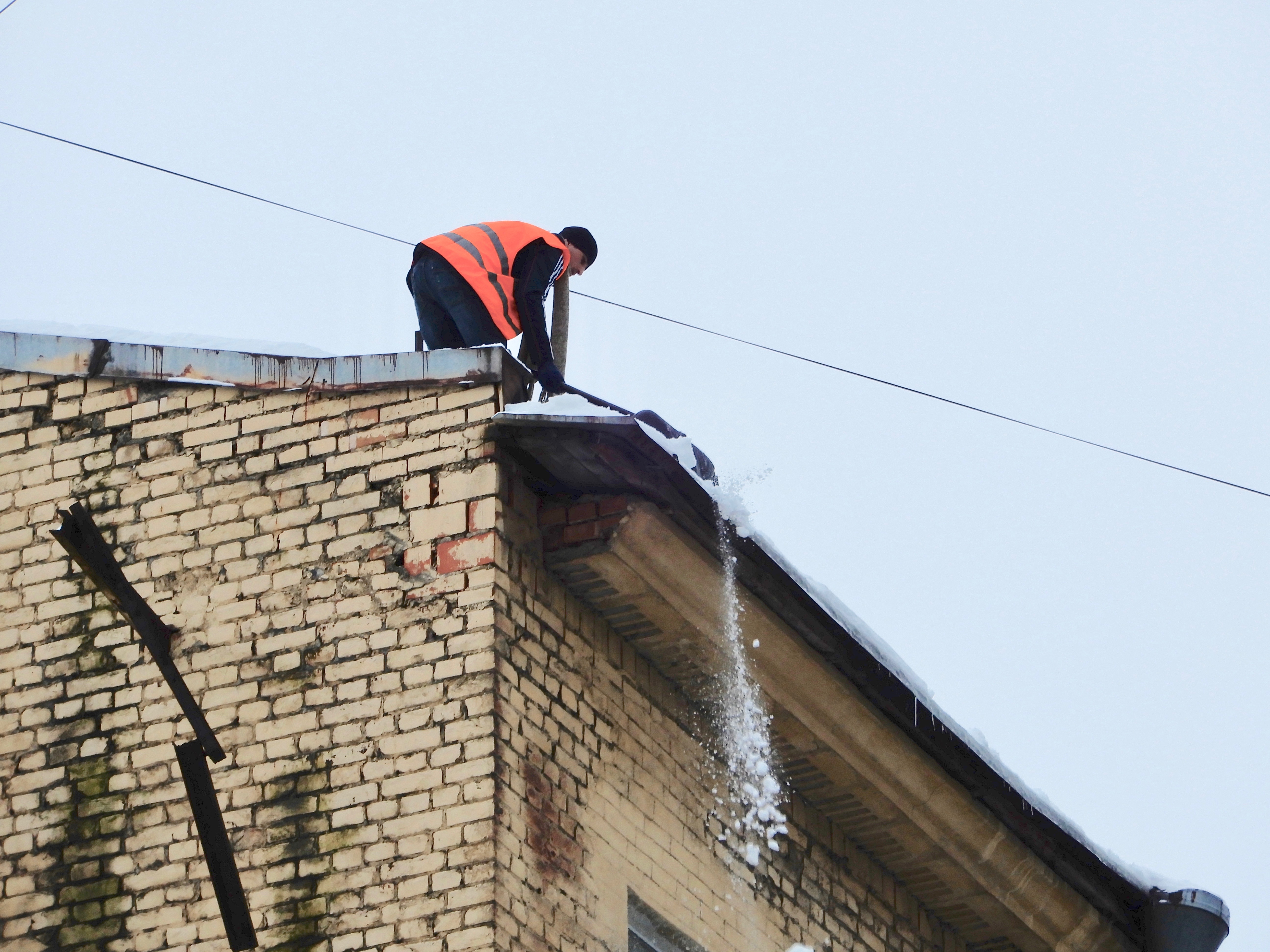
DSCN4253A Petersburg housing services worker risking life and limb to clear snow off the roof of a tenement building in the city’s downtown. Photo by the Russian Reader

Russians Are Increasingly Not Paying for Their Flats
Growing Debts for Housing Services and Utilities Reflect Obvious Social Ills
Pavel Aptekar
Vedomosti
February 21, 2018

The increase in housing and utilities rates, occuring alongside a protracted downslide in personal income, has produced an abrupt upturn in debts for housing services and utilities, and collections of arrears in court, especially among low-income segments of the Russian populace.

The Russian Supreme Court has published statistics on the collection of debts for housing services and utilities. In 2014, 2.1 million such cases were ajudicated by the courts. In 2017, the figure was 5.4 million cases, and the total amount of recoverable debt had doubled, from ₽60 billion to ₽120 billion—taking into account, however, the debts of legal entities that paid for heating irregularly. Nevertheless, these figures reflect both an alarming trend—utilities payments have increasingly become a burden for disadvantaged parts of the populace—and the unwillingness of the rich to pay the bills for flats they have purchased as investments.

Generally, the collection of payments for utilities and housing services proceeds calmly. According to the Institute for Urban Economics, 95–97% of apartment residents pay their bills on time, but an individual’s timeliness in paying their bills depends on their income, as well as the climate and budget priorities of the Russian region where they live. According to Rosstat, household expenses on utilities and housing services per family member rose between 2014 and 2016 from ₽1,511 to ₽1,816, i.e., by 20.2%. The share of total household expenses spent on utilities and housing services rose during the same period from 10.3% to 11.3%.

For the sake of budget savings, many regions have reduced subsidies on housing and utilities, which has seriously increased the amount of money spent on these services by local populations, says economist Natalya Zubarevich. For example, housing and utilities account for 25.8% of paid services in Kursk Region, while in neighboring Oryol Region the figure is 41.1%. In Khabarovsk Territory, housing and utitilies expenses make up 26.7% of the cost of all services, while in Amur Region, which has a comparable climate, the figure is 45.8%.

In 2016, housing and utilities expenses accounted for 15.2% of all expenses among the ten percent of Russian families with the lowest incomes, and 14.8% of all expenses among the ten percent of families who were less poor. People who have to scrimp on everything are often forced not to pay for housing and utilities simply in order to survive. However, according to Mikhail Men, Minister for Construction and Housing, some of the arrears are owed by the proprietors of apartments bought as investments, who do not want to pay the bills for vacant flats.

According to Rosstat, the total amount of money owed by the Russian populace for housing and utilities in 2014 was ₽111 billion; in 2015, it was ₽135.8 billion. Subsequently, the debts have grown more quickly. In October 2016, Andrei Chibis, Deputy Minister for Construction and Housing, informed TASS News Agency they had reached ₽270 billion, and in July 2017, Men cited the figure of ₽645 billion [approx. €9.2 billion].

This increase reflects an obvious social ill. Housing and utitilies fees are billed by private companies, who turn not only to the courts to collect unpaid bills but also to the services of illegal debt collectors. Such circumstances could engender serious conflicts, especially in small towns with poor populations.

Translated by the Russian Reader. See my numerous previous posts on the problem of debt in Russia.

How Rosstat Stopped People’s Incomes from Falling by Fudging the Stats

1024px-Centrosoyuz_Moscow_-_Ak_Sakharova_viewThe Tsentrosoyuz Building, on Sakharov Avenue in Moscow, was designed in 1933 by Le Corbusier and Nikolai Kolli. Originally built as headquarters of the Central Union of Consumer Cooperatives, it now houses Rosstat and the Russian Federal Financial Monitoring Service. Photo courtesy of Wikipedia

Rosstat “Stopped” Populace’s Incomes from Falling
Analysts Accuse Agency of Fudging the Figures
Yelizaveta Bazanova and Filipp Sterkin
Vedomosti
February 19, 2019

Household Debt in Russia Over 170 Billion Euros

reliable future consumer credit coopReliable Future Consumer Credit Cooperative is one of many retail lenders ready to help ordinary Russians “boost their standard of living.” Photo by the Russian Reader
Household Debt of Russians Exceeds Twelve Trillion Rubles
Half of This Amount Was Borrowed Over the Last Year
Emma Terchenko
Vedomosti
January 31, 2018

This emerges from statistics gathered by the United Credit Bureau (OKB), based on information about the outstanding loans of 82 million Russians.

According to the Russian Central Bank, the Russian populace’s bank debt grew by 13.2% in 2017 to 12.2 trillion rubles [approx. 170.75 billion euros].

The OKB’s calculations show the number of new loans grew more slowly than their total amount. Over the past year, loans increased by 37% compared to 2016 (by 4.14 trillion rubles), whereas their quantity increased only by 12% to 34.8 million individual outstanding loans.

Moreover, an increase was observed in all segments of the loan market—mortgages, cash loans, auto loans, and credit cards—according to the OKB’s statistics.

Banks mostly disbursed money to Russians in the form of cash loans: nearly 3 trillion rubles or 33% more than in 2016. The number of such loans reached 24.7 million units, an increase of 14%.

The total amount of mortgages issued for the year increased by 42% to 1.8 trillion rubles, while the total number rose by nearly a third to 959,237 individual mortgages. According to Rusipoteka, a financial analytics company, 53% of the housing mortages issued last year were supplied by Sberbank.

In November, the mortgage portfolios of Russian banks exceeded a record five trillion rubles, the Central Bank reported previously.

“Afer the crisis, banks tried to build up their mortgage portfolios. Many of them reduced their down payments to accomplish this. Therefore, amongst the loans issued last year, around a third had down payments of less than 20%,” says Rusipoteka director Sergei Gordeiko.

According to the OKB, auto loans for all of 2017 increased by 36% to 333.3 billion rubles or by 25% to 436,539 individual loans. The National Credit History Bureau (NBKI) estimated the annual growth of auto loans at 29%.

“Auto loans have returned to pre-crisis levels, and the share of cars bought on loan has been growing,” notes NBKI’s director general Alexander Vikulin. “In 2017, every other automobile in Russia was purchased with a loan.”

The OKB claims credit cards are the fastest growing segment. Although the number of new credit cards issued last year grew only by 8% to 8.65 million cards (this figure excludes replacement cards), their total limit increased by less than half: by 48% to 544.5 billion rubles.

According to the NBKI, the number of newly issued credit cards grew by 52.6% to 6.87 million units in 2017. Equifax reported an 52% increase to six million new cards issued on the year.

The reason for the discrepancy is the databases of creditors monitored by the various credit bureaus differ. Unlike other credit bureaus, the OKB receives all information about loans made by Sberbank, which, according to different estimates, accounts for 42% to 46% of the loan market. The NBKI, for example, does not monitor figures from Home Credit Bank. None of the three bureaus—OKB, NBKI, and Equifax—take Russian Standard Bank’s statistics into account.

With its share of the credit card market, Sberbank has an impact on discrepancies in the calculations of the OKB and the other bureaus, argues Frank RG director general Yuri Gribanov.  According to Frank RG’s data, based on the management statements of banks and taking into account the utilization of credit limits and overdue debts, Sberbank’s portfolio of credit cards and overdrafts constituted 42.5% of the overall portfolio of all Russian banks as of December 1, 2017. During the year, it grew by 16.4% to 559.6 billion rubles.

A Sberbank spokesperson did not provide exact figures for the issuing of new credit cards last year, but confirmed they had not grown, remaining at a “consistently high level.”

Tinkoff Bank issued 2.41 million new credit cards in 2017, 43% more than the previous year, while Sovkombank issued more than a million credit cards. Vostochny Bank increased its issuing of credit cards by 140%, OTP Bank, by 135%, and VTB Bank by 13% (440,000 cards).

“The main reason for the growth is that banks have returned to sales channels that were frozen after 2015, for example, lending to walk-in customers,” says Alexei Shchavelev,  director of the cross-selling department at OTP Bank.

“In addition, many banks now have built up a broad base of quality customers: payroll customers, debit card holders, borrowers. It is now much easier for them to sell credit cards, because this customer base has been clarified,” Pavel Samiyev, managing director of the National Rating Agency, explains.

The demand for credit cards from borrowers themselves has been caused by the growth of consumer activity in general and improved customer solvency, argues Rostislav Yanykin, director of Russian Standard’s credit card sales. In the fight for customers, banks have been offering increasingly advantageous terms for using credit cards, he admits.

People who take out loans to boost their standard of living have mainly fueled the growth in lending to the populace, argues Nataliya Orlova, chief economist at Alfa Bank.

“In the past two years, they suffered more than others from the crisis in terms of reduced purchasing power.”

According to NBKI’s Vikulin, retail lending has been growing due to the economy’s stabilization.

Translated by the Russian Reader

NB. According to a May 17, 2017, article in the New York Times, household debt in the US had risen to $12.73 trillion in the first quarter of 2017, a new peak. Converted into rubles, this would amount to approx. 742 trillion rubles at current exchange rates. Based on the latest UN estimates, the current population of the US is nearly 327 million people, while the population of the Russian Federation is nearly 144 million people, based on the same estimates. In 2016, GDP (PPP) per capita in the US was over $57,000, while it was just over $23,000 in Russia, according to figures published by the World Bank. TRR

Getting (No) Satisfaction

fullscreen-rz

“How the European Court of Human Rights Did in 2017.” Romania, Russia, Turkey, Ukraine, Hungary, Azerbaijan, Georgia, Armenia, and Poland were the the leaders in terms of numbers of complaints the ECHR agreed to consider further, while Russia was number one in terms of rulings made against it. Among the most complaints from Russia were cases involving the right to liberty and security, the right to be protected from inhumane, humiliating treatment, the right to effective medical treatment, to right to a fair trial, and property rights. Source: ECHR. Courtesy of Vedomosti

Russia Leads in the Number of Human Rights Violations Confirmed by the European Court of Human Rights 
This Is Due to the Ineffectiveness of Russia’s Courts, One Expert Argues 
Anastasia Kornya
Vedomosti
January 26, 2018

Russia ranks second among Council of Europe member countries in numbers of complaints made to the European Court of Human Rights (ECHR) and ranks first in number of violations of the European Convention on Human Rights, according to a report on the court’s work in 2017, presented on Thursday by ECHR President Guido Raimondi. Last year, the ECHR rendered a total of 1,068 decisions: 305 of these decisions, or 29%, concerned complaints from Russia. In 293 of these cases, the court ruled that at least one article of the human rights convention had been violated. As of January 1, 2018, 7,747 cases from Russia were in proceedings at the ECHR. Only Romania has supplied the court with more cases: 9,920. In 2017, the 49% of complaints filed against Russia and deemed worthy of consideration amounted to nearly half of all cases accepted by the court for further review.

Pavel Chikov, head of the Agora International Human Rights Group, draws attention to the nature of the cases Russia has lost. They account for 66% of all of the ECHR’s rulings on the right to life, half of its rulings on torture, inhumane treatment or ineffective investigation of complaints of torture and inhumane treatment, and half of all rulings on the lack of “effective legal recourse” and groundless arrests. Finally, Russian plaintiffs won 38% of all cases involving the right to property. Chikov notes that not only has the number of rulings against Russia increased (by a third: from 222 to 305), but the number of complaints filed in Strasbourg has also experienced a sharp upturn. Chikov explains this both in technical terms (the ECHR has taken care of its backlog of cases and accelerated its document review process) and as due to the worsening overall human rights situation in Russia. The ineffectiveness of the country’s own tools for defending people’s rights has led to Russia’s becoming the most problematic country in Europe in this sense.

Russia consistently fulfills its international obligations, including implementing ECHR rulings, although some of them are flagrantly politicized, objects Andrei Klishas chair of the Federation Council Committee on Nation Building. Lately, there has been a tendency to endow the ECHR with the powers of a supranational body, but Russia acknowledges its powers only as an optional mechanism for protecting rights [sic]. National bodies remain the main mechanisms, including the Russian Constitutional Court, Klishas underscores.

The overall circumstances surrounding Russian cases in the ECHR is workaday: nothing overly worrisome has happened, argues Yuri Berestnev, editor in chief of the Bulletin of the European Court of Human Rights (in Russian). According to Berestnev, the growth of rulings in cases against Russia was to be expected, and the cause is purely technical. For three years, the court was completely focused on weeding out flagrantly unacceptable complaints from Russia. The Russian Justice Ministry dispatched a group of twenty Russian attorneys to help the ECHR clear up the logjam by filtering out several tens of thousands of complaints. [Sic!] The remaining complaints have good prospects. In late 2017, the court had accepted 3,000 complaints from Russia for further review, so the number of rulings went up from last year, explains Berestnev. He likewise notes that, in the autumn, the ECHR closed proceedings in 12,000 complaints from Ukraine, pointing out that the systematic problem of the non-fulfillment of decisions by national courts, due to the lack of financial means on the part of member states, should be discussed further by the Council of Europe’s Committee of Ministers. Russia has successfully managed to deal with the same problem, recalls Berestnev.

Translated by the Russian Reader

••••••••••

Opposition Leader Navalny Targets Kremlin in European Court
The Associated Press
January 24, 2018

STRASBOURG, France — Russian opposition leader Alexei Navalny on Wednesday appeared at a hearing at the European Court of Human Rights into whether Russian authorities violated his rights through numerous arrests.

The court ruled last year that seven of those arrests were unlawful and ordered Russia to pay 63,000 euros (about $67,000) in compensation, but the Russian government appealed.

Proving that Russian authorities had political motives in arresting him and not allowing his rallies to go ahead would set an important precedent for activists across Russia, Navalny told reporters outside the courtroom in the French city of Strasbourg Wednesday.

“This case is important not only for me but also for other people in Russia, especially in the regions because they are stripped of the freedom of assembly,” he said. “If the European Court for Human Rights sees political motives in those cases—and I think we have presented enough evidence for this today—it will make an important precedent in Russia.”

A final ruling is expected at a later date.

Russian President Vladimir Putin’s most serious political foe, Navalny wants to mount a boycott of the March presidential elections after he was barred from running.

Navalny has faced fraud charges viewed as political retribution for investigating corruption and leading protests. A Moscow court this week ordered the closure of a foundation that he used for his failed election campaign.

Navalny mounted a sprawling grassroots presidential campaign before he was officially barred from running in December. Navalny’s boycott campaign might cut the voter turnout, which would be an embarrassment for the Kremlin.

I Can’t Get No Satisfaction

Ali Feruz, a gay Moscow-based journalist threatened with deportation to Uzbekistan, where he faces possible torture and death. Photo courtesy of Human Rights Watch 

Memes of Solidarity
Silly and Serious Acts of Civic Solidarity Will Be Needed for a Long Time to Come
Maria Eismont
Vedomosti
January 25, 2018

The Satisfaction Challenge, a internet flash mob in support of cadets at the Ulyanovsk Civil Aviation Institute, who filmed and uploaded a parody of Benny Benassi’s music video “Satisfaction,” has entered its second week. The institute’s administrators accused the cadets, who are shown dancing in briefs and pilot caps, of “mocking the sacred” and “humiliating the industry,” declaring they had no place in aviation.

Since then, scores of videos supporting the cadets have been posted daily. The latest was filmed by the Novosibirsk hockey club Sibir. Before an auditorium packed to the gills with fans, the club’s mascot, Snowman, dances to “Satisfaction” along with security guards and cleaners. Before Snowman, there were videos by female pensioners in a Petersburg communal flat, costumed theater students in the Russian Far East, horsemen, swimmers, cadets at the Academy of the Emergency Situations Ministry, construction workers, doctors, students at an agriculture college, schoolchildren, housewives, and the presenters of the TV show Evening Urgant. Consequently, a talk show on the TV channel Rossiya 1 and US magazine The New Yorker have identified the Satisfaction Challenge flash mob as a significant event in Russia public life.

“Welders from the Urals Filmed a Satisfaction Challenge Video.” Published January 24, 2018

Obviously, the flash mob has touched some important strings. It is not so much a matter of discussing the boundaries of free self-expression, the clash of different views on what is permitted and appropriate, which, judging by the varying degrees of frankness on the part of the flash mobbers, are also quite different. The key here is solidarity, which has proven the best weapon against bureaucratic stupidity and official hypocrisy. Solidarity with the persecuted is a vital tool for upholding freedom and withstanding crackdowns, for maintaining and reinforcing social connections in an atomized society.

The flash mob in support of the Ulyanovsk cadets is probably the most vivid and funny solidarity campaign in today’s Russia, but it is hardly the only or most important solidarity campaign. The cadets were threatened with explusion, but Novaya Gazeta journalist Hudoberdi Nurmatov aka Ali Feruz, who has already spent five months in a temporary detention center for foreigners awaiting a review of his appeal to the European Court of Human Rights, is threatened with torture and even death in connection with false charges of cooperating with terrorists if he is deported to Uzbekistan, say his relatives, colleagues, and human rights activists.

The solidarity campaign in support of Ali Feruz kicked off this past August, when the Moscow City Court decided to deport him. His colleagues rightly believe that the longer they bring up the case and the more loudly they discuss it, the better are the chances for a positive outcome. So, last week, Theater.doc held another reading of Feruz’s diary, written in the temporary detention center for foreigners. The first reading, entitled “My Friend Ali Feruz,” was held as a sign of solidarity by journalists in late October. During last week’s antifacist march in memory of attorney Stanislav Markelov and journalist Anastasia Baburova, slain by neo-Nazis nine years ago in downtown Moscow, some of the marchers bore placards demanding Ali Feruz’s release. On Wednesday came the news the Russian Supreme Court had overturned the Moscow City Court’s decision to deport Feruz to Uzbekistan and remanded the matter for a new hearing.

The solidarity campaign in support of Karelian historian Yuri Dmitriev, which has ranged from petitions and videos in his defense to organized trips to his trial in Petrozavodsk, has been underway since society learned of his arrest on charges of taking pornographic photographs, charges that carry no weight with anyone who knows him well. If it had not been for the public outcry, there might not have been a second forensic examination, which ruled the photographs in question were not pornographic, nor would there have been a court decision to release Dmitriev from police custody, where he has spent the last year, on his own recognizance.

Currently, Oyub Titiev, head of the Grozny branch of Memorial, is in bad need of solidarity and support. Arrested on drugs possession charges, Titiev managed to warn society any confession he made would only mean he had been tortured into giving it.

“We regard Oyub Titiev’s circumstances as extremely dangerous,” the board of the International Memorial Society said in an appeal to Russian society and the international community. “The only thing we can do under the circumstances is ask Russian society and the international community to monitor Titiev’s case with the same acute interest as has occured in the Dmitriev case.”

Solidarity is one of the few effective tools left in Russian civil society’s arsenal for confronting official coercion. We will have recourse to it again and again for a long time to come. It’s a good thing that sometimes, as in the case of the cadets, it’s also fun.

Translated by the Russian Reader

How to Shut Down an Independent Trade Union in Russia

How to Shut Down an Independent Trade Union
The reason for the rapid dissolution of Alexei Etmanov’s union was a complaint about what it does: defending the rights of workers 
Pavel Aptekar
Vedomosti
January 12, 2018

The St. Petersburg City Court’s decision to dissolve the Interregional Trade Union Workers Association (MPRA) at the request of the prosecutor’s office has not yet come into force. But the case itself clearly illustrates the current regime’s suspicious attitude towards independent trade unions that do not restrict their activities to handing out discounted holiday packages and tickets to children’s New Year’s celebrations.

MPRA was registered in February 2007. Its core consisted of the trade union of autoworkers at the Ford plant in the Petersburg suburb of Vsevolozhsk, famous for its pay rise demands and defense of workers’ rights. The emergence of a trade union that vigorously and effectively defended workers at foreign-owned plants was no accident. There is no legacy at such plants of servile, Soviet-era trade unions, which were once part of the management machine. Foreign companies have been forced to deal with the right of workers to go on strike and other means of self-defense against overtime and layoffs.

According to MPRA chair Alexei Etmanov, his career as a trade union activist kicked off randomly, in part. In 2001, soon after the Ford plant went on line, as one of the leaders of the Federation of Independent Trade Unions of Russia (FNPR) local at the plant, Etmanov was invited to a congress of Ford trade union workers in North and South America. According to Etmanov, it was then he realized a real trade union not only handed out benefits and formally coordinated management’s decisions but also consistently defended the rights of employees from groundless redundancies, unpaid overtime, and other forms of managerial tyranny.

MPRA never concealed its membership in the IndustriALL Global Union, which has fifty million members in 140 countries worldwide, nor did its activities previously trouble the Russian authorities. MPRA’s troubles began after a pro-regime blogger, who saw signs of political activity in the trade union’s work and accused it of hiding its status as a “foreign agent,” filed a complaint with the prosecutor’s office. The complaint led to an audit, and later, in December 2017, the prosecutor’s office filed suit with the court, asking it to dissolve MPRA.

The prosecutor’s key claim against MPRA (Vedomosti has obtained a copy of the lawsuit) was that it received financing from abroad and had not registered as a “foreign agent.” MPRA’s crusade to amend labor laws and its solidarity with protests by Russian truckers against the introduction of the Plato road tolls system in 2015—the ordinary work of a normal trade union in a country with a market economy—have been depicted as “political activity” by the prosecutor’s office. The lawsuit also includes claims that appear to be pettifogging, in particular, that MPRA incorrectly listed its official address, that it originally registered in a manner not stipulated by law, and so on.

Yet the lawsuit does not contain any mention of demands by the prosecutor’s office to eliminate the shortcomings it has, allegedly, identified. For example, in 2015, after such demands were voiced and corresponding changes made, the Supreme Court dismissed the Justice Ministry’s suit asking that Memorial be dissolved. In Petersburg, the prosecutor petitioned the court to dissolve the trade union, no more, no less. According to Yulia Ostrovskaya, a lawyer at the Center for Social and Labor Rights, this is excessive punishment. The judgment for the plaintiff is tantamount to calling into question Russia’s observance of the International Labour Organization’s Convention No. 87 on Freedom of Association and Protection of the Right to Organize, signed by the Soviet Union in 1956. The convention’s third article guarantees the right of workers and employers to draw up their own constitutions and rules, freely elect their representatives, and formulate their own programs, while the fourth article states that professional organizations shall not be liable to be dissolved or suspended by administrative authority.

The circumstances reflect the regime’s growing suspicion toward independent trade unions that have not joined the Russian People’s Front (the FNPR joined the Front in 2011, for example) and insist on defending the rights of workers, notes Pavel Kudyukin, a council member at the Confederation of Labor of Russia. Authorities in some regions have accused the MPRA that they scare away investors, while courts have ruled that IndustriALL’s brochures are “extremist.” If, however, the Petersburg court’s decision is upheld by the Russian Supreme Court, it would be a terrible precedent, argues Kudyukin. All trade unions could declared “foreign agents,” include pro-regime trade unions, since many of them of belong to international trade union associations, from which they receive funding for training activists and making trips abroad.

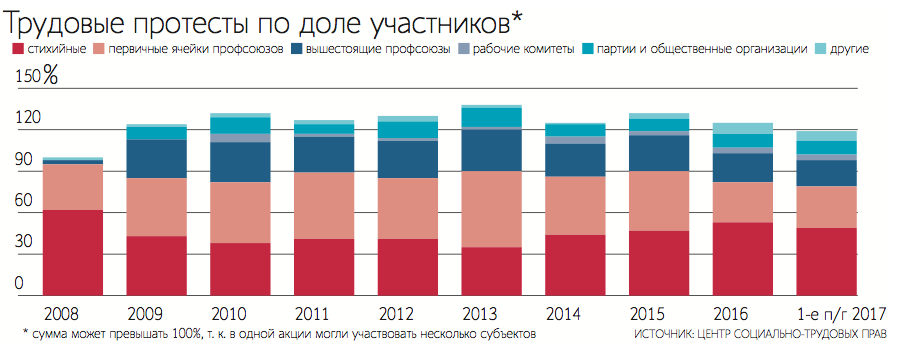
Labor protests in Russia in terms of percentages of those involved, 2008–first half of 2017. Red = spontaneous; pink = trade union locals; dark blue = national trade unions; gray = workers’ committees; light blue = political parties and grassroots organizations; pale blue = other. The percentage may exceed 100% if several actors were involved in the same protest. Courtesy of the Center for Social and Labor Rights