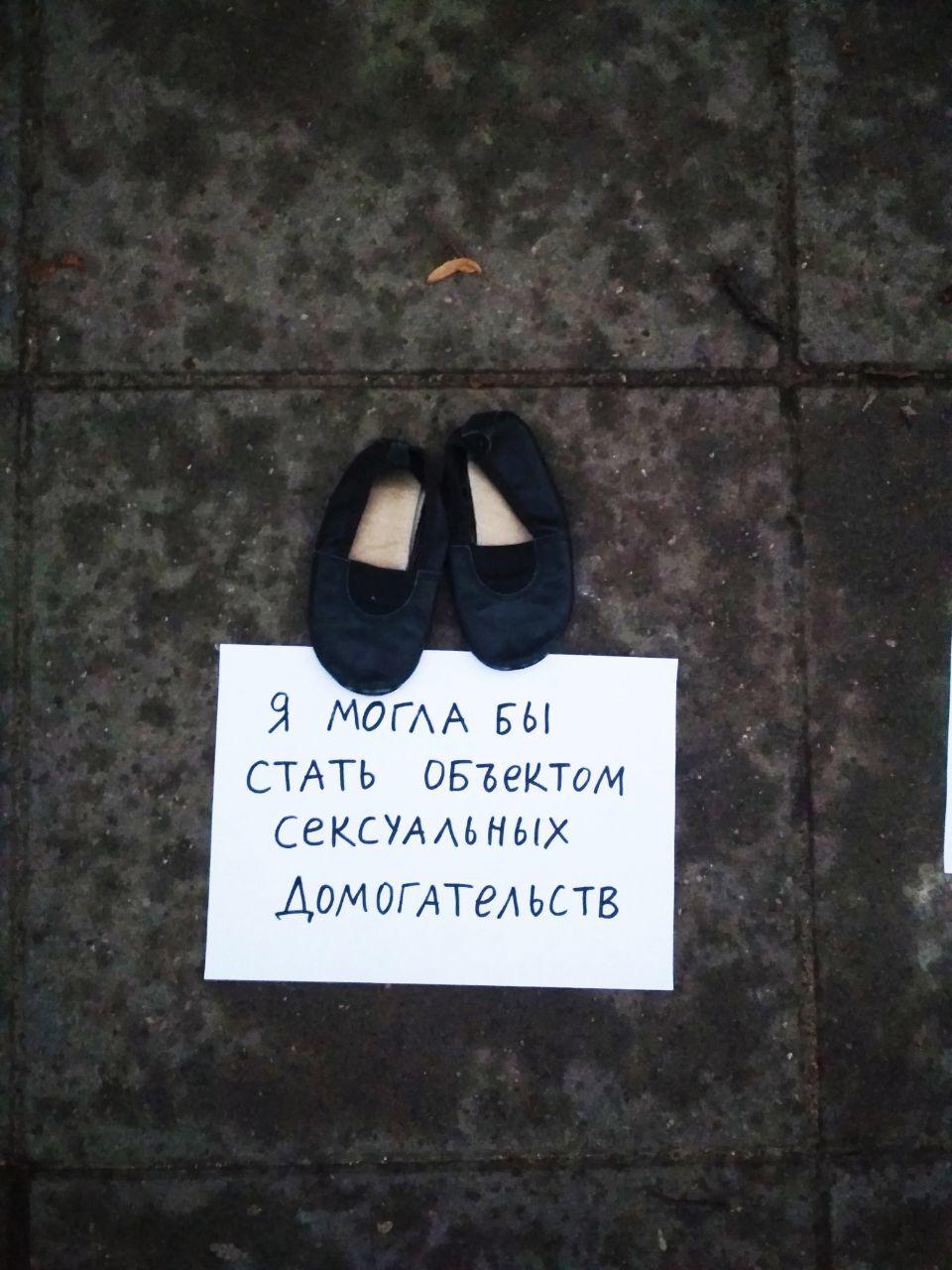
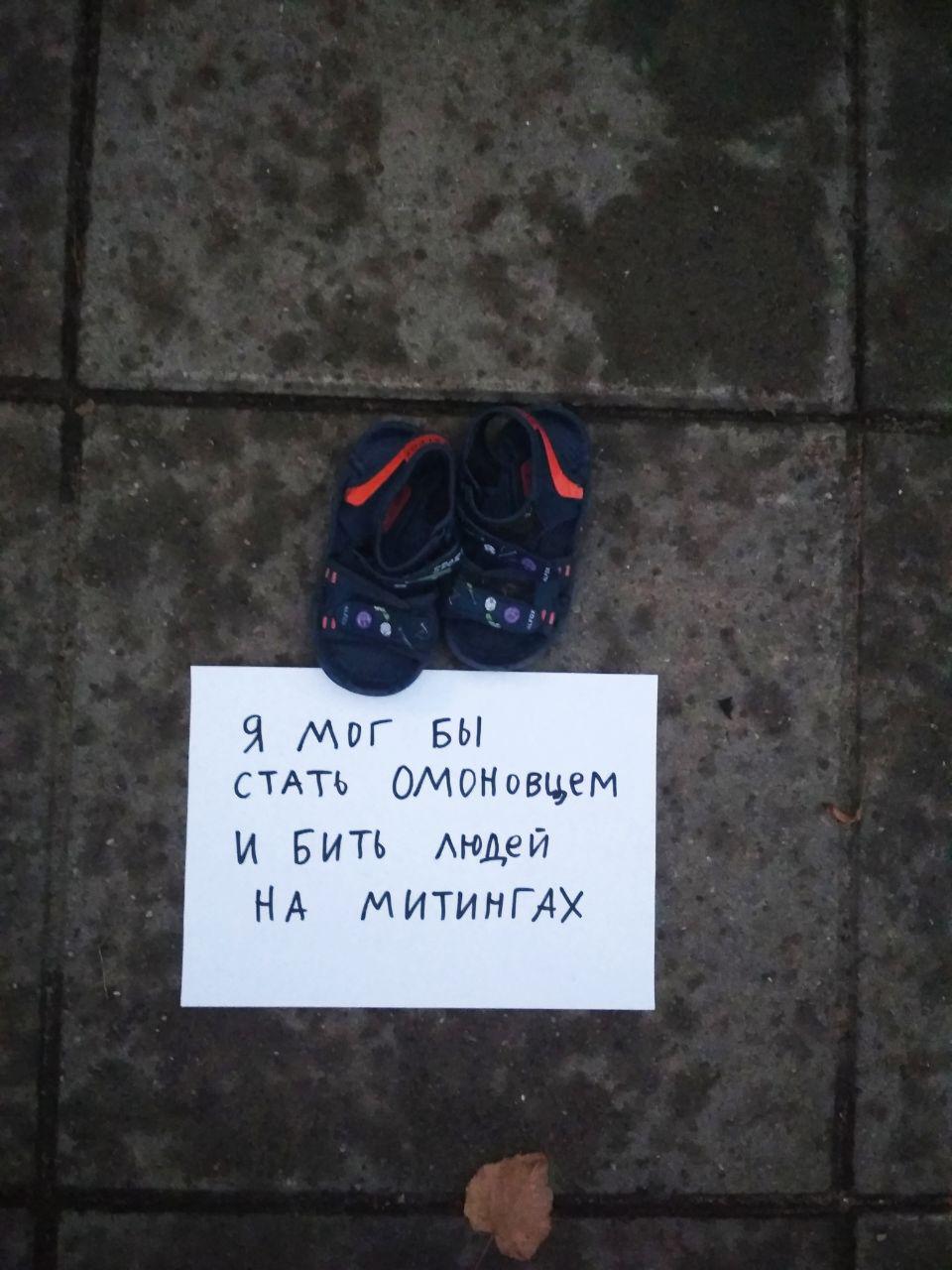
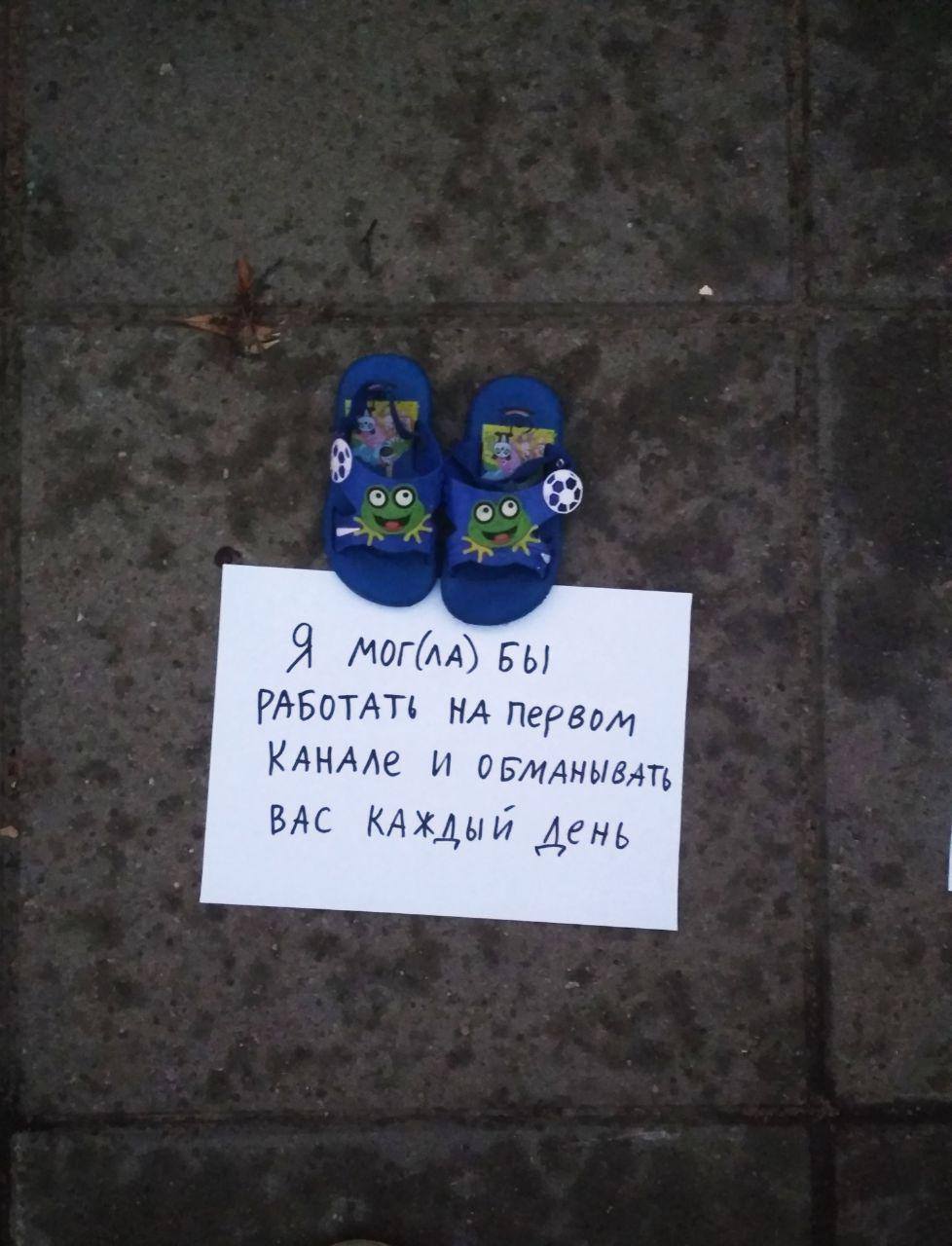
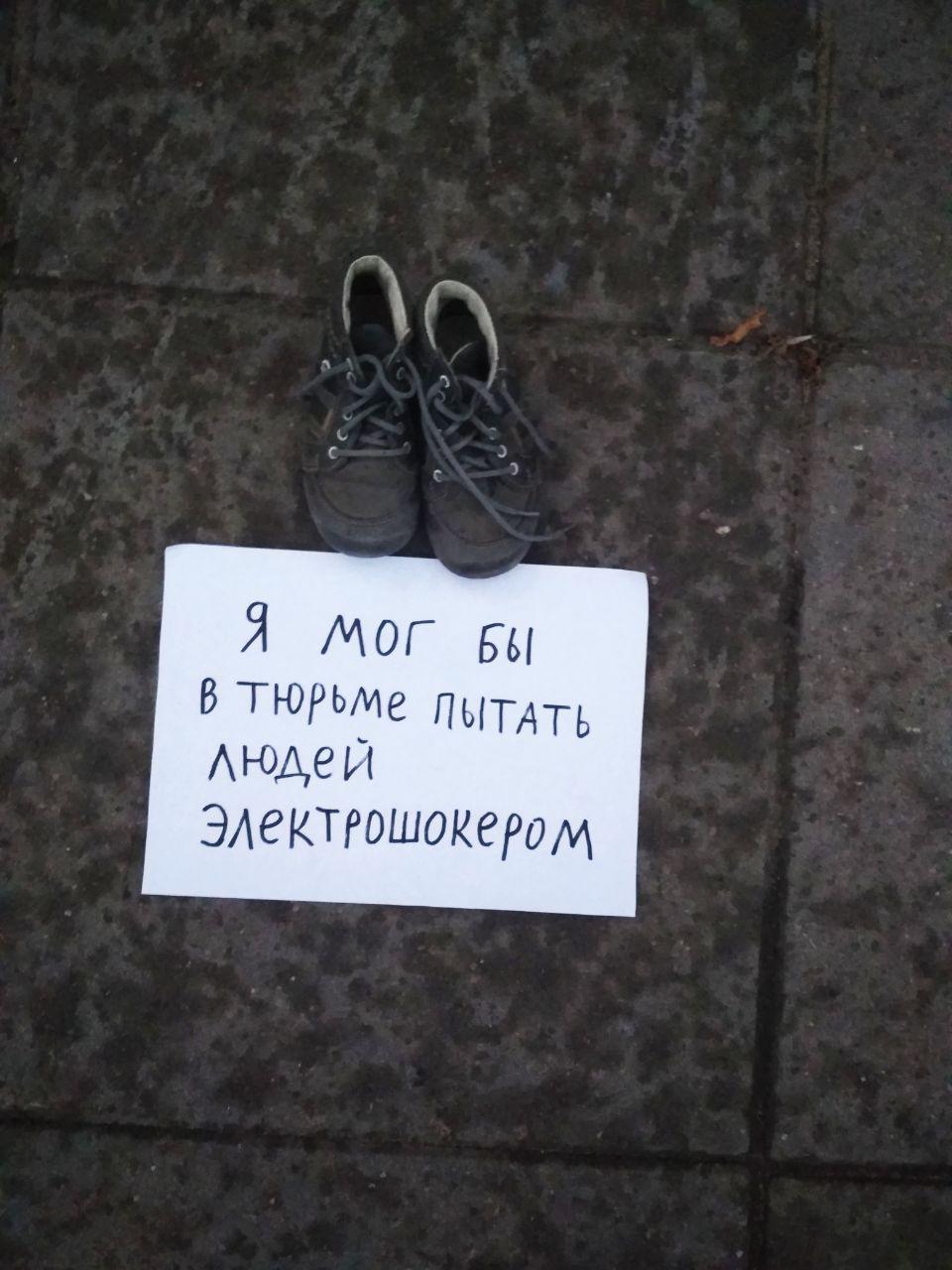
#MONSTERS

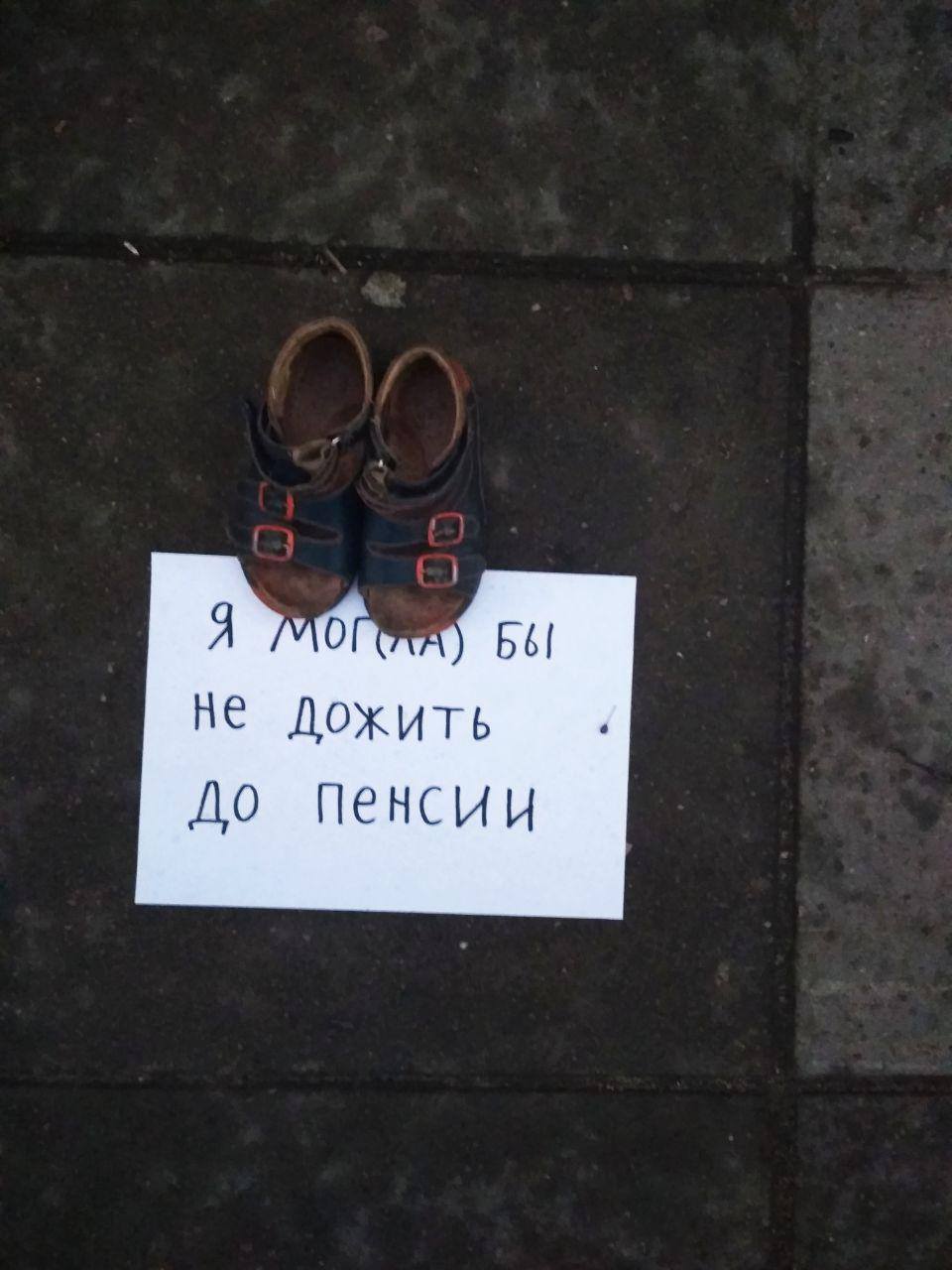
monsters-nonretirement“I could have failed to live until retirement.”

MONSTERS
Facebook
September 18, 2018

A powerful anti-anti-abortion protest took place today in Petersburg, but you will not hear about it in any of the mass media.

monsters-wagner“I could have worked for the Wagner Group.”

Until we fail to put a halt to abortions, which, fortunately, annually do away with enough people to populate the city the size of Petersburg, there is no point in discussing or contemplating anything serious.

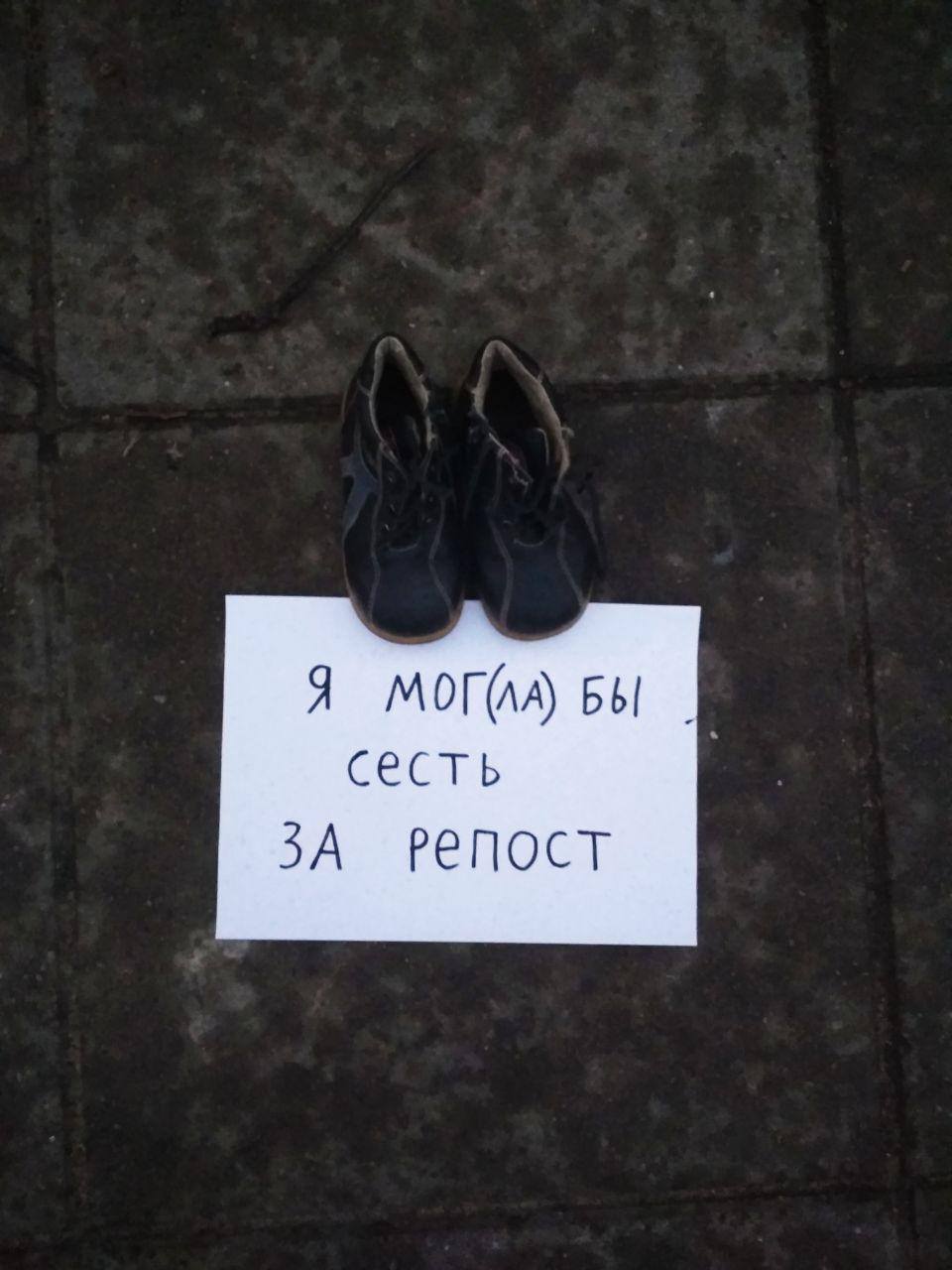
monsters-repost“I could have been sent to prison for reposting.”

Russia is not only the land of the dead, which has been said more than once, but it is also the land of the unborn.

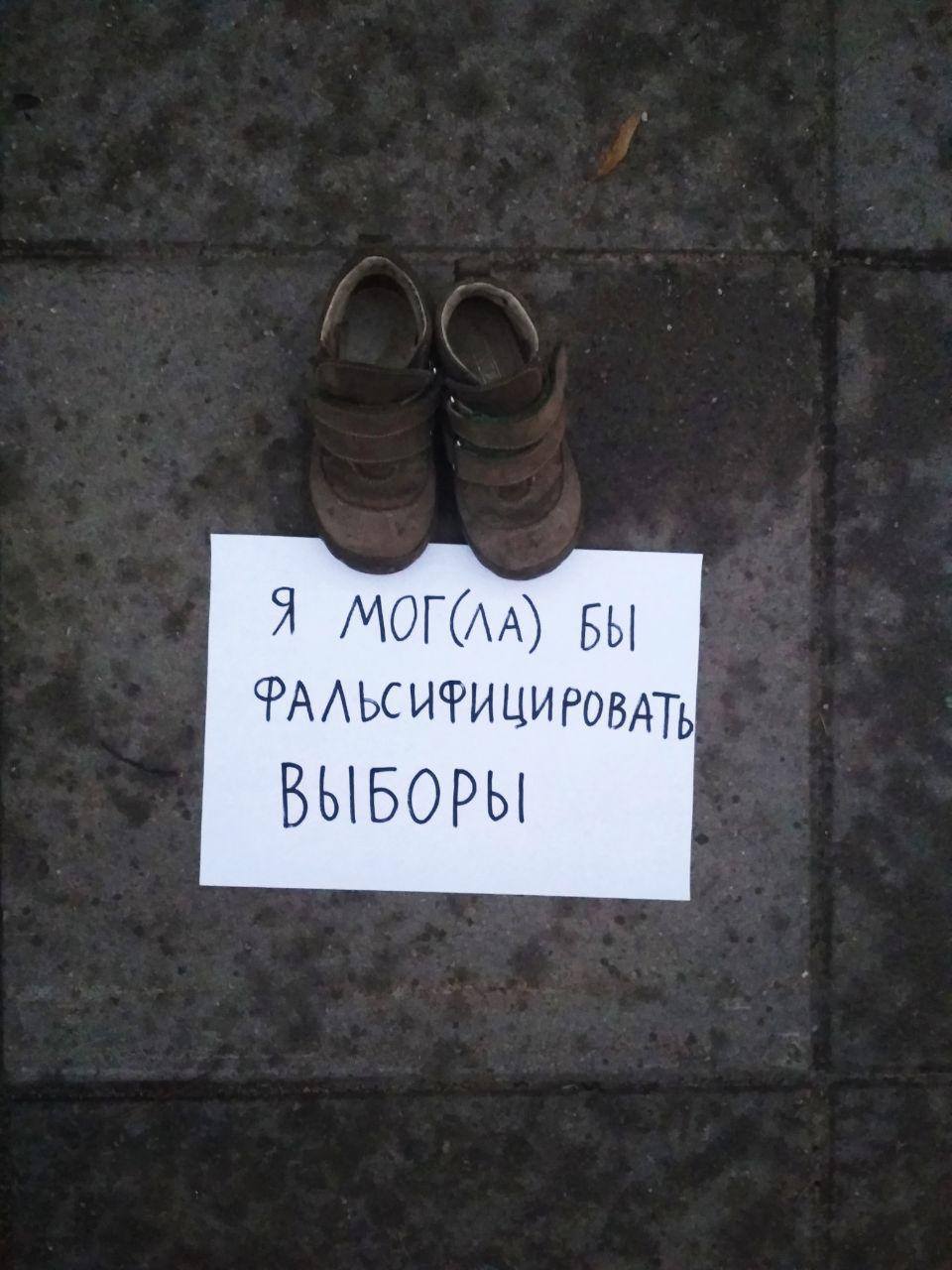
monsters-election rigger“I could have rigged elections.”

The Russian Federation not only has a past that never was. It also has a future that will never be.

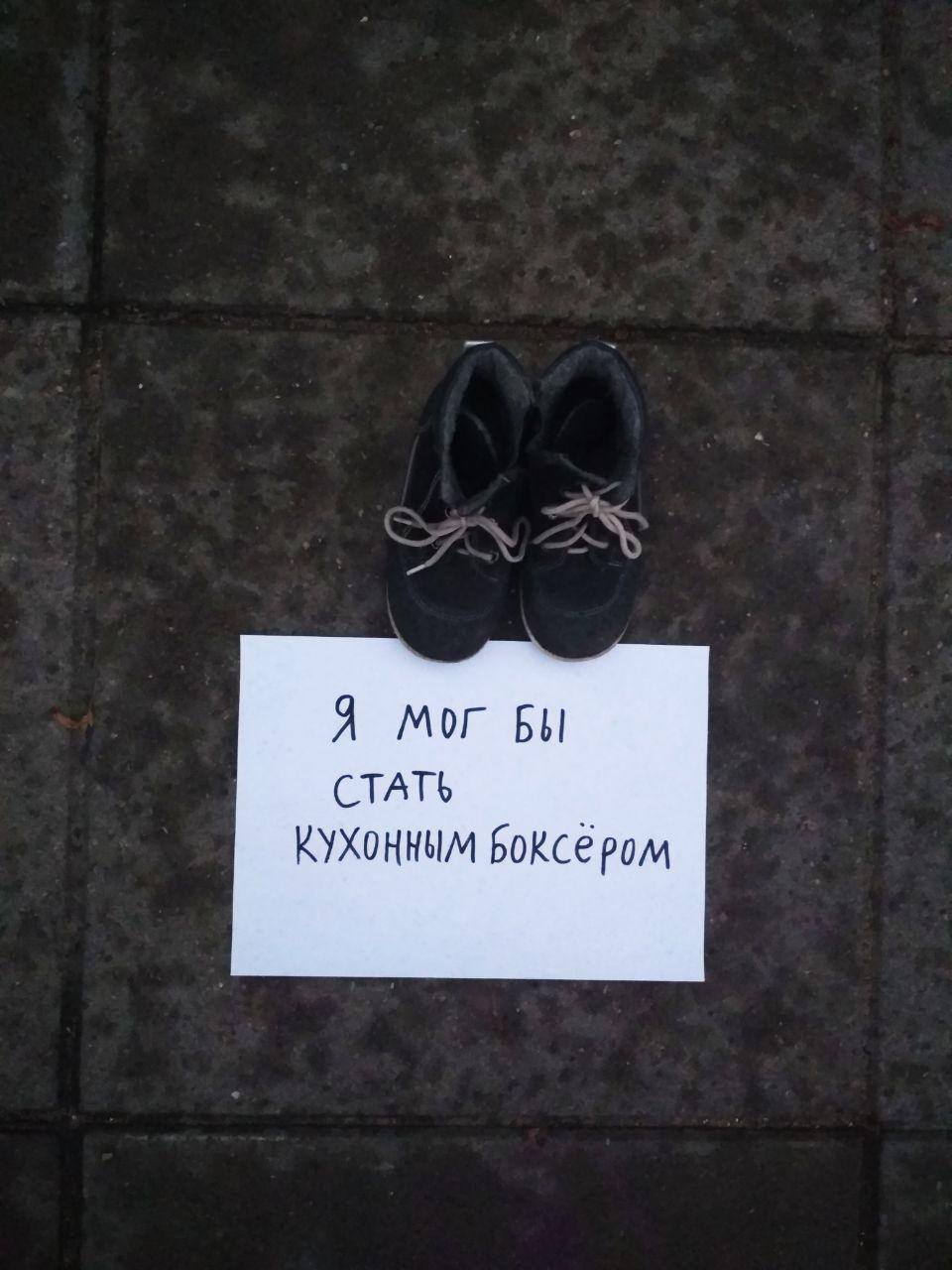
monsters-kitchen boxer“I could have engaged in domestic violence.”

Russia is a failed state. Russia is a fake state.

monsters-sexually harassed“I could have been an object of sexual harassment.”

All Russians, men and women, are in some respect dead men and dead women, but they are also embryos.

monsters-omon“I could have been a riot cop and assaulted people at protest rallies.”

No wonder the stage of (para)political theater has recently been occupied by such figures: aborted embryos telling us they could have been soldiers, for example, and dead women and men, who worked to the grave, but did not live to see a single kopeck of their pensions.

monsters-channel one“I could have worked for Channel One and hoodwinked people every day.”

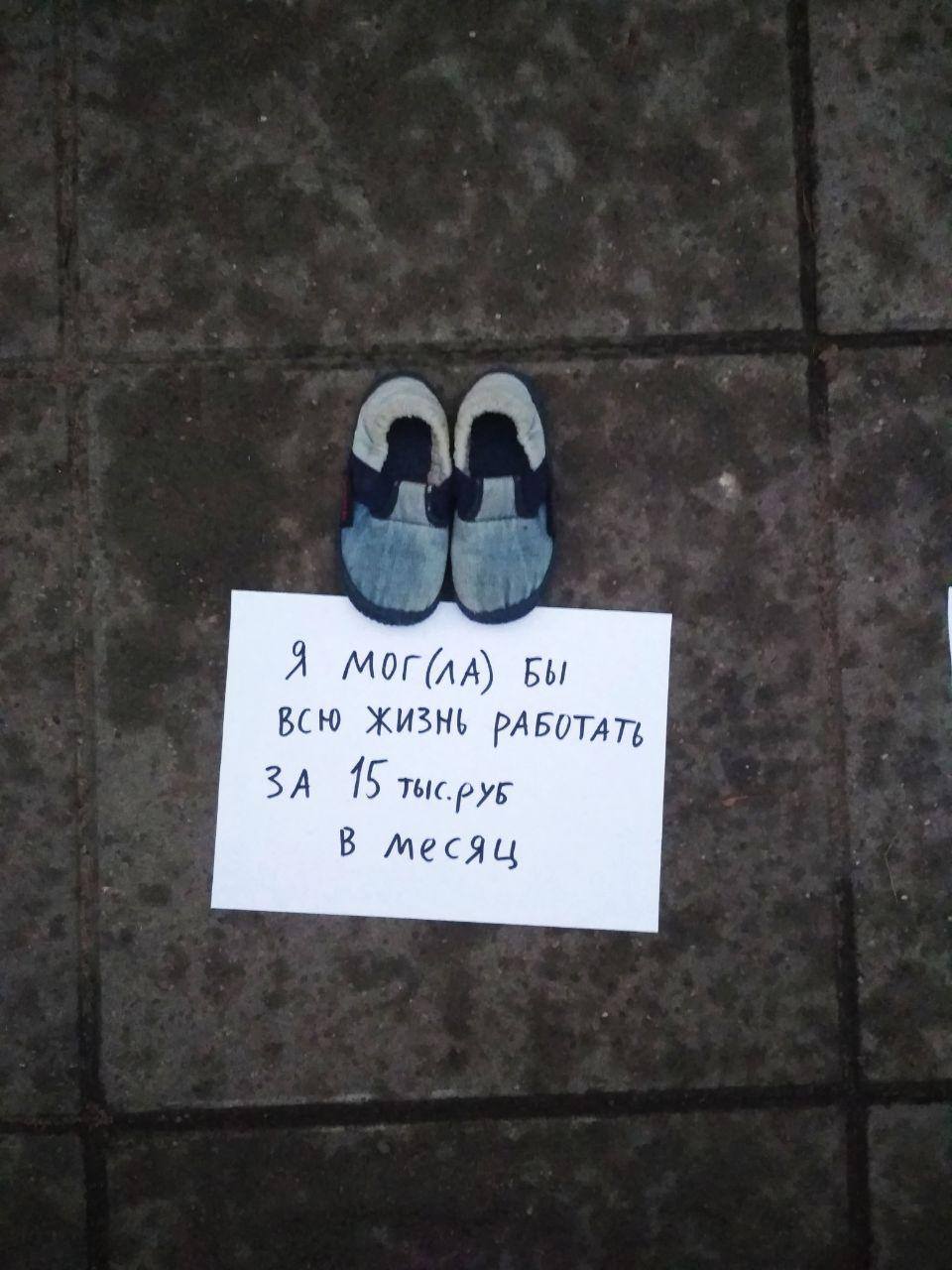
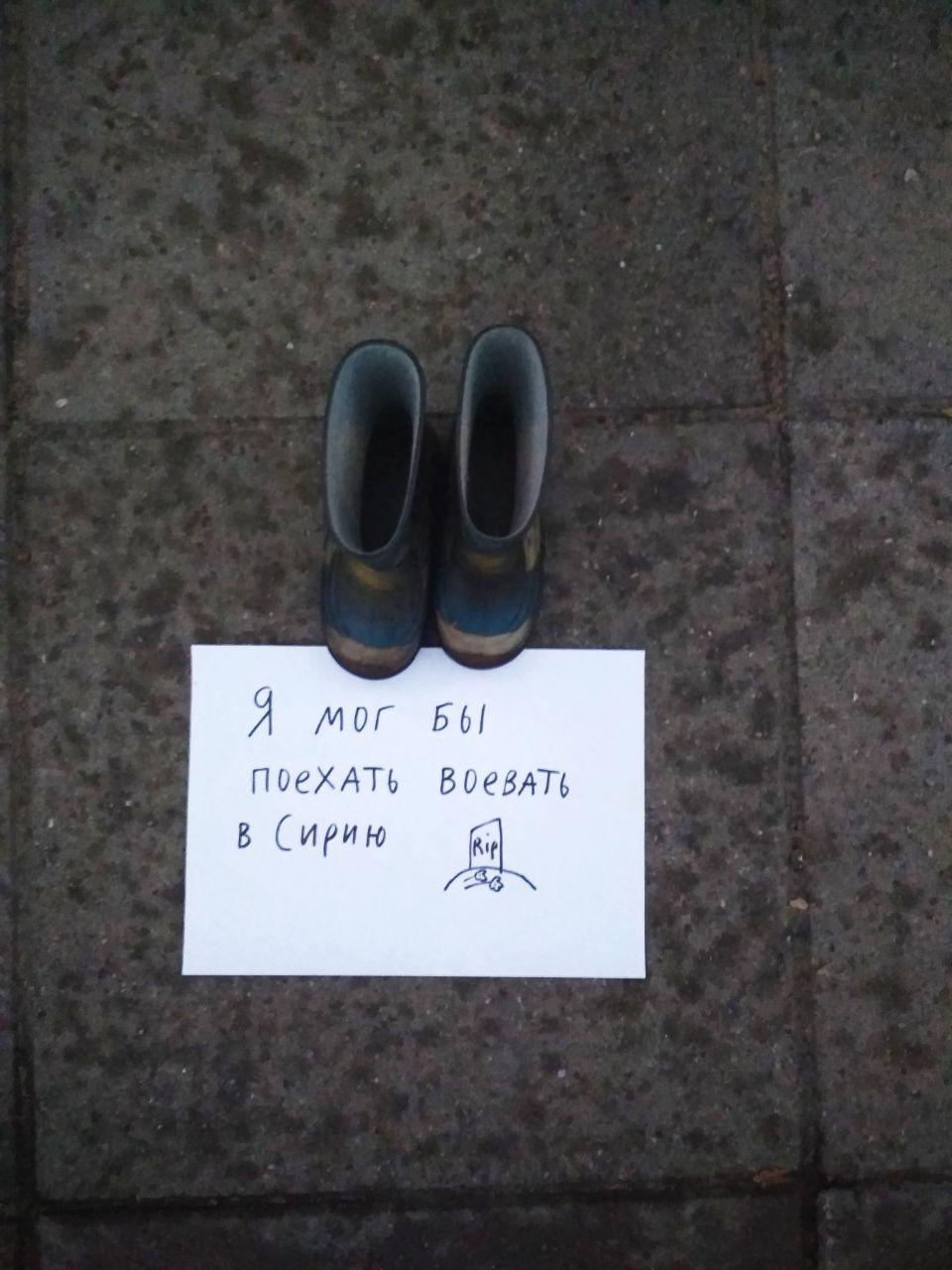
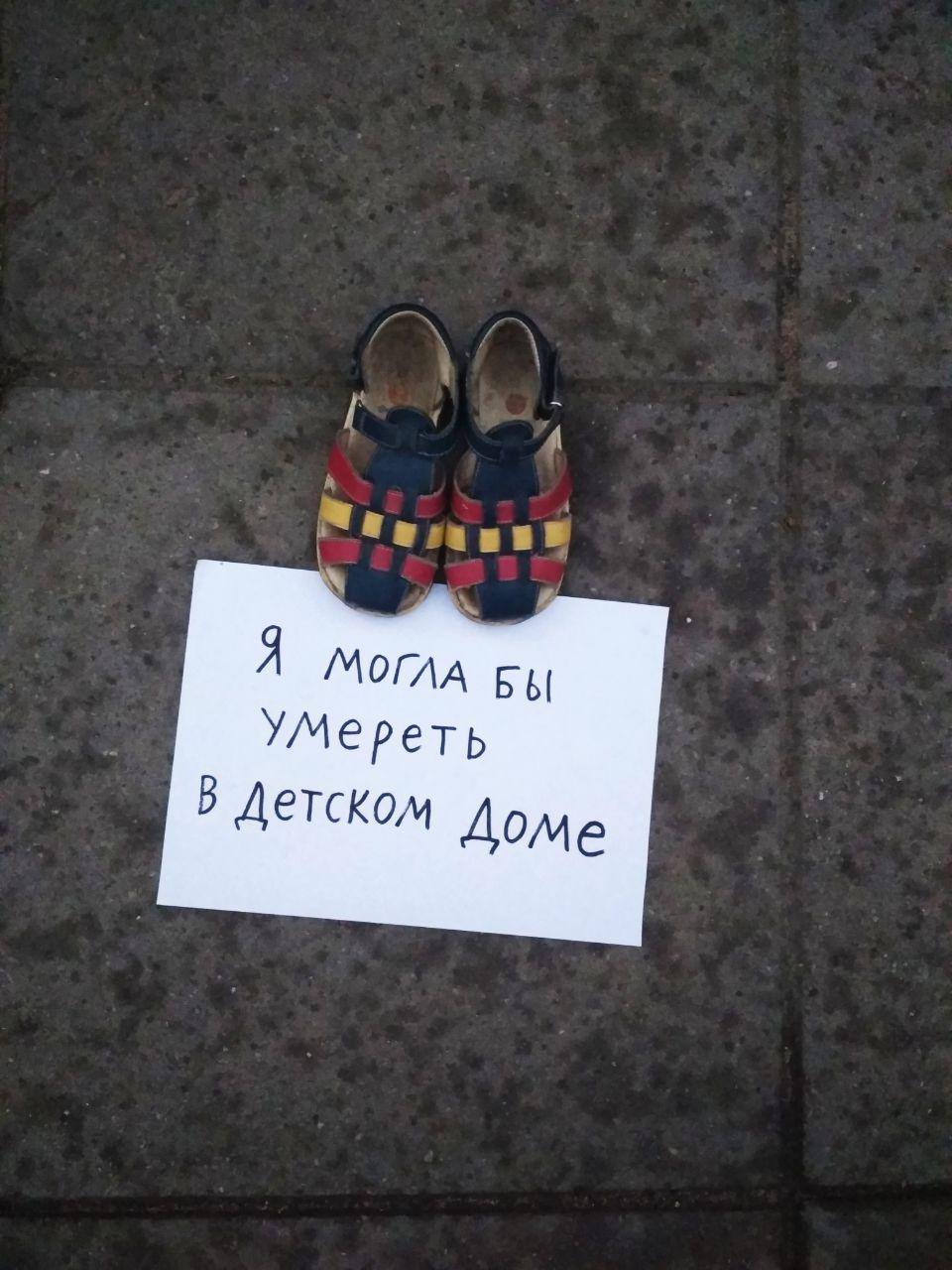
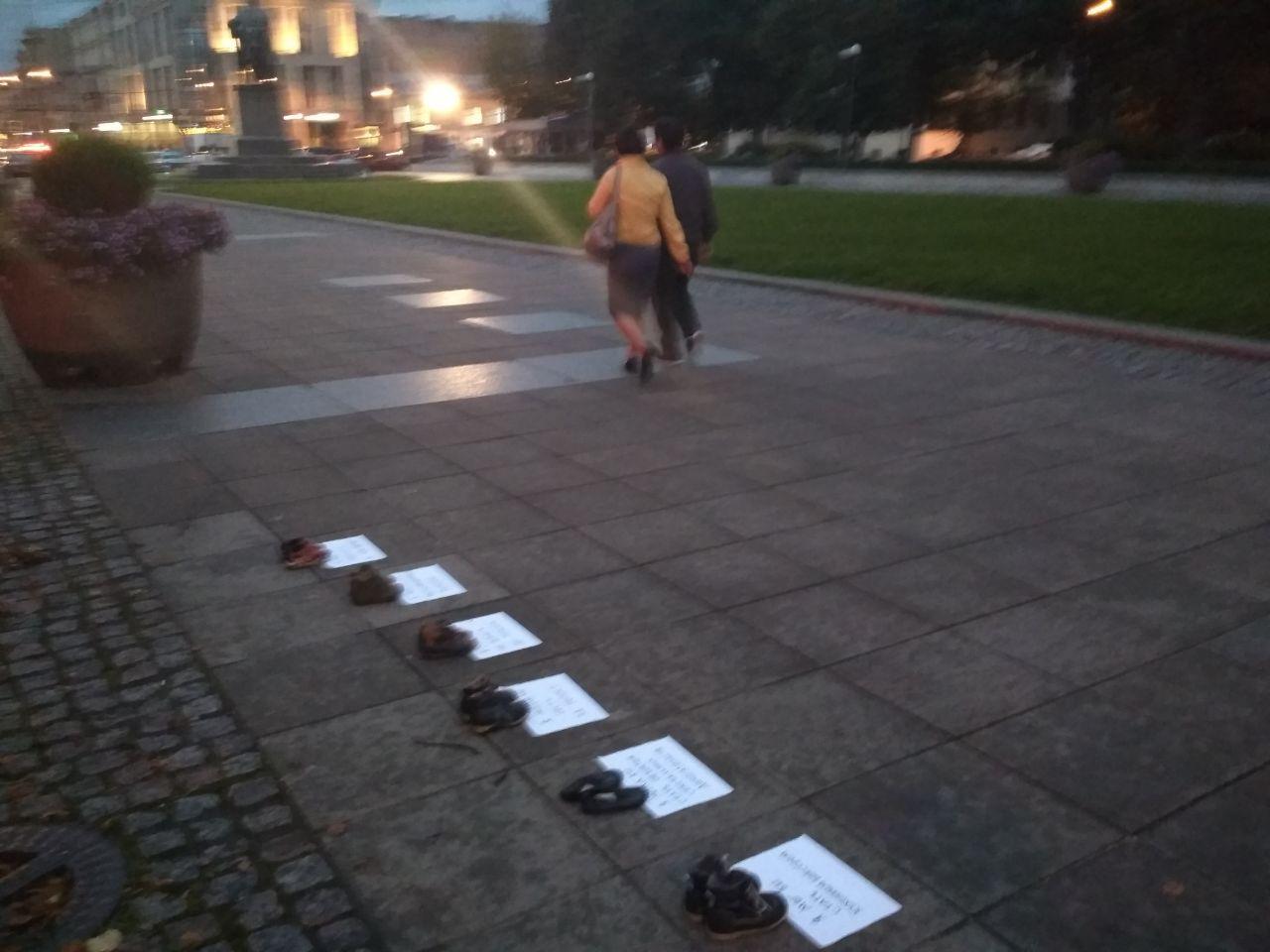
Bringing together the dead and the unborn was long overdue. This is just what we have done in our protest. We are MONSTERS, a new group of militants in the field of political art in Petersburg.

monsters-torturer“I could have tortured people in prison with a taser.”

We staged our protest in response to the latest move by the pro-lifers, who played heavy on people’s heart strings.

monsters-15000 a month“I could have earned 15,000 rubles a month my whole life.”

We profess and practice monstrous political art. We thus decided to do something even more sentimental.

monsters-syria“I could have gone to Syria to fight.”

You thus see before you dead embryos. They might not have lived until retirement, but in any case they did not survive until retirement.

monsters-died in orphanage“I could have died in an orphanage.”

#MONSTERS

monsters-installation viewA view of the silent protest on Pioneer Square in Petersburg’s Central District

Translated by the Russian Reader

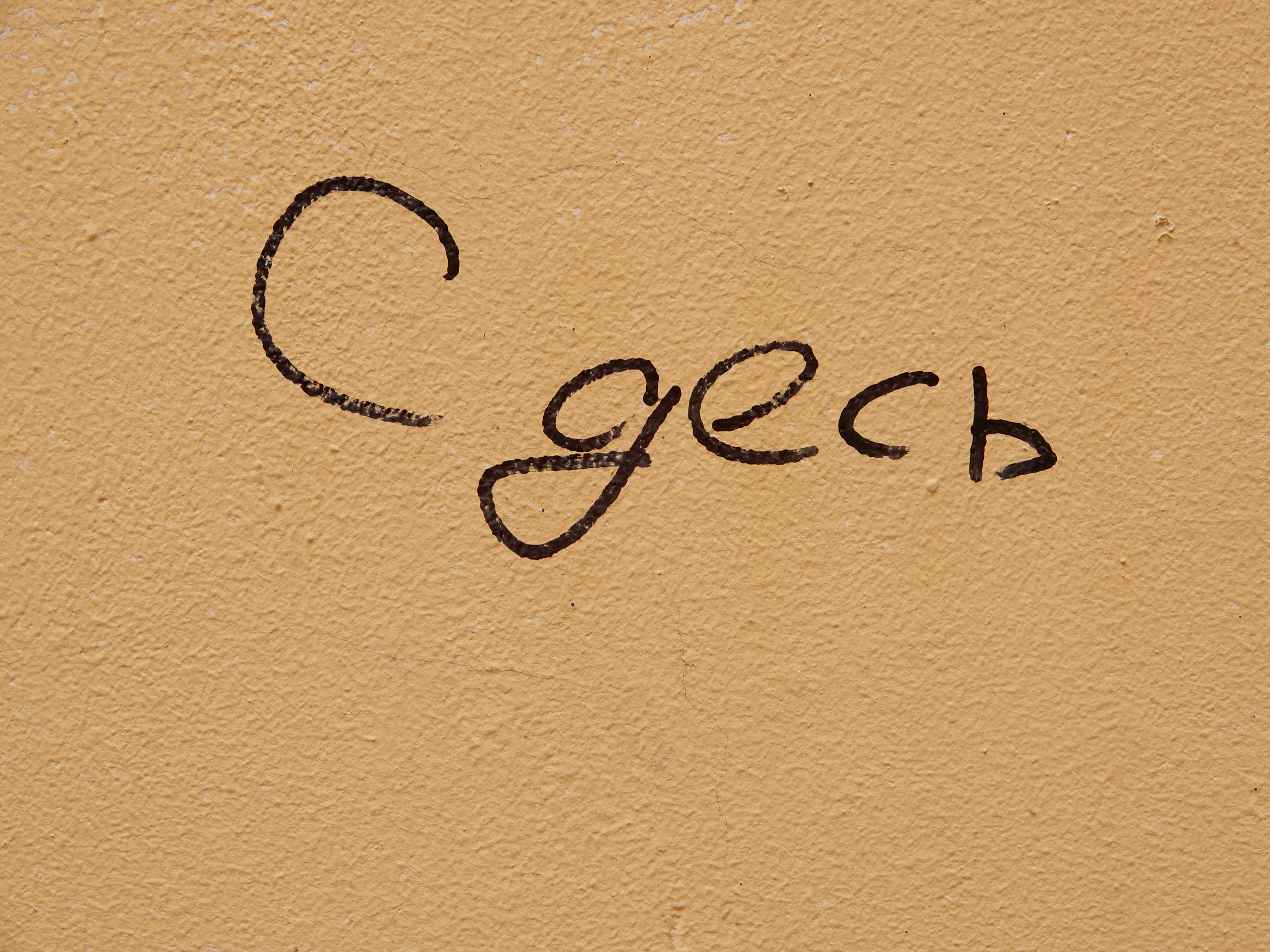
‘Ere, or, Applied Culanthics

DSCN5744.jpg‘Ere, 2018. Graffiti found in Central Petersburg. Photo by the Russian Reader

This is a soundbite of champagne leftist culanthical research at its worst.

Monstrations are a symptom of a deep crisis of the pro-state nationalist and anti-state liberal discourses that reduce Russia’s complex political reality to two formulaic camps, obliterating space for democratic debate. Could there be an American monstration? One that resists Trump, but also refuses to explain away the phenomenon of Trump by referring to bigots and Russian agents? One that neither demonizes Russia nor justifies the actions of Putin’s regime?

Is Russia’s political reality really all that complex?

Why, if the US is filled with teenagers who can take the stage at a massive rally on the Mall in DC and make inspiring, cogent, coherent speeches, do we need the incoherent, politically feckless, thrift-store surrealism of the Novosibirsk Monstrations?

If we can either impeach Trump, pin him down with a crippling special investigation or, finally, simply fail to renominate or reelect him, why do we need to explain him away or even explain him at all?

What is the difference between Trump and “the phenomenon of Trump”?

If, nevertheless, well-paid, tenured academics force us to explain this “phenomenon,” why can’t we refer to bigots and Russian agents? Are they mere figments of our imagination?

Who does a better job of “demonizing” Russia?

People trying to explain away the phenomenon of Trump?

(By the way, why isn’t it “the Trump phenomenon”? Is “the phenomenon of Trump” more culanthically correct?)

Or are the true demonizers the Putin regime itself, a regime that has been quite demonstrably engaged in setting a new land speed record in sheer gangster nastiness at home and abroad at least since 2014, although we know they started much, much earlier (i.e., when Putin was deputy mayor of Petersburg in the early and mid nineties, and served as Mayor Anatoly Sobchak’s bag man and liaison with dicey “foreign investors” and local gangsters)? // TRR

P.S. The culanthics only go downhill from there.

The banners you see at monstrations state their theme obliquely. In the spring of 2014, when Russia annexed the Crimea, the slogan “Crimea is ours!” dominated pro-government media channels and billboards. The liberal opposition, conversely, stressed that the Crimea was illegally stolen. Meanwhile, monstrations sided with neither of these accounts. On May 1, 2014, the Novosibirsk monstration walked behind the banner “Hell is ours!”, a statement that iconically and ironically challenged the official slogan, but also refused the simplified version of the political events advanced by the liberal opposition. The march united young people with different political opinions, from those who saw the annexation as an isolated unlawful act to those who refused the liberal oppositional story and instead saw the Crimea in connection with other events, including the attempts of the extreme right and ultranationalist movements in Ukraine to hijack the popular Maidan revolution.

Such is the secret of the trendy “third position” in Russian and Russophile “anti-authoritarian leftism”: to side with nobody but other third positionists, to hover high above Moscow, Peterburg, Crimea, Donetsk, Aleppo, Eastern Ghouta or, in this case, the Berkley Hills like angels of history. God forbid the third positionists should ever do something so rash as actually organize a real anti-war movement explicitly and loudly opposed to the Kremlin’s predations in Ukraine, Syria, and elsewhere.

One, it would involve a lot of needless work.

Two, it could get the third positionists, otherwise accustomed to a heavy schedule of jetsetting from academic conference to art residency to speaking engagement, into a lot of hot water. They definitely do not want to go to prison for any reason, unlike those careless antifascists from Penza and Petersburg, about whom the third positionists mostly have nothing to say, unsurprisingly.

(Russian and Russophilic third positionism requires its adepts to refrain from criticizing Russia’s foreign and domestic policy catastrophes and crimes as much as humanly possible. People who, on the contrary, criticize the current Russian regime’s actions loudly and often are labeled “liberals” and “Russophobes,” the worst words imaginable in the third positionist vocabulary.)

Three, it would mean the third positioniks would have to give up their firmly held conviction, which they share with Vladimir Putin, Alexander Dugin, and Vyacheslav Surkov et al., that all the evil in the world originates solely in the United States and that, however ham-fisted and controversial its actions, Russia has only been reacting to the miseries deliberately visited on it by American unilateral imperialism and neoliberalism.

Russophile leftists lap this spiked rhetorical gravy up like hound dogs who have not been fed for a week, so the invitations to appear at conferences and contemporary art hootenannies, and contribute essays to “politicized” art mags and cutting-edge scholarly journals keep pouring in. After all, it is what really matters in life, not Syrian children, blasted to smithereens by Russian bombs, or hapless Crimean Tatars, rotting in Russian prisons because they are too stupid to know what is good for them. // TRR

Life During Wartime

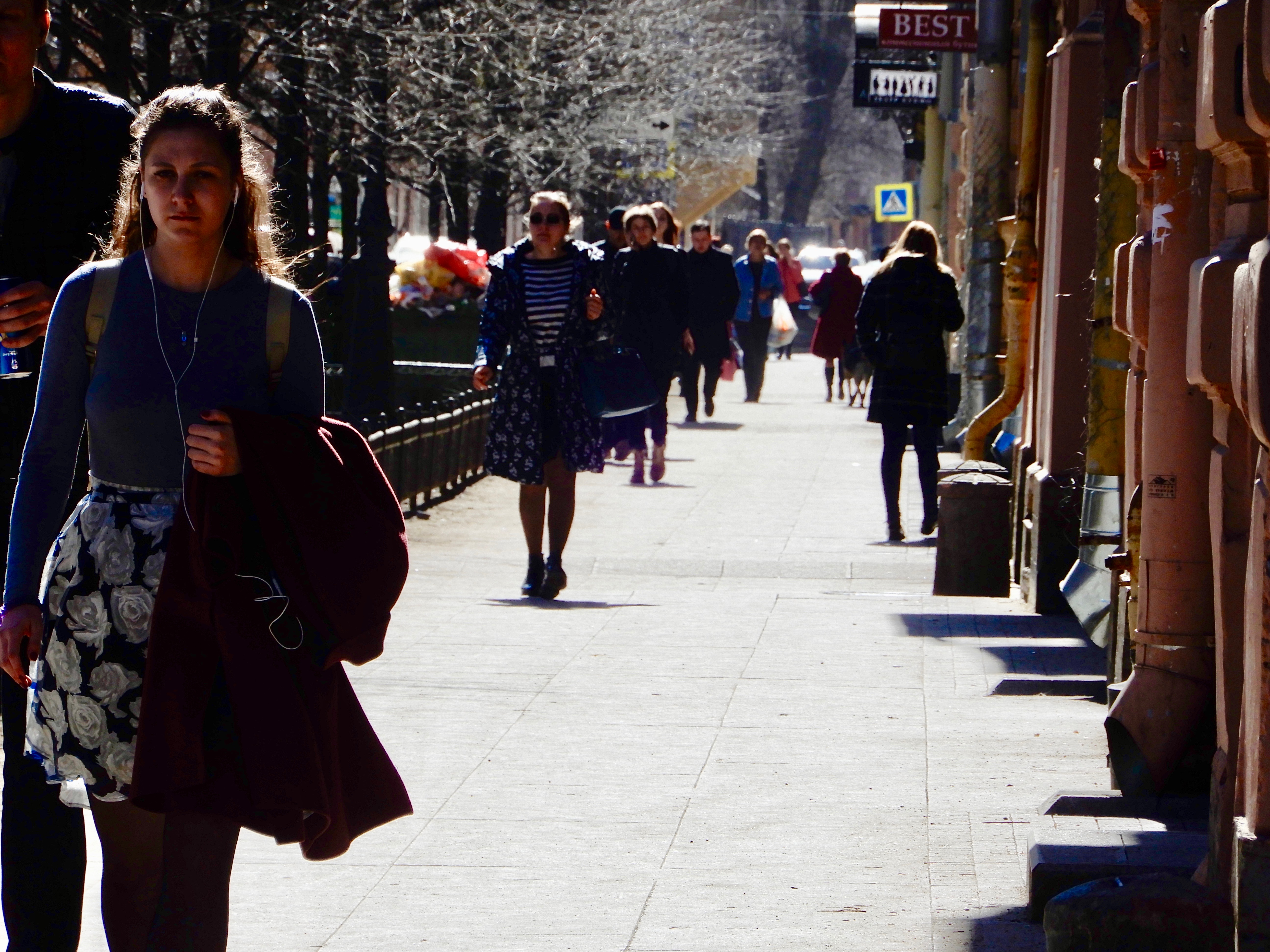
DSCN5429.jpgRussians at war

 1.
“There’s really no place for self-righteousness in war.”
—Lord Richards, BBC Radio 4, Today, 14 April 2018

Lord Richards said this by way of arguing everyone should give up, permit the butcher Assad to win his genocidal war, and “let the Syrian people [?] get down to the business of rebuilding their country.”

He was immediately followed on the air by a bloke named Frank Gardner, who made the ludicrous claim it was the Russian “intervention” “that prevented Islamic State and the other jihadists from taking Damascus.”

Mr. Gardner was immediately followed on the air by yet another bloke, an MP of some sort, who was just as defeatist, but somehow, unaccountably, thought the “people responsible” for war crimes in Syria “would be held to account.”

Mr. Gardner and the MP weree followed by an American teenage girl, apparently a former member of the Obama administration, who absolved the second coming of MLK, Jr., of all responsibility for the bloodbath.

As if this were not bad enough, the teenage American girl was immediately followed on the air by Sebastian Gorka. Oddly enough, his comments were the most reasonable.

They were immediately followed on the air by the ridiculously ubiquitous Anne Applebaum and another bloke with a posh accent (David Stevenson), who didn’t “want to see an all-out war.”

This entire clown circus was preceded by a nice little chat with a “former” Russian general, whose only purpose was to tell the radio audience, “If you so much as scratch one of our boys, you’ll have all-out war.” (I am paraphrasing.)

All of this was camouflaged by an alleged concern for the “people of Syria,” and yet not a single actual Syrian voice was heard all morning.

What disgusting white freaks.

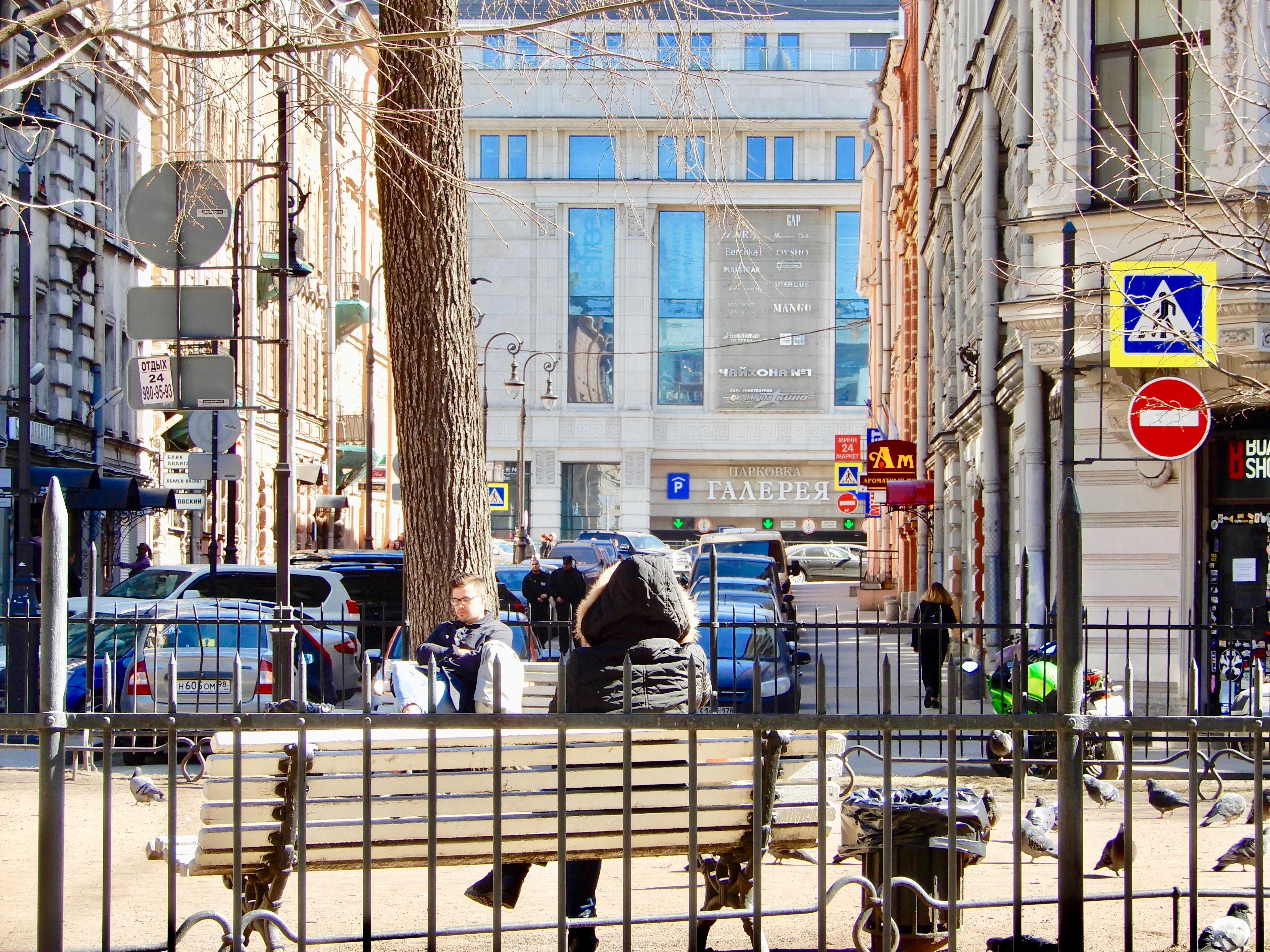
DSCN5424Russians at war

2.
Predictably, various so-called leftists on my Facebook news feed are in high dudgeon today over the milquetoast missile strikes on a few Syrian military facilities carried out overnight by France, Britain, and the US.

These very same people, some of whom are Russian nationals, have had absolutely nothing to say about Russia’s critical intervention in Syria on the side of the country’s war criminal dictator Bashar Assad for the last two and a half years.

How does that work? Russia gets a free pass because it is . . . what? Building socialism in Syria? On the right side of the conflict? Has been suffering so much since the collapse of the Soviet Union that it has the right to bomb whole cities into rubble and occupy neighboring countries without provocation?

No, Russia gets a free pass, especially from Russian leftists, because 99.9999% of the Russian populace knows quite well that their own homegrown dictator, Vladimir Putin, has certain pet projects that are off limits to criticism and protest.

Destroying Syria is one of those pet projects.

So, they are simply too scared to criticize Russia’s absolutely criminal actions against Syrian citizens in Syria, i.e., against people who have never, so far as I know, harmed any Russians at all, especially not in Russia itself.

Hence, when the so-called west makes a feeble, almost laughable gesture to oppose the Assadist-Putinist-Iranian-Hezbollah massacre in Syria, these Russian and Russophile leftists awake from their usual slumber, happily quoting Bernie Sanders and Jeremy Corbyn and other great advocates of “peace in our time.”

It never occurs to any of them, apparently, that this is an absolutely demoralizing, pointless, and impossible stance on the matter. They are leftists who unconditionally support fascists and imperialists, and who support other, world-famous leftists who unconditionally support fascists and imperialists. They are thus leading the international leftist movement down the garden path either to utter destruction or utter irrelevance.

Sanders and Corbyn are dangerous clowns. If you don’t get that, you might not be as politically savvy or as leftist as you imagined you were.

At least, if you feel strongly about the issue, make your own arguments as to why it is okay for Putin, Assad, Iran, and the Hezbollah to slaughter Syrians at will, while it is a crime against humanity to toss a few missiles once a year at a few Syrian military bases and chemical warfare production facilities that were given a week’s notice and thus had happily been evacuated long before the missiles actually struck them.

But, no, amazingly enough, pro-Assadist and pro-Putinist leftists almost never make their own arguments, cowering instead behind the drivel spouted by the likes of Corbyn, Sanders, and Tariq Ali.

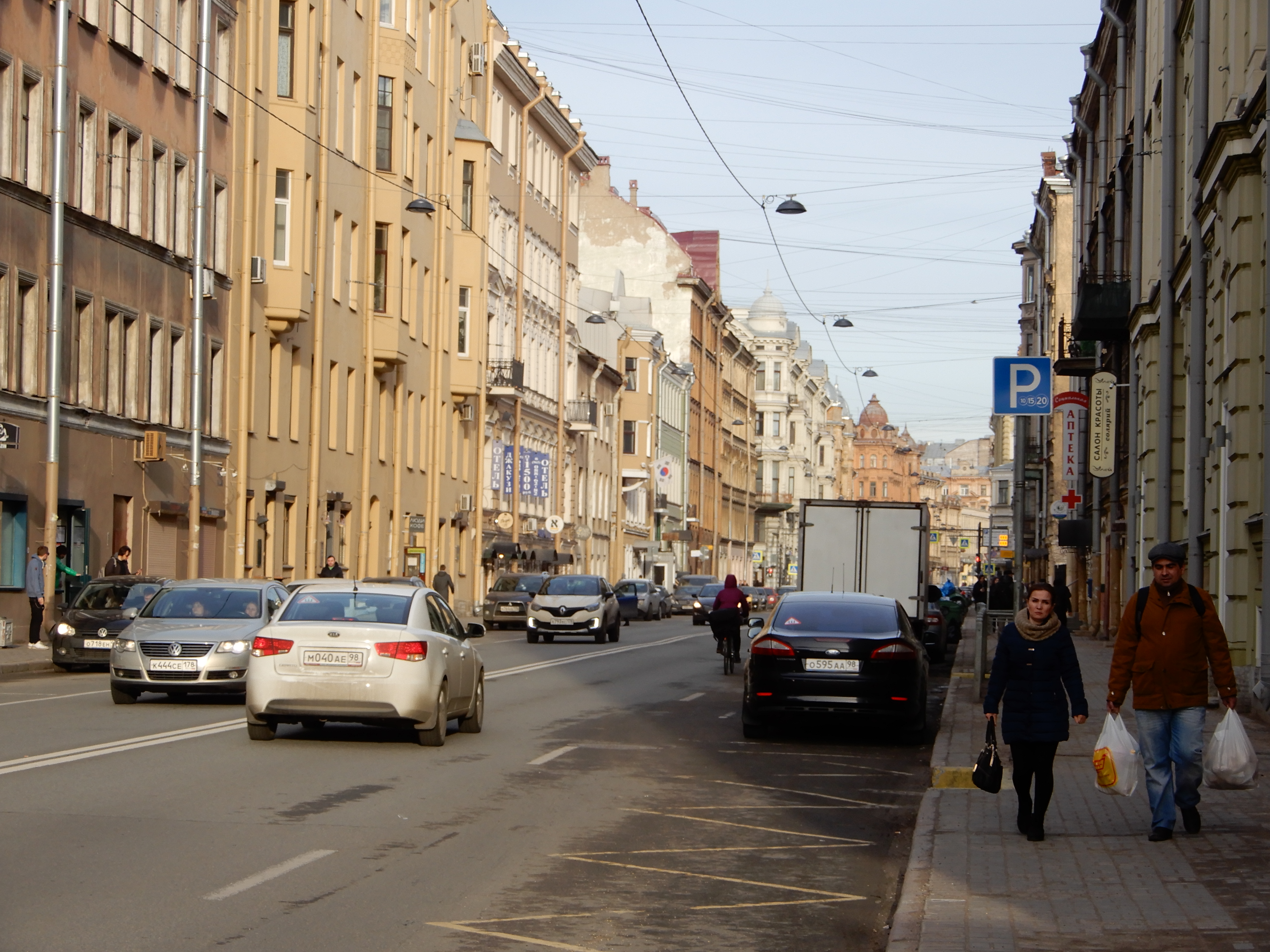
DSCN5422.jpgRussians at war

3.
Why would any “progressive” or “anti-authoritarian” leftist in their right mind refuse solidarity to the nine Penza and Petersburg antifacists caught up in an insane frame-up, engineered by the folks at Vladimir Putin’s old stomping grounds, the Russian Federal Security Service (the FSB, formerly known as the KGB), who have accused them of being members of a wholly fictional “terrorist community,” codenamed The Network, and charged them accordingly?

I ask this seemingly nonsensical question because, as I was thinking about the knee-jerk reaction of various “anti-imperialists,” Russian leftists, and Russophile leftists to last night’s missile strikes in Syria, it suddenly occurred to me this same mob of righteous Marxists has been as nearly as quiet about the so-called Penza-Petersburg “terrorism” case as it has been about the Kremlin’s war against Syrian civilians and anti-Assad forces in Syria.

Why should that be? What is the connection between these seemingly unrelated events?

The answer is simple. If you pay too much attention to the Penza-Petersburg case and its gory details, you will realize all too quickly that Russia is ruled by a fascist clique of power-hungry ex-KGB lunatics who have somehow persuaded themselves that their greed, corruption, and ultraviolence are a supreme form of patriotism, not an utter degradation of all reasonable notions of governance, justice, and balanced international relations.

Thus, leftists who only get exercised over Syria when the so-called west makes a tiny, milquetoast, one-off gesture of resistance to the Putinist-Assadist-Iranian-Hezbollah killing machine are reluctant to talk too much about the horrifying Penza-Petersburg “terrorism” case and many other similar cases that never make the headlines around the world, since they would reveal too palpably and obviously the natural affinities between Assad and Putin, two dyed-in-the-wool fascists who believe all resistance and opposition to their perpetual regimes is illegitimate, “extremist,” “terrorism,” etc.

If you are an “anti-authoritarian” or “progressive” leftist, however, it will not do to admit you stand for the same things as Putin and Assad cherish, so you just gloss over their crimes before and during the Syrian revolution, and hope no one will notice what violent criminal thugs they have been from day one, and how their violence and thuggery have only been spreading like wildfire across their own countries and all around the world ever since they came to power.

DSCN5326.jpgRussians at war

4.
God forbid the Russian people should rise up against their own dictator, Vladimir Putin, and the Chinese, Iranians and Hezbollah, say, rushed to help the Russian dictator put down the uprising. Not only would it be extremely humiliating were Chinese warplanes to bomb ancient Russian cities such as Pskov and Vladimir, were terrorists from Hezbollah and Iranian fundamentalists to murder innocent Russian children, women and men, but the whole world would remember how once upon a time not so long ago the Russians themselves helped the bloody dictator Bashar Assad gut and slaughter a grassroots revolution in Syria. Everyone would thus turn their backs—unfairly—on the Russians fighting to the death for their freedom and remain silent until their dictator, ably assisted by the Chinese, Iranian and Hezbollah killers, would force one half of the Russian populace to take flight to other countries, while killing and enslaving the other half. // TRR

Photos by the Russian Reader

___________________________

Never Think of It, Never Speak of It

DSCN4763“Enigma.” Photo by the Russian Reader

“In the last two weeks, one thousand and forty-two people, including about a hundred and fifty-six children, have been killed in eastern Ghouta, in what human-rights groups fear is a final, all-out offensive to retake one of the few remaining rebel-held enclaves in the country. Bombings by Syrian and Russian planes have been indiscriminate, killing civilians, levelling homes, and destroying medical facilities. Bashar al-Assad’s regime—with the full support of Vladimir Putin and the Russian military—have flouted calls for a complete ceasefire.”
Rozina Ali, ‘It’s Raining Rockets’: Deadly New Syrian-Russian Assault Kills Hundreds in Eastern Ghouta, New Yorker, March 8, 2018

What I really don’t understand is why there isn’t an enterprising Russian or group of Russians who would set up a WordPress blog or a special page on Facebook or VK where they could post translations of foreign press articles about the war in Syria like the article quoted, above. If the Russian media either wants to ignore what is happening there or constantly lie about it, that does not mean the war should be of no interest to Russians opposed to dropping Russian bombs on non-Russia men, women, children, residential buildings, and hospitals that have never done any harm to any Russian men, women, children, residential buildings, and hospitals, and that never thought of doing them any harm.

At this point, I really just don’t get it. The collective silence in Russia when it comes to the Kremlin’s and the Russian military’s crimes in Syria is on the verge of the pathological.

There is not much to be said for the efficacy and vociferousness of antiwar movements in the US, UK, Australia, and the other countries that sent soldiers to Iraq and Afghanistan, but it certainly cannot be said that there have not been a relatively large number of people in those same countries engaged either in some kind of peacemaking or awareness raising about what trouble their leaders and armies have caused there and the enormities they have committed.

It’s practically a cottage industry, for what it’s worth.

In Russia, on the contrary, it is as if Syria exists literally in a parallel universe with no connection whatsoever to Russians and their daily lives.

Never think of it, never speak of it. TRR

If Wishes Were Horses

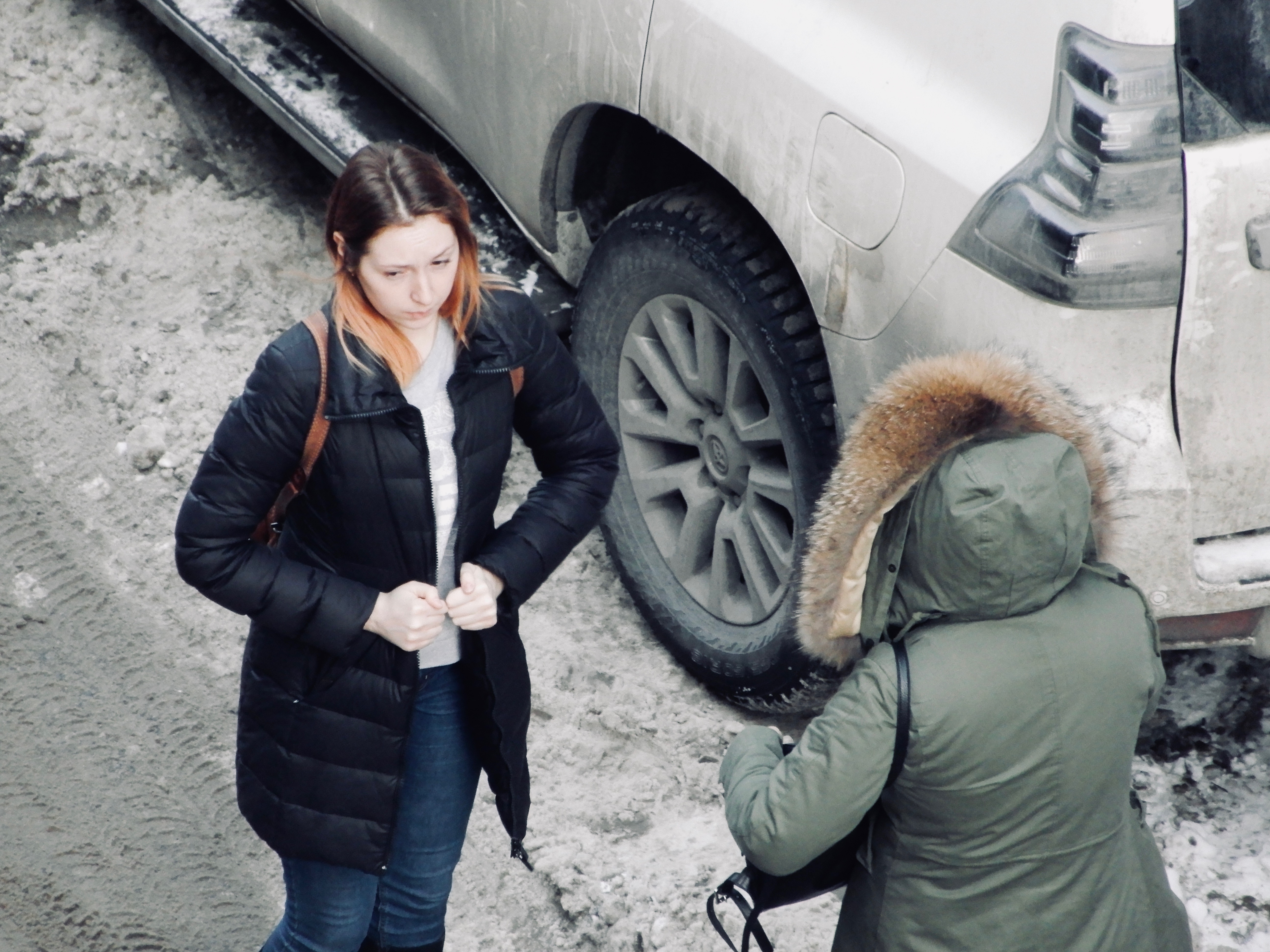
DSCN4101There is a good chance this ordinary young Russian woman will be middle-aged by the time Putin finally leaves office. Photo by the Russian Reader

“Syria is a shocking, baffling mess. For ordinary Russians, it is a waste of men and money. For a watching world, appalled by scenes of relentless brutality and cruelty in Ghouta, Aleppo, and a thousand other towns and cities, it is Putin’s mess. It’s up to him to fix it.

[…]

“Putin faces a presidential election on 18 March. If Russia were a functioning democracy, not a corrupt oligarchy, he could be out on his ear.”

I want to make one tiny correction to Simon Tisdall’s otherwise fine, correct sentiments, as published on February 25 in the Guardian. Syria means absolutely nothing to “ordinary Russians.” To be more precise, there is absolutely no empirical evidence whatsoever it means anything to them at all.

If it does mean anything, however, it may not mean what Mr. Tisdall would want it to mean, as evidenced by the 30,000 people who turned out in Voronezh on February 8 for Russian fighter pilot Roman Filippov’s funeral.

Except for singular voices like Igor Yakovenko’s, which I have linked to, above, Russian society and its famed intelligentsia have been ear-shatteringly silent about the Kremlin’s predations on behalf of the Syrian butcher Bashar Assad since they kicked off in September 2015. Although there were fairly large demonstrations, especially in Moscow, to protest the Kremlin’s criminal adventures in Ukraine, there has not been a single notable mass protest in Russia against the Kremlin’s war against ordinary, absolutely innocent Syrians.

The only protest against the Syrian massacre in Russia I know of was a picket that occurred somewhere in Moscow during the last two years, witnessed by almostno one, and attended by almost no one. A reader of my Facebook news feed told me he had heard about it or perhaps even attended it himself. He wrote about it to me by way of saying there were, in fact, protests in Russia against the Kremlin’s Syrian horrorshow.

Try not to laugh or cry after you have read the previous paragraph.

We should thus conclude that most “ordinary Russians” do not care a whit about ordinary Syrians and their hellish ordeal. Or they have bought hook, line, and sinker the Kremlin’s stinky lie that it has been targeting only “terrorist groups” in Syria. It’s one or the other. There isn’t a third option, as “ordinary Russians” like to say.

You should know, however, that the Kremlin enacts this same stinky lie (about “combating terrorists”) on the home front, yet only a few more “ordinary Russians” get worked up about it.

So, the problem is not just Putin and Syria, although were there ever an international tribunal on war crimes in Syria, he and his immediate Kremlin underlings and Russia’s top generals would be the only Russians legally liable to prosecution. Just as collective punishment is outlawed by international law, there really is no such thing as collective guilt.

It is equally true, however, that the vast majority of Russia’s 144 million people have been letting Putin and his satraps do as they please for the last eighteen years without so much as a peep.

You can put this down to state propaganda, the Soviet legacy or whatever you like, but it is a frightening, unmovable fact.

For now, the perennially hopeful would counter me, saying that someday, perhaps soon, things will change.

I would like to count myself among their number, but on March 18 Putin will have himself installed as Russia’s president for life de facto.

Why is this? Because Putin knows that, at this dreadful point in Russia’s history, even if he once again, after his new term as president runs out in 2024, handpicked a successor from his inner circle of loyalists to sub for him as president for six years, so he could reinstall himself as president in 2030, just as he once handpicked Dmitry Medvedev to do the same prestidigation act in 2008, that person probably would have to denounce him and his personality cult sheerly for reasons of political expediency, that is, if the “substitute” president wanted a freer hand in shaping his own administration for good or for ill, much as the Stalinist loyalist Krushchev did after Stalin’s death.

After twenty-four years of Putinism, the country would want the “substitute” president to denounce Putin and all his ways as fiercely as a drunkard wants a drink.

It is just too bad it does not have the will or the means to dismantle the Putinist tyranny now. The consequences of six more years of Putinism for Russia and the world will be dreadful. TRR

Out of Sight, Out of Mind

DSCN0877
Monument to Emperor Nicholas I, the so-called gendarme of Europe, on St. Isaac’s Square in Petersburg, 13 October 2017. Photo by the Russian Reader

Below the fold you’ll find an angry screed I wrote on Facebook a year ago. Since nothing has changed for the better since then, it’s as relevant today as it was then. Thanks to Comrade RA for the reminder. TRR

*****

Here’s the kicker. You literally cannot see almost any reaction on the part of almost any Russians to this mayhem in Syria caused by their government, none at all. Middle-class Russians and Russian intellectuals continue to lead their lives as they have before, chockablock with business and leisure trips to other parts of the “civilized world,” and other, more important activities. They don’t give a second’s thought to what is happening in Syria for one simple reason: because Islamophobia, if this is possible, is even more widespread in Russia than in Europe and the US. The Syrians blown to bits on a daily basis by Russian bombs are not just abstractions to Russians; they’re hateful abstractions, “terrorists.”

Most importantly, it would be news to 99.999% of Russians that the war in Syria started as a grassroots, non-violent, non-sectarian, extraordinarily popular, and extraordinarily determined revolution against the vicious, monstrous regime of Bashar Assad. A revolution that Assad has drowned in blood and used foreign allies (Hezbollah, the Iranians, and now the Russians) to put down.

The reason this would be news to most Russians is not only that their Goebbelsesque TV channels have been lying to them about what is happening in Syria (when they bother to talk about it at all, which is not always the case) but that they don’t want to hear news about more determined, more popular grassrooots revolutions against corrupt tyrants in other countries, because their own “snow revolution” of 2011–2012 was such an abortive miserable failure.

That is the other kicker. Since Putin faced popular discontent in 2011–2012 in a more or less visible form, he has become even more keen on the half-baked notion that all such popular uprisings are instigated by outside forces and powers. So now, echoing Emperor Nicholas I in the nineteenth century, he has dedicated himself to restoring Russia’s great power status by acting as a reactionary, anti-revolutionary gendarme in countries like Ukraine and Syria.

But this discussion is utterly moot in Russia itself, where way too many people are way too fond of their being “civilized” (i.e., being “white”) to give a thought to the untermenschen their bombs are obliterating in a “non-white,” “uncivilized” country like Syria.

Since they are not forced to think about it, they’d rather not think about it all. And they don’t.

Live Target Practice in Syria

Defense Ministry to Take Delivery of 24 “Flying Tanks” for Testing in Syria
Inna Sidorkova
RBC
October 19, 2017

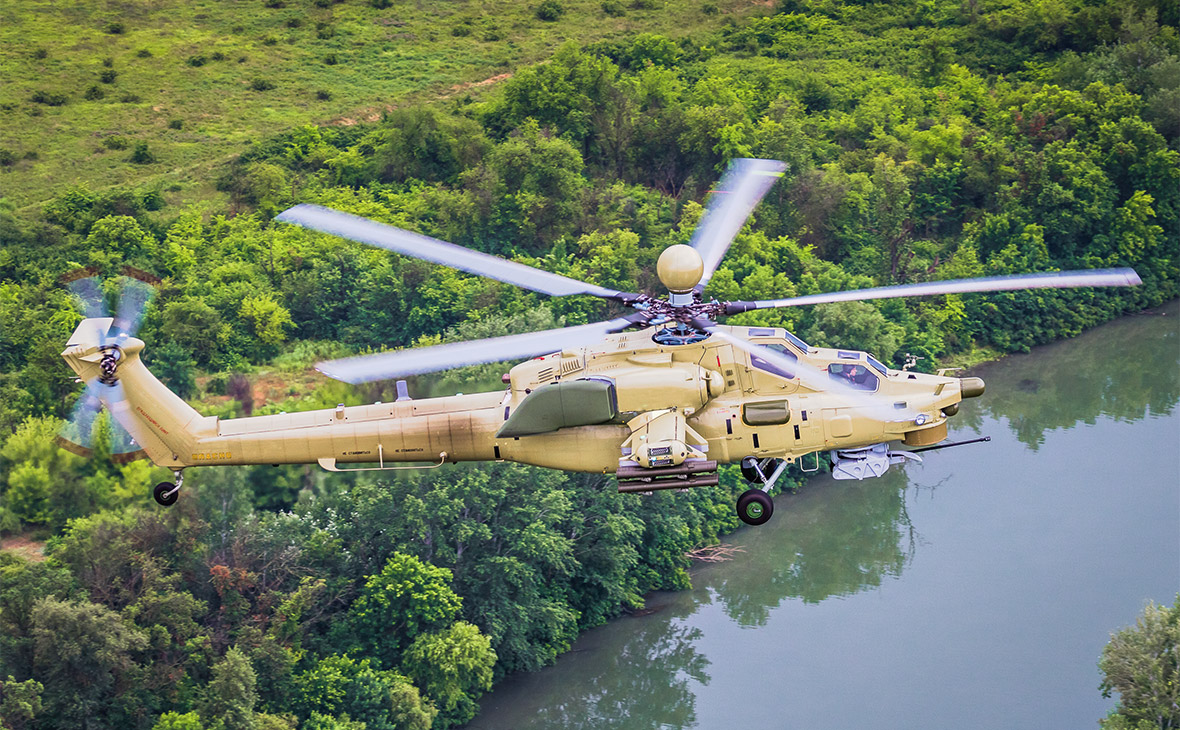
In November, the Russian Defense Ministry will receive the first batch of improved Night Hunter helicopters from Russian Helicopters. The new choppers will cost the Defense Ministry at least 400 million USD. The helicopters should alter aviation tactics in Syria. 

755084141380411
Russian Night Hunter combat helicopter. Photo courtesy of Russian Helicopters/RBC

For Syria
By 2020, the Defense Ministry will take delivery of twenty-four modernized Night Hunter Mi-28UB combat training helicopters, Andrei Boginsky, general director of Russian Helicopters, a subsidiary of state corporation Rostek, told RBC. He stressed the Mi-28UB was designed with its future use in Syria in mind.

The first batch of helicopters—up to ten units—will be delivered to the Defense Ministry in November of this year. Two choppers will be delivered to the 334th Center for Combat Training and Army Flight Crew Retraining in Torzhok, Vadim Barannikov, deputy manager of Russian Helicopters Rosvertol plant, told journalists on October 19.

“Currently, the Defense Ministry is the Mi-28UB’s only buyer. However, similarly configured Mi-28-like helicopters will be delivered to foreign customers,” said Boginsky.

He added that the coming online of the chopper’s combat training version opened up “practically unlimited” opportunities for improving the training of Mi-28N pilots.

“The chance to train on a real combat helicopter, rather than on a simulator, is a huge advantage for our combat pilots in comparison with their counterparts from other countries,” said Boginsky.

Boginsky declined to tell RBC the cost of the contract with the Defense Ministry and the price of a single helicopter. However, as two of RBC’s sources in the aviation industry noted, the cost of the Mi-28UB would be a “little higher” than the basic model due to the improved design and other features. According to AircraftCompare.com, a website specializing in collecting and analyzing information on aviation equipment, the cost of the Mi-28N ranges from 16.8 million USD to 18 million USD. The sum of the contract with the Defense Ministry for delivery of the helicopters should be at least 400 million USD.

The delivery of twenty-four Mi-28 combat training helicopters is Russian Helicopters biggest contract with the Defense Ministry since 2015, the company’s press service told RBC. For the first time in history, the Russian army will get its hands on combat training helicopters with dual piloting systems.

The Mi-28UB
The design of the Mi-28 combat training helicopter, the improved Night Hunter, is based on the Mi-28N night attack helicopter, which was added to the army’s arsenal by presidential decree in 2009. Its maximum speed is 300 kilometers/hour, its dynamic ceiling, 5.6 kilometers, and its takeoff weight, nearly 11,000 kilograms. The Mi-28UB is armed with Ataka-V air-to-surface and Strelets air-to-air guided missile systems, a nonremovable mobile 30mm automatic cannon, and B-8V20A mounts for C-98 80mm caliber rockets and C-13 130mm caliber rockets.

The main difference between the Mi-28UB and the Mi-28N is the dual piloting system, as RBC was informed by Russian Helicopters press service. The chopper can be piloted both from the commander’s cockpit and the system operator pilot’s cockpit, which expands its capacity for training combat pilots. In addition, during emergency combat circumstances, control of the helicopter can be assumed by the second crew member. The helicopter is also outfitted with a simulator for training student pilots to deal with in-flight equipment failure.

The Mi-28UB is outfitted with modernized integrated onboard radioelectronic equipment. The cockpit has been expanded, the area covered by armored glass has been increased, and visibility from the system operator pilot’s cockpit has been improved. The Mi-28UB has an automatic landing system. A state-of-the-art laser defense station has been installed onboard to defend the helicopter from heat-seeking missiles.

Why a “Flying Tank” Is Needed
The Mi-28UB has been added to the arsenal to adjust the tactics used by Russian aviation in Syria and other hotspots in the future, said the military experts interviewed by RBC.

The army lacks combat pilots, noted Colonel Viktor Murakhovsky (Reserves), chief editor of the magazine Arsenal of the Fatherland. During a speech in the State Duma in February, Defense Minister Sergei Shoigu claimed that, as of 2016, the Aerospace Forces (VKS) lacked 1,300 pilots.

When the VKS launched its Syrian campaign, the Defense Ministry called up officers from the reserves and even introduced accelerated pilot courses for servicemen working in different jobs, such as aircraft technicians, Murakhovsky recalled.

“In this sense, it means a lot to train pilots on helicopters with dual piloting systems,” said Murakhovsky. “Thanks to the system, an experienced pilot will be able to prompt the trainee and take over the helicopter in emergencies. Pilots will be trained twice as quickly.”

The combat training version of the helicopter was initially designed to train cadets to fly the Mi-28. Previously, rookie pilots had to undergo initial training on stimulators or other helicopters, and then retrain on the Mi-28. This took time, argued Colonel Andrei Payusov (Reserves). The modernized Mi-28 will be used to train graduating cadets and retrain serving pilots, he believes.

The Mi-28 combat training helicopter will facilitate running young flight crews through their paces and nurture combat pilots, Colonel Sergei Yefimov (Reserves), a combat sniper pilot, told RBC. The Mi-28 gives the army the chance to change combat tactics, and the improved visibility and armored glass will help crews feel more confident in the cockpit.

“The modernized integrated onboard radioelectronic equipment will make searching, detecting, identifying, and eliminating targets more effective,” said Yefimov.

But in addition to accelerated training of combat pilots, the Mi-28 faces yet another task, said Colonel Sergei Gorshunov, senior navigation inspector in the Fourth Army’s aviation wing and the Southern Federal District Air Defense. In modern combat, it is hard for a single member of the crew to pilot a helicopter properly while tracking the enemy and aiming at a target, stressed Gorshunov.

“So the Defense Ministry asked for a helicopter with a dual piloting system,” said Gorshunov.

According to Gorshunov, the Mi-28UB can be used not only to support infantry but also to cause tangible damage to the enemy’s armored units.

“We might say it’s a flying tank. If the guided missiles are deployed, a couple of helicopters can disable from four to eight tanks,” concluded Gorshunov.

The first prototype of the Mi-28UB was manufactured by Rosvertol in 2013. The helicopter was put into mass production in late 2015, RBC’s source in the aviation industry said.

“The helicopter was tested for a very long time. All the tests have been passed, including tests in Syria. Now it is a matter of delivering the first batch,” he explained.

Translated by the Russian Reader

UPDATE. Russian Helicopters was listed in a White House document of Russian companies and entities that may be considered for further sanctions. The New York Times published the unclassified document on October 26, 2017.

“Hysterical Russophobia”

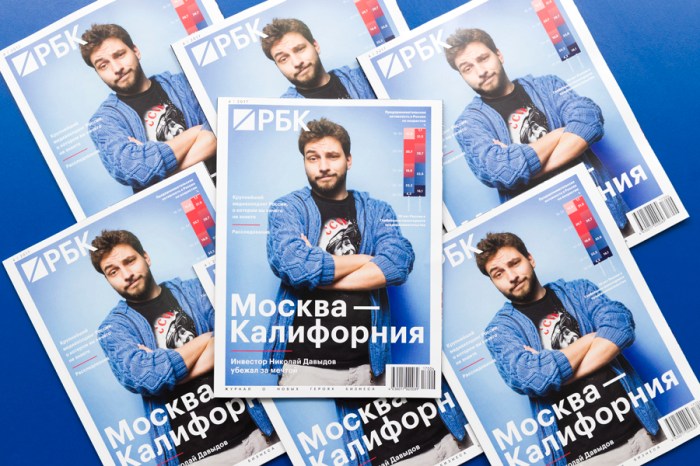
Nikolai Davydov, successful Russian immigrant Silicon Valley businessman whose life has (not) been ruined by “hysterical Russophobia.” Image courtesy of RBC

Yet another victim of the “hysterical Russophobia” sweeping the US and Europe has been identified.

“The subjects of the new issue of RBC Magazine aren’t afraid of risks: they conceive their own projects and invest in unusual sectors of business. Nikolai Davydov, RBC’s Investor of the Year, left for the US with $100 in his pocket, but now he lives in a house on the California coastline.”

If “hysterical Russophobia” were a real thing, instead of a talking point for crypto-Putinists and just plain Russians who don’t know how to explain to their non-Russian neighbors why their homeland has become so “odd” in the past several years, you would have heard about Russian immigrants to the EU and US suffering the same main violence and putrid discrimination that Muslim, Asian, and African immigrants and asylum seekers suffer there, not to mention the relentless violence and staggering discrimination suffered by such absolutely 100% native Americans as Aboriginal Americans (i.e., Native Americans), African Americans, and Hispanic Americans in a land their peoples have been inhabiting from several centuries to several thousands of years.

But no, you never hear of such violence and discrimination against Russian immigrants, and the fact there is no such violence and discrimination against Russians (at least, not enough to show up on anyone’s radars) is a good thing, of course.

It does, however make you wonder what exactly this “hysterical Russophobia” is that has so many tongues wagging, but has absolutely no negative effect on the ability of actual, individual Russians to lead happy, productive, and violence- and discrimination-free lives in the countries where they have chosen to settle.

That’s an easy riddle to solve, however. “Hysterical Russophobia” is a non-phenomenon invented by a motley coalition of people with various political axes to grind, including sections of the mostly hilarious current western left, who for some reason have not heard the news about what has been happening in the Socialist Motherland the last twenty-five years or so or feign not to have heard it. They’re still defending Russia long after it became the world center of the blackest social and political reaction. That is, they’re defending a corrupt, oligarchic capitalist tyranny.

Why actual Russian immigrants might feel defensive about the old homeland is understandable, but they should figure out what’s worth defending and what’s not. The Putin regime, for example, literally has no redeeming features whatsoever, as a perusal of this blog, for example, and its predecessor, Chtodelat News, should persuade you, although there are thousands and millions of more credible sources of information out there that are even more persuasive than my occasional, half-baked efforts to knock some sense into your heads.

People who nevertheless hotly defend the Putin regime, wherever they’re from, immediately strike me as suspicious or hopelessly naive. And I’m not alone.

“10,000 articles in the left press about anti-Russian hysteria. They would have more impact if they ever acknowledged that this fucking bastard Putin is building a worldwide ultraright movement. Diana Johnstone told Counterpunch readers that Marine Le Pen was on the left, so you can understand how this sort of Red-Brown thing has been gestating for quite some time.” (Louis Proyect, as quoted by Raiko Aasa yesterday on Facebook)

And here is “hysterical Russophobia” at its most sinister!

‘Delfinov and Vrubel are part of a growing community of Russian artists, poets, writers and intellectuals who have turned Berlin into one of the most vibrant outposts of Slavic culture, a kind of Moscow-on-Spree that is light years away from the repressive world of Vladimir Putin’s Russia. Delfinov, who moved to Berlin in 2001, says the influx has accelerated in the past five years, a period when Russians’ hopes of democratic change evaporated. Many of them quit the country after Putin returned in 2012 for a third term as president and veered sharply to the right, espousing a new nationalist rhetoric, clamping down on dissent and annexing Crimea. Official figures show there are now 22,000 Russian expats living in Berlin, up 6 per cent on 2015. “They are people who saw no future for themselves in Russia,” says Delfinov. “Middle-class people who just wanted to breathe.”’

Well, you’ve probably guessed I’m just being facetious.

I think it’s great that Russians can go anywhere and make new, happy, productive lives for themselves. It should be that way for everyone, of course. No one is illegal, and all that.

Yet, simultaneously, the Russian government has been working overtime over the last year to exacerbate the Syrian refugee crisis. But you’d be hard pressed to hear any of the nattily dressed émigrés, described in the Financial Times article, quoted above, or their countrymen saying anything whatsoever about that nasty business and their country’s role in it. Mum’s the word, I’ve got my life to live, and all that.

However, a fair number of Russians, in my experience (and not only mine), have had lots to say, paradoxically, about Germany and other European countries being “overrun” by refugees from Syria and other war zones. It turns out these “black” unfortunates, who come from completely other galaxies, apparently, don’t have the same right so seek a safe place to live and work in Berlin, Paris, London et al., as the now-“white” (as opposed to White) Russians do.

Isn’t that funny? TRR

Farouk Mardam-Bey: To “Leftist” Admirers of Assad’s Syria

mardam-bey-farouk-1-1-710x533
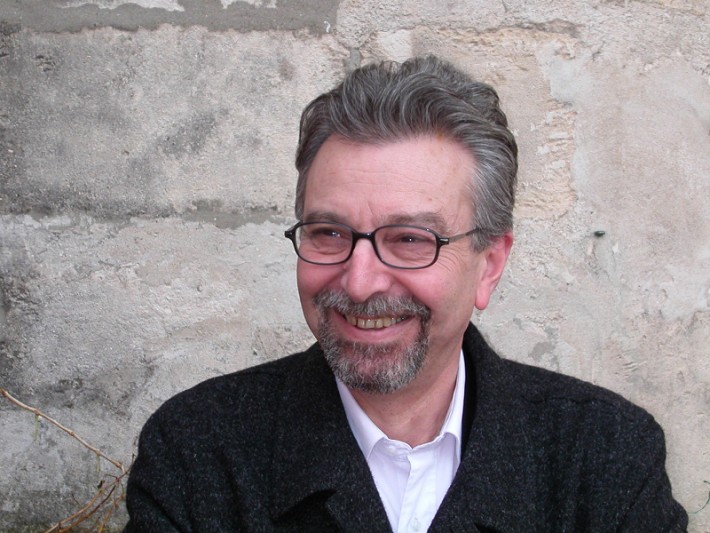
Farouk Mardam-Bey

To “Leftist” Admirers of Assad’s Syria
Farouk Mardam-Bey
Pulse
December 24, 2016

As a Syrian who has always identified politically with the left, I am particularly appalled by those men and women who call themselves left-wingers—and are therefore supposed to stand in solidarity with struggles for justice worldwide—and yet openly support the regime of the Assads, father and son, who are chiefly responsible for the Syrian disaster.

Following four months of intense bombardment by the Russian air force, Bashar Al-Assad’s army, along with Shiite militias hailing from everywhere and mobilized by the Iranian mullahs, have now finished “liberating” Eastern Aleppo. Liberated from whom? From its inhabitants. More than 250,000 inhabitants were forced to flee their own city to escape massacres, as had the people of Zabadani and Daraya before them, and as will many more Syrians if systematic social and sectarian “cleansing” continues in their country under the cover of a massive media disinformation campaign.

That in Syria itself wealthy residents of Aleppo, belonging to all religious sects, rejoice over having been rid of the “scum”—meaning the poor classes who populated Eastern Aleppo—is not surprising at all. We are accustomed to it: the arrogance of dominant classes is universal.

That Shiite mullahs stuck in another era celebrate the event as a great victory of the true believers over Umayyad disbelievers, or proclaim that Aleppo has been Shiite in the past and will turn Shiite again, can also be understood if one is familiar with their doctrine, as delirious as that of their Sunni counterparts.

Finally, that in the West politicians and opinion makers of the far right or the hard right reaffirm, loudly, their support for Assad is also quite natural. Such people have nothing but contempt for Arabs and Muslims, and they believe, today as ever, that these “tribes” must be led with a big stick.

But how could one fail to explode in anger when one reads statements in support of the regime of the Assads, father and son, issued by men and women who claim to stand on the left, and who should therefore sympathize with struggles for justice everywhere? How could one fail to become exasperated when one hears them praise the independence, secularism, progressive character, and even “socialism” of a lawless clan that took power in an army coup more than forty-five years ago and whose only concern is to keep exerting power forever? “Assad forever,” “Assad or nobody,” “Assad or we burn the country,” chant Assad’s partisans. And his “leftist” supporters nod approvingly under the pretext that there is no other choice: it’s either him or ISIS.

And yet the Syrians who rose in 2011 were the first to vigorously condemn the jihadi groups of all sorts and kinds, and in particular ISIS, that have infested their popular uprising after it was forced into militarization. Completely alien to the demands of liberty and dignity of the popular uprising, these jihadi groups focused their attacks principally on the vital forces of the opposition, whether civilian or military, and cracked down on the population in the areas that they managed to control. In so doing, they buttressed Assad’s propaganda inside Syria as well as internationally, allowing him to portray himself as a defender of religious minorities.

The same Syrians who rose in 2011 have moreover often expressed their distrust of those who have pretended, and continue to pretend, to represent them, and who proved to be incredibly incompetent. Hoping for a Western military intervention that was obviously never envisaged by the Obama administration, subservient to this or that neighboring country (Saudi Arabia, Qatar or Turkey), divided among themselves and non-existent on the ground, these self-proclaimed representatives were incapable of addressing the world with a coherent political discourse.

But neither jihadi intrusion nor the shortcomings of the self-proclaimed representatives of the Syrian revolution, nor any argument used to justify the unjustifiable, can invalidate two fundamental facts: that the Syrians had a thousand reasons to revolt, and that they did so with exceptional courage, under conditions of near-universal indifference, countering the ruling clan’s limitless terror, Iran’s imperial ambitions and, since September 2015, a US-approved Russian military intervention that has already killed several thousand civilians.

Is this “Syria of Assad”—where Iran and Russia act as they please, together as well as separately, and whose future now relies exclusively on their agreements and disagreements—independent and anti-imperialist? Let left-wing admirers of the Assad regime read the unconscionable treaty that it signed on August 26, 2015, granting Russia exorbitant privileges as well as complete and permanent immunity regarding all damages caused by its air force.

How can anyone seriously describe as “secular” a regime that, since its beginning and in order to perpetuate itself indefinitely, has striven to poison relations between religious communities, held Alawis and Christians hostage to its policies, presided over the contamination of Syrian society by the most obscurantist form of Salafism, and has manipulated all sorts of jihadists, and not only in Syria?

How “progressive” is it to promote the wildest type of capitalism, impoverishing and marginalizing millions of citizens who barely survive in the suburbs of the main cities? These impoverished Syrians were the main social component of the revolution, and they became the main target of the regime’s heavy artillery, barrel bombs and chemical weapons. “Kill them to the last” demanded the Shabbiha (Assad’s thugs) from the beginning of the uprising, so that the new “progressive” bourgeoisie could securely plunder the nation’s wealth and pile up billions of dollars in fiscal paradises!

If the above is not enough, one can also remind Assad’s “leftwing” supporters of the crimes against humanity perpetrated with complete impunity by Bashar’s father, Hafez, during his thirty years of autocratic rule. Two locations summarize them: the city of Hama, where over 20,000 people, possibly 30,000, were massacred in 1982, and the prison of Palmyra, the equivalent of an extermination camp where the jailers used to boast about turning the men they tortured into insects. It is this same impunity that some on the left alas want to extend to Bashar Al-Assad, the principal culprit responsible for the ongoing disaster with over ten million displaced, hundreds of thousands of dead, tens of thousands imprisoned facing torture and summary executions in jail.

Until the executioners are defeated and punished, Syria’s endless martyrdom risks foreshadowing many others in the world — a world from which Syria will have vanished.

Translated from the French by Joey Ayoub. Photo courtesy of Publishing Perspectives. Thanks to Danny Postel and the rest of the Pulse team for posting this article and their invaluable work in general. 

About Farouk Mardam-Bey

Farouk Mardam-Bey is a Syrian historian, author, and editor who has been living in exile in France since 1965. He was Head of Arabic at the library for the National Institute for Oriental Languages and Civilizations in Paris (1972-1986), an editor and then director of a French journal of Palestinian studies (1981-2008), and a consultant for the Arab World Institute (1989-2008). Since 1995, he has been director of the Sindbad series, part of the publishing house Actes Sud, which aims at translating Arabic works into French. His co-authored/edited books include the two-volume Itineraries from Paris to Jerusalem: France and the Arab-Israeli Conflict (1992-1993), Being Arab (2007), and Our France (2011). He has also edited and published a number of historical, political, literary and bibliographical texts and translated the works of the Palestinian poet Mahmoud Darwish into French.

Refugees

“Everything There Is like a Horror Film Now”:
Young Refugees Talk about War, Fleeing Home, and Living in Russia

Filippo Valoti-Alebardi
Furfur
October 19, 2016

Armed conflicts in the Middle East and instability in parts of Africa and South Asia have led to one of the largest immigrant crises since the Second World War. According to Frontex, 1.82 million refugees arrived in Europe in 2015, and another 173,761 people arrived in Europe by sea in the first part of 2016. Russia has found itself on the sidelines in terms of most migrant flows. Only one route, which runs through Russia’s land borders with Norway and Finland, was used for the transit to Europe. According to RIA Novosti, around 6,000 people traversed this route between October and December 2015.

The Russian Federal Migration Service (FMS) claims there are very few people with refugee status in Russia, less than eight hundred. Basically, people who seek refuge here can count only on temporary refugee status, which is valid for one year. But if a person manages to obtain it, no one can guarantee it will be renewed in the future. Furfur met with four young refugees and wrote down their stories of fleeing their home countries and living in hiding in Russia.

hasan

Hasan, a 20-year-old refugee from Syria

I left Aleppo three years ago. In 2012, the civil war came to our city. All the state institutions closed, except for some hospitals. I stopped going to school and almost never left my house. Everything was topsy-turvy in Aleppo then: government troops might be in one district, while the opposition was in the next. Life was hard but bearable. The financial crisis was not as bad as now, and my family had some savings. We were bombed, but not like during the Islamic State’s offensive. The electricity didn’t work, but we had a generator. The water was severely rationed, but it was enough.

Almost as soon as fighting broke out, I was forbidden to leave the house. I was not yet threatened with conscription, but my parents feared I could be recruited, killed or kidnapped, since I was the oldest son in the family. The other members of the family also tried not to leave our flat without a very good reason. We just sat at home and waited for it to all be over.

In the summer of 2013, an acquaintance of my father’s helped me get a work visa to Russia, and I left Syria. The person worked here in a sewing factory where there were many Syrians. He met me at the airport and took me to Losino-Petrovsky, where I still live. I immediately started worked in the sewing workshop. My father had been a tailor, so I already had some skills.

During the fifth month of my stay in Russia, I applied for refugee status. The [UNHCR] helped me prepare the papers for the FMS, where I had to have an interview. I was asked about my family’s financial state, whether I had served in the army, and about my political stance. A few months later, I received temporary refugee status, but it lasted for only a year.

I lived in Moscow Region and worked in the workshop. I tried to keep in touch with my family and friends. One day, a friend called me and said our house had been bombed and everyone had been killed. So only two members of my family, which had consisted of eleven people, have survived: my sister, who got married and lives in Istanbul, and I.

When my refugee status ended, I went to the FMS and asked for an extension. This time round, my case was handled by a different officer. He also asked me questions about my origins, financial state, and political stance, but then he asked why I had not gone to Iran, Turkey or Europe. I said I liked it here. I also told him that, over the past year, my mother,  brother, and all my brothers and sisters had died, except one. I was given a certificate, valid for one month, and then I was turned down. I was told the situation in Syria had normalized, that I was in no danger and could return home safely. But I had nowhere to return: my home and family were gone.

I was given three months to appeal against the refusal. I made four attempts to appeal it, but to no avail. Finally, I went to a Syrian man who said he had friends with pull. He promised to help me for 70,000 rubles [approx. 1,000 euros]. Ultimately, however, I was turned down once more, and never saw the guy again. Now I am in Russian illegally, and for the time being I have managed to avoid problems.

The police often stop me under the pretext of checking my papers, but they have a pretty good attitude to Syrians. Previously, when my papers were in order, they would haul me down to the precinct and take my fingerprints before letting me go. The situation has now become more complicated, and I often have to bribe them. It is usually not in Moscow where the police check my papers, but in Losino-Petrovsky itself. The local police are well aware of where the migrants live and work. They know our routes and when we get off work. So at least one or twice a month they detain one of us.

I rarely leave my own neighborhood. I work six days a week, twelve hours a day, and have almost no free time. But when I have the time and energy, I go play football with my friends, either in Noginsk or Moscow. I speak almost no Russian. At work, I get by with Arabic and a few words in Russian, since I work with Syrians, Tajiks, and Uzbeks. I sometimes chat on the phone with my sister in Turkey and with friends who have left Syria and gone to Turkey and Europe. I used to really miss my family and my home in Syria, but not anymore. I have lost my family and simply see no point in life. I even think it would have been better had I been with my family the day the bomb fell on my house. It would have been better to die with them than to hear about their deaths over the telephone.

yasmin

Yasmin, an 18-year-old refugee from Yemen

This is the second war my parents have fled. My father is half Vietnamese, half Yemeni. My mother is a Vietnamese Muslim. When the war between the US and Vietnam ended, they found themselves in a refugee camp in Yemen, which is where they met. My mom was seventeen then, the same age I was when I came to Russia.

Life in Yemen had always been hard for our family. Because my father speaks Arabic poorly and cannot write it, he could never count on a good job. On the streets, people would always point at us and say, “Look! There go the Chinese.” Everything got complicated after the 2011 revolution. Some government offices ceased to function, and foreign companies gradually left the country. A year later, the German firm for which my father worked as a driver closed its office, and he lost his job. It was hard to find another job. Ultimately, my older brother had to quit school to support us. He spoke the best Arabic in our family.

War broke out in Yemen in 2014, but we were affected by it only in 2015, when the heavy bombardment began. We lived in the city of Taiz, but our house was not far from a rebel camp, so the planes targeted our neighborhood. We took our things and left for Sanaa, the Yemeni capital, to stay with relatives. It was much safer there, and we livef peacefully for two weeks or so, but then the bombing recommenced.

In Sanaa, we lived near the Russian Embassy. After one of the bombing raids, we went there to ask for help. The embassy officials told us a Russian Emergencies Ministry (MChS) plane would be leaving [soon]. They explained where to go and when, but they did not promise we would be taken aboard. On the right day, we arrived at the appointed time at the airport, where we saw a team of [Russian] rescuers. They put our family on the plane. We had no visas, but we had passports. All the others who wanted to go had no papers and were left behind.

There were lots of Russian citizens on the plane with us, but there were also Yemenis, Syrians, and even a few Americans. We made a stopover in Djibouti, and there we were given the right to choose: stay behind or fly on to Russia. Since we had no family in Djibouti or other countries, we decided to fly to Russia. First, we were taken to a military airport, and then to a civil airport, where we had to wait for a consul. He gave us ten-day entry visas and ran off.

We did not know a word of Russian or English, we had no money, and we were hungry.  I don’t know what we would have done if it had not been for the Syrian who was on the plane with us. He spoke Russian and interpreted for us. Then he gave us two hundred dollars and ordered us a taxi to the Yemeni embassy. For some reason, the taxi driver took us to the Egyptian embassy, not the Yemeni embassy, and on top of that he made us pay him fifty dollars, not thirty dollars, as we had agreed. But it was a good thing the guard at the embassy spoke Arabic, since it was cold and we had no idea where we were. He called us a cab to take us to our embassy, and the next driver, an Egyptian, did not even charge us.

At the embassy, we were given a room where we lived for approximately two months. During this time we put together papers for obtaining refugee status, which we applied for at the [UNHCR] offices and the FMS. Later, the Vietnamese ambassador came to see us. He helped us get a room at the Hanoi Moscow Hotel, where we have been living ever since.

Our application for refugee status has been turned down twice. We have appealed the decision and are now awaiting the outcome. We need the status in order to be able to work and somehow organize our lives in a new place, because for over a year we have been living solely due to support from the Vietnamese. We have nowhere else to go. The war and bombing are still going on in Yemen, and there is almost nothing left of our home and neighborhood in Taiz. Everything there is like a horror film now.

didie

Didier, a 23-year-old refugee from the Democratic Republic of the Congo

Before leaving Congo, I lived in Kinshasa, our country’s capital, and was studying psychology. I left not because I was starving, but because I feared for my life. When my father died, I could not even go home to mourn and bury him. Instead, I am here, but I don’t know how much time I have left in Russia.

In 2015, I attended a rally against changes to the electoral system that would have enabled the president to serve another term. It was a major protest rally, for which a thousand and a half students and staff from my university showed up. The authorities responded by sending in the army, police, and large army trucks to kettle the protesters. The police and soldiers shot to kill. At some point, we were herded into a corner where nothing was visible, everything was covered in flames. Twelve people were killed between January 19 and January 25. Two of them were my friends. We were at university together.

The best thing that happened to many people involved in the protests was that they simply disappeared. I managed to hide from the police at the place of some acquaintances. I could not go back home or to the university, because secret service officers were surveilling the demonstrators. They were especially interested in the people who had incited university students and staff to take part in the protests. I was a ringleader, and at the time I was already a member of Congo’s second largest opposition party.  I did not want to leave the country, but my parents insisted. They were worried about me, since a lot of people were disappearing at the time.

Why did I leave for Russia? I knew people who had friends with connections and helped me get the necessary papers. This took a while, but the situation got worse and I had to leave urgently. I left Congo on a night flight after convincing the police I was somewhere else. In Russia, I had the contacts of the people who had helped me get a student visa. The first six months, I lived in the place of a friend who had gone home, and then I lived at the People’s Friendship University, where I met a lot of people and was advised to go to the Civic Assistance Committee. They helped me obtain temporary refugee status, which is issued for a year, and now I am trying to extend it.

There is a small Congolese diaspora in Moscow, but I do not communicate with them. I do not want to disseminate information about myself. I deliberately limit my dealings with other people, and I do not maintain contact with people from the Congolese opposition movement. I know that people in the Russian opposition are also detained, and I am scared my country’s authorities might send an official extradition request. In Congo, I would definitely go to prison.

Russia is a “white” Africa. People here live in greater safety than back at home, but you are also unable to assemble and protest. You fear the police, who help implement the policy of dictatorship. Nevertheless, in Russia, you can find a job easily, you can buy a flat, and get a loan. The government thinks about its people at least a little, but not in Africa. The regime has complete forgotten about people. The president works only to benefity his own family. He stuffs his pockets and takes holidays in the States and Canada, while the populace suffers. Only officials, the people who stuff his pockets, live well. They should all be in prison. God needs to descend and free my people.

People in my country continue to protest, but they are few and the police arrest them, including members of our party, which they are trying to bleed to death. Some of my comrades have left the country, while many have been arrested.

I would like to go back to Congo to fight for human rights and give people back freedom of speech and the right to vote. I want to give them the ability to speak their own mind freely. I can tell you that right now in Congo women are being raped, people’s heads are being cut off in markets, and people are being shot at.

More than ten million people have been killed in my country to date. It is the most dangerous country in the world for women: there are a huge number of rapes, and war is going on almost all the time. But if you dare talk about it, you are lost. Most of the people who can talk about it are in Europe. They upload short videos to the Internet and talk about the atrocities occurring in Congo, but if they went home they would be detained immediately.

And that is why I would like to tell Mr. Putin personally what is actually going on there. Our situation resembles the one in Syria right now, if it is not worse, but everyone talks only about Syria, and not about Congo. You white people in Russia, Europe, and the States, you are well aware of what is happening in Africa, but your governments would rather not doing anything about it. They only support the criminal regimes that rule our countries, getting money from them or investing in them. The whole world buys our diamonds: France, Belgium, and the US. Even you Russians are involved in diamond mining in Congo, which is always accompanied by war. Many people are afraid to talk about it, because they are afraid of disappearing. But I am not one of those people. I like telling the truth.
muhamed

Muhammad, 28-year-old refugee from Syria

I am from the city of Kobanî, on the border with Turkey.  I am a Kurd, and I left Syria five years ago, in 2011. I had just finished my military service when opposition rallies took place in Syria. It was all quite peaceful, and the situation in Kobanî was calm, but I sensed something serious was going to happen and decided it would be better to leave the country. I worked in the clothing industry, and a friend of mine invited me to Russia. I got help getting a yearlong business visa: that was how I ended up at the fabric in Noginsk. Initially, I came just to sit things out, but it has dragged on for five years, and there is no telling how much longer it will last. The first year I lived on a visa, and then I went to Egypt  to extend it. Subsequently, Egypt changed the rules of entry for Syrians, and I was unable to do the same thing a second time.

‏Meanwhile, Syria has shifted into a state of war. One of my little brothers was captured by Islamic State when he was traveling with other schoolchildren to take exams. He was freed several days later, but I lost contact with my relatives when fighting broke out in the Kobanî area. There were heavy battles near the city, and my family were forced to flee to Turkey. Some of my second and third cousins stayed behind to fight Islamic State. Ten of them were killed, and my brother was seriously injured.

‏All this time, I was working and living in Russia, trying to formalizing my status as a refugee, but I was not having any luck. I would come somewhere with papers, but I would be sent first one place, and then another. An appointment would be made for me, but then it would be postponed: I would be told to come back in fifteen days, and then in ten days. I was once told to come at nine in the morning. I came half an hour early, but to no avail. I was told the queue was already too long and I had better come the next day. But they could not see me the next day, since I had been in the previous day’s queue and had not shown up, allegedly. They toyed with me like this for several months. I decided to ask the [UNHCR] for help, but nothing changed. During the nine months I was going to the FMS, I was unable to file an application for refugee status. Finally, I gave up and stayed on illegally. ‏

I met a Lebanese man who promised to help solve the problems with my papers if I went to work for him at a construction site. I went, but my problems were not solved. Instead, the police caught us. They beat us up right at the construction site. There were even some reporters with policemen, but they were told to turn their cameras off. We were thrown on the ground and beaten on the feet. They beat us so badly I could not walk normally for five days or so. They wanted us to sign some papers. We did not know what was in the papers, because they were in Russian, but we were forced to sign. After that, they stopped beating us and took us to court. We were not provided with an interpreter and so we did not understand most of the proceedings. I do remember, however, that the judge tried to find out what was up with us. He could see we were in a bad way. But we were unable to tell him what had happened, and the policemen told the judge that we were just tired from working.

‏After that, I returned to the factory and started working night shifts, since there are fewer chances the police will catch you. However, I am still sometimes detained on the streets anyway. I always try and have money with me to pay the police off. Usually, I take a five-hundred-ruble note with me: that way they cannot take too much. But I rarely go outside. I work almost seven days a week, and I have no energy to do anything else after a shift of twelve to fifteen hours. I only sleep and work, and the money I send to my family: they need it more. I would like to be near them, but we Syrians now need visas to get into Turkey, and I cannot get one anywhere. Nor can I return to Syria. I have no one in Kobanî, and there is almost nothing left of the city.

Furfur thanks the Civic Assistance Committee and translators Igor Farafonov, Alexander Khodunov, and Muhammad Haled for their help with this article. Translated by the Russian Reader. Thanks to Sergey Abashin for the heads-up

Read more about the treatment of Syrian and other refugees in Russia: