Telepathy and the Russian Internet

On September 5, 1982, a music festival in San Bernardino, California, organized by Apple’s Steve Wozniak, bore witness to the first-ever public television link between the United States and the Soviet Union. Two large screens on either side of the stage broadcast performances by singer-songwriter Alla Pugacheva and rock band Voskreseniye, while Soviet citizens gathered at a Moscow radio station rocked out to the American lineup—that is, until Grateful Dead promoter Bill Graham, “convinced the whole thing was a KGB trick,” as Jeffrey Kripal wrote in his 2007 book Esalen: America and the Religion of No Religion, “literally pulled the plug halfway through the concert.”
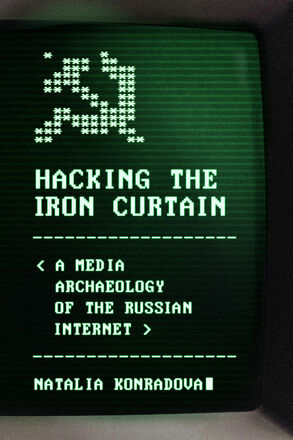
This so-called US-Soviet Space Bridge (the first of several, including one co-hosted by television host Phil Donahue) often features in books about the cultural history of the Cold War. But what many of these books don’t tell you is that a large number of the people who organized these events also hoped to lift the Iron Curtain through another method: telepathy. In her new book Hacking the Iron Curtain: A Media Archaeology of the Russian Internet, journalist and “media archeologist” Natalia Konradova reveals how the story of the early Soviet internet—and the role it played during the collapse of the USSR in 1991—can be traced back to early- and mid-twentieth-century dreams of instantaneous and unmediated mass communication.

Telepathy was, for much of the twentieth century, considered a real possibility—one whose secrets modern science could and would eventually discover.

Though recognized today as a pseudoscientific fantasy, telepathy was, for much of the twentieth century, considered a real possibility—one whose secrets modern science could and would eventually discover. In the Soviet Union, scientific interest in telepathy stemmed not only from a sense of general techno-optimism shared by many countries both before and after the two world wars, but also from beliefs and aspirations particular to communist society. Like cosmism (a philosophical movement that aimed at nothing less than the colonization of space, the attainment of immortality, and the resurrection of every person who ever lived), research into “parapsychology” was expected to help usher in a utopian future.

Of course, what this future looked like depended on who you asked. Some scientists and science fiction authors envisioned a world in which doctors could diagnose patients remotely and one person could beam their skills and talents directly into the bodies of others. The CIA worried that Soviet officials would be able to steal sensitive government information and control “machines on the moon or in the ocean” with their thoughts, according to a 1973 report. Meanwhile, Iosif Goldin—a parapsychology enthusiast and principal organizer of the Soviet side of the first Space Bridge—imagined mass communication as a cure for geopolitical conflict. He once wrote that if “one realizes the observation of the sunrise simultaneously on all continents of the Earth and does it regularly, turning it into a form of bringing people together, there may be no nuclear catastrophe.”

Although the internet itself did not directly contribute to the USSR’s demise, it should come as no surprise that the appearance of one closely coincided with the disappearance of the other. Described by Konradova as a “perfected version of samizdat,” or self-published dissident literature, the rise of the internet and online communities made censorship and the suppression of information virtually impossible—at least for a time. Hacking the Iron Curtain concludes with a brief though warranted reflection on how, amid digital restrictions under Vladimir Putin, the Russian internet ecosystem—Runet—has become increasingly cut off from the rest of the World Wide Web, aiding the country’s return to autocracy.

How did you become interested in parapsychology?

I have worked on many different subjects as an anthropologist and media theorist. But I have always been particularly interested in phenomena or systems that are either created by users or shaped through their efforts and self-organization. It does not really matter whether I’m studying war memorials in small villages, which were one of the subjects I researched in the early 2000s, or internet literature—a phenomenon of the early Russian internet, when users had for the first time the opportunity to publish their literary works without them having to pass through any editorial process.

That was how my research into the Russian-speaking internet began. In the mid-2000s, colleagues in Germany invited me to join their project, where I studied internet forums. At that point, though, neither cybernetics nor parapsychology was anywhere on my research horizon. They emerged only during the research process.

What did you feel was missing from existing treatments of this subject (like Alaina Lemon’s book) that you wanted to explore with Hacking the Iron Curtain?

Because my research is interdisciplinary, I read literature from a wide range of research fields: the history of the internet and digital culture, Cold War studies, studies of utopias and technological imaginaries, “parascience,” and so on. These fields have been studied for a long time, and each has produced fascinating work. What I felt was missing was precisely the connection between them.

Alaina Lemon’s book was an important discovery for me, not only because it was the only work I encountered that placed Soviet parapsychology within the context of the Cold War, but also because she shows just how powerful the mutual desire for communication was among people in both the USSR and the US. That said, Lemon’s approach was grounded more in theatrical practices, and she was not interested in the history of technology. When Soviet parapsychology is discussed elsewhere, it is typically situated within the history of supernatural beliefs and esoteric practices, as in The New Age of Russia: Occult and Esoteric Dimensions, a substantial volume edited by Birgit Menzel.

What interested me was a phenomenon identified in the 1960s by Lynn Schroeder and Sheila Ostrander, authors of the classic Psychic Discoveries Behind the Iron Curtain: for a considerable period in the USSR, parapsychology was treated as a science. Researchers used scientific methods in their experiments and attempted to identify patterns in telepathy, telekinesis, and other phenomena. Yes, this no longer fits within our contemporary scientific understanding of the world, but I am talking about events that took place sixty years ago, when faith in the power of science was virtually limitless. As far as I know, before my work, no one had considered research into telepathy as one scientific field among others—regarded today as a dead end, but one that at the time could be seen as almost equivalent in status to computer science.

At what stage in your research did it become clear to you that there was a connection between parapsychology—telepathy in particular—and the early Russian internet?

I originally set out to study the history of the Russian internet. I interviewed figures from the Runet of the 1990s and worked with online archives. In those archives, I discovered that one of Russia’s first internet providers had actually been founded in the 1980s. This simply did not fit with my understanding that the internet could only have appeared after the collapse of the USSR in 1991.

Once I delved into the history of the first network connections from Soviet territory, I found myself dealing with an entirely new set of questions and, for me, an entirely new research field. Media archaeology is exactly the kind of (proto) discipline that is interested in dead ends, unrealized projects, and strange coincidences. It is still not particularly well known in the US, but I live in Germany, the birthplace of media archaeology.

To what extent was parapsychology research responsible for the rise of the Russian internet?

I distinguish between several levels of this connection. One is relatively simple and straightforward. The first contact between American and Soviet users on Usenet became possible thanks to American entrepreneur Joel Schatz, who came to the USSR in the mid-1980s. He did so because of his connections to the Esalen Institute in California, a well-known center of “alternative research,” now better known as a popular retreat destination for California tech people.

Esalen, in turn, had those connections because people associated with the institute had begun traveling to the USSR in the early 1970s hoping to establish contacts with Soviet parapsychologists (and they did). Later, they established a Soviet-American exchange program and joined the citizen-diplomacy movement, but initially it was the parapsychologists—with their desire for grassroots communication and their refusal to accept conventional boundaries of what was possible—who proved capable of connecting people from two countries on opposing sides of the Cold War.

How the archetype of the quirky, brilliant tech entrepreneur whose ideas could change the world migrated from high-tech hacker culture to Wall Street.

While studying this phenomenon, I also arrived at another, conceptual level of connection. In a sense, the internet is telepathy, except that a digital signal plays the role of the brain waves that science has never succeeded in discovering. In the 1960s, an era of techno-optimism and great hopes that human reason would triumph over war, disease, and death, computer science and the development of computer networks advanced alongside research into other possible forms of communication—forms that do not exist in nature but that, theoretically, could exist.

You mention on multiple occasions that telepathy was researched more extensively in the USSR than elsewhere. Why was this?

I think the USSR, as a project intended to realize a socialist utopia—and I am not discussing here how successful that project ultimately proved to be—had much stronger investments in radical scientific discoveries expected to fundamentally transform human life. Some of these ambitions were realized, such as spaceflight. Scientists today are still working on others, such as immortality. Others, such as telepathy, have disappeared from the scientific agenda.

One could probably add that the USSR had an obvious overproduction of specialists in the natural sciences, which was connected to the military-industrial complex. At some point, the Soviet Ministry of Defense also began investing in this new field because it seemed potentially useful for defense purposes. As a result, Soviet laboratories could often find room for experiments involving new and uncertain phenomena.

Still, I think all of this was more a consequence of the first factor: an exceptionally strong belief in scientific progress. Both American and Soviet societies were modern societies, if by modernity we mean above all a reliance on rational knowledge and technology. But in the USSR, this modernity was particularly radical and allowed virtually no alternative: it lay at the very foundation of the state as the only possible form of its existence.

You mention that Soviet scientists like Vladimir Bekhterev continued to research telepathy even after failing to find proof of its existence. Why did this interest persist, including among the CIA and US politicians?

In general, I have the impression that, from the 1920s through the end of the 1980s, scientists around the world were reluctant to abandon the subject completely. I do not know enough about Bekhterev’s activities to speculate confidently about his motives, but I do know that he was aware of the research his former student Vasiliev was conducting at his institute. I interpret this as an attempt not to burn any bridges—simply to keep the possibility open, “just in case.” What if the experiments ultimately did produce results, and you found yourself among those accused of suppressing something new and progressive? But of course, that is only my theory.

As for the CIA and politicians, that belongs to a different period. Judging from documents in the declassified CIA archives, they were deeply impressed by reports of Soviet achievements in this field and wrote alarmed assessments suggesting that the USSR might soon learn to guide missiles with the power of thought, kill people with a glance, and so on. Their primary objective, therefore, was to ensure the United States did not fall behind in this area.

Beyond parapsychology, to what extent did the Soviet internet become possible thanks to perestroika, and to what extent did perestroika become possible thanks to the Soviet internet?

I do not think I would subscribe to either proposition, because for me the causal relationship lies outside both perestroika and the Soviet internet. Rather, a second modernity—or postmodernity—arrived: a period in which users gained real possibilities to influence events. In the USSR, perestroika began, and contacts with the US intensified. In the United States, the internet became available to a critical mass of users. The mythology of the Cold War was ceasing to work on both sides: people understood that official authorities were lying and wanted to escape their control. All of this was happening simultaneously.

Of course, before perestroika, it would have been impossible for an American to walk into a closed Soviet scientific institute and ask to be connected to a classified network—which is exactly what happened when the internet provider SovAm Teleport was founded in the mid-1980s. But perestroika itself would not have happened if a significant portion of Soviet society had not already been ready for it.

You note that, at various points in twentieth-century Soviet history, techno-utopian dreams often gave way to practical and commercial applications. Between the two, which ultimately plays a larger role in this story?

Once connecting to the internet from the USSR became technically possible, there was much less room for fantasy. Why take risks and invest in uncertainty—which any grand vision requires—when a concrete technical solution already exists, and all you need is the money to implement it? More broadly, the USSR was shifting from overregulated socialism to unregulated capitalism, which would reveal itself in full force in the 1990s.

Nevertheless, pragmatism and commerce alone did not define the character of the early Russian internet. Because early users saw the network primarily as a hobby, they enthusiastically invested their time and energy in games, poetry, and all kinds of impractical inventions. Until the end of the 1990s, when the first major commercial projects emerged, the network was primarily a space for entertainment and free communication.

Can you talk about the role Russian Usenet played during and after the unsuccessful 1991 coup attempt to prevent the USSR from collapsing? Could events have played out differently if Russians had not had this window to the outside world?

This was an important moment. Information about the Moscow coup of 1991 reached American media and politicians largely through Usenet users at the Kurchatov Institute, in Moscow. They, in turn, collected information through their internal network, translated it into English, and posted it to newsgroups.

I would say the absence of the internet probably would not have changed the fundamental course of events, because the victory of the democratic forces during the coup depended much more on resistance on the ground than on support from other countries. The absence of access to Usenet might, however, have affected more specific aspects of what happened: how quickly information circulated, how much pressure came from outside the Soviet Union, and so on.

Some people think that if the Soviet internet had developed sooner, it could have ensured the survival of the USSR. Do you share this belief?

The idea that the development of the internet might have saved the USSR comes from the author of an alternate-history novel in which technologies are transported into the Soviet Union from the future. I don’t believe in this idea, because creating the internet required not only high-quality materials, which were in short supply, but also international cooperation, from which the USSR was cut off after World War II. It also required the internet itself—if, by the internet, we mean a system of communication and community formation.

I think this last factor matters most. Soviet society, and even more so the Soviet leadership, had absolutely no need for people to communicate freely with one another beyond institutional control. At the same time, Soviet engineers were already connecting computers into networks before work on ARPANET had even begun. In other words, the technical possibility existed, but neither the social demand nor the political will did. Even telephone services remained unavailable in many Soviet cities until the 1990s. To stay in touch, people exchanged letters, postcards, and telegrams.

Cybernetics, however, did produce a powerful vision that extended far beyond computers and even beyond communication itself. But because cybernetics was a product of Soviet culture as a whole, that vision faded when Soviet culture entered into crisis. The desire to imagine radically different futures was replaced by a desire to “live like people in the West,” particularly in terms of everyday life and living standards.

In the conclusion, you draw parallels between the futurism of Silicon Valley (specifically the quest for immortality) and the techno-utopianism of Soviet cyberneticians. Could you also speak to any meaningful differences between these visions?

To be honest, there are surprisingly few substantial differences, and that amazes me. Eternal life is hardly a new idea, of course, but one might still expect to see signs that these people lived in different periods and in very different cultures.

One possible distinction is that the American version of this techno-utopia is somewhat less closely tied to the public good and more oriented toward individual benefit, whereas Soviet cyberneticians had in mind, first and foremost, a new society, and only then a new human being as a member of that society. But we also have to remember that Soviet cyberneticians wrote articles and gave interviews under conditions of censorship. With that in mind, this difference may be less substantial than it initially appears.

In your conclusion, you write that the “historical connection between the attempts to rebuild the power lost during the collapse of the USSR and the current reality cannot be ignored.” To what extent did the Russian internet contribute to Russian world ideology and its consequences, including the war in Ukraine?

The figures of the early Russian internet did not make the decision to launch a military attack on Ukraine, and they should not be held responsible for it. The concept of the “Russian World” emerged from the political technologies of the late 1990s and early 2000s. Although political technologists participated in the development of the Russian internet, they were not the ones who made the decision to launch Russia’s most recent military aggression.

Nevertheless, I do see—and describe in the book—a conceptual connection between the expansive space of Russian-language verbal culture, which became the first meaningful content of the Russian-speaking internet, and the “Russian World.” The fact that this connection is conceptual is important.

Until very recently, the expression “Russian internet” was something of an oxymoron, because the internet is, by definition, a global network. Yes, you can write in any language you like, but technically you are still writing on a common, international internet that does not recognize state borders. This is no longer entirely the case. In Russia, a “sovereign Runet” whose borders increasingly coincide with the state’s borders has, by now, almost become a reality.

In other words, Russians first entered the American internet; then they developed the concept of the “Runet,” which technically remained part of the global network but was culturally understood as a unique and independent phenomenon; and decades later, they physically carved out a segment of the global network in which international conventions no longer operate in the same way and where an antiwar post can result in a prison sentence. I am not sure I would call this a “Sonderweg,” but it is a remarkable development. One can only hope that the rest of the world will not follow the same path, although there are reasons for concern.

Resources

Hacking the Iron Curtain: A Media Archaeology of the Russian Internet, pp. 11-36
University of Wisconsin Press
 
Hacking the Iron Curtain: A Media Archaeology of the Russian Internet, pp. 37-57
University of Wisconsin Press
 
Southern California Quarterly, Vol. 89, No. 4 (Winter 2007-2008), pp. 430-432
Historical Society of Southern California
 
Nova Religio: The Journal of Alternative and Emergent Religions, Vol. 17, No. 3 (Feb., 2014), pp. 136-138
University of Pennsylvania Press

SOURCE: Tim Brinkhof, “How Telepathy Helped Build the Russian Internet,” JSTOR Daily, 28 October 2026. Image courtesy of University of Wisconsin Press

Path to Open Books on JSTOR

Hacking the Iron Curtain: A Media Archaeology of the Russian Internet is part of JSTOR’s Path to Open initiative, which helps nonprofit university presses meet the challenges of open access publishing. Books in the program become open access three years after publication. JSTOR Daily is making the first and second chapters available for free now to drive awareness of the program.

Ready

Nikolai Podosokorsky
Facebook
February 12, 2021

Most recently, the deputy head of the Russian Security Council, Dmitry Medvedev, flaunted the fact that Russia was ready to disconnect from the global internet, and today Foreign Minister Sergei Lavrov said that Russia was ready to break off relations with the European Union. What else is Putin’s Russia ready for? A ban on free travel from the country? Recriminalizing possession of foreign currency? Introducing a national ideology? Lifting the moratorium on the death penalty? Starving? A great terror? World War Three?

Why is Russia always “ready” only for such things, but absolutely not ready for the rotation of elected authorities, respect for human rights, economic and scientific growth, equality of all before the law, federalism, fair trials, freedom of speech, etc.? Maybe, for a change, we should start getting ready not for total confrontation and civil war, but for building a democratic state and a strong civil society?

Thanks to Ksenia Astafieva for the link. Translated by the Russian Reader

Nordkreuz (Battlestar Galactica)

nordkreuzNordkreuz (Berlin Gesundbrunnen), June 22, 2019. Photo by the Russian Reader

Why was the Battlestar Galactica the only ship of the line to survive the diabolical Cylon plan to destroy the entire human war fleet and, along with it, all of humankind? Because it was so obsolete it had analog communication and computing systems that had never been integrated with the rest of the ships in the fleet and the planets they defended. In other words, the Galactica and its fearless crew were not on social media and were cut off from the internet.

Having been called a liar, a troll, a useful idiot, and “delusional” by social media interlocutors in recent days, as well as enduring the more or less transparent and utterly baseless accusation, leveled by a well-known Russian scholar based in German, that I was a racist non-entity who was writing and posting on Facebook under an assumed name, I decided earlier today to make my escape from our own planet’s Cylons and sever all relations with what really could be a perfectly decent tool for mobilization,  information, and debate if people could observe a minimum of politeness there.

The ambitions of Trotskyists, Russia discourse police, post-Soviet academics, and guru-like “anti-imperialist” hair farmers, however, are such that there is no room in places like Facebook for losers like me.

This genre scene is a placeholder, a visible promise that when I get my act together, I will publish a “real” post about the other Russias.

If you need to contact me for other reasons, write to me at the address listed on the left side of this page. I will respond to your letter. However, I will no longer be responding to jabs on Facebook and even perfectly peaceable notes on Facebook Messenger. If you cannot find me because you have no idea I have been producing this blog for twelve years, I am not interested in talking to you. {TRR}

Sergei Vilkov: Everything You Thought You Knew About the Russian Working Class Was Wrong

kalashnikov workersWorkers of the Kalashnikov plant in Izhevsk, Russia, on September, 20, 2016. Photo by Mikhail Svetlov (Getty Images). Courtesy of Fortune

The Heroes of the Day: What We Know about the Russian Working Class
How the Proletariat Stopped Fearing TV and Came to Dislike It
Sergei Vilkov
News.ru
April 30, 2019

It has been a tradition on the eve of May Day to recall the working class, which in Russia has seemingly been usurped by televised images of the “patriots” and regular blokes who work at the Uralvagonzavod plant in Nizhny Tagil.

Actually, Russia’s workers are a genuine black hole to sociologists. No one had seriously researched their circumstances, sentiments, and views for thirty years.

The first tentative attempts to research today’s Russian industrial laborers have produced a portrait that many had not expected. It transpires that today’s proletarians, at least, the most politically and civically dynamic among them, almost never watch television. They have a sober take on politics. They are immune to state propaganda. They have a relatively relaxed attitude toward migrant workers.

They regard themselves as outside observers in the debates between the regime and the opposition, not finding their own interests reflected in them. They are more likely to feel trampled upon by plant management than by a new law passed in the State Duma.

It is the factory where they fight their battles, which are usually invisible to official statisticians. Most important, according to researchers, they have more in common with early twentieth century social democrats than with current parties who try and speak on behalf of workers. However, the new research leaves a lot to be desired, to put it mildly. News.ru took a look at it.

They Got What They Fought For
According to official data, 26 million people in Russia or over 36% of the able-boded population are employed in industry, transport, agriculture, fishing, and several similar sectors. These figures do not include, for example, the large numbers of people employed in commerce and services. Overall, however, sociologists estimate that workers make up 40% of Russia’s population. They identify them as the largest group in society.

These people dwell on the dark side of Russia’s moon, as it were. It would be hard to say when someone last tried to examine them through an academic lens. However, understanding the nature of Russian society and its largest segments is, perhaps, the most ambitious humanities research project in the country today.

In government reports, Russia’s workers are imagined as a passive, homogeneous milieu that positively exudes tranquility. In 2017, Rosstat, the state statistics service, recorded only one strike, while in the preceding years their official number oscillated between two and five strikes annually.

By comparison, in 2005, according to official data, there were 2,600 strikes in Russia. And yet the following year, Rosstat claimed the number of strikes had decreased by a factor of 325. Since then, according to official statistics, it has remained consistently scanty, despite the economic crises of 2008 and 2014.

However, the Center for Social and Labor Rights, which has monitored the situation on its own, claims there were an average of 240 labor protests between 2008 and 2014. In 2016, when the political opposition was quiet, there were twice as many labor protests, while in the first six months of 2018, the last period for which it has data, the center recorded 122 strikes and acts of civil disobedience. Nearly half of these incidents led to workers downing tools.

Since 2014, a year dominated by an apparent “patriotic” consensus in politics, the number of strikes has increased abruptly due to an upsurge of resistance in provincial cities, including district seats. The largest number of walkouts and protests occurred in industry, especially the machine building and metalworking sectors, which have accounted for 28% of the overall number of strikes. The transport sector has accounted for the same percentage of strikes and protests, despite the fact they have mainly been carried out by employees of private transport companies based in the cities. The construction industry has accounted for 19% of strikes and protests during the period.

The main cause of protests and strikes remains unpaid back wages, which accounted for 60% of incidents. Demands to raise pay were factors in 19–20% of incidents.

The Center for Social and Labor Rights noticed a curious thing. In 2018, the number of spontaneous, unorganized protests by workers rose abruptly by 22%. Trade unions were involved in a mere 17% of all strikes and protests. The experts claim this was partly due to the fact that the Russian hinterlands, where there have been no real trade unions for the last one hundred years, have taken the lead in labor activism, along with sectors dominated by precarious employment.

Shop Floor Intellectuals
Someone has been organizing these strikes and protests, however. It is evident there is a core of energetic progressive activists among Russia’s workers.

On April 22, Alexander Zhelenin gave a lecture at a round table held in the offices of Novaya Gazeta newspaper.

Zhelenin is a well-known expert on workplace conflicts, and part of his talk dealt with a research study on the Russian proletariat. In July and September 2018, he and his fellow researchers did a small-scale qualitative sociological research study in Kaluga and Omsk that focused on the self-identification and sociopolitical views of workers.

A total of twenty-three people were interviewed. The small sample was offset by a thorough probing, through in-depth interviews, of the respondents’ attitudes and views, which are never revealed by run-of-the-mill public opinion polls. The workers interviewed by the sociologists were somehow connected to independent trade unions, which had, apparently, supported the research study. However, in the main, the interviewees were not politically engaged: only one of them was a member of a political organization.

We should also not forget it is usually the most energetic people who agree to be interviewed for ordinary official public opinion polls, which affects their outcomes.

In Kaluga, the respondents worked in the food industry and the new auto assembly plants, while in Omsk, they were employed at old Soviet military-industrial complex plants. They ranged in age from twenty to fifty, and included women and men. They were quite well-paid technicians who were proud of their contributions to society. On the other hand, they had a constant sense of their status as subordinates. They tended to strongly associate themselves with their workplaces. Family “labor dynasties” were a possible factor in their outlooks.

Most of the workers interviewed at the auto plants had been abroad one or more times, and this partly had to do with Volkswagen’s work exchange programs. One of the things they had learned on these trips was independent trade unions were ordinary, valuable organizations.

On the contrary, a foreign-travel passport was a rarity among the workers of the old defense plants, and yet both groups of workers tended to spend their holidays on the Black Sea coast. Some respondents in Omsk said they had never seen the sea or had seen it in early childhood.

Mortgages were the main financial obstacles to holidays away from home. Financially, the skilled workers felt they were members of the so-called middle class. In terms of standards of living in their regions, however, they noticed the gap between the more affluent segment of the populace and themselves. Thus, they had a keen sense of the difference in life chances for their children and the children of rich families, talking about it with great indignation.

Pavel Kudyukin, ex-minister of labor and employment and a lecturer in public administration at the Higher School of Economics, commented on the growing social segregation in Russia.

“It comes to the fore when talk turns to children’s futures. It is an aspect that will become more acute, because we are moving from segregation to social apartheid. I think it will facilitate [grassroots] civic activism,” he said.

The authors of the report did not hide their amazement at the fact that the respondents were quite well-educated, intelligent people. Nearly a third of them had a higher education or an uncompleted university degree. Many of them pointed out it was ordinary to find university-educated workers on the shop floor.

Tellingly, a man from Kaluga, identified as Anatoly, who did not finish his university degree, and whose outward appearance (a bespectacled intellectual), cultivated manner of speaking, and hobbies (music and organizing non-profit music festivals) gave the researchers the impression he was a local intellectual, although he said he had been employed as a skilled laborer for over eleven years. Like some other respondents, Anatoly noted he had become a laborer because life had worked out that way and he had to earn money. Industry was the only place where it was possible to earn a more or less decent wage, the study noted.

They Have Their Own Values
And yet 74% of of the respondents unambiguously identified themselves as workers, stressing their difference from other groups in society and their direct involvement in production. The remaining 26% preferred to call themselves “employees” and supported the notion of so-called social partnerships with management. However, despite their decent standard of life, it followed from the interviews that the workers believed they occupied one of the lowest rungs on the social ladder. This had to do with their palpably subordinate positions at work and the lack of prestige in their occupations. This circumstance was painfully apparent in the tension between blue-collar and white-collar workers at one plant, a tension exacerbated by the arrogance of the latter towards the former.

The workers were very annoyed by the fact that, as Sergei, a grinder who was involved in the Omsk focus group, said, “In terms of wages and education, the blue-collar workers often outperform the office workers, but the latter still treat them as inferiors.”

In Omsk, for example, the wages of workers fluctuated between 20,000 and 30,000 rubles a month, but workers at some defense plants could earn up to 70,000 or 80,000 rubles a month. However, according to the same interviewee, the well-paid jobs were “inherited.”

Besides, he said, to earn such a wage, one virtually had to live at the factory, working twelve hours a day and enjoying only one day off a week, something not all workers would do. Meanwhile, office workers at the same plant could earn only 20,000 rubles a month, but they treated the workers “as if they were above [them],” said Sergei.

“A really interesting thing is the split in self-identification as workers and members of the middle class,” said Kudyukin. “It clearly manifests the pressure exerted in society by hegemonic views. It is like what Marx wrote: ‘The ideas of the ruling class are in every epoch the ruling ideas, i.e. the class which is the ruling material force of society, is at the same time its ruling intellectual force.’ Since the notion of the middle class is constantly in the air, people give no thought to the fact that it’s a sociological fiction. People realize they are workers. They work on an assembly line or operate a machine. Yet in terms of income they identify themselves as middle class in the sense that they are neither rich nor poor. Maybe this has to do with the notion that the middle class is formally defined by income.”

“Russia is a quite highly stratified country, and it is constantly becoming more stratified,” explained Gregory Yudin, a professor at the Moscow School of Social and Economic Sciences. “It’s not a matter of income gaps, but of what these people say: the sense of symbolic superiority in cases where there is no income gap. When this sense takes root at a particular factory, what happens is quite predictable. In this sense, Marx was more or less right.”

Speaking about their place in production, the workers voiced the opinion their plants could run without managers, but without them the shop floors would grind to a halt. However, they sensed the arrogant attitude towards manual labor that had emerged in other parts of society. They realized that, from this perspective, their status was not considered prestigious at all. The factory laborers responded by opposing the values of their milieu to “other” values, saying that nowadays the chic thing to do was to steal and mooch, to make lots of money for doing nothing.

“I think this is an ordinary means of compensation, a psychological defense mechanism. We are considered impoverished in some way, whereas in fact we are the salt of the earth, and everything would grind to a halt without us. Their sentiments are quite justified. Despite the importance of managerial work, if you got rid of the management staff, the shop floor would function all the same. But if the workers suddenly disappeared, the plant would shut down,” said Kudyukin.

The research study showed the respondents perceived Russian politics as an established system that ignored their interests. This applied not only to the government but also to the opposition. Nearly half of the respondents consciously refrained from voting. By comparison, during the last presidential election, in March 2018, the Central Electoral Commission reported that 32.5% of registered voters did not vote.

Some of the respondents voted for the CPRF (Communist Party of the Russian Federation), A Just Russia, and LDPR [Vladimir Zhirinovsky’s party], although they noted these parties were entangled in establishment and supported workers’ interests more in words than in actual deeds. They were not a serious opposition.

What they had to say on the matter was telling.

“I have little trust in politicos and parties. I have more faith in the people here, the people with whom I work, the people I know. Here, at the local level, there are decent people among the members of different [political] movements. But the leadership is usually a bloody shambles,” said Sergei, 35, a grinder at the Aggregate Plant in Omsk.

“There are currently no parties that would defend workers’ interests. We need to create such a party,” said Sergei, who works at the Volkswagen plant in Kaluga.

Volodya, who also works at Volkswagen in Kaluga, was likewise certain such parties did not exist.

“All of them are against us [workers]. They represent business and big money, even the CPRF and A Just Russia. Those parties just use the ‘movements’ to score political points. They have great jobs. United Russia try and pass bad laws. They have the majority in the Duma, so [the three other parties represented there] can pretend to oppose them, since the bad laws will be passed all the same,” he said.

He quoted Mark Twain.

“If voting made any difference they wouldn’t let us do it.”

The federal government was a source of considerable irritation to the workers, especially in connection with the pension reform.

Roman, a 45-year-old worker at Volkswagen in Kaluga, was the only respondent in either city who said he had always voted for Putin and United Russia, but since the pension reform had passed, he was severely disenchanted and was more inclined to vote for the CPRF.

Vladislav, a 28-year-old worker at Volkswagen in Kaluga, had a confession to make despite the fact he had never voted.

“I was never opposed to Putin. But I did not believe to the last that he would say yes to this cannibalistic reform,” he said.

“Their statements jibe with what we see in other studies,” said Yudin. “People are depoliticized, yes. They distrust the system profoundly. This distrust grew even deeper last year. It’s a typical Russian scenario, and I am not entirely certain it has something specifically to do with workers. It typifies many segments of the populace. People who espouse this worldview serve as the base for different populist projects.”

Researchers describe their views as a contradictory mix of spontaneous anarchism and paternalistic expectations from the state. They would like to see the state solving society’s problems and intervening in the economy to raise wages, create jobs, and distribute incomes more fairly.

Igor, a worker from Omsk, had a typical view of the matter.

“The government should definitely solve these issues if workers have hired them to serve the people. When are they going to handle all of this if they work six and seven days a week? They just don’t have the time to deal with their own improvement [sic],” he said.

However, their political beliefs were more leftist and democratic than conservative and reactionary, even when it came to ethnic, religious and gender issues.

“The workers with whom we spoke, irrespective of whether they believed in God, wanted to lived in a secular state, while hoping the Russian Orthodox Church would be behave more modestly when it came to secular issues and would be less politicized. The views of workers on gender roles, the place of women in families, society, and the state were generally quite democratic. In terms of their worldviews, the workers had more in common with classic leftists than with a good number of current leftist parties and movements in Russia,” write the study’s authors.

Cool Heads
The researchers claim the workers they surveyed were clearly not victims of government propaganda. Their attitude towards Russia’s involvement in the conflicts in Ukraine and Syria was generally very restrained, if not sharply negative. Many of them argued that Russia’s foreign policy, as defined by the country’s leadership, had nothing to with their interests and was even capable of harming them. They also had a skeptical attitude to the promotion of great-power patriotism, seeing it as a means of distracting working people from real problems. But while they openly voiced their attitudes to foreign policy, the workers were cautious about discussing it, emphasizing a lack of information on the subject.

Many of them said society was not told everything.

To the surprise of the sociologists, most of the interviewees (78%) identified the internet as their main source of information, despite the fact they were asked about this part of their lives in a way that mentioned television and newspapers first, while the internet was among the information sources listed last.

By comparison, in March 2018, Levada Center published a poll claiming 85% of Russians got most of their information by watching television; moreover, 72% of respondents preferred watching state-controlled Channel One. On the contrary, only five of the workers (22% of the focus group) watched news and political programs on television. They regarded what they saw on television quite skeptically, trying to detect the influence of certain third-party interests.

They had a rather low opinion of the state of the nation.

“Lately, I’ve been ashamed of my people,” said Roman, a worker at Volkswagen in Kaluga.

Another worker, Vladimir, countered Roman.

“To stop feeling ashamed of your nation, just don’t identify yourself with it. Russia, the people, and the nation are illusions that have been pounded into our heads. There is just the earth and the people who live on it. The people who lived before us dreamed up border: here is Russia, there is Ukraine, here is America. In fact, we are all people. If you look at things from this standpoint, everything falls into place. For example, I don’t acknowledge the existence of national Olympic squads. My world is the people I know. When they say, “Our guys are playing football,” I think of “our guys” as my neighbors, workmates, family members, and the clerks at the shop. I could not care less what is going on in Syria and Donbas,” said Vladimir.

The researchers got rather unexpected and ambivalent results when they asked the workers about their attitudes towards migrant workers. In July 2018, Levada Center reported that 67% of Russians regarded them negatively. It is such sentiments that currently fuel nationalism and xenophobia. Among the workers in the survey, however, the intensity of these sentiments was considerably lower.

The different focus groups were split in their opinions of migrant laborers.

“Why hide it? I have a positive attitude toward them, because they are former brothers [within the Soviet Union]. We have the same troubles as they do. They get paid under the table, and so do we. And sometimes they are not paid at all,” said Mikhail, a 55-year-old freight handler.

“I tend to believe we need to create jobs for our own people first, and only then can we create jobs for migrants. As a worker, I consider them competitors, but as a human being I have no problems with them. On the other hand, how do we employ Russians if no Russians want to work as janitors?” said Svyatoslav, a truck driver at the Volkswagen plant.

Ultimately, 45% of the respondents took anti-migrant worker stances. In Omsk, the breakdown between migrantophobes and internationalists was six to four. In Kaluga, on the other hand, where the focus groups and in-depth interviews were dominated by workers from modern, foreign-owned production facilities, there were seven internationalists, as opposed to three migrantophobes.

The study’s authors argue the discrepancies are due to the different types of industry in the two cities, contrasting the workers from the old Soviet defense plants with the employees of foreign companies. However, we would be remiss not to note the relatively low level of nationalism in all the groups surveyed.

“In our view, this is because the workers have closer and more frequent contacts with migrant workers, and thus have more personal experience with them, something that always shatters stereotypes. It is yet another testimony to the fact that the dominant media coverage in Russia has less impact on the views of workers,” argue the study’s authors.

As for attitudes towards religion, twelve of the twenty-three respondents identified themselves as believers, while eleven identified themselves as atheists or agnostics. Two of the respondents regarded themselves as deeply religious Russian Orthodox believers. However, all the respondents said they wanted to live in a secular country in which the Russian Orthodox Church should have a smaller role in secular issues and politics.

The views of the workers on gender relations and the place of women at home and in society were quite democratic. According to the researchers, nearly all the men agreed women had the right to pursue any career or calling. They would not stop their own wives from getting involving in public life and politics or pursuing a career.

However, they regarded female politicians in the State Duma quite skeptically, since they did not see them as politicians who hailed from the grassroots. The respondents named German Chancellor Angela Merkel and Croatian President Kolinda Grabar-Kitarović as positive examples of women involved in politics.

At the same time, both of the experts we interviewed, Pavel Kudyukin and Gregory Yudin, agreed the research study had serious methodological flaws. Besides, it gave its readers no sense of the particular life experiences that had prompted the workers to embrace particular outlooks.

Thanks to Alexander Zamyatin for the heads-up. Translated by the Russian Reader

Titan Beetles

titan beetle

“The titan beetle (Titanus giganteus) is a neotropical longhorn beetle, the sole species in the genus Titanus, and one of the largest known beetles. […] The short, curved and sharp mandibles are known to snap pencils in half and cut into human flesh. […] The adults defend themselves by hissing in warning and biting, and have sharp spines, as well as strong jaws.” Source: Wikipedia. Photo courtesy of Fluencia

Russian Government Approves Bills to Punish Fake News and “Flagrant Disrespect for the State” on the Internet
Mediazona
January 24, 2019

The Russian government has approved a bill criminalizing “flagrant disrespect for the state on the internet,” as well as stipulating fines for disseminating fake news, reports Interfax, which quotes Pavel Krasheninnikov, chair of the State Duma’s state building and legislation committee.

According to Krasheninnikov, the government’s commentary on the two law bills, which his committee had been waiting for, arrived tonight. Both reviews were positive.

Yesterday, the Prosecutor General’s Office sent the Duma a positive comment on the law bills, although previously it had refused to approve them.

In December 2018, MPs from the United Russia party tabled a law bill that would amend Article 20.1 of the Administrative Offenses Code (petty misconduct) by criminalizing the dissemination on the internet of information that “expresses in indecent form” a flagrant disrespect for society, the state, state symbols, and state bodies.

The law bill stipulates punishing violators with fines of up to 5,000 rubles or fifteen days in jail.

In addition, the bill’s drafters propose fines between 30,000 rubles and a million rubles for publishing false information.

Translated by the Russian Reader