Three Years Later: Suicide by Crimea

Suicide by Crimea
Nikolay Klimenyuk
oDR
March 17, 2017

As long as Russia maintains its grip on the Ukrainian peninsula, significant changes for the better at home are impossible.

In the three years that have passed since the annexation of Crimea, a consensus has taken shape in Russia. Everything having to do with the Ukrainian peninsula is Russia’s internal affair, and far from the most important one.

The “accession” of Crimea has even quite succesfully happened in the heads of the regime’s opponents. In November 2016, while arguing on Facebook with Crimean Tatar journalist Ayder Muzhdabaev, Mikhail Khodorkovsky expressed a stance then supported by many publicly prominent liberals, including activists and intellectuals. Russian society, he argued, wants to deal with other problems. The opposition’s biggest task is regime change, but returning Crimea to Ukrainian jurisdiction by democratic means would be impossible because public opinion would be opposed. Crimea is not mentioned at all in Alexei Navalny’s 2018 presidential campaign platform.

Russian media outlets generally considered “liberal” (these media usually eschew the word “opposition”) havealso swallowed the annexation and most of the rhetoric surrounding it without a peep. TV Rain, RBC (even before its top editors were replaced), and the online Meduza, which operates out of Latvia and is not not subject to Russian laws, have all long routinely called and depicted Crimea as part of Russia. The standard explanation—it is required by Russian law, and insubordination is fraught with penalties—sounds like an excuse. The law does not require that questions about Crimea be included in a quiz on knowledge of Russian cities (which was amended after public criticism) or that reporters term the annexation a “reunification” (Meduza edited the latter term to “absorption.”)

At the same time, Russian reporters usually have no problem demonstratively violating Ukrainian laws (which require them to enter the occupied territory through the checkpoint at Perekop) and flying to Crimea from Russia (as Deutsche Welle reporter Yuri Resheto did), because it’s cheaper, faster, and simpler, and because Ukraine’s rules are cumbersome, inconvenient, and nonbinding.

After that, you can write critical reports on human rights violations in Crimea till the cows come home, but it won’t change what matters. The voluntary observance of inconvenient Ukrainian rules is tantamount to acknowledging Ukraine’s sovereignty over Crimea, and hardly anyone in Russia wants to do that.

In fact, the seizure of Crimea has been the cause of many pressing problems in Russia that have been on the Russian opposition’s agenda. It has laid bare peculiarities of Russian society that existed longer before the attack on Ukraine.

For example, not only did the extent of imperialist moods become clear but also Crimea’s place in how Russians see themselves as a society and a nation. The imperial myth, still alive and well in Russia, was concocted during Catherine the Great’s reign. From the moment they were implemented, Peter the Great’s reforms had provoked a mixed response. They smacked of “sycophancy,” and modeling the country on Holland seemed somehow petty.

Catherine, on the contrary, conceived a great European power, rooted in antiquity, Byzantine’s direct heir, the Third Rome, a Europe larger than Europe itself. Her ambitious Southern Project, which involved defeating Turkey, uniting all the Orthodox countries in a single empire, and installing her grandson the Grand Duke Constantine on the throne in Constantinople, was brought low by political reality. The only one of her great fantasies she made come true was seizing the Crimean Khanate, in 1783.

The conquest was extremely atypical of Russia. A troublesome neighbor was not subjugated. Rather, the annexed lands were completely reimagined and rewritten. The rewriting was attended by the first mass expulsion of the Crimean Tatars. They did not fit at all into the pictures of the radiant past that Grigory Potemkin was painting in reality on the annexed lands. Crimea was resettled with Plato and Aristotle’s Orthodox descendants: Pontic Greeks, Great Russians, and Little Russians (i.e., Ukrainians). Naturally, all these particulars have been forgotten long since. What has not been forgotten is Crimea’s central place in the self-consciousness of a “great European nation,” as manifest, for example, in the absurd, endlessly repeated expression, “Crimea has always been Russian.”

The saying perfectly illustrates the peculiarities of historical memory in Russia. Crimea’s current “Russianness” is the outcome of over two hundred years of the uninterrupted genocide and displacement of the “non-Russian popuation,” which culminated during the Second World War. After the two Soviet deportations of 1941 and 1944 (ethnic Germans, Greeks, Bulgarians, Italians, Armenians, Karaites, and Crimean Tatatrs were deported), losses during battles, and the Nazi extermination of Jews and Crimeans, only a third of Crimea’s pre-war inhabitants were left. It was resettled with people from Russia and Ukraine, especially by military officers and veterans of the Party and the secret services.

Naturally, few people in Russia today regard Crimea as a conquered and ravaged country, in which a full-fledged state existed until relatively recently, an indigenous culture was long maintained, and Russians were never the ethnic majority even during the lifetimes of the present elder generation.

Regarding Crimea as a territory, not a society, and treating Crimeans as an annoying inconvenience, was a habit in Catherine’s times and has survived into the present. The formal excuse for the Russian incursion was the “defense of Crimea’s Russophone population,” and yet the “Crimea is ours” attitude of Russians to the peninsula’s residents has been quite skeptical from the get-go. They imagine the main business of Crimeans is leaching off tourists, and the only thing that attracts them about Russia is high wages.

Moreover, this opinion is common across the entire political spectrum. Sergei Parkhomenko, a liberal journalist and public figure, expressed it in a very telling way.

“If first you take five days to explain to the population of Crimea that if they return to Ukraine’s jurisdiction, their wages and pensions will be increased, and they’ll also be permitted to build even more chicken coops for holidaymakers in the coastal zone, and only then you ask them to vote in a referendum, 95% will vote for going back. […]  These people have proved they could not care less what country they belong to. And if there is anyone for whom I now feel not an ounce of sympathy as I read about how they are being fooled, robbed, milked, and put under the rule of gangsters pretending to be officials and bosses, it is the population of Crimea.”

The massive support of Russians for the annexation has much more serious and immediate consequences than a display of deeply rooted chauvinism. Having signed off on “Crimea is ours,” Russians have deemed their own power above the law and sanctioned its use in violating all laws and treaties for the sake of higher interests or “justice.” The Russian authorities had behaved this same way previously, but now they have obtained the relevant mandate from society. Quite naturally, the crackdown following the seizure of Crimea has been chockablock with spectacular acts of lawlessness.

One such act was the demolition of commercial kiosks and pavilions in Moscow, which happened despite legalized property rights and court rulings. There was nothing accidental about the fact the Moscow authorities justified their actions by citing the law adopted for settling real estate disputes in Crimea. And the twenty-year-sentence handed down to Oleg Sentsov set a new ceiling for verdicts in political trials. Before Crimea, activists would get a dvushechka (two years) for especially vigorous protests. After Crimea, the Russian authorities have been sentencing people for reposts on VK and holding solo pickets.

Actually, any regime that tasks itself with establishing the rule of law in Russia will first have to annul this “mandate to lawlessness.” The Russian opposition’s attitude to Crimea shows the rule of law is not among its priorities at all. Bewitched by the figure of Putin, the opposition does not regard regime change as a product of the rule of law. The fact that it cannot offer a realistic scenario for regime change is not a problem in itself. Russia’s currrent regime does not presuppose a peaceful change of power. Systemic change might happen as it did in the Soviet Union, at the behest of the bigwigs and under the impact of external circumstances: the state of the economy, public sentiment, foreign policy factors.

The opposition’s most serious problem is that it doesn’t have a meaningful outline of what would come next.

If we believe the alternative to Putin is neither Navalny, Khodorkovsky nor anyone else, but a democratic state based on the rule of law, there are two obstacles in our way: Crimea and Chechnya. The opposition has no vision of how to establish control over Chechnya and incorporate it into Russia’s legal system, but it is possible in theory, at least. There is no such possibility with Crimea. It is impossible to hope for international recognition of the peninsula as part of Russia, and if we keep regarding it as part of Russia, it will thus remain a legal anomaly. Moreover, no rule rule of law is even formally possible without observance of international law.

When discussing Crimea, the Russian opposition evinces a notion of democracy that differs little from Putin’s, although it is consonant with the rhetoric of Donald Trump and the European populists: that democracy is rule based on majority support and not burdened by the observance of laws, procedures, and international obligations. Khodorkovsky, for example, considers “democratic procedure” not the restoration of law, but the adoption of a decision on Crimea based on the opinion of the majority, which, allegedly, is against giving Crimea back to Ukraine. Navalny has suggested holding a new, “normal” referendum.

Yet what the majority really thinks, whether there is such a thing as public opinion on any issue and how to measure it, obviously means nothing at all either to Khodorkovsky, Navalny or many other members of the opposition. By the same token, since Putin is supported by the majority of the Russian population, there is nothing for the opposition to do at all. All these contradictions can be eliminated only by unconditionally recognizing both the illegality of Crimea’s annexation and the total impossibility of keeping it in the Russian Federation on any grounds.

With Crimea in tow, Russia has no positive alternative to the current regime. And as long as the Russian opposition is concerned only about regime change and avoids discussing Crimea, the only thing it can offer is a Putinist Russia sans Putin. Whoever ends up in his place, however, the changes won’t be too noticeable.

Nikolay Klimenyuk writes about politics and culture in Germany and Russia. He was an editor at Forbes Russia, Bolshoi Gorod, and other periodicals. He has lived in Berlin since 2014 and writes for Frankfurter Allgemeine Zeitung and other German mass media. Translation and photo by the Russian Reader
The Eighty Percent: Defending Ethnic Russians in Russia

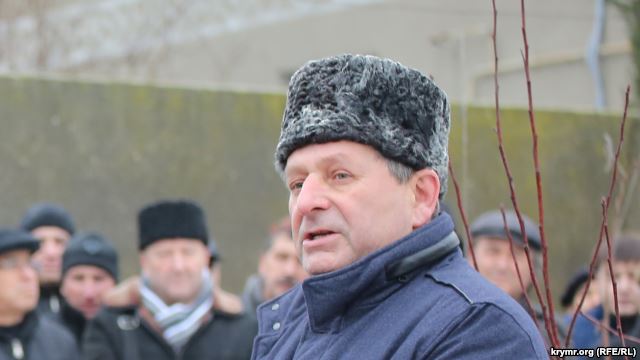
Ahtem Chiygoz, a member of the Mejlis of the Crimean Tatars who has spent the last year and a half in jail on trumped-up charges of "organizing rioting" and "destruction of property." Photo courtesy of 112 UA and RFE/RL
Ahtem Chiygoz, a member of the Mejlis of the Crimean Tatar People who has spent the last year and a half in jail on trumped-up charges of “organizing rioting” and “destruction of property.” Photo courtesy of 112 UA and RFE/RL. See the second article, below, for details

FADN Called on to Protect Ethnic Russians
Irina Nagornykh
Kommersant
July 27, 2016

Nine percent of Russian citizens feel they are discriminated against ethnically. In some regions, for example, Tuva, such citizens constitute as many as twenty-six percent, and they hail from the Russian-speaking population. These figures were arrived at by pollsters commissioned by the Federal Agency for Ethnic Affairs (FADN), Igor Barinov, the agency’s head, said yesterday at the Terra Scientia camp. Barinov promised to protect the ethnic Russian population in such regions, and said next year the agency planned to earmark 170 million rubles [approx. 2.3 million euros] on grants for projects in the field of interethnic relations.

Barinov cited the results of a сlassified Georating survey conducted by the Public Opinion Foundation (FOM) while speaking to young people at the Terra Scientia Russian Education Youth Forum on the Klyazma River on the last day of a session that brought together young experts in the field of interethnic relations. According to Barinov, the poll was conducted in June at the FADN’s behest. Pollsters discovered that, on average nationwide, nine percent of the population experienced ethnic discrimination. In certain regions, however, such as Karachay-Cherkessia and Tuva, the situation was more tense. In Tuva, twenty-six percent of citizens complained of ethnic discrimination.

According to Barinov, the number coincided with the number of Russian speakers resident in Tuva, which means we can assume it was this segment of the population who felt they were ethnically discriminated against. Barinov was asked who would protect the interests of ethnic Russians. According to some young people in the audience, ethnic Russian were not as well organized in defending their interests as other ethnic groups in Russia. Barinov cited the fact that 115 million ethnic Russians resided in the Russian Federation, which constituted eighty percent of the country’s population, and in places where the ethnic Russian population predominated, as in Central Russia, this assistance was social and economic in nature. But in regions like Karachay-Cherkessia and Tuva, he promised to protect ethnic Russians.

“We have the authority,” he stressed.

Responding to the same question, Magomedsalam Magomedov, who oversees ethnic relations in the presidential administration, said the “Russian people’s historical mission [was] to unite Russia’s ethnic groups,” and the outcome was the “emergence of a unique civilization whose national leader is President Vladimir Putin.”

“None of the ethnic groups in Russia can feel good if the Russian people feels bad,” concluded to Mr. Magomedov.

According to Barinov, next year the FADN plans to allocate around 170 million rubles on grants for projects in the field of ethnic relations.

“If everything is okay with the budget. We’re at the head of the Finance Ministry’s queue,” he added, reminding the audience that the FADN is awaiting the transfer of the part of the Federally Targeted Program for developing Crimea that concerns the rehabilitation of ethnic groups repressed during Soviet times.

Campers will receive several grants in the amounts of 300,000, 200,000, and 100,000 rubles to support existing interethnic policy projects in the country’s regions from the camp’s organizers: the Russian Federal Public Chamber, Rosmolodezh (Russian Federal Agency for Youth Affairs), and the presidential administration’s Office for Domestic Policy. Moreover, the FADN plans to summarized suggestions made by the campers on concepts for celebrating National Unity Day (November 4), including the brand Russian Braid, which would weave together all the peoples of Russia, comics about different ethnic groups on buses, video clips in airports, and the project Travel with Purpose, which would involve ethnic youth exchange tourism. Session participants plan to appeal to the present not to limit the celebrations to one day a war, but to declare an entire “year of national unity.”

Translated by the Russian Reader. Thanks to Sergey Abashin for the heads-up

________

Who Is Ahtem Chiygoz? The Story of a Crimean Tatar Political Prisoner
Ehor Vasylyev
112 UA
July 29, 2016

A Case That Will Last for Years
Ahtem Chiygoz was arrested on January 29, 2015, as part of the so-called February 26 case. That day he went to the State Investigative Committee in Crimea for questioning, and in the evening the illegitimate Kyiv District Court of Simferopol sentenced him to three months in police custody.

Chiygoz was charged under Article 212.1 of Criminal Code of the Russian Federation: organization of riots accompanied by violence and destruction of property.

Russia accuses activists of being involved in the “riots” on February 26, 2014, which arose near the Crimean parliament during two rallies, one held by the supporters of Ukraine’s territorial integrity , another, by activists of the party Russian Unity.

Since Chiygoz’s arrest, the Crimean courts have been periodically extending his time in police custody. (The last time it was extended until October 8, 2016.)

From March 8 to March 11, 2016, Chiygoz was a hostage: a so-called judge of the Crimean Supreme Court, Galina Redko, arbitrarily (extrajudicially) extended his time in jail.

In addition to Chiygoz, other Crimean Tatars have been charged with involvement in the “riots”: Ali Asanov, Mustafa Degermendzhi, Eskender Kantemirov, Arsene Yunusov, and Eskender Emirvaliev.

The first two have been in police custody for over a year. Another two men, Eskender Nebiev and Talat Yunusov, have already been convicted and sentenced to probation.

In February 2016, two years after the events, the court decided to re-investigate the case. Chiygoz, Asanov, and Degermendzhi were forced to remain in custody.

On July 20, the preliminary hearing began, but it was closed to the public. The Supreme Court of Crimea proposed to divide the case and try Chiygoz separately from the other defendants.

“There are 80 injured parties and witnesses: the case could drag on for years. The court usually questions one or two witnesses a day,” says one of Chiygoz’s lawyers, Emil Kurbedinov.

An Alien Land
Russian prosecutors accuse Ahtem Chiygoz of acts carried out in Ukraine by a Ukrainian citizen against other Ukrainian citizens. Russian prosecutors have prosecuted only Crimean Tatars.

The prosecution is trying to assert the right of the Russian justice system to react to the February 26 rally, which was allegedly directed against Russian interests. The prosecutor general says Russian Unity had a special permit for holding a rally, while the Mejlis did not have such a document.

In addition to violence during the riots, Chiygoz is accused of destruction of property.

“Unidentified Crimean Tatars rushed into the Crimean Parliament, damaged and destroyed its property in the amount of 9,730 rubles,” claims one of the court documents. However, a few hours after the incident, armed Russians occupied the Crimean Parliament and also damaged property.

Why Chiygoz?
“Ahtem Chiygoz at first took a moderately radical position. The prosecutor’s office called him a man ‘in charge of the Mejlis power bloc.’ In winter 2014, he openly expressed the quite radical position that we should not recognize anything,” noted First Deputy Chairman of the Mejlis Nariman Jalal.

In fact, Chiygoz’s position coincides with the opinion of Ilmi Umerov, who is known as an experienced, fairly moderate politician. Ilmi Umerov is quite close to Chiygoz. They both belong to the Bakhchisarai wing of the Mejlis.

“In 2014, we organized many pickets, along the roads, near the military units. Ahtem was actively involved in organizing these events,” says Umerov.

Chiygoz was warned about avoiding “extremist activity,” and some people even complained about him to the Russian FSB. However, Chiygoz did not stop his work, and a month before his arrest, he attended a meeting between Crimean leaders Mustafa Dzhemilev and Refat Chubarov and Ukrainian President Poroshenko.

In 2014, the two Crimean Tatar leaders, Dzhemilev and Chubarov, were not allowed entry to Crimea.

“Chubarov had five deputies, and Ahtem was the main one,” Umerov explains.

Dzhemilev and Chubarov were refused entry to Crimea as a part of a Russian plan. The Mejlis should be headed by a collaborator. Ahtem Chiygoz was the main obstacle to implementing this plan.

“The Russians believed that Chiygoz encouraged them to rebel. That was why they decided to remove him. At the same time, Chiygoz has been a ‘show’ victim: do not stick your heads out, otherwise your fate will be the same,” stresses Nariman Jalal.

But the plans to co-opt the Mejlis have failed.

“It was a miscalculation. They thought Chiygoz was a kind of central link. They failed to realize the majority of the members of the Mejlis took the same position as Chiygoz; they did not want to be co-opted,” adds the First Deputy Chairman of the Mejlis.

Chiygoz called upon all Crimean Tatars to harshly boycott compatriots who collaborated with the occupying power.

“Different challenges have befallen our people. And we deal with them with honor! No one can break us with prisons or camps! We are not afraid of searches and arrests! We cannot be fooled by puppets! Crimea will never be without the Crimean Tatars,” Chiygoz has written from prison.

And his name is etched in gold in the history of Crimea.

The original of this article was published, in Russian, by Ukrainska Pravda. I have lightly edited the heavily abridged English translation, above, to make it more readable. TRR

The Prosecutor General’s Speech

Crimean Prosecutor General Natalia Poklonskaya, arguing before the Crimean Supreme Court today, April 26, 2016, on why the Mejlis of the Crimean Tatar People should be declared an extremist organization and banned in the Russian Federation.

Crimean Prosecutor Natalia Poklonskaya
Crimean Prosecutor General Natalia Poklonskaya. Photo courtesy of Novaya Gazeta

“The Mejlis receives protection and support from international terrorist organizations,” she said. “It is no coincidence that such organizations, which are banned in Russia, as the Gray Wolves, who killed Russian pilot Oleg Peshkov in Syria, and Hizb ut-Tahrir have spoken out in support of the Mejlis.”

According to Poklonskaya, Mejlis leader Refat Chubarov “has not ceased [his] extremist activities even during proceedings on banning the organization, but on the contrary has continued work aimed at violating Russia’s territorial integrity, participating in the formation of the volunteer Crimean Tatar battalion Asker, whose goal is to tear Crimea away from Russia.”

“Today, may it please the court to hear, we are building a world in which every Crimean will live safely and happily, where roses will bloom and grapes grow,” said Poklonskaya. “The Mejlis is trying with all its might to prevent this. Why do we need this Mejlis?”

Finally, the prosecutor quoted from St. John of Kronstadt.

“If we gather everyone’s will into one will, we will stand our ground! If we gather everyone’s conscience into one conscience, we will stand our ground! If we gather everyone’s love for Russia into one love, we will stand our ground!”

Source: Novaya Gazeta

_________

The Mejlis was labeled an “extremist organization” and subsequently banned by the Crimean Supreme Court on April 26, 2016. According to Regional Prosecutor General Natalia Poklonskaya, it was banned because its leaders had sought to destabilize Crimea since the 2014 annexation of Crimea by Russia through the “promotion of aggression and hatred towards Russia, inciting ethnic nationalism and extremism in society.” Also on April 26, 2016, the Council of Europe’s Commissioner for Human Rights, Nils Muižnieks, urged the court to reverse the ban since he believed “equating [the Mejlis] with extremism paves the way for the stigmatization and discrimination of a significant part of the Crimean Tatar community and sends a negative message to that community as a whole.” Exiled in mainland Ukraine, the Chairman of the Mejlis, Refat Chubarov, stated the court’s decision was unjustifiable and that “the occupiers in Crimea are doing everything to crush the Crimean Tatars and force everyone to be silent.” Amnesty International stated the ban “demolishes one of the few remaining rights of a minority that Russia must protect instead of persecute.” The Deputy Chairman of the Mejlis, Nariman Dzhelal, vowed the organization would try to continue its work despite the ban, “it will continue working in Ukraine and other countries.”

Source: Wikipedia (slightly adapted for readability)

Deportation of Crimean Tatars Remembered in Petersburg

Deportation of Crimean Tatars Remembered in Petersburg
David Frenkel
Special to The Russian Reader
May 20, 2015

On May 19, Petersburg democracy activists commemorated the Soviet Stalinist government’s mass deportation of Crimean Tartars on May 18, 1944. Activists held a series of solo pickets on Nevsky Prospect before gathering for an evening event at Open Space, a co-working venue run by the organization St. Petersburg Election Observers.

Several activists, including Vsevolod Nechayev, leader of the Democratic Petersburg coalition, Andrey Zyrkunov of the liberal-democratic party Yabloko, and Igor “Stepanych” Andreyev, a famous local activist, took to the city’s main street with placards calling on fellow citizens to remember the anniversary of the deportation and blaming the current Russian authorities for preventing commemorations in Crimea itself.

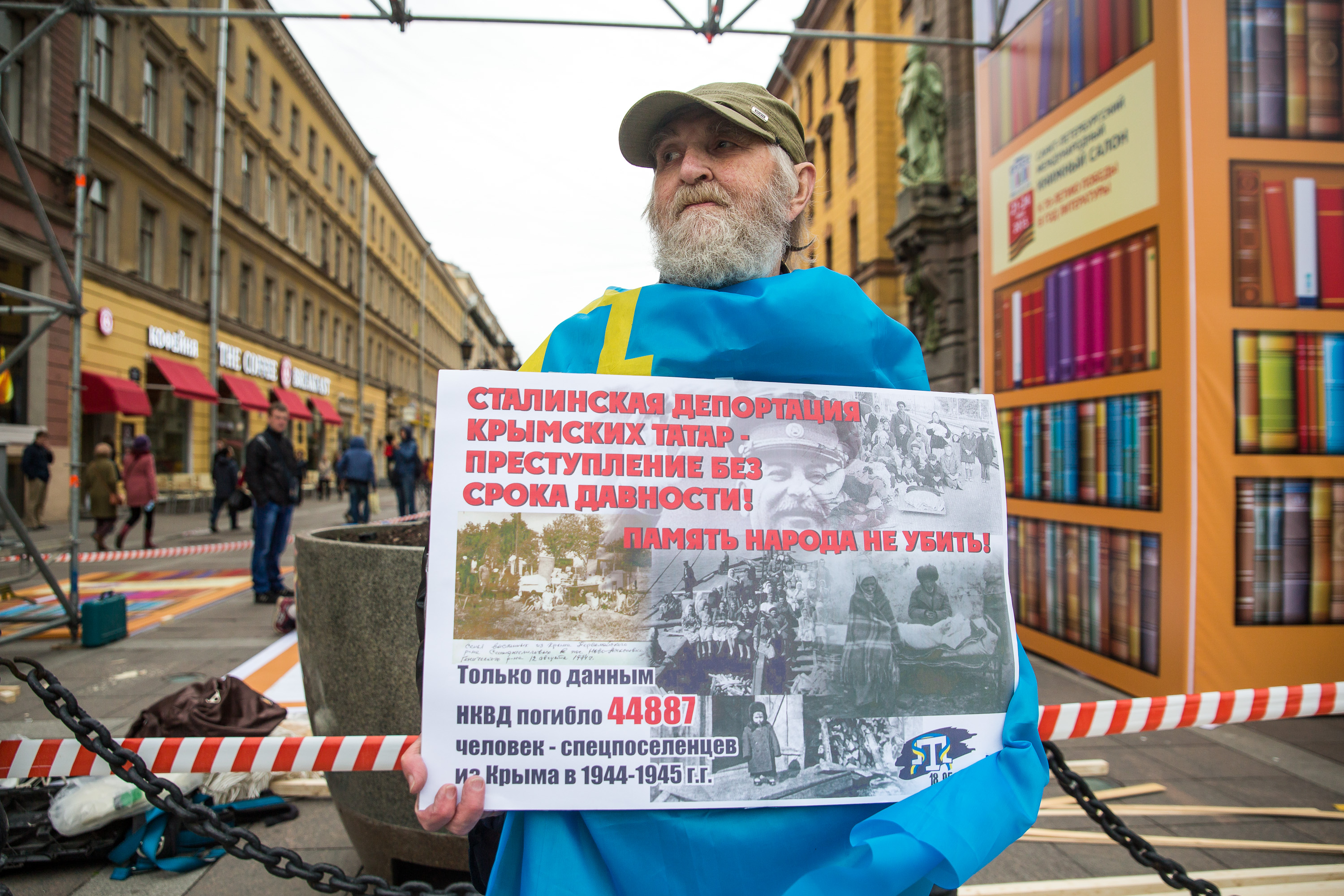
IMG_8818Local activist Igor “Stepanych” Andreyev picketing on Nevsky Prospect, May 19, 2015. His placard reads, “Stalin’s deportation of the Crimean Tatars is a crime with no statute of limitations! A people’s memory cannot be murdered! Even according to the NKVD’s statistics, 44,887 deportees from Crimea died in 1944–1945.”

Apparently inured to pickets and demonstrations of various kinds, passersby mostly exhibited indifference. A couple of young men attempted to harass the protesters, but most passersby merely glanced at the picketers before continuing on their way.

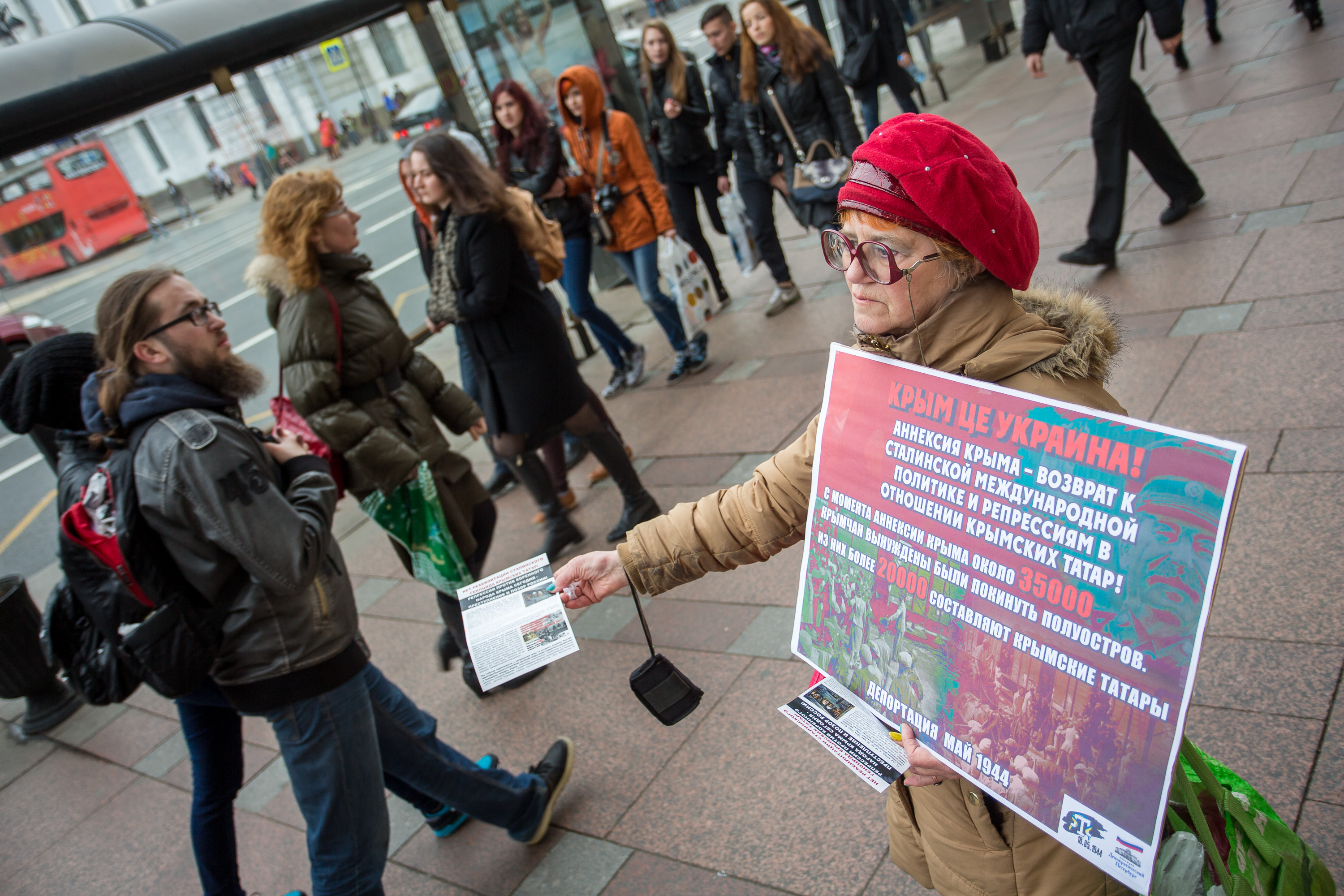
IMG_8836Picketer handing out leaflets on Nevsky Prospect, May 19, 2015

In the evening, activists gathered at Open Space to continue their commemorations. Alexandra Krylenkova, leader of St. Petersburg Election Observers, is field coordinator of the Crimean Field Mission on Human Rights.

Activists viewed a documentary film about the deportation and chatted with Asan Mumdzhi, a member of the Crimean Tatar community in Petersburg.

They also talked via Skype with Zair Smedlya, head of the Qurultay of the Crimean Tatar People. Smedlya described the current situation in the Crimea. Police arrest protesters en masse even at authorized protests and auto rallies, but generally the authorities refuse to grant permission to hold such events.

“The same old story,” muttered someone in the audience.

The current Crimean authorities have tried to turn the commemoration of the 1944 deportation into a celebration of the fact that President Putin signed a decree “rehabilitating” the Crimean Tatars on April 21 of this year.

Mumdzhi compared this to Jews being “rehabilitated” by Germans.

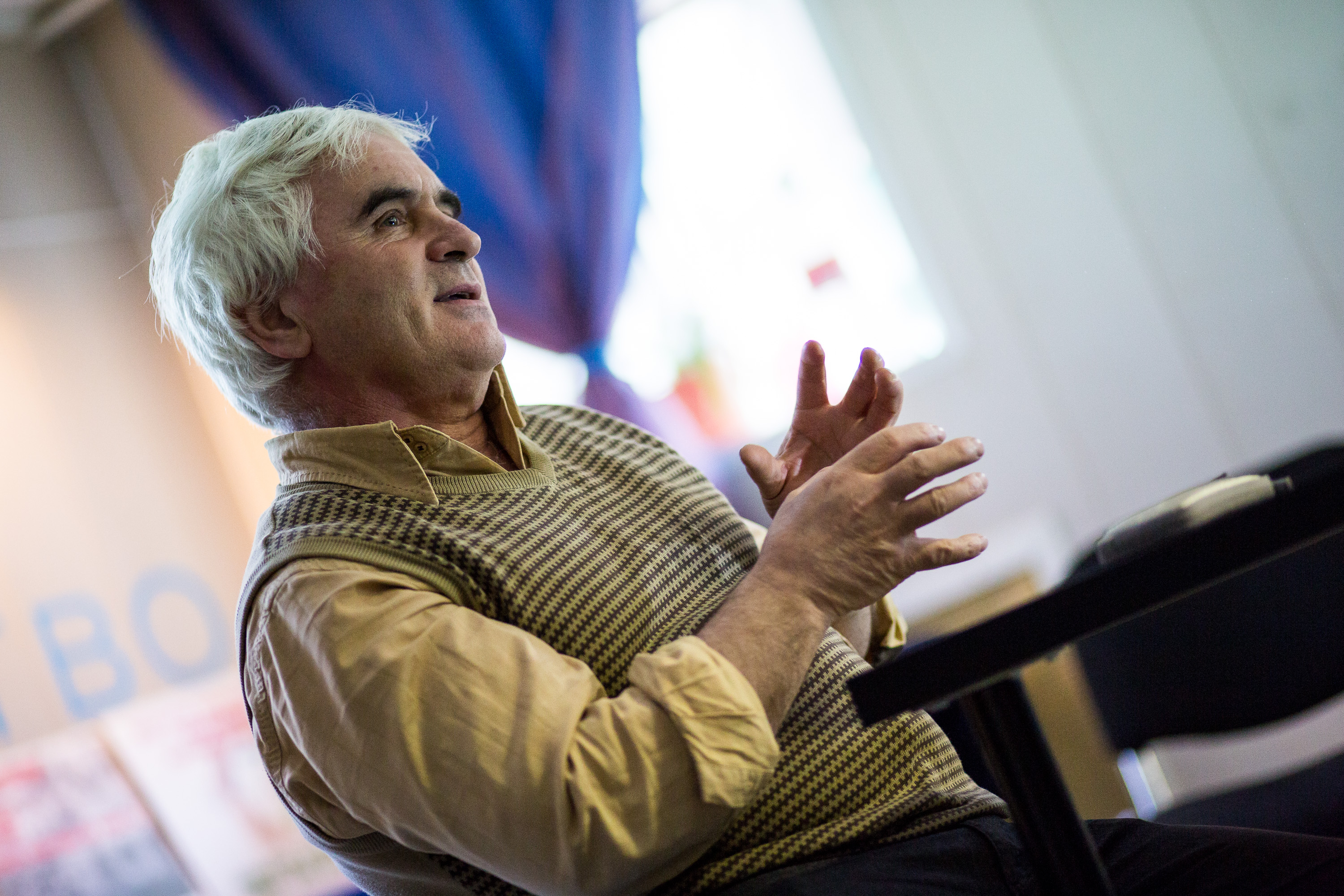
IMG_8905Asan Mumdzhi

Smedlya also claimed that people had been arrested for carrying Ukrainian flags, which is not illegal.

“Crimean policemen didn’t know the Ukrainian laws. Now they do not know the Russian laws,” Smedlya quipped.

The gathering ended with a screening of the Crimean Tatar-language film Haytarma, which tells the story of the highly decorated Soviet fighter pilot Amet-khan Sultan, who accidentally witnessed the deportation and managed to keep his family in Crimea.

 All photographs by and courtesy of David Frenkel

Fish Fingers All in a Line

fishstick8

To all the Crimea-is-oursians out there and their fellow travelers in the “we won’t give back Crimea even after Putin goes” camp (e.g., Navalny and other members of the opposition) and their apologists in “the West,” just read the article I have linked to, below, as an April Fool’s joke.

It couldn’t be real, could it? I mean, because after the “return to home port” was accomplished, everything in Crimea has been just PEACHY! Hasn’t it?

And entre nous, the “Crimean Tatars,” who are they anyway? They sound like something you would slather on your fish fingers, not a real people with real rights.

Sorry for the interruption: you can go back to feeling smug about being real white people.

____________________

____________________

Anton Shekhovtsov
March 29, 2015

Speaking about the motives of the Russian-Ukrainian war, the author [of the article “Why did we ‘surrender’ Crimea?”; here, in Russian] makes a common mistake: she deems the Putin regime ideological, as indicated by the fact she mentions ideas of the “Russian world” as a motivation for annexing Crimea and the subsequent aggression.

In reality, however, the Putin regime is a right-wing authoritarian kleptocracy. By default, its kleptocratic essence already presumes the absence of any underlying ideology. This is not to say that the regime’s elite does not espouse any ideas. It does. These ideas include anti-Americanism, anti-Westernism, and anti-liberalism. However, all these ideas are negative (anti-), and even in their totality they do not produce anything that could be called an ideology, i.e., a positive system of beliefs.

However, the authoritarian nature of the Putin regime already highlights the fact that the regime may utilize discrete ideological elements in those cases when it is necessary to consolidate power. The regime instrumetnalizes elements of conservatism and Russian nationalism (the “Russian world”) and antagonistic imperialisms and plants them in Russian society to mobilize it and consolidate the kleptocracy. But these elements of real ideologies are not directly related to the nature of the regime. In other words, “Russian worlds,” “traditional values,” and “our grandfathers fought fascism” are fairy tales for the poor.

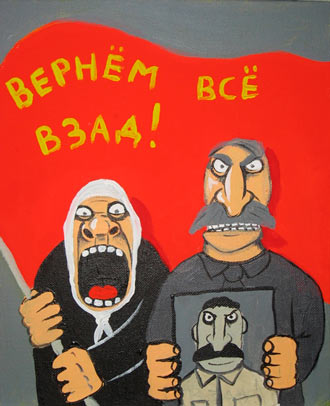
1209
Vasya Lozhkin, “We’ll Bring It All Back!”

However many Ukrainophobes there are in Russia and among the Putinist elite, the destruction of Ukraine as a state is not an end in itself for the Putin regime. The Russian kleptocracy needs the Russian-Ukrainian war only to maintain its hold on power in Russia.

Source: Facebook. Translated by the Russian Reader. Cartoon courtesy of Vasya Lozhkin’s LiveJournal blog

“Return to Home Port”

KRYMFASH
Ayder Muzhdabaev
March 12, 2015

The other day, colleagues from several foreign media asked me to help them find ordinary people in Crimea willing to talk on camera about what their lives were like a year after Krymnash [Russia’s annexation of the peninsula].

Just about their lives, not about politics.

With Muscovite ease, I promised to help them out. And…

…it was not just that none of my many relatives and friends (except journalists) were willing to appear on TV, NO ONE even wanted to meet off the record with foreigners.

Their first argument was that foreigners would be followed, and at best a person who met with them would be dragged into the FSB for questioning, and at worst … You never know what.

Given that, over the past year, nine Crimean Tatars have disappeared without a trace, one was brutally murdered after being abducted, several people have been deported, several have been placed under arrest, and hundreds have been sentenced to hefty fines, I did not even bother trying to change their minds.

Such is the brownness that Russia has installed in Crimea.

Be proud if you like.

Source: Facebook

Ayder Muzhdabaev is deputy chief editor at Moskovsky Komsomolets newspaper.

__________________

natalya kokorinJournalist Natalya Kokorin

Dmytro Gnap
March 13, 2015

Two hours ago, the FSB detained our colleague Natalya Kokorin, a journalist for Slіdstvo.Іnfo and the Center for Journalistic Investigations. Intelligent and beautiful, Natasha has written many investigative reports about the redistribution of Crimean property, corruption, gangsters in power, and the Russian occupation. She and her colleagues have had to do many of their articles almost clandestinely. Today, the authorities began a search at her parents’ house when Natalya arrived there, and four FSB officers took her to their headquarters. The “Russian World” has quickly achieved victory in Crimea. A journalist who exposes the regime is a real threat to the federal and local ghouls. We are waiting for news from her lawyer and ask that you repost this.

Source: Facebook

__________________

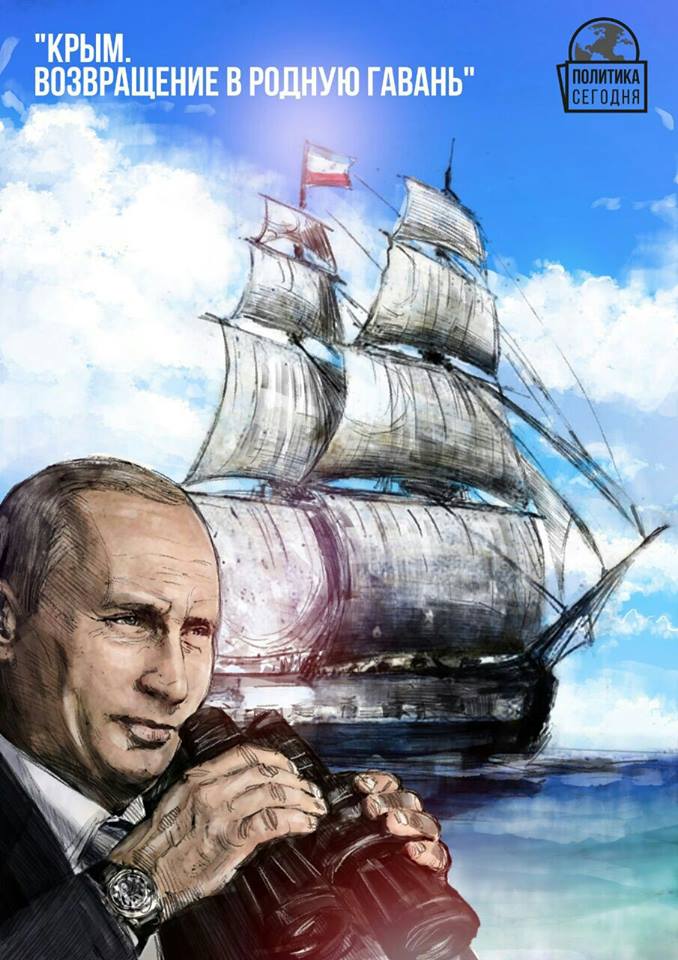
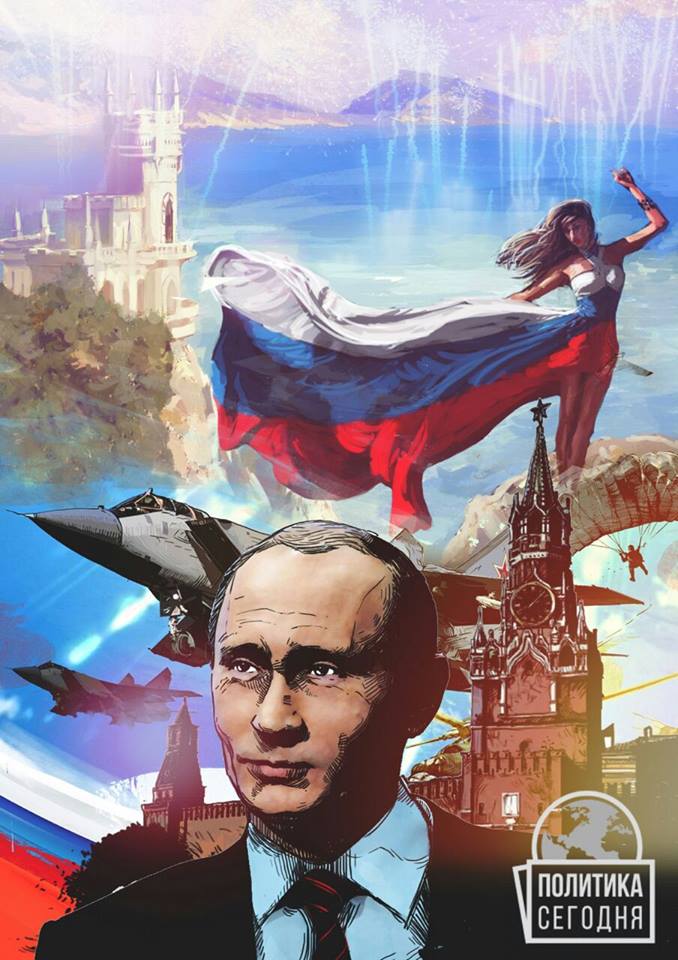
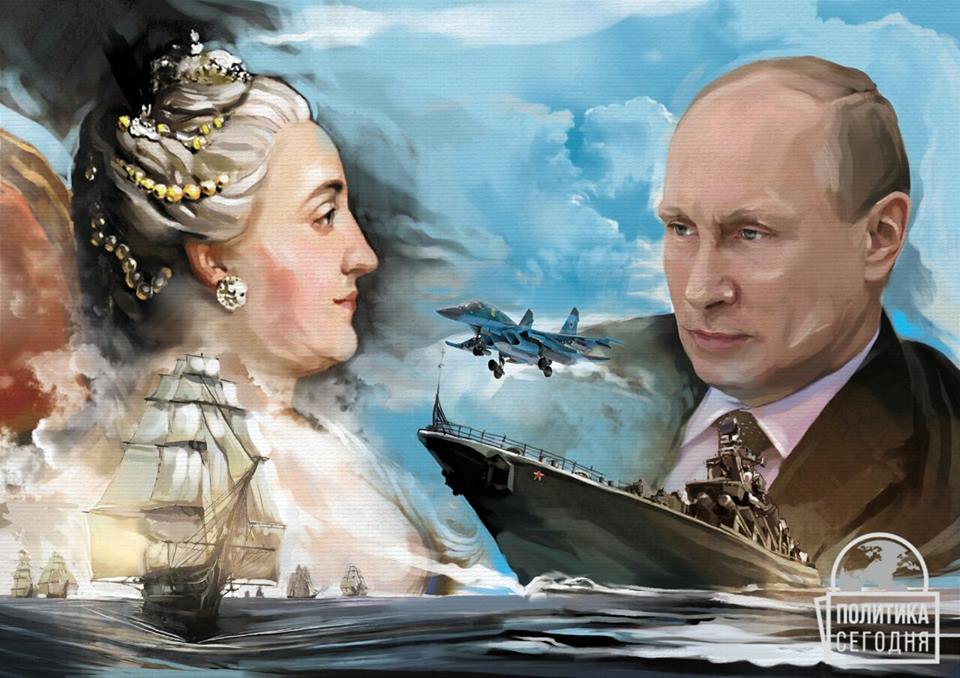
Anti-Maidan presents the exhibition Crimea: Return to Home Port

crimea-putinOn March 16 at 1:00 p.m. in Moscow, an exhibition of graphic art, Crimea: Return to Home Part, will open with support from the Anti-Maidan Movement and the Russian Bear Movement. The exhibition is dedicated to the anniversary of the referendum in which the residents of Crimea voted to join the Russian Federation.

crimea-putin-2The exposition in Novopushkinsky Square will feature about fifty works by patriotic cartoonists and graphic designers from the group Politics Today. The exhibition will send visitors back to the memorable events of the Russian Spring in Crimea. The work that will be presented at the exhibition are produced in the graphic design style [sic].

Members of the Night Wolves national motorcycle club and Julia Berezikova, co-chair of the Anti-Maidan Movement, will attend the event.

crimea-putin-3The exhibition will be held March 16 from 1 to 6 p.m. Admission is free.

Location and time: 1:00 p.m., Novopushkinsky Square, Moscow

Contacts: +7 926 430 2454 (Grigory)

Source: Emailed press release (courtesy of Comrade SC)