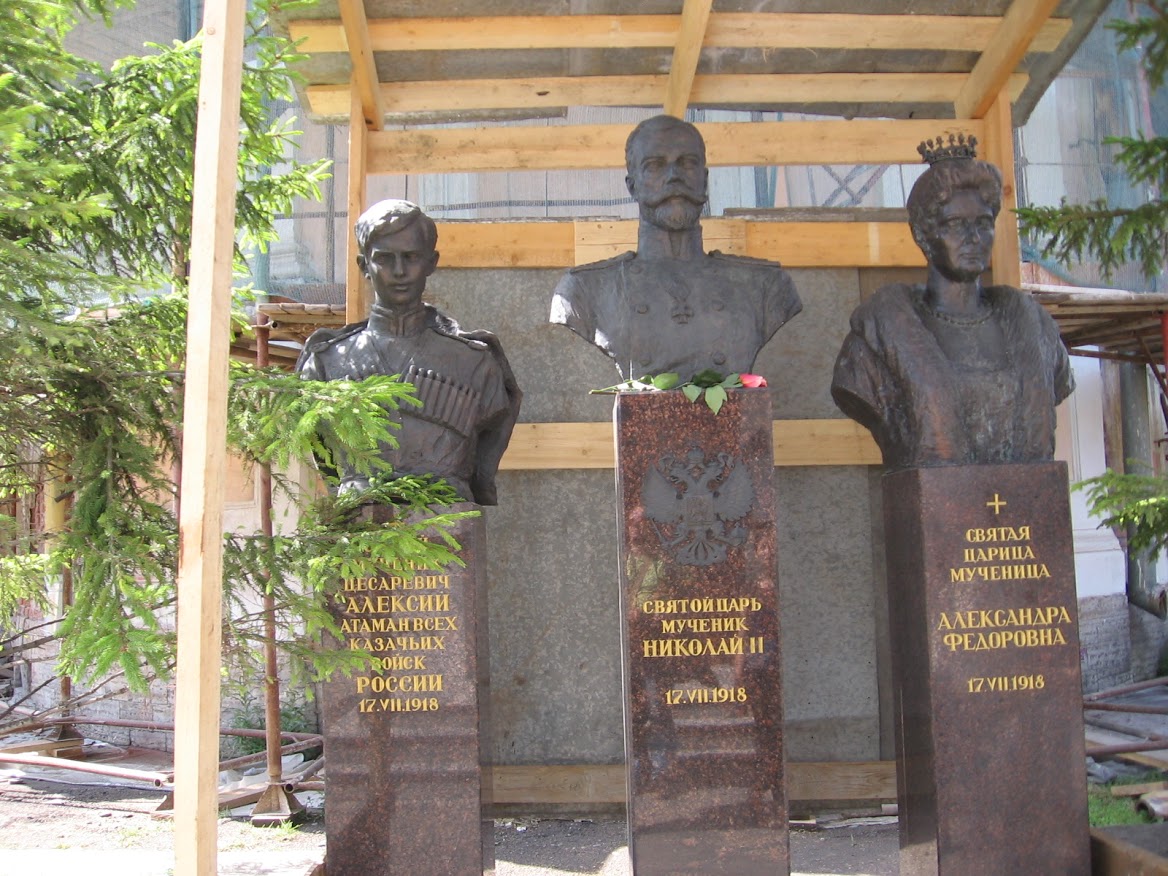
Monuments to the Holy Martyrs Tsarevich Alexei, Tsar Nicholas II and Tsarina Alexandra. Our Lady of Tikhvin Church, 128a Ligovsky Avenue, Petersburg, 19 July 2015. Photo by the Russian Reader.
The Great October Conspiracy Conspiracy theories were as useful in 1917 as they are one hundred years later
Fyodor Krasheninnikov Vedomosti
October 31, 2017
A hundred years ago, Russia stood on the treshold of the Bolshevik coup and the subsequent long-term dictatorship of the Communist Party. How did it happen that society could summon up no forces to stop it?
If you believe conspiracy theorists, in 1917, the forces of darkness managed twice in a single year, in February and October, to pull off the same trick: to hatch a plot and overthrow the existing regime. This take on what happened a hundred years ago has become all but official, and on the anniversary of the Bolshevik coup we will be treated to it again and again.
The story of German agents plotting against Russia was dreamt up a hundred years ago. After the July Days of 1917, a brief revolt in Petrograd against the Provisional Government, an idea emerged in the depths of the counterintelligence service, which had been disfigured by revolutionary purges. The Bolsheviks would be declared German intelligence agents, society would be incited against them, and counterintelligence could take the gloves off. Yet no serious evidence of the charges was presented, and consequently the attempt to save the crumbling Kerensky regime by telling a lie dealt a blow to the regime itself.
After the Bolsheviks came to power and did everything they did, the story about German spies took on a life of its own, eventually fusing with the monarchist theory that Freemasons had organized the February Revolution.
Conspiracy theories are equally useful to the authorities in 1917 and in 2017 for an obvious reason: it lets them off the hook for the state of the nation. Economic downturns, foreign policy failures, and popular discontent are all ascribed to outside forces and their domestic agents. When they turn the talk to spies and conspiraces, the powers that be make their lives easier, for inflating spy mania, and encouraging people to tighten their belts and rally round the current regime, whatever it is like, is much simpler than improving the economic and sociopolitical circumstances at home and thereby raising the popularity of the regime itself.
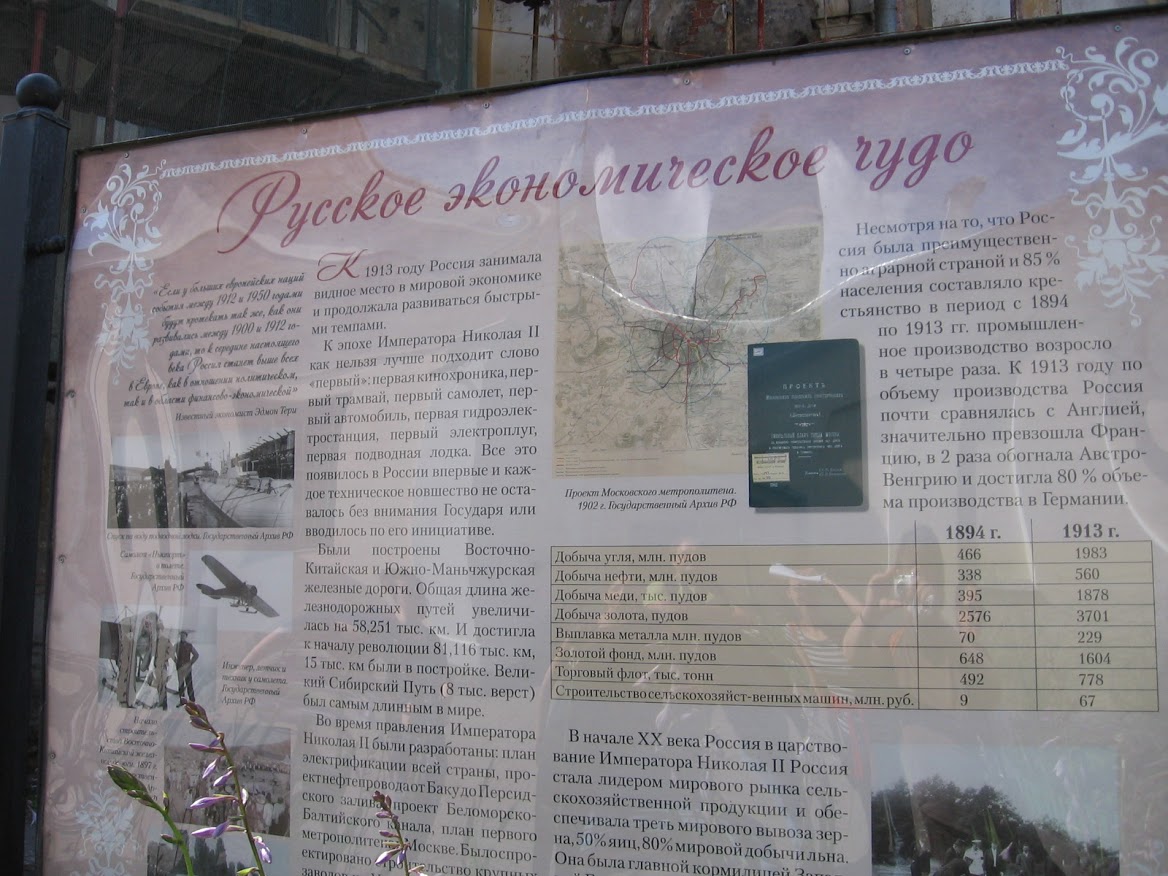
“The Russian Economic Miracle.” A stand purporting to prove that all was well with the Russian Empire on the eve of the First World War and the Revolutions of 1917. Our Lady of Tikhvin Church, 128a Ligovsky Avenue, Petersburg, 19 July 2015. Photo by the Russian Reader
The main lesson to be drawn from a thoughtful reflection on the events of 1917 is that the government is primarily to blame for revolutions and coups, because it generates the prerequisites for its successful overthrow. We can endlessly mourn the last tsar and his family, but the truth is that it was Nicholas II who brought things to the point where a huge empire collapsed in a matter of days for the most ridiculous reason, and the institution of the monarchy proved incapable of mobilizing its potential supporters to defend, if not the overthrown tsar himself, then at least the Romanov dynasty and the monarchical system.
By hemming and hawing, and proving incapable either of solving the most urgent economic problems or holding elections to the Constituent Assembly until state power had utterly collapsed, the Provisional Government did its all to pave the way for the Bolsheviks and their sympathizers to seize power.
No conspiracy hatched by agents could have led to the seizure of power in the vast country if the program and slogans of the Bolsheviks had not been popular, and they themselves had not been regarded as a force capable of introducing at least minimal order, launching urgent social reforms, and finally holding elections to the Constituent Assembly.
We now know that the Bolsheviks deceived the workers, peasants, and soldiers, while also failing to bring the country social justice, peace or prosperity. But as we look back a hundred years, we must judge the circumustances not from the perspective of what we know nowadays, but from the viewpoint of contemporaries of those events, who saw only growing chaos on all sides and took seriously the promises made by the Bolsheviks.
Fortunately, there is no war [sic], no “land question,” and nothing like the Bolshevik Party, with its radical leftist platform and readiness for violence nowadays, so direct comparisons are completely out of place. But attempts by the current regime to chalk up all its failures and all dissatisfaction with it to the baleful endeavors of foreign agents and fabled Russophobes do, indeed, evoke the saddest comparisons with the past.
Fyodor Krasheninnikov is a political scientist based in Yekaterinburg. Translated by the Russian Reader
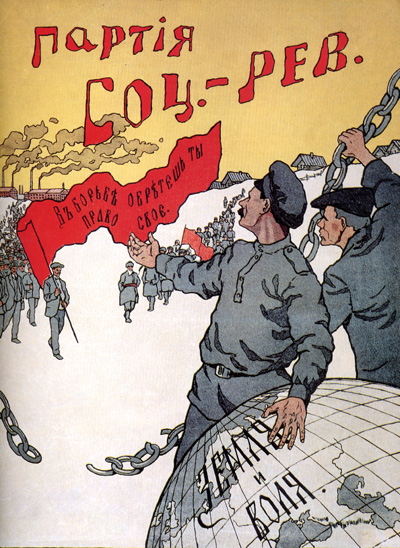
Socialist Revolutionary election poster, 1917. “Party of the Socialist Revolutionaries. Through struggle you will attain your rights. Land and freedom.” Courtesy of Wikimedia
The SR Alternative
Yaroslav Shimov Radio Svoboda
March 8, 2017
“On the morning of February 23, the workers who had reported to the factories and shops of the Vyborg District gradually downed tools and took to the streets in crowds, thus voicing their protest and discontent over bread shortages, which had been particularly acutely felt in the above-named factory district, where, according to local police, many had not had any bread whatsoever in recent days.”
Thus read a report by agents of the Okhrana on the first day of a revolution that forever changed Russia, February 23, 1917 (March 8, New Style).
Revolutionary events such as the unrest in Petrograd, which the bewildered tsarist regime failed to put down, Nicholas II’s abdication on March 2 (15) at Dno Station near Pskov, and the establishment of the Provisional Government were recalled by contemporaries as happening so swiftly that they were unable to understand where Russia was headed so wildly and who would ultimately benefit from the changes. In February 1917, no one would have predicted that less than year later the Bolsheviks, a radical faction of the Social Democrats who had been on the sidelines of Russian politics, would emerge victorious, and Bolshevik leaders themselves were no exception in this regard.
But an enormous thirst for social justice was apparent from the revolution’s outset. Russia had emerged a quite leftist country. In the stormy months following the monarchy’s fall, it transpired that a definite majority of the country’s citizens sympathized with socialist ideas in one form or another. This was reflected in the outcome of the first free elections in Russian history, which took place in the autumn, when the chaos and anarchy on the war front and the home front were obvious. The newly elected Constituent Assembly was meant to define the country’s future. The Socialist Revolutionaries (SRs), a party that had consistently, albeit violently and bloodily, waged war against the Romanov Dynasty, but in 1917 had favored peaceful but radical reforms, primarily land reforms, scored a convincing victory in the elections.
Soldiers who had gone over to the revolution and armed city dwellers on the streets of Petrograd, 1917
If the country had managed to slip past the threat of dictatorship, issuing from the left (the Bolsheviks) and from the right (radical counter-revolutonaries), the SRs would definitely have been post-revolutionary Russia’s ruling party for a time, argues Konstantin Morozov, a professor in the Institute of Social Sciences at RANEPA and convener of a permanent seminar, Leftists in Russia: History and Public Memory. In an interview with Radio Svoboda, he reflects on why this did not happen and what the SR alternative would have meant to Russia.
*****
What was the condition of the Socialist Revolutionary Party in February 1917?
I would say the the party was then in a state of organization disarray. A considerable part of its prominent leaders was abroad, while the other part was in prison, exile, and penal servitude. It had to be rebuilt from scratch, and it was the SRs who had withdrawn from revolutionary work in 1905–07 but who basically returned to the party in 1917 who mainly engaged in the rebuilding. It was they who organized all the party’s new cells. There were also serious problems among the SRs in terms of internal rifts, especially due to differing viewpoints on the war. In March, the SRs began to rebuild themselves as a single party, which was implemented subsequently at the party’s 3rd Congress in May and June. In my view, this was a mistake, because the disagreements within the party were such that it could not function, manage itself, and take decisions as a united party. A factional struggle immediately ensued. Accordingly, it ended in collapse and the inability to hew to a single internal party policy in 1917.
Due to the first phase of their history, the SRs are associated in the popular imagination with violence and terrorism, which they had long renounced by 1917. What were the views of the SRs and the leaders on violence as a principle of political struggle? The baggage of their terrorist pasts still haunted Viktor Chernov and other party leaders, after all. How did they view it in 1917?
The Socialist Revolutionary Party discussed the question of terrorism throughout its existence. At first, such figures as Mikhail Gots and Viktor Chernov, who advocated he inclusion of terror in the party’s tactics, had the upper hand. But even then the SRs included people who advocated a popular, mass-based party, who favored propaganda and agitation among the peasantry and proletariat rather than focusing on terror. Their ideal was a grassroots socialist party, something like the Second International’s exemplary party, the German Social Democracy. It went from bad to worse. During the 1905 Revolution, the party’s grassroots combat squads were keen on practicing expropriation and many other things that party leaders dubbed “revolutionary hooliganism.” But after 1909–11, in the aftermath of Evno Azef‘s exposure, the voices of those SRs who had argued for giving up terrorism grew ever stronger. By February 1917, there was no longer any talk of terror. The last terrorist act carried out by SRs had taken place in 1911, after which they basically ceased engaging in terrorism. Terrorist sentiments in the Socialist Revolutionary Party were resurrected only in the wake of October 1917, especially after the Bolsheviks forcibly disbanded the Constituent Assembly. Even then, however, the greater number of SR leaders were against engaging in terrorism against the Bolsheviks. These SR leaders argued that first they had to get the grassroots on their side using the methods of a popular political party.
In his memoirs, Boris Savinkov quotes his friend Ivan Kalyayev, a member of the SR Combat Organization who killed the Grand Duke Sergei Alexandrovich. Kalyayev said that an SR without a bomb was not an SR. In reality, however, the majority of SRs were not involved in terrorism, and they would have disagreed with Kalyayev’s statement. It can be argued that use of terrorist tactics dealt a huge blow to the Socialist Revolutionaries who wanted the party to be a grassroots socialist party, a party that could carry out the will of Russia’s “triune working class” (in which the SRs included the proletariat, the working peasantry, and the working intelligentsia), and a party that proposed an evolutionary and democratic path to progress. Essentially, the SRs were not terrorists, of course. They had more or less given up terrorism in 1911. What mattered politically was that they were able to propose a program, both agrarian and federalist, that excited the sympathies of millions of people. By the autumn of 1917, the Socialist Revolutionary Party had more than a million members, while the Bolsheviks had only 350,000 members. Most important, the SRs won the elections to the Constituent Assembly, taking 41% of the vote.
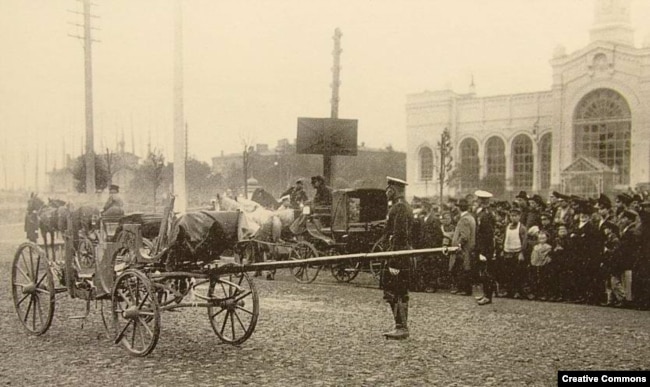
SR terrorism in the early 20th century: the carriage of Interior Minister Vyacheslav Pleve, killed on July 15 (28), 1904, in St. Petersburg
So 1917 was the heyday for the SRs: they had a million members, and they won the elections to the Constituent Assembly. Why, ultimately, were they unable to take advantage of this? How did it happen that the SRs, despite their popularity, ceded power to the Bolsheviks later as well, despite attempts to the contrary? What predetermined their failure?
There are two sets of causes, objective and subjective, meaning, the mistakes made by the SRs themselves. What I think is fundamentally important is that it is extremely difficult to campaign for democratic reforms while a world war is underway. The fact that the Revolution took place during the First World War considerably predetermined the entire subsequent course of events. What is a world war? On the one hand, it involves a collapse in living standards and a aggravation of all the contradictions that have been accumulating in society over decades. On the other hand, it involves millions of people getting used to killing other people. This causes quite serious psychological changes. Extreme cruelty is combined with societal expectations pushed to the limit. These expectations had amassed to such an extent that in 1917 very many people wanted everything right away. Say, workers were no longer satisfied they had trade unions that the selfsame socialists would meet halfway. The workers wanted more. They wanted control and management of the factories. Practically, the Mensheviks and SRs could not take this step, because it would have led to serious industrial management issues. And the peasants wanted the land right away.
Here we turn to the mistakes made by the Socialist Revolutionaries. It was wrong to delay the convocation of the Constituent Assembly. Rather, it was wrong to go along with the liberals in the Provisional Government, the Kadets, who tried to postpone the Constituent Assembly any way they could. The liberals realized the leftist parties were stronger. They would have an outright majority in the Constituent Assembly, and consequently the peasantry and proletariat would get much of what they had been demanding. So the Kadets postponed the Constituent Assembly. That was a big, serious mistake.
Did the subjective factor play a role in the fact that the SRs failed? Let’s take a closer look. On the one hand, they were a party who styled themselves as the party of “land and freedom.” They were supported by the peasants. On the other hand, most SR leaders were members of the urban intelligentsia, not the salt of the earth. Did this contradiction factor in the SR electoral victory, but one in which their supporters were unwilling to secure their political power?
It was a lot more interesting than that. The program for socializing land ownership, advocated by the SRs, did not fall out of the sky. It was the outcome of quite serious work on the part of Populist economists and sociologists. It was revenge, if you like, for the failure of the “going to the people” campaign of 1874. In the aftermath, Populist economists, sociologists, and statisticians undertook a serious study of how peasants really lived. Within twenty or thirty years, they had figured out how the Russian peasantry really lived and what it wanted. The SRs based their own land socialization program on this research. Moreover, the SRs tended not to act like typical Russian intelligentsia, who often preferred philosophizing and imposing their own values on others. The SRs always tried to maintain feedback from the peasantry. I came across a quite curious document, a survey of sorts, which the SR Central Committee sent out in 1906 or 1907 to their local organizations, who were supposed to conduct this sociological survey, which asked peasants about their attitudes towards the regime, the army, and the clergy, and what they thought about the land, and how it should be distributed and managed. So it was no wonder the Socialist Revolutionary Party and their program, crafted over many years and through the efforts of many people, were seen by the peasants as their party and their program. On the other hand, there was a fairly powerful peasant lobby in the Socialist Revolutionary Party. The grassroots level of party activists and functionaries consisted of the so-called popular intelligentsia: physician’s assistants, schoolteachers, agronomists, surveyors, and foresters.
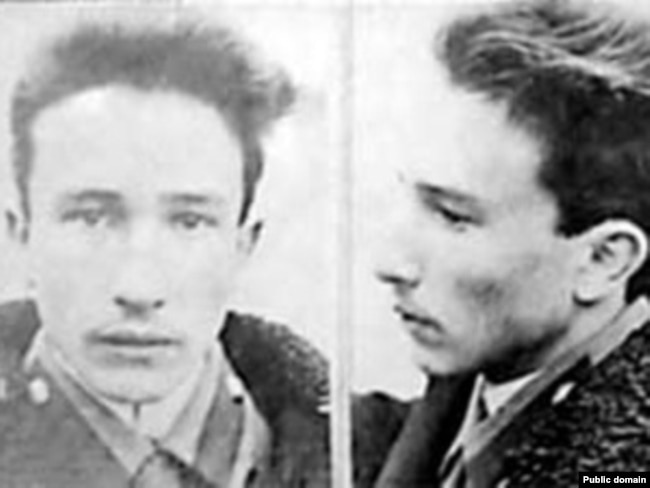
One of the most prominent SRs, Boris Savinkov, in his youth. Photos from his police file
The problem was that the SRs did not fully take the peasantry’s interests into account in 1917. The revolutionary authorities were afraid to cede land to the peasants, because, on the one hand, the army’s quartermasters argued that the supply of provisions to the army would immediately collapse. On the other hand, there were fears that the rank-and-file soldiers, who were actually peasants dressed in greatcoats, would immediately desert the front and run home. Later, at the party’s Fourth Congress, Yevgeniya Ratner, a member of the SR Central Committee, put it quite aptly. She said that for the war’s sake, for the front’s sake, they were forced into compromises with the bourgeois parties and thus were unable to defend the class interests of the peasantry and workers, and this was their huge guilt in the face of history. According to Ratner, they should have convoked the Constituent Assembly two or three month earlier, i.e., in August or September 1917, and set out to implement agrarian reforms. We should point out that some of the SRs had wanted to do this: Chernov, for example, insisted on it. There were ideas for forming a socialist government. In September 1917, the SR Central Committee was leaning towards this option.
By a socialist governmment, do you mean one that would have included all leftist parties, including the Bolsheviks?
There were two options. The first was the most leftist and quite adventuresome, or at least it seemed that way to the SRs themselves. It was proposed by Maria Spiridonova. She suggested the SRs should simply take power and form their own homogeneous SR government.
Meaning, they should have done what the Bolsheviks did finally?
It’s another matter that the Bolsheviks immediately set about tweaking their slogans and their actions. That is, they adopted the same slogans, but over time all of this was transformed into something else entirely. But getting back to the SRs, the majority of them wanted a coalition socialist government that would have included the Bolsheviks. At some point after October 1917, there were negotiations between the Bolsheviks and the socialist parties about forming such a government, but without Lenin and Trotsky. It was Lenin who in many ways destroyed this option. Was the formation of a socialist government a viable alternative if it had been agreed, say, in September? I think so. This would have been followed by elections to the Constituent Assembly, where the socialist parties obtained a majority. The SRs took the top spot, and the Bolsheviks won 25%, meaning they were the second largest faction. Clearly, they would have carried a lot of weight, but this course of events would, nevertheless, have made it possible to maintain a parliamentary democracy. Obviously, after a while, the SRs would have lost power in elections, as we see in Europe, where power swings back and forth between the right and the left. There was a chance then to set up a similar scheme for changing power through democratic procedures, via parliament. After all, the Constituent Assembly was highly regarded in society. It had been elected in the first genuinely free ballot in Russian history.
You have already touched a bit on the period after the Bolshevik coup. But let’s go back in time a bit. One of the key figures of 1917 was Alexander Kerensky. How did the other SRs regard him, and what role did he ultimately play in the party’s history?
It’s a very good question, but before answering it, I would like to voice a more general consideration. You just mentioned the “Bolshevik coup.” On the one hand, centrist and Right SRs used the term themselves. On the other hand, the Left SRs and anarchists would later come to favor the concept of a single Russian revolution that lasted from 1917 to 1921. That is, they saw it as a unified revolutionary process in which there was February and October, followed by the civil war. Currently, this is more or less how it is discussed. Those who rejected the concept argued that October 1917 was not a revolution on its own terms, because it did not involve a spontaneous popular movement. Until the early 1920s, the Bolsheviks themselves would also often speak of a coup, of their coup. But some of the SRs, Mark Vishnyak, for example, rightly noted, in my opinion, that the events of October 1917 could be interpreted as a sort of “staff revolution,” organized from above. It was a symbiosis of a revolutionary process with traits of a coup. When someone simply speaks of a coup, that is not entirely right, because there was definitely support from the workers and soldiers. Besides, the word “coup” itself suggests an analogy with Latin American-style military coups. Whatever the case, we must continue to make sense of those events conceptually.
What if we return to Kerensky?
The SR leadership definitely saw Kerensky as a fellow traveler, as the term was then. He had been in the SR movement during the Revolution of 1905–07. Elected as an MP to the State Duma, he tried to unite different Populist groups. On the other hand, some SRs might have simply envied him. Kerensky was one of the most popular people in Russia. Socialist Revolutionaries who had spent years fighting in the underground and building the party, wound up in the background, while he, who had declared himself an SR, was regarded by society in 1917 as the most important SR. Chernov had harsh things to say about Kerensky. According to Chernov, Kerensky played a quite negative role in the Socialist Revolutionary Party, because he had almost no contact with the SR leadership and did not follow the Central Committee’s instructions. The Right SRs and right-centrists supported Kerensky, while the Left SRs tried to break with him. At the party’s Third Congress, in May and June 1917, the Left SRs sabotaged Kerensky’s election to the party’s Central Committee. He was rejected outright. It was a real slap in the face.
Alexander Kerensky, chair of the Provisional Government, was a symbol of democratic Russia and its collapse in 1917.
What does that tell us? That, unlike the Bolsheviks, the SRs were not a leaderist party, remaining a more collectivist force?
Democrats are generally less inclined to leaderism, and this was fully borne out by the SRs. This does not mean there were no authoritarians among the SRs. It was another matter that the leaders had to adapt to the moods and ideas of the revolutionary milieu, to the subculture of the Russian revolutionary movement. The notions of decentralization, self-reliance, and independence fromthe leadership were quite strong in the Socialist Revolutionary Party. Initially, they had a sort of collective leadership. At various times, it consisted of different people, usually three or four people. Plus, we have to speak here of three or four generations of SRs. The first generation had been been members of the People’s Will, while the last generation joined the party in 1923–24. Meaning, we are looking at a fairly complicated picture. But generally, yes, there was no single leader. Many historians and contemporaries were of the opinion this was a cause of the failure of the SRs in 1917. Chernov argued that if Gots and Grigory Gershuni had still been alive, the three of them could have led the party in 1917. Gershuni was highly charismatic, even more charismatic than Lenin, and perhaps he would have had a chance to keep the party under control. On the one hand, there is a certain point to these hypotheses, but we have to consider the weakness and division existing within the party at the time of the revolution, in particular, the strong differences between the SRs on the issue of the war. Very many people regarded Chernov as a good theorist, but not as a leader and organizer. However, he had the outstanding ability to reconcile different points of view, and he played a unifying role. His opponents dubbed him the “universal bandage.”
Let’s try and sum up. Should we regard the SRs as a failed historical alternative to Bolshevism? Or, given their looseness and perennial internal division, did the SRs nevertheless lack the strength, ideas, and people to lay claim to a truly great historical role?
I think that victory in the elections to the Constituent Assembly, in which they received a plurality and, in fact, adopted the first two laws, including the law socializing land ownership, were in fact the beginnings of a democratic alternative, an SR alternative. Would they have been able to lead the country down this road? I support the viewpoint of my German colleague Manfred Hildermeier, who as early as 1992 wrote in an article that, since one of Russian’s main problems was the huge gap between city and country, the SRs were well suited to play the role of a party voicing the interests of the peasantry, proletariat, and intelligentsia. I would also add we should not exaggerate the extreme peasantness of the Socialist Revolutionary Party. If you look at their program, you see they attempted to unite a European conception of socialism with certain nativist ideas. They argued that the peasantry’s skull was no worse than the skulls of the proletariat and intelligentsia, and was quite capable of taking the ideas of socialism on board. It was one of the first attempts in the world to fuse European values and ideas of modernization with the values of a traditional society, to merge a significant part of the Russian peasantry into the new society as painlessly as possible. The SRs assumed that for many decades to come progress would follow the bourgeois path and there would be a market economy: socialism would not soon emerge. In this sense, they were evolutionists. They were essentially the first to propose an idea that is currently quite fashionable around the world, the idea of peripheral capitalism, according to which capitalism in developed countries and capitalism in second-tier and third-tier countries are completely different things. In peripheral capitalist countries, including Russia, capitalism shows it most predatory features and is the most destructive.
Maria Spiridonova, future leader of the Left SRs, in her youth
The SRs also argued the Russian people were definitely capable of adapting to democracy. Moreover, they thought that the Russian traditions of liberty and community self-government afforded an opportunity for magnificent democratic progress as such. The SRs wanted to unlock the people’s democratic collectivist potential. By the way, they did not idealize the peasant commune, arguing it had to be transformed, of course. They counted on the cooperative movement, which had progressed quite powerfully in early twentieth-century Russia. It was entirely under the ideological leadership of the SRs. They believed it was necessary to rely on the working peasant economy. It would then be possible to modernize the country and eventually follow a socialist path. The main thing was that despite a certain utopianism to their views, the SRs were capable of evolving, of course. Another important thing was that the SRs, more than the other parties, were capable of acting as a venue for reconciling different interests. This is basically the road European social democracy took. However, the party’s looseness and internal conflicts were important features of its history. I think that sooner or later the Socialist Revolutionary Part would definitely have split into several parties. If we speak of the SRs as a democratic alternative, then the Maximalists and Left SRs do not fit this bill. Unlike the other SRs, they cannot be considered adherents of democratic socialism. By the way, the SRs and Mensheviks used this term quite vigorously from the 1920s onwards. Later, in the mid twentieth century, the European socialist parties would also speak of democratic socialist values. From this perspective, some SRs and Mensheviks were, undoubtedly, adherents of democratic socialism, which gave rise to the Socialist International.
********
The demise of the Socialist Revolutionary Party was tragic. During the Russian Civil War, the SRs finally split. The Right SRs were involved in the anti-Bolshevik movement, while the Left SRs tended to collaborate with the Bolsheviks. In the summer of 1918, however, finally convinced that Lenin and his entourage were taking Russia down the road to dictatorship, the Left SRs undertook a failed attempt to overthrow “commissarocracy,” their term for the Communist regime. In the 1920s, the party was finally finished off. In the summer of 1922, twelve SR leaders were sentenced to death at a special trial. The executions, however, were postponed, turning the convicts into hostages in case the remnants of the Socialist Revolutionary Party decided to return to its terrorist methods, now against the Communist regime. One SR leader, Yevgeniya Ratner, was held in prison with her young son, causing her to complain to Dzerzhinsky. Subsequently, their death sentences were commuted to various terms of imprisonment and exile. Most prominent SRs who stayed in Russia were victims of the Stalinist crackdowns. Several former SRs, including Maria Spiridonova and her husband Ilya Mayorov, were among those massacred in the Medvedev Forest, outside Orlyov, in September 1941.
Translated by the Russian Reader. Thanks to Comrade Koganzon for the heads-up
Let me repeat that. The shameless scapegoating of the US, usually in the demonic guise of the “Gosdep,” the US State Department, has been going on at all levels of Russian government, mainstream media, and society for many, many years.
It’s actually been going on in certain circles since the mid 1990s. I remember once watching a “documentary” on the local cable access channel back then outlining the CIA’s alleged plan to turn Russian youth onto hard drugs.
So why haven’t we heard much of anything about this long-running, utterly baseless “red-white-and-blue scare” or “permanent scare”? (I don’t know what else to call it. If you have a better suggestion, let me know).
The scare has claimed lots of real victims, including dozens of Russian NGOs, most of them doing invaluable, irreplaceable work for their own people, not for the Gosdep, on shoestring budgets in terrible conditions, who have been branded “foreign agents” by the Russian Justice Ministry. Many of them have been forced to close up shop or go into exile because they weren’t able to deal with the heavy fines, court hearings, and endless inspections.
But we now have a US president-elect who took literally every opportunity he could during the campaign to gush over Putin and his “strong” leadership. Yet this fact alone—Trump’s flagrant, overt support for a war criminal, crook, and tyrant who has crushed civil society and political opposition in his own country—didn’t automatically disqualify Trump from consideration for the highest office in the land.
Let’s pretend that all the recent skullduggery around Trump isn’t true in the slightest. Would it make any difference?
Trump said time and again that Putin was his idol. Let’s take him at his word and oppose him, among the thousand other reasons we should oppose him, for that huge, steaming, glaring, stinking chunk of very bad, very telling judgment and, more important, not show him the slighest sympathy for the “hard” time he has recently been getting from the press, the White House, the intelligence community, and so on.
He deserves as good as he dishes outs, and what he has been dishing out for the last two years is pure, destructive fascist evil. That will remain true whether the Kremlin hacked anything or slapped together some kompromat on him or it didn’t do anything of the sort.
Trump doesn’t deserve a fair deal for the simple reason that he doesn’t want a fair deal for so many of his fellow Americans and lots of other people, starting with the Mexicans. Let’s treat him like the enemy he is instead of inadvertently defending him and Putinist tyranny to boot by conjuring up equally nonexistent “CIA coups” and God knows what else. TRR
Russia Today and the Post-Truth Virus
Idrees Ahmad Pulse
December 15, 2016
A video is circulating of a woman revealing “the truth” on Syria that is being withheld from us by “the mainstream media”. The woman is introduced as an “independent Canadian journalist”. She is said to be speaking “at the UN”. The date is December 9, 2016. The video has become viral.
Eva Bartlett, the woman in the video, writes for various conspiracy sites including SOTT.net, The Duran, MintPress and Globalresearch.ca. But more recently she has emerged as a contributor to Russia Today. And though her wordpress blog is called “In Gaza”, and though she has a past in Palestine solidarity work, unlike the people of Gaza, she is a strong supporter of Assad and she uses language to describe Assad’s opponents that is a virtual echo of the language Israeli propagandists use against Gazans.
Bartlett was recently a guest of the Assad regime, attending a regime sponsored PR conference and going on a tour of regime-controlled areas herded no doubt by the ubiquitous minders (the regime only issues visas to trusted journalists and no visitor is allowed to travel without a regime minder). On her return, the regime mission at the UN organised a press conference for her and three members of the pro-regime US “Peace Council” (The organisation has the same relationship to peace as Kentucky Fried Chicken has to chicken). In the press conference they all repeated the claims usually made by the regime’s official media SANA and by Russia Today: all rebels are terrorists; there is no siege; civilians are being held hostage; the regime is a “liberator” etc.
So a conspiracy theorist with a blog who briefly visited Syria as a guest of the regime is declaring that everything you know about Syria is wrong. That you have been misled by everyone in the “MSM” from the New York Times to Der Spiegel, from the Guardian to the Telegraph, from CNN to Channel 4, from ABC to BBC, from CBS to CBC; that human rights organisations like Physicians for Human Rights, Medicins Sans Frontiers, Amnesty International, and Human Rights Watch; that international agencies like the UN and ICRC—they are all part of a vast conspiracy to malign Bashar al Assad. And the truth is only revealed on “alternative” media like the Kremlin’s own Russia Today! (watched by 70 million people a week according to its own claims)
In normal times something like this would provoke derision and dismay—or at least the person would be asked to provide verifiable facts instead of anecdotes (virtually everything she said is verifiably false). But these are not normal times. Supporters of the regime, admirers of Putin, and sectarian propagandists have latched on to this video. Kremlin broadcaster Russia Today has promoted the video heavily. And, in the game of Chinese whispers, the story has morphed into “a UN press conference”.
There is of course a deep racism at play here. Besides great international journalists like Christoph Reuter, Janine di Giovanni, and Martin Chulov, there are also many excellent Syrian reporters on the ground. But we are supposed to dismiss them because the truths that eluded all of them were vouchsafed to a Canadian blogger with a column on Russia Today!
What is happening in Syria is not a mystery. The facts are crystal clear. They are corroborated by multiple independent organisations. People who deny these facts only do so because of a will to disbelieve. It’s willed ignorance in the service of an ideology. This ignorance has been reinforced by Kremlin’s premier disinformation service: Russia Today. The broadcaster has rebranded itself “RT” to conceal its origins and agenda. It has even spawned a neutral-sounding viral video outlet like “In the Now.” Their aim is to sow doubt, feed cynicism, and confound knowledge. They are pressing a narrative—Kremlin’s narrative. And as the major perpetrator of violence in Syria, Kremlin has every intention to muddy the waters. (And no Russia Today is not “just like the BBC”. Have you ever seen a Russian government official questioned on Russia Today the way Tony Blair is questioned on the BBC by Jeremy Paxman; let alone the way Jon Snow on Channel 4 questions David Cameron?)
So next time someone shares a stupid video like this, hit them with facts. If they want to challenge them, then they should bring something more substantial than rambling nonsense from a conspiracy nut.
The UN Commission of Inquiry on the war in Syria has indicted the regime for “the crimes against humanity of extermination; murder; rape or other forms of sexual violence; torture; imprisonment; enforced disappearance and other inhuman acts”.
A survey of refugees by the Berlin Social Science Center shows that the regime’s violence is the primary cause for their flight.
But even before the regime’s August 2013 chemical attack, which killed more than 1,400 civilians, Paulo Sérgio Pinheiro, special investigator for the UN Human Rights Council, had found the regime responsible for eight of the nine massacres perpetrated until then; a year later, even after the rise of IS, the equation remained unchanged. Despite IS’s extreme violence, Pineheiro noted, the regime “remains responsible for the majority of the civilian casualties, killing and maiming scores of civilians daily”.
There is an old joke. A wife returns home to find her husband in bed with another woman.
“What are you doing in bed with another woman?” she screams.
“What woman?” the husband replies.
“The woman I just saw in bed with you,” says the wife.
“Who are you going to believe,” the husband replies, “Me or your lying eyes?”
There is no doubt that the Western media has often failed in its coverage. Its reporting on Gaza and the journalism leading up to the Iraq war was abysmal. But western media isn’t devoted to obfuscating truth with the kind of single-minded determination that Russia Today is. It is deeply ironic that many people’s often justified disdain for western journalists has led the into the embrace of a channel that has no commitment to truth at all. And it becomes most pernicious when pro-Kremlin propaganda is dressed up as criticism of “the mainstream media”, “the establishment”, or “Washington”. As I wrote elsewhere:
“There are few things more commonplace than an Oedipal disdain for one’s own government. In this solipsistic worldview, one need not have to understand the dynamics of a foreign crisis; they can be deduced remotely. If you hate your own government then, by virtue of being in its bad books, a Putin or an Assad becomes an ally.
“Conversely, if people elsewhere are rising up against their far more repressive states, their cause is tainted because of a sympathetic word they might have received from your government. And all the images of agony do not add up to a tear of sorrow as long as they are relayed by a hated “mainstream media”. Indeed, victims are reproached for eroding ideological certainties by intruding into our consciousness through their spectacular suffering.”
My heartfelt thanks to Idrees Ahmad for his kind permission to let me reprint his essay here. TRR
Nothing Russian about AIDS Moscow City Duma Proposes Fighting HIV Epidemic with Heterosexual Monogamous Family
Alexander Chernykh Kommersant
May 31, 2016
Yesterday [May 30, 2016], the Moscow City Duma discussed the spread of HIV in Moscow. Virtually no physicians spoke at the hearing. Instead, the deputies chatted with experts from the Russian Institute for Strategic Research (RISS), who told the MPs that HIV was part of the west’s information war against Russia and that, rather than preventing HIV, condoms were, on the contrary, an indirect cause of the epidemic. The deputies were thus led to conclude it was not HIV that needed to be combated, but the populace’s moral laxity.
Lyudmila Stebenkova, chair of the Moscow City Duma’s health care committee, opened the hearing. She reminded the MPs that, a year ago, they had discussed HIV “because there had been all sorts of insinuations in the press that we, allegedly, had a huge number of HIV-infected people.”
It was then Moscow MPs asked to verify the data and ordered a “well-grounded report on HIV infections.” To prepare the report, Moscow authorities turned not to doctors but to RISS, a government think thank founded by presidential decree in 1992. According to RISS’s website, the institute deals with “issues of national security provision” and “prevents the falsification of history.”
As Stebenkova explained, “Previously, they produced a stunning report on various NGOs funded by the west.”
RISS took nearly a year to produce the report. Yesterday, the institute’s deputy director, [Tamara] Guzenkova, presented it to Moscow MPs. According to RISS’s website, Ms. Guzenkova has nothing to do with medicine. She has a doctoral degree in history. In her publications, she has criticized the new Ukrainian authorities and spoken out on the “EU’s decline.”
She approached HIV from a familiar angle, arguing that “the problem of HIV/AIDS has been employed as part of the information war against Russia.”
In its report, RISS claims there are two models for fighting HIV. The western model includes “neoliberal ideological content, insensitivity to national idiosyncrasies, and the total priority given to high-risk groups such as drug addicts and LGBT.”
In turn, the Moscow model “takes into account the cultural, historical, and psychological idiosyncrasies of the Russian populace, and is based on a conservative ideology and traditional values.”
According to Ms. Guzenkova, when the international community proposes that Russia should employ western approaches to fighting the disease, it turns the epidemic into a “political issue” by “opposing Russia as country that permits itself to pursue an independent foreign and domestic policy.”
RISS’s deputy head Oksana Petrovskaya, who also has a doctoral degree in history and is a specialist on the history of the southern and western Slavs, continued comparing the two concepts. The institute’s website features her articles on the “fate of Russian cemeteries abroad” and the “identity crisis in Poland.”
Ms. Petrovskaya explained that Moscow was doing a better job of fighting HIV than Saint Petersburg, and then offered her own explanation why this was the case.
“The reasons are not only geographical and regional but also have to do with a focus on traditional values,” she said. “We can regard Moscow as a symbol of native Russian values, and Saint Petersburg as a symbol of Western European cultural values.”
RISS’s report is even more specific on this point.
“The earthy primordiality of the spontaneously emergent holy lands of Moscow is opposed to artificially and rationally organized Petersburg, the main component of whose myth has been the apocalyptics of the doomed city. Formed in the wake of perestroika, the counterculture of Petersburgers is based on a conception of personal freedom as freedom from contradiction.”
The report’s third co-author, Igor Beloborodov, a Ph.D. in sociology, heads RISS’s department of demographics, migration, and ethnic and religious issues. He listed the sources of HIV transmission.
“It is the contraceptive industry, which has a stake in pushing their products and, thus, in getting as many juveniles as possible to engage in early sex. The pornography industry: despite all our laws, you can get all the stuff you want in two clicks.”
Mr. Beloborodov also roundly criticized the sex products industry, dubbing them “lobbyists who have a direct stake in perverting the populace.”
He even argued the idea of sexual education for children had been imposed by the west in order to “demographically deter countries regarded as geopolitical competitors.”
But Mr. Beloborodov nevertheless believes condoms are the main enemy. He recounted his conversation with Spanish [epidemiologist] Jokin de Irala.
“He argues that contraceptives eliminate the self-preserving role of personal behavior. And that five [sexual] contacts involving a condom during adolescence are the equivalent of one unprotected contact.”
“Either way, no one has come up with a better means of preventing sexually transmitted diseases and, in particular, AIDs, than the monogamous family—the heterosexual monogamous family, I should underscore—who are faithful to one another,” said Mr. Beloborodov. “And I hope no one will ever come up with anything better.”
It is worth noting that Mr. Beloborodov rather loosely recounted the stance taken by Professor de Irala. In interviews and articles, the epidemiologist has said that abstinence alone does not help, and he promotes the concept of “abstinence and condoms.”
MP Stebenkova stressed she was not opposed to condoms as a means of preventing pregnancy, but did not believe in their efficacy against HIV. She recounted how she had recently been told the story of a young woman who had protected sex and yet had still tested positive for HIV.
“The risk is still reduced,” Alexei Mazus, head of the Moscow AIDS Center, who attended the hearing, suddenly noted.
“But condoms do not provide total protection,” the MP snapped back.
Mazus did not bother to object.
In summary, Stebenkova told the audience that “this report will play a very large role in further action.”
“In the long run, it is not AIDS we must fight, but drugs and promiscuity,” she said.
Translated by the Russian Reader. Photo courtesy ofVivarium Works
P.S. This horrorshow reminds me of a completely anonymous TV “documentary” I saw on one of the then-new and possibly now-defunct local channels in the mid nineties while channel surfing late at night. The documentary claimed in no uncertain terms, but without producing a shred of real evidence, that Russia’s rampant drug addiction problem was a plot by the CIA. Since back in those halcyon days you could not find “documentaries” of this sort on the main channels and broadcast in prime time, it occurred to me that the “documentary,” consisting only of a montage of any vaguely relevant or suggestive footage the filmmakers could get their hands on, backed by an ominous voiceover narrative, was the handiwork of a group of disgruntled veterans from some recently disbanded KGB sub-directorate. Now all of those disbanded sub-directorates have reformed with names like the Russian Institute for Strategic Research and the Kremlin. They are literally on the verge of running the country into the dirt, alas. TRR
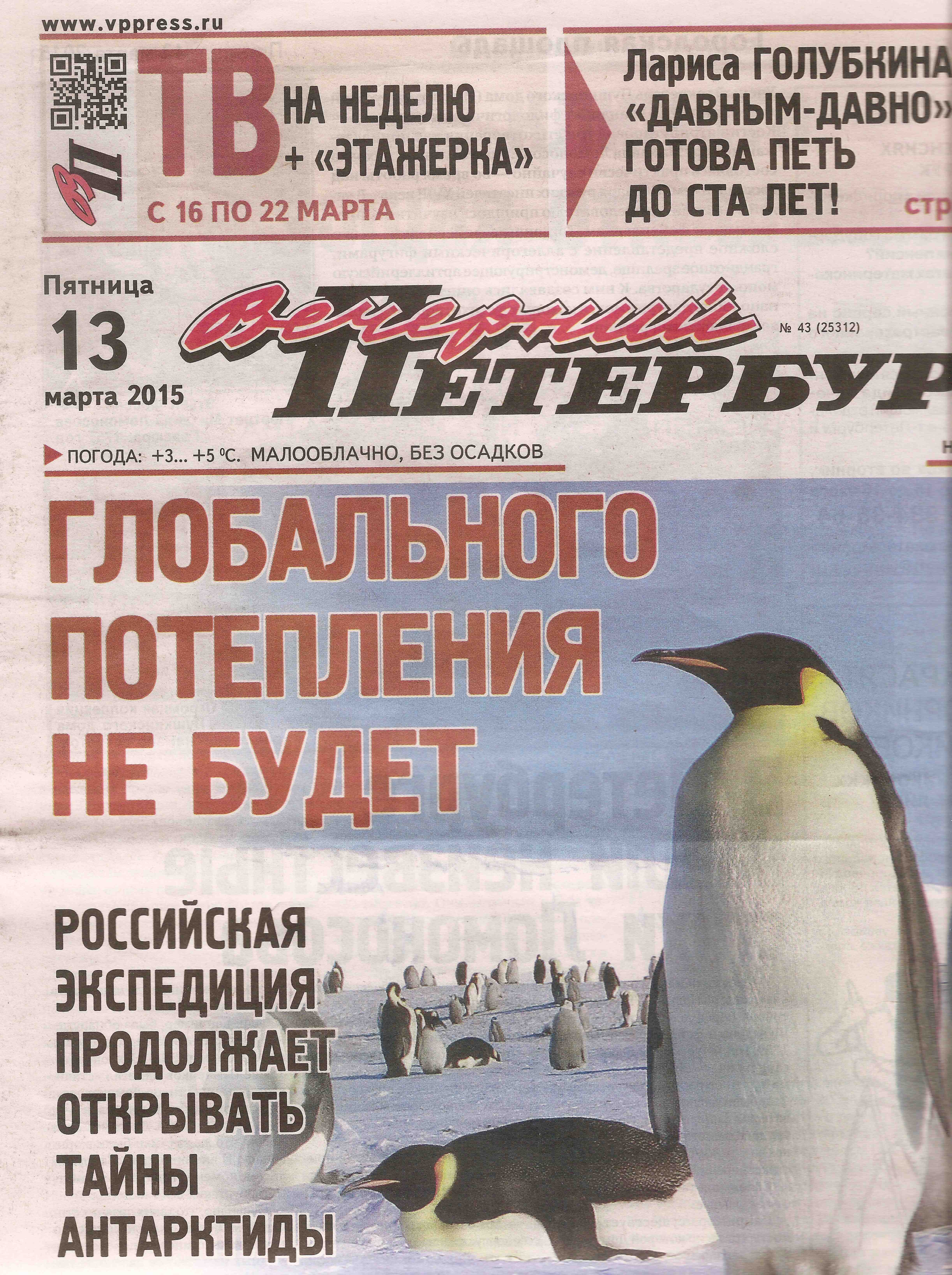
“There will be no global warming. Russian expedition continues to uncover the secrets of Antarctica.” Front page of the March 13, 2015, edition of Vechernyi Petersburg newspaper.
To many climate scientists, the worsening fires are a consequence of Siberia getting hotter, the carbon unleashed from its burning forests and tundra only adding to man-made fossil fuel emissions. Siberia’s wildfire season has lengthened in recent years and the 2015 blazes were among the biggest yet, caking the lake, the “Pearl of Siberia”, in ash and scorching the surrounding permafrost.
But the Russian public heard little mention of climate change, because media coverage across state-controlled television stations and print media all but ignored it. On national TV, the villains were locals who routinely but carelessly burn off tall grasses every year, and the sometimes incompetent crews struggling to put the fires out.
While Western media have examined the role of rising temperatures and drought in this year’s record wildfires in North America, Russian media continue to pay little attention to an issue that animates so much of the world.
The indifference reflects widespread public doubt that human activities play a significant role in global warming, a tone set by President Vladimir Putin, who has offered only vague and modest pledges of emissions cuts ahead of December’s U.N. climate summit in Paris.
Russia’s official view appears to have changed little since 2003, when Putin told an international climate conference that warmer temperatures would mean Russians “spend less on fur coats” while “agricultural specialists say our grain production will increase, and thank God for that”.
The president believes that “there is no global warming, that this is a fraud to restrain the industrial development of several countries including Russia,” says Stanislav Belkovsky, a political analyst and critic of Putin. “That is why this subject is not topical for the majority of the Russian mass media and society in general.”
_________
This reminded me of a dismal interview I had read this past spring in Vechernyi Petersburg, a now-defunct local rag. (The front page of that particular issue of “Vechorka” is depicted at the top of this post.) I had thought about translating it at the time, but since I prefer to push stories that, however bleak, have a positive hook (meaning they feature an underdog or underdogs fighting the powers that be, whatever the odds), I thought better of it.
Now, however, that the official line seems to be run the country into the dirt as quickly as possible, I am kicking out the jams (at least, tonight). After all, somebody out there might be wondering why a country that should have everything going for it in terms of human and natural resources is trying so hard to become a failed state. Interviews like the one that follows—with a gentleman not only purporting to be a scientist, but a scientist charged with running the Russian Antarctic Expedition—might give you a clue.
________
Global warming is a topic that bears no relation to reality Valery Lukin, head of the Russian Antarctic Expedition, says Antarctica still holds many secrets
Sergei Prudnikov
March 13, 2015 Vechernyi Peterburg
The summer season of the Sixtieth Antarctic Expedition is coming to an end. The scientific research vessel Akademik Fyodorov is now making the rounds of the stations, supplying them with food, fuel, and materials for the coming eight or nine months. In early March, the ship left Progress Station. Its next stops are Molodyozhnaya Station, Novolazarevskaya Station, and Bellingshausen Station. In April, the Akademik Fyodorov will sail for the shores of South America, and on May 15, it will return to Petersburg. In anticipation of the completion of the latest stage of work, Vechernyi Peterburg met with Valery Lukin, head of the Russian Antarctic Expedition (RAE).
Valery Vladimirovich, what are the results of the 2014–2015 season?
I must say right off the bat that employees of thirty-one organizations, representing ten federal agenices, are involved in the RAE. They include Roshydromet, Rosrybolovstvo (Federal Agency for Fishery), Roscosmos (Russian Federal Space Agency), Rosatom, the Ministry of Defense, and so. Work is underway on sixty-four projects, and each of them is significant. Nevertheless, I would note the drilling of a second borehole into the subglacial Lake Vostok and laying the foundations for installing new ground-based monitoring equipment for the GLONASS satellite navigation system. Interesting work has been done in the oasis of dry valleys,near the American McMurdo Station on the shore of the Ross Sea. They contain the most ancient varieties of permafrost on earth, thirty to forty million years old. Such polar caps exist in similar conditions on Mars. This gives us a unique opportunity for developing the technology to sample this material in the future. I should also note that the Russian Federal Ministry of Culture has implemented several of its own projects in Antarctica for the first time. One of them is the creation of the latest (the third) in a series of virtual branches of the Russian Museum for RAE personnel. The first was unveiled on board the Akademik Fyodorov; the second, at Novolazarevskaya Station; the latest, at Bellingshausen Station.
One of the priorities in Antarctica is the study of climate change. Why is it important? And how do things stand with global warming?
Indeed, it is extremely important. After all, what is the ice of Antarctica? It is compacted precipitation. By carrying out isotopic studies on it, we can track changes in temperature on earth, as well as the levels of methane and carbon dioxide that were in the atmosphere many years ago. Based on the research done on the ice core at Vostok Station, we have assembled a picture of climate change over the last 420,000 years. This included four complete climatic cycles: glaciation and warming with an average period of 100,00 years. We are now in an interglacial period, between peaks of cooling. But it is unclear how long this period will continue and whether it has reached its maximum. No one knows where we are headed. As for global warming, in my opinion, it is only a topic for speculation that is advantageous to businessmen, politicians, and journalists, and which bears no relation to reality.
But what about the movement of glaciers, which are, allegedly, melting furiously?
Glaciers are always moving. Near the Geographic South Pole, at Amundsen-Scott South Pole Station, they move at a speed of 11.5 meters a year. Near Vostok Station, they move at a speed of two meters a year. This is ordinary aerography: new ice forms, old ice flows. Now if it stopped moving, that would be something worthy of immediate attention. In the 1960s, Sovet scientists and their colleagues from Dresden took measurements of the glacier on a 100-kilometer segment of the track from Mirny Station to Vostok Station. Forty-four years later, the measurements were repeated. The ice had grown by forty-two meters! What melting are we talking about here?! As for speculation around a topic, let me remind you that, twenty years ago, all the media suddenly wrote about the growing hole in the ozone layer over Antarctica and the catastrophe it threatened. It was the owner of the large chemical company DuPont who had raised the issue. It was he who paid scientists to study the phenomenon. The scientists concluded that the reduction of the ozone layer had to do with Freon entering the upper atmosphere. Ultimately, this substance was banned. But Mr. DuPont created a new substance, Freon-141, which, by the way, is two and a half times more expensive than the “old” Freon. The problem of the hole in the ozone layer did not go away. But it has been forgotten: people with a stake in the matter performed the task assigned to them. The same thing is sure to happen with the topic of global warming.
Antarctica is an icy, barren continent. What is the practical benefit of researching it?
National security. The economic effects. Strengthening international prestige. With regard to safety, we are talking about ground support in the Southern Hemisphere for our space program. In Soviet times, this problem was solved by a special space fleet. A whole series of craft was built. Then they were scrapped. Using radar stations located in southern Russian, we can look into near-Earth space no farther than thirty degrees latitude south. If we talk about the economic effect, we could talk about developing fisheries in the Southern Ocean. One of the most valuable commercial fish in the world, the Patagonian toothfish, is found in these waters. It dwells at a depth of 600 to 1,200 meters, grows to a length of two meters, and weighs up 160 kilograms. The cost of one kilogram of this fish on the wholesale markets is sixty dollars. It is selling like hot cakes in Japan, South Korea, Hong Kong, and the US. From the 1960s to the 1980s, we were the leaders in catching it. In the 1990s, we virtually abandoned this field. The challenge now is to return. Finally, estimating the mineral reserves [in Antarctica] is an important taks. Our country’s economy is resource dependent. And if we do not keep up with the prospects of mining on earth, we have a lot to lose. We have to have our finger on the pulse.
The media periodically reports incredible events that are observed on the sixth continent. Either people disappear with enviable regularity or strange magnetic phenomena occur. What can you say about this?
These UFO publications cannot be taken seriously, of course. People have definitely not disappeared. Although there are a lot of mysteries. And we are going to encounter them again and again. Subglacial lakes, for example, were discovered a mere twenty years ago, and by chance. We were able to identify Lake Vostok due to a combination of seismic research, radar observations, and satellite measurements. It turned out that in the vicinity of Vostok Station the ice sheet was fairly smooth. There were hills all around, but here there was a flat slab, 250 kilometers long, 70 kilometers wide. Where does that happen? That is right: only on the water.
Valery Vladimorovich, many scientific programs are now feeling the pinch due to the difficult economic situation in the country. How has this affected the RAE?
Budget cuts to the expedition this year will amount to 10%. However, given the need to use foreign aircraft, sail into foreign ports, and pay with foreign currency, the real reduction in the budget will be 35%. Unfortunately, certain programs will have to be wound down. For example, we are planning no research and drilling work at Vostok Station. It is just too expensive. Boring into the subglacial lake and collecting water from it, something we have been so looking forward to doing, is not going to happen next season. In most other areas, research will continue.
Translated by the Russian Reader
___________
Valery Lukin, as it turned out, was much too sanguine about the effect of budget cuts on the RAE.
Russian Antarctic Expedition Halts Research Due to Lack of Funds
October 14, 2015 The Moscow Times
Russia’s state-funded Antarctic expedition has had to halt its research due to a lack of funding, the TASS news agency reported Wednesday, citing one of the scientists involved in the expedition.
“It’s not yet clear how long the research will be suspended for,” Ruslan Kolunin told TASS. He said that work on drilling a borehole in the ancient Lake Vostok has also been suspended. “The borehole is frozen at the moment, no work is under way there right now,” he was cited as saying.
The only research being carried out in the Antarctic as part of the expedition this year is a meteorite project by the Ural Federal University, Kolunin said. “That is financed by sponsors and the university, though,” he added.
Earlier this year, the expedition’s head Valery Lukin said that scientists wouldn’t be able to continue researching Lake Vostok during the next season, which lasts from December 2015 to February 2016, due to decreased funding, TASS reported.
The expedition, Lukin said, is financed directly from the federal budget. In 2015 it was allocated 1.18 billion rubles ($18 million), but in 2016 that will decrease to 1.061 billion rubles ($16 million), which he said was not enough to continue work at the lake.
Lake Vostok lies buried beneath a 3,769-meter layer of ice. Locating it and accessing its relict waters is considered one of the main discoveries of the expedition so far, the report said.
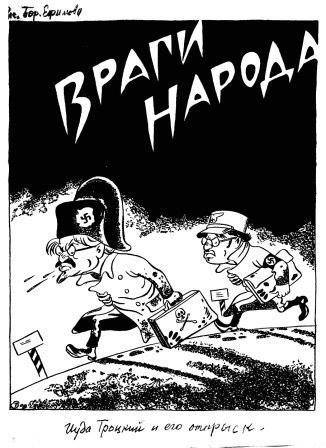
Who Is Behind the Trotskyist Conspiracy?
Ilya Budraitskis
November 21, 2014 OpenLeft.ru
Speaking at a meeting of his All-Russia People’s Front a couple days ago, Vladimir Putin said, “Trotsky had this [saying]: the movement is everything, the ultimate aim is nothing. We need an ultimate aim.” Eduard Bernstein’s proposition, misquoted and attributed for some reason to Leon Trotsky, is probably the Russian president’s most common rhetorical standby. He has repeated it for many years to audiences of journalists and functionaries while discussing social policy, construction delays at Olympics sites or the dissatisfaction of the so-called creative class. “Democracy is not anarchism and not Trotskyism,” Putin warned almost two years ago.
Putin’s anti-Trotskyist invectives do not depend on the context nor are they influenced by his audience, and much less are they veiled threats to the small political groups in Russia today who claim to be heirs of the Fourth International. Putin’s Trotskyism is of a different kind. Its causes are found not in the present but in the past, buried deep in the political unconscious of the last generation of the Soviet nomenklatura.
The strange myth of the Trotskyist conspiracy, which emerged decades ago, in another age and a different country, has experienced a rebirth throughout Putin’s rule. Sensing, apparently, the president’s personal weakness for “Trotskyism,” obliging media and corrupted experts have turned this Trotskyism into an integral part of the grand propaganda style. Until he died, the indefatigable “Trotskyist” Boris Berezovsky spun his nasty web from London. Until he turned into a conservative patriot, the incendiary “Trotskyist” Eduard Limonov seduced young people with extremism. Camouflaged “Trotskyists” from the Bush and, later, the Obama administrations have continued to sow war and color revolutions. Unmasking “Trotskyists” has become such an important ritual that for good luck, as it were, the famous Dmitry Kiselyov decided to launch a new media resource by invoking it. So what is the history of this conspiracy? And what do Trotskyists have to do with it?
Conspiracy theories are always conservative by nature. They do not offer an alternative assessment of events but, constantly tardy, chase behind them, inscribing them after the fact into their own pessimistic reading of history. Thus, in his Memoirs Illustrating the History of Jacobinism (1797), the Jesuit priest Augustin Barruel, a pioneer of modern conspiracy theory, situated the French Revolution, which had already taken place, in the catastrophic finale of a grand conspiracy of the Knights Templar against the Church and the Capetian dynasty. Masonic conspiracy theories became truly powerful in the late nineteenth century, when the peak of the Masons’ power had already passed. Finally, the idea of a Jewish conspiracy acquired its final shape in The Protocols of the Elders of Zion, fabricated by the tsarist secret police at the turn of the twentieth century, when the power of Jewish finance capital had already been undermined by the rising power of industrial capital. Conspiracy theories have always drawn energy from this distorted link with reality, because the fewer conspirators one could observe in the real world, the more boldly one could endow them with incredible magical powers in the imaginary world.
In keeping with the reactive, belated nature of conspiracy theories, the myth of the Trotskyist conspiracy emerged in the Soviet Union when the Left Opposition, Trotsky’s actual supporters, had long ago been destroyed. Unlike, however, the conspiracies of the past, generated by secret agents and mad men of letters, the foundations of the Trotskyist conspiracy were tidily laid by NKVD investigators. The distorting mirror logic of the Great Terror dictated that, although the “Trotskyists” skillfully concealed themselves, and any person could prove to be one, the conspiracy must necessarily be exposed. An unwritten law of Stalinist socialism was that the truth will out, and this, of course, deprived the conspiracy theory of its telltale aura of mystery.
After Stalin’s death, when the Purges were a thing of the past, and Soviet society had begun to become inhibited and conservative, the conspiracy myth took on more familiar features. The stagnation period, with its general apathy, distrust, and societal depression, was an ideal breeding ground for the conspiracy theory. No one had seen any live Trotskyists long ago, and it was seemingly silly to denounce them, but everyone was well informed about the dangers of Trotskyism.
During meaningless classes on “Party history,” millions of Soviet university students learned about the enemies of socialism, the Trotskyists, who had been vanquished long ago in a showdown. Millions of copies of anti-Trotskyist books were published; by the 1970s, this literature had become a distinct genre with its own canon. Its distinguishing feature was a free-form Trotskyism completely emancipated from any connection with actual, historical Trotskyism.
In fact, the Trotskyism of Soviet propaganda was structurelessness incarnate, a misunderstanding. It was “lifeless schema, sophistry and metaphysics, unprincipled eclecticism, […] crude subjectivism, exaggerated individualism and voluntarism.” Unlike the classic monsters of conspiracy theory, the Masons and the Elders of Zion, the Trotskyists did not run the world. They were failed conspirators: they were always exposed, unless, through their own haste and impulsiveness, they managed to expose themselves. In keeping with Stalinist socialist realism, their inept evil deeds caused seizures of Homeric laughter among the people and the Party. And yet, recovering from each shameful defeat, they kept on trying. The Trotskyists had no clear plan for establishing global domination, but without a clear purpose, they were dangerous in their passionate desire to instill chaos in places where harmony, predictability, and order reigned.
In their work, these Trotskyists were guided by the crazed “theory of permanent revolution” (which had nothing in common, substantially, with Trotsky’s theory except the name). Its essence is that the revolution should not have any geographical or time constraints. It has no aims, no end, and no meaning. It raises questions where all questions have long been solved. It instills doubt where all doubts have been resolved long ago. A normal person would never be able to understand anything about this theory except one thing: it was invented to ruin his life.
Mikhail Basmanov, author of the cult book In the Train of Reaction: Trotskyism from the 1930s to the 1970s, quoted above, noted, “Unlike many other political movements that had the opportunity to confirm their ideological and political doctrines through the practice of state-building, Trotskyism has not put forward a positive program of action in any country in all the years of its existence.” It is so destructive, that “with its cosmopolitanism, carried to the point of absurdity, which excludes the possibility of developing national programs, Trotskyism undermines the stances even of its own ‘parties’ in certain countries. […] Trotskyism is entangled in the nets of its own theories.”
It is important that the idea of the Trotskyist conspiracy against practical reason, reality, and stability was never popular in late-Soviet society: it did not grow, like the “blood libel,” from the dark superstitions of the mob. It remained a nightmare for only one segment, the ruling bureaucracy, which transmitted the myth of the senseless and merciless “permanent revolution” to future generations in Party training courses and KGB schools.
The Soviet theory of the Trotskyist conspiracy reflected the subconscious fear of ungovernability on the part of the governing class. Devoid of any personalities, the legend of Trotskyism was something like the “black swan” of “actually existing socialism.”
This, by the way, is its fundamental difference from the version of the Trotskyist conspiracy popular among some American conservatives. In America, it is merely one of many varieties of the “minority conspiracy,” a small group of people who have, allegedly, seized power and are implementing their anti-Christian, globalist ideas from the top down. The fact that the anti-Trotskyist conspiracy theory of the so-called paleoconservatives has become popular in recent years among Kremlin experts and political scientists only goes to show that the old Soviet “Trotskyist conspiracy” has suffered a deficit in terms of its reproduction.
When he confuses Bernstein and Bronstein, Vladimir Putin, however, is not unfaithful to the Soviet anti-Trotskyist legend. Yes, “the goal is nothing, the movement is everything.” The chaos generated by the movement is inevitable, as inevitable as time itself. It moves inexorably toward “permanent revolution,” which cannot be completed and with which one cannot negotiate.
In a recent interview, former Kremlin spinmeister Gleb Pavlovsky, while skillfully avoiding the issue of “Trotskyism,” nevertheless had this to say about Putin:
“He has frightened himself. Where should he go next? What next? This is a terrible problem in politics, the problem of the second step. He stepped beyond what he was ready for and got lost: where to go now? […] The gap between [the annexation of] Crimea and subsequent actions is quite noticeable. It is obvious that everything afterwards was an improvisation or reaction to other people’s actions. People who are afraid of the future forbid themselves from thinking about which path to choose. When you have not set achievable goals, you begin to oscillate between two poles: either you do nothing or you get sucked into a colossal conflict.”
The worst thing is that the specter of Trotskyism, as has happened with many other specters in history, is quite capable of materializing. The post-Soviet system has entered a period of crisis, in which the ruling elite has fewer and fewer chances to manage processes “manually.” For the Trotskyist nightmare of the elites to become a reality, there is no need for live Trotskyists. The need for them arises only when hitherto silent and long-suffering forces come to their senses and raise the question of their own aims. But that is a different story.
Ilya Budraitskis is a historian, researcher, and writer.



 Russia Today and the Post-Truth Virus