Say My Name

Putin’s critics have long noted his obstinate refusal to publicly utter the name of imprisoned opposition politician Alexei Navalny. But on Sunday, when asked by loyalist journalist Andrei Kolesnikov about Moscow theater director Zhenya Berkovich and Moscow leftist Boris Kagarlitsky, both of whom have been arrested on flagrantly trumped-up charges of “condoning terrorism,” Putin claimed never to have heard of them.

Maybe he hadn’t heard of them. But a good deal of progressive humanity has heard of them, not only because of the outrageous charges against them, but also because both of them are minor celebrities. This means that their cases matter enough to the Moscow-centered Russian “liberal” intelligentsia (broadly defined) and to leftist and liberal circles in the west that you will have already heard about them, too, and you will undoubtedly hear much more about them in the weeks and months to come.

What about the other, uncelebrated Russians persecuted for their dissenting views and direct protest actions during wartime? According to OVD Info, 665 criminal cases have been opened against “anti-war dissidents” since February 24, 2022. It would be understandable if the international press had trouble reporting in depth on each of these cases, despite the best efforts of international human rights organizations and projects like this website. But it turns out that the Russian opposition also finds it too troublesome to remember all their names, let alone name them publicly.

“Every day there are more and more [political] prisoners in Russia. Moreover, we do not have time to remember their names, because they are activists from Khabarovsk and Vologda, Murmansk and Perm. We don’t have time to remember these names,” Olga Romanova, the founder and head of Russia Behind Bars told Radio Svoboda at a rally in Berlin yesterday “in support of Vladimir Kara-Murza, Alexei Navalny and other political prisoners in Russia.”

I shouldn’t have been surprised, then, as I prepared a post yesterday about the trial of Petersburg anti-war activist Olga Smirnova, that a Google search for the keywords “Olga Smirnova trial Petersburg” generated the following dismal picture, in which it transpires that this remarkable, incredibly brave grassroots battler has been roundly ignored by the Anglophone world except for the dependable folks at RFE/RL and silly old me.

Several years ago, a Petersburg “artivist” with whom I worked closely for a time became fascinated with the so-called attention economy. I soon realized that the lesson they had learned from their “research” of the topic was that they had to compete even harder for attention to their own projects and causes. Later, I became convinced that nearly the entire Moscow-centric Russian opposition and their target audiences at home and abroad were also practicing “attention economics” to the extent that the political persecution of non-celebrities, regional activists, and social outsiders (Jehovah’s Witnesses, for example) almost never merited their focused and sustained attention.

They thus missed what I thought was the bigger picture, which was that the Putin regime and its repressive apparatus were themselves rehearsing for something “grander,” something that came to fruition on February 24, 2022.

And yet the right-thinking “attention economists” who dominate the Russian opposition and, consequently, the non-Russian Russia watchers whose narratives they help to shape, continue to engage in celebrity worship amid a fascist assault on Ukrainian independence, Ukrainian lives, and Russian grassroots dissent, thus betraying their own deep-seated anti-democratic biases. When people who should know better and should do better feel impelled not to say the names and share the stories of “lesser” political prisoners like Olga Smirnova, they are doing the Russian police state’s work for it. ||| TRR

__________

During a press conference after the Russia-Africa summit on Saturday evening, Kommersant reporter Andrei Kolesnikov asked the President of Russia a question about a number of the arrests that have occurred recently in the country.

Kolesnikov cited to Putin the names of the arrested sociologist Boris Kagarlitsky, against whom “condoning terrorism” charges have been filed for a post about the explosion on the Kerch Bridge, and theater director Yevgenia Berkovich. She has been charged with “condoning terrorism” over a theater production about Russian women recruited by the terrorist group Islamic State. The play is based on real events.

Human rights activists call the cases against Kagarlitsky and Berkovich politically motivated.

“People are arrested for written or spoken words. Is this normal? Well, thank God, it’s not 1937 here! But some people, you know, think that maybe it is 1937,” Kolesnikov asked.

“It’s 2023 here, and the Russian Federation is in a state of armed conflict with its neighbor. I think that there should be a certain attitude towards those people inside the country who harm us,” Putin replied, adding that “in order to achieve success, including in the combat zone, we must all follow certain rules.”

The President stated several times that he did not know about the cases against those whom Kolesnikov cited as an example. “I don’t know who you are talking about. I am hearing these names for the first time and don’t really understand what they did and what was done to them,” Putin said, but immediately added, “In Ukraine, people are shot for this.” As an example of an “execution,” he referred (without naming him by name) to Denis Kireyev, a member of the Ukrainian delegation to peace negotiations with Russia, who was killed in early March last year. “I don’t know what they [Berkovich and Kagarlitsky] did, you will tell me later. Maybe they don’t deserve what has been done to them. I don’t even know how,” Putin concluded his answer.

Putin did not explain how the case of Kireyev, who was [a Russian] agent, according to the Security Service of Ukraine (SBU), and whose death had nothing to do with any of his public statements, was connected with the Berkovich and Kagarlitsky cases. In addition, the case against Berkovich, although she did speak publicly against the war, is not connected with her anti-war statements, according to investigators.

[…]

Source: “Putin responds to question about prosecution of Kagarlitsky and Berkovich,” Radio Svoboda, 30 July 2023. Translated by the Russian Reader

__________

Today, a rally in support of Vladimir Kara-Murza, Alexei Navalny, and other political prisoners in Russia took place in downtown Berlin in front of the Brandenburg Gate. It was held by the organization Russia Behind Bars with the support of other Russophone NGOs in Berlin.

More than two hundred people turned to the rally on a cold July evening. Among them were human rights activists, journalists, and members of the creative intelligentsia, both those who have lived in Berlin for a long time and those who have recently arrived here.

“Every day there are more and more [political] prisoners in Russia. Moreover, we do not have time to remember their names, because they are activists from Khabarovsk and Vologda, Murmansk and Perm. We don’t have time to remember these names,” Olga Romanova, the founder and head of Russia Behind Bars told Radio Svoboda, “but Putin reminded us of something when he said that it was not 1937 in Russia now. He doesn’t know the names of either Boris Kagarlitsky or Zhenya Berkovich, but he firmly knows that they are guilty, and he firmly knows that people like them are ‘shot in Ukraine.’ It is very scary that Russia is ruled by a person with such ‘facts’ in his head and such a set of beliefs. It seems to me that we are here not only to let political prisoners know that we remember them, but also to try to show the rest of the world that not all of Russia is Putin and that perhaps Russia still has a future. There are people in Russia who oppose Putin. They are people who think the same way we do.”

A statement by Vladimir Kara-Murza was read out at the rally. In particular, he argues that Russian citizens who have publicly opposed the brutal, aggressive and unjust war that the Putin regime unleashed against Ukraine occupy a place on this list [sic].

“We are very different people, people of different professions, generations, and outlooks. Among us there are politicians and journalists, priests and soldiers, artists and lawyers, students and pensioners, leftists and rightists. We are united by our rejection of Putin’s criminal war, which the Kremlin is waging on Russia’s behalf . There are millions of people in our country who think like us. Thank you for listening to us and for not believing the Kremlin propaganda tall tales about the alleged universal support for these crimes. I know that the day will come when this darkness will dissipate and another Russia will return to the family of civilized nations, and we will finally be able to create a real united peaceful Europe.”

The words of the Russian politician sentenced to twenty-five years in prison in Russia were heard at the end of the evening rally in Berlin. On the same day, an appeals court in Moscow upheld the sentence against Kara-Murza, whom human rights activists consider a political prisoner.

One of the people attending the rally told Radio Svoboda that he considers it his duty to voice his disagreement with Russia’s criminal full-scale war in Ukraine in any format anywhere in the world. “Individual conscience is what matters. It doesn’t allow us to regard calmly the crimes that Russia is committing on behalf of its citizens,” the rally participant said.

Source: Anna Rose, “Rally in support of Russian political prisoners takes place in Berlin,” Radio Svoboda, 31 July 2023. Translated by the Russian Reader

__________

Say my name
Play my game

I tried to tell you
That you’re up to no good
So I lied to fell you
Just like you knew I would

I made you love me
I was a part of your life
You’d stand above me
Behind the blade of a knife

Return to sender
That’s what it says in the mail
I’ll never end up
Inside the county jail

The look of crystal
Still makes me blue
I’ll load my pistol
And keep my eye on you

Not much for living
But I’m pledging my time
This gift of giving
It perpetrated my crime

Don’t have to like it
So just stay out of my way
Don’t try to fight it
You know the words to say

From Country Hymn, released September 17, 2016
Words by Sumanth Gopinath, music by The Gated Community
Copyright 2016

Sumanth Gopinath: lead vocals, acoustic guitar
Rosie Harris: lead vocals, banjo
Beth Hartman: backing vocals, egg shaker
Teresa Gowan: fiddles
Johnny Becker: mandolin
Cody Johnson: electric bass
Paul Hatlelid: drums
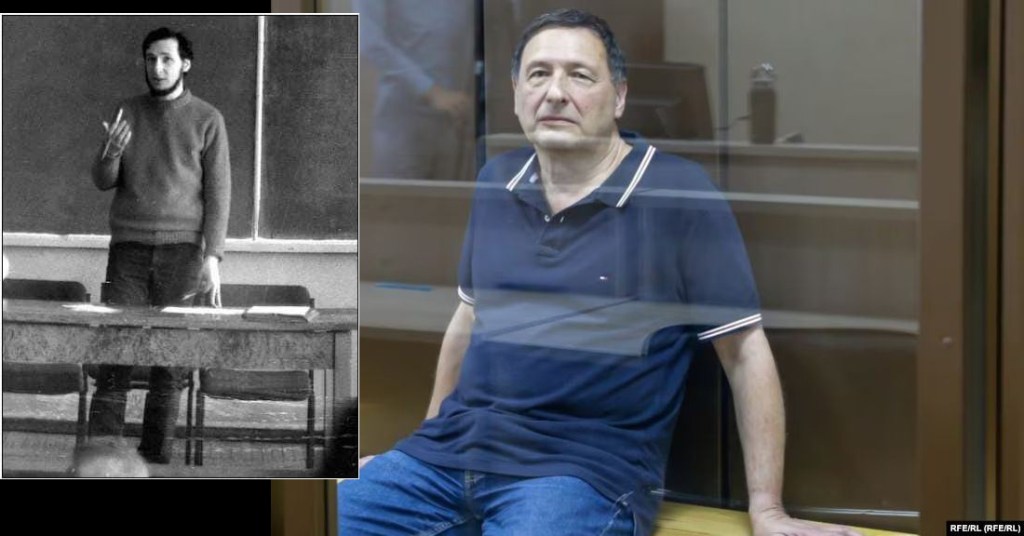
¡Me monté en la montaña rusa tres veces!

Hello, Moscow Times readers! This is your weekly newsletter, which will shed light on:

  • a time of rapid price growth in Russia
  • how Africa feels about free Russian cheese grain
  • why Vladimir Putin remained standing.

But first we will discuss a seemingly not too high-profile event—the arrest of the Soviet dissident and prominent Russian leftist Boris Kagarlitsky.

Boris Kagarlitsky was jailed by the Soviet regime, and now he’s been jailed by the Putin regime too.

On the face of it, it looks like yet another trumped-up “condoning terrorism” case! Zhenya Berkovich and Svetlana Petriichuk were also arrested under this article and are currently in pretrial detention.

But Boris Kagarlitsky is not a great theater director chockablock with interesting creative ideas. He is a veteran anti–American and anti-globalist. Few people remember how vigorously Kagarlitsky supported Russia’s invasion of Georgia, how he spoke as critically as possible about the Ukrainian Maidan of 2013, and how later he consistently criticized what he saw as Volodymyr Zelensky’s “puppet” government. And he lent his support to the “separatists” in the Donetsk and Luhansk regions.

In other words, Kagarlitsky has generally been an ideological ally of the Russian regime, and his criticism of the Kremlin is based on the argument that the regime has been insufficiently consistent in its anti-Americanism and anti-globalism, in its fight against the global financial monster and its ubiquitous outstretched tentacles.

Does that remind you of anyone? That’s right: Igor Girkin-Strelkov. The arrested leader of the so-called Russian World likewise did not just support the Kremlin’s plans for conquering Ukraine. He onstantly stressed the insufficient efforts and inconsistency evinced by the Russian authorities in its “final solution” of the “Ukrainian question.”

Igor Girkin accused Putin of indecisiveness.

Thus, in the wake of Yevgeny Prigozhin’s rebellion (but not necessarily because of it, although this could be the case), the authorities, realizing that liberals no longer pose any danger, have gone after political opponents of a different stripe—after fellow travelers who rabidly dared to tell them what to do. Prigozhin did something similar, but he bit his tongue after his pseudo-mutiny. Unlike Kagarlitsky and Girkin, he stands for no ideology other than self-enrichment, and this stance is is something the Kremlin can comprehend and even adore.

What matters is that Kagarlitsky’s arrest, hard on the heels of Girkin’s arrest, shows that the regime is at a total ideological impasse. Its amorphous anti–western rhetoric has no clear conceptual basis, and hence anyone who espouses something resembling a real concept is an indubitable threat.

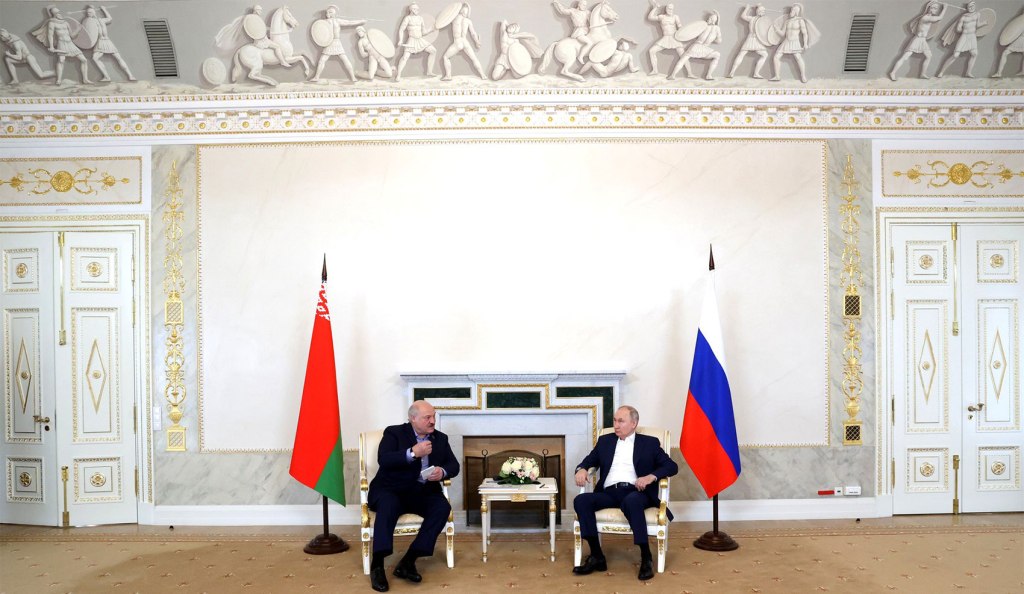
Putin’s only real ideological ally remains Alexander Lukashenko, a politician who has an immense arsenal of ridiculous arguments for explaining away the actions of his aggressive Moscow meal ticket.

The Belarusian pretender always points out where the attack is coming from.

[…]

Alexei Navalny also made a very unexpected public statement. He stood up for Girkin-Strelkov and even counted him among his fellow political prisoners. Note that from a formal point of view, the herald of the Russian World, who has the blood of many people on his hands, cannot be classified as a political prisoner.

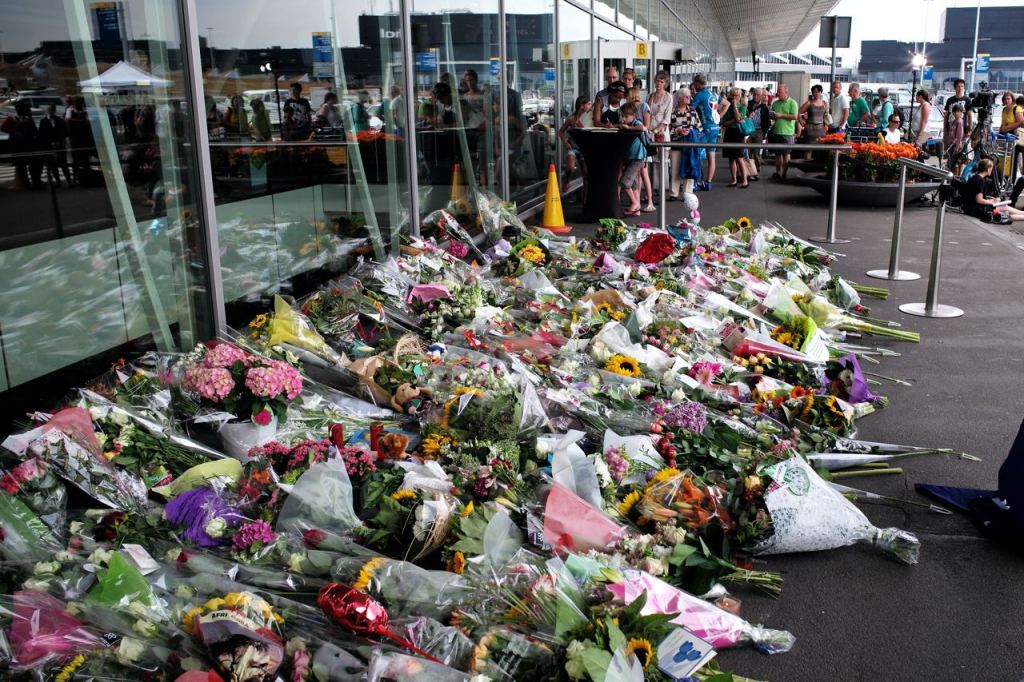
Игорь Гиркин осужден за сбитый Boeing Гаагским судом

[…]

Source: Moscow Times Russian Service weekly newsletter, 30 July 2023. Translated by the Russian Reader. The photos, above, were captioned as such by the authors, not by me. Thanks to SpanishDictionary.com for the quotation that I used as the title of this post.


Vladyslav Starodubtsev, historian – contribution to debate on Boris Kagarlitsky, antiwar activism in Russia and more:

“Its just very hard to agitate for person, who called for occupation of your land and promoted and helped, including monetarly, people who kill your friends. Calling this “a difference of opinions” doesn’t seem a right thing. In 2014 he took huge effort to align far-right and far-left in support of Russian war against Ukraine, and got Presidential grant for it. Had strong connections with both Putinist elite and Russian neo-nazi criminals in Donbass. And before — justifying need to invade Georgia https://rabkor.ru/columns/debates/2008/09/09/debate-53/

“It is not surprising that the Western left, having no illusions about the order prevailing in our country, unanimously supported Russia. The blow inflicted on the United States has global implications and opens up new perspectives for their struggle. It would be naive, to say the least, to maintain power. This is not our government, and it will never be ours. But you need to take advantage of the situation. And if the government nevertheless did something that meets our own requirements, this should be treated as a success, and this success should be developed.

We have always been against NATO, against orientation towards the United States. We have always opposed the WTO. These are our fundamental positions.

It would not only be foolish to miss the chances that history offers us today. That would be criminal!” – Boris Kagarlitsky in times of Russian invasion in Georgia

The person who not only called, but participated in promoting violence and occupation, using millions given directly by Putin’s office, then helping monetarly to occupational forces and using any possible platform to promote campism and pro-Russian views amongst the Western left. He justified terrorism. And he become the architector of his own fate. The power that he critically supported in his nationalist crusade against “The West”, against Georgians and Ukrainians, now consumed him. It seems that he relied that connections with Putinist elite will save him. But after Wagner coup, Russia represses everyone. It doesn’t make these people political prisoners. I won’t agitate for any morally compromised

He by definition is not a political prisoner, so agitate for his release doesn’t make much sense. In the biggest – agitate to his extradiction to Ukrainian court. Organize media campaigns for any of it would be pretty absurd.

“3.3. A person is not to be regarded as a political prisoner, if, under the above circumstances, the person has committed:

a violent offence against persons, except in cases of self-defence or necessity;

a hate crime against a person or property; or the person has called for violent action on national, ethnic, racial, religious or other grounds.”

(https://memohrc.org/…/guidelines-definition-political…)

That is why I never called for release of any nazi in Russia, even if they had the change of heart, either because of elite reshuffle in Putin’s office, and their allies falling down, or because they understood what horrible monstrosity they helped to build and in what they participated, under tens of thousand people were killed by Russia’s full-scale invasion. Why nobody thinks from perspective who Kagarlitsky agitated to roll over on tanks? And yes, it is a part of bigger problem, that all the left is crazy when Russian left-nationalist Kagarlitsky is arrested, after a year of being allowed to criticize Russia, but the genuine activists, who aren’t xenophobic – ignored.”

Source: Maire Kelly (Facebook), 29 July 2023. The spelling and punctuation of the original post have been preserved.


Stand with all antiwar protest -stop Russia – tell the whole story Ukraine Socialist Solidarity Campaign: “Many people on this FB page are familiar with Russian leftist commentator and intellectual Boris Kagarlitsky. He has been a controversial figure for good reason. He supported the annexation of Crimea and the war in Donbass in 2014. He is a friend of Girkiin, the committed war criminal.

For reasons unknown he chose to stay in Russia while many of his colleagues fled. And this week he was detained by the FSB in Moscow, taken to a pre trial detention center where he will stay until the end of September when he will face charges on “justifying terrorism” for his criticisms of Russia’s invasion of Ukraine. A petition is being circulated calling for his freedom, along with other anti war Russians. Supporting Kagarlitsky as a political prisoner does not in any way imply an endorsement of his extremely objectional views. As Ilya Budraitsis writes in the statement below, Kagarlitsky’s arrest is part of a new wave of repression against any critics of the war.

The following statement was released by Russian socialist and anti war dissident Ilya Budraitskis and other comrades. Please see the petition below and sign/share if you support it.

Two days ago in Moscow, FSB officers detained well-known leftist theorist, activist and commentator Boris Kagarlitsky. At present, Boris has been transferred to the pre-trial detention center in Syktyvkar, where he will stay at least until the end of September. Kagarlitsky was charged with “justifying terrorism”, for which he could face up to 7 years in prison. At the same time, in Moscow, Yekaterinburg and Penza, searches were carried out at the homes of Kagarlitsky’s associates on the YouTube channel Rabkor. It is obvious to us that the arrest of Kagarlitsky is part of a new large-scale repressive campaign by the authorities aimed at completely clearing the political space of any critics of the war. Since February 2022, Boris has taken a pronounced anti-war stance, and we are sure that this was the only real reason for his arrest.

Boris’s personal political trajectory began more than 40 years ago and has not always been flawless. In the early 1980s, Kagarlitsky was a member of the underground group of “young socialists” and was subjected to repression by the KGB, and since the early 1990s he played a prominent role in the left opposition, first to the Yeltsin and then to the Putin regime. His numerous books and public speeches had a great influence on several generations of the Russian left, and that is why his responsibility for certain assessments remained exceptionally high. In 2014, Kagarlitsky actively supported the annexation of Crimea and the creation of the so-called. “People’s Republics” in eastern Ukraine. And this support, unfortunately, played a role in disorienting part of the Russian left. These, like many other moments in Kagarlitsky’s activities, are completely unacceptable for the members of the “After” team. And now our fundamental differences have not gone away, and we will certainly discuss them with Boris – but only after his release.

It must also be acknowledged that after the start of the full-scale invasion, Kagarlitsky was one of the few Russian leftists who, while remaining in the country, continued to publicly condemn the war on the part of Russia. It can be assumed that only the wide popularity of Kagarlitsky has kept the authorities from arresting him until now. Now that this has happened, it has become clear that repression is reaching a new level and the number of activists in the immediate risk zone has increased significantly. That is why we call for an international campaign in support of Kagarlitsky and all political prisoners in the Russian Federation”.

Source: Maire Kelly (Facebook), 29 July 2023. The spelling and punctuation of the original post have been preserved.

Moscow Nights

A screenshot of the end credits to the 9 March 2017 episode of The Big Bang Theory, as translated here.

‘”Meduza,” whom I have every reason to trust . . .”

Western “observers” of Russian politics have the strangest notions of which Russian sources can be trusted. I was told earlier today, by a subscriber to the late Louis Proyect’s Marxmail list, that if I (meaning me, the guy who lived in Russia for twenty years) wanted to know what was really happening in Russia nowadays, I should read Boris Kagarlitsky.

Meduza, who in the halcyon pre-war days discredited themselves so many times, but especially when they destroyed the burgeoning grassroots solidarity campaign in support of the Network Case defendants by publishing a thoroughly scurrilous “investigative report” implicating some of the defendants in an unsolved double murder.

— Boris Kagarlitsky, the man who in 2014 did more than anyone else to peddle to gullible westerners the obnoxious hogwash that the Russian takeover of parts of the Donbas was really a grassroots populist uprising against the bad guys in Kyiv, a man whose flimsy “institute” and odious opinion website Rabkor were financed directly by the Kremlin back in the days when the Kremlin still regarded him as a useful idiot. (The Kremlin doesn’t see him that way anymore, clearly, but now it should be too late for him to redeem himself in the eyes of progressive humanity.” ||| TRR


The October Counter-Revolution

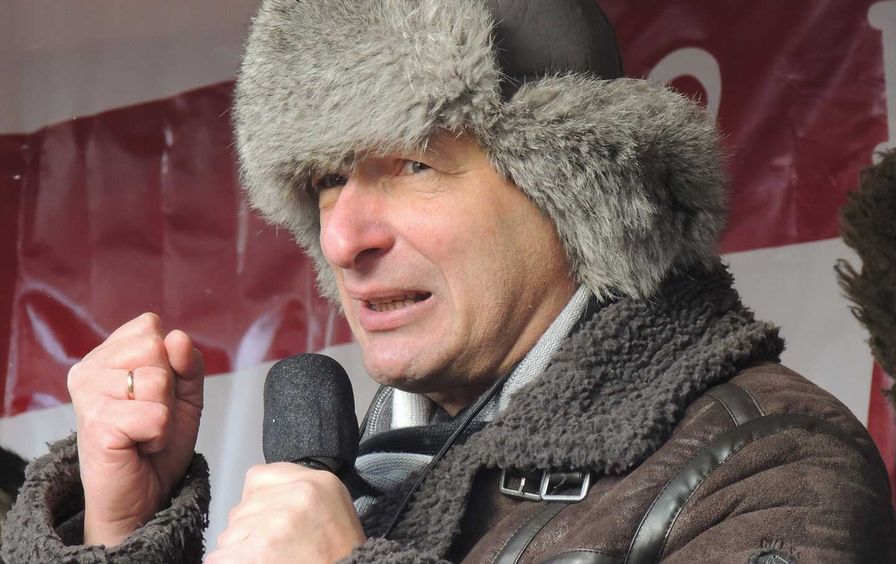
Yes, I know that Boris Kagarlitsky is completely beyond the pale after his vigorous defense of the Kremlin’s misadventures in Ukraine. But as my friend Vlad Tupikin has reminded me, solidarity is not about supporting our close friends and people whose views are identical to our own. And things in Russia are so out of control right now that even Kagarlitsky deserves solidarity and support. Photo courtesy of The Nation. ||| TRR

Volja. Telegram. 1 October 2021

We usually do not repost entire texts by third-party authors produced for other platforms and other channels. But now a new time has arrived, a time for solidarity, so such content will naturally appear here.

We begin with a text by the political scientist Boris Kagarlitsky, who was sentenced yesterday to ten days in jail posting on social media about the protests by [Valery] Rashkin and the Communist Party.

So, we yield the floor to Kagarlitsky. This was the last text he published before his arrest.

Kagarlitsky Letters. Telegram. 29 September 2021

The actions of the Russian authorities in the wake of the elections appear, at first glance, clearly excessive vis-a-vis the political circumstances. In fact, almost everyone who was promised a seat was elected to the State Duma, and the opposition was routed, and even the internet is largely under control, but for some reason they still have been carrying out lawless raids on Communist Party lawyers, chasing down individual activists, expanding the lists of “undesirable organizations,” and opening new criminal cases against those who are already in prison or have fled abroad. They are behaving as if everything is about to collapse. Why? What is the source of their hysteria?

Without reliable information about what is happening inside the Kremlin, we can only draw some conclusions based on history and psychology. It seems that the reason for the regime’s nervousness is the regime itself, its own internal and insoluble contradictions.

Political scientists have been contemplating the prospects of Putin’s so-called transit for more than a year. Will Putin appoint an heir? Who will it be? The ruler’s health clearly leaves much to be desired, and the question of how long he will be able to exercise his powers is probably a matter of concern not only for pundits. Naturally, preparations for the transit have begun, and Putin himself must be involved in them in one way or another. But even if the president promises his entourage that he will take care of the future, he knows for certain that as soon as a successor is named, the current ruler’s [sic] grip on power will be shaken. Therefore, the transit will be readied, but it will not take place. As long as Putin is alive, he will not permit any final decisions to be made. If something happens to him, it will be too late to make decisions, and the process will develop spontaneously and catastrophically.

It is no surprise that this state of affairs has generated the most severe neurosis among people in and around the Kremlin. The transit has begun, but it does not end. Vital decisions are discussed and readied, but not made. The cruelest intrigues and conspiracies are hatched within the ruler’s entourage, but nothing comes of them. Threatening, unbearable uncertainty becomes an all-consuming element that ravages the mind. Everyone is afraid of everyone else; no one trusts anyone. Exactly as Freud would have it, fears and complexes are displaced. The form of this displacement is a crackdown against members of the opposition or those who have been labeled members of the opposition.

Irrational actions generate unforeseen, but absolutely predictable consequences. Loyal functionaries from the leadership of the Communist Party of the Russian Federation (KPRF) are being pushed into the radical opposition’s vacated niche, which is just as psychologically and emotionally unbearable for them as the endless transit, going nowhere, is for government officials. Maxim Kalashnikov has compared this to a situation in which a very weak radio receives a signal too strong for it, which totally fries its circuits. I think this analogy describes quite accurately what has been happening among Communist Party executives and staffers.

Political rationality requires the Kremlin to stop escalating the crackdown, take a breath and at least weigh the consequences of its decisions. But this will not happen, because the rationale for the regime’s behavior has nothing to do with managing the political process. It is no longer political scientists, but psychiatrists who should analyze the actions of the ruling circles.

Translated by the Russian Reader

_____________

A court in Moscow has sentenced Marxist theoretician and sociologist Boris Kagarlitsky to 10 days in jail for sharing content on social media promoting unpermitted protests by the Communist Party (KPRF) against the results of Russia’s recent parliamentary elections. Police arrested Kagarlitsky on Wednesday on his way to the Moscow School of Social and Economic Sciences, where he is a lecturer.

Boris Kagarlitsky is also the director of the Institute of Globalization and Social Movements, which Russia’s Justice Ministry designated as a “foreign agent” in 2018.

KPRF has refused to recognize the official results of electronic voting in Moscow, where online ballots propelled several candidates backed by the Mayor’s Office to victories over oppositionists. The Communist Party staged small protests on September 20 and 25, prompting a sweeping police crackdown in the days that followed.

Source: Meduza, 30 September 2021

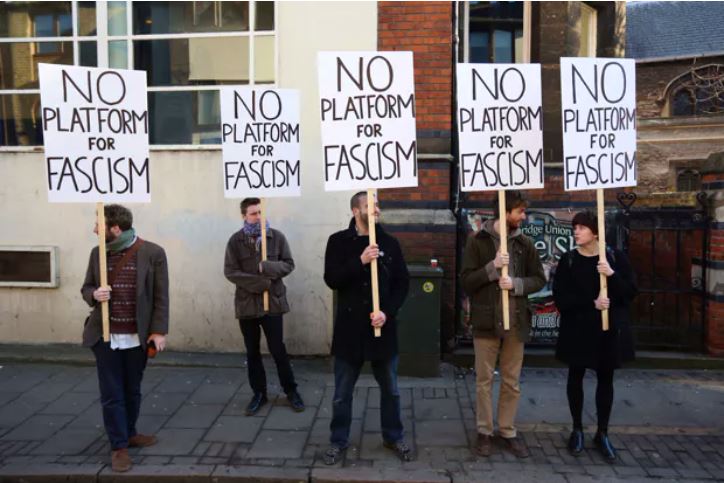
No Platform for Boris Kagarlitsky

no platform

You can not fight the far right by giving a platform to their friends
Simon Pirani’s Archive
July 25, 2019

The editors of Transform, a socialist journal that aims to strengthen the fight against the far right, are to publish a letter from me protesting their use of an article by Boris Kagarlitsky, a Russian “left” writer who collaborates with fascists and ultra-nationalists.

In 2014, Kagarlitsky energetically supported armed action in eastern Ukraine by Russian forces, mainly ultra-nationalist and fascist volunteers. He also began to cooperate with, and to share platforms with, extreme ideologues of Russian ultra-nationalism and fascism. Antifascists and trade unionists in Russia broke all ties with him. I gave details about Kagarlitsky’s position in 2014–16 in an open letter to the Stop the War campaign here.

Kagarlitsky continues to collaborate with the ultra-nationalists. Earlier this year he addressed a Moscow rally supporting Russia’s claim against Japan to the Kurile Islands, alongside the fascist mercenary Igor Strelkov-Girkin and other ultra-nationalist speakers.

At the same time, Kagarlitsky has never expressed solidarity with the young Russian anti-fascists who have been tortured by the security services and put on trial in the notorious Network case. Antifascists in Russia and internationally have united in a defence campaign around these victims of state repression; Kagarlitsky and his friends have not.

Despite this, Transform published an article by Kagarlitsky—about France, not Russia—in the last issue. This week I wrote to the editors to express concern. One replied, saying that my letter would be published in the next issue, later this year, and that they were “not aware” of Kagarlitsky’s cooperation with the right.

To raise awareness, I have put on line this short statement that you are reading.

This gap in the Transform editors’ knowledge is regrettable. All participants in Russia’s beleaguered antifascist movement know of Kagarlitsky’s high-profile defection. Plenty of material alerting English-language readers to his changed stance was published in 2015–16.

Obviously, this is not just about Russia or about Kagarlitsky. The right-wing populists and fascists, through nationalism and campism, pull “left” demagogues into their orbit more widely. This trend must be understood and fought.

Simon Pirani, 25 July 2019

My thanks to Mr. Pirani for permission to reproduce his statement here. Image courtesy of the Spectator and Getty. // TRR

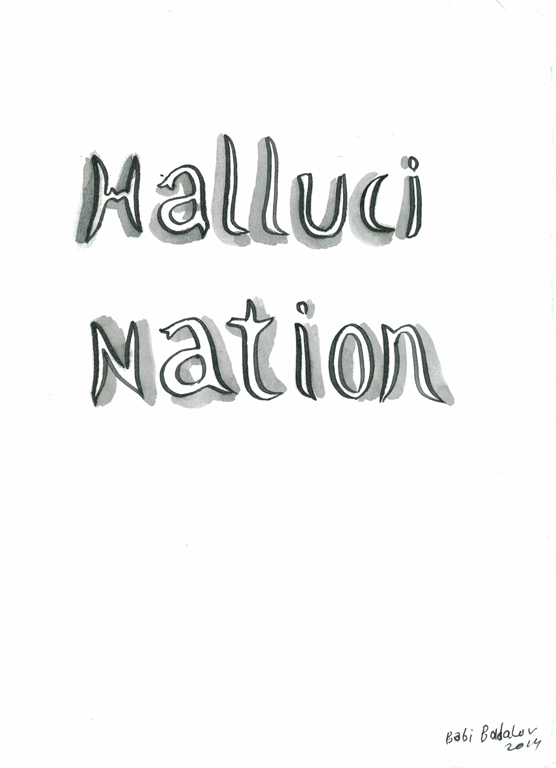
Halluci Nation

BabiBadalov8light

__________

Maybe there is no direct connection, but soon after the first article, below, ran in The Moscow Times, the following message appeared on the newspaper’s web site: “Due to the increasing number of users engaging in personal attacks, spam, trolling and abusive comments, we are no longer able to host our forum as a site for constructive and intelligent debate. It is with regret, therefore, that we have found ourselves forced to suspend the commenting function on our articles. The Moscow Times remains committed to the principle of public debate and hopes to welcome you to a new, constructive, forum in the future.” When I glanced at the comments to this article, it did seem that a lively “debate” was underway, but I no longer read such things to preserve what is left of my mental well-being. The emphasis, below, is mine.

Russia’s Empire State of Mind
Pyotr Romanov
October 26, 2014
The Moscow Times

Following World War I, the Russian Empire bid farewell to Poland, Finland, the Baltic states and Bessarabia [in modern Moldova]. The Soviet Union later regained only some of that territory — and yet that did not prevent the world from continuing to view the Soviet Union as an empire. After the collapse of the Soviet Union, Russia decreased in size even more than it had after World War I, and yet many today continue referring to it as an empire.

I recently read an impassioned plea on Facebook from several Ukrainians that God call down on Russia a host of biblical chastisements and hasten its demise. In their view, the only way to escape the claws of the Russian bear is to kill the animal. At the same time, they have no intention of fighting the beast themselves, convinced that Europe and the U.S. alone have the power and the responsibility to vanquish the foe.

In other words, they prefer that others break their bones in the bear’s den so they can mount the pelt over their fireplace. I somehow doubt that the rational West finds that prospect very attractive.

In fact, a number of historical figures dreamed of dismembering Russia. Peter the Great’s arch-rival King Charles XII of Sweden held that dream even before Russia formally declared itself an empire. The French ambassador in Stockholm at that time said, “The king will make peace with Russia only after he has arrived in Moscow, toppled the tsar from his throne, divided the state into small principalities and summoned the boyars to divvy up the kingdom into their personal provinces.”

In hindsight, knowing how the Swedes suffered defeat at the Battle of Poltava, it is tempting to assess such a claim as pompous bravado. However, that was a serious plan that the Swedish king and his allies had discussed on more than one occasion. Charles really did plan to install his own puppet ruler on the Russian throne. He dreamed of Pskov, Novgorod and all of northern Russia as Swedish possessions. He planned to allot all of Ukraine and the Smolensk region to Polish King Stanislaw Leszczynski. Charles agreed to give Russia’s southern lands to the Turks and Crimean Tatars. There are countless other similar stories in history — but where are all those dreamers today?

However, this is not the main point. I see no reason to blame my ancestors for their imperialist actions. Russians have no more to feel ashamed of in this regard than do the British, Germans, Spaniards and French. All of their imperialist pasts were dictated by fate, God, geopolitical factors and their national character — that with which it is absolutely pointless to fight.

The collapse of the Russian Empire deeply troubled many of its citizens, and the later collapse of the Soviet Union gave them a disturbing sense of deja vu. Even today, millions of Russians wax nostalgic for the past — particularly for the Soviet Union — recalling much that was also good from that time.

This is the second time in a century that Russia has gone through such painful “withdrawal symptoms” while overcoming its imperialist mentality. Russians have nothing of which to feel ashamed: the same process was no less painful for other “imperial” nations.

Of course, modern Russia is not an empire, and it is unbecoming to act like a broken record, continually repeating the same old cliches. It is just that the process of adapting to the new realities is not moving as quickly as some in the West — and also in Russia, by the way — would like it to. But it is impossible to hurry it along.

It is decidedly easier for a tiny little ship of a state such as Monaco to make a sea change than it is for a massive ocean liner such as religiously diverse, multiethnic and multicultural Russia. A little patience is needed.

I understand that what seems fast by historical standards might appear painfully slow to people. History is measured in ages, but individuals measure time in terms of a single lifespan. Nonetheless, it takes nine months for a baby to come into this world, and no amount of impatient fingernail-biting will change that.

Making a baby come into the world any sooner is not the healthiest option either. In the same way, it does no good to keep impatiently tugging on Russia’s sleeve. Every fruit has its given period of maturation. When the time comes, Russia will let go of the last vestiges of its imperial past.

Until then, praying for God to curse Russia with a swarm of locusts or the 10 plagues of Egypt is not only unseemly, but also a bit archaic and completely meaningless.

Pyotr Romanov [sic] is a journalist and historian. 

___________

Post-imperial melancholy has also got the unnamed editorial writer (the West’s most beloved Russian “leftist”?)  at Russian “leftist” web site Rabkor.ru waxing poetical in the vozhdist mode in the run-up to November 4, National Unity Day.

The West intends to play hardball in its long negotiations with Moscow. Zeal and rigidity might betray it, and then events will not go as planned. That has already happened in Ukraine. However, the US and the EU understand that Russian liberals have increased their grip on power and will stubbornly seek a compromise. Dmitry Medvedev has already said that a “reset of relations” requires a return to the “zero position,” meaning normal trade without sanctions. The ruling class will do anything for its sake, particularly if its position is complicated by economic problems. If solving the problem with Western Europe and the US requires presenting Putin’s head on a platter, then that it is how the problem will be solved.

But Russia is not a banana republic or a tiny country in Eastern Europe, where you can just organize a color revolution by gathering several thousand “civil society” activists on a central square. And so only Putin himself can remove Putin’s head for the US, and not only through his own carelessness.

Patriots stubbornly dream of persuading the current president to become like Stalin or Ivan the Terrible. Members of the liberal intelligentsia scare each other and the gullible western public with this same prospect. However, with each passing day, our ruler [sic] becomes like a completely different predecessor, Mikhail Gorbachev, who was also, incidentally, a politician who banked on compromises.

The growing prospect of a “liberal putsch” becomes more apparent with each passing day. The final act has not started, but the play is already underway. Liberals are making ritual sacrifices. They are sacrificing the exchange rate of the ruble and social policies. They are sacrificing Novorussia [Novorossiya]. They are sacrificing the country’s dignity. They are destroying the possibility of Russian society’s development. They are even willing to sacrifice the one who protected the system for many years. Only none of this will bear fruit, because only a different course can save Russia from economic disaster.

And let no one be deceived: if the liberal coup becomes a reality, its authors will quickly discover how correct the thesis “Ukraine is not Russia” was. Unlike its neighboring country, Russia, with the exception of the capital, will turn into one solid Donbass.

The preceding was an excerpt from “Who Will Bring Them Putin’s Head?”, published on October 20, 2014, by Rabkor.ru. You can read the entire editorial in English here, as translated by other, less shaky hands.

__________

After a friend mailed me the following “news” item, he wrote, “This is how the whole ‘television—Levada—television’ scheme works.” As Kirill Rogov has argued, many people will tell pollsters what authoritarian state television has told them to think, especially when it comes to things that don’t really matter to them, like musician Andrei Makarevich’s alleged “treason.” It’s no wonder that one of the world’s leading offshore Putin apologists was worried, last year, when it seemed as if the state was cracking down on the Levada Center. He needn’t have worried. My friend titled his email to me, “Levada will receive the Stalin Prize posthumously.” That about sums it up.

Almost Half of Russians Consider Makarevich a Traitor to the Motherland 
October 27, 2014 | Gazeta.ru

Almost half of Russians believe that when he performed in Slovyansk, which is occupied [sic] by the Ukrainian army, musician Andrei Makarevich betrayed the interests of the motherland, according to the results of a survey conducted by the Levada Center.

45% of those polled agreed with the statement “Makarevich betrayed the interests of Russia, and now the public does not want to go to his concerts.” However, among Muscovites there was a high percentage (32%) inclined to believe that Makarevich “acted in good conscience” and that he had been the target of a defamation campaign. 28% of respondents admit that Makarevich behaved unpatriotically, but that administrative resources have been used to disrupt his concerts in various Russian cities.

The percentage of those supporting Makarevich and condemning the defamation campaign was quite low—13%. Respondents with a higher education were generally more supportive of what the musician did than Russians with less than a secondary education.

The poll was conducted among 1,630 people aged eighteen years or older in 134 municipalities in forty-six regions of the country.

Earlier, Makarevich recorded a song about how he has been hounded. On October 27, news came of another cancellation of one of the musician’s concert, this time in Kurgan.

__________

Image (above): Babi Badalov, Halluci Nation (Orna-mental poetry), 2014; ink on paper, 26.5 x 19 cm. Courtesy of La Galerie Jérôme Poggi, Paris, and the artist.

Ivan Ovsyannikov: Friends of the Imaginary People

anticapitalist.ru

Friends of the Imaginary People

There is one point on which there is striking agreement among liberals, Putinists, and the “populist” segment of the Russian left. This is the idea that the majority of the Russian population adheres to leftist values, as opposed to the narrow strata of the middle class and intelligentsia in the big cities.

This simplified representation of societal processes, typical of both semi-official and opposition propaganda, is based on a juxtaposition of the so-called creative class with the notional workers of the Uralvagonzavod tank and railway car manufacturing plant, supposed wearers of quilted jackets with alleged hipsters. Discussion of such complicated topics as the Bolotnaya Square protests, Maidan, and Anti-Maidan revolves around this juxtaposition. The various ideological camps differ only in terms of where their likes and dislikes are directed.

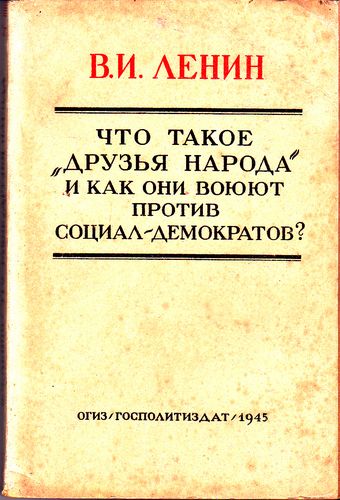
V. I. Lenin, What the “Friends of the People” Are and How They Fight the Social-Democrats (1894)

Leaving aside left-nationalist figures like Sergei Kurginyan and Eduard Limonov, the most prominent proponent of the “populist” trend within the leftist movement is Boris Kagarlitsky. The whole thrust of his current affairs writing is to exalt the silent majority (the working people), who are organically hostile to the parasitic petty bourgeoisie that, allegedly, constituted the core of the anti-government protests in Russia in 2011–2012, and in Ukraine in 2013–2014.

Ukraine in the Mirror of Russian “Populism”
In an editorial published on the web site Rabkor.ru, entitled “Anti-Maidan and the Future of Protests,” Kagarlitsky (or his alter ego: unfortunately, the article has no byline) describes the events in Ukraine as follows: “Nothing testifies to the class character of the confrontation that has unfolded in Ukraine like the two crowds that gathered on April 7 in Kharkov. At one end of the square, the well-dressed, well-groomed and prosperous middle class, the intelligentsia, and students stood under yellow-and-blue Ukrainian national flags. Across the square from them had gathered poorly and badly dressed people, workers and youth from the city’s outskirts, bearing red banners, Russian tricolors, and St. George’s Ribbons.” According to Kagarlitsky, this is nothing more or less than a vision of the future of Russia, where only the “state apparatus despised by liberal intellectuals defends them from direct confrontation with those same masses they dub ‘white trash.’”

The fact that the venerable sociologist has been forced to resort to such demagogic methods as assessing the class makeup of protesters by reversing the proverb “It’s not the gay coat that makes the gentleman” indicates the conjectural nature of his scheme. (I wonder how much time Kagarlitsky spent poring over photos from Donetsk with a magnifying glass.) When discussing the social aspect of Maidan, most analysts have noted the dramatic changes that occurred as the protests were radicalized. “At the Euromaidan that existed before November 30–December 1,” notes political analyst Vasily Stoyakin, “it was Kyivans who dominated, and in many ways the ‘face’ of Maidan was made up by young people and the intelligentsia, albeit with a slight admixture of political activists. Many students, people with higher educations, and creative people attended it. […] After November 30, when the clashes began, […] a lot of blue-collar workers without higher educations arrived, in large part from the western regions.”

According to Vadim Karasev, director of the Institute of Global Strategies, as quoted in late January, “[T]he backbone of Euromaidan is men between the ages of thirty-five and forty-five, ‘angry young men,’ often unemployed. […] In my opinion, it would be mistaken to call Maidan a lower-class protest, just as it would be to call it a middle-class protest. It is a Maidan of all disaffected people who are able to get to Kyiv.” According to a study carried out in mid-December 2013 by the Ilko Kucheriv Democratic Initiatives Foundation, every fifth activist at Maidan was a resident of Lviv, around a third had arrived from Ukraine’s central regions, every tenth activist was from the Kyiv region, and around twenty percent were from the country’s southeast.

Sixty-one (two thirds!) of the protesters killed at Maidan were from villages and small towns in Central and Western Ukraine. As political analyst Rinat Pateyev and Nikolai Protsenko, deputy editor of Ekspert Iug magazine, noted, “Among the victims, we see a large number of villagers, including young subproletarians. […] On the other hand, occupations favored by the intelligentsia are fairly well represented [in the list of the slain]: there is a programmer, a journalist, an artist, several school teachers and university lecturers, several theater people, as well as a number of students.” By “subproletarians” Pateyev and Protsenko primarily have in mind seasonal workers “who live on the money they earn abroad.” Isn’t this all fairly remote from the portrait of the “well-dressed, well-groomed and prosperous middle class” painted by Rabkor.ru’s leader writer? We should speak, rather, of the classical picture observed during revolutionary periods, when peaceful protests by students and the intelligentsia escalate into uprisings of the working class’s most disadvantaged members (who for some reason were not prevented from fighting by either liberals or hipsters).

As evidence of Anti-Maidan’s class character, Rabkor.ru’s editorialist adduces no other arguments except to point out the “short text of the declaration of the Donetsk Republic,” which “contains language about collective ownership, equality, and the public interest.” However, many observers have also noted the growth of anti-government and anti-oligarchic sentiments at Maidan. Journalist and leftist activist Igor Dmitriev quotes a manifesto issued by Maidan Self-Defense Force activists: “The new government of Ukraine, which came into office on Maidan’s shoulders, pretends it does not exist. We were not fighting for seats for Tymoshenko, Kolomoisky, Parubiy, Avakov, and their ilk. We fought so that all the country’s citizens would be its masters—each of us, not a few dozen ‘representatives.’ Maidan does not believe it has achieved the goal for which our brothers perished.”

Maidan and Anti-Maidan, which have a similar social makeup, employ the same methods, and suffer from identical nationalist diseases, look like twin brothers who have been divided and turned against each other by feuding elite clans and the intellectuals who serve them. There is absolutely no reason to force the facts, cramming them into a preconceived scheme drawn up on the basis of completely different events that have occurred in another country.

Is Russian Society Leftist?
But let’s return to Russia and see whether the “populist” scheme works here. Can we speak of a “leftist majority” that deliberately ignores protests by the petty bourgeoisie, who are protected from popular wrath by the authorities?

This belief is common within a certain section of the left, but there is no evidence at all to support this view. Poor Kagarlitsky is constantly forced to appeal to absences. For example, commenting on the outcome of the 2013 Moscow mayoral election, he declared a “victory” for the “boycott party” (that is, people who did not vote in the election), which by default is considered proof the electorate is leftist. It logically follows from this that the absence, say, of mass protests against fee-for-services medicine must testify to the triumph of neoliberal ideas within the broad masses of working people.

Sure, in today’s Russia statues of Lenin are not knocked down so often, and Kremlin mouthpieces eagerly borrow motifs from Soviet mythology. The Communist Party of the Russian Federation is still the largest opposition party (but is it leftist?), and many people see the Soviet Union as the touchstone of state and economic power. But are all these things indicators of leftism in the sense the editorialist, who considers himself a Marxist, understands it?

To get closer to answering this question, we need to ask other questions, for example, about the prevalence of self-organization and collective action in the workplace. The statistics on labor disputes in Russia, regularly published by the Center for Social and Labor Rights, are not impressive. Even less impressive are the statistics for strikes. Independent trade union organizations are negligible in terms of their numbers and their resilience, and the rare instances of successful trade union growth are more common at enterprises owned by transnational corporations, where industrial relations approximate western standards. Activists in such trade unions as the Interregional Trade Union of Autoworkers (which rejects the paternalist ideology of the country’s traditional trade union associations) are forced to resort to translated textbooks on organizing and the know-how of foreign colleagues, not to native grassroots collectivism or the remnants of the Soviet mentality.

The above applies to all other forms of voluntary associations, which currently encompass a scant number of Russians. Whereas Russian Populists of the late nineteenth century could appeal to the peasant commune and to the cooperative trade and craft associations (artels) and fellow-countrymen networks (zemliachestva) that were common among the people, the “populists” of the early twenty-first century attempt to claim that a society united by nothing except state power and the nuclear family adheres to leftist values.

The standard explanation for the failure of the Bolotnaya Square protests is that they did not feature “social demands,” meaning slogans dealing with support for the poor, availability of public services, lower prices and utility rates, and increased pensions and salaries. But such demands are part of the standard fare offered by nearly all Russian political parties and politicians, from United Russia to Prokhorov and Navalny. These demands sounded at Bolotnaya Square as well. Successfully employed by the authorities and mainstream opposition parties, this social rhetoric has, however, absolutely no effect on the masses when voiced by radical leftists, strange as it might seem. We are constantly faced with a paradox: opinion polls show that the public is permanently concerned about poverty, economic equality, unemployment, high prices, and so on, but we do not see either significant protests or the growing influence of leftist forces and trade unions. Apparently, the explanation for this phenomenon is that a significant part of the population pins its hopes not on strategies of solidarity and collective action, but on the support of strong, fatherly state power. The Kremlin links implementation of its “obligations to society” with manifestations of loyalty: this is the essence of its policy of stability.

Leftists in a Right-Wing Society
Finally, should we consider ordinary people’s nostalgic memories of the Soviet Union during the stagnation period a manifestation of “leftism,” and rejection of western lifestyles and indifference to democratic freedoms indicators of an anti-bourgeois worldview? According to the twisted logic of the “populists,” who have declared most democratic demands irrelevant to the class struggle and therefore not worthy of attention, that is the way it is. Instead of accepting the obvious fact that proletarians need more democracy and more radical democracy than the middle class, and that protests by students and the intelligentsia can pave the way to revolt by the lower classes, theorists like Kagarlitsky try to paint ordinary conservatism red.

They tacitly or openly postulate that workers can somehow acquire class consciousness under a reactionary regime without breaking with its paternalist ideology and without supporting the fight for those basic political rights that workers in the west won at the cost of a long and bloody struggle.

It is time to recognize that we live in a society far more rightist than any of the Western European countries and even the United States. What European and American right-wing radicals can imagine only in their wildest fantasies has been realized in post-Soviet Russia in an unprecedentedly brief span of time and with extraordinary completeness. The Soviet legacy (or, rather, the reactionary aspects of the Soviet social model) proved not to be an antidote to bourgeois-mindedness, but rather an extremely favorable breeding ground for a strange capitalist society that is simultaneously atomized and anti-individualist, cynical and easily manipulated, traditionalist and bereft of genuine roots. And we leftists must learn to be revolutionaries in this society, rather than its willing or unwitting apologists.

Ivan Ovsyannikov, Russian Socialist Movement
April 20, 2014