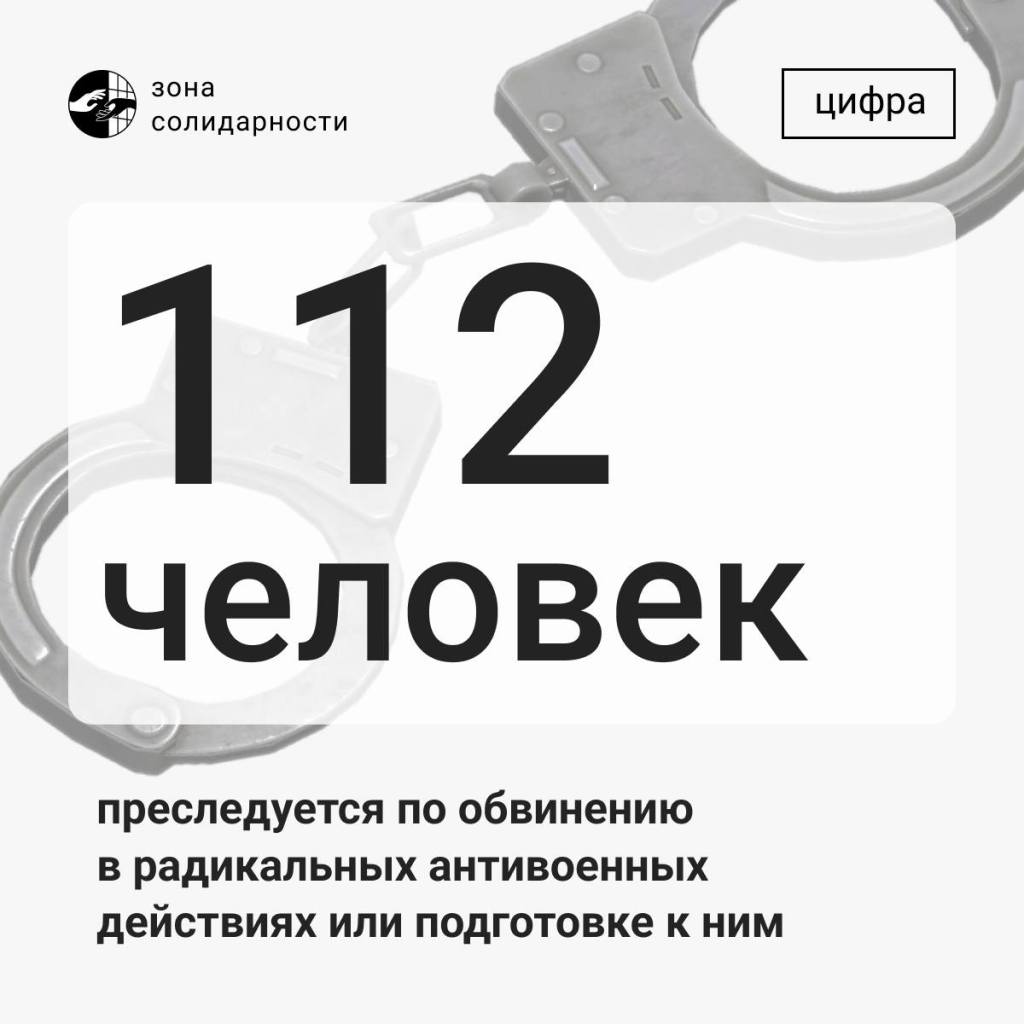
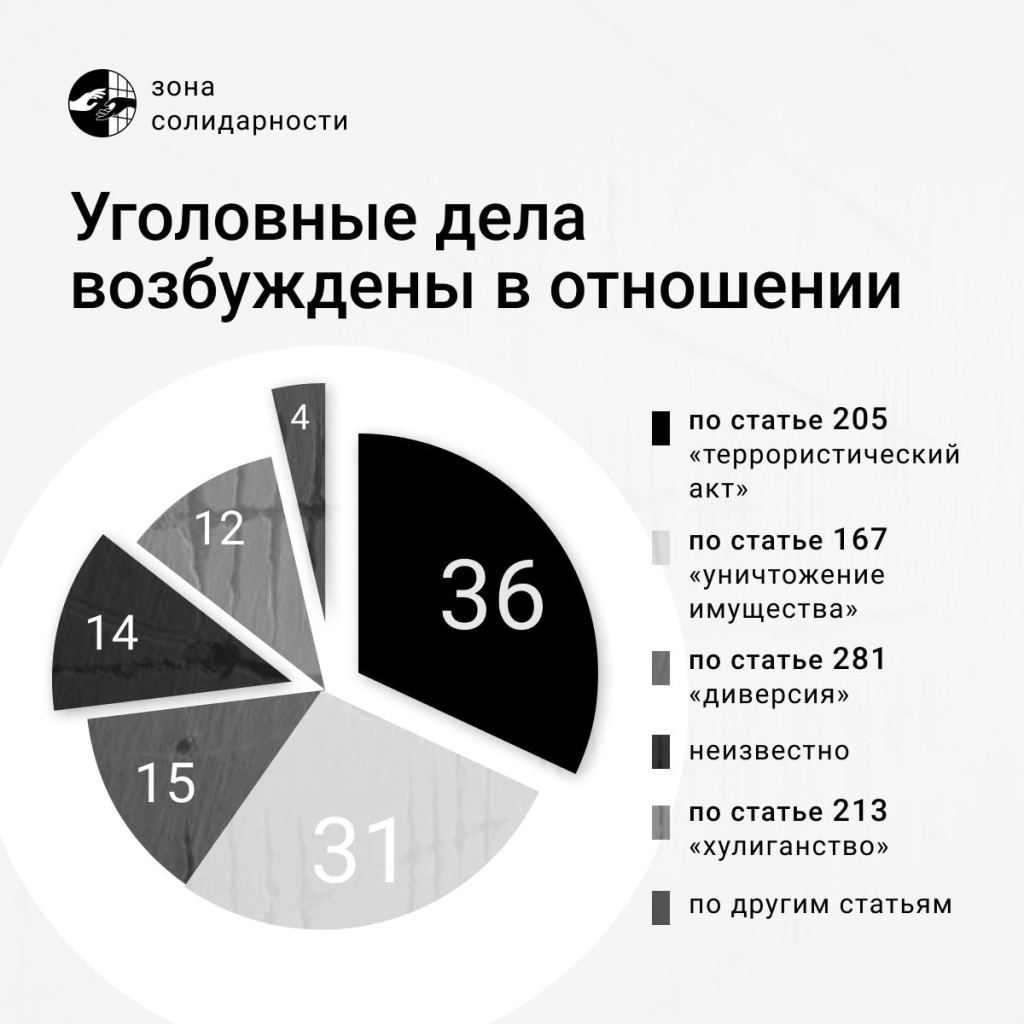
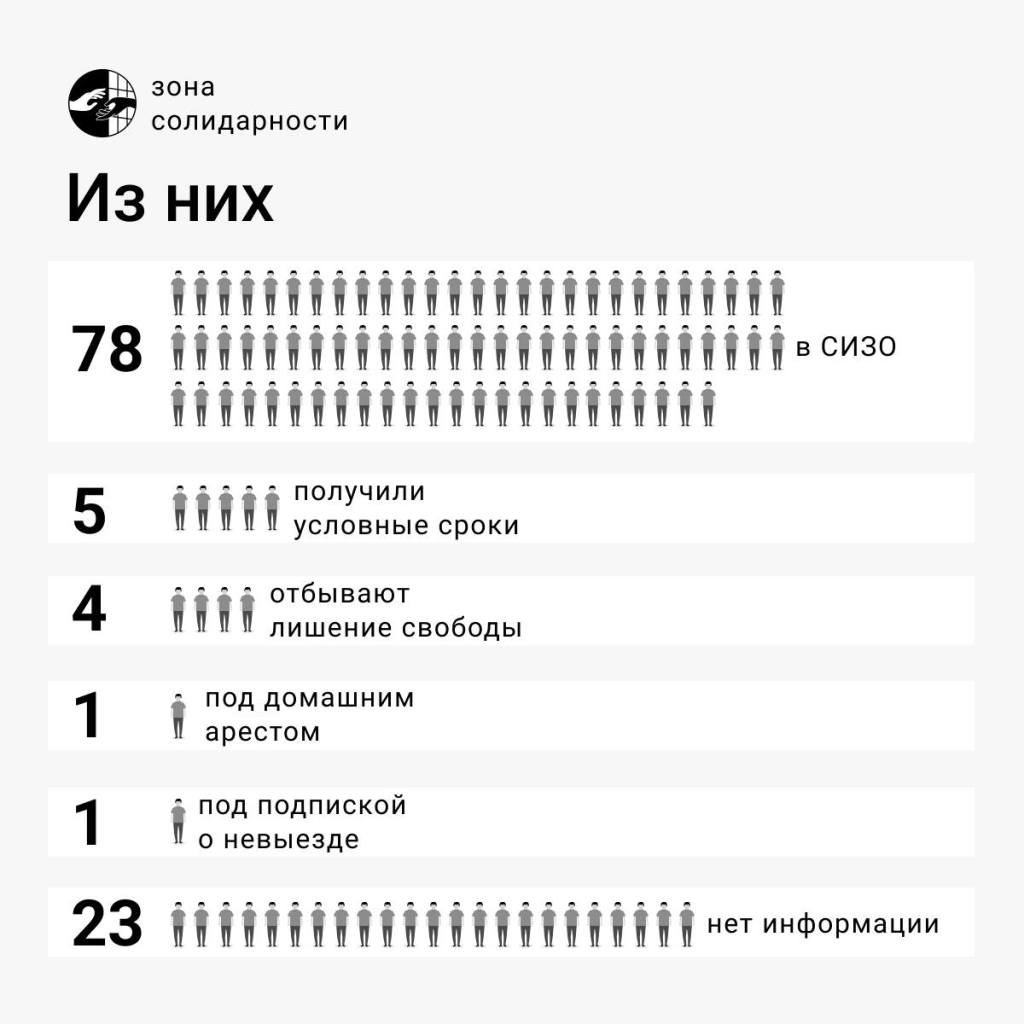
All the swindlers are fleeing Russia:
They have property in the West.
The bandits and sodomites are fleeing
And all those killed by their conscience.

The Judases are running, all going there,
Where there is no love, where there is no Christ.
Where there are gay parades and Nazis,
Liberals and globalists.

God is cleansing Holy Russia,
He protects it himself like his own daughter!
He will not let the evil ones torment us,
May God grant that we keep our faith.
Only an ignoramus doesn't understand
Russia as the last hope.

Let the enemy shout that Putin is bad
And under him all in Russia is bad.
If the whole herd of fleas is mad,
Evidently our Putin has done everything right!
First, if you know someone who might like this newsletter, please forward it to them.
Next, the story. I know many people this week are focused on the killing of Russian blogger Vladlen Tatarsky in St Petersburg. We are working on that (stay tuned).
But I want to talk about the long-term impact of Russia’s war on Ukraine and the social crisis it has caused in my country.
In this case, it’s about Ukraine’s teachers, who are facing serious salary cuts against a backdrop of high inflation, prices, rents and costs of basic services.
It’s a story about who is paying the price of Russia’s war, which has caused hundreds of billions of dollars of direct and indirect damage to Ukraine.
To do it, I spoke to teachers, local officials and trade union activists to find out how the Ukrainian government is being forced to pursue austerity – and what that means for hard-working people across the country.
I found that some local authorities are managing to pick up the shortfall in central grants – while others just can’t do it, as tax income has dropped off following the invasion.
Either way, local officials know it’s political suicide to fire people en masse, and have to scramble and scrape to get through the funding shortfall.
But it feels like a crisis postponed – rather than solved.
It’s not the prices that are rising — it’s the ruble that is falling. The “special operation” is a war. You can’t force Ukraine to like you. We haven’t surrendered to NATO. The neighbors have no more Nazis than we do. Soldiers should be alive, healthy, and at home. The president has gone mad, and everyone is afraid to contradict him. Your children love you and want to live like human beings.
That’s it, thank you. So that’s how it is. Yeah, it’s time to end it. Wow. Thanks, I feel relieved. Oh, would that they would explain it that way on TV.
The war has made us take a look around. In whose midst do we live? Do our fellow citizens think the same way we do? Public Sociology Lab (PS Lab) is a research team that studies politics and society in Russia. In 2022, it launched a project to study the attitudes of Russians to the war.
How do people explain the conflict’s causes to themselves? How does their attitude to politics affect their personal interactions and self-perception? Do they have a political position at all? We talked about this with researchers at PS Lab. Svetlana Erpyleva works at the Center for Eastern European Studies at the University of Bremen, while Maxim Alyukov, a political sociologist, works at the Institute for Russian Studies at King’s College London.
How is your research on the attitude of Russians to the war with Ukraine set up?
Svetlana Erpyleva: Qualitative methods are the main difference between our team and the other teams doing systematic research on perceptions of the war. We have long conversations with our informants and try to find out not only their attitude to the war directly, but also many other things related to it — what sources of information they trust, how they interact with loved ones, their fears and hopes, and so on.
We searched for respondents using social networks, ads, and the “snowball” method (that is, when an informant helps us set up a conversation with their ow friends). It was a big help in contacting people who do not often reflect on politics.
Some people responded enthusiastically to the ads we placed about finding informants — they wanted to talk to us themselves. Moreover, these are not only people who have a clear stance for or against the war and are willing to share it, but also those who feel that their opinion is not represented in public discussion. Such people do not see other people who think like them on social networks or in the media and want to put themselves on the map.
For example, during the the second stage of our research, in the autumn of 2022, we realized that dividing people into “supporters of the war,” “opponents,” and “doubters” (as we had done in the spring) was no longer warranted. Our sources support some decisions by the authorities, but not others. They regard the war as necessary in some ways, but some things about it terrify them, while other things cause them to doubt. Our interviews, which last about an hour (sometimes longer), have in fact enabled us to understand the peculiarities of how the war is regarded by Russians, with all their contradictions and complications.
Our other goal is to study the dynamics of how the war is regarded. We conducted the first series of interviews in the spring of 2022. We did the second series between October and December 2022. It is important to note here that in the autumn we spoke only with “non-opponents of the war,” that is, with those whom in the spring we had provisionally labeled “supporters” and “doubters.”
Maxim Alyukov: I would also make another important clarification. When people talk about studying perceptions of the war, they often have in mind representative surveys. Using them, we can indeed more or less accurately describe the range of opinions around the country. But polls cannot show how opinions about the war are shaped, or what emotions people experience. We are going deep rather than wide. Yes, we cannot draw large-scale conclusions about public opinion in general, but, unlike the polling projects, it is easier for us to talk about specific mechanisms — what emotions tend to shape certain positions, how different types of media consumption affect perceptions of the war, and so on.
What is the difference between how people regarded the war in the spring and the autumn?
SE: On the one hand, we see from the autumn interviews that perceptions of the war had not changed radically. Almost none of the people with whom we had repeat conversations had changed their attitude to the war from “plus” to “minus” and vice versa. Of course, there have been small shifts in this regard. For example, some of the springtime convinced supporters remained “optimists,” while others had become “pessimists.” The former believe that the “special operation” is going in the right direction, despite all the shortcomings, while the latter criticize the chaos in the army, the chaos during the mobilization, retreats by Russian troops, and so on.
But we shouldn’t deceive ourselves: the pessimists have not stopped supporting the war. Rather, they want Russia to act tougher and more effectively, and ultimately win.
In the first series of interviews in the spring, we identified a group of so-called doubters. But it is clear that even back then different informants in this group were closer to one or the other pole of opinion. Some doubted, but were inclined to support the war, while others were against it. In the autumn, there were fewer informants who were completely unsure of their position. Those who had been closer to the supporters of the war had often begun to support the war a little more. The same thing happened to those who had been more against the war than not: many of them had become a little more strongly opposed to the war (without turning into unambiguous opponents).
On the other hand, the ways people have for justifying the war have changed. Some of the old methods are losing popularity, while others are emerging.
For example, one of the new justifications for war involves imagining it as a natural disaster. We feel sorry, of course, for those who perish in a flood. We cannot regard this other than negatively. But it is impossible for us to oppose it. The same thing has happened with the war.
From the viewpoint of the informants who have resorted to this excuse, the war just happened. It is a terrible reality that we can only accept.
Another new way of rationalizing the war involves turning its consequences into its alleged causes, as when our informants say, “Ukraine has been bombing our border cities, so we need to continue the war,” or, “The war has shown that we are fighting not with Ukraine, but with the collective West. We are fighting not with a fraternal people, but with our perennial enemy, so it is right that we started this war.” The second statement had also come up in the spring, but it has become much more popular. The rationale behind such justifications involves arguing that events that happened after the war started seemingly reveal the enemy’s true identity.
MA: Attitudes towards sources of information have also changed. There are two trends: polarization and stabilization. At the war’s outset, people tried to seek out information, including information from the “opposite camp.” For example, those who supported the war sometimes read opposition and Ukrainian media, because they understood that the Russian state media are propagandistic. Now, on the contrary, many people are so weary that they have not only reduced their consumption of information in general, but also have stopped following sources that reflect the opposite opinion.
At the beginning of the war, the following idea was often discussed: information about the destruction, civilian casualties, and losses among Russian soldiers would gradually undermine the effect of propaganda. Now we see that, over time, the simultaneous consumption of information from pro-government and opposition sources, which paint radically different pictures of the world, has had the opposite effect. It causes discomfort, which leads to the fact that people who are less involved try to shield themselves from information about the war in general, while more involved people consume propaganda and stop paying attention to alternative sources. This is a conscious choice: they realize that they are consuming propaganda. I remember the words of one informant: “There are different points of view, but the brain tends to stick to one theory. I’m inclined to choose the theory of my country, of the state media, so that my brain follows it.”
It transpires that the person understands perfectly well that they are consuming propaganda, and they consciously choose it amidst conflicting explanations that cause discomfort.
Do these changes produce any practical actions? Maybe people stop talking to certain people or get involved in charity?
SE: There are only a few volunteers among our informants.
People can have a positive view of charity, and worry about their country, but most of them do not take any action themselves.
And yet, volunteering that involves assistance to the mobilized is certainly seen positively by our informants (that is, by “non-opponents” with very different views of the war). Such volunteering is regarded not as involvement in the war, but as support for “our boys,” for “our country.” This is not surprising: there are always significantly fewer “activists” and volunteers than there are sympathizers. Only a few people are involved in protests, too.
Changes have also been taking place in the way people talk about the war with their loved ones. For example, many of our informants described the summer as a carefree time when the war had completely disappeared from their lives: they stopped discussing it. The mobilization was the “new February 24” for those informants (who were most often people remote from politics). The topic of war had returned to everyday conversations again. The informants were discussing the events even with strangers. For example, one of our sources told us that even at work meetings with her clients she had occasion to discuss the mobilization.
Do attitudes to specific events affect everyday practices? For example, the mobilization began and people decided to check whether their foreign travel passports were still valid.
SE: Unfortunately, we didn’t talk much about everyday practices in our interviews. Probably the most common reaction to the mobilization’s announcement was anxiety and, simultaneously, the absence of concrete action: “Whatever will be will be, but I hope that nothing bad happens.” Some of our informants who did not want to be sent to the front changed their places of work and residence, but we didn’t often encounter such people in our interviews. (It is important to understand that we were talking to “non-opponents” of the war.)
MA: It’s also worth recalling that a minority of Russians have the possibility of leaving the country. According to our research on social networks (this is another project that my colleagues and I are doing), the most common reaction to the mobilization has been evasion.
Is it possible, then, to talk about a desire for inneremigration among those who have remained in Russia? For example, a person says, “Actually, I have a lot more important and valuable things in my life [than the war], and I want to pursue them.”
SE: It was the presence of this desire among people in the spring of 2022 that made us single out the doubters as a separate group. All of them were typified by the notion that the “distant war” was secondary compared to more important values — work, loved ones, and family. But in the autumn, we saw that fewer and fewer of our informants were able to take a neutral stance, to completely distance themselves from assessing the war. Our informants talked about pressure: they seemed to feel that society demanded that they voice their opinion. In this sense, as Maxim has said, the polarization of views has been increasing.
But our informants assess [this polarization] in different ways. Many supporters of the war say that it is awesome because people are becoming more united, more interested in what is happening around them. The “anti-patriots” will leave the country, but patriotic Russians will remain. Others complain that it is hard for them to cope with the pressure. They would like to take a neutral position, but they cannot manage it. One of my sources described it this way (I’m quoting from memory, of course, but nearly verbatim): “I would like not to take a side, but my smart friends say that the war should be continued. And I understand that they are right, that one should support one’s country in such circumstances. I’m unable to take a back seat.” But a little later she said: “I’m afraid that time will pass and [people] will come and ask me, ‘Have you been reading Meduza? Have you been watching Channel One? Whose side are you on?’ And I won’t have any answer.” This situation even makes her think about emigrating. That is, on the one hand, she chooses to side with supporters of the war; on the other hand, she is afraid to make this choice.
MA: I would add that the desire for neutrality remains. One respondent put it this way: “There is war all round, but I try to maintain peace on my VKontakte page.” He moderates disputes there and shares links to articles about the importance of neutrality. For him, this is a way of creating a space for himself in which there is the possibility of remaining neutral, since he doesn’t have this possibility in other contexts. It is another matter that there are fewer and fewer opportunities for such neutrality.
You say that your respondents feel pressure. Where do they feel this pressure? In interactions with loved ones and colleagues, or somewhere else?
SE: It is often the pressure of their immediate environment. Many opponents of the war have left the country, and the doubters thus have fewer contacts with their viewpoint. They are surrounded, as a rule, more by supporters of the “special operation.” But the cause of such pressure may be an inner conflict. For example, our sources tell us that they were taught at school that when the country is in difficult straits, the worst stance is neutrality. But now they have found themselves in exactly this position. It is really difficult for them: they see the propaganda on both sides, but do not feel strong enough to resist it. This can be illustrated as follows: “Maybe Russia was right to attack, or maybe it was wrong to do so. Maybe Ukraine is the enemy, or maybe it isn’t the enemy. I don’t understand what’s going on at all. But how can I fail to take a stance?”
In such circumstances, people turn to what seems certain to them — for example, to their Russian identity. You may not know who is right, but you have a native country and it must be supported.
MA: This feeling of pressure consists of two parts. The first is personal interaction, about which we have said our piece. The second is the influence of the media, in which you can constantly see appeals and reminders of the war. This background encourages a person to clearly articulate their position.
Is the official newspeak (“special operation”, “line of contact,” etc.) incorporated into the explanations given by the “non-opponents” of the war? Is the state discourse generally used to justify it?
MA: Yes and no. It does happen that our sources literally quote propaganda narratives. For example, they start saying on TV that there are fakes everywhere, and a person repeats this idea. But at the same time, an absolute minority of our sources trust state broadcasts, although there are such people among them. They have doubts and come up with their own hypotheses. But it is important to take into account that our informants live in large cities, so it is likely that, for example, in smaller cities far from the capitals, the ratio is different, that there are fewer people there who are like the majority of our respondents, and more people who trust propaganda.
SE: You also have to understand that there are different types of support for the war, and therefore different explanations for it. There are people who accept the explanations given by the state media. Most often these people are elderly: they regularly watch TV, and then rehash the rhetoric of the propagandists. But there are other kinds of people — for example, those whom we call “committed supporters.” Their attitude to the Russian-Ukrainian conflict was shaped back in 2014, or even in 2004. They can be quite critical of propaganda narratives and are fond of saying, “We have bad propaganda. It is incapable of explaining anything.” Such people are able to explain the war’s causes on their own. And there are, for example, people who are remote from politics, who might watch TV sometimes, but it doesn’t convince them. They can even rehash propaganda cliches, but they do not adopt them, they do not present them as their own words. For example, they say, “We were told that…” or “We are told that…”
Is it possible then to say that, despite propaganda, polarization, and state pressure, even those who are not against the war are in a gray area? In other words, there are no views that could unite people, and accordingly, that is why they cannot unite and make demands.
SE: Yes, that’s right. Unless “convinced supporters” could try to create some kind of association. But I’m sure they’re a minority. Most people are busy with their daily affairs: they are not interested in political positions and movements. We are currently preparing a second analytical report on the results of the autumn stage of our study, and there we even try to avoid the word “position.”
Most of our informants have no “position.” Their attitude to the war is a bundle of fears, doubts, hopes, and other feelings. Such people may want Russia to win, but sincerely worry about the victims of the shelling in Ukraine.
One of our informants said, “If I had been subject to the mobilization I would have been out of Russia in three minutes.” And yet she, for example, wants Russia to win.
MA: Especially since propaganda does not just attempt to impose a certain point of view. It also generates a multitude of contradictory narratives that simply confuse people. This is a paradox of authoritarian propaganda: the state needs this vital demobilizing effect to maintain control, but it also prevents it from generating broad support for the war.
You mentioned sympathy for the victims of the shelling. In your spring report, some of your sources say that they would tolerate a decline in the material standard of living, because for them what matters are spiritual values. Since they are so clearly aware of losses, can we say that Russians perceive themselves as victims?
SE: We rarely see people regarding themselves as victims directly. They say, “The situation has become worse in Russia as a whole, but everything is fine with me. Yes, people are being mobilized, and that’s scary, but my loved ones aren’t being mobilized. Prices have gone up, but we’re coping.” Our sources often regard Russia as a whole as a victim. They are offended on Russia’s behalf: it was forced into the conflict, and it is humiliated everywhere and considered an aggressor. That is, they don’t think “[international] brands have abandoned me,” but those brands have abandoned “poor Russia.”
MA: Ukrainians are also regarded as victims. “The poor residents of Ukraine are being used by NATO. Would that it were over as soon as possible.” In many ways, this is part of the propaganda narrative that Ukraine has become a firing range on which NATO and Russia are fighting using Ukrainians as proxies. But this is, rather, a propaganda cliche that people simply repeat without thinking through their own position on this issue.
It follows that “non-opponents” of the war do not regard it as part of their personal lives?
SE: This is a generalization, of course, but I would say that it is basically true. For the opponents of the war, on the contrary, the war has become an existential challenge. Sometimes they even make themselves experience it as such: “I cannot live an ordinary life. I must remember that there is a war going on.”
But isn’t there a contradiction here? The “non-opponents” of the war do not regard it as a personal matter, but we are saying that they feel pressure from their loved ones, are trying to find their own identity, and are grasping for rationalizations.
SE: This is a difficult question, but let’s try thinking about it. Compared to opponents, supporters and doubters are more likely to try to rid themselves of negative thoughts, to distance themselves from the war. And yet it regularly makes its presence felt. The latter is a new trend, and many of [our respondents] do not like it: they would prefer to live their lives without being reminded about the war. But it has become more difficult to do this.
MA: In our research on how the war is seen by Russians, we have been observing what I had observed in my pre-war research. People, if they are not politicized, rarely hold consistent positions at all. I will give an example from my research on Russian perceptions of the conflict between Russia and Ukraine prior to February 24. A person has a smorgasbord of different political ideas. He supports all the decisions made by the authorities, including the annexation of Crimea and military backing for the so-called DPR and LPR. And yet half an hour later he says, “Basically, it would be a good idea to withdraw the troops and leave Ukraine alone. It’s bad for us.” It’s just that he hadn’t needed to make connections between his disparate views on this issue before. This necessity emerged during our conversation.
We have been observing the same thing now. People are trying to push the war out of their lives. They need arguments in favor of the war — not because it is their political position, but because it is safer to live that way. For many of our respondents, the interview was like an exam in which they were forced for the first time to think about logical chains and formulate at least some kind of a clear opinion about the war, which they had not tried to formulate before.
What goes on in your mind?
I think that I am falling down.
What goes on in your mind?
I think that I am upside down.
Lady, be good, and do what you should,
you know it'll work alright.
Lady, be good, do what you should,
you know it'll be alright.

I'm goin' up, and I'm goin' down.
I'm gonna fly from side to side.
See the bells, up in the sky,
Somebody's cut the string in two.
Lady, be good, and do what you should,
you know it'll work alright.
Lady, be good, do what you should,
you know it'll be alright.

One minute one, one minute two.
One minute up and one minute down.
What goes on here in your mind?
I think that I am falling down.
Lady, be good, and do what you should,
you know it'll work alright.
Lady, be good, do what you should,
you know it'll be alright.
Throughout Putin’s war on Ukraine, the attitudes of the Russian public toward the regime and the conflict have been the subject of much scrutiny. This talk addresses this question by analyzing data released by the Presidential Administration that summarizes monthly correspondence received from the public from January 2021 through December 2022. While the identity of these correspondents is not known, their decision to send non-anonymous appeals to the President suggests that they support or tolerate the Putin regime. The data demonstrate that after an initial period of uncertainty about the war’s economic impact, these concerns abated until the announcement of mobilization in September. Since then, the appeals depict a Russian public that is increasingly concerned about conditions of military service and the war’s impact on service members and their families. At the same time, the data indicate that the Kremlin’s strategy to shift the blame for mobilization from the President to regional authorities appears successful.
Pollsters argue over how many Russians support the Ukraine war
Since the Russian invasion of Ukraine, sociologists have grappled with the question of how many Russians support the Russian army in Ukraine. Both independent and state-run pollsters claim they are the majority, and these studies are frequently referenced in Western media. However, at the same time, a group of independent sociologists have pointed out that these polls may not be representative — many Russians are reluctant to speak freely about their thoughts on the conflict due to draconian wartime censorship laws.
Independent researchers from the Khroniki project recently presented the findings from their latest survey, which suggest using a percentage of how many Russians support the war may not be a very meaningful statistic. In their view, this figure comprises a misleadingly wide spectrum of people: from those who volunteered to fight in Ukraine to those afraid of repression. Moreover, at least half of those who are opposed to the war are afraid to speak out, the Khroniki sociologists said.
To identify the core pro- and anti-war groups in Russia, the pollsters devised a series of questions. The results of their survey suggests that the core support group represents 22% of the population, while the core opposition is 20.1%.
Separately, researchers stress that “the fridge counters the effects of the TV,” and this effect is felt more and more with each passing month. The level of support for the war among TV viewers who are encountering economic pressures is falling. Among TV viewers who have encountered at least one economic problem, support for the war was down 11 percentage points in February.
Other polls, however, show that a vast majority of Russians support the war. For example, according to state-run pollster VTsIOM, 68% of Russian residents welcomed the invasion of Ukraine and just 20% are opposed to it. And leading independent polling agency Levada Center published results in January that suggested 75% of Russians support the war — to varying degrees.
Why the world should care:
It’s not easy to work out exactly what proportion of the Russian population supports the war, but Khroniki is certain that the pro-war lobby is far smaller than polls from leading agencies would suggest. If that is true, it casts doubt on the widely-held belief in the west that the war in Ukraine is supported by most Russians who remain inside the country.
On 1 September 2022, I returned to Russia after almost a year away. The war that began six months ago had been present in my life daily: in the news, in conversations with friends and colleagues, and in the Ukrainian flags on the streets of the European city where I lived. But there was no trace of the war in the town near Moscow where I grew up, and where my parents still live. I did not see pro-war or anti-war graffiti or slogans; war was not mentioned in the streets or by my friends and acquaintances. As I sank into the familiar rhythm of my childhood town, I caught myself thinking that perhaps I was beginning to forget about it too. That all changed on September 21, the day ‘partial mobilisation’ was announced. Suddenly, the war was being mentioned all around me, or rather whispered about, in the cafe where I listened to Putin’s address, in the local library, in the street, on the train from Moscow to St. Petersburg. The war seemed to have reappeared in Russian society instantaneously, with the snap of a finger.
I had observed something similar before, not around me, but as a researcher: in the data my colleagues and I collected. Our Public Sociology Lab began conducting a qualitative study on Russians’ perceptions of the war on February 27, 2022, just three days after the full-scale invasion of Ukraine began. During the first months of the war, we conducted (link in Russian) over 200 interviews with supporters of the war, its opponents and doubters. At that moment, many of our informants, including those who were far from being exclusively anti-war, also said that they had been shocked by the news of the start of the ‘special military operation’ and had tried to make sense of events in their conversations with friends and relatives. But after a few weeks, the emotions of shock and confusion began to fade. The war became routine and faded into background noise.
So we knew that the ‘return of war to society’ following the announcement of mobilisation would also likely be temporary. We waited a few weeks and, on October 11th, conducted our first interview as part of the second stage of our research into Russians’ perceptions of war. Between October and December 2022, we conducted 88 interviews with ‘non-opponents’ of the war, deciding this time to focus the study on support for and disengagement from the war, rather than resistance to it. Forty of these interviews were repeated conversations with supporters of the war as well as its doubters doubters, with whom we had already spoken in the spring.
We were driven by the desire to understand how perceptions of, and predominantly support for, the war were evolving. From the interviews conducted in the spring of 2022, we roughly divided all ‘non-opponents’ of the war into supporters and doubters. Despite the fact that among supporters of the war, there were interviewees who were convinced to a greater or lesser extent, all of them found some means to justify the ‘special military operation’. Some were staunch supporters of ‘the Russian world’ and believed that the war would push the geopolitical threat away from Russia’s borders and strengthen the country’s position; some were worried about loved ones in Donbas and rejoiced at the prospect of an imminent resolution to the longstanding conflict; some, viewers of Russian TV channels, spoke of ‘combating fascism’ and ‘protecting the Russian-speaking population of Donbas’; many expressed confidence or, at the very least, hope: ‘if our government started the war, then it must have been necessary’. Although these people were worried about the casualties caused by the war and looked with apprehension at a future defined by isolation and sanctions, they remained supporters of the ‘special operation’.
It seemed to us, as it did to many others, that the announcement of mobilisation might fundamentally change something in the way Russians viewed the war. However, in addition to mobilisation, the war was marked by a series of other events, each of which could have left an impression on Russian society: the seizure of new territories and their subsequent annexation to Russia, the retreat of Russian troops, the bombing of the Crimean bridge, news of the bombing of Russian border regions. All this occurred against a backdrop of increasing Western sanctions, muddled explanations from the authorities as to why the country was at war, repression of dissenters, and increasing polarisation of views on the war in society. In such a state of affairs, we assumed that the views of the war held by ordinary Russians could not be sustained. In some ways, our assumptions were right, and in other ways, we were wrong.
It was not without reason that we waited a few weeks after the announcement of mobilisation and the swift ‘return of the war to society’ before we began the second stage of our research. The October interviews showed that the emotions associated with the announcement of mobilisation were as strong as they were fleeting. After a few weeks, they began to subside, and ‘partial mobilisation’ became normalised as a part of the new everyday reality. But, most interestingly, despite the negative attitudes towards mobilisation expressed by many of our informants who were not opposed to the war, their dissatisfaction with mobilisation rarely translated into dissatisfaction with the ‘special military operation’.
The Russian language has been popular for years at the Lauritsala School in Lappeenranta. Earlier this year, it was still uncertain whether Russian classes could be set up due to a shortage of applicants. In February, nine-year-old Aleksi Liuttu told Yle that he would be ready for Russian lessons.
In Lappeenranta, there has been insufficient enrollment to offer the Russian language as as elective starting in the fourth grade.
This is a rare situation, because for at least the last nine years, schoolchildren in Lappeenranta have been able to study Russian as an elective A2 language from the fourth grade.
Yle reported in February that the Russian language’s popularity in primary schools has plummeted rapidly in several cities. The decline was evident in the languages chosen by third-graders this spring, about a year after Russia began its invasion of Ukraine.
Spanish was the most popular language
No French groups will be formed in Lappeenranta this year either. Instead of Russian and French, fourth-grade students in Lappeenranta can elect to study Spanish and German as A2 languages.
Spanish was by far the most popular language. This was the first time that Spanish was offered as an elective in all primary schools in Lappeenranta. The language elective will be implemented in five schools, whereas previously it could only be pursued in two schools.
German groups will start at seven schools. There were almost equal numbers of those who chose French and Russian, but they were so scattered around the city that it was impossible to set up a group at any one school.
A language group is established when at least ten pupils have elected to study the same language.
I was walking down Dostoevsky Street when a middle-aged dame jumped right at me from out of Candle Lane and screamed, “What an obnoxious street, solid zigzags! There’s no way I can find the right address!”
Somewhat blown away by the notion of a “zigzag street” in Petersburg, I asked what street she needed.
“Razyezzhaya is over there,” I said, pointing up ahead. “You haven’t reached it yet, but you’re blaming the zigzags, although you can actually break your leg here in South America.”
The woman looked at me unkindly, and quickened her pace. I caught up with her at the intersection of Dostoevsky and Razyezzhaya. She was pestering a young fellow about which way Number 12 was even as she stood right under a sign that showed the range of house numbers on that block. The young man was in fact trying to point the sign out to her.
Then she saw me and charged off in the right direction, gesticulating and repeating, “One moron after another.” And I, waving at her as she walked away, suddenly realized that she had meant Aquaphor, [a water filter store] in the consumer services center on the corner of Razyezzhaya and Bolshaya Moskovskaya, not Ecuador.
“Serving Russia is real work: voluntary service in the armed forces”: a recruitment ad outside Yamskoi Market in downtown Petersburg. Photo by Marina Varchenko, who captioned it on Facebook as follows: “The horrors of our little town.”
Today I wound up in the Metropolitan Garden at the Alexander Nevsky Lavra. Even though it’s March, the weather was wintry: sunny, frosty, pretty clouds in a blue sky, birds chirping. It was fine. I wandered around, taking pictures (which I’ll show you later). A fairly young lady came towards me and looked at me and my camera.
“What is there to shoot here?” she said. “Go to Kazakhstan, to such and such city”—I’ve forgotten the name—”there is definitely something to shoot there.”
I was so taken aback that I said nothing in reply, which is strange for me in such circumstances.
Okay, whatever: I’d had my little walk. As I was leaving the garden I saw a twenty-something kid begging pitifully and mournfully for money to buy food. When someone gave him ten rubles, he would ask for twenty. When someone gave him twenty, he would ask for forty. When I handed him a 100-ruble bill, he asked for 200 — so insistently that I decided I wouldn’t give more. So he shouted, “That’s something, at least” at me as I walked away, his voice dripping with mockery. Okay, the day was getting interesting.
I wanted to go to the Fontanka, but I was tired already. I decided to take a bus down Nevsky several stops. The bus was packed. I was shoved up against some old biddy, who immediately asked, “Is this where I get off for the Interior Ministry House of Culture?” That was when I let loose about culture, and the Interior Ministry, and everything else. The passengers responded aggressively. Basically, I didn’t make it to the Fontankа — I got off earlier. Otherwise, I would have risked being charged with defamation.
I walked the rest of the way to the Fontanka. The sun was shining, and it was beautiful. I began to calm down. I saw a decent-looking dude, opposite the Mayakovsky Library, doing number one right into the Fontanka. People were walking by him, trying not to notice. I decided to walk on by too: otherwise, I would have got carried away again. As I walked by I was thinking about culture, of course.
I turned onto Lomonosov Street, then onto Razyezzhaya. Seeing a young woman coming toward me, I tensed up in advance. “Where is Dostoevsky Street, 12?” she asked.
“I don’t know where Number 12 is exactly, but it’s somewhere nearby. But you have just passed Dostoevsky Street, you need to turn around and go back,” I said to her, pointing with my hand.
I went on, but the girl stared at her smartphone. And don’t you know, she took off away from Dostoevsky, not toward it.
Since I was freaking out big-time as it was, I went into a store, hoping that nothing would happen at the final frontier before home. And everything did go well, but while I was unloading my groceries at the checkout, the cashier lady was possessed to congratulate me on the upcoming holiday [International Women’s Day], and I was likewise possessed to reply that I didn’t celebrate communist holidays. In a nutshell, I walked out (ran out) of the store as old women and not only old women screamed at me that they had lived well under the Communists, but “liberasts” like me had ruined everything. Yes, sir, it wasn’t a good day.
Amsterdam, 21 March 2019. Photo by the Russian Reader
I need to write a short essay on opposition grassroots organizations in Russia. Can you help me?
Sure, I can help you write a short essay on opposition grassroots organizations in Russia.
Opposition grassroots organizations in Russia are a diverse group of organizations that work to promote political and social change. They often operate in a challenging environment, as the Russian government has cracked down on dissent in recent years. Despite these challenges, these organizations continue to play an important role in Russian society.
One of the most well-known opposition grassroots organizations in Russia is the Anti-Corruption Foundation (ACF). The ACF was founded in 2011 by opposition leader Alexei Navalny. The ACF has conducted numerous investigations into corruption in the Russian government, and its work has had a significant impact on public opinion.
Another well-known opposition grassroots organization is the Open Russia movement. Open Russia was founded in 2014 by former oil magnate Mikhail Khodorkovsky. The Open Russia movement works to promote democracy and human rights in Russia. It has organized numerous protests and rallies, and its work has attracted the attention of the Russian government.
In addition to these well-known organizations, there are many other opposition grassroots organizations operating in Russia. These organizations often work on specific issues, such as environmental protection, labor rights, or women’s rights. They also often focus on local issues, such as corruption in local government or the lack of basic services in rural areas.
The work of opposition grassroots organizations in Russia is essential to the country’s democratic future. These organizations provide a voice for those who are often ignored by the government. They also help to hold the government accountable for its actions. In a country where the government has a monopoly on power, the work of these organizations is essential to the protection of human rights and the promotion of democracy.
Despite the challenges they face, opposition grassroots organizations in Russia continue to make a difference. Their work has helped to raise awareness of important issues, and it has put pressure on the government to make changes. These organizations are an essential part of the Russian political landscape, and they will continue to play an important role in the country’s future.
“Draft 3”:
Sure. Here is an essay on opposition grassroots organizations in Russia:
Opposition Grassroots Organizations in Russia
Russia is a country with a long and rich history of opposition to its government. While the current government of President Vladimir Putin has been in power for over two decades, there are still many people in Russia who are opposed to his rule. These people have organized themselves into a variety of opposition grassroots organizations, which play an important role in the Russian political landscape.
One of the most important roles of opposition grassroots organizations is to provide a voice for those who are opposed to the government. These organizations often organize protests, rallies, and other events to express their dissent. They also provide a platform for people to share their experiences and concerns about the government.
In addition to providing a voice, opposition grassroots organizations also play an important role in mobilizing people to take action. These organizations often organize protests, rallies, and other events to encourage people to vote, to contact their elected officials, and to take other steps to make their voices heard.
Finally, opposition grassroots organizations also play an important role in providing support to those who are opposed to the government. These organizations often provide legal assistance, financial assistance, and other forms of support to those who are facing persecution by the government.
The Current Situation of Opposition Grassroots Organizations in Russia
The current situation of opposition grassroots organizations in Russia is challenging. The government has taken a number of steps to restrict the activities of these organizations, including:
Passing laws that restrict the right to protest and organize demonstrations
Increasing the use of force against protesters
Restricting the access of opposition organizations to funding and resources
Despite these challenges, opposition grassroots organizations in Russia continue to play an important role in the Russian political landscape. These organizations provide a voice for those who are opposed to the government, mobilize people to take action, and provide support to those who are facing persecution by the government.
The Future of Opposition Grassroots Organizations in Russia
The future of opposition grassroots organizations in Russia is uncertain. The government is likely to continue to take steps to restrict the activities of these organizations. However, the opposition organizations are likely to continue to find ways to operate and to make their voices heard. The future of Russia will depend in part on the activities of these organizations.
I need a good visual for this short essay on opposition grassroots organizations in Russia. Can you find me one?
Sure, here are a few visuals that you could use for your essay:
A photo of a protest against the Russian government, with people holding signs and chanting slogans.
A graph showing the number of opposition grassroots organizations in Russia over time.
A map of Russia, with the locations of opposition grassroots organizations marked.
A timeline of the history of opposition grassroots organizations in Russia.
You could also use a visual to illustrate one of the key points of your essay, such as the role of opposition grassroots organizations in mobilizing people to take action. For example, you could use a photo of a group of people gathered around a speaker at a rally, or a graph showing the number of people who participated in a protest.
When choosing a visual, it is important to consider the following factors:
The visual should be relevant to the topic of your essay.
The visual should be high quality and easy to see.
The visual should be able to stand on its own, without any additional text.
By following these tips, you can find a visual that will help to illustrate your essay and make it more engaging for your readers.
Source: Google Bard. If you don’t want the Russian Reader to turn into a chatbot slugfest, or for it to turn off altogether, show your support today by liking, commenting, sharing, or donating. I have to see that there are other humans out there reacting tangibly to my unpaid labor of love, which is now in the middle of its sixteenth year. So far, this year, I’ve received only $107 in donations. [NB. This figure was updated on 23 March 2023.] That’s not enough financial support for me for to keep doing this much longer, if you consider that last year, for example, my overhead costs alone were $1,620 (for internet, hosting, and online subscriptions), against only $1,403 in donations. ||| TRR
Academic freedom in the Putinist dictatorship is the freedom to criticize the enemy:
MARCH 17, 2020 | The media center at the Alexandrinsky Theater’s New Stage (Fontanka Embankment, 49A, St. Petersburg) will host the first event in a series of conversations between the outstanding scholars of our time, on the occasion of the European University in St. Petersburg’s 25th birthday. A conversation between historical sociologist and NYU Abu Dhabi professor Georgi Derlugian and Russian international affairs journalist, political scientist, and editor-in-chief of the magazine Russia in Global Politics Fyodor Lukyanov will open the series of encounter. The topic of their discussion is “TRUMP AND HIS DOCTRINE: HOW THE US PRESIDENT TREATS THE WORLD ORDER WITH SHOCK THERAPY.”
The freedom to imagine that a dictatorship is actually a hipster’s paradise:
MARCH 14, 2023 | The Open Living Room at the Lermontov Library (Liteiny Prospect., 17–19) will host a lecture by Yevgenia Kuziner, a graduate student at the HSE Center for Youth Studies, “POINT OF ATTRACTION: HOW, BY WHOM AND FOR WHOM ARE CREATIVE SPACES CREATED IN THE CITY?” | Starts at 6:30 p.m. | Registration required | Detailed information at https://otkrytaya-gostinaya.timepad.ru/event/2331631/
And the freedom to pretend that real sociology is possible in dictatorships:
APRIL 13, 2023 is the deadline to apply to the 19th Russian-Chinese Sociological Conference, “CONTEMPORARY CITIES AND SOCIAL GOVERNANCE IN RUSSIA AND CHINA,” which will take place April 21–22, 2023. The conference will be held in an online format and hosted by St. Petersburg State University, Russia. The languages of the conference are Russian, Chinese and English. Detailed information at https://soc.spbu.ru/images/nauka/inffo-letter_21-22.04.2023_3.pdf
Source: Excerpts from the emailed newsletter of the Center for Independent Sociological Research (CISR) in St. Petersburg, recently revamped as “The MILIEU” [sic], March 2020 and March 2023. Translated by the Russian Reader
The Forty-First is a completely original production.
It is chockablock with irony and actorly improvisation.
There will be loads of laughter, convulsive choking back of tears, fond embraces, and love gushing down the throat during this play. As it wafts into the theater’s low flies, the powerful actorly energy is instantly transmitted to the audience.
This is a restoration of Vlad Furman’s legendary production The Forty-First, based on the novel [sic] of the same name by Boris Lavrenyov.
The love story of the Red Army sniper Maria Basova (aka Maryutka), picking off “enemies” one by one (the thirty-first, the thirty-second… the forty-first!), and the White Army officer Govorukha-Otrok (who was to be her forty-first victim, but survives) is known to audiences from Grigory Chukhrai’s eponymous film version, starring Izolda Izvitskaya and Oleg Strizhenov.
Vlad Furman staged The Forty-First at the Mironov Theater in 2000. It was one of the best theatrical productions in Petersburg, and its director and performers were nominated for Petersburg’s highest theatrical honor, the Golden Spotlight.
Boris Lavrenyov’s story is incredibly timely today.
Love is severely tested by the Civil War and differences in political views.
A new generation of actors takes to the stage in this new production of The Forty-First.
Twenty years later, the production features very young artists who have been working with Vlad Furman for several years in stagings of The Merchant of Venice and Medea. The older generation of artists at the Andrei Mironov Theater joins them in this production.
Source: Bileter.ru. Still from the play The Forty-First courtesy of the Andrei Mironov Theater (St. Petersburg). Translated by the Russian Reader
In March 1942, Pierre Matisse, an art dealer and son of the artist Henri Matisse, opened the show Artists in Exile at his gallery in New York’s Fuller Building. It featured one work each by fourteen artists who had fled the rising tide of fascism and totalitarianism in Europe. Max Ernst, Marc Chagall, Fernand Léger, André Breton , Piet Mondrian, Jacques Lipschitz, Ossip Zadkine, and the other men (not a single woman was shown at exhibition) came from different countries and strata of society and represented different modernist trends in art: Dadaism, Surrealism, Cubism, and De Stijl. Since the late 1930s, these trends had been vilified and condemned, and in many cases their works had been destroyed by the Nazis as so-called degenerate art.
Many of these artists were aided by art dealers and patrons such as Pierre Matisse, and collectors such as Peggy Guggenheim. Museums also played a vital role in helping artists and their immediate families. The first director of the Museum of Modern Art Alfred Barr and his wife, the art historian Margaret Scolari Barr, worked with the Emergency Rescue Committee (ERC). The artistic community, founded as it was on humanist principles and nonviolence, generally did what it should have done: it sought to render mutual aid and fight evil.
[These two opening paragraphs seem to have been plagiarized, in translation, from this article, originally published on the website of the WWII National Museum in New Orleans, to which I have already linked above — TRR.]
Eighty-one years later, the director of the seemingly progressive Multimedia Art Museum, Olga Sviblova, appeared at the Knowledge Society Awards in the Kremlin — along with Yana Churikova, Fyodor Bondarchuk, and Polina Gagarina. Immediately after the war started, a year ago, the Garage Museum issued a high-profile essentially anti-war statement and halted all exhibitions. It could have served as an example and an impetus for other institutions to stop the widespread normalization of the war, but this has not happened. A year later, we find that museum’s statement has itself disappeared* from all official sources.
*UPD: We were mistaken. The announcement on the suspension of exhibitions remains on the museum’s website, but doesn’t appear on the main page anymore. The museum also currently shows archive-based artists projects.
Alas, we can safely say that the art community in Russia passively supports the war, living it up in the public space at venues somehow associated with contemporary art. Why is this happening? Shouldn’t the artistic community be grounded in humanist principles and nonviolence? How did it happen that (with rare exceptions) the Russian art scene, which survives mainly on government money but aspires to be part of the global community, has been silent in the midst of war? Juliet Sarkisyan, an art critic who blogs at the Telegram channel Juliet has a gun, answers these questions.
Since the war’s outbreak members of the culture community have been leaving Russia because they do not agree with the state’s current repressive and imperialist policies. They do not see any prospects here at home: they do not want to merge with the masses and have anything to do with the official agenda. They generally leave for the opportunity to speak freely and make art. But some do not see the point in producing the latter at all (at least while the war is going on), since this can free up resources and time for helping Ukrainians, as well as showing solidarity through their silence.
A narrow stratum of the artistic community underwent a reorientation — instead of the usual artistic practices, they have preferred to engage in activism, and art criticism became homogeneous. Some continue to do it anonymously in Russia, while others have been forced to leave the Russian Federation for this reason (and many others). In any case, for reasons of security, I cannot give anyone’s surnames and first names as examples. The other part of the artistic community — apparently, the prevailing one — continues to engage in the production of art, come hell or high water, within Russia’s current system. Putin recently issued a decree on the “Fundamentals of State Cultural Policy,” which is designed to reaffirm traditional values and introduce censorship for cultural events. I would like to take the liberty to criticize cultural workers (opposed to the war) who blindly continue their artistic endeavor inside Russia, while also taking into account all the difficulties and, as it were, the impossibility of choice they face. But first we need to figure out who cultural figures are and what their mission is.
What exactly is this “artistic community” face to face with this war? Are they intellectuals or an intelligentsia? In the modern use of the terms “intelligentsia” and “intellectuals,” there are two markedly pronounced trends. The first is typified by the synonymous use of terms, implying, in fact, the merging of the concepts. The second trend involves preserving and consistently distinguishing both the terminology and the concepts themselves.
Michel Foucault identifies intellectuals “in the political, not the sociological sense of the word, in other words the person who utilizes his knowledge, his competence and his relation to truth in the field of political struggles.” [This passage is not in quotation marks in the original article, although it is a direct quotation.] In the first part of the book Intellectuals and Power [a three-volume 2002 Russian-language compendium of his articles and interviews] Foucault writes: “What we call today ‘the intellectual’ […] was, I think, an offspring of the jurist, or at any rate of the man who invoked the universality of a just law, if necessary against the legal professions themselves (Voltaire, in France, is the prototype of such intellectuals). […] [T]he intellectual has a three-fold specificity: that of his class position (whether as petty-bourgeois in the service of capitalism or ‘organic’ intellectual of the proletariat); that of his conditions of life and work, linked to his condition as an intellectual (his field of research, his place in a laboratory, the political and economic demands to which he submits or against which he rebels, in the university, the hospital, etc.); lastly, the specificity of the politics of truth in our societies” [Michel Foucault, Power/Knowledge: Selected Interviews and Other Writings, 1972–1977, ed. Colin Gordon (1980), pp. 128–132].
Antonio Gramsci also spoke about the organic intellectuals mentioned by Foucault. The Italian [sic] believed that there was not one, but many different types of intellectuals. Intellectual activity does not necessarily imply devotion to the ideas of socialism. Most intellectuals, Gramsci noted, were reluctant to change or saw themselves not as conservatives or liberators, but rather as technical thinkers. Gramsci offers a convenient series of distinctions among organic intellectuals, traditional intellectuals, and intellectuals of the new type.
Organic intellectuals form a completely different type of social stratum. Their activity consists “in active participation in practical life, as constructor, organiser, ‘permanent persuader’ and not just a simple orator” (Gramsci, 1971: 10) [sic: Antonio Gramsci, Selections from the Prison Notebooks, ed. and trans. Quentin Hoare and Geoffrey Nowell Smith (1971), p. 10]. “Organic intellectuals” [quotation marks — sic] not only have special knowledge, but also become legislators of meanings: they have a special understanding of what is happening and are actively involved in politics.
(Left to right) Russian businessman Leonid Mikhelson, founder and funder of the arts organization the V-A-C Foundation; V-A-C publishing programs director Grigory Cheredov [full disclosure: Mr. Cheredov has commissioned me many times in the past several years to translate texts for V-A-C, which I happily did because he and his colleagues were easily among the most decent and professional of my Russian art world clients, at least until the war broke out and they failed to pay me for the last two jobs I had done for them before the war — TRR]; Russian president Vladimir Putin; and Moscow mayor Sergei Sobyanin, at the V-A-C Foundation’s newly opened art and culture space, GES-2 House of Culture, December 1, 2021
No matter how intellectuals are defined — as bearers of culture or as critically thinking people — it is obvious that in the twentieth century there were significant changes in the organization and nature of intellectual life. The most widespread meaning of the word “intellectual” is even narrower and includes a political dimension. Real intellectuals are those who go beyond their immediate area of expertise to intervene in public policy issues, usually in a spirit of disagreement with the authorities. This concept was first popularized by the archetypal intellectual Jean-Paul Sartre.
And Jürgen Habermas, a major theorist of the Frankfurt School of social philosophy, who has paid serious attention to the theory and practice of politics, was convinced by his own experience of the effectiveness of such an approach to political life. He has argued that “philosophers, along with writers, historians and other experts, should act in the public sphere as intellectuals and least of all as interpreters and elucidators of any one doctrine.” [This is a quotation from an 1989 interview of Habermas by Yuri Senokosov, as published, in Russian translation, in Jürgen Habermas, Democracy, Reason, Morality: Moscow Lectures and Interviews (Moscow: Academia: 1995), pp. 109–110. Judging by the peculiarly specific way it is introduced here by Ms. Sarkisyan, the wording was discovered by her in Elena Iosifovna Kukushkina, “The Intelligentsia in the Political Life of Society,”Vestnik Moskovskogo Universiteta, Series 12: Political Science, 4 (2012): 21, where the passage in question is incorrectly indicated as being on page `113 of the book —TRR.] In 1953, he took on Martin Heidegger in the wake of the latter’s newly discovered Nazi sympathies in a review of Heidegger’s book Introduction to Metaphysics. In the late fifties and early eighties, Habermas was involved in pan-European anti-nuclear movements, and in the sixties he was one of the leading theorists of the student movement in Germany, although in 1967 he actually broke with the radical core of this movement when he warned about the possibility of “leftist fascism.” In 1977 he protested against the restriction of civil liberties posed by domestic anti-terrorist legislation, and in 1985–1987 he was involved in the so-called historians’ debate on the nature and extent of Germany’s guilt in the war, condemning what he considered historical revisionism of Germany’s Nazi past. He also warned about the dangers of German nationalism in connection with the unification of Germany in 1989–1990.
Intellectuals from different countries — the scientists, writers, artists and humanists of the twentieth century — amassed a wealth of experience in solving problems on a global scale. In the period between the two world wars, they led anti-fascist movements and fought to prevent interethnic conflicts and liberate countries from colonial dependence. By initiating and being actively involved in these campaigns, the world cultural elite demonstrated the intelligentsia’s truly inexhaustible possibilities of the intelligentsia as a force capable of having a tangible impact on political processes at different levels. [This paragraph has been copied almost verbatim from page 22 of Elena Kukushkina’s scholarly article, as cited above — TRR.]
The cultural and artistic community — whether it consists of intellectuals or not — has the weight, influence, and social capital to make the fight against the current regime effective. As for their responsibility, they are capable of exposing the lies of governments and analyzing their actions in terms of causes, motives, and often hidden intentions. Privilege confers opportunity, and opportunity imposes responsibility. For me, the urgent question today is what responsibility should Russian society, in particular the intelligentsia (of which the artistic community is a part), bear when it comes to horrors of the full-scale war in Ukraine. And of course, this question (about the responsibility borne by people of the aggressor nation for the war it has launched) is not new at all.
The philosopher Noam Chomsky, for example, criticized the American government and the Vietnam War in the book [sic]The Responsibility of Intellectuals. Privilege, he argues, entails the responsibility to tell the truth and expose lies. But our intellectual culture supports this ideal only nominally. Yes, it is forbidden in Russia to publicly voice an opinion that differs from the government’s rhetoric. Otherwise, one risks criminal prosecution, which can even lead to imprisonment. What other options are left if a basic human need — freedom of speech — is taken away from us? Are there niches in which we can preserve our humanity while also avoiding tentacles of the state? It seems that during a war it is difficult to engage in aesthetics. It takes us down the path to escapism and the opportunity to close our eyes to everything that is happening around you us. In peacetime, there are trends that establish a certain regime for artists.
But since the beginning of the war, Russian public cultural activity has not undergone any structural changes or even hints of them. New galleries and cultural centers have been opening (e.g., the Zotov Center, Nakovalnya Gallery, and Seréne Gallery), and the old ones continue to operate as if nothing has happened.
Only a few such venues have curtailed their public programs (and not all of them due to political convictions): Typography Contemporary Art Center, Kerka Gallery, the space It’s Not Herе, the Sphere Foundation (the former Smirnov and Sorokin Foundation), Fragment Gallery, and the Garage Museum. Where does normalization come from? The government has been sparing no efort to hide the war crimes that it commits every day, not only with the help of propaganda, but also through attempts to preserve the normal life that existed before the war. Tomorrow will be the same as today. This illusion of normality also occurs in everyday life. The cultural realm has also played a considerable role in generating it. All the existing cultural institutions and people involved to one degree or another in the production of public life are this totalitarian regime’s witting or unwitting opportunists.
Russian curator Olga Sviblova at the Knowledge Society’s awards ceremony at the Kremlin, December 13, 2022. The society has adopted a suggestively Roman (i.e., not Cyrillic) and thus pro-war “Z” as its logo, as seen behind Sviblova.
The Russian intelligentsia, as represented by the artistic community (if it can be called that at all), is against the war in Ukraine. But even if it verbally opposes war crimes and imperialism, it supports the existing state of things in its actions, thus contradicting itself. Collaboration with institutions (especially those directly dependent on the Russian federal culture ministry, whose head in an interview called for killing Ukrainians) and the absence of discussion about rethinking the cultural field within the country suggest that the cultural community refuses to react at all to the events taking place this minute in Ukraine. It refuses to accept any responsibility for what is happening.
Fairs, exhibitions, public educational outreach, and the production of uncritical art only perpetuate the status quo and play along with the official agenda. To understand what I am talking about, look at the list of exhibitors at the Cosmoscow Art Fair in September 2022. The fair, to which Putin’s spokesman Dmitry Peskov was invited, imposed strict censorship on its participants.
This familiar pre-war environment is exactly what the government wants to see. We have seemingly begun to forget that we live in a totalitarian state, and everything we produce on its territory is part of it and monitored thanks to the presence of a single comprehensive ideology. What kind of art production can we talk about when there is strict censorship of all legal channels of information? Censorship is usually exercised in the name of so-called national security interests or as part of larger-scale campaigns to protect morality. (In our case, this is the policy to preserve and strengthen “traditional Russian spiritual and moral values.”)
Regimes try to monopolize artistic production either by co-opting artists to the point that they become mouthpieces and servants of the state, or by restricting the access of independent artists to places for displaying and implementing artistic expression. What kind of independent public art can we talk about? The usual strategies of artistic activity no longer work. It’s time to admit it.
We have begun to forget that no uncritical culture is possible at a time when the mass killings of civilians, violence, and torture are taking place daily, and the integrity of a sovereign neighboring state is being destroyed. What kind of art production in the Russian Federation is there to talk about when you are a member of the aggressor nation? Even if you adhere to an anti-war stance, how can art in state-controlled institutional venues be perceived from the outside as anything other than serving this regime?
Russian culture should be held accountable for the war in Ukraine. But people often downplay the importance of culture in political and public life, regarding it as a separate part of the personal realm rather than as a fusion of the forms of social interaction. We need to recognize that the current regime did not suddenly emerge on February 24, 2022. It had to be built up and supported for many years to officially establish itself once and for all and launch a full-scale war in Ukraine. All these years we ignored this build-up, living in a world of illusions. Unfortunately, this illusion is still maintained. In many ways, it is created by part of the cultural and artistic communities.
Russian rapper Timati and fashion designer Masha Tsigal at Cosmoscow Art Fair, September 2022
Many people who have remained in Russia might not agree with me. How can artists earn money without resorting to public utterance and without cooperating with institutions? How can galleries stop working? After all, this is their source of income (although it often does not bring in money, but vice versa). How can we just come to a standstill and not produce anything?
But does everyone really continue to work because of economic dependence, and not out of social necessity — that is, because they belong to a scene where there is a fear of losing the context that gives a person meaning? It boils down either to staying, accepting the state of things, and leading your normal life (as far as it is possible to do that at all now) or giving up on it and leaving. Of course, this dichotomy is not the only one: there are many other ways of living this war. None of us, including me, has answers to these questions. The question, rather, is whether we are aware of what kind of force and political dimension our position can have and what responsibility we should have to Ukraine. Time will pass and the question will arise: how did the Russian intellectual community behave during the war? Silence is also an answer, however.
The ruins of the Arch of Triumph (also called the Monumental Arch) in Palymra, 2010. Photo courtesy of Wikipedia
In April, the project for restoring the Arch of Triumph, the most famous structure of the Syrian city of Palmyra, should be ready and presented to the public, according to our sources involved with restoring the ancient city.
The Petersburg organizations involved in the project have been doing their design work remotely. They considered it safer because, according to the restorers, not all the terrorists in Syria have been “pacified” yet.
The restoration is coordinated by the Institute of the History of Material Culture (IIMC RAS), which signed an agreement on the restoring the arch with the Syrian Department of Antiquities in March of last year. The details of the agreement are unknown. In November of last year, the archaeological excavations were completed. The project also involves the State Hermitage Museum and the architectural firms of Maxim Atayants and Studio 44. Atayants, as a connoisseur of antiquity, is more responsible for the “theoretical” part, that is, for the choice of approach. Five specialists from Studio 44, including Nikita Yavein, the head of the firm, are involved, and they are working on technical issues. According to sources, other firms are also involved — for example, the restoration company Agio.
The Arch of Triumph itself was built during the reign of Roman Emperor Septimius Severus (193–211 CE) and, apparently, glorifies his victories. It underwent restoration involving reinforced concrete elements in the 1930s. The arch was partially destroyed in 2015, during the Syrian civil war. The central span and one of the pylons collapsed.
More alive than Buddha
Until recently, it had not been decided exactly how to restore the arch — to its state at the time when terrorists attempted to blow it up (which means reproducing the version produced by the restorers in the 1930s), or in some other way. The Venice Charter on the Conservation and Restoration of Monuments and Sites stipulates that monuments should be preserved in the form in which they have come down to our time. According to established practice, reconstruction by means of anastylosis, as the most sparing method, is permitted for ancient ruins. In this approach, the surviving stones are put back in place. But experts do not want to limit themselves only to anastylosis in the case of Palmyra.
First, it would look uninteresting: the edifice would not make the proper impression, and it is probably not worth the effort. Second, much of the stone in the lower part of the arch has been lost or compromised and would still have to be reinforced or recreated. According to the IIMC RAS, about 40% of the structure remains standing. Another 30% of the stone blocks are not in their place, but they can be used in the restoration. The remaining sections are partly or completely destroyed. That is, there is slightly less genuine material than is usually required for a restoration (i.e., 80-90% of authentic stone). UNESCO has long refused to restore the statues of Buddha blown up by the Taliban in Afghanistan (they have not yet been restored) precisely on the grounds that a significant part of the stone was lost.
Archaeological diplomacy
Meanwhile, the project for the arch must also be vetted by UNESCO since Palmyra is a World Heritage Site. Moreover, not everything is cut and dried when it comes to UNESCO, as shown, for example, by the rather critical report issued by its monitoring mission that visited Russia in 2019.
Two arguments have been drawn up to justify the design decisions to high-level international institutions. First, that the recreation would be reversible. That is, sometime in the future the arch could be disassembled again if so desired and the new inclusions (such as the “crowns” on the stone blocks) removed, and it would look more or less as it looked before it was blown up. The second argument is that the arch is a symbol of both Palmyra and all of Syria. And in the case of symbols, recreation seems to be permitted.
The issue turns out to be largely legal. Perhaps that is why Alexei Mikhailov, the deputy chair of the city’s Landmarks Use and Preservation Committee (KGIOP), known, in particular, for his work designed historical preservation zones in central Petersburg, has been appointed to the team of restorers. In a comment to the TV channel Saint Petersburg, Mikhailov drew an analogy with Notre Dame Cathedral. Located in Paris, like UNESCO’s headquarters, the cathedral is currently undergoing reconstruction after a fire in 2019.
“We are now drawing the parallel that the arch of Palmyra is as much of a symbol as Notre Dame is for Paris. And it is a reconstruction that is underway there. This is very important and must be conveyed to our international colleagues. It will determine which form of restoration will be employed,” Mikhailov said.
Our sources say that negotiations were held with Petersburg restorers about restoring other sites in Palmyra and Syria. Apparently, they intensified after the devastating earthquake that hit Syria about a month ago. (According to the Syrian Arab News Agency (SANA), aftershocks from that quake continue to occur.) Last week, Vedomosti reported, citing a diplomatic source, that Syrian President Bashar al-Assad is scheduled to visit Russia. As one of that newspaper’s sources suggests, he may ask for Moscow’s help in recovery work.
Scholars without borders
Petersburg experts agree that it is necessary to maintain world heritage. They disagree only about whether such aid is a burden or not.
“I don’t think it’s a lot of money compared to other government spending,” Alexander Kitsula, vice president of the St. Petersburg Union of Architects, told DP. At the same time, he noted that, with all due respect to the history of Petersburg, the antiquities of Palmyra “are incomparably more important than the excavations at Okhta Point.”
“It is wrong to let world culture be lost in any case, and if our country has reserves that can be sent there, it is probably the right thing to do. But, of course, our country also has huge holes in this area,” he believes. The expert emphasizes that Russia’s antiquities are no less in need of attention than foreign ones.
“My personal opinion is that we still have tons of work to do here at home. And this is far from a first-degree problem for the Russian Federation in general. But if someone has decided that it has to be done, then it has to be done,” Pasechnik added.
Alexei Kovalyov, a researcher at the Institute of Archaeology of the Russian Academy of Sciences, sees no problems in the fact that our scholars are also at work in Palmyra.
“St. Petersburg has been one of the world’s major centers for archaeology. Our expeditions are working in the South Caucasus and Central Asia, and our expedition in Iraq has just been resumed. Such projects are part of our international policy: they are usually funded per intergovernmental agreements. In the case of Palmyra, this means the Syrian side,” Kovalev explained. He also added that there are many specialists in ancient monuments working in Petersburg who know the peculiarities of the architecture of the period to which Palmyra belongs.
Russian workers called toxicity the worst quality among bosses, according to Gazeta.Ru, citing the results of surveys carried out by the Team Awards for creating strong teams.
“Zloy boss” (“Angry boss”). Photo courtesy of iStock and Rabota.ru
The greatest number of Russians surveyed (40%) believe that toxicity [toksichnost’] is the worst trait in a boss. Incompetence (35.1%) and inefficiency (24.3%) took second and third places, respectively. The list of negative qualities also includes aggressiveness (23.8%) and bias (19.8%).
Only 10% of respondents consider an authoritarian boss to be exemplary.
The respondents also spoke about what qualities an ideal leader should have. Motivating employees was in first place (41.2%), while preventing burnout was in second place (27.6%). Respondents also identified encouraging professional development (18.8%) and resolving conflicts (17.1%) as important qualities in a good leader.
We recently wrote that Elon Musk had staged another wave of cuts on Twitter. He laid off 200 employees — that is, about 10% of the workforce. Esther Crawford, the head of the Twitter Blue subscription, who was considered one of the new Twitter owner’s most loyal supporters, was among the employees made redundant.
Russians consider toxicity to be the worst quality in a boss according to a survey done by Team Awards, a prize awarded in the field of strong team building. Gazeta.Ru reviewed the results of the survey.
The top qualities that, according to respondents, are at odds with image of an ideal manager were toxicity (40%), incompetence (35.1%) and inefficiency (24.3%). In addition, the rating also included aggressiveness (23.8%) and bias (19.8%).
The respondents also saw the boss’s role on a team differently. The majority (41.2%) believe that a leader should motivate their subordinates, thereby increasing labor productivity. The next answer on the list is preventing employees from burning out (27.6%). Another 18.8% want the boss to be engaged in their professional development, while 17.1% believe that the leader should be able to resolve conflicts on the team.
Interestingly, only 10% consider a boss who subscribes to authoritarianism exemplary.
Earlier, we reported that every third Russian avoids networking [netvorking] because of uncertainty about their own competence.
I made a terrible mistake. I addressed a Ukrainian film director in Russian, and he recoiled from me in such a way that I felt like the girl in the Charles Perrault fairy tale from whose mouth snakes and fell.
Mikhail Epstein said that Russia is a crime in itself, a country-slash-crime.
Now I’m wondering whether the Russian language is a weapon in a crime. It’s a pretty unbearable thought. It’s like someone was scalped with a knife that you’ve been innocently peeling potatoes with all your life. But yes, this bloody knife was bagged and admitted into evidence, and a verdict will soon be returned.
“guilty” This so-called vanity card appears on screen in the final second of season 12, episode 10 of “The Big Bang Theory.” Source: Chuck Lorre Productions
My native tongue is Russian.
It is a language of violence and murder. A language of war and death. The language of an empire in the throes of death.
I’ve said it before, but I often think with a shudder that the last thing the people killed in Ukraine heard were the sounds of my native language — commands barked out, probably, and most likely interlarded with obscenities. This conjecture once frightened me, but I know from reading the investigations that it’s true.
Kaputt… Hände hoch… Ein, zwei, drei… Wasn’t it us who, as Soviet schoolchildren playing in the courtyard, used to associate the German language with SS squads in movies about the Second World War? This is the now the Russian language’s plight.
Every time I speak Russian outside the house, I remember this. I must remember. It doesn’t matter that I speak five languages and write in [Russian and] three others. I still have only one native language.
I think in its words. And about its words.
Life in the mother tongue is so emphatic that in a way which is rationally not conceivable, which is even rationally refutable, I feel co-responsible for what Russians do and have done.
The last paragraph that you read was not written by me. It is a quotation. Just replace “Russians” with “Germans” and you will get an excerpt from Karl Jaspers’s book The Question of German Guilt [trans. D.B. Ashton (New York: Fordham University Press, 2000), p. 74.]
What comes next?
Does the language of empire — a language of violence and murder, of war and death — have any future at all?
What about the Russian language of Ukrainians, a native language for many of them?
Alas, even here the war has not left much room for maneuver.
In response to my texts on social media, I’ve been getting a lot of letters from Ukraine, sometimes in Ukrainian, but more often in Russian. The letters begin with the indispensable proviso. The Russian language is off-putting… I thought I would never be able to read anything or anyone in Russian… The sounds of the Russian language are nauseating, but out of personal respect (gratitude, as a sign of support) I have been reading you and am writing in Russian.
According to polls, since the start of the invasion, a significant percentage of people in Ukraine have switched completely to Ukrainian, while people who were originally Russophones (members of the older generation mainly, that is, people over forty-five) have strenuously been learning to use it as their primary language or studying it nearly from scratch. Many refuse to read anything in Russian on principle.
Recently, I received this testimony: “There is the phrase my daughter used in 2014 […]: ‘Mom, thank you very much for raising me on Russian literature. Chekhov, Tolstoy, and Dostoevsky are a wonderful tuning fork, a catalyst that helps me to distinguish good from evil. Thanks, it has come in handy. Now I’m ready for battle.”
(It is telling that the function of classical Russian literature as an ethical tuning fork, as noted in the above passage, is exactly the opposite of the anti-ethical rhetoric — “culture is not to blame” — that Russians have been practicing vis-a-vis the selfsame literature, which they call their own.)
In the spring, when I translated for the first refugees, blushing and apologizing, I babbled that, unfortunately, I didn’t know Ukrainian. I could only translate from Italian into Russian or, if push came to shove, into Polish. I always heard the same response: “Are you kidding? Thank you, but it’s your language after all.”
Shortly after February 24, one of my correspondents, having written the first part of his message to me in Ukrainian, switched to Russian himself and invited me to do the same — “You can speak Russian, it’s our language too” — thereby completely turning the language situation around. It was as if he had removed the curse of the Russian language from the conversation by inviting me to speak in his (!) Russian and thus delicately rescuing me from a situation where I would have imposed on him the need to speak the same language, but as the language of empire and occupiers.
Later, it happened quite often. But in the midst of a war, amidst the smoking ruins, it can only be a one-time individual communicative act of goodwill. It cannot and should not become an indulgence.
I have repeatedly observed how Ukrainians speaking to each other in their native Russian in the presence of a third person (whether me or when asked a question by a Russophone outsider of unknown origin) instantly responded in Ukrainian. Switching to it, they would continue the interrupted conversation amongst themselves in Ukrainian.
The bilingualism of Ukraine and the fate of this bilingualism is a purely Ukrainian matter.
But what should I do? As I have said, I speak five languages fluently, and I write in four, but I have only one native language. And only in Russian am I me to my last syllable and my last breath.
How to preserve Russian speech with all its rhetoric about the special, “mighty, truthful and free” Russian language, rhetoric that has glommed onto and penetrated it and today is tragicomically outdated? (How can it even occur to us to write about ourselves like that?) How to preserve a language poisoned by the criminal argot of the last decades, which always turns into a shiv in the back? How to liberate it so that it becomes the language of a continuous, uninterrupted tradition and simultaneously open to the new, which is much bigger than it and us?
It is already too late for us to speak it without being tongue-tied, but our children and students still have a chance. What the language of civilization and education will be in the life of a particular student — Ukrainian, Georgian, Kazakh, Italian, Turkmen, Kyrgyz, French, Chuvash, Udmurt, Estonian, English, or German — is a technical matter more than anything.
In days of doubt and painful reflection, moved to despair by everything happening at home, it is difficult to believe. However, as I continue to write and teach, including in Russian, it is impossible not to believe at all that our native language is given to us not only as an eternal reproach, but also as a gift: to once and for all evict the word “great” from it and be able to put Russia at least somewhere in the above list.
“The war has pushed those who had not made a conscious choice earlier to make an uncompromising choice in favor of Ukrainian identity. It has also given millions of Ukrainians the experience of grassroots solidarity, self-organization and horizontal cooperation, in the process of which a ‘nation’ is formed, if we understand it as a political community of solidarity. These Ukrainians could tell Russians in their own language how to build a political community and how to live without empire. Ukrainians could use the Russian language, which is not the property of [ethnic] Russians, and even less so Putin’s property, in order to create a radically decolonial and emancipatory culture in Russian. Perhaps it could be the key to turning the space of the former empire into a space of radical liberation.”
From today’s perspective it seems like a beautiful utopia. But the future is in a fog.
The future is really foggy, but if we don’t try to take a hard look at ourselves, then there will be no way.
Here is the link to an interview [in which Margolis discusses this issue at length with Russian liberal journalist Yevgeny Kiselyov]:
Russian journalist in exile Yevgeny Kiselyov interviews Katia Margolis in February 2023
Yesterday, during a dinner conversation, I was asked why I’d been silent, why I hadn’t been writing anything about the war. Was it because I was afraid of going to jail, or was it something else? These questions were posed point blank albeit sympathetically.
I’ve been asking myself this question for many months. On the one hand, it’s stupid to deny that watching as my acquaintances are given devastating prison sentences does not affect me in any way. It makes an impression, of course.
On the other hand, I wonder what would I write or say now if the level of state terror had remained at least at pre-war levels. I realize that I would still write or say nothing. I can hardly squeeze this text out of myself. I’m just explaining myself because yesterday was not the first time I’ve been asked why I haven’t been writing anything about the war.
I feel that words have lost their meaning.
One of the ideologues of the war, who constantly makes allegations about the “genocide of the Russian language,” writes bezpilotnik, obezpechenie, na primer, and ne obezsud’te. [Instead of the correct spellings bespilotnik, obespechenie, naprimer, and ne obessud’te — meaning, respectively, “drone,” “provisions,” “for example,” and “don’t take it amiss.”] No one corrected him for a year. Compared to him, I’m a total expert on the Russian literary language, but I don’t have the words to stop cruise missiles or send soldiers home, while his bezpilotnik turns residential buildings into ruins in a second.
I do not know what words to find for a mother who, conversing with her POW son, regularly interjects “bitch” and “fuck.” Or for a mother who, as she sees off her son, smiles at the camera and says what actually matters is that she didn’t raise him to be a faggot, and basically, if push comes to shove, she has another child. Moreover, the supplies of such people are really endless.
Now, sadly, only the Ukrainian Armed Forces can “explain” anything. I am not trained in military affairs. So I am silent.
Separately on Friday, police briefly detained Yevgeny Levkovich, a reporter for Radio Svoboda, RFE/RL’s Russian service, at his home in Moscow, and charged him with “discrediting the army,” according to newsreports and Facebookposts by Levkovich.
[…]
In Moscow, police detained Levkovich for about five hours at the Teply Stan police station and charged him under Article 20.3.3 of the Administrative code for allegedly discrediting the army; convictions for that offense can carry a fine of up to 50,000 rubles (US$613).
Levkovich wrote on Facebook that his trial was scheduled for Monday, but he did not plan to attend because he did not “see the point” in contesting the charge.
Radio Svoboda wrote that the charge was likely related to Levkovich’s posts on social media, but did not say whether authorities had specified any posts prompting the charge. On his personal Facebook page, where he has about 36,000 followers, Levkovich recently wrote about Russia’s war on Ukraine.
These are the numbers. I want to do something so that people don’t get caught, and even more actively support those who do get caught. But in the first case, it is unclear what these people are reading, and where the safety recommendations should be published so that they are accessible to such people. And we are already working on the second case, but we lack the human resources.
Those arrested for radical anti-war protest are heroes, although sometimes the charges are completely trumped-up. In any case, all of them deserve support. Solidarity Zone regularly writes about such political prisoners, publishes addresses where you can send them letters, and raises funds to pay their lawyers. Sign up to get news of what is happening to these people and, if possible, get involved in supporting them.
112 people are being prosecuted on charges of carrying out or planning radical anti-war acts.
Solidarity Zone counted how many people have been criminally charged with setting fire to military enlistment offices, sabotaging the railroads and other militant anti-war actions, or planning them, in the year following [Russia’s] full-scale invasion of Ukraine.
What police investigators allege these people have done to warrant criminal prosecution:
1 — “other”
7 — torched vehicles marked with the letter Z
17 — planned arsons of military enlistment or other government offices
36 — sabotaged the railways
51 — torched military enlistment or other government offices
Articles of the Russian criminal code under which these people have been charged:
36 — Article 205: Terrorist Act
31 — Article 167: Destruction of Property
15 — Article 281: Sabotage
14 — Unknown
12 — Article 213: Disorderly Conduct
4 — Other Criminal Code Articles
Of these people:
78 are being held pretrial detention centers (remand prisons).
5 have been sentenced to parole.
4 are serving prison sentences.
1 is under house arrest.
1 has been released on their own recognizance pending trial.
There is no information about 23 of them.
Our statistics are incomplete because the Russian authorities do not always report new criminal cases. Sometimes we only get reports that people have been detained, with no mention of their names or the charges against them, and these reports are thus extremely hard to verify.
Our statistics do not include people who were killed by the security forces during arrest or people prosecuted on administrative charges.
Source: Solidarity Zone (Facebook), 24 February 2023. Translated by the Russian Reader. Here, by way of comparison, are OVD Info’s statistics for numbers of people criminally (as opposed to administratively) prosecuted for “non-radical” anti-war actions since 24 February 2022:
Total defendants: 465 in 77 regions (we include occupied Crimea and Sevastopol in our data because we monitor activities of repressive Russian government authorities that operate there).
Women among the defendants: 90 (19%)
Minors among the defendants: 6 (1%)
(Section 3, Article 207.3 of the Criminal Code) Prosecuted for “spreading fakes about the Russian army” (ie talking about the war in an unsanctioned manner): 141 (30%)
(Section 3, Article 280.3 of the Criminal Code) Prosecuted for “discrediting the Russian army”: 54 (12%)
Convicted: 119 (26%)
Imprisoned upon conviction: 26 people
In pre-trial detention: 108 people
Under house arrest: 17 people
Convicted and given a non-custodial sentence: 62 people
It thus follows that a total of 577 Russians have faced criminal prosecution for anti-war actions of all kinds (violent and nonviolent) since the start of their country’s invasion of Ukraine. As Ivan Astashin, a former political prisoner himself, argues, above, all these people are, indeed, heroes. It’s another matter that they constitute a statistically insignificant segment of the world’s ninth most populous country. Again, by way of (invidious) comparison, at least 1,003 Americans have been charged with crimes for their alleged involvement in the 6 January 2020 riot at the US capitol.
I would argue that those who were forced to leave Russia due to Putin’s unleashing of illegal aggression against Ukraine could file a class action lawsuit against the Russian Federation or the ruling elite of the Russian Federation demanding compensation for the moral anguish and economic harm suffered as a result of these events. The Russian federal authorities must fully compensate them for expenses incurred by forced relocation, such as the cost of airplane and other tickets, accommodation in hotels and rented accommodation abroad, and other expenses. Compensation could also include the irreparable losses suffered by citizens within the country due to forced relocation — for example, the loss of a job or a business. Compensation for emotional suffering is a separate issue.
Payments could be made from the Russian federal budget, through the sale of the property of officials directly responsible for unleashing the war, or at the expense of business income from entrepreneurs who have directly supported the illegal aggression. Naturally, compensation for this damage is possible only after full payment of the reparations necessary to restore Ukraine’s economy and civil infrastructure. What do you think about this? #nowar#netvoine
[two selected comments + one response by the author]
Zmey Gurevich A difficult question. It’s true that the monstrous war forced me to leave Russia. But to my incredible surprise, I have have become happy here [in emigration]. Perhaps it’s immoral to be happy when rivers of blood overflow their banks. It’s been eating at me. But the painful departure has led me a new happiness. Some vital knots have been untied… No, I have nothing to bill [the Russian authorities] for. My friends empathize with me and ask me how things are going here. I can’t tell them the truth. I am ashamed. But my departure has turned into a happy time for me. I don’t know what will happen next.
Vlad Shipitcyn Zhenya! Did you go to at least one protest rally against Putin in Russia over [the last] 22 years? No, you didn’t. Did you ever stand on the stand on the street holding a [protest] placard? No. So no one owes you anything, not a kopeck. You too are responsible for both the regime and the war. You let them happen. So calm down.
Evgeny Krupitsky Hi! Yes, I am responsible for this war: it happened due to my connivance, indifference and cowardice. And I said it right away: https://www.youtube.com/watch?v=GsAFChc2HSI And my protest was that on March 6, exactly a year ago, I left the Russian Federation having abandoned everything, because I felt sick and ashamed. Okay, maybe it’s not such a big deal in terms of significance and courage, but I am proud of my little protest. I know you went to the rallies long before the start of the war, that you were detained, beaten and fined, and I respect and admire you for that! But someone will say that they suffered more than you did, that they did more to prevent this war, etc. We need to consolidate, rather than argue about who is more to blame!
Evgeny Krupitsky, “My take on what’s happening (2 April 2022) #nowar #netvoine”
Some people in Russia are living a normal life, but they feel the lack of real normality, and this causes them discomfort. Others live with a sense of catastrophe, but they feel the absence of a real catastrophe, and this also causes discomfort. Consequently, everyone is on edge. The sensible approach is to live normally with a sense of disaster. But this useful attitude is hard to achieve, and if you don’t have it, then I do not even advise you to start. When it takes shape, it will no longer be relevant.
The four members of this “countryside hub” are among hundreds of Russian opposition activists of various political leanings who have fled their country to Georgia throughout the past year. Some left in the months prior to Moscow’s invasion of Ukraine last February as repression grew to unprecedented levels in the Putin era. Others came after the war began, realizing that with their dissenting opinions, they could no longer live in what they deem a fascist totalitarian state.
In Tbilisi, they have created or joined new anti-war resistance organizations, which operate on Western grants and employ hundreds of volunteers. Working around the clock, these groups offer services in real time to Ukrainians refugees as well as Russian activists and military deserters fleeing their respective countries. The help comes in the form of evacuation routes, therapeutic services, legal guidance, shelters and resettlement plans.
[…]
From her volunteering as an election monitor in Russia’s 2011 elections to offering pro-bono legal support to activists arrested during protests in subsequent years, Burakova’s career followed a linear trajectory. Degrees in political science and law equipped her with the legal know-how to aid political opponents, and now exiles, over how to wrestle with and escape an authoritarian system that often invents new laws to persecute citizens. As of 2022, “discrediting the Russian army” is now an offense that has landed countless people in prison for sharing anti-war posts on social media.
[…]
“To conduct these types of congresses and host mock parliamentary votes on Russia’s future while in exile just looks a bit cringe-ova,” Burakova tells me, using the popular English word that has been appropriated into the Russian language. Her husband Egor Kuroptev shares the sentiment.
M., one of my smartest interlocutors, arrived from Moscow Time. “Well, what is your final conclusion? Why?” he asked me. I told him that now I see three points that we simply missed, that ended up in our blind spot. The first point is that of course everyone worked hard during these years, enthusiastically; everyone had an articulated mission in life, etc. But it was seemingly taken as a natural given that each of us was the client of someone a few floors above us. Now everyone looks back and discovers that their mission has been burned for a long time, and their belonging to one or another Moscow (or regional) clan shines forth in their biography. For some reason, it was automatically believed that, in the nineties, we operated in a world in which, when difficulties arose, we should turn to “the man from Kemerovo” (in the words of Grebenshchikov’s song). In the noughties, however, all this was allegedly vanquished. In reality, nothing was “vanquished”: it was simply transformed into large-scale state clans. That is why now everyone who was engaged in charity, book publishing, media development, etc., has suddenly shifted the emphasis in their reflections on life: wait a second, I worked for Abramovich (or Gusinsky, or Potanin, etc.). The system consisted entirely of a network of clients.
The second point: the language of pragmatic communication. It was a completely abusive language. The smash-mouth jargon permeated everything. Roughly speaking, the country was governed in the language of American rappers (i.e., the Solntsevo mob). All communications! Not only the special communications among those in power, but also all communications in the liberal, academic realm, in civil society. The cynical jargon of abuse reigned everywhere, and it was absolutely acceptable even in highly cultured milieux. And we did not see what consequences this would have.
The third point: “populism.” The automatic perception of the “common people” [narod], which had its origins in the late-Soviet and perestroika periods, was a colossal mistake. It was tacitly assumed, first, that there was a “common people”; second, that the “common people” would determine their own fate; and third, that the “common people” naturally triumph over evil because they themselves are good. It was this “populism” that served as the basis for the compromise with the state when it began to take institutional shape in Yeltsin’s wake.
All three of these points were “organic” in some sense. They were a part of ontology: they were taken for granted without any reflection and criticism. And all three played a fatal role in the process of “slowly boiling the frog alive.”
I had problems,
I had gone way too far.
The lower depths of the deepest hell
Didn't seem so deep to me.
I called my mom,
And Mom was right.
She said, "Straightaway you've got to call
The man from Kemerovo."

He is a man of few words, like de Niro.
Only a wacko would argue with him.
You can't pull one over on him,
He knows all the insides and outs.
The sky could crash to the ground,
The grass could stop growing,
He would come and silently fix everything,
The man from Kemerovo.

Adam became a refugee,
Abel got on a mobile connection,
Noah didn't finish what he was building,
Got drunk and fell face down in the mud.
The history of humankind
Wouldn't be so crooked,
If they had thought to get in touch
With the man from Kemerovo.

I got a call from Kyiv,
I got a call from Kathmandu,
I got a call from the opening of the plenum —
I told them I would not come.
You have to drink two liters of water at night,
To have a fresh head in the morning.
After all, today I'm going to drink
With the man from Kemerovo.
Only one conclusion follows from Stalin’s death: woe is the country where tyrants die natural deaths while still in power.
Source: Roman Osminkin (Twitter), 5 March 2023. Translated by the Russian Reader. Mr. Osminkin’s remarks were occasioned by the social media commemoration of the anniversary of Stalin’s death, yesterday, which often as not consisted of replicating the meme “That one croaked, and this one will croak too.” This means, apparently, that the entire “plan” of the “Russian anti-war movement” and the “anti-Putin opposition” consists in waiting for the current Russian tyrant to die a natural death. It’s a frank admission to be sure. ||| TRR


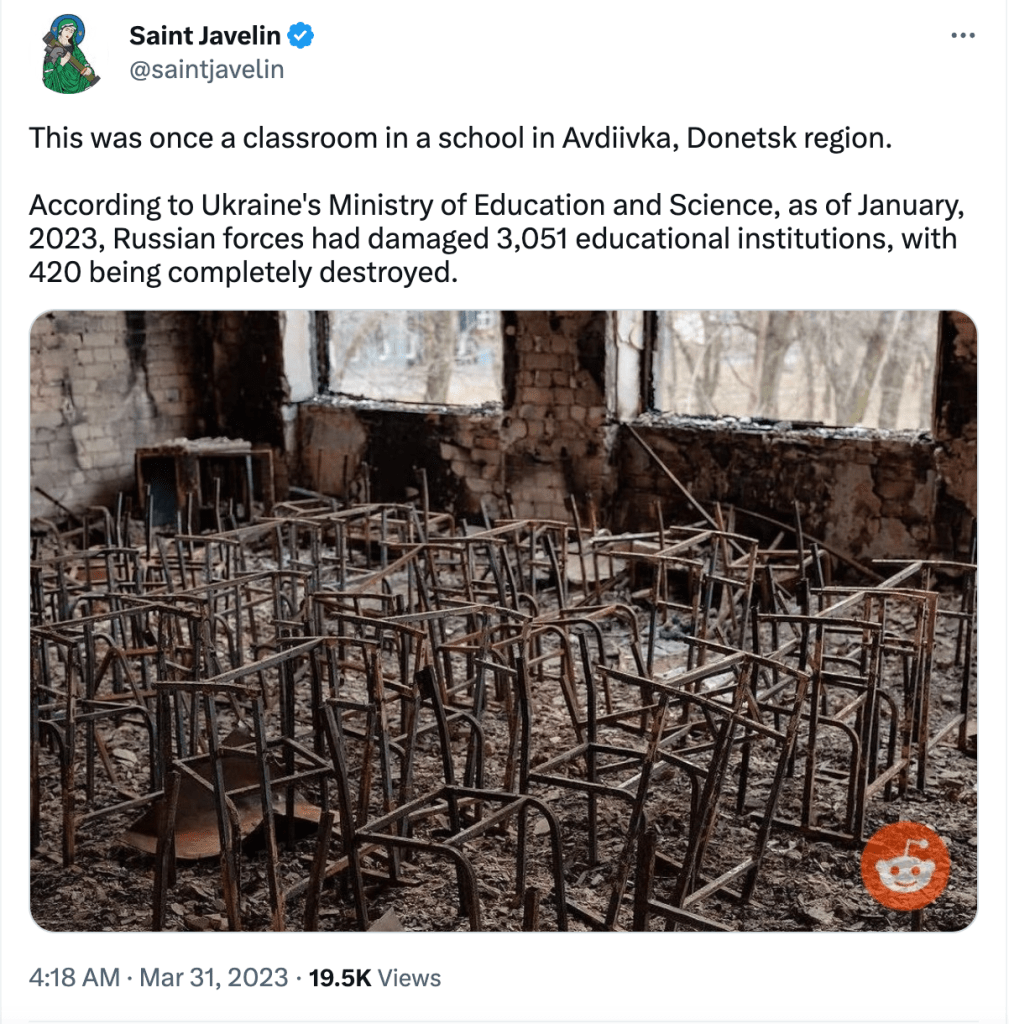
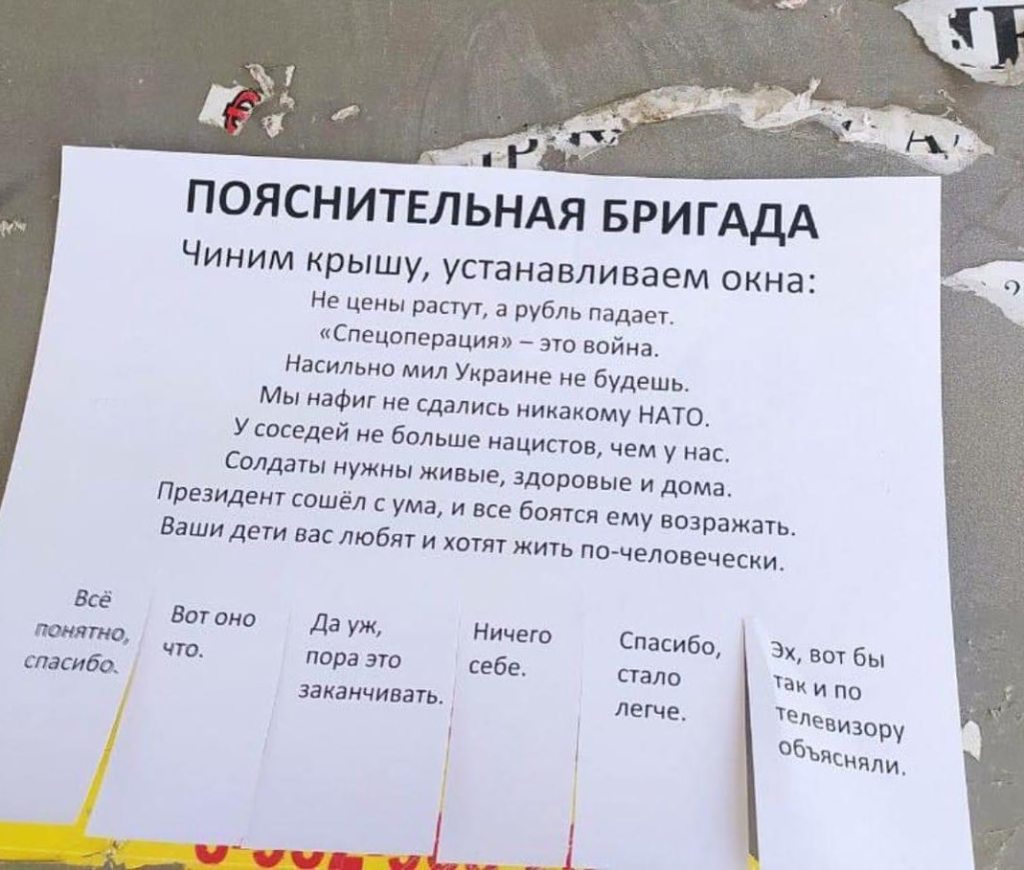
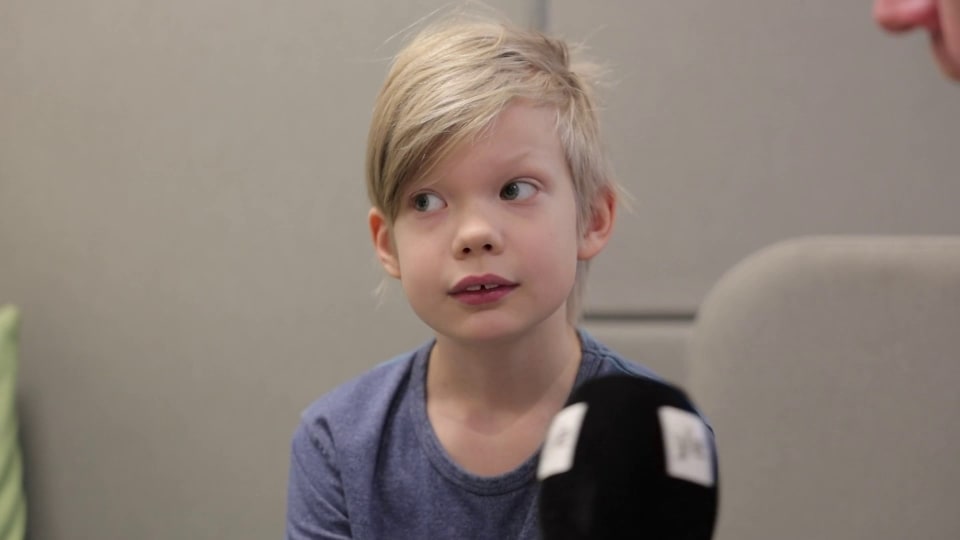
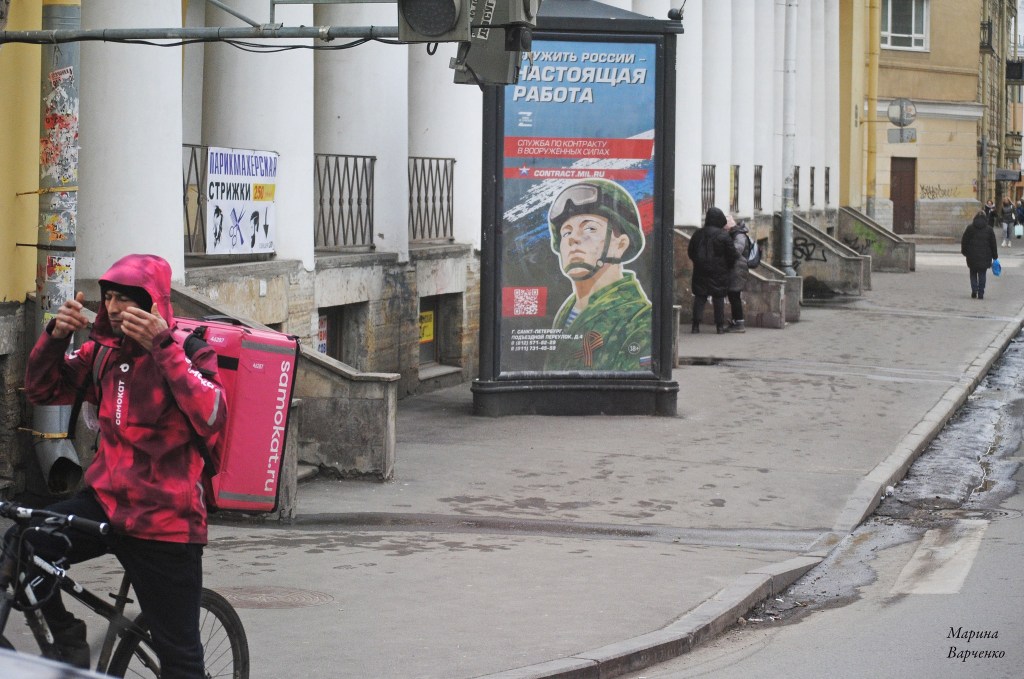


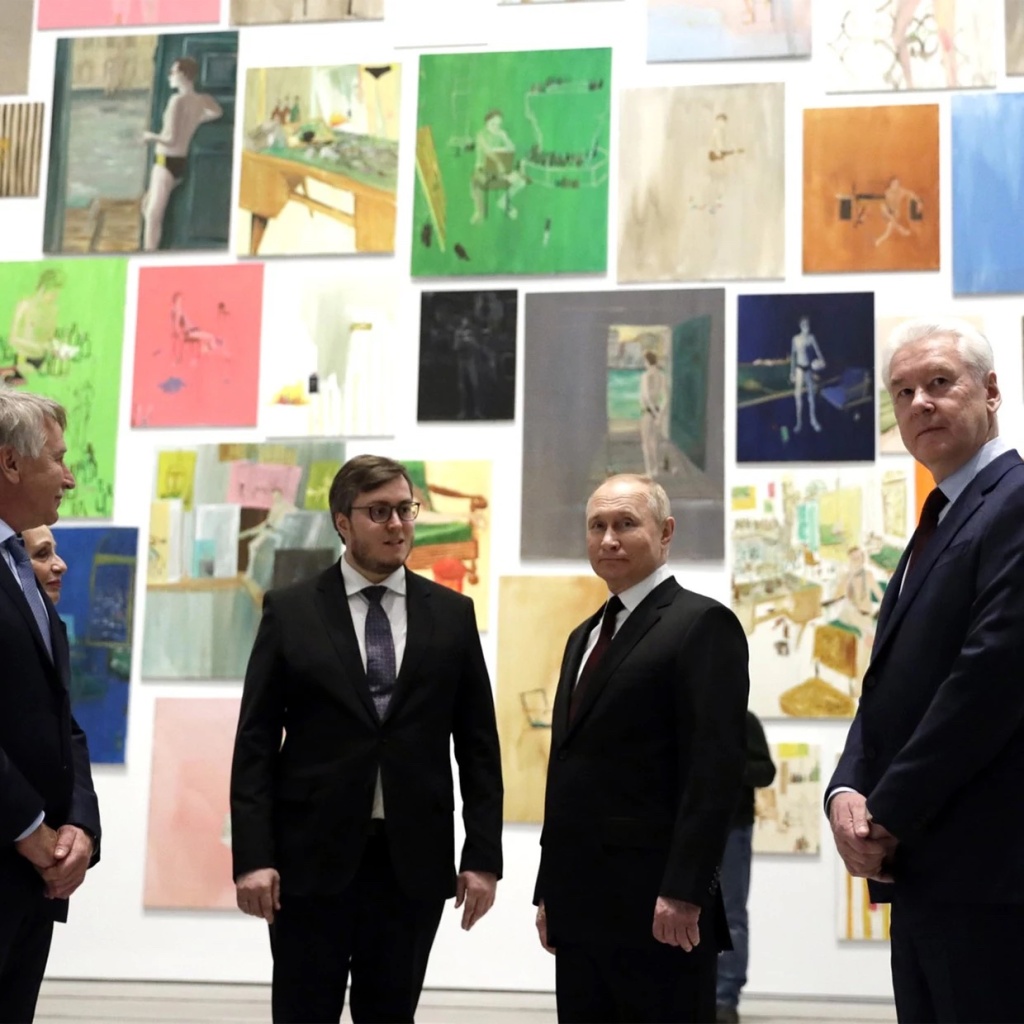

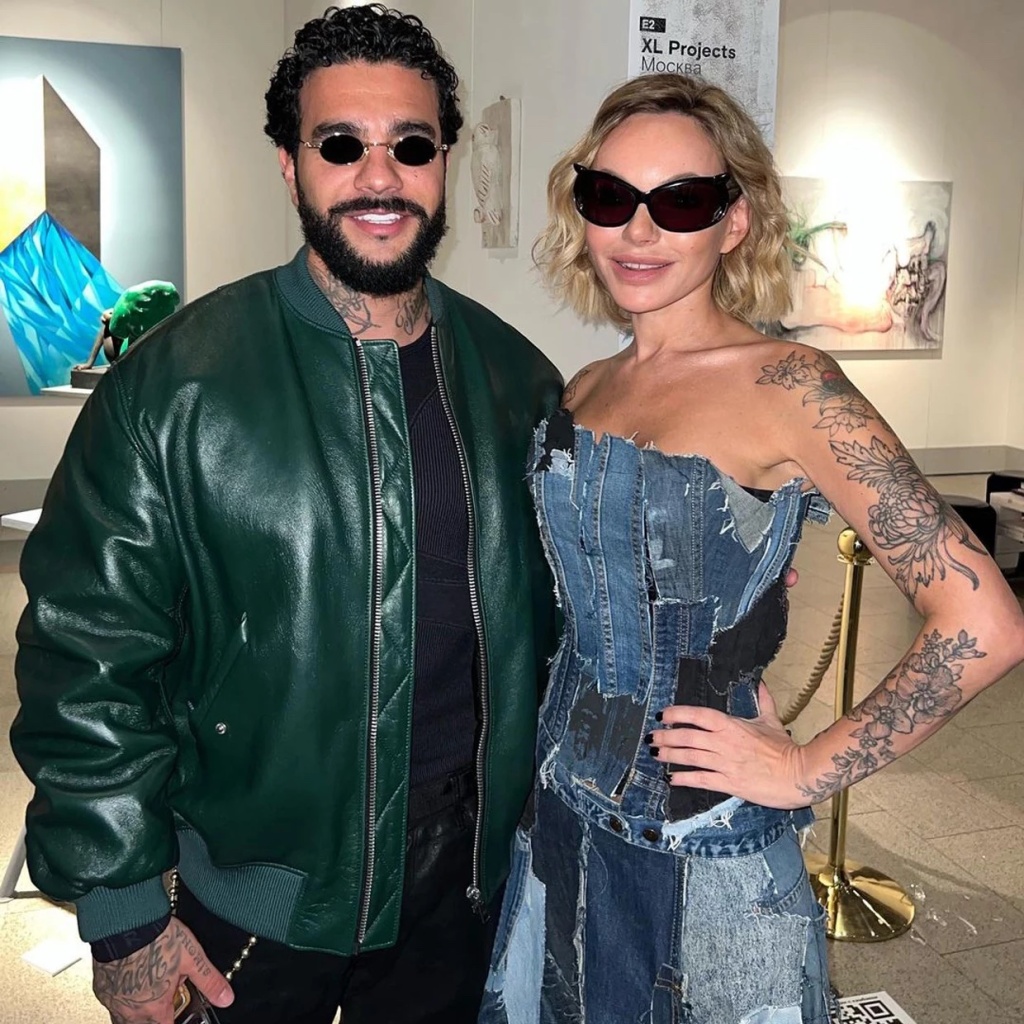


 fell.
fell.