Igor Levit performing Erik Satie’s “Vexations” (short edit)
On 30 May 2020, Igor Levit performed all 840 repetitions of Vexations at the B-sharp Studio, Berlin. The performance streamed on Periscope, Twitter and other platforms, including on The New Yorker‘s website. Levit said the recital was in response to the COVID-19 pandemic, his reaction to which he characterised as a “silent scream” (stumme Schrei). The 840 sheets of music were sold individually to assist out-of-work musicians.
Finland will ban entry to passenger vehicles registered in Russia starting Saturday, the Nordic country’s top diplomat announced Friday afternoon.
“Our decision is for the ban to come into force after midnight,” Finnish Foreign Minister Elina Valtonen was quoted as saying by the state broadcaster Yle.
“We estimate the new rules will significantly reduce traffic on the border between Finland and Russia,” she added.
EU citizens and “their immediate circle,” as well as diplomats and those traveling for humanitarian reasons, would be exempt from the restrictions, according to Yle.
Lithuania, Latvia and Estonia issued no-exception entry bans this week for Russian-registered cars after the European Commission clarified that existing regulations prohibit the import or transfer of goods originating in Russia.
Estonian and Lithuanian officials later suggested that cars with Russian license plates would be confiscated if they refused to re-register or leave.
Finland’s Valtonen ruled out confiscations in her country, telling Yle that vehicles with Russian license plates would have to leave Finland by March 16, 2024.
Supporters of jailed Kremlin critic Alexei Navalny urged Baltic leaders to lift the vehicle ban on claims that they harm Russian war exiles and play into the Kremlin’s narrative of anti-Russian feelings in the West.
Moscow has accused the EU of “racism” for its ban on passenger vehicles, while former President Dmitry Medvedev called for a suspension of diplomatic relations.
Finland, a member of the European Union, joined NATO this year, thus doubling the length of the U.S.-led military alliance’s border with Russia.
Finland’s neighbor Norway, which has joined the EU’s sanctions against Russia despite not being a member of the bloc, said it was also considering banning entry to Russian-registered vehicles.
Source: “Finland Follows Baltics, Bans Entry to Russian Vehicles,” Moscow Times, 15 September 2023. The emphasis is mine. Judging by the outsized reaction to this news by “anti-war Russians” in the press and on social media, the proposed vehicle entry ban vexes them more than the endless repetitions on violent death, widespread destruction, and genocide in Ukraine, unleashed by their country’s now-572-day-long invasion of their former neighbor. ||| TRR
This how and what the former “Fennomans” from the newspaper Delovoi Peterburg write about Finland today (in their morning newsletter)—without a hint of shame, so to speak:
Finland is selling its house in St. Petersburg, and the Central Bank is struggling with the fall of the ruble. Such are the economic news in St. Petersburg this week.
How much does the “Finnish House” cost? The issue is very difficult, given Finland’s unfriendly attitude towards us and the sanctions. Basically, with the sale of the building on Bolshaya Konyushennaya, which belonged to Finland, an entire era of good neighborliness between our countries ends.
Not all attempted performances of this work have been successful. In 1970, Australian pianist Peter Evans decided to abandon a solo performance of the piece after five-hundred and ninety-five repetitions because he felt that “evil thoughts” were overtaking him and observed “strange creatures emerging from the sheet music.”
Colleagues, I may have missed something, but how do Finland, Poland, etc., make the case for the reasonableness of banning cars with Russian license plates from entering?
I mean, how does this contribute to the stated goals of combating military aggression?
Source: A “friends only” social media post by a Russian acquaintance, 16 September 2023. Translated by the Russian Reader
We demand that Western leaders end the policy of avoiding “escalation of the conflict.” It only allows Putin to blackmail the West with the very “escalation,” hoping to force him to “geopolitical capitulation.” Any international legal order is maintained only as long as its violator meets a collective rebuff. While his co-founders are ready to fight for him.
We demand a fundamental expansion of military assistance to Ukraine up to the direct participation of NATO troops in hostilities. Ukraine should receive binding security guarantees now, not after the end of the war.
We urge Western leaders to put aside fears about the possible collapse of the Russian Federation as a result of the fall of the regime. None of the “painful consequences” of this will outweigh the danger of preserving the imperial state, which will reproduce aggressiveness and revanchism. Either Russia will become confederate, democratic and “pro-Western,” returning to its European roots, or it must disappear as an integral entity.
The space between good and bad began to diminish Daughter studied botany while I analyzed the transference Over the PA someone said, And the wisdom to know the difference We integrated our sensory impressions into a coherent scene Her hair was getting long, her eyes were turning green As for wisdom, we didn’t know what to do with it
There was a time before and after thinking of death As the worst thing that could happen to a person Bodies were interred and then exhumed again Satisfactory, said Hank, which meant the opposite We had overestimated our capacity for wonder We had underestimated our capacity for pain
@george.spb wrote the following comment when Eva Morozova posted the cartoon, above, on their Instagram page:
I always say that I am from Russia, even though I am [an ethnic] Georgian. I have never got a single unfriendly look. At most, they might somehow make a good-natured joke about it. All foreigners are well aware that not all people in Russia support the military action, especially those who have left. The only thing I won’t do is demonstrate Russian symbols or sing the Russian anthem until the war is over, a correct assessment of what happened has been made, and the perpetrators have been justly punished. I can’t change anything else; I was born there. And if a person is biased about it, then it’s not my problem anymore.
@intelligent_beauty_paris wrote:
It happened once here: – Vous êtes d’où? – Where are you from? – De la Russie. From Russia. – C’est pas grave! / No big deal/ It happens/ Don’t worry about it!
YALTA, Crimea, Aug 29 (Reuters) – In years past, Siberian Viktor Motorin could hop on a plane and arrive in Crimea just four hours later to relax at his holiday apartment. Now he must fly first to Moscow and then spend a day and a half on the train.
The war in Ukraine, now 18 months old, is making it harder for many Russians to reach their favourite summer haunts in the Black Sea region of Crimea, which Moscow seized and annexed from Ukraine in 2014.
And safety is a factor for some, especially after two major Ukrainian attacks since last October on the 19 km (12 mile) Crimean Bridge that links Russia by road and rail to the peninsula.
But after weighing up such concerns, Motorin, from the city of Khanty-Mansiysk in western Siberia, said he decided that making his annual trip was still a risk well worth taking.
“We calculated that it was reasonably safe, especially when my colleagues had already come here in June, early July. They said it was all calm here with no problems on the Crimea Bridge. The goods, the prices, everything is like before,” he said.
In 2022, the year when Russia’s full-scale invasion of Ukraine began, more than 4,300 people renounced their Russian citizenship, the highest such figure for the last three years. Among them were several major Russian businessmen, including [former] Troika Dialog CEO Ruben Vardanyan, venture capitalist Yuri Milner, and Tinkoff Bank founder Oleg Tinkov. However, the Russian Foreign Ministry said that the increase in “refuseniks” was due to the pandemic that raged earlier, claiming that “there are no particular changes in the numbers of requests to withdraw from Russian citizenship from abroad.” And the Russian Interior Ministry recently proposed reviewing the cases of people who have renounced Russian citizenship, that is, theoretically, a person’s citizenship could be forcibly reinstated. Farida Kurbangaleyeva talked to people who decided not to be Russian nationals anymore and found out why it mattered to them.
“If I have the sudden urge to live in Russia I’ll get a residence permit”
Andrei Kreinin, USA, renounced his Russian citizenship
I’ve wanted to emigrate to the USA since I was fifteen, when I saw the good old American movie Short Circuit 2. Spoiler alert: it ends with a scene of the main characters taking the oath of citizenship. I went to the States many times on a tourist visa, and in 2011 my family and I won a green card and moved to Chicago. In Moscow, I worked in telecommunications and I got a job in the same field in our new home.
The decision to renounce citizenship was made on February 25, 2022—after the brutal bombing of Kharkov, when people were hiding in the subway there. Firstly, because there is such a thing as a conscience, and secondly, my mother was born in Kharkov, and it was impossible for me to remain a Russian national. My family said, “We won’t do this. If you want to, do it, but then don’t pine for Russia.” I said I understood them perfectly. I had a couple of friends from Russia who called me bad words on social media, and I had to ban them. But mostly the attitude ranged from neutral to understanding: “It’s your business, Andrei.”
To renounce your citizenship, you need to do two main things—deregister your place of residence [in Russia, where everyone is required to register their place of residence] and get a paper stating that you owe no back taxes in the Russian Federation.
They say that it can be difficult to deregister remotely, so in June 2022 I flew to Russia. I took care of transferring my real estate and deregistering from my apartment. Basically, I covered all the important bases to the max. Before the trip, I carefully monitored the situation: I understood that there would be a mobilization. I actually thought it would be announced on May 9 [celebrated as Victory Day in Russia].
When I had collected all the paperwork, I took it to the consulate in New York. It did not go smoothly. About three months later, I received a letter saying my application had not been approved, because, according to the Interior Ministry’s databases, I was still registered—although I even had a stamp in my [internal] passport stating I had been deregistered. Consequently, I spent two or three sleepless nights, due to the time difference, trying to get through to the proper authorities in Russia. They said, “Send us your application again and a photo of the discharge stamp.” I sent them, and two days later I received a reply that I had been removed from the residence register.
Andrei Kreinin Photo courtesy of Mr. Kreinin via Republic
I forwarded the whole thing to the consulate again, hoping that they would accept the documents online. But they said, “No, you’ll have to come to New York again.” I went again, resubmitted [my application], and after another two and half months I was informed that my application had been approved. I was told to report to the consular department and hand over my [internal and foreign travel] passports, which I did.
I have heard that the [Russian] state does not like people like me, because it is one thing to renounce Russian citizenship in a country where it is a necessary condition for obtaining the local citizenship, for example in Germany or the Netherlands, and another thing when you could retain your Russian citizenship, but you renounce it of your own free will.
But I didn’t notice any particularly negative attitude on the part of the staff at the Russian consulate. They behaved absolutely normally.
When I was in Russia, I forgot to withdraw my military registration. I had to call the military enlistment office. “This is how it is, guys, I’m renouncing my citizenship,” I said. Surprisingly, they did not yell at me or call me a traitor to the motherland, although I expected it. They just said, “Theoretically, we don’t do this sort of thing, but as soon as you complete the procedure, send us your military registration card, a copy of the certificate of renunciation of citizenship, a copy of your US passport, and a written request to be removed from military registration.” There is no mail service between the US and Russia nowadays. I had to make use of different “private couriers”: there are special Facebook groups for [arranging pickups and deliveries of letters and parcels]. Three weeks later, a letter from the military enlistment office addressed to me arrived in Moscow, saying I’d been removed from the register.
I have now applied for a Russian visa, which is granted to US citizens for up to three years. Not that I was planning to go there, but, as the Ukrainians say, schob bulo[“just in case”]. Plus, my father is still in Russia. He has already sent me an invitation to me, but he says, “Just please don’t come.”
I have no plans to reinstate my Russian citizenship under any circumstances. If I have the sudden urge to live in Russia, I can easily get a residence permit. It’s more than enough for me.
As my experience in dealing with the Russian Federation shows, it is better, paradoxically, to be a foreigner—you have fewer obligations.
A residence permit grants a person the same privileges as citizenship [sic], except the right to vote. On the other hand, no one can force me to do military service. The civil service will also be closed to me, but I’ve never aspired to join it either in Russia or the US.
The grandfather of renowned Crimean Tatar historian Shukri Seitumerov was executed during Stalin’s Terror for supposed ‘counter-revolutionary terrorist propaganda’. Eighty years later, Russia’s FSB came for Shukri’s two elder sons, Seitumer and Osman Seitumerov, as well as his wife Lilia’s brother, with the ‘terrorism’ charges they faced no less politically motivated. Such arrests and subsequent sentences of up to 20 years are part of Russia’s ongoing attack on the Crimean Solidarity human rights movement and are also simply ‘good for FSB statistics’. For the next round of victims, armed Russian FSB burst into the Seitumerov home yet again at 4 a.m. on 24 August, this time taking Shukri and Lilia’s last son away from them.Abdulmedzhit Seitumerov is just 23 and became a father less than 2 months ago.
Armed and masked enforcement officers carried out multiple ‘searches’ in the early hours of 25 August, with six Crimean Tatars taken away. All are now facing the huge sentences that have become a standard part of Russa’s most cynical conveyor belt of repression in occupied Crimea. Ruslan Asanov (b. 1975); Remzi Nimetulayev (b. 1985); Seidamet Mustafayev (b. 1995); Abdulmedzhit Seitumerov (b. 1999); Ametkhan Umerov (b. 1986) and Eldar Yakubov (b. 1980) are Crimean Solidarity activists who had previously faced administrative prosecution for peaceful acts of solidarity with other political prisoners.
This is one of the many identical elements in these cases which have been internationally condemned as politically motivated persecution. The ‘armed searches’ are invariably carried out without the men’s lawyers allowed to be present, and with the FSB most often bringing the so-called ‘prohibited religious literature’ that they then claim to have found. The men are generally forced to the ground, often in front of their terrified children, and then taken away as though criminals, although none is accused of any recognizable crime.
The charges are equally predictable with the Crimean Tatars accused solely of unproven ‘involvement’ in Hizb ut-Tahrir. This peaceful transnational Muslim organization was declared ‘terrorist’ by Russia’s Supreme Court in 2003, with the ruling passed in secret and probably politically motivated (making it easier for Russia to send refugees back to Uzbekistan where they faced religious persecution for involvement in Hizb ut-Tahrir). No explanation has ever been provided for why an organization not known to have committed terrorist attacks anywhere in the world should be so labelled, and the organization has always been legal in Ukraine.
Despite the lack of any grounds and in clear violation of international law which prohibits Russia from applying its legislation on occupied Ukrainian territory, Russia has been imprisoning Crimean Tatars (and a few other Ukrainian Muslims) on these charges since 2015. The sentences have been getting longer and longer (up to 20 years), as Russia openly targets Crimean Solidarity journalists and activists speaking out about repression in occupied Crimea.
In all such ‘cases’, at least one man is invariably charged with the more serious Article 205.5 § 1 of Russia’s criminal code (‘organizing a Hizb ut-Tahrir group’), while the others face the lesser charge of ‘involvement’ in the purported ‘group’, under Article 205.5 § 2. There is plenty of evidence from previous ‘trials’ that the more serious charge (carrying sentences of 17-20 years at present) are often laid in reprisal, for example, against Raim Aivazov for refusing to remain silent about the torture he faced from the FSB. The men will likely also be charged with ‘planning a violent uprising’ (Article 278). Once again, this is purely based on the 2003 Supreme Court ruling, with none of the political prisoners having ever been accused of actions or direct plans to commit any action aimed at ‘overthrowing the Russian constitutional order.’
The ‘evidence’ is as flawed as the charges. It hinges on FSB-loyal ‘experts’ providing ‘assessments’ of innocuous conversations about religion, Russian persecution, etc. to fit the prosecution and ‘anonymous witnesses’, whose testimony cannot be verified, and who may have never met the men.
Six families have been ripped apart, with children left traumatized and elderly parents facing never seeing their sons again.
Russia uses such arrests and ‘trials’ as a weapon against the Crimean Solidarity human rights movement and as an instrument of terror and propaganda against Crimean Tatars who have from the outset demonstrated so clearly their identification with Ukraine. The FSB are known to get promotion or bonuses for providing such ‘cases’ and can boast of ‘good statistics on fighting terrorism’.
Abdulmedzhit Seitumerov (b. 1999) was just 20 when the FSB came for his brothers, Seitumer Seitumerov (b. 1988) and Osman Seitumerov (b. 1992) and their uncle, Rustem Seitmemetov (b. 1973). For his parents, this was already a terrible blow, especially since Russia illegally imprisons the men thousands of kilometres from their homes. Now all three sons have been taken from them, and, if Russia is not stopped, Abdulmedzhit’s son Khamza, born on 5 July this year, will spend most of his childhood without his father. Abdulmedzhit had been active in Crimean Solidarity, speaking out in defence of his brothers and other political prisoners.
Ametkhan Umerov (b. 1986)
The 37-year-old Crimean Solidarity activist was detained and fined in July 2019 for a picket in Moscow in support of four Crimean Tatar political prisoners. He was one of 21 Crimean Tatars detained inh November 2021 for trying to stand outside an occupation ‘court’ during the appeal hearing in the case of three other political prisoners. Then in February 2022, he was jailed for several days for trying to attend a purportedly open (but political) ‘court’) hearing.
Ametkhan has three daughters and a son, all of them very young: Zamira (b. 2015); Khatidzha (b. 2017); Ali (b. 2019) and Zainab (b. 2021).
Seidamet Mustafayev (b. 1995)
Seidamet is just 28, but has faced several administrative prosecutions since 2017, when he was jailed for 10 days for taking part in what the occupation regime called an unsanctioned meeting (in fact, people standing outside in solidarity) during an armed search of the home of (now) political prisoner Seiran Saliyev. In 2021, he was also detained and fined for having tried to stand outside an occupation ‘court’ during a political hearing. In February 2022, he was also jailed for several days for trying to attend a purportedly open (but political) ‘court’) hearing.
Seidamet has four small children: Suleiman (b. 2014); Salsabil (b. 2016); Latifa (b. 2020) and Osman (b. 2023).
He has five daughters: Aishe (b. 2009); Anife (b. 2019); Adile (b. 2013); Yasmina (b. 2016) and Alime (b. 2020).
Eldar Yakubov (b. 1980)
The 43-year-old was detained and fined on 25 October 2021 outside the Crimean occupation military ‘court’ during an appeal hearing against the sentences passed on three political prisoners.
He has four daughters and two sons: Safiye (b. 2004); Khalid (b. 2008); Meryem (b. 2013); Khamza (b. 2017); Selime (b. 2018) and Asiya (b. 2021).
Ruslan Asanov (b. 1975) is also a Crimean Solidarity activist.
“From August 15. There’ll be bargains galore at the clearance sale!” Source: Email flyer from Russian e-commerce giant Ozon. In the original, the nouns meaning, roughly, “bargains galore” and “clearance sale” are written, unaccountably, with the Italian endings -ggio and -issimo.
Let’s think about who the beneficiaries are and what their profit is: this should explain why the regime is stable. The beneficiaries include not only the supreme leader, who of course wants to be “mistress of the seas” and has been trying consolidate the regime for himself and his entourage. The beneficiaries also include different groups among the elites, the security forces, officialdom, businessmen, and “intellectuals” at all levels. Material and symbolic resources are now funneled to these groups, and they are granted new powers to cause mayhem in their own bailiwicks. Many of them have taken advantage of this opportunity to quash rivals and take up new positions in their respective economic, political, and cultural markets. The beneficiaries also include different sectors of the populace—for example, people employed in the defense industry, people employed by law enforcement agencies, people who volunteer for the army as contract soldiers, and people engaged in producing different kinds of propaganda. They amount to millions of people, and the streams of financing that nourish them flow far and wide. In addition to power and material gain, there is a psychological benefit: one can now openly be proud of one’s country and hate its “enemies.” How many of the insulted and injured now feel joy and have made their own complexes the norm. This satisfaction also costs money, and it means millions more in new profits.
“These amendments are written for a big war and general mobilisation. And the smell of this big war can already be scented,” Andrei Kartapolov, the head of the Duma’s defence committee, said this week as the Russian parliament rushed to adopt a new law. The legislation enabling the Kremlin to send hundreds of thousands more men into combat reveals a sad truth: that far from seeking an off-ramp from his disastrous war in Ukraine, Vladimir Putin is preparing for an even bigger war.
It is understandable that many in Ukraine and the west want to believe that Russia’s president is cornered. The Ukrainian army is gradually reconquering lands occupied by the Russians and has shown itself capable of striking deep into enemy territory — even into the Kremlin itself. The sanctions pressure on Russia is mounting.
For now, the west remains united in support of Kyiv, and streams of modern weaponry and money sustain the Ukrainian war effort. Finally, the mutiny staged by the Wagner mercenary boss Yevgeny Prigozhin and visible conflicts among senior Russian military commanders add to hopes that the Kremlin’s war machine will break down.
Things likely look very different to the Kremlin, which believes that it can afford a long war. The Russian economy is forecast to record modest growth this year, mostly thanks to military factories working around the clock. Critical components such as microchips needed for the defence industry are arriving from China and other sources.
Despite sanctions, the Kremlin’s war chest is still overflowing with cash, thanks to windfall energy profits last year and also to the adaptability of Russian commodities exporters, who have found new customers and who settle payments mostly in yuan. If budgetary pressures were to become more acute, Russia’s central bank could further devalue the rouble, making it easier to pay soldiers, defence industry workers and the internal security forces who keep the Russian elite and public repressed and largely in line with Putin’s disastrous course.
When it comes to the war itself, the Kremlin still seems unperturbed by the Ukrainian counteroffensive. Even if Kyiv makes more advances, the Kremlin may brush them off as temporary. Putin is banking on the fact that the Russian manpower that can potentially be mobilised is three to four times bigger than Ukraine’s, and the only pressing task is to be able to tap into that resource at will: to mobilise many more men, arm them, train them and send them to fight. This is precisely the purpose of the new law, which should help the Kremlin to avoid another official mobilisation.
From now on, the government can quietly send draft notices to as many men as it deems necessary. The upper age limit for performing mandatory service will be increased from 27 to 30, and could be raised again in future. Once an electronic draft notice is issued, Russia’s borders will be immediately closed to its recipient in order to prevent a massive exodus of military-age men like the one Russia witnessed last autumn. The punishments for refusing to serve have also been ramped up. These moves, combined with massive state investment in expanding arms production, should help Putin to build a bigger and better equipped army.
A parallel tactic is the strangulation of Ukraine’s economy. Knowing that the Ukrainian budget is on life support provided by its western allies, the Kremlin wants to deny Kyiv all sources of revenue. Moscow has therefore not only pulled out of the grain deal that had enabled Ukrainian agricultural exports via the Black Sea, it has also launched massive air strikes against Ukrainian ports to destroy any possibility of reviving the agreement. The same logic underpins Russia’s air strikes against civilian infrastructure: they are aimed at making Ukrainian cities uninhabitable and preventing reconstruction efforts.
The Kremlin hopes that the rapid rebuilding of the Russian army and gradual decimation of the Ukrainian economy and armed forces will result in growing western frustration and a decline in material support for Kyiv. To speed up this process and break the west’s will, Moscow is using threats of escalation, including expansion of the conflict towards Nato territory via Belarus with the help of Wagner mercenaries based there.
Putin has made plenty of fatal mistakes. But as long as he is in charge, Moscow will dedicate its still vast resources to achieving his obsession with destroying and subordinating Ukraine. As western leaders think about policies to support Ukraine into the third year of this ugly war, any long-term strategy must take this reality into account.
Things like this also get written: “Is it just Putin’s war or a war on the part of all Russians? Perhaps neither one nor the other. Another sociological hypothesis is that the cynical elite has provided the real support for the military aggression, rather than a grassroots gone bad.” (This is a headline: you can google it.). Further, the authors define “the cynical elite” as “the mid-level and low-level officials who ensure the functioning of the Kremlin’s military-political machine; the para-state businesses engaged in import substitution and circumventing sanctions; the upper middle class and the leadership of so-called public sector entities, compelled in one way or another to demonstrate loyalty to the war”—that is, only a few million people. In other words, the Russian ruling class supports the foreign policy that the Russian state pursues in the interests of the Russian ruling class. This argument is tautological in the Marxist manner (although, as the authors of the article rightly point out, it occurs to very few people) and is not entirely true, because there are groups within the ruling class who do not benefit at all from this policy. But it certainly sounds more convincing than the theory of a “grassroots gone bad.”
I reread our interview with Dima Spirin [leader of the recently dissolved veteran Russian punk rock band Tarakany!], and one phrase cut me to the quick: “Our attempt to be free in an unfree country has failed.” An ordinary argument, seemingly, and it’s been made a hundred times. There were oases of freedom in Russia, but then they were destroyed and everything collapsed.
Such things are usually spoken of with regret, as of disappointed hopes. But oases of freedom in a poor dying country are not terribly moral, by and large. Do you know who was free in ancient Greece? That’s right, slaveholders. All the others were slaves.
Does this mean it isn’t worth fighting for freedom in an unfree country? It doesn’t mean that at all. But what’s worth fighting for is everyone’s freedom, not just one’s own. There is no separate freedom for fifteen percent of the population. That is called colonialism.
Some have it good, while others have it bad. Some are free, while others are slaves. Some are rich, while others are poor. There is no other way. Or rather, there is another way, but it ends exactly as it has now—in enormous bloodshed.
It’s either everyone or no one: freedom is not achieved piecemeal.
This is our collective fault. Our guilt is terrible and bloody. I don’t excuse myself either.
And the inner freedom that is the talk of the town nowadays is a lame excuse, like inner emigration. The madman and the drunkard are truly free. But neither meditation, nor reading Borges, nor listening to psychedelic rock will save you from hunger, cold, or getting smacked with a billy club. And they won’t cancel the fact that your neighbor has it bad.
A woman falls on the street, breaks her leg, and lies on the ground screaming. But you’re listening to Pink Floyd on your headphones: you’re free.
This is Odessa today. It is useless to appeal to the conscience of Russians. They don’t have one. None of them, practically none of them. Accordingly, one can only wish them one thing: may you all go to the devil, bastards! And so it will be, I believe, and fairly.
Punters outside Chronicle Bar Nekrasov Street in Petersburg, 27 June 2021 Photo: vladislavkharchev (Instagram), via Bumaga
Consulting company NF Group analyzed the trends for the openings of cafes, bars and restaurants in downtown Petersburg in the first six moths of 2023. Their analysts came to the conclusion that the city’s principal bar street is Nekrasov Street, the NF Group’s press service informed Bumaga.
This claim is based on statistics on the distribution among different types of establishments on Nekrasov and Rubinstein streets. By mid-2023, bars and pubs accounted for 58% of all public dining projects on Nekrasov. On Rubinstein Street, this figure was lower: only 40% of all establishments there are bars or pubs.
In the first six months of last year, Rubinstein was also inferior to Nekrasov in terms of the percentage of bars and pubs: 42% on Rubinstein and 51% on Nekrasov, respectively.
Percentages of bars/pubs (goldenrod), cafes/restaurants (navy blue), and other business that opened on Rubinstein (left) and Nekrasov streets in central Petersburg in the first six months of 2022 (inner circles) and 2023 (outer circles). Pie charts courtesy of NF Group
What other conclusions did the analysts draw?
In the first six months of 2023, fifty bars, restaurants, and cafes were opened in Petersburg. This is comparable to the figures that were observed in the city before the coronavirus pandemic.
On Nevsky Prospekt, restaurateurs are increasingly opening affordable establishments, including chain outlets.
Public dining establishments have room to grow on Nekrasov Street: there they occupy 51% of all commercial space. This figure is much higher—78%—on Rubinstein Street.
The Context. Rubinstein was long considered Petersburg’s primary bar street, but the recent Bar Affair and other scandals have spoiled this location’s image. Recently, the security forces have been organizing raids on Nekrasov Street: police visited local bars several times in July alone.
“July 15, 7 p.m. Mental Cafe: conversations about mental health. Open Space”
Mental Cafe is a cafe without food service and a permanent address where people come together to discuss topics related to mental health.
It is not a support group or a grief group. It does not provide psychological assistance. It is just a conversation club where you can share your experiences and ask any questions about mental disorders.
You can even choose not to participate in the conversation, but just listen. Anyone—not just people with mental disorders—can attend.
7 p.m., Saturday, July 15
Open Space in St. Petersburg, 25 Rubinstein Street
The war with Ukraine, which has been going on for more than a year, continues to intensify the psychoticization of Russian society. Russians spent 4.32 billion rubles on antidepressants in the period from January to May 2023, Vedomostireports, citing statistics compiled by the DSM Group.
Sales increased by 2% compared to the same period last year. And yet the early months of the invasion of Ukraine were accompanied by a surge in demand for antidepressants, which increased by 87% year on year. Thus, in 2023, Russians set a new record for purchases of antidepressants, whose volumes nearly doubled compared to pre-war levels.
Players in the psychotropic drugs market confirmed to Vedomosti the further increase in demand for antidepressants, despite the high benchmark set last year. According to Eapteca, the demand for this category of medicines increased by 30% in the period from January to May 2023. According to Kirill Yakobenko, general director of Uteca, sales of such products “have grown in terms of both sheer numbers and turnover.”
The increase in demand for antidepressants may indicate that people have become more prone to mental disorders treated with antidepressants. These include not only depression but also adjustment and anxiety disorders, psychiatrist Viktor Lebedev told The Moscow Times.
He notes that his colleagues in Russia speak of their increased workload. “People come to see them more often and talk during their sessions about the special military operation and how it has affected their lives,” he says, adding that large-scaled emigration has also led to an increase in depression and other mental problems among Russians.
It will be possible to make a genuine assessment of the war’s impact on overall mental health only a few years from now, but we should not expect positive forecasts, psychiatrist Dmitry Kutovoy said pessimistically.
“After Putin, the new regime will face the daunting task of normalizing society’s mental state and we, as professionals, must be ready for this,” he adds.
In 2022, alcohol sales in Petersburg increased by 4.8%, although prior to this they had been declining. The demand was powered by cheap and strong Russian drinks, which have replaced the beverages produced by departed foreign producers. At the same time, the reported incidence of alcohol dependence has been growing in Petersburg.
Bumaga requested data from official departments and analysts. We show how much alcohol is consumed both nationwide and in Petersburg, how many people have been diagnosed with alcoholism, and how alcohol consumption is associated with an increase in homicides.
Russians drinking more, alcohol consumption in Petersburg four times greater than in 2021
According to Rosalkogolregulirovanie (Federal Service for Alcohol Market Regulation), Russians are buying more and more alcohol every year. In 2022, this volume reached its peak: 2.2 billion liters of strong alcohol and beer were purchased. Rosalkogolregulirovanie told Bumaga that this was mainly due to an increase in sales of spirits and wine, while beer was bought in roughly the same quantities as a year earlier.
Alcohol consumption decreased in Petersburg from 2018 to 2020, but the trend was reversed in 2021, while growth in 2022 was four times higher than a year earlier.
Purchases of alcoholic beverages (in millions of liters) in Petersburg, 2017–2022
Strong and cheap alcohol more popular
In 2022, foreign alcohol producers such as Brown-Forman and William Grant & Sons left the Russian market. Because of this, the prices of imported alcohol increased by 10–20% from the beginning of the year, restaurateurs noted. Prices for foreign-made beer increased even more, by an average of 30–50%, Alexander Romanenko, the founder of Bakunin Brewery and several other Petersburg establishments, told Bumaga.
“If we take into account premium brands, then the price increase most likely did not affect their consumption in any way, since elite alcohol is drunk by wealthy people. The consumption of alcohol in the mid-price range has been changing the most. With the price rises of these products, consumers have been looking for cheaper substitutes or switching to other categories of drinks,” said Agvan Mikaelyan, who sits on the board of directors of the audit and consulting network FinExpertiza.
Rosalkogolregulirovanie notes that domestic producers have already more than doubled the volume of alcoholic beverages that were once imported to Russia.
However, new products often prover to be of poorer quality, Mikaelyan told Bumaga. According to him, Russian-made gin, rum, and whiskey are “imitations,” since they have not yet gone through a full production cycle.
Purchases of alcoholic beverages stronger than 9% ABV (in millions of liters) in Petersburg, 2017–2022
In 2022, the level of consumption of beverages with a strength greater than 9% ABV increased by 6% in Petersburg. In the first four months of 2023, Petersburg residents purchased a third of what they had bought during the whole of last year—that is, there has been no slowdown in sales.
According to FinExpertiza, Petersburgers bought 3.2% more strong alcohol (i.e., vodka, cognac, and other distilled beverages), raising their consumption to 6.9 liters per capita. At the same time, in Russia as a whole, purchases of these beverages rose by 7.5%, thus increasing per capita consumptions to 6.8 liters. In 2021, this figure had increased by only 1.2%, while it went up by 3.3% in the pandemic year of 2020.
Purchases of vodka (in millions of liters) in Petersburg, 2017–2022
Mikaelyan added that vodka consumption has been growing, as it remains the cheapest strong drink. In Petersburg, as in all of Russia, 2022 saw a 6% increase in purchases of vodka. Vodka consumption had decreased by about the same percentage in 2021.
Level of alcoholism falling, but more new cases reported in Petersburg every year
Despite the recent rise in alcohol consumption (especially of strong beverages), the number of residents with diagnosed alcohol addiction has been decreasing in Petersburg for the past five years. In 2022, there were a little more than 18,000 people official diagnosed with alcoholism in the city, according to data provided to Bumaga by Petrostat.
Diagnoses of alcoholism in Petersburg, 2018–2022. Total diagnoses are indicated by the figures inside the dark green bars, while first-time diagnoses are indicated by the figures next to the light-green bars.
However, the number of Petersburgers who were diagnosed with alcoholism for the first time increased last year. It exceeded one thousand people for the first time in five years.
The latest data we have on deaths due to alcohol poisoning is for 2021. In that year, according to Rosstat, 9,274 Russians died of alcohol poisoning, 199 of them from Petersburg.
Only incidents of “accidental alcohol poisoning,” which is classified as an external cause of death, are counted in the official statistics, and so these figures do not show how many people died from diseases caused by alcohol consumption. At the same time, Rosstat points out that among those who died from diseases of the circulatory, nervous or digestive systems, as well as from neoplasms, there are also those who suffered from alcoholism.
The more Russians drink, the more murders occur
Every year, between a quarter and a third of the crimes in Russia are committed under the influence of alcohol, according to data from the Judicial Department. In 2022, however, this figure fell by 2.7% compared to the previous year.
The states in which crimes for which people were convicted in 2022 were committed: sober – 74%, alcohol inebriation – 25%, narcotic intoxication – 0.5%, other – 0.2%
The Trauma Center Lawyers Association claim that up to 80% of murders in Russia occur after alcohol is consumed. The lawyers point out that in 2022, for the first time in twenty years, the number of murders and attempted murders increased by 4% in Russia. The lawyers attribute this increase to the growth in sales of alcoholic beverages.
Due to alcohol consumption, there are more murders on holidays than on other days. On New Year’s Eve, for example, the murder rate increases as much as fivefold, criminologist Vladimir Kudryavtsev, an associate researcher at the Institute for the Rule of Law, explained to Bumaga.
“During the holidays, a certain standard scenario is replayed that leads to lethal violence: people sit together in a closed room, consuming alcohol. And most often people kill people they know, people with whom they must share things. The holidays are a ‘petri dish’ that reproduces the environment for conflicts,” he said.
The war in Ukraine, which began on 24 February 2022 at the whim of the President of Russia, destroyed the lives of thousands of people overnight. Almost immediately after the outbreak of hostilities, the government of my country issued decrees that cut off the oxygen to independent journalists, forbidding them to cover events truthfully and without partiality toward Russian politicians. News websites were blocked, freedom of speech ceased to exist. As a freelance photographer, I was forced to leave Russia on 4 March 2022 to avoid the risks associated with my work.
Like other Russians who do not support the war, I departed for points unknown, taking with me only a backpack and hope for change. I left tormented by feelings of guilt and shame, which still haunt me at every step. I have been having nightmares the entire time since I left. The news from the frontline and Ukrainian cities has been even more unbearable, however. I still can’t believe that all these events are real. My current project, based on self-portraits, visualizes my nightmares and explores feelings of shame and guilt. The visual sequence also incorporates drawings from the diary I have kept since my departure from Russia and screenshots of the news from Ukraine. All these layers recreate my personal space, thus enabling the viewer to dive deeply into my state of mind. I hope that this work will show that not all Russians support this terrible war or have been brainwashed by propaganda.
The criminal war as such does not outrage them. The war itself completely suits them all. They love this war. They just don’t like that their slave husbands are kept at the front for too long without leave.
Source: KOLOKOL XXI (Telegram), 8 July 2023. Translated by the Russian Reader. Specifically, the women in this video appeal to Vladimir Putin ask that men who are mobilized to fight in Ukraine (as their husbands and sons were, allegedly, in September 2022) should spend no more than six months at the front and should be relieved by “trained reserves as soon as possible”: “Our men need R&R. Send our men back home,” says one of the women. The woman shown holding a baby, at the end of the video, suggests that the mobilized men be relieved by some of the “over four and a half million professionals” serving in the Emergencies Ministry, the Interior Ministry (i.e., the police), and the regular army. Nevertheless, the women unambiguously voice their support for the “special military operation,” while claiming that their own “lives are hell.”
Vladimir Putin visiting a training ground for mobilized soldiers. Source: Russian Defense Ministry via Republic
Russian troops at the front are severely depleted due to the lack of rotation, which in turn is caused by a shortage of reserves, according to the Institute for the Study of War (ISW) in the United States. Meanwhile, the deputy chairman of the Russian Security Council, Dmitry Medvedev, radiates optimism on this score. At a meeting to discuss reinforcing the Russian armed forces with contract soldiers, held the other day, Medvedev claimed that, according to the Defense Ministry, over 185,000 men had enlisted in the Russian army over the past six months, during the period 1 January to 4 July 2023.
Data from various sources suggest that a significant portion of Russia’s current contingent of “contract soldiers” consists not so much of men who for one reason or another (usually financial, less often ideological) actually have volunteered to go to fight in Ukraine, as of men who have been turned into mercenaries under contract in a “voluntary-compulsory” manner.
We have already reported that, judging by Rosstat’s numbers on migration flows in the Russian Federation in 2022, Tajik nationals have been forced to “volunteer” in this fashion. And this includes not only Tajiks who, by an unfortunate coincidence, came to Russia to work in 2022 and now can only come return to Russia via the front line in Ukraine, and from there go home either in a plastic bag or in a wheelchair. Attempts are underway to make “volunteers” of Tajiks who have not left their country and had no plans to leave, but who are forcibly mobilized into the Russian army by the government of their native Tajikistan.
It seems, however, that although the Russian leadership is running out of Tajiks, it intends to keep fighting for a long time. For this reason, it could find no better solution than to forcibly reclassify young men already conscripted in Russia itself as “contract soldiers.” This campaign, apparently, has also enjoyed only fair to middling success. Moreover, so much so that the authorities are now not only forcing mostly previously untouchable young Muscovites to join the army (and in the current circumstances this actually means sending them to the front), but even those residents of the capital who have papers certifying them as unfit for military service on medical grounds.
The Telegram channel of the human rights organization Soldiers’ Mothers of St. Petersburg relates the story of nineteen-year-old Muscovite Andrei B. Armed with medical certificates that should have enabled him to receive a reprieve from the army (in particular, he needs surgery due to a joint disease), Andrei and his lawyers went to the military enlistment office in Moscow’s Izmailovsky District. However, the enlistment officers immediately confiscated Andrei’s [internal] passport, forbade him from using his phone, and kicked his lawyers out into the street. Basically, Andrei was forcibly captured by the Russian National Guard and held by its officers inside the military enlistment office. Summoned by Andrei’s lawyers, the police who arrived at the scene assisted the Guardsmen, rather than the young man, who was being held by force. Andrei became ill when his blood sugar spiked. An ambulance crew summoned by the lawyers were not allowed to attend to the young man.
Consequently, according to the post on Soldiers’ Mothers Telegram channel, “assisted by the Russian National Guard, the young man, who could barely stand on his feet, was escorted to the assembly point, where neither his mother nor his lawyers were admitted. Unfortunately, it proved impossible to secure the young man’s release from the assembly point.”
According to Soldiers’ Mothers, such cases are widespread. On the same day, a dozen more young Muscovites were sent to the assembly point from this same enlistment office alone.
In fact, we are witnessing the next wave of a covert “partial mobilization.”
There are two significant points about this story. The first is that nearly all the forcibly mobilized young men had medical reprieve certificates and went to the military enlistment offices with their lawyers, who, in turn, had been provided to them by human rights organizations. In this regard, the naivety of human rights activists, including the Committees of Soldiers’ Mothers, and commentators of this story on social media, who have been outraged by the “violations of the rights” of young men thus “shanghaied” into the army, cannot help but astonish us.
The second point is that the large-scale dispatch of Muscovites into combat suggests that the regime has fewer and fewer human resources available to it. The quality of these mobilizable reserves is questionable, however.
Bloomberg identifies convicts and Kadyrov’s Chechen fighters as two other additional sources for replenishing the Russian army’s manpower.
Of course, the Russian Defense Ministry can continue to recruit convicts, but the numbers and quality of these soldiers will steadily decrease. This is simply because the numbers of murderers, robbers, and rapists who have already been killed or seriously injured, and whom Prigozhin prioritized over other residents of prisons and penal colonies, since they had the specific relevant “background,” have for obvious reasons greatly decreased. As we recall, Prigozhin himself claimed that 20,000 Wagner fighters, half of whom were ex-convicts, had been killed in the battles for Bakhmut alone.
The number of Chechen soldiers whom Kadyrov is willing to send to the front is also limited, since he has to maintain significant forces in Chechnya itself, both to protect his own clan from possible uprisings, and in case of “unforeseen” circumstances during which the federal center would be greatly weakened and he would finally deem it possible to declare himself an independent sovereign. Whatever the case, Kadyrov has cited two figures: 7,000 of his loyalists already in the combat zone and an additional 2,400 men undergoing training. Slim pickings, as the saying goes.
The quality of these “TikTok warriors” is also questionable. Not because Chechens don’t know how to fight. They do know how to fight, as they proved in both Chechen wars, in 1994–1996 and 1999–2004. But this is not their war.
Sooner or later, a significant percentage of Russian soldiers will reach the same conclusion.
Men in military uniforms robbed a magic store in Belgorod.
Yesterday afternoon, two men in camouflage who had allegedly returned from the war zone entered the store, Promagia, on People’s Boulevard. The shopkeepers claim that the two men introduced themselves as “Wagnerians.” Video footage of the incident shows that one of the men sported a Wagner PMC patch on his rucksack.
Footage of the alleged incident at the Promagia magic store in Belgorod, as posted on Telegram
According to the shopkeepers, at first the military men tried to extort money: allegedly, the previous tenant was in debt to them. When the shopkeepers explained that they were new tenants, the men in uniform did not calm down and stole a pendant on a chain from the counter before snatching another item from a shopkeeper’s hands. When they were told they had to pay for the items, one of the “Wagnerians” replied that he had “given himself a gift.”
Police later arrived at the store to document the theft by the military men. The police told the shopkeepers that information about the same two soldiers had been reported by other shops.
Source: News Flash — Belgorod (Telegram), 9 July 2023. Translated by the Russian Reader. Thanks to News.ru for the tip. It is possible that this incident was cooked up and leaked into the media as part of the regime’s current smear campaign to discredit Yevgeny Prigozhin and the Wagner Group. But given that they are ruthless fascist thugs themselves, it is just as possible that two “Wagnerians” did rob the magic store on People’s Boulevard in downtown Belgorod. Stranger things have happened.
Lavrov said that Prigozhin’s armed mutiny could not be termed anything more than a “scrape.” Well, yeah… After the rebels seized the headquarters of the Southern Military District, which coordinates the main grouping of Russian federal forces waging war in Ukraine, along with Deputy Defense Minister Yevkurov, seized Rostov-on-Don, a city of one million people, and a military airfield, shot down six combat helicopters and one military aircraft, and were a mere 200 kilometers from Moscow; after all the supreme authorities in Russia shit their pants in unison, instituted a counter-terrorist operation in Moscow and three other regions, and were planning to impose martial law, after this total disgrace, after catching their breath and changing their diapers, they declare the whole thing a “scrape.” Amen to that!
On Tuesday, Russia killed three children and nine adults in Kramatorsk. Everyone has probably heard the remark made by Colonel General Andrey Kartapolov, former Russian military commander and current member of the Russian State Duma: “The strike on Kramatorsk showed pizzazz, I tell you. I tip my hat to whoever planned it. It was just like a song—my old military heart rejoices.”
The general was probably referring to “The Death Aria” from the film The Star and Death of Joaquin Murieta: “You have to have pizzazz in this case, / Your own signature style.”
But my old heart and brain refuse to believe that General Kartapolov and I are members of the same species.
After Putin podcast: “‘When I grow up, everything will change’: What schoolchildren think about Russia and why we should listen to them.” In Russian, without English subtitles
We have talked a lot on this podcast about what lies in store for Russia and how to make this future better. Now we will talk about the future with the people who will be tasked with building it—with teenagers.
We met with these sixteen- and seventeen-year-olds a year and a half ago, in the summer of 2021. Back then, propagandists, op-ed writers, and rank-and-file netizens were vigorously discussing why schoolchildren were attending protest rallies. We decided to ask high school students themselves what they thought about the country in which they had been born and grown up, but in which they had not made any of the crucial choices.
In this episode, you’ll hear the conversation we had with these young people in 2021. They talk about whether they see their future in Russia or in emigration, what annoys them most about Russia, and how they talk about politics with their relatives. And we explain what is special about these teenagers and why we should listen to them.
The next episode features a conversation with the same young people, recorded in early 2023. During the intervening period, they were transformed from schoolchildren into university students, and almost a whole year of the war had passed. We asked them what had changed over the past year and a half about their attitudes towards Russia and whether they still saw a future for themselves in their homeland.
When Russian warlord Yevgeny Prigozhin started a ‘march on Moscow’ with his Wagner forces, the world—and Russia—was shocked. Was this a coup? A rebellion?
Now Prigozhin is supposedly in Belarus and the Kremlin is trying to retake control of the narrative—all while Ukraine’s counter-offensive grinds on. But how should we understand the weekend’s drama? And what is really going on now?
Join our experts to find out how they’re making sense of the rebellion-that-wasn’t.
Hear from:
🔹Elizaveta Fokht: BBC Russian Service reporter who has reported extensively on the Wagner Group
🔹Hanna Liubakova: Journalist and analyst from Belarus and non-resident fellow at the Atlantic Council
Boris Groys: We shouldn’t exaggerate the role of the nation in this case. Any nation is a multitude of people who are busy surviving from day to day, and the struggle to survive usually takes twenty-four hours a day. Look at France in the 1940s: there was Vichy, and there was de Gaulle, and each camp had a small group of political supporters. But the bulk of the populace lived as quietly under de Gaulle as they had lived under the Vichyites. It was the same under the Nazis in Germany. The populace usually accepts the regime that history offers it. Ordinary people want to survive, and loyalty to the authorities is part of their strategy for surviving. It is not, therefore, a matter of ordinary people and their subjectivity or lack of subjecthood. The central problem is how a country’s political class is formed and how it functions. Greece and, later, Rome proposed what was, at the time, a completely new mode of forming cultural and political elites—a competitive mode—unlike the Eastern despotisms, in which there was no competitive model for shaping the political class. Accordingly, there was no integration of successful people into the system of power. Note that when someone succeeds in the West, people immediately get behind them and start writing about them. An athlete, for example, sets a new record in the hundred-meter dash. Immediately, companies line up to use the athlete’s name in their advertising. The athlete is invited to appear on CNN and is profiled by the New York Times. That is, there is an immediate positive reaction to any success. In Russia, on the contrary, success elicits only one reaction: “There is probably someone behind it. They should be exposed and totally shunned.” So, there’s not much point in talking about the common folk in this case. It makes sense, rather, to talk about the principles for forming the political class. The current ruling class in Russia is a monstrous sight. The only thing there that more or less functions there, as I said, is the economy.
Andrei Arkhangelsky: In the 1930s, the defining factor in the Soviet Union was the impetus for “life-building” (zhiznestroenie), for remaking world and self, as you write. Nowadays, however, apathy and indifference prevail in Russian society. And yet, is apathy also a kind of energy, only negative, that blocks positive energy? And the second question: does the current energy of “life-building” in Russia remind you more of the 1970s or of the 1930s? Because denunciations and large-scale crackdowns have again become the norm.
Boris Groys: First of all, the current era has nothing to do with the time of Stalin, which was an era of socialism. It was a time when everything was state-owned, and all individuals were the property of the state. Stalin mobilized the populace in order to complete the country’s industrialization at an accelerated pace. The crackdowns were aimed at achieving specific goals. Now, on the contrary, there is total apathy. First of all, because people have been given private property. Accordingly, they have been given things to care for as individuals. When I read the current Russian press, I am usually struck by the argument, which is voiced there especially often, that private property makes a person a political subject. In reality, the exact opposite is the case. The bourgeoisie is always conservative and always serves the regime. The bourgeoisie has a stake in stability, in ensuring that nothing changes. After all, why is the proletariat a revolutionary force? Because it has nothing to lose except its chains. The Soviet Union was in a similar state as it neared its demise: people had nothing to lose and so they had no interest in maintaining the regime. The regime did not guarantee them anything because they had nothing. And it was these people who made it possible for the regime to fall within two days. The current regime, in my opinion, looks different because many people have something to lose. They have something to take care of and something to protect. And they align themselves emotionally with the conditions that guarantee their preserving of this status quo.
Andrei Arkhangelsky: Your argument sounds rather paradoxical. For many years, the principal reproach to the Putin regime was that Russia had not become bourgeois enough. The country’s bourgeoisie, as Victor Pelevin wrote, had emerged from the tiny cadre of people who served the interests of the oligarchs. Russia formally lived under capitalism, but the authorities had suffocated the emerging spirit of capitalism with all their might. The majority of people had received the bulk of their property—their apartments—for free. They thus did not pay for capitalism. But now you say that it is the bourgeoisie, the burghers, who are the glue of stability in Russia.
Boris Groys: In the West, the bourgeoisie and capitalism also originally arose through nationalizations of feudal and ecclesiastical lands; that is, they were also the outcome of revolutionary processes, not of commercial transactions. So, there is no particular difference in this instance. Private property from which people receive a little income is not necessarily bourgeois. I remember how, in the 1970s, people in the Soviet Union idolized their garden plots, not because they brought these people any benefit, but because they gave them a sense that they were theirs and theirs alone. Here is another example: the most massive protest movement in Putinist Russia was sparked by the unwillingness of people to get vaccinated. Why? Because, under capitalism, my body is my property. It may be sick and ugly, but it is mine. And yet the state wanted to invade people’s bodies with a syringe! It was a vivid manifestation of the Russian people’s commitment to the principle of private property. We can say that nowadays the property in question is quasi-private property, which nevertheless also makes the present system resilient because everyone understands perfectly well that this property is guaranteed not by law but by the current political regime. And that when a new order arises, it could easily come and confiscate what people have. It could demand that people give back the very same apartments you just mentioned. It would show up at their doorsteps and say: you didn’t pay for your apartment, so give it back. Is this possible? Of course, it is possible. So, by no means should such a regime come to power.
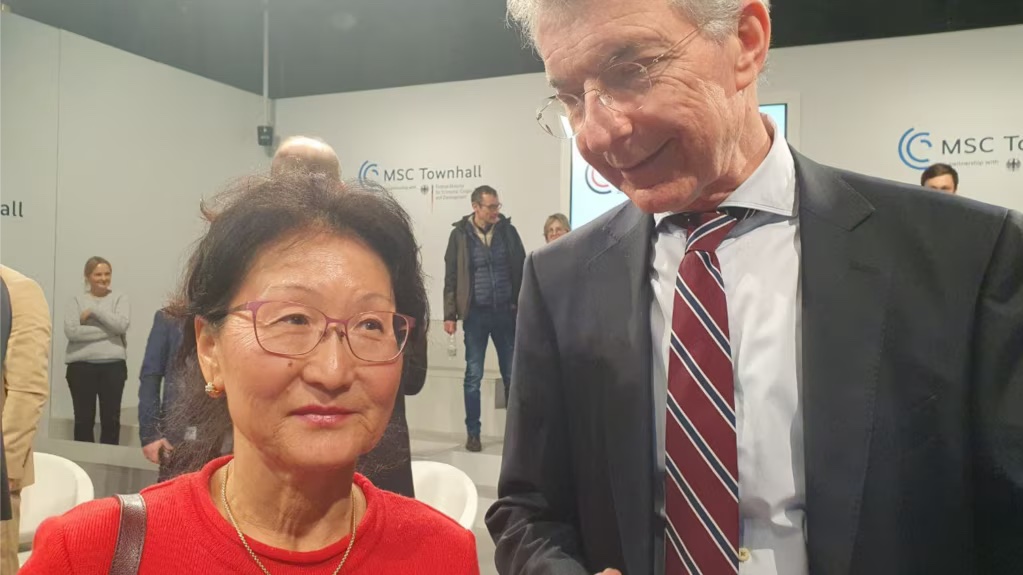
Maria Ochir-Goryaeva and Christoph Heusgen, chairman of the Munich Security Conference, February 2023. Courtesy of RFE/RL
When Russia invaded Ukraine, national movements in Russia’s regions advocating secession from Moscow were given a new impetus. A number of analysts have seriously argued that Russia could break up if there is a turning point in the war and noted the particular role of the Caucasus in this process. Kavkaz.Realii spoke with Maria Ochir-Goryaeva, Doctor of Historical Sciences, corresponding member of the German Archaeological Institute, and Distinguished Scholar of Kalmykia, about Kalmykia’s national movement, the Kremlin’s influence on the republic, and the republic’s current plight.
In 1999, Dr. Ochir-Goryaeva was awarded a competitive fellowship by Germany’s prestigious Alexander von Humboldt Foundation, and continued her research at the Eurasian Department of the German Archaeological Institute. She has published four scholarly monographs, the first of which was published in German. Every year, the archaeologist would return to Kalmykia to carry out archaeological digs in her homeland.
• • • • •
– It is the done thing in Russia to speak negatively about the support that western nonprofits and scholarly foundations provided in the 1990s to Russian academics and the Russian education system. Allegedly, it was through grants and training programs that the west inculcated its values in Russia. Tell us about your experience and what such programs did for Russian scholarship.
– Russian propaganda in general and on this issue in particular cannot be termed anything but xenophobic. In the 1990s, when many state-sector employees, including researchers at the Russian Academy of Sciences, were not paid their salaries for months on end, the grants allocated by western foundations literally saved them. In addition to the material aspect, they demonstrated the importance of researchers and their research. It was only thanks to the support of western and, later, Russian foundations that a number of academics, including me, remained in academia.
As for the “inculcation” of values, this is a distorted understanding of the purpose of such organizations. Each foundation has its own goals and values; if they are scholarly foundations, then their goals are scholarly. I have been living in Berlin for twenty-four years and I know that no one is subjected to “inculcation” here, but is given the opportunity to think and choose independently. Reality shows that people enjoy freedom of speech and the possibility of choice. These things work: everyone is eager to live in democratic countries, rather than in Iran, Afghanistan or Russia, which they leave at the first opportunity.
It is not western foundations that smack of “inculcation,” but Moscow’s imperial approach. Putin and his supporters are unable to adapt to a constantly changing world and are trying to adapt it to their needs by brute force and to make it conform to their outdated stereotypes.
– There is the opinion that this intellectual stagnation is displayed not only by country’s leadership, but also by many rank-and-file Russians, including those who disagree with Putin.
– I agree with this opinion. The wave of migrants from Russia, regardless of ethnicity, is no different from the populace who have stayed behind in Russia. Just as there, a small percentage of them are genuinely active in drawing attention to what is happening in Russia. Even here in Germany, many continue to fear for themselves, concealing their faces and names at protest rallies. The rest are either simply indifferent or they support Putin. Many have relocated in order to maintain their level of well-being and to be able to continue traveling around the world. They are, primarily, residents of Moscow who made good money.
Two things disappoint me about the new immigrants from Russia. The first thing is that few of them follow the news from the front and sincerely worry about Ukrainians. The topic never comes up in their conversations. Feelings of shame and guilt are probably unfamiliar to them. When I say something about bombing or war crimes, they immediately change the subject.
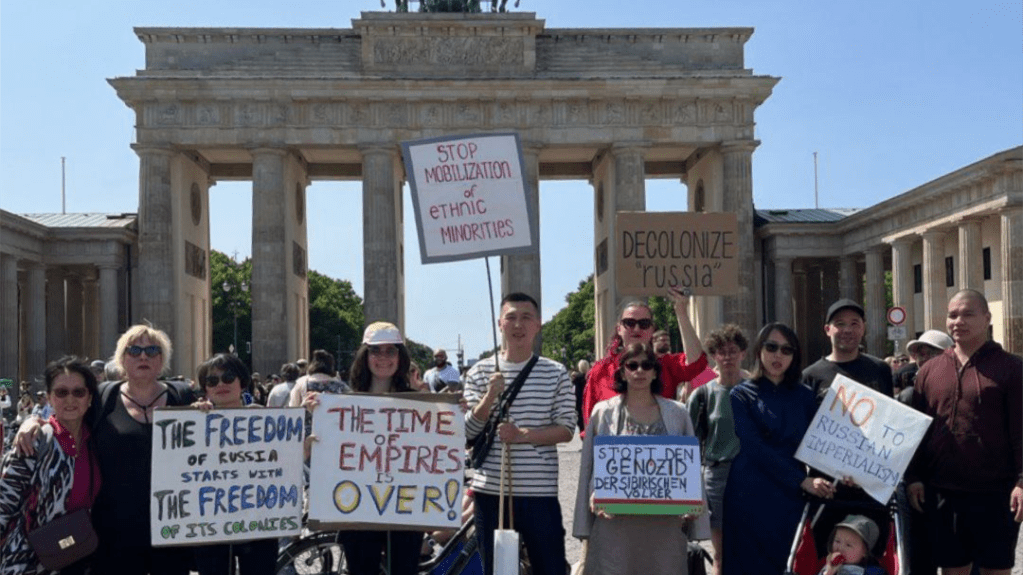
Maria Ochir-Goryaeva (left) at an anti-war protest in Berlin. Courtesy of RFE/RL
The second thing is xenophobia. Walking around Berlin, I have repeatedly heard indignation voiced by Russian speakers over why Germans tolerate the fact that Muslims here go about “in their headscarves.” Or, for example, Russians ask for help finding an apartment, but only in neighborhoods where “blacks,” as they say—meaning Arabs and Turks—do not live. This has shocked me as an Asian woman.
It seems to me that many immigrants do not assimilate the moral values of democracy and tolerance, but simply import Russia with all its stereotypes and ideology here. The problem is that Russians, with rare exceptions, are unable to understand the rationale and value of democracy. Otherwise, neither Putin, nor these decades of trampling on freedoms in Russia, nor the terrible war would have happened.
– At the same time, Putin and his entourage claim that the west has been trying to rewrite and distort history.
– We were all taught in school that in the early Middle Ages there was Kievan Rus’, a state centered around the city of Kyiv, that is, in present-day Ukraine. Then, three or four centuries later, the Grand Duchy of Moscow was formed, incorporating the lands in Moscow’s orbit. This name was the most accurate and reflects the essence of both the territory and its populace. Theoretically, it could be called Muscovite Rus’, but after its conquest of other peoples, it would be more correct to call this entity the Muscovite Empire. This state has its own history and traditions, like any other. The towns of the Golden Ring alone are worth so much! It is not that you mustn’t prize your own identity and your own statehood, but you should not appropriate someone else’s past.
Until a certain point, the Muscovites did not seek to appropriate Kievan Rus’ as part of their own history. This happened later, after Peter the Great declared himself Emperor of All the Russias. It was then that the temptation emerged to occupy not only the lands, but also the past of this foreign state.
Most of modern Russia consists of lands forcibly annexed to the Grand Duchy of Moscow and the Tsardom of Russia: the Volga region, Siberia, the Far East, and the North Caucasus have nothing to do with Kievan Rus’. They are colonies of the Russian empire. So it is the inhabitants of the Kremlin who are engaged in distorting history for the sake of political ambitions and propaganda.
– In 2022, representatives of national movements from different republics condemned the war and stressed that the conflict did not serve the interests of the Russia’s ethnic minorities. There were isolated protests in Kalmykia, but there were no large-scale protests here. Did you expect this reaction?
– Attitudes to the war in Kalmykia, according to my information, are similar to what you would find among an average sampling of opinions Russia-wide. Why should it be otherwise if the empire has been pursuing a policy of Russification and unification for centuries, thus leveling ethnic differences? There are critically minded people in every region, but there are only a few of them. And almost all of them have left the country, especially since 2022.
It is clear that if the Oirats had reached the shores of the Atlantic in the distant past and stayed here, they would probably have been part of a democratic Europe. Since our ancestors founded their Torghut Khanate on the banks of the Ijil-Idel-Edel-Volga River[these are different names for the Volga River—KR], they shared the fate of the rest of the peoples in the Evil Empire.
We could talk for a long time about the pros and cons of the arrival of the Oirats in Europe, the foundation of their khanate, the migration to Dzungaria, the peasant colonization of the khanate’s lands, the Russian Civil War… History, as you know, does not operate in the subjunctive mood. And Kalmyks have to live in those conditions, which means they are inevitably a cross-section of the society in which they find themselves today.
– How realistic are hopes for the independence of Kalmykia now? What are the decisive factors? Are Kalmyks themselves ready for it?
– Independence has ripened for a long time; it is a necessity. There are always leveling processes within large states. So, the regions of Russia, not only the republics, have to become independent, and then function like the European Union. This means that everyone has their own state, their own rules and system of governance, but when it comes to general issues—for example, environmental protection and projects aimed at the future—they would act in concert.
Disintegration into independent states is vital to all the peoples of Russia, including ethnic Russians. After all, the interests and problems of ethnic Russians living in Siberia or the Far East are clearly different from the interests and problems of Muscovites. The capital is robbing all the regions, and so the Kremlin has a huge amount of money with which to wage a large-scale war and seize foreign lands. If the money of the regions stayed in the regions themselves, the country’s leadership would not have such massive resources, and people in Russia’s hinterlands would live much better! All segments of society suffer from this centralized system.
– At the same time, the situation in the republics differs from the situation in the regions and territories.
– The ethnic republics are, constitutionally, members of the Russian Federation. Moscow not only fleeces them, like the other regions, but also pursues a frankly colonial policy toward them. For example, it redraws their borders, grabbing the best lands for itself. The lands of the Buryats were divided into three administrative regions, while two districts were confiscated from Kalmykia to create the Astrakhan Region. Industrial facilities are built everywhere, just not in the republics. Accordingly, the economy there does not grow, professionals emigrate due to lack of work, and the populace is burdened with debt.
The project to construct the Iki-Burul water pipeline from the Levokum reservoir was imposed by Moscow to increase Kalmykia’s dependence on the outside world and force it to pay the Stavropol Territory for water, although it would have been easier for the republic to extend a branch line from the village of Tsagan Aman and pump water for free from the Ijil-Volga. The longest stretch of the Tengiz-Novorossiysk oil pipeline runs through Kalmykia, but the Krasnodar Territory receives the money for the rent. People from the Kalmykian government complained that they could not change the terms of the contract and they traveled back and forth to Moscow, but the officials there were unmoved.
They do not see the economic side, but the policy of the empire also leads to the loss of identity, language, and traditional culture.
– In your opinion, why did the population of the republics, not only Kalmykia, so easily abandon the sovereignty and even independence they had obtained in the early 1990s?
– Easily abandoned: that’s a good way of putting it! But what about the two terrible wars against independent Chechnya? Moscow forcibly and harshly resurrected the imperial approach, severely cracking down on all protests. No one wanted to be deported to Siberia again, so Kalmyks actually had no choice.
What happened to Gorodovikov back in Soviet times in Kalmykia? [Basan Gorodovikov was first secretary of the Kalmyk Regional Committee of the CPSU from 1961 to 1978—KR.] He, an old general, a decorated Hero of the USSR, was escorted from the CPSU Congress hall by KGB men and immediately booted from office because he dared to suggest that the two districts taken from Kalmykia be returned. That is why, in his wake, until 1990, only envoys from were tapped to run the republic. The desire for independence among the concerned part of our people has never faded.
– Kalmykia ranks last among Russia’s regions in almost all socio-economic ratings. This has been going on for many years—it was the same under Kirsan Ilyumzhinov and Alexei Orlov as it has been now under Batu Hasikov. In your opinion, why have none of the heads of the republic been able to achieve a breakthrough in terms of its growth? Could they have done it?
– Because the colonial policy has never stopped, and it is impossible by definition to make a breakthrough in such conditions. A colony is a colony, and its construction industry, infrastructure, and social services will be worse than in the metropole. The only thing that happens in a colony is the siphoning off of resources and professionals, and total Russification is carried out in all areas, from language to the rewriting of history. This is also an imperial policy. Nations are not allowed to study their own past: Moscow imposes on them the interpretation of the past that is beneficial to Moscow.
By the way, the regional elites are also well aware of this. The governors of the regions and the heads of republics are forced to go to Moscow to bow and scrape, begging for the money which they themselves sent there in the form of taxes. So the issue of disintegration has matured not only at the grassroots, in the minds of national movement activists, but also among local elites. The ethnic Russian hinterland must understand that Moscow takes advantage of their political naivety and forces them to live in ignominious poverty. The consequences of the war with Ukraine might just be the match that ignites this inevitable process.
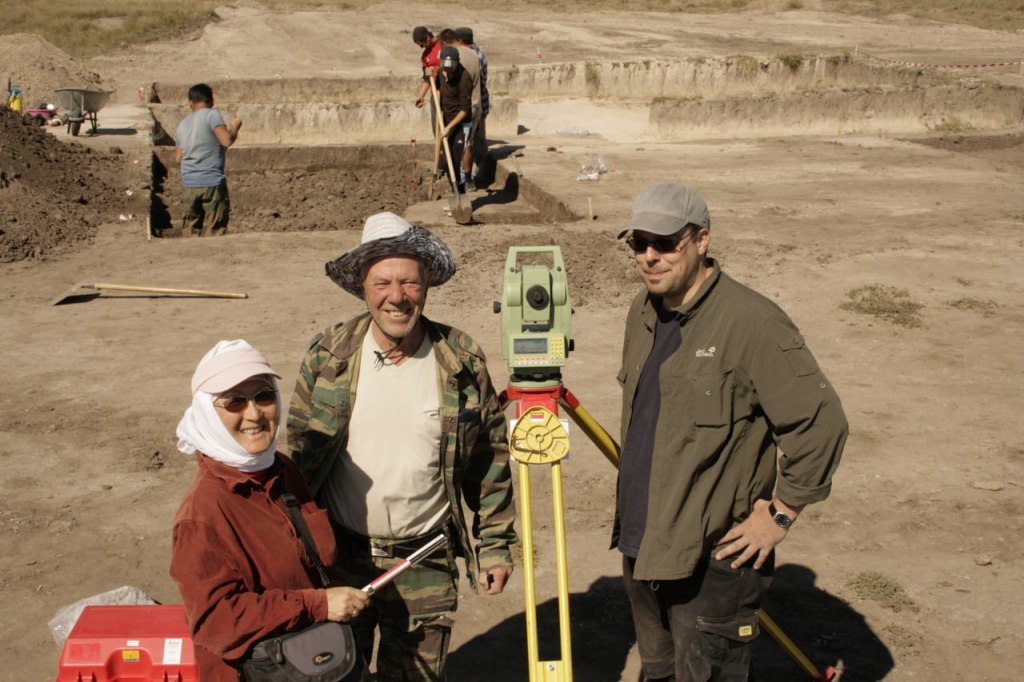
Maria Ochir-Goryaeva (left) at archaeological digs of a Bronze Age settlement with colleagues from the State Archaeology Department of Schleswig-Holstein (Germany), 2012. Courtesy of RFE/RL
– There is the opinion that Russian society massively supports this war. In your opinion, as a person observing from the outside, is this the case?
– Of course, they massively support it: people need to survive somehow, this is their priority. Everything is decided by the state system and what values it promotes. During the Third Reich, the Germans also massively supported the war. But when the system changed, the same people turned democratic. The same change can happen to Russian society, and for this to happen the system has to change. And the people as a whole easily change its opinions and habits.
I will give you an example. I spent eight years on the border of Kalmykia and the Rostov Region digging up two fortresses from the era of the Khazar Khaganate. We lived for months in a small village where the entire population is ethnically Russian. We hired the local men to do the digging. They don’t just swear there, they practically speak in obscenities. I forbade them to swear at the digging site and joke about gender issues, otherwise I would kick them out without paying them their day’s wages. And they worked for me all day for months without swearing!
What is more, nearly everyone in this village was a nationalist, in the sense that they did not like Kalmyks. But since I treated them with respect and paid them for their work every evening, they treated me and the other researchers quite cordially. People everywhere, whether they are Russians or Germans or whatever, are masters of survival. So, I don’t think you have to convince them verbally. When conditions change, ordinary people themselves figure out how it benefits them. You shouldn’t condemn ordinary people. You should cherish them and foster conditions for them to lead decent lives, whatever their ethnicity.
• • • • •
Earlier this month, Kavkaz.Realii published a report on life in Kalmykia and the impact of the war in neighboring Ukraine on it.
In October 2022, the Verkhovna Rada adopted a resolution recognizing Chechnya as a territory temporarily occupied by Russia, and also condemned the “genocide of the Chechen people.” All 287 MPs present voted in favor of the resolution. Oleksiy Goncharenko was one of the authors of the resolution.
In late October 2022, the Oirat-Kalmyk People’s Congress adopted a declaration entitled “On the State Independence of the Republic of Kalmykia.” This is not the first call for self-determination for the Russian Federation’s ethnic republics since the outbreak of the war in Ukraine. “Free Nations of Russia Forums” have been held in Warsaw, Prague and Gdansk, and representatives of ethnic groups “oppressed by the Kremlin regime” met in Kyiv.
On January 7, supporters of an independent Ingushetia met in Istanbul. The creation of the Ingush Independence Committee was announced at the meeting. The Committee’s goals include consolidating Ingush society around the idea of freedom and independence, preserving cultural and religious identity, creating the basis for building an independent Ingush state, and “preventing another deception of the people and another round of violence against them.”
“For our series of reports on relations between Finland and Russia, we head to the border area. The two neighbours were strong trading partners until the 2022 invasion of Ukraine led Helsinki to cut off business ties. Russian tourists are no longer welcome and with EU sanctions in place, Finland is on the frontline in checking goods crossing its 1300 km long border with Russia. FRANCE 24’s Julien Sauvaget and Clovis Casali report.” France 24 (YouTube), 14 June 2023.
People in Russia don’t have time to think about world events, explains a Russian young man at the Vaalimaa border crossing. There are plenty of goods in St. Petersburg, despite the sanctions. This kind of me-centric luxury does not exist for Ukrainians.
If I were an autocrat, I would provide these border crossers with a thorough guided tour of the massacres in Mariupol and Bucha. The price would include a night of experiences, i.e., a month-long air raid simulation every night. I could think of a lot of other empathy exercises, though I don’t think they’ll do any good.
This is a comment on the news report, above, by a Finnish friend of mine, living near the Finnish-Russian border, who wishes to remain anonymous. Translated, from the Finnish, by the Russian Reader
“Steak House”: a still from yesterday’s episode of the MCU, supposedly set in Moscow but clearly not filmed there.
Navalny, as a politician, is making a systemic mistake by hoping to turn people against the war in three to four months, because in a fascistic society the tools of democracy (canvassing, persuasion, solidarity campaigns ) just don’t function.
These tools presuppose democracy, and Navalny has not been a candidate standing for elections for a long time, but a political prisoner. And yet behaves as if it’s 2018 and his team will go door to door campaigning against the war.
“Let’s fantasise a little,” writes Navalny, “if every tenth of the 1.5 million who left the country since the beginning of the war […] and [the] 1 million who stayed in Russia but are not afraid, joined the campaign against candidate War, then this army of 400,000 canvassers could reach 12 million citizens per month […] Such a strong canvassing machine would dramatically change the public mood in the country in three or four months.”
To this end, Navalny wants to recruit “100 pioneer volunteer canvassers” ready to act “according to the laws and techniques of good election campaigns [b]y polling everyone, targeting hundreds of different groups, finding an approach to each and every one of them, identifying the waverers and persuading them to change their minds.”
Navalny is going to defeat the manipulators of public opinion on their own field by using a “canvassing machine” and counter-manipulation (finding an approach, targeting, and persuading), as if it were a matter of finding the right tools of influence and the right political strategies.
These are the illusions of a systemic politician who still hopes to win by following the rules for running elections and interacting with his electorate aboveground, in the open. But there is no “electorate,” no “elections,” and no conditions for “canvassing” in Russia right now. The fascist reality is completely different.
It would have been rather strange to call on “brave Germans” to go door to door canvassing against the war and the Fuehrer in 1943. Heroic people (we know their names) tried to do this in Berlin by scattering leaflets, and they were finished off by the Gestapo. They were heroes, of course, but the effectiveness of persuading people with words and leaflets in a fascizoid society is zero.
Only the regime’s defeat by outside forces, when the failure of the state is translated into “pain and suffering” for the so-called common folk, can reformat Zombieland.
History knows no other way to impact the zombified brains of the “common folk.” The task of the opposition in Russia, therefore, is to call for the destruction of the state and defeat in the war as soon as possible. We need to donate money to the Ukrainian Armed Forces and raise funds for the transfer of cutting-edge weapons to Ukraine, because crazy “Russian women” (the wives and mothers of war criminals) will not be persuaded by leaflets and conversations, but by coffins and funerals.
The losses suffered by the occupiers are the only key to peace.
And the dreams of the systemic politician (with all due respect to Navalny’s steadfastness) cannot come true. The mythical “army of canvassers” will simply end up in adjoining jail cells, like the brave picketers who protested on the streets.
In fact, Navalny proposes to his thousands of supporters the model of behavior he followed when he bet on the system’s sticking to rules of the game when he returned to Russia. By that time, however, there were no rules (as the FSB’s Novichok should have convinced him). We all remember what end his faith in the system (the ability to defend oneself in open court and hold large-scale protest rallies, and reliance on the power of aboveground regional organizing hubs) came to.
Playing at systemic politics with fascism ended with a “life” term in prison. Unfortunately, neither Navalny nor Yashin draw the right conclusions. They are free to make their own decisions for themselves, but daydreaming about “canvassers” who will go out and agitate among the common folk in keeping with the “laws of good election campaigns” is tantamount to being divorced from reality.
Unfortunately, it is clear why. The systemic opposition in Russia still clings to the illusion of “persuading” Russian society without defeating the state. But betting on the “internal forces” of the rotten imperial óchlos (which calls itself a society) is another illusion that renders the opposition’s politics toothless.
Alexei Navalny has launched a big political campaign against Putin and the war. Using modern technology we will create a real truth machine that will help us reach out to Russians.
In this video, Leonid Volkov explains how the campaign will be set up and how you can get involved.
[…]
Source: Alexei Navalny (YouTube), 20 June 2023. The video, above, includes English subtitles, which can be turned on by toggling the "CC" button on the bottom of the screen. Even more curiously, the annotation, above, is also in English.
Hi, it’s Navalny.
Today marks the beginning of yet another trial, which will greatly increase my total sentence. However, I don’t want to use this day simply to draw sympathy for myself and other political prisoners. I want to call everyone to action, and use this day to announce our new, very important project. The big propaganda machine. The truth machine. We don’t just intend to make it, we will definitely create it in order to join forces against Putin’s lies and the Kremlin’s hypocrisy. We really need you. Join us.
Why is today the right day for this announcement? Because my trial itself proves the rightness and necessity of such a project. What is the most important thing about this trial? Not lawlessness, not “phone justice”, not the obedience of unscrupulous judges and prosecutors. The main thing is its format: it is a trial inside a prison. Putin doesn’t shy away from jailing the innocent, and he’s not afraid that I might be taken back by rebellious mobs during a court session in Moscow. However, he is afraid of what I have to say. Even if they are obvious words known to all. He is afraid of the word. Not just mine, of course, which is why Kara-Murza and many others were also tried in a closed trial.
Putin is afraid of any word of truth, he hates speeches that turn into Internet memes, he is furious at the “last words” [i.e., the closing statements of defendants at political trials] that get an audience of millions. In essence, the task of strengthening and prolonging Putin’s power is accomplished by shutting up those who dare to speak the truth. This goal is the subject of almost everything that has been done in Russian politics over the last few years. And since the start of the war, the regime has not thought about anything else. People get jailed for their posts, for defamation, for spreading misinformation, there are endless arrests and blockings, everyone gets labelled as “foreign agents” or “undesirable organisations”. Why not let people talk though? When the government fights rallies that it considers dangerous, there is some logic to it, but what exactly is the problem with chatter on the Internet or even over the phone?
It may even seem that this way, discontent goes to waste. Keyboard warriors spend their time leaving likes instead of building barricades. But that’s not really how politics works.
Putin has proven to be a fool in the military sphere, a talentless military leader, but he is no fool when it comes to politics. He knows that the backbone of any political action is an idea and a word. Canvassing and persuasion. This is very evident during elections, especially those that are highly competitive. Whatever the specifics of the state, its political traditions and agenda issues, during elections it still comes down to canvassers going door-to-door, making phone calls, persuading people on social media and messengers. And during every US presidential election, with all their high technology and huge budgets, the candidates themselves volunteer at call centres to encourage their supporters to also come there and call, explain and persuade.
Because in terms of the power of persuasion, nothing has or will ever beat the most basic kind of campaigning – simply talking to people, providing them with examples and arguments.
People like to claim that they are not influenced by election campaigning, that they already know exactly what they want and that they cannot be persuaded. But this is not true. A large part of the electorate makes their choice at the polling station, so a good canvasser can sow doubt, persuade, and change their minds. This has long been proven. And we ourselves have conducted experiments in this field.
So what is there to campaign for when there is no election? There is actually plenty to campaign for, and the stakes are very high. We will campaign against the war. And against Putin. That’s right. We will conduct a long, hard, exhausting, but fundamentally important campaign to turn people against the war.
Against war and everything related to it. Against the deadlock that Putin so madly and stupidly spiralled into on February 24, 2022: deaths, casualties, mobilisation, war crimes, isolation, sanctions, tens of thousands dead and millions leaving the country. Degradation of the economy and decline in living standards, criminals fighting at the frontlines and penniless mobilised soldiers, lots of wounded and killed.
This is a very precise task, and I have no doubt that our work will be successful. Here is the most important table and the main figure from one of our surveys:
Every fifth person has relatives or acquaintances who died in this war. Sadly, these figures will only continue to grow, changing public perceptions. Tens of thousands of wounded and disabled people. Hundreds of thousands of mobilised men who have seen Putin’s war for themselves: the talentless thieving generals, the shortage of everything from socks to shells. They return home, their stories are listened to and retold. This does not at all mean that these people automatically become anti-war activists. But it certainly means that they can become them with our help. We have a good reason to talk to them about important issues, and many will be willing to talk.
We will change many people’s minds and raise doubts in almost all of them. This is a campaign against the candidates War and Putin. And we will do it according to the laws and techniques of good election campaigns. By polling everyone, targeting hundreds of different groups, finding an approach to each and every one of them, identifying the waverers and persuading them to change their minds.
I strongly doubt the huge numbers of “war support” reported by Kremlin sociologists. The main reason is that it is unclear what the term “support for the special military operation” actually means. I ask to be sent everything that Strelkov and Prigozhin write and say, I read it very thoughtfully. Are they pro-war? Of course they are. But despite all their mutual dislike, I can’t find any clearer anti-Putin and anti-Kremlin statements from anyone else. And frankly, some of their statements are already close to anti-war. Have you seen Prigozhin’s interview? As savage as it is, it’s still anti-war. Putin’s cook says expressly the war is already lost. A scenario of victory – in his words, the “optimal” scenario, in which we manage to keep what we have already grabbed – is hardly possible. The elites have stolen everything and their children are abroad. The generals are stupid thieves. Our weapons are bad, there are no shells. This is actually the style that the ACF has always spoken in, but now this comes from the main supporter of the war and one of its main commanders who is speaking.
So whenever a voter repeats all this to us, our task is to ask him ingratiatingly: well then, maybe to hell with this war? Why did we even start it? Yes, many people dislike not war itself, but a lost war, or a meaningless war. OK, any anti-war campaign relies on that too, as was the case with the Vietnam and Iraq wars.
I agitate the cops the best I can over here. Naturally, they say they are pro-war. That’s to be expected: our conversations are recorded on their body cams. It is useless to talk to them about war crimes, Bucha, aggression, and sanctions. They do not care about those suffering. But when I ask: “Where are the shells though? Where has your Putin, who has been in power for 23 years, having a ton of money, wasted all the shells, socks, bulletproof vests and quadcopters?” – they have no answer. “It wasn’t me who asked about the shells first. It was your Prigozhin, whom you were kowtowing to when he came here to recruit prisoners for the war. And if your government is so fucked up that there’s no intelligence, no commanders, no border, no air defence, no shells, no socks – then why the hell did you start this war? To bury a million people in the ground?” They don’t put me on a pedestal after such talk, but they do start thinking and having doubts.
So we are going to find a personal approach to everyone, without using the same language to talk to a programmer from Moscow, a young mother from Orel, and a retired serviceman from Chelyabinsk. This is a campaign against candidate War, and it can only be conducted successfully with the support of an army of tens, and preferably hundreds of thousands, of motivated, diligent, hard-working people who believe in success. People who don’t burn out every five minutes, who don’t faint when their interlocutor tells them to piss off, who don’t get demotivated when facing an average voter and don’t expect them to be logical, intelligent, educated, polite, and quick to change their minds. This is a smart, subtle and difficult long term job, and I encourage those who want to do some real work and make a real contribution, rather than endlessly whining on Facebook and Twitter where we try to re-convince ourselves, to join us.
We already oppose the war, there are already several million of us, we have already learned how to organise and finance our own actions. Let’s fantasise a little: if every tenth of the 1.5 million who left the country since the beginning of the war and mobilisation, 1.5 million who left after 2014 and 1 million who stayed in Russia but are not afraid, joined the campaign against candidate War, then this army of 400,000 canvassers could reach 12 million citizens per month, even if each of them only makes one contact a day, i.e. does not overwork in the slightest. Such a strong canvassing machine would dramatically change the public mood in the country in three or four months.
But let us stop imagining things now. Because this is not likely to happen in practice. People are lazy, they have their own things to do. The most vociferous of them, those who demanded “real action”, will be the first to disappear. The idlers, as always, will find excuses for themselves along the lines of “that’s no real action, I would gladly derail some trains, but this is rubbish”. And they will concentrate on criticism without ever derailing a single train. And so on. These things happen during any election campaign. Nevertheless, we do realise that there are tens of thousands of people who are prepared to devote at least one hour a day to work diligently and persistently for the common good. This is a colossal force. It will not be easy to organise such a canvassing machine – one of the largest in the world. However, all things are difficult before they are easy. I am confident that we can set ourselves the first task of reaching 10 million voters with our campaign against the war and Putin. That will already guarantee a noticeable shift in public opinion. No one can predict what effect this will have on the political situation. But our work will certainly not be in vain.
Let’s move on to specifics. What instruments of persuasion are available to us within Russia? Rallies or pickets – no. Door-to-door visits – no. Calls from one’s own phone if the caller is inside Russia – no. Call centres inside Russia – no. As you can see, the basic arsenal of traditional election campaigns is not available to us. We rationally acknowledge this.
However, there are new opportunities, new technologies. Offshore call centres, decentralised call centres. Messengers – campaigning through them can be amazingly effective, given that every granny already has WhatsApp and Telegram. Campaigning on Kremlin-controlled social networks is also possible if the risks are properly avoided. Thus, a rough description of the campaign machine that we will be building is as follows: it will be a system that will allow you (the canvassers) to join it at any convenient time, from anywhere, and (while preserving your anonymity if you wish) communicate with voters within Russia that fit the required parameters (gender, age, city, occupation, etc.) by voice or text. The system will teach you how to canvass, drawing on previous experience and suggesting a pattern of conversation, facts and phrases. In a way, it’s like creating and training artificial intelligence. We have to create and train a system of collective intelligence, convincing voters to oppose the candidates we hate – War and Putin.
«Woah!», — you might say.
Well, yes, it is an ambitious task. However, it is nothing unrealistic or previously unseen. Marketers, advertisers and political strategists have been doing this for decades. All those cold calls, warm contacts and sales funnels are well known to all. It is just that, more often than not, marketers do not go to prison for such things. Our activities, of course, will be declared illegal and subversive. All the forces of the state apparatus will be rushed to combat it. Very well, we will throw all our energy into the fight against the apparatus of war, corruption and stupidity.
There is a lot of technical work to be done. Nothing like this exists yet. The system must be very flexible and have qualities that would appear to be mutually exclusive. It should be a user-friendly database of contacts, but it must be designed in such a way that would rule out any possibility of it leaking out and causing problems for people. Anyone should be able to get involved quickly, but we need to be able to weed out the provocateurs, the crooks, the stupid, the hotheads and so on as quickly as possible. A large number of one-time accounts will have to be created, but this should not turn into a spam machine. The propaganda machine should be able to adapt instantly to blockages and any opposition, and be as creative as possible. My colleagues and I have been doing or trying to do some elements of such a thing since 2012 – old-timers may remember the Good Truth Machine project, which I announced at one of the rallies back in the day.
However, the scale of this project is such that there has always been a lack of time, knowledge, money and staffing. I think this is one of my biggest political mistakes: I did not make the Good Truth Machine a priority and we did not manage to build it after the 2013 elections, being constantly distracted by other things. And now we simply don’t have a choice. Neither political (what could be more important than stopping a war and a government living a war?) nor organisational (hundreds of thousands of the most active and literate citizens have been forced into emigration). They are ready to do something, but what? We get thousands of messages: “Guys, give us some work, useful work that can be done from abroad or in Russia, but without too much risk.”
So, we start inventing, we start building, we start hiring, we start raising money. We need you very much. First and foremost, we need those who understand the technical, logistical and organisational side of what I have described. We are collecting opinions, expertise and ideas. We will soon organise hackathons in various cities. And, of course, we need the most resilient and the most patient, the most understanding, those who will become the heart and essence of this system. A technical shell is being built, but must be filled with people.
In order to campaign successfully, we need to have conducted thousands of hours of conversations by the time we build and launch a full-fledged machine. We need to listen through them and analyse them, determine micro-targeting parameters, create, try, modify and improve hundreds of scripted conversations for different target groups.
We’re looking for 100 pioneer volunteer canvassers who are ready to tackle this awesome, but challenging, task, especially amidst the inevitable chaos and mess of the first steps.
Email antiwar@navalny.com if you are:
– an IT specialist willing to invest a lot of time into creating technology solutions for our campaign system;
– a marketer, sociologist or political scientist willing to invest a lot of time into creating conversation scripts, engagement funnels, etc.;
– a supporter willing to donate a substantial amount of money to this particular canvassing project;
– a volunteer willing to be in the first hundred people who will invest a lot of time conducting conversations, working out scripts and finding the words and approaches that take voters away from candidate Putin and candidate War.
Write about yourself in sufficient detail, stating where you are from, where you live now and how much time you have for this job. We will get back to you shortly.
This is a long-term project. Putin’s military defeat is inevitable. But no one knows what it will look like or what its consequences will be. Those at the very top of power, the ones who are ready to wage war for the sake of money and strengthening their position, are not going anywhere. They will not pack up and fly off to the moon. Their response to a lost war will be hysteria and preparation for a new war. That is what they will brainwash the citizens with. No one but us can enter this fight for the hearts and minds of our fellow citizens. So, we must enter it and win it.
While thousands of Ukrainians were fleeing their submerged homes after a catastrophic dam explosion last week, high-society Russians gathered for a glitzy restaurant festival in the Black Sea resort of Sochi, just 500 miles away from the devastating flooding.
The event, called Gastreet, saw some 5,000 citizens pay up to $2,000 dollars for the opportunity to listen to some of Russia’s top businessmen, restaurant owners, and influencers over the course of five days. The event also included concerts, lavish nightlife experiences, and gourmet dinners.
If there’s one thing that was made clear at the Sochi resort, it’s that no amount of Western sanctions, Kremlin restrictions, or spillover violence within Russia can stop the country’s rich and famous from living large—despite the raging war in neighboring Ukraine.
Take Ksenia Sobchak, Putin’s rumored goddaughter and one of the VIP Gastreet guests who spoke at the Sochi resort last week. The Russian influencer—who reportedly made over $3 million from her media holding company, Careful Media, last year—has continued to promote products on her Instagram page in the lead-up to the event, even though the app has been banned in Russia.
One of her latest marketing campaigns is for Primepark, a luxury real estate complex in the heart of Moscow.
“Just imagine, valet meets you in the parking lot, bellmen carry your shopping bags to your apartment, housekeepers help with all your routine around the house—I always said that comfort is made by details,” Sobchak wrote under photos of herself in designer outfits, wandering around luxury apartments. (The comment sections are flooded with responses blasting Sobchak with “reminders” of the countless missiles descending on Ukraine.)
“Mikhail Ivanov: ‘A million have left. 139 million stayed,'” Tell Gordeeva (YouTube), 20 June 2023. In Russian, with no English subtitles
Mikhail Ivanov is a star of the Russian book market and the subject of the new episode of Tell Gordeeva. Ten years ago, he reinvented the old Soviet bookstore Subscription Editions and made from St. Petersburg fashionable. Why write, read and sell books in a world where there seems to be no cultural values left anymore? And who needs books when a war is underway? We talk with Ivanov about why he continues to live and work in Russia and on whose behalf he does it.
Contents:
00:00 How Misha visited the store he now owns for the first time 2:48 “Books smell of danger, freedom, and freshness” 4:27 “On my fifth birthday I ran away from home to see the battleship Aurora” 5:47 “She likes it, but she didn’t believe it until the bitter end”: how Misha’s grandmother handed him control of Subscription Editions 7:27 “It was hard for me to concentrate on reading” 9:24 Harry Potter’s graphic art secret 13:46 Subscription Editions’ business model 14:59 “Here you could drink tequila from someone’s navel right at the bar”: what happened to Subscription Editions in the 2000s? 17:02 “Mom and Grandma gave me 2.5 million rubles to buy the store in 2013” 18:12 How to get round all the restrictions 20:57 “I’m Mikhail Ivanov: I work in a bookstore and publish books. I have nothing to do with it” 24:30 “I promised to stay with my employees. I can’t leave” 26:12 “We know who owns what fur coats, buildings and planes, but we were not offered an alternative”: on the opposition 28:03 “I am a citizen of Russia, I pay taxes here. But I don’t associate myself with the Russian Federation” 30:09 “How can you do public opinion polls when they can inform on you?” 32:26 “I’ve been dreaming of going to a Monatik concert for 10 years” 33:22 Top 5 books of 2022 in Russia 34:09 Why do some bookstores hide books by “foreign agents” and do they have to do this by law? 37:26 “The employees of Subscription Editions treated me like my grandmother’s grandson” 40:30 Who Katerina Alexandrovna is and why her favorite books are important to us 42:12 “4,000 people come to our store every day” 43:02 “We had our biggest earnings in March and April 2022” 44:27 “We will close the libraries and smuggle out the books” 48:02 “Where to find a haystack?”: how Subscription Editions’ unique Instagram is created 52:18 What did people do in the bookstore behind a closed grate? Yes, yes! 53:08 “We are a catalogue of the good books published in Russia” 55:05 “We are from Petersburg, and only then from Russia” 1:00:04 Installing a lift in a bookstore for 6 million rubles: what???!!!! 1:02:42 “Our growth strategy doesn’t allow us to stumble”1:04:05 “Do your job and sell books” 1:06:45 “A long strange courtyard that no one knows about”: Mikhail Ivanov gives a tour of Petersburg’s pass-through courtyards 1:08:36 “We show that you can live differently” 1:12:02 St. Petersburg’s Books Quarter 1:15:05 Why is Margarita Simonyan’s book selling so badly? 1:17:24 “I won’t say and do things I don’t believe in” 1:20:01 “How can I lose the meaning of what I am myself?”: on emigration 1:21:09 How Ivanov came up with the postcard “From Petersburg with apathy and indifference” 1:23:55 “There is a separate room with padded walls for bookmen in paradise”
On the first episode of his Twitter show, Tucker Carlson concluded that Ukraine was most likely the culprit.
“If this was intentional, it was not a military tactic. It was an act of terrorism,” he said. The dam was “built by the Russian government, and it currently sits in Russian-controlled territory. The dam’s reservoir supplies water to Crimea which has been, for the last 240 years, home of the Russian Black Sea fleet. Blowing up the dam may be bad for Ukraine, but it hurts Russia more. And for precisely that reason, the Ukrainian government has considered destroying it. In December, The Washington Post quoted a Ukrainian general saying his men had fired American-made rockets at the dam’s floodgate as a test strike.”
“So really, once the facts start coming, it becomes much less of a mystery what might have happened to the dam,” Carlson said. “Any fair person would conclude that the Ukrainians probably blew it up. Just as you would assume they blew up Nord Stream… and in fact, they did do that. As we now know.” But the American media has wasted no time “in accusing the Russians of sabotaging their own infrastructure.”
“Villages flooded as Moscow, Kyiv trade blame.” A screenshot of the front page of the 7 June 2023 Monterey Herald, as sent to this subscriber
The Nova Kakhovka Dam in Ukraine, controlled by Russia, has been destroyed. One consequence is a humanitarian disaster that, had it not taken place within a war zone, would already have drawn enormous international assistance. Thousands of houses are flooded and tens of thousands of people are in flight or waiting for rescue. Another consequence is ecological mayhem, among other things the loss of wetland and other habitats. A third is the destruction of Ukrainian farmland and other elements of the Ukrainian economy. So much is happening at once that the story is hard to follow. Here are a few thoughts about writing responsibly about the event.
1. Avoid the temptation to begin the story of this manmade humanitarian and ecological catastrophe by bothsidesing it. That’s not journalism.
2. Russian spokespersons claiming that Ukraine did something (in this case, blow a dam) is not part of a story of an actual event in the real world. It is part of different story: one about all the outrageous claims Russia has made about Ukraine since the first invasion, in 2014. If Russian claims about Ukrainian actions are to be mentioned, it has to be in that context.
3. Citing Russian claims next to Ukrainian claims is unfair to the Ukrainians. In this war, what Russian spokespersons have said has almost always been untrue, whereas what Ukrainian spokespersons have said has largely been reliable. The juxtaposition suggests an equality that makes it impossible for the reader to understand that important difference.
4. If a Russian spokesman (e.g. Dmitri Peskov) must be cited, it must be mentioned that this specific figure has lied about every aspect of this war since it began. This is context. Readers picking up the story in the middle need to know such background.
5. If Russian propaganda for external consumption is cited, it can help to also cite Russian propaganda for internal consumption. It is interesting that Russian propagandists have been long arguing that Ukrainian dams should be blown, and that a Russian parliamentarian takes for granted that Russia blew the dam and rejoices in the death and destruction that followed.
6. When a story begins with bothsidesing, readers are being implicitly instructed that an object in the physical world (like a dam) is really just an element of narrative. They are being guided into the wrong genre (literature) right at the moment when analysis is needed. This does their minds a disservice.
7. Dams are physical objects. Whether or how they can be destroyed is a subject for people who know what they are talking about. Although this valuable NYT story exhibits the above flaws, it has the great merit of treating dams as physical rather than narrative objects. When this exercise is performed, it seems clear that the dam could only have been destroyed by an explosion from the inside.
8. Russia was in control of the relevant part of the dam when it exploded. This is an elemental part of the context. It comes before what anyone says. When a murder is investigated, detectives think about means. Russia had the means. Ukraine did not.
9. The story doesn’t start at the moment the dam explodes. Readers need to know that for the last fifteen months Russia has been killing Ukrainian civilians and destroying Ukrainian civilian infrastructure, whereas Ukraine has been trying to protect its people and the structures that keep them alive.
10. The setting also includes history. Military history offers an elemental point. Armies that are attacking do not blow dams to block their own path of advance. Armies that are retreating do blow dams to slow the advance of the other side. At the relevant moment, Ukraine was advancing, and Russia was retreating.
The pursuit of objectivity does not mean treating every event as a coin flip, a fifty-fifty chance between two different public statements. Objectivity demands thinking about all the objects — physical objects, physical placement of people — that must be in the story, as well as all of the settings — contemporary and historical — that a reader would need in order to come away from the story with greater understanding.
Vladimir Slivyak (far left and on screen), speaking at the European Parliament earlier this week. Mikhail Khodorkhovsky, who made his fortune selling oil and gas, is seated the second to Mr. Slivyak’s left. Photo courtesy of his Facebook page
At the beginning of the week, an important conference, “The Day After,” was held at the European Parliament. I would not call it a “congress” of the Russian opposition, but rather something like a big meeting of Russian civil society. Some of the participants were those who are termed “opposition politicians” and their support groups. There were also human rights activists, women’s rights activists, LGBT+ rights activists, and many others. Environmentalists were extremely poorly represented (three out of the approximately 250 people in attendance). At the dozen or so panel discussions, in which more than fifty people took part, only one person addressed environmental issues—me.
Despite the fact that, as I observed, there were fewer politicians in attendance than non-politicians, the panel discussions were dominated by the topics that only the politicians talk about. Very rarely did anything different get talked about, but when it did the audience was usually quite supportive. I have no quarrel with the gist of what the opposition politicians said. Almost everyone spoke about supporting Ukraine, democratizing Russia, and the horror of the war, which must be stopped and all Russian troops withdrawn. There was a lot of discussion about what the political system of the new Russia should be, how to prevent a repeat of the dictatorship. This is all well and good, and I don’t think anyone in the audience disagreed with the main arguments. The big problem was something else. The vast majority of the speeches seemed to merge into a single digested mass: it was difficult to distinguish among people who, one after another, talked about the same thing in similar terms. If the audience expected just this, then that’s fine. But the audience were definitely expecting more. And they didn’t get it.
On the second day, the wonderful Karina Moskalenko organized a protest for women’s rights, threatening to leave the auditorium if the middle-aged white men in suits continued to dominate the panel discussions. Periodically, women did appear among the participants of the discussions, but not always. I fully supported the protest because the gripe was warranted: those who dominated the discussions (who had been involved in organizing the conference, of course) objectively had no desire to take into account the interests of other groups. This was the reaction of only one of the movements represented at the conference, but similar emotions (about the ignoring of all other interests) were also manifested by representatives of the other groups. Often one had the impression that there were the bearers of the truth, whose important cause everyone else should follow, while all other interests would be dealt with later (maybe). Someone said, How does this differ from Putin? No one else’s interests matter to him either.
There is no doubt that the opposition talked about important things, and I don’t think anyone at the conference questioned this. The topic of unifying the opposition was broached repeatedly. But it’s just that uniting people who don’t feel that their interests are taken into account won’t work. This is the answer to those who are always wondering why the opposition is fragmented. If you want someone to stand beside you, you have to make room for them.
On the morning of the second day, I spoke on the same panel with Mikhail Khodorkovsky, Sergei Aleksashenko, Mark Feygin, Fyodor Krashennikov, and one of the European MPs. It was all per usual until my turn came. Briefly put, I argued that climate policy and the transition to green energy were extremely important, and that it was necessary to deal with this now if you were thinking about how to set up a new democratic Russia: you couldn’t get by without it, because for any civilized country today it was one of the priorities and its importance would only grow. No one would ever take Russia seriously if it was run by politicians who did not understand climate issues. The demand for fossil fuels would decline, and this would become a big economic problem; it would not be possible to employ the previous economic model (which enabled Putin to save money for the war). Also, the opposition needed the support of voters and, most importantly, young people, because it was they who would have to vouchsafe democracy in the future and prevent a new dictatorship. It was young people who would have to face much more terrible manifestations of climate change than those we were witnessing today. So, young people needed politicians to understand the climate agenda and work on it. If you wanted young people to vote for you in the future, you wouldn’t get anywhere with them without it. Nothing would ever happen if you put it off for later. In the USSR and post-Soviet Russia, dealing with environmental issues was always postponed.
Despite the fact that the audience applauded my remarks loudly and more than once, the moderator, Feygin, could not hold himself in check no way no how. He made a brief comment to the effect that of course it’s important, but it’s not important. He went out of his way to show his disrespect for the opinion of the people in the audience who obviously supported my arguments, let alone the climate and environmental agenda. Well, okay, we’ve seen worse things in our lives. But what really struck me was how many people (not a few, but dozens) came up to me during the day to thank me for my speech and say that it was important. About half of those who approached me mentioned how the reaction from the other panelists (I think they meant Feygin) had been ugly.
My conclusion in the light of all this is simple: there is nothing wrong with people, but there is something wrong with the leadership. It is vital to learn to feel what your target audience wants. If you are a politician who, albeit sometime in the future, not now, wants to build a democratic Russia and get people’s support, you not only have to talk about what you stand for. You also need to hear people and respect their interests. It’s not a one-way street. And this is not only my opinion (among the participants of the conference). Within Russian civil society there is an enormous desire to work to change Russia and a huge potential for unification. We can’t let this moment slip.
The offices of a subsidiary of Russian oil giant Lukoil on Kurfürstendamm in Berlin, 7 June 2019 Photo by the Russian Reader
There is a phenomenon that, by the way, unites us Ukrainians with Russians—a burning irrational hatred for Greta Thunberg. I can’t understand this phenomenon. Basically, she’s never wronged anyone. But yesterday, social media was just bursting at the seams with hatred for her, including from people who went to her Twitter account to tell her that she was a “juvenile slut.” The conservative momma’s boys at Tyzhden (The Ukrainian Week) even knocked off a column about it.
They don’t hate Tucker Carlson, who yesterday released a video claiming that Ukraine bombed the hydroelectric power station itself. They don’t hate Elon Musk, who reposted it. They don’t hate fucking Ben Shapiro or the Trumpists, who have been stumping against Ukraine from the get-go and at the same time are readily published here in Ukraine, in translation by Our Format, because “we must respect different opinions.” No, for some reason, the hatred is reserved for Greta Thunberg.
The irony here is also that the RePlanet movement, which she represents, just yesterday quite promptly condemned Russia for the situation with the hydroelectric power plant and once again called for the withdrawal of Russian troops from Ukraine’s sovereign territory. But who cares? Greta Thunberg, bitch, you’re going to answer for everything.

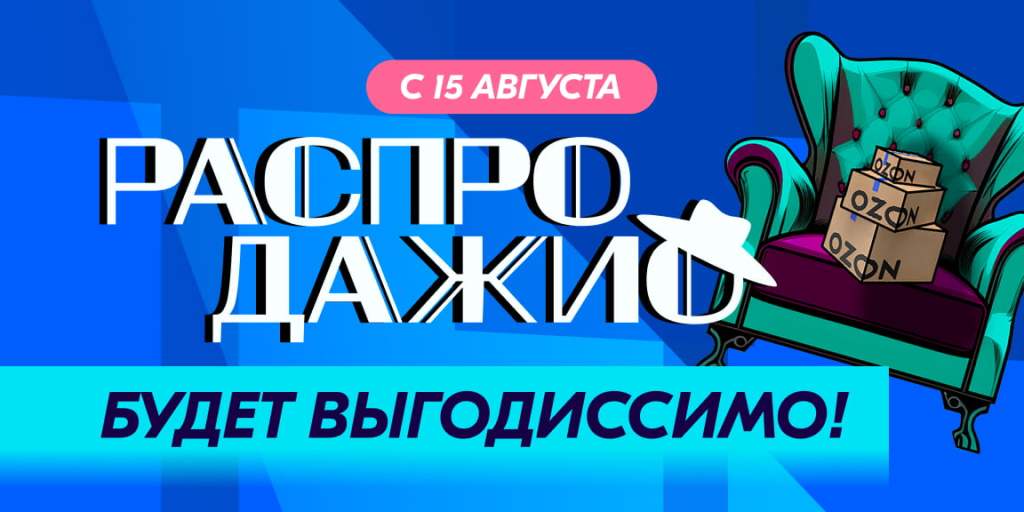


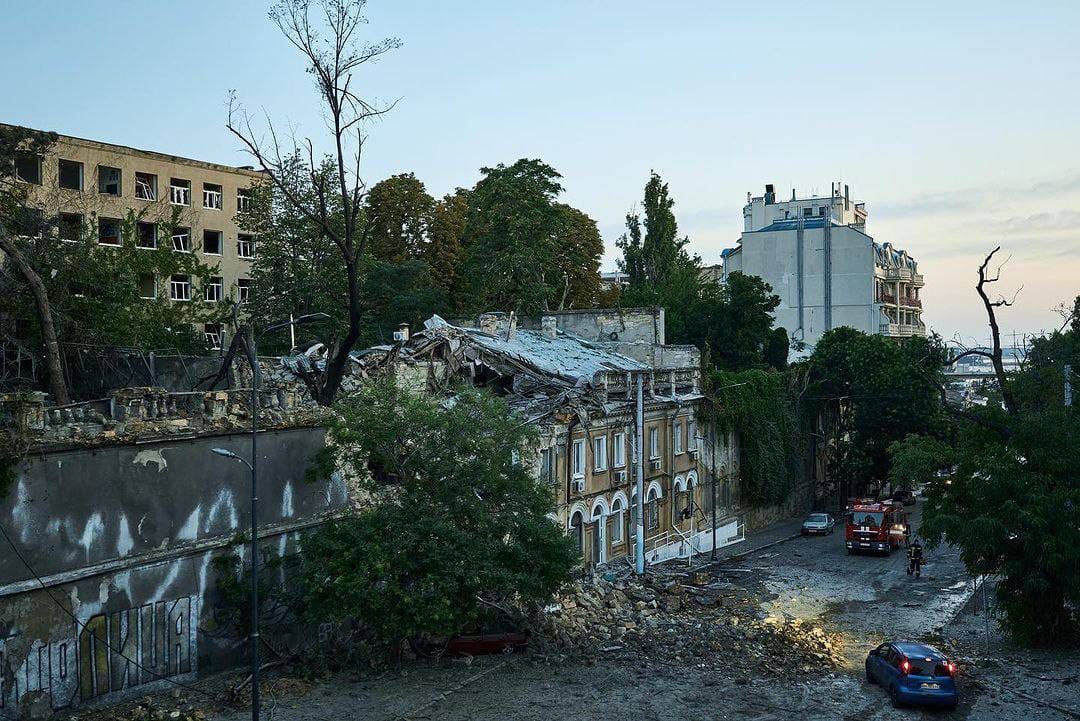


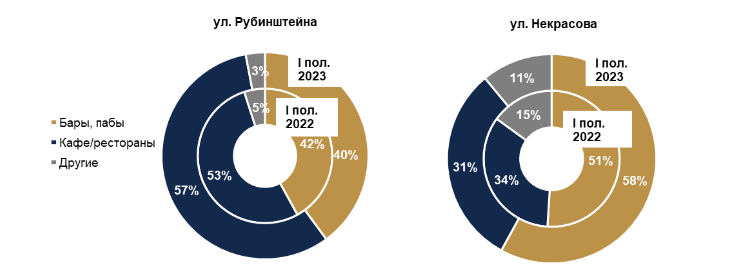
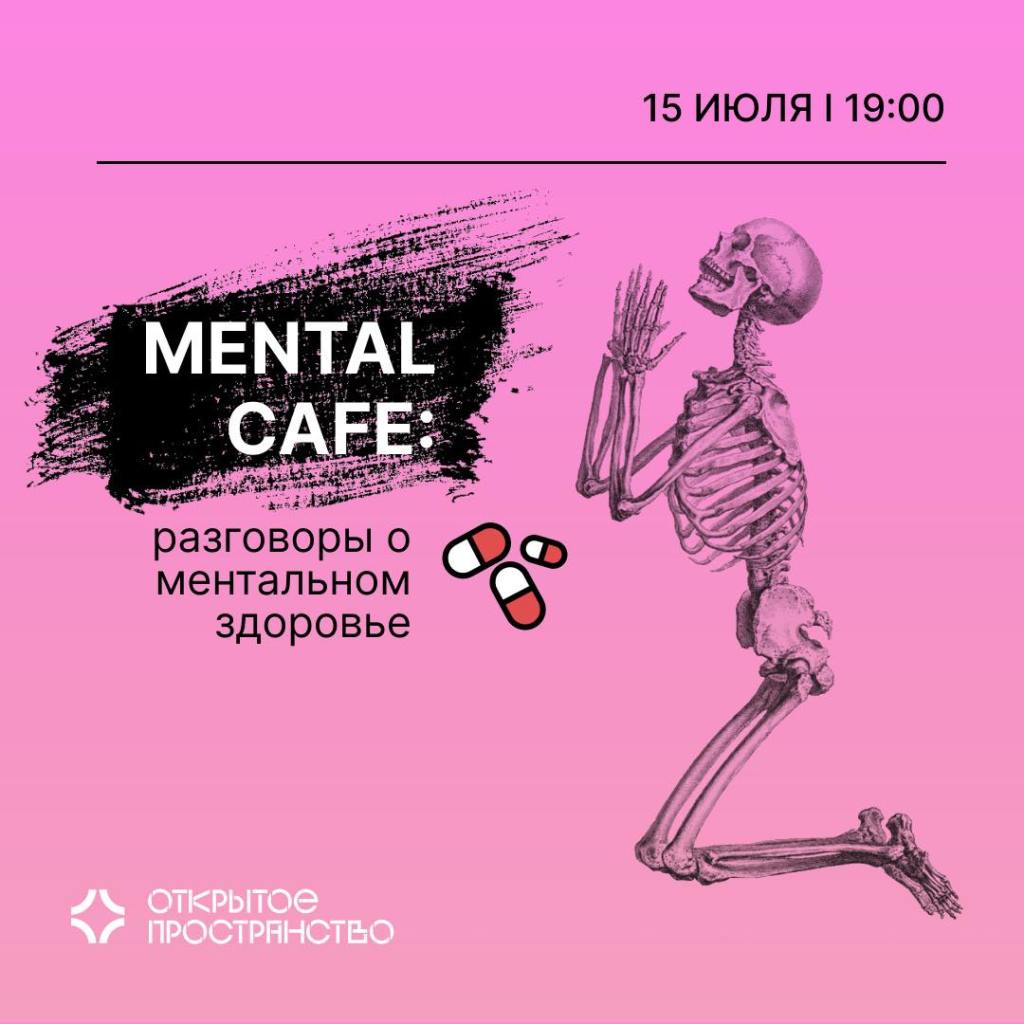
 7 p.m., Saturday, July 15
 Open Space in St. Petersburg, 25 Rubinstein Street