This is the first in a series of posts in which I showcase a few of the newsletters, blogs, Substacks, and websites — all of them produced by hardworking, passionate lone wolves or tiny, perpetually underfunded grassroots collectives — which inspire me to continue making the Russian Reader and inform me about parts of the world and communities about which I would otherwise be utterly clueless.
Peter Leonard describesHavli as “a Central Asia-themed Substack written by me, Peter Leonard, a former editor at Eurasianet and the one-time Central Asia correspondent for the Associated Press. By drawing on my decades of experience visiting, studying and reporting on the region, I intend to make this newsletter an informative and, fingers crossed, engaging way to keep abreast of developments of note.”
Mr. Leonard’s latest post on Havli dovetails with so many of political and social trends I’ve been tracing over the years that it seems tailor-made for my website. Enjoy! I hope you’ll consider subscribing to Havli and supporting it financially. \\\ TRR
Closed-circuit television footage showing a teacher at a Tashkent school grabbing a pupil by the neck.
In the worst-case scenario, giving a teacher lip usually ends with the offending pupil visiting the headmaster’s office.
Things have to get pretty bad for a classroom kerfuffle to provoke a diplomatic incident.
A teacher at a school in Uzbekistan’s capital, Tashkent, managed to do just that this week by manhandling a pupil who complained that she was conducting her Russian language class entirely in Uzbek. Closed-circuit television footage obtained by the boy’s parents shows the teacher grabbing the child by the neck, and then slapping and screaming at him.
The video images quickly circulated on social media, eliciting howls of protest from self-avowed Russian patriots indignant at this alleged case of maltreatment of their ethnic kinfolk.
“You can just imagine what a racket there would be if a similar thing happened in Russia with a migrant. And it is not like Uzbekistan is confronting a wave of ethnic crime from Russia; you don’t get murderers, thugs, drug dealers, and Wahhabis going there from our country,” wrote the author of a Telegram account that disseminated the footage.
The spokeswoman for the Foreign Ministry in Moscow was quick to demand an investigation.
“If it is justified, action must be taken against the perpetrator of this cruel treatment against the child,” Maria Zakharova said. “We are monitoring this situation closely.”
The response from Uzbekistan was swift. Alisher Kadyrov, the deputy speaker of parliament, suggested that Russia “mind its own internal business.”
“The rights of this child are being violated in a school in Uzbekistan, the offence was committed against a child of an Uzbek citizen, and measures will be taken on the basis of laws adopted on behalf of the people of Uzbekistan,” he wrote on Telegram.
Uzbek Foreign Minister Bakhtiyor Saidov delivered the same message in person, albeit more obliquely, to his Russian counterpart on the sidelines of the ongoing United Nations General Assembly, noting that their meeting “underscored the importance of commitment of states to the principle of non-interference to each other’s internal affairs.”
Following this outcry, news emerged that the teacher at the Tashkent school assaulted another pupil in an unrelated incident and has since been sentenced to serve seven days in jail.
Moscow shows every sign of relishing the opportunity to make hay of this episode.
Claims of Central Asia’s allegedly spiralling Russophobia problem have been wielded with increasing readiness by surrogates for the Russian authorities since the start of the invasion of Ukraine. The Kremlin perceives the region’s rulers as more or less loyal, but it worries that the general public is not as reliably slavish. The nightmare scenario for Moscow is that a groundswell of anti-Russia sentiment across parts of Central Asia could eventually force a gradual shift in diplomatic stances.
The concern looks overblown at present, but it is not fully unjustified.
Older generations, especially the shrinking cohort with vivid memories of the Soviet Union, are typically more sympathetic to Russia and its bellicose conduct. Younger people whose media diet does not consist of consuming Russian state propaganda are more hostile.
Russian chauvinists are alarmed that the increasingly exclusive use of local languages in Central Asia is weakening their ability to project their message.
Research by Central Asia Barometer, an attitudes-surveying think tank, suggests that there is some association between language use and views on the war in Ukraine. Russian speakers in countries like Kazakhstan and Kyrgyzstan are more likely to justify the invasion of Ukraine than those who speak their own languages.
Fears that the status of Russian is slipping leads at times to comically petty whining.
Earlier this year, famous Russian TV presenter Tina Kandelaki complained in a Telegram post that Kazakhstan was poised to rename a number of train stations to make them sound less Russian. She cast this move — which comprised in the event of changing names like Railway Siding No. 13 to Akshi Railway Siding — as the start of a slippery slope that would end with the closure of Russian schools, the banning of the Russian language and “[Russian] pensioners getting kicked out into the cold.”
Historians in Central Asia crafting narratives that highlight the negative aspects of Russian and Soviet rule are another trigger. The mere suggestion that the region owes its civilisation to an era pre-dating the arrival of the Russians is enough to irk some.
In August, scholars from all over the region assembled at the Eurasian National University in Astana for the first-ever edition of the Forum of Historians of Central Asian States. “It is important for us to begin to rethink our common history,” Kazakh Science and Higher Education Minister Sayasat Nurbek told the scholars.
Mirziyoyeva is taking a leading role in lobbying for a vision of Uzbekistan’s history that looks beyond the role of the Russians and the Soviet Union.
The political elite has taken the lead on this. Saida Mirziyoyeva, a senior advisor to her father, Uzbek President Shavkat Mirziyoyev, in August delivered a speech in Kazakhstan that strongly signals what areas of the official narrative on recent history will be emphasised going forward. She alluded in her talk to a pair of reformist and softly nationalist movements that emerged in what are today Uzbekistan and Kazakhstan as having been thwarted by Soviet oppressors.
“At the beginning of the 20th century, both the Jadids and representatives of the Alash movement fought for a single goal: the liberation of the people, for the development of their motherlands. But they were not given the opportunity to realise their dreams,” she said.
Russian critics of this kind of talk smell a rat.
They point to the content of one history textbook in Uzbekistan as evidence of dangerous revisionism. A passage from a book cited by outraged Russian patriots talks of how the “Soviet regime subordinated Uzbekistan’s economy to the interests of the centre, turning it into a raw materials appendage.” This is loathsome ingratitude designed to demonise Russians, they grumble.
Kyrgyzstan and Tajikistan are far more economically dependent on Russia than either Kazakhstan or Uzbekistan, but they too have in their own small ways worked to forge narratives that are gently but implicitly critical of the legacy of Muscovite rule. In July, Kyrgyz President Sadyr Japarov officially recognized five victims of Soviet repression as founders of the modern statehood of Kyrgyzstan. All the men were executed in 1930s during waves of Stalinist repressions against perceived nationalist movements.
That anti-nationalist campaign was the same one that crushed the Jadidist and Alash movements referenced by Mirziyoyeva.
Central Asian leaders periodically try to soothe the nerves of Russians eager to winkle out evidence of xenophobia in the region.
In his address to the nation earlier this month, Kazakhstan’s President Kassym-Jomart Tokayev reprised a tried-and-tested Astana mantra.
“In Kazakhstan, there is no — and cannot be any — space for discrimination on linguistic, religious, ethnic or social grounds,” he said. “Incidents and provocations do sometimes occur, but these happen because of the thoughtlessness and ignorance of individual citizens. When these things happen, they are dealt with — and will [always] be dealt with — by law enforcement agencies.”
The large community of vocal Russian revanchists monopolising the public conversation inside their country do not buy it. And they are seizing on any excuse to make their point heard.
The percentage of schoolchildren in the Russian Federation studying in native tongues other than Russian halved between 2016 and 2023. Instruction in thirty-eight languages ceased altogether. Experts argue that this situation was caused by a whole slew of problems, including a downturn in interest in native languages, a decrease in the number of lessons taught in them, a shortage of teachers, and an estrangement from foreign partners due to sanctions.
Pupils at a rural school during a Yakut literature lesson. Photo: Alexander Ryumin/TASS
According to the Institute of Linguistics of the Russian Academy of Sciences, there are 155 living languages in the Russian Federation, thirty-seven of which have the status of official languages in the republics, meaning that they should be used in those regions on an equal footing with Russian. In Russia’s comprehensive education system, native languages are studied in three forms: as separate subjects, as electives, or as complete substitutes for Russian in all classes.
Based on data from the Ministry of Education, Takie Dela has calculated that between 2016 and 2023, the percentage of schoolchildren who study entirely in their native languages fell from 1.98 to 0.96 — the lowest figure for this period. The number of such pupils fell from 292,000 to 173,500, although the number of children in school increased by 3.2 million over those same seven years.
The share of those who studied native languages at clubs decreased from 0.7 to 0.4 percent. During the same period, the share of pupils who were taught their native languages as a separate subject increased from 10.41 to 10.56 percent. But the overall engagement of children in learning their native tongues decreased from 13.08 to 11.92 percent.
During the same period, instruction in thirty-eight languages, including Altai, Buryat, and Ingush, ceased completely. In 2016, there were still children in Russia who studied general subjects in those languages. There were no more such pupils left by 2023.
“Where the language is spoken at home, it provides an opportunity to master the written norms. This is vital to preserving people’s identity, to making them feel comfortable in society,” says sociolinguist Vlada Baranova.
According to the law, learning a native language in Russia is voluntary, so it is up to parents to decide how exactly it will be taught to their children and whether it will be taught at all.
Margarita Kilik, chair of the Association of Teachers of Native Languages of Kamchatka, argues that the decrease in the number of pupils studying their own languages is due to the desire of parents. “Fewer and fewer people are staying in the region,” she says. “They are leaving to study in the big cities, in Moscow and St. Petersburg. So there is simply no need for mother tongues.”
Which languages Russian schoolchildren studied as mother tongues in 2023. Drag your cursor arrow over each circle to see the total number of children who were studying that particular language as a native language. By clicking the “cog” icon in the lower righthand corner, you can access two sets of toggles that alter the map: 1) Форма изучение (“Form of instruction”), which shows whether a language was taught as a separate subject (pink) or used as a language of instruction (powder blue); and 2) Сколько детей узучают язык (“How many children study the language”), which alters the map to visualize the relative weight of the numbers and percentages of children who studied languages other than Russian in 2023. Source: Ministry of Education of the Russian Federation/Takie Dela.
And yet, interest in mother languages persists and often awakens with age, when it is more difficult to learn them, Kilik concedes. Natalia Antonova, editor-in-chief of the Karelian-language newspaper Vedlozero Windows, agrees with her. “It is difficult to get schoolchildren interested in something, especially studying minority languages. Often people who have already matured, whose parents have passed away, have regrets that they have been left without a linguistic thread linking them,” she says.
According to census data cited by the To Be Accurate project, the number of speakers of all of the Russian Federation’s official languages except Russian, Chechen, Tatar, and Tuvan declined between 2002 and 2020. But many textbooks of minority languages are designed for children who can speak them, even though the textbooks themselves have not been updated for a long time.
“Children who don’t know their native languages enter school. There are good textbooks structured to teach [these] languages as foreign languages, but these are more exceptions,” says Baranova.
In the Russian Federation, native languages are studied mainly in elementary and middle schools, while in grades 10 and 11 most teenagers switch to Russian, according to statistics from the Ministry of Education. “Graduates need to sit for the Unified State Exam, and general subjects taught in native languages won’t help them much,” says Vladislav Savelyev, a former Yakutia Education Ministry official.
Initiatives by the regions to produce a Unified State Exam in their native languages were never adopted. Meanwhile, the number of hours allocated for studying native languages at school has been reduced, activists have pointed out. “These issues are regulated by the federal educational standards, and, of course, the number of hours for teaching Yakut has been reduced in favor of priority subjects, such as mathematics,” says Savelyev.
Instruction in native languages in the Russian Federation. The numbers of children who studied in 2016–2023 in their native languages is indicated by the lavender bars, while their percentage within the overall school population is shown by the pink line and dots. Source: Ministry of Education of the Russian Federation/Takie Dela.
Savelyev also notes that schools are switching to a five-day school week and “optional” subjects like mother tongues are the first to have their hours cut from school schedules.
Another reason why the languages of Russia’s peoples may eventually disappear is the shortage of teachers specializing in them. According to data from the Institute for Statistical Research and Knowledge Economics at the Higher School of Economics, the number of native language teachers in Russian schools fell from 22,000 in 2009 to 15,500 in 2023. There are even fewer who can teach mathematics and history in languages other than Russian. “Seventy percent of the school teachers in the Koryak Autonomous District are from other regions. How can they know our languages? The situation is the same in many other regions,” Kilik points out.
The circumstances surrounding the teaching the official languages of the republics and the languages of minority Indigenous peoples differ greatly, however.
“We have several such languages in the Kamchatka Territory, and some of them even belong to different [linguistic] groups. A significant number of the teachers of these languages, as well as the speakers, are at least fifty-five to sixty years old. Who will teach the languages when they retire?” wonders Kilik.
Some languages, such as Aleut, have disappeared altogether in Kamchatka: Russia’s last speaker of the language, Gennady Yakovlev, died in 2022. Russian Aleuts used to cooperate with American Aleuts in preserving their language and culture, but this has now become impossible. “There are obstacles on both sides: our side says that America is an enemy country, while their side imposes sanctions on Russia,” says Kilik.
The situation is similar in Karelia, the only republic in the Russian Federation where the language of the titular nation does not have official language status. This is due to the fact that the Karelian alphabet is based on the Latin alphabet, while official languages in Russia must be written in the Cyrillic script alone.
According to official statistics, less than 500 children study the Karelian language at school, while 340 children study Vepsian. Instruction in these languages has been preserved only at specialized university departments and partly in kindergartens, says Antonova. “There are a couple of dozen kindergartens where the native language is learnt. But it’s more about the showy aspect of the language used in songs, costumes, and festivals,” she adds.
Since the Soviet Union collapsed, Russian Karelians have been assisted by Finnish Karelians in studying and preserving the Karelian language: textbooks have been published jointly, and language courses have been held jointly. “The break with Finnish organizations will certainly affect the opportunities for learning the Karelian language. Although it is not so noticeable yet, because little time has passed,” Antonova explains.
According to Antonova, Karelian is currently studied in clubs and courses at libraries, language centers and NGOs. Some of these organizations even receive state support, she adds.
Russian lawobliges the state to preserve the languages of the peoples living in the Russian Federation and to promote their study.
‘This is a very divergent movement, and the situation depends very much on the region. In some places the authorities support languages, while in other places, on the contrary, they see their widespread use as going hand in glove with ethno-nationalism. But the policy is generally more aimed at Russification and reducing the use of minority languages,” explains Baranova.
Baranova notes that there is a downside to the fact that studying mother tongues is voluntary, as stipulated by law. In villages inhabited by speakers of endangered languages it is often possible to muster only one first grade class, and it will always be a Russian-speaking class.
“Because there will always be parents who want their child to be taught in Russian, and this is also their free choice. You can, of course, try to defend your position and demand that the school provide for another first grade class in the other language, but you’ll come across as suspicious and dangerous,” says Baranova.
Antonova also says that it has become more difficult to assert one’s linguistic rights.
“If campaigning for language revival was a common trend in the nineties, nowadays you can be accused of extremism and separatism, and the authorities will regard you with suspicion.”
Despite all this, there are ways to study native languages in Russia, says Baranova.
“Other forms and grassroots initiatives that get children and adults involved in using the language in different areas are also effective. They turn out to be a good way to keep the language alive.”
DINARA RASULEVA & TATSIANA ZAMIROVSKAYA “Lost Tongues, Found Voices, Decolonizing Languages: A Multilingual Reading and Conversation” Wednesday, October 2, 6:30 pm Hunter College CUNY Elizabeth Hemmerdinger Center (706 Hunter East Bldg) Free and open to the public
Join Belarusian writer Tatsiana Zamirovskaya and Tatar poet_ess Dinara Rasuleva for a discussion on the loss and revival of languages. Dinara will talk about why languages of indigenous peoples colonized by Russia fade and how they are being brought back, sharing her translingual poems from the Lostlingual research series. Tatsiana will talk about why some Belarusian writers write in Russian, while still remaining Belarusian-identified authors, about her experience writing in a mix of Russian and Belarusian, and the challenges of translating colonized voices accurately. Both writers will reflect on the intersections of language and identity in their lives and works.
Dinara Rasuleva (she/they) is a poet_ess based in Berlin and born in Kazan, Tatarstan. She writes in Tatar, Russian, English and German — the languages she uses everyday. Dinara’s poetry was described and analyzed as decolonial and feminist writing, as expressionist poetry and performance poetry. In 2020 Dinara started a feminist writing laboratory for russian-speaking immigrant FLINTA community. In 2022 their first book of poems Su was published by Babel publishing house. Since 2022 Dinara started the Lostlingual Project, an investigation of the loss of her native Tatar language through translingual abstract poetry. In 2023, in collaboration with Berlin library Totschka, Dinara started TEL:L laboratories: writing in native forgotten or stolen languages.
Tatsiana Zamirovskaya is a Belarusian author who moved to Brooklyn in 2015. She writes metaphysical sci-fi about memory, ghosts, hybrid identities and borders between empires and languages. She is the author of three collections of short stories and a novel Deadnet, published in Moscow in 2021, receiving great critical acclaim and shortlisted for several Russophone literary awards. She is a recipient of fellowships from Macdowell, Djerassi and VCCA. Currently Tatsiana is finishing her new collection of short stories about women going through unbearable events and how these events influence language and perception. She currently writes in belarusified Russian, russified Belarusian and broken English.
Directions: At the reception desk of the Hunter West Building, please present your ID to get a pass. From there, take the escalator to the 3rd floor, turn right and walk across the sky bridge to the Hunter East Building, then take the elevator to the 7th floor. Hemmerdinger Center is at the end of the hallway past the turnstiles.
Tamizdat Project is a 501(c)(3) not-for-profit organization with a tax-exempt status: donations and gifts are deductible to the extent allowable by the IRS. You can donate online, via Venmo (@Tamizdat-Project), PayPal or Zelle using our email tamizdatproject@gmail.com, or by check. Please don’t hesitate to contact us, and thank you for your support!
Source: Tamizdat Project newsletter, 21 September 2024
Novocollege, a private educational institution in Novosibirsk, will close, its founder Sergey Chernyshov announced in a video posted on YouTube on Saturday, 27 April. According to him, the college and its subsidiary projects—Novoschool and Inotext Foreign Language School—will close in July 2024, immediately after the academic year is over and all paperwork has been completed.
Explaining the motives behind the decision, Chernyshov said that the college remained the only educational institution in Russia where “there had never been a single propaganda event” and where “[people] spoke openly about their attitude to what was happening.”
“I believed and still believe that my colleagues [at other colleges and schools — editor, DW] bear a huge blame for normalising the war in our country: for [holding] Important Conversations, [making students write] letters to the front, handing out [military draft] summonses, for engaging in propaganda and celebrating former murderers and rapists as heroes. None of this has ever occurred at Novocollege,” he said.
“It is impossible to run a normal college in an abnormal country”
According to Chernyshov, over the past year the college has been subjected to constant inspections from various government agencies, which have made it almost impossible to keep the college running. Meanwhile, many of the college’s lecturers and students would be willing to take part in “patriotic” events in exchange for accreditation and state-issued diplomas, the former head of the institution said.
Under such conditions, Chernyshov sees only two options for Novocollege. The first is to turn it into “a typical Russian college with propaganda that is ingratiating to officials, a beautiful cover, and what they want to hear from it.” The second is to recognise that “it is impossible to run a normal college in an abnormal country.”
In June 2023, Novocollege was denied government accreditation, despite the fact that the college had scored the necessary number of points and fulfilled other formal requirements. Chernyshov himself was placed on the list of so-called foreign agents by the Justice Ministry in May of last year, after which he resigned his administrative duties at the educational institution.
Sergei Chernyshov, “‘It’s impossible to run a normal college in an abnormal country’: Novocollege is shutting down” (in Russian; no subtitles)
For a modern and free college to run well, modern and free people are a vital prerequisite.
If we now polled the students and teachers at [Novocollege] about whether they would be willing to hold Important Conversations, invite veterans of the so-called special military operation to visit, applaud the speeches of propaganda ministers, and march to patriotic songs in exchange for accreditation and government-minted diplomas, how many people would vote in favour? I am quite bitter to admit it, but I think it would be a majority.
We acknowledge that it is impossible to run a normal college in an abnormal country. Neither I nor my colleagues (many of whom have left [Russia] due to the threat of mobilisation or arrest; many of whom have had family and friends arrested or killed) can pretend that everything is normal. No, everything is not normal. Even if all our colleagues in education pretend that things are normal, I repeat: no, things are not normal.
Therefore, I am announcing that Novocollege, Novoschool, and Inotext Foreign Language School will cease operations as of July 2024, immediately after the end of the academic year, graduation, and [completion of] all paperwork.
And yet, there are unique teams of students and teachers at Novocollege who have voiced their willingness to continue working, knowing that the external pressure will only increase, that the college will increasingly not resemble the country in which it operates, and that there will most likely never be any accreditation. They are primarily at the Tomsk branch and in the distance learning department. Perhaps there will be other teachers and their students who are willing to continue to live and study with a team of free normal people—and we will help them organise their work.
Once regarded as one of Russia’s liberal universities, the Higher School of Economics (HSE) has become a reactionary hellhole in recent years. Photo: Sofia Sandurskaya/Moskva Agency/Moscow Times
The Higher School of Economics (HSE) has forbidden applicants applying to its journalism program from quoting “foreign agents.” Any mention of people with this status or their publications will cause the results of admissions exams or interviews to be annulled, the university’s regulations say.
Applicants are also obliged to comply with the law “On Protecting Children from Information Harmful to their Health and Development.” They are thus not permitted to use materials “promoting” LGBT, “gender reassignment” and “denying family values” in their admissions applications.
A screenshot of the anti-“LGBT” and anti-“foreign agents” clause in HSE’s regulations for the oral interview taken by applicants to its bachelor’s program in journalism.
The application to HSE’s bachelor’s program in journalism involves undergoing a “creative test”: applicants [discuss] a “literary or sociopolitical” topic. The regulations state that the future journalists must demonstrate “an original position and awareness of current events and problems.”
Russian laws do not prohibit using and disseminating materials published by “foreign agents,” and only registered media outlets are obliged to flag individuals and organizations who have been designated as such.
Journalist Renat Davletgildeyev, who once served on HSE’s admissions committee, explained that in years past, applicants were, on the contrary, encouraged to mention the media outlets now designated “foreign agents.”
“I remember when we used to administer these exams at Vyshka [HSE’s nickname in Russian] and would give applicants the maximum score if they quoted the cool journalists and the media outlets who today make up the bulk of ‘foreign agents’ (in other words, the list of honest and cool journalists and media). I feel sorry for my alma mater. But it’s long been clear where things were headed,” he wrote.
[Last week], it transpired that the Higher School of Economics in St. Petersburg had announced that the use of feminitives by students was unacceptable. The leaders of student organizations were warned that the presence of such words even in conversations on social networks would be tantamount to involvement in the “international LGBT movement,” which has been deemed an “extremist” organization by the Russian authorities.
Previously, the HSE fired several lecturers for their anti-war stance, banned the remaining instructors from talking about political topics, and installed surveillance to monitor them, said Igor Lipsits, doctor of economics, who resigned his post at the university. According to him, cameras were installed even in classrooms under the pretext of “quality control,” but in reality they were meant to censor and purge instructors who did not agree with the Kremlin’s policy.
The colossal immersive 3D show The Grinch and the New Year Factory
Palma Mansion (18 Pirogov Lane) Dates: 2.01.2024, 3.01.2024, 4.01.2024, 5.01.2024, 7.01.2024 Time: 11:00, 14:00, 17:00 (daily) We recommend arriving 30 minutes before the start of the event.
New Year is a magical time of miracles and fairy tales! StageMagic Agency has produced a colossal immersive 3D show, The Grinch and the New Year’s Factory, that will entertain children of all ages and even adults! The show can be seen only from January 2 to 7 in the old Palma Mansion!
This New Year’s week will be full of magic, and even the walls of the mansion will come to life as if by magic! No, no, we’re not kidding! Thanks to cutting-edge 3D mapping technologies we will create a Petersburg Disneyland in an old mansion featuring enchanting sets, an incredibly colorful light show, and an exciting performance, including musical numbers performed by the city’s best artists!
Little viewers can look forward to becoming full-fledged participants in a exciting journey through Cartoonland and along with their favorite Disney characters saving the New Year from the insidious Grinch, who decided to spoil the children’s holiday and stole all the gifts from the elves’ magic factory! Elsa, Jack Sparrow, a wizard on a real magic carpet, and many more will come to the aid of the good elves! Will the cartoon characters manage to save the New Year? Will goodness prevail? Come and find out at the main New Year’s celebration in Petersburg, The Grinch and the New Year Factory.
Before the show starts, children will enjoy an exciting welcome program including interactive games with their favorite cartoon characters, a TikTok show, a beauty bar, a magician’s show, and even a photo shoot with adorable husky dogs.
But that’s not all! Every child will receive a 3D gift from Santa Claus, and every adult will receive a welcome cocktail from the owner of the mansion!
All categories of children’s tickets entitle them to receive a gift.
RECOMMENDED FOR CHILDREN BETWEEN 4 AND 10 YEARS OLD ADMISSION WITH PARENTS CHILDREN ARE SEATED IN THE FRONT ROWS BY AGE (YOUNGER CHILDREN IN THE FRONT ROWS, OLDER CHILDREN BEHIND THEM, AND PARENTS BEHIND ALL THE CHILDREN)
There is no such thing as too much magic, StageMagic knows that for sure! See you in the fairy tale!
Duration: 1 hour and 20 minutes We recommend bringing a change of shoes.
Source: Bileter.ru. Translated by the Russian Reader
Dima Zitser. Photo courtesy of Deutsche Welle
Dima Zitser, the well-known educator, writer, and presenter of the weekly program Love Cannot Be Educated, gave a lecture in Berlin in mid-December. Before his “pedagogical standup routine,” as he himself dubs his encounters with audiences, Zitser granted an interview to DW. With Russian schools becoming obedient tools of propaganda, the renowned educator increasingly has to explain to worried parents how to protect their children from the monstrous influence of the government’s lies and manipulation. Zitser told DW how to talk to children about the war, how to teach them to resist propaganda, and how to help them adapt to a new country when they have been forced to move.
DW: Russian parents today often do not know how to talk to their children about the war. They want to protect their children from trauma, but prefer to create an information bubble for them and pretend that nothing is happening. How do you feel about this stance?
Dima Zitser: You cannot avoid talking about the war with your child. You’re forbidden not to talk about it! First of all, it’s tantamount to deception: children are always aware of and know much more about the world around them than we would like them to. If Mom doesn’t talk to it, the child will take its questions to everyone else but Mom. It won’t want to traumatize its mom. It will imagine that this is a painful topic for Mom, that it is not the done thing to talk about it in adult society.
Russian children live in a country that has unleashed a bloodbath. Clearly, we must protect children, and we must choose our words carefully when we talk to them about the subject. But we cannot conceal from them the kind of world they live in. Imagine the level of disenchantment that awaits it when a child bumps its head on this reality. There are no secrets that don’t surface in the end. What do we want our child to grow up to be? A person who doesn’t care about the troubles happening in its midst? It is vital for a person to experience emotional strife.
— Sometimes a child has a hard time coping with the war and even feels ashamed because he or she is Russian. What can parents do in such cases?
You have to explain that it has nothing to do with a people or a nation. Tell your child about the history of Germany, say, which went through its own horror. Tell it about Thomas Mann and Bertolt Brecht, about people who found the strength to stand out. It was hard for them, but if they hadn’t done what they did, the German people would have been finished.
My eldest daughter lives in New York. She does a lot of projects, including ones on behalf of Ukrainians. Her son Yasha is nine years old. [Ukrainians] refused to speak Russian with them in one place. So Yasha asked, “If this language is so hated and it has to do with this war, why do we even speak it?” There is no short answer in this case. Your conversation with your child should start with the fact that the feelings and emotions of people from Ukraine who cannot stand to hear Russian are understandable.
A close friend of mine from Kyiv refused to communicated me after the Russian invasion started, even though I’ve never been a Russian citizen. But later I wrote to her in Ukrainian (my mom and dad are from Ukraine), and we had the most painful conversation for an hour and a half. We met in Europe a month and a half after the war started, and she explained to me that she couldn’t bear to hear Russian being spoke. Although my friend understands that Russian-speaking people may have nothing to do with the war, she feels physically sick and her body hurts when she hears Russian.
I think we need to talk about it. This is what is meant by empathy. We try to understand, albeit incompletely, what is going on with other people.
Dima Zitser, ”Freedom from Education” (TEDx Sadovoe Ring, June 2016, Moscow). With English subtitles
— Suppose a child goes to a Russian school where there is aggressive ideological training, where the war is glorified in “Lessons About What Matters.” Is it enough for the family to talk to the child about what is going on?
I take a very rigid stance in this sense. If people who read DW have these things going on at their child’s school, they have to get the child out of there. There is no other option. If we’re talking about a person around six or seven years old, it believes what adults say without a second thought. It has no sense whatsoever that adults could want to harm it. This, by the way, is the basis of many crimes. The impact of school, propaganda, and indoctrination on this person is enormous! There are absolutely horrible studies on this subject in connection with the Second World War and Nazism.
Get the child out of there! In the Russian law on education, there are different forms of education—for example, homeschooling. Right off the bat tomorrow morning, any family can take their child out of school and start homeschooling it. After that, the technical stuff starts. It will be difficult, but did these people assume that they could live during a war and pretend that there was no war? That they could say things to their child at home, and the child would go to its quasi-Nazi school and everything would be fine? It won’t be fine. It’s a war, guys! It’s a matter of saving our loved ones!
We can’t live in a time of war as if it isn’t happening. We have to make decisions. For example, we can form a study group: parents agree amongst themselves, pool their money, and hire a teacher. This is legal, and there is such a trend in Russia.
If a person is fifteen or sixteen years old, it’s no big deal. Well, they will live amidst doublethink, just as we did when we were growing up. True, it did us no good. There is such an argument amongst adults: “We survived after all.” Like hell we survived! We learned to lie, to be mistrustful, to look for a hidden agenda in everything, to expect the worst. I would prefer to live in a world where people are open and frank.
— Suppose a child has been removed from a Russian school, but other sources of aggressive propaganda continue to harass it. Should children be taught to recognize and combat propaganda?
This is like asking whether a person should be taught critical thinking. Yes, of course they should! We should teach them to seek out alternative sources of information and ask follow-up questions. If someone speaks on behalf of the state, one should immediately question what they say. We must teach children that the phrases “everyone knows,” “anyone would say,” and “there is no doubt” are forms of manipulation.
— In addition to children who have remained in the Motherland, there are thousands of children who have left Russia with their parents. The problems faced by emigrants are often discussed, but what happens to the children is forgotten. How should parents behave so that emigration is less painful for their children?
The most common mistake is to try to maintain the routine you had in place before you left the country. Did you study music? You’ll go to music school here too! Were you studying English? You’ll keep learning English! We played chess on Tuesdays? We’ll do the same thing here!
Not even the best parents are immune to this mistake. They instinctively try to maintain stability at such moments, but they are accomplishing just the opposite. The frame of reference has changed! You can’t live in Berlin as if you were still living in Ryazan! People here are different—they speak differently, look different, behave differently. When we try to stop time, we keep the child from growing.
When we keep a child “packed and ready to go,” it has no chance to grow into the country in which it has arrived. What should it do, pretend it’s in Moscow? Not start speaking a new language? Not make new friends? Not go to the German theater? We are suggesting that these years be excised from its life. It’s a grave mistake.
Children are quite protective of adults, often more protective than adults are of them. They understand that Mom has it rough, and Dad has it rough, so I’ll try not to whine. I’m not very good at it—I get prickly and rude—but I try. Adults are really tempted to say, “What do you know about trauma? You’re only nine years old! What we [adults] are going through, now that’s trauma!” But for all its short nine years, it had lived its little life in familiar conditions, from which it was yanked at the snap of someone’s fingers.
You have to find things to keep yourselves afloat. You have to give yourselves the opportunity to learn things, to be interested in things, to like things. There is a beautiful tree here, a comfortable bench here, a nice store here. You have to establish a new routine: going out to eat delicious ice cream after school, inventing new traditions, having new conversations. Yes, it’s going to be hard, and that’s okay. But we’re together, we’re having lots of experiences, we’re recreating our family bonds. If mom (or dad) doesn’t tell the child that she (or he) is having a hard time, then the child is sure that it doesn’t have the right to say that it is having a hard time either. This is an important point! Sometimes, you have to hug each other and cry on each other’s shoulders. This doesn’t lead to neurosis. It’s a way for the child to realize: I’m normal.
Today, everyone at Samokat is talking about only one thing.
Samokat has been notified that we are being evicted from our little home on Monchegorsk Street in Petersburg. While everyone else is busy with pleasant pre-New Year’s chores, we are being kicked out on the street along with our favorite books and holiday plans. We have just one day to move: tomorrow.
First of all, we appeal to the leadership of St. Petersburg and the Committee for City Property Management. And we hope that the cultural capital is not indifferent to the plight of one of the best bookstores in the city by one of the primary independent children’s publishers in Russia.
Just yesterday we shared a Christmas greeting from Natasha, celebrated our publishing house’s anniversary, showed off our cozy annex, and invited you to our New Year’s workshops. Yes, we share all the news with you. Today, unfortunately, there will be no good news.
Samokat’s annex has become a magnet for our dear readers, a place chockablock with warmth and coziness, and we believe that this warmth amounts to much more than four walls (even if they are the four walls dearest to our hearts). Now we need your help very much.
Tomorrow, our little home at Monchegorsk 8B will be open from 9:00 a.m., and we will be giving away all our books at a thirty-percent discount. Now we basically have nowhere to move the books, and any purchases you make will be a huge support to us. Also, if possible, please pick up confirmed internet orders.
We are looking for volunteers to help us get our little home ready to move. There are only two young women taking care of our little home, Natasha and Polina, and we are confident that you will not leave them in the lurch. If you are willing to help, come to Monchegorsk from 1:00 p.m.
We are urgently looking for a suitable storage facility to temporarily store our books, we have somewhere around 250 boxes of books, furniture and equipment.
And of course, we are looking for a new shelter for our books. We need upwards of 25 square meters for retail space and book events, plus a utility room, in the historical/cultural center of Petersburg.
If you have suggestions and options, please write via Telegram at +7 (921) 809-8519, and Natasha and Polina will be in touch.
A portrait of the perfect Russian family, per Global Orthodox
State Duma drafting law that would prohibit the promotion of childlessness
The State Duma is drafting a law that would prohibit the “promotion of childlessness,” according to an RIA Novosti interview with Irina Filatova, a member of the Duma’s cross-party working group on the defense of traditional values. The MP emphasized that the draft law does not touch on the personal beliefs of individuals, explaining that it specifically targets destructive propaganda in the information space. In the autumn of 2022, lawmakers in Bashkortostan introduced a similar draft law. The bill’s author described the consciously childless lifestyle as a “foreign ideology” and accused its supporters of causing population decline. They argued that it degraded public institutions and eroded traditional values. At the time, the authorities had decided to investigate why, despite financial subsidies and campaigns to prohibit the “propagation of the childfree ideology,” Russians were unwilling to have children.
[…]
Russians will be taught to resist western influence beginning in kindergarten
The Federation Council’s committee on the defense of state sovereignty held a hearing on countering interference in Russia’s internal affairs “through youth policy.” The senators [sic] came to a unanimous decision about the need to give the younger generation a “vaccination” against foreign influence from an early age. Alexei Chesnakov, the head of the research council at the Center for the Political Climate, proposed creating a “registry of negative phenomena” and incorporating sovereignty protection into “children’s political education programs.”
Yekaterina Duntsova, who wants to run for president, said the Kremlin should end the conflict in Ukraine, free political prisoners and undertake major reform to halt the slide towards a new era of “barbed wire” division between Russia and the West.
Nearly 32 years since the 1991 fall of the Soviet Union stoked hopes that Russia would blossom into an open democracy, Duntsova, 40, said she was afraid as she spoke to Reuters in Moscow.
In opinion polls, Russians voice support for the Putin regime’s action in Ukraine. And yet, many Russia would like the war to end, and the dynamics of recruiting “contract” soldiers does not demonstrate that a large number of people are ready to rise up “to fight the West in Ukraine.” What are the real sentiments of Russians? What do they think about the war and how do they justify it?
Lev Gudkov, deputy director, research director, Levada Center, “The war and collective identity,” (online)
Andrei Kolesnikov, senior researcher at the Carnegie Russia Eurasia Center in Berlin, “A semi-mobilized society in a hybrid totalitarian regime” (online)
Svetlana Erpyleva, Humboldt Fellow, Research Center for Eastern European Studies at the University of Bremen; researcher, Public Sociology Lab and the Centre for Independent Sociological Research, “Accepting the inevitable: how Russians justify the war in Ukraine”
Source. Annotation translated by the Russian Reader
Viktor Filinkov, convicted in the Petersburg portion of the high-profile Network Case, turned twenty-nine in early November. It was his third birthday in the penal colony, and for the first time he was not given any special “gift” there. Previously, surprises had been waiting for him that were even hard to imagine—for example, a new uniform with a piece of razor inside it. Filinkov has been imprisoned for six years total. During this time, he has seen a lot, including being threatened with dispatch to a war zone, but he quickly put a stop to such “jokes.” Now he is housed in the high-security wing along with other “repeat offenders.” And he constantly files suits against the penal colony. We talked to his girlfriend and public defender Yevgenia Kulakova, who loves him with all her heart and helps defend his rights behind bars.
Source. Excerpt translated by the Russian Reader, who looks forward to the day when he can see his friend and heroine Jenya Kulakova again and meet his hero Viktor Filinkov in person.
Putin noted that visitors from Tajikistan can stay in Russia for an extended period—fifteen days—without registering with the immigration authorities. They can also apply for a work permit that is valid for up to three years.
In addition, Putin announced the expansion of the quota for university students and postgraduates from Tajikistan—from 900 to 1,000 individuals.
The head of the Russian Federation added that the state would allocate 200 million rubles annually from this year for purchasing textbooks for Russian-speaking schools in Tajikistan.
Various regions of Russia have recently imposed restrictions on migrant labor. There have also been proposals to introduce such bans everywhere for visitors from countries where the Russian language is not recognized at the state level. In Tajikistan, Russian is enshrined in the constitution as the language of interethnic communication.
Due to the unstable financial situation, migrant workers have been leaving Russia. Up to a third of Tajik and Uzbek nationals may leave the country.
As of February 24, 2022, Russian President Vladimir Putin declared the beginning of what he dubbed the “special military operation” and the Russian Armed Forces invaded Ukrainian territory. What the Russian authorities assumed would be a swift operation soon became a drawn-out, full-fledged war. Many events occurred over the course of the first year of war, keeping Russians in suspense, forcing them to detach themselves from the situation, giving them hope, and then driving them to despair. When we conducted our first interviews in spring 2022, many thought the war would not last long.
Since then, it has become clear that the war will be with us for a while. The daily life of Russian citizens has been invaded time and again by dramatic events. The Russian retreat from the occupied territories, the annexation of new regions, the bombing of Kiev, the first Crimean Bridge explosion, and the “partial mobilization”— to name just a few. Have these events changed the average Russian’s view of the war, and if so, how? How did residents of the Russian Federation perceive the “special military operation” more than half a year later? These questions are the focus of the report you see before you.
There are several research teams monitoring changes in Russian perceptions of the war through opinion polls (for example, Russian Field and Chronicles). The work they are doing is very important. However, like any research method, surveys have their drawbacks—there are some things they simply will not show. For example, surveys do not always allow us to understand a respondent’s attitude towards sensitive or hot-button topics, as sometimes people have a tendency to hide their true views. But more importantly, for Russians largely removed from the political process, perceptions of such politically-charged issues as the “special military operation,” war, and military conflict do not fit neatly into the standardized set of coherent positions that a survey is capable of capturing. These perceptions may be complex and contradictory, and in this case, in-depth interviews and long conversations with people allow us to better understand the idiosyncrasies of each viewpoint. To our knowledge, we are the only team that systematically monitors Russian perceptions of the war using qualitative (interview) rather than quantitative (survey) methods.
We released our first analytical report in September 2022. You can read it here (in Russian) and here (in English). In it, we presented the results of our qualitative study through interviews conducted over several months after the start of the war, in March, April, and May 2022. Our interviewees held a variety of opinions on the military conflict—there were those who supported the hostilities in one way or another (war supporters), those who condemned military aggression (war opposers), and those who tried to avoid giving any explicit assessment of the situation (undecided). We compared these three groups of respondents with each other: how they perceive the armed conflict, what emotions they associate with it, and how they consume information, assess the victims of the conflict, discuss the situation with loved ones, reflect on the consequences of the war, and so on. We have also published the results of this research in analytical media outlets, a few examples of which can be found here, here, and here, as well as in scientific journals, such as those found here (in Russian) and here.
The paper you are currently reading is the second analytical report we have published and a continuation of this research. It is based on qualitative sociological interviews with Russian citizens conducted in fall 2022, from 7 to 9 months after the outbreak of the war. We wanted to determine how Russian perceptions of the war had changed during this period. This time, we excluded subjects who consistently opposed the war from the sample and decided to focus our study on the specifics of perceptions held by Russian citizens who did not have an unambiguous anti-war stance.
In audio intercepts from the front lines in Ukraine, Russian soldiers speak in shorthand of 200s to mean dead, 300s to mean wounded. The urge to flee has become common enough that they also talk of 500s — people who refuse to fight.
As the war grinds into its second winter, a growing number of Russian soldiers want out, as suggested in secret recordings obtained by The Associated Press of Russian soldiers calling home from the battlefields of the Kharkiv, Luhansk and Donetsk regions in Ukraine.
The calls offer a rare glimpse of the war as it looked through Russian eyes — a point of view that seldom makes its way into Western media, largely because Russia has made it a crime to speak honestly about the conflict in Ukraine. They also show clearly how the war has progressed, from the professional soldiers who initially powered Vladimir Putin’s full-scale invasion to men from all walks of life compelled to serve in grueling conditions.
“There’s no f—— ‘dying the death of the brave’ here,” one soldier told his brother from the front in Ukraine’s Kharkiv region. “You just die like a f—— earthworm.”
The prospect of another wave of mobilization lingers, even as Moscow has been trying to lure people into signing contracts with the military. Russia’s annual autumn conscription draft kicked off in October, pulling in some 130,000 fresh young men. Though Moscow says conscripts won’t be sent to Ukraine, after a year of service they automatically become reservists — prime candidates for mobilization.
Twenty months ago, after Vladimir Putin had launched his full-scale invasion of Ukraine, many high-ranking Russians believed that the end was near. The economy faced disaster, as they saw it, and the Putin regime was on the brink of collapse.
Today, the mood has changed dramatically. Business leaders, officials and ordinary people tell me that the economy has stabilized, defying the Western sanctions that were once expected to have a devastating effect. Putin’s regime, they say, looks more stable than at any other time in the past two years.
Restaurants in Moscow are packed. “The restaurant market is growing, not only in Moscow, but throughout Russia, facilitated by the development of domestic tourism,” said a top Russian restaurateur. “And the quality of food is also changing for the better. Sure, panic struck the industry in early 2022, but it quickly passed.”
Due to Helsinki’s decision to temporarily close the border with Russia, Finnish resident Yevgeny doesn’t know when he will be able to see his father again. He and other Russian-speaking residents of Finland are trying to get through to the authorities to convince them to open at least one border crossing.
Source. Annotation translated by the Russian Reader
Unprecedented dragnets for conscripts have been taking place in Moscow. The capital’s military enlistment offices have launched a large-scale “single-day” conscription campaign, dispatching people with serious illnesses and visitors from other regions to the army. The Russian conscripts have not yet been sent to Ukraine for full-scaled combat. But the number of lawsuits against draft commissions has tripled compared to 2022 and is approaching a thousand cases. The BBC tells how conscription is taking place in the Russian capital, which lawyers describe as lawlessness.
Maria Andreeva, whose husband has been fighting in Ukraine for more than a year, is also waging a battle in Moscow: to get him home.
She is not alone.
A growing movement of Russian women is demanding the return from the front of their husbands, sons and brothers who were mobilised after a decree by President Vladimir Putin in September last year.
Initially, the movement pledged loyalty to what the Kremlin calls its “special military operation” (SVO) but what they regard as the perfunctory response they have received is hardening some of their opinions.
The Udege language is so phonetically rich that linguists have devised several Cyrillic-based alphabets for it in an attempt to capture this wealth. Udege has both an inclusive and exclusive first-person plural pronoun (“we”), and the terms describing spatial relationships have parallel meanings in the home and beyond its confines. The language of the Udege people reflects their idea of the equality of time and space, and the starting point for the speaker is either a river or a hearth. Linguist Elena Perekhvalskaya acquaints us with the Udege language.
Source. Excerpt translated by the Russian Reader, who was told the other day by a prominent Udege civil rights activist that the number of native speakers of Udege is now eleven.
In reality, as the testimony of numerous witnesses shows, the armed conflicts between the Russian state and the subjugated peoples of Siberia demonstrate that Russian colonization differs little from European colonialism in Africa, Asia, and the Americas. The only apparent difference was how the colonizers treated the people they conquered. While the Spanish Conquistadors committed large-scale massacres in their pursuit of gold, the Siberian Cossacks were more interested in extracting lucrative tributes from locals. These tributes, paid in the form of furs collected by the legendary hunters of the conquered peoples, became a major source of wealth for the tsars. The legend that indigenous peoples were such expert hunters they could “shoot a squirrel in the eye” persists to this day.
Irina Gurskaya, a human rights activist and volunteer, arrived in Cologne from Penza a year ago. More precisely, she did not come willingly but fled to Germany on a humanitarian visa. At the age of sixty, the pensioner had to leave her home, fearing for her life. The reason for Irina’s intimidation and harassment by the security forces in Penza was that she had helped Mariupol residents taken to Penza to return to their homeland or leave for safe countries.
We don’t know whether there will be a stalemate on the battlefield moving into 2024, or more dramatic changes in the frontline like we saw in May and November 2022. It remains to be seen whether a more ambitious mobilization campaign will be attempted after the presidential elections in March 2024. It would face the same problems as those I have described here. Utter lack of capacity and resources among the commissariat, informal institutionalized ways of avoiding or undoing the will of the centre to recruit. Massive labour shortages which make industry hostile. A counter-productive administrative system of coercive command. Active and passive agency of the vast majority to avoid the draft. There are various indirect signs that the authorities collectively fear the results of having to implement further mobilization.
The botched first mobilization created an atmosphere of bitterness, fear and hostility to the state’s conduct regarding the war. It would be a mistake to say that mobilization in 2022 broke the social contract between state and people, because there was none to begin with. If the war continues, Russian society will become ‘insurgent’. Not literally, but figuratively, people will become more actively resistant to recruitment to the meatgrinder. No monetary offers, nor spreadsheet autocracy will be effective.
Despite decades under Putin’s rule, it is too simplistic to assert that authoritarianism in Russia has eliminated activism, especially in relation to everyday life. Instead, we must build an awareness of diverse efforts to mobilize citizens to better understand how activism is shaped by and, in turn, shapes the regime.
Varieties of Russian Activism focuses on a broad range of collective actions addressing issues from labor organizing to housing renovation, religion, electoral politics, minority language rights, and urban planning. Contributors draw attention to significant forms of grassroots politics that have not received sufficient attention in scholarship or that deserve fresh examination. The volume shows that Russians find novel ways to redress everyday problems and demand new services. Together, these essays interrogate what kinds of practices can be defined as activism in a fast-changing, politically volatile society.
An engaging collection, Varieties of Russian Activism unites leading scholars in the common aim of approaching the embeddedness of civic activism in the conditions of everyday life, connectedness, and rising society-state expectations.
The Bolshoy Kinel River flows among the forests of the Orenburg Region. Its name derives from the Bulgar word kin, meaning “wide.” When the ancient Bulgars first encountered it, they saw a wide, full-flowing river and decided to settle there. But nowadays the river is gradually disappearing: the banks have shoaled, the bottom is silted up, and the springs that feed it are clogged. And yet, the Bolshoy Kinel is only source of water for several towns. Its tributaries are also drying up. In 2021, the Turkhanovka River, which flows through the entire length of the city of Buguruslan, completely disappeared. It was a tragedy for the townspeople. The local residents joined together and together cleared the river of debris—and the water returned. It transpired that there are many people living in the town who feel a great love for their land. I spoke with them. And, as I gathered their stories, I saw how everyone’s small deeds, like rivulets, combine into one big, important cause—just as the Turkhanovka River flows into the Bolshoy Kinel, the Bolshoy Kinel into the Samara, the Samara into the Volga, and the Volga into the Caspian Sea.
Source. Excerpt translated by the Russian Reader. Photo by Darya Aslanyan for Takie Dela
There’s an idea about how children learn to read that’s held sway in schools for more than a generation — even though it was proven wrong by cognitive scientists decades ago. Teaching methods based on this idea can make it harder for children to learn how to read. In this podcast, host Emily Hanford investigates the influential authors who promote this idea and the company that sells their work. It’s an exposé of how educators came to believe in something that isn’t true and are now reckoning with the consequences — children harmed, money wasted, an education system upended.
Both sides of the author’s family were remarkable. His maternal grandfather, Alfred Wiener, was a prominent German Jew who created the most extensive archives documenting the Holocaust; Alfred’s wife and daughters were deported to a concentration camp. The author’s paternal grandmother was transported to a gulag in Siberia. A tale of survival, eloquently told.
A lyrical excavation of trauma and healing in the midst of early motherhood – the debut work of an endlessly inventive poet whose work ‘fizzes with energy, physicality, and the levitating openness of song’.
It was snowing heavily when Yulia walked across the only open border between Ukraine and Russia last month, carrying her two cats and dragging a large suitcase behind her.
She had left her village on the edge of Russian-occupied Melitopol, a city in Ukraine’s Zaporizhzhia region, more than 24 hours earlier, paying a Russian ‘carrier’ with a minivan around $250 (nearly £200) to take her to the border-crossing in Ukraine’s northern Sumy region.
Walking across the two-kilometre no-man’s land was the final step in a long journey that is not without risk. Just two weeks earlier, a Russian volunteer who was transporting Ukrainians to the Sumy checkpoint was detained and tortured by Russian security personnel.
It was Yulia’s second attempt at the crossing. The first time, in early autumn, she was turned back at the border because she did not have a Russian passport and her name was flagged in a Russian state database as she had been questioned by the security services twice: once for tearing down Russian propaganda posters and then for arguing with a neighbour about life during the Soviet Union.
If you’d like to see any of the Russian-language articles excerpted here translated in full and published on this website, make a donation in any amount to me via PayPal, indicating which article you’d like me to translate, and I’ll make it happen. ||| TRR
Dummy ammo at Petersburg’s Udelny flea market. Photo: Anton Vaganov/Delovoi Peterburg
A Petersburg district court has ordered schools in the city’s Nevsky District to outfit themselves with dummy Kalashnikov assault rifles and copies of military regulations and of the Constitution of the Russian Federation, the consolidated press service of the municipal courts reports.
The Petersburg prosecutor’s office had motioned the Nevsky District Court to oblige schools No. 331, 323 and 339 to purchase the required equipment for their health and safety classrooms. The administrations of these educational institutions were also required to purchase manuals on the basics of shooting, dummies of the Kalashnikov assault rifle and the upgraded Kalashnikov assault rifle, and fifteen copies each of the Constitution, of the law “On Military Duty and Military Service,” and the of presidential decree “On Authorization of the General Military Regulations of the Armed Forces of the Russian Federation.”
“Counsel for the defendants acknowledged the claims made under the lawsuits. They explained that they were ready to equip the classrooms as required,” the municipal courts press service reports.
On September 15, the court ruled in favor of the plaintiffs in all three suits.
A similar ruling was made by Petersburg’s Kuibyshev District Court on 12 February 2023. Then, the court ordered School No. 294 in the the city’s Central District to purchase the gear for its health and safety classroom that it lacked: equipment for studying traffic regulations, first aid tools, and manuals and dummy weapons to be used for basic military training (NVP).
Since September 1, basic military training and labor education have been introduced as subjects in all Russian schools. DP took a look at how the uniform standards changed school education.
Veterans of the special military operation and combat veterans will be able to teach the new subject “Fundamentals of the Security and Defense of the Motherland” in schools after undergoing retraining at the State University of Education (GOOP), according to Education Minister Sergei Kravtsov, who was speaking at a plenary session during the Russian national pedagogical forum “Memory Is Sacred.”
“A center for retraining veterans of the special military operation and combat veterans as teachers was created this year at GOOP to implement a new subject area with a priority on practical training in the new subject ‘Fundamentals of the Security and Defense of the Motherland,'” Kravtsov said.
According to the minister, the basic military training module would be enhanced in this subject, which is being implemented as part of the “Fundamentals of Health and Safety” curriculum. The new subject would be trialed this year, and it would be taught in schools beginning in the next academic year, he added.
On June 30, Kravtsov said that, as part of the subject, schoolchildren would gain knowledge of the “role the defense of the country plays in its peaceful socio-economic development and the current complexion of our our Armed Forces.” Schoolchildren would be introduced to concepts such as “military duty” and “military service.” The minister emphasized that the load on schoolchildren would not increase—the number of classroom hours would remain the same.
GOOP’s acting rector Irina Kokoyeva told Vedomosti that the Apex Center for Military-Patriotic Education had been operating at the university since September 1. One of the center’s focus areas is the professional development and retraining of special operation veterans as coordinators of military-patriotic clubs and teachers of the subject “Fundamentals of the Security and Defense of the Motherland.” “We plan to recruit a pilot group in this focus area. Information about the conditions and criteria for recruitment will be posted on the university’s official website in the near future,” she added.
Tuition for veterans of the special operation will be free, Olga Kazakova, head of the State Duma’s education committee, told Vedomosti. According to her, the program at the training center will help veterans who don’t have the requisite knowledge in the fields of child psychology or pedagogy. The deputy also recalled that it was the education committee’s initiative to establish the center. “Together with the State Duma’s defense committee, we are forming a working group on the teaching of this subject. And, of course, we will be directly involved in the process of preparing the curriculum, teachers, and the facilities and resources for these lessons,” she added.
All people, regardless of whether they were involved in the special operation, must undergo special psychological tests to be cleared to work with children, says clinical psychologist Ilya Gavin. “It is good practice to check any category of people working with children. People come in all shapes and sizes, including those with PTSD [post-traumatic stress disorder],” the expert said.
Per the Health Ministry’s standing order No. 342n, all teaching staff are required, as of 1 September 2022, to undergo a psychiatric examination to be cleared to work with children. Previously, teachers were only required to undergo an annual medical examination, as well as an examination when applying for a job. Prior to 2022, employees of educational institutions underwent psychiatric examination at least once every five years.
According to Gavin, the time it takes to recover from PTSD and return to everyday life directly depends on the severity of the disorder, because it can also be accompanied by the emergence of addictions. “The rehabilitation period can vary from three months to a year. The PTSD treatment protocol also includes ten to fifteen sessions of work with a psychologist once a week,” Gavin concluded.
GENEVA, June 15 (Reuters) – A group of U.N. experts said on Thursday they had written to Moscow raising concerns about the use of torture by Russian military forces on Ukrainian civilians and prisoners of war.
The U.N. experts said in a statement the torture included electric shocks, hoodings and mock executions and had been carried out to extract intelligence, force confessions or in response to alleged support for Ukraine’s forces.
It had resulted in damage to internal organs, cracked bones and fractures, strokes and psychological traumas, they said.
A spokesperson for Russia’s diplomatic mission in Geneva did not immediately respond to a request for comment. Moscow has previously denied torturing or mistreating prisoners of war and says it does not deliberately target civilians in Ukraine.
While torture allegations have previously been levelled against both sides in the 15-month conflict, the team of U.N. independent experts said Russian forces’ methods may be “state-endorsed”.
The consistency and methods of alleged torture suggested “a level of coordination, planning and organisation, as well as the direct authorisation, deliberate policy or official tolerance from superior authorities”, according to U.N. Special Rapporteur on Torture Alice Jill Edwards, who sent the letter on 12 June alongside several other independent experts.
“Obeying a superior order or policy direction cannot be invoked as justification for torture, and any individual involved should be promptly investigated and prosecuted by independent authorities,” she said.
Under the U.N. system, a government has 60 days to give a formal response.
Petersburg is getting ready to welcome groups of visa-free travelers from Iran. It could increase the tourist flow to the city by as much as eight percent.
The Economic Development Ministry reported that Russia has completed the procedure of exchanging lists of tourist organizations with China and Iran for the early launch of bilateral intergovernmental agreements on visa-free group tourist trips. In preparation for this, the St. Petersburg Tourism Development Committee and representatives of the hospitality industry held a series of “Welcome to St. Petersburg!” field presentations in the largest cities of the Islamic Republic of Iran—Tehran, Isfahan, and Shiraz. The events were attended by over 250 professionals from the country’s tourism industry.
“The people of Iran love to travel. The interest of the citizens of this country in Petersburg has been growing noticeably lately. The field events, realized as part of the national project ‘Tourism and the Hospitality Industry,’ provide Petersburg tourism industry professionals with a unique opportunity to establish new contacts with Iranian colleagues and, of course, increase interest in our city,” says Sergei Korneyev, chair of the St. Petersburg Tourism Development Committee Sergey Korneev.
On May 26, St. Petersburg welcomed the first passenger flight from Tehran, operated by Meraj Airlines, and on June 1, a direct flight from Iranian capital to St. Petersburg was made by Russia’s Nordwind Airlines. “Previously, when there were direct flights from Iran only to Moscow, trips were planned to the two cities at once. Now that direct flights have been established, tourists from Iran will be able to go straight to Petersburg and its suburbs,” says Yana Kozhevnikova, a partners and agencies specialist at tour operator Bon Tour.
Next year, Petersburg is planning to send a cultural and business mission to its Iranian sister city of Isfahan. Hossein Nasr, head of the Isfahan Association of Tour Operators, spoke of the need for vigorous development of tourism between the two cities. “Events where new connections can be established are very important to us. Representatives of the relevant companies in our city held constructive talks with their Petersburg colleagues, and this is a good foundation for strengthening relations and mutually increasing the tourist flow in the future,” he said.
Dmitry Tyurin, head of the commercial department at the international transfer ordering service I’way, argues that cooperation in the field of tourism between Iran and Petersburg opens up significant prospects for both sides. “This cooperation will bring many benefits both to the city and to business. An increase in the number of tourists will lead to an increase in the load on infrastructure facilities, thus contributing to the growth of profits and the development of the city’s economy. And the variety of needs and preferences among Iranian tourists will generate new opportunities for entrepreneurs involved in the hotel business, restaurants, souvenir shops, and travel agencies. In addition, the development of cooperation with Iran can contribute to the strengthening of diplomatic and cultural ties between the countries. The influx of Iranian tourists will enable local residents and entrepreneurs to better understand Iranian culture,” he says.
According to political scientist Inna Litvinenko, the willingness of Iranian tour operators to send tourists to Petersburg points to large-scale prospects for developing the tourism sector and related sectors of the city’s economy.
“First of all, it will affect the hotel and restaurant business, airlines, and tourist agencies. The growing interest in visiting Petersburg is explained by the Northern Capital’s rich historical legacy, its geographical location, and the concentration of business flows. Visa-free agreements with Iran will increase the tourist flow by 5–8%, and the word-of-mouth effect on neighboring Islamic states will also kick in, making it possible to achieve a 12–15% increase in tourists by the end of 2024. Another obvious plus will be the influx of investments into actively developing industries—construction, the hotel and restaurant business, and the service sector,” predicts Litvinenko.
I was just flying from Leningrad to Istanbul, and the coach of an Iranian football team was seated next to me. I had this feeling like I was in the movie Cabaret. On the other hand, if I had said to him, ‘Well, how’s it going with the ayatollahs?’ he could have said to me, ‘And how’s it going with Putin?’ He got up in the middle of the flight and handed out our poor northern apples to his players while I drank white wine. We caught each other’s eye and smiled at each other. For the last hour, he studied English on his phone using an Iranian app. The good guys will beat the bad guys.
The Russian state is keen to foster loyal young people. We have already recounted how the authorities have clamped down on liberal universities and brought them to heel, rewritten school history textbooks, and shut down independent educational projects. But this is just the tip of the iceberg.
Today, the website Protocol and the YouTube channel RZVRT claimed that college students in Tatarstan’s Alabuga Special Economic Zone have been made to assemble [Iranian] kamikaze drones. They face expulsion and a fine of 1.5 million rubles if they refuse to do it. Students also have to play paintball, and the losers are forced to dig trenches and are “executed” with paintball guns. Two cases of suicide have already been reported. In addition, the college management tricks female students from African countries into doing the dirtiest menial labor.
“‘Alabuga: producing death with the hands of death.’ The second part of Protocol and RZVRT’s joint investigation of Alabuga. We talk about how students are forced to dig trenches and assemble Iranian Shahed drones, about how students from African countries were lured into applying to the college through Tinder, and about how the leadership of the special economic zone treats students.” Protocol (YouTube), 24 July 2023 (in Russian)
This is not the only such case. The authorities in Russia have recently been inspired by the idea of free child labor, including for the needs of the army fighting in Ukraine.
Thus, on July 20, the State Duma immediately passed in its second and third readings a bill on “community service” for schoolchildren. Children will now have to clean classrooms, plant trees at school, and help in the library on a “voluntary-compulsory” basis. Permission from parents will no longer be required for this. Commenting on the new law, State Duma Speaker Vyacheslav Volodin said that “only through labor can one cultivate an attitude to many issues that [the child] will later need to solve. The child will grow up different. Harmony will come.”
“Community service” goes hand in hand with the militarization of schools. During “basic training” lessons, children will learn how to pilot drones. “Today’s army is not only the Kalashnikov assault rifle, but also advanced unmanned vehicles,” said Federation Council member Artyom Sheinin.
From September 1, military training will be introduced for pupils in grades ten and eleven. Among other things, children will practice military greetings, drilling, handling small arms, combat actions, and first aid during hostilities.
There are also serious changes to the history curriculum. In September, high school students will get new textbooks featuring chapters about the “special military operation.” They will be told that:
Kiev “secretly colluded with NATO.”
Peace in Crimea was preserved by the “polite people”, that is, by the unidentified Russian soldiers who seized the peninsula in March 2014.
Ukraine wanted to get its hands on nuclear weapons.
The war, which was the Kremlin’s only option, has “consolidated society.”
There is a “fake news industry” in the world that allegedly lies about the Russian army’s actions in Ukraine.
Schoolchildren will also be made to read excerpts from Putin’s speeches and look at a map of Russia that includes the occupied territories in Ukraine.
The refusal of State Duma deputies to raise the lower limit of the draft age from 18 to 21 is part and parcel of the same series of initiatives for turning schoolchildren into propagandized soldiers. Deputies claims that there are a lot of young people who want to go to serve right after leaving school. Meanwhile, universities are raising tuition fees, effectively introducing income barriers to higher education.
Children must learn in advance how to shoot, assemble deadly drones, pilot them, and love the Motherland. The Russian state doesn’t seem to need anything else from them.

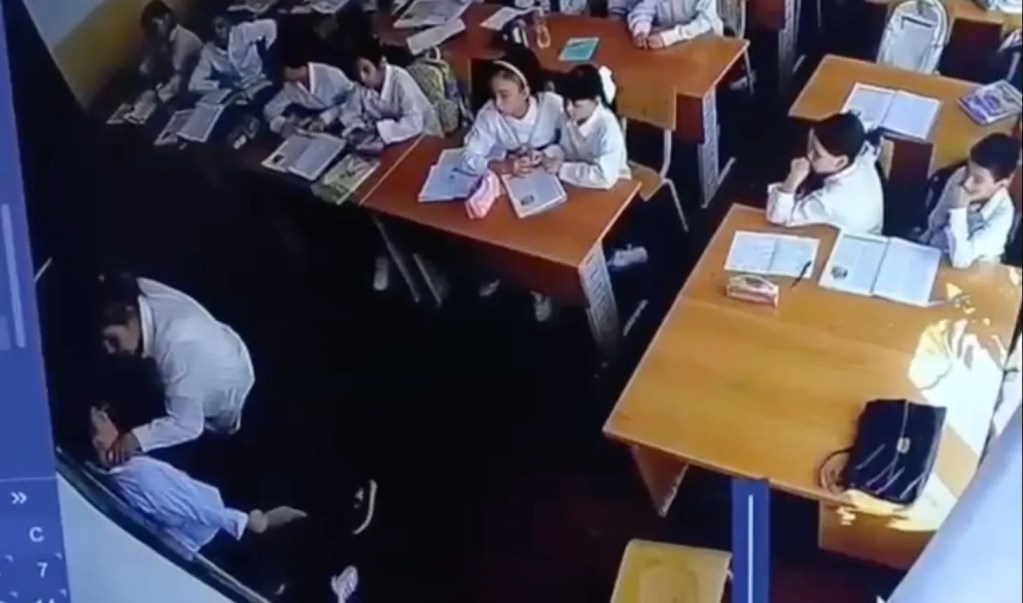
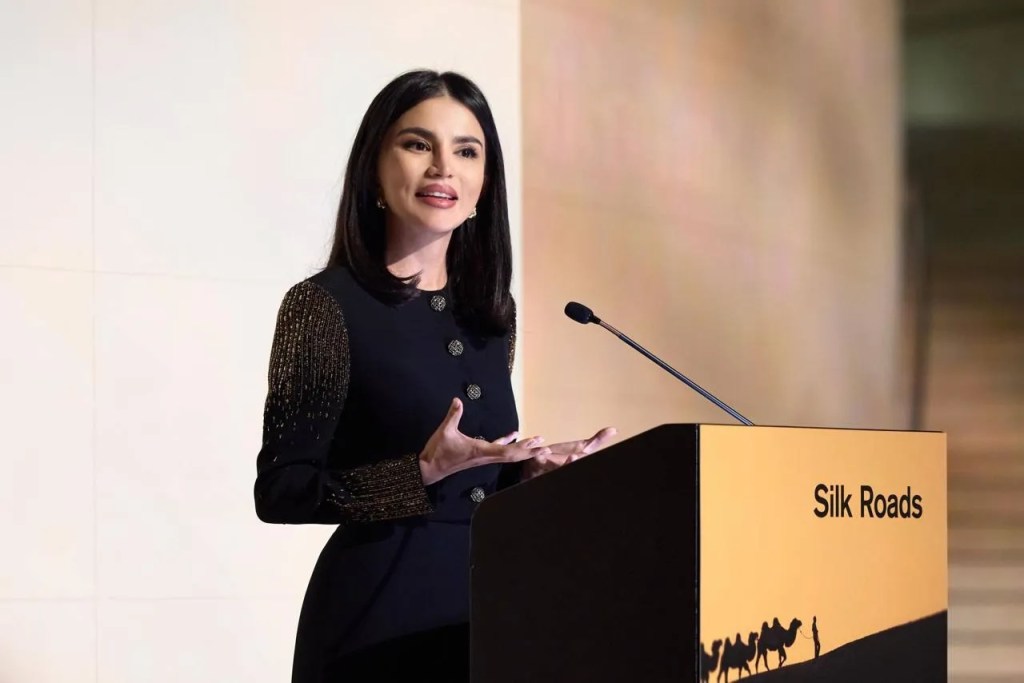
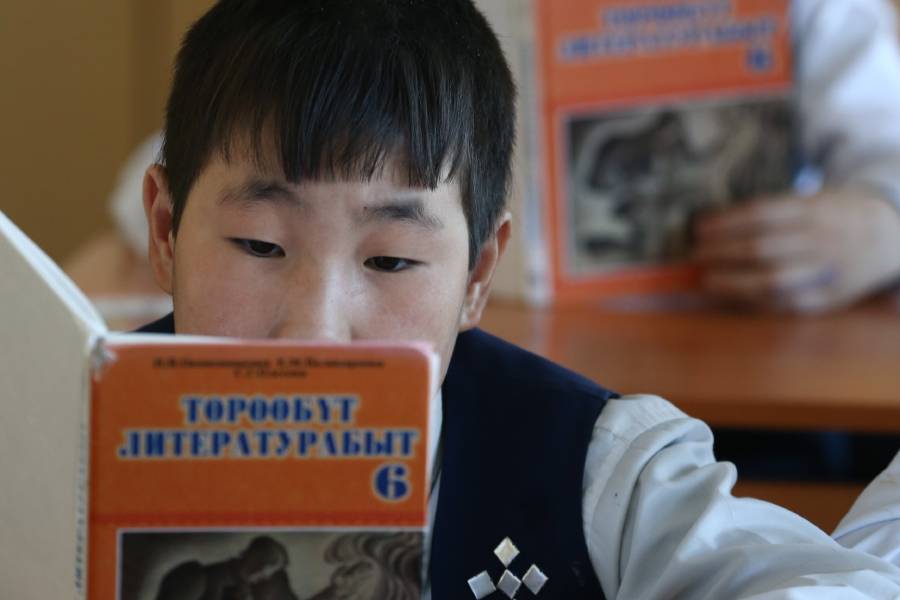
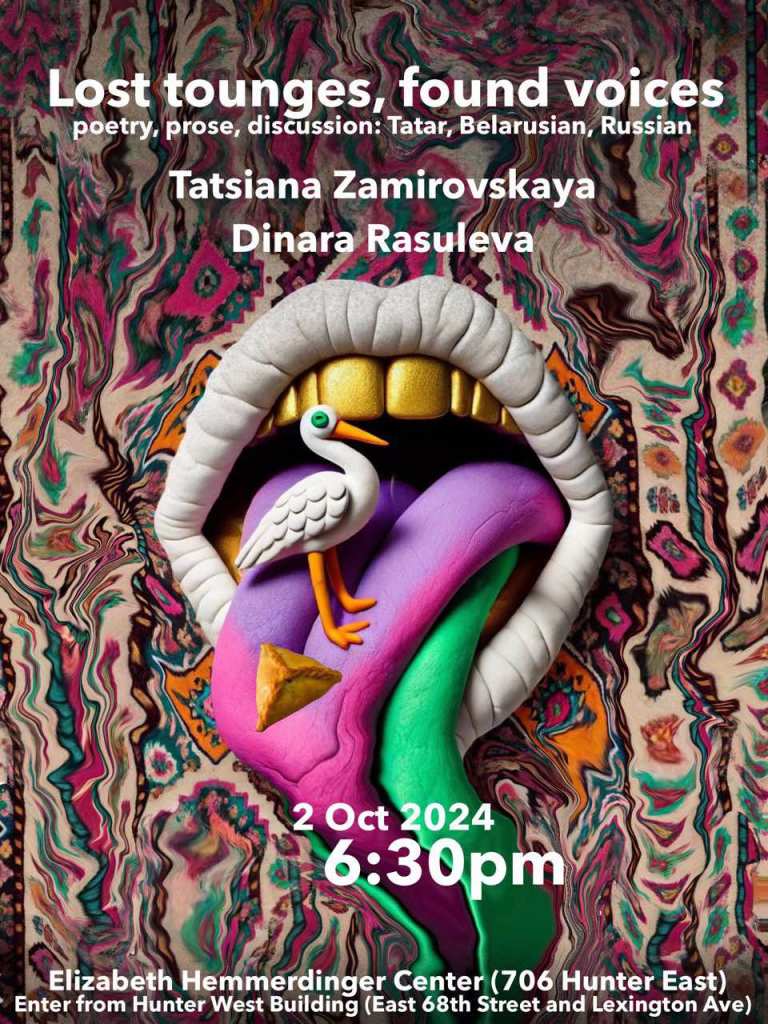


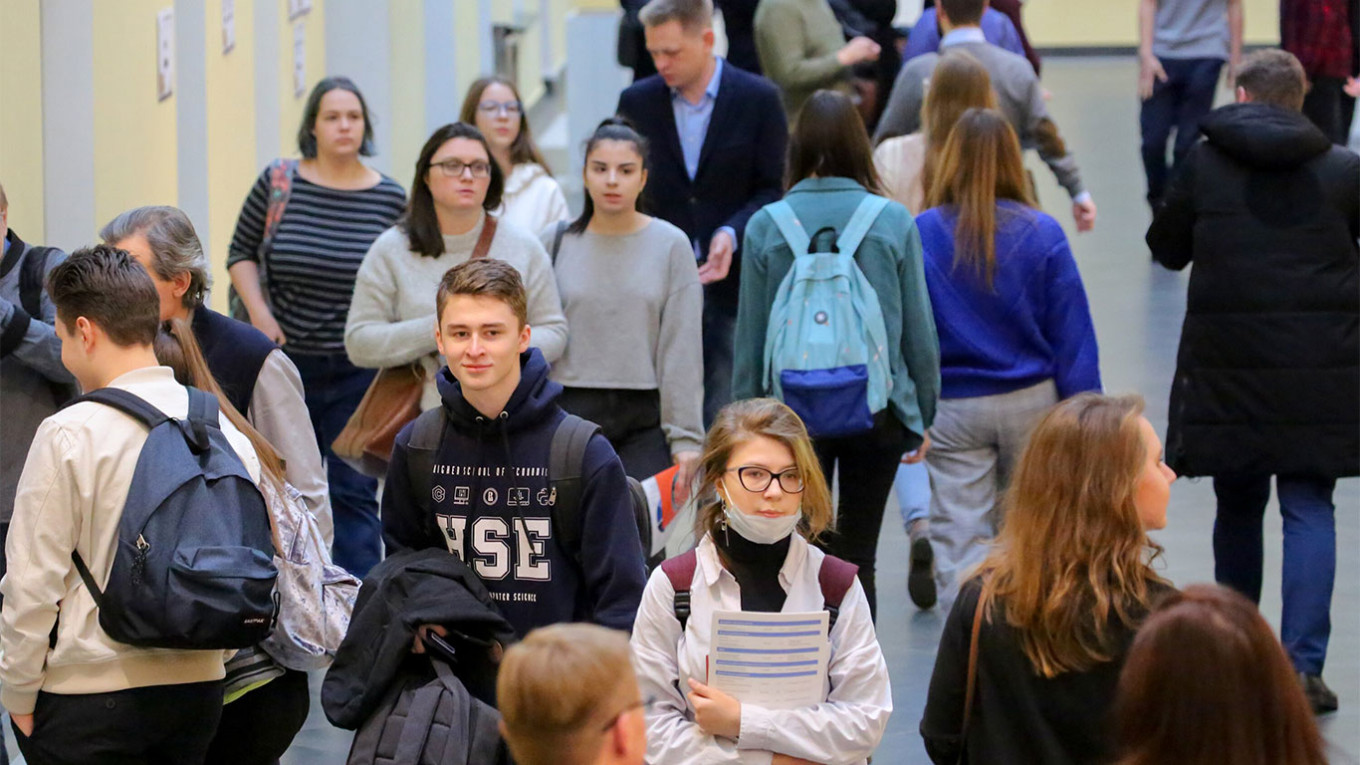

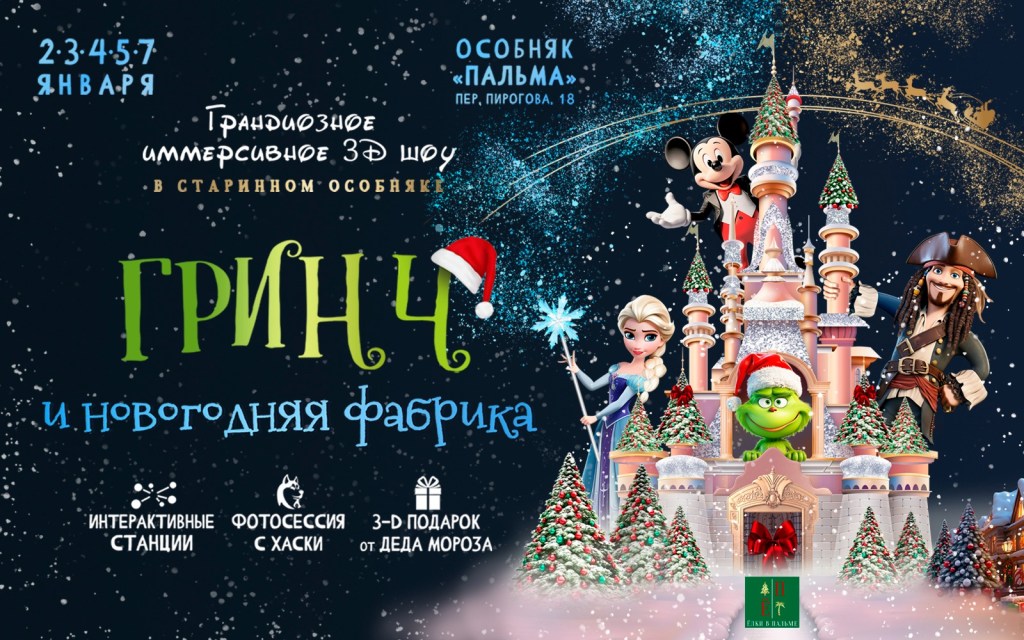

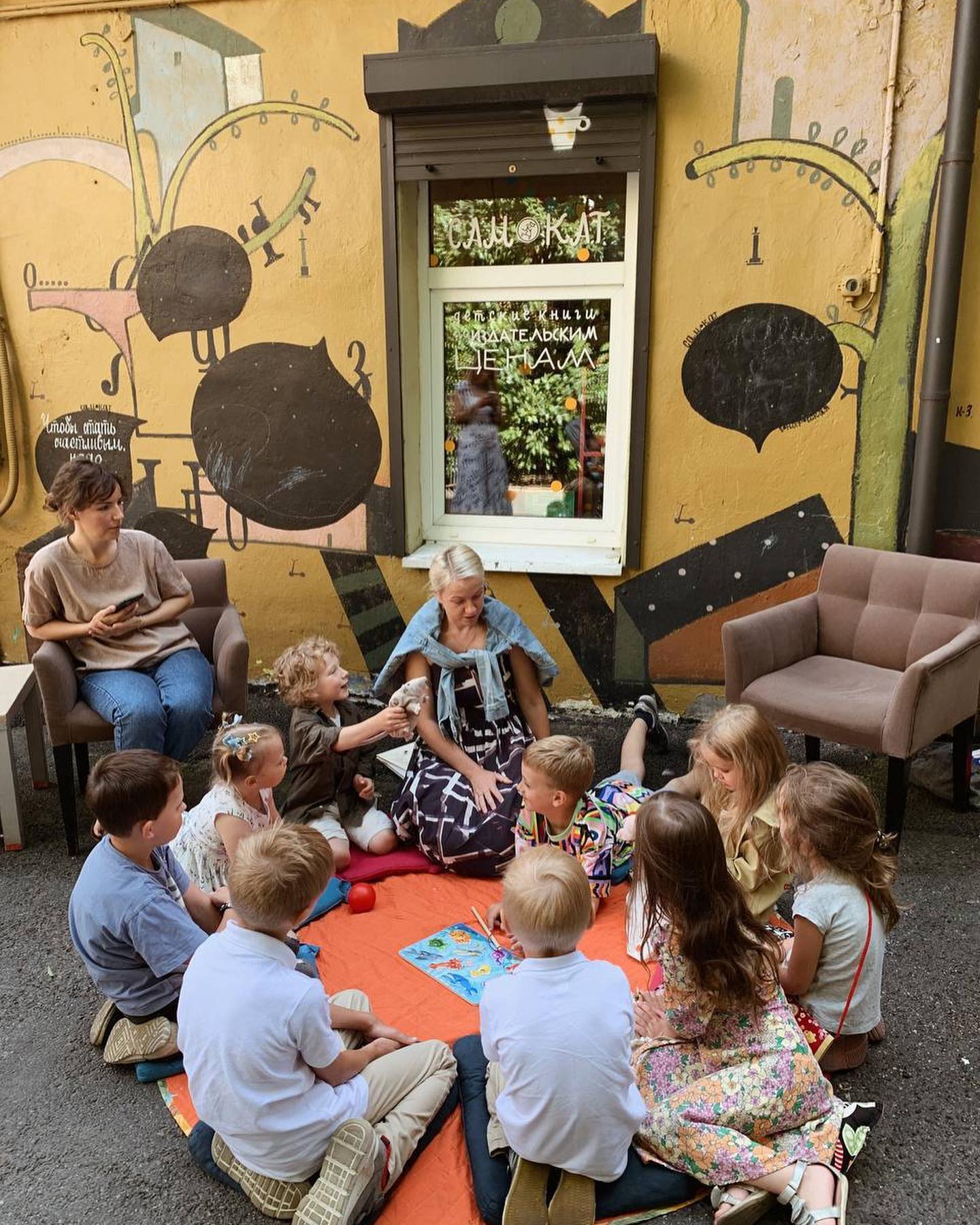
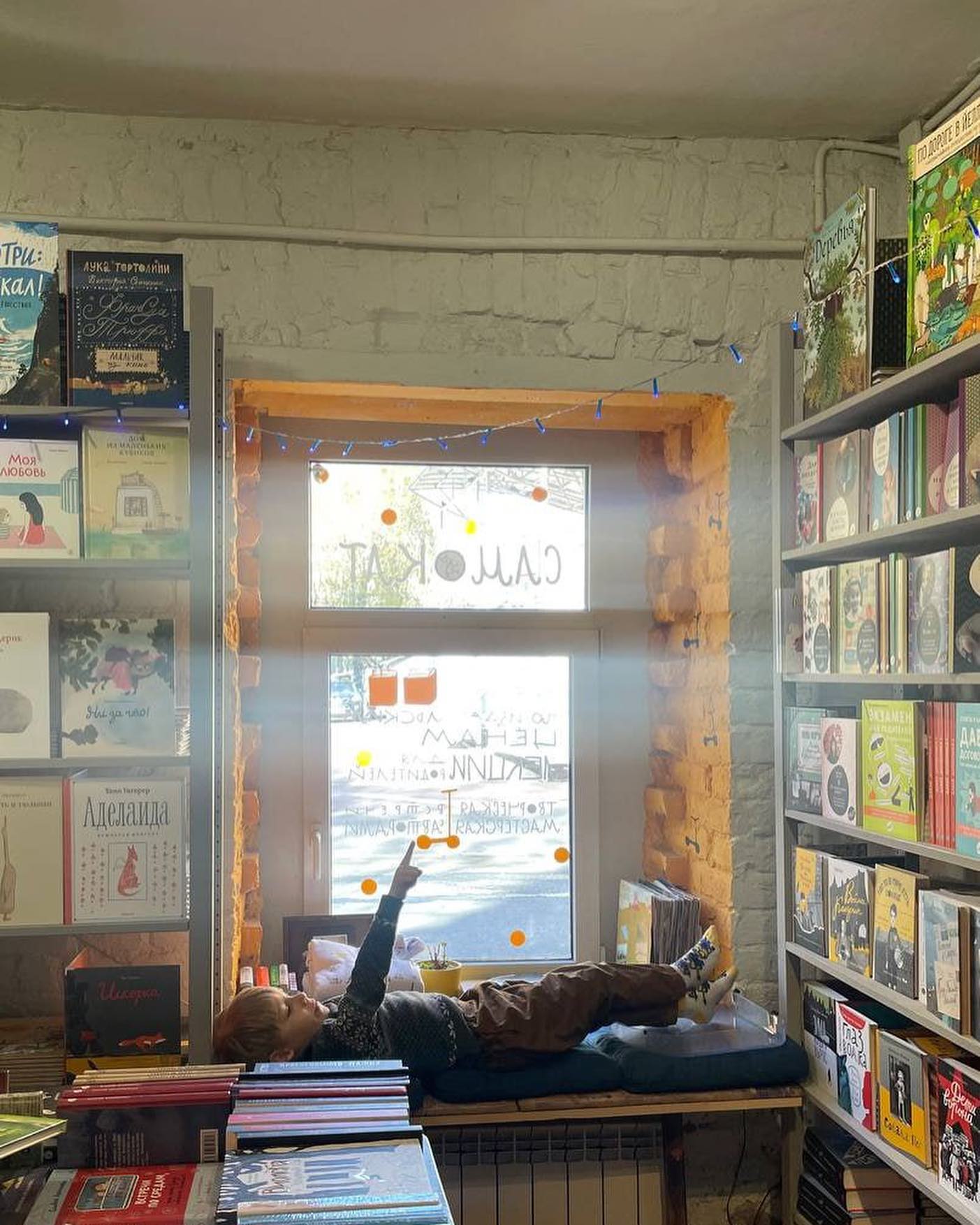
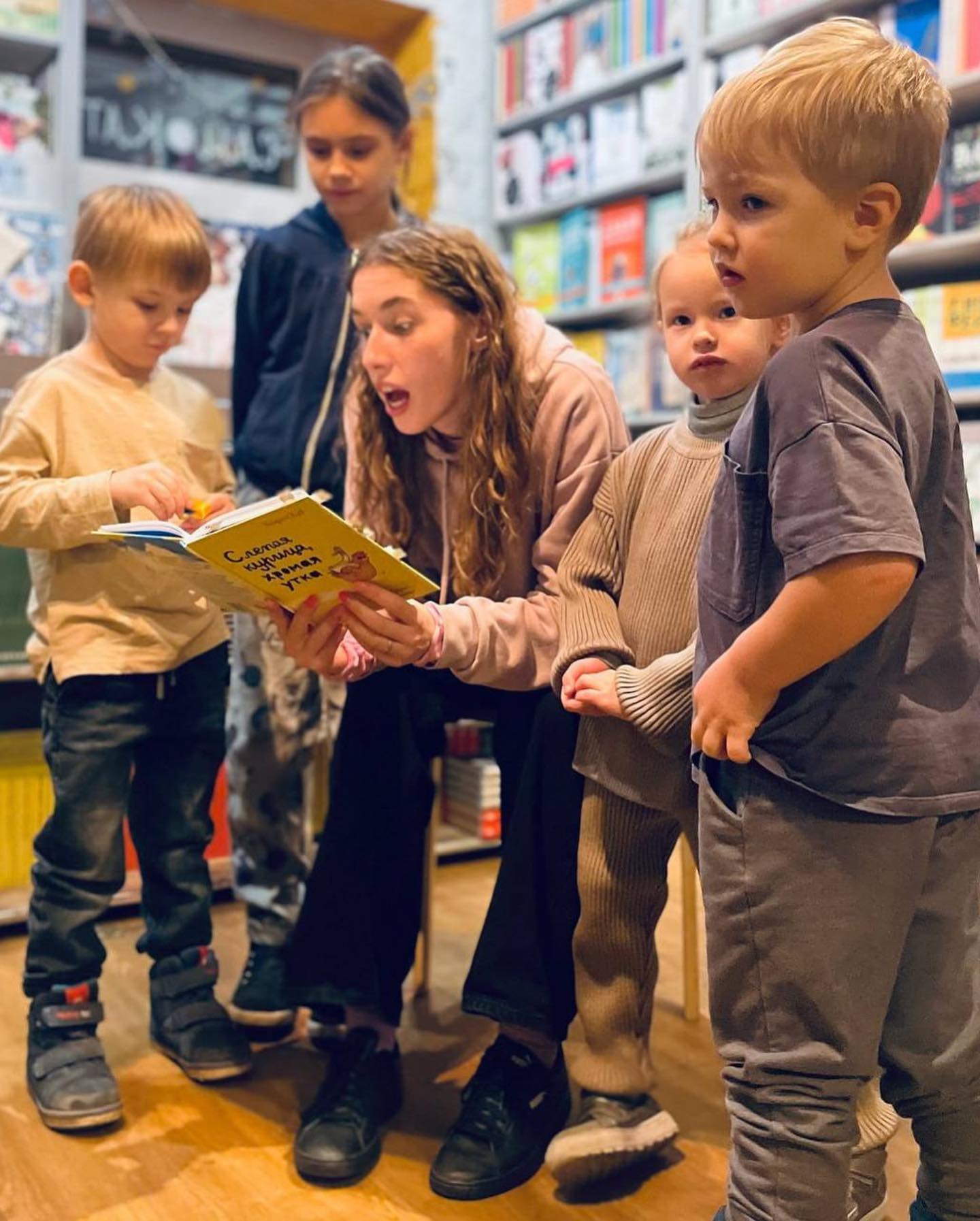
 First of all, we appeal to the leadership of St. Petersburg and the Committee for City Property Management. And we hope that the cultural capital is not indifferent to the plight of one of the best bookstores in the city by one of the primary independent children’s publishers in Russia.
 If you have suggestions and options, please write via Telegram at +7 (921) 809-8519, and Natasha and Polina will be in touch.