Buggered

rossiya This bankrupt agribusiness was called Rossiya (“Russia”). Photo courtesy of Maxim Kemmerling/Kommersant and Republic

“The Data Leaves Us at a Loss”: A Few Figures That Might Surprise the Kremlin
Yevgeny Karasyuk
Republic
April 4, 2019

“Why on shoes? Why a third? Where did they get these figures?”

Dmitry Peskov, President Putin’s press secretary, responded with questions to journalists who questioned him yesterday about Rosstat’s depressing report for 2018.

According to Rosstat’s study, in which sixty thousand Russian households were surveyed, every fifth Russian skimps on fruits and vegetables. Every other Russian family cannot afford to travel anywhere when they have a week’s vacation, while every fourth family does not have enough money to invite people over to celebrate birthdays and the New Year’s holiday.

And, indeed, the report does conclude that 35% of Russians are unable to purchase each family member two pairs of seasonally appropriate footwear.

“I would be grateful to Rosstat if they clarified these figures. The data leaves us at a loss,” Peskov added.

Meanwhile, there are other figures—lots of figures—that would probably also bedevil the Kremlin if they were aired in public. Let us recall a few of them.

Nutrition
Consumer watchdog Rospotrebnadzor concluded that 63% of deaths in Russia were associated with bad food and poor nutrition. According to official figures, Russians spend approximately 35% of their household budgets on food, while independent researchers put that figure at over fifty percent. However, the average Russian household skimps on all purchases and tries to do without everything it can, claim the researchers behind Romir’s Coffee with Milk Index, which charts the quantities of chocolate, coffee, milk, and bottled water purchased by Russians. Researchers at RANEPA recently described the diets of Russians as unhealthy, unbalanced, and lacking in energy.

Health
According to a report by RANEPA’s Institute for Social Analysis and Forecasting, 22% of Russians who live in straitened circumstances face the stark choice of whether to buy the bare minimum of the cheapest produce or the cheapest drugs, drugs they need to survive. It is typical of Russians, not only those below the poverty line, to postpone going to the doctor, if it involves costs, noted researchers at the Institute for Health Economics at the Higher School of Economics.

Education
According to the pollsters at VTsIOM, fifty percent of Russian parents experience serious financial difficulties when getting their children ready for the first day of the school year. Over the past five years, the average sum of money Russians claim to spend getting children ready for school has increased by sixty percent, rising from 13,600 rubles to 21,100 rubles.

Housing
According to the Construction Ministry, the Russian populace’s debts for utilities and housing maintenance bills have grown by five and a half times since 2015. The ministry reported that, as of the end of last year, the total amount of this debt was 1.2 trillion rubles [approx. 16.34 billion euros]. The rates for water, electricity, gas, and other utilities and services increase rhythmically year after year, and yet the real incomes of Russians have continued to fall five years in a row.

Transportation
Forty percent of Russian car owners “try not to use their own vehicles, taking public transport instead.” Another 22% of car owners follow their lead, but do it less frequently. VTsIOM has explained the outcome of its January opinion poll by citing the concern of Russians for the environment while failing to note that the price of petrol has skyrocketed in recent years. Last year, a liter of AI-95 rose in price three times faster than inflation. The government has resorted to artificial, decidedly non-market measures to depress prices, and yet petrol in Russia is now twice as expensive as it was when the decade kicked off.

Only twelve percent of Russians believe that, when it describes the economy and the social sector, the Russian regime always or mostly tells the truth. The Levada Center has done polls on the same subject since 2010. Russian society’s confidence in what the country’s leaders and senior officials say has never been as low as it is now.

By voicing surprise at Russia’s poverty, at least on paper, the Kremlin is, apparently, determined to convince people it inhabits a parallel reality in which Russia makes one breakthrough after another, and the rank and file enjoy “stability” by way of spiting the country’s numerous enemies. Peskov seemed genuinely puzzled by Rosstat’s claim that Russian families have trouble buying shoes, but he probably had not yet read the government’s report on the increase in mortality rates in every third region of Russia. Clearly, something is wrong with the figures. In short, we expect a reaction.

Translated by the Russian Reader

Fatherlandish

I am going to break an unwritten rule today and publish a long videotaped interview with the Russian independent trade union organizer Dmitry Kozhnev without providing a translation in English.

Over the years, I have spent a lot of time covering the struggles of Russia’s independent trade unions, as well as the abuses of labor rights in the country and the grassroots pushback against these abuses.

I was alerted to the interview by my friend Comrade Moose who, when he posted it on Facebook, wrote that it was “perfect.”

I agree with him completely. Kozhnev provides an ideal primer on why we need trade and labor unions, and how to organize them into effective tools for advancing the interests of workers, not only in Russia, but anywhere else in the world.

In fact, the conversation between Kozhnev and his engaged, smart interviewer on the YouTube channel Station Marx is so exemplary of the other Russians and other Russias to whom I have been trying to give a voice to on this blog and its predecessor for the last twelve and half years, I would urge my readers who teach high school and university students Russian language, history, culture, and current events to use the interview to look at subjects such as labor rights and the fight to protect the interests of workers in Russia and elsewhere, and grassroots political and social movements in Russia today.

Station Marx‘s annotation to the video, which I have translated, includes a long list of the websites run by Russia’s independent trade unions and other good stuff. Maybe it would be worth your time and that of your students to take a break from Tolstoevsky and “There is no Russia without Putin” to see what some real Russians have been doing against incredible odds.

Sooner or later, the other Russias and the other Russians who exist in the subjunctive mood in this interview and on my blog will win the day. Why don’t we get to know them now? In a few years or so, they will be running Russia, while Putin and his gang of criminals will be rotting behind bars, utterly forgotten. {TRR}

Why Do Trade Unions Not Work in Russia? Dmitry Kozhnev
STATION MARX
March 15, 2019

Our guest today, Dmitry Kozhnev, is an activist with the Confederation of Labor of Russia (KTR), a trade union organizer with MPRA and Novoprof, and a member of the Marxist group Workers Platform. He came by for a cup to coffee and talked about Alexei Navalny’s program for a new-model trade union, the problems of the trade union movement, and how strikes are organized.

Our videos are made possible only through your support. You can donate money to us via:

Russia’s independent trade unions and other labor organizations:
Subscribe to Station Marx’s websites and channels:

Outlandish

lakhtaEven with my camera’s lens maxed out, it was not to hard for me to guess who was cleaning the glass (or whatever they were doing) high up in the air on the sides of Gazprom’s almost-finished Lakhta Center skyscraper in Petersburg. They were certainly not ethnic Russians or “people of Slavic appearance,” as they say back in the Motherland. They were almost certainly underpaid, disenfranchised and nearly universally despised migrant workers from the former Soviet republics of Central Asia. Lakhta, Petersburg, November 11, 2018. Photo by the Russian Reader

It’s a brilliant plan. The Kremlin now wants to raid neighboring countries and steal their “Russian-speaking” populace (i.e., the non-ethnic Uzbeks, Kazakhs, Kyrgyz, Tajiks, etc., who live in Central Asia) to address Russia’s “population decline.”

That is, it is done with importing swarthy Muslims by the trainload and planeload so it can make them to do all the country’s menial labor while underpaying and shaking them down at the same time. Now it just wants to destabilize and impoverish their countries even further by robbing them of five to ten million people.

In recent years, self-declared progressive Russian scholars have nearly made a cottage industry of applying postcolonial theory to post-Soviet Russia. These scholars have focused almost entirely on how the Satanic West has “colonized” their country in the wake of the Soviet Union’s collapse.

How the Russian metropole colonized and occupied other countries during the tsarist and Soviet period is of no interest to them whatsoever, nor are post-Soviet Russia’s attempts at recolonization and neo-imperialism through migrant labor, military aggression, and the creation of post-Soviet counterparts to the EU and NATO.

No, it’s all about how the big bad West has woefully mistreated the world’s largest, richest country. {TRR}

_____________________________

Kremlin Seeks Russian-Speaking Migrants to Offset Population Decline
Moscow Times
March 14, 2019

The Kremlin plans to attract up to 10 million Russian-speaking migrants in the next six years to reverse the country’s population decline, the business daily Kommersant reported on Thursday.

Russia’s population declined to 146.8 million in 2018, official data released on Thursday estimates, its first decrease in 10 years. Migration has been unable to offset natural population losses for the first time since 2008.

President Vladimir Putin has prioritized migration policy by signing a plan of action for 2019–2025 and adding migration to the remit of his constitutional rights office.

The plan involves granting citizenship to anywhere from 5 to 10 million migrants, Kommersant reported, citing unnamed sources involved in carrying out Putin’s migration policy plan.

The Kremlin lists Ukraine, Kazakhstan, Uzbekistan, Moldova and other post-Soviet states with Russian-speaking populations as so-called “donor countries” where new Russian citizens could be recruited, the paper writes.

Russia needs up to 300,000 additional people per year in order to reach net-zero population growth, Kommersant’s sources are quoted as saying.

Several bills designed to ease citizenship and immigration rules are also in the pipeline, some of which could be considered this May, Kommersant reported.

Eat Y’Self Fitter

zeitfur“Time for the girlfriend.”

More bad news from Russia’s Northern Capital:

Количество фитнес–клубов в Петербурге превышает спрос. По данным “ДП” их услугами по–прежнему пользуется небольшая часть населения Северной столицы. В настоящее время в Петербурге спортом в фитнес–клубах регулярно занимаются не более 4,8% населения, в то время как в Лондоне их посещают 20% жителей, в Барселоне — 35%, а в Берлине — почти 60%.

“The number of fitness clubs in St. Petersburg exceeds demand. According to Delovoi Petersburg newspaper their services are, as before, enjoyed by a small segment of the Northern Capital’s populace. Currently, no more than 4.8% of Petersburgers work out in fitness clubs, as opposed to 20% of Londoners, 35% of Barcelonians, and nearly 60% of Berliners.”

ATTENTION! Why do you think this is the case? The first person to send me the correct answer in the comments, below, will get a special prize, dispatched via the mails from Berlin, where I am among the 40% of losers who do not work out in fitness clubs.

Please don’t use Google or other artificial intelligences to answer the question. Instead, use the brains the good Lord gave you.

Photo by the Russian Reader 

Oleg Volin: How Capitalism Kills in Nizhny Tagil

уралвагонFront entrance of the famous Uralvagonzavod Factory in Nizhny Tagil. Courtesy of Vasily Shaposhnikov and Kommersant

Oleg Volin
Facebook
February 20, 2019

Capitalism kills. Overwork, wage cuts, nasty managers, and the lack of a clear future drive workers to kill themselves.

On the morning of February 19, 2019, in Nizhny Tagil, Sergei Chernykh, a young worker, left his boss’s office, put a noose around his neck, and jumped off a raised area, damaging his spine and suffocating in mere seconds. Arriving on the scene, an ambulance crew (who, to top it all off, were not immediately let into the factory) were powerless to save his life.

The situation in Nizhny Tagil is not merely rough but bloody. Chernykh’s suicide was the fifth suicide in the past year by a worker at the Uralvagonzavod plant.

There have been several dozen similar incidents, but Chernykh’s death stands out from them in that he committed suicide at his workplace.

Chernykh could not bear life’s hardships and so he parted with it right on the spot. Whether he meant it or not, he thus focused the public’s attention on the outrageous working conditions endured by Uralvagonzavod workers.

The plant’s press service has not yet commented on the case, but it is obvious the increasing incidents of suicide have been caused by deterioration of socio-economic conditions and the lack of prospects.

Over the last twenty-eight years, Nizhny Tagil’s population has steadily declined, dropping from 440,000 residents to 350,000 residents. It would be strange not to see this as a telltale sign of what has been happening in the city.

Chernykh’s friends and acquaintances mainly say he was “driven” to kill himself. Many residents of Nizhny Tagil could find themselves in similar circumstances, especially if they work at Uralvagonzavod.

A female worker in Forging Shop No. 170, where Chernykh was employed, said the 27-year-old man’s suicide occurred after he attended a meeting of plant managers that he was not supposed to have attended. The employee asked she not be named since, she claimed, everyone in the shop was afraid, everyone needed a job, and she did not want any extra problems.

“Sergei was a rank-and-file worker, a cutter, but since our section foreman and section manager were on sick leave, Sergei was temporarily appointed foreman. And since there was no manager in our section, Sergei was sent to that meeting,” the woman claims. “It’s at these morning meetings that the shop foreman tells everyone what section has to do what and how much they have to do during a shift.”

“There are emergencies, and the shop foreman forces people to hurry up. He could not care less whether are enough workers to do the job or not, whether they have the tools they need or not. All that matters is that the work be done quickly. If you don’t have any workers, you go do the job yourself,” she says.

Marina Pogrebnykh, a distant relative of Chernykh’s, does not know the particulars of his death, but she likewise has no doubt plant management was to blame.

“I’m certain management are to blame for it. I don’t believe he would just take his own life like that, especially since this was not the first such incident,” says Pogrebnykh.

The anonymous female worker at Uralvagonzavod confirmed Chernykh was the third plant employee to have killed himself in the past three months. On the social networks, there has been talk there may have been more such incidents.

“We are under extreme pressure at work. You can make good wages, but you have to live on the shop floor to make the good money.

“Our section foreman killed himself. Yes, of course, it was a personal situation, but I can say that if he hadn’t drunk he would be alive. But when he was foreman in another shop he never drank, although the workload was huge. So, it’s a little hard to believe in coincidences.

“Our current section foreman, a woman, quite often comes back from meetings with management completely stressed out. She’s already getting up there in terms of age, but they yell at her like they yell at everyone else,” says the late Chernykh’s female coworker.

Two weeks ago, twenty-five Uralvagonzavod workers filed suit against their employer over new rules for calculating wages. According to the workers, the new rules have cut their pay in half while their workload has increased. Although these rules came into force in 2018, the workers have only now decided to file suit.

“Management tells us the the plant has been modernized. Due to this modernization, our workload has decreased, allegedly, meaning we should produce more. It’s on paper that things look good to them. On the contrary, we haven’t noticed any changes,” say the workers by way of explaining why they have sued olant management.

“On the contrary, we now have additional functions, but our wages have been halved.  This happened despite the fact that previously we had one of the highest pay grades at the plant due to occupational hazards and the heavy physical workload,” they say.

Nizhny Tagil’s Dzerzhinsky District Court has not yet made a ruling in the case.

Founded in 1936, Uralvagonzavod manufactures military equipment, railroad cars, and road construction equipment. In 2016, the company was merged with the Russian state corporation Rostec.

Poverty and overwork have led workers to hang themselves. It is all quite sad. Workers must realize they need to fight together to improve their condition. They must organize themselves, go on strike, and take other actions.

The nooses should be reserved for other heads.

This text is based on media reports.

Thanks to Tom Rowley for the heads-up. Translated by the Russian Reader

Postage Stamps and Gunpowder: Syria and the Russian Economy

embrace

Postage Stamps and Gunpowder: How Important Is Syria to the Russian Economy?
The Kremlin has been trying—unconvincingly—to repackage its military campaign in this devastated country as a long-term investment project. 
Yevgeny Karasyuk
Republic
February 27, 2019

The economy was probably the last thing on the Kremlin’s mind when it decided to get involved in a civil war in the heart of the Arab world. But now that Russian military forces have been in the region for several years, the Kremlin has been increasingly trying to spin its support for Bashar Assad’s regime as a sound investment, a contribution to a prosperous trading future between the two countries.

Russia has claimed it is willing to export to Syria anything it can offer in addition to weapons, from wheat to know-how for preventing extremism on the internet. Along with Iran, the country has big plans for taking part in the postwar restoration of Syrian cities and Syrian industry, including the energy sector. Russia’s governors speak touchingly of their readiness to go to Damascus at the drop of a hat to negotiate with the Syrian government.

“When the talk turns to Syria, I immediately catch myself thinking I need these meetings,  I need to see those people again and again, and I need to be useful,” Natalya Komarova, head of the Khanty-Mansiysk Autonomous District said at the Russian Investment Forum in Sochi two weeks ago.

The expenses Russia has incurred during the Syrian campaign are shrouded in mystery. Analysts at IHS Jane’s calculated in October 2015 that Russia could have been spending as much as $4 million a day.  In July 2017, the opposition Yabloko Democratic Party published its estimate of the overall bill: as much as 140 billion rubles [approx. 1.87 billion euros], but this total did not include associated costs, including humanitarian aid. In 2017, according to RANEPA, 84% of Russia’s official total of disbursed humanitarian aid ($19.6 million) went to Syria. What kind of economic cooperation could justify such figures?

It would be pointless even to try and find an answer in recent trade trends between the two countries. Its volumes are negligible. During the first nine months of 2018, Syria’s share of Russia’s exports was 0.09%, while Syria accounted for 0.002% of imports to Russia during the same period. This has always been more or less the case.

trade

“Trends in Russia’s trade with Syria (in billions of US dollars).” The pale violet line indicates Russia’s exports to Syria, while the blue line indicates Russia’s imports from Syria. The data for 2018 is only for the first nine months of the year. Source: Russian Federal Customs Service. Diagram courtesy of Republic

The largest transaction in the history of the economic partnership between the two countries was Moscow’s cancellation of $9.8 billion dollars in debt, 73% of what Syria had owed the Soviet Union. At the end of the 2005 meeting at which this matter was decided, Bashar Assad and Vladimir Putin also spoke publicly of the idea of establishing a free trade zone. Subsequently forgotten, the undertaking was mere camouflage for the political bargain reached by the two men, which was and remains support for the Syrian dictator’s regime in exchange for the dubious dividends the Kremlin has received by increasing its influence in the region. It is believed Russian strategic bomber saved Assad, who had already been written off by the west. But explanations of what Russia has ultimately won for its efforts and what its economic strategy might look like have been more muddled and contradictory than before.

In an October 2018 interview with Euronews, Russian Foreign Secretary Sergei Lavrov avoided directly answering a question about joint economic projects. During his tenure as head of the Russian Export Center, Pyotr Fradkov (not to be confused with his father former PM Mikhail Fradkov, the current head of the Russian Foreign Intelligence Service or SVR) talked about Russia’s potential involvement in developing the “high-tech segments of Syria’s economy.” A month ago, however, the selfsame Russian Export Center placed Syria at the bottom of its ranking of 189 countries in terms of their favorability for foreign trade.

The Syrian economy, in turn, can currently offer Russia even less. Mainly, its exports boil down to fruit, but in such small and unstable quantities that they cannot seriously compete with deliveries from Turkey. Russia has been promised priority access to the development of natural resource deposits in Syria, which are teeming with oil, natural gas, and phosphates. But the smoldering war and the lack of security guarantees for investments have hampered implementing these plans.

Russian experts pin their hopes on the surviving remnants of industry in the government-controlled areas of Latakia, Tartus, and Damascus. Based on the fact that “the level of production that survived has enabled Assad to almost fully provide himself [sic] with food during five years of war,” Grigory Lukyanov, a political scientist at the Higher School of Economics has concluded the Syrian government “depends on a well-developed business community.”

Syria, however, seemed like a nightmare for investors well before the country was turned into an open wound. “Only a crazy person would go into Syria at his own behest,” Vedomosti quoted a source at a major company that was involved in negotiations with the Syrian government in the summer of 2012. Suffering from international sanctions, Syria proposed that Russian companies take part in construction of a thermoelectric power station in Aleppo. Four years later, one of Syria’s largest cities had been turned into ruins by heavy bombardment.

The Rothschilds [sic], who made fortunes on wars, thought the best time to invest was when blood was flowing in the streets. Their approach might seem to resemble the Kremlin’s strategy. But let’s not kid ourselves: unlike the famed financiers, President Putin is completely devoid of insight when it comes to the economic consequences of his military escapades. Business plans are not his strong suit.

Photo courtesy of Mikhail Klementyev/AP and the Washington Post. Translated by the Russian Reader

Leonid Volkov: Hocus Pocus

sberbankThe homepage of Sberbank of Russia’s online banking service looks reassuring at first glance, although a warning in the bottom right-hand corner reads, “Safety rules: If you are asked to enter your Sberbank Online password to cancel a transaction, don’t do it. These are con men.” Screenshot by the Russian Reader

Leonid Volkov
Facebook
January 30, 2019

Watch for the sleight of hands.

1. On January 25, the long-forgotten and abandoned Registry of Information Distributors or the ORI, a list of websites obliged to supply information about the activities and correspondence of their users to the FSB via SORM, suddenly added a few sites. From the perspective of the laws governing the ORI, the new additions were odd, ranging from stihi.ru, a poetry website, to such major services as Sberbank Online.

2. On January 29, Kommersant newspaper published a story, corroborated by many other media outlets, about a new, large-scale cyber confidence scheme targeting Sberbank clients. The criminals telephone clients from what appears to be Sberbank’s number (an easy enough spoof). They mislead them by providing them with loads of detailed information about their accounts, including their correct current balance. This last bit would very much appear to be a leak from Sberbank Online or an intercept of the SMS messages the banks sends to its clients.

Is it a coincidence?

Maybe.

But it’s definitely a vital occasion to reflect on the actual consequences of all the laws on internet surveillance. Not about the virtual fight against virtual terrorism, but the very real transfer of huge amounts of sensitive data to the FSB, whose officers are corrupt and subject to absolutely no oversight.

Translated by the Russian Reader

Danone, Discrimination, Chekhov

danone_logosIs Danone Socially Responsible? Or Do Danone’s Managers Put Pressure on Trade Union Activists?
Novoprof
December 24, 2018

For the last two years, management at Danone’s flagship plant in the city of Chekhov, Moscow Region, have tried to destroy its trade union local. Senior and junior managers at the plant have attempted pass off each incident as separate, unrelated, and harmless cases, but nothing could be farther from the truth.

After the trade union local at the plant fought a hard fight to raise the wages of employees and improve work safety, plant management has clearly and deliberately tried to shut the trade union down.

Management has used various methods to “explain” to trade union members why they should refrain from activism, fighting for pay rises, and being members of a workers organization. Management has often resorted to telling plant workers that trade union members would have problems and spreading lies about the trade union’s work. They have tried other things as well.

Two years have passed, and another case of anti-union discrimination has emerged. Alexander Chubukov, a key activist in the Danone plant’s trade union local who has never yielded to threats and coercion, has recently been subject to pressure from management.

At the beginning of the year, Chubukov was formally reprimanded for an alleged infraction. To make a long story short, Chubukov was alleged to have failed to notify the responsible manager of a malfunctioning production line. He continued to work on the line, which produced spoiled products. A court is currently examining the case.

Currently, plant management has a different gripe with Chubukov, accusing him of warning management about malfunctioning machinery and refusing to work until the machinery was repaired.

What is the rationale in this instance? Management is not concerned about machinery and malfunctions. They simply want to get rid of a trouble-making trade union activist.

Plant management wants to transfer Chubukov to another shift. They want to put more distance between him and the trade union committee’s chair and leading activists. They want to “teach” him how to work, although Chubukov has worked as a machine operator and mechanic at the plant for over ten years.

The trade union would not be surprised were management to take more serious measures, since they have been trying to force Chubukov to resign all this time.

Danone’s “socially responsible” management agreed to meet with trade union local chair Alexander Ivanov and Alexander Chubukov, of course, but the quality of the meeting left much to be desired.

Plant management has failed to supply the trade union local with the necessary documents. It has reacted in no way to specific complaints about the condition of the malfunction production line. It has failed to prove Chubukov committed any of the infractions of which it has accused him. Nevertheless, it has decided to transfer him to another shift for “training.”

“Novoprof cannot ignore this case. We will do everything possible to end the discrimination at Danone. We believe management’s behavior is motivated solely by the desire to eradicate the trade union local at the Chekhov plant. There are special means of ending the discrimination  at the company’s disposal and the trade union’s disposal. We will use all means necessary,” said Ivan Milykh, chair of the Novoprof Interregional Trade Union.

Translated by the Russian Reader

Unionized Independent Russian Truckers Persecuted by Putin Regime

Opponents of Plato Road Tolls System Complain to European Court of Human Rights They Have Been Victims of Political Persecution
Their Organization Was Earlier Ruled a “Foreign Agent”
Anastasia Kornya
Vedomosti
December 26, 2018

The Association of Russian Carriers (OPR), an organization of independent truck drivers  the Russian Justice Ministry placed on its list of “foreign agents” late last year, has filed a complaint with the European Court of Human Rights (EHCR) in Strasbourg, claiming its right to freedom of association had been violated and it had been subjected to political persecution, in violation of Article 11 and Article 18 of the European Convention on Human Rights, as reported by Alexei Glukhov, a lawyer with the Agora International Human Rights Group who represents the OPR in Strasbourg.

The OPR emerged during the campaign for the rights of truckers that kicked off after the Plato road tolls payment system went online in November 2015. The OPR brought together independent truck owners and truck drivers. In June 2017, it announced it was planning to nominate its chair, Andrei Bazhutin, as a candidate for the Russian presidency. Shortly thereafter, the Justice Ministry launched an audit of the OPR, resulting in its being ruled a “foreign agent.” The ministry cited four donations from private individuals in Germany, totaling 3,620 euros, as evidence of “foreign financing.”

In a report on its oversight of the work of “foreign agent” NGOs in 2017, the Justice Ministry claimed the OPR had engaged in “political activity” by “organizing and holding  events calling for the resignation of the Russian federal government.” In June of this year, the Krasnogvardeisky District Court in Petersburg fined the OPR 400,000 rubles [approx. $5,755] for failing to voluntarily [sic] register itself as a “foreign agent.”

The complaint says the OPR has been a nuisance to the Putin regime since the organization has led the campaign against the Plato road tolls payment system, which ultimately benefits businessmen closely allied with the Kremlin. The truckers are certain it was their grassroots activism that caused the authorities to persecute them. The fine leveled against the OPR not only was far in excess of the foreign donations it received but has also financially ruined the organization.

Glukhov points out the ECHR has received several dozen complaints from Russian NGOs labeled “foreign agents” by the Russian government, but the court has not yet ruled on Russia’s “foreign agent” law and its application in practice. However, the court has communicated the facts of the first large group of cases to the Russian authorities, while a second group of cases was nearing completion, meaning that a ruling on complaints filed by Russian “foreign agent” NGOs could be expected next year, argues Glukhov. The OPR’s complaint is part of a third wave of complaints filed in Strasbourg. As they await the court’s ruling, Russian NGOs continue to suffer from the harsh law.

Everyone has the right to complain to the EHCR, but the Russian Justice Ministry begins to work with a complaint [sic] only after the court has communicated its consent to hear the case, says Andrei Fyodorov, head of the office of Russia’s representative to the EHCR.

Lawyer Dmitry Agranovsky says the EHCR has rarely ruled that Article 18 of the European Convention has been violated. Recently, however, in response to a complaint filed by opposition politician Alexei Navalny, the court ruled Russia had violated Article 18. The ruling was a precedent of sorts. Agranovsky has the sense that, before the Navalny case, the court’s Grand Chamber had postponed other cases in which Article 18 had been invoked, but now it had worked out a common set of rules that could be applied in other cases as well. On the other hand, there was a risk Article 18 would be devalued, Agranovsky warns [sic].

______________________

[Three] Years of Plato: How Russian Authorities Forced Truckers to Pay Road Tolls

fullscreen-118c.jpg[Three] years ago, on November 15, 2015, Russian authorities launched the Plato system (“Plato” is an acronym for “payment for a ton” in Russian) to collect tolls from owners of heavy-duty trucks traveling on federal highways. The authorities claimed their goal was to compensate for the damage the trucks caused to roads. It was decided the toll would be applied to owners of trucks weighing over twelve tons. Photo courtesy of Maxim Stulov/Vedomosti and RBC 
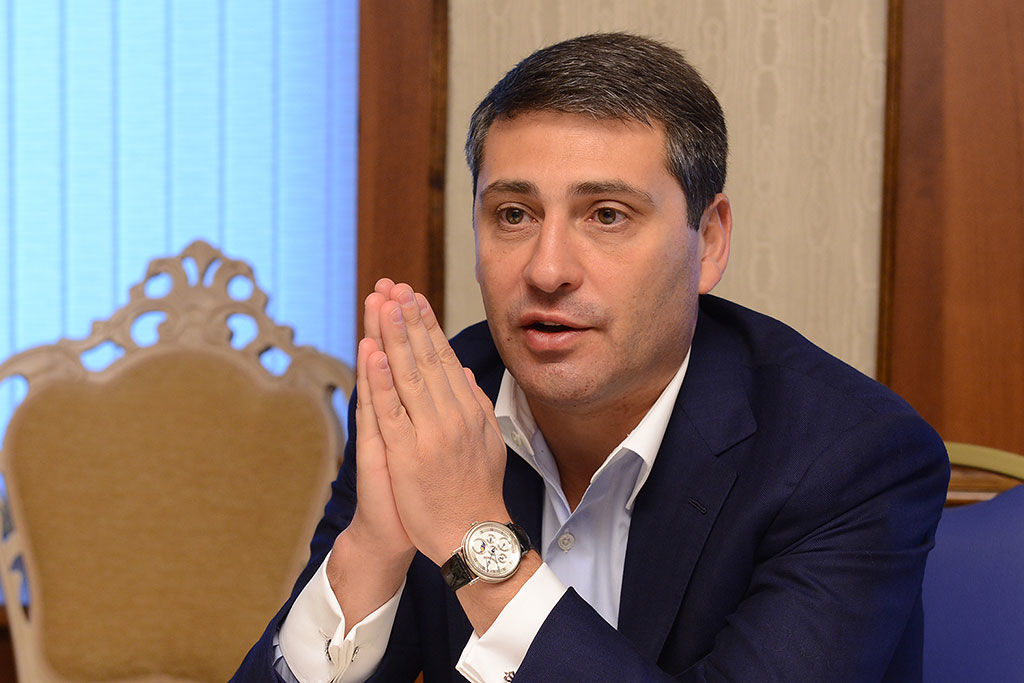
fullscreen-12pmThe right to develop and implement Plato was awarded to RT Invest Transport Systems without tendering. The company is owned on a parity basis by Igor Rotenberg and RT Invest, which is 25.01% owned by Rostec and 74.99% owned by Andrei Shipelov’s firm Tsaritsyn Capital LLC. The Russian government agreed to pay Plato’s developer and operator 10.6 billion rubles [approx. $153 million at current exchange rates] annually.  Photo of Igor Rotenberg courtesy of Nikolai Galkin/TASS and RBC 
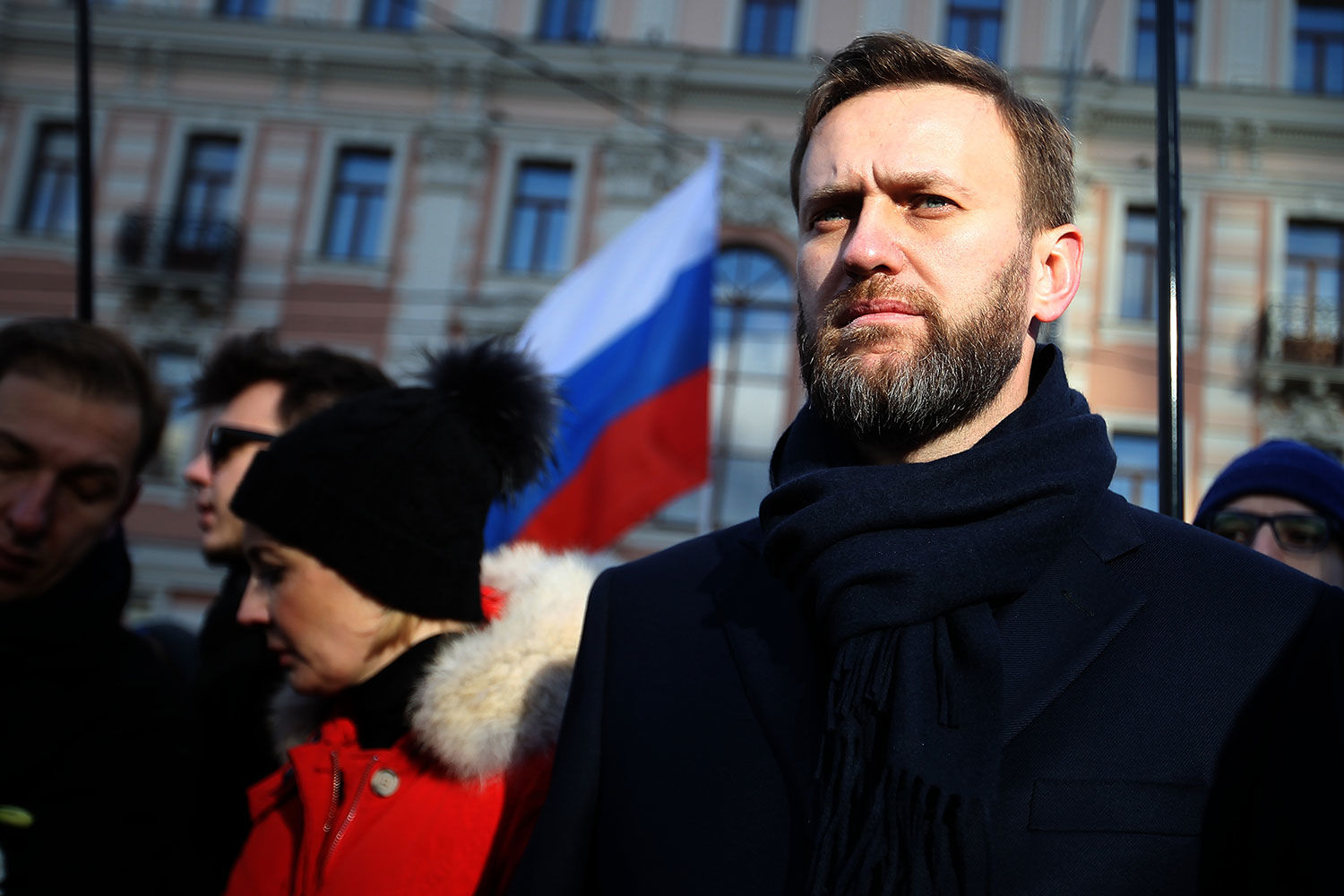
fullscreen-123u.jpgOpposition politician Alexei Navalny and Anti-Corruption Foundation (FBK) lawyer Ivan Zhdanov asked that the courts declare the government’s agreement with RT Invest Transport Systems null and void. Their lawsuit was rejected first by the Moscow Court of Arbitration, and later by the Russian Constitutional Court. Photo of Alexei Navalny courtesy of Yevgeny Razumny/Vedomosti and RBC 
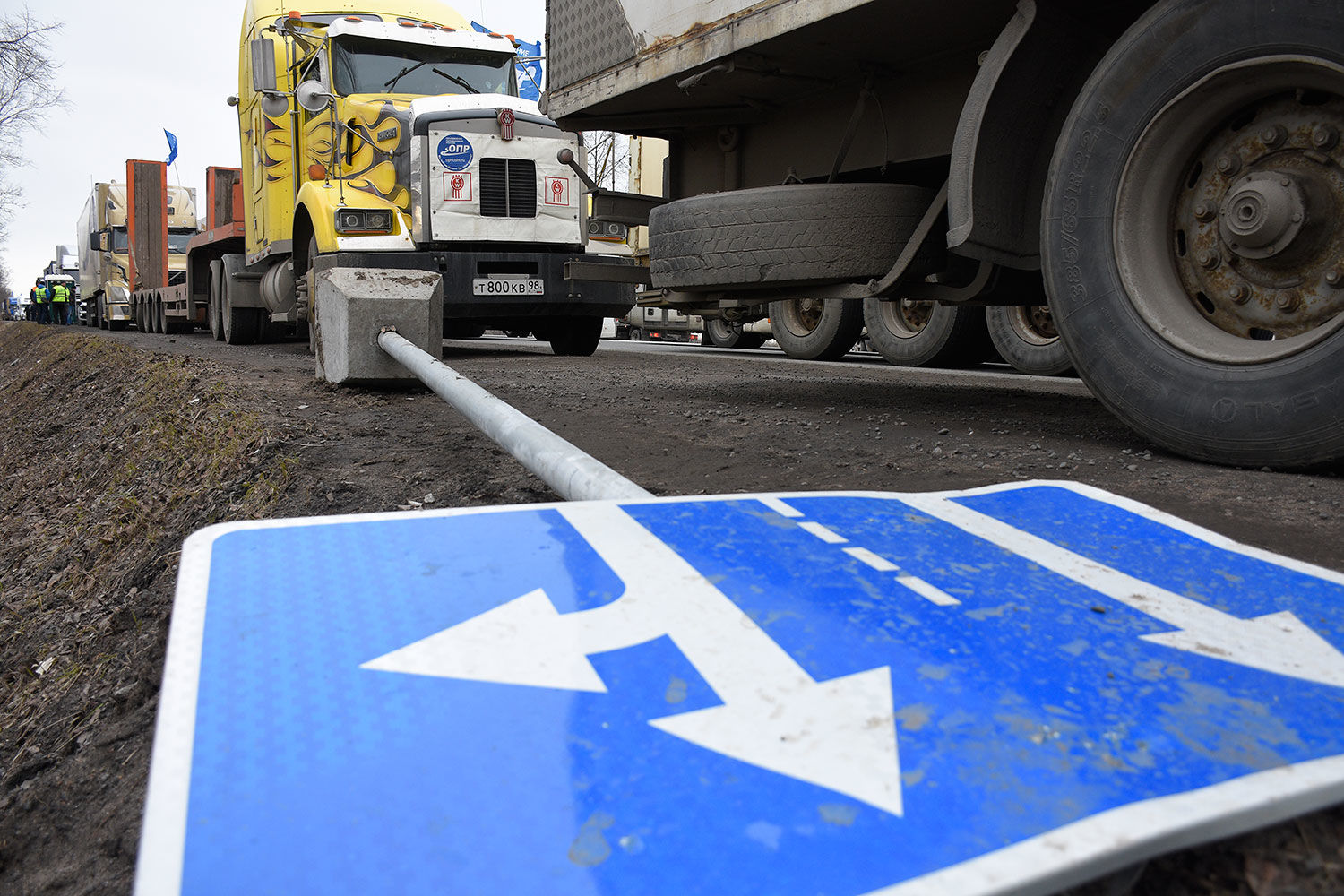
fullscreen-12do Truckers in forty Russian regions protested against Plato in November 2016. They demanded Plato be turned off, a three-year moratorium imposed on its use, and the system be tested for at least a year. Photo by Yevgeny Yegorov/Vedomosti and RBC
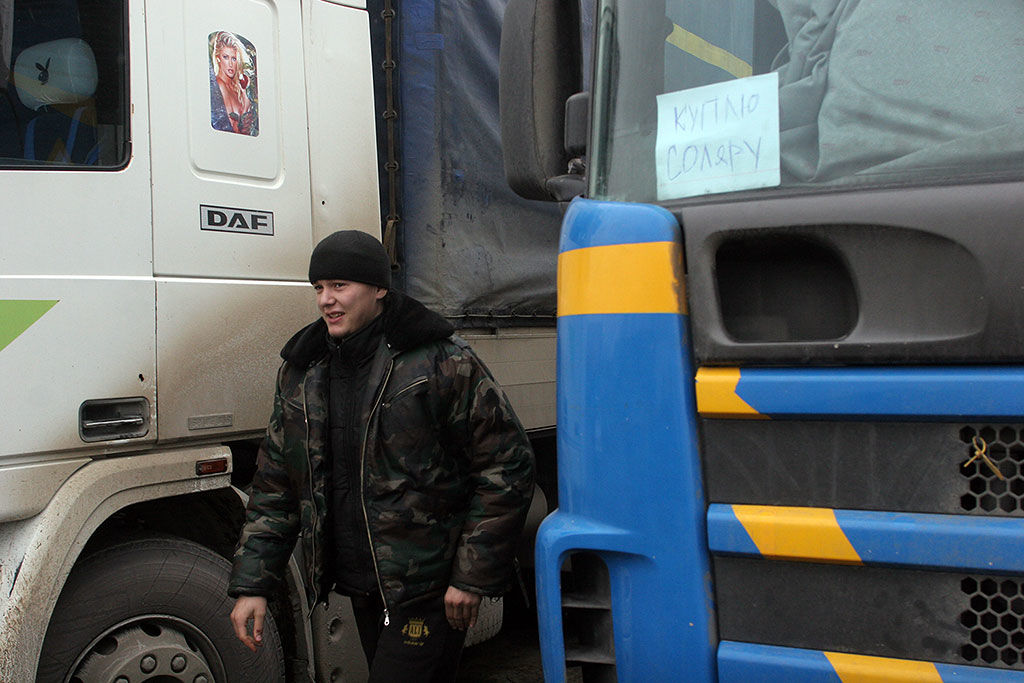
fullscreen-12suWhen Plato was launched in November 2015, truck drivers paid 1.53 rubles a kilometer. Four months later, the authorities planned to double the toll, but after negotiations with truckers they made concessions, reducing the toll increase to 25%. Since April 15, 2017, the authorities have charged trucks 1.91 rubles a kilometer. Photo courtesy of Sergei Nikolayev/Vedomosti and RBC 

fullscreen-12d8However, even the discounted [sic] toll increase did not sit well with all truckers [sic]. On March 27, 2016, the OPR went on what it called an indefinite nationwide strike. Truckers protested the toll increases and demanded fairness and transparency at weight stations. Photo by Yevgeny Razumny/Vedomosti and RBC. [The slogans read, “Down with Plato!!! It’s Rotenberg’s Feeding Trough” and “We’re Against Toll Roads.”] 
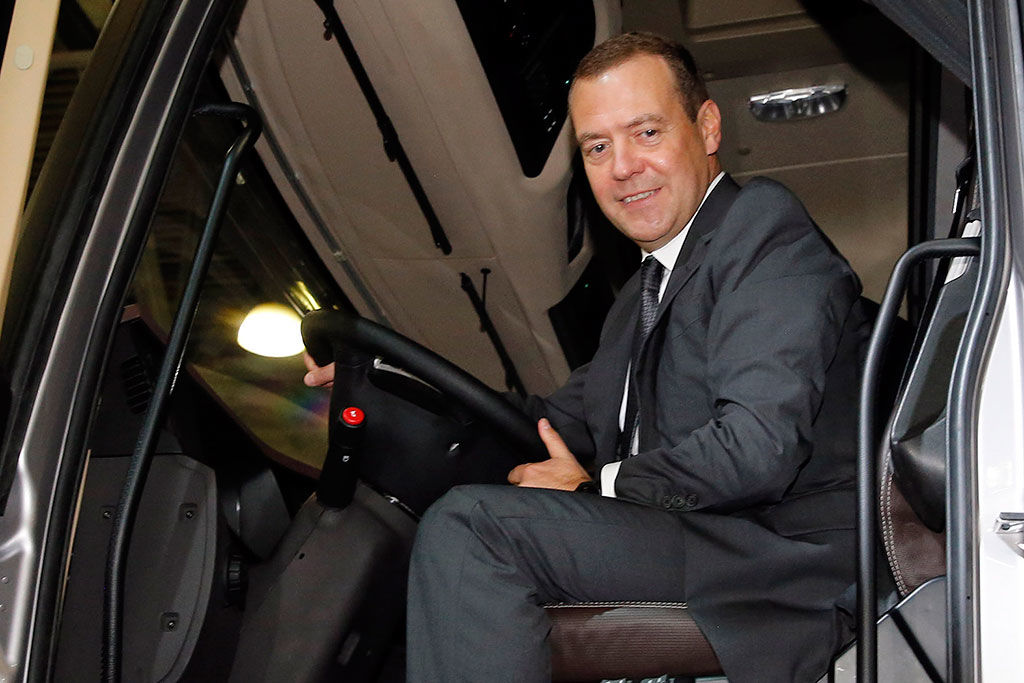
fullscreen-12jxIn October 2017, the government approved a bill increasing fines for nonpayment of Plato tolls from 5,000 rubles to 20,000 rubles. If passed, the law would make it possible to charge drivers for violations that occurred six months earlier. The new rules were set to take effect in 2018. Photo of Dmitry Medvedev courtesy of Dmitry Astakhov/TASS and RBC 
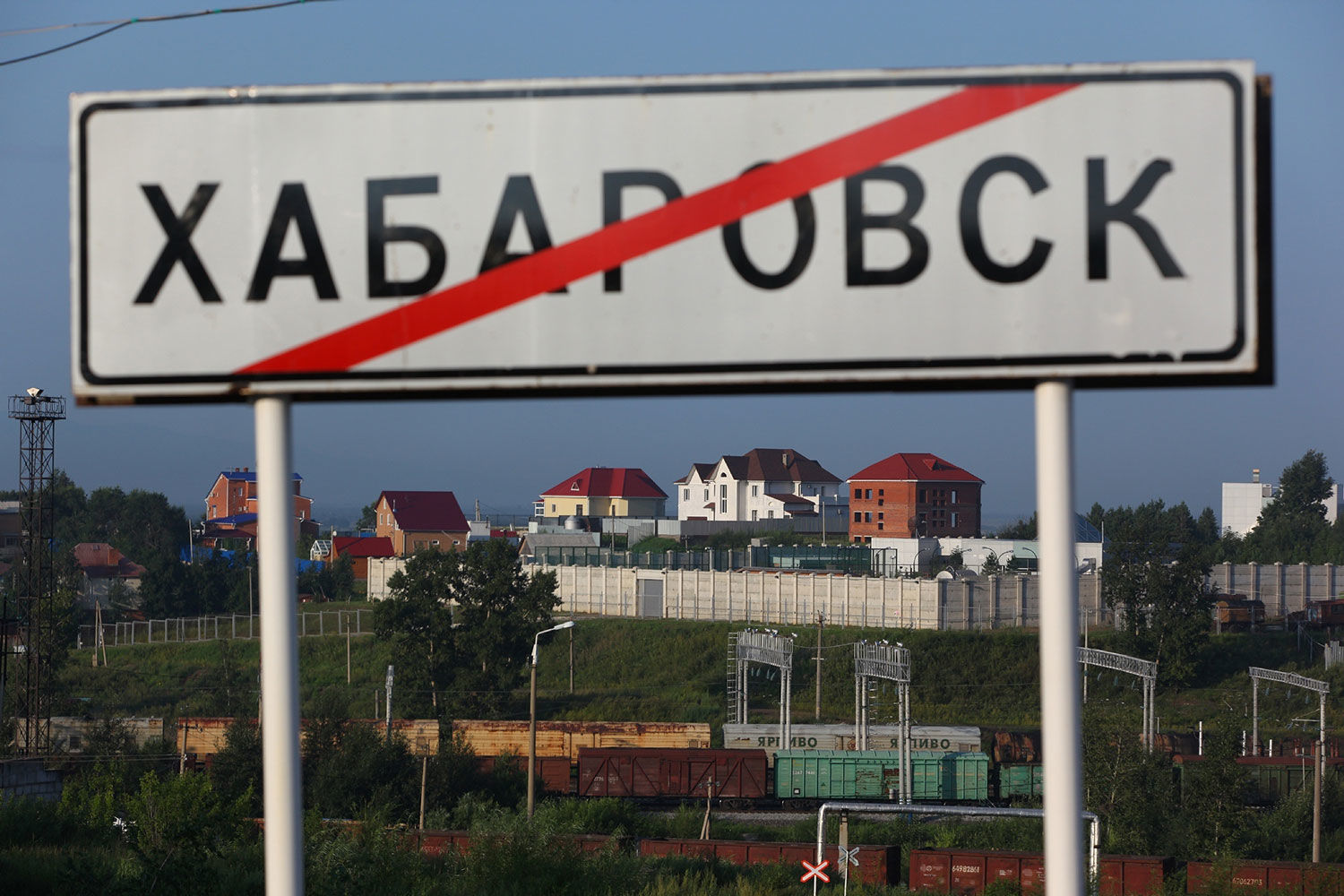
fullscreen-1ghbPlato’s database has registered 921,000 vehicles weighing over twelve tons. According to the Russian Transport Ministry, during its first two years of operation, Plato raised 37 billion rubles for the Federal Roads Fund. In the autumn of 2017, the government selected three projects that would be financed by the monies raised by Plato: a fourth bridge in Novosibirsk and bypasses around the cities of Chusovoy (Perm Territory) and Khabarovsky. Photo courtesy of Georgy Shpikalov/PhotoXPress and RBC
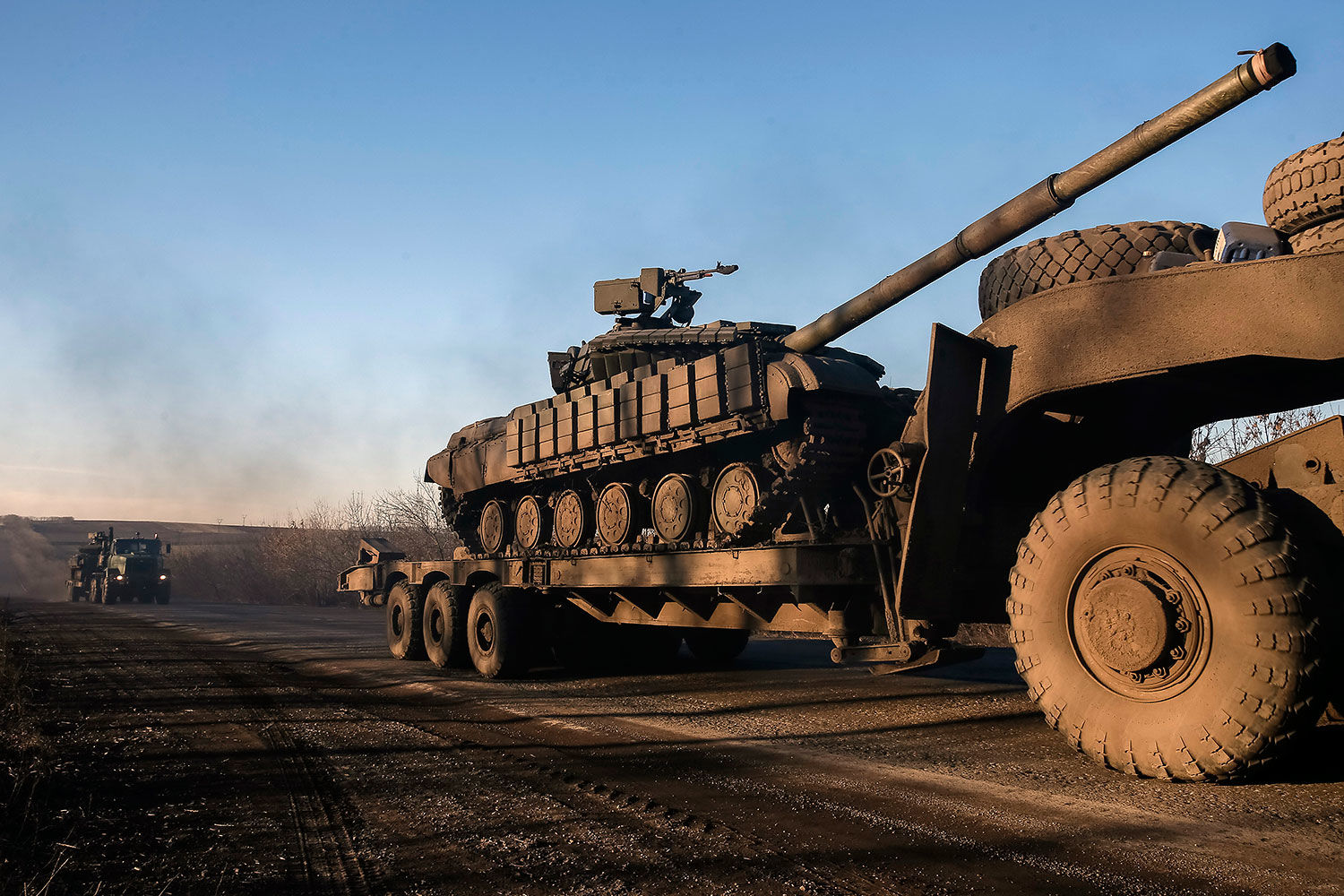
fullscreen-11h3.jpgVehicles that transport people are exempt from Plato tolls, as are emergency vehicles, including vehicles used by firefighters, police, ambulance services, emergency services, and the military traffic police. Vehicles used to transport military equipment are also exempt from the toll. Photo courtesy of Gleb Garanich/Reuters and RBC
 

Why Most Russians Will Stay Home for New Year’s

Why Most Russians Will Stay Home for New Year’s
As Incomes Crumble, Even Celebrating with Friends Is Too Expensive for Them
Vladimir Ruvinsky
Vedomosti
December 27, 2018

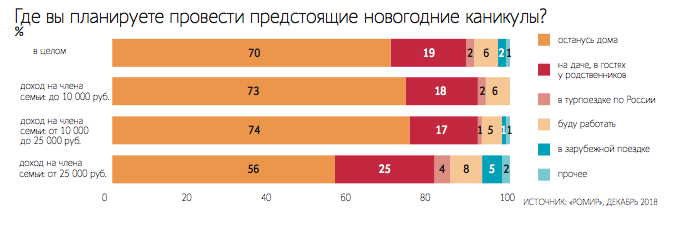
New Year’s, apparently, has become a truly stay-at-home holiday. The number of Russians who plan to spend the long New Year’s holiday at home has jumped from 41% in late 2015 to 70% in late 2018, according to a survey by Romir, a Russian research company. The main reason is the rapid return to the conservative tradition of growing poverty and uncertainty in the future, combined with the desire to maintain previous levels of consumption of the most vital goods and services, which no longer include a winter holiday away from home.

fullscreen-m4

“How do you plan to spend the upcoming New Year’s holidays?” Overall: at home, 70%; at dacha, visiting relatives, 19%; traveling in Russia, 2%; working, 6%; traveling abroad, 2%; other, 1%. Average monthly income per family member of 10,000 rubles: at home, 73%; at dacha, visiting relatives, 18%; traveling in Russia, 2%; working, 6%. Average monthly income per family member of 10,000 rubles–25,000 rubles: at home, 74%; at dacha, visiting relatives, 17%; traveling in Russia, 1%; working, 5%; traveling abroad, 1%; other, 1%. Average monthly income per family member of 25,000 rubles or greater: at home, 56%; at dacha, visiting relatives, 25%; traveling in Russia, 4%; working, 8%; traveling abroad, 5%; other, 2%. Source: Romir, December 2018. Courtesy of Vedomosti

Surveys of the same representative selection of respondents have shown a drop-off in all other ways of spending the New Year’s holidays, which have basically become yet another period of time off work for Russians. The number of Russians planning to spend the holidays at the dacha or visiting friends or relatives has decreased from 34% to 19% in three years. Trips within Russia have dropped from 8% to 2%, while trips abroad have fallen from 4% to 2%.  Nearly everyone has been scrimping, including Russians with above-median incomes. Fifty-six percent of Russian with monthly incomes of 25,000 rubles [approx. $364] per family memberwill stay home, as will 74% of Russians with monthly incomes between 10,000 rubles and 25,000 rubles per family member. As Tatyana Maleva, an economist from RANEPA, notes, the Russian urban middle class, which has grown accustomed to traveling, cannot afford it.

The picture emerging from the survey reflects the mood of many Russians. Since 2014, real incomes have fallen four years in a row, and all indications are they will be shown to have fallen in 2018 as well. According to Rosstat, the monthly modal income in in 2017 was 13,274 rubles [approx. $233], while the monthly median income was 23,500 rubles [approx. $412]. Given these circumstances, the ruble’s devaluation, which has made trips abroad more expensive, is not such an important factor. In December 2015, one dollar cost as much as it does currently, 67 rubles, and its value was rising.

Holidays at home are not cheap, either. In November 2018, the percentage of Russians who had noticed a rise in prices had grown in comparison with October 2018, according to the Russian Central Bank. Forty percent of Russians noticed upticks in prices for meat and poultry; 32%, rises in the price of petrol; 28%, rising prices for cheese and sausage; while 26% had noticed that milk and dairy products were more expensive. All of these goods are part of the home holiday menu.

In comparison with 2014, consumption levels have fallen. They have not returned to their previous levels. Attempting to wriggle their way out of poverty or maintain their previous income levels, Russians have taken out an ever-growing number of consumer loans, which have proven difficult to pay back. Every fourth Russian who had outstanding loans in 2015–2017 spent 30% of their incomes paying them off, note Olga Kuzina and Nikita Krupensky, economists at the Higher School of Economics, in an article entitled “The High Debt of Russians: Myth or Reality?” published in the November 2018 issue of the journal Voprosy ekonomiki.

Generally, the Russian populace has transitioned to a minimalist model of consumerism, notes Maleva. Scrimping begins literally with the New Year. As Romir’s survey indicates, this transition has become a trend that will, apparently, shape the strategies and tactics of Russian consumers in the future, too. The only thing that has not changed over the years is the president’s televised New Year’s greeting: it costs nothing.

Translated by the Russian Reader