Snipers, security cameras covered with masking tape, and disinfected snowbanks: a Piskaryovskoye Memorial Cemetery employee talks about the unprecedented security measures for the president’s visit • Galina Artemenko • Novaya Gazeta in Petersburg • 28 January 2022
On January 27, St. Petersburg celebrated the 78th anniversary of the lifting of the Siege of Leningrad. Vladimir Putin came to the city to visit the Piskaryovskoye Memorial Cemetery. On the same day, a video was posted on the web showing how veterans who had come with flowers were not allowed to enter the cemetery. A young woman in an orange jacket explained to them, “People who have come just to lay flowers will not get in until three o’clock.”
Novaya Gazeta found the young woman: she turned out to be Piskaryovsky Memorial Complex (PMC) employee Margarita Nikolayeva. We asked here to explain why veterans were not allowed in and who was responsible for what during the president’s visit.
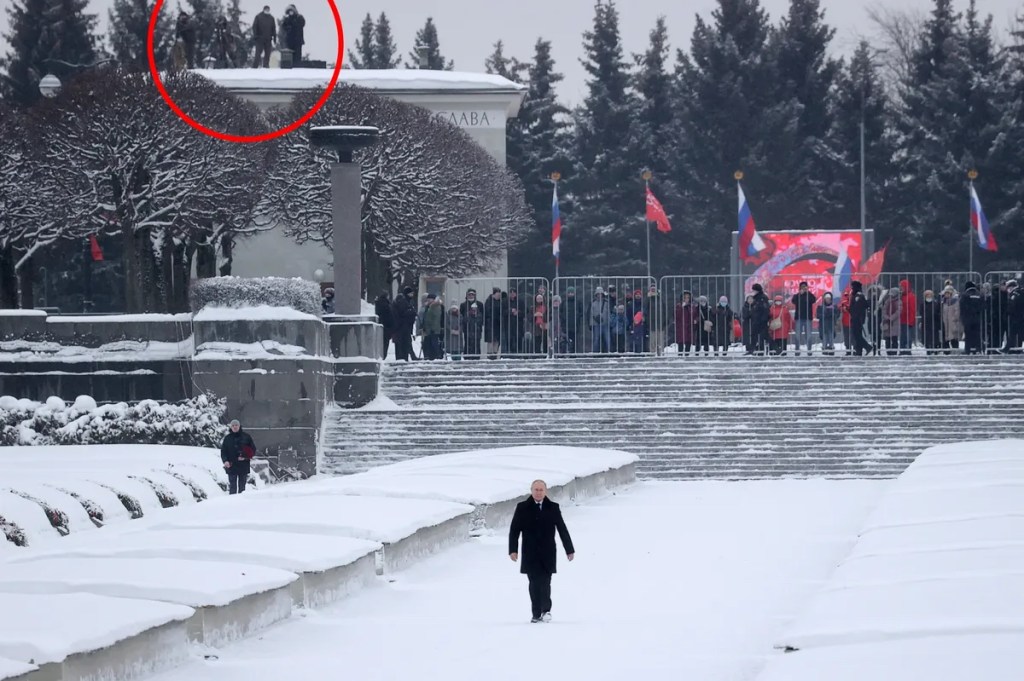
Vladimir Putin in a cordoned-off Piskaryovskoye Cemetery in St. Petersburg. On the roof of the pavilion there is a group of FSO (Federal Protective Service) officers and two snipers. Photo: Alexander Demyanchuk/TASS
How many days’ notification do you usually get that the president is coming to the cemetery?
Vladimir Putin has not come for the last couple of years. We knew for sure that the president would come this year on January 24. On the same day, we posted an announcement on the PMC’s official website that the memorial would be closed from 9 a.m. to 3 p.m. o’clock. This information was given to us by the FSO (Federal Protective Services). Our employees shared the same information with everyone who telephoned to find out about the possibility of visiting the PMC on January 27. Several dozen people called a day.
Did you announce this on radio and TV, where it was more likely that older people who do not use the Internet would hear the news?
No, as far as I know, we didn’t.
In the comments under the video on the internet, you are accused of being the one who ordered not to let anyone in. What really happened?
It’s not my first year working for the PMC, and I know that every year there are people who come to lay flowers but have not looked at our the website, and they have to be told that it’s pointless to wait outside, especially in the cold. So I went up to the police and asked what to say to people who were expecting to be let through any minute. They pointed to the FSO officers: they said they were in charge.
The FSO officers clearly replied that no one would be allowed on the grounds until three in the afternoon. I exited the perimeter and told this to the people waiting outside.
Had it ever happened before that people came on January 27, but were not allowed in?
Yes, and last year it was like that too. People would come and wait for the delegation (Beglov, the Legislative Assembly, and other dignitaries) to go through, and then they would be let in, usually around noon. I believe that on such an important day for Petersburgers, everyone should be let into the cemetery without restrictions. But this is my personal point of view. Unfortunately, I do not decide such matters.
But this year everything was complicated because of the president’s visit. It was announced that the cemetery would be closed until three. In fact, they began letting people in not at 3:00 p.m., as the FSO had said they would, but at 1:30 p.m., when the president left the memorial. But still many people stood in the cold for two hours or so. Presidential spokesman Dmitry Peskov said people waited for ten minutes. That wasn’t so.
People were just left to stand outside at the entrance? Were they not invited inside the pavilion to warm up and drink hot tea?
No.
Photo: Alexander Demyanchuk/TASS
How is the commemorative ceremony involving high-ranking officials organized?
Usually, the Smolny’s social policy committee sends us a list of organizations: the governor, the Legislative Assembly, the Federal Assembly, and the judges of the Constitutional Court are all arranged in hierarchical order. We print their names on pieces of paper, put them on music stands, take them outside, and arrange them so that no one, for example, stands in front of the governor.
I know that the social policy committee (which is in charge of the PMC) starts making the lists around two weeks before the ceremony. [Current Petersburg governor Alexander] Beglov is included automatically. I also never noticed any special preparations before visits by [former Petersburg governor] Valentina Matviyenko. At most, her protocol staff would come to the PMC to find out the details of the ceremony.
How was this presidential visit to the cemetery different from the previous ones?
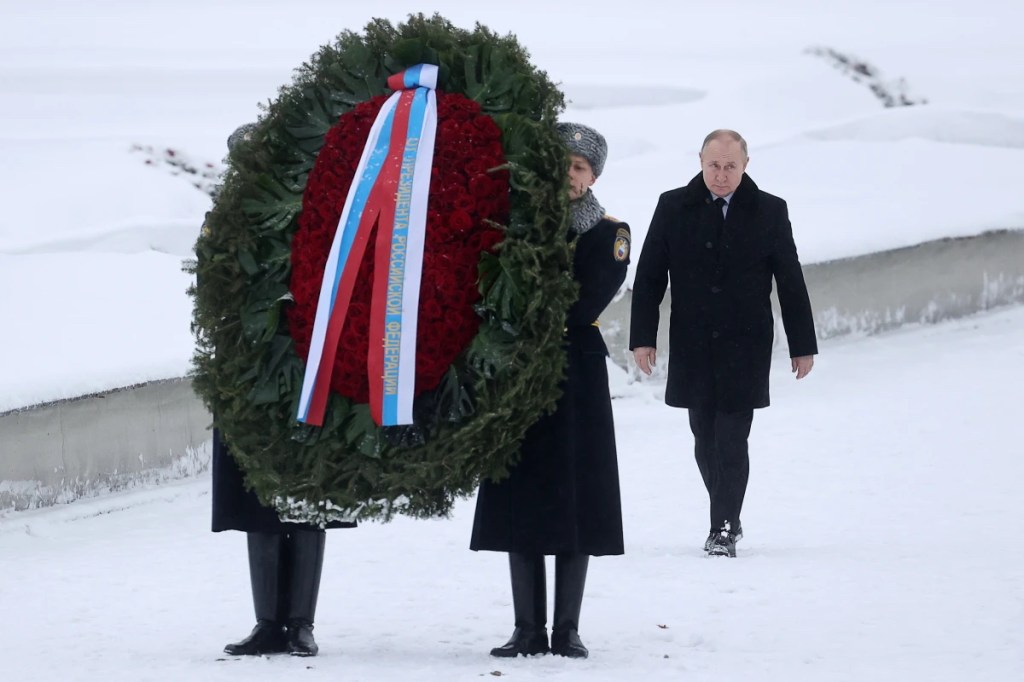
The fact that he (the president) walked completely alone, that the security cameras were covered with tape, that the wreath stand was moved away from the sculptures, and that the snow was disinfected. The harshest preparations began at 8:30 a.m. on January 27. Metal detectors were set up: this had never been done before. A metal fence was set up on the opposite side of the Avenue of the Unvanquished, and public transport stopped making stops at the cemetery in the early morning.
They covered the security cameras with tape? Why?
The ones that were next to the Motherland monument, where the wreath laying took place, were covered with ordinary masking tape. We didn’t ask why. Probably for security reasons: so that [FSO] officers could not be seen next to the president.
We have a sound engineer’s room, and the cameras that were taped up feed into this room. The sound engineer turns on the music, the metronome, and the anthem, unless a military band is playing. To turn everything at the right time, he needs to have a view of the grounds. So, after the security cameras were covered with tape, they left him a small window so that he could see only the spot to which the president walked.
A photo of snipers standing on the roof of the museum pavilion has been posted on the web. Is it a fake?
Snipers on the roof of the museum pavilion at the Piskaryovskoye Memorial Cemetery. Photo: Fontanka.ru
No, it’s not a fake. I saw them with my own eyes on the roof of the pavilion (the pavilion on the right side, if you stand with your back to the Avenue of the Unvanquished). There were also snipers in previous years. The picture was taken from inside the memorial: the snipers were aiming towards the Motherland sculpture, that is, where the laying of flowers would take place.
You mentioned that the snowdrifts were disinfected. It sounds funny, although in fact, what’s so funny about it? What did it look like? How many people were involved? Did the snow color change from this treatment? Did it smell? Was the snow treated in previous years?
I can’t say for sure. I wasn’t on site at that moment, my colleagues were there. About half an hour [before the ceremony], a special vehicle arrived: people got out, treated the snowdrifts with something, and left. The snow has never been treated before. There were other precautions: the wreath-bearers were brought from Moscow, where they were quarantined for two weeks. They were brought to the cemetery in a special vehicle and dropped off. They rehearsed with the wreath at a distance from everyone else.
All images courtesy of Novaya Gazeta. Translated by the Russian Reader
“Any action that dispels the illusions of order and resignation is a spell for more of the same.” Photo by the Russian Reader
________
Вообще, ходить вокруг соседа, помахивая битой и приговаривая «че ты дергаешься-то, че дергаешься, я еще ничего не сделал» – так же отвратительно.
________
В правильном мире из братской могилы на Пискаревском кладбище поднялись бы тысячи рук и разорвали бы этого лицемера на атомы.
The fact is that hovering around a neighbor, waving a bat, and saying “Why you so jumpy? Why you so jumpy? I ain’t done anything yet” is just as disgusting.
________
In a proper world, thousands of hands would have risen from the mass grave at Piskaryovskoye Cemetery* and torn this hypocrite into atoms.
________
* Piskaryovskoye Memorial Cemetery (Russian: Пискарёвское мемориа́льное кла́дбище) is located in Saint Petersburg, on the Avenue of the Unvanquished (Проспект Непокорённых), dedicated mostly to the victims of the Siege of Leningrad.
[…]
The memorial complex designed by Alexander Vasiliev and Yevgeny Levinson was opened on May 9, 1960. About 420,000 civilians and 50,000 soldiers of the Leningrad Front were buried in 186 mass graves. Near the entrance an eternal flame is located. A marble plate affirms that from September 4, 1941 to January 22, 1944 107,158 air bombs were dropped on the city, 148,478 shells were fired, 16,744 men died, 33,782 were wounded and 641,803 died of starvation.
I don’t know why, but I have come across ladies with dogs so many times that I could do an entire exhibition on the subject. And yet, for example, I have never encountered an old man with a cat! That’s as good a topic for a large-scale sociological study as any other! 🤓
________
Real “popular opinion” is what people say and do unrehearsed and uncoerced — not the dodgy sentiments that the Kremlin, Levada Center, and self-appointed Russia experts put in their mouths. ||| TRR
Social media posts translated by the Russian Reader
________
Update (27.01.2022). This, apparently, was the subtext for Ms. Vvedenskaya’s remarks, above:
Photo of the day: Vladimir Putin came to lay flowers at the Piskaryovskoye cemetery in St. Petersburg in honor of the 78th anniversary of the complete liberation of the city from the fascist siege. The Siege survivors themselves were not allowed into the cemetery — they were left standing behind the fence. Photo: Alexander Demyanchuk / TASS
URGENT MESSAGE FOR MEDIA AND HUMAN RIGHTS ADVOCATES!
SHARE AND PROMOTE!
Stop deportation of Danila Vasilyev!
PREAMBLE
As a politically active young man, Mr. Vasilyev took part in various movements that took place around the presidential election in Russia in 2018.
He is also a founder of an athletics club which provided the local youth with an opportunity to exercise, take part in competitions and tournaments, as well as to participate in cultural events and activities. The athletic society was also involved in regional politics and a number of its members were political activists. Mr. Vasilyev also participated in the work of a YouTube channel that satirised current Russian political events and Russian politicians.
“War criminal V.V. Pynya”: a photo from a 2018 protest action in Perm accusing Vladimir Putin of war crimes in Ukraine and Syria. Photo by Alexander Kotov. Courtesy of varlamov.ru
As an act of civil disobedience and due to their disagreement with Russian foreign and internal policy (mainly due to the Russian aggression in Ukraine and the Russian carpet bombings of civilian population in Syria), on 11.11.2018 Mr. Vasilyev and two of his friends (A. Shabarchin and A. Etkin) organised a political performance at one of Perm’s squares. The performance consisted of a mannequin with a mask of Vladimir Putin, that was tied to a pole. The placard on the mannequin’s chest read «Военный Преступник Пыня В.В.» [Translation: “War Criminal V.V. Pynya”; this is a derogatory nickname fior Vladimir Putin.] This political performance was recorded and later published on YouTube and various social media.
On 03.01.2019 Mr. Vasilyev and his friends were detained and their homes searched. They were charged with «Hooliganism committed by an organised group in a preliminary conspiracy» (Article 213, Part 2 of the Russian Penal Code). The investigation was conducted among others by the Russian Centre for Prevention of Extremism (known as Centre E), which in reality is one of the main tools of oppression and are frequently used to suppress and terrorise the opposition. The case and the course proceedings were covered by a variety of Russian and international media, while a number of organisations and individuals called the case a political one. On 18.08.2020 A. Shabarchin and D. Vasilyev were found guilty.
Mr. Vasilyev’s sentence ended on 18.09.2021.
THE GETAWAY
Due to persecution Mr. Vasilyev decided to leave Russia and seek political asylum in Europe. Once his probation term ended, he applied for and subsequently received a Hungarian tourist visa and on 14.10.2021 arrived in Budapest. His intention was to seek political asylum in Hungary in accordance with the Dublin Regulation. Upon arrival he reported to a Hungarian police officer at the Budapest Airport, who directed him to an immigration centre where he was informed that Hungary does not accept refugees, asylum seekers and does not grant political asylum. He was instructed to travel to Austria.
He was never able to apply for political asylum in Hungary, no formalised procedure took place (including verbal application), he was not at any point taken into custody and the Hungarian authorities refused to provide any written acknowledgement of his presence there.
He spent the night in a hostel in Budapest and the following day of 15.10.2021 took a train to Vienna.
Upon his arrival at Vienna Central Station on 15.10.2021 (Friday) evening, Mr. Vasilyev entered a local police station where he stated that he seeks political asylum due to persecution in his homeland. Once again he was unable to apply for asylum. He was given a piece of paper with the address of the nearest immigration centre and was told to report there on Monday. As his Schengen tourist visa was still valid for several days, Mr Vasilyev was able to leave the police station and for the next two days was hosted at a private residence of compassionate Austrian nationals.
The day of his arrival in Austria, the Russian authorities arrested a number of his friends and colleagues from the Perm athletic club. Mr Vasilyev’s flat was stormed by the Russian police and his whereabouts were investigated by both police and Russian security services.
On 18.10.2021 he reported to the Refugee Centre at Traiskirchen in Lower Austria, as it was established that he was under no legal obligation to report to the Viennese centre that he was referred to. There, Mr. Vasilyev once again attempted to seek political asylum, however, he was told to report to the Refugee Centre located near the Vienna International Airport Schwechat where he was finally able to apply for political asylum and begin the asylum seeking process as defined by the laws of the Austrian Republic. Following the required first interview he was transferred to the Traiskirchen Refugee Centre.
On 23.10.2021 Mr Vasilyev was transferred to a Refugee Centre in Ohlsdorf, Upper Austria, on the outskirts of Gmunden.
AWAITING DEPORTATION FROM AUSTRIA
On 27.12.2021 Mr Vasilyev received a letter from the Austrian authorities that suggests his eminent deportation to Hungary, in accordance with the Dublin Regulation. On the 29.12.2021 he was able to discuss the document in question with an advisor provided by the Bundesamt für Fremdenwesen und Asyl who failed to clarify the nature of the letter and was unable to communicate with Mr. Vasilyev in a language that he could understand. On 30.12.2021 Mr Vasilyev contacted the responsible agency (Bundesamt für Fremdenwesen und Asyl) with the desire to clarify the content of the letter and in order to preemptively appeal the possibility of deportation.
The Hungarian authorities instructed Mr. Vasilyev to travel to Austria in order to seek political asylum. The current Hungarian government led by Victor Orban is on good terms with the current Russian regime and will undoubtedly repatriate a Russian national who seeks political asylum. The practices of the Hungarian government in regards to refugees and asylum seekers have been criticised by both the UNHR (United Nations High Commissioner for Refugees) and the ECHR (European Court of Human Rights).
It is very likely that the Russian Federation will demand Mr Vasilyev’s extradition based on falsified criminal charges. In the event of his return to the Russian Federation, Mr Vasilyev will be arrested and tried on either false criminal charges or charged with one of the offences that the Russian prosecution service is currently attempting to pin on his friends and his colleagues from the Perm athletic club. A number of them were arrested in October 2021 and several are awaiting trial. In recent years, the regime of Vladimir Putin frequently tries political activists and opposition figures on fabricated criminal charges.
If Danila Vasilyev is returned to Russia and imprisoned, it is possible that he will not survive prison. Those who oppose the Russian government are frequently murdered while incarcerated, tortured by the prison authorities and denied medical assistance. The most prominent case is that of Sergei Magnitsky, a tax advisor who uncovered large-scale corruption and died in prison due to denial of medical assistance. His death resulted in international outrage and a number of sanction lists against Russian officials, enacted by the European Union and the United States.
!!! WE URGE ALL MEDIA, HUMAN RIGHTS ADVOCATES, DECISION MAKERS, and all [concerned] people to stand up for Danila and PREVENT THE EXECUTION OF THE OFFICIAL DECISION TO DEPORT HIM TO HUNGARY and further to the Russian Federation !!!
(Credits to Democratic Movement for Freedom in Russia – Vienna, Austria , Michael Alexander Albert Korobkov-Voeikov for the text)
I have edited this message slightly to make it more readable. ||| TRR
Russian Jets Knock Out Water Supply In Syria’s Idlib • RFE/RL • January 2, 2022
Russian warplanes have bombed a pumping station that provides water to rebel-controlled Idlib city in northwestern Syria, potentially depriving hundreds of thousands of people in the overcrowded city of water, according to witnesses and a monitoring group.
Russian Sukhoi jets dropped bombs in Idlib and several surrounding villages on January 2, witnesses and the U.K.-based Syrian Observatory for Human Rights monitor said.
“Reliable sources said that Russian fighter jets have so far carried out nearly 10 air strikes targeting the vicinity of Al-Sheikh Yusuf village in western Idlib countryside, the vicinity of the central prison near Idlib city, and the vicinity of Sejer water station, which feeds Idlib city and its western villages, leaving the station out of action as pipes have been damaged,” the Syrian Observatory for Human Rights said.
An official at the city’s water utility service confirmed the pumping station was out of action as a result of the strikes.
There was no immediate comment from the Russian or the Syrian armies.
More than 3 million civilians live in jihadist and rebel-controlled Idlib Province, many of them displaced from other parts of Syria during the country’s decade-long civil war. Most of the population in Idlib is dependent on UN humanitarian assistance to survive.
In March 2020, Russia, which backs Syrian President Bashar al-Assad’s forces, and Turkey, which supports some opposition groups, agreed to a de-escalation zone in Idlib. However, rebel attacks and Russian and Syrian bombing have continued despite the cease-fire.
Turkey has thousands of troops deployed at bases in Idlib to deter a Syrian Army offensive, which it fears would push millions of people across the border as refugees.
Syrian and Russian planes have carried out deadly aerial strikes on schools, hospitals, markets, and other infrastructure in Idlib Province that UN investigators and rights groups say may amount to war crimes.
Jihadist factions have also been accused of carrying out possible war crimes.
Putin’s little helpers undermine solidarity • People and Nature • December 29, 2021
We know what solidarity in the face of war looks like. It looks like the Grupa Granica, set up to support those stranded on the Polish border by the government’s vicious anti-migrant policy and the Belarusian government’s cynical manipulation of refugees.
To those supporting refugees – whether in Poland or Belarus, or in the English Channel, targeted by the UK government’s murderous crackdown – it makes no difference which war people are fleeing. It might be the US-UK-supported war in Iraq, or the bloodbath perpetrated in Syria by Bashar al-Assad’s regime.
Now, we face the possibility of renewed Russian military action in Ukraine. This carries the greatest threat of war in Europe since the Balkan conflicts of the 1990s.
The war in eastern Ukraine in 2014-15 has already caused 2 million or more people to flee their homes: more than 1 million now counted as “internally displaced” in Ukraine; at least as many have crossed the border to Russia. A new conflict would be both a human tragedy and a threat to social movements.
Solidarity is needed. An anti-war movement is needed.
Already, pro-Putin propaganda – that corrodes parts of the so-called “left”, as well as thriving on the extreme right – is being dialled up. It seeks to justify Russia’s military preparations. And it could endanger efforts to galvanise anti-war protest.
Putin’s little helpers on the “left” generally have a world view inherited from Stalinism: they believe that authoritarian regimes that spout anti-American rhetoric (Russia, China or both) are to be praised; the imperial character of these regimes’ actions is ignored; and these regimes, rather than popular movements, are seen as the means to resist western powers.
Andrew Murray, writing on the Stop the War website, claims that “if there is conflict over Ukraine, it is the west that bears most of the blame”. But it’s not “if”. There has been a conflict going on for more than six years, which has taken more than 14,000 lives.
The forces involved are the Ukrainian army, the vastly better-resourced Russian army, and separatists and mercenaries supported by, and to a large extent funded and armed by, the Russian state. The western powers have been noticeable by their absence.
Murray says the 100,000 Russian troops stationed on the Ukrainian border are “allegations” and “media speculation”. John Wojcik in the Morning Star says they are there “if corporate press outlets are to be believed”. In the real world where the rest of us live, the Russian forces actually exist (see satellite pictures here and here).
Murray claims that the NATO military alliance is “trying to seize Ukraine by means of moving NATO right up to Russia’s borders”, that the US is “arming Ukraine to the hilt to resist” and that “British troops are stationed in the Balkans”. The journalist and commentator Paul Mason has demolished these claims point by point. He writes:
There is, in short, no NATO plan to “seize” Ukraine; no possibility of Ukraine joining NATO; no “arming to the hilt”; no significant number of British troops in the Balkans; no major deployment of NATO troops “eastwards towards Poland”.
The danger of war is real. But to deny the central role of the Russian military is to deny reality.
Putin’s helpers have form on this. During the civil war in Syria, the Stop the War campaign and their friends had little or nothing to say about the murderous Assad regime and the Russian government that armed and militarily supported it – despite the fact that they were responsible for an estimated 90% of the killings.
While the regime preferred to butcher and torture its own citizens, rather than to grant them a measure of democratic rights, Putin’s helpers spoke up only about minor incursions by western forces … the “anti-imperialism of idiots”, as Syrian-British writer Leila al-Shami called it.
As for Ukraine, the Stop the War campaign did nothing to support the victims of the 2014-15 conflict, but nevertheless hurried to the defence of the Russian “leftist” Boris Kagarlitsky, who joined fascists and nationalists in supporting the Russian intervention.
Putin’s helpers are everywhere, including the Moscow Carnegie Center. Screen shot by the Russian Reader
Fairytale no. 2: Ukraine is fascist, really
There was a “fascist coup” in Ukraine in 2014, writes John Wojcik in the Morning Star (in an article republished from the US-based People’s World, of which Wojcik is editor). “Hundreds of trade union leaders and activists were murdered by the new right-wing Ukrainian government shortly after it came to power.” He also claims that the new government “banned opposition political parties, including the widely supported Communist party”. And it “banned the use of the Russian language, the primary language of 40% or more of the Ukrainian people”. Let’s go through the bits of this fairytale one by one.
(a) A “fascist coup”. The overthrow of the government headed by president Viktor Yanukovych in February 2014 was, by any measure, a mass popular action. A crowd of more than half a million people occupied the centre of Kyiv for more than two weeks, in the face of assaults ranging from baton charges to sniper fire, making it impossible for the government to continue. There were mass actions on a similar scale in dozens of other towns and cities. The politics of this “Maidan” protest were complex. Participants ranged from fascists, who played a key part in the violent confrontations with the old regime’s armed forces, to socialists and anarchists. But the word “coup” is meaningless to describe it. As for the new government, while its record on defending democratic rights was mixed to put it mildly, it was no more “fascist” than the governments of e.g. Poland or Hungary. And, in terms of the rights to assembly, free speech and workplace organisation, less repressive than the governments of e.g. Turkey or Russia.
(b) “Hundreds of trade union leaders and activists were murdered by the new right-wing Ukrainian government.” This is false – shockingly so. No such murders took place. No such murders have been recorded on the web sites of Ukraine’s two trade union federations. None have been mentioned in the detailed reports of the United Nations High Commission for Human Rights on attacks on civil rights in Ukraine. Demonstrators were killed in clashes with the security forces, but this was mostly before Yanukovych was overthrown. Activists and journalists have been attacked, and some killed, apparently by non-state actors, albeit sometimes with covert support from elements in the state. In 2014, prior to the military conflict, there were other deaths and injuries resulting from civil conflict. The most serious incident, by far, was the deaths of demonstrators opposed to the new government who, confronted by its supporters, took refuge in a trade union building in Odessa that was then set on fire. Ukrainian law enforcement did little to investigate. Tragic as these deaths were, they were not murders of trade union leaders or activists by the government.
(c) The government “banned opposition political parties”, including the Communist party. It didn’t. The electoral commission banned the Communist party from participation in the 2019 presidential and parliamentary elections, under the 2015 “decommunisation” law. This law, which forbids the promotion of “totalitarian regimes”, defined as Nazi and Communist, and their symbols, has been and is being used to attack democratic rights. Together with similar laws in other eastern European countries, it deserves to be denounced and resisted. But note, too, that the Communist party continues to operate legally; that it has mounted legal challenges to the ban; that no other party has been banned from electoral participation under the law; and that the government and the electoral rights group OPORA are currently in dispute over the extent of proportional representation – an election procedure that in the UK, for example, remains an unattainable dream.
(d) The government “banned the use of the Russian language”. It didn’t – and it’s irresponsible and inflammatory to sit in an editorial office in the US claiming it did. A law making Ukrainian the single state language was adopted in 2019 – the culmination of three decades of argument, shaped both by by aspirations to revive Ukrainian culture that has suffered historically from Russian imperial domination, and by hard-line Ukrainian nationalism. Ukrainian socialists opposed the measure (and I sympathise with them). Remember, though, that the law requires that Ukrainian be used in public spaces, and not exclusively; that it does not apply to private or religious life; that it will be applied in the education system, and to TV, over an extended period; and that breaching the law is essentially a civil, not criminal offence. (See reports by Russia’s state owned TASS news agency here, and Russia’s opposition newspaper Novaya Gazetahere.)
Another of Putin’s helpers’ favourite tricks is to portray Ukraine as protective of the memory of wartime Nazi collaborators. With no reference to the real, complex battles over memory (see e.g. here and here), they point to Ukraine’s opposition to a Russian resolution on the holocaust at the UN, in a ridiculous diplomatic ritual repeated annually since 2005 (see here and here). This is a facile attitude to a serious subject. Putin’s helpers seem blind to the reality that it is the security forces in Russia, not Ukraine, that have recently tortured and jailed a group of young anti-fascists.
Fairytale no. 3: Ukraine is part of Russia, really
Putin’s helpers insist that Ukraine is not really a country with a history. The Stop the War site says that the collapse of the Soviet Union in 1991 “turned what had been internal borders, arbitrarily drawn with no great significance, into inter-state boundaries”; Ukraine has “failed to develop anything like a common democratic culture”; therefore what is now “decisive” is the “international aspect” and the actions of the western powers; and what mattered about 2014 was that the government established in Kyiv was “anti-Russian”.
Both Stop the War and the Morning Star quote Putin’s article On the Historical Unity of Russians and Ukrainians, published in July. It heightened fears in Ukraine of imminent invasion, with insanely exaggerated warnings of a path towards “an ethnically pure Ukrainian state”, that would be comparable to “the use of weapons of mass destruction against us”. (Putin followed up earlier this month, with a deranged claim that “current developments in Donbass” are “very reminiscent of genocide”.)
In his article, Putin explains the tsarist empire’s anti-Ukrainian legislation of the 1870s on the grounds that the Polish nationalist revolt was in progress; argues that Ukrainian nationhood was an invention of the Poles and/or Austro-Hungarians; and describes the Molotov-Ribbentrop pact of 1939, by which Poland and the Baltic states were divided between the Soviet Union and Nazi Germany, with the words “the USSR regained the lands earlier seized by Poland”. He never once refers to Russian imperialism and colonialism, and the role they have played in shaping, and trying to deny, Ukrainian national identity.
That Putin justifies his imperial aspirations with reference to Russia’s imperialist past is not surprising. For western “leftists” to endorse this logic suggests that the “left” has sunk to a new low.
Fairytale no. 4: Putin is protecting Russia’s riches from imperialist looters
“Possible western aggression against Russia” is caused, in part, by “the desire of the fossil fuel monopolies to control the world energy market”, the Morning Star claims. These western interests seek to “turn Ukraine into a base”, in order to “achieve economic control of Russia”. This is unbelievably upside-down and back-to-front.
The Russian economy was subordinated to world markets, as a supplier of raw materials such as oil, gas and minerals, in a process that took two decades after the Soviet Union collapsed in 1991. In the first decade of Putin’s presidency, especially, large chunks of the wealth earned from these exports found its way into private hands and was shipped to offshore locations, at the rate of tens of billions of dollars per year.
Although Putin insisted that the private owners of oil and metals companies pay more taxes than they did in the 1990s, and some oil assets have been renationalised (the state owns an estimated 50% of the oil industry now), investigations by journalists and the anti-corruption campaigner Alexei Navalny have shown conclusively that his governing team put far, far more effort into diverting many billions in to their own accounts. Russian oil companies remain open to foreign investment; the largest of them, Rosneft, is 22% owned by BP.
So Russia’s economy has been integrated into the world capitalist economy in a way that serves its elite, not its people. Material inequalities have widened substantially under Putin.
Since 2014, a giant contradiction has opened up for the Russian government. The elite’s economic interests would be best served by developing these good relations with foreign capital. But its political interests required it to stoke up nationalism, to seek to reinforce its diplomatic and military control over its near neighbours that have slipped from its imperial grasp, Ukraine first among them. The war fought by Russia in Ukraine in 2014-15 was driven by these politics, not by economic interests. It, and western sanctions that resulted, damaged those interests.
The western powers already have most of what they want from the Russian economy. The idea that they are plotting military action to control it is, frankly, daft. There’s no doubt that the US hopes to constrain Russia’s geopolitical and military reach in central Europe – although the western alliance is split, and Germany is generally readier to compromise with Russia. But there is another factor here: the popular movement that removed Yanukovich and drastically weakened Russia’s political control over Ukraine, rooted in a history of colonialism. Putin is not only trying to reassert Russian influence against a divided NATO, but is also reacting to those changes in Ukrainian society. And it is Ukrainians who are being killed, and Ukrainian communities divided and devastated, by war.
In conclusion
The arguments put by Putin’s helpers are so absurd that I find it hard to explain them to Russian and Ukrainian friends. In 2015, a Ukrainian friend living in the UK asked: “What is it with these people? Are they being paid by the Russian embassy?” I answered that I was sure they are not. They justify Putin’s actions on account of their messed-up ideology, which on some level they must believe. That’s why, although it’s a bit like explaining why the earth isn’t flat, I offer readers these thoughts. SP, 29 December 2021.
Thanks to Simon Pirani for permission to reprint his essay here. ||| TRR
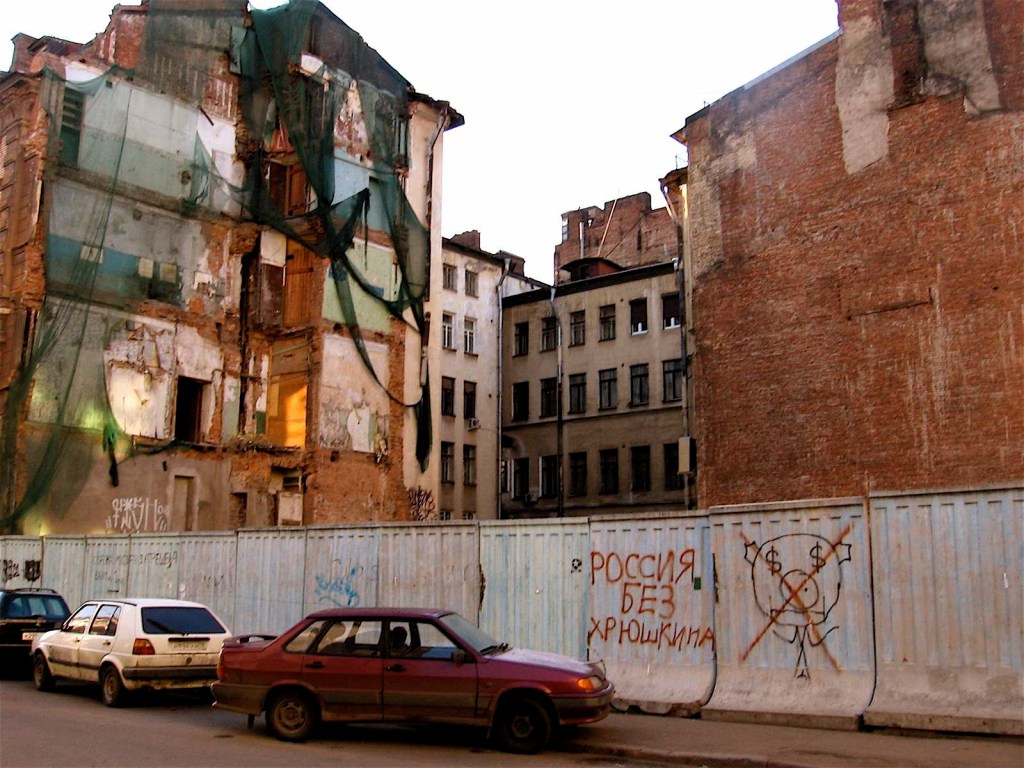
My concept is “civil war”— or rather, “a quiet (civil war).” Another variant might be: cold civil war. I will talk about how the (global) economy of war—hot war, cold war, civil war—is experienced by victims and bystanders in a place seemingly far from actual frontlines. In reality, the frontlines are everywhere—running down the middle of every street, crisscrossing hearts and minds. This permanent war is connected to the project that posits the presence of civil society in one part of the world, while also asserting the necessity of building civil society in other parts of the world where allegedly uncivil social, political, and economic arrangements have been or have to be abolished. The real effect of this high-minded engineering is the destruction of people, classes, and lifestyles whose continued survival in the new order is understood (but hardly ever stated) to be either problematic or unnecessary. The agents of this destruction are varied—from random street crime, assassinations, inflation, alcoholism, factory and institute closures, to pension and healthcare reform, the entertainment and news industry, and urban renovation. The place I will talk about is Russia and Saint Petersburg, where I have lived for much of the past fourteen years. My concept is intended as a memorial to a few victims and local eyewitnesses of this war—people I either know personally or came to know about through the stories of friends or other encounters. I will also sketch the tentative connections between that civil war and the troubles in this part of the world; and, very briefly, show how the victors in this war claim their spoils.
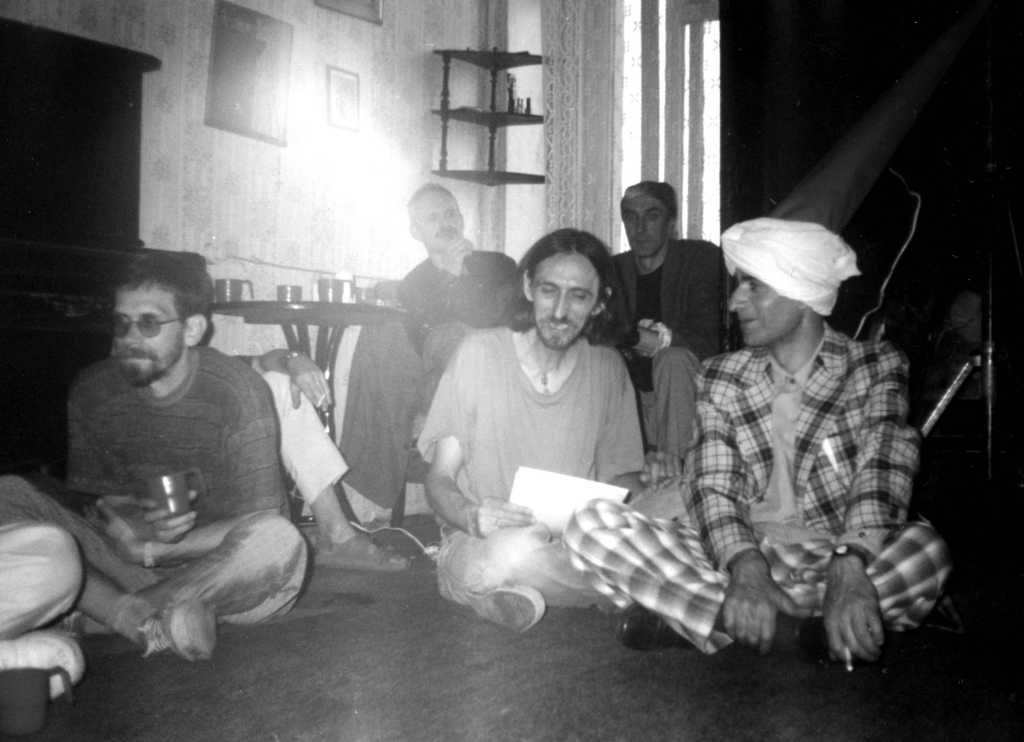
This term—(a quiet) civil war—was suggested to me by the Petersburg poet Alexander Skidan during a conversation we had last spring. I had been telling Alexander about the recent murder of my friend Alexei Viktorov. Alexei is fated to remain a mere footnote in Russian art history. I mean this literally: in a new book, Alexei is correctly identified as the schoolmate of the Diaghilev of Petersburg perestroika art, Timur Novikov, and the painter Oleg Kotelnikov. I met Alexei in 1996, when Oleg let me live in his overly hospitable studio in the famous artists squat at Pushkinskaya-10. Alexei showed up a few weeks later. He had spent the summer in the woods, living off mushrooms and whatever edibles he could find. In his youth, he had acquired the nickname Труп (Corpse). With his gaunt features and skinny frame, he certainly looked the part. As I would soon discover, he was one of the gentlest men on earth. He was also a terrific blues guitarist. And he was the first Hare Krishna in Leningrad and, perhaps, the entire Soviet Union—which was quite a feat, considering that his conversion took place in the dark ages of the seventies.
Last winter, friends chipped in on a plane ticket, and Alexei was able to fulfill a lifelong dream and travel to India. When he and his companions arrived at the Krishna temple, Alexei was greeted by the community as a conquering hero. Since Alexei’s life had been quite miserable of late back home, his friends insisted that he stay behind in India. Instead, he decided to return to Petersburg. A few days after his arrival home he was walking from the subway in the northern Lakes district of the city to the house of a friend. Along the way he was attacked—the police say by a gang of teenagers. The teenagers beat Alexei within an inch of his life and pushed him into a ravine. The police investigator guessed that Alexei had lain unconscious for some time. When he came to, he had apparently struggled to raise his battered body up and clamber out of the ravine; in his struggle, he had for some reason started tearing off his clothes, perhaps because his rib cage and chest were so badly crushed that he was suffocating. His body was discovered a couple days later. The police held it for another few days while they completed their investigation, which led to no arrests. Alexei’s funeral was held a few days afterwards at the Smolensk Cemetery on Vasilievsky Island. He was buried a few hundred meters from the grave of his schoolmate Timur Novikov, who died in 2002.
It was this story that prompted Alexander Skidan’s remark to me: “A quiet civil war has been going on here.” What did Alexander have in mind? What could the random albeit violent murder of a single human being have in common with the explicitly political and massively violent struggles that have taken place here in the former Yugoslavia and such parts of the former Soviet Union as Abkhazia, Southern Ossetia, Tajikistan, Nagorno-Karabakh, and Chechnya? How could Alexei—who, as the Russian saying has it, lived “quieter than the water, lower than the grass”—be viewed as an enemy combatant in such a war? Can we really compare his unknown assailants to representatives of the opposite warring party? Given what they did to him, it is clear that they viewed Alexei as their enemy—an enemy subject to sudden, violent execution when encountered in the proper (hidden, invisible) setting.
I anticipate serious objections to my line of argumentation. One such objection I have already heard in the person of my friend Igor. Igor, whose father is Ossetian, and whose mother is Ukrainian, grew up in Dushanbe, which was then the capital of the Tajik Soviet Socialist Republic. I have never been to Dushanbe, but I have heard Igor describe it so many times in such glowing terms that I have come to think of it as heaven on earth. While I am sure that much of the paradisiacal tone in Igor’s recollections has to do with temporal and physical distance, it really does seem that the Dushanbe of the sixties and seventies was a kind of cosmopolitan oasis—a place where all sorts of forced or voluntary exiles from all imaginable Soviet ethnic communities and other cities ended up living in something like harmony.
This harmony bore the name “Soviet Union,” and Igor himself has often seemed to me the ideal homo soveticus (in the positive, internationalist sense of that term), a person to whom the refrain of the popular song—“My address isn’t a street or a building, my address is the Soviet Union”—fits perfectly. Before the collapse of the Soviet Union, Igor was the country’s leading expert on the seismic stability of electrical substations. From the onset of the Tajik civil war, in the early nineties, Igor was unable to return to Dushanbe. This had to do with the fact that in his internal Soviet passport, his place of birth was identified as Khorog, the capital of the Pamir region, which is where some of the “anti-government” forces had their power base. If Igor had returned to Dushanbe, he could easily have been stopped by soldiers during a documents check and executed on the spot. This is what happened to a number of his friends and schoolmates.
After the war was over, Igor’s father was able to reclaim the family home near Vladikavkaz, in Northern Ossetia, which had been confiscated by the authorities when Igor’s grandfather had been executed as an enemy of the people in the thirties. Northern Ossetia was a relative oasis during the nineties, despite the fact that Chechnya and Ingushetia were just over the mountains and neighboring Southern Ossetia had broken away from Georgia. This relative calm came to an abrupt end in September 2004, when terrorists besieged the school in neighboring Beslan. During the siege, members of Igor’s extended family were killed.
This is how Igor puts it: “Civil war is when the bus you’re on is stopped by soldiers and some of the passengers are taken off to be shot. And you sit there in the bus listening to the sound of gunfire and waiting for it to be over so that you can continue on your way. That’s civil war. What you’re talking about is not civil war.” Igor is certainly right.
He is also wrong in another sense. The quiet civil war I am describing here—among whose victims, I claim, was our friend Alexei—draws its energy and some of its methods from the real civil wars that have been fought in the hinterlands that are literally unthinkable to folks in such seemingly safe, prosperous places as Petersburg and Moscow. An immediate consequence of the siege in Beslan was that President Putin abolished gubernatorial elections in the Russian Federation’s eighty-four regions and federal cities. This, it was argued, would strengthen Moscow’s control—its so-called power vertical—over local officials whose incompetence and corruption had led, supposedly, to guerrillas infiltrating Beslan and capturing the school with such ease. Meanwhile, the civil wars and socioeconomic collapse in places like Tajikistan have led to a flood of refugees and migrant workers into Central Russia and its two capitals. The booming building trade in Moscow and Petersburg to a great degree now depends on the abundant, cheap supply of workers from Tajikistan, Uzbekistan, Moldova, and other former Soviet republics.
These workers are literally visible everywhere nowadays: with the oil economy fueling a tidal wave of consumerism whose major players have now turned to real estate as an outlet for investing their wealth, the capitals have become gigantic construction sites. And yet the conditions of their work and their lives are just as literally invisible. For example, Tajik workers and other darker-skinned Central Asians and Caucasians are subjected to frequent, unnecessary documents checks in public places such as subway stations. This is something that every Petersburger and Muscovite has seen ten thousand times, but it is also something they pretend not to see, judging by the lack of public reaction to the practice. Even less reaction is generated by neo-Nazi attacks on such workers, other foreigners, members of Russia’s ethnic minorities, and anti-fascist activists, which have become more and more common in the past several years.
I want to paint one more, brief verbal portrait of another victim in this quiet civil war. This portrait is connected with the violence inflicted on this city and other parts of Serbia during the NATO bombing campaign of 1999. The official and popular reaction in Russia to this violence was quite harsh. There were massive demonstrations outside the US embassy in Moscow; unknown assailants even fired a grenade into an empty office at the embassy. What surprised me were the more spontaneous reactions to the bombings. One day, a young American artist and I were standing in the courtyard of the squat at Pushkinskaya-10 chatting with a local artist. Two acquaintances of ours—members of a well-regarded alternative theater troupe—entered the courtyard. When they saw us, they shouted, “Don’t talk to those Americans! They’re bombing our Serbian brothers!” Since they said all this with a smile, it was hard to know to what extent we were supposed to take their warning as a “joke.”
It occurred to me then that a fundamental shift was occurring in the consciousness of Russians who had been, both in practical and philosophical terms, “westernizers” and “liberals” not long before. That this shift was also extending into the “masses” was confirmed for me a few days later. Late one night, I suddenly heard a drunken-sounding young man yelling up to an apartment across the street: “Masha! Goddammit, come downstairs and let me in!” Since repeated requests had no apparent effect on the silent, invisible Masha, the young man became more explicit in declaring his unhappiness with Masha’s thwarting of his affections. “Masha, you fucking bitch, come down and let me in! You’re breaking my fucking heart!” The turn the man’s soliloquy took next, however, signaled to me that we all were living in a new world. “Masha, go fuck yourself! NATO, go fuck yourselves!” (Маша, пошла ты в жопу! Блок НАТО, пошли вы в жопу!) This effusive condemnation of Masha and NATO continued for some time, after which the thwarted lover fell silent or fell over drunk.
If I had known that I would be invited to speak at this conference nine years later, I would have recorded the whole performance. Instead of speaking to you now, I would have played back the recording in full. Not in order to make fun of the young man whose heart had been broken in two by the combined forces of Masha and NATO, but so that you could hear what the quiet civil war I am trying to talk about sounds like. This is what I meant when I said, at the beginning of my remarks, that the frontlines in this new kind of war cross through hearts and minds and run down the middle of streets. This is not what happens when civil society breaks down; it is what happens when “civil society” is a code word (pronounced and enacted in tandem with other code words such as “democracy” and “liberal economy”) used to camouflage the incursion into the city of invading forces. The new regime they have come to establish can in reality do quite happily without “civil society,” democracy, and liberalism. But these words and the real actions taken and deals made behind their smokescreen are quite effective in destroying the historic and imaginary forms of solidarity that might have given folks like our unhappy young lover the means to defend themselves somehow. Instead, we end up with the muddle in our heads that lets us imagine that Masha and NATO are allied against us. Or that NATO is bringing democracy and security to Afghanistan. Or that, instead, to thwart NATO’s expansion to the east we have to round up Georgian restaurant workers and deport them back to Georgia—which, paradoxically, used to be nearly every Russian’s favorite place on earth.
As Alexander Skidan himself told me, the NATO bombing campaign of 1999 really had destroyed the illusions that he and most everyone else he knew had both about the west and about the meaning of the radical transformation of Russian society that was carried out under the banner of a rapprochement with the west and a leap forward into liberal democracy and neoliberal capitalism. What Alexander and his friends saw as the west’s treachery in the Kosovo crisis had thrown a new retrospective light on a period they had until then been experiencing as a golden age for artists and ambitious young people like themselves—an age of unprecedented opportunity for self-expression at home and dizzying trips abroad. Why hadn’t the massive immiseration and unemployment of the post-Soviet population during the early nineties produced this same enlightenment? Or the violent disbanding of the Russian parliament, in 1993? Or the first war in Chechnya? Or the fact that, in Alexander’s case, his own father, a professor at the city’s shipbuilding institute, had gone in a matter of a year or two from being a respected member of his society to being an outmoded nobody who had to struggle to survive? Somehow, Alexander and his kind had noticed all this, of course, and not seen it. Or seen it and decided that these were the sort of temporary measures and necessary obstacles on the road to a better future. As he sees it now, the whole point of the Russian nineties was to decommission and eliminate whole sections of the population—teachers, doctors, factory workers, the poor, the aging, the less ambitious, and the more gullible. And this civil war, which continues to this day, paved the way to the quite logically illiberal current regime.
Which of course is wholly staffed by the victors in the quiet civil war of the nineties—not by the victims, whose victimhood is converted into ever-greater quantities of political, symbolic, and real capital by those same victors. Thus, the current favorite to win the Russian presidential elections in March announced the other day that his goal was to create a strong civil society where the freedoms and rights of all citizens would be cherished and protected.
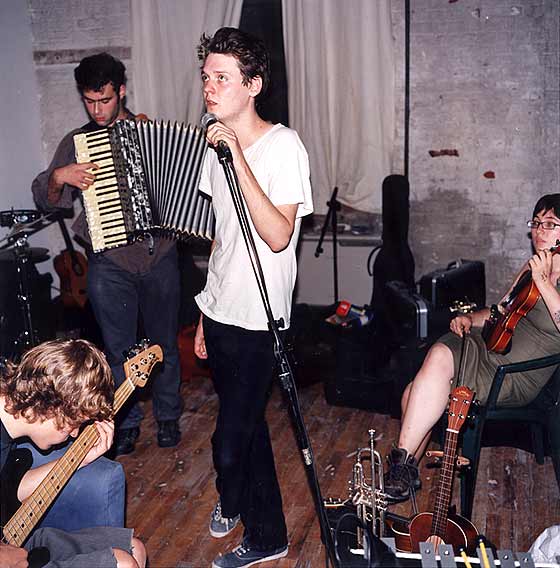
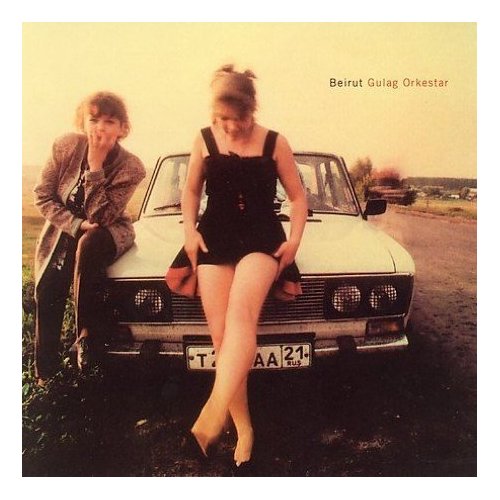
This is one way to cash in your chips at the end of a successful quiet civil war. But our globalizing economy is such that you can even profit from someone else’s civil wars. My favorite new example of such capitalization is the American alternative band Beirut, the brainchild of 22-year-old Zach Condon, a native of Santa Fe, New Mexico. Overly sensitive types might wonder how you grow up in peaceful Santa Fe and end up calling your band Beirut—but as we Americans love to say, It’s a free country.[1] (In its article on the band’s “Balkan-inspired” debut album, Gulag Orkestar, Wikipedia helpfully explains that the “Gulag was a system of Russian [corrective labor camps] in Siberia.”)
It is too much to expect that alternative radio stations would play, instead of Beirut’s fake Balkan wedding music, the 1999 lament of Masha’s spurned lover. Besides, I didn’t have the good sense to record it and release it as an album.
[1] “One of the reasons I named the band after that city was the fact that it’s seen a lot of conflict. It’s not a political position. I worried about that from the beginning. But it was such a catchy name. I mean, if things go down that are truly horrible, I’ll change it. But not now. It’s still a good analogy for my music. I haven’t been to Beirut, but I imagine it as this chic urban city surrounded by the ancient Muslim world. The place where things collide.” Rachel Syme, “Beirut: The Band,” New York, 6 August 2006.
“The Slavic peoples are like one family. I can’t bear the idea of fighting with Ukraine.”
— Man skating on Moscow’s “packed” outdoor ice rink, quoted on “PM,” BBC Radio 4, 20 December 2021
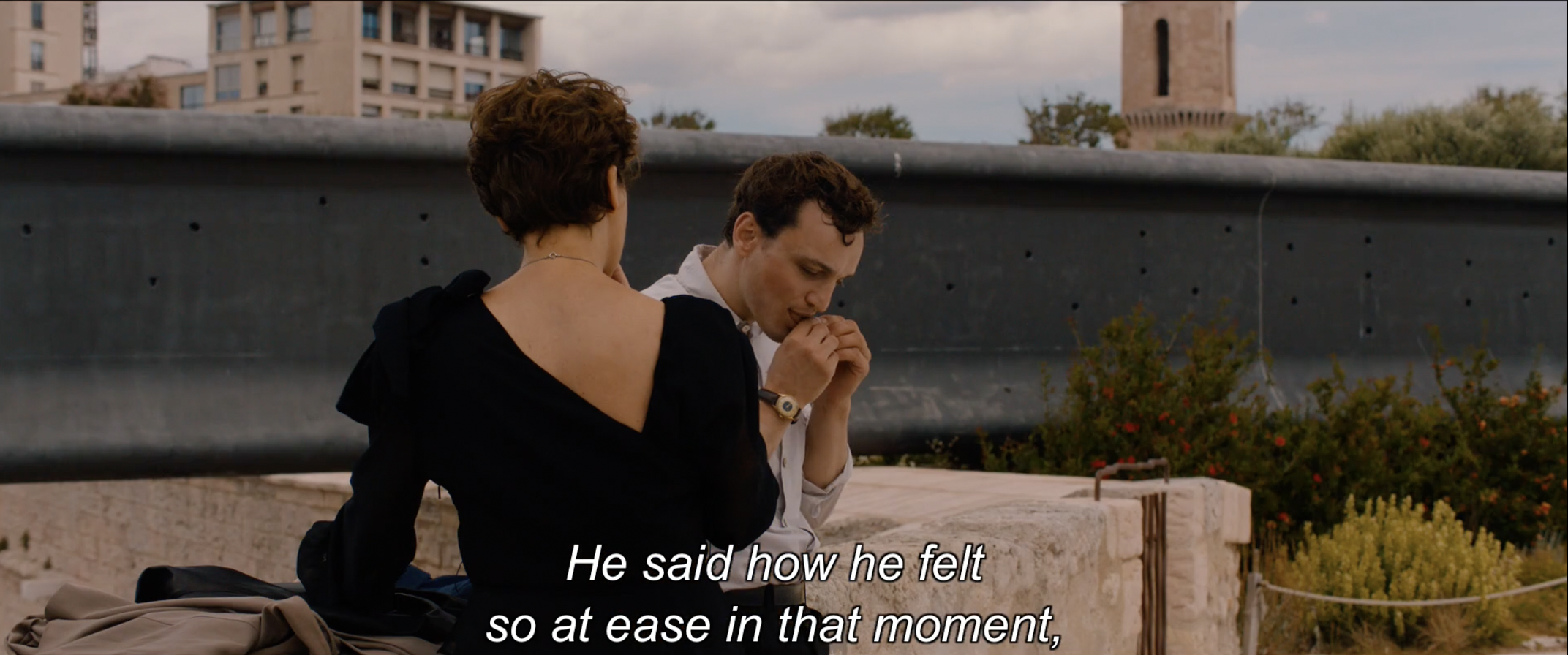
A still from the film Transit (Christian Petzold, 2018)
Beyond freedom and justice, peace on earth is the ultimate purpose of political action. Violence and aggressivity are among the instincts that our nature has equipped us with to achieve the purpose of peace via devious and costly ways. This is Kant’s thesis in Idea of a Universal History from a Cosmopolitan Point of View. I find it realistic, politically. Art is ridiculously powerless on the political level. Its domain is the purposiveness without the purpose. It places its bets on sensus communis, the faculty of agreeing by dint of feeling, as if it were an instinct, knowing well that the chances are great that it is merely an idea. My talk, I realise, is a plea for empirical pessimism combined with transcendental optimism, which is why I embraced neither the optimistic nor the pessimistic view of today’s glocal art world. I am the observer who reflects on the situation. But I am a militant when I claim that there is a difference between the expanding glocal communities involved by the various art biennials and the singuniversal community demanded by the aesthetic judgement when it is uttered as ‘this is art.’ The latter community is humanity itself, all of us. — Thierry de Duve, “The Glocal and the Singuniversal: Reflections on Art and Culture in the Global World,” Third Text, vol. 21, no. 6 (2007), pp. 687–88
_________
On August 2, 2013, Russian Paratroopers Day, Kirill Kalugin, a Petersburg university student, took to the city’s Palace Square alone to protest the country’s new anti-gay laws. He was immediately set upon by reveling paratroopers (or as he himself suggested, by national activists masquerading as paratroopers), an incident captured on video by Petersburg news website Bumaga.
Kalugin returned to Palace Square this year on August 2 to protest Russia’s increasing militarism and imperialist misadventures in Ukraine. He was roughly detained by police some fifteen seconds after attempting to unfurl a rainbow flag emblazoned with the slogan, “My freedom defends yours.” Despite the fact that Kalugin held his anniversary protest right next to Manifesta 10’s provocative metallic Xmas tree, his protest has so far gone unremarked by progressive humanity (i.e., the international contemporary arts community) and the foreign press.
The interview below was published in August 2013 on the local Petersburg news web site Rosbalt three weeks after Kalugin’s first protest on Palace Square. Unfortunately, it hasn’t lost any of its timeliness, especially given the total absence of an anti-war movement in Russia and the singularity of Kalugin’s bravery and insight. — “Kirill Kalugin: ‘My Freedom Defends Yours,'” The Russian Reader, 5 August 2014
Over time, it has become clearer why the Putin regime started rattling military hardware near the borders with Ukraine. It’s not only about the fear of “NATO expansion” and the struggle for a sphere of imperial influence, as it had seemed at first.
Putin’s “draft treaty” with the collective west is a more profound, existential document, reflecting the regime’s fear of the logic of history, which naturally pushes Russia along the path of European progress and demolition of the dictatorship.
A desperate Putin has offered the west something in the spirit of Fukuyama that would secure the “end of history” and guarantee that the “political system” of Putin’s Russia would remain unchanged. The belief in the power of a document that would stop historical progress is somehow touching in its naivety.
Fully in keeping with Saltykov-Shchedrin’s imaginary town of Glupov, where “history has stopped flowing,” the Putin regime does not propose ruling out “NATO expansion” as such. Rather, it dreams of consolidating the rejection of support for “color revolutions” in Russia, as if revolutions were fueled not by the system’s rottenness, but by the insidious west.
That is the funniest thing about the draft “treaty.” It transpires that it has nothing at all to do with NATO and imperial ambitions in the spirit of a “Yalta 2.” It has everything to do with humdrum fear for the internal stability of Putin’s political system. The deal proposed to the west is not fueled by imperial ambitions (although lip service is paid to them in the treaty, it is unlikely that its authors themselves believe that Ukraine can be returned to Russia’s imperial orbit), but by fear of impending revolutionary change.
It is especially comical that a whole paragraph of the preamble is dedicated personally to Alexei Navalny, his regional organizations, and the Anti-Corruption Foundation (FBK).
The Putin system’s fear of “individuals,” which has even seeped into the text of an international document, is impressive in its scale.
All is in order with the demagoguery here too. It is a con man’s clever trick to tear up the Russian Constitution through a “plebiscite,” change the political system, and then demand respect from the west for it. (Redraw the borders, grab Crimea, and then yell about the “principle of non-interference.”)
We are going back to the bad old Soviet Union in terms of international agreements. What kind of language is this? “Changing the political system”: as if we were not talking about democracy (something shared by Russia and the west), but about the struggle between two political economic formations — between capitalism and socialism.
It is no accident that the “Union of Soviet Socialist Republics” has wormed its way into the “treaty” in homage to the glorious Soviet past, for which the Russian kleptocracy yearns. In the 1970s, however, the Kremlin demanded that the west keep its hands off its socialist ideology. Today, the demand is different: “Keep your hands off our kleptocracy!”
The Kremlin stubbornly reproduces the worldview which collapsed along with the USSR a long time ago. Putin has not learned any lessons from history, however.
In fact, the whole draft “treaty” with the west is a desperate call to stop history, freezing Putinism’s collapse due to its internal depravity. It is an attempt to pretend that the reason for the failures of the “social system” is the west’s influence and support of Navalny. It was the same way in the USSR, which sought the cause of its own decrepitude in dissidents, “anti-Soviet agitation,” and “western propaganda.” But the cause was much simpler. Everyone was fed up with the Soviet regime: that was why it collapsed.
The “elites” of the “Pu dynasty” have learned nothing. They want everything to be as it was under “granddad” (Leonid Brezhnev), offering the west an immoral and anti-historical picture of the world in which there is no place for living history with its logic of progress, only for the “insidious influence” of secret services and foreign agents.
They have “Chekism on the brain,” as has been said. A fatal case of it.
But there is an upside to this ridiculous document and its proposal to put the “end of history” down on paper à la Ugryum-Burcheev. It gives us a glimpse of the finale awaiting a “political system” which has lost touch with reality and lives in a dream world.
If you don’t understand where history is headed, have a mystical dread of progress, and are nostalgic for the bad old Soviet Union, then ultimately you’ll get another “geopolitical catastrophe,” one for which you will be to blame, not Navalny or the United States.
Strange as it may sound, Putin wants the United States to subscribe to his version of history. This is not a dispute over spheres of influence, but over what kind of world we live in. The madman wants the doctors to recognize his hallucinations as the norm. (The doctors don’t know what to do with the patient yet: he is not alone in the ward and has a knife in his pocket.)
But regardless of how things turn out for the “crazy old man,” kudos to Alexei Navalny. It is not given to just anyone to be identified in Russian Foreign Ministry documents as the principal threat to Russia and its “political system.”
Thanks to Alexander Skobov for the heads-up. Translated by the Russian Reader
Major props to Sergei Parkhomenko for bothering to read the preamble to the Kremlin’s proposed treaty with the United States. As he quite rightly pointed out, no one reads the preamble, because the preamble is usually just high-minded blah-blah-blah. You have to look at the specific points and clauses in the main text.
In this case, it’s the other way around. All the points about the non-deployment of missiles are the blah-blah-blah, the bow on the behemoth, the pretty packaging. It is the preamble that contains the point of the whole undertaking. It expresses the essence of the “brave new world” for which the Chief Salamander in the Kremlin is waging his war on humanity. And it is no Yalta 2.0 at all. It is completely different.
Yalta has been unfairly slandered by modern journalists. There is not a word in any official document issued by the Yalta and Potsdam Conferences about carving up the world into spheres of influence. All the official communiques are strictly in the spirit of Woodrow Wilson’s global liberal project.
Yalta did have a “false bottom,” of course. Behind the scenes, the leading powers did actually try to negotiate spheres of influence. And the Allies did recognize that the new regimes of Eastern Europe should be “friendly” towards the USSR. But no one said that they had to be totalitarian.
Apparently, the Allies imagined the future of Eastern Europe as something on the order of post-war Finland, a country that was quite “friendly” to the USSR, but retained a liberal-democratic political system. Were they naive? Or did they cynically and hypocritically pretend to believe Stalin? In any case, in 1947 they had every reason to conclude that Stalin had hoodwinked them. That is when the Cold War began. Over its entire duration, the west declared support for the struggle for freedom by all peoples who found themselves under totalitarian rule. This support remained firm during periods of extreme tension, and during periods of “detente.”
The treaty partners then adopted a number of measures against political emigration as “gestures of goodwill.” Hitler was not particularly zealous in this respect, by the way. He limited himself to a rather formal ban on the activities of the White emigre organization NTS — although the Gestapo did not particularly bother preventing the members of this organization from gathering “for a cup of tea.” Stalin went much further. He handed over to Hitler more than 200 German communists who were fleeing the Nazi regime in the USSR. He set a good example of genuine partnership.
The Hitlerite in the Kremlin dreams of a world in which the United States forces its European allies to stop the activities of political emigres from the Russian Federation and its satellites, to ban their conferences and “agitation,” and of course, to extradite them to Moscow at the first request. Putin demands that the United States become a Third Reich. Putin seeks to turn the whole world into a collection of Third Reichs.
* * *
And here’s another thing. The diplomatic gangster Ryabkov has just said that Moscow would negotiate a treaty about NATO solely with the United States. Georgy Kunadze (a former deputy foreign minister), who has always been very restrained in his statements, has called the Kremlin’s demands nonsense.
A question naturally arises. Does Putin’s gang hope to make the Americans knuckle under? Or is it just trolling them, as Alexei Venediktov has argued? If it is trolling them, then why? Why is it itching so insistently for a fight — for the flat refusal that Biden’s team is trying hard to avoid and therefore stupidly stalling for time?
I have my own guess. Apparently, the Kremlin has decided to curtail ties with the countries of the Free World — not only economic ties, but also all others, including informational ties. That is, it has charted a course that involves implementing all manner of Fortress Russia-type projects and transforming Russia into North Korea. So far, the comparisons with North Korea have seemed like an exaggeration. But they don’t seem so farfetched anymore.
The changes to the whole current lifestyle [in Russia] would be profound and painful. Of course, a rather weighty reason is needed for such drastic changes, so the Kremlin is looking for such an excuse. Perhaps its scenario also includes a “little” war in Ukraine. Meaning that the Kremlin imagines it would be a brief war — that it would not lead to a global military clash with NATO, but would force the western countries to cut economic ties with Russia. When that happened we could say that they were the first to destroy all ties —and we could shut down the internet.
The west is trying to avoid this option in every possible way because it is also afraid — not so much of a major war, as of being forced to finally split up the common international space. I will try to write in the near future about why it values this increasingly illusory “common space” so much.
Yesterday, President Putin, driven mainly by the curiosity of journalists, publicly tried to solve problems. There are a lot of problems, he noted: they are literally “raining down.” He named only two: the decline in incomes among the population and the population’s rapid decline (the “demographic” problem). He promised to solve the first one non-linearly, i.e., not by growing incomes per se, but through economic growth. As you know, the Russian economy grows rarely and slowly, but when it does grow (which has happened over the past ten years), then for some reason this has no effect on the incomes of the population. However, it depends on whom we understand by “the population.” There is definitely a population of several thousand people constantly getting richer, although this population is more often outside of Russia than inside it. Putin did not elucidate his methods for solving the second problem, but he is certain that they will also be nonlinear. There are no other problems in Russia, however. There is no problem with political prisoners: they are all criminals. I would probably doubt that. But I totally agree with Putin that there is no problem with democracy in Russia. If there is no democracy, there is no problem with it. Verily, “if you don’t have an aunt, then you won’t lose her.”
Translated by the Russian Reader
President Vladimir Putin said Wednesday that Russia — one of the world’s biggest producers of oil and gas — is aiming for carbon neutrality by 2060.
“Russia in practice will strive for carbon neutrality of its economy,” he said at an energy forum in Moscow.
“And we set a benchmark for this — no later than 2060.”
Russia’s natural population underwent its largest peacetime decline in recorded history over the last 12 months, an analysis of official government statistics has shown.
Russia’s natural population — a figure which counts registered deaths and births, excluding the effects of migration — declined by 997,000 between October 2020 and September 2021, demographer Alexei Raksha calculated.
The stark drop comes as Russia, which has one of the world’s highest Covid-19 death tolls, continues to see record numbers of lives lost to the pandemic. The country has recorded at least 660,000 excess deaths since the start of the pandemic.
Russia’s total population of around 145 million is lower than it was when President Vladimir Putin came to power in 2000 despite Moscow’s annexation of Crimea in 2014 which added 2 million to Russia’s official population statistics.
Only 12 World Leaders Greet Putin on His 69th Birthday. In another sign of Putin’s isolation, only 12 world leaders sent him greetings on his birthday this year. None at all came from the US or from EU countries (business-gazeta.ru/article/524870).
Sergei Usoltsev, a resident of Sverdlovsk Region, was fined 60 thousand rubles [approx. 716 euros] for “insulting the authorities” (punishable under Article 20.1.3 of the Administrative Offenses Code).
The Sverdlovsk Regional Court rejected the defense’s appeal against the decision of the Shalya City Court, which in June ordered Usoltsev to pay 60 thousand rubles for a comment he made on the social network VKontakte. According to the prosecution, the comment insulted the authorities, specifically, Vladimir Putin and Valentina Tereshkova.
Activists have launched a fundraiser for Usoltsev, who lives in the village of Gora, 40 kilometers from the town of Shalya, Sverdlovsk Region. Recently, Usoltsev’s seriously ill wife, whom he was caring for, died.
The Ministry of Social Policy was paying Usoltsev a social pension of 1,380 rubles [approx. 16 euros] a month as a caregiver, but now he no longer has this income either. Usoltsev will soon be sixty years old, but, according to the new laws, he is eligible to retire only in 2024. He has also been unable to get a job: he is near retirement age, and there is not enough work even for young people in his village.
If Usoltsev does not pay the fine within 60 days, either the fine will be doubled or he will be placed under administrative arrest.
Yes, I know that Boris Kagarlitsky is completely beyond the pale after his vigorous defense of the Kremlin’s misadventures in Ukraine. But as my friend Vlad Tupikin has reminded me, solidarity is not about supporting our close friends and people whose views are identical to our own. And things in Russia are so out of control right now that even Kagarlitsky deserves solidarity and support. Photo courtesy of The Nation. ||| TRR
We usually do not repost entire texts by third-party authors produced for other platforms and other channels. But now a new time has arrived, a time for solidarity, so such content will naturally appear here.
We begin with a text by the political scientist Boris Kagarlitsky, who was sentenced yesterday to ten days in jail posting on social media about the protests by [Valery] Rashkin and the Communist Party.
So, we yield the floor to Kagarlitsky. This was the last text he published before his arrest.
The actions of the Russian authorities in the wake of the elections appear, at first glance, clearly excessive vis-a-vis the political circumstances. In fact, almost everyone who was promised a seat was elected to the State Duma, and the opposition was routed, and even the internet is largely under control, but for some reason they still have been carrying out lawless raids on Communist Party lawyers, chasing down individual activists, expanding the lists of “undesirable organizations,” and opening new criminal cases against those who are already in prison or have fled abroad. They are behaving as if everything is about to collapse. Why? What is the source of their hysteria?
Without reliable information about what is happening inside the Kremlin, we can only draw some conclusions based on history and psychology. It seems that the reason for the regime’s nervousness is the regime itself, its own internal and insoluble contradictions.
Political scientists have been contemplating the prospects of Putin’s so-called transit for more than a year. Will Putin appoint an heir? Who will it be? The ruler’s health clearly leaves much to be desired, and the question of how long he will be able to exercise his powers is probably a matter of concern not only for pundits. Naturally, preparations for the transit have begun, and Putin himself must be involved in them in one way or another. But even if the president promises his entourage that he will take care of the future, he knows for certain that as soon as a successor is named, the current ruler’s [sic] grip on power will be shaken. Therefore, the transit will be readied, but it will not take place. As long as Putin is alive, he will not permit any final decisions to be made. If something happens to him, it will be too late to make decisions, and the process will develop spontaneously and catastrophically.
It is no surprise that this state of affairs has generated the most severe neurosis among people in and around the Kremlin. The transit has begun, but it does not end. Vital decisions are discussed and readied, but not made. The cruelest intrigues and conspiracies are hatched within the ruler’s entourage, but nothing comes of them. Threatening, unbearable uncertainty becomes an all-consuming element that ravages the mind. Everyone is afraid of everyone else; no one trusts anyone. Exactly as Freud would have it, fears and complexes are displaced. The form of this displacement is a crackdown against members of the opposition or those who have been labeled members of the opposition.
Irrational actions generate unforeseen, but absolutely predictable consequences. Loyal functionaries from the leadership of the Communist Party of the Russian Federation (KPRF) are being pushed into the radical opposition’s vacated niche, which is just as psychologically and emotionally unbearable for them as the endless transit, going nowhere, is for government officials. Maxim Kalashnikov has compared this to a situation in which a very weak radio receives a signal too strong for it, which totally fries its circuits. I think this analogy describes quite accurately what has been happening among Communist Party executives and staffers.
Political rationality requires the Kremlin to stop escalating the crackdown, take a breath and at least weigh the consequences of its decisions. But this will not happen, because the rationale for the regime’s behavior has nothing to do with managing the political process. It is no longer political scientists, but psychiatrists who should analyze the actions of the ruling circles.
Translated by the Russian Reader
_____________
A court in Moscow has sentenced Marxist theoretician and sociologist Boris Kagarlitsky to 10 days in jail for sharing content on social media promoting unpermitted protests by the Communist Party (KPRF) against the results of Russia’s recent parliamentary elections. Police arrested Kagarlitsky on Wednesday on his way to the Moscow School of Social and Economic Sciences, where he is a lecturer.
Boris Kagarlitsky is also the director of the Institute of Globalization and Social Movements, which Russia’s Justice Ministry designated as a “foreign agent” in 2018.
KPRF has refused to recognize the official results of electronic voting in Moscow, where online ballots propelled several candidates backed by the Mayor’s Office to victories over oppositionists. The Communist Party staged small protests on September 20 and 25, prompting a sweeping police crackdown in the days that followed.