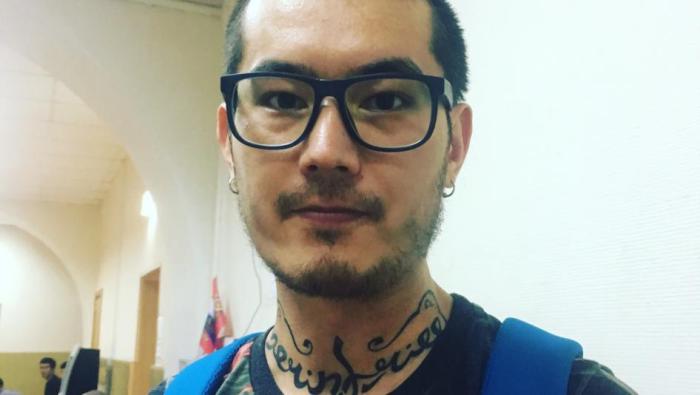
Ali Feruz, a gay Moscow-based journalist threatened with deportation to Uzbekistan, where he faces possible torture and death. Photo courtesy of Human Rights Watch
Memes of Solidarity Silly and Serious Acts of Civic Solidarity Will Be Needed for a Long Time to Come
Maria Eismont Vedomosti
January 25, 2018
The Satisfaction Challenge, a internet flash mob in support of cadets at the Ulyanovsk Civil Aviation Institute, who filmed and uploaded a parody of Benny Benassi’s music video “Satisfaction,” has entered its second week. The institute’s administrators accused the cadets, who are shown dancing in briefs and pilot caps, of “mocking the sacred” and “humiliating the industry,” declaring they had no place in aviation.
Since then, scores of videos supporting the cadets have been posted daily. The latest was filmed by the Novosibirsk hockey club Sibir. Before an auditorium packed to the gills with fans, the club’s mascot, Snowman, dances to “Satisfaction” along with security guards and cleaners. Before Snowman, there were videos by female pensioners in a Petersburg communal flat, costumed theater students in the Russian Far East, horsemen, swimmers, cadets at the Academy of the Emergency Situations Ministry, construction workers, doctors, students at an agriculture college, schoolchildren, housewives, and the presenters of the TV show Evening Urgant. Consequently, a talk show on the TV channel Rossiya 1 and US magazine The New Yorker have identified the Satisfaction Challenge flash mob as a significant event in Russia public life.
“Welders from the Urals Filmed a Satisfaction Challenge Video.” Published January 24, 2018
Obviously, the flash mob has touched some important strings. It is not so much a matter of discussing the boundaries of free self-expression, the clash of different views on what is permitted and appropriate, which, judging by the varying degrees of frankness on the part of the flash mobbers, are also quite different. The key here is solidarity, which has proven the best weapon against bureaucratic stupidity and official hypocrisy. Solidarity with the persecuted is a vital tool for upholding freedom and withstanding crackdowns, for maintaining and reinforcing social connections in an atomized society.
The flash mob in support of the Ulyanovsk cadets is probably the most vivid and funny solidarity campaign in today’s Russia, but it is hardly the only or most important solidarity campaign. The cadets were threatened with explusion, but Novaya Gazeta journalist Hudoberdi Nurmatov aka Ali Feruz, who has already spent five months in a temporary detention center for foreigners awaiting a review of his appeal to the European Court of Human Rights, is threatened with torture and even death in connection with false charges of cooperating with terrorists if he is deported to Uzbekistan, say his relatives, colleagues, and human rights activists.
The solidarity campaign in support of Ali Feruz kicked off this past August, when the Moscow City Court decided to deport him. His colleagues rightly believe that the longer they bring up the case and the more loudly they discuss it, the better are the chances for a positive outcome. So, last week, Theater.doc held another reading of Feruz’s diary, written in the temporary detention center for foreigners. The first reading, entitled “My Friend Ali Feruz,” was held as a sign of solidarity by journalists in late October. During last week’s antifacist march in memory of attorney Stanislav Markelov and journalist Anastasia Baburova, slain by neo-Nazis nine years ago in downtown Moscow, some of the marchers bore placards demanding Ali Feruz’s release. On Wednesday came the news the Russian Supreme Court had overturned the Moscow City Court’s decision to deport Feruz to Uzbekistan and remanded the matter for a new hearing.
The solidarity campaign in support of Karelian historian Yuri Dmitriev, which has ranged from petitions and videos in his defense to organized trips to his trial in Petrozavodsk, has been underway since society learned of his arrest on charges of taking pornographic photographs, charges that carry no weight with anyone who knows him well. If it had not been for the public outcry, there might not have been a second forensic examination, which ruled the photographs in question were not pornographic, nor would there have been a court decision to release Dmitriev from police custody, where he has spent the last year, on his own recognizance.
Currently, Oyub Titiev, head of the Grozny branch of Memorial, is in bad need of solidarity and support. Arrested on drugs possession charges, Titiev managed to warn society any confession he made would only mean he had been tortured into giving it.
“We regard Oyub Titiev’s circumstances as extremely dangerous,” the board of the International Memorial Society said in an appeal to Russian society and the international community. “The only thing we can do under the circumstances is ask Russian society and the international community to monitor Titiev’s case with the same acute interest as has occured in the Dmitriev case.”
Solidarity is one of the few effective tools left in Russian civil society’s arsenal for confronting official coercion. We will have recourse to it again and again for a long time to come. It’s a good thing that sometimes, as in the case of the cadets, it’s also fun.
A couple of days ago I met Dima Borisov’s mother. Dima is the young man facing trumped-up charges for, allegedly, kicking a policeman. Dima now faces up to five years in prison. I don’t want to be a pessimist, but it’s highly likely that he will be sent down and sent down for a long time. But the topic of political prisoners has, apparently, has ceased to interest the opposition crowd.
Realizing that people are unable to free an innocent person on their own or in small groups, I asked Dima’s mom (Irina Andriyevskaya) what could be done to alleviate his plight. She said that people could repost stories about the case. If they couldn’t attend his court hearings, they could tell other people about Dima.
Guys, let’s just support Dima. Let’s show that we know about his misfortune and are not ignoring it. It’s not likely to change anything, but at least Dima and his mom, who is basically fighting this fight alone and certainly has it rougher than we do, will feel that they are not alone, that they have not been abandoned. Especially since nowadays absolutely anyone in this country can become a political prisoner.
I’m not making any demands or blaming anyone. I’m just asking decently.
Dmitry Borisov in court on October 20, 2017
Moscow City Court Denies Borisov’s Request to Be Released from Police Custody
Tivur Shaginurov Kasparov.ru
October 2, 2017
Moscow City Court has refused to release Dmitry Borisov, an activist with the 14% Movement. As our correspondent reports, the court heeded the arguments of police investigators, who claimed that Borisov was a flight risk or could influence the investigation.
A reinforced brigade of court bailiffs and two plainclothes policemen were present at Borisov’s appeals hearing. Ultimately, the court extended his term of detention for a month.
Investigators argue that Borisov’s guilt is confirmed by a videotape they have in evidence, adding that the accused has not admitted his guilt and, allegedly, resisted arrest. The accused claims he was resisting unknown men in uniform.
[In the videotape, inserted below, it is clear the police officers who detained Borisov were not wearing badges, as requiredd by the Russian law on police conduct—TRR.]
In turn, the defense argue Borisov is not a flight risk since both his foreign travel and domestic internal passports have been confiscated, and he is not a national of any other country. Borisov’s movements could be tracked with a special bracelet issued by the Federal Penitentiary Service. Nor, according to the defense, could Borisov influence witnesses, especially as the alleged victim and witnesses are police officers.
The defense likewise denied that Borisov had a prior conviction. Borisov explained himself that criminal charges had been filed against him due to a conflict with a drunken man who had insulted his mother. The defendant’s mother, who was present in the courtroom, confirmed her son’s story.
After a heated argument, Borisov’s relatives were removed from the courtroom along with a reporter from the publication Sota [?] who photographed the incident.
They were charged with administrative violations. We should note that the reporter was accredited and had the court’s permission to take pictures. However, court bailiffs argued their actions were justified because she had taken pictures of their faces.
Boris’s attorney noted that the requirements for keeping a defendant or suspect in police custody, as stipulated in Article 97 of the Criminal Procedural Code, were not contained in the prosecution’s demand that Borisov be kept under arrest.
In the video that police investigators cite as evidence of Borisov’s guilt, it is not apparent when and how Borisov kicks a police officer.
Borisov’s supporters plan to organize a flashmob during which they will submit appeals to the Prosecutor General, asking him not to approve the charges against Borisov.
Dmitry Borisov has been accused of twice kicking a police officer in the head when police dispersed a peaceful grassroots protest on March 26, 2017, in Moscow.
Translated by the Russian Reader. Thanks to Comrade NE for the heads-up. Photos courtesy of Kasparov.ru and the 14% Movement.
Court Extends Yuri Dmitriev’s Arrest to Late January Chernika
October 12, 2017
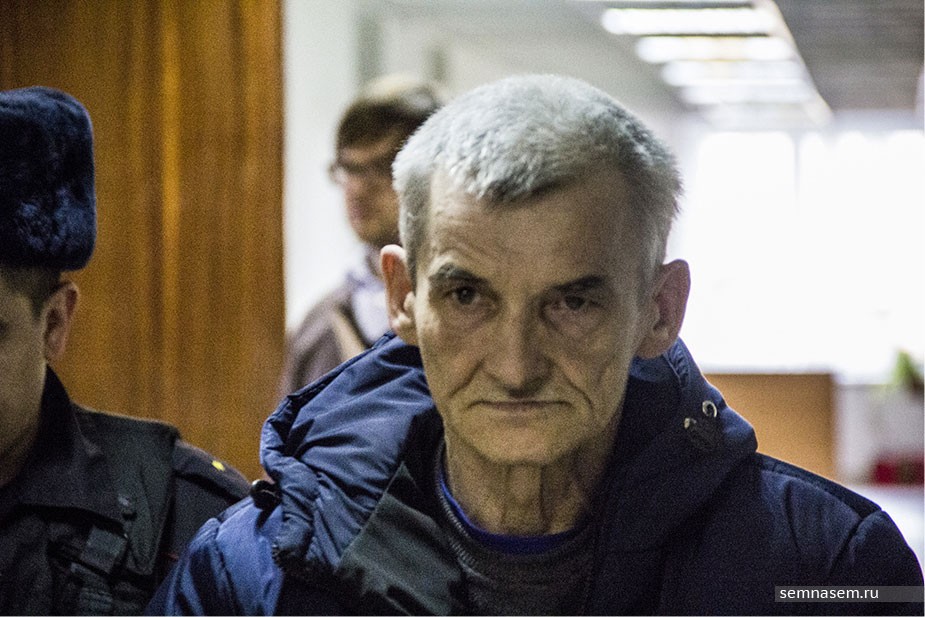
Yuri Dmitriev, head of the Karelian branch of Memorial, will remain in police custody until next year. Judge Marina Nosova made this ruling on October 11 as part of the criminal case against the famous historian and researcher of the Stalinist Terror, who has been charged with producing pornography featuring his foster daughter. The prosecution had petitioned the court to extend Dmitriev’s arrest for three months. The defense, however, plans to appeal Judge Nosova’s ruling in the Karelia Supreme Court.
Judge Nosova also rejected an appeal made by Dmitriev’s defense counsel to disqualify the forensic experts who have been evaluating the photographs of Dmitriev’s foster daughter, which are the main evidence in the criminal case. As Chernikareported earlier, the previous findings, reached by analysts from the Center for Sociocultural Expertise, who concluded the snapshots were pornographic, were smashed to smithereens by Dr. Lev Shcheglov, president of the National Institute of Sexology, who drew the attention of both the court and the public to the fact that the forensic experts in the Dmitriev case were not professionals, but an art historian, a maths teacher, and a pediatrician. Consequently, the court ordered a new forensic examination from the so-called Federal Department of Independent Forensic Expertise, based in Petersburg. It has transpired, however, that this “department” is an ordinary firm, founded with the minimal amount of charter capital.
Moreover, Novaya Gazeta v Sankt-Peterburge has claimed the pompously named firm is registered in a flat on Srednayaya Podyacheskaya Street in Petersburg. The firm was recommended to the court by Petrozavodsk prosecutor Yelena Askerova.
Yuri Dmitriev, head of the Karelian branch of Memorial, was jailed late last year. He has pleaded not guilty, calling the case against him a “set-up.”
According to Dmitriev’s defense attorney Viktor Anufriev, the photographs found on the historian’s computer, which are essentially the main evidence against him, are not pornographic, but a record of the child’s health. Anufriev also claims that shortly before Dmitriev’s arrest someone broke into his flat and turned on his computer. Subsequently, an anonymous complaint against Dmitriev was filed with the prosecutor’s office, and Dmitriev was detained soon thereafter.
Many famous politicians, writers, actors, filmmakers, and musicians have voiced their support for Dmitriev, including Lyudmila Ulitskaya, Vladimir Voinovich, Dmitry Bykov, Andrei Zvyagintsev, Venyamin Smekhov, and Boris Grebenshchikov.
Translated by the Russian Reader. Photo courtesy of 7X7/Barents Observer.
What follows is the speech Malobrodsky made in Moscow City Court on September 6, 2017. Everyone who considers himself or herself a decent person in this fucked-up country, which destroys the best people and supports thieves and scoundrels, should read this.
“Today is the seventh court hearing in which I have taken part. Your honor, honor has a place in court. All parties to the proceedings should be guided by the law. So the police investigators should follow these rules. How long can they make do with false accusations and false facts? The team of investigators has been mocking the law. They have not carried out any investigative actions. They have only been busy with lies and intimidation. I refuse to take part in any investigative actions in handcuffs. I have a right to be treated decently and presumed innocent. When the investigators suggest I ‘confess to something or other,’ I refuse to reply. Except for the ridiculous story about [Gogol Center’s production of] Midsummer Night’s Dream, I have not been suspected of anything. I have been denied visits from and communication with my wife; my property has been arrested, our things and dishes; my and my wife’s work and home computers have been confiscated. What is this, if not coercion? I am ready to cooperate with the investigators and answer their questions, but don’t force me to bear false witness against my colleagues.”
Over thirty people agreed to stand surety for Alexei Malobrodsky, including Chulpan Khamatova, Lev Rubinstein, Vladimir Mirzoyev, Vasily Sigarev, Andrei Moguchy, Marina Davydova, Elena Koreneva, Ksenia Larina, and Yevgenia Shermeneva. But he was left behind bars.
I ask you to repost this text and Alexei’s speech so that as many people as possible find about Alexei Malobrodsky, who has been behind bars since June 21, although no charges have been filed against him.
Thanks to Comrade AK for the heads-up. Translated by the Russian Reader
“The Regime Is Making New Enemies with These Arrests”
Irina Tumakova Fontanka.ru
June 22, 2017
The arrestees who served ten days in jail after Russia Day shared their plans for the future. They once again included the Field of Mars, and Navalny, and the special detention center on Zakharyevskaya Street they had just left.
Ksenia Morozova, holding a placard that reads, “Freedom is within.” Photo courtesy of Sergei Mikhailechenko/Fontanka.ru
A new group of prisoners, who had finished serving the jail sentences they were given after Russia Day, was released on Thursday, June 22, from the Interior Ministry’s special detention center on Zakharyevskaya Street in central Petersburg. They had been sentenced to ten days in police custody, meaning they had committed violations of “moderate severity.” The die-hard violators, who were sentenced to fifteen days in jail, will not be released until next week. The least malicious violators, who had already been released, greeted their recent cellmates with soda pop, flowers, and rounds of applause. The former prisoners were cheerful and praised the prison food. They came out of jail with the same clear conscience they had when they left the Field of Mars in paddy wagons.
The Interior Ministry’s special detention center on Zakharyevskaya is a historical landmark. Vladimir Ulyanov (Lenin) and Felix Dzerzhinsky had done time there prior to 1917. In June 2017, people who attended an anti-corruption rally on Russian Independence Day were jailed there.
Around 10,000 people had gone to the Field of Mars on the national holiday. Some people celebrated, while others were arrested. Nearly six hundred hundred left the celebrations in paddy wagons, headed to police precincts round the city. From June 13 on, the city’s district courts worked like a conveyor belt for meting out punishment. The arrestees were sentenced for going to the anti-corruption rally and for failing to obey police orders to leave the rally, i.e., they had violated two articles in the Administrative Offenses Code. The majority of those detained at the event got off with 10,500-ruble fines [approx. 158 euros], but a hundred and fifty people were sent to jail, sentenced to terms of three to fifteen days.
The release of the prisoners whose time in jail ended on June 22 was due to start at two o’clock in the afternoon, when the lunch break ends on Zakharyevskaya. At the very same time, as recorded in their arrest records, exactly 240 hours had passed since the first of the “ten-dayers” had been detained. In fact, they had been detained and hauled to the courts wholesale. But the law enforcement machine was carefully counting off the minutes. One prisoner could be released at 2:30 p.m., but another had to be released at 4:00 p.m.
The Support Group
At a quarter to two, people holding plastic bags form a semi-circle at the exit from the detention center. Two vehicles are cruising nearby. One, emblazoned with Open Russia’s logo, is ready to give the released detainees a lift to the courts, where lawyers are waiting to appeal their fines. The other, emblazoned with the police’s logo, is also ready to take them somewhere.
“I’m going to detain you for jaywalking,” a policeman standing on the sidewalk warns me.
“Please arrest me for jaywalking,” I smile back at him, standing on the same sidewalk. The policeman goes back to his car.
The bags of the people waiting outside the detention center are stuffed with bottles of soda pop. There is also a bunch of pink chrysanthemums. Later, the chrysanthemums will be divided and given to the liberated comrades. Everybody knows who nice it is when people are waiting for you with chrysanthemums when you get out of jail. And you are also really thirsty when you get out. The greeters know all of this from personal experience.
“I was in for five days and got out last week,” says a man standing near the gates of the detention center. “And today the guy I shared a cell with is getting out.”
The man’s name is Oleg Maksakov. He is forty-three. He doesn’t know why he was sentenced to five days, while his young cellmate got ten days. They didn’t know each other before they were jailed, but they made friends in the cell.
“The propaganda has no effect on the people aged eighteen to twenty-five who came to the Field of Mars,” Maksakov says of his “accomplice.” “What matters even more is that they’re not afraid. They’re not downtrodden. They have no experience of the Soviet repression machine. I mean, now they are finding out, of course. But it doesn’t scare them. It only makes them mad.”
Another person who celebrated Russia Day at the Field of Mars approaches us. In terms of age, Pavel Ilatovsky is one of the “non-downtrodden.” You could say he lucked out. He got off with a 10,500-ruble fine and spent two days at police precinct while he waited for his court hearing.
“Yeah, I was lucky,” Ilatovsky agrees. “I had my hearing at the Krasnoye Selo District Court, and the judges were okay. They said right off the bat there was no room in the cells, and so they were going fine us.”
The figures assembled by volunteers back up what Ilatovsky says. The Krasnoye Selo District Court heard 59 cases, and no one was sentenced to time in jail. The Kalinin District Court proved to be the most cruel and greediest. Among the 44 cases it heard, around three fourths (the volunteers don’t know for certain) resulted in fines alone, while the rest resulted in fines and jail time. The same court handed down the harshest sentence: fifteen days in jail plus a 20,000-ruble fine.
Ilatovsky volunteers with the detainees assistance group. The group brought care packages to Zakharyevskaya all ten days and raised money to pay the fines. And now they have brought a vehicle, soda pop, and chrysanthemums. This system of assistance improves with every series of arrests. It has started working like a well-oiled machine.
“There are lots of us,” says Ilatovsky. “And we know that if someone wasn’t detained this time round, he or she could be detained next time. When I was at the police precinct, they brought us water and helped out with food. They even brought us shawarmas.”
We are chatting next to the prison’s entrance. Everyone’s mood is upbeat, even joyful. Finally, the iron door opens and a young man exits holding his passport. He is carrying a backpack, and a container of liquid soap pokes out from the pocket. A yellow-and-blue ribbon is pinned to his jacket.
“Oh!” says Oleg Maksakov, rushing towards him. “I spent five days in a cell with that guy!”
“I Hung Out with Interesting People”
Denis Uvarov went to the Field of Mars with a purpose. He wasn’t celebrating the holiday, but combating corruption.
“This dude was walking around with a bullhorn and ordering everyone to disperse, but no one dispersed. Therefore, they did not obey [the police’s orders],” he says by way of explaining why he was convicted of disobeying the police.
Besides, Uvarov chanted slogans offensive to our president, and what is worse, waved the flag of Ukraine, with which he sympathizes. He caught flak for it: ten days in the slammer. He admits it could have been worse. He twice received care packages of food from complete strangers, and that amazed him most of all.
“Of course, we didn’t really need anything in the cell, but it’s nice knowing that you’re in there, and somebody cares,” says Uvarov.
In the two-person cells in which the June 12 arrestees were held, they really did not need anything. Uvarov compared it to a hospital, adding, only, that he couldn’t go into the hallway. But they were taken out for walks every day.
“The biggest problem was not being able to wash up,” he says. “They let us take a shower only once over the ten days. Well and, excuse me for mentioning it, but going to the toilet when you’re not alone in the cell, is, you know . . . Otherwise, it was okay. There was nothing to do, so I read a pile of books, slept in, studied English a bit, and hung out with interesting people.”
The interesting people were other prisoners sentenced to jail for June 12. Uvarov says it was the first protest many of them had attended. Some of them ended up there by accident and were not interested in politics.
“Now they say they’re going to be more active and angrier,” Uvarov continues. “So the regime is deliberately making new enemies with these arrests, as it were. You can do fifteen days in jail, after all. As long as there is a point.”
“What about twenty?” I ask. “That’s nearly a month.”
“Twenty?” says the young man thoughtfully. “Yes, I could probably do it.”
“Yeah, but don’t you need to be arrested twice in six months,” Uvarov asks uncertainly. “I’ll probably need to take that into account. I’ll think it over.”
“I’ll Go to Jail Again”
Ivan Gerasimyuk is one of the young people who collided head on with politics at the special detention center. He looks about twenty years old.
“I was just hanging out on the Field of Mars,” says the young man. “There was a celebration of four eras taking place there. I looked at pre-revolutionary tanks, and then I went to eat kasha in the field kitchen. That’s where the police grabbed me. In court, I said I wasn’t interested in politics, but the judge didn’t believe me and gave me ten days in jail. It turns out you cannot attend celebrations in our country.”
Gerasimyuk thought jail was awful, especially the fact the prisoners were fed not according to schedule, but whenever. And his cell was very dirty.
“I don’t want to go back there,” Gerasimyuk frowns. “But I’ll definitely go to a protest rally now. We have to combat this lawlessness. Well, so I’ll go to jail again. But then other people won’t have to go.”
Alexander, who refuses to tell me his surname, works in a school. He won’t say what he does there, but he deals with young people like Gerasimyuk, only a bit younger.
He shakes his head.
“I don’t talk with the kids about politics at all. I don’t need to. They know it all anyway. They read about Navalny and Putin in the internet. Although what gets them hot and bothered is memes and all, not politics. But their teachers propagandize them, and they see it doesn’t synch with what is happening around them. That generates distrust in them.”
Alexander went to the Field of Mars knowing a rally was supposed to take place there, but he had no plans of taking part in the protest. He only wanted to watch.
“The numbers of true believers who were arrested were small, in fact,” he grins. “It was the rubberneckers like me who got caught. After doing time in jail, some of them are now true believers. But I’ve also spoken with other people, who say they would never do it again. As for me, I’m definitely going next time.”
Vladimir Drofa, who is released right after Alexander, has become a true believer. Or, at least, he says so.
“Until my arrest I was a sympathizer,” he says, looking at my dictaphone. “But now I’m a convinced revolutionary. I will devote the rest of my life to making sure I change places with the people who put me in here.”
“You want to sentence them to ten days in jail?” I ask.
“I’d start with ten at least.”
Drofa knows that, before him, his namesake Vladimir Ulyanov was imprisoned in a nearby cell.
“Let Them Bust Me!”
The convicts opened the iron door one after another. The young women who were released were mobbed by other young women, who gave them bouquets and squealed in delight, as if they were greeting movie stars. The female arrestees who were the last to be released wearily thanked the public and refused to talk to the press, because they wanted to go home. Ksenia Morozova, a social media marketing manager for Sobaka.ruwho had become famous over the last ten days, set her bags on the pavement. She held up a placard reading, “Freedom is within.” She did not hold it up very high, only as high as her own neck
“This is my first picket on the outside!” she yelled. “Let them bust me if they want!”
She was not busted. Her girlfriend grabbed her bags, and the flock of young women ran off towards the subway.
The young people were applauded as they left the jail. They were also given flowers, the very same pink chrysanthemums, until the entire bunch had been divvied up and was gone. The press drifted away. The bus emblazoned with Open Russia’s logo left, taking with it those who wanted to appeal their sentences to meet with lawyers. The last of the dozen and a half “ten-dayers” emerged from the jail after four o’clock, saying almost exactly the same things their special detention center cellmates said. None of them broke their toothbrushes at the doors of the prison.
Translated by the Russian Reader. Thanks to Comrade Uvarova for the heads-up
On June 13 and 14, 2017, emergency courts, expressly forbidden by the Russian Constitution, were set in motion in St. Petersburg.
What were the peculiarities of the court hearings that took place on June 13–14, 2017, in St. Petersburg?
— The unprecedented scale. On June 13 and 14, 2017, 943 administrative cases were heard by 123 judges in sixteen of St. Petersburg’s twenty-two district courts. The defendants had been charged with violating Article 19.3, Part 1 (“Disobeying the lawful order or demand of a policeman, military serviceman, penal system officer or Russian National Guard member in connection with the performance of their duties to protect public order and ensure public safety, as well as obstructing the performance of their official duties”) and Article 20.2, Part 5 (“Violation, by a participant of a public event, of the established procedure for holding a meeting, rally, demonstration, procession or picket”) of the Russian Federal Administrative Offenses Code (KoAP). The overwhelming majority of those detained on the Field of Mars on June 12, 2017, were simultaneously charged with both offenses, regardless of the circumstances of their arrests.
— The unprecedented speed with which cases were heard: zero minutes (eleven district courts), one minute (seven district courts), etc.
— The unprecedented numbers of cases heard by individual courts in a single twenty-four-hour period: 95 (Kalinin District Court), 106 (Krasnoye Selo District Court), 110 (Frunze District Court).
— Violation of territorial jurisdiction. All the administrative cases should have been heard by the Dzerzhinsky District Court, in whose jurisdiction the Field of Mars is located. At the request of the persons charged with administrative offenses, their cases could also have been transferred to the courts in the districts where they are registered as residebts. In the event, the detainees were bused from police precincts to sixteen district courts. Their cases were assigned to judges regardless of territorial jurisdiction.
— Violation of the right to a defense. No more than a quarter of the defendants enjoyed the services of a lawyer or public defender. Some judges rejected appeals for adjournment so that defendants would be able to secure defense counsel. Some judges gave defendants a ridiculously short amount of time to secure defense counsel. Defense attorneys and public defenders were physically unable to get into the majority of the courthouses, especially after six o’clock in the evening.
— Violation of the right to a public trial. Information about the court hearings on June 13–14, 2017, was posted on the courts’ official websites only several days after the hearings themselves. People who might have wanted to attend the hearings had no way of finding out what cases were being heard, nor when or where they were being heard. Judges’ rulings have not been published in full. Currently, only 26 of the 943 rulings, which have already taken force, have been published on the courts’ websites.
— Violation of the principle of adversarial proceedings. There were no prosecutors or police officers present at any of the hearings, and the judges essentially acted as prosecutors.
— Night courts are forbidden. But even on official court websites the starting times of hearings are listed well past midnight, e.g., 12:23 a.m. (Krasnoye Selo District Court), 12:45 a.m. (Kalinin District Court), 5:00 a.m. (Kolpino District Court), 5:20 a.m. (Frunze District Court).
Despite the violations, listed above, the St. Petersburg City Court has rejected all appeals filed, moreover, in the very same fashion as the district courts. This means the people who organized and launched the conveyor belt of emergency justice in St. Petersburg have direct control not only of the police and the Russian National Guard but also the of district and city courts.
P.S. The mass trials that occurred on June 13–14, 2017, in St. Petersburg, differed from extreme justice only in the sense that they were executed by regular judicial entities, rather than by specially instituted extraordinary courts with distinct powers.
Translated by the Russian Reader
____________________
Are you wondering how you might react to this nastiness, especially if you live far from Petersburg? Here’s one simple suggestion. FIFA’s Confederations Cup is currently underway at four venues in Russia (Kazan, Moscow, Sochi, and St. Petersburg). Take a gander at the match schedule and the list of corporate sponsors (which includes Adidas, Coca-Cola, Visa, McDonalds, and Bud). Give them a call or send them an email saying that, because of the way the Russian leadership treats its own people when it comes to the freedoms of speech and assembly, and the right to a fair trial, you won’t be buying their products anymore, since they make common cause with flagrant tyrants.
You can also get in touch with the TV channels broadcasting the Confederations Cup matches in your city or country and tell them you won’t be watching the matches and why you won’t be watching them.
These are simple ways to show your solidarity with the six hundred and sixty some people who were arrested on Petersburg’s Field of Mars for no good reason on Russia Day, a national holiday celebrating the country’s independence from the Sovet Union, and then put through the kangaroo courts, as described above and elsewhere.
These are also effective ways of showing the Russian leadership, who set great store by their power to win bids to host major global sporting events like the Winter Olympics and the Football World Cup that we are not impressed by their prowess, especially when our Russian sisters and brothers live in conditions of such rampant unfreedom and poverty. TRR
The Yuri Dmitriev Case The Accused Should Be Nominated for a State Prize
Maria Eismont Vedomosti
June 8, 2017
“A person cannot disappear without a trace. People differ from butterflies in the sense that people have memory,” the man with long grey hair and long grey beard said onscreen.
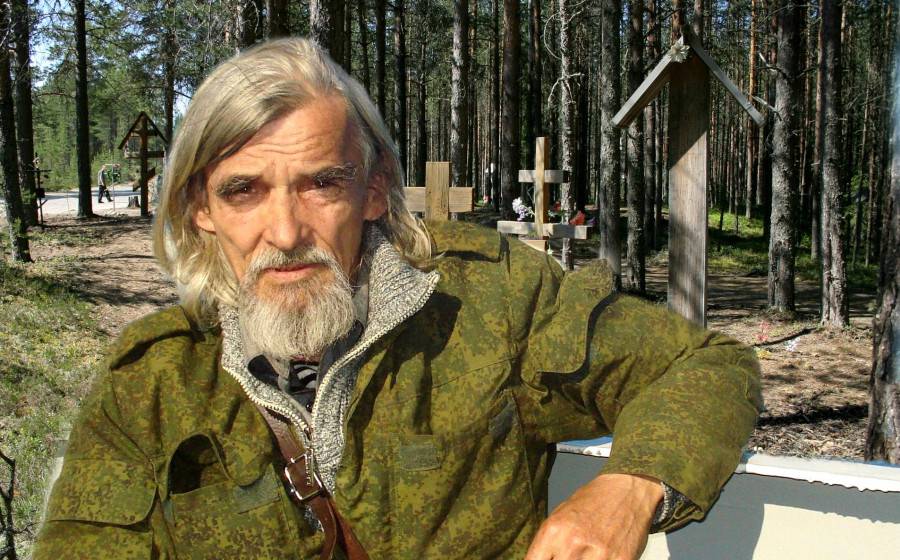
The presentation of books of remembrance for those shot during the Great Terror in Karelia packed the screening room at the Gulag History Museum in Moscow: people even sat on the stairways. The editor of the books, Karelian historian and search specialist Yuri Dmitriev, from Memorial, was the man talking onscreen. He has spent the last six months in a pretrial detention center, absurdly charged with the crime of producing pornography.
Dmitriev sent his greetings and gratitude from prison, not so much for the kind words said about him, as for acknowledgement of his life’s work. Memorial’s historians all concur it is unique. No other region in Russia has such a complete compendium of the names of those who were shot as Karelia does. As his colleagues argue, Dmitriev succeeded in turning the figures of those who perished during the Great Terror into memorial lists complete with names, biographies, and burial sites.
The speakers occasionally slipped into the past tense, but immediately corrected themselves. Dmitriev is still alive, and we must believe he will soon be released, find the execution site of the other two Solovki “quotas” [political prisoners at the Solovki concentration camp who were transported to three different sites outside the camp in 1937–1938 to be shot and buried in secret—TRR], and present the next book of remembrance. This powerlessness, these slips of the tongue, and the trembling voices fully convey the horror of a time when the days when people were shot are long past but people still fall victim to political repression.
The Yuri Dmitriev case is, perhaps, the most important thing happening in Russia right now, first of all, because a patriot who for decades had, bit by bit, resurrected thousands of names of this country’s citizens from official oblivion, citizens murdered cruelly and senselessly in the state’s name, has himself been subjected to persecution. “The introduction to the list of terror victims will be brief: may they live in our memories forever,” writes Dmitriev in the foreword to one of his compendiums, The Motherland Remembers Them, a book in which the names are listed not in alphabetical order, but under the names of the villages where the victims lived before their arrests. “The moral of the story is also brief: remember! As is my advice: take care of each other.” Now there is a Russian national idea for you. The author of these books of remembrance should be nominated for a state prize and a government grant to keep on with his work.
There is another important thing about the Dmitriev case: the charge his persecutors chose for him. He was not charged with “extremism” or “separatism,” which have been commonplace in politically motivated cases, but with child pornography and depraved actions towards a minor. The charges not only guarantee a long sentence and promise the accused problems in prison but also challenge the public to support him. “What if something really did happen?” Dmitriev’s friends and relatives acknowledge that while those who doubt Dmitriev or are willing to countenance the charges are an overwhelming minority, such people do exist, and some of them are “decent” people.
The number of “pedophilia” cases, based on controversial, contradictory, clearly flimsy evidence and flagrantly unprofessional forensic examinations, has been growing for several years. Recently, I attended a similar event in Naro-Fominsk, seventy kilometers southwest of Moscow. It was also a memorial evening for a living person who had been incarcerated on charges of depravity against a child, actions the man could not have committed, according to witnesses who were nearby when the crime was alleged to have occurred. Dozens of people had come to remember what a good male nurse Zhenya had been. Then they corrected themselves: not had been, but is and will continue to be. Then they cried.
“Pedophilia” cases have long been custom-ordered to rid oneself of rivals and used to pad police conviction statistics, but now they have been put to use in political cases.
Translated by the Russian Reader. Thanks to Comrade Koganzon for the heads-up
Terror in the Life of Yuri Dmitriev
Tatiana Kosinova Cogita.ru
June 1, 2017
On May 28, 2017, the Anna Akhmatova Museum in Fountain House in Petersburg hosted a presentation of books of remembrance, edited by Yuri Dmitriev, chair of the Memorial Society’s Petrozavodsk branch, who was arrested on trumped-up charges in December 2016.
The presentation was organized and emceed by Anatoly Razumov, head of the Returned Names Center at the Russian National Library and editor of the Leningrad Martyrology.
Agreeing to Razumov’s request to host the event, the Akhmatova Museum decided not to mention Dmitriev’s name in the event’s poster, on its website, and its mailing lists, as if it were already clear to everyone anyway what and who would be discussed. The event’s ostensible occasion was the eightieth anniversary of the Great Terror. Until the late spring of 2017, this had seemed possible in a museum dedicated to the life of the woman who wrote, “I would like to name all of them by name.” Unnoticed by the majority, however, a new wave of state terror has touched not only Yuri Dmitriev but also Petersburg, far from Petrozavodsk. A public museum risks providing a venue for an event in support of a man persecuted by the state, while making this man a figure of silence.
When the Petersburg Memorial Society found about this approach to Dmitriev, it was too late to find a new venue. It managed only to send out its own mailing list. The newspaper Moi Rayon mentioned the editor of the Karelian memorial books in its notice of the presentation, and the radio station Echo of Moscow in Petersburg mentioned the presentation as well. Unlike Petrozavodsk, where the presentation was poorly attended, the small hall at Fountain House was nearly packed, and reporters were present.
Dmitriev’s daughter Ekaterina Klodt came from Petrozavodsk for the event, joined by Dmitriev’s defense attorney Viktor Anufriev from Moscow, and Dmitriev’s colleague Nikolai Olshansky, director of the Novgorod Regional Society of Rehabilitated Political Prisoners and editor-in-chief of the Book of Remembrance of Victims of Political Repression of Novgorod Region. Irina Flige, director of the Memorial Research Center, was also involved. TV editor Bella Kurkova, who was scheduled to attend, did not come. In the early 2000s, she had filmed Dmitriev for a program, and Razumov showed an excerpt of this program to the audience.
Razumov has been friends with Dmitriev for fifteen years and considers him an astonishing man not only in terms of Karelia but also nationally. Razumov was involved with Dmitriev in searching for the prison camp cemetery on Sekirnaya Hill on the Solovki Islands. He continues to hope that Dmitriev will find the burial sites of the so-called second and third Solovki quotas of 1937–1938. Razumov still considers his friend’s most surprising find the cemetery of the tortured Belomorkanal construction workers at Lock No. 8.
“When he found himself in his present circumstances, he was accorded incredible support, and I haven’t met a man who would doubt his honest, kindness, and personal qualities,” Razumov said when opening the evening.
Razumov brought two books previously published by Dmitriev to the presentation and displayed them as historical artifacts. The first of these was the Memorial Lists of Karelia, 1937–1938, edited by Dmitriev and Ivan Chukhin, chair of the Karelian branch of Memorial. Dmitriev was Chukhin’s search expert and right-hand man, and after Chukin’s premature death in a car accident in May 1997, Dmitriev also had to master the skill of searching the archives. The book was published only in 2002 and is now rightly regarded as one of the best of its kind.
The second of Dmitriev’s main books, The Sandarmokh Execution Site, originally published in 1999 and long a bibliographic rarity, will be republished. Dmitriev has approved aplan to republish the book under a new title, The Sandarmokh Memorial Site. The new book will be a revised and expanded version of the first book about the memorial cemetery.
“I don’t know what else we can do. But we have managed to do something. We have turned some of the execution sites into memorial sites. May they remain memorial sites forever. That was Yuri’s dream,” said Razumov.
Anatoly Razumov
Razumov discussed two new books by Dmitriev, completed through the efforts of colleagues and friends: The Krasny Bor Memorial Site, which lists people executed at the site, and The Motherland Remembers Them: A Book of Remembrance of the Karelian People. Dmitriev had compiled both books before his arrest, and his friends and colleagues finished editing them and hastily published them in May of this year, before the start of his court trial. The books were presented in Petrozavodsk on May 24. The book will be available in Moscow in a week’s time both as DVDs and paper books. Roman Romanov, director of the Gulag Museum, has found the means to publish them. Five hundred copies will be printed in Moscow for the presentation, which takes place at the museum on June 6, 2017. It took Dmitriev many years to write these books. Krasny Bor was discovered twenty years ago, like Sandarmokh, in 1997. The site of mass executions in 1937–1938, it is located in a forest four kilometers from the village of Derevyannoye in the Prionezhsky District of the Republic of Karelia and nineteen kilometers from its capital city, Petrozavodsk.
According to the website of the Virtual Gulag Museum, Dmitriev conducted a detailed survey of the burials there. On the basis of typical depressions in the topsoil, he discovered around forty burial pits, each of them approximately eight meters in diameter and two and a half meters in depth. The Prionezhsky District Prosecutor’s Office confirmed that the Soviet NKVD had carried out mass executions at the site. According to prosecutors, the executions had been carried out during two periods: August 9–October 15, 1937, and September 26–October 11, 1938. During the digs, Dmitriev ascertained the number of people who had been shot (1,193) and most of their names, which are now included in the book Krasny Bor Memorial Site. After Dmitriev’s arrest on December 13, 2016, Jan Rachinsky, co-chair of Moscow Memorial, and Anatoly Razumov worked on the book. Dmitriev was able to carry out the final corrections in the Petrozavodsk Pretrial Detention Facility.
Razumov also presented The Book of Remembrance of the Karelian People. Dmitriev favors a geographical principle when drawing up lists of the executed, rather than alphabetical order. In his opinion, it is easier for people to find loved ones this way: the book is thus literally localized and bound up with Karelian history. The Motherland Remembers Them contains lists of Karelians who perished during the Great Terror.
The discs were available at the presentation, and they can also be obtained at the Returned Names Center and Memorial in Petersburg. Razumov reminded the audience that Dmitriev had always handed out all his remembrance books for free, but only to people who could say something about their perished loved ones and who had thus preserved their memory.
Sandarmokh Memorial Cemetery. Photo courtesy of Virtual Gulag Museum
Special Settlers in Karelia is Dmitriev’s latest massive work, on which he has been working for years. It deals with all those who were exiled to Karelia during the Soviet period: dekulakized peasants, deportees, and forced settlers—tens of thousands of people. Dmitriev launched his work on the book in the 1990s, but a great deal remains to be done.
Yuri Dmitriev’s house in Petrozavodsk “has been turned from a workplace into ruins. The police came, stomped about in their boots, and confiscated his computer, which contained his old and new remembrance book, on which work was still underway. But we shall continue the work,” Razumov said as he concluded his opening remarks.
Eldest Daughter
Ekaterina Klodt, Yuri Dmitriev’s eldest daughter
Ekaterina Klodt, Dmitriev’s eldest daugther, is very proud of her dad.
She and her friends were always struck by her father’s deep, penetrating eyes. Outwardly harsh and headstrong, Klodt’s father is a very kind and caring man on the inside.
“He’s a friend, a friend to everyone: colleagues, children, and grandchildren. He puts himself in everyone’s shoes. You can talk to him about anything.”
Klodt is the only person allowed to visit Dmitriev at the pretrial detention facility.
“I’m used to seeing him with his hair grown out and a long beard, like a lumberjack. But in there, his beard has been shaven and his hair cut short. He looks fifteen years younger. He’s had time off from sitting at the computer. At first, of course, I burst into tears, and he burst into tears. It is very difficult to talk through the tiny window.
“But his spirit, as always, is determined and militant. Father has always been someone we can all look up to, a paragon of strength and self-confidence.”
Klodst visits her father along with her own children.
“When his grandson and then this granddaughter followed me into the room, his eyes lit up. I had never seen Dad cry. He was genuinely happy.”
Klodt said prison was not a place where grandchildren should see their grandfather.
“That’s the reality. The children know where their grandfather is. They come with me to see him and will keep coming with me.”
The last time Klodt saw her father was in mid April.
Klodt said she has been communicating with her younger sister. Adopted by Dmitriev, she loves her dad very much, misses him a lot, and is worried about him. The girl hopes this ridiculous story will soon end, and she will again live with her dad.
“We lived side by side for so many years, as a single family. My children are her age. She and my son are the same age, and my daughter is a year younger. I treat her like one of my children, although she regards me as her sister. She is great friends with my children.”
Klodt cannot see her sister.
“She writes,” Razumov added.
Klodt feels sorriest of all for the confiscated computer. Day after day, she saw her father working, and his work was everything to him.
“The man spent a huge number of hours at the computer. His entire life was working on the computer and the digs. Knowing how much time he worked on the computer, I was constantly worried how he would get along in the pretrial detention facility without his dead ones.”
Klodt was twelve years old when Sandormokh was discovered twenty years ago. Her father took her along on the expedition to the area near Medvezhyegorsk. Klodt’s eldest son, Danya, had recently been traveling into “that huge forest, teeming with gadflies.” Danya is as old now as she was in 1997. This year, whatever the court decides, Klodt and her children will travel to Sandormokh on August 5 for the International Day of Remembrance.
Two Searches
Irina Flige (left)
Irina Flige and Yuri Dmitriev met exactly twenty years ago, in the spring of 1997 at the FSB archives in Petrozavodsk, “a normal place to meet if you’re people working on the memory of the Gulag.”
“That meeting was a point where two searches converged.”
“Such a narrow circle of people has gathered here today that I want to use the familiar mode of address, so I will refer to Yura rather than to Yuri Alexeyevich. At this time, Yura and Ivan Chukhin had located the main sites where executions and burials had taken place in Karelia during the Great Terror. Karelia is the only region or one of two or three regions where the documents stipulate the places where the sentences were carried out, that is, they indicate they occurred in the vicinity of a village or town. By this time, they had managed to compile a complete list of these places. And by 1997, many of the actual locations had been ascertained. For its part, the Memorial Research Center moved from the Solovki in search of the place where the so-called 1937 Solovki quota was executed. This was where our searches converged. We planned a joint expedition of the Petersburg and Petrozavodsk branches of Memorial to an area near Medvezhyegorsk on July 1, 1997. There were four of us who traveled there, not counting Yura’s dog. The expedition was led by Veniamin Iofe, who had done all the preliminary research before we traveled to the site. He had pinpointed the search area to within a kilometer. We set out on the expedition, thinking we would be working there all summer,” Flige recounted, continuing Klodt’s story of the search for Sandarmokh.
Anatoly Razumov took the opportunity to note that all the particulars of the expedition are extremely important, because “Yura was arrested due to Sandarmokh, to put it crudely, due to the fact that the place had become such an irritant.”
Flige illustrated her account with images from the website Sandormokh [sic], which was launched with Dmitriev’s involvement in November 2016. One of the long articles on the website describes the search for Sandarmokh.
Screenshot from the website Sandormokh
“Yura is a restless, active person. At some point, he grabbed the dog and ran off round the forest. Yura has a fantastic intuition. He was running in circles around a place where we had marked out a grid and started systematically digging meter by meter. He ran up to us at some point. ‘Come on, I think I’ve found it.’ Indeed, the place was quite striking. Common grave pits subside in a way that resembles saucers. Yura had seen there many such places there,” recalled Flige.
Sandarmokh was found on the very first day of the expedition, July 1, 1997. The shooting pits, marked by lathe fence, its pales numbered in red lacquer by Flige and Klodt, still constitute the basis of the memorial cemetery.
The lathe fence has given way to poles topped with dovecote-shaped wooden monuments, resembling Orthodox crosses in northern cemeteries.
In 1997, memory was quite alive all over Russia and functioned instantaneously, argues Flige.
“Knowledge and memory were closely related processes. One process immediately followed the other,” she said.
Sandarmokh was officially opened on October 27, 1997. In the four short months since its discovery, road builders had built a paved road to the site in record time, a log chapel had been erected, and the dovecote-shaped memorial markers were all in place. The Republic of Karelia hastily enacted a decree declaring the memorial cemetery open to the public.
“I ran around with the forest managers to mark off the border. I would add space all the time, because what if we had missed a pit? But they would add another thirty meters. It was a breakthrough in common, a breakthrough of knowledge, respect, and memory all at the same time.”
Sandarmokh is the only place in Russia where the August Fifth International Day of Remembrance is held. It has been held since 1998. The people who were shot there were not immediately sentenced to be shot after their arrests, but had spent time in the camps on Solovki and the Beltbaltlag. They had come to the camps from different parts of the Soviet Union. For the last twenty years, delegations from different countries and different parts of Russia have come to Sandarmokh on August 5. It has become the “only venue where people of different ethnic groups and faiths can meet and still speak the same same language, the language of memory.”
The website about the memorial cemetery includes a separate section, “Killed in Sandarmokh,” created by Yuri Dmitriev. It features biographical information about the residents of Karelia executed on this spot in 1937–1938.
It is also telling that Kurkova filmed her program on Sandarmokh with Yuri Dmitriev’s involvement.
A Colleague from Novgorod
Nikolai Olshansky
In Novgorod the Great, The Book of Remembrance has been published since 1993. Late 2015 saw the publication of its fourteenth volume, and there are plans to publish a comprehensive index to the previous volumes that would include information about residents of Novgorod Region subjected to state terror from 1917 to 1970. Nikolai Olshansky, the editor of these volumes, met Dmitriev eight years ago.
Olshansky also continues to pin his hopes on the genius of his Karelian colleague for finding burial sites in his own region. In Novgorod Region, the internment site of fifteen hundred Novgorodians shot during the Great Terror in Novgorod itself has not been ascertained (five thousand Novgorod residents were taken to Leningrad to be shot), nor has the execution site of five hundred residents of Borovichi been located.
Olshansky believes that he once “prophesied” his colleague’s misfortune.
“Yura, your directness and harshness are going to get you put in jail someday,” he told Dmitriev.
During the event at the Akhmatova Museum, Olshansky wished Dmitriev the will to withstand all the trials of detenition. Olshansky does not believe the prosecution’s charges. Under the Soviet regime, he himself was sentenced to four and half years of compulsory treatment in a psychiatric hospital on the basis of a denunciation, an experience from which he has never fully recovered.
The Defense Lawyer
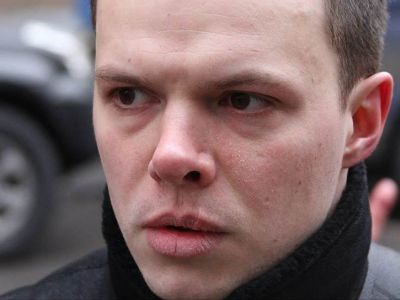
Attorney Viktor Anufriev appeared at the event, answering the audience’s questions. He argued that the law in Russia still exists autonomously from law enforcement. Dmitriev’s rights as someone who has been accused of a crime are observed to the extent they permit the authorities to keep him under arrest by constantly extending the term of his detention. Anufriev is certain of his client’s innocence. There is no evidence of a crime in Dmitriev’s actions.
The case began with one charge, but now there are four, said Anufriev. The case file now consists of five volumes. The indictment now includes an illegal firearms possession charge: the firearm in question is a piece of a hunting rifle, which had been lying around Dmitriev’s house for twenty years and which the prosecution itself does not consider capable of firing. Once upon a time, Dmitriev had confiscated it from the lads in the yard, to keep it out of harm’s way. Why has he been charged with its possession? Anufriev argued that there are two hypotheses. In Soviet times, this article of the criminal code was brought into play if the main charge had been dropped to justify the arrest and pretrial detention. In our times, on the contrary, the court can find a defendant not guilty on this charge, to make a show of his objectivity.
“But the entire machine of repression is rigged against Dmitriev in such a way that there are very good chances he will remain in custody,” said Anufriev.
Anufriev argued that his job was to prove his client’s innocence on the basis of the law. Analyzing the circumstances with which Dmitriev’s persecution were fraught is not part of that job. But those who follow the trials underway in Russia see that, nationwide, similar things have been happening to people whose work the regime considers unnecessary and harmful.
The upcoming trial will be closed to the public. The first hearing on the merits of the case will take place in Petrozavodsk tomorrow, June 1, 2017, at 2:30 p.m.
Anufriev believes that no one’s testimony would help Dmitriev in making his case. His adopted daughter has said nothing bad about her father. The situation was such that Dmitriev adopted her when she was in a very poor physical state. It was hard for Dmitriev to adopt her: to become her foster father, he had to attend a number of court hearings. Until his own adoption, Dmitriev himself had been raised in an orphanage. Having raised his own children, Dmitriev felt obliged to raise another child. The authorities, who gave him custody of the child through the courts, initially tried to take her away. Three or four months after Dmitriev adopted, “bruises” from “beatings” were suddenly discovered on the girl’s body. They proved to be traces left by a newspaper through which her foster parents had applied mustard plasters to her body. Having gone through this experience, Dmitriev periodically photographed the girl from all four sides, storing the photographs in a file in his computer according to month and year. He did this in case children’s protective services made any complaints about his treatment of the girl. He showed the photos to no one. Over the years, he made fewer and fewer photographers. It would not occur to a normal person that these snapshots could be interpreted as pornographic. According to police investigators, there are 144 photographs, only nine of which investigators have interpreted as “pornographic.” This is the basis of the trumped-up charges that he committed perverse actions by clicking his camera. He clicked it three times a year, and has been charged with violating three articles of the criminal code that could send him to prison for up to fifteen years. The case kicked off with anonymous letter (a denunciation, as we say in Russia) that so-and-so, allegedly, has naked snapshots of his foster daughter stored on his computer.
“As someone who has lived a fairly long life and as the father of several children, I can say there is nothing pornographic about those photos,” said Anufriev.
“Yuri Alexeyevich feels well, as well as he can feel in the place where he is and given his age. He has not lost his optimism and perseverance, either. He understands the situation soberly. As a scholar of the Terror, he has seen and read his fill and could understand that it might affect him as well. Such is our country’s history. I could joke about it and say that the one good thing is people are no longer executed in Russia. But the practice is such that if someone was in custody before his trial, his complete acquittal would be someone else’s complete punishment. That is why it happens so rarely. We would be glad if the case were allowed to fade away.”
You can exchange letters with Yuri Dmitriev. Send your letters to: Respublika Kareliya, Petrozavodsk, ul. Gertsena, 47, SIZO No. 1.
Hyphotheses
Ekaterina Klodt cannot explain who would want to file charges against her father. She doesn’t know the answer to that question, but, according to her, “what he does might not suit everyone.” She regards the criminal prosecution of her father as “completely absurd.”
“It’s frightening, very frightening,” she said.
She said she knows nothing about the search for those did the killing (according to one hypothesis, the charges against Dmitriev were occasioned by his work on drawing up lists of executioners, of the people who implemented the Terror in Karelia).
“We never discussed it, and I don’t think he searched for the executioners. They were not so interesting to him. He always searched for the victims, the people who had been shot. They were the dead who interested him. He wanted to preserve their memory and believed everyone of them should have a grave. He was very concerned for the living, for the descendants, so they would be able to come to a cemetery, to a burial site, pay tribute to their ancestors and remember their loved ones,” said Klodt.
“In Russia, the truth usually becomes obvious after several decades. We can only guess whose toes Yuri Alexeyevich stepped on, and with what upcoming events it is connected. We can analyze our regime’s level of thinking and focus in terms of this case, as well as the direction in which it is headed, and the measures it takes to preserve itself. Yuri Dmitriev was not a member of the opposition in the Republic of Karelia. He did his work in the sincere certainty that it was of use to people and to his country. But it turns that at one point the state says that this work is necessary, that we have to establish what happened, that we have to publish books of remembrance of the victims of the Terror, but time passes and all of this becomes inconvenient to the state. The shadow of the past hinders the current regime. And Yuri Alexeyevich’s work has become not very popular, not so vital, and seemingly unnecessary. By looking for execution sites, Yuri Alexeyevich discredited the previous regime. The time has come when someone has deemed his work unnecessary and even harmful,” argued Viktor Anufriev. “The people who cooked up this case for their own purposes should have long ago understood that the case is so crazy that public opinion has been aroused. I have worked for a long time and know how easy it is to put someone away by planting a bullet or narcotics on him, but trampling a man like this…”
Anufriev argued that the best outcome in the case would be complete acquittal on the pornography charges. Despite the fact that cases involving depraved actions with respect to minors go badly against teachers and priests, this case stands apart.
Anatoly Razumov noted that Karelian children’s protective services had no complaints against Dmitriev during all the years he had custody of his foster daughter. This transpired during a special session of the Presidential Human Rights Council in Petrozavodsk in February of this years, a session in which Razumov, Flige, and Anufriev were involved as invited experts. According to Razumov, Sandarmokh had become the “main sore spot and irritant in the region.” But the authorities were mistaken. Dmitriev had proven to be a man with a man with a strong spirit who loved his children and grandchildren, and almost nobody has believed the accusations.
If Razumov was sure that Dmitriev was arrested over Sandarmokh, whose annual fuss bothered the authorities, Flige argued that closing Sandarmokh by putting Dmitriev in prison was unrealistic. On the contrary, the case had led to a renewed interest in the place, an interest only deepened by speculation as to the reasons for Dmitriev’s persecution. This year, the authorities have createda prisoner of conscience for the memorial cemetery. According to Flige, Dmitriev became a political prisoner the day the TV channel Rossiya 24 broadcast a made-to-order news segment entitled “What Is Memorial Hiding?”
Event photos courtesy of Nadezhda Kiselyova and Cogita.ru. Translated by the Russian Reader
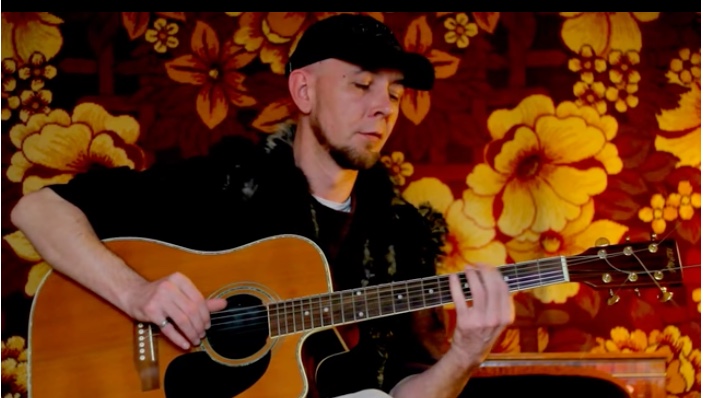
Pskov Region Singer-Songwriter Boris Yakovlev Charged with Calls for Extremism Grani.ru
April 20, 2017
The FSB’s Pskov Region office has charged Boris Yakovlev, a 44-year-old resident of Dno, under Article 280.2 of the Russian Federal Criminal Code (public calls for extremism using the internet). Grani.ru was informed about the case by lawyer Dmitry Dinze, who is representing the musician.
Yakovlev is known for his original songs, which he posts on his YouTube channel.
“Yakovlev has denied his guilt and refused to testify, since the defense needs to analyze the evidence on which the charges are based,” said Dinze. “In addition, a forensic examination of the digital media seized from Yakovlev’s home has now been ordered, and in the near future, the court will order and perform a linguistic forensic examination. The forensic experts are being chosen. The defendant has been released on his own recognizance.”
Besides the recorded songs posted on YouTube, the FSB alleges that between June 20 and June 29, 2016, Yakovlev posted on his personal page on the social network Vkontakte five pieces of writing in which he outlined his ideas about the situation and events in Russia. The texts in question begin with the words “About elections,” “We have already gone over our limit on revolutions,” “Above the dwarf’s head,” “I find it curious,” and “Reading the newswire.”
On March 20, 2017, Senior Lieutenant A. Filippov, a detective in the First Branch of the Department for Protecting the Constitutional Order and Combating Terrorism in the FSB’s Pskov Region office, filed a crime report. He claimed there was evidence of a crime in Yakovlev’s published texts: public calls for extremism on the internet.
In a specially conducted study, Andrei Pominov, an associate professor in education and psychology at Bashkir State University’s Sibai Institute, wrote that Yakovlev’s texts “contain psychological and linguistic means aimed at inducing an unspecified group of persons to carry out extremist actions aimed at forcibly changing the existing state system or seizing power.”
Consequently, Captain of Justice I. Karpenkov, senior investigator in the Investigative Department of the FSB’s Pskov Region office, filed criminal charges against Yakovlev.
Boris Yakovlev, “Confession of an Enemy of the People”
On March 16, Judge Yevgeny Naydenov of Moscow’s Presna District Court fined rapper David Nuriyev (aka Ptakha) 200,000 rubles [approx. 3,300 euros] in an extremism case. Ptakha was found guilty of violating Article 282.1 of the Criminal Code (inciting hatred or enmity toward a group of people united on the grounds that they “assisted law enforcement agencies in locating and apprehending criminals”). The “social group” in the case was the Anti-Dealer Movement, founded by Dmitry Nosov, an ex-LDPR MP and former professional judoka.
The prosecutor had asked the defendant be given a suspended sentence of one and a half years. The musician fully acknowledged his guilt and apologized to Anti-Dealer. The case was tried under a special procedure. The trial consisted of a single hearing.
_______________________________
Boris Yakovlev, “I Want to Be There at the Hour”
I want to be there at the hour When the millions of nationalist riffraff Howl as one: We were opposed! We knew everything!
We pretended deliberately. You understand: work and kids. But deep down we resisted. We don’t want Crimea, please note.
We realized he was a murderer. We don’t want war and death. We really love Ukrainians. We’re innocent, believe us!
We don’t want Lugansk and Donbass. It’s the first we’ve heard about the “Russian world.” Standing in line for rotten meat, That’s what the mouse people will whisper.
I want to look in the eyes of the followers, Those Pharisees of the mob, In whom honor and conscience are vestiges, And who have an ass instead of a head.
Translated by the Russian Reader. A huge thanks to Comrade Koganzon for the heads-up
Boris Romanov Facebook
12:15 a.m., December 7, 2016
At 5:00 p.m., on December 6, police detained Alyona Romanova near her home. They have charged her with misdemeanors. Allegedly, Alyona did not carry out the police’s orders and did not obey their instructions to get in their car. Alyona is currently in the 59th police precinct station at 27 Yesenin Street.
The desk sergeant’s telephone is +7 (812) 517 5902.
If you can, please call the desk sergeant and ask how she is feeling.
I was at the precinct an hour ago. I brought her warm clothes and food. She has been put in solitary confinement. There is nothing in her cell: no blanket or pillow. We were not allowed to see each other. She is quite upset, of course.
This is a new tactic on the part of the police. Apparently, as the year comes to an end, they have to turn in reports and fill their quotas of closed cases. So they have already cobbled together one case.
There will be a court hearing on December 7. It might take place at the Vyborg District Court at 3 Santiago de Cuba Street.
I don’t know exactly what time it will take place. The lawyer said that will be decided at nine or ten in the morning.






 Attorney Viktor Anufriev appeared at the event, answering the audience’s questions. He argued that the law in Russia still exists autonomously from law enforcement. Dmitriev’s rights as someone who has been accused of a crime are observed to the extent they permit the authorities to keep him under arrest by constantly extending the term of his detention. Anufriev is certain of his client’s innocence. There is no evidence of a crime in Dmitriev’s actions.