Daily Beasts


“Let’s stand up for the truth.” A military recruiting billboard photographed earlier this summer in Kaluga, promising five million rubles (approx. 56,000 euros) for one year of “contract” (voluntary) military service, a one-time signing bonus of two and a half million rubles, and a monthly salary of 210,000 rubles for service in the “Special Military Operation zone.” Photo: Alexander Gronsky (Facebook). Thanks to Sergei Medvedev for the heads-up.


An American father who moved to Russia to avoid LGBTQ+ “indoctrination” for his kids is being sent to the front line in Ukraine, despite being assured he would serve in a non-combat role.

Derek Huffman, 46, feels he is being “thrown to the wolves” after being told that his job in the military would be as a correspondent or as a welder, his wife, DeAnna, said in a recorded plea for prayers, which has since been removed from her YouTube page.

Huffman has no prior military experience, DeAnna said, adding that his limited training was conducted in Russian. She suggested the language barrier has made her husband particularly unprepared for the horrors of combat.

“Unfortunately, when you’re taught in a different language, and you don’t understand the language, how are you really getting taught?” she pondered. “You’re not. So, unfortunately, he feels like he’s being thrown to the wolves right now, and he’s kind of having to lean on faith, and that’s what we’re all doing.”

Huffman joined the military in the hope of gaining Russian citizenship for his family through an expedited process. He also felt such service would allow him to “earn” the respect of his new countrymen, which is something he once said migrants in the United States refuse to do.

“The point of this act for me is to earn a place here in Russia,” he told Russian state media last month. “If I risk myself for our new country, no one will say that I am not a part of it. Unlike migrants in America who come there just like that, do not assimilate, and at the same time want free handouts.”

Undocumented migrants cannot join the U.S. military during peacetime. A program launched by former President George W. Bush allowed such immigrants to seek citizenship by serving in the military, but that pathway was shuttered during President Donald Trump’s first term.

DeAnna, 42, suggested her husband had been misled during the military recruiting process. She added that, after a month of service, her family had yet to receive any pay.

“When he signed up and had all of that done, he was told he would not be training for two weeks and going straight to the front lines,” she said. “But it seems as though he is getting one more week of training, closer to the front lines, and then they are going to put him on the front lines.”

Huffman moved his family to a village outside Moscow in spring. It was launched by American blogger Tim Kirby—who has lived in Russia for two decades—in 2023 to attract Americans seeking to escape the “liberal gender norm.” That project has been a flop, with United24Media reporting that only two families, including the Huffmans, have moved in.

Huffman, a native Texan, brought his wife, three daughters, and their family Husky, “Baby,” with him to Russia. The couple also have three sons from prior marriages who opted to remain in the United States.

Huffman’s admiration for Russia runs deep. The Russian state-operated news agency RIA Novosti reported last month that the couple honeymooned in Moscow.

“The city charmed us with its rich history, vibrant culture, and welcoming atmosphere,” DeAnna told the outlet. “Before that, we figured out whether moving to Russia would fit our family’s needs and values. However, it wasn’t until we saw Moscow in person that we truly felt a connection.”

DeAnna said that she was not surprised that her husband wanted to volunteer for the Russian military, even as it is in its third year of a bloody war with Ukraine. Ukrainian officials estimated this week that more than 1 million Russian soldiers have died in the conflict, which continues to rage on despite President Trump’s demands for peace.

”It didn’t come as a surprise to me,” she said of his joining the military. “He always spoke so highly of the country, its president, and its people, and he has a strong passion for doing the right thing.”

Source: Josh Fiallo, “Anti-Woke Dad Who Fled With Family to Russia Sent to War Zone,” Daily Beast, 20 July 2025


“I got upset when the doctor told me I had diabetes,” said Yurii. “Because uneaten sweets are waiting for me at home, and we’ve already bought lemonade for New Year’s.”

Yurii is 16 years old, and every day he starts with a long-acting insulin injection. Later throughout the day, ten minutes before each meal, he measures his blood sugar levels, calculates the amount of carbohydrates he will get from food, and injects the appropriate dose of insulin.

Type 1 diabetes is an autoimmune disease that changes your life forever and can be triggered by infections or, as it is in Yurii’s case, by severe stress – especially after what happened to his brother.

Chronic stress has been rising among Ukrainians since the start of Russia’s full-scale invasion, as Moscow continues to shell the country daily. The continuous sleepless nights and the fear of being hit by a drone or missile are affecting both the mental and physical health of the people in Ukraine.

In June 2025, Russians increased the number of drones and missiles launched at Ukraine increased by 60 percent, according to Oleksandr Syrskyi, the Commander-in-Chief of the Armed Forces of Ukraine. In addition, June saw the highest number of civilian deaths since April 2022 as a result of military actions: 232 people.

The invisible effects are compounding: Ukrainian children have begun to experience health conditions that could affect the rest of their lives.

Statistics show a rise in the number of patients with type 1 diabetes in the frontline Kharkiv region, and the number of people diagnosed with diabetes in general is also on the rise across the country.

Before the invasion, Yurii lived with his parents in the central Ukrainian city of Cherkasy. They tried to get out of town every weekend — whether that meant going fishing or mushroom-picking in the forest.

“Children need to breathe fresh air,” Olena, Yurii’s mother, told The Counteroffensive with a nostalgic smile on her face.

She begins the conversation by saying, “I am the mother of two wonderful sons.”

Yurii has a brother, Volodymyr, also known as Vova, who is 10 years older and who looked after Yurii from an early age.

“We walked all over Cherkasy together, went to parks, squares, the Dnipro River, and he treated me to McDonald’s. Vova [a nickname for Volodymyr] always told me, ‘When you grow up, we’ll go out with girls together. ’ And Vova loved everything related to the army,” said Yurii.

When Olena talks about her eldest son, her voice begins to tremble.

Vova died on May 3, 2022, while defending Mariupol at Azovstal, a strategic steel factory that was besieged by Russian forces for almost three months, a famous last stand.

He died after his car rolled onto an enemy mine.

The family only learned about his death six months later.

“One day, Vova’s commander called me, introduced himself, and asked how I was doing. I replied, ‘Do you know where my son is? Wasn’t he in captivity with you?’ He told me that Vova had died on May 3 and asked, ‘Didn’t you know?’ It felt like half my heart had been cut out of my chest at that moment,” remembered Olena.

Volodymyr was only buried in February 2023. After the tragedy, Olena began to have health problems: she constantly felt weak, and eventually doctors had to remove her thyroid gland so that she could get better.

In the fall of 2023, months after Volodymyr’s funeral, the family went to the Carpathians for a break. During the trip, Olena noticed that Yurii, then 14 years old, was drinking more water than usual and had lost a significant amount of weight. Despite being naturally thin and 1.74 meters tall (5 feet 9 inches), he weighed just 45 kilograms (99.2 pounds).

“Yurii took his brother’s death very hard. It wasn’t that he cried a lot, but as if something inside him had burned out,” said Olena.

Yurii and Olena returned to Cherkasy and went to see the doctors. While Olena had developed a problem with her thyroid, everything seemed normal in Yurii.

But when the doctor routinely tested Yurii’s blood sugar levels, they found he had developed type 1 diabetes.

“It felt like I was beaten to death with feet, after all the horror we had already gone through,” said Olena.

Many autoimmune diseases of the endocrine system occur in childhood or young adulthood, as these are periods of active growth and hormonal changes, said Natalia Pogadaeva, head of the endocrinology department at Okhmatdyt, Ukraine’s largest pediatric hospital, which was hit by a missile strike last year.

Genetics plays a significant role in the onset of diabetes, as in other autoimmune diseases. However, the trigger for their onset is usually stress, she added. The following six months after the start of Russia’s invasion of Ukraine, the number of patients with diabetes and other immune diseases surged, she added.

Due to full-scale Russian invasion and the displacement of the Ukrainian population both within Ukraine and abroad, it is very difficult to determine the actual extent of the increase in diabetes, Pogadayeva says.

“Children who lived in Kyiv could have gone abroad and realized they were sick, or vice versa: a child moved from Kherson to Kyiv and is being treated in Kyiv, not where they lived,” she added.

Still, some statistics hint at the broader toll. For example, 398 patients with type 1 diabetes under the age of 18 were registered in the first 9 months of 2023 in the Kharkiv region, a frontline region in the northeast of Ukraine. During the same period in 2024, the number had already increased to 501 patients – a more than 25 percent increase.

According to the Ministry of Health of Ukraine, 531,200 people were diagnosed with different types of diabetes in 2023, the first full year of the full-scale invasion. In 2022, the number was 489,934 – an 8 percent increase.

Many of the children who went to Okhmatdyt to get treated had either survived Russia’s occupation, had experienced the aggression firsthand, or had evacuated from Mariupol or Bakhmut, Pogadaeva said.

“At the beginning of the full-scale invasion, among other things, logistics were also greatly changed,” said Pogadaeva, the head of the endocrinology department at Okhmatdyt.

Children who already had diabetes had a hard time accessing insulin and the supplies needed to measure their blood sugar. As a result, they had to be hospitalized.

Diabetes can have severe complications if not taken care of properly. Uncontrolled blood sugar can damage blood vessels, which are present in every organ of the body. If affected, the kidneys, the limbs, and the eyes are the first to suffer. In the long run, it can lead to kidney failure, loss of sensitivity, loss of vision, and even to the amputation of limbs.

Pogadaeva explains that our bodies have a stress hormone called cortisol, which can be released during periods of prolonged stress, such as experiencing daily shelling, night-time air raid alarms, and lack of sleep — all situations Ukrainian children have been experiencing for the past three years.

The release of cortisol leads to uncontrolled fluctuations in blood sugar levels, she added.

Yurii will start college this year. Olena fears that having to prepare for exams will add to the stress of the war. She said that while at her house, they have adapted to a diet appropriate for the disease.

Yet Yurii’s blood sugar levels are still fluctuating.

They relocated to a village near the regional centre to be closer to nature. There, Yurii has his workshop and chickens, for which he recently built a drinking trough.

The family fondly remembers his older brother, Volodymyr, who was posthumously awarded the Order for Courage, a state award given by the President of Ukraine for heroism shown in emergencies.

“It’s hard to say that anything in our lives has changed significantly because of the illness. Now it’s just a way of our life.

My husband is only sometimes dissatisfied, saying, ‘I don’t want porridge, I don’t want salads. When will we have varenyky [Ukrainian dumplings]?’ But that’s it, if the child can’t have it, then no one can,” Olena said.

Source: Tanya Novakivska, “Surge of childhood diabetes due to wartime stress,” The Counteroffensive, 20 July 2025


A BBC Russian investigation can reveal that at least 240 Russian eighteen-year-olds have been killed fighting in Ukraine in the past two years. Many joined up straight from school taking advantage of new rules allowing them to bypass military service and go straight into the regular army as contract soldiers. Some of those on our list were killed within weeks. BBC Russian has been speaking to bereaved families to find out why school leavers whose lives are only just beginning, are signing up to die in Putin’s brutal war.

On 7 May 2025, pupils at School No. 110 in Chelyabinsk took part in a ceremony to mark the eightieth anniversary of the end of the Second World War.

Dressed in tunics and khaki-coloured shorts, the older children paraded into the school hall waving Russian and Soviet flags. The younger ones followed behind – little girls in knee-high socks and boys in smart shirts. The children were also carrying pictures of former pupils who had gone on to fight in the full-scale war in Ukraine.

One of the pictures was of Aleskandr Petlinsky who joined up two weeks after his eighteenth birthday, and was killed just twenty days later. His mother Elena, and his aunt, Ekaterina stood side by side in the hall, tearfully watching the ceremony.

After a minute’s silence to honour the dead, Ekaterina took to the stage to speak about her nephew.

Sasha, as she called him was a determined and passionate boy who dreamed of a career in medicine and had got a place at the Chelyabinsk Medical College.

“But Sasha had another dream,” Ekaterina added after a pause. “When the special military operation began, Sasha was fifteen. And he dreamed of going to the front.”

She was referring to the full-scale war in Ukraine, which Russia launched in February 2022.

Sasha Petlinksy is one of at least 240 eighteen-year olds killed in Ukraine over the past two years, according to open source information compiled and confirmed by BBC Russian.

How did someone so young and barely out of school end up dead on the frontline, and what does his story tell us about the choices facing young people in Russia today?

Red lines and rule changes

Since the first months of the war in Ukraine, the involvement of very young people in combat has been a subject of debate in Russia.

At first, the focus was on army conscripts.

Vladimir Putin has pledged several times that no young men called up to do their obligatory military service at the age of eighteen would be sent to fight in Ukraine. However, in March 2022, just four days after Putin promised no conscripts were involved in the ‘special military operation’ the Defence Ministry admitted that some had indeed been sent into the combat zone.

The BBC has confirmed the names of at least 81 conscripts killed in Ukraine during the first year of the full-scale war. The Ukrainian authorities claim to have captured “hundreds” more.

The army is no longer sending conscripts to fight in Ukraine, but there are other ways that very young people are being drawn into the conflict.

When Ukrainian troops occupied parts of Russia’s Kursk Region in August 2024, conscripts guarding the border were among the first to come under fire.

But according to data gathered by the BBC the way most eighteen-year-olds end up on the battlefield is by signing up as contract soldiers.

In the spring of 2022, the Russian authorities changed the law in order to actively encourage men of fighting age to join up. And since 2023 regional authorities have been offering big cash payments to new recruits.

Initially young men who wanted to take advantage of the new rules had to have at least three months’ conscript service under their belts. However, in April 2023 this restriction was quietly dropped, despite protests from some MPs, and now any young man who has reached the age of eighteen and finished school can sign up to join the army.

MP Nina Ostanina, who is head of the Duma Committee on Family, Women, and Children, warned that the changes would have dire consequences for vulnerable school leavers.

“Children just out of the classroom who want to earn money today by signing a contract will simply be unprotected,” she said.

“Contract service — a worthy future”

Since the beginning of the full-scale invasion, Russian teachers have been required by law to hold classes dedicated to the ‘special military operation’. And as the war has ground on, it’s become normal for soldiers returning from the front to visit schools and talk about their experiences.

Children are taught how to make camouflage nets and trench candles, and even nursery school pupils are encouraged to send letters and drawings to soldiers on the frontline.

Since eighteen-year olds were allowed to sign contracts to join the army, many Russian independent media outlets have reported that schools are increasing efforts to promote contract service.

There are many examples from across the country.

In Perm, schoolchildren were given leaflets with a photo of a middle-aged man in military uniform hugging his wife and young son, and the slogan: “Contract service — a worthy future!”

In the Khanty-Mansisk Autonomous Region, posters appeared on school noticeboards urging everyone to “Stand shoulder to shoulder for the Motherland”.

In Krasnoyarsk a poster with the slogan “Call now” was put up on a classroom board.

At the start of the new school year on 1 September 2024, a new subject was brought into the curriculum.

In a throwback to the Soviet era, senior students are once again being taught how to use Kalashnikov rifles and hand grenades as part of a course called “The Basics of Safety and Homeland Defence”.

In many regions, military recruiters now attend careers lessons in schools and technical colleges, telling young people how to sign up as contract soldiers after they graduate.

In April 2024, Konstantin Dizendorf, head of the Taseyevsky District in the Krasnoyarsk Region, visited a local technical college to talk to the children about their futures. He singled out one particular student for praise. Eighteen-year-old Aleksandr Vinshu had already announced that he wanted to join the army. Vinshu was held up as local hero and allowed to take his final exams early in order to sign up as soon as possible. Seven months later in November 2024 news came that Vinshu had been killed.

Counting Russia’s young war dead

As part of our ongoing project using open sources to count Russia’s war dead, BBC Russian has looked at casualty figures from April 2023, when the law changed allowing school leavers to skip conscription and sign up to join the army.

We have identified and confirmed the names of 240 eighteen-year-old contract soldiers killed in Ukraine between April 2023 and May 2025.

All were enlisted as contract servicemen and judging from published obituaries, most joined the armed forces voluntarily. However, twenty-one were very recent school leavers who signed contracts while they were doing their military service. Families of some of these young men allege they were pressured to join up by senior officers.

Our data shows that the regions with the highest number of deaths among eighteen-year-olds are all in Siberia or the Russian Far East: We confirmed eleven deaths in Novosibirsk Region, another eleven in Zabaykalsky Region, and ten more in the Altai and Primorsky regions, respectively.

The BBC’s figures are based on open-source information and because not every death is publicly reported, the real losses among eighteen-year-old contract soldiers are likely to be higher.

However, it’s important to note that these losses, devastating as they are for the families concerned, are still dwarfed by the casualty figures for older men signing contracts to join the army.

From the open source data gathered by the BBC since the start of the full-scale invasion we have identified the names of 486 individuals aged 18–20 years who have been killed in Ukraine fighting as contract soldiers. This compares to 3,703 deaths of men aged 48–50.

While older soldiers may face higher fatality rates due to being in poorer physical shape, the stark imbalance likely also reflects a lower willingness among younger men to enlist, even when substantial financial incentives are offered.

This aligns with аn opinion poll conducted by the independent Levada Centre in May 2025, which showed thirty-five per cent of 18–24 year olds supported the war in Ukraine, compared to forty-two per cent of 40–54 year olds, and fifty-four per cent of those aged over fifty-five.

Taken together, these figures suggest that as a whole younger Russians are more reluctant to participate in the conflict and less ideologically aligned with its objectives. However, as the young men featured in this story show, some are still either susceptible to propaganda narratives or to pressure from the authorities.

Shining eyes

According to his friends, Aleksandr Petlinsky was a gentle young man who liked to help others. He loved drawing and was always ready to do sketches of favourite cartoon characters for his friends. He was also an active member of a local youth organisation, collecting books for local libraries, going on visits to local museums, and organising a meeting with a nurse who had worked on the frontline in Ukraine.

Everyone we spoke to told us Aleksandr dreamed of becoming a doctor, but no-one seemed to know why he also dreamed of joining the army and going to fight in Ukraine.

Was his romanticizing of the war a result of the patriotic education he’d been subjected to at school? Did he really understand that he would be involved in killing soldiers of a neighbouring country? Had he given any serious thought to all the peaceful civilian lives being destroyed in the war?

On 31 January 2025, Aleksandr turned eighteen. The first thing he did was to apply to take a year out of college so that he could sign a contract with the Defence Ministry.

“When he submitted the request I asked him what his mother would say,” the college secretary later told local journalists. “He said – what’s it got to do with my mum? It’s my choice. His eyes were shining.”

Just three weeks later Aleksandr had already signed a contract and joined his training unit. Just before he set off, he met up with his friend Anastasia.

The two former classmates sat on a bench talking about drawings. Aleksandr drew a torch with a flame on Anastasia’s wrist as a farewell gift.

It was the last time she would ever see him.

Handcuffed and beaten

The story of how eighteen-year-old Vitaly Ivanov from Irkutsk region in Siberia ended up in the army could not have been more different.

He was born and raised in Tayturka, a small working-class settlement two hours from Irkutsk, with a population of just 5,000 people.

In high school, he and his friend Misha, had worked part-time at a local boiler house and helped dig potatoes in gardens. In the summer, he earned money by taking inflatable bouncy castles round neighbouring villages.

During that time, he met a young woman who we’ll call Alina. They began dating, and Vitaly often visited her. He helped her too—digging potatoes at her dacha and fixing things around the house.

“He used to tell me that I was under his wing, under his protection,” Alina says. But sometimes, when they argued, Vitaly would threaten to leave and sign up for the army. “It was like, I’ll go and I’ll be fine,” Alina remembers.

When he turned sixteen, Vasily left school and got a place as a trainee mechanic in a local college. But he soon dropped out. When he turned eighteen he planned to do his compulsory military service and then go to Kazan to work shifts road building, his friend Misha told the BBC.

But in November 2024 everything changed. There was a robbery at a local shop and when the police looked at the CCTV they decided that one of the perpetrators looked like Vitaly.

Vitaly’s mother Anna told the BBC he was known to the police because the previous year he had been arrested after getting into a fight with someone she says was a local drug dealer. He was charged and sentenced to community service.

Vitaly was summoned to the police station and held there for several hours. When he was finally released he sent his girlfriend a Telegram video message, which she shared with the BBC. In it, Vitaly is crying as tells his girlfriend he was handcuffed and beaten up by the police. “Those devils were so horrible,” he says between sobs. “I was just so fucking shocked.”

Vitaly told his mother and his girlfriend that the police wanted him to confess to the robbery. His mother thinks it was the police who told him to sign a contract to join the army. “It’s understandable, he was scared, he was just eighteen,” she says. “They handcuffed him and beat him for two hours.”

Straight out of the police station Vitaly met Misha and told him he had decided to sign up to join the army. Misha was shocked: “I said, what do you want to do that for?” Come to Kazan with me to do the road building, You’ll be much better off.”

Misha told the BBC another friend also had tried to dissuade him but Vitaly deleted all their messages and cut off contact.

The day before leaving home, Vitaly called his mother, who had left for work.

“Mum, I’m leaving soon.”

“For Kazan? Okay, off you go.”

“No Mum you don’t get it. I’m going to the special military operation.”

Anna says she “cried all night”. “He was so secretive about it all. He didn’t tell me anything. Never complained. And did everything behind my back,” she says.

Alina remembers that during their last meeting Vitaly seemed completely calm. He bid her a restrained goodbye to her and told her not to cry. Then he calmly went home, packed his things, and left for the train station.

On the advice of a friend who had already been to the front, he decided to sign up in Samara Region instead of Irkutsk.

In the autumn of 2024, Samara Region that was offering some of the highest sign-up bonus payments in the country. Vitaly would have received about four million roubles in regional and federal bonus payments — that’s the equivalent of around fifty thousand US dollars, an almost imaginable sum for an eighteen-year-old village boy with little education and even less prospects.

A first and last mission

By their very different routes, and both just turned eighteen, Vitaly and Aleksandr arrived at the front at about the same time — in February 2025.

Alina recalls that while Vitaly was still in training, they stayed in constant contact. “He wrote that he regretted it. That he was having trouble sleeping,” she says.

“Mum, I’ve realized this is no joke,” his mother Anna remembers him telling her. After just two weeks training, Vitaly was assigned to a role in military reconnaissance.

“Son, did you learn anything in training?” Alina asked him.

The answer was not reassuring.

“Mum, to become a real recon soldier, you have to study for three years!” he replied. “I’ve only learned just a little bit.”

The last time Anna heard from Vitaly was on 5 February. He wrote that he was being sent on a combat mission.

“It was his first and last mission,” Anna says.

On 4 March, officials from the military enlistment office called Anna and told her that her son had been killed in action on 11 February 2025. He had served just one week at the frontline.

His body was brought back to Tayturka in a zinc coffin. Several dozen people came to pay their respects and then the coffin was taken to the local cemetery.

Officials from the city administration gave speeches at the funeral.

“They said he gave his life for our homeland, that he was brave and went off to fight. The usual stuff,” says Misha. “But everyone was asking why he did it, and saying it was pointless to go to war at such a young age. Many people still couldn’t believe it – including me.”

Vitaly’s family and friends did not comment on the fact that his participation in the war could have led to the deaths of Ukrainian soldiers or civilians.

Deeply upset

A month after Vitaly’s death, on 9 March, Aleksandr Petlinsky was also killed.

His friends from the local youth movement posted a memorial message online noting that he had “died in the line of military duty during the Special Military Operation”.

“How could he have even been there if he had only just turned eighteen a month before???” someone wrote in the comments underneath.

Aleksandr’s funeral took place in the memorial hall of the Russian Railways hospital in Chelyabinsk. “Everyone cried a lot,” his aunt told the school event. “You could hear the sobbing in the room.”

Officials gave speeches, but Aleksandr’s friends “preferred to stay silent” as one of them told the BBC.

Anastasia says they were all deeply upset by the fact that he had lived less than two months after turning eighteen and had spent just a couple of weeks at war before being killed.

Aleksandr’s mother, Elena, told the BBC: “As a citizen of the Russian Federation, I am proud of my son. But as a mother — I can’t cope with this loss.” She declined to say more.

The BBC was only able to reach Vitaly’s mother, Anna, on the second or third attempt — in the first minutes of the call, she was sobbing and unable to speak. She said keeps replaying her last goodbye with her son in her mind. “It still feels like it happened yesterday.”

Anastasia, Aleksandr’s friend, says that for her, the fact that eighteen-year-olds are signing contracts to join the army is now a very “painful subject”.

“They’re young and naïve, and there’s so much they don’t understand,” she says. “They just don’t grasp the full responsibility of what they’re doing.”

Vitaly’s friend Misha thinks the same. He spoke to the BBC from Kazan where he’s now working on the road-building project he and Vitaly were planning to do together. Asked whether he might decide to sign a contract to join up himself he said: “I don’t even want to think about it.”

“No one’s interested and no one cares”

Although the deaths of Aleksandr and Vitaly have deeply affected their friends and family, the fact that eighteen-year-olds are signing up and getting killed in Ukraine does not so far seem to have had wider resonance in Russian society.

The family of another very young man who joined up from school and was killed very soon after did try to campaign to stop high school graduates being sent to the frontline.

Daniil Chistyakov from Smolensk, was less than two months past his eighteenth birthday when he was killed. Like Aleksandr and Vitaly he had just arrived at the front. His family only found out he was joining the army on the day he signed up.

“I wrote to many agencies, trying to reach someone, to get the law repealed that allows eighteen-year-olds to sign contracts,” one of his relatives told the BBC. “But no one was interested or cared.”

Vitaly’s mother Anna has tried and failed to get the authorities to investigate the police officers who detained her son and who she believes are responsible for his sudden decision to sign up.

In her efforts to “get justice”, she also wrote a long letter about her son’s case to the state TV Channel One talk show Men and Women in Moscow. The letter was sent by recorded mail but no-one from the show ever came to pick it up from the post office.

Source: Anastasia Platonova and Olga Ivshina, “From the classroom to the frontline — the 18-year-old Russians fighting and dying in Ukraine,” BBC News Russian, 17 July 2025. I have lightly copy-edited the original text to make it more readable. ||| TRR


“A volunteer legal observer says she was left bruised after being detained by ICE,” KPBS Public Media

Earlier this week—in a story that reads as a perfect encapsulation of abuses by Trump’s immigration enforcement—masked ICE agents roughed up and detained a 71-year-old U.S. citizen volunteering as a legal observer to monitor them at a federal courthouse in San Diego.

Grandmother Barbara Stone says she was documenting the detention of asylum-seekers with the group “Detention Resistance” at San Diego’s immigration court when she was baselessly accused of pushing an officer. Multiple masked agents then pursued Stone, grabbed and handcuffed her (leaving bruises), confiscated her phone and purse, and detained her for over eight hours, she says.

Once Stone was released, ICE returned her bag but kept possession of her phone. Why? Stone says an ICE agent compared the situation to “a drug bust where they keep a drug dealer’s phone because I had used it in the crime.”

But the only “crime” of which Stone says she’s guilty is documenting immigration enforcement. If this is true, the episode would track with other apparent attempts by ICE agents to avoid accountability of late, for instance, by wearing masks so they can conduct raids and arrests anonymously.

In a statement to a local outlet, ICE accused Stone of assaulting an officer, citing “a 700% increase in assaults” against its agents over the last year (a statistic the agency uses to justify agents concealing their identities, as well).

That 700 percent increase, it should be noted, is a somewhat misleading way to say there have been 79 alleged assaults against ICE agents this year, compared to 10 in the same timeframe last year. Meanwhile, ICE interactions have become dramatically more frequent and aggressive.

ICE’s numbers unfortunately deserve further scrutiny, as the agency has been defining “assault” quite loosely. In another high-profile arrest of a U.S. citizen, for example, ICE last month detained New York City Comptroller Brad Lander for assault—an accusation not unlike when a schoolyard bully accuses his victim of getting in the way of his fist, as Washington Post columnist Philip Bump put it.

One might add, to this list of questionable ICE allegations, its new claims about Stone.

Source: Robert McCoy, “Why Did ICE Agents Arrest and Detain a 71-Year-Old U.S. Citizen?” The New Republic, 11 July 2025. Thanks to Tom Digby for the heads-up.
The Things They Say

Lavrov said that Prigozhin’s armed mutiny could not be termed anything more than a “scrape.” Well, yeah… After the rebels seized the headquarters of the Southern Military District, which coordinates the main grouping of Russian federal forces waging war in Ukraine, along with Deputy Defense Minister Yevkurov, seized Rostov-on-Don, a city of one million people, and a military airfield, shot down six combat helicopters and one military aircraft, and were a mere 200 kilometers from Moscow; after all the supreme authorities in Russia shit their pants in unison, instituted a counter-terrorist operation in Moscow and three other regions, and were planning to impose martial law, after this total disgrace, after catching their breath and changing their diapers, they declare the whole thing a “scrape.” Amen to that!

Source: Alexander Zhelenin (Facebook), 1 July 2023


On Tuesday, Russia killed three children and nine adults in Kramatorsk. Everyone has probably heard the remark made by Colonel General Andrey Kartapolov, former Russian military commander and current member of the Russian State Duma: “The strike on Kramatorsk showed pizzazz, I tell you. I tip my hat to whoever planned it. It was just like a song—my old military heart rejoices.”

The general was probably referring to “The Death Aria” from the film The Star and Death of Joaquin Murieta: “You have to have pizzazz in this case, / Your own signature style.”

But my old heart and brain refuse to believe that General Kartapolov and I are members of the same species.

Source: Vladimir Ananich (Facebook), 30 June 2023


After Putin podcast: “‘When I grow up, everything will change’:
What schoolchildren think about Russia and why we should listen to them.” In Russian, without English subtitles

We have talked a lot on this podcast about what lies in store for Russia and how to make this future better. Now we will talk about the future with the people who will be tasked with building it—with teenagers.

We met with these sixteen- and seventeen-year-olds a year and a half ago, in the summer of 2021. Back then, propagandists, op-ed writers, and rank-and-file netizens were vigorously discussing why schoolchildren were attending protest rallies. We decided to ask high school students themselves what they thought about the country in which they had been born and grown up, but in which they had not made any of the crucial choices.

In this episode, you’ll hear the conversation we had with these young people in 2021. They talk about whether they see their future in Russia or in emigration, what annoys them most about Russia, and how they talk about politics with their relatives. And we explain what is special about these teenagers and why we should listen to them.

The next episode features a conversation with the same young people, recorded in early 2023. During the intervening period, they were transformed from schoolchildren into university students, and almost a whole year of the war had passed. We asked them what had changed over the past year and a half about their attitudes towards Russia and whether they still saw a future for themselves in their homeland.

You can also listen to this podcast at: https://podcast.ru/1622370694

Source: After Putin podcast (Moscow Times Russian Service), “‘When I grow up, everything will change’: What schoolchildren think about Russia and why we should listen to them,” 5 April 2023 (YouTube). Annotation translated by the Russian Reader. Thanks to Marina Vasilieva, the moderator and producer of the podcast, for the heads-up.


When Russian warlord Yevgeny Prigozhin started a ‘march on Moscow’ with his Wagner forces, the world—and Russia—was shocked. Was this a coup? A rebellion?

Now Prigozhin is supposedly in Belarus and the Kremlin is trying to retake control of the narrative—all while Ukraine’s counter-offensive grinds on. But how should we understand the weekend’s drama? And what is really going on now?

Join our experts to find out how they’re making sense of the rebellion-that-wasn’t.

Hear from:

🔹Elizaveta Fokht: BBC Russian Service reporter who has reported extensively on the Wagner Group

🔹Hanna Liubakova: Journalist and analyst from Belarus and non-resident fellow at the Atlantic Council

🔹Jeremy Morris: Professor of Russian & Global Studies at Aarhus University, Denmark. He is the author of Everyday Postsocialism: Working-Class Communities in the Russian Margins

🔹Chair, Thomas Rowley: Lead editor of oDR, openDemocracy’s project on the post-Soviet space

Source: openDemocracy, “Prigozhin, Putin and what is really happening in Russia,” 29 June 2023 (YouTube). Don’t forget to donate money to oDR’s crowdfunding campaign to help them keep doing the great work they’ve been doing.


[…]

Boris Groys: We shouldn’t exaggerate the role of the nation in this case. Any nation is a multitude of people who are busy surviving from day to day, and the struggle to survive usually takes twenty-four hours a day. Look at France in the 1940s: there was Vichy, and there was de Gaulle, and each camp had a small group of political supporters. But the bulk of the populace lived as quietly under de Gaulle as they had lived under the Vichyites. It was the same under the Nazis in Germany. The populace usually accepts the regime that history offers it. Ordinary people want to survive, and loyalty to the authorities is part of their strategy for surviving. It is not, therefore, a matter of ordinary people and their subjectivity or lack of subjecthood. The central problem is how a country’s political class is formed and how it functions. Greece and, later, Rome proposed what was, at the time, a completely new mode of forming cultural and political elites—a competitive mode—unlike the Eastern despotisms, in which there was no competitive model for shaping the political class. Accordingly, there was no integration of successful people into the system of power. Note that when someone succeeds in the West, people immediately get behind them and start writing about them. An athlete, for example, sets a new record in the hundred-meter dash. Immediately, companies line up to use the athlete’s name in their advertising. The athlete is invited to appear on CNN and is profiled by the New York Times. That is, there is an immediate positive reaction to any success. In Russia, on the contrary, success elicits only one reaction: “There is probably someone behind it. They should be exposed and totally shunned.” So, there’s not much point in talking about the common folk in this case. It makes sense, rather, to talk about the principles for forming the political class. The current ruling class in Russia is a monstrous sight. The only thing there that more or less functions there, as I said, is the economy.

Andrei Arkhangelsky: In the 1930s, the defining factor in the Soviet Union was the impetus for “life-building” (zhiznestroenie), for remaking world and self, as you write. Nowadays, however, apathy and indifference prevail in Russian society. And yet, is apathy also a kind of energy, only negative, that blocks positive energy? And the second question: does the current energy of “life-building” in Russia remind you more of the 1970s or of the 1930s? Because denunciations and large-scale crackdowns have again become the norm.

Boris Groys: First of all, the current era has nothing to do with the time of Stalin, which was an era of socialism. It was a time when everything was state-owned, and all individuals were the property of the state. Stalin mobilized the populace in order to complete the country’s industrialization at an accelerated pace. The crackdowns were aimed at achieving specific goals. Now, on the contrary, there is total apathy. First of all, because people have been given private property. Accordingly, they have been given things to care for as individuals. When I read the current Russian press, I am usually struck by the argument, which is voiced there especially often, that private property makes a person a political subject. In reality, the exact opposite is the case. The bourgeoisie is always conservative and always serves the regime. The bourgeoisie has a stake in stability, in ensuring that nothing changes. After all, why is the proletariat a revolutionary force? Because it has nothing to lose except its chains. The Soviet Union was in a similar state as it neared its demise: people had nothing to lose and so they had no interest in maintaining the regime. The regime did not guarantee them anything because they had nothing. And it was these people who made it possible for the regime to fall within two days. The current regime, in my opinion, looks different because many people have something to lose. They have something to take care of and something to protect. And they align themselves emotionally with the conditions that guarantee their preserving of this status quo.

Andrei Arkhangelsky: Your argument sounds rather paradoxical. For many years, the principal reproach to the Putin regime was that Russia had not become bourgeois enough. The country’s bourgeoisie, as Victor Pelevin wrote, had emerged from the tiny cadre of people who served the interests of the oligarchs. Russia formally lived under capitalism, but the authorities had suffocated the emerging spirit of capitalism with all their might. The majority of people had received the bulk of their property—their apartments—for free. They thus did not pay for capitalism. But now you say that it is the bourgeoisie, the burghers, who are the glue of stability in Russia.

Boris Groys: In the West, the bourgeoisie and capitalism also originally arose through nationalizations of feudal and ecclesiastical lands; that is, they were also the outcome of revolutionary processes, not of commercial transactions. So, there is no particular difference in this instance. Private property from which people receive a little income is not necessarily bourgeois. I remember how, in the 1970s, people in the Soviet Union idolized their garden plots, not because they brought these people any benefit, but because they gave them a sense that they were theirs and theirs alone. Here is another example: the most massive protest movement in Putinist Russia was sparked by the unwillingness of people to get vaccinated. Why? Because, under capitalism, my body is my property. It may be sick and ugly, but it is mine. And yet the state wanted to invade people’s bodies with a syringe! It was a vivid manifestation of the Russian people’s commitment to the principle of private property. We can say that nowadays the property in question is quasi-private property, which nevertheless also makes the present system resilient because everyone understands perfectly well that this property is guaranteed not by law but by the current political regime. And that when a new order arises, it could easily come and confiscate what people have. It could demand that people give back the very same apartments you just mentioned. It would show up at their doorsteps and say: you didn’t pay for your apartment, so give it back. Is this possible? Of course, it is possible. So, by no means should such a regime come to power.

[…]

Source: Boris Groys and Andrei Arkhangelsky, “‘Russia Has Put Itself in an Impossible Situation’: A Conversation,” e-flux Notes, 21 June 2023. Translated by Thomas H. Campbell

Suicide Invoice, Part 2

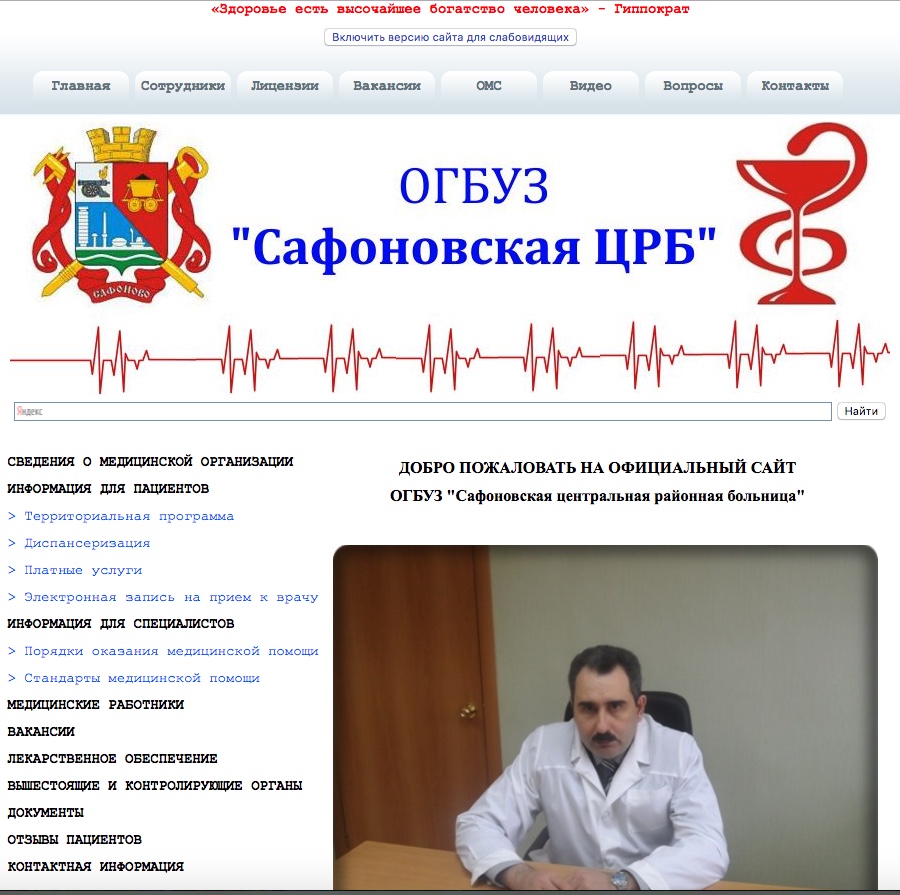
safonovo hospital homepageScreenshot of the Safonovo Central District Hospital’s website
14-Year-Old Girl Writes Letter to Putin, Kills Herself
Radio Svoboda
November 20, 2018

Identified only as Natasha, a fourteen-year-old girl who complained to Vladimir Putin about her mother’s low wages has committed suicide in the city of Safonovo in Smolensk Region.

According to local news media, the teenager also complained about bullying at school. She was visually impaired. Her classmates teased her by calling her “Cyclops.”

Shortly before her death, she posted the following message on her social network page: “Why are you all so mean?”

The newspaper Smolenskaya Narodnaya Gazeta writes that the fourteen-year-old girl’s mother worked as an orderly at the local hospital. After her daughter wrote a letter to Vladimir Putin and mailed it to the Kremlin, the women was summoned by hospital management and “scolded.”

As the newspaper writes, what happened to her mother was probably a huge blow to Natasha.

According to unconfirmed reports, a suicide note was found on the dead girl. She asked that no one be blamed for her death.

It is not known whether her letter reached the Russian president.

Translated by the Russian Reader. Thanks to Dmitry Kalugin for the heads-up.

You Gotta Fight for Your Right to Party

Involving Teenagers in Unauthorized Protest Rallies Could Cost as Much as One Million Rubles
Experts Say Authorities Won’t Find It Hard to Prove Charges
Olga Churakova
Vedomosti
July 11, 2018

Госдума готовится ввести многотысячные штрафы за вовлечение подростков в несанкционированные митингиThe State Duma plans to introduce hefty finds for involving teenagers in unauthorized protest rallies. Photo by Andrei Gordeyev. Courtesy of Vedomosti
On Tuesday, the State Duma’s Family Affairs Committee gave the go-ahead to a law bill that would introduce penalties for “encouraging” teenagers to attend unauthorized protest rallies. On Monday, the bill was approved by the government’s Legislative Affairs Commission. In its written appraisal of the bill, the Family Affairs Committee recommended clarifying the minimum age at which offenders would be held liable for violations, although the relevant committee reviewing the bill is the Committee on Constitutional Law.

Tabled by Alyona Arshinova, Anatoly Vyborny, and other United Russia MPs, the law would amend the Administrative Violations Code to include penalties of 15 days in jail, 100 hours of community service or a fine of 50,000 rubles for individuals who encourage minors to attend unauthorized protest rallies. Fines for officials would range from 50,000 to 100,000 rubles, while fines for legal entities would range from 250,000 to 500,000 rubles. A repeat violation could send individuals to jail for up to thirty days, while legal entities would be fined as much as one million rubles [approx. €13,800].

“In my experience, there is no such thing as a perfect law bill. As for the current bill, the relevant committee has not yet meet to discuss it,” says Vyborny.

However, Vyborny is certain the amendments are necessary.

“Children cannot resist the negative influence of adults. It matters to them to express themselves, and we hope this bill will deter them from ill-considered actions. Administrative liability will be a deterrent,” he says.

What matters is that young people are not drawn into a culture of legal nihilism, the MP argues. According to Vyborny, the bill does not aim to punish minors, but protest rally organizers. Hence, the age limit is defined in the bill.

OVD Info estimated that ninety-one teenagers were detained on May 5, 2018, in Moscow at an unauthorized protest rally to mark the inauguration of Vladimir Putin as president for the fourth time. According to OVD Info, at least 158 minors were detained nationwide on May 5 at similar protests. OVD Info estimated that a total of 1,600 people were detained that day.

Lawyer Oleg Sukhov says proving protest rally organizers are in violation of the new law would be a piece of cake. Rallies are organized in different ways, including personal contacts and public announcements.

“Our government is planning to deter all means of organizing protest rallies. It realizes this work on the part of the opposition will only intensify over time not only via the web but also through communication with young Russians,” notes Sukhov.

The main point is the government would not have to prove anything, argues Sukhov. Minors will go on attending protest rallies. Whenever they tell police they saw an announcement on the web, the organizers will be charged with violating the law according to a fast-track procedure.

“Clearly, the law will be enforced selectively. It’s a classic manifestation of the so-called mad printer. The terms used in the wording of the bill are not defined at all. For example, what does it mean to ‘encourage’ a teenager to attend a rally? Can teenagers attend rallies? They can. So, how do we figure out whether they attended on their own or were ‘encouraged’? We can’t,” says Navalny’s righthand man Leonid Volkov.

Volkov does not believe the law will be effective since protesters have been paying fines as it is.

“It is no accident this attempt to intimidate young people made the news today, the same day the Investigative Committee released a video about a teenager who goes to prison for reposting [‘extremist’ items] on social media. Of course, this will only produce new Primorsky Partisans,” Volkov concludes.

“Extremism Is a Crime,” a video posted on YouTube on June 25, 2018, by the MultiKit Video Studio. The annotation to the video reads, “A public service video on the dangers of extremism, produced by MultiKit Video Studio for the Russian Investigative Committee’s Altai Territory Office. The video will be shown in schools to prevent such crimes.”

__________________________

__________________________

KMO_156800_00022_1_t218_212746.jpgAlexei Avetisov. Photo by Emin Dzhafarov. Courtesy of Kommersant
Youth Policy Finds a Direction
Kremlins Finds a Specialist in Subcultures and Extremism
Sofia Samokhina, Maxim Ivanov and Lada Shamardina
Kommersant
July 11, 2018

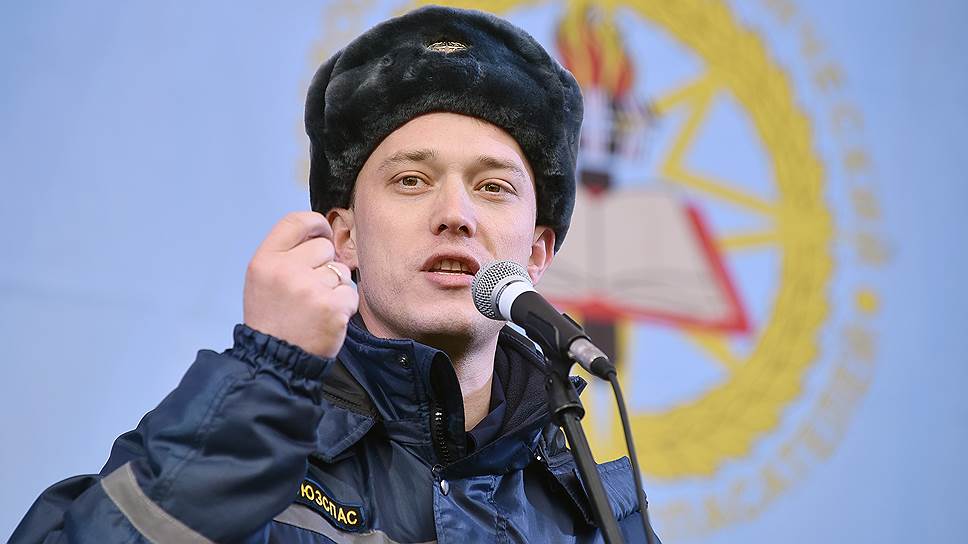
Kommersant has learned Alexei Avetisov, member of the Russian Public Chamber and president of the Russian Student Rescue Corps, could join the Office of Public Projects in the Kremlin. Avetisov has been tapped to head the Department for Combating Extremism among Youth. Ksenia Razuvayeva, head of Rospatriotcenter (Russian Center for the Civic and Patriotic Education of Children and Young People) has been named as a candidate for head of the Department of Youth Policy in the Office of Public Projects. Both candidates would still have to be vetted by the Kremlin.

Alexei Avetisov, member of the Russian Public Chamber and president of the Russian Student Rescue Corps, could head the Department for Combating Extremism among Youth in the Kremlin’s Office of Public Projects. Currently, the Office of Public Projects, which is run by Sergei Kiriyenko, the president’s first deputy chief of staff, has no such department. Our sources say Mr. Avetisov would be tasked with overseeing youth subcultures and decriminalizing the youth scene, in particular, by dealing with the popular AUE network of criminal gangs. The Presidential Human Rights Council discussed the issue with Vladimir Putin in December 2016.

Olga Amelchenkova, head of the Victory Volunteers Movement and member of the Russian Public Chamber, told us there were few organizations in Russia involved in volunteering in emergencies, and Mr. Avetisov was one of the few people who had constantly brought up the subject in the Public Chamber.

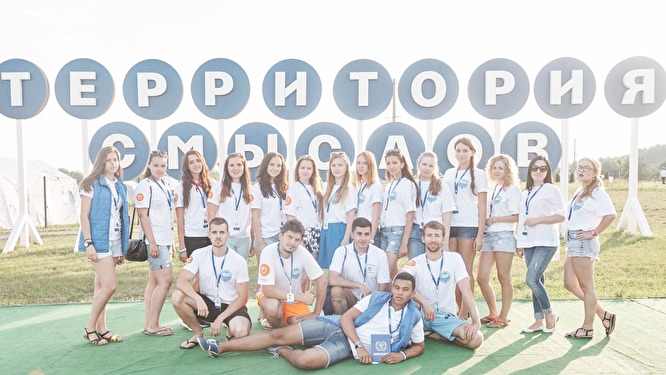
An acquaintance of Mr. Avetisov’s said his Russian Student Rescue Corps had brought many universities together. The organization took part in the first Taurida Camp held after the annexation of Crimea in 2014, an event attended by MPs and high-ranking officials. From 2015 to 2017, Mr. Avetisov was director of Territory of Meanings on the Klyazma, a youth education form, sponsored by Rosmolodezh (Russian Agency for Youth Affairs). His main job at the forum was providing technical support for the camp.

On June 6, Znak.com, citing its own sources, reported law enforcement agences were investigating Territory of Meanings on the Klyazma and, in this connection, “questions for the forum’s ex-director Alexei Avetisov could arise.” The website indicated companies allegedly affiliated with Mr. Avetisov had for several years been awarded “lucrative” contracts for constructing venues at the forum. The firms in question had no experience implementing government contracts. Currently, some of the companies have either gone out of business or are dormant, wrote the website.

Timur Prokopenko, deputy chief of staff in charge of the Office of Domestic Policy in the Kremlin, had been in charge of youth forums in recent years. He also handleded youth policy in his capacity as head of the Office of Domestic Policy. However, on June 14, a presidential decree turned youth policy over to the Office of Public Projects.

znakcom-2039402-666x375Territory of Meanings staffers. Photo from the camp’s VK page. Courtesy of Znak.com
Gazeta.Ru has reported that Rospatriotcenter head Ksenia Razuvayeva could take charge of the Office of Public Project’s Department of Youth Policy. Before taking over the running of Rospatriotcenter, Ms. Razuvayeva ran the Moscow branch of the Russian Volunteers Union and collaborated with the Young Guard of United Russia (MGER), which Mr. Prokopenko ran from 2010 to 2012. Ms. Razuvayeva would not confirm to us that she was moving to the Office of Public Projects Earlier, a source of ours in the Kremlin said she might not make it through the vetting process. Another of our sources noted a possible conflict of interests was at play. Ms. Razuvayeva also told us it was the first time she had heard about Mr. Avetisov’s moving to the Office of Public Projects.

“The vast majority of Young Guardsmen and other pro-regime activists brought up through the ranks in the past decades are supremely focused on their careers. The system simply spits out anyone else,” political scientist Abbas Gallyamov told us.

According to Gallyamov, “Changing colors for the new boss and refusing to have anything to do with people they worshipped only the day before are quite ordinary for this crowd.”

“Therefore, it does not matter whose people they were considered yesterday. They will be loyal to any boss, just because he or she is the boss,” Gallyamov added.

Translated by the Russian Reader

“It’s a Mystery to Me Why Women Don’t Recognize This Oppression”: Russian and Belarusian Teens on Gender Stereotypes

“You’re a Future Warrior!” Gender Stereotypes in School
Afisha Daily talked with teenagers from different cities who disagree with traditional gender roles
Afisha Daily
June 1, 2016

Lena, 16, Perm Territory
I started thinking hard about violations of rights a couple of years ago when I accidentally happened on a [social network] group featuring the stories of young women. The things they told about were horrifying: rape and domestic violence. But the criminals had not been punished because the police had found no evidence of crimes or no one had believed the young women. I wondered what had happened to justice if such egregious crimes went unpunished.

Since then, I have noticed more often the swinish behavior of males towards females, which is apparently considered the norm in our country. Men whistle at young women as they walk by, and they grope them just because they feel like it. Young women usually just put up with this.

I recently faced a similar situation myself. I like to dress nicely: not for anyone else, but for myself. One fine day, when I was walking downtown in a short skirt and high heels, an unpleasant elderly man touched my leg. My first reaction was shock. Nothing like that had happened to me before. I could not even react, and the man was able to get away. The outrage I had thus not been able to express swirled round in my head for the rest of the day. But it was a lesson to me. From now on, I will know how to behave in such circumstances. If something like that happens, I will try and stop the person from doing it, and then reason with him.

I often notice the unequal treatment of boys and girls at vocational school. We have only three boys in our group, but usually only one of them comes to class. There have been times when I was the only one to raise my hand to answer a questions, but the boy was picked to “take the rap for everyone,” because “the stronger sex must protect us.” During geography class, we learned about the unequal salaries of men and women for the same work. Someone shouted, “Serves them right!” The others laughed. In our nearly entirely female group no one voiced her disagreement. Was I really the only one who thought it was unfair? Back in high school, I was amazed when female teachers would say the main thing for girls was finding a good husband, while doing good in school was another matter.

I have also encountered injustice in the social networks. For example, there was a survey question: who should be the head of the family? The possible answers were “the man” and “both spouses are equal.” “The woman” was not even considered as an option, and more than half the people who responded voted for “the man.”

I am quite glad my parents really are equals in our family. Neither of them orders the other one round, and there is certainly no use of force. But I recently had an unpleasant conversation with Mom. It was explained to me that I would be a woman, and I would have to find a better half of the male sex (that was obligatory!) and have children, because it was, supposedly, my destiny. When I asked for arguments, I was told that was the way things were.

You cannot escape from the patriarchal mindset. We live in a country where ordinary life is closely bound up with the church and traditions. It is as if everyone has forgotten that ours is a secular country. I have the sense that our authorities judge people according to the Domostroi, which says you can beat your wife.

Some young women do not respect each other. As long as men see this, they will go on thinking they can treat them disrespectfully.

Mark, 17, Ivanovo
When I got fired up by feminism, many people thought it was really strange, because I was a boy. My outlook today is that I am against discrimination on any grounds. A lot of things have changed about me, but very little has budged in my environment.

It’s silly to deny the “adult” world is dominated by gender inequality. But things are worse in the world of kids, who have stereotypes and attitudes foisted on them. We are brought up on the standard system, which says that boys must be strong and are not allowed to shed tears, while girls must be dainty princesses.

School often abuses its right to educate children. It all starts with the school uniform. Your appearance, one of the most accessible forms of self-expression, is strictly regulated by other people. Then there is the division into “M” and “F.” Girls are taught to cook in home economics, while boys learn to be carpenters in shop class. Personally, I found it terribly offensive I was unable to learn to cook something tasty, although I consider it a wonderful occupation. Instead, I had to do stupid work that nowadays is done by wage workers for money. In physical education classes, we were divided into strong kids and weak kids. The boys, of course, were automatically the strong kids, so the physical education teacher would always be screaming at us, “Don’t give up! You’re a future warrior! Who is going to protect your wife?”

I felt less of this pressure in high school. Maybe it was because the teachers thought we had turned out “right” by then?

It is a touchy situation with friends. They have been brainwashed: the stereotypes are deeply rooted. They don’t want to see the framework into which they have been driven. They snap at me when I try to take into account the opinion of both boys and girls. As if our personal lives were already prescribed by someone in advance, and everyone follows these instructions.

Things are different at home. Everyone is family, and there is no one to fight with. My parents, who were raised in the seventies, project their gender attitudes onto me and my brothers. But can you blame them for this? My father sees us as future businessmen, entrepreneurs, and holders of high office.

Some might say that only in this way can we save humankind and a normal society. But who defined these standards, and why can’t we violate them? Nowadays, people have suddenly taken it into their heads to preserve certain truths. But if you take a look a history, you find that the “truths” have always been different.

I see feminist and similar ideas as a way out. I think activists should bring these ideas to the schools. Education has to be changed, not radically, but gradually. That is the only possible way to educate a society in which there will be no inequality.

Maria, 17, Transbaikal Territory
I live in a military town where nearly all the families consist of a wife and a husband in the military. The head of such families is the husband. He is considered the protector, and the woman is obliged to stay at home and do all the household chores. There are not so many jobs here nor any chances for self-improvement, either. These families have not even heard about equality. If the topic comes up, the conclusion is always the same. The husband is the breadwinner. The wife stays at home, meaning she doesn’t get tired, so she has no reason to pretend she is oppressed.

Having seen their fill of this, half of the boys definitely want to go into the military. It isn’t hard for them to achieve this goal. These fellows make it known to their girls right away that they should wait for them to come home from obligatory military service. And then, at the drop of a hat, they will have to give up their studies and their jobs and move with them to a godforsaken town to start their new careers as maids.

I have been trying to convey to others (including at school) that this is abnormal. Everyone takes it as a joke. The worse thing is that the girls have the same reaction as the guys. It’s a mystery to me why women don’t recognize this oppression.

I think that women’s rights are systematically violated just because feminism is a secret club spoken about in whispers, and even then not everyone gets to hear them. If all the stories about rape, abduction, and beatings were made public, everything would be a lot better. Women would give a lot more thought to the fact that such a number of crimes is not just a coincidence.

Nastya, 17, Minsk
When I was thirteen or fourteen, I wondered about all the gender stereotypes around me. I couldn’t understand at all why people encouraged this, and I fought back against equality, not even knowing what feminism was. When I found out there was such a movement I immediately supported it.

School is full of gender stereotypes, and that is sad. School should be a place where not only maths and history are taught but also respect. Even the teachers support inequality, to say nothing of the students.

Recently, our biology teacher told us, “If a girl says no, she means yes. Girls are all like that.”

And our home room teacher, a women, ended a public lesson on the bravery of Belarusian women during the war years by saying, “The point of a woman’s life is to have a family and raise children.”

She is a fairly religious woman. She is always saying that girls must be weak and bestow their beauty only on their husbands.

Once, in class, I said women were not obliged to have kids.

A male classmate replied, “If a woman doesn’t have kids, then what is she good for?”

The whole thing is sad.

Anton, 17, Moscow
Until the tenth form or so, I was dead set against modern feminism. I thought it was a total profanation and perversion of the suffragette movement. I changed my mind after meeting feminists and realizing the movement for equal rights was still relevant today as a means of combating domestic violence, rape, and discrimination.

Some girls might make fun of the reluctance of male classmates to go and serve in the army. They might voice incomprehension and ridicule. Personally, I haven’t witnessed such instances. What I saw has been limited to friendly teasing.

Teachers can sometimes have the gall to say boys should do physics, while girls have no need of it. That is a matter for their own conscience. Especially delusional persons have demanded that schoolgirls wear high heels, but that has led to nothing.

The stories my female classmates have told me have once again convinced me of society’s narrow-mindedness. Everyone already knows the list of stereotypes: hysterics and demands to “give us grandkids,” restrictions on socializing with the opposite sex, and insults based on a person’s sexual orientation.

Disrespect for one’s own children, students, and simply people, the rejection of any opinion except one’s own own, and fear of new things are just a short list of the ailments that have afflicted our society.

Translation and photo by the Russian Reader. See my previous posts in this occasional series on young people in Russia today and the moral panics generated around them by the media, politicians, and the public.

Sixteen Blue

“Putin Has Been in Power My Whole Life”
On the occasion of International Children’s Defense Day, The Village spoke with 16-year-olds about Vladimir Putin, social networks, and future plans
Lena Vereshchagina
The Village
June 1, 2016

Vladimir Putin has been in power, as president and prime minister, for over sixteen years. During this long period, a whole generation of people has come of age who never lived in the “pre-tandem” era and have a faint idea of what political succession is and why it is necessary. On the occasion of International Children’s Defense Day, the Village met with four 16-year-old schoolchildren and talked with them not only about politics and the permanent leader but also about social networks, the Soviet Union, and their priorities in life.

Vasya, 16. Photograph by Ivan Vanyutin

I am in the tenth grade at a French-language magnet school. I studied for six months in the US in the ninth grade. Things are definitely different there. I wound up at a private school where everything revolves around providing a full-fledged education. There was virtually no free time, and the schedule was quite hard. Under those circumstances, it is probably easier to find yourself. I remember I was invited to attend charcoal drawing lessons. They had everything to make them happen: a wonderful studio with huge windows and an unlimited supply of charcoal pencils. The atmosphere at my school in Russia is less creative.

Now I am in the physics and mathematics stream. Mom influenced my choice of specialization. She said the hard sciences were a good occupation for men. I am interested in programming. I would like my job to jibe wholly with my personal interests, for my profession to be my mission in life. At the same time, Mom has advised me to seek work abroad. Russia is going to stay put, after all, and working abroad can be a very rewarding experience.

We have not had a TV at home since 2006. When wired Internet became available, we immediately began using it alone. I try and spend as little time on the web as possible. I am aware that the flow of information from the social networks is unlimited. You read one thing, you get distracted by another thing, and you look through something else. You can fritter away your whole life like that. I try and be on the Internet for short periods of times. Sometimes, when I am riding the subway to practice, I get on the web and look at something.

I read voraciously. When I have free time and want to read a book, I read it without stopping. I can not pick up a book for two weeks, but then come home from school and blaze through the entire second volume of War and Peace in three hours. It took me two or three hours to read it. I read fairly quickly. I read it when I was ill, and then I immediately grabbed the third volume. Besides what is in the school curriculum, I read books Mom recommends. She gave me, for example, Yuri Lotman’s Conversations on Russian Culture and Vladimir Nabokov’s Lectures on Russian Literature.

I imagine the Soviet Union as a strict regime. I know that people could not just go abroad in those days. You could not just pick up and go to England or France. People had fewer opportunities.

The main principle I saw abroad was that power must change hands. But we have had the same president for sixteen years. Vladimir Putin has personally done nothing bad to me, and I wish him all the best.  But I realize it is beneficial for him to hold this office, and profitable for his friends. Power does not change hands, and accordingly society makes no progress in any direction. I think it is good when there is at least elementary competition. Some people in my class do not care about this. They are happy about the annexation of Crimea and believe it was legal. Some have never been abroad, but think the US and Europe have been behaving aggressively towards Russia, and now we are going to get up off our knees and show them all. Due to this, I have no desire to socialize a lot with my classmates.

My grandmother and grandfather live in Smolensk. They watch a lot of TV, and everything shown on TV is the unquestionable truth to them. It is really hard to talk with them about politics, so we have agreed not to touch the topic. Mom and I do not discuss politics, because we get home late and try and talk about peaceful topics.

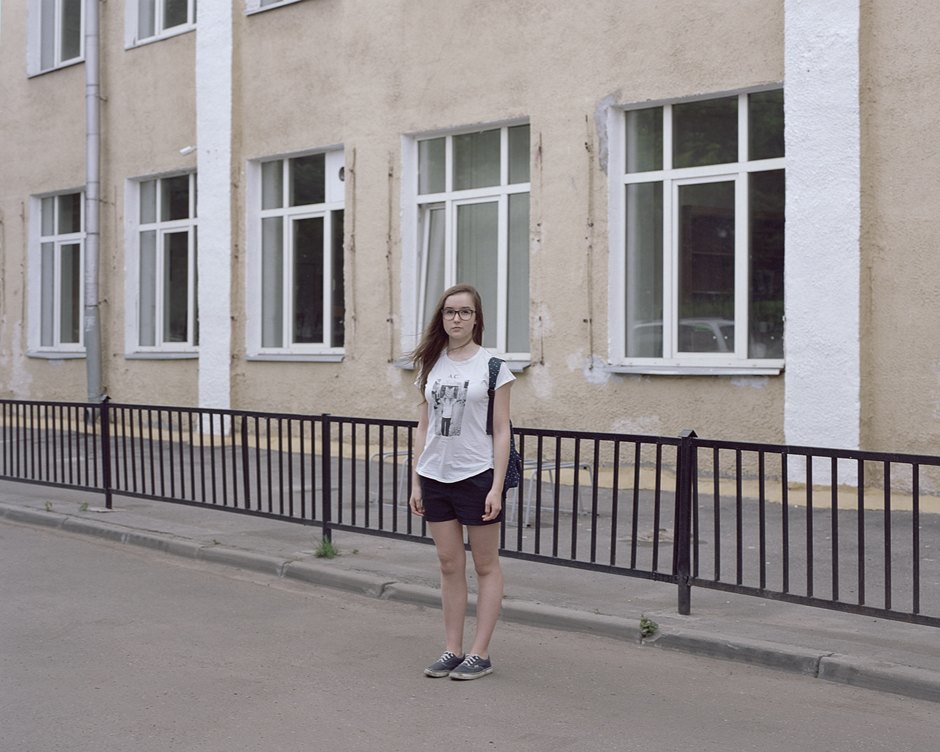
Nika, 16. Photograph by Ivan Vanyutin

I am a pupil in the Higher School of Economic’s magnet school in the liberal arts stream. I study literature, philosophy, cognition theory, and subjects related to philology. In the future, I plan on applying to the HSE and majoring in philology.

I read everything I can get my hands on, because for now I am only learning to distinguish good literature from bad. For example, I read the stories for teenagers Mom buys me, the things on the reading list at school, and beyond that. Right now, I am reading Leo Tolstoy’s novella Family Happiness. I also love Iain Banks and Richard Bach. I read about four books a month.

In my free time, I hang out and watch movies. What kind of movies? Everything under the sun. I like something simple. I watch a lot of TV series, even more than movies. They are somehow easier to process. My favorites include The Big Bang Theory, Friends, How I Met Your Mother, and Game of Thrones. I never watch TV. Only occasionally do I watch morning cartoons with my little brother.

My friends and I often discuss plans for the future, important world events, life at school, and other kids. I think the life of modern schoolchildren would be impossible without social networks. Many of our teachers also have accounts on them, and they often put our homework assignments on VKontakte to simplify things. I don’t spend more time on the social networks than anyone else: a few hours a day.

Some of the classes in my school are taught by teachers who are only twenty-five or so. In fact, we are not so different from them. They also spend time on social networks and socialize with their friends in a similar way.

I imagine the Soviet Union the way it is shown in old movies, meaning there are jolly schoolchildren and ice cream, it is always a beautiful time of year, and there are lots of tyrannical adults who tell the young people what to do. The 1990s, in my opinion, were really cool. You could easily get what you wanted without hassle. Without making any effort, you could make a fortune.

I don’t understand anything about Russian politics. I just know that Vladimir Putin runs the country, and some reforms should be implemented, but they are not being implemented. Or they are being implemented, but not in the way many people would like. But I cannot make heads or tails of it. At home, we do not touch on the topic, because my mom is not interested in politics. At school, if someone talks about it, I just listen and draw my own conclusions.

Putin has been in power my whole life. It is funny. I just don’t how it could be otherwise. I think everything is okay, and there have been no visible changes in my life over the past ten years. I think Putin has done a good job as president: no wonder he has been in power for such a long time. Meaning he has experience and knowledge that he can draw on. He is fairly influential, and the whole nation listens to him, so I think he is okay.  The other politicians whose names come to mind are Dmitry Medvedev, Vladimir Zhirinovsky, Sergei Shoigu, and Vitali Klitschko.

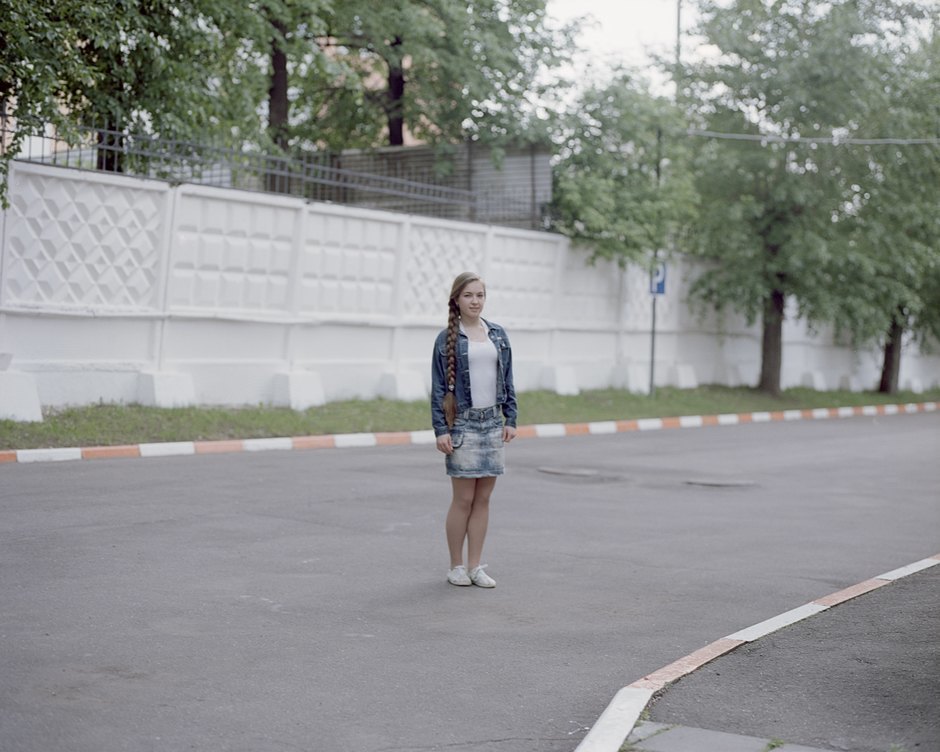
Arina, 16. Photograph by Ivan Vanyutin

I go to an English-language magnet school and am in the engineering stream. My favorite subjects are English, Russian, mathematics, and probably physics.

In the second grade, we went on a tour, and the guide asked us, “Who wants to be president?” No one replied, but I thought, “Why not?” I said out loud I wanted to be president. Since then the idea has stuck in my head. Now I am involved in youth politics and am a member of the Young Guard of United Russia. I have learned a lot of things about politics there. I have been growing personally, and meeting and socializing with lots of interesting people from this area. I don’t know what way life will turn, but maybe in the future I will be able to join the party, and if I don’t become president, I can simply be involved in politics. Politics attracts me, because I feel I can change things. I like situations in which there are business-like relationships, turns of events, excitement and competition, socializing with interesting people, and the possibility of taking responsibility and making important decisions.

I communicate with people on social networks, but I cannot say I hang out there. Sometimes, I make a point of not going on Vkontakte to read the news so I can get more done in real life, not in virtual life. I think life was more interesting before the advent of the Internet. Children were more focused, more interesting in learning and growing. But now the Internet does everything for them.

I don’t have much time to read. We are assigned a lot in school, so mainly I have to study the literature in the curriculum. My favorite Russian writer is Alexander Pushkin.

We are different from the generation of 25-year-olds. We have more technology, information, and stress. I look at children younger than me, remember what I was like at their age, and realize I didn’t know the words they know and couldn’t do the things they are able to do. I think 25-year-olds think the same thing about us.

It is a pity the Soviet Union collapsed. It was a good time. I cannot say that people lived very badly then. After all, the country was developing its industries, and the factories were working. But now, when practically none of it is left, it is hard to recover.

If you believe the stories, films, and history lessons, the 1990s were a time of bandits. Money and connections reigned then, and there were many murders. I have nothing more to add.

My classmates and I mainly take about our classes at school and the events we have there. I discuss politics with Dad. He enjoys talking about it.

I am fine with the fact that Vladimir Putin has been in power so long. After all, for anything to change, something like fifteen to twenty years have to pass. If any reforms are taking place, they include plans for the future. Such reforms are taking place right now. Of course, there are downsides to Vladimir Vladimirovich’s policies, but they are not overwhelming.

Putin is a strong and worthy president for our country. In the current circumstances, another leader would have done worse or would have been crushed. But not Vladimir Vladimirovich. I respect him.

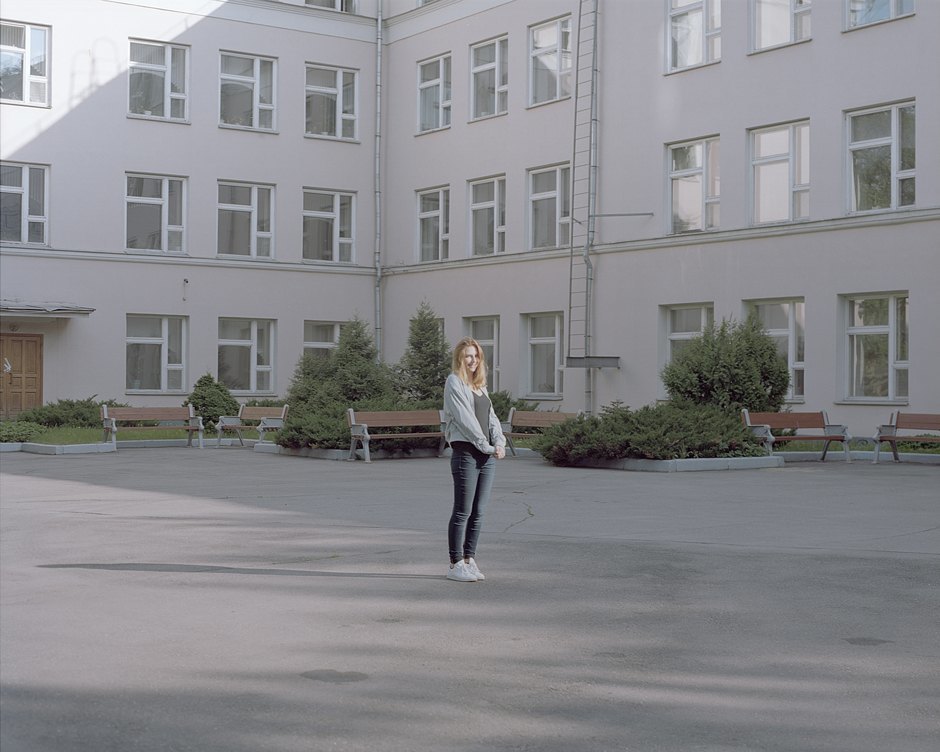
Masha, 16. Photography by Ivan Vanyutin
Masha, 16. Photograph by Ivan Vanyutin

I go to the Physical and Mathematical Lyceum, but I am in the socio-economic stream. I love social studies, history, and English, and mathematics, too. I hate physics and computer science.

I have also been studying German so that in the future I can go to university in Germany, a plan my parents have really been encouraging. I would not even think about leaving Russia were it not for them. I think students suffer in our country, and lecturers are not at all amenable to them. In Europe, on the contrary, they try to help and support students, and if they don’t get something, they explain it to them. I would like to work in the social sphere, for example, as a psychologist in some company, but for the time being it is just a dream.

My classmates and I often discuss the news, but not political news. Rather, we gab about what is happening in the world. And of course we gossip.

Throughout the day, I periodically log onto the social networks to reply to messages and read what friends have posted.  But now I have been conducting an experiment. I deleted my page on VKontakte, and I try to use the phone only in cases of real need. Then I started reading a book, and real life became more dynamic.

I read a lot, but I am rarely manage to read what I want. I spend a lot of time reading what is in the school curriculum. I have very little free time: every day there are tutoring sessions, extra classes, and evening courses. But when I get a free minute, I spend time with friends or alone, read, watch movies or play the guitar.

My parents and I have a tradition: we often watch TV series in the evening together, sometimes Russian series, sometimes American. But I don’t watch TV at all. There is simply no time for it.

I think people who lived in the Soviet Union had it very hard, simply because there was no freedom of choice. There were things you had to do, and things you could not do. Joseph Stalin was a very controversial person. Although maybe he was doing the best he could. I can believe this was what he thought.

I know that there was perestroika in the 1990s. According to Dad, things were very hard, because there lots of bandits.

I know quite a lot about current politics. My parents are ardently in the opposition. Since I was little, I have been hearing from them how bad Vladimir Putin is and how horrible Russia is.  Of course, I discount half of what they say, and I keep track of events in the country myself. I don’t like everything, of course, but I try to be nonjudgemental.

The accession of Crimea is one of the most significant political changes of recent times, of course. I think everything in Russia changed dramatically in the aftermath. Those two viewpoints: Crimea is ours or Crimea is not ours; I think everything went wrong then. One also immediately recalls Nemtsov’s murder. It is unclear why a leader of the Russian opposition was murdered on the street.

I have lots of thoughts about Putin. I said that Stalin, perhaps, had good intentions, but for some reason I am certain that Putin doesn’t have them. He says one thing, and then does the complete opposite, at least when it comes to fighting corruption. Corruption is well developed in Russia, but Putin tries not to do anything about it. There have also been reports (I don’t know whether they have been confirmed or not) that he has bought houses in Italy and Spain.

It is hard to imagine anyone else in Putin’s place, because he has been president my whole life. I even get a bit scared that he will never resign. Things are also complicated by the fact that I don’t see any other candidates for the job.

I am not sure that things will be better if someone takes his place. I think it depends not on the government, but on society itself. He has not just been sitting there for so many years. People have voted for him.

Translated by the Russian Reader. Photos courtesy of The Village. See my previous posts in this occasional series on young people in Russia today and the moral panics generated around them by the media, politicians, and the public.

____________