The Anti-Anti-War Movement

Ana Tavadze and Dachi Imedadze, members of Georgia’s Shame Movement. Photo: 60 MINUTES

Ana Tavadze: We’re going in with a government that’s completely corrupt, a government that’s pro-Russian, clearly anti-Western, clearly does not really care about what the majority of the population wants and needs.

Ana Tavadze and Dachi Imedadze are members of the Shame Movement – a group with thousands of young followers working towards Georgia’s entry into the European Union.

Ana Tavadze: If Russia wins, it means loss of freedom, loss of everything that we fought for in the past 30 years basically. It’s a fight for values, it’s a fight for where you want to stand in this big fight for democracy.

Dachi Imedadze: As soon as the West in any form, be it the U.S. partnership, be it the European Union, is not represented in this country, Russia will fill the void right away. 

They say the influx of Russians is already changing the face of Georgia.

Ana Tavadze: What are they doing, if we look at it? They’re buying apartments. They’re buying private property. They are opening up businesses. Their actions changed — Georgian economy.

Dachi Imedadze: The Russians are buying apartments here in every 33 minutes. They’re purchasing a piece of land in every 27 minutes. And they’re registering a business in every 26 minutes. So, I think we are on the brink of very dangerous situation here in Georgia.

According to public records, Russians have registered more than 20,000 businesses in Georgia over the last two years. And launched five new Russian-only schools, none of which are licensed by Georgia’s department of education.

Russians have driven rent up nearly 130%, prices for everything from food to cars have gone up 7%. over 100,000 Georgians have left the country because many of them can’t afford to live here anymore.

Sharyn Alfonsi: I’ve heard this described as a quiet invasion.

Dachi Imedadze: Quiet invasion, yeah. There is a risk of the economic diversions. There is a risk of military intervention. And there’s a risk of — Georgia’s statehood being destroyed. 

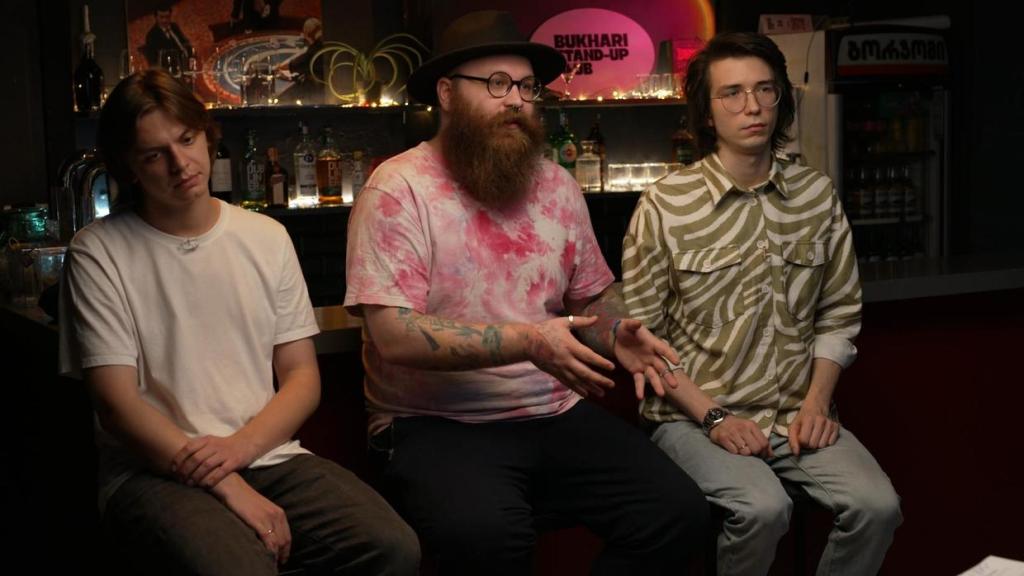
Emmanuil Lisnif, George Smorgulenko and Pavel Bakhadov don’t look like much of a threat.

All Russians in their twenties, they fled their country for fear of being drafted or imprisoned for speaking out against Putin.

George Smorgulenko, Emmanuil Lisnif and Pavel Bakhadov are all Russians living in Georgia. Photo: 60 MINUTES

They now live in Georgia and work at this Russian-owned comedy club in Tbilisi.

Emmanuil Lisnif: I try and said ‘I’m against the war in Russia. I was beaten. and after that going to prison three times.’

Sharyn Alfonsi: So three times you went to jail?

Emmanuil Lisnif: Yes, yes three times.

Pavel Bakhadov: I believe and I know that Russians actually against the war

Sharyn Alfonsi: You think that most Russians are against the war?

Emmanuil Lisnif: Yeah, just scared, really scared.

Sharyn Alfonsi: Have any of you had any aggression towards you because you’re Russian?

Pavel Bakhadov: Actually I have a big writing on the wall. It’s the biggest thing I see from my window, just big ‘Russians go home.’ 

There is no subtlety in spray paint… anti-Russian graffiti blankets the city along with support for Ukraine.

[…]

Source: Sharyn Alfonsi, “Denial of Georgia’s EU membership bid would be ‘a big victory for Russia,’ President Zourabichvili says,” 60 Minutes, updated 9 June 2024. The emphasis, above, is mine. ||| TRR


This text is based on interviews I did as part of the Hidden Opinions public opinion polling project, which I launched in 2022 and continued in 2023 and 2024. I spoke with dissenting Russians — with those who oppose the current regime and its military actions against Ukraine, both those who have stayed in Russia and those who have left the country. My youngest respondent at the time of the [first] survey was sixteen years old, while the oldest was seventy-two years old. These people hail from a wide range of professions and walks of life, but what they have in common is their categorical opposition to the actions of the Russian authorities. In just two years, I have interviewed 154 people for this project, some of whom I have spoken with two or three times.

In 2022, all of my respondents — both those who had left the country and those who stayed — espoused anti-war views and expressed a negative attitude toward the Kremlin’s policies. However, in 2023, about a year and a half after the war’s outbreak, a group amongst my sources in Russia emerged. Small at first, but constantly growing, it consisted of people who had changed their negative attitudes toward the war and/or the government.

This does not mean that such changes are impossible among those Russians who have left the country. Amidst a full-scale war, research based on representative samples is hampered by the fact that the most accessible respondents are those who have agreed to be interviewed as a result of self-selection. This is a significant limitation to the project.

My research is qualitative, not quantitative, meaning that it would be wrong to speak of a particular percentage of anti-war Russians who have become pro-war. I think it is important to study and understand how views are transformed and what triggers them to change. It is the subject of this text.

***

The sociologist and philosopher Zygmunt Bauman, experimenting with means of gauging the conservatism–to–radicalism spectrum, asked his students to do the following exercise. They were shown twenty drawings, the first one depicting a dog, the last one depicting a cat; in between, the dog gradually shed its canine features and turned into the cat. It was vital that the researcher record the moment when the test subjects had doubts about what exactly was depicted in the picture, when they realized that the dog had mutated irreversibly. In a sense, I have been doing something similar, trying to record the moment at which anti-war or anti-Putin views have been transformed into pro-war or pro-government views.

I have observed that such a change in views depends on a number of extrinsic factors, and the more such factors that are combined, the more likely it is that the person’s stance will change. In addition, a great deal is determined by an individual’s (psychological, social, etc.) resources. Finally, inconsistent views play an important role in transformation and adaptation. In recent years, sociologists have increasingly noted that people often pursue mutually exclusive goals simultaneously without noticing the contradictions in their own behavior.

New rationalizations, disillusionment and loneliness

The gradual realization that the war is a long-term affair, combined with Alexei Navalny’s sudden death in a penal colony, has had a considerable impact on those resisting the regime within Russia. One can swim against the current, but it requires a considerable amount of strength, something not everyone possesses. It is difficult to be amongst the minority for years on end, to conceal one’s views and live in fear of being reported to the authorities. Respondents have thus begun reformatting [sic] their attitude to reality, explaining events in a new light and providing new rationalizations.

Failing to receive the expected support from the outside world or the possibility of a dignified workaround, some of my respondents eventually chose non-resistance to the regime, which in some cases has transmogrified into full-fledged loyalty.

I don’t want to go to prison, I don’t want to play the rebel. I just want to live. If they send me to listen to ‘Exorcist TV,’ I’ll go without question. If they tell me to go to a [pro-war] concert, I’ll go. I’m not trying to convince anyone of anything anymore. I’m tired. I can only accept it and live the life I have.”

This stance is not directly bound up with support for the war or the regime. Rather, it indicates fatigue and the lack of strength to resist. If the circumstances shift in a direction more in keeping with their own values, these people will gladly slough off the “burden of adaptation.”

It is worth noting that, over the last year, many of my respondents have stopped following the news and focused on their daily lives. There are respondents who, despite the troubling times, have decided to have children. This is also a way of disconnecting from current events.

Another important factor influencing the change of respondents’ views is the narrowing of their circles of trust. Fearing denunciation, dissenters avoid making new contacts. Afraid of being alone and unwilling to live in fear, uncertainty and/or exile, they then join the majority.

The distance between Russians who have left Russia and those who have stayed in Russia has grown greater with every passing year. In 2022–2023, when I asked my respondents about opposition members who had left Russia, they most often would say nothing or would limit themselves to brief remarks along the lines of “We still watch them on YouTube, but they have less and less sense of what’s happening at home.”

Expressions of resentment and frustration have become more frequent in my interviews in 2024. My sources have said that the opposition often engages in wishful thinking and plays fast and loose with the facts, and that the west does not always act logically and decently.

Consequently, previously opposition-minded people have chosen to abandon painful and exhausting self-reflection in favor of loyalty to the regime. This helps them to get on with their lives, normalizing both the war and the political crackdowns. As one respondent put it, “Since the opposition and the west cannot be trusted, we will make friends with Putin. He is an ogre, but he is our own ogre.”

“Western countries seem to be doing everything to help Putin’s propaganda machine. I was quite surprised when I heard Angela Merkel say that all our negotiations were just a smokescreen: we wanted to let Ukraine catch its breath, and the negotiations were just a deception. That is, the leader of one of the largest countries in Europe openly says: a) we can’t be trusted in any negotiations, and b) we have conspired to deceive you. […] Putin’s propaganda machine skillfully makes use of this. But the point is not that the propaganda machine is using it, it’s that it is reality. As a normal person, a question occurs to me: if they treat us this way, [then] we are their enemies. After such statements, the ‘west’ is regarded as the enemy of Russians, and, accordingly, their enemy — Putin — is our friend.”

Those respondents who have changed their views on the war emphasize that when the west blocked their bank cards and accounts, when they heard what Ukrainians (including their relatives and friends) were saying about Russians and how they called for killing them, they decided that the current regime, whatever it was like, was less hostile to them on balance.

Tired of guilt, shame, disappointment and indignation, they have essentially chosen peace by joining the majority and accepting the existing rules: don’t discuss politics, don’t speak out publicly, swear to the values that the government declares. This choice seems reasonable to them in a situation in which no political activism is possible anyway, and the political crackdown machine is only picking up steam.

This strategy ensured material well-being and career success for some of my respondents. For example, some mid-level specialists in the IT sector received good positions and salaries, while for other people the involvement of their relatives in the war has been a means of social mobility and a source of access to material goods. Still others have benefited from the war by arranging parallel imports, etc.

Another factor contributing to the shift in sentiment from anti-Putin to pro-government has been the radicalization and polarization of society.

“A sharp delineation between ‘black and white’ leads to the opposite outcome. Any attempts to express doubts about the actions of the Ukrainian or western side are automatically regarded both inside and outside [Russia] as pro-Putin behavior, the outcome of brainwashing, etc. The other side appears infallible and beyond criticism.

“If you criticize the west’s actions in any way, you are automatically pigeonholed as a ‘Putinist.’ It makes me feel like saying: if that’s how you treat me, well, to hell with you, chalk me up as a Putin supporter.”

The state of rejection and isolation provokes protests amongst some people: since the west condemns them for staying in Russia, they “will go the full mile and become real orcs.”

The mechanisms by which feelings of rejection are transformed into collective pride have been described by researchers and are not unique to Russia. These feelings reinforce nationalist sentiments and contribute to the strengthening of authoritarian regimes.

Emotional dilemma

Speaking about the change in their views from anti-war to pro-war, my respondents noted that in one way or another they were surrounded by people who had suffered in the war: classmates or school friends who had been drafted to the front or had volunteered for combat, their children, colleagues, and mere acquaintances. Telling them straight to their face that their sacrifices were in vain had become both emotionally more difficult and more dangerous. To maintain relationships and friendships, my sources generally had to listen in silence to their acquaintances’ stories about what they had experienced and seen at the front. And if they were people who mattered to them, it was impossible not to sympathize with them.

We should understand that Russians who initially opposed the war and the regime but remained in Russia feel definitely closer to those who went to the front or delivered humanitarian aid there than to those who have left the country. They are “in the same boat” as their relatives, friends, and colleagues. They feel compassion for them.

“When we were teenagers, all sorts of things happened. If the guys were caught [by the authorities], I would perjure myself and lie in all sorts of ways. Later I could tell them what I actually thought of them, but I wouldn’t abandon them. That’s not the way that blokes do things. Now I realize with my head that they are wrong a hundred times over, but they are my boys, I am on their side. And even if I am against the war, I cannot be against them.”

Propaganda equates anti-war sentiment with betrayal, and it paints people who espouse such views as accomplices of Russia’s enemies, who want to kill as many Russians as possible. This causes a very heavy feeling, my respondents note.

Meanwhile, the state softens such emotional blows by offering loyal citizens new benefits and additional material and social goods, free concerts, and beautiful and comfortable urban environments, demonstrating concern for people in general and for those returning from war in particular. “People-centeredness” has become the buzzword in the PR strategies of many employers and officials throughout Russia.

Russians who are concerned about their neighbors also respond to calls for help front-line soldiers, because amidst war and external isolation it is these people with whom, they say, they “share a common plight.” One of my respondents, overwhelmed by such sentimental feelings, volunteered for the army.

As a religious man, he hoped he would not face the need to kill others, but would be able to help “his boys” without bearing arms, because he “could not stand on the sidelines any longer.” If the need to kill arose, he would desert, my source had decided, explaining that he was emotionally prepared to be beaten up and go to prison.

Another type of people whom I have encountered more and more often are those whom researchers Maria Lipman and Michael Kimmage have characterized as anti-anti-war: these people do not necessarily support the war, but they strongly condemn or resent “unpatriotic” fellow citizens who do not support the Russian army or who even take the side of Ukraine.

Seeing soldiers returning from the front and watching the growing number of Russians killed in combat, my sources now often place the blame not on Putin or the Russian military, but on their compatriots who oppose continuing the war until Russia achieves total victory.

Ressentiment and the “demons” of propaganda

Propaganda has awakened ressentiment in some of my respondents. They have come to believe that this war is really about maintaining Russia’s status as a great power, which its enemies are trying to flout and rob. Such people believe it vital that Russia maintain its status as a victor, and they accept the state-imposed version of Russian history that asserts Russia’s greatness in all periods.

War, as happens under autocracies and dictatorships, is seen as the ultimate manifestation of the nation’s strength and vitality and a guarantee that its culture and traditions will be maintained. In conversations with me, my sources have repeatedly used the phrase “releasing demons,” referring to the fact that the current situation helps their acquaintances and themselves experience a sense of unity and superiority over the rest of the world, a sense of their own righteousness and chosenness.

Some respondents noted that the official rhetoric, concrete and catchy, seemed more acceptable to them than the verbose arguments and meaningless self-reflections of the opposition.

Meanwhile, according to my respondents, the number of anti-war-minded Russians today is decreasing. Since Navalny’s death, I have often heard in interviews that every second or third person in the orbit of my sources has changed their views.

It is difficult to say how strong this trend really is. I would estimate that a third of those who unequivocally opposed the war and the regime when I spoke to them [initially] have changed their views, but of course these numbers are in need of supplemental verification, which is not easy to accomplish today. There are probably also people who have switched their pro-war patriotic views to oppositional ones, but I assume that we hear the voices of these people even less frequently.

Respondents who are in a state of uncertainty and/or in the course of switching their views feel the need for support, at least informational support. They need arguments explaining that anti-war sentiments are not a betrayal and that the current war is destroying Russia, not restoring its greatness. But they also acknowledge that such an argument would hardly convince them under the current circumstances. For now, the only thing they think they can do is to maintain their sanity and adapt to reality in order to live to see better days.

***

The Russian regime has proven to be “smarter” and more adaptive than Russian opposition activists and western democracies thought, but this does not mean there is no point or possibility of supporting by any means possible those who have remained in Russia and are still resisting the regime or straddling the fence. One way or another, positive change in Russia is impossible without their involvement.

Source: Anna Kuleshova, “‘I’m a person with anti-war views, but I suddenly found myself signing up for the front’: how and why Russians have changed their attitude to the war,” Republic, 4 June 2024. The emphasis, above, is the author’s. Translated by the Russian Reader

News from Ukraine Bulletin 101

Monterey, California, 7 June 2024. Photo by the Russian Reader

In this week’s bulletin: Ukraine and Palestine – Public discussion meeting on 11 Juneplus Life Under Occupation report; plus Russian assault on power stationsplus how Swiss peace summit could hurt Ukraine; discussion on Ukrainian punishment of ‘collaborators’plus Solidarity Zone’s support for Russian anti-war protesters.

News from the territories occupied by Russia:  

Kupiansk mayor who betrayed Ukraine injured in assassination attempt (Ukrainska Pravda, 8 June)

In occupied areas, Ukrainians refuse to give up their language (Kharkiv Human Rights Protection Group, 7 June)

Fake ‘trial’ incriminates Russia in abduction and torture of Ukrainian patriot Serhiy Kuris (Kharkiv Human Rights Protection Group, 7 June)

Crimean students’ grades lowered for not writing ‘thank you letters’ to Russian soldiers (Kharkiv Human Rights Protection Group, 4 June)

Occupied territories: Russian citizenship and propaganda (Zmina, 5 June)

‘Hero of Russia’ status for war crimes against Ukrainian civilians in Yahidne and Mariupol (Kharkiv Human Rights Protection Group, 3 June)

Life Under Occupation report (Alternative Human Rights Centre, May 2024)

The situation at the front:  

Weekly Ukraine war summary (The Insider, 8 June)

Overview from the front: Holding out for reinforcements (Meduza, 4 June)

Russian soldiers post video showing mock execution and other torment of Ukrainian PoWs (Kharkiv Human Rights Protection Group, 4 June)

News from Ukraine – general: 

Ukraine recovery could be a lifeline for children (Human Rights Watch, 7 June)

Human rights in Ukraine: punishment of businesses working under occupation: discussion (Zmina, 5 June)

Marianna Checheliuk emaciated and frail, but back in Ukraine after two years of torture in Russian captivity (Kharkiv Human Rights Protection Group, 3 June)

War-related news from Russia:

Support the fundraiser for Ilya Baburin (Solidarity Zone, 7 June)

To Not Die as Slaves: Solidarity Zone’s Mission to Aid Russia’s Radical Anti-War Protesters (The Russian Reader, 2 June)

Analysis and comment:

Oil finances Putin’s war and Trump’s political ambitions (Svitlana Romanko and Oleh Savitsky, Euromaidan press, 8 June)

Georgia: Resisting authoritarianism (Posle Media, 6 June)

Swiss peace summit could end up harming Ukraine (Ukrainska Pravda, 5 June)

Power station bombing redoubles pressure on Ukraine (Foreign Policy in Focus, 5 June)

International solidarity:

Thanks from the front line for a car (Mick Antoniw, twitter, 8 June)

UK General Election 2024: help Ukraine win (Ukraine Solidarity Campaign, 31 May)

Upcoming solidarity events:

Tuesday 11 June, 7.0pm: Discussion meeting: “From Ukraine to Palestine, occupation is a crime” – Tuesday 11 June, 7.00 pm. Marchmont Community Centre, 62 Marchmont Street, London WC1N 1AB, and on line. Register to attend on eventbrite here or register to participate on line here. Organised by the Ukraine Information Group.

This bulletin is put together by labour movement activists in solidarity with Ukrainian resistance. Please subscribe and tell friends. If people email us at 2022ukrainesolidarity@gmail.com, we’ll send them the bulletin direct every Monday. More information at https://ukraine-solidarity.org/We are also on twitterFacebook and Substackand the bulletin is stored on line here. To stop the bulletin, reply with the word “STOP” in the subject field. 

To Not Die as Slaves: Solidarity Zone’s Mission to Aid Russia’s Radical Anti-War Protesters

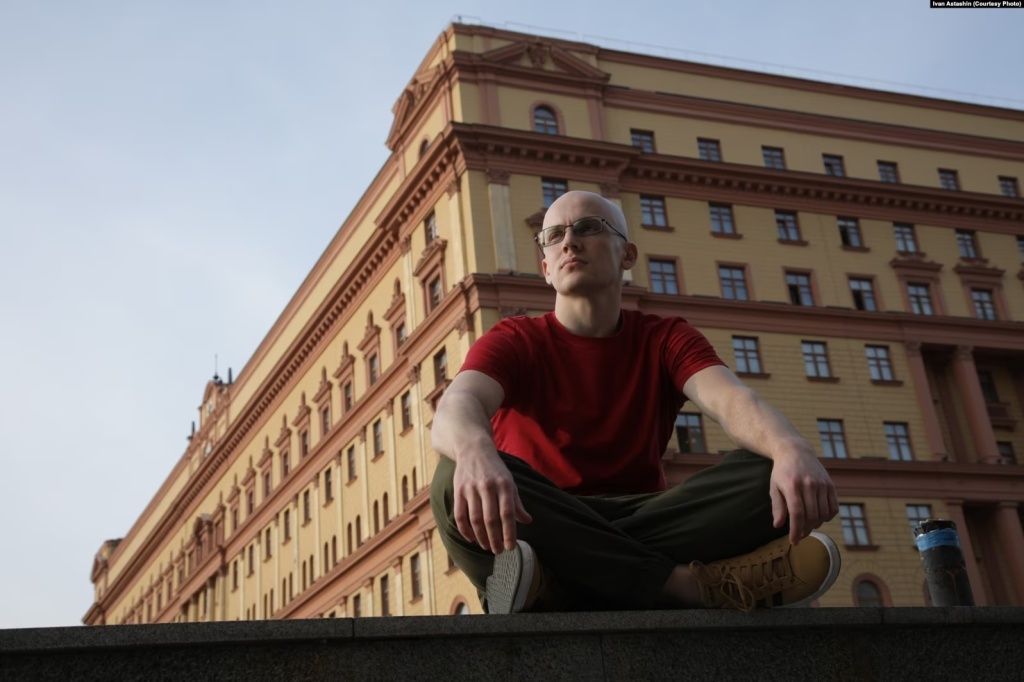
Ivan Astashin

Muscovite Ivan Astashin knows firsthand what human rights activism, Russian prisons, and terrorism and arson charges look like. As a young man, he was close to Eduard Limonov’s National Bolsheviks and was arrested as part of the high-profile Autonomous Combat Terrorist Organization (ABTO) case, in which a group of young men were charged with a series of arson and terrorist attacks.

At the turn of the 2000s and 2010s, this story was widely discussed in the media, sparking debates over whether the arson attacks were justified. Astashin was convicted of torching an FSB district office in 2012 and spent over nine years behind bars.

Upon his release, Astashin worked for Andrei Babushkin’s Committee for Civil Rights and was involved in defending the rights of prison inmates. In February 2022, Astashin joined the protests against the invasion of Ukraine and was soon forced to leave Russia.

Astashin is now involved in the campaign Solidarity Zone, which aids Russians who have been arrested for radical anti-war protests.


How did the “Solidarity Zone” come into being?

When full-scale war broke out, large protests took place in many Russian cities, and criminal charges were filed against protesters, both charges of “violence against police officers,” which have been routine at protest rallies (police officers themselves use violence, but they don’t pay for it), and charges that were newish for Russia.

There was Anastasia Levashova, who threw a Molotov cocktail at police officers. There was the case against Anton Zhuchkov and Vladimir Sergeyev: they were detained near Pushkin Square in Moscow on 6 March 2022 on their way to an anti-war rally. A Molotov cocktail was found in Sergeyev’s backpack. The police did not know what they guys were planning, so they were able to accomplish part of what they’d planned. Zhuchkov and Sergeyev had planned to commit suicide publicly at an anti-war rally as a sign of protest—they were so desperate. As they were being detained, they took lethal doses of methadone. The police failed to notice this. They put them in a paddy wagon and beat them up there, but on the way to the station the police realized that their detainees were quite sick and took them to hospital. They were saved in the intensive care unit at the Sklifosovsky Institute.

Zhuchkov and Sergeyev were sent from the intensive care unit to a pretrial detention center after being charged with “attempted disorderly conduct.” According to police investigators, the men had been planning to set fire to empty paddy wagons. When detained, Sergeyev said that they “wanted to torch a couple of paddy wagons,” emphasizing that it was empty vehicles they had intended to target. At first, we wanted to find out the address where we could write to Zhuchkov and Sergeyev at the pretrial detention center, so we asked OVD Info, but we also learned that OVD Info would not defend them, as theirs was not a peaceful protest.

We realized that none of the existing human rights organizations was willing to take on such cases. We decided to take on Zhuchkov and Sergeyev’s case: we published the address to which people could send them letters and found them a lawyer. A little later, the authorities started charging people with arson attacks on military recruitment centers, and so we decided that we should also aid such people. By September 2022, we had launched Solidarity Zone’s social media accounts and expanded our work.

Do I understand correctly that the attitude of OVD Info, Memorial, and other human rights organizations to people engaging in “non-peaceful” anti-war protests has changed? Have their motives become clearer to these human rights organizations?

Yes, their attitude has changed. As I see it, it changed after the military mobilization, when people began setting fire to military recruitment offices en masse in protest. Now it is easier to get announcements of fundraisers for such detainees reposted. But the position of human rights organizations has remained the same.

We had a public discussion with Sergei Davidis, head of Memorial’s Support for Political Prisoners project. He said these people should certainly be supported, that in most cases they have been wrongfully charged with violating Article 205 of the Russian Criminal Code (“terrorism”), but that whereas the criminal code articles on “discrediting” the army and “disseminating fake news” about the army clearly contradict Russian law and international conventions, and people charged with violating these laws can be designated political prisoners without a detailed examination of their cases, then with regard to people who attempt to torch military recruitment centers, Memorial examines the cases in detail and is guided by international criteria. They have designated twenty such people political prisoners, but the number of these cases is many times greater.

All human rights organizations have their own focus. OVD Info deals with cases related to peaceful protest; First Department, with high treason cases; and the Net Freedoms Project, with freedom of expression cases. Our cases do not fit these criteria. Before we started, there was no organization which was willing to support such people.

Is your campaign volunteer-driven? How many people are you assisting now? How do you define the people you support?

We support people who have been arrested for anti-war protests, for radical anti-war actions, although nowadays virtually all anti-war protests are radical. We handle cases where people actually set fire to a military recruitment center or a railroad signal relay box, and cases where they were merely planning to do such things.

Or they weren’t even planning to do such things, but the security services have fabricated a case against them, alleging that they were planning to torch a military recruitment center, as happened to Ivan Kudryashov.

We are currently supporting nineteen political prisoners. In almost all cases we pay their defense lawyers and organize fundraisers to this end, and in many cases we are also involved in arranging for parcels and care packages to be sent to the prisoners and replenishing their personal commissary accounts at their detention facilities. We talk publicly about their cases and similar criminal cases. We did a count in September 2023, and at that time there were around three hundred people in Russia facing criminal charges over radical anti-war protests. There was no further info on half of these people: we could not find out whether they were under arrest or wanted by the police.

We try to cover such cases as much as we can because we are a volunteer organization: we don’t get paid or have permanent funding, although we would certainly like to have such things. We raise money for political prisoners through cryptocurrency and PayPal donations. We also do personal ruble-denominated fundraisers to pay lawyers through the platform Zaodno (“In Cahoots”).

In the first quarter of 2024, we spent 900 thousand rubles (approx. 9,100 euros) paying for care packages and one-off visits by defense lawyers. When lawyers defend our prisoners in court, we organize personal fundraisers. Sometimes we hold events in Europe to raise money, and sometimes other campaigns hold events to raise money for us.

Let’s imagine that a programmer in Tver has been arrested for attempting to set fire to a military recruitment center. His relatives are scared: they are unlikely to want to do business with a volunteer campaign based in Europe. How do you reach out to those accused of anti-war protest?

Actually, we are increasingly being approached by relatives of arrestees as we are becoming famous. We are recommended in various chat rooms dealing with support for political prisoners. Often people contact OVD Info, and they suggest contacting us.

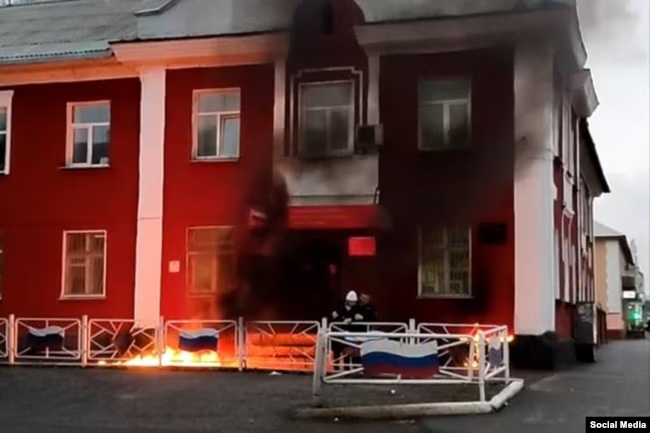
Aftermath of an arson attack on a military recruitment center in Kemerovo

We also search for information on detainees ourselves. If you have at least a first name and a surname, you can find the rest of the information in the public domain. But sometimes you cannot find out which thirty-year-old native of Voronezh has been detained. There are such case, unfortunately. Information can be obtained when a person is added to the list of “terrorists and extremists” via court filing. When a person is in the database, the locale of the pretrial detention center where they are held is identified as well. In many cities there is only one pretrial detention center, so we can dispatch a lawyer there to offer assistance to the arrestee and get their take on the case.

Some argue that publicity is not always beneficial to defendants in political criminal cases given the current conditions. Does Solidarity Zone not take this approach?

Our opinion is that publicity is beneficial in most cases. Despite everything, the security services still don’t like their lawlessness to become public. This still entails inspections, which, although they are formal procedures, are still unpleasant for them.

Publicity is a defense against torture and coercion. Also, you cannot raise money to pay a lawyer if there is no publicity. Without publicity, a person will not receive letters from supporters and well-wishers, but letters are very important. Publicity has practically no effect on the sentence nowadays, neither positively nor negatively.

So the lawyer is the prisoner’s link with the outside world? If a person ends up in this situation, they will still get a brutal sentence of ten, fifteen or twenty years or more, won’t they?

The lawyer is the only person who can visit someone in pretrial detention centers and penal colonies without limits on the number and length of visits. During the investigation phase of a case, relatives usually do not have visitation rights, especially if the individual has not pleaded guilty. So the support of a lawyer is very important.

As time goes on, this is less and less the case, but what the lawyer does can still affect the sentence. If a person has a court-appointed defense lawyer, they often tell them to agree to every deal offered by the prosecution and to sign every paper they ask them to sign, so the sentence will be shorter. Ultimately, however, the investigators and prosecutors add new charges, and the sentence is huge. But if there is a lawyer who really defends their client, they at least make sure that no new charges are filed.

A lawyer can go after the gross violations on the part of the state. Take Ivan Kudryashov: there was no evidence in his case, and so he should have been acquitted. But there are no acquittals in Russia, so he was sentenced to six years for “planning a terrorist act.” This is a short sentence by today’s standards, but his lawyer got it reduced on appeal to four years and ten months.

Although Ilya Baburin was just sentenced to twenty-five years in prison for violating six articles of the Criminal Code. For one incident—planning to torch a military recruitment center—he was charged with violating four different articles, for one and the same thing! And the lawyer could do nothing.

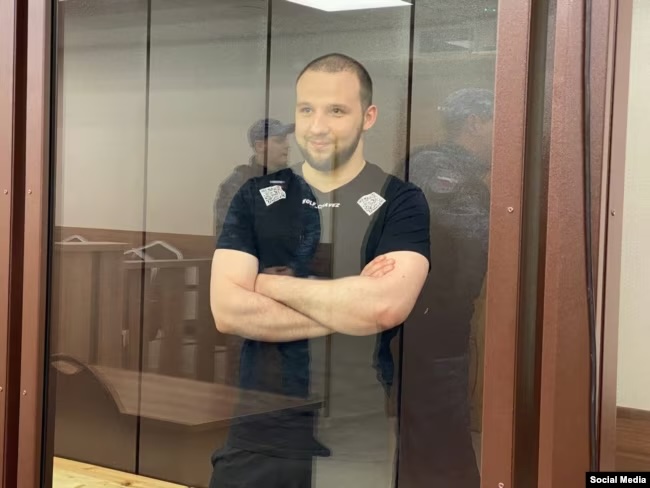
Ilya Baburin in court

There are news stories of phone scammers conning people into torching military enlistment office, of people being offered money on Telegram to torch railway signal relay boxes. Do you handle these cases?

We have been approached about such cases. Those people shouldn’t be in jail, of course. It is doubly cynical that the pensioners who were conned have also been charged with terrorism, although in terrorism cases what matters most is the person’s intent. We have limited resources, however, so we only assist people who take an anti-war stance, which is an important criterion for us.

You also have the criterion that the defendant not testify against anyone else. Whether they pleaded guilty or not doesn’t matter.

What matters is that they didn’t willingly testify against others. Anything can happen under torture.

The number of people who go down the road of torching military recruitment centers and railway relay boxes has not been decreasing, has it? Not all those who oppose the war and Putin have left the country or gone to jail, have they?

On the contrary. Whereas previously we tried to write about all arrests on such charges, we now realize that our small team cannot cover all the arrests because they occur almost daily. Often little is known about the detainees, but the news reports say that the person was on a mission for the Free Russia Legion, meaning that the person has an anti-war stance.

When a person engages in such actions, they seemingly first of all undergo an existential crisis because they live in a quasi-fascist empire that has also attacked its neighbors. Does this person want to do something even though they realize that their life may be in danger?

Yeah, that’s right. In the cases that are well known, the defendants say they wanted to do something, to take radical action by way of protesting.

In 2022, Navalny supporters were often detained for such actions, such as Igor Paskar, who threw a Molotov cocktail at an FSB building, or Vladimir Zolotarev, who set fire to a Russian National Guard building in Komsomolsk-on-Amur. People used to go to protest rallies, but then there were no more protest rallies. Another motive we can observe among such people (Zolotarev and the anarchist Alexei Rozhkov, who set fire to a military recruitment center in March 2022, spoke of it) is that they couldn’t tear themselves away from the news about Ukraine. At some point it was impossible for them to just read all of it: they had to do something as well.

When the military mobilization began, people realized that all of this was not happening somewhere far away, but could affect them. Many people realized that they would go to jail, but they went to commit arson because they thought it was better to go to jail than to go fight a criminal war. Roman Nasryev and Alexei Nuriyev were sentenced to nineteen years each for attempting to set fire to a military registration office in the Chelyabinsk Region. This phrase in Nasryev’s correspondence jumps out: “It’s time to start—or we’ll die as slaves.”

There are now people who are primed for a long-term confrontation with the military machine, for guerrilla actions, and for greater degrees of security. And if you look at the reports of sabotage, not every one leads to the capture of the perpetrators.

It is clear what could have prompted radical action in February 2022. In the autumn of 2022, it was the mobilization. But how can it be that someone tolerated the war for a long time and decides to act only now? Or are these just “guerrillas” who have avoided capture for a long time?

That is a good question, to which I have no answer. We know generally about those detained for radical protests in 2022, but there is still little data even for 2023. We can assume that some people went abroad in 2022, but had to return to Russia because they could not settle down here. Some people may not have resisted in 2022 because they hoped that everything would end quickly, but now they see that nothing ends by itself.

The case of Sergei Okrushko can be cited as an example. He is Ukrainian but has a Russian passport. In 2022, he went to Moldova, whence he wanted to enter Ukraine and work on humanitarian projects. But he was not allowed to enter Ukraine because of his Russian passport. He was forced to return to Russia. He got a job at an oil refinery (as an electrician) and set off an explosion there.

Are you also a wanted man in Russia? What are the charges?

The authorities have not yet responded to inquiries about what the criminal charges are, although my lawyer submitted a request over a month ago.


After this interview was recorded, Moscow’s Cheremushkinsky District Court published information that it had been petitioned to arrest Ivan Astashin in absentia on charges of “condoning terrorism.” Other details of the case are still unknown.

Source: Alexander Leonidovich, “Don’t Die Slaves: How Solidarity Zone Aids Anti-War Militants,” Radio Svoboda, 26 May 2024. Translated by Thomas Campbell. Thanks to Simon Pirani for the heads-up.

New Trumped-Up Criminal Charges Against Soviet Dissident and Russian Opposition Activist Alexander Skobov

Alexander Skobov. Photo courtesy of V. Izotov/Deutsche Welle

A new criminal case, on charges of “involvement in a terrorist community,” has been opened against former Soviet dissident and Russian political journalist Alexander Skobov, who has been detained for over a month on charges of “condoning terrorism.” This news was reported on Saturday, 18 May, on Skobov’s official Facebook account by his wife, Olga Shcheglova.

Shcheglova said that she visited her husband on 14 May in the pretrial detention center in Syktyvkar, where he had been transferred from St. Petersburg. During a conversation with him, his lawyer and local police investigators, she learned that Skobov has also been charged with “condoning terrorism” and “involvement in a terrorist community.” The dissident’s wife is convinced that these two charges stem from her husband’s affiliation with the Free Russia Forum.

According to Shcheglova, on 21 May, Skobov will be sent to the regional psychiatric hospital in Komi for a forensic psychiatric examination. Skobov himself has stated that he would not participate in the investigation and forensic expertise, and he would appear in court only if his mother were present at the hearings. Skobov’s defense has filed an appeal, which will be heard by the court on 22 May.

Skobov’s Persecution in the USSR and Russia

On 22 March 2024, Russian authorities designated Skobov a “foreign agent.” According to the Justice Ministry, he had “disseminated unreliable information” about the decisions of public officials, opposed the war, “identified the Russian Federation with a terrorist organization,” been involved in the work of an “undesirable organization,” and produced and distributed “foreign agent materials” [sic], the human rights project OVD Info reports.

In 1978, Skobov was arrested over his active involvement in the Left Opposition group and the samizdat publication of an anti-government magazine. He was later sentenced by the court to undergo treatment at a psychiatric hospital, from which he was released in the summer of 1987.

This time around, the political journalist was arrested on charges of “condoning terrorism.” Skobov was detained in St. Petersburg on 2 April 2024. In protest, the dissident refused to take with him to jail his diabetes medication and his glasses, despite his poor eyesight. According to the Telegram channel Memorial Support for Political Prisoners, the real reason for his arrest was “a [social media] post condoning the bombing of the Crimean Bridge.”

Source: Asya Miller, “New criminal case opened against dissident Skobov,” Deutsche Welle Russian Service, 18 May 2024. Translated by the Russian Reader


In early April, 66-year-old dissident Alexander Skobov was arrested for allegedly “justifying terrorism” in his posts online. For his friends and family members, the arrest came as no surprise.

Skobov, a long-time dissident who was made to spend seven years in a psychiatric ward after taking part in protests against the Soviet authorities in the 1970s, had published multiple posts condemning Russia’s actions in Ukraine since 2014. In March he was named a “foreign agent”, and since then people close to him said his arrest had seemed inevitable.

“He and I talked a hundred times about the fact that he would be arrested — if not today then tomorrow,” said Skobov’s friend Yuly Rybakov, a human rights activist and former deputy in the State Duma, Russia’s lower house of parliament. “People have been imprisoned for much less.”

Skobov’s 90-year-old mother, whom he lives with and cares for, said she had been having nightmares about his arrest for months before it happened, and Rybakov recalled that Skobov himself said he “didn’t understand” why the authorities hadn’t come for him yet.

Skobov’s children, who moved abroad long before Russia’s invasion of Ukraine, urged their father to flee the country when they saw him in Istanbul in early March. Other friends have also tried to convince him to leave and avoid arrest, citing his many health issues, including severe diabetes, hepatitis C, chronic obstructive pulmonary disease and near blindness.

But, Rybakov said, Skobov was resolute, telling him that he “wanted to be part of his own judicial process” when he was inevitably arrested.

Rybakov said that Skobov had been “driven to despair” by what had been happening in Russia in recent years and “felt that someone had to be radical”.

Another friend, Mikhail Sedunov, said that trying to convince Skobov to change his course of action was like “grabbing the wing of a plane that was already accelerating down the runway”.

On 2 April, masked policemen arrived at Rybakov’s flat, where Skobov had been staying. When Rybakov left to take the dog for a walk, the police reportedly entered the property, threw Skobov to the ground, twisted his arms and handcuffed him. According to Rybakov, Skobov “defiantly” refused to take either warm clothing, his diabetes medication, or his glasses with him, intending these gestures as an “act of protest”.

Skobov’s wife, Olga Shcheglova, managed to buy him replacement medication and glasses, which she brought to him ahead of his interrogation by Russia’s Investigative Committee. But Skobov refused to accept them — a reaction Shcheglova said she had “expected” from her husband.

Resistance to the authorities and a fight for justice had defined Skobov’s life for more than four decades. His first foray into political activism was in 1976, when he and other university students in St. Petersburg scattered leaflets calling for the “establishment of true humane socialism” and the “overthrow of the tyranny of officials” ahead of a meeting of the Communist Party of the Soviet Union. The students were expelled from university and brought before a court, and some, like Skobov, were then sentenced to compulsory treatment in psychiatric hospitals because, according to Rybakov, it was believed that “only crazy people could dislike the Soviet regime”.

Skobov’s radical spirit remained unquelled when he was finally released from hospital in 1981, however, and he immediately joined the Free Inter-Professional Association of Workers, a dissident group that led the first attempt to create an independent trade union in the USSR. In 1982 he was arrested for his involvement with the group and sent back to hospital, where he spent another three years.

In the early 1990s Skobov taught history at a secondary school for gifted students, writing and publishing his own award-winning textbooks. But later in the decade political activism again became the focal point of his life as he took part in protests against the Chechen wars.

When Russia annexed Ukraine in 2014, Skobov took to social media to rail against the regime, openly supporting Ukraine and condemning Russia’s military action. The same year, two unidentified men armed with knives attacked him outside his home in what his friends and family members say they are sure was retribution for his criticism of the regime.

Even this did not deter him, however, and his friends said his statements opposing Putin’s rule became “even sharper, more unrestrained, and more radical”. Speaking last year at the Free Russia Forum, an opposition conference held biannually in the Lithuanian capital Vilnius, Skobov condemned the regime more harshly than any of the other attendees, despite being one of the only participants still living in Russia.

Another friend of Skobov, Nikita Yeliseyev, said he doubted Skobov would survive the 7.5-year sentence that he is almost certain to receive.

“He is an old man,” Yeliseyev said. “And he has a number of very serious illnesses.”

Sedunov said all of Skobov’s actions stemmed from a desire to “struggle, as vigorously as possible, against the obvious evil represented by the current Russian government”.

“This is the way he was brought up: he wanted to fight evil any way he could. And this was the only way left,” Sedunov said.

Source: Dmitry Tsyganov, “‘Someone has to be radical’: Former Soviet dissident Alexander Skobov is determined to defend his beliefs — even if it means dying in prison,” Novaya Gazeta Europe, 8 May 2024


Aleksandr Skobov has been a thorn in the side of authoritarian governments for more than four decades, from the Soviet era to President Vladimir Putin’s long rule. And now, in pretrial detention in St. Petersburg and facing prison, he is in no mood for compromise.

“On principle I refuse to comply with fascist laws,” he told RFE/RL late last month, shortly after the Russian government designated him a “foreign agent” on March 22. “I don’t intend to get into debates with the government. I will not try to prove my innocence. I will not label my writings, and I will not write any financial reports for them.”

“A criminal case could be launched at any moment,” he concluded.

He was right: On April 3, the 66-year-old was arrested and charged with “justifying terrorism” for a social-media post about the Ukrainian attacks that damaged the Crimea Bridge that links Russia with the Ukrainian region of Crimea, which Moscow occupied in 2014. The following day, a St. Petersburg court ordered Skobov held in pretrial detention for at least two months.

“If you take any of my articles or YouTube videos, you can find a whole bouquet of possible charges,” Skobov said in the March 31 interview. “Discrediting the army. Inciting hatred and enmity. Justifying terrorism. The rehabilitation of Nazism. I directly equate the actions of the Stalin regime with those of Hitler’s during World War II.”

Another reason for Skobov’s prosecution, his supporters believe, is his leadership role in the Free Russia Forum, a group of mostly exiled opposition figures founded by former world chess champion Garry Kasparov and activist Ivan Tyutrin in 2016 that has been declared “undesirable” in Russia. If he is charged with participation in an “undesirable” organization, he could face up to six years in prison.

“I am a member of the forum’s council, and I regularly participate in its broadcasts,” Skobov told RFE/RL. “I help write its statements and official pronouncements. Several of them I have written myself. I am actively involved, and I do not intend to stop.”

Skobov said he was drawn to the group because “it was the only opposition organization that categorically rejected the idea of the peaceful transformation of Putin’s dictatorship toward democracy using the procedure established by that dictatorship.”

“It was the only organization that, beginning with the annexation of Crimea, unambiguously stood by Ukraine as a victim of aggression,” he added. “We try to help the Ukrainian Army and the Russian volunteer formations that are fighting with them.”

Writing on Facebook after Skobov’s arrest, writer and critic Mikhail Berg said Skobov suffered from “an unbearable fear of being afraid.”

“And that is why he chooses the most painful forms of criticizing the authorities,” he wrote. “He shouts even though the authorities have long been destroying people for whispering or even for just opening their mouths.”

Parallel Lives

Born in Leningrad, as St. Petersburg was called then, in 1957, Skobov participated in his first anti-government protest when he was 19. He and other members of an underground organization threw about 100 flyers calling for “humanistic socialism” from the roof of a downtown building on the eve of the 25th congress of the Soviet Communist Party. Several of the protesters were kicked out of their universities, but Skobov — a first-year history student at Leningrad State University — got off with a disciplinary meeting of the Komsomol youth group.

In October 1978, he was arrested for publishing an underground, anti-government magazine called Perspectives. He spent half a year in a KGB prison before being sentenced to forced psychiatric treatment.

“In the late 1970s and early 1980s, political prisoners in Soviet psychiatric hospitals were rarely forcibly medicated, although there were such cases, of course,” Skobov said. “But I was treated more or less OK. Most of the doctors that I encountered tried to avoid playing the role of executioners or stranglers.”

He spent three years in confinement.

In 1982, he was again sentenced to psychiatric treatment, this time for a samizdat article he wrote defending Chile’s former socialist president, Salvador Allende, who died in unclear circumstances in 1973, and criticizing the rightist dictator General Augusto Pinochet. That article was deemed “anti-Soviet propaganda.”

This time, Skobov spent five years in the hospital before being released in the summer of 1987 during the initial phase of Soviet leader Mikhail Gorbachev’s liberalization campaign.

In many ways, Skobov and Putin led parallel lives during this period. Putin was born in Leningrad almost exactly five years before Skobov and studied at Leningrad State University just before him. But as Skobov became drawn into a life of opposition to authoritarianism, Putin joined the KGB secret police.

The president’s official biography insists that Putin always worked for the KGB’s First Directorate, which carried out counterintelligence operations. However, rumors have persisted for years that he worked for some time in the Fifth Directorate, which was responsible for suppressing internal dissent and prosecuting political dissidents. At the time, a senior figure in that department was Viktor Cherkesov, a longtime member of Putin’s inner circle who served as his deputy when he headed the Federal Security Service — the KGB successor organization — in the 1990s and who died in 2022.

In 2022, journalist and researcher Konstantin Sholmov published a photograph of a KGB archival document from 1976 that he said was on display at the Political History Museum in St. Petersburg. The document, a protocol of a search of the residence of Leningrad artist and dissident Oleg Volkov, named “Lieutenant Putin” as one of the officers carrying out the search.

In 2013, a series of photographs emerged showing a 1989 Leningrad protest during which KGB operatives roughly detained dissident Valery Terekhov. One of the men in the photograph resembles Putin. The Kremlin later denied that the man was Putin, saying the future president had already been sent to East Germany by 1989.

Prominent human rights activist Aleksandr Cherkasov of the banned rights group Memorial told the news outlet Agentstvo earlier this month that he believes Putin was involved in the investigation of Skobov. He said Skobov had told him Putin staked out his Leningrad apartment in November 1982 when prominent dissidents gathered to celebrate Skobov’s birthday.

Despite the danger growing around him after he was designated a “foreign agent,” Skobov refused to consider emigration.

“I’m not going to quit,” he said.

“Today anyone in Russia who disagrees with Putin’s Nazi regime is taking a risk,” he added, “even if he doesn’t really stick out or act publicly. Since the regime has already made the transformation from ‘hybrid totalitarian’ to totalitarian, it demands not just silence from its loyal subjects, but active participation. And even avoidance can be dangerous.”

Opposition leader Aleksei Navalny’s suspicious death in prison on February 16 was “to be expected,” Skobov said.

“Navalny constantly laughed in [Putin’s] face, and a dictator cannot stand that,” he added. “Unfortunately, I don’t think it will be the last death of a political prisoner in Putin’s Russia.”

Source: Robert Coalson & RFE/RL’s North.Realities, “‘I’m Not Going To Quit’: Facing Prison, Soviet-Era Dissident Skobov Speaks Out Against War, Repression,” RFE/RL, 10 April 2024

Punitive Psychiatry for a Dissident Janitor in Northern Russia: The Case of Igor Yakunichev

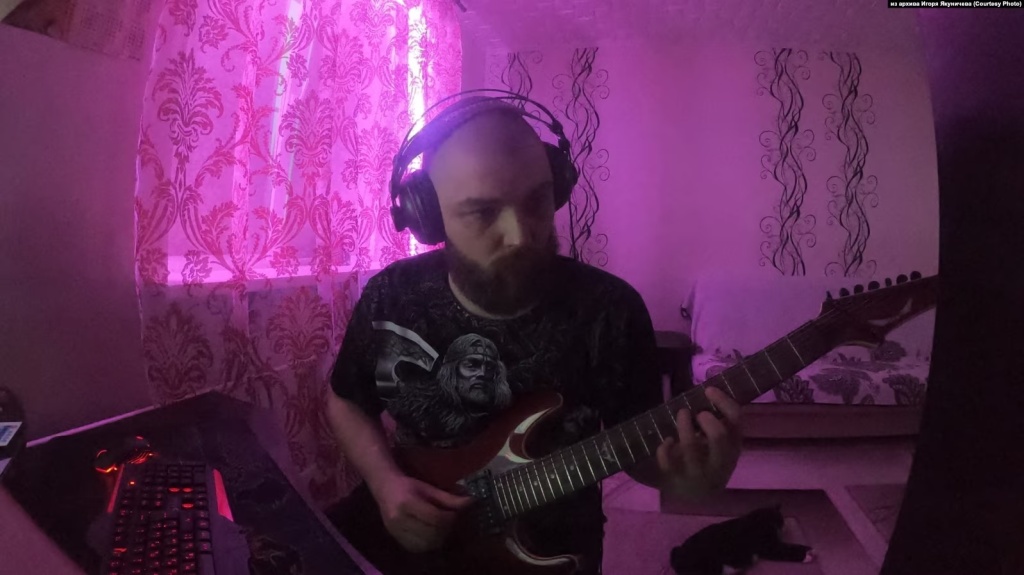
Igor Yakunichev

Five criminal cases have been launched against Igor Yakunichev, a resident of the Yamalo-Nenets Autonomous District. In addition to three cases on charges of “disseminating fake news” about the Russian army and “condoning terrorism,” the security services added two more cases on the same charges. On 1 April, Yakunichev, who started the YouTube channel Infinity Is Not the Limit (about the lawlessness of the police and the courts), was forcibly hospitalized in a psychiatric clinic in the Tyumen Region.

Yakunichev’s relatives are convinced that he has been subjected to punitive psychiatry because of his consistent criticism of the current regime. For more than a year, investigators in Yamalia have tried to put Yakunichev in jail on charges of “disseminating fake news” about the military and “condoning terrorism.” However, even a court-appointed defense lawyer could not induce the 35-year-old Yakunichev to “admit everything and mitigate his plight” When the criminal cases began to fall apart, the defendant, who had no psychiatric diagnoses, was shipped off to a mental hospital.

“The police broke into our house twice”

The police started calling Igor Yakunichev and coming to his home (he lived with his mother and father in Pangody, a settlement in Yamalia with a population of 11,000) in early 2023.

Pangody, a village in Yamalia. Photo courtesy of Igor Yakunichev and Radio Svoboda

“They would bring a ‘warning’ for him to sign, or they would summon him for an ‘interrogation’ and question him about his videos and posts. He started the [YouTube] channel when his family was cheated out of their housing,” says Igor’s relative Tatyana (whose name has been changed for security reasons). “Mother and father and son had lived for many years in two rooms in a barracks. Under the dilapidated housing resettlement program they were given a one-room flat. Igor fought against this lawlessness for many years, and he and his mother traveled many kilometers going to the courts. All to no avail. Then he began not only to take an interest in the state system but also to make and post videos about what is going on in Yamalia. He had come head to head with the injustice of the system back in 2015, when he worked at the property management company Our House. Another property management company controlled by them, Garant, was going bankrupt at the time, but for some reason all the employees at Our House were forced to apply to work shorter days (apparently, the whole business was being optimized). Igor refused [to sign], and after three months they up and fired him. He sued them and was reinstated, but he was pressured into leaving anyway.”

The local administration disliked the fact that Yakunichev fought for his own and other people’s rights. Consequently, despite his specialized secondary education, he could only find work as a janitor.

“He helped other residents get their cases through the courts. He became very adept in these matters: he knew all the laws well, especially the Housing Code. But there was no work in Pangody. (Yakunichev graduated from a technical college and worked as a mechanic — Sibir.Realii.) He was promised a job at Gazprom—he is a good mechanic—but then they admitted that they had hired ‘one of their own people,’ meaning somebody’s relative. And that’s how everything goes here. At the time, the cronyism made Igor quite angry, not the fact that he didn’t get the job: his janitor’s salary was enough for him. And in fact, he was already a blogger: he had bought a good camera and set up a studio for editing,” says Tatyana.

All of the Yakunichevs’ expensive electronic equipment was taken away by the police during their first “hard visit.”

“In the summer of 2023, [the police] broke into [the Yakunichevs’ flat] for real and slammed Igor onto the floor. His mother screamed, ‘His spine is broken! Don’t throw him on the floor!’ But what they did care, they hit him as hard as they could. Igor has had an implant instead of one vertebra since he was a student. When he was studying at Omsk University, he lost his keys and climbed through the window in the dormitory. The balcony was dilapidated: it broke off and he fell on his back. Since then he has had a bunch of diagnoses: cervical, thoracic and lumbar osteochondrosis. And when he is worried, he can have a seizure, and it’s like impossible for him to breathe. And so they wrestled this very unwell man, who is practically disabled, and threw him on the floor. Interestingly, the camera that Igor turned on continued to record even after his fall and almost the whole ‘wrestling match’ was captured. Igor later returned from the police station, restored the recording, and posted it on [his YouTube] channel. It made the police squeal to the high heavens!” says his buddy Ivan (whose name has been changed for his own safety). “In the background you can hear them yelling wildly, ‘Hands! Hands on your head!’ Who are they yelling at? A disabled man. And [you hear] Igor asking, ‘The cats! Watch out for the cats!’ so they don’t trample his pets. It’s just brutal!

Igor Yakunichev’s video of the police raid on his family’s flat

After the police’s visit, Yakunichev learned that a criminal case on charges of “disseminating fake news” about the Russian army (per Article 207.3.1 of the Russian Federal Criminal Code) had been launched against him as early as late March 2023. He has published his first social media posts against the war at the very beginning of the war in February 2022.

“He reacted very harshly when someone would voice support for the war in his presence. He would not get into a fight, but he could try and persuade [the person] and talk [to them] until he achieved understanding or until he got tired himself. He was one of those people who never got used to the war. He understood the risks, but he still would stick his neck out. He vented everything to the policeman after [the latter] accused him of disturbing the peace at the [Russia Day] celebrations in June 2023. After [he said] these words about the unjust war with Ukraine, which he threw directly in the face of the ‘representative of the authorities,'” they targeted him specifically,” says Ivan. “They accused him of spreading ‘fake news’ about the army, threatening him with fifteen years in prison for posts on VKontakte about the Russian military’s crimes in Bucha. He and his mother filed complaints about the violations [of his civil rights], about how he had been roughed up during the arrest, how all their electronic equipment, even his mother’s computer and phone, had been cleaned out. Can you imagine, they still haven’t returned it!

As part of the first criminal case, the court banned Yakunichev from performing certain actions. In early March 2024, this case came to court. That was when it transpired that at least four more criminal cases had been launched against Yakunichev. Even prior to this, in the summer of 2023, Igor had been charged with an administrative offense for “discrediting” the army and fined thirty thousand rubles [approx. 300 euros]. Yakunichev and his family were notified about it.

“The grounds [for the charges] were ‘funny’: a video about a memorial featuring a T-54 tank in the village of Pangody. Local vatniks had drawn the letter Z on it. And Igor said in the video[‘s annotation] that it violated the law on the protection of cultural heritage objects,” says Tatyana.

Igor Yakunichev’s silent video condemnation of a WWII memorial in Pangody turned into a pro-war Victory Day display.

Then, in November and December 2023, according to Tatyana, two more criminal cases were brought against Yakunichev under the same article of the Criminal Code (Article 205.2.2, “condoning terrorism”). He faces up to seven years in prison if convicted on these charges.

“The grounds [for the charges] were videos about the Free Russia Legion ([in which a Legionnaire expresses] gratitude for donations in the fight against ‘Putinist Russia’) and about the Kakhovka hydroelectric power plant. They weren’t even his own videos, but reposts of other media on his VKontakte page,” says Tatyana. “Later, we learned of the case launched under the article on repeated ‘discrediting’ of the army (Article 207.3.1), and then they seemingly merged it with one of the cases under Article 205 into a single proceeding. But the number of cases is frightening, don’t you agree? He regularly received notifications that one video or another had been removed from his page ‘by decision of the prosecutor’s office.’ He did not restore them: although he is a principled man, he was just tired and fed up.”

Free Russia Legion, “The Legion Returns Home” (2023)

His relatives are certain that Igor was deliberately driven to distraction with the interrogations and the notifications so that he would “blurt something out.”

“In June, the local beat cop showed up and made a completely delusional accusation. Allegedly, at the celebrations of Russia Day in June, [Igor] had been seen drunken in a public place and a complaint was filed against him. (That day, by the way, many people had seen him and testified that he was sober and orderly, so eventually the prosecutor’s office canceled this humiliating fine.) He videotaped this wannabe policeman, but he did not hold back and said everything he thought about this unjust war against Ukraine,” says a relative of Yakunichev’s. “I believe that this cop was the one who contributed testimony against him in the first case. Now it has gone to court, and Igor has been put away in a mental institution. Because they couldn’t put him under arrest: there was too little evidence of his guilt and ‘danger to society.’ But for some reason [the police] can take him to the madhouse themselves and obtain the court ruling retroactively. His mother has worn herself out filing complaints about such violations. It is urgent to replace the court-appointed lawyer with a normal one. Although [his mother] works as a cleaner, she is ready to pay all the money she has to a decent lawyer. Because the current one is a disaster: he hasn’t even been able to obtain a meeting with Igor once all month. [His family] receive paperwork about the cases against Igor months later, so they don’t know anything about the new cases against Igor.”

Igor Yakunichev’s confrontation with the local beat cop who showed up at his home to hassle him.

According to relatives, Yakunichev’s family is disappointed with the work of the court-appointed defense lawyer and now fears that Igor’s testimony will be extracted from him by torture in the psychiatric clinic, located in the village of Vinzili, Tyumen Region, a thousand kilometers from home.

“Read the reviews of the institution: former patients write such things it makes your hair stand on end—abuse and ill treatment by staff, medication administered without explaining to family and friends what the drug is and what it is used for,” says Ivan. “I think we need to get him out of there as soon as possible. Only a normal lawyer will help. By the way, this is not the first time [the authorities] have tried to subject him to punitive psychiatry. After his anti-war reposts, they were going to mobilize Igor. Yes, with his twisted spine and numbness in his chest! [Yakunichev’s family] went to the courts, got an independent forensics report, confirmed all the diagnoses, and it seemed to go away. And now this. I’m really afraid [the authorities] are not going to give up on this psychiatric hospitalization thing.”

Yakunichev’s relatives fear that the forensic psychological examination at the psychiatric clinic in the Tyumen Region will not be limited to the case and Igor will be kept there “indefinitely”.

The evidence in the last two criminal cases against Igor Yakunichev (on charges of violating Articles 280.1 and 207.3.2 of the Criminal Code) have still not been made available to his family.

“We found out from independent human rights activists—we don’t really know what he’s accused of,” says the relative. “Now they can’t even send you copies of previous cases, because during the search in April [the police] cleaned the Yakunichevs out: [they confiscated] their computer, which his mother had replaced, the telephone, even the TV set! They virtually robbed them so that they could do nothing at all, neither find a lawyer, nor send an electronic complaint.

Source: “Five criminal cases against a janitor: how the security services have been putting pressure on a dissident in northern Russia,” Sibir.Realii (Radio Svoboda), 30 April 2024. Translated by the Russian Reader. Thanks to Comrade Koganzon for the heads-up. Thanks also to Nanny Kim for generously continuing to support this website with her monthly donations.

Volunteers

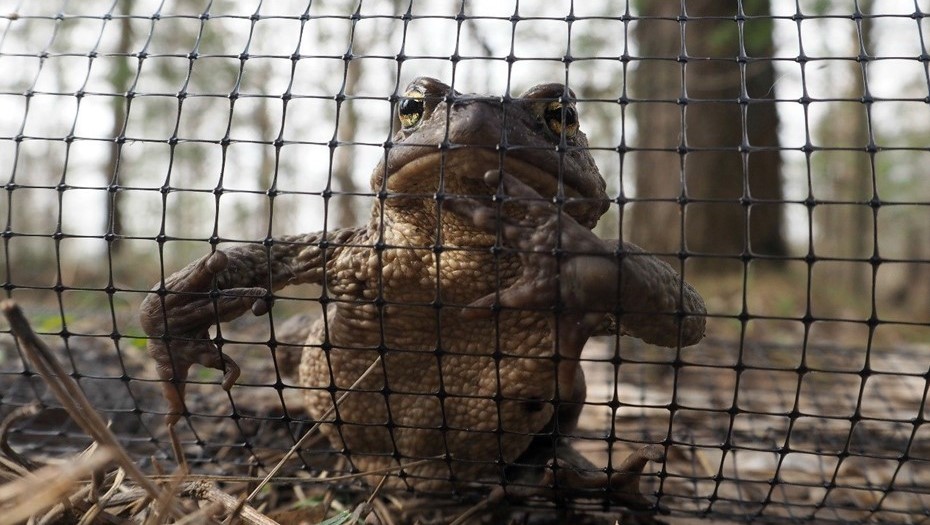
The St. Petersburg Natural Resources Management Committee has stopped signing up volunteers willing to carry gray toads across the road at the Sestroretsk Wetlands Wildlife Preserve. The committee was able to recruit the number of volunteers it needed in a single day.

The committee itself reported the end of the volunteer enrollment, thanking all those who had responded to the call to help the amphibians.

“Registration has been temporarily suspended, as enough volunteers have been recruited for the coming weeks,” the committee stated in its message.

Delovoi Peterburg learned that officials received an unprecedented number of calls and appeals during the day. Six hundred volunteers signed up to save the gray toads.

The largest population of gray toads in St. Petersburg and the Leningrad Region lives in the Sestroretsk Wetlands. Annually in early spring, they migrate en masse to the eastern shore of the Sestroretsk Reservoir to lay their eggs before returning to the forest [sic]. They cross the highway during their migration and can be hit by passing cars.

The Sestroretsk Wetlands Wildlife Reserve announced on April 8 that it was recruiting volunteers to ferry the amphibians over the road. Volunteers are allowed to carry amphibians across the highway after special training. Passersby who have not been trained are asked not to touch the toads, as improper actions can traumatize the amphibians and even cause their death.

Specialists consider toads to be particularly useful amphibians. According to scientists, toads consume about three times more pests than do frogs.

Source: “Smolny’s call to save toads in Sestroretsk causes stir among Petersburgers,” Delovoi Peterburg, 8 April 2024. Translated by the Russian Reader. Photo, above, courtesy of Delovoi Peterburg via vk.com/infoeco_spb.


Alexander Demidenko

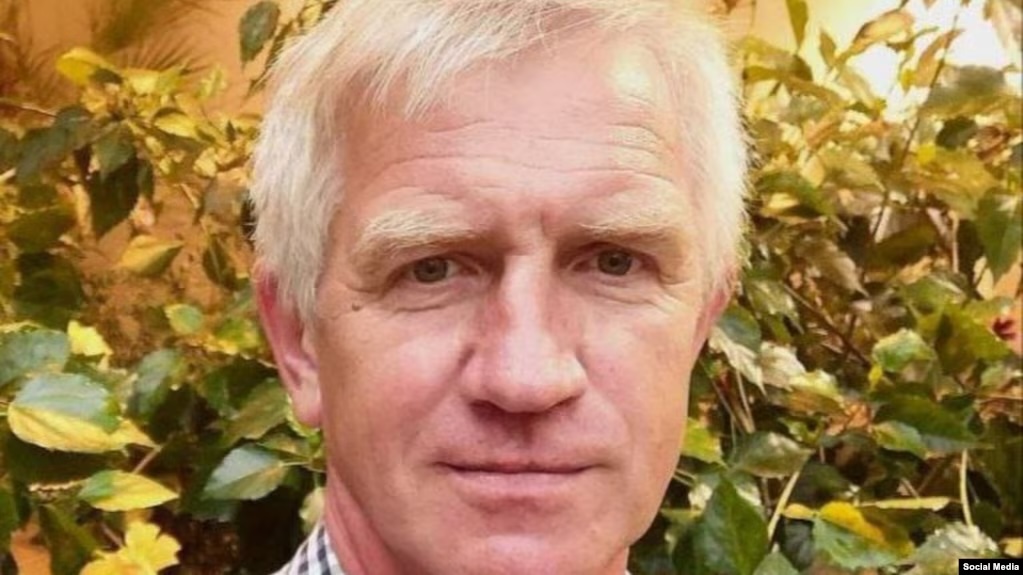
Russian volunteer Alexander Demidenko, who helped Ukrainian refugees [cross the border with Russia], has died in a pretrial detention center in the Belgorod Region, report Vot Tak and iStories, citing sources. It is claimed that Demidenko died on April 5, but news of his death was made public only today, after his lawyer had informed the deceased man’s wife and son.

The cause of death has not been reported, and there have been no official comments from the authorities yet.

Alexander Demidenko had been in custody since mid-October [2023] on charges of illegal arms trafficking. According to iStories, the authorities were planning to transfer Demidenko to St. Petersburg, where he was to have been charged with more serious crimes.

Since the beginning of Russia’s full-scale invasion of Ukraine, the 61-year-old Demidenko had attended anti-war pickets and helped Ukrainian refugees return to their homeland, driving them to the border and hosting them at his home. As many as 900 people who needed a place to sleep stayed in his home, as the border checkpoint was often closed due to shelling, Mediazona writes.

Demidenko disappeared at the Kolotilovka border checkpoint in the Belgorod Region on 17 October [2023]. According to volunteers, he had driven an elderly woman to the checkpoint, but in the parking lot he was stopped by two members of the the territorial defense forces. Subsequently, communication with Demidenko was lost.

Three days later, police officers brought Demidenko home and conducted a search, during which they allegedly found a grenade and detonator fuses from the 1940s. There were numerous bruises on Demidenko’s body.

On 20 October, Alexander Demidenko was jailed for ten days on administrative charges of drinking alcoholic beverages. He was released on 31 October, but the next day he was detained again and jailed for thirty days. During the second administrative arrest, he was arraigned on charges of illegal weapons trafficking and remanded in custody in the pretrial detention center.

In November, it was reported that Demidenko had also been charged with high treason. His lawyer, however, denied these reports. The volunteer’s stay at the pretrial detention center was extended several times on the original weapons charges.

Source: “Volunteer Demidenko, who helped Ukrainians, dies in pretrial detention center,” Radio Svoboda, 8 April 2024. Translated by the Russian Reader. Photo of Mr. Demidenko, above, courtesy of Radio Svoboda, via social media.

“Across the River They’re Making Chocolate”: Vsevolod Korolev’s Closing Statement in Court

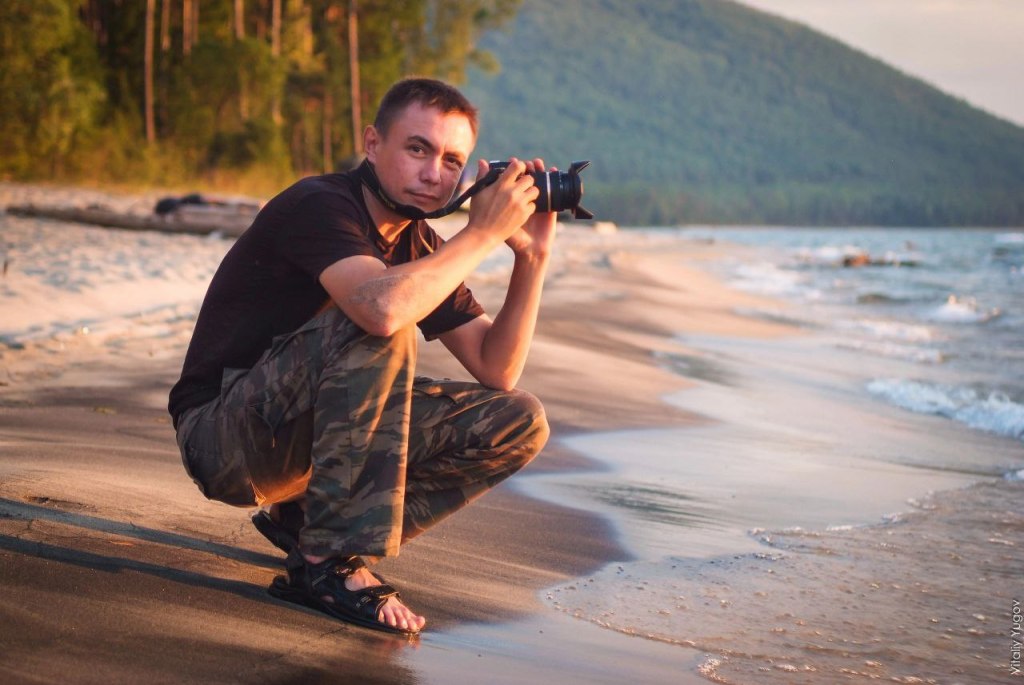
<Vsevolod Korolev

During his closing statement in court today the documentary filmmaker Vsevolod Korolev read a poem by Grigori Dashevsky:

1.

Across the river they’re making chocolate.

Out there the river-ice is breaking up.

And upriver we’re waiting, but for now

no bus comes, only its vacant ghost,

a desolate fleshless light flying ahead

to the engine’s howl

and the clatter of

the ad-slates changing.

We’re not cold, we bide our time.

The sky a deeper blue, the burning streetlights.


2.

To wait for each new minute as for a ghost,

to put on stage-paint for him alone,

to powder your face with light––and poorly it sticks,

but without it there’s nothing

to tell you apart: not from the many

faces—multitudes—

but from the lived-through years

which, like a star, are distant and weightless as smoke.


3.

But from the sweet smoke, the glory of heaven,

look up for a moment,

tear your eyes away
as from a book:

As much as a star has its shining

or a factory its smoke,

all things have

their limit: a book’s gilded edges

or a band of cloud.


4.

And turned from weddings not my own, and graves,

not waiting for the end, I rose

and saw an enormous room, a hall,

walls, walls, Moscow, and I asked:

where is the light that lit these pages,

where is the wind that rustled them like leaves?


5.

It’s late to be asking: each person is lit bright,

thrown open to the right dream

for the minutes, like pupils widened,

unscathed, like smoke or sleep:

they fly in, gleam, collect a promise:

Remember, remember (take leave of) me.


“I don’t intend to speak for very long. Your Honor, I am in some sense a colleague of yours, since I’ve worked as a third-tier soccer referee; I understand that you’re in a tough situation, it’s hard to envy someone stuck in the middle of this whole business. But nevertheless I have always believed in people and will continue to do so, even when it makes absolutely no sense. In any case I know this is really hard for you, but I think you’ll figure it out.” (Vsevolod Korolev)

“To ask for ten years when the maximum is ten and given the absence of aggravating circumstances and the evidence of mitigating ones—this goes against the fundamental norms of the criminal code. And this demonstrates for the umpteenth time the invalidity and baselessness of the prosecution’s case.” ([Korolev’s defense] lawyer Maria Zyrianova)

Source: Irina Kravtsova (Facebook), 18 March 2024. Translated by the Fabulous AM. Grigori Dashevsky, “Across the river they’re making chocolate,” trans. Ainsley Morse and Timmy Straw, The Hopkins Review 16.2 (Spring 2023): 18–19. Translation © 2023 Ainsley Morse and Timmy Straw, reproduced here courtesy of the translators.


Discourse journalist and documentary filmmaker Vsevolod Korolev has been sentenced to a three-year prison term on charges of “disseminating fake news” about the army.

During the trial on March 18 defense lawyer Maria Zyrianova noted that the case file did not indicate what information in Korolev’s posts had been determined to be knowingly false. Korolev is accused of making two posts on [the Russian social media network] Vkontakte about the mass murders of civilians in the Ukrainian cities of Bucha and Borodianka, as well as about the shelling of Donetsk.

The prosecution requested a nine-year prison sentence for Korolev. This, noted Discourse, was the longest prison term ever requested by state prosecutors for the charge of disseminating “fake news” about the Russian army.

During the court hearing on March 20, bailiffs at St. Petersburg’s Vyborg District Court recorded the names of those who came to support Korolev, SOTA reports. Earlier, SOTA published a recording of a telephone conversation between the bailiffs, in which they announced their intention to provide the lists of those who came to the trial to Center “E” [the “counter-extremism” police].

The Case of Vsevolod Korolev

  • Vsevolod Korolev is a documentary filmmaker and poet. He worked as a correspondent for the culture magazine Discourse and made films on social themes — about children with disabilities and political prisoners.
  • Korolev was detained in July 2022. During the search, his electronic devices were confiscated.
  • The prosecutors argued that Korolev’s documentaries about the political prisoners Maria Ponomarenko and Alexandra Skochilenko should be deemed an aggravating circumstance.
  • Linguistic expertise in the case was provided by linguist Alla Teplyashina and political scientist Olga Safonova from the Center for Expertise at St. Petersburg State University.
  • One of the prosecution’s witnesses later recanted their testimony.
  • In his closing statement at the trial, Korolev quoted a poem by Grigori Dashevsky: “It’s late to be asking: each person is lit bright, / thrown open to the right dream / for the minutes, like pupils widened, / unscathed, like smoke or sleep: / they fly in, gleam, collect a promise: / Remember, remember (take leave of) me.
  • Memorial has designated Korolev a political prisoner.

You can support Vsevolod Korolev by sending him a letter to the following address:

196655 St. Petersburg, Kolpino, Kolpinskaya Street, 9, FKU SIZO-1, Vsevolod Anatolyevich Korolev (born 1987)

You can also use the service FSIN-Pismo.

Source: Discourse journalist Vsevolod Korolev sentenced to three years for ‘fakes’ about the army,” DOXA, 20 March 2024. Translated by the Fabulous AM and the Russian Reader. People living outside of Russia will find it difficult or impossible to send letters to Russian prisons via regular mail or using online prison correspondence services such as FSIN-Pismo. In many cases, however, you can send letters (which must be written in Russian or translated into Russian) to Russian political prisoners via the free, volunteer-run service RosUznik. You can also write to me (avvakum@pm.me) for assistance and advice in sending such letters.||| TRR

Defenders of the Fatherland Day

Hi! This is Sasha from Just Work. We ‘re looking forward to the long Defenders of the Fatherland Day weekend. On this holiday, I would like to remind you that not only men, but also women can be defenders. Not only soldiers, but also firefighters, rescuers, doctors, and programmers — all those who help people in their daily lives and protect them from any even the most unusual threats.

Remember, delivery people were the heroes in 2020. They helped us during the quarantine, delivering food when going to the shop was not so easy. Delivery people were the real defenders during covid. You can’t argue with that.

Come talk to us on Telegram channel Workish about work, life and stuff. We’re always there.

“Putin identified the number of unemployed — And spoke about labour migration”

Source: Just Work (Rabota.ru) newsletter, 23 February 2024. Translated by the Russian Reader

The Case Against Mikhail Babintsev, Photographer and “Terrorist”

Military court of appeal to consider the case of photographer Mikhail Babintsev

In October, Mikhail Babintsev, a resident of Buryatia, was sentenced to thirteen years in prison: the investigation argued and the court ruled that his attempt to set fire to the military recruitment center in the village of Mukhorshibir was a a “terrorist act.” Mikhail disagrees with this ruling and has appealed the verdict. With support from you, we aided the prisoner’s family in paying the defense lawyer’s fees during the appeals phase.

Mikhail Babintsev

On 17 January, the Military Court of Appeal in Vlasikha (Moscow Region) will hear the defence’s appeal of the verdict.

Solidarity Zone argues that treating arsons of military recruitment centres as violations of Article 205 of the Russian Federal Criminal Code (“Terrorist Act”) is unreasonable and politically motivated. The same conclusion has been reached by Memorial’s Political Prisoners Support Project, for example, in the case of Roman Nasryev and Alexei Nuriyev.

The Military Court of Appeal is located in a closed military town in the Moscow Region. The headquarters of the Strategic Missile Forces is also located there. Therefore, no one is allowed to enter the court or the town itself, but a live broadcast of the court hearings will be arranged at the security checkpoint on the edge of the town.

Come follow the trial and support Mikhail with your presence!

🕙 10:00 a.m., 17 January 2024

📍 Military Court of Appeal, 25 Solnechnaya Street, Vlasikha, Odintsovo District, Moscow Region, Security Checkpoint 1

To travel by public transport from Moscow, you can use one of the following options:

  • from the Kievsky railway station by bus No. 477 to the Vlasikha security checkpoint;
  • from the Belorussky railway station (or from Fili or Kuntsevskaya metro stations) by train to Odintsovo station, then by minibus No. 46 to the Vlasikha security checkpoint.

☎️ We recommend that you call the court in advance at 8(495)598-74-29 and tell them that you wish to attend the court hearing so that the broadcast is definitely organised.

#political prisoners #crackdowns #no war #solidarity #arson attack #buryatia #court

Source: Solidarity Zone (Facebook), 12 January 2024. Translated by the Russian Reader

The Way Home: Wives of the Mobilized

The wife of a Russian soldier killed in action recorded a video message.

I would like to tell this story, if possible, from the very beginning. My name is Maria Ishkova, and I’m from St. Petersburg. I’m an absolutely genuine, living person. I’m no agent engaged in PSYOP.

All in all, my husband had been mobilized and deployed in the field with the Russian federal armed forces since September 2022, with periodic withdrawals [from the front] for rest and relaxation. But he had only one [home] leave during that whole time.

But none of that matters because yesterday—or rather, today—I learned that my husband passed away yesterday.

And that’s not all. The big thing I want to tell all the people who are fighting for the men they love—for their love, for their heart, for their life, for their fate—is that you’re out of time. You’re completely out of time because any day may be the fateful one.

I also want to say that I’ve now arrived in those selfsame new territories. I’ve come for my husband to Berdiansk, in the Zaporizzhia Region. And you know, I want to tell you that the people here have no need of [the war], no one has any need for it.

The people we love are simply getting killed for nothing. They’re of no worth to anyone.

I want to say that today—precisely today because I found out about it—my mind has split in two. One part of my mind, the lower part, it understands this grief, it grieves, it feels like weeping—all that stuff.

The second part of my mind, which has split off, it looks at all this a little bit from above and tries to understand how the world order could let such things happen.

And you know, I think that we ourselves are probably to blame for everything. I think that we let it happen by taking the minimal civic stance that we did—when each of us says, I don’t get involved in politics, it doesn’t interest me, it doesn’t worry me.

Each of us lived in this little world—where nothing mattered, where politics was decided by itself, where things happened of their own accord.

Now we find ourselves in a situation in which, basically, the chickens have home to roost because of our world view, because of our outlook on life. We were indifferent to these things, and now these things have devoured us.

The BBC and Mediazona have been able to ascertain the names of at least 40,000 Russians killed in Ukraine.

“Bring back my husband. I’m fucking tired of this shit.”

All over Russia, the wives and relatives of mobilized soldiers have been organizing protests to demand that their loved ones be returned home.

Source: Current Time TV (Instagram), 2 January 2024. Translated by the Russian Reader


I’m standing next to the Russian Defense Ministry. I’m doing a solo picket in the hope that we, the wives and mothers of mobilized men, will be heard. [I hope that] our pain will be heard, that our request to bring our husbands [and] our boys back home will be heard.

They are tired. They’ve been deployed in the special military operation zone for a year and four months with no rotation.

Personally, my husband has been sent on the attack. He has a master’s in applied physics. He works in IT. He has a child who is one and a half years old. When he was [mobilized], the child was three months old. But now he’s on the attack. People like him shouldn’t be sent on the attack.

Generally, all the mobilized men should be brought home: they need to rest. We demand that the period of mobilization of no more than a year be restored.

That’s why I’m here today, and I expect to be heard.

And what else do you plan to do if you’re not heard?

We’ll keep on going. We’ll continue to fight for our boys because we don’t really have a choice. Each time there are more and more of us. More and more wives, mothers, and sisters are beginning to understand that their inaction could get their husbands or brothers killed.

You don’t have as much time as you think you do. Every days could be the decisive one, the last one.

How long are you going to stand here?

I’m probably going to stand here until I’m finally frozen. Because the weather outside is frightful, to be honest. But I also know that my husband is facing even worse conditions, and the fact that I’m standing here in the cold for an hour or two cannot be compared with the fact that for a year and four months he has faced simply inhumane conditions without being relieved, and now, to make matters worse, he’s on the attack.

I’m not afraid to talk about it. I’m not afraid to fight because the worst thing that could happen has already happened.

Source: SOTA (Twitter), 6 January 2024. Translated by the Russian Reader


Nevertheless, if we disregard volunteers, prisoners and mercenaries, we can say with a high degree of certainty that by the beginning of 2024 the Russian armed forces will not have recovered the number of contract-based personnel that they had on the eve of February 2022. This is indirectly evidenced by other figures cited by the Kremlin: approx. 244,000 military personnel are officially at war today, while 650,000 people have gained combat experience since February last year, 458,000 of whom have already received certificates confirming their status as combat veterans. This, of course, includes both regular servicemen and mobilised personnel from various combat units, as well as those serving in the navy and combat support units, ground staff of military airfields, etc., servicemen of the Rosgvardia and Federal Security Service (FSB), mercenaries and volunteers, military personnel from the Donetsk and Luhansk People’s Republics, as well as police officers. And apparently, these 650,000 veterans include all: the living, the dead, the missing, the captives and the disabled.

And given the Russian servicemen’s numerous complaints about the lack of rotation, it is not clear—even taking all the losses into account—where the claimed 490,000 new contract soldiers could have dissolved, alongside the unclear number of ‘old’ contract soldiers and the remaining mobilised troops. Simply put, the figures on paper have ultimately diverged from the actual number of people in Russian troops.


Female activists calling for the return of mobilized Russians from Russia’s war against Ukraine held a series of solo pickets in Moscow. The actions took place near the presidential administration offices and the Defense Ministry, according to a post on the Telegram channel of the movement The Way Home (Путь домой) on Saturday, January 6.

None of the picketers were detained. According to a female activist who picketed outside the offices of the presidential administration, a Federal Protective Service called the police, but the latter, after arriving at the site, confirmed that solo pickets were a legal form of protest.

At the same time, SOTA notes that about fifteen wives of mobilized Russians laid flowers at the Tomb of the Unknown Soldier near the Kremlin. According to SOTA, five relatives of mobilized men laid flowers at the Eternal Flame in St. Petersburg, demanding the return of their loved ones from the front.

Calling for the return of mobilized men home

Wives of mobilized Russians have been increasingly active in recent months in demanding the return home of men who have been at the front for over a year. They have been holding flash mobs, going to protest rallies, and sending official letters to the authorities, demanding that the tour of combat duty for mobilized men limited to one year, that all wounded men be discharged, and that the list of illnesses for which they cannot be drafted be expanded.

The leaders of many regions have refused to allow relatives to hold protest rallies, citing the threat of COVID-19. The Kremlin has practically not commented on their demands.

At the end of 2023, the Russian Defense Ministry turned down a request by Boris Vishnevsky, a member of the St. Petersburg Legislative Assembly, to limit the tour of duty of mobilized Russians to one year. Their tour of duty will end as soon as the country’s President Vladimir Putin signs a decree ending the mobilization, the ministry explained. At the same time, presidential spokesman Dmitry Peskov said on 1 November 2022 that Putin’s decree was not required to end the mobilization.

Source: Pavel Mylnikov, “Wives of the mobilized hold solo pickets in Moscow,” Deutsche Welle Russian Service, 7 January 2024. Translated by the Russian Reader


“The Way Home: Wives of the Mobilized.” In Russian, with Russian subtitles.
Maria Ishkova (above) and the young female solo picketer featured in the second part of this post both make appearances in this film.

Russia mobilized 318,000 men for its war against Ukraine, according to Vladimir Putin. The so-called partial mobilization was announced in September 2022, six months after the start of Russia’s invasion of Ukraine. Many mobilized men and their relatives believed that the mobilization would be for a relatively short period of time, up to six months, although no official announcement was made.

Almost a year later, in August 2023, The Way Home movement emerged in Russia, uniting relatives of mobilized soldiers. Several female activists who had met in one of the numerous online groups for the wives and mothers of Russian soldiers decided to move from talk to action and created a chat room to coordinate their efforts. Initially, most of the chat room participants were loyal to the government and avoided politics. Over time, they realized that the mobilized soldiers were not going to be brought home, the local authorities were making empty promises, and the topic was taboo to the federal press, and so the activists turned to public protests to make themselves heard. They have refrained from criticizing the government’s decisions and the war itself, focusing on the sole goal of bringing the mobilized men back home.

On 7 November 2023, a group of women armed with placards attended a Communist Party rally on Manezhnaya Square in downtown Moscow. On December 7, the movement published a collective manifesto demanding demobilization. The Way Home became the talk of the town, and the community began growing rapidly while also coming under increasingly harsh attacks. Opponents of the war ridicule those who did not dodge the draft and obediently reported to military recruitment centers. Supporters of the war have declared the female activists “Navalny supporters. Television propagandist Vladimir Solovyov said that The Way Home was created by foreign special services for subversive activities. The community’s rallies are banned under the pretext of preventing the spread of covid, its female members and their husbands are visited by law enforcers, and The Way Home’s Telegram channel has been labeled “Fake.” (Pro-government blogger Ilya Remeslo said this was done after he filed a complaint.) Despite the pressure, the community continues to function.

Vladimir Sevrinovsky’s film Wives of the Mobilized tells the story of an activist in The Way Home who wished to remain anonymous.

Source: Signs of Life—Documentary Films by Radio Svoboda (YouTube), 5 January 2024. Annotation translated by the Russian Reader