The Way Home: Wives of the Mobilized

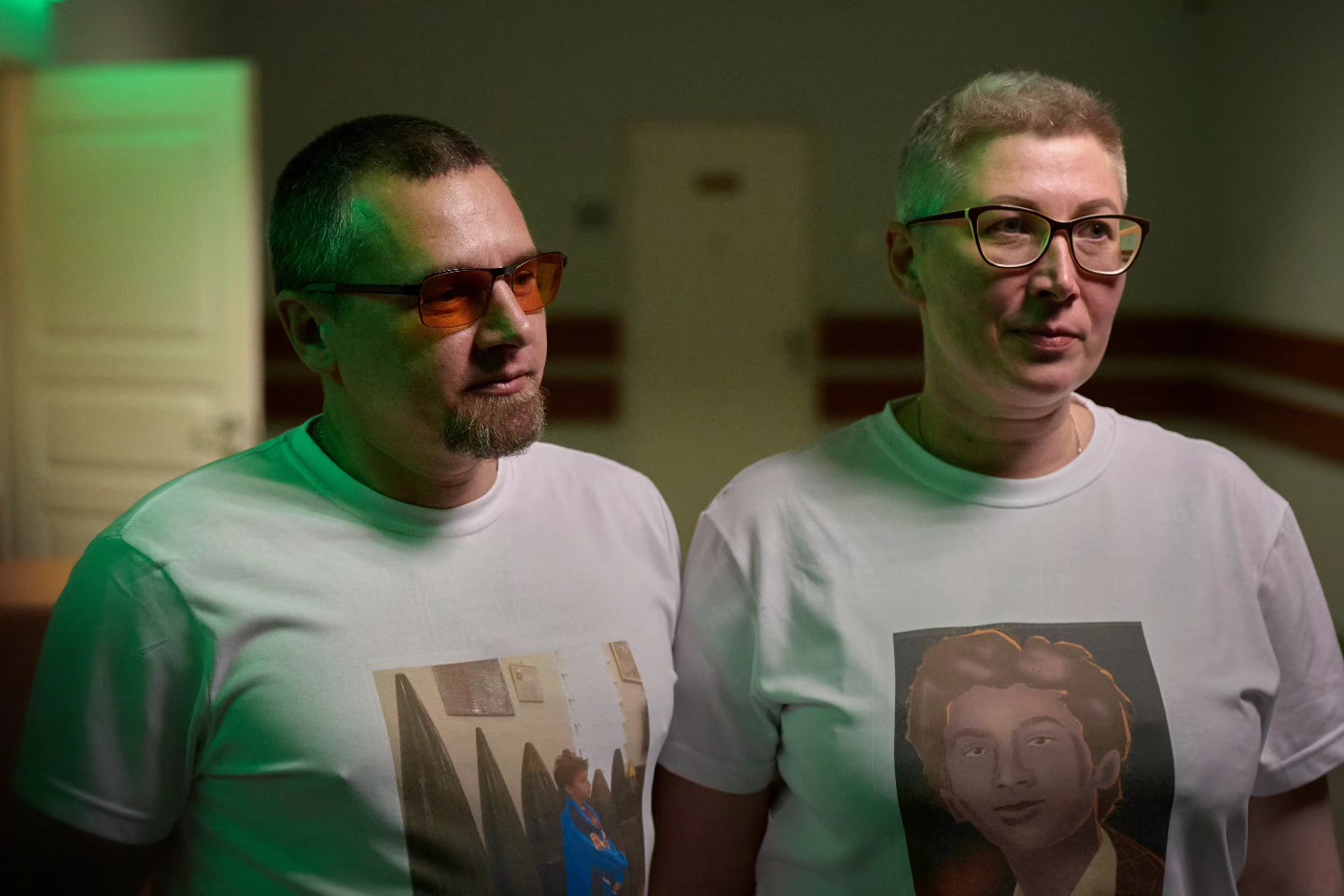
The wife of a Russian soldier killed in action recorded a video message.

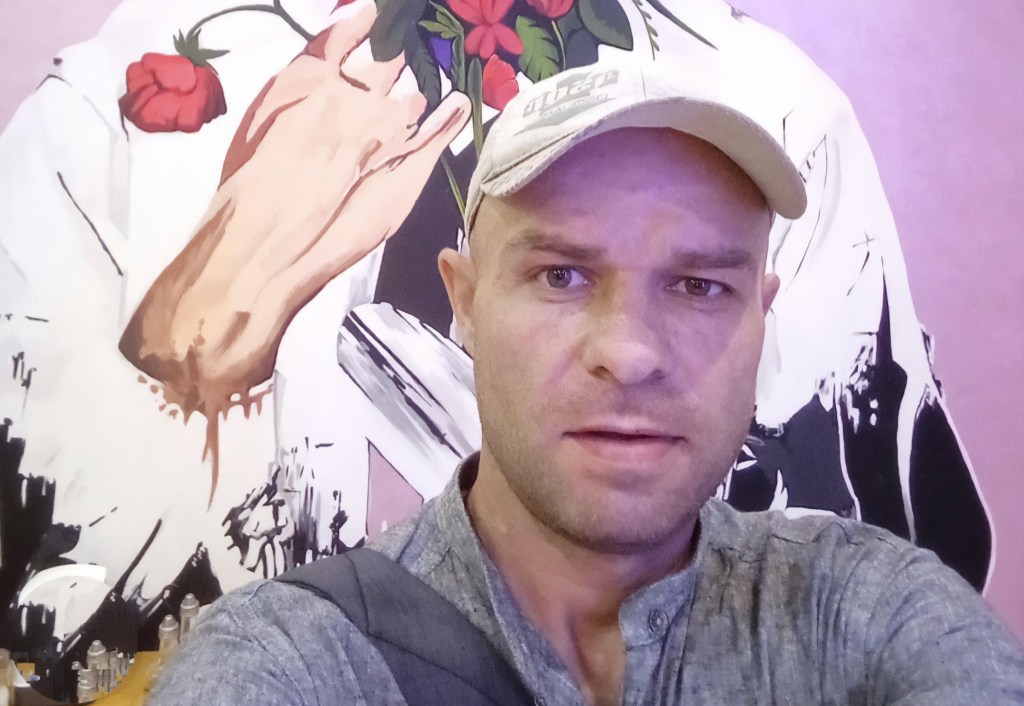
I would like to tell this story, if possible, from the very beginning. My name is Maria Ishkova, and I’m from St. Petersburg. I’m an absolutely genuine, living person. I’m no agent engaged in PSYOP.

All in all, my husband had been mobilized and deployed in the field with the Russian federal armed forces since September 2022, with periodic withdrawals [from the front] for rest and relaxation. But he had only one [home] leave during that whole time.

But none of that matters because yesterday—or rather, today—I learned that my husband passed away yesterday.

And that’s not all. The big thing I want to tell all the people who are fighting for the men they love—for their love, for their heart, for their life, for their fate—is that you’re out of time. You’re completely out of time because any day may be the fateful one.

I also want to say that I’ve now arrived in those selfsame new territories. I’ve come for my husband to Berdiansk, in the Zaporizzhia Region. And you know, I want to tell you that the people here have no need of [the war], no one has any need for it.

The people we love are simply getting killed for nothing. They’re of no worth to anyone.

I want to say that today—precisely today because I found out about it—my mind has split in two. One part of my mind, the lower part, it understands this grief, it grieves, it feels like weeping—all that stuff.

The second part of my mind, which has split off, it looks at all this a little bit from above and tries to understand how the world order could let such things happen.

And you know, I think that we ourselves are probably to blame for everything. I think that we let it happen by taking the minimal civic stance that we did—when each of us says, I don’t get involved in politics, it doesn’t interest me, it doesn’t worry me.

Each of us lived in this little world—where nothing mattered, where politics was decided by itself, where things happened of their own accord.

Now we find ourselves in a situation in which, basically, the chickens have home to roost because of our world view, because of our outlook on life. We were indifferent to these things, and now these things have devoured us.

The BBC and Mediazona have been able to ascertain the names of at least 40,000 Russians killed in Ukraine.

“Bring back my husband. I’m fucking tired of this shit.”

All over Russia, the wives and relatives of mobilized soldiers have been organizing protests to demand that their loved ones be returned home.

Source: Current Time TV (Instagram), 2 January 2024. Translated by the Russian Reader


I’m standing next to the Russian Defense Ministry. I’m doing a solo picket in the hope that we, the wives and mothers of mobilized men, will be heard. [I hope that] our pain will be heard, that our request to bring our husbands [and] our boys back home will be heard.

They are tired. They’ve been deployed in the special military operation zone for a year and four months with no rotation.

Personally, my husband has been sent on the attack. He has a master’s in applied physics. He works in IT. He has a child who is one and a half years old. When he was [mobilized], the child was three months old. But now he’s on the attack. People like him shouldn’t be sent on the attack.

Generally, all the mobilized men should be brought home: they need to rest. We demand that the period of mobilization of no more than a year be restored.

That’s why I’m here today, and I expect to be heard.

And what else do you plan to do if you’re not heard?

We’ll keep on going. We’ll continue to fight for our boys because we don’t really have a choice. Each time there are more and more of us. More and more wives, mothers, and sisters are beginning to understand that their inaction could get their husbands or brothers killed.

You don’t have as much time as you think you do. Every days could be the decisive one, the last one.

How long are you going to stand here?

I’m probably going to stand here until I’m finally frozen. Because the weather outside is frightful, to be honest. But I also know that my husband is facing even worse conditions, and the fact that I’m standing here in the cold for an hour or two cannot be compared with the fact that for a year and four months he has faced simply inhumane conditions without being relieved, and now, to make matters worse, he’s on the attack.

I’m not afraid to talk about it. I’m not afraid to fight because the worst thing that could happen has already happened.

Source: SOTA (Twitter), 6 January 2024. Translated by the Russian Reader


Nevertheless, if we disregard volunteers, prisoners and mercenaries, we can say with a high degree of certainty that by the beginning of 2024 the Russian armed forces will not have recovered the number of contract-based personnel that they had on the eve of February 2022. This is indirectly evidenced by other figures cited by the Kremlin: approx. 244,000 military personnel are officially at war today, while 650,000 people have gained combat experience since February last year, 458,000 of whom have already received certificates confirming their status as combat veterans. This, of course, includes both regular servicemen and mobilised personnel from various combat units, as well as those serving in the navy and combat support units, ground staff of military airfields, etc., servicemen of the Rosgvardia and Federal Security Service (FSB), mercenaries and volunteers, military personnel from the Donetsk and Luhansk People’s Republics, as well as police officers. And apparently, these 650,000 veterans include all: the living, the dead, the missing, the captives and the disabled.

And given the Russian servicemen’s numerous complaints about the lack of rotation, it is not clear—even taking all the losses into account—where the claimed 490,000 new contract soldiers could have dissolved, alongside the unclear number of ‘old’ contract soldiers and the remaining mobilised troops. Simply put, the figures on paper have ultimately diverged from the actual number of people in Russian troops.


Female activists calling for the return of mobilized Russians from Russia’s war against Ukraine held a series of solo pickets in Moscow. The actions took place near the presidential administration offices and the Defense Ministry, according to a post on the Telegram channel of the movement The Way Home (Путь домой) on Saturday, January 6.

None of the picketers were detained. According to a female activist who picketed outside the offices of the presidential administration, a Federal Protective Service called the police, but the latter, after arriving at the site, confirmed that solo pickets were a legal form of protest.

At the same time, SOTA notes that about fifteen wives of mobilized Russians laid flowers at the Tomb of the Unknown Soldier near the Kremlin. According to SOTA, five relatives of mobilized men laid flowers at the Eternal Flame in St. Petersburg, demanding the return of their loved ones from the front.

Calling for the return of mobilized men home

Wives of mobilized Russians have been increasingly active in recent months in demanding the return home of men who have been at the front for over a year. They have been holding flash mobs, going to protest rallies, and sending official letters to the authorities, demanding that the tour of combat duty for mobilized men limited to one year, that all wounded men be discharged, and that the list of illnesses for which they cannot be drafted be expanded.

The leaders of many regions have refused to allow relatives to hold protest rallies, citing the threat of COVID-19. The Kremlin has practically not commented on their demands.

At the end of 2023, the Russian Defense Ministry turned down a request by Boris Vishnevsky, a member of the St. Petersburg Legislative Assembly, to limit the tour of duty of mobilized Russians to one year. Their tour of duty will end as soon as the country’s President Vladimir Putin signs a decree ending the mobilization, the ministry explained. At the same time, presidential spokesman Dmitry Peskov said on 1 November 2022 that Putin’s decree was not required to end the mobilization.

Source: Pavel Mylnikov, “Wives of the mobilized hold solo pickets in Moscow,” Deutsche Welle Russian Service, 7 January 2024. Translated by the Russian Reader


“The Way Home: Wives of the Mobilized.” In Russian, with Russian subtitles.
Maria Ishkova (above) and the young female solo picketer featured in the second part of this post both make appearances in this film.

Russia mobilized 318,000 men for its war against Ukraine, according to Vladimir Putin. The so-called partial mobilization was announced in September 2022, six months after the start of Russia’s invasion of Ukraine. Many mobilized men and their relatives believed that the mobilization would be for a relatively short period of time, up to six months, although no official announcement was made.

Almost a year later, in August 2023, The Way Home movement emerged in Russia, uniting relatives of mobilized soldiers. Several female activists who had met in one of the numerous online groups for the wives and mothers of Russian soldiers decided to move from talk to action and created a chat room to coordinate their efforts. Initially, most of the chat room participants were loyal to the government and avoided politics. Over time, they realized that the mobilized soldiers were not going to be brought home, the local authorities were making empty promises, and the topic was taboo to the federal press, and so the activists turned to public protests to make themselves heard. They have refrained from criticizing the government’s decisions and the war itself, focusing on the sole goal of bringing the mobilized men back home.

On 7 November 2023, a group of women armed with placards attended a Communist Party rally on Manezhnaya Square in downtown Moscow. On December 7, the movement published a collective manifesto demanding demobilization. The Way Home became the talk of the town, and the community began growing rapidly while also coming under increasingly harsh attacks. Opponents of the war ridicule those who did not dodge the draft and obediently reported to military recruitment centers. Supporters of the war have declared the female activists “Navalny supporters. Television propagandist Vladimir Solovyov said that The Way Home was created by foreign special services for subversive activities. The community’s rallies are banned under the pretext of preventing the spread of covid, its female members and their husbands are visited by law enforcers, and The Way Home’s Telegram channel has been labeled “Fake.” (Pro-government blogger Ilya Remeslo said this was done after he filed a complaint.) Despite the pressure, the community continues to function.

Vladimir Sevrinovsky’s film Wives of the Mobilized tells the story of an activist in The Way Home who wished to remain anonymous.

Source: Signs of Life—Documentary Films by Radio Svoboda (YouTube), 5 January 2024. Annotation translated by the Russian Reader

Maxim Chishkovsky: 11 Years in Prison for “Terrorism”

Unlike the dozens of celebrity Russian “anti-war exiles” profiled and lauded in periodicals like the New York Times, Maxim Chishkovsky’s courageous direct-action anti-war protest is utterly invisible to the so-called international community.

“I finally decided to demonstrate my civic stance and commit arson”: a letter from Maxim Chishkovsky

On the night of 28 September 2022, a person unknown shattered the window of a military registration and enlistment office in Vladivostok with a hammer and threw a Molotov cocktail through it. The media wrote that the window sill and window frame caught fire as a result, but the fire was extinguished by persons on the scene without contacting firefighters.

Forty-three-year-old Maxim Chishkovsky was later arrested on suspicion of the arson. In April of this year, he was sentenced to eleven (11) years in prison for “terrorism” (per Article 205.1 of the Russian Federal Criminal Code). His sentence has been upheld on appeal.

A penpal of Maxim’s shared his letter to her with us, excerpts from which we publish below.

There’s nothing special I can tell you about myself—work, home, family. I worked as a construction manager, would go skiing in the winter, would dive into an ice hole on Epiphany, once used to ride bike in the summer, had an interest in motocross, and studied the Polish language. Someday after my release I’m thinking of changing my occupation. I’ll be an estimator: the work is not dirty, and your weekends are free.

In 2014, I was against the “Ukro-Nazis,” and was glad that Crimea was Russia’s again. But when the LPR and DPR “stopped short” of joining Russia, doubts crept into my mind about whether the objective was to aid a fraternal people and who really benefited from the domestic turmoil in Ukraine. I did not take a public stand except for comments on Instagram: I was not at all opposed to what was happening. I regularly watched Channels 1 and 2, and conscientiously voted for Putin, but one day I realized that TV was all propaganda and stopped watching. And after the pension reforms and the amendments to the Constitution, I came across a video from 2004, in which [Putin] said that “brains need to be changed, not the Constitution.” And, basically, I still adhere to this opinion, but I cannot explain what has happened except in terms of insanity. I thus regarded the special military operation extremely negatively, but I did not take part in protests, although I wanted to, but I was afraid of trouble at work, fines, and arrests. And, having taken the stance that it was no business of mine, I simply followed the situation on Telegram. I saw reports about the torching of military registration and enlistment offices, and it seemed to me that this was a good way of taking a public stand, better than holding protest rallies.🙂

When the military mobilization began, I felt that now I was affected too. Amidst all the confusion of those days over uniforms, equipment, salaries for the mobilized, and, basically, the lack of understanding of what would happen to my family if something happened and why I should go off and kill people for some reason, I experienced absolutely no increase in “patriotism.” When the [conscription] summons was delivered, I was not at home, but I figured that if not today, then the next day it would be hand-delivered to me, and I was not going to run and hide. I finally decided to take a public stand and commit arson. Of course, to a greater extent, it was a protest action, but if my son’s personal file had been burned, that would have been a good outcome. I also knew that, sitting in the trenches, I would regret that I had not done it. Considering that, in the near future, I would be mobilized anyway, when I went out to do what I did, I didn’t take great pains to conceal my identity, which now, after I’ve received a prison sentence of eleven years, of course, I regret. But I think that such sentences aren’t handed out for nothing, which means that I did wasn’t in vain, and at least I somehow delayed the second wave [of mobilization].🙂

I am interested in the history of Poland, both medieval and more modern. I would like to read books in Polish. And I would like news that is different from the news provided by Komsomolskaya Pravda and Vesti FM. My cellmate was getting the prison newsletter, but the local [prison] administration banned it: they didn’t seem to like the pictures.

💌📦 Address for letters to Maxim:

Chishkovsky Maxim Sergeyevich (born 21.05.1980)
28B Partizansky proyezd, SIZO-1
Vladivostok, Maritime Territory 690106 Russian Federation

📧 You can also send letters via Zonatelecom.

❌ We ask you not to send parcels, since the verdict has entered into legal force and Maxim is now under restrictions.
#politicalprisoners #crackdown #torture #solidarity #torchingofmilitaryenlistmentoffices #wewriteletters

Source: Solidarity Zone (Facebook), 28 November 2023. Translated by the Russian Reader. People living outside of Russia will find it difficult or impossible to send letters to Russian prisons via Zonatelecom or regular mail. In many cases, however, you can send letters (which must be written in Russian or translated into Russian) via the free, volunteer-run service RosUznik. Mr. Chishkovsky has not yet appeared on their list of supported addressees, however. You can write to me (avvakum@pm.me) for assistance and advice in sending letters and messages to him and other Russian political prisoners.

Yegor Balazeikin: Six Years in Prison for “Attempted Terrorism”

“The 2nd Western District Military Court found Yegor Balazeikin guilty of attempted terrorist and sentenced him to six years in prison.”

Source: Andrei Bok (Facebook), 22 November 2023


On Wednesday, November 22, 17-year-old Yegor Balazeikin was sentenced by a St. Petersburg military court to a harsh six-year prison term. The high school student, profiled by Le Monde in September, was found guilty of “attempting a terrorist act with the aim of destabilizing state institutions.”

He was arrested in February, at the age of 16, when he threw a Molotov cocktail at the gates of the military recruitment office in Kirov, near his village in the St. Petersburg region. According to the prosecution, he had committed a similar act a few weeks earlier in St. Petersburg.

Yegor Balazeikin has never denied responsibility for the first of these two acts. He explained that it was because of his opposition to the war in Ukraine. Since his arrest, he has not relented in the face of the investigators’ attempts to coax him, nor in the face of threats. In a letter to his mother, his sole ambition was to “remain a man,” both in Russia at war and in prison.

The prosecutor had requested a six-year prison sentence, relatively lenient in view of the verdicts handed down by the Russian justice system in recent months. On November 14, for example, a resident of Tolyatti received the same sentence for defacing posters showing “heroes” of the “special military operation” in Ukraine. Three days later, Alexandra Skochilenko, an artist from St. Petersburg, was sentenced to seven years in prison for pasting anti-war tags in a supermarket.

The court considered Yegor Balazeikin’s health status as a mitigating circumstance. The young man, who is passionate about history and karate, has been suffering since the age of eight from autoimmune hepatitis. It is an incurable and serious disease that has worsened since his detention in February.

Another mitigating circumstance is that he has always acknowledged the facts. On Wednesday, he once again explained his actions at the hearing. “I came to the conclusion that I could never approve of the presence of Russian armed forces on Ukrainian territory. I tried to talk about it to those around me, to help people realize this. But I realized that discussions were useless and I wanted to act differently.”

‘I don’t expect to be understood or acquitted here’

In the defiant posture that he has taken throughout the hearings, standing with clenched fists, he pronounced his last words to the court in front of a prosecutor who had fallen asleep, the press reported. “The person closest to me, my mother, would like me to be acquitted,” he said. But I’m not asking for acquittal – my conscience will judge me. Six years, eight years, it doesn’t matter… We’ll settle scores in the after world. […] I’m told to be patient and that everything will be alright in our country. But is that really the case? Two years have gone by and I still don’t see the link between bombed Mariupol and what’s happening in my little house [Egor’s family live in a wooden house that’s close to insalubrity]. And even if all this were to enable us to renovate our towns and open sports halls, would the price be acceptable? Lives… The date of February 24 [2022, the start of the war] has become more important to me than my birthday. I know I’m going to jail, but if I’m guilty of anything, it’s of being indifferent… At first, I didn’t care about any of this, which is the same as supporting [the war].”

Although he never denied his actions, the young man stressed that he had never meant to harm anyone, waiting until evening to throw his projectile against a metal door. It did not catch fire. The public prosecutor, for his part, felt that an agent from the recruitment office could have died.

His parents supported their son from the moment of his arrest. They respected his willingness to take responsibility for his actions and they acted as his spokespeople. His mother took an active part in the trial, doing her utmost to make it as transparent as possible, with publications on a support group on social media. At the hearing, she also pointed out that her son had been affected by the death of his uncle in June 2022. The uncle had been a volunteer on the Ukrainian front. “He betrayed him,” said the prosecutor.

Yegor Balazeikin, who was expecting a long sentence, wants to continue his studies in prison. His mother hopes he will be able to receive treatment there.

Source: Benoit Vitkine, “In Russia, Yegor Balazeikin, a 17-year-old ‘terrorist,’ sentenced to six years in prison,” Le Monde, 23 November 2023

Small Acts of Defiance

Image courtesy of Civic Council

The town’s coroner and mortician, Dr. Ivan Malinin, a Russian immigrant who barely spoke English, performed the autopsy on Williams at the Tyree Funeral House. Malinin found hemorrhages in the heart and neck and pronounced the cause of death as “insufficiency of [the] right ventricle of [the] heart.” Malinin also found that, apparently unrelated to his death, Williams had also been severely kicked in the groin during a fight in a Montgomery bar a few days earlier in which he had also injured his left arm, which had been subsequently bandaged. That evening, when the announcer at Canton announced Williams’s death to the gathered crowd, they started laughing, thinking that it was just another excuse. After Hawkshaw Hawkins and other performers started singing “I Saw the Light” as a tribute to Williams, the crowd, now realizing that he was indeed dead, followed them.

Source: “Death of Hank Williams,” Wikipedia


Hyvästi Suomi!

This can be translated as “Goodbye, Finland,” or it can be translated as “Adieu, Finland.” The correct translation will depend on our neighbors.

Source: “News Roundup” email newsletter (Delovoi Peterburg), 24 November 2023. Translated by the Russian Reader


Finland has temporarily closed all but one of its eight passenger crossings to Russia in response to an unusually high inflow of migrants for which the Nordic country accuses Moscow.More than 700 migrants from nations such as Yemen, Afghanistan, Kenya, Morocco, Pakistan, Somalia and Syria, have in the past couple of weeks entered Finland via Russia. Helsinki says Russia is funneling migrants to the border, a charge the Kremlin has denied.

Having last week closed four border stations, Finland overnight closed all remaining passenger crossings except its northernmost one, Raja-Jooseppi located high north in the Arctic region, for a month.

Raja-Jooseppi opened its gates for traffic this morning and will continue to accept asylum applications during its four daily opening hours, the Finnish Border Guard said.

No migrants arrived overnight outside opening hours, it added.

The Border Guard is stepping up patrolling along the length of its 833-mile frontier with Russia.

It will get additional resources for the task from the European Union’s border agency Frontex, which said on Thursday it would deploy 50 border guard officers and other staff to Finland along with equipment such as patrol cars to bolster control activities.

Source: “Finland closes passenger border crossings with Russia,” NBC News, 24 November 2023


What are the benefits for Russia?

HS: Russia wants to create an image of a hostile West that is of benefit to the Russian leadership. Finland has not fit this image in the past, but now they are trying to build it. Relations between Finland and Russia are at a turning point. The Russians have realised that they do not know Finland after all. They want to see who Finland cooperates with and at the same time try to stir up discord within Finnish society. Building a new relationship will be a long-term process.

JS: Russia can create a fortress mindset due to a perceived ‘threat’ from the West. Finland’s eastern border is becoming a useful confrontational narrative for the Kremlin. When the same narrative is repeated, a kind of protection mechanism kicks in and even sceptics will start to believe it.

Source: “What is Russia hoping to achieve with hybrid tactics on the Finnish border?” Yle News, 21 November 2023


The Front Lawn, “Claude Rains” (1989)


Claude Rains in Casablanca

He was the French Police Inspector

A functionary through and through

A small man

Remember at the end out on the airstrip

He could have tried to stop them

Ingrid Bergman and her friend from the French Resistance

But he pretended not to see

It was a small act of defiance

As the storm broke in the distance

He was on their side after all.

Claude Rains gave the order to collect the usual suspects

And the camera came in close up on his face

He watched as the plane left the airstrip

Like hope leaves a dying man

But he hung on to the choice he’d made

Claude Rains

Claude Rains

Claude Rains

Claude Rains

I saw a new film the other day

And it was set at the start of a nuclear war

The actors weren’t as good as Claude Rains

But then there was nothing that they could do

All of their small acts could count for nothing

As the storm broke in the distance

Not much to make a film about

Source: “Claude Rains,” The Front Lawn: Lyrics


Civic Council named “undesirable organization” in the Russian Federation

The Prosecutor General’s Office added us to this list on November 3, exactly one year after we announced the creation of our Mobilization Center. We have openly stated that we are working to ensure that the Russian Federation in its current form, with its current government and all that this government calls the state, ceases to exist.

Today it is the Russian state that is criminal, and armed struggle against it is legitimate and necessary. So the Prosecutor’s Office and the Justice Ministry are formally correct: we are their enemies.

In fact, our status as an undesirable organization has not changed anything. Supporting the Civic Council within Russia was also a criminal offense before we were give this status, just like all other independent political and civic activities. The Russian authorities hand down approximately the same prison sentences for making [anti-war] comments on social media and engaging in armed resistance. So, we propose fighting effectively, rather than commenting in vain.

We have to resist intelligently, so we suggest that our supporters inside Russia observe the rules of information security and be vigilant.

We do not accept donations payable to Russian bank cards and do not have accounts in Russian banks.

We are not urging you to attend protest rallies right now. The time to go to the public squares will come later.

We invite those who are ready to take up arms to fight, fully aware of the consequences.

For those who do not want to stay on the sidelines but cannot fight for various reasons, there are other ways to support our cause:

  • donating money, including anonymously through crypto wallets (including Monero)
  • providing information to our OSINT service
  • disseminating information about the opportunity to volunteer

To volunteer for the Siberian Battalion, fill out this form.

Anyone who wants to make a donation should go here. All options are a help to us.

Anyone who wants to help with information or other work inside the Russian Federation should write to us at civic_council@proton.me.

Sincerely yours,

Civic Council, an undesirable organization in the Russian Federation

@obserwujący

P.S. We suggesting giving us the special status of “an organization readying the overthrow of the Putin regime.”

Source: Civic Council (Facebook), 23 November 2023. Translated by the Russian Reader


Foreign luxury brands are closing their flagship stores on Nevsky Prospect, but they could be replaced by Russian fashion retailers, say market participants.

Analysts expect a reduction in rental rates on Nevsky Prospect.

According to sources cited by Kommersant-SPb and NF Group, Breitling, Fendi, Omega, Rolex, and Salvatore Ferragamo have already vacated their spaces in downtown Petersburg. Louis Vuitton has the same plans. Market participants ascribed the mass exodus of luxury sellers to political pressure in the brands’ home countries and logistical and supply chain challenges.

“Luxury retailers initially took a wait-and-see attitude, but now it has become clear that there are no prospects for stabilizing the economic situation in the medium term,” said a source who spoke to Kommersant-SPb.

KNRU development director Polina Fiofilova noted that western brands that have been operating in the fashionable part of Nevsky Prospect for years have driven rents “sky-high” and inflated the expectations of landlords.

In the first half of 2023, the rates per square meter in this locale ranged from 2,600 to 6,700 rubles per month (VAT included), while in the adjacent Telezhny Lane they amounted to 2,500 to 5,200 rubles per square meter per month. Local fashion retailers simply would not be able to afford such rents, analysts said.

Nevsky Prospect is still empty. Despite a reduction in vacancies compared to the peak period, their level remains quite high, thus generating pressure on rental costs, added Mikhail Burmistrov, CEO of the agency Infoline Analytics.

As Delovoi Peterburg wrote earlier, despite the departure of a number of foreign brands, fashion retail sales increased by nine percent, a nineteen percent increase compared to the same period last year. But the average receipt remained at the level of last year or even decreased.

In period from July to September, ten international brand stores opened in Petersburg shopping centers. Most of the new boutiques belong to the fashion segment.

Three new Turkish clothing brand stores opened in Petersburg, along with Quiksilver (Australia), Mark Formelle (Belorussia), Woolrich (USA), Yamaguchi (Japan), Liu Jo (Italy) and two Stockmann’s stores (Finland).

We reported in October that the Italian clothing brand OVS would return to Petersburg after a ten-year hiatus.

Source: “Western luxury brands close Nevsky Prospekt boutiques en masse,” Delovoi Peterburg, 20 November 2023. Translated by the Russian Reader


Rosstat reports that the retail price of bananas increased to 143 rubles per kilo for the first time since it has been tracking their price. Compared to October last year, the cost of bananas increased by 47 percent, which was the biggest single-month increase since 2000. Oranges led the price growth among fruits: in October, they rose in price to 209 rubles per kilo, or by almost 80% year on year. Fruit prices were affected by the weakening of the ruble, which led to an increase in suppliers’ purchase prices and a rise in the cost of logistics, according to market participants. Albina Koryagina, a partner at NEO, a consulting company, says that last year the Russian authorities controlled the growth of retail prices for socially significant products, including bananas (aka “the poor people’s fruit”), as much as they were able, but this year retailers can no longer afford to hold down prices “even when pressured.”

Source: Moscow Times Russian Service, daily news roundup, 24 November 2023. Translated by the Russian Reader


4,121 criminal absence without leave [AWOL] cases have been delivered to Russia’s military courts since the start of the military mobilization in September 2022, as reported on Friday, November 24, by Mediazona, which studied information available on the websites of the military courts.

The courts have already made rulings in 3,470 of the cases. “Most AWOL cases result in suspended sentences. The percentage of such rulings is sixty-three for volunteer soldiers, while for mobilized [conscripted] soldiers, it is slightly lower—fifty-six percent,” the article says. A suspended sentence, it notes, makes it possible to return a serviceman to the front.

In addition to criminal AWOL cases, Mediazona found 317 cases of disobeying orders, 96 cases of desertion, 54 cases of assaulting a commanding officer, and 42 cases for other offenses on which the authorities have doubled down during the mobilization.

According to the infographic published by Mediazona, the most cases were launched in the Moscow Region (309), the Rostov Region (224), and the Maritime Territory (181). 123 cases were launched in Moscow, and 116 in St. Petersburg.

Source: Jan Roffe, “More than 4,000 criminal AWOL cases launched in Russia,” Deutsche Welle, 24 November 2023. Translated by the Russian Reader

Vexations

Igor Levit performing Erik Satie’s “Vexations” (short edit)

On 30 May 2020, Igor Levit performed all 840 repetitions of Vexations at the B-sharp Studio, Berlin. The performance streamed on Periscope, Twitter and other platforms, including on The New Yorker‘s website. Levit said the recital was in response to the COVID-19 pandemic, his reaction to which he characterised as a “silent scream” (stumme Schrei). The 840 sheets of music were sold individually to assist out-of-work musicians.

Source: “Vexations” (Wikipedia)


Finland will ban entry to passenger vehicles registered in Russia starting Saturday, the Nordic country’s top diplomat announced Friday afternoon.

“Our decision is for the ban to come into force after midnight,” Finnish Foreign Minister Elina Valtonen was quoted as saying by the state broadcaster Yle.

“We estimate the new rules will significantly reduce traffic on the border between Finland and Russia,” she added.

EU citizens and “their immediate circle,” as well as diplomats and those traveling for humanitarian reasons, would be exempt from the restrictions, according to Yle.

Lithuania, Latvia and Estonia issued no-exception entry bans this week for Russian-registered cars after the European Commission clarified that existing regulations prohibit the import or transfer of goods originating in Russia.

Estonian and Lithuanian officials later suggested that cars with Russian license plates would be confiscated if they refused to re-register or leave.

Finland’s Valtonen ruled out confiscations in her country, telling Yle that vehicles with Russian license plates would have to leave Finland by March 16, 2024.

Supporters of jailed Kremlin critic Alexei Navalny urged Baltic leaders to lift the vehicle ban on claims that they harm Russian war exiles and play into the Kremlin’s narrative of anti-Russian feelings in the West.

Moscow has accused the EU of “racism” for its ban on passenger vehicles, while former President Dmitry Medvedev called for a suspension of diplomatic relations.

Finland, a member of the European Union, joined NATO this year, thus doubling the length of the U.S.-led military alliance’s border with Russia.

Finland’s neighbor Norway, which has joined the EU’s sanctions against Russia despite not being a member of the bloc, said it was also considering banning entry to Russian-registered vehicles.

Source: “Finland Follows Baltics, Bans Entry to Russian Vehicles,” Moscow Times, 15 September 2023. The emphasis is mine. Judging by the outsized reaction to this news by “anti-war Russians” in the press and on social media, the proposed vehicle entry ban vexes them more than the endless repetitions on violent death, widespread destruction, and genocide in Ukraine, unleashed by their country’s now-572-day-long invasion of their former neighbor. ||| TRR


This is an actual headline:

“Nobody is safe from Russia’s wave of re-nationalization.”


This how and what the former “Fennomans” from the newspaper Delovoi Peterburg write about Finland today (in their morning newsletter)—without a hint of shame, so to speak:

Finland is selling its house in St. Petersburg, and the Central Bank is struggling with the fall of the ruble. Such are the economic news in St. Petersburg this week.

How much does the “Finnish House” cost? The issue is very difficult, given Finland’s unfriendly attitude towards us and the sanctions. Basically, with the sale of the building on Bolshaya Konyushennaya, which belonged to Finland, an entire era of good neighborliness between our countries ends.

Source: Thomas Campbell (Facebook), 15 September 2023. Translated by the Russian Reader


Not all attempted performances of this work have been successful. In 1970, Australian pianist Peter Evans decided to abandon a solo performance of the piece after five-hundred and ninety-five repetitions because he felt that “evil thoughts” were overtaking him and observed “strange creatures emerging from the sheet music.”

Source: “Vexations” (Wikipedia)


Quiver, quaver, flutter, squirm, twitch
Shimmy, wobble, shake, convulse, twist
Tremble, jerk, shudder, vibrate, writhe
Jiggle, bobble, sway, waggle, die

Source: Annelyse Gelman, Vexations (University of Chicago Press, 2023), p. 40


Colleagues, I may have missed something, but how do Finland, Poland, etc., make the case for the reasonableness of banning cars with Russian license plates from entering?

I mean, how does this contribute to the stated goals of combating military aggression?

Source: A “friends only” social media post by a Russian acquaintance, 16 September 2023. Translated by the Russian Reader


We demand that Western leaders end the policy of avoiding “escalation of the conflict.” It only allows Putin to blackmail the West with the very “escalation,” hoping to force him to “geopolitical capitulation.” Any international legal order is maintained only as long as its violator meets a collective rebuff. While his co-founders are ready to fight for him.

We demand a fundamental expansion of military assistance to Ukraine up to the direct participation of NATO troops in hostilities. Ukraine should receive binding security guarantees now, not after the end of the war.

We urge Western leaders to put aside fears about the possible collapse of the Russian Federation as a result of the fall of the regime. None of the “painful consequences” of this will outweigh the danger of preserving the imperial state, which will reproduce aggressiveness and revanchism. Either Russia will become confederate, democratic and “pro-Western,” returning to its European roots, or it must disappear as an integral entity.

Source: Paul Goble, “‘Victory for Ukraine; Freedom for Russia’ — Four Russian Activists Call for a World without Putin and Putinism,” Window on Eurasia (New Series), 14 September 2023


The space between good and bad began to diminish
Daughter studied botany while I analyzed the transference
Over the PA someone said, And the wisdom to know the difference
We integrated our sensory impressions into a coherent scene
Her hair was getting long, her eyes were turning green
As for wisdom, we didn’t know what to do with it


There was a time before and after thinking of death
As the worst thing that could happen to a person
Bodies were interred and then exhumed again
Satisfactory, said Hank, which meant the opposite
We had overestimated our capacity for wonder
We had underestimated our capacity for pain

Source: Annelyse Gelman, Vexations (University of Chicago Press, 2023), p. 40. The book has been longlisted for the 2023 National Book Award for Poetry in the United States.

Pickleball, Octopus, Political Prisoner, Putin, Prigozhin, Pretty Girls


The Hustle, “The Economics of Pickleball and the Sport’s Sound Problems”

MBARI, “Scientists solve mystery of why thousands of octopus migrate to deep-sea thermal springs”

Sergei Okrushko

Solidarity Zone has begun supporting Sergei Okrushko

On July 28, an explosion occurred at the Kuibyshev Oil Refinery in Samara. The same day, 42-year-old Sergei Okrushko, who was born in Ukraine and worked as an electrician at the refinery, was detained at the border with Kazakhstan whilst trying to leave Russia. The FSB charged him with “sabotage” (per Article 281 of the Russian Federal Criminal Code of the Russian Federation “Sabotage”, and a court in Samara remanded him in custody to a pretrial detention center.

Okrushko confessed, and at his bail hearing he said that he held anti-war views and committed the action for political reasons.

It also transpired that Okrushko had earlier tried to enter Ukraine, but he was not admitted because of his Russian passport. During his stay in Moldova, he had repeatedly participated in anti-war protests.

No one was injured during the explosion at the refinery. According to the investigation, more than 30 million rubles in physical damage was caused, however.

The Kuibyshev Oil Refinery is the largest enterprise in the Samara Region, processing about seven million tons of oil per year. The plant specializes in the production of fuel for all types of transport from automobiles to ships.

On August 3, Okrushko refused the services of Solidarity Zone-affiliated lawyer Zakhar Lebedev, whom he had agreed to let defend him two days earlier. While Okrushko was writing the waiver of counsel, the lawyer noticed fresh injuries on Okrushko’s body: “I noticed that his left arm, namely most of his shoulder and forearm, was purple. It was clear that these were hematomas, which hadn’t been there on August 1 when I visited him at the pretrial detention center. When I asked Sergei where he had got such bruises, he said, without hesitating, “When they arrested me.” When I asked why they had not been there when I’d visited him at the pretrial detention center, Sergei hesitantly said that they’d shown up only now.”

We believe that the fresh bruises and his sudden and unmotivated waiver of counsel testify to the fact that Sergei Okrushko was tortured between August 1 and August 3.

Subsequently, the authorities stopped admitting any lawyers into the pretrial detention center, except for the court-appointed lawyer Vyacheslav Pavelkin. Later, it transpired that Okrushko was taken to the FSB several times without a lawyer.

Unfortunately, at this stage we have been unable to provide Sergei with defense counsel. But at the very outset of his ordeal, we sent him a care package and books, placed an order at the online Federal Penitentiary Service store, and transferred money to his personal account at the pretrial detention center. We recently learned that Sergei received all these things, which means that we were able to provide him with at least minimal humanitarian support. In the coming days, we will put together another care package for Sergei and continue to support him as much as possible.

Solidarity Zone’s mission is to support people imprisoned for anti-war direct-action protests and not let them face the system alone. We cannot always provide full-fledged support due to interference from the security forces, but we consider any reduction in the harm caused by the actions of the Russian state to be a decent outcome.

If you want to support us, you can find our details here.

💌📦 Address for letters and parcels:

Okrushko Sergei Aleksandrovich (born 01.03.1981)
22 Sadovyi proyezd, SIZO-1
Samara 443021 Russian Federation

You can also send letters via Zonatelecom.

#politicalprisoners #ukrainians #crackdown #torture #fsb #fsblawlessness #solidarity #nowar #wewriteletters #samara

Source: Solidarity Zone (Facebook), 24 August 2023. Translated by the Russian Reader. People living outside of Russia will find it difficult or impossible to send letters to Russian prisons via Zonatelecom or regular mail. In many cases, however, you can send letters (which must be written in Russian or translated into Russian) via the free, volunteer-run service RosUznik. Mr. Okrushko has not yet appeared on their list of supported addressees, however. You can write to me (avvakum@pm.me) for assistance and advice in sending letters to her and other Russian political prisoners.


Putin


Prigozhin


Recommended for ages 16 and up. This production contains sexually suggestive language, references to suicide, and depictions of drug use, extreme physical violence towards humans and animals, and self harm. This production also contains the use of herbal cigarettes, haze, and a brief flash of light.

Punitive Psychiatry: The Case of Russian Anti-War Protester Mikhail Davydov

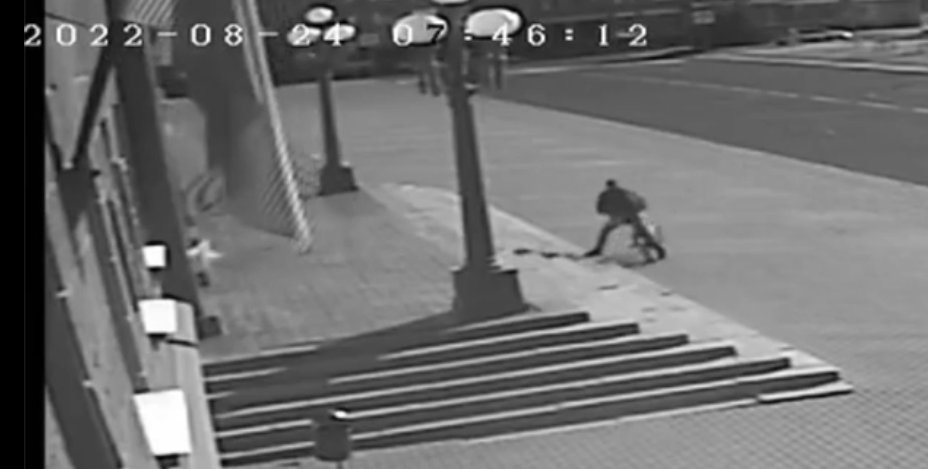
A still from CCTV footage of the attack on Oryol regional government building

Compulsory psychiatric treatment for man alleged to have thrown Molotov cocktails on Ukrainian Independence Day

On 1 August 2023, the 2nd Western District Military Court sentenced 49-year-old Mikhail Davydov to compulsory psychiatric treatment. Davydov had been charged with “terrorism” (per Article 205.1 of the Russian Federal Criminal Code) over Molotov cocktails thrown at the regional administration building in Oryol last year.

The criminal case was launched after an unknown cyclist threw two Molotov cocktails at the front doors of the Oryol regional government building on Ukrainian Independence Day (24 August) last years. The cyclist’s actions were captured by a surveillance camera.

The alleged perpetrator, Mikhail Davydov, was apprehended only a week later, on 31 August 2022. A 48-year-old resident of the region, Davydov was allegedly on the federal wanted list for “refusal to testify” (per Article 308 of the Criminal Code). According to investigators, Davydov had been hiding from the FSB since 22 April 2019. Davydov and his lawyer Larisa Melikhova denied this, however. According to them, Davydov had not been hiding from anyone, “since he had been providing for himself since 2019 and had petitioned the Federal Bailiffs Service for alimony payments, which request was denied. He was not in hiding, but had lived the entire time in the Oryol Region’s Bolkhov District, where he was detained by police officers.”

On 8 September 2022, Davydov was charged with “reckless attempted murder” (per Articles 30.3.e and 105.2 of the Criminal Code of the Russian Federation). The region’s governor, Andrei Klychkov, reported that a regional administration staffer had been wounded during the attack. However, the surveillance footage shows that the cyclist began throwing the Molotov cocktails before the doors opened (that is, they had no intention of killing anyone). In addition, the governor wrote that the employee in question was “doing fine.”

Davydov’s remand in custody at the pretrial detention center was extended several times, each time on the attempted murder charges. Davydov, however, was sent to a psychiatric hospital, apparently in February 2023. At any rate, in March 2023 the court extended his term of detention at a psychiatric hospital.

In June 2023, the case was submitted to the 2nd Western District Military Court, but now on charges of “terrorism.” On 1 August 2023, the court issued a ruling that Davydov be subjected to compulsory medical treatment. According to Kommersant newspaper, “the defendant was declared insane.”

Compulsory psychiatric treatment, unlike imprisonment, is not limited to a fixed term. It ends when a panel of physicians rules that the individual has been “cured,” and the court seconds their ruling. There have been cases in which people were subjected to compulsory psychiatric treatment for many years.

#politicalprisoners #crackdown #punitivepsychiatry #nowar

Source: Solidarity Zone (Facebook), 13 August 2023. Translated by the Russian Reader

Who Is Valeria Zotova?

Valeria Zotova
Photo courtesy of Solidarity Zone

Who is Valeria Zotova?

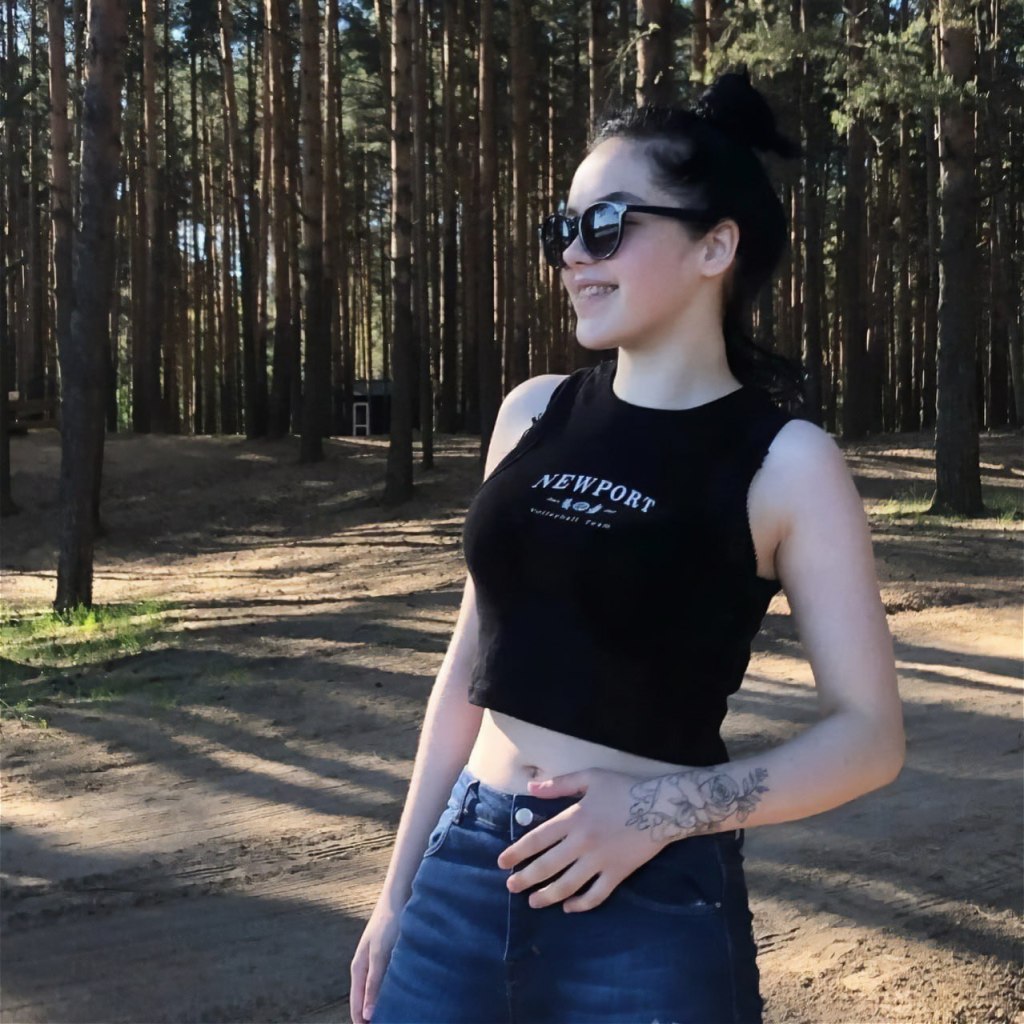
On June 28, Valeria Zotova, a 19-year-old woman from Yaroslavl, was found guilty of “plotting to commit a terrorist act” (per Article 30.1 and Article 205.1 of the Russian Federal Criminal Code). Zotova will spend six years in prison because of the “experiments” that the FSB (the Russian Federal Security Service) conducts on people.

According to police investigators, Zotova wanted to set fire to a warehouse where “aid” was collected for Russian servicemen fighting in the war against Ukraine.

In the video footage of her arrest, Zotova is pulled from the passenger seat of a car by masked men. However, the other people in the car were apparently not touched.

Prior to this, a certain “Andrei” had for a long time been writing to Valeria, claiming that he lived in Ukraine. In the letters, he asked Valeria to perform “missions” for him. She refused and showed the exchanges with “Andrei” to her mother. After some time, Andrei’s “girlfriend” “Karina” started writing to Valeria in VKontakte. According to Valeria’s mother, “Karina” harassed her daughter, constantly writing and calling her, and urging her to commit arson. When Valeria was detained, “Karina” was in the vehicle with her, but “Karina” was not charged in the case.

It transpired that “Andrei’s girlfriend” was an FSB officer and a secret witness. At one of the hearings in Valeria’s trial, “Karina” openly stated that it was all a “crime re-enactment” [sledstvennyi eksperiment, which translates literally as “investigative experiment”—TRR] Although the FSB chose not to conceal its actions, this had no effect on the verdict.

The defense provided the court with obvious evidence of Valeria’s innocence, namely, her correspondence with Karina, in which Valeria repeatedly refuses to commit arson.

Despite the fact that the court did admit this evidence into the case file and “weighed” it, Valeria was found guilty on the charges. Instead of the eight years of imprisonment requested by the prosecutor, the court sentenced Valeria to six years.

Valeria’s lawyer has appealed the verdict, so we can look forward to an appeals hearing in the future.

We wrote recently about why the appeals process is so important.

On the outside, Valeria worked very hard, almost seven days a week. In her spare time, she drew and beaded. In winter, she skated whenever possible. She adores doing crosswords and other such puzzles. She is an extraordinarily upbeat and resilient young woman who always succeeded at whatever she undertook.

A drawing that Valeria Zotova sent from the pretrial detention center in Yaroslavl
Courtesy of Solidarity Zone

Valeria is currently in custody at the Yaroslavl pretrial detention center. You can show your solidarity and support by sending her a letter. She is always glad to get them and expresses her gratitude for all the support.

💌📦 Address for letters and parcels:

Zotova Valeria Igorevna (born 2003)
10 ul. Portovaya nab., SIZO-1
Yaroslavl 150001 Russian Federation

You can also send her letters via FSIN-Pismo and Zonatelecom.

Solidarity Zone is supporting Valeria Zotova.

#wewriteletters

Source: Solidarity Zone (Telegram), 14 August 2023. Thanks to Simon Pirani for the heads-up. Translated by the Russian Reader. People living outside of Russia will find it difficult or impossible to send letters to Russian prisons via the FSIN-Pismo and Zonatelecom services or regular mail. In many cases, however, you can send letters (which must be written in Russian or translated into Russian) via the free, volunteer-run service RosUznik. Ms. Zotova has not yet appeared on their list of supported addressees, however. You can write to me (avvakum@pm.me) for assistance and advice in sending letters to her and other Russian political prisoners.

Alexander Bakhtin: Justice Is Putin Behind Bars

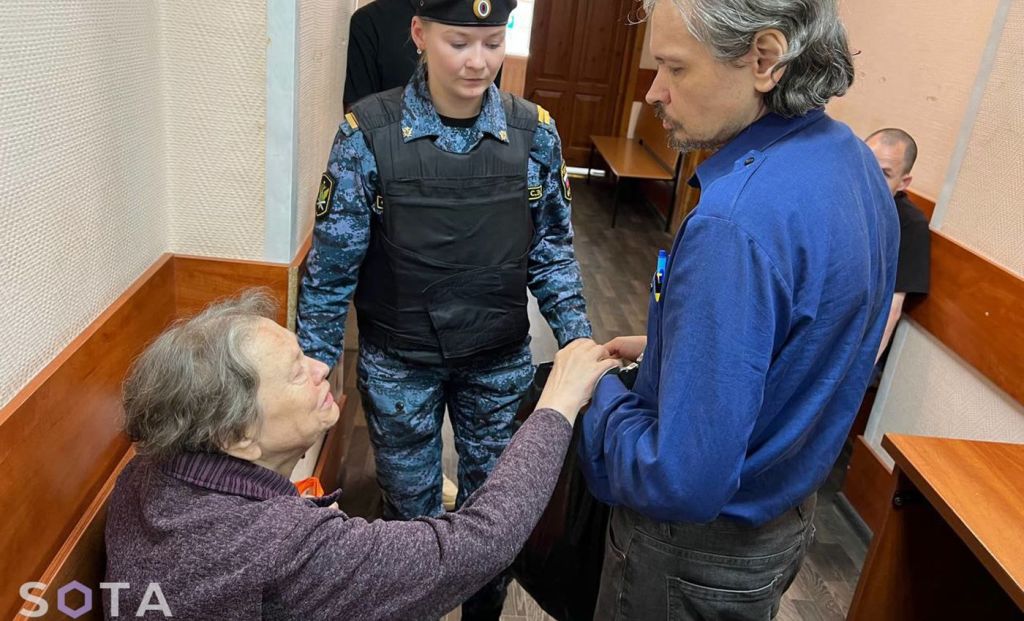
Alexander Bakhtin (right) says farewell to his mother after his trial. Photo: SOTA via Mediazona

Today, the Mytishchi City Court sentenced 51-year-old animal rights activist Alexander Bakhtin to six years in a penal colony. He was charged with disseminating “fake news” about the Russian army over three VKontakte (VK) posts written in the spring of 2022—about the possible blockade of Kyiv, about the murders of civilians in Bucha, and about Ukrainian volunteers who risked their lives saving homeless animals during the war. In addition to the time in the penal colony, the court ordered Bakhtin to undergo compulsory outpatient treatment supervised by a psychiatrist. The prosecution’s expert witness claimed that Bakhtin “could not have been fully cognizant of the actual nature and social danger of his actions and control them.” Mediazona publishes excerpts from Bakhtin’s rebuttal of the charges, which he asked to be entered into the case file before the verdict was announced. After reading these notes, readers will be able to assess for themselves the clarity and consistency of the convicted man’s thoughts.


  • In keeping with the principle of the presumption of innocence, it is not for me to prove that the materials I published are true, but for the prosecution to prove that these materials are “knowingly false.” But it was not proved who exactly committed the [war] crimes, which means it was not ascertained whether my actions constituted a crime.
  • Censorship is prohibited by the Constitution of the Russian Federation, and this Constitution is directly applicable [to my case]. Human rights can be restricted in the Russian Federation only when a nationwide state of emergency and martial law have been declared. But they have not been declared, which means that publishing materials that challenge the stance of the Defense Ministry is not a punishable offense.
  • I committed the actions that I am charged with in order to inform and familiarize my readers with an alternative point of view to the one that was then disseminated in the Russian media. At the same time, realizing that Ukraine’s official media are also an interested party in this conflict, I tried mainly to find information on the internet not in the official Ukrainian media, but as directly reported by local residents of Ukraine on their pages in social networks and online forums. My ultimate goal was to make what contribution I could to stopping this war, because, for example, the First Chechen War in 1996 was, as I believe, halted largely due to Russian society’s negative attitude towards it.
  • If we speak of “hatred and enmity” (as encountered in my posts in the form of harsh epithets directed at the Armed Forces of the Russian Federation), then these epithets do not apply to all [members of] the Armed Forces, but only to those [members] who employed various kinds of violence against civilians in Ukraine, or to those individuals who unleashed this war or called for unleashing it—that is, to war criminals. Perhaps, in terms of “generally accepted” definitions, those negative epithets of mine do apply to all their members, but I do not agree with this interpretation because, as follows from the findings of the forensic psychiatric commission, I am also generally partial to subjectivism, including when employing various definitions. So when I was asked by a psychologist to symbolically depict the concept of “justice,” I drew Putin behind bars. And when the psychologist asked me what that had to with justice, I replied that this was what justice looked liked to me right at that moment.
  • The severity [of a crime] should be defined by its effects. But can the prosecution prove that my publishing these posts produced any specific effects? For example, that they caused someone to lose their faith in the Armed Forces of the Russian Federation and commit an illegal action? At the time of my arrest, I had a little more than sixty friends on VK, and each criminal episode had about 100 views. There are no victims in the case. I myself stopped publishing these posts around the summer of 2022 precisely because they had no effect. By that time, the overwhelming majority of Russian citizens had already made up their minds about this war. Some of them sincerely supported the Russian authorities, while others supported them for opportunistic reasons (in order not to lose their jobs, etc.). Huge numbers of people were intimidated (including by disproportionate punishments meted out for anti-war stances) and kept quiet. Quite a large number of people emigrated from the Russian Federation altogether, while a huge number of Russians decided that this war did not concern them at all. Thus, not only my posts but also anti-war publications in general were unable to change anything, unfortunately. It was only on the battlefield that matters were decided.
  • If my posts are so socially dangerous, then why was my VK page not blocked for such a long time?

You can write a letter to Alexander Bakhtin through the Zonatelecom or FSIN-Pismo, or by regular mail to:

Bakhtin Alexander Sergeyevich (born 1971)
219 ul. Gorval, SIZO-2
Volokalamsk, Moscow Region 143600 Russian Federation

Mediazona thanks Nikita Spivak, a lawyer with OVD Info, for the opportunity to read his client’s manuscript.

Source: Nikita Sologub, “Justice is Putin behind bars: what Alexander Bakhtin, sentenced to six years for three posts about the war, said in court,” Mediazona, 11 August 2023. Translated by the Russian Reader. People living outside of Russia will find it difficult or impossible to send letters to Russian prisons via the FSIN-Pismo and Zonatelecom services or regular mail. In many cases, however, you can send letters (which must be written in Russian or translated into Russian) via the free, volunteer-run service RosUznik. Mr. Bakhtin has not yet appeared on their list of supported addressees, however. You can ask me (avvakum@pm.me) for assistance and advice in sending letters to him and other Russian political prisoners.

Happy Birthday, Sonya!

“Sasha’s birthday card to Sonya”

[1] We walk in the woods. [2] We go to the store. [3] We trim Mode’s claws. [4] We watch a TV serial. [5] We’re at the sea. [6] And all of this will be! Happy birthday!

Source: Sasha Skochilenko (Facebook), 7 August 2023. Translated by the Russian Reader


Petersburg artist, antiwar activist and political prisoner Sasha Skochilenko, currently on trial for “disseminating fake news” about the Russian army’s actions in Ukraine and facing 10 years in prison if she’s convicted, congratulated her girlfriend Sonya on her birthday.

This is what the actual Russian antiwar movement looks like. It doesn’t look like Russians swanning around Europe and North America in search of grants and “projects” and relaxation. Accept no substitutes! ||| TRR