The Russian Economic Miracle of 2017

fullsizeoutput_602
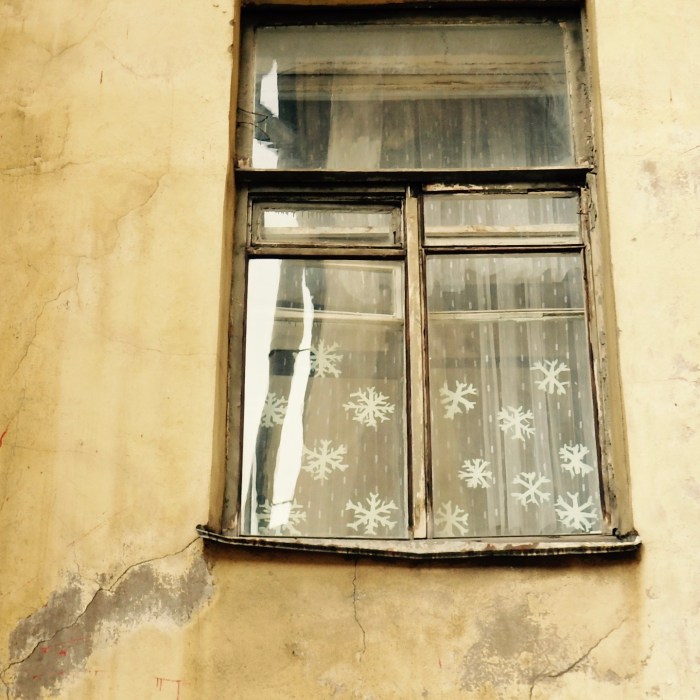
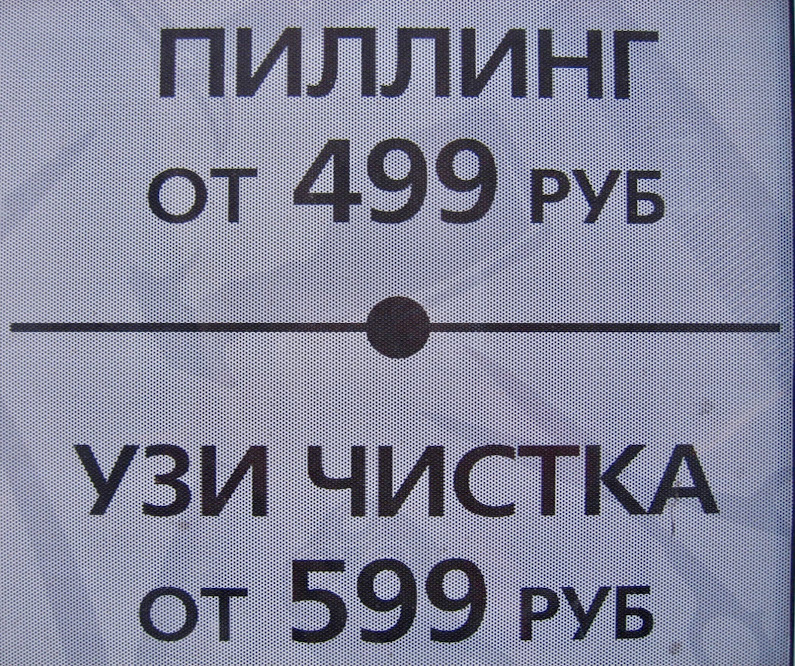
“Pilling from 499 rubles. Ultrasound cleaning from 599 rubles.” Photo by TRR

More Than Five Million Russians Have Trouble Paying Back Loans
Takie Dela
May 30, 2017

Around five and half million Russians have trouble servicing their debts. Their debut burden is more than 60% of their income, reports Gazeta.ru, quoting a statement by Vladimir Shikin, deputy marketing director at the National Credit History Bureau.

According to experts, this figure is regarded as a critical indicator. Among the main reasons for arrears are the unreliability of borrowers and the lack of means to finance current debts.

Residents of the Kemerovo, Tyumen, and Novosibirsk Regions are the most indebted. According to the National Credit History Bureau, three million people cannot make payments on loans, which is 8% of all borrowers. Their current debt load exceeds half of their monthly incomes.

According to Shikin, the share of overdue loans remains at 16%, even as the number of new loans grows. The majority of Russian borrowers have several loans, and the average economically active Russian owes creditors 146,000 rubles [approx. 2,300 euros].

Meanwhile, research done by RANEPA shows that the debt burden of Russians is not critical. As Natalya Orlova, chief economist at Alfa Bank, stressed, the debt of Russians is estimated at 12% of GDP.

“In developed countries, debt is 60% to 80% of GDP, so the market has potential for growth,” emphasized Orlova. However, she argues that Russia issues a relatively small percentage of mortgages, whereas in developed countries, mortgages account for nearly 90% of all loans.

Experts hope that the debt burden of Russians will not rise greatly. After the 2014–2015 crisis, banks were more way about issuing loans, so the debut burden of Russians will fall. In the near future, banks will be even more cautious. In particular, the Central Bank has planned to consolidate the data of major of credit history bureaus in a single data base to combat indebtedness.

Earlier, the United Credit reported that half of Russian borrowers had been applying for new loans to pay off old loans. According to its figures, 45 million Russians with old loans had taken new loans in banks. Over half of them had done this to pay off old loans.

The analysis shows that 53% of borrowers had taken new loans in cash to partially or fully pay off already existing loans. 27% of the borrowers had spent more than half of the new loans on paying debts.

________________________

Almost 60% of Russians Admit They Have No Savings
Takie Dela
May 29, 2017

Around 59% of Russian families have no savings, reports Rambler News Service, citing a report from the polling and market research firm inFOM.

According to a survey commissioned by the Central Bank, the figure has remained stable [sic] the last three months. In December 2016, 64% of those surveyed had no savings.

Yet a quarter of Russians believe that now is a good time to save money, while 44% hold the opposite opinion. According to experts, the tendency to save has grown noticeably since the beginning of the year. In February, fewer than 17% of respondents answered the question positively.

The majority of respondents replied that spare cash should be saved or put away for a rainy day, while a third of Russians would spend the money on expensive, major purchases.

The poll showed that 40% of respondents prefer to keep their savings in a bank account, 26%, in case, and 20%, partly in a bank, and partly in cash.

Two thousand respondents, aged eighteen and older, from fifty-five regions of Russia were involved in the survey.

According to research by RANEPA, the share of Russians who save money dropped by a third in 2016, from 55% to 40%. Moreover, in March, 40% of Russians claimed they had only enough money for food.

________________________

VTsIOM: 67% of Russians Skimped on Groceries during the Past Year 
Takie Dela
May 30, 2017

During the past year, 67% of Russian skimped on groceries in one way or another; 27% of them in a substantial way. Pensioners and residents of big cities had to skimp most of all. These figures were reported by pollsters VTsIOM.

The survey dealt with Russians’ attitudes to government regulation of the food market. 82% of respondents were against the idea of limiting supermarket opening hours on weekdays and weekends. According to 68% of them, if the government decided to do this, it would cause a number of problems. It would be hard to buy groceries in the evenings, and the selection would be reduced. Nearly 40% believed that limiting competition would generate price rises in small shops and produce markets.

Only 15% of Russians favored limiting competition, mostly pensioners aged sixty and older. When replying about what they thought about regulating prices for basic foodstuffs as a way of supporting the poor, Russians were divided in their opinions. Exactly half of them said such restrictions were ineffective, while 32% supported a combination of government and market measures, while 14% believed the government should solve the problem.

The VTsIOM survey showed that Russians were concerned about the government’s restricting prices for basic products. 55% said it would lead to the closure of stores, while 28% said it would lead to shortages, price gouging, and disruption of supplies. However, a quarter of respondents believed that prices would subsequently drop, and life would improve.

Russians see the government’s key role in regulating the produce market in support for domestic producers and developing farming, as well as in quality control. However, according to Yulia Baskakova, head of social modeling and forecasting at VTsIOM, “While worrying with all their heart for domestic producers, supporting improved food quality, and supporting the development of farming, Russians are not willing to sacrifice their comfort and put up with a reduction of the range of goods to which they are accustomed and its becoming less available. The survey showed that 88% of Russians are not willing to put up with a drop in their quality of lives to reduce the price of essential foodstuffs.”

The poll was occasioned by a suggestion, made by Federation Council member Sergei Lisovsky, that regional authorities could decide how large store chains should operate. Lisovky also suggested prohibiting supermarkets from opening at nights and on Sundays, and permitting them to work on Saturdays only until four o’clock in the afternoon. Lisovsky has argued that such measures would support small business and promote small-scale trade.

Translation and photo by the Russian Reader. Faithful readers might wonder why I have cited Russian opinion polls at such length after making a big effort, over the past couple of years to show that this pollocracy, while real enough as a practice, does not tell us much or anything at all about what actual Russians thinking or are planning to do.  I have made an exception in this case, however, because I think the three news items, above, show, between the lines, as it were, what really afflicts the Russian economy, and how the feigned populism of the political/economic elite rears its head, quite often in fact, to suggest impracticable solutions to the knotty problems their own mammoth corruption and instinctive hatred of small business and independent individuals generates the dead end they claim to want to alleviate by, among other thing, commissioning one “public opinion poll” after another while stubbornly failing to notice that their enthusiastic terrorizing of Krasnodar farmers, independent truckers, and Moscow street vendors show they have no interest whatsoever in small business, much less reducing the prices of basic foodstuffs for pensioners. The only thing that interests them is getting richer and making their power untouchable. TRR

The Standard Narrative

Is this the “real” Russia?

“I watched as the people of Chelyabinsk began to search for an identity—a Russian identity that would give them pride. Vladimir Putin’s unexpected ascent to power in 2000 was, for many, a godsend.”

How does the beloved Anne Garrels, formerly foreign correspondent of the dismal, faux-liberal but also mysteriously beloved NPR, know all this?

She claims she knows because she made repeated visits to Chelyabinsk, in Putin’s nonexistent “heartland,” over twenty years.

I gather she’s now even published a book about this fairy kingdom to great acclaim.

The problem is the story she pretends to have dug up has been the standard narrative for western journalists and academics pretending to cover or study the “real Russia” for a long while now.

The problem with the standard narrative is that it is not true, although it was partly spun from a combination of half-truths, outright but persuasive sounding lies, and thoroughly unexamined “facts.” It was cooked up, back in the day, by masterful Kremlin spin doctors like Gleb Pavlovsky and Vladislav Surkov and a whole team of other spin doctors.

Over the last eighteen years, it has been drilled into the heads of “ordinary Russians” and the legions of pollsters, academics, and journalists who have feigned to be studying what “ordinary Russians are thinking.” All of the above-named parties, including some “ordinary Russians,” have then gone on to vigorously scrubbing each other brains with the narrative in a completely closed feedback loop.

Or is this the “real” Russia?

However, the Putinist standard narrative was never true even when easy oil money made it seem partly true, and it’s even less true now when that money has dried up, and the Russian economy has been driven into the dirt by crisis, mismanagement, cosmic-scale corruption, and sanctions.

Yet the less true the standard narrative becomes, the more determined the western media and the west’s dubious posse of “Russia hands” (who don’t live in Chelyabinsk but always know what is best for the people of Chelyabinsk: twenty more years of Putin’s “heartlandism,” apparently) have been to pound the narrative into our ignorant little readerly, viewerly, and listenerly heads.

It’s no wonder the odious phrase “the Russians”—as in “the Russians think this” and “the Russians do that”—has come into vogue again. As if 144 million people all think and do the same thing, as if the eighteen years of Putin’s faux “heartlandism” hasn’t, in fact, been one long “cold civil war,” as a friend of mine aptly put it many years ago.

That is a really complicated story to report. Most western reporters are not up to the job for various reasons, so they have just rung the changes on the standard narrative, “heartlandism,” and Putin’s amazing “popularity” (measured by pollsters whose methods should not be trusted, and whose results should not be taken at face value in circumstances where polling cannot by definition produce objective feedback, if it ever could), and have called it a day.

Since editors and newscast producers are usually none the wiser and have lots of other stories to shepherd, they have let the journalists and their sources in the world of Russia hands spread the Putinist standard narrative up and down and round the west, so that schoolkids and soccer mums in Melbourne, Grimsby, and Cuyahoga County, if pressed, could regurgitate it almost as convincingly as Garrels does, in the “Comment Is Free” piece for the “liberal” Guardian readership, as quoted above.

If there is anything worth preserving about political and social liberalism, it is the desire to reject canned truths and dogmas and find out what has really been going down somewhere.

“Real Russians” are upset “the west’ has swallowed the standard narrative hook, line and sinker.

Instead, nearly the entire western press corps and a good portion of its academic experts on Russia have bought the whole bill of goods, freeing the Russian elite from any responsibility for its cynical, destructive, dysfunctional, and dangerous governance of the world’s largest country.

Amidst the fake moral panic over “hysterical Russophobia” this has always been the real story: how western political, media, and academic elites have mostly been letting the heartlandist-in-chief get away with it, in effect, aiding and abetting him and his old friends in the Ozero Dacha Co-op, serving as cashiers to him and the Laundromat, helping him amass his supplies of real and symbolic capital.

This shell game will all come to a screeching halt one day, however, and all the back stocks of bestsellers like Garrels’s will have to be pulped because they won’t be worth the paper they were printed on. TRR

All photos by the Russian Reader

How to Tell a Skunk

Skunks. Photo courtesy of National Geographic

Here is how you tell a pro-Putin western leftist. If someone has not written word one of concern or anguish over the slaughter in Aleppo and Putin’s role in it, but suddenly expresses anxiety over NatWest’s closure of RT’s bank accounts, announced earlier today, they have outed themselves as a pro-Putin western leftist.

Apparently, the rest of the world should just watch as Putin and Co. lay waste to Aleppo and the rest of Syria that has not submitted to the mass murderer Bashar Assad.

And then, if Putin wants to move on from there, and stir up more needless trouble somewhere else, the rest of the world should just avert its gaze from his latest victims.

And so on.

After all, the world’s most enlightened white people, western leftists, have mostly been steadfastly ignoring Putin’s victimization of his own people for the past seventeen years—all those incinerated Chechens, murdered journalists, harassed, beaten, jailed, murdered, persecuted and exiled anti-fascists, leftists, environmentalists, opposition leaders, downtrodden truckers, farmers, factory workers and migrant workers, and on and on.

Here is a modest proposal. Since you feel so much anxiety every time Putin is criticized or mildly slapped on the wrist, why don’t you put your money where your mouth is and move to Russia, where you can live the dream of dancing in ecstasy round the one true leftist leader left on earth.

Or is a dumb leftist tape, left over from Soviet times, spinning round and round in your head, keeping you from thinking straight?

I have a message for you: the Soviet Union is dead, and Putin is not a leftist. He is not trying to build socialism. He wants to stay in power for the rest of his natural life, enriching himself and his cronies, and making sure his other 142 million countrymen can never improve their own collective lot in life in any meaningful way, especially in a way that would involve his not being their supreme leader for life.

And just imagine this. When NatWest announced it was closing the bank accounts of the miserable Putinist propaganda channel RT, some of my actual Russian friends actually living in Russia actually rejoiced!

Why? Because their tax dollars pay the salaries of Margarita Simonyan and all the other well-coiffed liars at RT, and they would rather not have their hard-earned money wasted in such a flagrant, hostile manner.

Maybe they would rather that Russian doctors and teachers were paid better, or that pensioners had their pensions indexed for inflation (instead of frozen to pay for Putin’s war on Syria). Maybe they would want their country to stand for something else in the world than deceit, military showboating, corruption, and a hot and cold civil war against dissenters.

When are you godlike beings, ye western leftists, going to heed their mostly silent cries?

Or do you think some crap opinion polls “prove” that Putin is wildly popular in his country?

When are you going to wake up to the fact that your sheer stupidity, blindness, ignorance, and dogmatic stubbornness is destroying what remains of honest leftism? How can leftism pretend it represents a real alternative to capitalism when, time and again, it defends tyrants like Putin in the name of “anti-imperialism,” “stopping war,” or some other sheer nonsense?

The people of Aleppo know you are their enemies, because you vocally or tacitly support their destruction, and the people of Russia will also one day realize that you wish slavery and tyranny upon them as well, if they have not realized it already. TRR

“We Have a Surrogate Democracy”: An Interview with Ekaterina Schulman

Ekaterina Schulman. Photo courtesy of Andrei Stekachov and The Village

Political Scientist Ekaterina Schulman on Why You Should Vote
Anya Chesova and Natasha Fedorenko
The Village
September 16, 2016

This Sunday, September 18, the country will vote for a new State Duma, the seventh since the fall of the Soviet Union. The peculiarity of this vote is that it will take place under a mixed electoral system for the first time since 2003. 225 MPs will be elected to five-year tears from party lists, while the other 225 MPs will be elected from single-mandate districts. Several days before the elections, The Village met with Ekaterina Schulman, a political scientist and senior lecturer at the Russian Presidential Academy of National Economy and Public Administration (RANEPA). We talked with her about why you should vote if United Russia is going to win in any case, as well as about the changes in store for the Russian political system in the coming years.


The Upcoming Elections

The Village: On Sunday, the country will hold the first elections to the State Duma since 2011. The social climate in the city and the country as a whole has changed completely since that time. Protests erupted in 2011, and the people who protested on Bolotnaya Square and Sakharov Avenue believed they could impact the political situation. Nowadays, few people have held on to such hopes. What should we expect from the upcoming elections? And why should we bother with them?

Ekaterina Schulman: Everything happening now with the State Duma election is a consequence of the 2011–2012 protests, including changes in the laws, the introduction of the mixed system, the return of single-mandate MPs, the lowering of the threshold for parties to be seated in the Duma from seven to five percent, and the increased number of parties on the ballot. These are the political reforms outlined by then-president Dmitry Medvedev as a response to the events of December 2011. Later, we got a new head of state, but it was already impossible to take back these promises. The entire political reality we observe now has grown to one degree or another out of the 2011–2012 protest campaign, whether as rejection, reaction or consequence. It is the most important thing to happen in the Russian political arena in recent years.

The statements made by Vyacheslav Volodin, the president’s deputy chief of staff, on the need to hold honest elections, Vladimir Churov’s replacement by Ella Pamfilova as head of the Central Electoral Commission, the departure of someone more important than Churov from the CEC, deputy chair Leonid Ivlev, and the vigorous sacking of chairs of regional electoral commissions are all consequences of the protests. If they had not taken place, nothing would have changed. We would still have the same proportional voting system, the same seven-percent threshold, the same old Churov or Churov 2.0. Continue reading ““We Have a Surrogate Democracy”: An Interview with Ekaterina Schulman”

The Soft Line versus the Hard Line, or, 7% ABV

I was just unfriended on Facebook by an actual friend and comrade, and a person for whom I have boundless respect. Apparently, I said too many bad things in electronic print about their chosen candidate for president, Dr. Jill Stein of the US Green Party.

In point of fact, I wrote to them on Facebook just yesterday that I would rather vote for them or just about anybody else in the world than for someone who had no qualms about flying to Moscow to celebrate RT’s birthday and sitting at the same table with Vladimir Putin.

Similarly, Dr. Stein had no qualms about saying that Russia had once “owned” Ukraine, so, like, what’s the big deal about grabbing Crimea and messing with Donbass?

Pro-Putinism of the Steinerian or Trumpian variety should be a make-or-break issue if you call yourself a democrat, a leftist, a left-liberal, an anti-imperialist, an anti-fascist, a progressive, pro-labor, pro-human rights, a pacifist, a democratic socialist, a socialist, a communist, a liberal, a republican or (in fact) a conservative.

On the merits of his now very long stint in office, Putin should appeal only to extreme right-wingers, dyed-in-the-wool fascists, neo-Nazis, racists, and massively deluded fundamentalist Christians (because Putin isn’t actually spearheading a worldwide revival of “conservative Christian values”; he is just using the Church and the churchly to advance his own personal and political ends), as well as members of various organized criminal groups around the world, who probably can’t help admiring how a “party of crooks and thieves” have taken over an entire country, the world’s largest, and started running it like the mob runs a chunk of turf on the Jersey shore.

Oh yes, and Bashar Assad loves Putin. And Silvio Berlusconi does, too.

So this is a US presidential election in which all the choices are very bad? Then please, at least don’t imagine one of the candidates has qualities she really doesn’t have, and please don’t whitewash or blatantly ignore her glaring deficiencies.

Being “soft” on Putin is a damning quality, because it means (as has become clear from Dr. Stein’s limp, weasel-worded response to the open letter written by the brave, exiled Russian environmentalists Yevgeniya Chirikova and Nadezhda Kutepova) you feel no solidarity with the thousands, hundreds of thousands, and maybe even millions of Russians who have either fought back against Putin’s seventeen years of tyranny or suffered very badly from it.

It also means you have funny ideas about “effective leadership,” as Trump seems to have. Just as Trump is probably no great shakes at “business,” his idol Putin is actually a crummy politician when it comes to implementing any of the things held dear by the sort of people, who occupy most of the known political spectrum, I listed above. In fact, he is slowly leading his country to economic, social, moral, environmental, industrial, aesthetic, and ideological ruin.

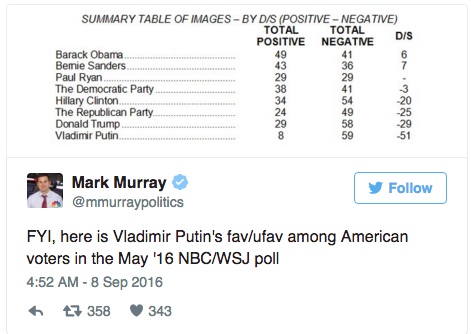
In the US, where the ruthlessly effective Russian leader hasn't established an authoritarian pollocracy yet, his ratings don't look so great. Image courtesy of NBC News
In the US, where the ruthlessly effective Russian leader has not established an authoritarian pollocracy yet, his ratings don’t look so great. Image courtesy of NBC News

Or it means you have funny ideas about “world peace” and “imperialism.” Meaning, you think only the US, NATO, and EU are imperialists, while Russia, China, the other BRICS countries, and more or less the rest of the world are, mysteriously and without having done much of anything to merit the merit badge, “anti-imperialists.”

I am going to go out on a limb and say (without arguing the point further here) that while Russia has the most going for it in terms of natural and human resources, it is the BRICS country least likely to succeed because of its ruinous, criminal governance. I have more confidence that South Africa and India will turn things around than I do Russia will.

And China has lots of “negatives,” as they say about the candidates these days, but despite them I never get the sense the country is run by haughty criminal lunatics. Or maybe the Chinese Communist Party are haughty and corrupt sometimes, but they seem to have a plan of sorts and are capable of rational thought and acting collectively (and dictatorially) to advance rational interests, whether or not those rational interests are ones their own people or the people of Hong Kong or Taiwan or we ourselves would approve.

When a candidate is soft on Putin, it doesn’t mean she or he is unqualified to lead the US military-industrial complex or “advance our country’s interests” by attacking countries no one asked us to attack.

It just means they’re hopelessly stupid. TRR

_________

abama-craft-beerApropos the article below. Pobrecitos! Thank God no one in Russia has been trying to tarnish the image of the US or its less-than-effective president. That would be so uncool. Image of the label for Abama craft beer, produced by a microbrewery in Putin’s hometown of Petersburg, courtesy of Comrade EO
Putin Talks of Attempt to Recreate “Evil Empire” Image in US Elections
Olga Nadykto and Polina Khimshiashvili
RBC
September 17, 2016

Using the topic of Russia and the Russian president in the US presidential campaign is an attempt to manipulate public opinion within the country, said Vladimir Putin. According to him it is an attempt to “recreate the image of an evil empire.”

Speaking to journalists at the end of the CIS summit in Bishkek, Russian President Vladimir Putin commented on the use of Russian topics in the US election campaign.

Putin expressed the hope that the “use of Russia and the Russian president” in the US election campaign was “was also due to Russia’s growing influence and significance.”

“But I think it is mainly due to attempts to manipulate public opinion within the country. We are witnessing an attempt to recreate the image of the so-called evil empire and scare the average citizen. It is quite sad. It is a fairly crude attempt and counterproductive,” said the Russian president [sic].

Replying to a question about which of the candidates he supported in the US presidential elections, Putin said he had “nothing new” to say.

“We support anyone in any country who wants to work towards neighborly relations and partnerships with us,” he stressed.

“We are sympathetic to those who speak out publicly about the need to build relations with Russia on an equal basis and see a lot of sense in this for their country,” Putin concluded.

Earlier, on the NBC program Commander-in-Chief Forum, Donald Trump, the US Republican Party presidential candidate, said of the Russian president, “If he says great things about me, I’m going to say great things about him.”

Trump also predicted he would have “very, very good relations” with Putin if he became president.

Trump’s statement was criticized by US President Barack Obama, who supports the Democratic candidate Hillary Clinton.

Clinton herself had earlier accused the Russian secret services in the attacks on the Democratic Party’s servers. She has also commented on an article in the Washington Post, claiming that Russia was possibly planning to disrupt the US elections. She said it was a serious threat that had to be eliminated quickly.

Translated by the Russian Reader

Living Levada Loca

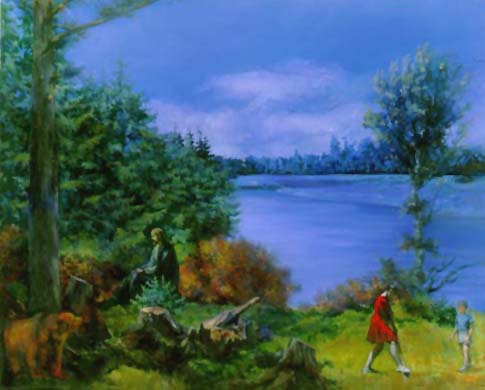
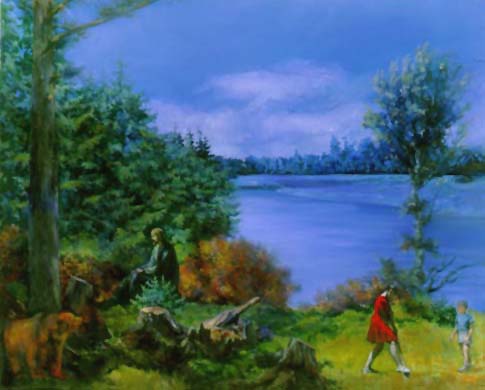
Komar & Melamid, Russia's Most Wanted Painting, 1995. Image courtesy of Dia Art Foundation
Komar & Melamid, Russia’s Most Wanted Painting, 1995. Image courtesy of Dia Art Foundation

The Picture Is Going to Get Prettier
Greg Yudin
Vedomosti
September 6, 2016

The latest attack on the Levada Center (this past Monday, the organization was labeled a “foreign agent”) provoked a justified outcry from people in various parts of the ideological spectrum, from the center’s friends competitors, and opponents. The formal basis of the attack was the insane law that punishes people and organizations for something that should be rewarded. If Russia wants to be strong in academic research, then here were researchers who collaborated with serious foreign partners. (The University of Wisconsin, with whom the Levada Center had been working, has traditionally been a powerhouse in sociology.) Worse, the law construes “political activity” as something unsavory right at a time when Russia really needs to awaken an interest in politics, and any NGO willing to study the dynamics of political life in Russia deserves all the encouragement it can get.

The Russian Ministry of Justice can paralyze the operations of one of the country’s three major public opinion polling factories one and half weeks before national and regional parliamentary elections on September 18. In this case, the elections will be held with a newly configured polling industry, which has not changed for a long time. Putting our emotions aside, however, the assault on the Levada Center seems unexpected. For the past decade, the organization has objectively worked to maintain the current regime’s legitimacy.

The public opinion research field, a field once populated by many players, was purged by the Kremlin ten years ago, leaving only three companies standing. Two of them, FOM (Public Opinion Foundation) and VTsIOM (Russian Public Opinion Research Center) are substantially affiliated with the Kremlin, since they are wholly dependent on the commissions they regularly receive from the presidential administration and other government agencies. The Levada Center, on the contrary, has been financed independently of the Kremlin, and the liberal views of its senior staff have put the company almost in political opposition to the current regime. Yet the outcomes of the Levada Center’s polls have rarely diverged from the data published by its colleagues and competitors. The numbers adduced by all three pollsters have usually generated a sense of broad or overwhelming support for everything the authorities do, however aggressive and irrational it sometimes might appear.

Praise from the enemy is worth twice as much, especially if it is voiced publicly. Vladimir Putin has confessed on several occasions that polls mean a lot to them, and when the Levada Center records public support for him, this is proof the support is undeniable. Look, even our opponents are forced to admit the people are behind us, the regime’s supporters say time and again. These same people sincerely believe research results depend on who pays for the research.

Research studies, however, are much more complicated, and the results of Levada Center’s polls have had nothing to do with the political stance of its executives. Instead, they are stipulated by the way polls are conducted. In daily life, Russians show little interest in politics, so if you deluge them with a wave of news reports about some issue of little importance to them, such as relations with Turkey, and then ask them the next day whether we should be afraid of Turkey, they will respond in good faith based on the information they got the day before. With few exceptions, the Levada Center has humbly tackled the political agenda set by television, and asked the same questions as the other pollsters, questions focused on this agenda, predictably garnering nearly the same outcomes as the other pollsters. However, the center’s alleged oppositional status made the answers more important for the authorities and, at the same time, indirectly increased the credibility of the other companies. The depressive antidemocratic discourse about the stupid, aggressive common people with which the middle classes have been spooking each other nationwide has largely been the product of the Levada Center’s poll numbers, even if the outcome was unintentional.

You need a good reason to shoot the goose that has been laying golden eggs. What compelled the authorities to break off a piece of the rigging propping up its legitimacy? I should explain right off the bat how the Levada Center does actually differ from the other two major Russian pollsters. The difference has nothing to do with honesty or professionalism. The myth that one group of sociologists does honest work, while the two others fake the numbers is not even worth discussing seriously, and yet they all get the same results.

What matters much more is the fact that the Levada Center does not get commissions from the Kremlin. The Kremlin cannot tell it what questions to ask and what results to make public. We should not forget the poll results reported in the Russian media are only the poll results the client has allowed them to publish. The client can impose a temporary or permanent veto on publication of the results. The media’s picture of public opinion thus passes through two powerful filters nowadays. First, the client imposes on the polling organizations the subjects for which he is willing to pay, and then he decides what information he would like to make available to the public. The Kremlin can easily ban publishing results that shatter the image of monolithic public support for its decisions, and it has often done this.  It has no such power over the Levada Center, although in recent times it has not needed it, since the company has not produced polling data that would put the Kremlin in a vulnerable position.

Polling data has been long the main fodder from which Russians shape their notions about the balance of power at election time and decide how to vote. The numbers act like a tranquilizer, persuading voters not to waste time and energy by getting involved in elections whose outcome is clear in any case. Simultaneously, they send a signal up and down the power vertical about how much “slack” needs to be made up at the local voting precincts. The main thing is not diverge to too radically from the polls. If the Kremlin has had to break with this way of doing things on the eve of the elections, it means the independent player had become too dangerous. The mirror reflected something that forced the Kremlin to throw a stone at it.

If the Levada Center is forced to suspend operations, the credibility of poll numbers will drop, and the client will increase pressure on the remaining players. We will have to treat the polling numbers we see before and after the elections with a bigger grain of salt. If before, the public was shown only the pretty half of the picture, while the ugly was hidden from it, now it will see even less of the picture.

Greg Yudin is a research fellow and lecturer at the Higher School of Economics in Moscow. Translated by the Russian Reader

Nous sommes tous la cinquième colonne

They Got Out of Their Tractors
Why the so-called common people are increasingly joining the ranks of the so-called fifth column
Gazeta.ru
August 29, 2016

A fifth column of tractors? Photo courtesy of @melnichenko_va/Twitter

The arrest of the people involved in the tractor convoy, as well as new protest rallies in Togliatti after Nikolai Merkushin, governor of Samara Region announced wage arrears would “never” be paid off, are vivid examples of the top brass’s new style of communicating with people. After flirting only four or five years ago with the common people, as opposed to the creacles from the so-called fifth column, the authorities have, in the midst of a crisis, been less and less likely to pretend they care about the needs of rank-and-file Russians. Moreover, any reminders of problems at the bottom provokes irritation and an increasingly repressive reaction at the top.

Previously, top officials, especially in the run-up to elections, preferred to mollify discontent at the local level by promising people something, and from year to year, the president would even personally solve people’s specific problems, both during his televised town hall meetings (during which, for example, he dealt with problems ranging from the water supply in a Stavropol village to the payment of wages to workers at a fish factory on Shikotan) and during personal visits, as was the case in Pikalyovo, where chemical plant workers also blocked a federal highway. Nowadays, on the contrary, the authorities have seemingly stopped pretending that helping the common people is a priority for them.

It is telling that the alleged charging of the tractor convoy’s leader with extremism and the Samara governor’s disdainful interaction with ordinary workers (who responded by blocking a federal highway on Monday) has nothing to do with political opposition.

The people have made no political demands in these cases. Moreover, the main players in these stories almost certainly belong to the hypothetical loyal majority.

The people who took part in the tractor convoy against forcible land seizures even adopted the name Polite Farmers, apparently by analogy with the patriotic meme “polite people,” which gained popularity in Russia after the annexation of Crimea.

In 2011–2012, the authorities used approximately the same people to intimidate street protesters sporting political slogans. That was when the whole country heard of Uralvagonzavod, a tank manufacturer whose workers promised to travel to Moscow to teach the creacles a lesson. Subsequently, the company’s head engineer, Igor Kholmanskih, was unexpectedly appointed presidential envoy to the Urals Federal Distrtict.

Back then, the cultivation of a political standoff between working people from the provinces and slackers, “State Department agents,” and self-indulgent intellectuals from the capitals seemed pivotal, but in the aftermath of Crimea and a protracted crisis, it has almost been nullified.

The people are still important for generating good ratings [via wildly dubious opinion polls — TRR], but it would seem that even rhetorically they have ceased to be an object of unconditional concern on the part of the government.

Nowadays, the authorities regard the requests and especially the demands of the so-called common people nearly as harshly as they once treated the Bolotnaya Square protests.

The government does not have the money to placate the common people, so people have to be forced to love the leadership unselfishly, in the name of stability and the supreme interests of the state. Since politics has finally defeated the economy in Russia, instead of getting down to brass tacks and solving problems with employment and wage arrears, the regime generously feeds people stories about war with the West. During a war, it quite unpatriotic to demand payment of back wages or ask for pension increase. Only internal enemies would behave this way.

“We are not slaves!” Coal Miners on Hunger Strike in Gukovo. Published on August 25, 2016, by Novaya Gazeta. Miners in Gukovo have refused a “handout” from the governor of Rostov Region and continued their hunger strike over unpaid wages. Video by Elena Kostyuchenko. Edited by Gleb Limansky.


So the coal miners in Rostov, who have continued their hunger strike under the slogan “We are not slaves,” have suddenly proven to be enemies, along with the farmers of Krasnodar, who wanted to tell the president about forcible land seizures, and the activists defending Torfyanka Park in Moscow, who were detained in the early hours of Monday morning for, allegedly, attempting to break Orthodox crosses, and the people defending the capital’s Dubki Park, slated for redevelopment despite the opinion of local residents, and the people who protested against the extortionate Plato system for calculating the mileage tolls paid by truckers, and just about anyone who is unhappy with something and plans to make the authorities aware of their dissatisfaction.

Grassroots initiatives, especially if they involve protests against the actions or inaction of the authorities, are not only unwelcome now, but are regarded as downright dangerous, almost as actions against the state. This hypothesis is borne out by the silence of the parliamentary opposition parties. In the midst of an election campaign, they have not even attempted to channel popular discontent in certain regions and make it work to their advantage at the ballot box.

The distinction between the so-called fifth column and the other four has blurred.

Nowadays, the fifth column can be a woman who asks a governor about back wages. Someone who defends a city park. Farmers. Coal miners. Even the workers of Uralvagonzavod, which in recent years has been on the verge of bankruptcy. The contracts the state had been throwing the company’s way have not helped, apparently.

If the authorities, especially local authorities simply afraid to show federal authorities they are incapable of coping with problems, continue to operate only through a policy of intimidation, they might soon be the fifth column themselves, if only because, sooner or later, they will find themselves in the minority.

Translated by the Russian Reader. Thanks to Sean Guillory for the heads-up

________

A surprisingly frank and dead-on editorial from Gazeta.ru, who usually have not struck me as wild-eyed radicals, about how the Russian authorities have increasingly come to behave as if nearly the entire Russian population, including the so-called common people, is a gigantic fifth column arrayed against them.

The reason they have sunk into this black pit of reaction is that the current regime is simply incapable of solving the country’s numerous political, social, and economic crises, because it has directly or indirectly generated nearly all of them, including the utter lawlessness in Krasnodar Territory that was finally too much for a group of farmers who climbed into their tractors and set out for Moscow several days ago. But because even allegedly simple farmers can become a fifth column as soon as they draw attention to their sorry plight and the role of the authorities in it, they got only as far the neighboring Rostov Region on their tractors before the police shut them down.

This editorial is also valuable for its catalogue of similar conflicts, most of which you probably have never heard of because they are not well covered or covered at all by the western press and only marginally better by Russian print and online media. Russian mainstream TV outlets mainly avoid them altogether, as do most of the opposition parties currently contending for seats in the Russian State Duma and regional legislatures, as the editorialists point out.

So the hunger-striking miners in Gukov and their wives are left to their own devices when dealing with their creepy regional governor, no doubt a KGB vet, who all but accuses them of acting on behalf of the CIA, although they just want to get paid for their hard, thankless work.

The only grain of salt one should chew while reading this editorial is the fact that these local grassroots campaigns have been going in rather large numbers across Russia throughout Putin’s 17-year reign. And in many cases the altogether uncommon common people who fought these battles were fifth-columnized (through beatings, murders, and jail time) as badly as the current grassroots campaigners mentioned by the editorialists. During the fat years of the noughties, however, times were much better economically in the Russian capitals for a lot of people than they had been just a few years earlier, so they preferred not to notice too hard what was going on in their midst, much less some part of their country they would never dream of visiting even.

The Putinist state has been waging a cold civil war against the people of Russia for seventeen years whether the media has noticed it or not. But a lot of the common people have noticed. TRR

We Are Just Making It Up as We Go Along

A map of European countries by average monthly wage, as denominated in euros. Source: Wikipedia

Personal income of Russians shrank by 52.2% in January 2016 as compared to December 2015. According to the report by the state statistics body Rosstat, the monthly income in January averaged only 21365 rubles (about USD $291) though only a month ago it was 45212 rubles ($614). Elena’s ModelsMarch 9, 2016

Pollocracy continues its triumphant march across the sweeping plains and endless forests of the world’s largest country, stamping out the last vestiges of real reality there.

Less than a month before nationwide elections to the Russia State Duma and regional legislative assemblies, on September 18, 2016, the Public Opinion Foundation (whose Russian abbreviation FOM should be changed to FOAM) has published the results of a new survey, according to which more than fifty percent of Russians believe the country’s economic situation is satisfactory. At the same time, reports RBC, 44% of respondents said depositing money in Russian banks was a reliable way of saving it.

This astounding victory for what the FOAMsters euphemistically call “sociology” comes amidst a spate of bank license revocations by the Russian Central Bank, a hunger strike by miners at Rostov mining company King Coal, who have not been paid back wages amounting to over 4.1 million euros since May 2015, and an abortive attempt by Krasnodar farmers to drive their tractors in a convoy to Moscow to protest the parceling off of prime land by authorities in the region to big agribusinesses instead of to them.

And those are just the recent “economic achievements” that came immediately to mind when I saw those dubious poll results. There are hundreds of more such examples that I could adduce, starting with the fact that there have been more than a few reports in the media and elsewhere about a decline in the real wages and income of Russians over the past couple of years.

Things are indeed going swimmingly for the Russian economy, and we know that is the case, yet again, because the utterly objective Russian pollsters have told us so. TRR

The Eighty Percent: Defending Ethnic Russians in Russia

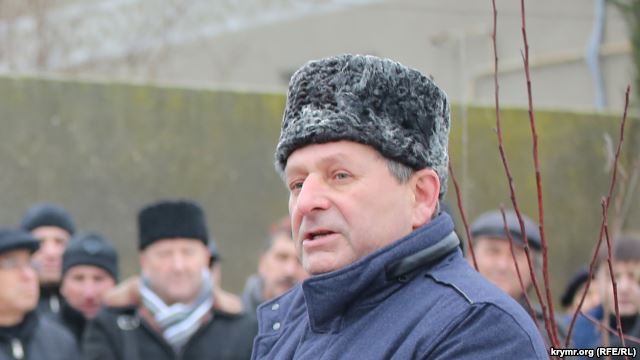
Ahtem Chiygoz, a member of the Mejlis of the Crimean Tatars who has spent the last year and a half in jail on trumped-up charges of "organizing rioting" and "destruction of property." Photo courtesy of 112 UA and RFE/RL
Ahtem Chiygoz, a member of the Mejlis of the Crimean Tatar People who has spent the last year and a half in jail on trumped-up charges of “organizing rioting” and “destruction of property.” Photo courtesy of 112 UA and RFE/RL. See the second article, below, for details

FADN Called on to Protect Ethnic Russians
Irina Nagornykh
Kommersant
July 27, 2016

Nine percent of Russian citizens feel they are discriminated against ethnically. In some regions, for example, Tuva, such citizens constitute as many as twenty-six percent, and they hail from the Russian-speaking population. These figures were arrived at by pollsters commissioned by the Federal Agency for Ethnic Affairs (FADN), Igor Barinov, the agency’s head, said yesterday at the Terra Scientia camp. Barinov promised to protect the ethnic Russian population in such regions, and said next year the agency planned to earmark 170 million rubles [approx. 2.3 million euros] on grants for projects in the field of interethnic relations.

Barinov cited the results of a сlassified Georating survey conducted by the Public Opinion Foundation (FOM) while speaking to young people at the Terra Scientia Russian Education Youth Forum on the Klyazma River on the last day of a session that brought together young experts in the field of interethnic relations. According to Barinov, the poll was conducted in June at the FADN’s behest. Pollsters discovered that, on average nationwide, nine percent of the population experienced ethnic discrimination. In certain regions, however, such as Karachay-Cherkessia and Tuva, the situation was more tense. In Tuva, twenty-six percent of citizens complained of ethnic discrimination.

According to Barinov, the number coincided with the number of Russian speakers resident in Tuva, which means we can assume it was this segment of the population who felt they were ethnically discriminated against. Barinov was asked who would protect the interests of ethnic Russians. According to some young people in the audience, ethnic Russian were not as well organized in defending their interests as other ethnic groups in Russia. Barinov cited the fact that 115 million ethnic Russians resided in the Russian Federation, which constituted eighty percent of the country’s population, and in places where the ethnic Russian population predominated, as in Central Russia, this assistance was social and economic in nature. But in regions like Karachay-Cherkessia and Tuva, he promised to protect ethnic Russians.

“We have the authority,” he stressed.

Responding to the same question, Magomedsalam Magomedov, who oversees ethnic relations in the presidential administration, said the “Russian people’s historical mission [was] to unite Russia’s ethnic groups,” and the outcome was the “emergence of a unique civilization whose national leader is President Vladimir Putin.”

“None of the ethnic groups in Russia can feel good if the Russian people feels bad,” concluded to Mr. Magomedov.

According to Barinov, next year the FADN plans to allocate around 170 million rubles on grants for projects in the field of ethnic relations.

“If everything is okay with the budget. We’re at the head of the Finance Ministry’s queue,” he added, reminding the audience that the FADN is awaiting the transfer of the part of the Federally Targeted Program for developing Crimea that concerns the rehabilitation of ethnic groups repressed during Soviet times.

Campers will receive several grants in the amounts of 300,000, 200,000, and 100,000 rubles to support existing interethnic policy projects in the country’s regions from the camp’s organizers: the Russian Federal Public Chamber, Rosmolodezh (Russian Federal Agency for Youth Affairs), and the presidential administration’s Office for Domestic Policy. Moreover, the FADN plans to summarized suggestions made by the campers on concepts for celebrating National Unity Day (November 4), including the brand Russian Braid, which would weave together all the peoples of Russia, comics about different ethnic groups on buses, video clips in airports, and the project Travel with Purpose, which would involve ethnic youth exchange tourism. Session participants plan to appeal to the present not to limit the celebrations to one day a war, but to declare an entire “year of national unity.”

Translated by the Russian Reader. Thanks to Sergey Abashin for the heads-up

________

Who Is Ahtem Chiygoz? The Story of a Crimean Tatar Political Prisoner
Ehor Vasylyev
112 UA
July 29, 2016

A Case That Will Last for Years
Ahtem Chiygoz was arrested on January 29, 2015, as part of the so-called February 26 case. That day he went to the State Investigative Committee in Crimea for questioning, and in the evening the illegitimate Kyiv District Court of Simferopol sentenced him to three months in police custody.

Chiygoz was charged under Article 212.1 of Criminal Code of the Russian Federation: organization of riots accompanied by violence and destruction of property.

Russia accuses activists of being involved in the “riots” on February 26, 2014, which arose near the Crimean parliament during two rallies, one held by the supporters of Ukraine’s territorial integrity , another, by activists of the party Russian Unity.

Since Chiygoz’s arrest, the Crimean courts have been periodically extending his time in police custody. (The last time it was extended until October 8, 2016.)

From March 8 to March 11, 2016, Chiygoz was a hostage: a so-called judge of the Crimean Supreme Court, Galina Redko, arbitrarily (extrajudicially) extended his time in jail.

In addition to Chiygoz, other Crimean Tatars have been charged with involvement in the “riots”: Ali Asanov, Mustafa Degermendzhi, Eskender Kantemirov, Arsene Yunusov, and Eskender Emirvaliev.

The first two have been in police custody for over a year. Another two men, Eskender Nebiev and Talat Yunusov, have already been convicted and sentenced to probation.

In February 2016, two years after the events, the court decided to re-investigate the case. Chiygoz, Asanov, and Degermendzhi were forced to remain in custody.

On July 20, the preliminary hearing began, but it was closed to the public. The Supreme Court of Crimea proposed to divide the case and try Chiygoz separately from the other defendants.

“There are 80 injured parties and witnesses: the case could drag on for years. The court usually questions one or two witnesses a day,” says one of Chiygoz’s lawyers, Emil Kurbedinov.

An Alien Land
Russian prosecutors accuse Ahtem Chiygoz of acts carried out in Ukraine by a Ukrainian citizen against other Ukrainian citizens. Russian prosecutors have prosecuted only Crimean Tatars.

The prosecution is trying to assert the right of the Russian justice system to react to the February 26 rally, which was allegedly directed against Russian interests. The prosecutor general says Russian Unity had a special permit for holding a rally, while the Mejlis did not have such a document.

In addition to violence during the riots, Chiygoz is accused of destruction of property.

“Unidentified Crimean Tatars rushed into the Crimean Parliament, damaged and destroyed its property in the amount of 9,730 rubles,” claims one of the court documents. However, a few hours after the incident, armed Russians occupied the Crimean Parliament and also damaged property.

Why Chiygoz?
“Ahtem Chiygoz at first took a moderately radical position. The prosecutor’s office called him a man ‘in charge of the Mejlis power bloc.’ In winter 2014, he openly expressed the quite radical position that we should not recognize anything,” noted First Deputy Chairman of the Mejlis Nariman Jalal.

In fact, Chiygoz’s position coincides with the opinion of Ilmi Umerov, who is known as an experienced, fairly moderate politician. Ilmi Umerov is quite close to Chiygoz. They both belong to the Bakhchisarai wing of the Mejlis.

“In 2014, we organized many pickets, along the roads, near the military units. Ahtem was actively involved in organizing these events,” says Umerov.

Chiygoz was warned about avoiding “extremist activity,” and some people even complained about him to the Russian FSB. However, Chiygoz did not stop his work, and a month before his arrest, he attended a meeting between Crimean leaders Mustafa Dzhemilev and Refat Chubarov and Ukrainian President Poroshenko.

In 2014, the two Crimean Tatar leaders, Dzhemilev and Chubarov, were not allowed entry to Crimea.

“Chubarov had five deputies, and Ahtem was the main one,” Umerov explains.

Dzhemilev and Chubarov were refused entry to Crimea as a part of a Russian plan. The Mejlis should be headed by a collaborator. Ahtem Chiygoz was the main obstacle to implementing this plan.

“The Russians believed that Chiygoz encouraged them to rebel. That was why they decided to remove him. At the same time, Chiygoz has been a ‘show’ victim: do not stick your heads out, otherwise your fate will be the same,” stresses Nariman Jalal.

But the plans to co-opt the Mejlis have failed.

“It was a miscalculation. They thought Chiygoz was a kind of central link. They failed to realize the majority of the members of the Mejlis took the same position as Chiygoz; they did not want to be co-opted,” adds the First Deputy Chairman of the Mejlis.

Chiygoz called upon all Crimean Tatars to harshly boycott compatriots who collaborated with the occupying power.

“Different challenges have befallen our people. And we deal with them with honor! No one can break us with prisons or camps! We are not afraid of searches and arrests! We cannot be fooled by puppets! Crimea will never be without the Crimean Tatars,” Chiygoz has written from prison.

And his name is etched in gold in the history of Crimea.

The original of this article was published, in Russian, by Ukrainska Pravda. I have lightly edited the heavily abridged English translation, above, to make it more readable. TRR

The Stability Pit, or, Bend Them like Gandhi

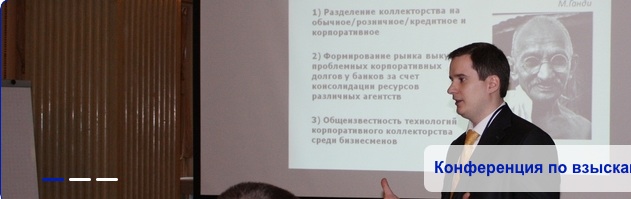
Screenshot of a photograph on the website of the Debt Collection Development Center. The photograph was taken during a conference on debt collection. Source: Tsentr razvitiia kollektorstva
Screenshot of a photograph found on the website of the Debt Collection Development Center. The photograph was taken during a conference on debt collection. The man in glasses displayed on the screen is identified as “M. Gandhi.” Source: Tsentr razvitiia kollektorstva

Russia in the Pit of Stability
The state has disclaimed all liability for the country’s future
Elizaveta Alexandrova-Zorina
Moskovsky Komsomolets
June 22, 2016

The country has been handed the bill for Crimea, Donbass, and “stability.” The bill includes unemployment, poverty, and hopelessness. The petrodollar dolce vita is over. The only things growing now in Russia are prices, taxes, and utility bills, while incomes, purchasing power, and the standard of living are falling. Nineteen million Russians live below the poverty line. Yet the minimum monthly cost of living in Moscow is 14,413 rubles [approx. 200 euros], and 9,452 rubles nationwide, meaning that a huge number of people who are not officially poor are barely making ends meet. Thirty-nine percent of families do not have spare cash; they spend their entire incomes on groceries. The worst thing is that these people cannot afford to buy not only things but also medicines. Almost fifty percent of the population suffers from structural hunger. And that is not is the limit: the crisis is not over yet.

On the other hand, no one in the government has been sacked, there has not been a single bankruptcy on the Forbes list of the world’s billionaires, and the number of dollar millionaires in Russia has not changed. “We picked the sweet berries together, but the bitter berries I pick alone”?

“Berries Are Sweet,” a song from the film Earthly Love (Yevgeny Matveev, dir., 1974)

The propagandists have, of course, been trying to powder the ugly picture with “poll results” claiming that eighty percent of Russians consider themselves happy, ninety-four percent look to the future with optimism, and eighty-two percent support the president’s policies. Not even the most desperately optimistic patriots believe in this anymore, however. Universal jingoistic boldness has given way to a heavy hangover, and instead of talk about Russia getting up from its knees, you more often hear the saying, “It won’t be worse than the nineties.”

It will be worse. In the nineties, it was only the free hand of the market that suffocated ordinary folk, but now the market will be reinforced by the strong arm of the state. More and more new taxes will be introduced: on property, land, vehicles, securities, and anything that moves. More and more bureaucratic dodges will be devised so the state can get its share, but from everyone and for nothing. There will be more and more new construction projects whose price tags will be doubled or trebled so the “elite” can maintain their prosperity. Phrases like “Crimea tax,” “payment for an extractive economy and decades of incompetent sloth,” and “money for officials and security forces” will be inscribed in invisible ink on each new levy, requisition, and massive construction project.

Sensitive to change, since they have something to lose, and quick off the mark, because they are able to leave, the middle class has quickly realized that hard times are coming. Since the introduction of sanctions, its ranks have thinned: some have been ruined, while others have fled. Even before the crisis, the regime did everything it could to make doing business more or less honestly in Russia unprofitable. Even the sanctions and promises to support domestic producers have changed nothing. Those who steal have it good, those who work have it bad, and the smaller the business, the more it gets fleeced. Due to the government’s anti-western rhetoric, many entrepreneurs who do business with other countries also got scared they would be targeted with everything from travel bans to confiscations of money and property. Hedging their bets, they have taken refuge in the Baltic countries, where it is easy to get a residence permit, as well as in Europe, Asia, and even Latin America. So many economic emigrants have left the country in recent years that we could speak of “economic steamships” bearing them out of the country. Many have purchased citizenships in other countries, and many of those people plan to renounce their Russian citizenships due to the passage of new laws. (The question of whether Russia needs such citizens and whether we should mourn their departure is beyond the scope of the article.)

But what will happen to those people who stay here? Will the nineties seem like a piece of cake to them?

People had no money in the nineties, but neither they did have any debt. Today, around thirty-eight million people have outstanding bank loans. This is fifty-nine percent of the working population, and it excludes people in debt to semi-underground micro lenders. Moreover, eight million people have at least three outstanding loans, and every sixth person has no way to pay back his or her debts. More than half the loans taken out in 2016 were used to pay off outstanding loans. In addition, people raised on the ideology of consumption cannot kick the credit habit even in hard time. Impoverished and unemployed, they mechanically keep on acquiring debt, using the money they have left to buy appliances or a trip to a resort, thus getting bogged down ever deeper in debt. The laws are written in the interests of the banks, and the inaction of the police and the connivance of the authorities favor the debt collectors. Banks get away with things mere mortals could not get away with. Billions are spirited out of the country annually using crooked banking schemes, and these crimes go to trial only in exceptional cases. It is one thing, however, to move capital abroad and not returns millions in loans to the treasury. It is almost a safe thing to do.

It is another matter not to give back a bank 100,000 rubles on time. True, a law regulating the work of debt collectors has finally been passe. As of 2017, absolutely criminal methods of forcing people to pay their debts will be prohibited. The law is quite timely, but you can count on laws only in countries where they are obeyed. Debt collection will thus shift from the legal realm to the semi-legal realm. Instead of official bank employees, debtors will now be getting visits from shaven-headed wise guys who supposedly have no connection to the banks.

By the way, bailiffs have recently been permitted to garnish the bank accounts of debtors. No one could care less whether you need the money for a life-or-death operation or you have a whole house of children to feed. The bank needs the money more than you do. The more the debt burden of the population increases, the more such measures will be adopted to help banks get their money back.

In the nineties, after the collapse of the Soviet Union, utility rates had not yet skyrocketed, and people could put off paying bills for years on end, until better times. There were no methods of debt collection, and besides, the housing and utilities sector had not yet been divvied up among contractors, many of whom are now in the hands of officials and their “subsidiaries,” only minus any government liability.

Nowadays, people who are overdue paying their utility bills for a couple of months are threatened with having their gas, electricity, water, and heating turned off, sued in court (which in Russia is always on the side of the strong), and can legally be evicted from their apartments. The regime, of course, serves the interests of the property management companies by increasing fines and simplifying debt collection procedures. Trying to carve up a meager budget, people wonder whether to pay the utility bills or make their loan payments. They base their decision on whom they fear most: the extortionists from the utility companies or the gangsters from the banks. The water and the power will probably not be turned off nationwide, but targeted outages and evictions will definitely kick off, and the most defenseless will be at risk. In my landing, a pensioner living with her sick son has had her electricity shut off, and the widow of a man disabled during WWII has received a “polite” threat from the housing service.

For the time being, Russians are keeping on top of their bills, but according to experts, the numbers of overdue utility bills will skyrocket and grow exponentially. Already sensing the profits to be made, collection services have taken an interest in the matter. (The new law on debt collectors, by the way, does not extend to people in debt to utility companies.) Considering their methods, this is definitely frightening. The website of the Debt Collection Development Center features a special section on extorting utility bill debts that lists such methods of pressuring debtors as special notices in the media and leafletting, participation of debt collection specialists in general tenant meetings, legal threats, and unorthodox options [nestandartnye varianty].* The last point gives me the creeps. What exactly are these unorthodox options? A clothes iron? A soldering gun? Matchsticks under the fingernails?

Another sign of the times that did not exist in the nineties is that no one feels sorry for anybody nowadays. A young family with a child has no way of paying back its foreign currency mortgage? Parents cannot pay for their son’s eduction? People have to sell the TV, car or dacha to pay off the loan used to buy that selfsame TV, car or dacha? You shouldn’t have borrowed money from a bank! You have no money to pay your bills? Sell your flat and buy one you can afford! You cannot pay for medical treatment or pay your university fees? Get a job! There are no jobs? That is your fault!

People have no sympathy for others or sense of solidarity. Nor should we expect protests and rallies in support of these who have gone into debt, even when the whole country ends up in that pit. The police and judicial system insures our government against any disturbances.

In fact, the punitive apparatus (from the police and the courts to bank debt recovery departments) is a single sector in which the state is present in one way or other. But what does the state do for its own people? It squanders state funds, including the pension fund. It cuts spending on everything not associated with the military, abroad and domestically. It has been exiting the social sector, shutting down hospitals, schools, and kindergartens, eliminating further and supplemental educational programs, canceling benefits, and reducing welfare payments that as they were amounted to kopecks. 24,000 schools, 4,800 hospitals, and 4,800 medical clinics were closed in Russia from 2001 to 2013 alone. (There is no data on the Rosstat website after 201. Apparently, it was decided to classify the information.)

The state has disclaimed all liability for the country’s future, but it still costs a lot to its people. In the nineties, the regime attempted to spend the Soviet inheritance, which was so rich that part of it is still left over today. In the noughties, it cashed in on resource extraction.  Today, it has no choice but to shake down its own citizens for money. The entire state vertical, the entire system of power, from the government to the security forces, has focused on this. And since it often has to shake the last kopecks from people’s pockets, the process will be cruel and painful.

Translated by the Russian Reader

* In the interests of fairness, I should mention I could not find this exact wording on the Debt Collection Development Center’s website, although I did find the page where the other methods listed, above, were discussed. TRR