Best Russian Brand

Yevgeny Prigozhin. Photo: Yuri Martyanov/Kommersant

Russian businessman, owner of the Concord Group of companies, “Putin’s chef” and confidant of the president, founder of a media empire and the Wagner Group, and one of the most famous people in Russia, Yevgeny Prigozhin now faces criminal charges of organizing an armed rebellion.

Prigozhin was born in Leningrad on 1 June 1961. We know that his mother, Violetta, worked at a hospital, his father died early, and his stepfather Samuel Zharkoy raised the future “Kremlin chef.” Zharkoy also encouraged Prigozhin to ski: his stepson graduated from Athletics Boarding School No. 62, where the swimmer Vladimir Salnikov and the gymnast Alexander Dityatin were his classmates. Prigozhin then enrolled at the Leningrad Chemical and Pharmaceutical Institute, but, according to his own account, he did not finish his degree there.

In 1979, the entrepreneur was given a suspended sentence on robbery charges. According to media reports, in 1981 he was sentenced by the Zhdanov District Court to twelve years in prison for a number of crimes at once, but in 1988 he was pardoned, and in 1990 he was released from prison early.

Beginnings

As Prigozhin himself recounted in an interview, his first business, founded in 1990, was selling hot dogs at the Apraksin Dvor market, the first such outlet in the city. “The mustard was mixed in my apartment, in the kitchen. My mother also tallied the proceeds there. I earned $1,000 a month, and that amounted to piles of rubles,” the businessman said.

In the 1990s, Prigozhin managed Kontrast, a chain of private grocery stores. He launched his future restaurant business in 1995 by opening Wine Club, a bar and shop on Vasilyevsky Island. In late 1996, after meeting the Briton Tony Gere, Prigozhin opened the Old Customs House, which is considered one of the first elite restaurants in Petersburg. According to some reports, his partner in this business venture was Mikhail Mirilashvili, a well-known Petersburg entrepreneur who years later cofounded the VKontakte social media network.

Prigozhin later opened three more establishments: Seven Forty, Stroganov Yard, and Russian Kitsch. In 1998, he opened the restaurant New Island on the used passenger ship Moscow-177, purchased for fifty thousand dollars, which became a popular spot in Petersburg. When Prime Minister Sergei Stepashin and IMF managing director Michel Camdessus visited the city in June 1999, New Island was the only decent place to wine and dine the high-ranking guests.

In 2001, Vladimir Putin dined there with Jacques Chirac, and a year later with George Bush. In 2003, according to media reports, the Russian president celebrated his birthday there. Since the businessman personally served dishes to the president, he was dubbed “Putin’s chef” and “the Kremlin’s chef.”

By that time, Prigozhin had already moved into the catering business, founding Concord Catering in 1995. In 2002, he launched the Damn!Donalds chain of fast food restaurants: the businessman came up with the name himself. The chain was shuttered ten years later, however.

As the businessman recounted in an interview about the success of his catering business, by 2005 he owned “the largest catering company in Russia for ten years running.” “We did all the G8s and the summits,” Prigozhin recalled. From information available in open sources, it follows that the businessman actually did organize a number of banquets for high-ranking guests, including meals at the Russian Federal House of Government.

Buoyed by this success, Prigozhin decided to enter the school meals market. “I decided to try my hand at it and chose a couple of schools on Vasilyevsky Island — No. 10 and No. 18. Of course, it wasn’t a business. I began feeding the schoolchildren airtight-packaged box meals. I set up modern compact kitchens right in the schools — everything fit in a six-square-meter space. At the same time, I carefully researched the topic.”

In the 2000s, Prigozhin went into the construction business. In particular, he built Northern Versailles, a gated mansion community, in Petersburg’s Lakhta district. In 2016, a company belonging to the businessman built the Lahta Plaza [apartment and hotel] complex next to St. Petersburg Tricentennial Park.

In 2016, it transpired that a Prigozhin-affiliated company bought the premises of the Shop of Merchants Yeliseyev, which he had occupied on lease since 2010, after making expensive renovations. By 2015, Prigozhin’s companies had become the largest supplier of food to the Defense Ministry.

In 2018, Vladimir Putin said in an interview with western media, “He is not my friend. I know such a person, but he is not on my list of friends.”

Media Empire

In 2013, it was reported that the Internet Research Agency, which was informally dubbed the “troll factory,” was located on Savushkin Street in Petersburg. Hundreds of people worked on the media holding’s websites. Prigozhin’s connection with the growing media empire was denied by Concord’s press service.

2019 saw the emergence of the Patriot Media Group, which included the Federal News Agency (FAN), Economy Today, Politics Today, and Nation News. Yevgeny Prigozhin headed its board of trustees, but the businessman’s financial involvement in the project was denied.

Western sanctions against Prigozhin were imposed for the first time over the involvement of his media outlets in the information campaign [sic] for the US presidential election.

Wagner

The Wagner Group, a private military company, was founded in 2014. Subsequently, Wagner soldiers were involved in fighting in eastern Ukraine and, later, in Syria. In 2017, the company was placed on the US sanctions list. But [Prigozhin] admitted his involvement in founding Wagner only in 2022. Western countries have claimed that Wagner mercenaries have also operated in Libya, the Central African Republic, Sudan, Mozambique, and Mali.

SMO

Since 24 February 2022 and the beginning of the SMO, Prigozhin gained worldwide fame in connection with the Wagner Group’s actions in Ukraine. Wagner’s troops have been heavily involved in the fighting. Mercenaries recruited among convicts have been actively joining the ranks of Wagner PMC. In March, the businessman claimed that over 5,000 ex-convicts had returned to Russia after participating in combat.

The conflict between the Defense Ministry and Prigozhin rapidly deteriorated in 2022, although friction between the two parties had essentially begun several years earlier.

A year later, in February 2023, Prigozhin publicly voiced dissatisfaction with the lack of ammunition during the battles for Bakhmut (Artemovsk). A campaign entitled #GiveWagnerShells gained momentum on the internet.

On May 10, the businessman, amid rumors of a “shell famine,” publicly announced his willingness to transfer Wagner’s positions in Bakhmut to Chechnya’s Akhmat Regiment at the suggestion of Chechen ruler Ramzan Kadyrov. On May 20, the businessman said that Wagner had taken Bakhmut, and once again made highly critical remarks about the Defense Ministry. Five days later, Prigozhin announced that he was withdrawing his units from the city.

In June 2023, the businessman asked Defense Minister Sergei Shoigu to release the Concord Group from its catering contract in the SMO zone after more than sixteen years of successful cooperation with the Russian military’s kitchens.

Moreover, Prigozhin said that an order that members of volunteer detachments must sign contracts with the Defense Ministry did not apply to the Wagner Group.

Then came June 23. Wagner’s founder made new public statements, triggering criminal charges against him. If convicted, Prigozhin faces up to twenty years in prison.

Source: Irina Kurbat, “Who is Yevgeny Prigozhin?” Fontanka.ru, 24 June 2023. Translated by the Russian Reader


Goods bearing the emblems of the Wagner Group (including chevrons, flags, t-shirts, baseball caps, and sewn-on patches) have been brought back to the “counters” at Wildberries, as our correspondent verified on the evening of June 24.

In the first half of the day, a source at Wildberries told RIA Novosti that the online retailer had bearing removing goods bearing the [private military] company’s emblems and was going to remove them altogether. Later, such goods were hidden by Ozon, where they are still unavailable.

Source: “Wildberries brings back Wagner-branded goods,” Fontanka.ru, 24 June 2024. Translated by the Russian Reader

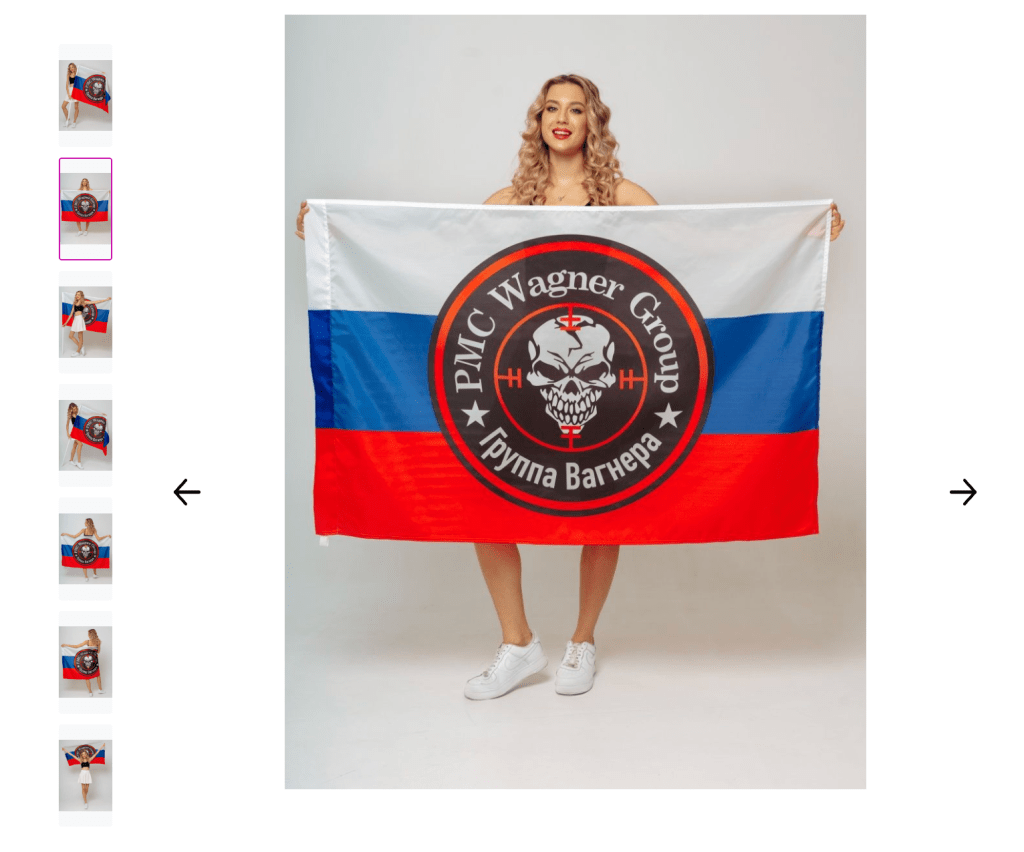
A search for the phrase “Wagner PMC” on the website of popular Russian online retailer Wildberries garnered 8,736 items, including the fetchingly reimagined Russian tricolor flag, below. This search was performed at 11 p.m. Moscow time on 24 June 2023.

Zenit FC midfielder Wendel has decided not to return to Petersburg due to the situation with the Wagner PMC, reports Sport Express, citing the player’s agent Cesare Barbieri.

“This is definitely a very delicate situation. Wendel will stay in Brazil until the situation improves. The club has already been notified of this. Zenit has reacted understandingly to the situation,” the agent said.

In the 2022–2023 season, 25-year-old Wendel has played twenty-five matches for Zenit in the Russian Premier League, scoring eight goals.

Source: “Zenit football player Wendel afraid to return to Russia,” Fontanka.ru, 24 June 2023. Translated by the Russian Reader
In the Land of Great Achievements

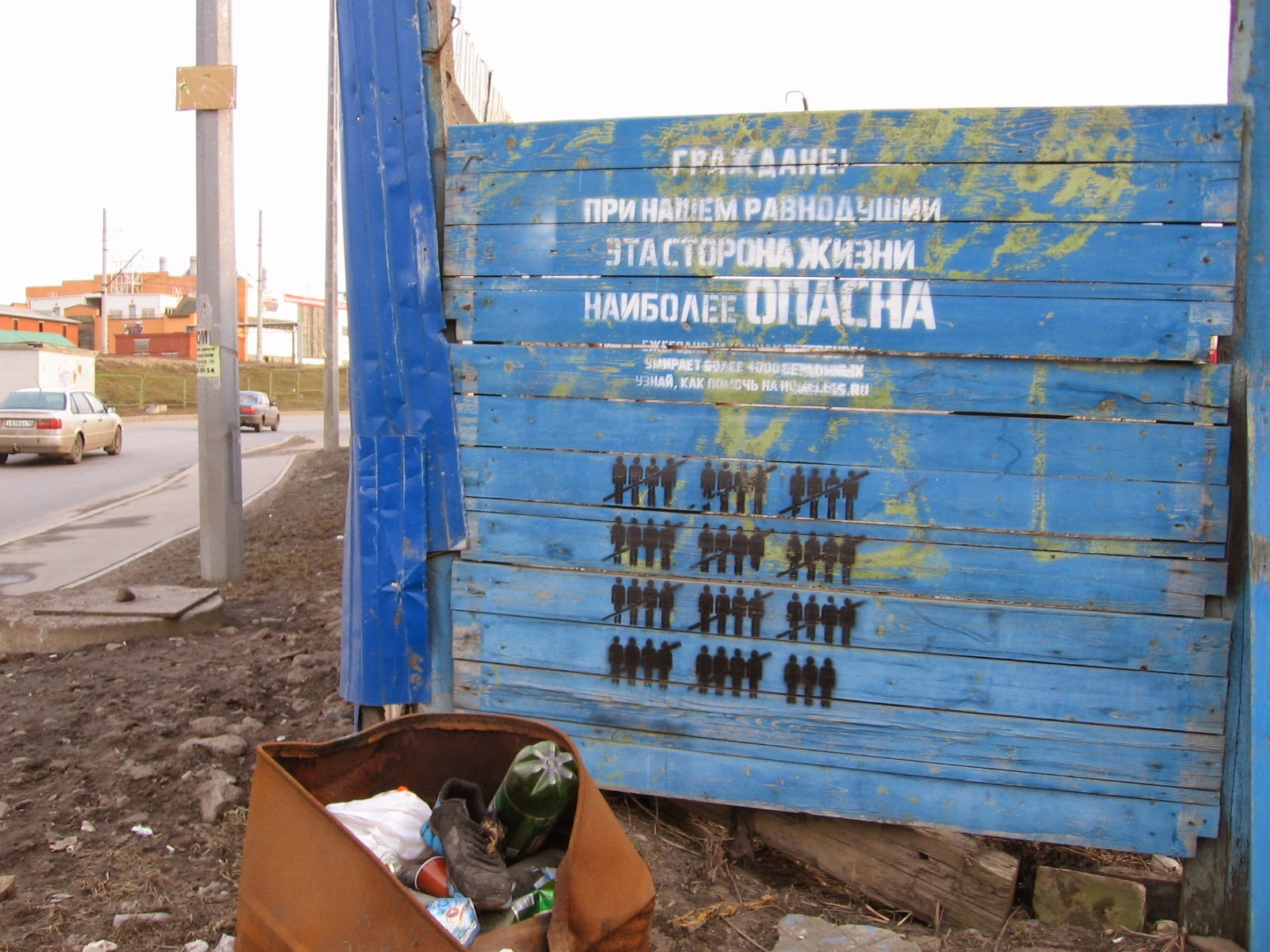
IMG_6258“Citizens! Given our level of indifference, this side of life is the most dangerous!”

Sergei Medvedev
Facebook
March 14, 2020

The cowardly “recommendations” of [Moscow Mayor Sergei] Sobyanin and the Defense Ministry regarding “voluntary attendance” of schools and universities instead of closing them altogether is a very bad sign. It means the authorities fear panic more than the virus itself and have chosen a cowardly hybrid strategy for evading responsibility. “Parents in this case know better,” it says in Sobyanin’s decree. Hang on a minute! This means parents will decide whether their children become potential carriers of the virus, not doctors or the federal epidemic headquarters. This is not just absurd, it is criminal. Just as you cannot be a little bit pregnant, you cannot declare a partial, optional quarantine. Either there is a quarantine or there isn’t one. Even one person who is not quarantined upsets the whole system.

It seems the authorities are torn between the growing need for a full quarantine (as the avalanche of news from abroad can no longer be hidden) and the impossibility of taking this step. The impossibility, as it seems to me, is purely technical: Russia simply does not have the level of governmental and public organization, the kind of screening, testing, equipment, discipline, and strict enforcement of the law that we have seen in China and,  in part, in Italy. Can you imagine the Moscow subway being closed? It would be a disaster not just for the city but for the country: if this megalopolis of twenty million people ground to a halt, it would be like cardiac arrest for the whole country. And secondly, for purely political reasons you cannot declare a state of emergency before April 22 [the scheduled date of a nationwide “referendum” on proposed changes to the Russian constitution] and May 9 [the 75th anniversary of the Soviet Union’s victory in WWII]. They must be marked in the pompous atmosphere of national holidays, not in the post-apocalyptic trappings of Wuhan, dressed in hazmat suits, getting doused with chlorhexidine.

Therefore there will be no quarantine, only cowardly half-measures like voluntary school attendance, “recommendations” for cutting down on public events (when the authorities want to ban a protest rally, they ban it, with no ifs, ands or buts), the partial restrictions on air travel (just take the ridiculous ban on flights to Europe, but not to the UK, dear to the hearts of oligarchs and members of parliament because they have children, families, and houses there), and so forth. Excuse the pun, but the regime has washed its hands of the problem and told the population that it is to up to the drowning to save themselves. You decide how to protect yourselves, and if something happens, well, we gave you “recommendations,” so we’re off the hook.

Meanwhile, the populace has been eating up tall tales about “just another flu,” reposting memes about more people dying every year from mosquito bites, shaming “alarmists” and “hysterics,” and leading a carefree life. It’s the typical infantile reaction of an unfree, patriarchal, closed society, which denies threats, displaces fear, and is ostentatiously careless.

Meanwhile, the virus has been here for a long time already, and hardly anyone believes the ridiculous figures of 59 people infected in a country of 146 million that is open on all sides. (Before the quarantine went into effect in China, the Chinese freely walked and drove back and forth over the Amur River in Russia’s Far East, while in European Russia, tens of thousands of our compatriots traveled to and from the most infected regions of Europe throughout February and March.) The longer this goes on, the more ridiculous the official figures will be, but the real figures will be ferreted away in overall mortality statistics for the elderly, among figures for “seasonal flu” and “community-acquired pneumonia,” while death certificates will contain phrases like “acute heart failure,” which is what they also write when someone is tortured to death. Just try and object: heart failure really did occur, and facts don’t lie!

I remember the terrible summer of 2010, when there was a heat wave, and the forests were on fire. Moscow swam in a scalding smog, and up to 40,000 old people died, according to unofficial estimates. Among them was my 83-year-old father. When the policeman came, wiping the sweat from his face, to a draw up the death report, he lowered his voice and told me that his precinct alone had been processing hundreds of people day, and that there were tens of thousands of such people citywide. However, there were no statistics on heatwave-induced deaths: the whole thing was disappeared into the usual causes of death for old people.

So, I’m afraid we will remain in the mode of “voluntary attendance,” of voluntary quarantines and voluntary mortality, a regime in which even getting diagnosed will be voluntary because we are the freest country in the world! The regime’s evasion of responsibility, the mighty smokescreen concealing the epidemic’s true scale, and the habitual carelessness of the populace (aggravated by the atomization of Russian society, its low levels of social capital, the absence of trust, discipline, and social solidarity, and the Gulag principle of “you die today, I die tomorrow”) will all boomerang back on us. Yes, the epidemic will reach its natural limits by summer, and maybe Merkel is right that sixty to seventy percent of the population will be infected, and many of these people will not even suspect they are sick. At the same time, however, not only will the [Russian] constitution and Putin’s [previous] terms [as president] be nullified, but so will many lives that could have been saved if not for the things mentioned above. But when did human lives ever count for anything in the land of great achievements?

Sergei Medvedev teaches at the Higher School of Economics in Moscow. Thanks to Elena Zaharova for the heads-up. Translated by the Russian Reader

Fedor Pogorelov: “A grand charge. We’re all going to die!” Footage of Zenit fans chanting “We’re all going to die” on March 14 at Gazprom Arena Petersburg.


Thousands of Zenit Fans Chant “We’re All Going to Die” at Match
Radio Svoboda
March 15, 2020

More than 30,000 fans attended Saturday’s match in St. Petersburg between Zenit and Ural in the Russian football championship. It was one of the last mass events in the city before restrictions were imposed due to the coronavirus infection. The restrictive measures come into force on March 16.

Fans of the Petersburg club chanted “We’re all going to die” several times.

They also hung up a banner reading “We’re all sick with football and will die for Zenit.” It is reported that the fans had their temperature checked. Zenit won the match with a score of 7-1.

Despite the threat of the coronavirus, the Russian Football League did not cancel matches this weekend. However, the possibility of taking a pause in the championship has been discussed. All the major European leagues have already announced a break, and play in the Champions League and the Europa League has also been suspended. On March 17, UEFA will discuss whether to postpone the European championship until next years.

Translated by the Russian Reader

The Orangutan Project

saveforest03-400x400

Last Saturday night, I read this story by Lika Frenkel on her Facebook page:

Near my house, just off Nevsky, two drunken Russian FC Zenit fans assaulted an Uzbek worker repairing the porch. They were giving him a ferocious beating, but when I cried for help, a a Russian dude popped up and yelled, “Young lady, those are our own Russian lads. They’re doing the right thing!” Thank God, another [Uzbek] worker came running and fought out his countryman’s attackers. I called the police. The Russians dashed off down Nevsky. Only a skateboarder reacted to my heart-rending cries of “Stop them! They beat up a man!” But it was too late: the fascists got away. The police went looking for them. I returned home and brought the Uzbeks clean towels. The young man’s head was badly injured. The other man turned out to be his brother. He said to me, “You think this is the first time? My brother is a doctor himself. He just arrived [in Russia]. I’m used to it. I would have given them what they had coming, only there are cameras everywhere here, and I don’t want to draw attention to myself.

Just like my fierce friend Lika Frenkel, Al Jazeera’s doco about former Perth zookeeper Leif Cocks and his Orangutan Project, below, will restore your faith not in humanity per se but in the fact that our planet still occasionally produces actual human beings, people capable of seeing and actively defending the humanity in Tajiks and Uzbeks (as in Lika’s case) and personhood in endangered and captive orangutans (as in Leif Cocks’s case).

If you are wondering how I make such absurd thematic leaps, it’s simple. After reading Lika’s late-night story, I got into bed and listened to this interview with Leif Cocks on ABC Radio National before drifting off to sleep.

Needless to say, a double dose of militant empathetic humanity like that made me sleep like a baby all through the night. All is not right with the world, to be sure, but there are heroes in our midst like Lika Frenkel and Leif Cocks. We need to identify them, celebrate them, and, most of all, emulate them.

Story translated by the Russian Reader. Image, above, courtesy of the Orangutan Project.

A Snowy Sunday in Petrograd with Donbas Separatists

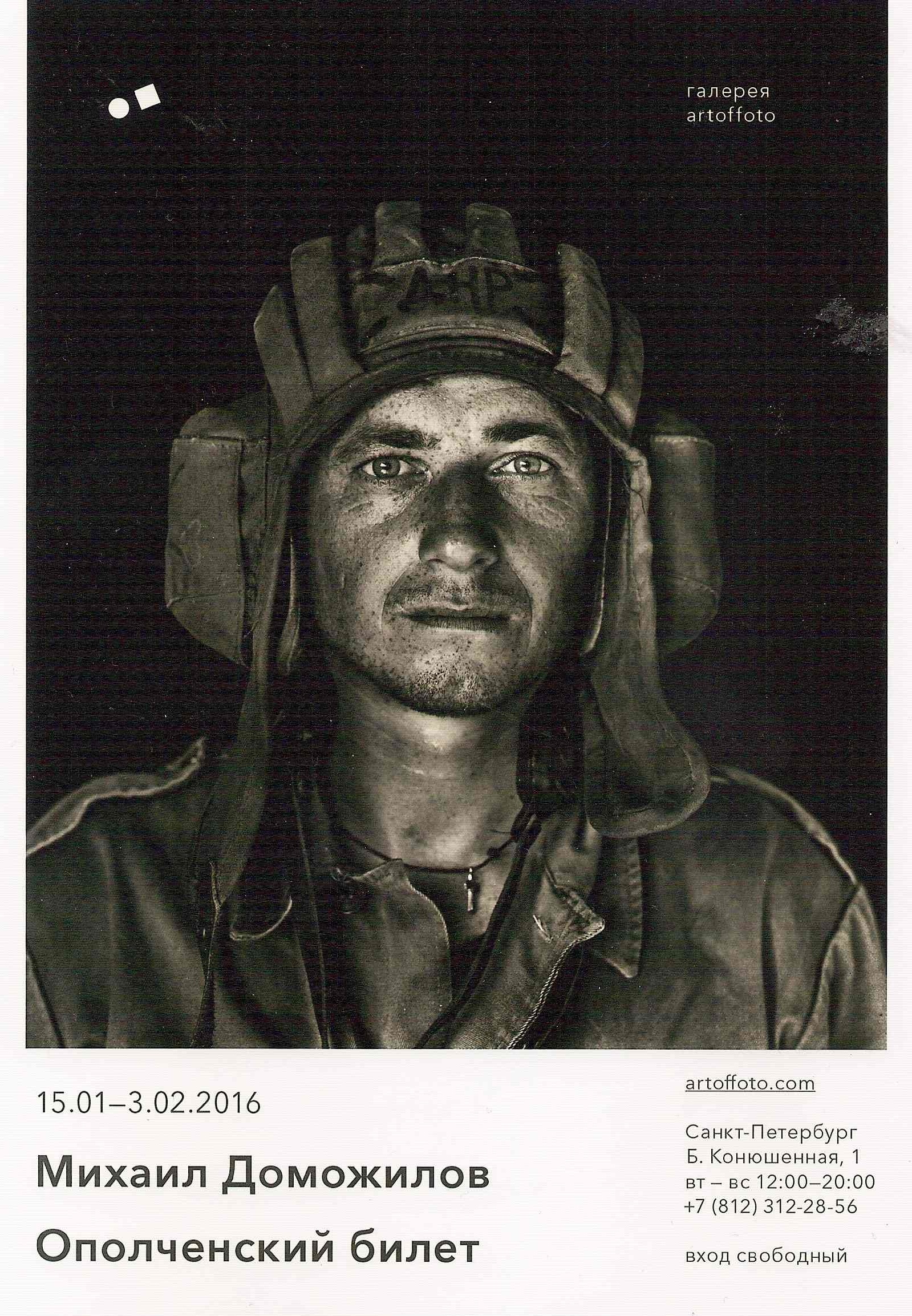
Promo flyer for the exhibition Mikhail Domozhilov, Militiaman's ID, Art of Foto Gallery, Saint Petersburg, January 15-February 3, 2016. Courtesy of the gallery
Promo flyer for the exhibition Mikhail Domozhilov, Militiaman’s Pass, ARTOFFOTO Gallery, Saint Petersburg, January 15-February 3, 2016. Courtesy of the gallery

This morning I got an urgent message from a friend, alerting me to the fact a funny sounding exhibition of photographs was underway at a downtown photo gallery I had never heard of.

It was true, as my friend pointed out, that the announcement for the show, an exhibition of portraits of Eastern Ukrainian pro-Russian separatist fighters (opolchentsy), taken by Petersburg photographer Mikhail Domozhilov, sounded quite dicey politically, as posted on the website of the exhibiting gallery, ARTOFFOTO.

It sounded a little less outwardly partisan when translated into English and printed on the flyers I would later find lying on a windowsill in the gallery:

“The self-proclaimed and still unrecognized state [of the] Donetsk People’s Republic appeared as a result of a civil war in Ukraine in April, 2014. The Donbass People’s Militia became the driving force of the new republic. In the year that passed after the declaration of the DPR, its militia transformed from an anarchic group of super activists [sic] divided into small groups and willing to go weaponless and die for an idea into a regular army with all its necessary attributes—[a] code [of military conduct], subdivisions [sic] and their chiefs, headquarters and machinery.

“This episode is about transition and transformation, about a shaky equilibrium between belonging to one country and to another, utopic in its essence. And also about the self-identification of the participants throughout the conflict. In several months former miners, builders, mechanics have become professional warriors, and a new, extreme reality has replaced the ordinary one. With major destruction[], artillery shelling and [a] non-continuous front, these people suddenly found themselves in the middle of historical events and news reports.

“This episode includes several close-up portraits of militia members in mobile studios at military and training bases, as well as on [the] frontlines.”

(English-language flyer for the exhibition Mikhail Domozhilov, Militiaman’s Pass [Opolchenskii Bilet], ARTOFFOTO Gallery, Bolshaya Konyushennaya, 1, Saint Petersburg, January 15–February 3, 2016)

It was also true that the photographer, Mr. Domozhilov, had shown a penchant in his career for subjects that might be characterized as rightist, such as this fascinating series on the ultras for Petersburg’s Russian Premier League side, FC Zenit.

The ultras series featured virtuosic albeit historically and aesthetically coded works such as this.

domozhilov-terrace
Mikhail Domozhilov, From the series Ultras, 2010. Courtesy of the photographer’s website

On the other hand, Mr. Domozhilov’s tearsheets included portraits, just as compelling, of pro-Ukrainian fighters on the Maidan in Kyiv.

But I did not think it fair to pronounce judgement on the work on the basis of a couple of websites, so I set off into the winter wonderland that Petrograd has become in the last week to see the show for myself.

Continue reading “A Snowy Sunday in Petrograd with Donbas Separatists”