Belarus: Five Years Later

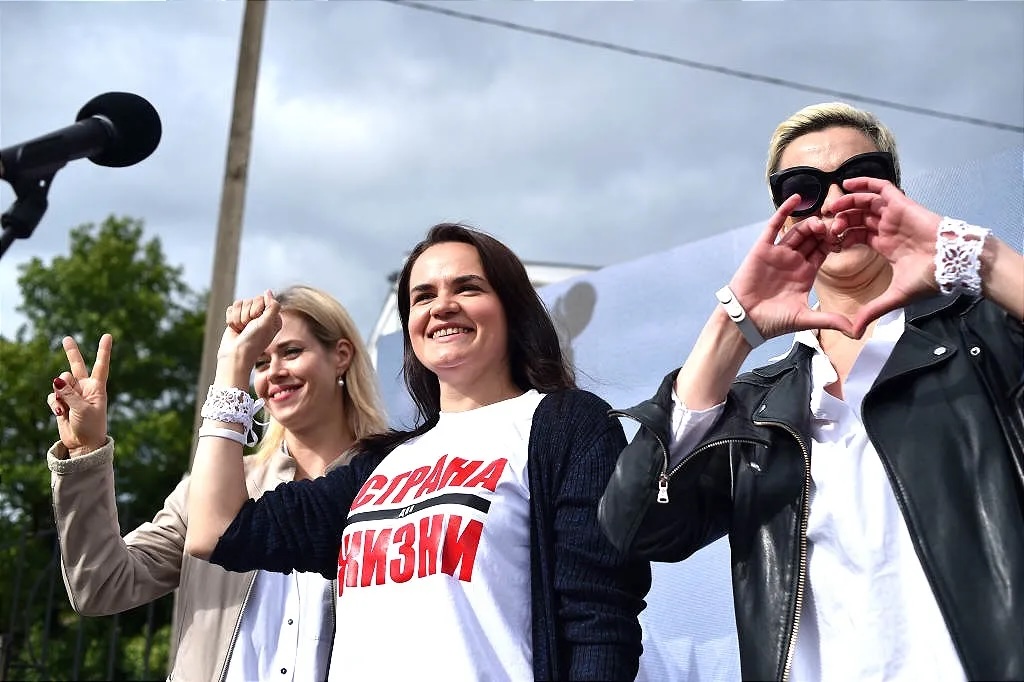
Svetlana Tikhanovskaya (centre), Veronika Tsepkalo (left), and Maria Kolesnikova making their signature hand gestures at a meeting in Minsk in 2020. ©Getty Images

Alexander Lukashenko, the former Soviet state farm director turned Belarus strongman, once said that a woman could never run his country. Then three of them challenged him.

Five years on from the biggest protests in Belarusian history, Svetlana Tikhanovskaya and Veronika Tsepkalo, both now in exile, have been speaking to the BBC about the price they paid for inspiring hundreds of thousands of Belarusians to take to the streets to call for change.

Their former teammate, Maria Kolesnikova, is now in a Belarusian prison, sentenced in 2021 to 11 years for extremism and plotting to overthrow the government.

Her sister Tatsiana Khomich tells the BBC the family haven’t heard from her since last year.

The three women joined forces in August 2020, when the opposition candidates they were supporting were all forced to end their presidential bids.

Their short-lived alliance made global headlines with pictures of them showing a heart, a fist, and a victory sign with their hands.

They claimed it took them 15 minutes to agree to join forces against Lukashenko, who has been in charge of Belarus since 1994.

“Far quicker than it would take men to do it,” said Veronika Tsepkalo, at the time.

She was left in charge of her husband Valery Tsepkalo’s campaign after the former Belarusian ambassador to the US was barred from registering as a candidate and fled the country fearing arrest.

Maria Kolesnikova campaigned for banker Viktor Babaryko, who was also prevented from standing and arrested ahead of the election.
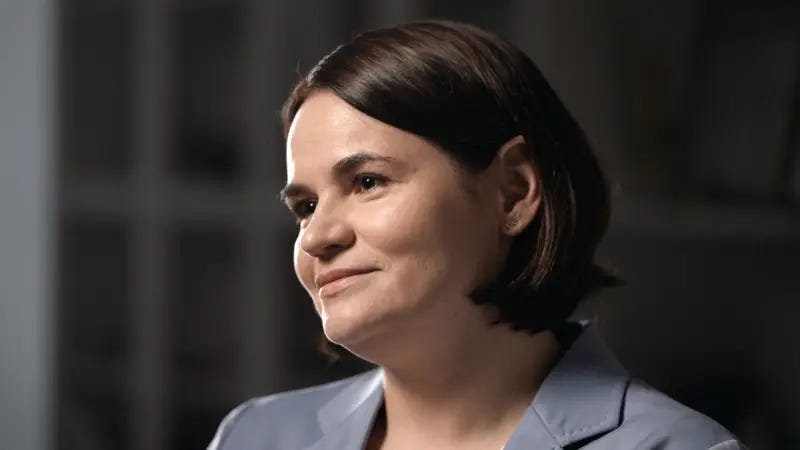
Svetlana Tikhanovskaya is widely recognised as the leader of the democratic opposition in exile. © BBC News Russian

But it was Svetlana Tikhanovskaya who ended up on the ballot, stepping in for her husband, the activist and popular video blogger Sergei Tikhanovsky, after he too was thrown in jail.

Together the three women travelled around the country, drawing big crowds of supporters eager for change. Their promise was simple: release all political prisoners, then hold a free and fair election.

In 2025, Svetlana Tikhanovskaya speaks about the “emotional uplift” all of them felt during those days.

“We managed to unite Belarusians”, she tells the BBC.

When election day came on 9 August, people flocked to the polls. Svetlana’s supporters were convinced she had won the vote, but Alexander Lukashenko claimed a landslide victory.

This sparked unprecedented mass demonstrations across the country, which lasted for several months. The authorities responded with a brutal crackdown. At least four people were killed – their deaths blamed on the security forces.

But none of the three women who had electrified the campaign, were there to lead the protestors.

Tsepkalo left Belarus just before the election. Tikhanovskaya was detained by the KGB a day after the vote and forced out of the country under threat of being jailed and losing her children to state care.

Maria Kolesnikova’s family are continuing their campaign for all political prisoners to be released © BBC News Russian

Maria Kolesnikova stayed behind. She was arrested in September, after tearing up her passport at the border with Ukraine to prevent a forceful expulsion.

Along with her former boss Viktor Babaryko, she is one of more than a thousand political prisoners still held in Belarus, according to a human rights group Viasna.

Since 2020 tens of thousands of people have been arrested for opposing the regime, many say they have suffered torture and mistreatment while in detention.

Today, any public dissent in Belarus is crushed.

“I sincerely believed that Lukashenko’s regime would fall”, Veronika Tsepkalo tells the BBC.

Like hundreds of thousands of Belarusians who are estimated to have left the county after 2020, she now lives abroad with her family, working at a big tech company in the UK.
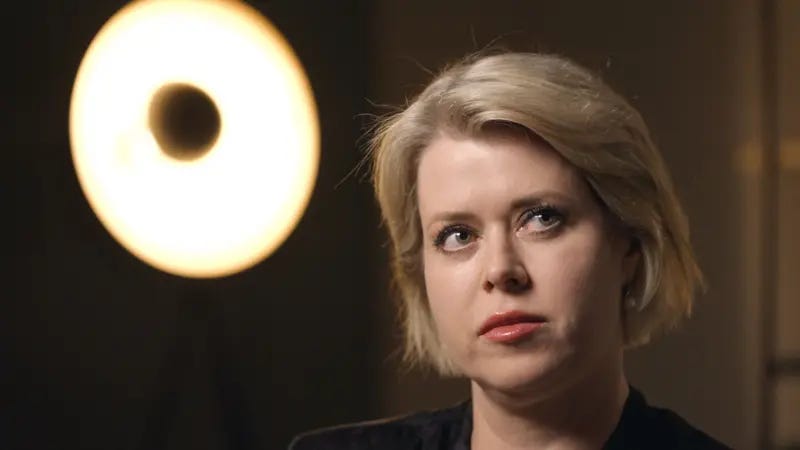
Veronika Tsepkalo has won awards for her work defending the rights of Belarusian women. ©BBC News Russian

So what went wrong with the protest movement?

“It was this all-or-nothing approach”, says Tatsiana Khomich, Kolesnikova’s sister who is now campaigning for release of Belarusian political prisoners. “We overestimated ourselves and underestimated what the authorities are capable of.”

Svetlana Tikhanovskaya says she now understands they had no plan and “weren’t ready for any radical change”.

Once a stay-at-home mum who admitted to being shy and lacking her husband’s charisma, she is now recognised as leader of the democratic opposition in exile, and regularly meets heads of state and lobbies for sanctions against Lukashenko’s government.

“If I could transfer my present knowledge, my experience to myself five years ago, I would definitely have felt more confident,” Tikhanovskaya says. “I’ve learned a bit of diplomacy, how to talk to politicians, how to be comfortable around powerful people”.
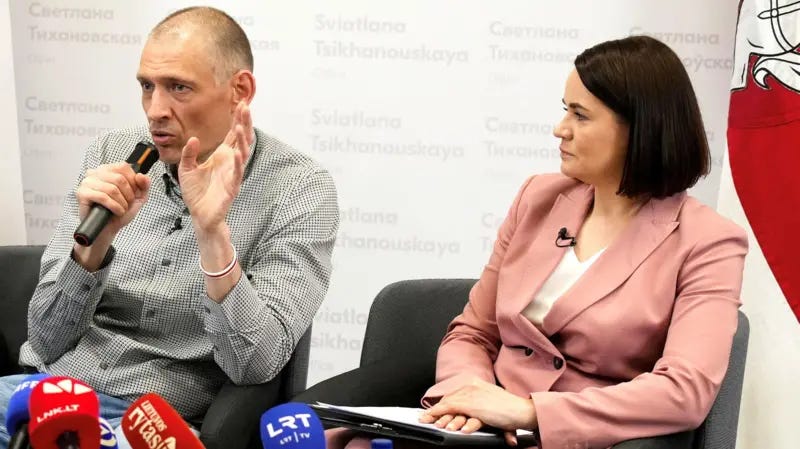
Svetlana and Sergei Tikhanovsky at a press-conference following Sergei’s release. ©Reuters

Less than two months ago Svetlana unexpectedly got her husband back: Sergei Tikhanovsky was released along with 13 other political prisoners and sent to Lithuania to his family.

It is thought that Donald Trump’s administration was key in securing their release.

Having said in the past that she went into politics “out of love” for her husband, Tikhanovskaya now admits she’s since also fallen in love with Belarus and the vision for her country.

“We’re not going to compete with Sergei about who’s more important, who has more followers et cetera. Sergei will be a natural fit for our movement,” she says.

Tikhanovskaya rarely speaks to Veronika Tsepkalo and in the interview with the BBC doesn’t want to go into details of what happened to their relationship.

Tsepkalo is more candid: she accuses her former “sister-in-arms” of hijacking their movement and pushing her out.

“The trio has broken up”, states Tatsiana Khomich.

Khomich, who is still part of her sister’s team, says all of them now have their own projects.

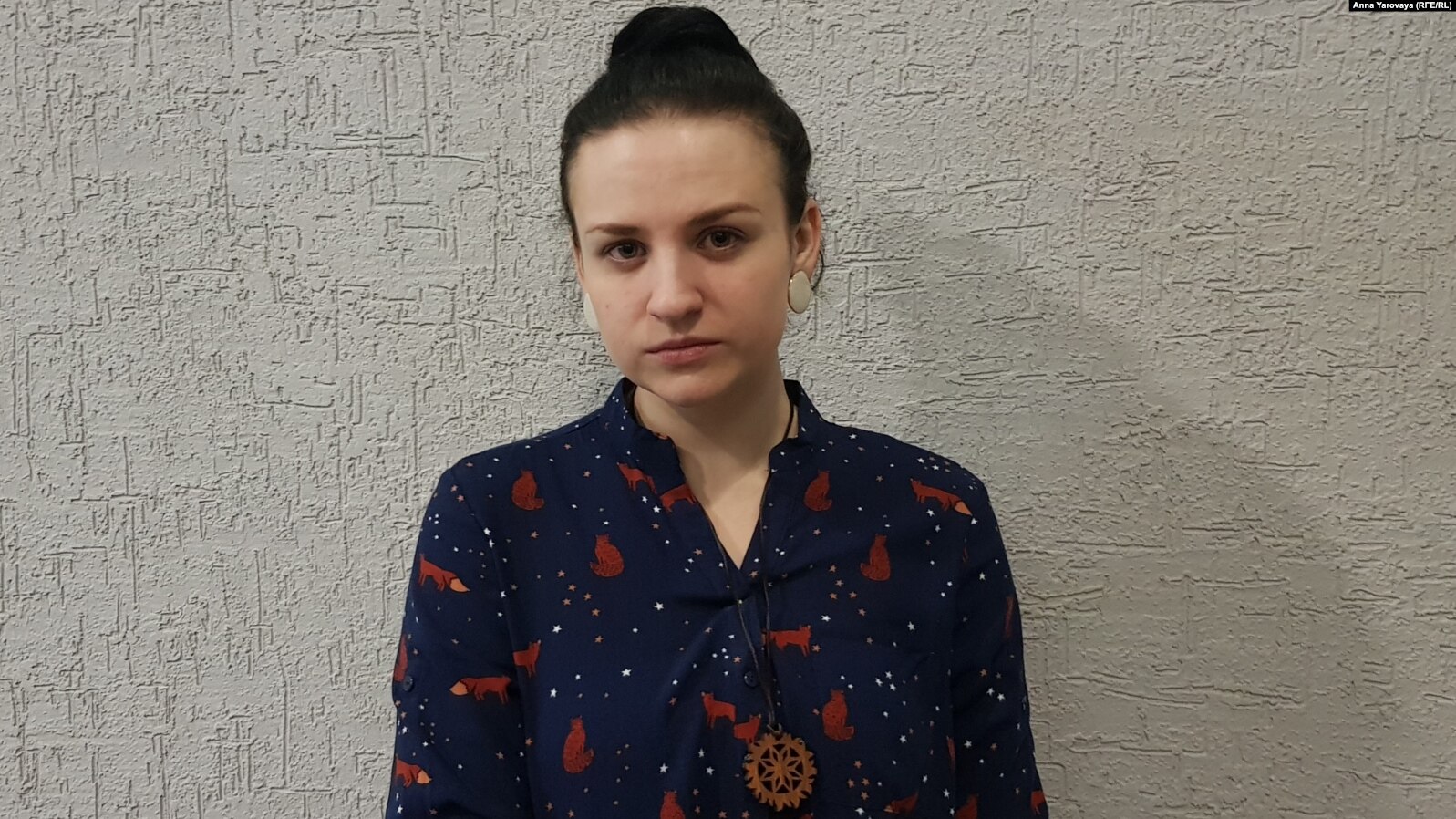
Tatsiana Khomich says she hasn’t heard from her sister this year. ©BBC News Russian

Svetlana Tikhanovskaya says her priority is working towards the release of political prisoners and lists helping Belarusians abroad and keeping Belarus on the international agenda as her achievements.

Veronika Tsepkalo is sceptical of these successes, calling them “action for action’s sake”.

Back in her husband’s team, she has been campaigning to bring Alexander Lukashenko to international justice.

Tatsiana Khomich thinks that trying to force regime change from abroad is “meaningless”.

“In reality, we’re now much further away from it than we were five years ago”, she says.

Both Tikhanovskaya and Tsepkalo believe at some point in the future there will be a free and democratic Belarus.

When asked to respond to criticism that she had put her own ambitions before her team, Tikhanovskaya says:

“Maybe that’s the kind of thing people who don’t really know me would say. I’d like us to finally hold new and fair elections but I certainly won’t be taking part in them.”

Source: Tatsiana Yanutsevich & Tatiana Preobrazhenskaya, “The women who stood up to Europe’s ‘last dictator,’” The Best of BBC News Russian — in English,” 5 September 2025


Kapela (ensemble) Rej is a group performing traditional Belarusian music. Their main instruments are the duda (Belarusian bagpipe) and the violin.

The ensemble on the recording:
Vital Voranaŭ: duda
Ursula Oleksiak: violin, vocals
featuring Sergi Llena (Spain): frame drum, gaita de boto

The recordings were made in Serbia during the Rog Banata festival in the towns of Zrenjanin (2024, tracks 1-9) and Bečej (2023, tracks 10-13). The album cover photo was taken at the performance in Belgrade in 2024 by Sandra Crepulja.

Released August 27, 2025

Source: Antonovka Records (Bandcamp)
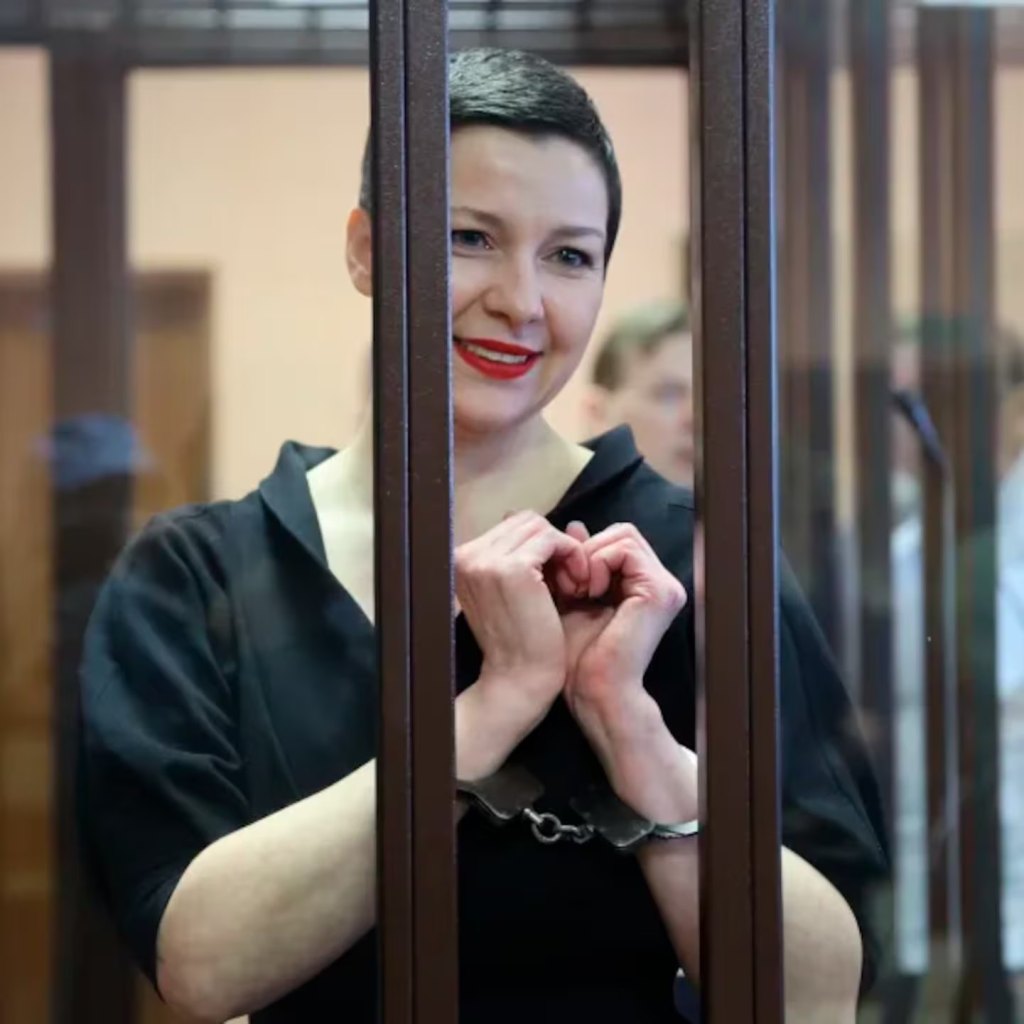

Maria Kalesnikava, musician, activist, and political prisoner, was detained on this day in 2020. She was kidnapped on the Minsk street by the Belarusian authorities and the next day taken to the Belarusian-Ukrainian border to be thrown out of the country. But she tore up her passport and thus could not cross the border. In 2021, together with Maksim Znak, she was sentenced to 11 years of imprisonment (Maksim got 10 years). Now she is kept in Homiel women’s colony.

Kalesnikava is of my age, and five years of her life she has already spent in jail. Since February 2025, Maria and her family have exchanged no letters or calls… At least, she is not in solitary confinement but kept together with other female prisoners.

I’ve not been writing about the political situation in Belarus for a while, but that is not because there is some improvement. No, every day we read about new detentions. This week human rights defenders have recognized 14 new political prisoners, and the authorities have added 68 names to the so-called “extremist list”. All in all, we now know about 1197 political prisoners, 32 foreign citizens among them. A recent case: a 52-year old British citizen (she also has the Belarusian citizenship) was arrested while crossing the Belarusian border and sentenced to 7 years of prison (https://spring96.org/en/news/118604).

But still hundreds stay unrecognized because of different reasons. Without free Belarus, you won’t have peace in Europe.

Source: Julia Cimafiejeva (Facebook), 7 September 2025

Yesterday, I wrote about the five years Maria Kalesnikava had already spent in jail and about 1197 political prisoners in Belarus. And today, we’ve learned about another death.

Political prisoner Andrei Padniabenny, a 36-year-old Russian citizen, has died in Mahiloŭ penal colony No. 15. He was tried twice on criminal charges and sentenced to 16 years and eight months in a medium-security penal colony. He had been behind bars for nearly four years. The exact cause of his death is unknown.

His mother Valiantsina, reported on Facebook:

“My precious grandchildren are left without a father… The only consolation is that no one will be able to torture my son anymore, either physically or psychologically… I believe that God’s justice will reach the guilty, and no crime will go unpunished….”

According to the publication, Andrei died on September 3. This is the ninth death of a political prisoner in Belarus and the second death of a Russian citizen behind bars.

Other political prisoners who died in captivity:

Vitold Ašurak

Aleś Puškin

Mikałaj Klimovič

Vadzim Kraśko

Ihar Lednik

Dźmitry Šlethaŭer

Valancin Štermier

Alaksandr Kulinič
Source: Julia Cimafiejeva (Facebook), 8 September 2025

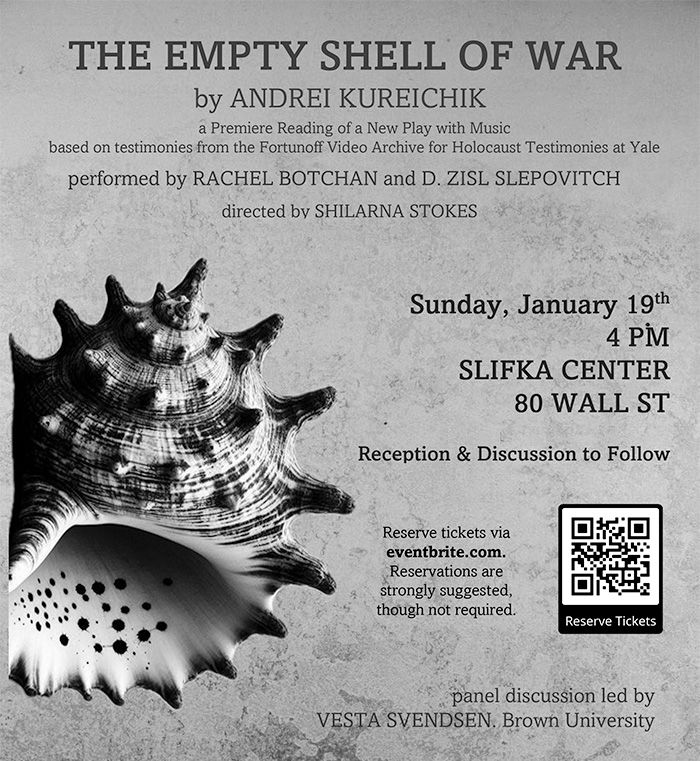
Andrei Kureichik: The Empty Shell of War (World Premiere)

The Fortunoff Video Archive for Holocaust Testimonies, and Yale’s Program in Theater, Dance, and Performance Studies, invites you to the premiere reading of Andrei Kureichik’s new play The Empty Shell of War.

The play, featuring performance by Rachel Botchan and D. Zisl Slepovitch, is directed by Shilarna Stokes.

When: January 19, 2025
Time: 4:00 PM
Location: Slifka Center, Yale University

Registration requested in advance. Please click on this link to register.

About the Play 

The Empty Shell of War offers a gripping exploration of war’s psychological scars. This monodrama follows the journey of a young Jewish girl from a Belarusian shtetl, surviving unimaginable horrors during World War II. Grounded in authentic testimonies from Belarusian survivors of the Holocaust archived at the Fortunoff Video Archive, the play reveals stories of courage, compassion, and survival. The play is a response to the policy of Holocaust denial pursued by Lukashenko’s dictatorial regime in Belarus. This will be the world premiere of the play.

About the Playwright 

Andrei Kureichik is a renowned Belarusian playwright, director, and publicist living in exile. Author of over 30 plays performed globally, his works include the groundbreaking Insulted.Belarus, a centerpiece of the global theater solidarity movement. His plays have been translated into 39 languages and honored with awards like the 2023 Best Foreign Play of the Season in Los Angeles and the European Parliament’s Sakharov Prize for Freedom of Speech. A Yale World Fellow, Fortunoff Fellow and Lecturer, Kureichik also teaches “Art and Resistance” at Yale University.

CREATIVE TEAM 

D. ZISL SLEPOVITCH (composer, woodwinds, sound design) is a native of Minsk, Belarus, a New Yorker since 2008. He is a Jewish music scholar (Ph.D., Belarusian State Academy of Music), composer, a multi-instrumentalist klezmer, classical, and improvisational musician (woodwinds, keyboards, vocals); a music and Yiddish educator. Slepovitch is a founding member of the critically acclaimed groups Litvakus and Zisl Slepovitch Ensemble, a regular contributor to the National Yiddish Theatre Folksbiene, a Musician-in-Residence at Yale University’s Fortunoff Video Archive for Holocaust Testimonies, a pianist and music coordinator at Stephen Wise Free Synagogue in New York. Slepovitch’s credits include “Defiance” movie, “Eternal Echoes” album (Sony Classical), “Rejoice” with Itzhak Perlman and Cantor Yitzchak Meir Helfgot (PBS), and “Fiddler on the Roof in Yiddish” (off-Broadway).

SHILARNA STOKES is a Senior Lecturer and Associate Research Scholar in the program of Theater, Dance, and Performance Studies at Yale. She has directed over thirty plays and musicals in theaters throughout the United States, and has received numerous awards, residencies, and fellowships for her directing work. Her current book project, “Playing the Crowd: Mass Pageantry in Europe and the United States,” examines large-scale political pageants performed in England, the US, Russia, France, and Germany. She is a graduate of Yale (BA in Theater Studies and Comparative Literature), Columbia University School of the Arts (MFA in Directing), and the Columbia Graduate School of Arts and Sciences (PhD in Theatre).

RACHEL BOTCHAN is an award-winning performer with extensive Off-Broadway and regional theater experience and a variety of stage, TV and film credits, She is known for her dynamic range and transformative portrayals. She is an award-winning audio book narrator with many titles for Recorded Books and Audible. She is a graduate of NYU Tisch School of the Arts where she received the Seidman Award for excellence in Drama.

PANEL DISCUSSION

Following the performance, a Q&A and Panel Discussion exploring the play’s themes and historical context will be led by scholar of Holocaust and Genocide Studies, Vesta Svendsen (Brown University).

VESTA SVENDSEN is a PhD student in History at Brown under Dr. Omer Bartov, studying the role of trauma in Belarus ’post-Soviet national identity formation. She originates from Brest, Belarus and was raised between Belarus and New Orleans. Vesta holds a BA from Tulane University in Russian Studies and an MA from Yeshiva University in Holocaust and Genocide Studies. In 2023, Vesta was a Summer Graduate Student Research Fellow at the US Holocaust Memorial Museum, studying western Belarus. Throughout her MA studies, Vesta engaged in part-time psychoanalytic training to broaden her understanding of transgenerational trauma. As an interviewer for the USC Shoah Visual History Archive, she gathers testimony from Russian-speaking Holocaust survivors and is currently translating a Russian-language Holocaust memoir. Vesta is a member of the Coordination Council of the Belarusian democratic forces. She possesses language skills in Russian, Belarusian, Ukrainian, French, Polish, and Yiddish.

Source: Stephen Naron, “Premiere reading of new play The Empty Shell of War at Slifka Center on January 19, 2025,” Fortunoff Video Archive for Holocaust Testimonies, 10 January 2025

April Fools’ Day

And more news:

Source: Moscow Times Russian Service daily newsletter, 1 April 2024. Translated by the Russian Reader. Unfortunately, none of these headlines is a joke.


State Duma (Russia’s lower chamber of parliament) Maria Butina has proposed an option that would allow the Russian authorities to implement the previously voiced threat to execute those involved in the Crocus City Hall terrorist attack.  Agenstvo news agency says she has proposed to extradite the Crocus City Hall terror attack suspects to Belarus, which maintains the death penalty.    

“Unfortunately, the tragedy has become common to us, because citizens of Belarus also died there.  I am quite knowledgeable about your legislation, including the death penalty, which is maintained [in Belarus].  In this case, it is the murder of two or more persons, therefore you have exactly the same right to try these people as the Russian Federation,” MP Butina was quoted as saying.

“I think that discussions are already underway among the competent authorities.  If they count on the fact that, since Russia has imposed moratorium on the death penalty they will be able to escape this type of punishment, then let’s wait and see, because negotiations are underway,” Butina was cited as saying in an interview with Belarus 1 TV Channel.    

Pervy Otdel (First Department) lawyer Yevgeny Smirnov told Agenstvo that “indeed, the Russian legislation allows, on the basis of an international agreement, to extradite people who committed a crime in the territory of Russia to another country.”  

According to him, “if a request arises from Belarus, the agreement with it will have priority over Russian norms.”

“However, in the case of at least one accused — Alisher Kasimov, who rented out the apartment to other defendants – it is impossible, because he has Russian citizenship,” Smirnov noted.  

Belarus still maintains the death penalty. 

Capital punishment is a legal penalty in Belarus. At least one execution was carried out in the country in 2022.  Also known as an Exceptional Measure of Punishment it has been a part of the country’s legal system since gaining independence from the Soviet Union on August 25, 1991.  The current national constitution prescribes this punishment for “grave crimes.”  Later laws have clarified the specific crimes for which capital punishment can be used.  The death penalty can be imposed for crimes that occur against the state or against individuals.  As of 2021, Belarus is the only country in Europe that continues to carry out the death penalty.   

Maria Butina (born November 10, 1988) is a Russian politician, political activist, journalist, and former entrepreneur who was convicted in 2018 of acting as an unregistered foreign agent of Russia within the United States.[

While residing in Washington, D.C., Butina was arrested by the FBI in July 2018 and charged with acting as an agent of the Russian Federation “without prior notification to the Attorney General.”  In December 2018, she pleaded guilty to felony charges of conspiracy to act as an unregistered foreign agent of Russia.  In April 2019, a federal judge sentenced her to 18 months in prison.  She served around five months at Tallahassee Federal Correctional Institution.  Her 9-month pretrial prison term was counted towards her sentence.  She was released and deported back to Russia in October 2019.  She publicly denied being a Russian spy.  In 2021, she was elected to the State Duma as a member of United Russia.  

Source: “Russian MP proposes to extradite Crocus City hall terror attack suspects to Belarus,” Asia-Plus, 1 April 2024

How Belarusians Feel About the War in Ukraine

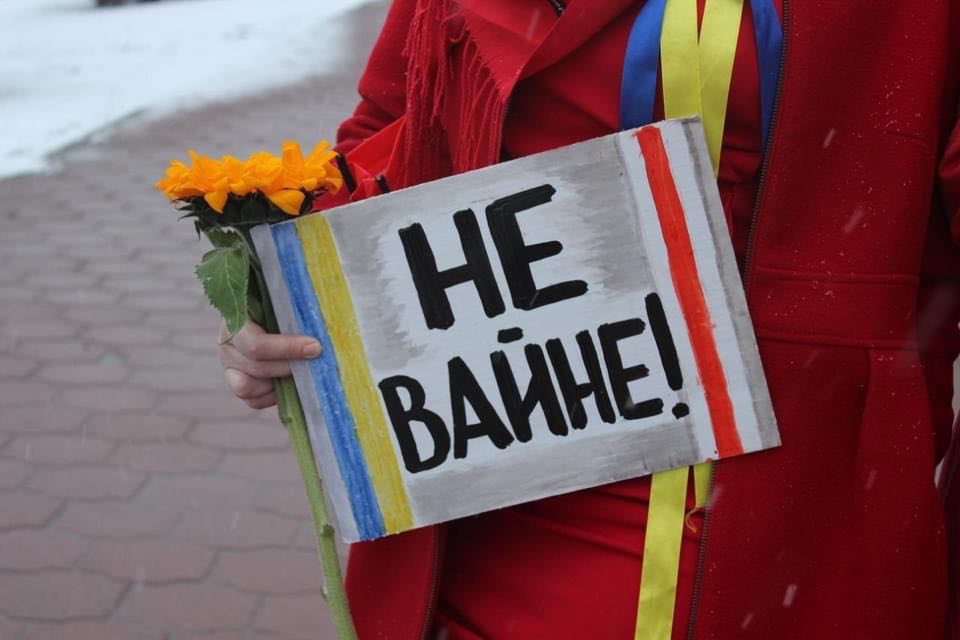
No war!”: detail of a placard held by a female Belarusian protester in Minsk on March 3, 2022. Photo credit: anonymous

How do Belarusians feel about their country’s involvement in Ukraine? This was one of the most debated topics on my friends’ social media pages during the past week. Belarusian territory is being used as a launching pad for Russian rockets. At least seventy out of the 480 rockets that have been launched on Ukraine so far were launched from Belarus. There is also the imminent possibility that the country’s troops will be directly involved. In light of these events, many Belarusians may feel concerned about an increased level of animosity towards them, which is understandable, given the circumstances. It is also understandable that many may feel vulnerable and discriminated against, as accounts of Belarusians who have been denied services or housing in Ukraine and European countries only begin to circulate online. 

But I would argue that we should not despair and overreact. Instead, we should explain to those affected by the war who we are: activists, opposition members, protesters, exiles, immigrants, or victims of the Lukashenka regime. At the moment, the best thing that we Belarusians can do as a group is to signal unequivocally which side we are on and focus on what needs to be done to stop this war, not on our personal feelings. And if our feelings are to be channeled, we should talk about collective responsibility, which, as decades of philosophical discourse have demonstrated, is not a simple thing. In a nutshell, people may or may not consider themselves responsible for what has already taken place, but we are all now collectively responsible for bringing it to an end. And only when we succeed, if at all, will we be able to discuss how guilt and responsibility may be applied to various scenarios. First, though, Putin’s and Lukashenka’s regimes must be overthrown.

The Belarusian community as a whole has become increasingly transnational, encompassing people within Belarus, displaced persons, and diasporas around the globe. Ukraine is our neighbor and ally. We are connected to it by thousands of invisible threads, through our families, friends, and recent refugees who fled the Lukashenka regime. Together with Ukrainians, we are living through a trauma that will take years and years to heal. And I want to say to those who keep reposting messages about feeling ashamed that you should perhaps stop because this language is inadequate to express the complex mix of emotions that we are experiencing at the moment. 

As I am typing these words, my husband’s father is being bombed in Kyiv. As a result of a stroke, he is paralyzed and cannot leave his apartment. My journalist friend has sent me an encrypted message with her son’s documents, asking me to find and adopt the boy if they were to be killed. As part of the message, she attaches a photo of her family, so that the kid can remember his parents. My other friend’s parents are too frail to go to the shelter, recuperating from covid. Her mother is sleeping in the bathtub, and her father is sleeping by the bathroom door. The grandmother of another friend is in her nineties and in poor health. Has she survived the massacre of Babyn Yar only to be bombed by Putin and Lukashenka? How is the family to tell her that Putin has bombed the sacred ground of Babyn Yar? I see many people writing on their Facebook pages, “Thank God, my parents (grandparents) did not live to see this.”

Enough of being ashamed, do something! Actions today are more important than words, and our efforts, at the very least, should go to aid the refugees. Over a million people have already arrived in Poland, Hungary, Slovakia, Romania, and Moldova, and some will eventually arrive in the United States. From my feed, I learned that my professional contact in Kyiv, who is nine months pregnant, is walking alone with her six-year-old across the border, wondering if her husband who stayed behind to defend Kyiv will survive. She’s asking on Facebook for someone to take her cat since she can no longer carry him. My best friend from college managed to relocate her family first to Kyiv and, after the war started, to Poland. She says they are still in a haze. Watching the bombs go off over Borispol airport, she kept asking herself how it could be real. 

These are just a few glimpses of this humanitarian catastrophe. Do something to help them but don’t forget about the groups that are discriminated against in this conflict, like our own people who are left behind in Ukraine. Earlier today, I saw a Facebook post from sociologist Andrey Vozyanov writing that Ukrainians are refusing to let Belarusians on the evacuation trains since Belarus has become a party to this conflict. Seeing our people abandoned is heartbreaking. They already escaped the concentration camp named Belarus only to be repressed again. This is not the time to be silent. 

And do we really have anything to be ashamed of? Over the last year and a half, the regime leveled our resistance to the ground so that Russia could use it as a military base. Our country is occupied by Russian troops. We have lost our critical infrastructures. There are no independent journalists on the ground to keep the population informed. Human rights organizations have nearly disappeared. And we have more than 1,000 political prisoners in a country with a population of 9.4 million. Those who are still in Minsk protested the war yesterday, and 800 of them went to jail. All these people will face torture, and many will face criminal charges. One protester commented that he put his body on the line to show his solidarity with Ukrainians and distract their jailers from the war. If anything, we should drop the sense of shame and look up to the Ukrainians and learn from their know-how. After all, our countries share a common regional destiny and common enemies – Putin and Lukashenka. During the Maidan, some Belarusians fought side by side with Ukrainians, and now a new Belarusian battalion in Ukraine is being formed. Those who are not ready to take up arms should at least oppose a world order that puts profit above human life. Or the production of knowledge about the region, which results in Belarusian and Ukrainian bodies being less valuable than those of citizens with other passports. It is by acknowledging responsibility that a new sense of agency and ability to act is born. Glory to Ukraine! Long live Belarus!

Sasha Razor is a Belarusian-American scholar and activist who lives in Los Angeles. 

#FreeIrdorath

Yulya Tsimafeyeva
Facebook
August 14, 2021

#FreeIrdorath

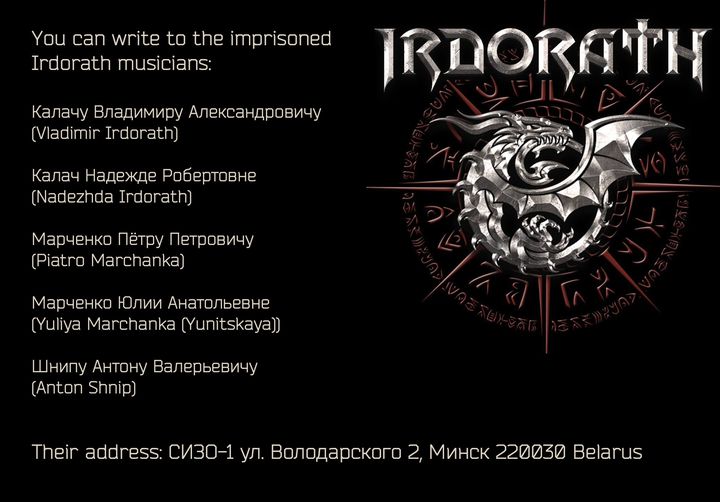
It’s known now that Uladzimir Kalach, Nadzeya Kalach, Anton Shnip, my brother Piatro Marchanka and his wife Yuliya Marchanka (Yunitskaya) are imprisoned in the pre-trial detention center No. 1 in Valadarskaha street [in Minsk].

You can send them telegrams, letters and postcards. Getting a letter from the outside world is one of the best things the imprisoned can have there.

Piatro has his birthday on Monday, August 16. Please send him some birthday wishes.

Some important tips. (I’m also using the information from the website politzek.me.)

1) Your letter should be in Russian or Belarusian only. At every prison or detention center there is a censor check of all the mail the prisoners get. Usually those censors do not read any other languages, so the letter can just be thrown away. I think Google Translate can help.

Please write surnames, first names, patronymics and address in Cyrillic. Like this:

Владимир Александрович Калач
Надежда Робертовна Калач
Пётр Петрович Марченко
Юлия Анатольевна Марченко
Антон Валерьевич Шнип
СИЗО-1
ул. Володарского 2,
Минск
220030
Belarus

2) Some technical tips:

a) Put blank paper and an empty reply envelope into your mail. Sometimes prisoners have difficulty obtaining paper and envelopes.

But if they do not have Belarusian international stamps it could be complicated for them to send a reply to you abroad. They need a special kind of the stamp (with the letter P). The stamps can be bought here online:

https://shop.belpost.by/Catalog/Product/959
https://shop.belpost.by/Catalog/Product/141217

But I do not know if Belarusian post sends them abroad. Maybe you can ask anyone in Belarus to send them to you? Or you can just hope that the prisoners will buy the stamps themselves. It’s a crazy system, I know. But believe me, even if you do not get any reply, your letter still could bring a lot of joy to those behind the bars.

b) Structure your mail flow. In each letter, put the date and number, so it will be immediately clear which letter did not reach its addressee.

c) It is better to photograph all the letters – answers may come in 3-4 weeks. Do you remember what you wrote to a friend the day before yesterday? Unlikely. And then weeks!

3) What to write about?

Write about yourself and your life, write about some national or international news. People in jail lack the information from the outer world. But do not put in any intimate details and exclude the political context. You shouldn’t write “Long live Belarus” or the names of officials. Don’t forget that your letter will be read by a strict and unfriendly censor first. He (or she) might just throw it away.

Some more tips about writing to political prisoners you can find here: https://www.politzek.me/help/mails

You can also write a letter online through this free service: https://vkletochku.org/en (but the musicians in Irdorath are not in their database yet)

To read about other political prisoners and find their addresses you can look here:

https://prisoners.spring96.org/en
https://dissidentby.com/en

#MusicIsNotACrime #ArtIsNotACrime

This post has been very lightly edited for the sake of clarity. ||| TRR

Why Small-Town Electrician Vladimir Yegorov Had to Flee Russia

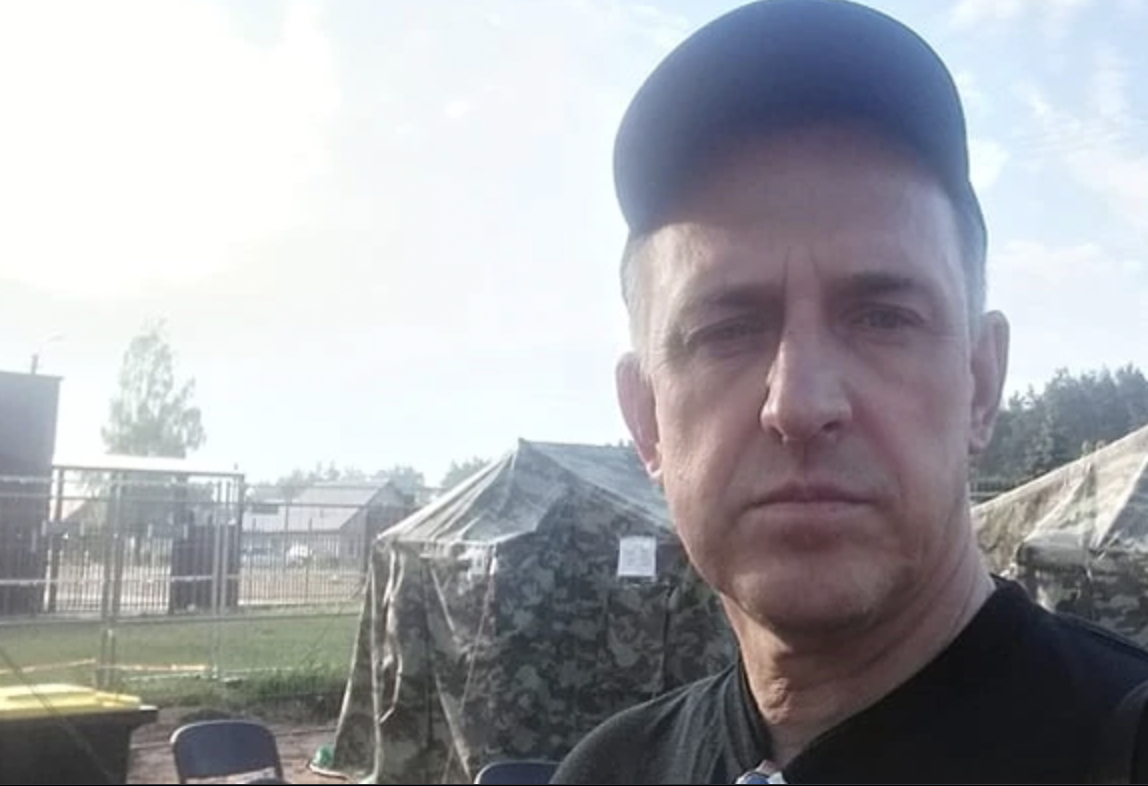
Vladimir Yegorov is still in quarantine and lives in a tent camp for refugees in Lithuania. Photo courtesy of Vladimir Yegorov and Radio Svoboda

“I realized that the country was over”: a “terrorist” electrician from Toropets flees to Lithuania
Radio Svoboda
Elizaveta Mayetnaya
June 28, 2021

Vladimir Yegorov, 54, from Toropets, Tver Region, was an ordinary electrician, but he has now become a political refugee in Lithuania. He fled there because in Russia he was threatened with up to ten years in prison on two criminal charges: “condoning terrorism” and “calling for extremism.” “I outfoxed the FSB: I lived under their nose for four months while they were looking for me everywhere,” Yegorov tells Radio Svoboda. “They can only steal, torture and invent criminal cases. They are no match for real terrorists.”

On June 27, Vladimir Yegorov posted these photos on his Facebook page, writing, “[My] final days in Russia. It’s a pity. It could be such a [great] country. But we are the people, and we fucked it all up. And it’s our fault that Putin exists here. Now all I can do is run. I did what I could.”

Yegorov says that he was not very interested in politics until the war in Ukraine began.

“My mother was seriously ill. She was a doctor, the head of the medical clinic, a respected person in the town. And then came the war, the seizure of foreign territory by Russia, the dead, the prisoners of war: my mother read all about it and could not believe that such a thing was even possible. And before that, holding her heart, almost crying, she told me how our entire healthcare system had been ruined,” Yegorov recalls. “Before the war with Ukraine, I still somehow hoped that all was not lost, but then I finally realized that the country was over.”

Yegorov worked at a sawmill and earned money on the side as an electrician. Then he joined the opposition Yabloko party and moderated (first at the party’s request, then on his own behest) Citizens of Toropets, a social media community page that was popular in the area.

“Of course, we have mass media there, but they only write what suits the authorities, while I, though I’m a simple electrician, was like an independent journalist. I wrote on the community page about our ‘crooks and thieves.’ In our wildest fantasies, we expected that three hundred people would read it, but the page was quite popular: we had more than a thousand subscribers, nearly every resident of the district read it! Sand was being stolen from quarries there by the tons and hauled out in KAMAZ trucks, but the local police and administration covered up the whole thing. After I wrote about this in May 2017, windows were broken in my house. A stone was thrown into the room where my little daughter was sleeping, and a canister of gasoline was found lying nearby.”

Yegorov was not intimidated and sent the evidence of theft at the sand quarry to Moscow. But instead of investigating the theft and the attack on his family, the authorities opened a criminal case against Yegorov himself over an old post on the social network VKontakte. In 2016, Yegorov had bluntly commented on a statement made by Prime Minister Dmitry Medvedev, who suggested that a teacher who had complained about a low salary “earn some more” and go into business if he wanted a high income. “We need to understand that all these ‘statements’ in public by these morons with zero popularity ratings, who occupy high-ranking posts, are nothing more than part of a special operation by the KGB to whitewash the main culprit of all the troubles and his closest cronies,” Yegorov wrote. His post was accompanied by a photo of President Vladimir Putin.

Police investigators interpreted the expressions used in the post as “extremist.” One of their forensic linguistic experts deemed it a call for the physical destruction of the Russian leadership, and a witness in court said that he read the post as an appeal to overthrow the government. Consequently, Yegorov was sentenced to two years of probation and forbidden from moderating websites. Memorial recognized him as a political prisoner.

Fearing criminal prosecution, Yegorov fled to Ukraine, where he applied for political asylum. The Ukrainian authorities denied him refugee status and took him to a neutral zone near the border with Russia. Yegorov left for Belarus, but he was detained there and sent back to Russia. He spent several months in jail before getting a suspended sentence.​

“My wife left me and took my daughter with. No one anywhere would hire me because I was immediately put on Rosfinmonitoring’s list of extremists; my bank accounts were blocked, and the house was also impounded. When I would go to the Federal Penitentiary Service (FSIN) to check in, they mocked me, telling me to get a job! But no one anywhere would hire me. I went all over town many times, applying for all the vacancies, even the lousiest ones, which no one at the unemployment office would apply for, but I was turned down everywhere,” he says. “I, a healthy man who can do anything with my own hands, whom the whole town used to ask to fix things, was an outcast. I ate only potatoes and noodles for four years, and lived with boarded-up windows, because I had no money to replace the windows broken by those gangster. I didn’t go anywhere much: it was almost like being in prison, only at home. And the court had ruled that I could no longer moderate the community page, either.”

The patriarchal town of Toropets is, as it were, a dead end. Moscow is 400 kilometers away, and Tver is 350 kilometers away. Yegorov’s house stands almost in the center of the town, and is perfectly visible from the highway, where hundreds of cars pass every day. In March 2019, Yegorov hung a Ukrainian flag over his house, which he had ordered for 167 rubles on AliExpress. He posted a photo of it on social networks along with a list of political demands: “Putin, liberate the occupied territory of Ukraine! Release [Oleg] Sentsov, the [imprisoned Ukrainian] sailors and all prisoners of war! Don’t meddle in the affairs of a neighboring country! Take care of your own people! I am a simple Russian man, I don’t want my country to be like this.”

“The Ukrainian flag didn’t make [the local authorities] happy, of course, but according to the law, I can do what I want on my 2,200 square meters, and you can’t touch me. Basically, I made a nuisance of myself,” says Yegorov. “During that time, I figured out computers and learned how to use a VPN. When it comes to modern technology, those [FSB] field officers are just kids compared to me.”

Nor did the law enforcement agencies leave Yegorov alone: several times his home was searched, and in December 2019 and July 2020 his computer was seized. In December 2020, Yegorov was named the defendant in two new criminal cases: he was charged with “publicly condoning terrorism on the internet” (punishable under Article 205.2.2 of the Criminal Code) and “publicly calling for extremism” (punishable under Article 280.2 of the Criminal Code). This happened after the security forces had again searched his home on December 4.

“I supported Katya Muranova from Medvezhegorsk in Karelia on social networks. She is still very young, she has a sick child on her hands, and she was also convicted, fined and put on the Rosfinmonitoring list, allegedly for condoning terrorism [Ekaterina Muranova of Medvezhegorsk was accused of “condoning terrorism” in 2019. For commenting on a social media post about the suicide bombing at the FSB’s Arkhangelsk offices by the 17-year-old anarchist Mikhail Zhlobitsky on November 4, 2018, she was sentenced to pay a fine of 350 thousand rubles. Several dozen people in Russia have also been convicted on the same charge for commenting on the bombing — Radio Svoboda.] I feel very sorry for Katya, who also can’t get a job anywhere because of this stigma. She and I became friends, and I wrote a post about the anarchist Zhlobitsky. According to the FSB, it contains ‘statements condoning terrorist activities and creating a positive image of terrorists,'” says Yegorov.

Ekaterina Muranova, convicted in 2019 of “condoning terrorism.” Photo courtesy of Radio Svoboda

Actually, it was this post that led to the charge of “condoning terrorism” against Yegorov. Law enforcement agencies detected “publicly calling for extremism” in another post, which Yegorov allegedly made on January 1, 2020, in the VK group Toropets Realities, referring to a news item published on Ura.Ru, “District head blown up near Voronezh.” There was a note under the news story: “All of them should be blown up.” The FSB believes that it was Egorov who posted this comment from someone else’s account, accessing the page from a virtual Ukrainian number.

“At first I denied everything, but then, during the search, they showed me some kind of knife. I had never had such a thing in my life, and they said that they could find something worse. Consequently, I dismissed my lawyer Svetlana Sidorkina and confessed to everything. In exchange, they promised to leave me on my own recognizance until the trial. I didn’t want to go to prison again,” says Egorov. “I was then actively corresponding on social networks with one person who promised to help me. He also had problems with his wife: it was our common ground. So I decided that I would let [the authorities] think that they had broken me, and I would hide and run away from them. On February 10, I left.”

In the evening, Yegorov lit a stove in his house and left his mobile phone there. Under cover of darkness, he got into the car of his new acquaintance, whom he had never seen before, and left with him for Moscow.

“I helped him with electrical work and did a lot of other things around the house, and then he took me to his dacha,” Yegorov recounts. “All those four months they were looking for me. They hassled my wife’s relatives: they thought that she was hiding me, but no one knew anything. And all that time we were reading everything we could about the border and the best places to cross it. We were on different online chat groups, carefully gathering information. Then we went to Belarus by car. My friend took his family along so the authorities would not suspect anything. We even went to a restaurant, like we were ordinary tourists. And then for seven thousand rubles illegal guides took us to the border. At the lake that divides the border in half, I jumped out of the car and immediately dove into the water. I was wearing swim fins, and had a hermetically sealed bag and sat nav with me. I was supposed to swim 400 meters under water, but I surface at the wrong spot: the water had risen, and there was grass and swamp all round. I ended up swimming 1,200 meters, paddling for a very long time along the Lithuanian shore. Nothing was visible, and I didn’t turn on the flashlight to avoid being detected. I got out on the shore: there was no one in sight. I quickly changed my clothes and went to the road to take a minibus to Vilnius. I came to the road and everywhere there were signs, in Russian, advertising houses for sale. I was afraid that I had come ashore in Russia.”

In Vilnius, Yegorov turned himself in to the police.

“I told them: you’d better me shoot here than hand me over to Russia! They would put me away for ten years for nothing, and then they would me kill me prison. They would hang me like Tesak, and then they say I did it myself,” Yegorov argues.

At first, Yegorov was housed in the transit zone at Vilnius Airport.

“I have never seen a Boeing, I have never flown anywhere on airplanes, only by helicopter when I was in the army. Basically, I haven’t been anywhere: I’ve been to Moscow, to Tver for interrogations, and to Velikiye Luki. I fled unsuccessfully to Ukraine, but they sent me back… So my whole life has been lived in Toropets: I have graves of relatives there that are 300 years old. I didn’t think that I would go on the run in my old age, but I didn’t have much choice, ” says Yegorov.

After several days in the transit zone, Yegorov was transferred to a quarantine camp. He now lives in a tent for twenty-two people.

“The food here is quite tasty: they give us cheese and pears. After my long life of semi-starvation in Toropets, I feel like I’m at a health spa now,” Yegorov says, smiling. “Most of the refugees here are Iraqis, Sri Lankans, and Arabs. The staff treat us well. All of them speak Russian, and I communicate with the other refugees using an online translator: somehow we understand each other. They are all in transit to Europe via Belarus, where it is now a well-established business. This, however, has turned out to be in my favor.”

On June 6, 2021, Agnė Bilotaitė, Lithuania’s interior minister, said that the situation with migrants in her country was getting worse.

“We live next door to an unpredictable terrorist regime,” she said. “After Lukashenko’s threats about unleashing an unprecedented flow of migrants, we are seeing an increase in illegal migrants. Four times a week, flights from Istanbul and Baghdad arrive Minsk, whence the migrants head for Lithuania. At least 600 people fly from these destinations every week. The price of transporting people illegally across the border is as much as 15 thousand euros per person, and 30 thousand euros per family.”

This year, over 400 illegal migrants have arrived in Lithuania from Belarus, which is five times more than during the whole of 2020.

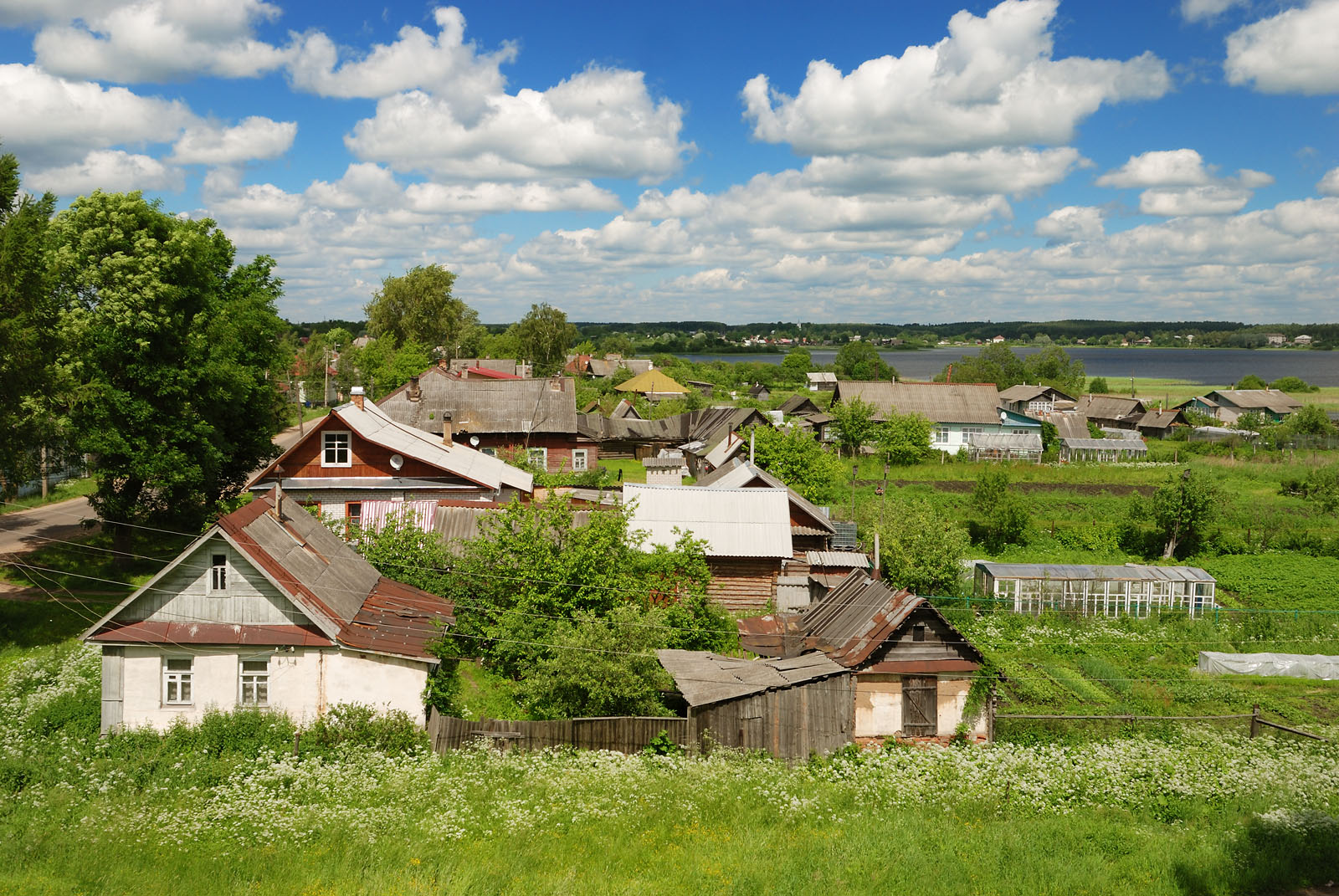
A view of Vladimir Yegorov’s hometown of Toropets. Courtesy of Wikipedia

“The flow of refugees is huge, and they spend a lot of time vetting everyone. I was given [refugee] status five years ago after waiting a month and a half, but the folks who came after me waited for six months,” says Irina Kalmykova. Criminal charges were filed against Kalmykova in Moscow for her repeated participation in solo pickets and protest rallies, and she was fined 150 thousand rubles. Instead of waiting until she was arrested again and faced a second set of criminal charges, she and her son fled to Belarus in January 2016, and from there they went to Lithuania, where she was granted political asylum.

Kalmykova was one of the co-founders of the Russian European Movement, which was organized to bring together Russian political refugees in Lithuania.

“We have a very friendly Russian diaspora here now,” says Kalmykova. “We help each other out because, until recently, we ourselves were in the same situation: no money, no clothes, no documents, nothing at all. The guys have already found an apartment where Vladimir can stay, and they will help him find a job. Lithuania is considered one of the poorest countries in Europe, but, you know, people here are quite responsive and kind, and everyone knows Russian, so it is much easier to adapt here than in some other countries The main thing is that Vladimir already has support, because it is quite important that a person doesn’t feel unwanted in their new home. I have no doubt that Lithuania will grant him political asylum: criminal charges have been filed against him, and he has been persecuted for his political stance.”

Yegorov says that he really hopes that his life will finally get better in Lithuania.

“Maybe when I can work here, my wife and daughter will move here to join me. I would really like that,” he says.

Thanks to Comrade Koganzon for the heads-up. Translated by the Russian Reader. In my “real life” as a professional translator, I would have earned around 170 euros for translating a text of this length. Instead, I have provided translations of this and thousands of other compelling texts for free over the last fourteen years here and at Chtodelat News. So, please consider donating money via PayPal or Ko-Fi to help support this work and encourage me to continue it. You’ll find “Donate” and “Buy me a coffee” buttons in the sidebar on the left of this page. Click on one of them to make a donation. Thanks! ||| TRR

#StandWithBelarus

Human Rights Foundation
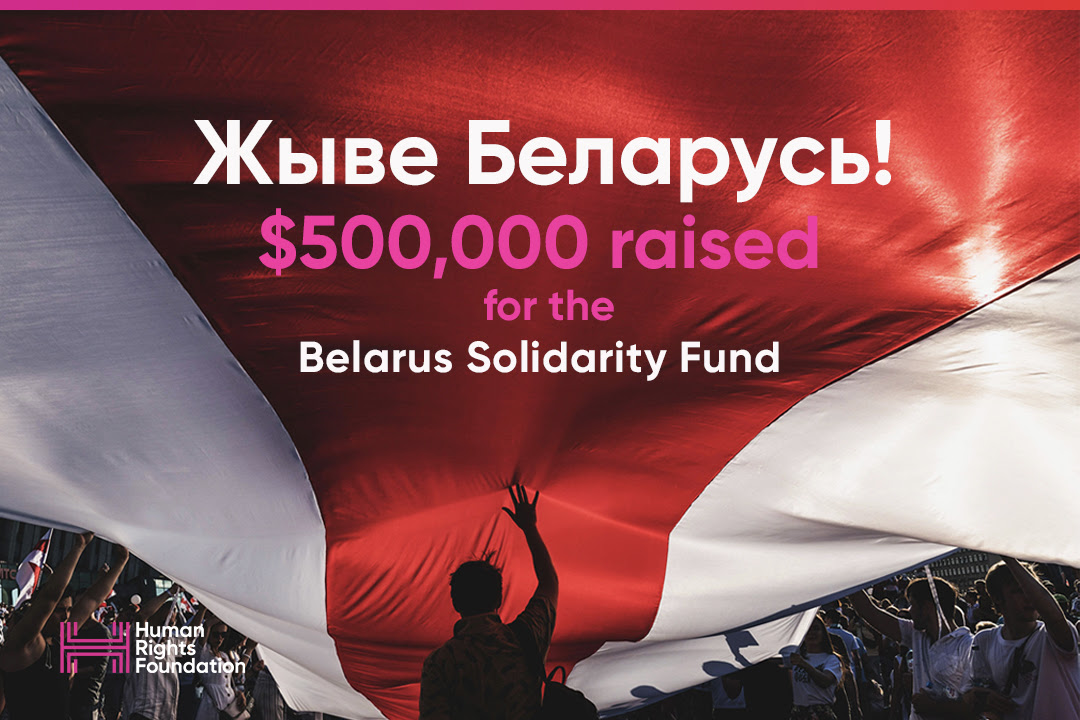
HRF Raises $500,000 to Support Democracy in Belarus

Since its inception, the Belarus Solidarity Fund has provided a lifeline to democracy movements in Belarus. HRF provides modest financial assistance to those Belarusians who have been fired from their jobs, injured, arbitrarily detained, or who face steep fines because of their support for freedom and democracy in Belarus. The fund also provides equipment and assistance to independent journalists who, at great personal risk, continue to cover events in Belarus even in the face of government repression.

So far, more than 1,000 individual donors have contributed to the fund, and $450,000 have already been disbursed as direct support for journalists, human rights advocates, civil society organizations, and workers on strike against the dictatorship.

Eight months ago, fraudulent elections sparked a democratic uprising in Belarus. Hundreds of thousands of ordinary citizens all across the country took to the streets to protest the regime of Alexander Lukashenko — who first seized power in 1994 — and express their support for freedom and democracy. For months, the peaceful protesters endured the brutality of the regime, which resorted to extreme violence, including the use of live ammunition, torture, and rape in prisons, to deter the democracy movement. According to the Human Rights Centre Viasna, in 2020 more than 33,000 individuals were detained, more than 1,000 cases of torture were documented, and at least 7 people were killed since the beginning of the protests.

HRF began closely monitoring the situation in Belarus back in May 2020, when the first protests against the Lukashenko regime started. In August, HRF persuaded American rapper Tyga to cancel a concert planned as a propaganda stunt for Lukashenko, and urged members of the Belarusian state security apparatus to lay down their arms. At the end of August, HRF set up the Belarus Solidarity Fund to aid protesters adversely affected by their support for freedom and democracy. In September, HRF hosted Belarusian democratic leader Sviatlana Tsikhanouskaya for a talk at the Oslo Freedom Forum.

In January, the Belarusian democracy movement achieved an important victory when the International Ice Hockey Federation (IIHF) moved the Ice Hockey World Championships away from Belarus, after facing public backlash from Belarusians, as well as the international community. HRF wrote a letter to the IIHF as part of the civil society campaign, which you can read here. This month, HRF recorded a podcast with the Belarus Sports Solidarity Foundation to discuss how Belarusian athletes are defending democracy. Going forward, HRF will continue to support the Belarusian democracy movement through direct aid, legal advocacy, and public education.

To celebrate this milestone, HRF is organizing a special Clubhouse event with our Chairman Garry Kasparov, Magnitsky Act originator Bill Browder, former U.S. ambassador to Russia Michael McFaul, and the leader of democractic Belarus Sviatlana Tsikhanouskaya about what the future of the democracy movement in Belarus looks like. We will update you with details soon. The event will take place at the Oslo Freedom Forum club on Clubhouse, an audio-only social media app, where HRF holds a weekly discussion series on the most pressing human rights issues with activists from around the world.

It is more important now than ever to support the Belarusian democracy movement.

Last week, Belarusians celebrated the Day of Freedom by peacefully protesting all across the country. The demands of the protesters remain unchanged. The violence against Belarusians must be stopped, political prisoners must be released, and new, free and fair elections must be held. To further support the Belarusian democracy movement, you can help by:

Donating to the Belarus Solidarity Fund.

Writing letters to political prisoners in Belarus.

Assuming godparenthood over political prisoners.

Writing a tweet, social media post, or creating a video in support of Belarus with the hashtag #StandWithBelarus.

Source: HRF emailing. Thanks to SZ for the advice. NB. Contrary to the claim made in the text, above, Lukashenko did not “seize power” in 1994. He received over 45% of the vote in the first round and over 80% in the second round of the first post-independence presidential election in 1994, which is generally regarded as the only free and fair election held in post-Soviet Belarus. || TRR

Mikola Dziadok: A Tortured Political Prisoner in Belarus

Lawyer on Dziadok’s Condition: “Injuries from Handcuffs on the Hands, Huge Bruises on the Thighs and Back”
Viasna
November 19, 2020

Novy Chas journalist and blogger Mikola Dziadok was detained on November 12 in the village of Sosnovy in the Asipovichi District. In a video that was circulated by the Belarusian Interior Ministry, it is clear that Dziadok had been beaten. His lawyer, Natalya Matskevich, has announced that she has filed a motion to order a forensic medical examination in respect of Dziadok. Novy Chas contacted Matskevich to find out more about what is happening with Dziadok.

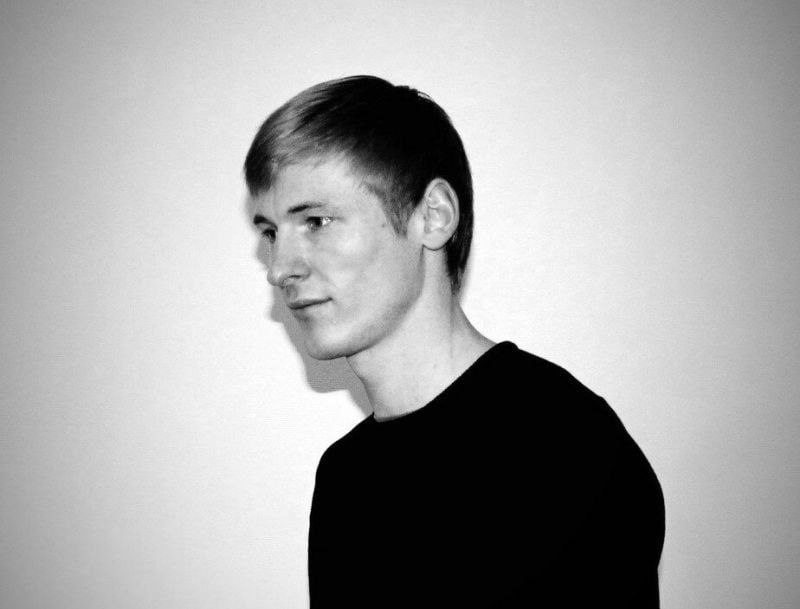
Mikola Dziadok, as seen in the notorious Belarusian Interior Ministry video published after his arrest
Where is Mikola now? What is his condition?

On November 17, Mikola was transferred from the temporary detention center on Okrestin Street to Pre-Trial Detention Center No. 1 on Volodarsky Street in Minsk. For the time being he is in quarantine. His physical condition can now be called normal, and emotionally he is also holding up well: he is cheerful. He says that he remains true to his beliefs and principles.

Did he tell you how he was detained?

Before his arrest, Mikola had rented an apartment in the village of Sosnovy for several months. He was not hiding from anyone, but he understood that in the current circumstances it was better for him not to be in Minsk, since for the past several years he had been closely watched by GUBOPiK [the Department for Organized Crime and Corruption Prevention], solely in connection with his [political] views and stance, which he expressed publicly. According to Mikola, on November 11, at about eleven in the evening, seven masked law enforcement officers broke into his second-floor apartment by breaking a window. After capturing him, they used physical violence and special equipment until they got him to “confess” on camera. Then they took him to Minsk, where they worked him over for several hours, demanding access to a computer disk and [his] Telegram channels. It was only after five in the morning that they took him to the temporary detention center.

What methods were used to make him talk? How forceful were they?

I will not go into details: I will be filing an appropriate procedural motion to this effect. I can say that I have had several clients who fled Chechnya after being tortured and were detained in Belarus for deportation. But I never thought that I would hear stories about such things happening in our own country.

As Mikola told me, a few hours after his arrest, when he was lying on the floor in one of the [law enforcement] departments, he was made to swear that he would not speak about GUBOPiK. Let’s say that happened. Moreover, we do not know yet the names of those who made the arrest. But on November 12, it was this department that reported on its actions in detaining Dziadok and [published] videos showing Mikola’s state after he was detained. Even a slightly experienced person will immediately notice traces of tear gas use at close range in the first video, and the second video clearly shows a hematoma around [Mikola’s] left eye. What else did I see in the temporary detention center? Injuries from handcuffs on his hands, and huge bruises on his thighs and back.

I think that, taking into account the fact that several law enforcement officers detained the unarmed Dziadok unexpectedly, the question of the proportionate use of force for the purpose of detention should not be considered at all. Rather, there should be a legal assessment of whether there was an abuse of power and legal authority.

All [of Mikola’s] visible injuries were documented, at least, when he entered the pre-trial detention center. Investigators have sufficient grounds for conducting an inquiry and deciding whether to initiate a criminal case [against the officers who detained Dziadok].

Do you expect such an investigation, given that there were thousands of allegations of violence against people by law enforcement officers in August of this year, but not a single criminal case was opened?

It’s hard to be sure of the results. Even in 2017, when after Mikola was detained on his way to a Freedom Day rally, he was taken to the emergency hospital with a concussion, which was absolute proof of the use of violence by the police, no criminal case was initiated. Then, after an official inquiry, the authorities issued an opinion that Mikola already had these injuries when he was detained. We appealed this decision both through the prosecutor’s office and in the courts, but to no avail. The case is currently under review by the UN Human Rights Committee.

As far as the current situation is concerned, the investigators are obliged to respond in an appropriate procedural manner. The international standard for investigating torture is a prompt, independent, objective and effective investigation, provided that the victim is protected from possible threats in connection with the investigation. The Criminal Procedure Code of the Republic of Belarus also contains these principles. So let’s see how principled the Investigative Committee will be in its actions.

What can you say about the “Molotov cocktails” and “cold weapons” that GUBOPiK allegedly found in Mikola’s apartment?

Are you referring to the bottles shown in the Interior Ministry’s video? How do they know what was in them? Who performed the expert analysis on the “cold weapons”? If you recall the notorious case of the White Legion, state TV channels then showed viewers a whole trunkload of bottles filled with liquids, and some knives, too. And where are they now? Mikola told me that he did not have these bottles. We should ask simple logical questions, taking into account that Dedok has not recently been involved in any marches and rallies, and has not called for violent actions. Why would he have needed “Molotov cocktails” in the village of Sosnovy? Would he have taken them by bus to Minsk?

Can you tell us what the charges against Dziadok are?

As of today, we only know what the Interior Ministry said in its communique. As long as there is no specific description of the criminal acts alleged to have been committed by Dziadok, there is no way I can comment on anything. From what was said in the Interior Ministry’s communique—”[he] actively administered a radical Telegram channel, where he publicly called for participation in mass riots”—we can conclude that he is being criminally prosecuted for making certain statements, for expressing a certain opinion. But I don’t think that any of Dziadok’s publications can be objectively assessed as calls for violent action.

You can write letters to Mikola Dziadok at SIZO-1, ul. Volodarskgo, 2, Minsk, 220030, Belarus.

Thanks to Comrade NN for the heads-up. Translated by the Russian Reader

New Wave of Police Terror in Minsk

Serge Kharytonau
Facebook
November 16, 2020

Following a major crackdown on civilians on Sunday afternoon, terrorist units of the Belarus “interior ministry” have been kidnapping civilians from residential housing in Minsk for 12+ hours in a row.

Masked interior ministry officers led by the so-called interior minister Ivan Kubrakov have been breaking into private apartments across Minsk since early afternoon with no search warrants, no explanations of their activity, and without identifying themselves or presenting their IDs.

Civilians are being kidnapped on no valid grounds from streets, stores, residential yards, building lobbies, and private apartments.

A de facto curfew with [riot police] checkpoints and passport control has been established across numerous residential areas in the Belarusian capital.

Over 1,100 civilians have been kidnapped or faced arbitrary arrests across Belarus in the last 24 hours, with hundreds subjected to torture in detention centers. Prisons in Minsk are overloaded: numerous convoys of riot police vans transported detainees from Minsk to smaller regional towns this weekend.

Over 100 days, Belarus has turned into a failed state of unprecedented human rights atrocities with no comparable precedents in the last 40 years of European history.

According to the Office of the United Nations High Commissioner for Human Rights, 25,000 people were detained in Belarus over the first 95 days of protests.

The situation in Belarus is turning into a real humanitarian catastrophe as doctors are being arrested on a large scale, with up to 1,900,000 cases of Covid-19 officially acknowledged by the acting authorities since March 2020 in a country of 9.5 million people.

Lukashenko’s regime has to be eliminated. All members of the Belarus interior ministry, military, and acting civil administration involved in the crackdowns must face justice at an International Criminal Tribunal for Belarus.

Thanks to Sasha Razor for the heads-up. Image courtesy of the author. The text has been edited lightly to make it more readable. || TRR

Dmitry Strotsev: 13.11.2020

Dmitry Strotsev
Facebook
November 13, 2020

*

bees are certain
said Tolstoy
that they are gathering honey for themselves

but in fact
they are pollinating the garden

Belarusians think
says Christ
that they are rallying their land

but in fact
they are healing the world

13.11.2020

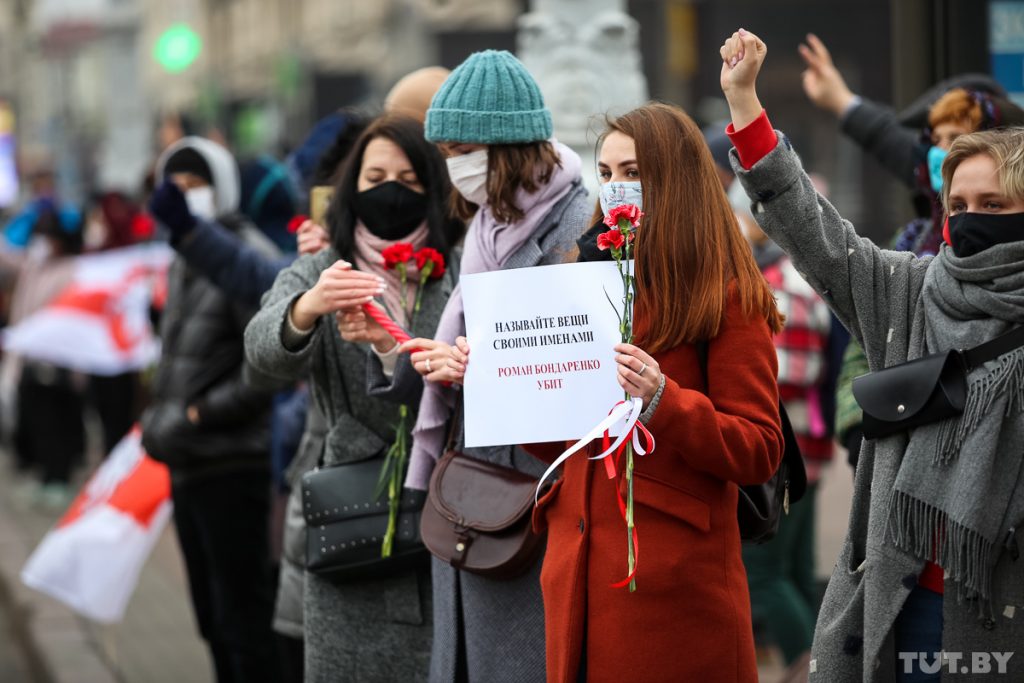
“Let’s call it what it is: Roman Bondarenko was murdered.” Photo courtesy of BelarusFeed and TUT.BY

Dmitry Strotsev
Facebook
November 13, 2020

For Matches

going out
for matches

leaving the house
for any necessity

dress
carefully

pack as if
you might be gone for ten,
fifteen days

you never know
where terror’s claw
will grab you

the ever-watchful eye
can see you
everywhere

13.11.2020

Translated by the Russian Reader