“Extremism” Ruling Against Jehovah’s Witnesses: The Popular Will?

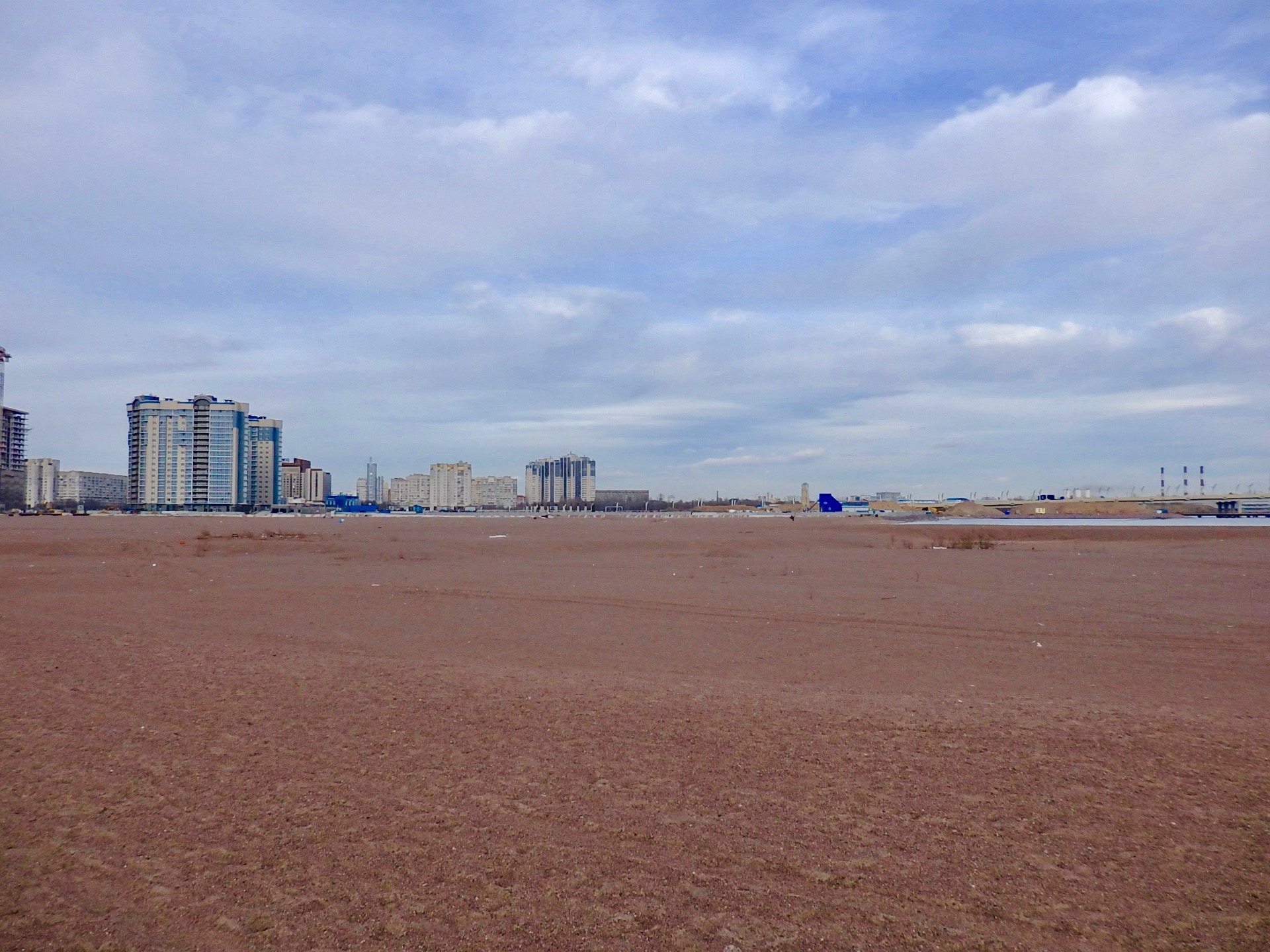
OLYMPUS DIGITAL CAMERA Was it the “popular will” that 500 hectares of land be reclaimed in the Neva Bay right off Petersburg’s Vasiliyevsky Island and developed into densely built high-rise estates, causing untold amounts of environmental and aesthetic damage? No, it wasn’t. In fact, locals were bitterly opposed to the project and they mounted a loud resistance back in the day. But their will was roundly ignored by Petersburg city hall and developers. Under the present authoritarian regime, “popular will” is a friendly phantom, at best, an irritant, at worst. Photo by the Russian Reader

The Russian Supreme Court has gone ahead and banned the Jehovah’s Witnesses and ordered their property confiscated. This is a colossal insult to hundreds of thousands of law-abiding Russian citizens. A huge new underground has been generated. Massive crackdowns for their faith, new political prisoners, and mass immigration are around the corner. The Russian authorities and Moscow Patriarch Kirill, who is personally responsible for this operation, have curious ideas about the joy of Easter.
—Nikolay Mitrokhin, Facebook, April 21, 2017

Perhaps this is what is most disheartening about the recent legal battle. The state may be the central actor, but its actions reflect the popular will of Russians who, by and large, have decided that Witnesses have no place in their society.
—Emily Baran, “Jehovah’s Witnesses Ban Spells End for Russia’s Religious Diversity,” Moscow Times, April 24, 2017

When did Russians decide this? Did they hold a referendum recently? Are most Russians even aware of how the Justice Ministry has used the Russian Supreme Court to declare the Jehovah’s Witnesses “extremists,” allegedly, at the insistence of the Russian Orthodox Church’s Patriarch Kirill? I very much doubt it.

Professor Baran only mentions actions by state or quasi-state actors, such as the central press in Soviet and post-Soviet times. Yet they were and have been somehow acting on behalf of the “popular will,” a symbiosis she makes no real attempt to prove in her op-ed piece for the Moscow Times, as quoted above.

As for real popular sentiment, I imagine there are as many Americans as Russians who have reflexively negative attitudes toward Jehovah’s Witnesses. Just think of all the jokes about JWs you have heard in your lifetime that cast them in a negative or ridiculous light, or how many times you have seen their likenesses figuring as the villains on TV medical dramas who refuse proper care for desperately sick children? Then why aren’t they banned in the US? At worst, the American “popular will” sees them as outsiders and obscurantists, at best, as an annoyance.

I can imagine that tenure-track professors in the US have a hard time understanding how disempowered and disconnected the grassroots are in a country that now has the world’s largest income inequality gap, and a long, brutal history of minorities, including Jehovah’s Witnesses, getting hammered by the powers that be while putative “majority” either did not mind, looked the other way or did not even notice.

But does Tennessee, where Professor Baran teaches, have an utterly different history when it comes to protecting the rights of its minorities?

The Russian Supreme Court’s decision to declare the Jehovah’s Witnesses extremist is completely despicable in every possible way, but Russians who bother to care about minorities and “minority” interests (like the environment, civil and social rights, corruption, labor rights, migrant rights, and historical preservation and sound urban planning) are often too few and far between to fight every battle and put out every fire. And many of those fighters are themselves currently under the state’s gun. The same Justice Ministry that has gone after Russia’s Jehovah’s Witnesses like a pit bull has also been branding NGOs, research institutes, and grassroots organizations “foreign agents” like it was at a fire sale.

That is no excuse for the judicial execution the Russian state has just performed on the Jehovah’s Witnesses, but it was a decision made at the top by the political, ecclesiastical and judicial elites, including the ROC’s Patriarch Kirill. It was not the state’s response to a nonexistent, utterly imaginary “popular will.” {TRR}

Russian Supreme Court Looks Set to Ban Jehovah’s Witnesses

Hearing of the Justice Ministry’s case against the Jehovah’s Witnesses of Russia in Russian Supreme Court, April 5, 2017, Moscow. Photo courtesy of the Jehovah’s Witnesses of Russia

Supreme Court Refuses to Recognize Jehovah’s Witnesses as Victims of Political Repression
Court Examining Justice Ministry’s Suit to Have Organized Declared “Extremist”
Yelena Mukhametshina
Vedomosti
April 5, 2017

The Supreme Court has begun its consideration of the Justice Ministry’s suit against the Administrative Center of Jehovah’s Witnesses in Russia. The ministry has asked the organization to be declared extremist, to ban its work, and to close it.

The Administrative Center of Jehovah’s Witnesses in Russia had tried to file a counterclaim, asking that the Justice Ministry’s actions be declared illegal. It also asked the court to rule that the ministry’s actions against the Jehovah’s Witnesses were political repression and to throw out the Justice Ministry’s suit. However, the judge refused to take the counterclaim into consideration.

The Justice Ministry has filed its suit to close not only the Administrative Center but also all of the religious organization’s branches and affiliates in Russia.

“The true goal is political repression against religious organizations, in particular, the Jehovah’s Witnesses,” said a defense counsellor.

He recalled that the Jehovah’s Witnesses were also banned in Soviet times. In the early 1990s, however, the authorities admitted that members of the Jehovah’s Witnesses had been victims of political repression, and they were subsequently rehabilitated.

Three hundred and ninety-five local chapters of the Jehovah’s Witnesses have asked to be named co-defendants, since their work would be stopped if the Administrative Center were deemed an “extremist” organization. Each of these chapters, which could be deemed “extremist,” has the right to ask Justice Ministry officials why they want to ban them, said a defense counsellor. The court turned down the request. They also requested the case files from administrative cases, in particular, cases in which the authorities claimed to have seized “extremist” matter. A defense counsellor said there were witnesses who had seen matter that had previously been recognized as “extremist” planted in places where searches had taken place. This motion was also denied. The next hearing in the case will be on Thursday.

In October of last year, Moscow’s Tverskaya District Court issued a warning to the Administrative Center of Jehovah’s Witnesses in Russia for “extremist” activity. In January of this year, Moscow City Court upheld the legality of the warning. In March, the Justice Ministry filed a lawsuit in the Supreme Court asking that the Administrative Center of Jehovah’s Witnesses in Russia be recognized as an “extreme” organization and that its activities be banned after inspections allegedly revealed violations of anti-“extremist” laws. At the same time, an order was issued to suspend the work of both the Administrative Center and all local chapters until the court had made its final decision. In turn, the Jehovah’s Witnesses indicated the ban would affect four hundred registered local religious organizations and 2,777 religious groups in Russia, amounting to 175,000 followers. The Supreme Court had already upheld the closure of local chapters of the Jehovah’s Witnesses in Oryol, Belgorod, Samara, and other cities.

___________________

Nikolay Mitrokhin
Facebook
April 5, 2017

Today, a trial began whereby the Russian authorities intend to ban the Jehovah’s Witnesses. The whole world understands it is shameful to persecute people for religious beliefs, but not the Russian authorities, who habitually could not care less about their reputation. If we speak in terms of the “public good,” then in the coming years, as terrorist attacks continue, crime rates remain high, and corruption has become total, law enforcement agencies will be busy “interdicting” the religious activities of the organization’s 170,000 active members. (This figure does not included the tens, if not hundreds of thousands of sympathizers, family members, and people involved in some way.)

There is no doubt the entire attack on the Jehovah’s Witnesses has been undertaken by Justice Minister Alexander Konovalov to curry favor with Russian Orthodox Patriarch Kirill. It could be stopped with a single phone call. And yet this ban won’t really help the ROC in any way. Moreover, it will cause it serious problems, which even part of the church leadership understands. However, Kirill and his ideological confederates, having long ago taken the bit between their teeth, are speeding the church’s carriage over bumps and gullies.

Translated by the Russian Reader

Hostel Hostile

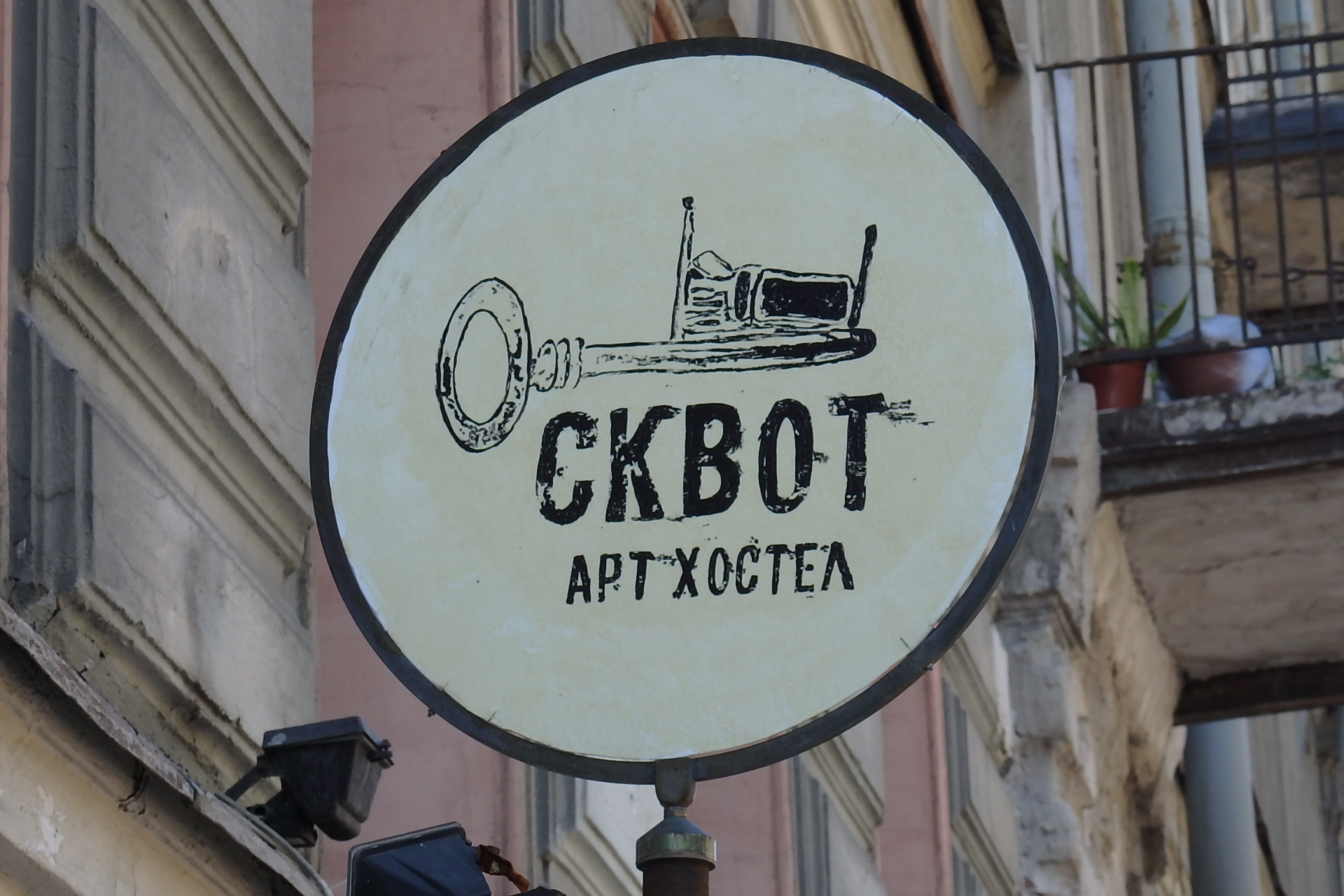
Sign for the Squat Art Hostel in central Petersburg. According to an article in the March 2, 2015, issue of Ekspert Severo-Zapad, the city had between 1,250 and 1,270 budget accommodations, including 270 hostels.
Sign for the Squat Art Hostel in central Petersburg. According to an article in the March 2, 2015, issue of Ekspert Severo-Zapad magazine, the city had between 1,250 and 1,270 budget accommodations, including 270 hostels. As of today’s writing, Airbnb listed over 300 rentals in the city. Photo by the Russian Reader

MPs Plan to Evict Hostels from Apartments
But entrepreneurs don’t intend to pull up stakes yet 
Elena Gorelova
Vedomosti
May 12, 2016

At its Friday session [Friday, May 13, 2016], the State Duma will consider a bill that could ban Russian hoteliers from housing hostels in apartment buildings. Galina Khovanskaya, chair of the Duma’s committee on housing and communal services, had tabled the amendment back in September 2015. According to MPs, mini hotels violate the rights of residents in adjacent apartments. If the changes take effect, it will be possible to install hotels in residential buildings only after rezoning the spaces from residential to non-residential. Mini hotels will have to be equipped with soundproofing, fire safety equipment, and security alarms. They will have to be located on the first floor and have a separate entrance.

The ban would have a catastrophic impact on hosteliers, argues Yevgeny Nasonov, chair of the committee on budget accommodations at the Moscow branch of Opora Russia and general director of Clover, a network of hostels. A study conducted by the League of Hostels in December 2015 showed that around 80% of Moscow’s mini hotels and serviced apartments are located in the city’s residential housing stock. In Petersburg, Crimea, and Krasnodar Territory, those percentages are even higher.

From 2012 to 2014, mini hotels were most often opened in residential buildings, says Roman Sabirzhanov, who owns sixteen hostels, including the Fabrika and the Croissant. But residents dissatisfied with their new neighbors then began complaining and showered the prosecutor’s office with lawsuits. Seeing the risks of doing business in residential buildings, Sabirzhanov opened his own hostels in non-residential buildings from the very beginning. It is not always more expensive, he claims. For example, Sabirzhanov has invested 3.5 million rubles [approx. 47,000 euros—TRR] in a new, 225-square-meter hostel on Chistye Prudy. 40% of the money went for rent; 40%, on repairs; and the remaining 20% on obtaining permits and undergoing classification. As of July 1, 2016, all hotels must be classified, receiving from one to five star, while hostels will receive the the no-stars category.

Even if the bill is not passed into law, hostels in residential buildings will be banned sooner or later, Sabirzhanov believes. At the moment, big cities are in the process of being purged of dubious flophouses in the run-up to the 2018 World Football Cup, and hostels have been subjected to more frequent inspections, he says. Even normal hotels might get the axe, the hotelier is convinced. Over the past five years, the number of beds in discount hotels and serviced apartments has grown twentyfold in Moscow, and the major hotel chains that have been lobbying the ban on hostels are not pleased with this redivision of the market, Sabirzhanov claims. He advises hoteliers against making hasty decisions. For the time being, he says, they should operate as they have before, recoup their investments, clean up their premises, and settle conflicts with building residents. At the same time, however, they should think about relocating if they have the means, launching a new hostel in a non-residential space, and going through classification. In the end, you can close the hostel and put the apartment up for rent, says Pavel Gorbov, executive director of Re:Sale Expert.

Launching a small hostel in Moscow runs you approximately two million rubles, estimates Nasonov. But rezoning a space as non-residential is quite expensive for small businesses. Nasonov cites the example of an entrepreneur he knows who has been attempting to build a separate entrance for a store in a residential building near Vykhino subway station. (The procedure for obtaining permissions is the same as for hostels.) He has already spent 1.5 million rubles on construction.

Translated by the Russian Reader.

Tags: Border, Shopping

44e88f3a7961f6464b53d26e21c75ecb

Tourists Forced to Leave Four Quintals of Finnish Food at Border

May 11, 2016, 2:25 pm / Tags: Border, Shopping

More than 410 kilograms of animal-derived produce were seized from travelers at the border between Finland and Leningrad Region from May 6 to May 9.

Russians brought pork, fish, sausage, cheese, butter, yoghurt, and cottage cheese back from Suomi, but not everyone stayed within the permitted limit of five kilograms per person. Passengers who exceeded the limit were also lacking Rosselkhoznadzor import permits and veterinary documents.

“Documents for the return of the goods to the Republic of Finland have been drawn up,” reported the press service of Rosselkhoznadzor’s Petersburg regional office.

Source: Fontanka.fi; translated by the Russian Reader

The Prosecutor General’s Speech

Crimean Prosecutor General Natalia Poklonskaya, arguing before the Crimean Supreme Court today, April 26, 2016, on why the Mejlis of the Crimean Tatar People should be declared an extremist organization and banned in the Russian Federation.

Crimean Prosecutor Natalia Poklonskaya
Crimean Prosecutor General Natalia Poklonskaya. Photo courtesy of Novaya Gazeta

“The Mejlis receives protection and support from international terrorist organizations,” she said. “It is no coincidence that such organizations, which are banned in Russia, as the Gray Wolves, who killed Russian pilot Oleg Peshkov in Syria, and Hizb ut-Tahrir have spoken out in support of the Mejlis.”

According to Poklonskaya, Mejlis leader Refat Chubarov “has not ceased [his] extremist activities even during proceedings on banning the organization, but on the contrary has continued work aimed at violating Russia’s territorial integrity, participating in the formation of the volunteer Crimean Tatar battalion Asker, whose goal is to tear Crimea away from Russia.”

“Today, may it please the court to hear, we are building a world in which every Crimean will live safely and happily, where roses will bloom and grapes grow,” said Poklonskaya. “The Mejlis is trying with all its might to prevent this. Why do we need this Mejlis?”

Finally, the prosecutor quoted from St. John of Kronstadt.

“If we gather everyone’s will into one will, we will stand our ground! If we gather everyone’s conscience into one conscience, we will stand our ground! If we gather everyone’s love for Russia into one love, we will stand our ground!”

Source: Novaya Gazeta

_________

The Mejlis was labeled an “extremist organization” and subsequently banned by the Crimean Supreme Court on April 26, 2016. According to Regional Prosecutor General Natalia Poklonskaya, it was banned because its leaders had sought to destabilize Crimea since the 2014 annexation of Crimea by Russia through the “promotion of aggression and hatred towards Russia, inciting ethnic nationalism and extremism in society.” Also on April 26, 2016, the Council of Europe’s Commissioner for Human Rights, Nils Muižnieks, urged the court to reverse the ban since he believed “equating [the Mejlis] with extremism paves the way for the stigmatization and discrimination of a significant part of the Crimean Tatar community and sends a negative message to that community as a whole.” Exiled in mainland Ukraine, the Chairman of the Mejlis, Refat Chubarov, stated the court’s decision was unjustifiable and that “the occupiers in Crimea are doing everything to crush the Crimean Tatars and force everyone to be silent.” Amnesty International stated the ban “demolishes one of the few remaining rights of a minority that Russia must protect instead of persecute.” The Deputy Chairman of the Mejlis, Nariman Dzhelal, vowed the organization would try to continue its work despite the ban, “it will continue working in Ukraine and other countries.”

Source: Wikipedia (slightly adapted for readability)

Gorky Central Park of Culture and Leisure

Greg Yudin
June 16, 2015
Facebook

As many of you already know, the management of Gorky Park has banned political scientist Irina Soboleva’s lecture, “Should We Expect Any More Mass Protests in Russia?” which was to be held as part of a series of public lectures in our Master’s in Political Philosophy program at the Shaninka (Moscow School of Social and Economic Sciences).

We tried to negotiate, but the talks were very strange. First, we have reason to believe the decision was not made by the directors of the park. Second, we immediately said we would not engage in political campaigning; our purpose was to share knowledge with people. But they are so scared there they demand we not use the words “politics” and “democracy.”

This does not suit us, of course. We are engaged in political thought and researching political life, and are going to pursue this work in the future. If Gorky Park is going to decide for its visitors what they should and should not learn, we are not going to help them. We will not permit our ideas to be censored.

As for Irina Soboleva’s lecture, first we thought of holding it at the Shaninka. But as interest in the lecture is quite great, the Shaninka is now concerned about finding a place that would accommodate everyone. So the lecture has been postponed to Friday. Once we find a venue, then we will immediately inform you.

Please forward this message.

640px-RIAN_archive_510373_Pond_in_Gorky_ParkGorky Central Park of Culture and Leisure, 1982

Gorky Park refuses to hold a lecture about the possibility of protests in Russia
June 15, 2015
BBC Russian Service

Gorky Park management has refused to allow a lecture by political scientist Irina Soboleva, “Should We Expect Any More Mass Protests in Russia?” to be held on its premises.

“After further exploring the content of the planned lecture, the decision was made that the park is not the place for holding lectures with a political subtext,” Marina Lee, the park’s PR director told the BBC Russian Service. “It is clear the lecture’s title is fairly blatant and provocative. But a park is not a place for provocations.”

According to Lee, the decision was made by park management.

“And in future, lectures with a political bias, with a political emphasis, will not be held in the park,” she added.

According to the lecturer, Irina Soboleva, her lecture was educational, not political.

“[The notification that the lecture had been banned] was made three days before the lecture was to be held, and we have had to change the time and the venue of the lecture very quickly,” Soboleva told the BBC Russian Service.

“I should stress the lecture is part of the series ‘Open Environment,’ which has been held at Gorky Park. The Shaninka [Moscow School of Social and Economic Sciences] has already held several lectures as part of the project, and as far as I understand, no such problems had arisen with any of them. This is my first lecture in which issues of political science, rather than sociology, are addressed. Apparently, that is why this problem arose,” said the political scientist.

Image source: Wikimedia Commons