An Environmental War

Here we should recall Bruno Latour’s last public statement. He left us in October 2022, but managed to formulate in his final text, “Is Europe’s soil changing beneath our feet?” that this war is not only political, but also energy-related, and therefore environmental. I’ll drop the link in the comments below.

It is clear that this is not the war’s main cause of the war. It has many causes, and it is difficult to say whether there is a main cause among them.

Did the war start because the Russian leadership, fed up with earthly pleasures, wants to go down in history? Yes.

Is it a continuation of Russia’s imperialist policies as whole? Yes.

Is it a continuation of the Cold War? Yes.

Is it a consequence of the excessive buildup of aggression, resentment, and indignation in Russia itself? Yes.

But is it also a campaign against the modern world, not only in a cultural sense, but also in the sense of a fight on behalf of the old energy world, on behalf of coal and oil and gas? Yes again. And it is a fight against those “made-up” environmental and climate problems of ours.

This does not mean that the Russians who blew up the Kakhovka hydroelectric power plant had such motives, that they thought, “Fuck you, environmentalists! Suck on this, Greta Thunberg!”as they did what they did. I think they had the simplest of motives — to hold back the Ukrainian army offensive in this area.

But it is the effect wrought by a savage who shows up in a reputable joint and doesn’t understand why he should use a fork, cannot blow his nose on the curtain, and has to wipe his ass. That is, it is the effect wrought by a subject who completely fails to grasp the entire problem of modernity. He does not even try and is unable to understand it, and thus doesn’t regard his actions and their consequences in this way as a matter of principle. He just doesn’t give a fuck. Such a thing as caring for nature has never occurred to him: the savage is hopelessly behind the times.

And Latour writes in his essay that, unfortunately, the problem of savages with dirty asses (well, he doesn’t put that way: the man was cultured after all; I’m conveying the gist of his remarks) is not confined to Russia.

“In order to convince ourselves of this, we only have to identify those we would have to learn to fight if we were serious about getting rid of Putin’s gas and oil. Perhaps they reside on our street, fill the tank of our car, or increase our stock portfolio…”

Source: Dmytro Rayevsky (Facebook), 8 June 2023. Mr. Rayevsky is an editor at Babel.ua, a Ukrainian news and analysis website that ceased publishing its Russian edition after Russia’s February 2022 invasion of Ukraine. It has continued, however, to publish stories in Ukrainian and English translation. Translated, from the Russian, by the Russian Reader


Friends,

After Russia’s destruction of the dam at Nova Kakhovka, Ukrainians face a manmade catastrophe in the Kherson region, amidst all the other horrors of Russia’s invasion.  Ukrainians are hard at work, essentially by themselves, rescuing their fellow citizens from the high waters, often braving Russian artillery and sniper fire.  We can help those volunteers.  Here are ten ways.

1.  Ukraïner have a small group on the scene who have been evacuating people right from the beginning.  Your donation would mean a lot to them.  You can support them on Paypal from abroad via tymoshenkoyulia99@gmail.com or follow this link.

2.  Rescue Now UA is a Ukrainian evacuation organization founded when this invasion began now active in Kherson.  They are constituted as a US 501(c)3 so donations by Americans are tax-deductible.  You can send money by PayPal here or consult the donation link here.

Ukrainian volunteers just doing what needs to be done. But they could use our support.

3.  The Ukrainian Firefighters Foundation is raising money to buy pumps for the Kherson Emergency Services.  You can help via Paypal via bimbirayte@gmail.com or by going to this page and hitting the Paypal button.

4.  Vostok SOS is a Ukrainian evacuation organization working in the flooded Kherson region now to move people with limited mobility, children, and animals.  You can support them through Paypal on nfo@vostok-sos.org or use this donation link.

5.  The Prytula Foundation is an established Ukrainian NGO specializing in matching equipment to local needs.  They are already delivering boats and other gear.  You can support them via Paypal on serhiy.prytula.kyiv@gmail.com (specify goal) or follow this donation link.

6.  UAnimals has been evacuating and caring for animals throughout the war and is raising funds to do so now in Kherson region.  As you might have noticed Ukraine is a country that cares for its land and its animals.  Donation link is here.

7.  Razom is an American NGO that cooperates with local Ukrainian NGOs.  If you donate to Razom, they will make sure your support is appropriately directed.  It is a US 501(c)3.  You can donate here.

8.  World Central Kitchen is an international NGO that has done extraordinary work in Ukraine during this war.  They are providing excellent nutritious food in Kherson region right now.  You can support them here.

9.  United24 is President Volodymyr Zelens’kyi’s official fundraising platform (I am an ambassador).  Their “Lifeboat Ukraine” project is raising money for gear for rescue operations.  Follow this link and look for the Help button.

10.  ComeBackAlive is a trusted NGO that supports Ukrainian soldiers. Ukrainian soldiers are now evacuating disabled people and the elderly. They are also using their drones to deliver water to people stranded on rooftops.  Beyond that: rescue operations are hindered by Russian artillery and snipers.  Only Ukrainian soldiers can get them out of range.  Here’s a link.

Please help.  A catastrophic manmade flood as part of a war of atrocity is no everyday calamity.  Ukrainians are on the scene doing what they can with remarkable calm.  We should so what we can to support them.  A few moments at a keyboard right now can save lives, and help good people feel like they are not alone.

P.S.  And please share this!

Source: Timothy Snyder, “How to help Ukrainians during the flood,” Thinking about…, 8 June 2023


Russia’s war on Ukraine has also been another war of fossil fuel capitalism on the environment, but June 6 marked a new turning point in ecocide when the Kakhovka Hydroelectric Power Plant was blown up in an act of horrifying brutality, an egregious violation of international humanitarian law, and a war crime that shakes the very pillars of global food and environmental security.

While Tucker Carlson dedicates the pilot episode of his new show on his sociopathic accomplice Elon Musk(ovich)’s platform to conspiracy theories as to how Ukraine is to blame for the destruction of the dam (and essentially everything, up to phantasmagoric “persecution of Christians”), and his far-right minions readily spread them, the reality is that the Kakhovka HPP was controlled by the Russian occupation troops, that the Z-propagandists (including that infamous “Tatarsky” guy who was blown up by a statuette of himself) had repeatedly called to destroy the dam, and that their first reaction was boasting about its destruction. (In addition, the Russian government had just canceled investigations of accidents and terrorist attacks at hydraulic structures until 2028).

As a result of the dam’s destruction, countless lives and homes have been devastated. Dozens of settlements, home to tens of thousands of people, are now in peril from catastrophic flooding. The evacuation process has commenced, but the harm inflicted extends far beyond human suffering. In the Kazkova Dibrova Zoo alone, hundreds of animals have perished, and thousands more, both domestic and wild, face a similar destiny in the affected areas. The environmental impact is alarming. Vast stretches of agricultural land have been damaged, and the loss of the Kakhovka Reservoir puts the water supply of numerous regions, cities, and villages (as well as the Zaporizhzhia Nuclear Power Plant’s cooling system) in jeopardy. The potential for outbreaks of botulism looms, following the dumping of large amounts of fish onto the land. Far-reaching ecological consequences would be even worse, with the aridification and desertification of the nearby steppes haunting future generations.

The Social Movement argues that while Russian occupation forces remain in Ukraine, the safety of its residents is perpetually at risk, living under the constant shadow of potential terror attacks. At this moment, the most effective aid we can offer is supporting local volunteers and organizations directly involved in disaster response. We implore local activists and trade unions to rally together, harnessing every possible resource to aid those impacted by this tragedy.

This devastating situation again underscores the vital importance of a welfare-oriented approach to the needs of Ukrainian citizens, one that enables a systemic response to such significant challenges. To overcome the catastrophe with the current neoliberal practices that only exacerbate such crises makes the task of overcoming these disaster impacts an even greater challenge for our nation’s future.

You can donate to organizations that are already providing aid on the ground like Vostok SOS or UAnimals. You can find others here: https://t.me/VolunteerCountry/4129

Source: Denys Pilash (Facebook), 7 June 2023. I edited this text slightly to make it more readable. ||| TRR


The first time I spoke with Olga Shpak, I made the mistake of beginning as I often do when interviewing researchers: by asking for some basic biographical information. “I used to be a scientist,” she said, not sounding bitter, only a bit nostalgic. Now, she clarified, she’s a war volunteer.

Shpak built a storied career studying Arctic and sub-Arctic marine mammals as a researcher at Moscow’s prestigious A.N. Severtsov Institute of Ecology and Evolution of the Russian Academy of Sciences. Her work inspired some of Russia’s most significant whale conservation measures over the last decade, including protections for bowheads in the Sea of Okhotsk, an Alaska-sized body of water on the country’s Pacific coast. But in February last year, just as Vladimir Putin prepared to invade her home country of Ukraine, Shpak abruptly left, ultimately saying goodbye to her life in Russia—and the whales.

“There were relatively very few projects in Russia aimed at actually protecting marine mammals, rather than exploiting them,” Phil Clapham, a retired biologist and a leading expert on large whales, told me. “And with Olga’s loss to the war, they lost one of the absolute—probably the best one of all.”

Today, Shpak is working near the front lines of the war, helping nonprofit aid groups supply civilians and soldiers with everything from underwear and tourniquets to drones, wood-burning stoves, and pickup trucks. When we spoke, bomb sirens blared in the background, a numbingly routine occurrence for Shpak, who told me her focus had been entirely consumed by the war effort. “To do science you have to concentrate,” she said. “You have to kind of put your brain in a certain mode. And that switch is broken.”

[…]

As for Shpak, she’s not sure she’ll ever return to studying marine mammals. People are her priority now. “I became a biologist thinking that ‘I hate people, so I will work with animals,’” she told me. “But now I understand how it’s important and satisfying to help the community survive—I understand the importance of the word ‘community.’”

Source: Jackie Flynn Mogensen, “She Was on the Front Lines of Whale Conservation. Now She’s on the Front Lines of War,” Mother Jones, July/August 2023


The destruction of Ukraine’s Kakhovska dam, likely to have been the work of Russian forces, highlights a problem with capitalist society: not being able to see the whole picture.

Capitalism fragments information and knowledge into separate categories: climate breakdown, Russia’s war on Ukraine, legacies of colonialism.

These categories compartmentalise different acts of violence, making them separate. Take a look at the “climate” sections of major news outlets and you can see that Russia’s invasion of Ukraine is not part of these conversations.

But in reality, the global climate emergency and Russian imperialism are deeply entangled – and it’s time to see them as such.

In the past year, major environmental organisations such as Greenpeace have taken a stance against fossil fuel extraction and petrocapitalism, which have allowed Russia to maintain and expand its empire for years. But that’s not enough today.

The destruction of the Kakhovska dam has caused massive damage, flooding homes and habitats, killing animals, plants and insects en masse. It has contaminated water, washed away landmines and other explosive weapons, and posed a new threat to the Zaporizhzhia nuclear power plant. So far, evidence points strongly in favour of an explosion conducted by Russia.

The flooding has also impacted protected areas that are part of the transnational Emerald Network, including several national nature parks: Velykyi Luh (which remains illegally occupied by Russia), Kam’ianska Sich and Nyzhniodniprovskyi.

This will severely damage biodiversity in Ukraine and contribute to the sixth mass extinction of species globally.

Russia is guilty of ecocide

The destruction in the Kherson region joins a growing number of incidents of deliberate or negligent environmental destruction by Russian forces, which are currently under investigation by Ukrainian prosecutors under the charge of ecocide.

The Rome Statute of the International Criminal Court does not list ecocide as an international crime, but it is part of Ukraine’s criminal code – and Ukraine can set an international precedent by holding Russia accountable for environmental harm.

Other examples of ecocide include another incident in the Kherson region: in March 2002, almost four million birds died at a poultry farm in Chornobayivka that came under massive Russian shelling. That same month, there was a Russian missile attack on an oil depot in the Rivne region.

Beyond the environmental destruction at Kakhovska, Russia has prevented or obstructed the evacuation of civilians from the Russian-occupied southern bank of the Dnipro river (Ukraine controls the northern bank). Ukraine-controlled territory has been attacked by Russian missiles, as rescue teams and volunteers try to evacuate people and animals from the flood zone. Some rescuers have been attacked and killed.

Repeated warnings

Ukraine previously warned the international community about the risk of the destruction of the Kakhovska dam. On 20 October 2022, president Volodymyr Zelenskyi addressed the European Council. “If Russian terrorists blow up this dam,” he said, “more than 80 settlements, including Kherson, will be in the zone of rapid flooding. Hundreds, hundreds of thousands of people may be affected.”

Ukraine has also sent repeated warnings about the risk of an explosion at the Zaporizhzhia nuclear plant, which has been under Russian occupation since March 2022. Last month, the head of the International Atomic Energy Agency, the UN’s nuclear watchdog, warned that the plant’s situation is “potentially dangerous”.

Russia continues to target hazardous infrastructure. Just last week, it repeatedly shelled an ammonia pipeline (the world’s longest), which would cause severe environmental damage if any ammonia was released.

It is important that the world listens to these warnings and takes them seriously. Ukrainians are not speaking from a space of abstraction. These warnings come from lived experience, including the memory of the Chornobyl nuclear disaster in 1986.

Russia has clearly indicated its intention to kill Ukrainians and destroy Ukrainian habitats by any means, including ecocide.

Environmental organisations globally must take urgent action in support of Ukraine and against Russian colonial violence. It is not enough to just lobby against fossil fuel extraction; we must recognise that the end of Russian imperialism is key to the struggle for climate justice. Ukrainian environmental activists have spoken about the increase in CO2 emissions caused by the Russian invasion.

If climate emergency initiatives only remember Ukraine in relation to the global food crisis and crop shortages (the destruction of the Kakhovska dam has further damaged the country’s agricultural sector) or the impact the war has had on the global fossil fuel economy, but remain silent and inactive when Ukrainians are killed by flooding and shelling, they are complicit in Russia’s invasion.

Environmental organisations should be more proactive. They should stand in solidarity with Ukraine by protesting, demanding full support from their governments and international organisations, demanding that rescue teams are sent, and organising donation drives. Today is already too late; there is really no time left.

Source: Darya Tsymbalyuk, “Kakhovska dam destruction is part of the climate emergency,” openDemocracy, 12 June 2023

ok russians

It’s two degrees of separation from a dubious article (excerpted below), published this past Friday in the Moscow Times, to the Facebook page of the “NODA community” (aka OK Russians), who apparently somehow induced the Times to run their thinly disguised advertisement, to the community’s website, which, as you can see (above) is janky to the point of inaccessibility. ||| TRR


[…]

According to reporting in The Moscow Times, up to 1 million people have fled Russia in the wake of the full-scale invasion of Ukraine. Hailing from a diversity of backgrounds but united by an impassioned opposition to the invasion and unequivocal support for Ukrainian sovereignty, the anti-war Russian diaspora has established itself as a massive force driven by tireless emigres committed to justice.

[…]

Source: “Anti-War Russian Diaspora Emerges as Powerful Force for Justice, Ukrainian Sovereignty,” Moscow Times, 9 June 2023. The emphasis is mine. ||| TRR


[…]

None of the Soviet and immediate post-Soviet emigration waves was able to form a capable diaspora united by shared values and goals. They failed to offer their compatriots who stayed behind a coherent reform program and effective assistance.

What Is To Be Done?

Russia’s latest emigration wave can do better. Since the summer of 2021 the Russian authorities have sharply increased their attacks on independent media. As a result, many media outlets, educational and human rights projects have relocated outside Russia or are in the process of doing so. If all those who have left are able to coordinate their effort, their influence on those remaining in Russia will consolidate. This would disable Putin’s propaganda machine and pave the way for Russia’s democratic transition.

The problem is that all emigrants from Russia are in one way or another poisoned by the Soviet and post-Soviet legacy. The older those émigrés are, the more of this poison they carry. This legacy includes:

  • egocentrism and a disinclination to engage in horizontal social connections;
  • a low level of trust in people, altruism, and empathy; a disinclination to volunteer or invest in local communities;
  • poor development of political culture, including critical thinking skills and media literacy, along with an aversion to participating in political debate (many are exposed to conspiracy theories);
  • the prevalence of “survival values” at the expense of “self-expression” and “cooperation” values—in the terminology of the late American social scientist Ronald Inglehart.

Emigrants from Russia (and Belarus) have no experience of living in a liberal democracy. Many of them do not know why it is necessary to be interested in politics, to participate in political and civil life.

Living in a liberal democracy, even for a long time, does not automatically create a liberal democratic mindset. The high level of support for right-wing nationalist parties demonstrated by emigrants from the USSR who have been living in Germany for decades is testament to that. A certain disregard for the local culture exhibited by some of the Russians who have fled to Georgia and Armenia runs in the same vein. An ingrained imperial arrogance is not easily eradicated from one’s way of thinking. Many cannot accept responsibility for the emergence of a dictatorial regime in Russia and the war it unleashed.

Changing habits of mind requires a lot of work. Russian-language educational programs aimed at the new migrants could help in that direction. These programs might consist of two parts. The first would focus on national specifics, on mastering the culture, literature, history, traditions, and customs of the host country. The second part would be more universal and would provide an introduction to political theory, philosophy, and social sciences, civic education, critical thinking, women’s rights, environmental and media literacy. All this could be done through training courses and seminars, debates, printed handouts, Instagram stories—all forms are good. In parallel, communities would be expected to emerge in which people were connected and could provide social support to one another.

If the new Russian emigration succeeds in organizing projects of this kind, then we can be somewhat optimistic about the future of Russia. For Russians, even well-educated ones, cultivating the skills of living in a democracy and social solidarity is long overdue.

Source: Boris Grozovski, “Emigration 2022: A School of Democracy for Russian Refugees,” The Russia File (Kennan Institute/Wilson Center), 8 April 2022

Mounted

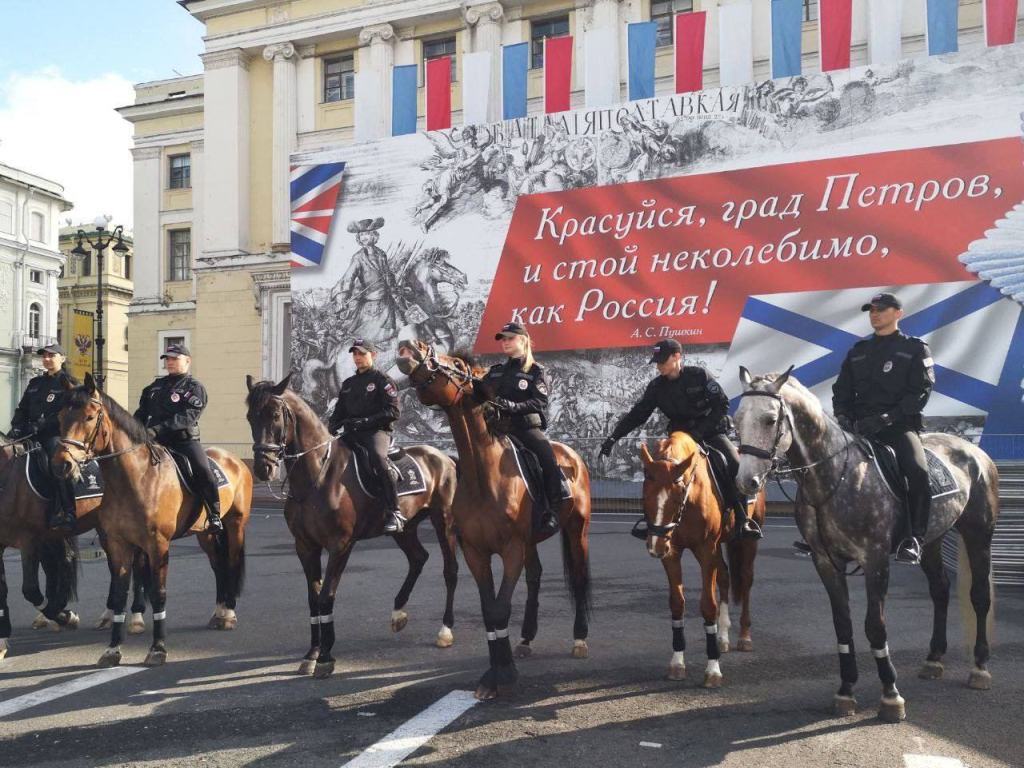
Photo by Marina Varchenko. The banner behind Petersburg’s newly minted mounted police features an illustration of and a reference to the Battle of Poltava (1709) and a quotation from Alexander Pushkin’s poem The Bronze Horseman (1837): “Now, city of Peter, stand thou fast, / Foursquare, like Russia; vaunt thy splendor!”

🐎 Mounted police have returned to the streets of St. Petersburg.
Source: Marina Varchenko (Facebook), 10 June 2023. Translated by the Russian Reader


Riders!
The cavalry charges on knotted legs, bucking their backs!
Confucius-handed and Buddha-headed
People with arms and torso
Move across the tundra
Other same-sex creatures walk around and whistle…
A light downpour pours and pours
Pitter-patter
And
Pitter-patter
And 
Pitter-patter
And
Pitter-patter
And 
Pitter-patter
Softly, softly, as if it isn’t water, but happiness
Under the bright sun
Of historical materialism…
Everyone is free to go.

* * *

Riders Horsemen Scouts!
The delegation from the nearby islands,
So near so near, by the edge of the red peacock,
Oohed and aahed nearby and then fell silent… Basically, we're doing great!
Buzz off, I’m a married woman, as they say.
The delegation from the islands considered the problem of
“The oppression of ethnic minorities.” It was a fruitful meeting.
Henceforth many streets will be called “avenues,”
But “rain” and “cream-colored” will remain.
It will seem odd to you, but songs shall also be sung,
And internal resources employed…
The delegation did not approve what is called “freedom.”
They started saying it was “anarchy.”
Well, of course we went for our knives… the carnage lasted for a long while!
It’s inhumane to finish off the wounded, they…
All belong to the people.
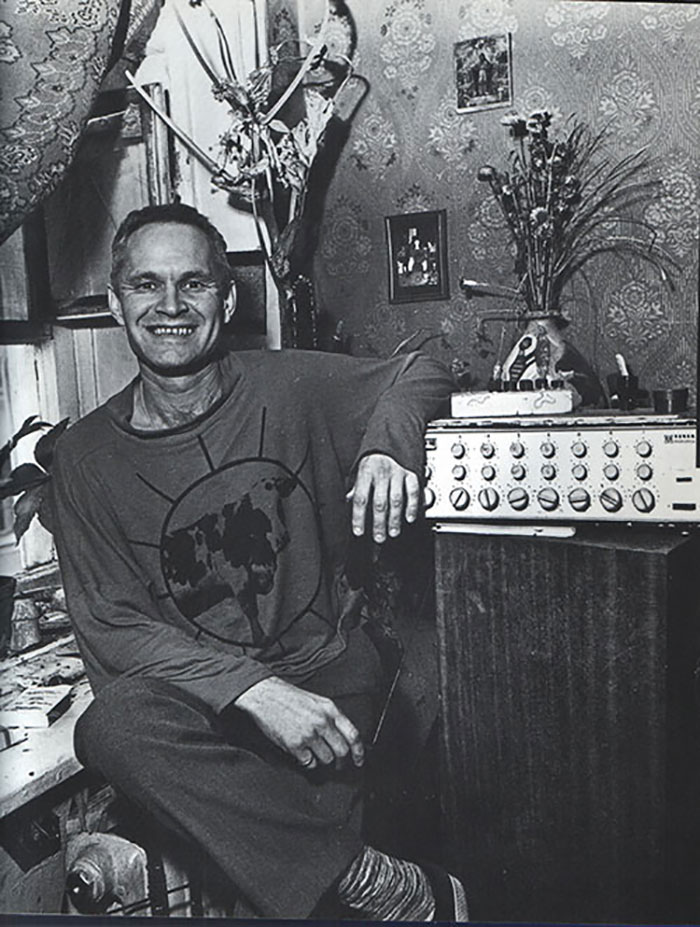
Vadim Ovchinnikov in his studio at Pushkinskaya 10 in Petersburg, early 1990s
Photo by Boris Smelov. Courtesy of ov-ov.com

Born in Pavlodar (Kazakh SSR), Vadim Ovchinnikov (1951–1996) was a Leningrad/Petersburg-based artist who worked in a number of media, including painting, watercolor, collage, animation, mail art, conceptual literature, and music. His works can be found in the collections of the Russian Museum (Petersburg), the Moscow Museum of Modern Art, the Art Museum of Pavlodar, and Kai Forsblom Gallery (Helsinki). For more information on Ovchinnikov’s art and life, see the website ov-ov.com. The two poems by Mr. Ovchinnikov, above, were originally translated by Thomas Campbell for the exhibition catalogue The New Artists (Yekaterina Andreyeva and Nelly Podgorskaya, editors; Moscow Museum of Modern Art, 2012). These translations have been revised for publication here.

Igor Paskar: “What Did Each of Us Do to Stop This Nightmare?”

Igor Paskar in court. Photo courtesy of Solidarity Zone

On 31 May the Southern District Military Court in Rostov-on-Don sentenced Igor Paskar to eight-and-a-half years’ imprisonment on charges of “vandalism” and “terrorism”. He was found guilty of burning a Z-banner [a pro-war symbol] and the symbolic firebombing of the FSB [Federal Security Service] building in Krasnodar. The day before his sentencing, Igor gave his final statement in court. Here is a translation of his speech:

Almost a year has gone by since I carried out this action. During that year, I pictured this moment time and again, the moment when I would be given the opportunity to make my final statement. I agonised over the words I would say, and the motives that drove me to act as I did.

During the last sitting, your honour, you asked whether I regret my actions. I understood that the extent of my professed regret would influence the severity of the sentence. But if I renounced my beliefs, I would be acting against my conscience.

On the contrary, during the time I have been in prison, I have seen firsthand the injustices perpetrated against the people who we call our brothers: both prisoners of war who have served in the Ukrainian armed forces and ordinary Ukrainian citizens.

The war – or whatever term we use to label it – came to their homes, destroying their lives as they knew them. No matter what slogans and geopolitical interests we use to varnish this, in my eyes it cannot be justified.

Do I regret what has happened? Yes, perhaps I’d wanted my life to turn out differently – but I acted according to my conscience, and my conscience remains clear.

Rather than reflecting on who is right and who is guilty, I would like to pose this question: what did each of us do to stop this nightmare? What, ten or fifteen years from now, will we tell our children and grandchildren about these troubled times?

Unfortunately, God has not granted me the joy of fatherhood; the people who were closest to me have gone, and I am left alone with myself. It was easy for me to do what I did, even though I was well aware of the consequences. There was no-one to agonise about my fate, no-one to worry about me, or to cheer me on. But what I really did not expect was the huge number of letters and messages of support that I have received.

People have written from every corner of Russia, and not only Russia. Many were grateful for my position, so completely at odds with the notion of unanimous national support for what is being perpetrated. There were so many messages of encouragement: “stay strong”, “don’t despair”. So many warm words, so much sympathy.

But I’ll be so bold as to read just one part of a letter that I received in May, which really touched me, and pushed me to write this final statement to the court. Here it is:

“There is very little left of everyday life. It turns out that we can’t live everyday lives anymore. I am listening to the memoirs of prisoners from the 1930s, 40s and 50s. Right now, I’m on the breath-taking biography of [the actress] Tamara Petkevich [who spent seven years in a prison camp]. She was arrested in 1943 and lived until 2017. When they came for her, she was only 22 – just a girl, half the age I am now. I have not read Solzhenitsyn’s Gulag Archipelago, and I never got round to Shalamov’s Kolyma Tales either. But now I’m listening to Petkevich, and it’s making me realise that this is exactly what we must listen to, what we must read at school. As a country we are obsessed with the past, but we hardly ever think about the present or the future. The Americans have their American dream: something to strive for. We have nothing but a fixation on that which happened long ago, that which cannot return. But time and again we try to bring back what has passed, and these attempts are absolutely pointless. It’s as though the whole country is stuck in the mud. As individuals we are caught in our feelings. It’s terrible that even now, for as long as we stubbornly turn our heads back, we will never live happily, never the way we want to. Let’s hope people can find happiness in the little things.”

You can support Igor Paskar by sending letters:

□ Address: Russia 344022, Rostov-on-Don, 219 Maksim Gorky Street, SIZO-1, Igor Konstantinovich Paskar (d.o.b. 1976)

□ You can send letters online via the volunteer service RosUznik.

Solidarity Zone gives full support to Igor Paskar. His legal representative is Felix Vertegel. 

Note. Letters sent to Russian detention facilities that are not in Russian are unlikely to be delivered to prisoners, and RosUznik is also a Russian-language service. If you send short messages to Igor via Solidarity Zone supporters in the UK at 2022ukrainesolidarity@gmail.com, we will arrange for them to be translated and passed on.

□ More about Solidarity Zone on Facebook and Telegram. A report of the organisation’s work in May is here. Links to more information in English here. Russian original of Igor Paskar’s statement here.

Source: People and Nature, 8 June 2023. Thanks to Simon Pirani for the translation, the hard work, the heads-up, and his shining example of solidarity, which helps keep me going when times are tough. ||| TRR

Expert in a Dying Field

The Beths, “Expert in a Dying Field” (2022)

[…]

On the first episode of his Twitter show, Tucker Carlson concluded that Ukraine was most likely the culprit.

“If this was intentional, it was not a military tactic. It was an act of terrorism,” he said. The dam was “built by the Russian government, and it currently sits in Russian-controlled territory. The dam’s reservoir supplies water to Crimea which has been, for the last 240 years, home of the Russian Black Sea fleet. Blowing up the dam may be bad for Ukraine, but it hurts Russia more. And for precisely that reason, the Ukrainian government has considered destroying it. In December, The Washington Post quoted a Ukrainian general saying his men had fired American-made rockets at the dam’s floodgate as a test strike.”

“So really, once the facts start coming, it becomes much less of a mystery what might have happened to the dam,” Carlson said. “Any fair person would conclude that the Ukrainians probably blew it up. Just as you would assume they blew up Nord Stream… and in fact, they did do that. As we now know.” But the American media has wasted no time “in accusing the Russians of sabotaging their own infrastructure.”

[…]

Source: Isaac Saul, “The Ukraine counteroffensive (and the dam attack),” Tangle, 7 June 2023


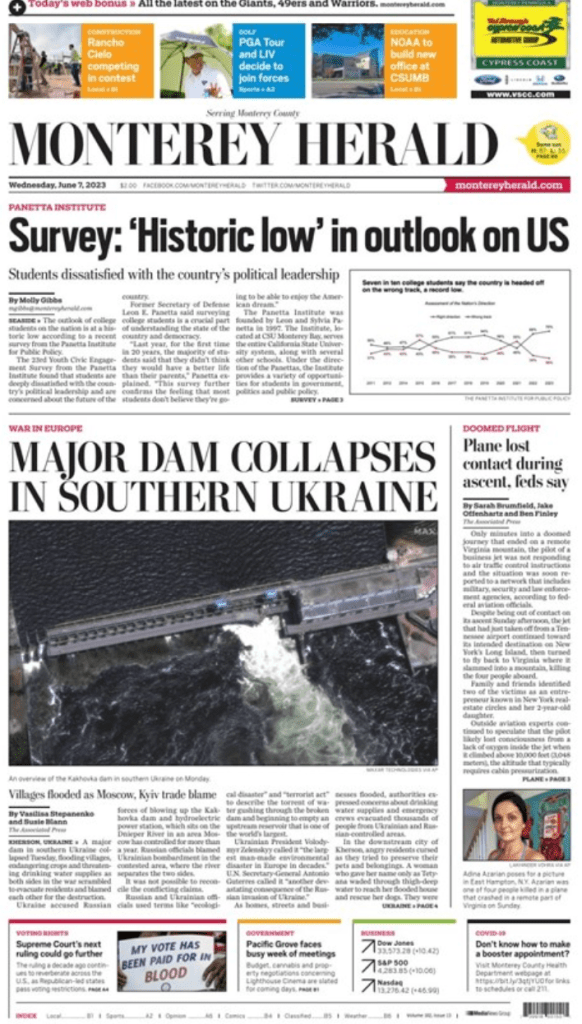
“Villages flooded as Moscow, Kyiv trade blame.”
A screenshot of the front page of the 7 June 2023 Monterey Herald, as sent to this subscriber

The Nova Kakhovka Dam in Ukraine, controlled by Russia, has been destroyed. One consequence is a humanitarian disaster that, had it not taken place within a war zone, would already have drawn enormous international assistance. Thousands of houses are flooded and tens of thousands of people are in flight or waiting for rescue. Another consequence is ecological mayhem, among other things the loss of wetland and other habitats. A third is the destruction of Ukrainian farmland and other elements of the Ukrainian economy. So much is happening at once that the story is hard to follow. Here are a few thoughts about writing responsibly about the event.

1.  Avoid the temptation to begin the story of this manmade humanitarian and ecological catastrophe by bothsidesing it.  That’s not journalism. 

2.  Russian spokespersons claiming that Ukraine did something (in this case, blow a dam) is not part of a story of an actual event in the real world.  It is part of different story: one about all the outrageous claims Russia has made about Ukraine since the first invasion, in 2014.  If Russian claims about Ukrainian actions are to be mentioned, it has to be in that context.

3.  Citing Russian claims next to Ukrainian claims is unfair to the Ukrainians.  In this war, what Russian spokespersons have said has almost always been untrue, whereas what Ukrainian spokespersons have said has largely been reliable.  The juxtaposition suggests an equality that makes it impossible for the reader to understand that important difference.

4.  If a Russian spokesman (e.g. Dmitri Peskov) must be cited, it must be mentioned that this specific figure has lied about every aspect of this war since it began.  This is context.  Readers picking up the story in the middle need to know such background. 

5.  If Russian propaganda for external consumption is cited, it can help to also cite Russian propaganda for internal consumption.  It is interesting that Russian propagandists have been long arguing that Ukrainian dams should be blown, and that a Russian parliamentarian takes for granted that Russia blew the dam and rejoices in the death and destruction that followed.

6.  When a story begins with bothsidesing, readers are being implicitly instructed that an object in the physical world (like a dam) is really just an element of narrative.  They are being guided into the wrong genre (literature) right at the moment when analysis is needed.  This does their minds a disservice.

7.  Dams are physical objects.  Whether or how they can be destroyed is a subject for people who know what they are talking about.  Although this valuable NYT story exhibits the above flaws, it has the great merit of treating dams as physical rather than narrative objects.  When this exercise is performed, it seems clear that the dam could only have been destroyed by an explosion from the inside.

8.  Russia was in control of the relevant part of the dam when it exploded.  This is an elemental part of the context.  It comes before what anyone says.  When a murder is investigated, detectives think about means.  Russia had the means. Ukraine did not. 

9.  The story doesn’t start at the moment the dam explodes.  Readers need to know that for the last fifteen months Russia has been killing Ukrainian civilians and destroying Ukrainian civilian infrastructure, whereas Ukraine has been trying to protect its people and the structures that keep them alive.

10.  The setting also includes history.  Military history offers an elemental point.  Armies that are attacking do not blow dams to block their own path of advance.  Armies that are retreating do blow dams to slow the advance of the other side.  At the relevant moment, Ukraine was advancing, and Russia was retreating.

The pursuit of objectivity does not mean treating every event as a coin flip, a fifty-fifty chance between two different public statements.  Objectivity demands thinking about all the objects — physical objects, physical placement of people — that must be in the story, as well as all of the settings — contemporary and historical — that a reader would need in order to come away from the story with greater understanding.

Source: Timothy Snyder, “The Nova Kakhovka Dam in Ukraine: Ten guidelines for writing about catastrophe,” Thinking about…, 7 June 2023. Thanks to Mark Teeter for the heads-up


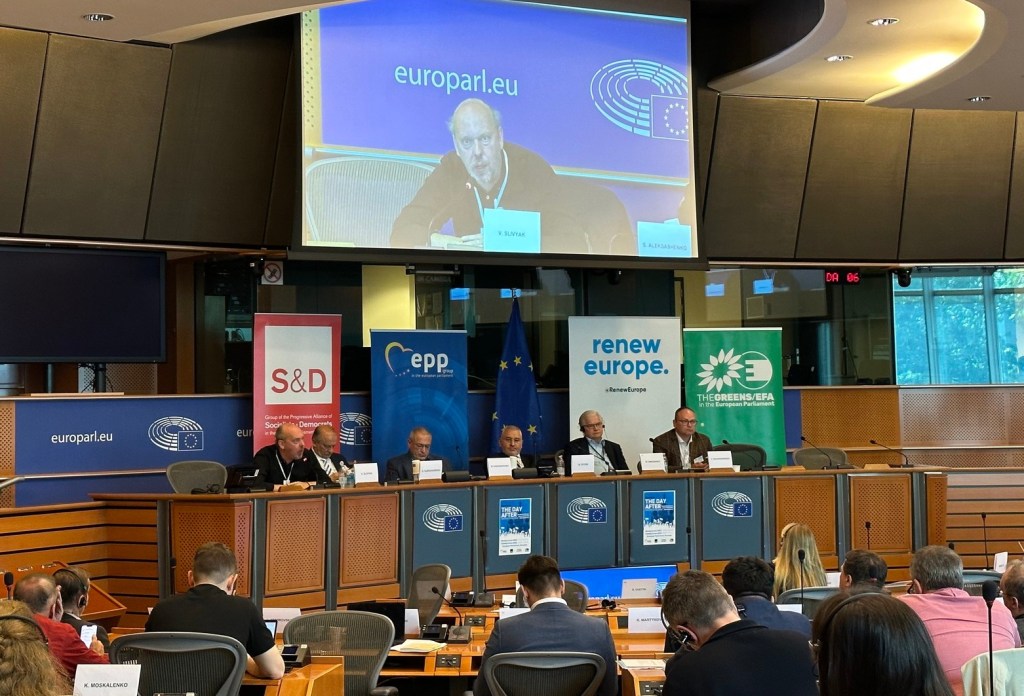
Vladimir Slivyak (far left and on screen), speaking at the European Parliament earlier this week. Mikhail Khodorkhovsky, who made his fortune selling oil and gas, is seated the second to Mr. Slivyak’s left. Photo courtesy of his Facebook page

At the beginning of the week, an important conference, “The Day After,” was held at the European Parliament. I would not call it a “congress” of the Russian opposition, but rather something like a big meeting of Russian civil society. Some of the participants were those who are termed “opposition politicians” and their support groups. There were also human rights activists, women’s rights activists, LGBT+ rights activists, and many others. Environmentalists were extremely poorly represented (three out of the approximately 250 people in attendance). At the dozen or so panel discussions, in which more than fifty people took part, only one person addressed environmental issues—me.

Despite the fact that, as I observed, there were fewer politicians in attendance than non-politicians, the panel discussions were dominated by the topics that only the politicians talk about. Very rarely did anything different get talked about, but when it did the audience was usually quite supportive. I have no quarrel with the gist of what the opposition politicians said. Almost everyone spoke about supporting Ukraine, democratizing Russia, and the horror of the war, which must be stopped and all Russian troops withdrawn. There was a lot of discussion about what the political system of the new Russia should be, how to prevent a repeat of the dictatorship. This is all well and good, and I don’t think anyone in the audience disagreed with the main arguments. The big problem was something else. The vast majority of the speeches seemed to merge into a single digested mass: it was difficult to distinguish among people who, one after another, talked about the same thing in similar terms. If the audience expected just this, then that’s fine. But the audience were definitely expecting more. And they didn’t get it.

On the second day, the wonderful Karina Moskalenko organized a protest for women’s rights, threatening to leave the auditorium if the middle-aged white men in suits continued to dominate the panel discussions. Periodically, women did appear among the participants of the discussions, but not always. I fully supported the protest because the gripe was warranted: those who dominated the discussions (who had been involved in organizing the conference, of course) objectively had no desire to take into account the interests of other groups. This was the reaction of only one of the movements represented at the conference, but similar emotions (about the ignoring of all other interests) were also manifested by representatives of the other groups. Often one had the impression that there were the bearers of the truth, whose important cause everyone else should follow, while all other interests would be dealt with later (maybe). Someone said, How does this differ from Putin? No one else’s interests matter to him either.

There is no doubt that the opposition talked about important things, and I don’t think anyone at the conference questioned this. The topic of unifying the opposition was broached repeatedly. But it’s just that uniting people who don’t feel that their interests are taken into account won’t work. This is the answer to those who are always wondering why the opposition is fragmented. If you want someone to stand beside you, you have to make room for them.

On the morning of the second day, I spoke on the same panel with Mikhail Khodorkovsky, Sergei Aleksashenko, Mark Feygin, Fyodor Krashennikov, and one of the European MPs. It was all per usual until my turn came. Briefly put, I argued that climate policy and the transition to green energy were extremely important, and that it was necessary to deal with this now if you were thinking about how to set up a new democratic Russia: you couldn’t get by without it, because for any civilized country today it was one of the priorities and its importance would only grow. No one would ever take Russia seriously if it was run by politicians who did not understand climate issues. The demand for fossil fuels would decline, and this would become a big economic problem; it would not be possible to employ the previous economic model (which enabled Putin to save money for the war). Also, the opposition needed the support of voters and, most importantly, young people, because it was they who would have to vouchsafe democracy in the future and prevent a new dictatorship. It was young people who would have to face much more terrible manifestations of climate change than those we were witnessing today. So, young people needed politicians to understand the climate agenda and work on it. If you wanted young people to vote for you in the future, you wouldn’t get anywhere with them without it. Nothing would ever happen if you put it off for later. In the USSR and post-Soviet Russia, dealing with environmental issues was always postponed.

Despite the fact that the audience applauded my remarks loudly and more than once, the moderator, Feygin, could not hold himself in check no way no how. He made a brief comment to the effect that of course it’s important, but it’s not important. He went out of his way to show his disrespect for the opinion of the people in the audience who obviously supported my arguments, let alone the climate and environmental agenda. Well, okay, we’ve seen worse things in our lives. But what really struck me was how many people (not a few, but dozens) came up to me during the day to thank me for my speech and say that it was important. About half of those who approached me mentioned how the reaction from the other panelists (I think they meant Feygin) had been ugly.

My conclusion in the light of all this is simple: there is nothing wrong with people, but there is something wrong with the leadership. It is vital to learn to feel what your target audience wants. If you are a politician who, albeit sometime in the future, not now, wants to build a democratic Russia and get people’s support, you not only have to talk about what you stand for. You also need to hear people and respect their interests. It’s not a one-way street. And this is not only my opinion (among the participants of the conference). Within Russian civil society there is an enormous desire to work to change Russia and a huge potential for unification. We can’t let this moment slip.

Source: Vladimir Slivyak (Facebook), 7 June 2023. Translated by the Russian Reader. See Tomsk TV2’s recent interview with Mr. Slivyak, as part of its project Eyewitnesses.


The offices of a subsidiary of Russian oil giant Lukoil on Kurfürstendamm in Berlin, 7 June 2019
Photo by the Russian Reader

There is a phenomenon that, by the way, unites us Ukrainians with Russians—a burning irrational hatred for Greta Thunberg. I can’t understand this phenomenon. Basically, she’s never wronged anyone. But yesterday, social media was just bursting at the seams with hatred for her, including from people who went to her Twitter account to tell her that she was a “juvenile slut.” The conservative momma’s boys at Tyzhden (The Ukrainian Week) even knocked off a column about it.

They don’t hate Tucker Carlson, who yesterday released a video claiming that Ukraine bombed the hydroelectric power station itself. They don’t hate Elon Musk, who reposted it. They don’t hate fucking Ben Shapiro or the Trumpists, who have been stumping against Ukraine from the get-go and at the same time are readily published here in Ukraine, in translation by Our Format, because “we must respect different opinions.” No, for some reason, the hatred is reserved for Greta Thunberg.

The irony here is also that the RePlanet movement, which she represents, just yesterday quite promptly condemned Russia for the situation with the hydroelectric power plant and once again called for the withdrawal of Russian troops from Ukraine’s sovereign territory. But who cares? Greta Thunberg, bitch, you’re going to answer for everything.

Source: Dmytro Rayevsky (Facebook), 7 June 2023. Translated by the Russian Reader

A Hostage of the Putin Regime: The Case of Ekaterina Kishchak

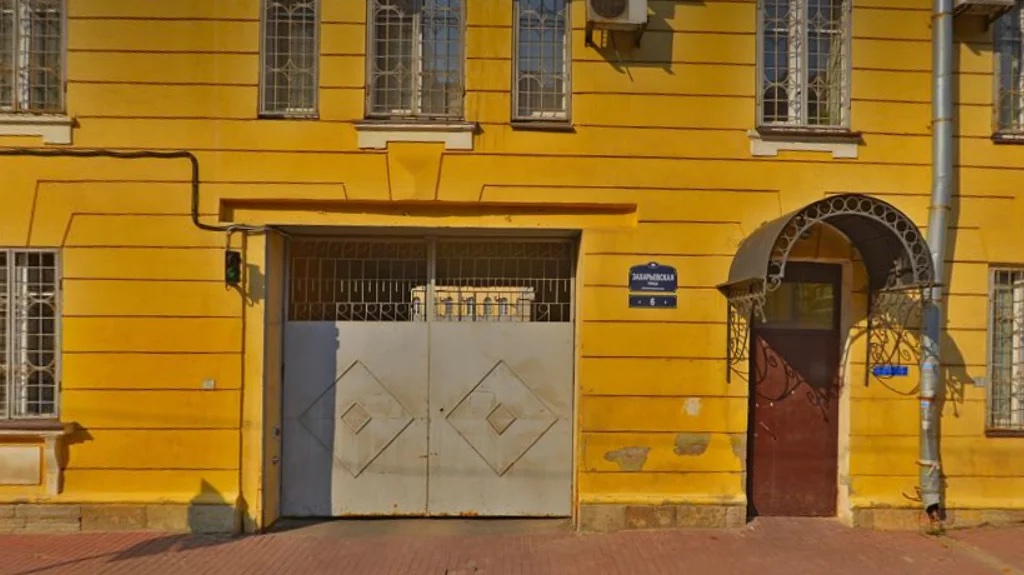
The special detention center at Zakharyevskaya 6 in downtown Petersburg. Image courtesy of Yandex Maps via mr7.ru

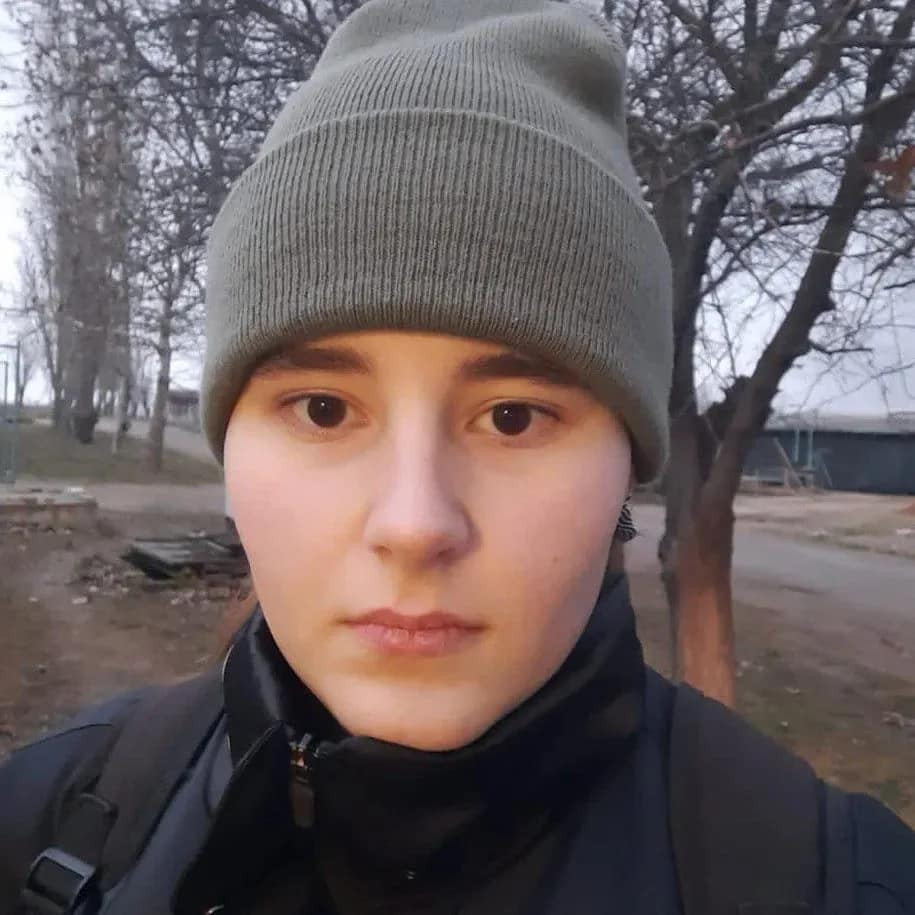
Police have detained Ekaterina Kishchak, a 20-year-old resident of Crimea, a citizen of Ukraine and Russia, and the daughter of Yuri Kishchak, a suspect in the bombing of a power line in the Leningrad Region. The young woman is currently at a special detention center in St. Petersburg, said lawyer Vitaly Cherkasov.

Ekaterina’s relatives turned to the lawyer for help. They said that on May 4, the young woman and her boyfriend, Dilyaver Gafarov, were supposed to cross the Russian-Georgian border at Upper Lars to go on holiday in Georgia. At the border checkpoint, the young woman texted to her father, who is living in Belgium, that they were on the verge of crossing the border, after which she stopped answering his calls.

Only fifteen days later, on May 19, did Ekaterina get in touch with her family. In a conversation with her father, she said that she had been detained at the border with Georgia and jailed for fifteen days—that is, until May 21. After this conversation, Ekaterina’s father had a heart attack and underwent surgery.

Ekaterina’s sister, Anna Petrishina, wrote to the Russian Federal Prosecutor General Igor Krasnov asking that the lawyer be notified if the young woman faced criminal charges, or to place her on the federal wanted list if law enforcement agencies were not involved in her disappearance. The letter states that, over the phone, Ekaterina claimed that the police officers who detained her “only ask[ed] questions about her father,” and said that if he did not return to Russia, she and her boyfriend “[would] be tried for his deeds.”

Ekaterina Kishchak. Photo courtesy of Vitaly Cherkasov, as posted on his Facebook page on 5 June 2023

Later, Ekaterina wrote to her father again. According to the lawyer, the young woman said that she had been “taken to St. Petersburg to be arraigned in his criminal case.” Ekaterina’s message was answered by her father’s wife, who replied that she would not pass on her stepdaughter’s message because it would only worsen her husband’s condition.

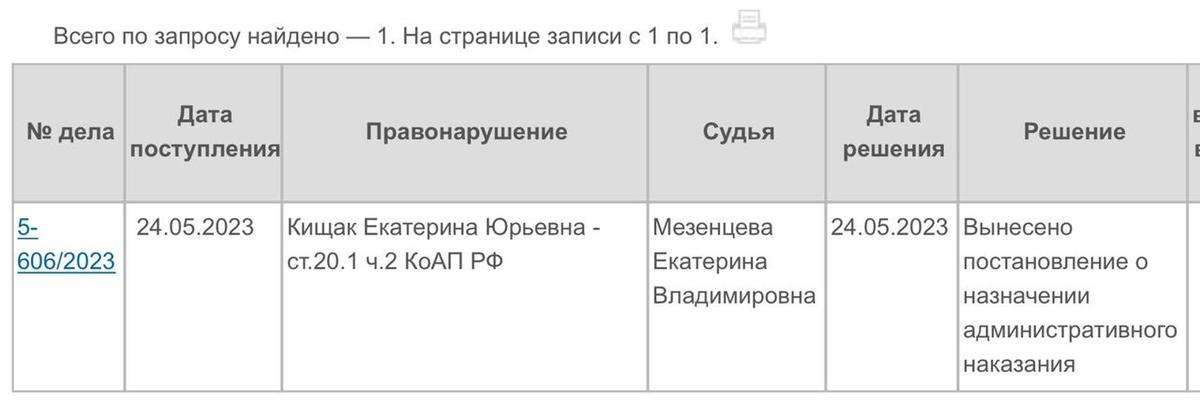
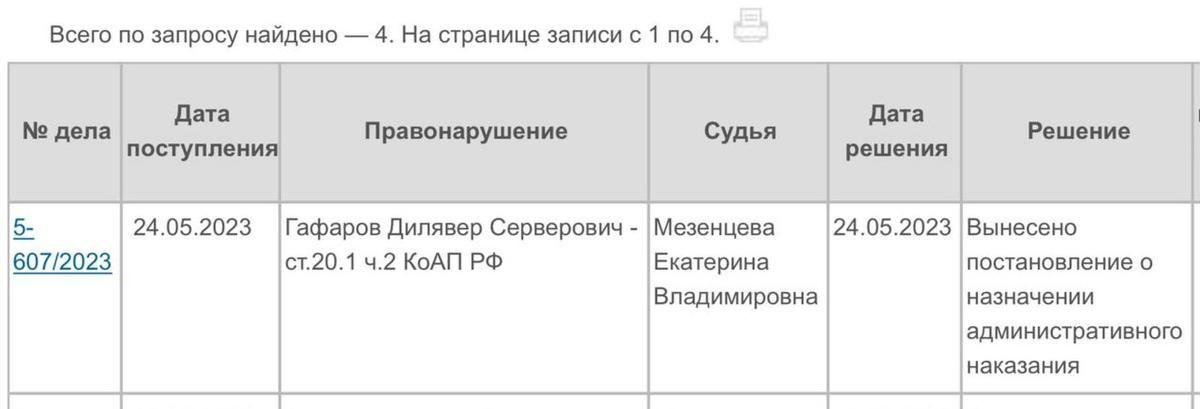
A lawyer from the Krasnodar Territory who was first engaged by the young woman’s relatives went to Vladikavkaz and discovered that Ekaterina and Dilyaver had been jailed for fifteen days on charges of “disorderly conduct”(per Article 20.1 of the Russian Federal Administrative Offenses Code). It also transpired that the detained young man had telephone his father on May 23 and informed him that the couple had been jailed a second time.

Yesterday, June 3, Cherkasov learned that Ekaterina and her boyfriend were in custody in the special detention center at 6 Zakharyevskaya Street in St. Petersburg—again on charges of disorderly conduct, per the decision of the city’s Smolny District Court. The lawyer attempted to meet with the young woman, but Ekaterina filed a written refusal to communicate with the human rights advocate.

“What happened there made me realize that FSB officers had arrived at the special detention center. I was asked for my identity card again, although they had already made a photocopy of it. When I had waited an hour, I approached the officer on duty and asked why it was taking so long. He replied, ‘Wait, they’re writing a statement in there.’ I was surprised: who did he mean by ‘they’ if I was waiting only for Ekaterina?

“An hour and a half later, the same officer appeared in the visiting room and bashfully handed me a statement, written in Ekaterina’s hand, that she did not want to communicate with me until the end of her stay at the special detention center.

“I asked the on-duty officer the standard question: did he understand that she had been pressured into [writing the statement]? He looked down and said that he had nothing to do with it, thus letting me know that he was carrying out someone else’s instructions,” Cherkasov told mr7.ru.

The lawyer plans to familiarize himself with the administrative case against Ekaterina Kischak in the Smolny District Court. There is information on the court’s website that the young woman and her boyfriend were convicted on May 24 by decision of Judge Ekaterina Mezentseva under Article 20.1.2 of the Russian Federal Administrative Offenses Code (i.e., “disorderly conduct involving disobeying a legitimate demand by an officer of the state”).

Screenshots of the Smolny District Court’s website, showing that Kishchak and Gafarov were convicted on 24 May 2023 by Judge Ekaterina Mezentseva of violating Article 20.1.2 of the Russian Administrative Offenses Code and sentenced to “administrative punishment.” Courtesy of mr7.ru

“We need to understand how, having arrived in St. Petersburg involuntarily, in fact, under the escort of regional FSB officers, Ekaterina and her boyfriend could have engaged in disorderly conduct,” the lawyer said.

You will recall that, on May 25, the FSB reported that it had detained two Ukrainian nationals: 44-year-old Alexander Maystruk aka Mechanic, and 48-year-old Eduard Usatenko aka Max. Yuri Kishchak aka YBK, a 59-year-old Ukrainian and Russian national who is currently in Belgium, was put on the wanted list.

The FSB claims that, in September 2022, the Foreign Intelligence Service of Ukraine (SZRU) recruited the three suspects to sabotage upwards of thirty pylons on the high-voltage power lines running from the Leningrad and Kalinin nuclear power plants (the latter is located in the Tver Region).

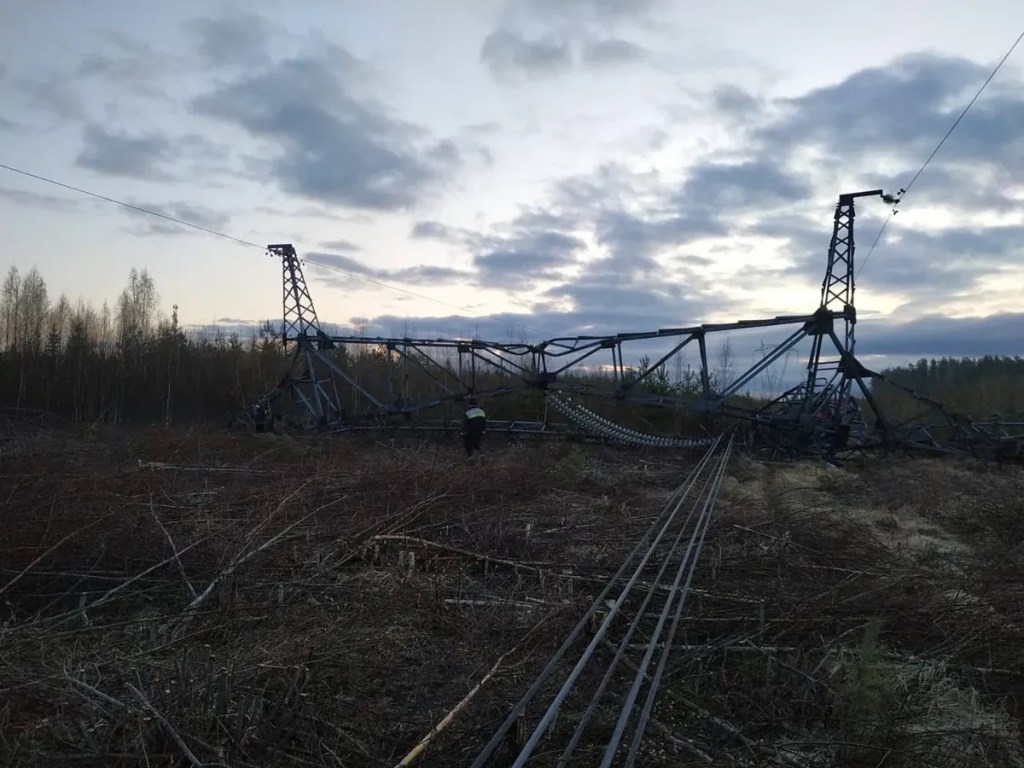
According to the FSB, on the Leningrad NPP power line the saboteurs managed to blow up one pylon and rig four pylons with explosives, while on the Kalinin NPP power line they planted IEDs under seven pylons. One of the pylons in the Leningrad Region collapsed due to the blast, but no one was injured, and the power supply was not disrupted.

The high-voltage power line allegedly damaged by a bomb blast on 1 May 2023
Source: Leningrad Region Governor Alexander DroZdenko [sic] (Telegram), via mr7.ru

Source: “Daughter of suspect in bomb blast on power line in Leningrad Region sent twice to special detention center for ‘disorderly conduct,'” mr7.ru, 4 June 2023. Translated by the Russian Reader. Thanks to Vitaly Cherkasov for the heads-up. This post was updated on 5 June 2023 to include the photograph of Ms. Kishchak, above, which was not part of the original article on mr7.ru.

I Miss the World

anatrrra, from the series “Petersburg in April,” 2023
You can see the entire series on their LiveJournal

I just spent many hours roaming around Kolomna. I love the neighborhood: it soothes my soul, if only for a short time.

I came upon two dudes approximately my age sitting on a bench and drinking beer. From what I heard them saying it was clear as a bell that they had listened to Kinchev, Sukachov, and Butusov in their youth.

“That’s where such old scum comes from. But they used to be regular guys—bright eyes, rock and roll, the whole deal.”

“They drank, shot up, and snorted away their conscience, but money doesn’t smell, supposedly.”

“It stinks like hell nowadays.”

I was going to walk past them, but I turned around.

“Excuse me,” I said, “but I accidentally overheard what you were saying. I think they were like that from the get-go. They just adopted a stage persona in their youth. It was cool then, the niche was open, and you could no longer go to prison for things like that (unlike now). It was a beauty way to go.”

The men looked up at me, exhaled, and shook their heads.

“If that’s so, it’s even worse,” one of them said.

I apologized again, and went on my way. My back already turned, I heard one of them say:

“Check it out. Our people are still roaming these parts…”

Source: Marina Varchenko (Facebook), 2 June 2023. Translated by the Russian Reader


Body Type, “Miss the World” (2023)

International Children’s Day (June 1)

Important Stories • “Putin, Lvova-Belova and their crimes: how Ukrainian orphans are registered as Russians” • 31 May 2023

The Russian authorities have been removing children en masse from occupied Ukrainian territories and do not consider it a crime. But the International Criminal Court in the Hague thinks differently, accusing Vladimir Putin and Russian children’s ombudsman Maria Lvova-Belova of war crimes—namely, the illegal deportation of minors from Ukraine.

Orphans and children left without parental care have been sent all over Russia, even to the Far North. Important Stories found out how this system works and how abducted Ukrainian orphans are forcibly turned into Russian nationals.

[…]

Timecode

00:00 Why Putin and Lviv-Belova have been accused of kidnapping Ukrainian children

01:12 How 2,500 new children appeared in Russia’s database of orphans

02:32 The story of Sasha from Donetsk and his two sisters

03:56 The environment in which Ukrainian children are raised in Russia

05:23 “The children categorically refused to go to the Far North, where we live”

07:12 “The parents were killed there. The children told us terrible things”

07:48 Ukrainian orphans are provided with housing, for which Russians spend years on the waiting list

08:39 “There have never been such crimes in the history of humankind”

Source: Important Stories (YouTube), 31 May 2023. Annotation translated by the Russian Reader


SOTA • “Putin is readying young people to rebuild the army” • 31 May 2023

It won’t be possible to wage wars forever, but Putin is trying very hard. Since February 24, 2022, the lives of young people have changed. Starting in kindergarten, children are now taught that serving in the army is the best job in the world, and that the most beautiful thing in life is dying for the good of the Motherland.

[Endlessly repeat the message that] Russia is surrounded by Nazis, the whole world is against it, its soldiers are defenders, and you’re good to go. You’ve raised a whole new generation of soldiers.

This assembly line for producing soldiers has existed for several years. Even before the war, schoolchildren were inspired with imperialism and a desire to go to war. Now, however, everything has reached new levels. Military parades are organized in kindergartens. Schoolchildren are taught to dig trenches, shoot, and render first aid in combat. And university students are trained to serve in the military.

See more about how children are turned into soldiers in our new video.

Source: SOTA (YouTube), 31 May 2023. Annotation translated by the Russian Reader


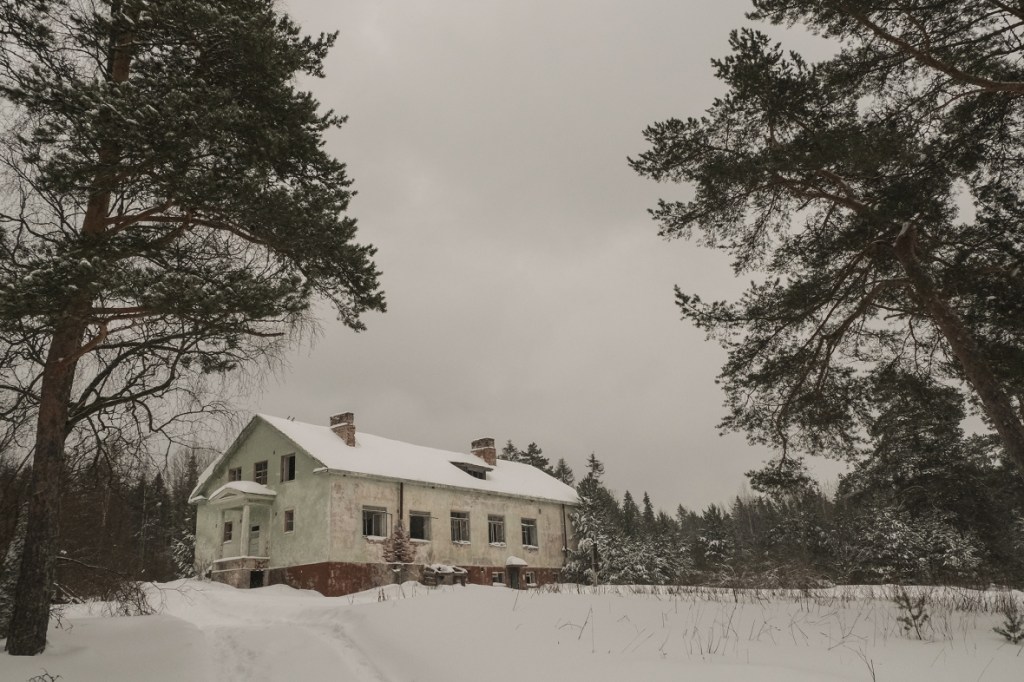
A ruined building of the Burenevo Auxiliary Boarding School for Mentally Retarded Children.
Village of Burnevo, Priozersk District (Leningrad Region), 2021. Photo: Olga Matveeva/Republic

“Hello Irina Alexandrovna! This is your pupil writing to you. I decided to write to you. Please write a letter here so that they let me go on my own, whatever date you need, so that I can study from the beginning of the school year, that is, beginning September 1. Say hello to everyone at the school. When you write the letter, address it to the 11th department… Irina Alexandrovna what was the reason you sent me to the mental hospital again. I told you that I would remain at camp…”

This is an excerpt from a letter written by a pupil to the director of the Burnevo Auxiliary School for Mentally Retarded Children. I found the letter in his personal file.

In 1970, the Priozersk Sanatorium Forest School was reorganized into an auxiliary boarding school for mentally retarded children. According to the school’s fact sheet, “Forty-eight mentally retarded children studied [sic] at the school. Ten of them are disabled. All of the children are from at-risk families. Classes are held in one shift, five days a week. On weekends and holidays, ten to fifteen of them, mostly orphans, stay. There are twelve of them in the school.”

It seems that many of the pupils were not mentally retarded or disabled, but they were neglected. Sergei, a resident of the village of Burnevo, spoke to this fact: “Half of the children there were sick, while half of the healthy ones were from dysfunctional families. I attended this school until 1970, and my mother worked there as a minder.”

The school was closed in 2005 due to poor epidemiological conditions. There was only stove heating in the building, and the water was pumped from the lake. The school consisted of several buildings. In the main building there were four classrooms, a teacher’s room, a curriculum office, and the director’s office. There were sleeping quarters in a wooden building. Carpentry workshops, sewing workshops, a recreation and sports equipment room were located in separate buildings. There was also a medical unit with an isolation ward and a speech therapist’s office. There I found an archive containing the personal files of the school’s graduates.

“His grandmother telephoned. She said that her grandson was very bad, it was hard to deal him, his socks were wet and dirty. He gave a jacket to a girl, but lied to his grandmother that he had dropped it off at the laundry. At the class meeting, it was decided to refer him to the psychiatrist to prescribe treatment.”

“Slava ended up the border zone this summer: he told the border guards that he was flying in a spaceship. I had a frank talk with him. He still wants to go see his mother in Vyborg (she does not live with their family). He didn’t find her, got lost, and ended up in the border zone. Slava, smiling, told how me he deceived a border guard and a policeman. Slava was referred to a psychiatrist, who detected no abnormalities.”

“Oleg systematically wipes the dust from his bed badly. This was discussed at a class meeting. There are no results.”

“If children skip classes, they should be reported to the police without delay.”

These are quotes from pupil observation logs. Along with memos, letters, and assessments, they were kept in the students’ personal files. These records about the children were kept for years—from the first grade to graduation. Perusing them, you begin to imagine these children, how they lived, what they worried about, what they did. Their childhoods are written down in slim notebooks. You watch them grow up and go out into the world, or to a psychoneurological residential treatment facility, or to prison.

For bad behavior, children were referred to a psychiatrist and prescribed treatment. There is no data on how many orphans are placed in psychiatric clinics nowadays. The roots of what is happening in this system to this day must be sought in the past.

This project is based on archival materials and interviews with graduates of the Burnevo Auxiliary School for Mentally Retarded Children whom I managed to find.

[…]

Source: Olga Matveeva, “‘A slight degree of imbecility’: the stories of graduates of an auxiliary boarding school for mentally retarded children,” Republic, 31 May 2023. Translated by the Russian Reader


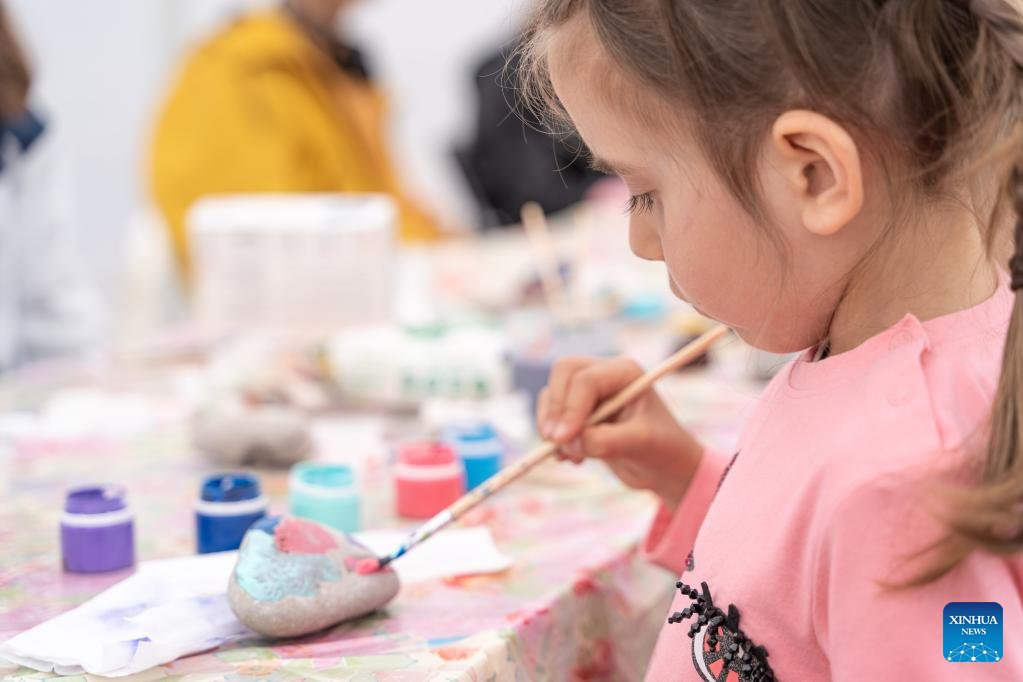
A girl paints a pebble during an event to mark the International Children’s Day in Vladivostok, Russia, June 1, 2023. (Photo by Guo Feizhou/Xinhua)

Students from a special education school perform during an event to mark the International Children’s Day in Vladivostok, Russia, June 1, 2023. (Photo by Guo Feizhou/Xinhua)

A girl draws during an event to mark the International Children’s Day in Vladivostok, Russia, June 1, 2023. (Photo by Guo Feizhou/Xinhua)

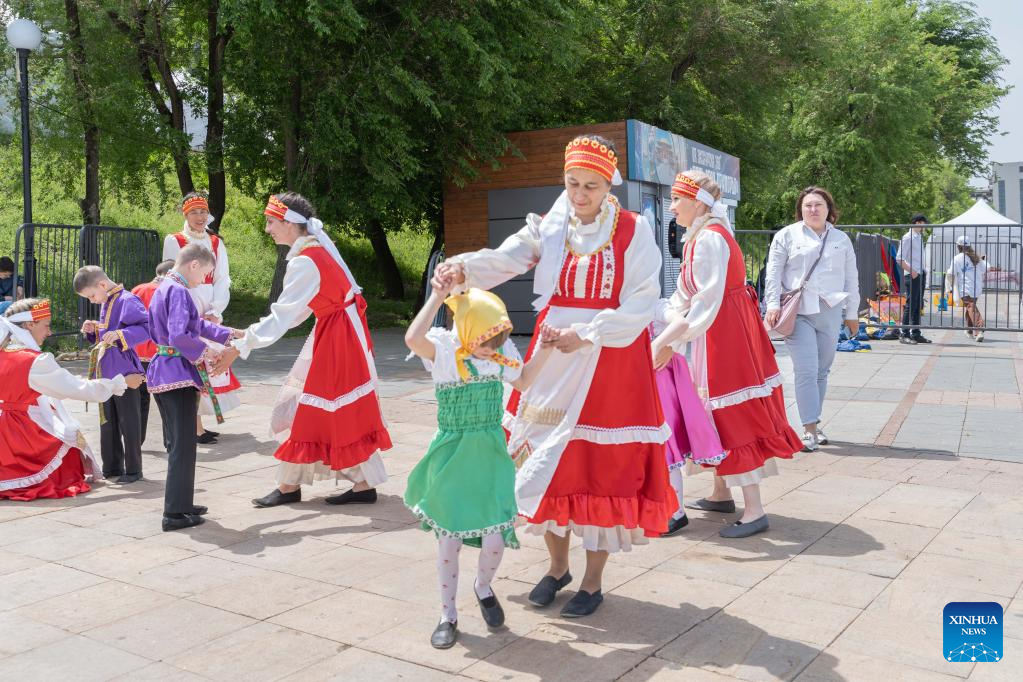
Teachers and students in traditional attire dance during an event to mark the International Children’s Day in Vladivostok, Russia, June 1, 2023. (Photo by Guo Feizhou/Xinhua)

[…]

Source: “Int’l Children’s Day marked around world,” Xinhua, 1 June 2023

Dmitry Markov: The Most Beautiful Things

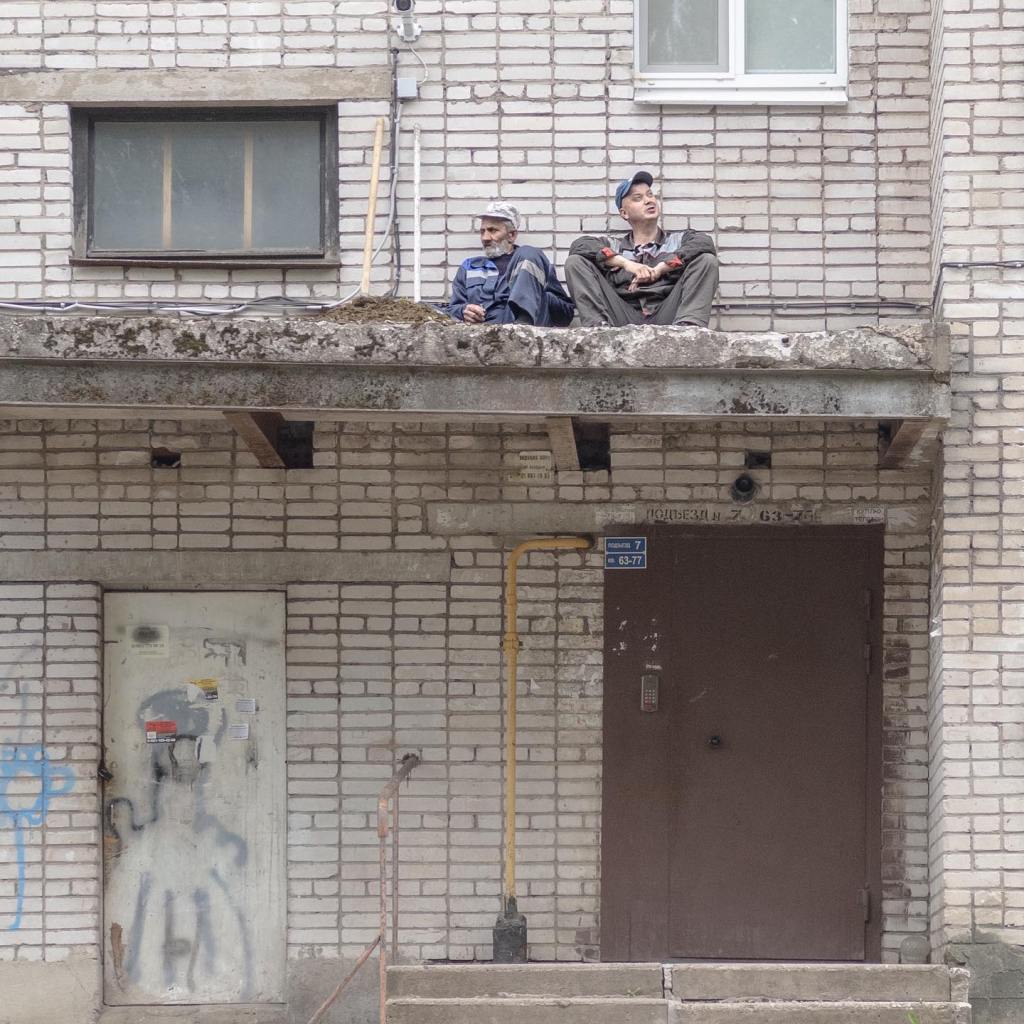
Someone wrote in the comments: “I get the impression that Dmitry is sitting near the same five-storey apartment block [pyatietazhka] and photographing life in the vicinity.” Existentially, that’s how it is, and so when I geotag a post I feel I’m doing something that is somewhat meaningless, as if a Khrushchev-era apartment block [khrushchevka] in Ladoga were fundamentally different in some way from a Khrushchev-era apartment block in Petrozavodsk.

Nevertheless, the Soviet neighborhoods with their endless labyrinths of prefab blocks of flats and bricks are the most interesting and beautiful things in a city. [On the contrary,] I enjoy going to museums and fortresses about as much as I enjoy going to a municipal outpatient clinic.

I would like to paraphrase a quote by an artist,* although he is probably the last artist whose quotes I would like to paraphrase—Warhol: “Five-storey apartment blocks are the most beautiful things in Russia. Five-storey apartment blocks are the most beautiful things in Belarus. Five-storey apartment blocks are the most beautiful things in Kazakhstan. There is nothing beautiful in Beijing and New York.”

* [“The most beautiful thing in Tokyo is McDonald’s. The most beautiful thing in Stockholm is McDonald’s. The most beautiful thing in Florence is McDonald’s. Peking and Moscow don’t have anything beautiful yet.”]

Source: Dmitry Markov (Facebook) is at Staraya Ladoga (Leningrad Region, Russia), 31 May 2023. Translated by the Russian Reader


Friends, I don’t answer questions about shooting and processing, not because I keep this knowledge secret, but because the very wording of the question don’t entail a substantive answer. How do I get people’s consent? In different ways. How do I process shots? Manually.

Many people think there is some kind of universal life hack—a script for talking to people, a filter for processing photos, etc.—that will solve the problem. It is excusable for youngsters who grew up on TikTok and other shit to think this way, but we adults should realize that things are more complicated. And supposing that quality is determined by equipment is like believing that a properly selected frying pan is the key to being awarded Michelin stars.

I used to think that this desire for quick results was a peculiarity of young people, but my psychotherapist friends, for example, face the same situation, although their clients are no longer teenagers. Apparently, it is human nature to cut corners and look for a panacea.

You can get experience in communicating with people only by doing it. And in this case it is also difficult to give advice because everyone has their own patterns of behavior—at first. Some [photographers] get the consent [of the people they’re shooting], some shoot brazenly, some shoot secretly, etc. Situations are different too: in some places it’s enough to shoot once, on the fly, while in others you have to get to know your subjects. Being able to predict which strategy will be most effective in which case and will give the best result is a tour de force, I think. And this comes with experience.

P.S. By the way, shooting secretly is no solution at all—any street photographer will tell you that when shooting covertly, the photographer has such an anxious and telltale kisser that it would be better if he shot openly.

Source: Dmitry Markov (Facebook) is at Bogoyavlenie (Nizhny Novgorod Region, Russia), 25 May 2023. Translated by the Russian Reader

Shameless

“Underwear and swimsuits from 900 rubles.” An image from a circular I got this morning from Russian online retailer Ozon

We are not ashamed

I’ve been doing my favorite thing for almost the whole month—hanging out with ordinary Russians, not only in Moscow, but also in the regions—in my capacity as a sociologist, via focus groups. Ten random people are brought together, and we sit and simply talk “about life,” and I’m among them with a dictaphone. It’s the best format, and ordinary folk like it too.

Naturally, I was curious about people’s opinions about what was happening: their reactions were very different, expressing a whole range of emotions. In most cases, people sense the crisis, and they complain especially about prices… Although then they cheer up and say that “life is livable.” Some even argue that this is not a crisis, but that there are “certain crisis phenomena.” However, after thinking about it, they usually said that it would get worse; this is the easy part now, they said.

I won’t describe everything they said, because I want to get to the main point, the horrible point.

People voiced a variety of emotions (and I carefully monitor them: focus groups are not so much about information as about feelings, about which events excite people more): despair, apathy, depression, anger, patriotic enthusiasm, complacency, and braggadocio… Some still “believe in victory,” some already have doubts, but most are unable to articulate what “victory” would look like… But one emotion—and I conducted more than a dozen focus groups both in Moscow and in the back of beyond—was practically absent, manifested by no one.

I’m talking about shame. There was “we’ve been betrayed,” or “we can still win,” or even “we shouldn’t have started it at all,” but there was no shame. And this, in my opinion, is a very bad symptom, showing that society has not even started down the road to recovery yet. And it may well happen that they will lose and fall face first in the mud, but will still not understand a thing.

This is sad. I’m not trying to show off my own “moral rectitude.” I don’t claim to have it, of course: I’m just as much a bastard as my dear compatriots. My claim is purely pragmatic: if we are still not ashamed, it means that for the time being we are a long ways away from the only emotion that gives us a chance at rebirth—horror towards ourselves. While everyone continues to justify themselves (even if by citing their own weakness: “What can I do?”), the cart won’t budge an inch.

We know that no one ever feels sorry for anyone in Russia. We have always known this, and we didn’t need Sergey Shnurov to tell us that. But the complete absence of shame, and in its place, again, this incredibly vulgar self-pity, pity for us poor unfortunates, “the whole world is against us,” is still quite eye-opening. You listen to how enthusiastically folks pity the “Russian people,” and all you can do is feel gobsmacked. They screwed up completely, betrayed everyone, they are up to their elbows in blood, they can’t do anything, they don’t know how to do anything – but no, they don’t feel even a smidgen of shame.

Nothing’s going to change their minds. Indeed, this, apparently, is the Russian people’s principal tragedy.

Source: Alexei Roshchin (Facebook), 29 May 2023. Translated by the Russian Reader. Thanks to Julia Arkhipova for the heads-up.


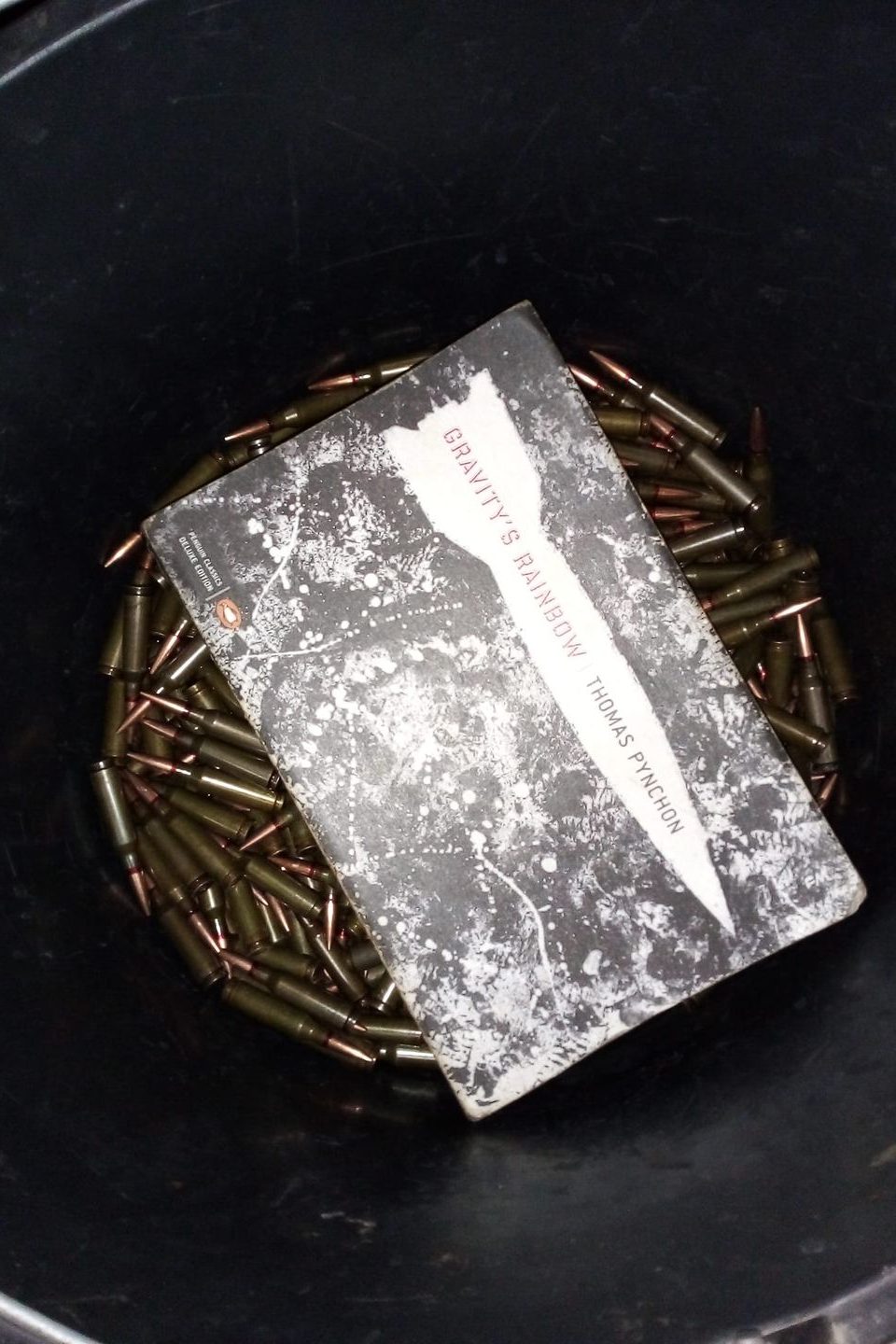
I learned from reposts that a very young man, Evheny Osievsky, has died defending Bakhmut.

I didn’t know him at all, but for some reason I went to his page.

In the trenches he was reading Pynchon. He loved Lou Reed and Bob Fosse.

I would so like to have talked to him (if he would have agreed).

Pain and rage.

Evheny Osievsky April 12 · A book impressively unsuitable for reading in the army. But what difference does it make if “In each case the change from point to no-point carries a luminosity and enigma at which something in us must leap and sing, or withdraw in fright. Watching the A4 pointed at the sky—just before the last firing-switch closes—watching that singular point at the very top of the Rocket, where the fuse is… Do all these points imply, like the Rocket’s, an annihilation? What is that, detonating in the sky above the cathedral? beneath the edge of the razor, under the rose?”

Source: Anna Narinskaya (Facebook), 29 May 2023. Translated by the Russian Reader


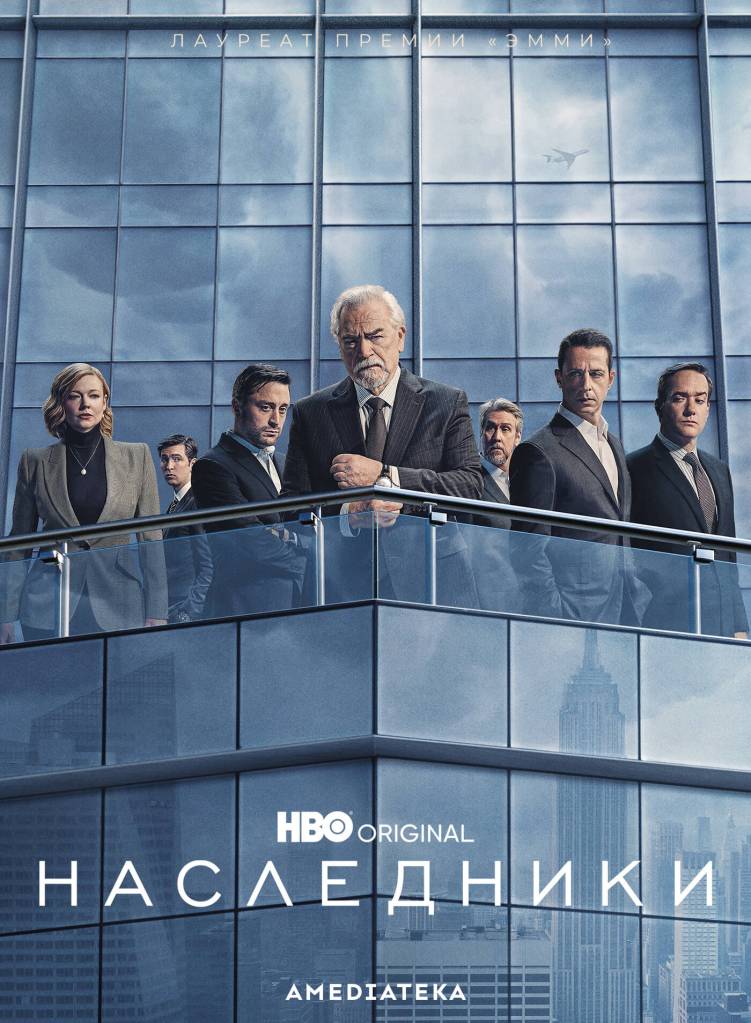
HBO and Russian streaming service Amediateka have made sure that wartime Russians are au courant when it comes to prestige television, as illustrated by this image from a circular I found in my mailbox the other day.

[…]

After witnessing the country’s crackdown on opposition activists and independent journalism — and the prosecution of hundreds of people who do not support the war or President Vladimir Putin — many emigres expect to encounter a dystopia when they arrive in Russia. 

The reality is more banal. 

“It’s corny, but the first thing that caught my eye after returning was that Twitter and Instagram don’t work without a VPN,” said Yulia, referring to Russia’s wartime ban on several foreign social media sites. 

“Moscow bars were packed with visitors even on Monday evenings,” added the 25-year-old screenwriter who returned in April after fleeing to Georgia last year. 

“Recently, my friend and I went out for a glass of wine. All the tables were occupied.”

[…]

Source: Kirill Ponomarev: “‘Almost Nothing Had Changed’: Anti-War Russians Risk First Trips Home Since Invasion,” Moscow Times, 28 May 2023