This year’s Berlin Film Festival is showing only one film from Ukraine: the documentary film Traces was tapped to represent the country. Traces tells the stories of women who survived rape and violence during the war in Donbas and Russia’s full-fledged invasion of Ukraine.
The Traces team on the stage of the Haus der Berliner Festspiele, 16 February 2026. Source: Berlinale
“I always wished one thing for my pupils: that they would never be forced to take up arms,” Liudmyla Mefodiivna, a teacher of Ukrainian language and literature, says in an interview with Deutsche Welle.
The elderly woman, who taught school for forty-five years, was tortured and raped by a soldier after pro-Russian militias arrived in her village. As he was leaving, her tormentor left a bullet on the table as a warning and a threat: “I’ll come back and kill you if you so much as peep.” The teacher’s story, along with [five] other stories of violence and horror, is recounted in the documentary film.
“The occupiers came, and the majority of my pupils rose to Ukraine’s defense. Many of them have been killed, while others have been taken captive or returned from the front severely wounded. It’s terribly painful to witness and survive this. Ukraine is now flowing with blood, and mothers weep over the bodies of their sons, husbands, and family members. Four men have been killed in our family alone, leaving behind young children,” says Mefodiivna.
She recalls that she was unable to talk about her experience for a long time. Her family insisted, though, that her testimony of the atrocity must be heard.
“They beat me, choked me, cut me, knocked out my teeth, and broke my ribs,” Mefodiivna says. “They robbed me of my health. Thanks to the support of these wonderful women I met, I was finally able to start talking. I began to tell my story. I want the whole world to know about the crimes Russia has been committing, about how it has tortured and abused Ukrainians.”
Directors Alisa Kovalenko and Marysia Nikitiuk, along with six of the film’s protagonists, have traveled to the Berlinale to present the film, a testament to their pain. All of them are members of SEMA Ukraine, an organization which helps women who have survived violence. As they sit down for interviews, it is particularly noticeable how nervous they are: their hands are shaking.
Olga from Kherson spent one hundred days in captivity with her son and her husband.
“I was ashamed to talk about [the Russians] did to me. Getting to know the organization was like a breath of fresh air for me,” Olga says. “Now we help other women, and men too. Because men have also been victims of sexualized torture, and yet this is hardly ever discussed.”
Seventy-two-year-old Nina is the most emotional during the interview. She almost immediately begins to weep as she recalls how the war first destroyed her home, and then her life.
“I thought I would have a quiet life in the village, planting trees and waiting for grandchildren. But then the tanks came and the earth burned. And then the monsters came. . . .”
Nina’s face is wracked by sobbing, shame, and grief.
The voice as a weapon
It is shame that prevents victims of violence from testifying against their aggressors, meaning that wartime victims of sexual violence are effectively ignored in the official statistics. When talking about civilian casualties, the focus is usually on those who have been killed, wounded, or taken prisoner.
“Those who have survived sexual assault, including in captivity, often go unnoticed and do not receive housing, medical, or mental health assistance from the state. Many suffer from stigmatization, and some cannot cope with what they have experienced,” says the SEMA Ukraine booklet.
The women are fighting to be heard.
“Our voices are the weapons that will punish the perpetrators,” the organization tells victims of violence.
“When I started talking about what I’d survived (this was before the full-scale invasion), I often encountered people seemingly switching off. When I would try to tell them about the most terrible things which had happened to me, their eyes would go blank. They would stop hearing what I was saying. It was like an internal defense mechanism, when what you’re listening to is too painful and unpleasant that you just don’t take on board what’s being said. I believe that this film can break down this barrier, and that after seeing it, people will no longer be able to shut their ears again,’ says SEMA Ukraine founder Iryna Dovhan.
The film opens with Dovhan’s story. In 2014, she was captured by pro-Russian armed groups in Donbas for aiding Ukrainian soldiers. After torturing and abusing her for several days, the pro-Russian militiamen tied her to a pole in downtown Donetsk, wrapped her in an Ukrainian flag, and hung a sign on her that read, “She is murdering our children.” The city’s residents visited the captive to hit, spit on, and insult her.
Dovhan was lucky in some sense: a picture of the helpless woman tied to a pole was taken by a western photographer covering the conflict in Donbas. The photograph was picked up by international media outlets, and Dovhan’s captors were forced to release her.
“I hope that the world will stand with us. I hope that the world will understand that we don’t need sympathy—‘oh, those poor women’—but a joint campaign to make sure this does not happen again in the future and the perpetrators are punished. Otherwise, evil will return again and again,” says Dovhan.
After what she survived, she found the strength to unite and support other women who had suffered.
How the film Traces came to be
The film’s co-director Alisa Kovalenko was also tortured and raped, but she found help at SEMA Ukraine.
“My journey to this film took twelve years. In 2014, I was captured in Donbas and suffered violence. For a long time, I couldn’t talk about it. When I first gave my testimony to human rights activists from the Helsinki Group, I asked, ‘Have you heard many stories like this before?’ They replied, ‘No. You are the first’. It was a shock. I knew there were many more of us, the people whom I had seen with my own eyes in captivity—both men and women.”
The filmmaker describes meeting other women who had gone through the same ordeal as a turning point.
“We sat down together for the first time and started talking. We experienced healing. We felt that we were not alone. And we began to break down the wall of silence step by step.”
It became clear that the traces of the atrocities had to be preserved, but for the filmmakers—Alisa Kovalenko was soon joined by Marysia Nikitiuk—it was extremely important to settle on the right narrative form to preserve the dignity of the victims and not traumatize viewers. Many things in the hours-long filmed accounts of torture, rape, and humiliation did not make it into the final cut.
“We wanted to shove all the worst things in the audience’s faces and shout, ‘Look what they’ve been doing to us!’ But we tried to strike a balance. This film is not meant to shock the viewer. It’s about dignity, about the light that is born in spite of evil. We learned to talk about it the right way, without retraumatizing either the protagonists or the audience. It’s a victim-centered approach,” says Kovalenko. “Some stories were left out due to limited running time—for example, how women in captivity were starved and would share one dumpling a day between four of them, or were forced to sing the Russian national anthem to be allowed to go to the toilet. But these testimonies exist—in books, in human rights reports, in memory.”
Laying the foundations for memory was the goal of the filmmakers. That is why, in Berlin, the women come onstage and recount their experiences once again to the audience, thus overcoming their pain.
“The war gradually fades into the background. Tragedy turns into statistics, and statistics become routine, and that is terrifying,” the filmmakers note. “Traces resurrects the names. They are no longer numbers, but flesh-and-blood women who look the viewer in the eye and speak. A tragedy should have names, not be turned into statistics.”
Kazakh authorities have granted Russia’s request to extradite activist Yulia Yemelyanova, a former employee of the late Alexei Navalny’s Petersburg office. According to the Russian opposition-in-exile’s Anti-War Committee, Kazakhstan violated its own protocols in making the decision to extradite Yemelyanova, as the Russian activist’s application for asylum is still under review in the country.
This past October, Kazakhstan’s Prosecutor General’s Office had guaranteed that extradition requests would not be considered until all administrative procedures related to obtaining asylum were completed. Yemelyanova’s defense intends to appeal the extradition decision to the country’s Supreme Court.
Yemelyanova was detained on Aug. 31, 2025, at Almaty airport while in transit to a third country. She has been held in pretrial detention ever since. In Russia, she is being prosecuted for theft (Part 2, Article 158 of the Criminal Code) in connection with a 2021 incident in which she allegedly stole a mobile phone from a taxi driver. Yemelyanova’s defense calls the case fabricated. It was sent to court in July 2022, by which time the activist had already left Russia.
Yemelyanova is the fourth Russian asylum seeker since late January to be handed a deportation decision from Kazakh officials. The others are Chechen Mansur Movlaev, an open critic of Ramzan Kadyrov; Crimean resident Oleksandr Kachkurkin, who is facing treason charges in Russia; and Yevgeny Korobov, an officer who deserted from the Russian army.
Dmytro Kulyk with his wife Oksana and daughter Elina. Source: Daily Beast
A Ukrainian dad escaped Vladimir Putin’s drone and missile attacks back home only to be grabbed by a band of ICE stooges in a Walmart parking lot in Minneapolis.
“I hoped I would find peace in America. I’ve done everything the government required, I don’t understand why I am behind bars,” Dmytro Kulyk told the Daily Beast from the Kandiyohi County Jail in Willmar, Minnesota.
The 39-year-old father was getting a pickup order at a Walmart in Maple Grove when he found himself surrounded by immigration agents last month. He’d been working as a delivery driver to make ends meet, while also supporting his family by doing roofing work.
Kulyk legally entered the U.S. in late 2023 along with his wife, 38, and daughter, who’s now 5. The family was sponsored by U.S. citizens as part of the Uniting 4 Ukraine program, a humanitarian program set up in April 2022 to allow Ukrainians fleeing Russia’s war to live and work in the U.S. on “parole.”
Once the initial two-year parole period expires, entrants can file for re-parole to remain in the country longer. That’s exactly what Kulyk says he did. His wife and daughter’s applications were approved. But his remained pending.
He said he was putting groceries in his car on Jan. 1 when he was approached by three ICE agents.
“I explained to the ICE officers that the war was killing people, that my wife had a disability, that it was violence, terrorism which we had escaped from but one of them began to laugh,” Kulyk told The Daily Beast. “I asked why he was laughing and I was told that he was pro-Russian, wanted Russia to win the war.”
DHS and ICE did not immediately respond to a request for comment.
He can’t understand why he’s been treated like a criminal. He did everything by the book, he says–paying taxes and filing his immigration paperwork on time, working multiple jobs to take care of his family. He had no criminal record to speak of.
His immigration attorney, Julia Bikbova, suggested his re-parole application may have intentionally been stalled to provide immigration authorities with a pretext to deport him.
“Our government, our Homeland Security, promised Ukrainians to protect them during the war. There are approximately 280,000 Ukrainians on U4U, Uniting for Ukraine program in the United States, including the Kulyk family,” she told the Daily Beast.
“My client did everything the government required him to do: on June 5 he applied for the re-parole and his wife paid $2,040 of fees for her and child’s granted applications. His wife and daughter have recently received their re-paroles but he has not, his application is pending.
“ICE detained him as ‘illegal’ and began deportation proceedings: This is a sick way of forcing a man with a clean criminal record to become unlawful in the U.S. by delaying the review of his application, which the very same authority had requested to file.”
Kulyk is now terrified he’ll be sent to the frontlines to fight Vladimir Putin’s troops if he is deported back home. He and his family endured relentless Russian attacks before finally deciding to flee their home in the Odesa region in 2023. When they saw ruins on their own street in Chornomorsk, they called their friends in Texas and asked for help, leading to their enrollment in the U4U program thanks to having U.S. citizens as sponsors.
Kulyk now can’t stop worrying about his wife, Oksana, and daughter, Elina.
“I am worried they can drag my wife and kid out of our home,” he told The Daily Beast, adding that he wanted to appeal directly to American authorities to make them understand he’d done nothing wrong.
“Please hear me: I came to America to escape the war, to pray in church and work hard. But now my heartbroken and sick wife has lost over 10 pounds since ICE arrested me on January 1. She’s been panicking, and my little daughter has been crying without me every night – this is unjust,” he said.
Oksana says she’s been too “terrified and lost” to leave home while her husband is locked up, afraid that immigration agents might return for the rest of the family.
“I am too scared to drive my 5-year-old daughter to school in my husband’s car. I’m terrified ICE will detain me and our daughter will end up alone,” she told The Daily Beast. “This is just as scary as the war in Ukraine, except now we don’t have Dmytro with us. Our daughter Elina cries herself to sleep with her cat plushie. She says the toy is daddy.”
Most Ukrainian refugees are women and children but some men have also left the country for various reasons. Kulyk was granted a permit to leave in order to care for a family member with a medical condition.
But Kulyk is not the only Ukrainian refugee to be swept up in the Trump administration’s controversial immigration crackdown.
Nearly 1,000 miles away, in Philadelphia, Zhanna was poring over messages in a group chat of 349 other refugees called “Ukrainians in Detention.” She joined the group last month, when her friends Andrii and Yaroslav ended up in detention. Although Bartosh has legal Temporary Protected Status, she stopped going to the office and now works from home.
“ICE rounds up men who buy tools or work in construction, so every day I call my husband, a construction worker, to check if he is OK. Even when the war started in Ukraine and we had to escape abroad, the same morning I wasn’t as stressed as I am now,” she told the Daily Beast. “In our chat I read that all arrestees are men, that at least five of them have signed up for self-deportation… but where is there to go now? Europe is also deporting Ukrainians. Our TPS is good until October but we want to understand, are we really legal in the United States, or is it time to pack up our suitcases again?”
Immigration attorneys count about 300 cases of detained Ukrainians across the United States and up to 150 refugees deported to Ukraine, Bikbova said.
“Most of the arrested Ukrainians are men, the majority of them have a clean criminal record but as we see in Kulyk’s case, they are equated to people who jumped the border, broke the law,” attorney Bikbova told the Daily Beast. “Behind every deported man, there are crying women and children, left without support. For some mysterious reason, we see male Ukrainian refugees being arrested and put on airplanes. If he gets deported, my client Kulyk will most certainly go to the front.”
Trump’s administration has also been deporting Russian asylum seekers. According to a report by Current Times, more than 50,000 Russians have fled the war and political repression to the U.S. since February 2022. Journalist Ilya Azar has been covering the deportations for Novaya Gazeta.
“They send out 40-60 people on each plane. There have been five airplanes,” Azar told the Daily Beast on Tuesday. The deportation planes transit to Russia through Egypt, and Russian security services meet the deported citizens. Azar’s report noted that “all men received draft notices” upon their arrival in December.
German authorities last week denied asylum to 47-year-old engineer Georgy Avaliani, who deserted from the front line in 2022. His wife and two children were rejected alongside him.
“There is no reason to believe that, upon returning to the Russian Federation, they would face a high probability of persecution or serious harm,” wrote an official from the Federal Office for Migration and Refugees (BAMF), despite Avaliani’s account of being tortured after fleeing the front.
Mediazona has reviewed BAMF decisions in Avaliani’s case and those of other deserters, discovering that officials are producing boilerplate documents that repeat one another almost word for word. In justifying the refusals, the German agency argues, for instance, that mobilisation in Russia was intended to “strengthen the armed forces” rather than repress dissent, and therefore cannot be considered political persecution. They further say that mobilisation has effectively ended because Vladimir Putin announced it—verbally.
When describing potential punishments for deserters, officials cite not the criminal code but an administrative article regarding failure to comply with military registration duties. They even specify that the maximum penalty is a fine of €302.
Most notably, in every decision examined, BAMF cites Mediazona’s own article from 2023, “Evading > refusing > fleeing. A year of mobilization in Russia through trials and verdicts”, as evidence that mobilised men face little more than a fine. That article noted that, at the time of publication, failing to respond to a summons did not yet carry a heavy penalty. While the situation has since changed—an eventuality the original article warned about—the original reference remains in the German files.
Relying on information from that article is also fundamentally flawed because BAMF applies it to people already wanted under serious criminal charges for desertion or abandoning their unit. In its rulings, the agency ignores the severity of these consequences, lumping deserters in with those who simply left Russia when mobilisation was first announced. This is exactly what happened to Georgy Avaliani.
A year in a refugee camp
Avaliani, an engineer, arrived in Germany with his wife, Oksana, and their two children on January 26, 2025. By then Georgy, who was drafted shortly after mobilisation began and later deserted, had been on a federal wanted list for over six months.
The family was granted asylum-seeker status without an initial investigation into the specifics of their escape. Like other applicants, they were placed in temporary housing: a small portacabin with two bunk beds at the former Tempelhof airport site. Their journey to Germany had been arduous. On January 18, Georgy, who had managed to leave Russia before his name appeared on the wanted list, met his wife and children in Bosnia. From there, they travelled to the Croatian border and requested asylum.
In Croatia, the asylum process is largely a formality; in practice, obtaining protection there is nearly impossible. Consequently, many migrants use it only as an entry point into the EU before heading to countries with functioning reception systems. The Avalianis did the same. After a preliminary registration in Croatia, they spent a week travelling to Berlin.
For nearly a year, the family was cramped in a camp with 2,000 other applicants. Finally, just before the start of 2026, they were moved to a hostel in western Berlin. But Georgy’s hopes of integration (he had been diligently learning German and hoped to return to engineering) were soon shuttered. On January 16, just two weeks after their move, BAMF rejected the entire family’s asylum claim.
Avaliani intends to appeal. If he fails, the family must leave Germany within 30 days or face deportation to Russia, where Georgy faces up to 10 years in prison for abandoning his unit during a period of mobilisation. Despite having clear evidence of persecution, the German authorities have ignored his claims.
The two escapes of Private Avaliani
Before the war, Georgy Avaliani was a well-paid engineer at the Moscow water utility, Mosvodokanal. He had no plans to leave Russia. Shortly before the full-scale invasion of Ukraine, he even enrolled in a seminary to pursue a religious education.
Georgy had never served in the army due to a heart condition. However, following the “partial mobilisation” announcement, he received a summons on October 6, 2022. At the time, his three children were minors; by law, as the father of a large family, he should have been exempt. The couple tried to contest the draft through the military enlistment office and the prosecutor’s office but failed. Georgy chose not to go into hiding, unwilling to abandon his family.
After a medical commission in November, he was sent to a training camp in the Moscow region and then to the occupied Svatove district of the Luhansk region. His unit was stationed in the village of Novoselivske, 20 km from the front line. After a few days, noticing the chaos within the unit, Avaliani decided to slip away, gambling that no one would notice his absence. He reached a nearby road and hitched a ride to the village of Troitske, a gathering point for mobilised men.
Part of a local hospital had been turned into a shelter for soldiers with nowhere else to go—some had lost their units, others were waiting to withdraw their pay, and some were recovering from wounds.
While staying there, Georgy met another mobilised soldier. They shared the same grim impression of the front and a desperate desire to return home. They found three others who felt the same and hired a taxi driver to take them to a spot where they could cross the border on foot.
After the driver dropped them off, the group split up. Along the way, Avaliani and his companion heard a helicopter. Georgy later told journalists and BAMF officials that the second group had been gunned down from the air. While there is no independent confirmation of this, Avaliani and the other man survived only to be detained in an abandoned village.
There is little doubt Georgy made this journey on foot; “Goodbye to Arms”, a project that assists deserters, thoroughly verified his route. Alexei Alshansky, a coordinator for the organisation, says the helicopter story is the only detail rights activists have been unable to confirm.
Following his capture, Avaliani was thrown into “a basement” for 10 days. He says he was beaten repeatedly and subjected to mock executions. Mediazona has previously reported on this location, known as the Zaitsevo Centre for the Detention of Servicemen, based on the testimony of another deserter, Sergei Savchenko. Volunteers from “Goodbye to Arms” identified the site in the occupied village of Rassypne by comparing testimonies with video footage.
From the basement, Georgy was sent to an assault unit. Two days later, an ammunition dump near their position exploded. Avaliani suffered a concussion and a heart attack. He was sent to a distribution point where he befriended the doctor issuing referrals. The medic sent him to a hospital inside Russia, hinting that he could just as easily head straight for Moscow instead of the ward.
Avaliani did exactly that. After reuniting with his family, he hid at a dacha in the Tula region. Occasionally, he ventured to Lyubertsy for medical treatment. As time passed he grew less cautious, but in mid-February 2024 military police arrested him outside his home.
He was sent to Kaliningrad in western Russia, the permanent base of his unit, to await his fate. When a commander learned of Georgy’s engineering background, he set him to work renovating his private dacha. Meanwhile, Georgy pushed for a formal medical commission. When it finally took place, the results were surprising: he was not only declared fit for service but his category was upgraded from “partially fit” to “fit with minor restrictions”.
In May, he was told to report for questioning regarding a criminal case. Georgy fled again. On the way to the commander’s dacha, he got a taxi and flew to St Petersburg. His wife met him there to hand over his passport. From there he flew to Belarus, then Uzbekistan, Georgia and finally Montenegro, where he was taken in by a Swedish artist for whom he helped build a swimming pool.
Oksana remained in Lyubertsy with the children. Weeks after her husband left, an investigator began calling her. Georgy was placed on a federal wanted list.
In September 2024, security forces raided the family home. They confiscated phones from Oksana and the children, returning them only two weeks later. The stress caused Oksana to suffer a nervous breakdown, leading to a month-long stay in a psychiatric clinic. The visits from military police continued; the last raid occurred on January 7, 2025. After that, Oksana finally agreed to leave Russia.
Georgy has spoken openly to the press about his escape. In Montenegro, he was interviewed by Current Time TV. The family crossed the German border accompanied by a journalist from Die Welt, which later published a detailed account. A report for the Franco-German channel Artewas also filmed by Russian journalist in exile Masha Borzunova.
The first six months in Germany were particularly precarious. Under EU law, the migration service could have deported the family back to Croatia, their first point of entry. To prevent this, Georgy sought help from the church.
The tradition of Kirchenasyl, or church asylum, began in 1983 after Cemal Kemal Altun, a 23-year-old Turkish activist, took his own life in a West Berlin court while facing extradition. His death moved church communities to unite to protect refugees from deportation. Every year, hundreds of people receive a reprieve through this practice. The Avalianis were among them.
“It is a semi-legal, more like a cultural phenomenon that works differently in different states,” explains Alshansky. “The church gives the applicant a document stating they are under their care, and the authorities leave them alone.”
Thanks to this intervention, BAMF could not reject the family simply because they entered via Croatia. They were forced to consider the case on its merits. They rejected it anyway.
BAMF’s motivation
During his personal hearing, Georgy Avaliani detailed his service and desertion. When asked what he feared if returned to Russia, he replied: “I fear for my life. Legally, I could be imprisoned for up to 20 years. But more likely, I will be killed before trial or in prison… I know for certain that if they find me, a subhuman death awaits me.”
His wife, Oksana, tried to explain the psychological toll the military police raids had taken on her and the children. The family provided lots of evidence: the mobilisation order, the wanted notice from the interior ministry’s website, a letter from a German humanitarian organisation, medical records and Georgy’s military ID.
In its rejection, the agency claimed the Avalianis were “apolitical people”, making it unclear why they believed the Russian state would view them as opponents. BAMF argued that if they were truly targeted, Georgy would never have been able to leave Russia so easily.
Having erroneously stated that Avaliani faced only an administrative fine, the official added that it was “not evident that in the applicants’ case, due to specific circumstances, a different [punishment] should apply”.
The document also asserted that officials found no evidence that mobilisation continued after Putin’s verbal announcement. Even if it were to resume, BAMF argued, it was not certain Avaliani would be called up again, given Russia’s 25 million reservists.
“Even taking into account that the applicant evaded mobilisation, it is not to be expected that… he would be subjected to the inhuman or degrading treatment required to grant asylum,” the decision stated.
The agency concluded the family could lead a dignified life in Russia. Despite the economic crisis, the official noted that people in Russia are still provided with food, social benefits and pensions. “It is not seen that… they would find themselves in a completely hopeless situation,” the ruling said. Their physical and mental health was also deemed insufficient to require treatment specifically in Germany.
A template for rejection
Alshansky attributes the BAMF decision to the wave of draft evaders who fled to Europe after 2022.
“A crowd of people rushed to claim asylum over mobilisation, some without even a summons,” he says. “I think they have exhausted the Germans to the point where, as soon as they see a Russian applicant and the word ‘mobilisation’, they just churn out this rejection.” Artyom Klyga, from the rights organisation Connection E. V., confirms that around 1,000 Russians have requested asylum in Germany due to mobilisation.
Alshansky points out that the rejection text clearly treats Avaliani as a mere draft dodger rather than a man who fled the front and is now a fugitive. He believes BAMF compiled the document from fragments of other cases without truly studying Georgy’s story. “I have compared this rejection with others. It is a template; paragraph after paragraph is identical. They just changed the personal details in a Word file,” Klyga agrees.
Mediazona compared several BAMF decisions regarding Russians who fled mobilisation. The similarities are striking. In the case of a young man who left after an attempt to serve him a summons, the agency also cited Putin’s words on the end of mobilisation. The description of the economic situation in Russia—including the detail that 15% of Russians live below the poverty line—is identical in both his and Avaliani’s files.
In another case involving a reservist who left on a tourist visa, the agency used the same argument: that mobilisation is about military strength, not political vengeance. That document also cited the same €302 fine.
The same arguments were used against Anton Sh., a deserter from Ufa whose story was covered by Sever.Realii. He had been tortured in the same Zaitsevo cellar, where guards pulled out almost all of his teeth. Despite his ordeal and the fact he is wanted in Russia, BAMF ruled he faced no danger because he had been able to leave the country freely.
Georgy Avaliani is now consulting with lawyers to appeal. “From my interview, it is perfectly clear that my situation is different [from other cases BAMF cited in the rejection]. This rejection shows that these people either cannot read or didn’t bother to try,” he said.
Even if his appeal fails, Georgy has no intention of returning. “I didn’t come here for tastier sausage, but to avoid dying in prison,” he says. “I had a good job in Russia. I will never reach that standard of living here; I’m not 20 or even 30 years old anymore. I didn’t travel far for a better life. I left solely because of persecution. Pity they don’t understand that.”
“Goodbye to Arms” estimates there are currently about 100 Russian deserters in Germany. For others planning to follow Avaliani’s route through Croatia, Alshansky recommends heading to other countries, such as Spain, where he says the bureaucratic logic remains more straightforward than in Germany.
Yevgeny Korobov, a former officer of the Russian army, stands in the middle of the room dressed casually in a black shirt and light pants. The 30-year-old has been living in Astana, the capital of Kazakhstan, for almost three years.
He says that during this time seven or eight other deserters have stayed in his apartment.
“I try as best I can to help people like me. You don’t need to pay me, just live here, that’s all,” he says. “Who else will help them? After all, there is something that binds us. We are all deserters. We all ran.”
Just four years previously, Korobov was fighting in Ukraine from February to May 2022.
‘The war has begun’
Korobov had always wanted to be in the military, although his parents were postal workers. He studied at a military college in his native Krasnoyarsk, before joining the Russian army as “a young officer full of enthusiasm to serve”. His contract was to last until 2023.
His enthusiasm soon soured, however.
“During service in the army you encounter injustice and madness, and you begin to become completely disillusioned with everything, with how things are in Russia,” he says.
In early 2022, Korobov was sent to military exercises in the Kursk region, near the Ukrainian border. “I didn’t believe there would be a war, but we went there with anxiety,” he recalls.
He describes what he saw after crossing the border into Ukraine: “We drove through populated areas. People were living their lives, someone was refueling a car, someone was drinking coffee, someone smoking. And we’re driving. The war has begun.”
His brigade moved towards the capital Kyiv, stopping in the Brovary district east of the city.
This is the area where the Ukrainian prosecutor’s office says that Russian soldiers had carried out war crimes. [Investigations by the] outlets Meduza and Radio Liberty allege that soldiers of the 15th Brigade, where Korobov was based, had set up a torture chamber in a post office in the Kyiv region. Journalists also reported on the execution of at least five civilians by the same brigade.
Korobov claims that he personally did not witness war crimes, but heard about them from others. He says that his job was to escort rear columns, navigation and route reconnaissance during the war, and that therefore he was constantly on the move.
His brigade was near Kyiv until the end of March, after which he left the region when Russian forces retreated following the failed attempt to encircle the Ukrainian capital.As he retreated, Korobov saw destroyed Ukrainian towns. He says this caused him “horror and disappointment”.
Korobov says that the columns ran into ambushes by several Ukrainian forces.
“We had to fire back,” he recalls. “What else could we do? Die? Am I a good person if I died? I also wanted to live and wanted all my soldiers to return. What were we fighting for? For our lives. The Ukrainians had an enemy — us. We had two enemies — the Ukrainians and our own commanders.”
The ‘war hero’
At the end of 2022, just before he finally deserted and left Russia for Kazakhstan, Korobov was ordered by his commander in Moscow to appear on Russian television.
The show painted him as a war hero who had been injured in battle.
“Senior Lieutenant Yevgeny Korobov, together with his group, was escorting a rear column,” said the host of a popular evening talk show on Channel One. “They ran into an ambush. They fought superior enemy forces. They destroyed at least 15 militants and enemy equipment. They themselves had no losses.”
Korobov calls the story, first reported by the Russian defence ministry, fabricated. He says his unit did run into an ambush at the beginning of March 2022 in the Chernihiv region, but that the extent of the ordeal was greatly exaggerated.
A still of “war hero” Yevgeny Korobov’s appearance on Russian TV. Source: smotrim.ru/BBC News Russian
“Fell into an ambush — yes. ‘Carefully prepared’ — hardly. Whether the enemy’s numbers were superior, I don’t know how many people were there or who was firing,” retorts Korobov.
After appearing in the media, he received a medal for courage for which Korobov says he “couldn’t care less”. “For an invented feat? For a war I didn’t want to take part in? I already didn’t want to serve in the army at all — I was just enduring until my contract ended.”
What Korobov does not dispute is that he was injured in Ukraine. During the course of the television interview, he is noticeably limping.
‘No way back’
Korobov was wounded in the leg in Donetsk in May 2022 after which he was evacuated and returned to Russia.
At the time, the command was issued to assault the village of Ozerne, near Lyman. “Only once were we able to get close to it; we were hit with everything possible, and during all the following assaults we couldn’t even approach,” says Korobov.
“At that point I already understood that there was no chance we would be allowed to go home. And that the only way to leave there was as dead or wounded.”
One day, their unit accidentally landed a drone on Ukrainian positions. Korobov says his unit of four people was sent to retrieve it and told by his commanding officer not to return without it — a mission that he describes as impossible.
“I understood that that was it, there was no way back,” he says. “And I opened fire on my own soldiers. I fired a burst into the ground. I wounded my guys. Then I wounded myself, shot myself. I provided first aid, and we crawled towards evacuation.”
This suggests that the injury that was reported and celebrated on the television program Let Them Talk was one Korobov inflicted on himself.
The BBC cannot independently verify Korobov’s account, although he provided photographs of his wounded leg.
Korobov and the remnants of his platoon were then evacuated from the frontline. He spent a month and a half in a hospital, then underwent rehabilitation.
Korobov wanted to serve out his contract in Russia until 2023, without returning to Ukraine. However, after the announcement of further mobilisation in September 2022, all contracts became indefinite. At the end of that year, he was informed that he would be sent back to Ukraine.
Looking for asylum
Korobov says that before leaving Russia he contacted the Go By The Forest project, which helps former Russian soldiers like himself who fear returning to the war in Ukraine. Activists then drew up a route for him to escape to Kazakhstan.
Soon he had packed a bag and left Russia.
A criminal case for desertion has since been opened against Korobov, and he faces up to 15 years in prison. Because of this, for the first months of life in Astana he hardly left the house.
Later, he found a job at a bar — illegally, because, as an asylum-seeker, he wasn’t permitted to work there.
“Kazakhstan has not granted asylum to a single Russian citizen yet, and I think it won’t,” says Korobov.
“We are waiting for a decision from European countries, especially from France, because at the moment it is the only country that has accepted Russian deserters,” he says.
Korobov understands the reluctance of Western countries to accept Russian deserters, but believes that this is one of the “effective ways of resolving the conflict: not only supplying weapons and imposing sanctions, but also giving Russians the opportunity to refuse to carry weapons, to refuse to fight.”
The BBC spoke to Artur Alkhastov, a lawyer from the Kazakhstan Bureau for Human Rights, who has been helping Russian deserters who fled to the country during the past three years. Part of the process is to verify the former soldiers, in order to prevent agents of the Russian security services from infiltrating the group.
He says verifying Korobov’s story was difficult and took time.
In his view, a Russian deserter today is in even greater danger than many other opponents of the war or political dissidents, because the Russian authorities see these former soldiers as traitors.
This puts Russian deserters in Kazakhstan and Armenia in a vulnerable position, because both countries host Russian military bases.
Korobov and other deserters can currently be protected from extradition to Russia because they hold the status of asylum seekers, but this does not protect them from the threat of abduction, Alkhastov explains.
Kenyan job seekers were lured to Russia, then sent to die in Ukraine. Source: msn.com
Hundreds of Kenyans have been recruited by the Russian military to serve on the front lines in Ukraine, according to former recruits and their families. Many have never returned.
Most men said they were tricked — offered civilian or “safe” security jobs in Russia, only to be handed a weapon and sent to the battlefield. Others were current or former soldiers who joined up as mercenaries, lured by promises of higher wages. The survivors described inhumane treatment by Russian commanders and harrowing scenes of slaughter.
While there have been isolated reports of Africans conscripted by Moscow to fight, The Washington Post uncovered an extensive clandestine pipeline stretching from Nairobi to the forests of eastern Ukraine. Russian recruitment in Kenya is more widespread, and more deadly, than previously reported, and the effort extends across the continent. The Post spoke to recruits or their family members in South Africa, Botswana, Tanzania and Nigeria, and it heard anecdotal accounts of fighters in Ukraine from eight other African countries, including Ghana, Zimbabwe and Cameroon — hidden victims of the largest European conflict since World War II.
The phenomenon is driven by two converging forces: economic desperation in Kenya, pushing young men to pursue vague promises of work thousands of miles from home, and the Russian military’s boundless appetite for fresh bodies, as it seeks to press its advantage in Ukraine without sending more of its own to die. In the middle are African recruiters, operating with direct or implicit help from political connections. Kenyan authorities have repeatedly urged young men to immigrate to Russia despite evidence that employment agencies are steering job seekers into combat.
This account is based on interviews with four Kenyans who fought in Ukraine — three of whom were wounded — and family members of nine other Kenyan recruits, including active-duty soldiers who traveled to Russia to join the military. Some came from specialized units run by military intelligence, or from the elite SPEAR team that guards the U.S. Embassy in Nairobi. The Post reviewed corroborating documents from the men sent to fight, as well as messages between recruiters and family members desperate for news of their loved ones.
Two of the injured Kenyans, neither of whom had military experience, said they were sent to fight in Ukraine with only a few days of training in a language they did not speak.
“They said: ‘Learn fast. We are taking you to the war,’” said the first man, whose hands were lacerated by shrapnel from a drone strike. He crossed rivers full of bodies on his first day, he said, and saw most of his party killed.
“I didn’t even see any people,” said the second Kenyan, who suffered burns to his head and hands in a separate incident. “It was just robots — drones — shooting at us.” Like others in this story, the men spoke on the condition of anonymity, fearing for their safety and for their fellow Africans still in the line of fire.
In November, Ukraine’s foreign minister said his government had identified 1,436 citizens from 36 African countries fighting for Russia.
“They are treated as second-rate, expendable human material,” Andrii Sybiha said in a post on X. Most, he added, “do not survive more than a month.”
Those who aren’t killed are often captured and imprisoned, survivors said, or wounded and prevented from returning home. Former recruits said those who refused to go to the front lines were threatened with arrest in Russia; others were deployed to deadly positions after their families talked to the media.
The Russian Defense Ministry did not respond to requests for comment.
The Kenyan government told The Post that it had learned of the recruitment schemes only through media reports three or four months ago, and that it was constrained by diplomatic norms. “Our ambassador [in Moscow] doesn’t have jurisdiction to leave his office and go into morgues,” said Hellen Gichuhi, Kenya’s secretary for diaspora welfare and partnerships. She declined to say how many Kenyans had asked the government about the fate of relatives in Russia, or how many Kenyans had been killed in Ukraine. “They are being recruited by rogue agencies,” she said.
Although some conscripts reported receiving salaries, most said their bank accounts were raided or frozen by recruiters. Many families said their loved ones simply went silent. A single WhatsApp group for relatives of missing Kenyans has nearly 100 members. Some have already had their worst fears confirmed.
Kenyan Grace Gathoni, 38, said her husband and the father of their four children, Martin Macharia, left for Russia on Oct. 21 after being promised a job as a driver or a cleaner. He was forced to sign a contract he didn’t understand, she said, and deployed to Ukraine.
When they last spoke on Nov. 19, she said, Macharia asked for her prayers. A week later, she saw his body on a Kenyan news bulletin.
Her 4-year-old keeps asking when he will return home, she said. The older ones know he’s not coming back.
The recruiters
Kenya, a longtime U.S. security partner in East Africa, is not growing fast enough to provide jobs for its population of 53 million. Young people struggle to find steady work; underfunded public schools and hospitals often lack staff and resources. Political graft is rampant.
President WilliamRuto has made exporting labor a central plank of his economic strategy, promising to send a million people abroad to work. Labor Minister Alfred Mutua visited Russia in June to highlight Kenyans who had found jobs there through an agency. Kenya’s prime cabinet secretary, Musalia Mudavadi, said in December that the two countries are discussing a labor treaty.
But The Post identified five Kenyan companies ostensibly recruiting for civilian jobs in Russia that instead funneled men to the front lines in Ukraine. Most prominent among them was Global Face, run by businessman Festus Omwamba, whom multiple families identified by name. Gichuhi, the diaspora welfare secretary, said most recruiters had been arrested and Global Face de-registered, although Omwamba was still at large.
Families also pointed to Edward Gituku, an associate of Omwamba who was arrested on human trafficking charges in September after 22 Kenyan men were detained while preparing to travel to Russia. Lawyer Danstan Omari, who initially represented Gituku, told The Post that his former client had admitted to sending more than 1,000 men to Russia, many of whom subsequently served in the military.
Eight Kenyans said they or their relatives had gone to Russia through Global Face, providing phone numbers registered to Omwamba, Gituku or other agency employees — and, in many cases, proof of payment to the recruiters. All said they were lured by the promise of civilian jobs, except for one man, a former Kenyan military recruit who said he knew he was being sent to fight.
The Post attempted to contact Gituku and Omwamba using numbers shared by families but was unable to reach them for comment. Global Face did not respond to emails seeking comment and appeared to have no physical offices in Kenya.
In April, Omwamba arranged for Oscar Khagola Mutoka, a 39-year-old veteran of Kenya’s U.S.-trained Ranger unit, and another local man to leave for Russia, according to Peter Shitanda Malalu, Mutoka’s cousin. Mutoka’s family last heard from him in June but kept sending messages; in January, they finally received a response from his phone. It was in Russian, from his former commander, saying he had been killed in August.
The message said “if we wanted the body, we can find it at the morgue in Rostov,” Malalu said. “We do not know if he was ever paid, but our family never received anything.”
The family shared that and other messages from the commander, including one in which he said that “compensation for the death of a soldier is granted to relatives who have citizenship of the Russian Federation” and in which he offered to bring Oscar’s body to Moscow’s airport. From there, he said, the family would be responsible for transportation costs.
In September, as Mutoka’s sister tried to trace him, she contacted a number registered to Omwamba. She received a reply saying he was in Russia and would follow up on Mutoka’s whereabouts, according to a voice note she shared with The Post. The last message from Omwamba’s number in January brushed off the family’s increasingly urgent pleas: “I do not want to be involved in your gossip,” he wrote on WhatsApp.
Another Kenyan woman, Risper Aoko Ouma, said her 39-year-old husband had flown to Russia in July on a flight arranged by Omwamba. A military veteran of 14 years, Duncan Otieno Juma was wounded almost immediately that month in a Ukrainian drone attack that killed another Kenyan and many other Africans, she said. He was then sent back to the front lines. She said she has not heard from him since August. When she asked a Global Face employee for news of her husband, she received a demand for money.
“How much are you ready to pay me?” the employee asked in a text message viewed by The Post.
More than a dozen African men were killed in October in the Kupyansk area of eastern Ukraine, Volodymyr Dehtyarov, a Ukrainian military public affairs officer, told The Post. Among the dead was a Kenyan man, whose passport he provided. The man’s family confirmed he had gone to Russia in September. They never heard from him again.
Kenyans are still making the journey, despite a growing awareness of their likely fate. A man who considered going to Russia but ultimately decided against it said two of his friends left on Dec. 27; immigration agents are watching out for men traveling to Moscow, he said, but it only means you have to pay an extra bribe.
The contract
One of the Kenyan recruits who made it back from Ukraine, a 32-year-old whose silver tooth flashed in a confident smile, now wears black gloves to hide the burns on his hands and a wool hat pulled low over burn scars on the back of his head. He said he paid Omwamba’s company and his employees a total of $390 for a civilian job in Russia.
Before he left, he said, he underwent a physical and met a man who identified himself as a member of the Russian Embassy in Nairobi. They gave him a contract in Russian to sign but refused to give him a copy, he said. He was told he’d be paid $2,650 per month for frontline work, $2,150 for a rear position away from the fighting and $885 for working back in Russia — still a small fortune in Kenya.
In August, he flew to St. Petersburg with three other civilians, all of whom were told they would work as security guards, and three former Kenyan soldiers. Despite having tourist visas, he said, they were taken by handlers to open accounts at Bank Saint-Petersburg, which is subject to U.S. sanctions. Then they were presented with new contracts — all offering frontline rates. None of them, he said, were given the option to stay in Russia.
“We said we need to translate this document, and we will sign it when we are satisfied,” the man recalled telling the Russian agent, but he was told there was no time. The men could either sign the frontline contract, the agent said, or repay the money they had spent to travel there.
“That’s what forced us to sign,” the recruit said.
A former member of Kenya’s armed forces now employed in the security sector said Omwamba’s company has recruited more than 50 military veterans whom he knew personally, including at least two who were working for a security company in the Middle East. Many had been killed, he said, citing accounts from his Kenyan contacts in Russia.
One recruit’s mother said he was a former military police officer who was working as a guard at the U.S. Embassy in Iraq when he was recruited by Russia. “He was my only son,” she said, showing a picture of a muscular man smiling on a beach. She paid nearly $3,900 to the recruiters to try to get him back, she said, but they took the money and he never came home. She doesn’t know if he’s alive.
Another person in the Kenyan security industry said he knew at least 32 active members of the military who had deserted to head to Russia. A woman said her 37-year-old brother, previously an inspector in the general service unit of the Kenyan police, had also made the trip, not realizing he was being recruited by the army. He sent an email upon arriving asking her to download a secure app so they could speak.
“He was in hiding,” she said. He was trying to escape, he told her. She never heard another word from him.
Michael Muchiri, a spokesman for Kenya’s police, told The Post that a key recruiter was arrested last year and that no serving officers had gone to Russia. The Kenyan militarydid not respond to requests for comment.
Sent to die
The 32-year-old recruit, along with 16 other Kenyans, a Guinean and several Cameroonians, undertook two weeks of training in shooting, navigation and fitness in Russian-occupied Ukraine, he said.
“We were told: ‘You are our machinery; you have to work like machines. … You must fight,’” he said. A fellow Kenyan nicknamed Mwas told him new conscripts all went in the same direction — “to the front line.” Mwas was killed shortly after they spoke, he said.
The man was among six Kenyans sent to fight; another six refused but eventually relented after they were threatened with arrest, he said.
On Sept. 16, his first day in combat, the 32-year-old, another Kenyan and three Russians were ordered to run across open ground to a forest. The area was mined, he said, and there were explosions. Their Russian guide shot at drones overhead and showed them how to navigate from dugout to dugout, he recalled, but the Kenyan began to lose his nerve when they came across a couple of Russian soldiers bleeding badly.
During their last sprint, he said, a drone fired explosives and bullets at them. The blast knocked him over and his backpack, stuck over his head, caught fire. One of the Russian soldiers was killed.
He was taken to a field hospital packed with wounded men, where he stayed for a week before being transferred by train to a hospital near St. Petersburg, he said. When doctors told him he was well enough to return to the front lines, he said, he hatched an escape plan. He asked that details not be divulged, as other injured soldiers might need similar contacts to get out, but he shared documents — including his medical report, Russian visa and a Russian military ID — to support his account. Before leaving the country, he managed to access his new bank account and withdraw about $5,000 from his promised signing bonus of $25,000.
At least, he said, he hadn’t come home empty-handed.
A 27-year-old Kenyan relayed a similar story: payments to Global Face staff, the offer of a civilian job and being taken by an agent to open a bank account after arriving in Russia. He had to sign a standing order giving the agency access to his account, he said. Later, when he tried to withdraw his money after being wounded, he was told his account was blocked. He provided a bank card, Russian military ID, medical records, photographs and other papers to support his account.
“The commanders said: ‘We have paid 1.5 million rubles to bring you here, so you’re in our hands,’” he said.
During his training in Rostov, he met about 30 other Kenyans, including a police officer from a paramilitary unit and a former soldier from the elite U.S.-trained long-range surveillance squad, he said — as well as men from Togo, Nigeria and Malawi.
“The trainers didn’t speak English. They just showed you how to shoot a gun,” he said.
In Ukraine, his group of 27 included five Kenyans, he said. They were ordered to sprint across open ground and cross two rivers, one swollen with bodies. Only he and another Kenyan survived the onslaught of Ukrainian drones, he said.
The recruit had injuries to his hands; the other man was wounded in the leg. They came across an injured radio operator, who messaged for help. None came. They spent another two days limping back to a Russian base.
The man said he was hospitalized with eight other wounded Kenyans, some South Africans and a Cameroonian. One had lost part of an arm; two had lost their legs.
“One man with no legs asked if he could go home,” he said, “and was told, ‘When your contract ends.’”
He escaped from the hospital, and then from Russia, he said. Since returning home, he has struggled to find work.
A third man who traveled to Russia in August said he and another Kenyan were given weapons but no training and ordered to carry heavy backpacks of rations to frontline positions in a Ukrainian forest.
When they reached the forward operating base, they were told to rest, the man said, then abandoned by the Russian soldiers they had resupplied. With no water, they drank from a river filled with corpses.
Contemporary listeners of Kino’s hit album Blood Type (1988) would have had no trouble identifying the war alluded to in the title track: the Soviet-Afghan War was still ongoing. The war was one of the causes of the Soviet Union’s sudden collapse in 1991. Unless it is stopped in short order, the Trump regime’s just-as-needless war against U.S. cities will lead to the collapse of the United States. ||||| TRR
The Soviet–Afghan War took place in Afghanistan from December 1979 to February 1989. Marking the beginning of the 47-year-long Afghan conflict, it saw the Soviet Union and the Afghan military fight against the rebelling Afghan mujahideen, aided by Pakistan. While they were backed by various countries and organizations, the majority of the mujahideen’s support came from Pakistan, the United States (as part of Operation Cyclone), the United Kingdom, China, Iran, and the Arab states of the Persian Gulf, in addition to a large influx of foreign fighters known as the Afghan Arabs. American and British involvement on the side of the mujahideen escalated the Cold War, ending a short period of relaxed Soviet Union–United States relations.
Combat took place throughout the 1980s, mostly in the Afghan countryside, as most of the country’s cities remained under Soviet control. The conflict resulted in the deaths of one to three million Afghans, while millions more fled from the country as refugees; most externally displaced Afghans sought refuge in Pakistan and in Iran. Between 6.5 and 11.5% of Afghanistan’s population of 13.5 million people (per the 1979 census) is estimated to have been killed over the course of the Soviet–Afghan War. The decade-long confrontation between the mujahideen and the Soviet and Afghan militaries inflicted grave destruction throughout Afghanistan, and has been cited by scholars as a significant factor contributing to the dissolution of the Soviet Union in 1991; it is for this reason that the conflict is sometimes referred to as “the Soviet Union’s Vietnam”.
Source: Wikipedia. The emphasis, in the last paragraph, is mine. ||||| TRR
[…]
The pretext for this war, of course, has always been a bogus premise. Yet federal agents treat it with the dogma of settled fact. But I keep wondering: How does the average CBP or ICE agent convince themselves of this? Even now, I can’t help shake the absurdity of anyone—Trump, Gregory Bovino, whomever—hoping to convince a thinking person, even themselves, to believe that places like Minneapolis have ever required an armed occupation. It’s against this genuine perplexity that I keep coming back to how these officers look and what mirrors might reflect back to them when they dress up for war.
“Anybody who’s had a fun evening on Halloween can understand what happens when somebody fully dresses up in paramilitary gear with flash-bang grenades hanging off of them,” said Peter Kraska, a justice studies professor at Eastern Kentucky University. “They’re going to walk out in public and say to themselves, ‘I am different from all these people.’ They become the enforcer. And when they look out and see the other, they see an enemy. The [paramilitary gear] gets them to react differently and think differently than they normally would.”
The role of military-style uniforms in helping the Trump administration create a theater of war where none exists cannot be overstated. It marks a stark evolution from the early days of Trump’s mass deportation plans, when plainclothed agents looked a lot like your best friend’s worst boyfriend—the guy who moved to rural Pennsylvania and discovered the basement levels of gun culture. Now, agents march into town in the costume of a foreign invasion.
Consider the camouflage now ubiquitous across the cities ICE occupies. At first, the pattern’s technical science might seem like a natural extension of the Trump administration’s increasingly illegal efforts to shield the identities of the men carrying out its vision of cruelty. But the theory breaks down when you look at the urban landscapes where ICE hunts down immigrants. Simply put, wearing camo in places like Lake Street or Hyde Park defies its central aim. If camo’s built-in purpose is to avoid detection, ICE’s embrace of it is the opposite: They want maximum visibility. They want to show they are soldiers. And they want to do so to make it seem reasonable, if only to themselves, to act like an invading army.
When I reached out to the Department of Homeland Security about the use of military gear among ICE agents, spokesperson Tricia McLaughlin responded with her own question: “Why do ICE agents wear tactical gear when they are facing rampant assaults and vehicular attacks? Is that the question you’re asking?” No, not really. But the snark with which McLaughlin replied was enough to grasp that questioning why DHS employs camo when lush woodlands do not exist in the cities its agents invade was irrelevant. They are dressing for the war they want.
What other way was there to interpret the coat of the former envoy of terror, Bovino? The commentariat spent much time deliberating its lineage, whether or not Bovino’s hulking olive garb was in fact true Nazi wear. (It turns out it was not.) But in roaming around Minneapolis in the fashions of Hugo Boss circa 1933, Bovino, who reportedly travels with his own film crew, succeeded in pushing the optics of war where it does not exist.
“What you’re seeing is the functionality of gear for legitimate, militarized purposes versus a type of postmodern, performative imagery,” Kraska said. “It makes them feel a particular way, to tap into those warrior fantasies and masculine drive of, ‘I’m a real man, I’m a real badass.’”
Federal agents stand outside the Whipple Federal Building in Saint Paul, Minnesota, on 8 January 2026. Photo: Octavio Jones/AFP/Getty/Mother Jones
The same holds for the men under Bovino. These are federal agents who wear hats intended for jungle warfare—again, in Minneapolis, where no such jungle exists—as well as blood-type patches, despite little evidence that they would ever be needed. After all, they are in Minneapolis, an American city with American hospitals, where doctors provide blood transfusions without the help of uniform instructions, the way a soldier on a remote battlefield might actually need. Furthermore, ICE’s own data strongly undercuts the notion that the job of an ICE officer is even uniquely dangerous work. In the absence of peril, federal agents turn to costume to legitimize their presence.
I am heating water for my coffee on a gas burner because there is no electricity.
Kyiv, the Kyiv region, Odesa region, and the Dnipropetrovsk region are in a total blackout — the result of Russia systematically destroying Ukraine’s energy system over the past months.
The Kyiv metro has stopped. There is no water anywhere.
At the same time, Russia’s State Duma Speaker Volodin, speaking on behalf of Russian deputies, openly calls for genocide — urging new strikes on Ukraine’s already devastated energy and heating infrastructure in order to cause mass civilian deaths.
This weekend the temperature drops sharply. Next week, it is expected to reach –30°C.
Meanwhile, ordinary Russians are celebrating on social media that Ukrainians are freezing.
We know this logic well. Their aspiration is simple: to make life here “like it is for them.”
In Russia, even without war, power outages in entire regions are normal.
In a gas-rich country, it is normal for many regions to have no gas at all.
This is exactly what the so-called Russian world aims for — to make us like them, if not through conquest, then through the destruction of our critical infrastructure and the physical extermination of Ukrainians.
The number of children in Immigration and Customs Enforcement detention on a given day has skyrocketed, jumping more than sixfold since the start of the second Trump administration. The Marshall Project analyzed data obtained by the Deportation Data Project and found that ICE held around 170 children on an average day under Trump. During the last 16 months of the Biden administration, ICE held around 25 children a day.
The Marshall Project’s analysis found that on some days, ICE held 400 children or more. The data covers September 2023 to mid-October 2025, meaning it does not include the surge of arrests from recent immigration enforcement operations in Minnesota. Nor does the data include children in the custody of the Border Patrol or the Office of Refugee Resettlement, where children are held without a guardian.
The Dilley Immigration Processing Center in Texas is the main facility for family detention. U.S. Rep. Joaquin Castro spent two-and-a-half hours inside Dilley on Wednesday, visiting parents and children. He said that the 1,100 detainees housed at the facility included a 2-month-old infant. “They are literally being treated as prisoners,” said Castro, a Democrat from San Antonio, in a live-streamed video. “This is a monstrous machine.”
In 2021, Biden largely halted the practice of family detention, and the Dilley facility, which had mostly housed families, closed in 2024. But the Trump administration revived the practice last year, and the facility, which is located about 75 miles outside of San Antonio, reopened.
The detainment of children by ICE has led to protests in recent weeks, both inside and outside Dilley. On Wednesday, state police used pepper spray on people protesting outside.
Immigration attorney Eric Lee was visiting clients at the facility on Saturday when staff abruptly told him to leave. Outside, he could hear a large group of children and women detained inside chanting, “Let us out.” Lee said he later learned that families inside the detention center had gotten news that people across the country were protesting the detainment of 5-year-old Liam Conejo Ramos, whose story went viral amid the backlash against the Trump administration’s recent immigration enforcement surge in Minnesota.
Javier Hidalgo, legal director at the Texas-based immigration advocacy group RAICES said he’s seen many young children like Liam in Dilley. “That’s very much the norm,” Hidalgo said. “That’s what the government is spending taxpayer money on.”
“Every single day that a kid is in a place like this, they deteriorate,” Hidalgo said. “I’ve seen [them] withdraw. They lose weight; they just get physically worse.”
Children being detained with their families as part of immigration raids has become a common occurrence across the country. According to school officials in Columbia Heights, Minnesota, four children, including Liam, have been detained from their district during recent raids.
A 7-year-old in Portland, Oregon, was taken from a hospital parking lot in January with her family, after her parents took her to the emergency room, according to Oregon Live. As ProPublica reported, a 6-year-old boy in Chicago was detained with his mother in a large apartment raid during “Operation Midway Blitz.”
The Marshall Project spoke with three different lawyers representing children who were held with their families at Dilley. They said their clients were often taken into detention during in-person check-ins and had pending cases that could result in them remaining in the country legally. The lawyers believe their clients were detained not because of any danger they posed, but because the Trump administration is trying to deport as many people as possible.
“They’re probably the easiest catch for a lot of immigration officials,” said Veronica Franco Salazar, a Houston-based immigration lawyer.
In court documents, families have described horrific conditions while detained with their children in Dilley. They reported moldy, worm-filled food and foul-tasting, undrinkable water. With little for children to do, some resorted to playing with rocks. Parents worried about the psychological toll of detention, describing children hitting themselves in their faces or wetting themselves despite being potty-trained.
During his visit, Castro said that he heard many families talk about the psychological toll of detention. He spent half an hour with Liam, and said Liam’s father, Adrian Conejo Arias, told him Liam has been depressed and sleeping a lot. Liam remained asleep in his father’s arms during the visit with Castro. Arias said Liam had been asking about his classmates and the bunny hat he was wearing when detained. The congressman said he told the father that children at Liam’s school were still saving a spot for him at his desk.
CoreCivic, the private company running the Dilley facility, declined to answer a detailed list of questions. “Our responsibility is to care for each person respectfully and humanely while they receive the legal due process that they are entitled to,” Brian Todd, a public affairs employee at CoreCivic, told The Marshall Project in an emailed statement. Todd referred all questions to ICE, which did not respond to emails.
Kristin Kumpf, coordinator for the National Coalition to End Family and Child Detention, explained that the public may see videos or photos of the moments people are taken from their homes or snatched off the street, but there is less attention to the conditions children endure in the black box of detention.
“It’s only a matter of time before we see a child die within Dilley or another facility,” Kumpf said.
Hayam El-Gamal and her five children, including 5-year-old twins, have been locked inside Dilley for eight grueling months. Lee, who represents the family, said they’ve received poor medical care and are suffering from psychological stress.
“They’re calling me crying every day,” Lee said. “It’s an unmitigated horror show, and there’s no other way to put it.”
El-Gamal’s husband, Mohamed Sabry Soliman, is facing charges for attacking people at an event in Colorado supporting Israeli hostages in Gaza. At least 13 people were injured in the attack, and one person died, according to prosecutors. Soliman told detectives his family knew nothing of the attack, according to court documents, and an FBI agent testified they were not involved. The family’s lawyer said they are being unfairly punished for crimes they had no part in.
Lee recounted how one of El-Gamal’s children had appendicitis while in detention and “was left writhing on the floor of the facility screaming and in pain.” Lee said facility staff just gave him Tylenol, and it was only when he started vomiting that the child was taken to urgent care.
“Why is this happening to us?” El-Gamal’s eldest daughter, 18-year-old Habiba Soliman, asked in a handwritten statement provided to The Marshall Project by Lee. “It’s very easy to see the truth about this place and about us. The people need to be truthful to themselves and follow the facts.”
Lee said he believes ICE is retaliating against Habiba Soliman for speaking out about her family’s long detention. She was recently moved to a different area of the facility. Lee said the timing of the move, many months after her 18th birthday, but shortly after she spoke to the press about her long detainment, suggested it was punishment. ICE did not respond to questions about the reason for the separation. Lee said she has faced threats of being moved to a different facility altogether if she didn’t behave.
“I will never forget the look of fear and helplessness on my mother’s face as she watched me being taken away and couldn’t do anything to prevent it,” Habiba Soliman wrote in her statement. “We need everyone to step up and say that detaining families for indefinitely long periods should be illegal.”
As temperatures in Kyiv plunged to -20°C (-4°F), Russia intensified its attacks on Ukraine’s energy infrastructure, leaving millions in total darkness and biting cold. Though Russia has tried this strategy before, this winter is different. The scale and relentlessness of these attacks have reached unprecedented levels. Many Ukrainians are now forced to survive winter without steady heat, without light, without the basic infrastructure that makes normal life possible.
While this crisis unfolds, international coverage has been limited. We want you to see what’s actually happening on the ground.
Our journalists are reporting these stories while living them — and so is everyone else in Kyiv, rushing to charge phones during brief power windows, cooking on camping stoves in their kitchens, huddling under blankets in apartments that feel like freezers. For the elderly, it’s worse. When elevators stop working, they are stuck in their own homes, unable to reach food or medical care. What was occasional last winter is now constant.
To light the darkness
Building on our “I Stand with Ukraine” T-shirt, we’re launching I Stand with Ukraine Through Darkness — available as a T-shirt and hoodie.
From January 20 through February 3, all proceeds from this collection go to supporting the charitable organization Starenki, which helps older people living in vulnerable situations.
This winter Starenki’s volunteers provide a lifeline by:
Delivering essentials — Food and hygiene kits for older people, especially those who are physically unable to navigate stairs to reach shops. When high-rise buildings are left without power, elevators become inoperable — effectively trapping seniors in their apartments.
Providing emotional aid — Companionship and conversation to combat the profound isolation that comes with darkness.
As Ukraine enters its fourth winter of war, international attention is fading. The reality of these freezing blackouts is slipping from the headlines.
By wearing this design, you do more than help support the elderly in Ukraine — you raise awareness of the situation and keep Ukraine from slipping from the world’s attention.
Share this. Wear this. Spread the word.
Source: TheKyiv Independent Store email newsletter, 20 January 2026. I have purchased one of these t-shirts and would urge you to do so as well. ||||| TRR
[Editor’s note: On January 21, Kyiv’s Mayor, Vitali Klitschko, urged the city’s inhabitants to “leave if you can.” 600,000 have already left these last two weeks since Russia intensified its attack on the city’s energy infrastructure. The mayor says that the constant Russian attacks are pushing the city towards “a humanitarian catastrophe.” Temperatures are plunging to as low as –18°C (0°F). According to Klitschko, “the situation is critical with basic services – heating, water, electricity. Right now, 5,600 apartment buildings are without heating.” This morning, President Zelenskiy said that one million people in Kyiv are now without power. The city’s authorities have now have been forced to drain the city’s central heating and water system to prevent pipes from freezing and bursting. A couple of days ago, Ukraine’s Minister of Energy, Denys Shmyhal, said that “there is not a single power plant in Ukraine that has not been hit by the enemy during the war.”]
Today we received this from a dear, long-term friend in Kyiv:
BY OLEKSIY KURKA, resident of Kyiv, works in diplomacy and policymaking
I’ve written about Russian attacks so many times that the words no longer convey any new meaning, muted by repetition. But friends abroad cared to check in with me after last night, so here is an update.
As of this hour, only a fraction of the capital has electricity. I’ve been without power for about 24 hours now; others for much longer. It isn’t clear when it might return.
The heating is also off. The building is gradually cooling down. Soon I’ll be breathing out vapour, like some of my friends. Those living through ‘no-heat’ situations for longer – such as those near the front lines – are now camping out in their flats. It’s 5-7°C warmer inside a tent inside your flat.
The attack caused massive disruptions to public transport. Segments of the Metro I use to commute were closed due to electricity shortages. Many, myself included, had to stay and work from home.
My portable power station is gradually running out. Not having a predictable source of power is beginning to worry me more. I can predict one thing: our foes will stop at nothing to inflict more suffering on Ukrainians – while they can.
On a brighter note, I found and successfully installed a solution to the lack of internet at home. It’s an external antenna that catches and amplifies signals from nearby towers. Even during prolonged outages, I have about 15-20 Mbps, which is brilliant.
As for the power, I was inspired by my neighbour who took a mini petrol generator out to the courtyard and recharged his upper-floor flat via an extension lead. Now I fancy having the same system – and solar panels, for when there’s more daylight. Anything that minimises energy dependence is a win.
I went for a walk on the slippery, ice-clad streets of my district in an off-grid darkness that once again revealed the starred heavens. Most businesses and shops are running off generators, their light bulbs making up for the absence of proper street lights, coupled with the headlights from cars. This is how we see. That, and the torches in our hands.
Earlier today, we chatted with a visiting colleague who asked many questions about life these days. I made the point that a war of attrition forces things upon you that you’d otherwise never have thought you’d need.
But when it happens a few times, you spot the trend and start thinking even more creatively about what is yet to come. Do I need to consider satellite internet now, or are the mobile towers maintained well enough for me to avoid rushed decisions and unnecessary costs? Thinking ahead and learning from others makes the unpredictability a tiny bit more predictable, as it were.
Do I plan to leave Kyiv because of these ‘inconveniences’? I said a long time ago that there are two conditions for me to make such a significant decision: when there is no drinking water, and when the prospect of Russian occupation looms larger.
The first is not yet a reality for Kyiv, and I hope it never will be. The latter is no longer a reality, thanks to the Ukrainian army and our partners who provide Ukraine with air defence, long-range, and other weapon systems.
One more thing: Even if I leave the place, it’s only to come back.
The sun floods the room like a Christmas postcard: snow-covered trees, silence, a fairy tale.
But it ends at the windowpane.
I stand in the middle of the room in two sweaters and a robe, clutching a cup of hot tea as if it could save me. The thermometer indoors reads +9°C (48°F). It’s the third day without heat, and every hour the cold settles deeper into the walls.
In my arms is my six-month-old son, Ustym. I hold him tighter than I should, trying to give him my warmth. And suddenly it hits me: I don’t know how to protect him from the cold.
I can endure it. He can’t.
I cry quietly so he won’t hear. The tears on my sleeve are warmer than the air in the room.
I pack to leave the city.
There, the power may go out—but there is warmth. What a strange word now. A luxury. A reason to flee your own home.
I thought this fear was mine alone. But when I wrote to my colleague Nastia, I realized the cold does not discriminate. She has no child, but the same thermometer, the same сold walls, and made the same decision to leave.
As a result of Russia’s prolonged strikes on Ukraine’s energy infrastructure, including power plants and substations, large parts of Kyiv were left without heating for several days as temperatures dropped to –15°C — the lowest in recent years. During the January 9 attacks, damage to the power grid led to heating outages in approximately 6,000 apartment buildings, nearly half of the city, demonstrating how winter has become yet another front in the war.
Kyiv Mayor Vitalii Klitschko called the situation the most difficult for the capital since the start of the full-scale invasion and urged residents to temporarily leave the city, despite the opening of hundreds of heating centers. 600,000 Kyivans have fled the capital since January 9. For many, leaving the city is no longer a matter of comfort but one of survival.
It is a reminder that in times of war, even a major city can turn perilous overnight, and true security depends not only on the absence of missiles but on access to basic needs like heat, electricity, and water.
Our apartments turned into cold traps we had to escape. We came together to share this strange, frightening feeling, when every minute at home feels like a test, and survival becomes a daily struggle.
Nastia: On the night before the major strike that left us without heat, January 8, I took a hot shower for the first time in a week and had uninterrupted electricity for the whole evening.
Restoration work on hot water and heating had been underway in my building before, we always had problems with heating and water.
I felt like a human being again — someone who, after work, can properly warm up in the shower, instead of heating up a kettle 5 times.
After the attack, I was back to not having water, heating and electricity. When I woke up under two blankets I felt powerless again: I already knew I would cancel the plans I had that evening because of how exhausted I felt.
I didn’t even try to catch the internet in my apartment, because I knew I’d fail. I just washed my face under freezing water and went to the cafe nearby to work.
Later I was riding the metro and barely held back tears. Not even because of the cold, but because I would yet again have to spend my evening in a dark apartment all alone. Such evenings just gnaw at me, creating a deep sense of isolation. I know that when I set foot in the apartment nothing will be waiting for me there, except darkness, silence, and piercing cold.
“Please, come home. Don’t be there alone in the cold,” my parents told me. My dad suggested I go with his friend, who was also planning to leave Kyiv on January 9. I was hesitant at first: I had friends, plans, and work to do. But if I had been able to find ways to function with blackouts and distract myself before, this time I just couldn’t find the strength to bear it.
Myroslava: During the latest Russian attack on Friday, January 9, we immediately lost both electricity and heat. The boiler in the building runs on electricity, so it was clear that if there’s no power, there won’t be heat either.
At first I was calm; this was not the first time, and we’d get through it. But then Mayor Klitschko urged people to leave the city for the weekend, and that was alarming. The apartment was getting colder and colder.
My husband and I decided to go to his parents’ village to wait it out for the weekend, hoping that heat would return soon. On Sunday evening, we returned to Kyiv: heating had already come back in parts of the city. But not in ours. In the morning I took Ustym to my parents, where it was warmer, and went to work.
I dressed him in layers and held him close to share my warmth.
He seemed fine. It was I and even more so his grandparents who were truly scared.
I knew that we would only leave the Kyiv apartment at the most critical moment, when we had no strength left to endure. That’s exactly what happened on the last two nights–not only because my son woke up frequently, but also because of the cold, in which it was impossible to sleep. I was in warm pajamas, under a duvet and three blankets, surrounded by cats – and it still didn’t help.
I left for the Kyiv region on January 13th for my in-laws’ house, which has its own heating. The situation was so bad I couldn’t even wait for my husband to finish work. The frost had turned the roads into solid ice, and with darkness falling early, driving was dangerous. So my father-in-law drove out to pick up Ustym and me.
Nastia: As I was leaving Kyiv it was darker than usual – the blackouts had taken over the capital. Sorrow and the shame of leaving my own home kept me quiet and bitter in the taxi, but it changed when I met with my dad’s army friend; he cheered me up with conversations about life. The roads were covered with ice and snow.
That evening I got a message from my friend.
“I’ve never regretted more… the day I moved to Kyiv,” she said with an exhausted voice.
I often thought the same, but with the same thoughts I realized it was the best decision – it’s the city where I met most of my great friends, found work I love, and made plenty of great memories I want to keep until my last day.
For now I have to witness it from social media and news, or from my friends’ messages.
Energy workers are active around the clock. And they have been working under tremendous pressure for months. The brutal weather makes it much more difficult – just imagine working in the frost night and day, breaking through snow and ice to repair something, while Russia continues destroying more and more facilities.
DTEK, the country’s biggest private energy firm, posted on Threads: “It’s really difficult for us now. The damage from new big shellings is very serious. This was compounded by the severe weather we could all see outside our windows — the harshest winter in many years.”
Myroslava: The thought that we had to leave Kyiv hurts the most; it breaks me from the inside. I always saw the capital as a fortress, a place that must hold out under any conditions. In 2022, many Ukrainians stayed here even when the Russians stood on the outskirts of the city, because they believed Kyiv would be defended to the end. Now people are leaving not because of a military offensive, but because of the weather.
This is exactly what Russia wants – to make Kyiv unlivable, to break Ukrainians’ morale and force concessions. And they’re partially succeeding: home has stopped being a safe place.
That’s why visiting stores have become one of the most painful things for me. Supermarkets are a kind of marker of stability, an indication that tomorrow will still come. When they are open, it feels like life is still holding on.
But a few days ago, I saw a message that supermarkets in Kyiv were starting to close, including one near my home.
The store is closed, and a sign to that effect hangs on the entrance, Kyiv, January 13th, 2026
It stayed open at the start of the war, through heat, cold, and the blackouts of 2023.
And this time, it didn’t survive.
Nastіa: Leaving was difficult not only because it carried a sense of shame for giving up and escaping, while my friends and lots of other people had to stay and endure the cold.
But also it was hard to walk away from the places I love, not knowing how soon I’d be able to return. I don’t know how my apartment is now, or my favorite cafés and stores where I could go from my dark apartment to recharge my phone a bit.
I didn’t spend much time in the cold and blackouts after the latest attack, but it didn’t take long to feel its full effects. I was barely able to get myself out of bed; the indoor temperature had already plunged to about +10°C / 50°F.
And the rest of the time I spent dragging bottled water from the shop to clean up and take a shower before I could leave. At that point, I had no running water at all.
Myroslava: I miss my husband terribly, as he stayed in our Kyiv apartment. He works in Kyiv, and with this weather, regular trips aren’t realistic.
We’ve always done everything together, and now it feels like I’m without my main support. We text each other constantly. I send him photos of Ustym, and we wish each other good morning every day, trying to keep that closeness alive.
He has to keep the bathroom warm so the pipes don’t burst, otherwise the whole building could lose heat for the rest of winter. At –15°C outside, it’s frightening. He uses whatever he can: an oil radiator when there’s electricity, a gas heater when there isn’t.
Our cats, Stuhna and Sherri, stayed in the apartment. I constantly worry that they are cold, curling up and searching for any bit of warmth. They need to be fed and given water, and the rooms need to be kept warm. Every time I think about them, my heart tightens, because I left and they stayed behind.
The war has torn families apart on so many levels, and not just on the front lines. This winter brings a painful new wave of uncertainty and separation – endured not because people are giving up, but because they are forced to protect what matters most.
Editor’s note: The Counteroffensive team will continue to report from Kyiv, but we support any member of their team that wants to go back to their hometowns to be with their families.We also offered to take any member of the team to Warsaw for a week, at least until this blows over. They all refused to leave their country. I hope this shows, in some small sense, the grit, determination and courage of the small team I’m privileged to lead.
Brandon Siguenza (center) and his wife, Julia Rose (left) in happier times. Source: Facebook
Good morning,
My name is Brandon Siguenza, and I am a US citizen from Minneapolis. Yesterday, while doing legal observation, ICE stopped their cars to harass my friend and me. They sprayed pepper spray into the vent of our vehicle. We held our hands in the air and told them we were not obstructing, that the car was in park and they were free to drive forward and away. There was no active immigration raid. They returned to their cars, and drove forward a bit, then decided to stop again. They surrounded us, smashed the windows of our car, opened the doors (they were unlocked), ripped my friend and I out of the car and arrested us on charges of obstruction.
I was put in an unmarked SUV, separated from my friend. As I was put in the back seat an ICE agent tore the whistle off my neck and said “I’ll be taking this, I might need it later.” My phone was knocked out of my hand while being arrested. As we drove away I asked the driver and the passenger if they wouldn’t mind buckling my seatbelt, as they were driving erratically. I was ignored. I asked them if I could have the handcuffs loosened, as I was losing circulation, and was told no. At one point the passenger realized his own driver’s license was in the backseat next to mine, and tried to surreptitiously grab it without me seeing it.
We were taken to the Whipple federal building, where I saw dozens of brown people being processed in an unheated garage. I was frisked, told of my charges, and saw buses and vans being prepped. I later learned that these were being filled with detainees and driven to the airport for deportation. As we were led in, I noticed that the building was very busy. I got the impression that one of the 2 agents bringing me around was being trained. At multiple points throughout my stay, government agents were unable to open doors, not sure where they were meant to be going, and overall confused and overwhelmed. They couldn’t figure out how to use the building phones, or complained about a lack of cell service preventing them from checking the internet or making calls.
The people in the cells were extremely scared. We heard people screaming “let me out!”, crying, wailing and terrified screams. There were cells with as many as 8 people. I have no way of knowing how long they have been there, if they were allowed any contact with the outside world, or if they were being brought food or water. Most people were staring at the ground with almost no energy. I was not allowed to talk to anyone imprisoned. I distinctly remember seeing a desperate woman. She was staring at the ground with her head in her hands crying, hopeless, while her friend or family member sat on a bathroom seat observed by 3 men.
My friend and I were put in an area for “USCs,” which we eventually learned meant US citizens, separated by gender. We were imprisoned for 8 hours, during which my friend was never allowed a phone call. I was allowed to call my wife and tell her where I was. During my interview with Special Agent William and Special Agent Garcia, they asked me to empty my pockets. When I pulled out gloves, Agent William said those were meant to be taken when I was processed, and complained about having to fill out the form again. He frisked me once more, where he found glass in my pocket from when our car window was shattered. He filled out the form listing my personal items again, but put the wrong date. I was read my rights, I pleaded the fifth and was led back to my cell.
Food, water, and bathroom breaks were extremely difficult to acquire. I would ask over the intercom provided in the cell for a bathroom break, be told someone was on their way, then ask again 20 minutes later, be told someone was on their way, wait another 20 minutes, etc. Eventually they either turned off the intercom or it stopped working, because no one would respond. I could get water and bathroom breaks by pounding on the glass when someone happened to walk by and beg them directly. Hours would go by without anyone checking on us. I am vegan and the only food they offered were turkey sandwiches, fruit snacks with gelatin, and granola bars with honey. I eventually ate a granola bar out of hunger.
I was in the cell alone for between 1 and 2 hours, then another man was put into my cell, whose shirt was ripped open from his arrest, and an injured toe, who was carried aggressively into an unmarked car during his arrest. After about 4-5 hours, another man was brought in who had a cut on his head from his arrest. He told me he was tackled by 4 or 5 agents during his arrest. At no point was he offered medical assistance.
Later I was told that a lawyer was here to see me, and I was able to speak with him in a visitation room. The special agent told me that the door could not be closed all the way, so it was cracked during my interaction with my lawyer. I got the impression that they were not used to having lawyers present, and were trying to follow procedure as best they could. I asked an agent if the other detainees were allowed lawyers and was not answered.
At one point, 3 men from the department of Homeland Security Investigations brought me into a cell. They insinuated that they could help me out. After inquiring several times what exactly they meant they finally told me that they could offer undocumented family members of mine legal protection if I have any (I don’t), or money, in exchange for giving them the names of protest organizers, or undocumented persons. I was shocked, and told them no.
Finally, after hours of detention, I was told to follow an agent. At no point was I told whether or not I was being charged, or where I was going, but I was led out of the building. I asked if I could use a phone to call my wife to pick me up, and was told I could not. After pleading for several minutes eventually Special Agent William let me use his phone to call my wife. As I was escorted off the property by government agents, I was told to turn right. I was escorted to the protest area, where 5 minutes later, tear gas was deployed and I was struck by a paint ball gun. I was not protesting, I was simply being released without charges after an 8 hour detention. I was on the other side of the street, as instructed by the agents that released me and the agents shouting orders over a bullhorn. A passerby who was tear gassed was panicking and having an asthma attack, so I helped her find a medic to get her an inhaler. I used a stranger’s phone to co-ordinate pickup, and was picked up by my wife.
During my detention I knew that I was being released. I knew that as a citizen of the United States I have legal protection. The hundred or so other people being detained had no such protection. At this time I don’t need your help, it is the families that are being separated, abused, terrorized, harassed and killed that need your help. If this is happening to me, an American citizen born in the United States, then what is happening to the people in here that have no one calling lawyers on their behalf? That have no constitutional rights to due process? What is happening to the people that they will never be released to see their families, go to their jobs, or walk through their city ever again?
Please take care of yourselves, your family, and your community. I am safe and healthy, if you feel compelled to help, please offer your help to the Immigrant Defense Network at https://immigrantdefensenetwork.org/. If you know someone detained by ICE, call or text CAIR-MN at 612-206-3360 for 24/7 legal intake.
KARE 11, “Taken by ICE & Detained | Breaking the News Plus”
What is it like in the Minneapolis ICE Detention Center? Patty O’Keefe & Brandon Siguenza join Jana to discuss their experience being detained for over 9 hours.
Ukrainian, abducted as a teenager from occupied Donbas in 2019, sentenced by Russian court to 22 years (Kharkiv Human Rights Protection Group, January 9th)
‘Russian world’ in occupied Luhansk oblast: no heating and deliberately cut off from mobile telephones and Internet (Kharkiv Human Rights Protection Group, January 8th)
Desperate plea from Russian prison: Ukrainian political prisoners need to be freed now, not after ‘peace deal’ (Kharkiv Human Rights Protection Group, January 7th)
Even Putin supporter debunks Russia’s lies about a ‘Ukrainian drone attack on civilians’ in occupied Khorly (Kharkiv Human Rights Protection Group, January 5th)
No answers & questions to Red Cross after Russia holds 64-year-old Melitopol journalist prisoner for third year (Kharkiv Human Rights Protection Group, January 5th)
Ukrainian leaders in UK call for Kemi Badenoch to sack David Wolfson, Russian assets to be used to aid Ukraine (USC, January 8th)
Upcoming events:
Thursday 15th January, at 7pm, Russia’s War On Ukraine, Us Strategy Review – Stopping The Authoritarians, organised by Ukraine Solidarity Campaign Scotland, register here.
Thursday 5th February, at 6.30pm. Try Me For Treason reading and discussion event at Clore Lecture Theatre, Birkbeck College Clore Management Centre, Torrington Square, London WC1E 7JL. Details here.
This bulletin is put together by labour movement activists in solidarity with Ukrainian resistance. To receive it by email each Monday, email us at 2022ukrainesolidarity@gmail.com.
Beginning in 1943, the War Department published a series of pamphlets for U.S. Army personnel in the European theater of World War II. Titled Army Talks, the series was designed “to help [the personnel] become better-informed men and women and therefore better soldiers.”
On March 24, 1945, the topic for the week was “FASCISM!”
“You are away from home, separated from your families, no longer at a civilian job or at school and many of you are risking your very lives,” the pamphlet explained, “because of a thing called fascism.” But, the publication asked, what is fascism? “Fascism is not the easiest thing to identify and analyze,” it said, “nor, once in power, is it easy to destroy. It is important for our future and that of the world that as many of us as possible understand the causes and practices of fascism, in order to combat it.”
Fascism, the U.S. government document explained, “is government by the few and for the few. The objective is seizure and control of the economic, political, social, and cultural life of the state.” “The people run democratic governments, but fascist governments run the people.”
“The basic principles of democracy stand in the way of their desires; hence—democracy must go! Anyone who is not a member of their inner gang has to do what he’s told. They permit no civil liberties, no equality before the law.” “Fascism treats women as mere breeders. ‘Children, kitchen, and the church,’ was the Nazi slogan for women,” the pamphlet said.
Fascists “make their own rules and change them when they choose…. They maintain themselves in power by use of force combined with propaganda based on primitive ideas of ‘blood’ and ‘race,’ by skillful manipulation of fear and hate, and by false promise of security. The propaganda glorifies war and insists it is smart and ‘realistic’ to be pitiless and violent.”
Fascists understood that “the fundamental principle of democracy—faith in the common sense of the common people—was the direct opposite of the fascist principle of rule by the elite few,” it explained, “[s]o they fought democracy…. They played political, religious, social, and economic groups against each other and seized power while these groups struggled.”
Americans should not be fooled into thinking that fascism could not come to America, the pamphlet warned; after all, “[w]e once laughed Hitler off as a harmless little clown with a funny mustache.” And indeed, the U.S. had experienced “sorry instances of mob sadism, lynchings, vigilantism, terror, and suppression of civil liberties. We have had our hooded gangs, Black Legions, Silver Shirts, and racial and religious bigots. All of them, in the name of Americanism, have used undemocratic methods and doctrines which…can be properly identified as ‘fascist.’”
The War Department thought it was important for Americans to understand the tactics fascists would use to take power in the United States. They would try to gain power “under the guise of ‘super-patriotism’ and ‘super-Americanism.’” And they would use three techniques:
First, they would pit religious, racial, and economic groups against one another to break down national unity. Part of that effort to divide and conquer would be a “well-planned ‘hate campaign’ against minority races, religions, and other groups.”
Second, they would deny any need for international cooperation, because that would fly in the face of their insistence that their supporters were better than everyone else. “In place of international cooperation, the fascists seek to substitute a perverted sort of ultra-nationalism which tells their people that they are the only people in the world who count. With this goes hatred and suspicion toward the people of all other nations.”
Third, fascists would insist that “the world has but two choices—either fascism or communism, and they label as ‘communists’ everyone who refuses to support them.”
It is “vitally important” to learn to spot native fascists, the government said, “even though they adopt names and slogans with popular appeal, drape themselves with the American flag, and attempt to carry out their program in the name of the democracy they are trying to destroy.”
The only way to stop the rise of fascism in the United States, the document said, “is by making our democracy work and by actively cooperating to preserve world peace and security.” In the midst of the insecurity of the modern world, the hatred at the root of fascism “fulfills a triple mission.” By dividing people, it weakens democracy. “By getting men to hate rather than to think,” it prevents them “from seeking the real cause and a democratic solution to the problem.” By falsely promising prosperity, it lures people to embrace its security.
“Fascism thrives on indifference and ignorance,” it warned. Freedom requires “being alert and on guard against the infringement not only of our own freedom but the freedom of every American. If we permit discrimination, prejudice, or hate to rob anyone of his democratic rights, our own freedom and all democracy is threatened.”
In September 2024, Alexander Krichevsky, a 58-year-old resident of Izhevsk, posted a lengthy comment on a Chechen opposition blogger’s Telegram channel. In the comment, Krichevsky compared Putin and the “FSB clique” to a “darkness” which must be destroyed. The security forces deemed this statement incitement to murder the president and FSB officers. They monitored the man and intercepted his internet traffic. Last December, Krichevsky was detained and remanded in custody to a pretrial detention center despite his ailments and the fact that he is confined to a wheelchair. His ailing mother was placed in a care home, where she died a month later. Today, at the Central District Military Court in Yekaterinburg, where Krichevsky’s case is being heard, the prosecutor requested that he be given the maximum sentence of six years in prison.
“That is why we listen to him, because he is not afraid—he’s a ray of freedom in a kingdom of darkness! And only together will we destroy this darkness, only when we understand that we have only one enemy—Putin and his FSB clique. . . . Both you and we must destroy this enemy to continue living as peaceful neighbors,” 58-year-old Izhevsk resident Alexander Krichevsky wrote in a chat on the channel of opposition Chechen blogger Tumso Abdurakhmanov aka Abu Saddam Shishani, on 11 September 2024.
This was Krichevsky’s response to a user who had asked Abdurakhmanov himself in a chat: “Tumso, aren’t you afraid that Kadyrov’s people might find you?”
When questioned in court, Krichevsky said that he was sure he was responding to the user personally, not writing in a public chat. He repeated many times that he had only figurative “destruction” in mind and had been trying to “reconcile” Abdurakhmanov’s readership by pointing out that they had only one enemy.
“Of course, I wasn’t even thinking about physically destroying such a large number of people and didn’t understand how [what I wrote] would even look. Apparently, my love for pretty words—all those rays of light and other nonsense—let me down. I was thinking in terms of games: when a person plays checkers or chess, they destroy their opponent’s pieces. Roughly speaking, that was the image I had in my head,” Krichevsky said in court.
The FSB operative who discovered Krichevsky’s comment saw it not as criticism alone, but also as a “public call to murder the president of the Russian Federation and officers of the Federal Security Service.”
The same conclusion was reached by Polina Komova, a philologist and expert at the Ministry of Internal Affairs Forensic Center in Udmurtia. She acknowledged in court that the word “destroy” could have other meanings “depending on the context,” but in her opinion it could be understood only in its literal meaning—that is, “to end [someone’s] existence, to exterminate”—in Krichevsky’s comment.
“He was planning a terrorist attack involving self-detonation”: wiretapping and arrest
The security forces began monitoring Krichevsky in early December 2024. It emerged in court that the FSB had requested data on his calls and connections from Rostelecom and learned that on 11 September, when he wrote the comment, he had accessed Telegram from home. Megafon provided the security forces with information about the base stations in the area where Krichevsky’s phone number pinged that day.
On 5 December 2024, the Supreme Court of Udmurtia gave the FSB permission to tap Krichevsky’s phones, and a few days later it approved “gathering information from technical communication channels and acquiring computer information.” A few days before Krichevsky’s arrest, operatives monitored his apartment to “document illegal activities.” The report states that Krichevsky did not leave his home.
On 19 December 2024, Krichevsky was detained and sent to a pretrial detention center. He described his arrest to journalists.
“There was a knock on the door at seven in the morning, and seven people came into [our] small flat: five FSB officers and two eyewitnesses. I opened the door myself. They immediately sat me down on a chair in the hallway. My ailing mother was lying there, barely alive. They said, ‘Can you hand over [your phone]?’ They tried to intimidate me once: ‘If you refuse, we’ll take you away and charge you with additional offenses.’ I realized that resistance was futile. I gave them the phone, and they looked at it and took what they needed.”
The social media comment charges against Krichevsky were accompanied by an FSB report containing much more serious, but in effect unproven, allegations. The document states that, according to “intelligence,” Krichevsky, who opposes the “state’s political course” and the conduct of the “special military operation,” supported radical Islamists fighting for Ukraine and was planning to convert to Islam and carry out a terrorist attack in Udmurtia “by blowing himself up with cooking gas.” The court never did hear what this report was based on.
Photo: Mediazona
“None of my comments or my own thoughts bear this out. When I heard this business about blowing myself up . . . In this case, everything that the prosecutor has just read aloud is pure speculation on the part of the investigators. None of my quotes corroborates it,” Krichevsky said in court.
Judge Alexander Raitsky simply reminded Krichevsky that the case centered on a single [social media] comment, which the defendant himself did not disput, and that the court would evaluate the evidence in the deliberation room.
The case file also contains another comment by Krichevsky from the same written exchange: “Many empires have collapsed in this world. I myself foresee the end of the Russkies [rusnya]. I don’t feel sorry for them: let them collapse with a bang. That’s where they belong. I myself hate these FSBniks, pigs [cops], and other scum who suck the blood of our homeland and shit on our neighbors.”
The security forces deemed this “a statement containing a negative assessment of the group of persons sharing the profession of Federal Security Service officers and police officers,” but it was not included in the indictment.
Responding to the judge’s question about this comment, Krichevsky said that he sometimes tried to “adapt” to the rude tone of the conversation [on the Telegram channel’s chat].
“My mother died four weeks after my arrest”: wheelchair-bound in a detention center
Krichevsky had worked as a systems administrator in Izhevsk before his arrest.
As a child, Krichevsky had moved with his family from Udmurtia to Rostov-on-Don. After high school, he enrolled in medical school, but in 1989 he broke his spine and had to drop out because his left leg was paralyzed and he had lost feeling in his right leg. After a long period of rehabilitation, he was able to walk again, but was unable to recover fully: he had a severe limp and had difficulty going up stairs.
Krichevsky said in court that his father had committed suicide on 11 September 2008.
“He had terminal cancer. He was in serious pain and turned to me because I was in medical school. He wanted me to tell him what poison he could use to commit suicide. I refused to do it. Then, two days before his death, I noticed he was sharpening a knife in an odd way. He died in a rather original way, if that word is appropriate in this situation—he stabbed himself in the heart with a knife,” Krichevsky told the court.
In early 2010, during a trip to Thailand, Krichevsky broke his left leg, which had been paralyzed since his [accident in 1989]. He underwent surgery at a local hospital, but he could not stay in hospital for long because his visa had expired. Krichevsky returned to his hometown of Izhevsk, where he underwent a second operation, but his condition only worsened.
“My knee wouldn’t straighten. They tried to do something about it, but because I had spinal injuries, my knee spasmed, and it remained crooked and they couldn’t do anything about it. And my hip didn’t recover either; I also had a fractured hip,” Krichevsky told the court.
Since then, Krichevsky has been confined to a wheelchair. Other ailments have also emerged: kidney problems, emphysema, and head tremors.
“I don’t know whether it’s early Parkinson’s combined with Alzheimer’s, or something else,” Krichevsky said.
Krichevsky had been living with his elderly mother and caring for her since 2016. Last year, she was hospitalized with a complex fracture. After she was discharged, she was unable to walk, and Krichevsky would help her to sit up and do breathing exercises in order to prevent pulmonary edema and bedsores. After Krichevsky was arrested, the woman was sent to a care home. She died of a pulmonary edema a month later.
“They apparently left her lying in bed at the care home. When a person lies in a horizontal position for a long time, they develop a pulmonary edema. That’s what my mother died of,” he said in court.
Photo: Mediazona
While in pretrial detention, Krichevsky formally lost his Group I disability status, which he had prior to his arrest, and so he was unable to obtain a medical examination.
According to Krichevsky, a neurologist at the Izhevsk detention center promised to send him to a hospital, but instead Krichevsky was transferred to another pretrial detention center. “I thought they were taking me to a hospital, but they took me first to Perm and then to Yekaterinburg. They basically lied to me when they said they were taking me to a hospital,” he said on the stand.
Krichevskny never did get any medical attention: “We’ll only help you if you’re dying, [they said.] Otherwise, just sit there and suffer.”
“Radical views and hostility toward the current government”: trial and pleadings
Krichevsky’s trial was postponed five times in a row: it took a long time to bring him in his wheelchair, first to Detention Center No. 1 in Yekaterinburg, and then to the court. He was brought to the hearings late, and had to spend four to five hours in the police van, where, according to Krichevsky, the temperature was the same as outside.
At the beginning of the trial, Krichevsky filed a motion requesting that he be assigned an inpatient forensic examination and treatment. He said that he had never been examined by a neurologist at the Yekaterinburg detention center, only by a GP. He was taken for examination to the local medical unit, which was not equipped for people with disabilities: there was a “big step” in front of the toilet and sink which he could not get over. As a result, the doctors only checked his reflexes and sent him back.
In their medical report, the doctors at the detention center stated that Krichevsky had no disability and that his overall health was satisfactory, meaning that he was able to take part in the court hearings.
Before the proceedings, Krichevsky again requested to be sent for treatment, “in accordance with the neurologist’s recommendation” in Izhevsk, but Judge Raitsky denied the request, seeing no need for it. Prosecutor Artem Terentyev also asked that the request be denied, as it went “beyond the scope of the criminal case under consideration.”
During the trial, the prosecutor asked that Krichevsky be imprisoned for six years in a medium-security penal colony. The prosecutor stressed that the defendant had “radical views” and was “hostile toward the current government of the Russian Federation and its officials,” and that he had written the offending comment at a time when the mobilization had not yet been completed. The prosecutor considered these to be aggravating circumstances.
The prosecutor cited Krichevsky’s “poor health” as a mitigating circumstance.
You can support Alexander by writing him a letter.
Address: Russian Federation 620019 FKU SIZO-1, GUFSIN of Russia for the Sverdlovsk Region • Sverdlovsk Region, Yekaterinburg, Repin Street, 4 • Alexander Anatolyevich Krichevsky, born 1967
You can also send letters through the online service Zonatelecom.
The name of the beautiful young woman in this photo, taken a month ago in Odessa, is Katya, and she is the mother of a wonderful young man, Timofey Anufriev, a Russian passport holder who went to war to defend Ukraine. Today we received news that he has been killed. You can learn more about him in the film to which I’ve linked in the comments. And try to think hard about [the difference between mere] words and real actions… May the memory of the heroes live forever!
The Insider, “‘War is like playing chess with death’: Confessions of a philosophy student from the RVC” (in Russian, no subtitles)
Until recently, 21-year-old Timofey Anufriev (son of the renowned artist Sergei Anufriev) was an ordinary university student in Petersburg. For over a year, though, he has been fighting for Ukraine in the ranks of RVC (Russian Volunteer Corps). Our film crewmet with him in Kiev. Timofey talks about why he made this decision and about war and death in this report by The Insider.
Source: The Insider (YouTube), 20 March 2025. Annotation translated by the Russian Reader. There is an egregiously machine-translated and machine-dubbed version of this same film which can be viewed here. |||| TRR
Timofey Anufriev
[The] 22-year-old Russian-Ukrainian fighter Timofey ‘Aeneas‘ Anufriev was kіlled in action while defending his second homeland.
“Timofey participated in many of the Corps‘ operations: assaults, cleanups, and capturing prisoners. He lived and dіеd like a true knight and poet, in a blaze of fiery glory! <…> Forever in the RVC, forever in the ranks!” the Corps wrote on its Telegram channel.
Anufriev served as a stormtrooper and had the call sign ‘Enei’ [Aeneas]. He was awarded the medal ‘For Assistance to Military Intelligence of Ukraine.’
“The son of a well-known conceptual artist [Sergei Anufriev], born in Moscow and raised in Odesa, Enei regarded both Ukraine and Russia as countries close to him. Highly intelligent and well-educated, open and kind, he sought to contribute to the Corps not only in combat but also beyond the battlefield.
From an early age, Enei was familiar with the cultural circles of two capitals. Unlike the detached, insular segment of the artistic elite that exists removed from reality, he was deeply concerned about the fate of his people.
The outbreak of the war coincided with his first year at university in Saint Petersburg, where he studied philosophy and planned to become a public intellectual. He was disturbed by the way many around him in Russia pretended that nothing was happening. As a result, he decided first to leave the country and later to join the Russian Volunteer Corps.
“There is always a choice,” Enei believed—and he made one guided by his sense of honor. Throughout his combat service, he served as an assault infantryman, one of the most dangerous roles in war.
He took part in numerous operations, including assaults, clearing operations, and the capture of enemy personnel. He lived—and died—in accordance with his convictions.” wrote RVC on its nocturnal post.
The son of a famous conceptual artist, he was born in Moscow and grew up in Odessa. Aeneas considered Ukraine and Russia to be his home countries. An exceptionally intelligent and educated, open and kind person, he sought to benefit the Corps not only in battle, but also beyond it.
From childhood, Aeneas was familiar with the cultural bohemian scene of the two capitals, but he was not part of the abstract and “airy” artistic elite that exists detached from reality. On the contrary, he was deeply concerned about the fate of his people.
The war began during his first year at university in St. Petersburg, where he studied philosophy and planned to become a public philosopher. He was disgusted by the fact that many of his peers in the Russian Federation pretended that nothing was happening. Therefore, he decided to first leave Russia and then join the Russian Volunteer Corps.
“There is always a choice,” Eney believed, and he made a choice dictated by honor. He spent his entire military career as an assault soldier — the most dangerous job in the war.
He participated in many operations of the Corps: he stormed, cleared, and took prisoners. He lived and died like a true knight and poet, in the rays of fiery glory!
He was awarded the medal “For Assistance to Military Intelligence of Ukraine.”
I am going to tell you about a political prisoner who seemingly no one has written about yet. I came across information about him quite by accident.
His name is Gordey Nikitin. Thirty-two years old and a native of Ryazan, Gordey worked at an oil refinery before his arrest. According to Gordey, he has been interested in politics and held opposition views since 2014. When the full-scale war [against Ukraine] broke out, Gordey went into shock. He was in this state of shock when he wrote several comments on Telegram.
As Gordey found out when reviewing the files in his criminal case, it was precisely because of these comments that, three years later, FSB officers would come after him, calling him on Telegram and introducing themselves as Ukrainian intelligence.
A few conversations with the “GUR” (actually, with the FSB) sufficed to charge him with and convict him of high treason and sentence him to seventeen (17) years in a maximum security penitentiary facility.
Gordey did not testify at his trial and he refused to make a closing statement to the court. He also did not bother to appeal the verdict, and so he will soon be transferred to a penal colony.
Gordey is currently being held in a remand prison in the town of Ryazhsk, Ryazan Region. He writes that the worst thing about the remand prison is the library: “Mostly third-rate military science fiction.” In the eight months he has spent in the prison, Gordey has only come across six decent books—by Remarque, Dostoevsky, and Chuck Palahniuk.
You can write a letter to Gordey. And if you use a digital service, a New Year’s miracle may occur, and he will receive the letter on January 30. In the worst case, it will arrive after the holidays.
Write to Gordey at the following address:
Russian Federation 391999 Ryazhsk, Ryazan Oblast • ul. Krasnaya, d. 1a, SIZO-2 • Nikitin Gordey Andreyevich (d.o.b. 28.09.1993)
You can also send letters through the online services F-Pismo, Zonatelecom, and PrisonMail.Online (the last should be used by foreign bankcard holders).
Source: Ivan Astashin (Facebook), 26 December 2025. Translated by the Russian Reader. Since letters to Russian prisoners are vetted by prison censors, they must be written in Russian or translated into Russian, something that can done more or less decently using an online machine translator like Google Translate. ||||| TRR
On 22 February [2023], scheduled tactical and drill exercises were held at Ryazhsk Remand Prison No. 2 (Ryazan Region, Russian Federal Penitentiary Service).
Remand prison staff practiced negotiating procedures, organizing combat groups, dealing with the aftermath of mass disobedience, and repelling attacks on the correctional facility.
The exercises were observed by Young Army cadets from Ryazhsk High School No. 3. Remand prison staff showed the kids their weapons and equipment. The boys and girls were able to try on bulletproof vests and hold automatic rifles and pistols. At the end of the tour, the schoolchildren were treated to hot porridge and tea.
“Today, the students got a closer look at the penal system,” said Alexei Ogurtsov, acting chief warden at Remand Prison No. 2. “Our staff demonstrated their professional skills, equipment, and weapons to the students and answered their questions. Perhaps some of them will choose to enlist in our service in the future.”



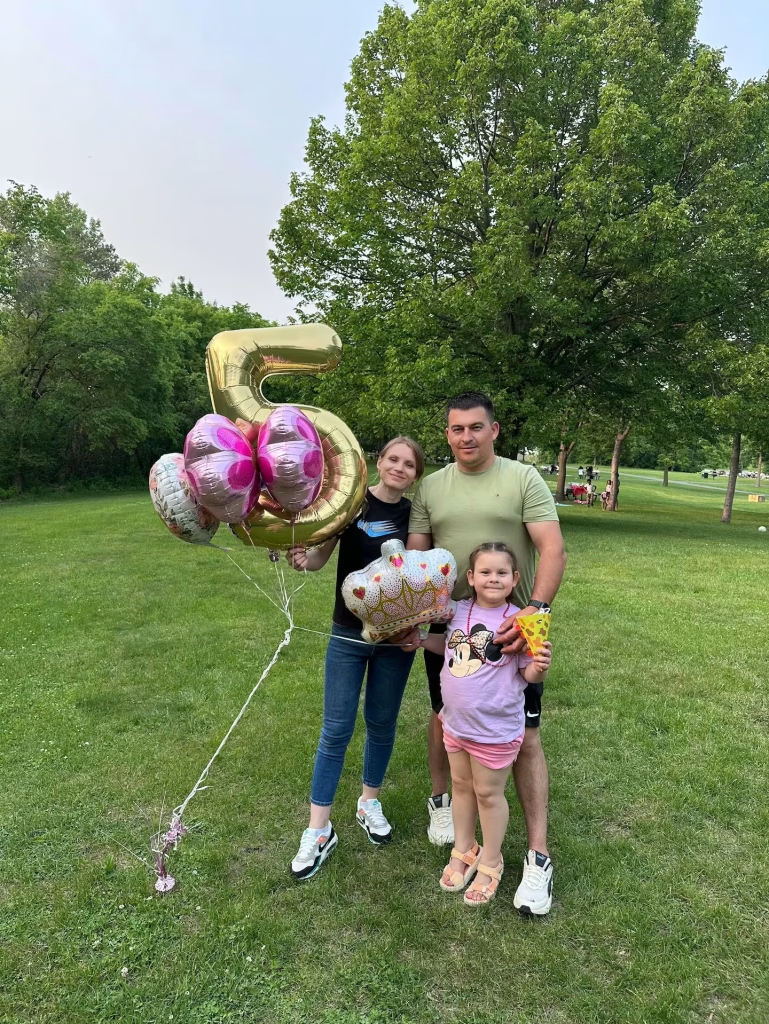
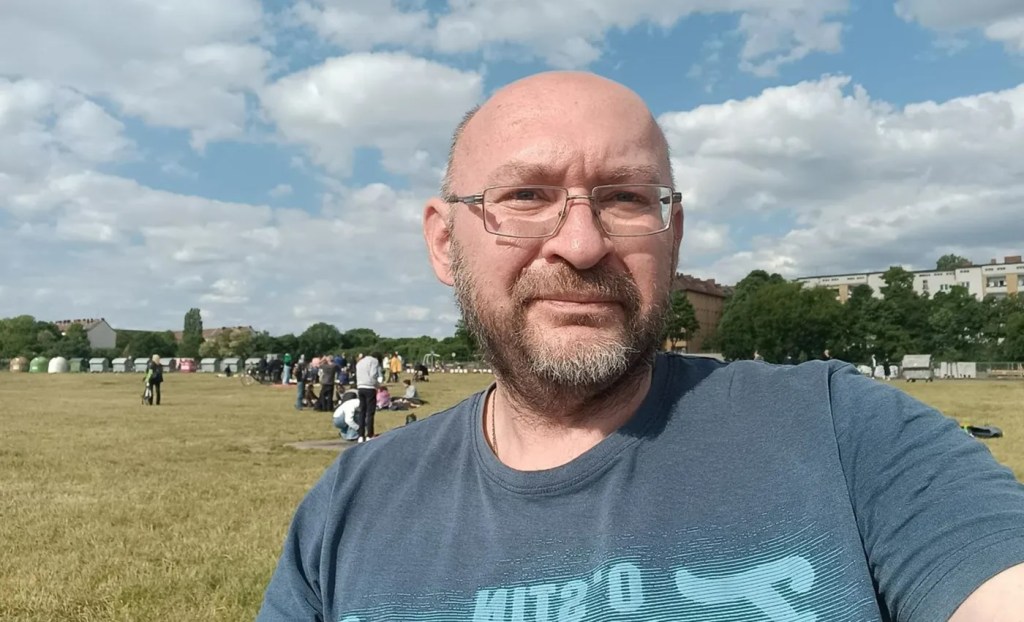

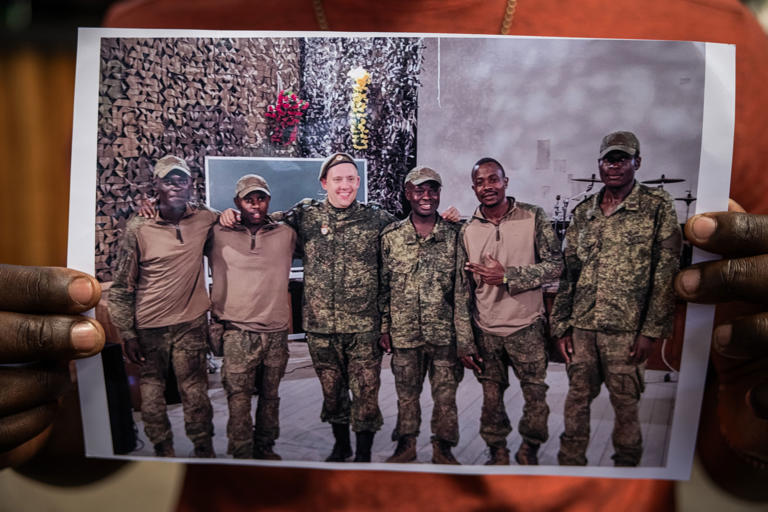

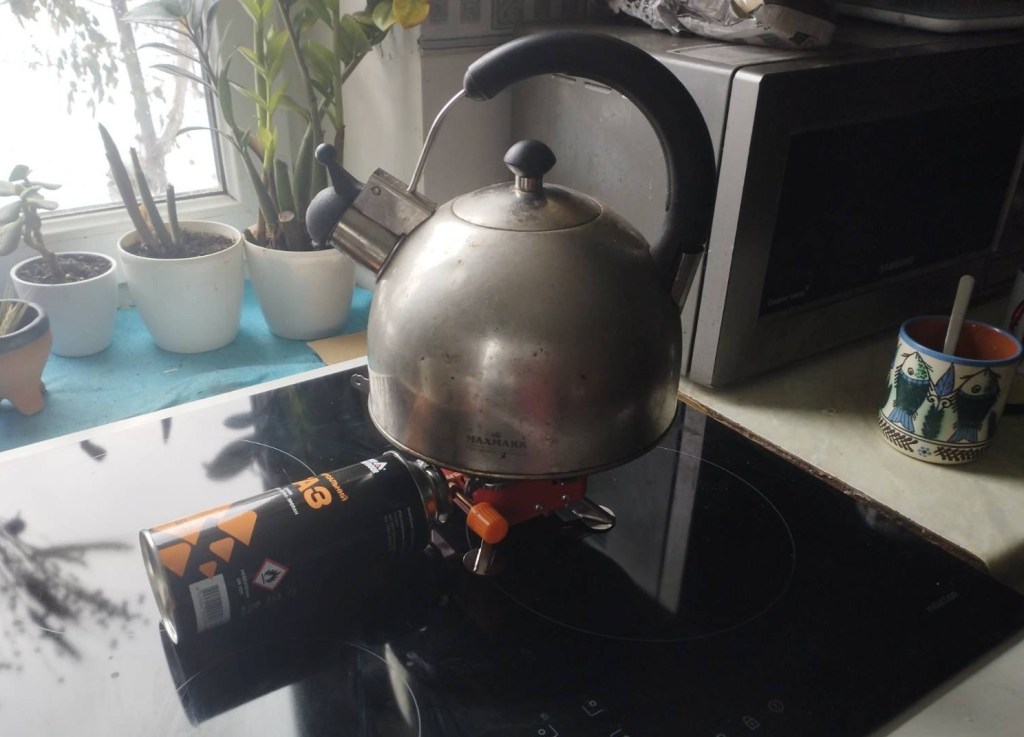
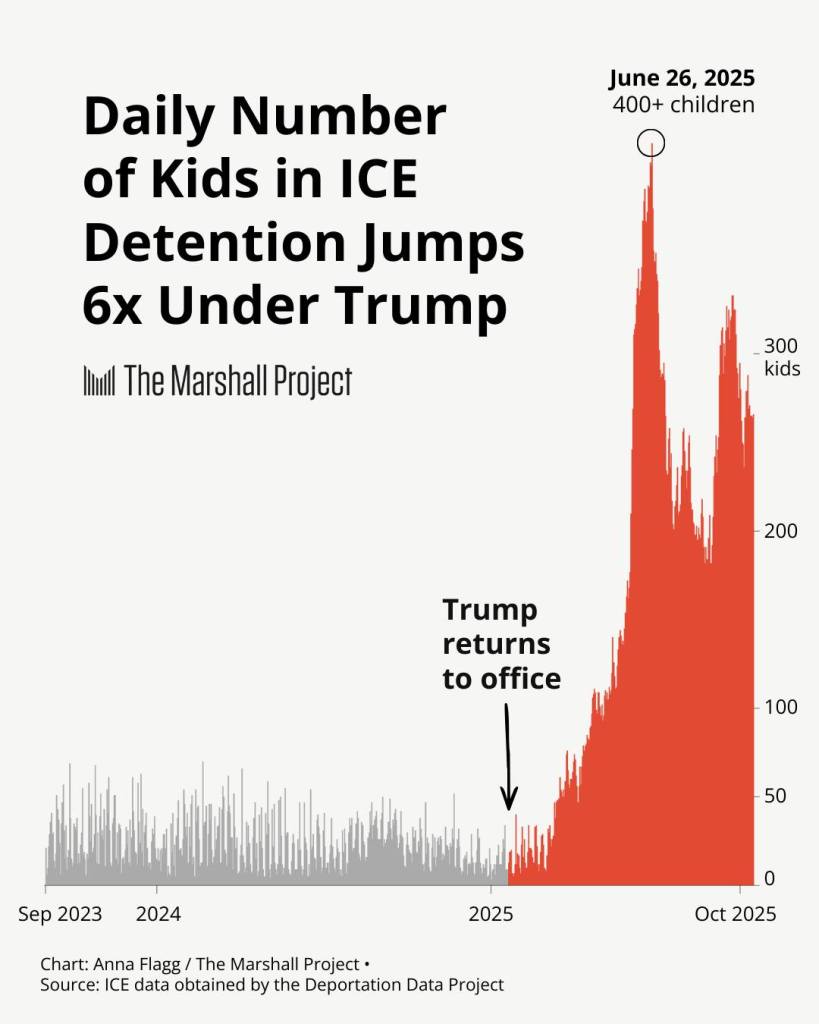
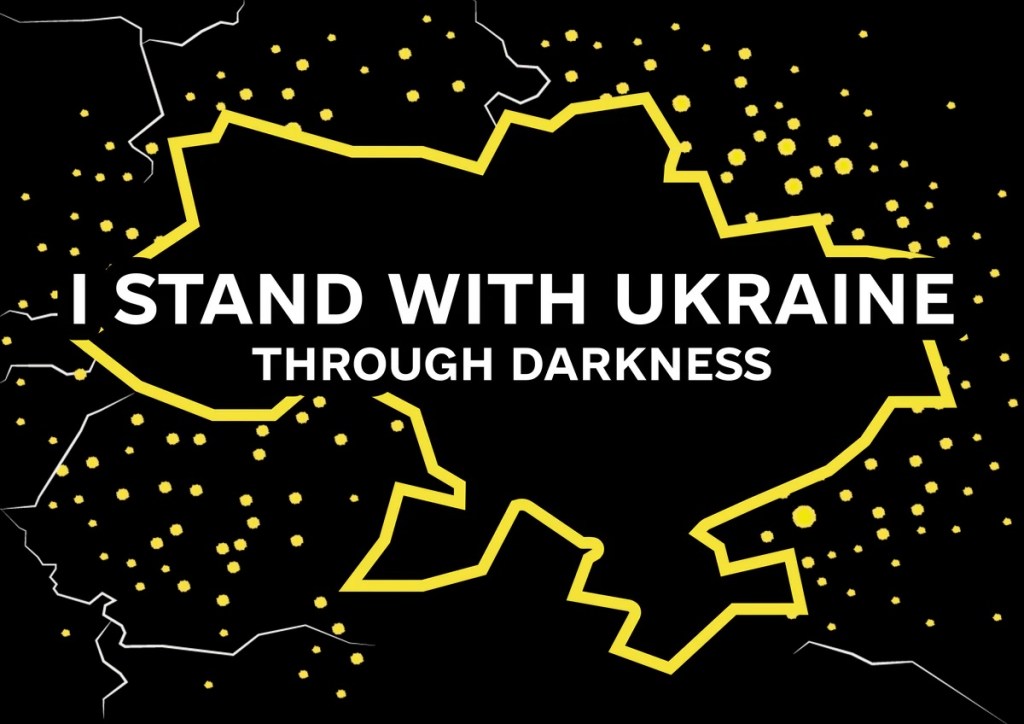
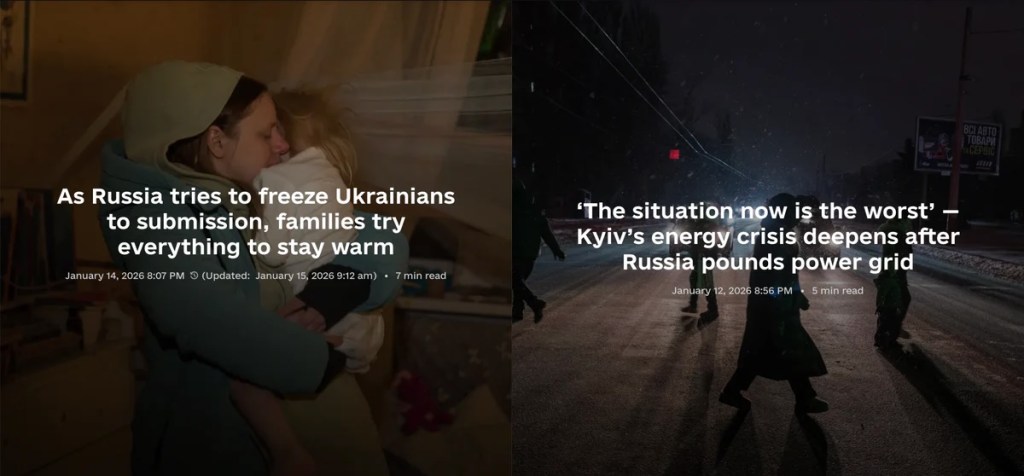
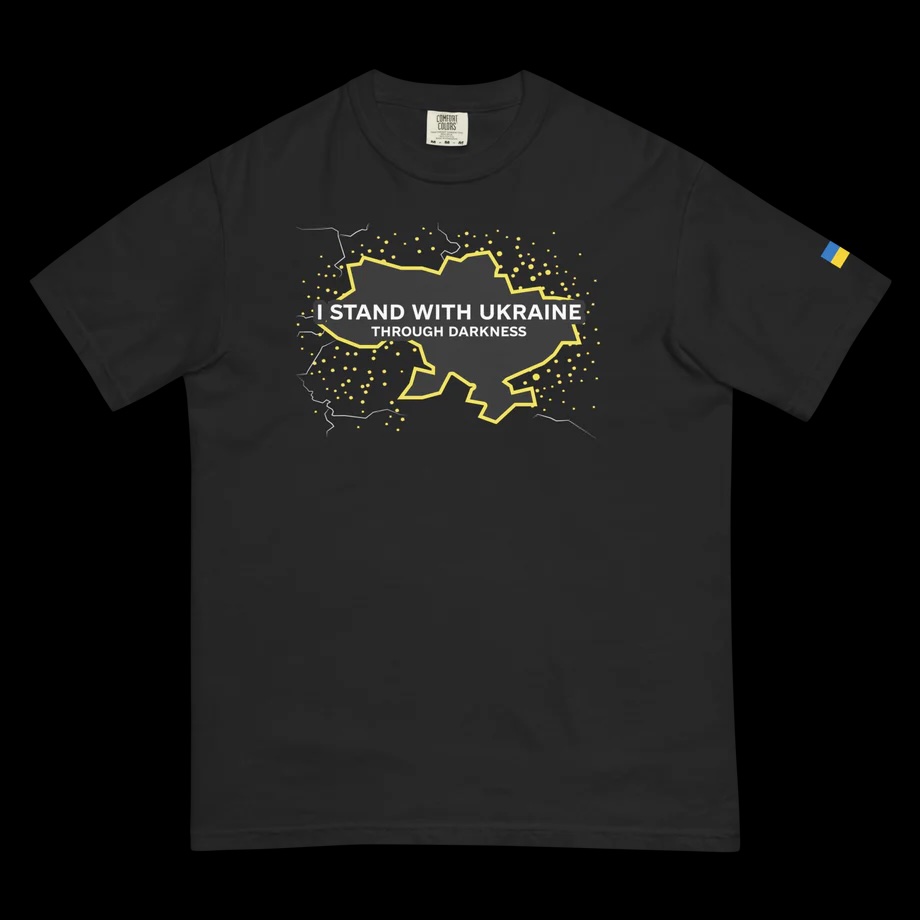



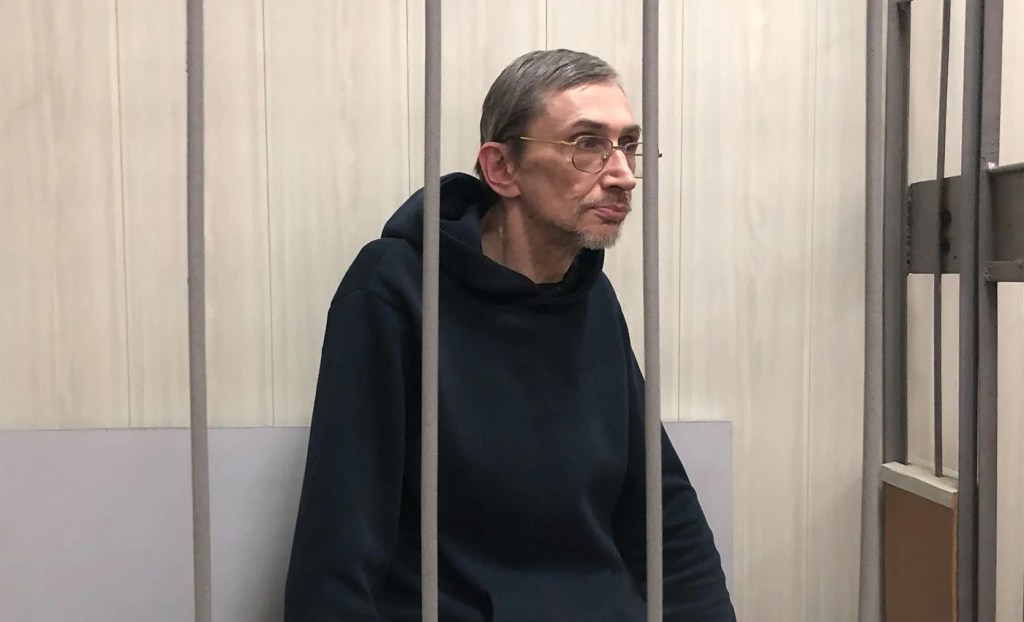

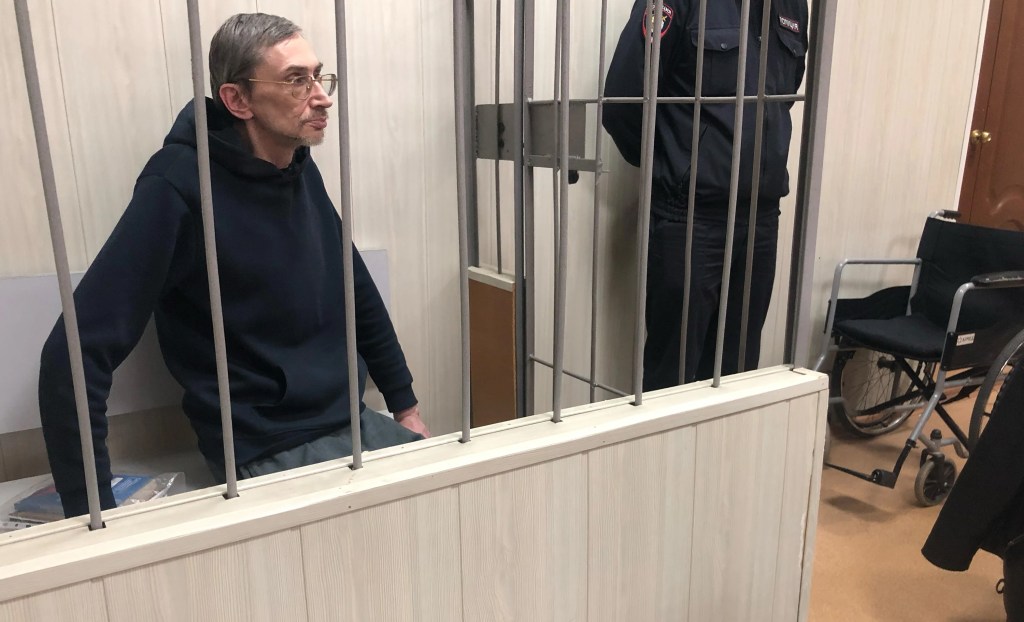
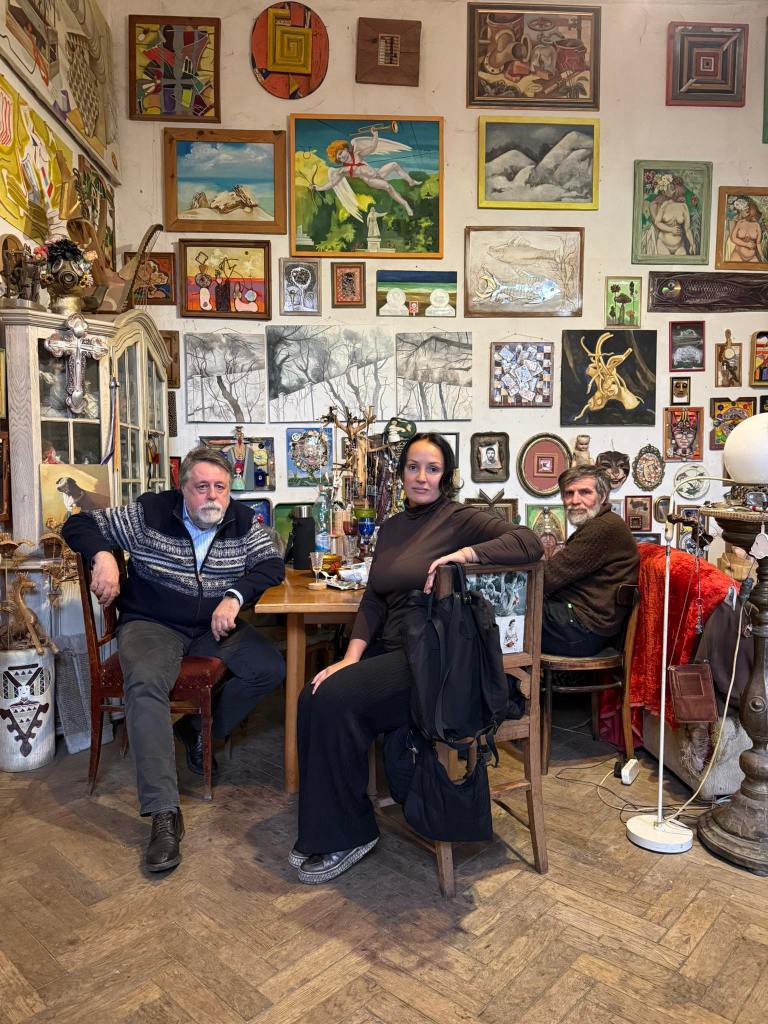
 Write to Gordey at the following address:
 You can also send letters through the online services