This is the first in a series of posts in which I showcase a few of the newsletters, blogs, Substacks, and websites — all of them produced by hardworking, passionate lone wolves or tiny, perpetually underfunded grassroots collectives — which inspire me to continue making the Russian Reader and inform me about parts of the world and communities about which I would otherwise be utterly clueless.
Peter Leonard describesHavli as “a Central Asia-themed Substack written by me, Peter Leonard, a former editor at Eurasianet and the one-time Central Asia correspondent for the Associated Press. By drawing on my decades of experience visiting, studying and reporting on the region, I intend to make this newsletter an informative and, fingers crossed, engaging way to keep abreast of developments of note.”
Mr. Leonard’s latest post on Havli dovetails with so many of political and social trends I’ve been tracing over the years that it seems tailor-made for my website. Enjoy! I hope you’ll consider subscribing to Havli and supporting it financially. \\\ TRR
Closed-circuit television footage showing a teacher at a Tashkent school grabbing a pupil by the neck.
In the worst-case scenario, giving a teacher lip usually ends with the offending pupil visiting the headmaster’s office.
Things have to get pretty bad for a classroom kerfuffle to provoke a diplomatic incident.
A teacher at a school in Uzbekistan’s capital, Tashkent, managed to do just that this week by manhandling a pupil who complained that she was conducting her Russian language class entirely in Uzbek. Closed-circuit television footage obtained by the boy’s parents shows the teacher grabbing the child by the neck, and then slapping and screaming at him.
The video images quickly circulated on social media, eliciting howls of protest from self-avowed Russian patriots indignant at this alleged case of maltreatment of their ethnic kinfolk.
“You can just imagine what a racket there would be if a similar thing happened in Russia with a migrant. And it is not like Uzbekistan is confronting a wave of ethnic crime from Russia; you don’t get murderers, thugs, drug dealers, and Wahhabis going there from our country,” wrote the author of a Telegram account that disseminated the footage.
The spokeswoman for the Foreign Ministry in Moscow was quick to demand an investigation.
“If it is justified, action must be taken against the perpetrator of this cruel treatment against the child,” Maria Zakharova said. “We are monitoring this situation closely.”
The response from Uzbekistan was swift. Alisher Kadyrov, the deputy speaker of parliament, suggested that Russia “mind its own internal business.”
“The rights of this child are being violated in a school in Uzbekistan, the offence was committed against a child of an Uzbek citizen, and measures will be taken on the basis of laws adopted on behalf of the people of Uzbekistan,” he wrote on Telegram.
Uzbek Foreign Minister Bakhtiyor Saidov delivered the same message in person, albeit more obliquely, to his Russian counterpart on the sidelines of the ongoing United Nations General Assembly, noting that their meeting “underscored the importance of commitment of states to the principle of non-interference to each other’s internal affairs.”
Following this outcry, news emerged that the teacher at the Tashkent school assaulted another pupil in an unrelated incident and has since been sentenced to serve seven days in jail.
Moscow shows every sign of relishing the opportunity to make hay of this episode.
Claims of Central Asia’s allegedly spiralling Russophobia problem have been wielded with increasing readiness by surrogates for the Russian authorities since the start of the invasion of Ukraine. The Kremlin perceives the region’s rulers as more or less loyal, but it worries that the general public is not as reliably slavish. The nightmare scenario for Moscow is that a groundswell of anti-Russia sentiment across parts of Central Asia could eventually force a gradual shift in diplomatic stances.
The concern looks overblown at present, but it is not fully unjustified.
Older generations, especially the shrinking cohort with vivid memories of the Soviet Union, are typically more sympathetic to Russia and its bellicose conduct. Younger people whose media diet does not consist of consuming Russian state propaganda are more hostile.
Russian chauvinists are alarmed that the increasingly exclusive use of local languages in Central Asia is weakening their ability to project their message.
Research by Central Asia Barometer, an attitudes-surveying think tank, suggests that there is some association between language use and views on the war in Ukraine. Russian speakers in countries like Kazakhstan and Kyrgyzstan are more likely to justify the invasion of Ukraine than those who speak their own languages.
Fears that the status of Russian is slipping leads at times to comically petty whining.
Earlier this year, famous Russian TV presenter Tina Kandelaki complained in a Telegram post that Kazakhstan was poised to rename a number of train stations to make them sound less Russian. She cast this move — which comprised in the event of changing names like Railway Siding No. 13 to Akshi Railway Siding — as the start of a slippery slope that would end with the closure of Russian schools, the banning of the Russian language and “[Russian] pensioners getting kicked out into the cold.”
Historians in Central Asia crafting narratives that highlight the negative aspects of Russian and Soviet rule are another trigger. The mere suggestion that the region owes its civilisation to an era pre-dating the arrival of the Russians is enough to irk some.
In August, scholars from all over the region assembled at the Eurasian National University in Astana for the first-ever edition of the Forum of Historians of Central Asian States. “It is important for us to begin to rethink our common history,” Kazakh Science and Higher Education Minister Sayasat Nurbek told the scholars.
Mirziyoyeva is taking a leading role in lobbying for a vision of Uzbekistan’s history that looks beyond the role of the Russians and the Soviet Union.
The political elite has taken the lead on this. Saida Mirziyoyeva, a senior advisor to her father, Uzbek President Shavkat Mirziyoyev, in August delivered a speech in Kazakhstan that strongly signals what areas of the official narrative on recent history will be emphasised going forward. She alluded in her talk to a pair of reformist and softly nationalist movements that emerged in what are today Uzbekistan and Kazakhstan as having been thwarted by Soviet oppressors.
“At the beginning of the 20th century, both the Jadids and representatives of the Alash movement fought for a single goal: the liberation of the people, for the development of their motherlands. But they were not given the opportunity to realise their dreams,” she said.
Russian critics of this kind of talk smell a rat.
They point to the content of one history textbook in Uzbekistan as evidence of dangerous revisionism. A passage from a book cited by outraged Russian patriots talks of how the “Soviet regime subordinated Uzbekistan’s economy to the interests of the centre, turning it into a raw materials appendage.” This is loathsome ingratitude designed to demonise Russians, they grumble.
Kyrgyzstan and Tajikistan are far more economically dependent on Russia than either Kazakhstan or Uzbekistan, but they too have in their own small ways worked to forge narratives that are gently but implicitly critical of the legacy of Muscovite rule. In July, Kyrgyz President Sadyr Japarov officially recognized five victims of Soviet repression as founders of the modern statehood of Kyrgyzstan. All the men were executed in 1930s during waves of Stalinist repressions against perceived nationalist movements.
That anti-nationalist campaign was the same one that crushed the Jadidist and Alash movements referenced by Mirziyoyeva.
Central Asian leaders periodically try to soothe the nerves of Russians eager to winkle out evidence of xenophobia in the region.
In his address to the nation earlier this month, Kazakhstan’s President Kassym-Jomart Tokayev reprised a tried-and-tested Astana mantra.
“In Kazakhstan, there is no — and cannot be any — space for discrimination on linguistic, religious, ethnic or social grounds,” he said. “Incidents and provocations do sometimes occur, but these happen because of the thoughtlessness and ignorance of individual citizens. When these things happen, they are dealt with — and will [always] be dealt with — by law enforcement agencies.”
The large community of vocal Russian revanchists monopolising the public conversation inside their country do not buy it. And they are seizing on any excuse to make their point heard.
The percentage of schoolchildren in the Russian Federation studying in native tongues other than Russian halved between 2016 and 2023. Instruction in thirty-eight languages ceased altogether. Experts argue that this situation was caused by a whole slew of problems, including a downturn in interest in native languages, a decrease in the number of lessons taught in them, a shortage of teachers, and an estrangement from foreign partners due to sanctions.
Pupils at a rural school during a Yakut literature lesson. Photo: Alexander Ryumin/TASS
According to the Institute of Linguistics of the Russian Academy of Sciences, there are 155 living languages in the Russian Federation, thirty-seven of which have the status of official languages in the republics, meaning that they should be used in those regions on an equal footing with Russian. In Russia’s comprehensive education system, native languages are studied in three forms: as separate subjects, as electives, or as complete substitutes for Russian in all classes.
Based on data from the Ministry of Education, Takie Dela has calculated that between 2016 and 2023, the percentage of schoolchildren who study entirely in their native languages fell from 1.98 to 0.96 — the lowest figure for this period. The number of such pupils fell from 292,000 to 173,500, although the number of children in school increased by 3.2 million over those same seven years.
The share of those who studied native languages at clubs decreased from 0.7 to 0.4 percent. During the same period, the share of pupils who were taught their native languages as a separate subject increased from 10.41 to 10.56 percent. But the overall engagement of children in learning their native tongues decreased from 13.08 to 11.92 percent.
During the same period, instruction in thirty-eight languages, including Altai, Buryat, and Ingush, ceased completely. In 2016, there were still children in Russia who studied general subjects in those languages. There were no more such pupils left by 2023.
“Where the language is spoken at home, it provides an opportunity to master the written norms. This is vital to preserving people’s identity, to making them feel comfortable in society,” says sociolinguist Vlada Baranova.
According to the law, learning a native language in Russia is voluntary, so it is up to parents to decide how exactly it will be taught to their children and whether it will be taught at all.
Margarita Kilik, chair of the Association of Teachers of Native Languages of Kamchatka, argues that the decrease in the number of pupils studying their own languages is due to the desire of parents. “Fewer and fewer people are staying in the region,” she says. “They are leaving to study in the big cities, in Moscow and St. Petersburg. So there is simply no need for mother tongues.”
Which languages Russian schoolchildren studied as mother tongues in 2023. Drag your cursor arrow over each circle to see the total number of children who were studying that particular language as a native language. By clicking the “cog” icon in the lower righthand corner, you can access two sets of toggles that alter the map: 1) Форма изучение (“Form of instruction”), which shows whether a language was taught as a separate subject (pink) or used as a language of instruction (powder blue); and 2) Сколько детей узучают язык (“How many children study the language”), which alters the map to visualize the relative weight of the numbers and percentages of children who studied languages other than Russian in 2023. Source: Ministry of Education of the Russian Federation/Takie Dela.
And yet, interest in mother languages persists and often awakens with age, when it is more difficult to learn them, Kilik concedes. Natalia Antonova, editor-in-chief of the Karelian-language newspaper Vedlozero Windows, agrees with her. “It is difficult to get schoolchildren interested in something, especially studying minority languages. Often people who have already matured, whose parents have passed away, have regrets that they have been left without a linguistic thread linking them,” she says.
According to census data cited by the To Be Accurate project, the number of speakers of all of the Russian Federation’s official languages except Russian, Chechen, Tatar, and Tuvan declined between 2002 and 2020. But many textbooks of minority languages are designed for children who can speak them, even though the textbooks themselves have not been updated for a long time.
“Children who don’t know their native languages enter school. There are good textbooks structured to teach [these] languages as foreign languages, but these are more exceptions,” says Baranova.
In the Russian Federation, native languages are studied mainly in elementary and middle schools, while in grades 10 and 11 most teenagers switch to Russian, according to statistics from the Ministry of Education. “Graduates need to sit for the Unified State Exam, and general subjects taught in native languages won’t help them much,” says Vladislav Savelyev, a former Yakutia Education Ministry official.
Initiatives by the regions to produce a Unified State Exam in their native languages were never adopted. Meanwhile, the number of hours allocated for studying native languages at school has been reduced, activists have pointed out. “These issues are regulated by the federal educational standards, and, of course, the number of hours for teaching Yakut has been reduced in favor of priority subjects, such as mathematics,” says Savelyev.
Instruction in native languages in the Russian Federation. The numbers of children who studied in 2016–2023 in their native languages is indicated by the lavender bars, while their percentage within the overall school population is shown by the pink line and dots. Source: Ministry of Education of the Russian Federation/Takie Dela.
Savelyev also notes that schools are switching to a five-day school week and “optional” subjects like mother tongues are the first to have their hours cut from school schedules.
Another reason why the languages of Russia’s peoples may eventually disappear is the shortage of teachers specializing in them. According to data from the Institute for Statistical Research and Knowledge Economics at the Higher School of Economics, the number of native language teachers in Russian schools fell from 22,000 in 2009 to 15,500 in 2023. There are even fewer who can teach mathematics and history in languages other than Russian. “Seventy percent of the school teachers in the Koryak Autonomous District are from other regions. How can they know our languages? The situation is the same in many other regions,” Kilik points out.
The circumstances surrounding the teaching the official languages of the republics and the languages of minority Indigenous peoples differ greatly, however.
“We have several such languages in the Kamchatka Territory, and some of them even belong to different [linguistic] groups. A significant number of the teachers of these languages, as well as the speakers, are at least fifty-five to sixty years old. Who will teach the languages when they retire?” wonders Kilik.
Some languages, such as Aleut, have disappeared altogether in Kamchatka: Russia’s last speaker of the language, Gennady Yakovlev, died in 2022. Russian Aleuts used to cooperate with American Aleuts in preserving their language and culture, but this has now become impossible. “There are obstacles on both sides: our side says that America is an enemy country, while their side imposes sanctions on Russia,” says Kilik.
The situation is similar in Karelia, the only republic in the Russian Federation where the language of the titular nation does not have official language status. This is due to the fact that the Karelian alphabet is based on the Latin alphabet, while official languages in Russia must be written in the Cyrillic script alone.
According to official statistics, less than 500 children study the Karelian language at school, while 340 children study Vepsian. Instruction in these languages has been preserved only at specialized university departments and partly in kindergartens, says Antonova. “There are a couple of dozen kindergartens where the native language is learnt. But it’s more about the showy aspect of the language used in songs, costumes, and festivals,” she adds.
Since the Soviet Union collapsed, Russian Karelians have been assisted by Finnish Karelians in studying and preserving the Karelian language: textbooks have been published jointly, and language courses have been held jointly. “The break with Finnish organizations will certainly affect the opportunities for learning the Karelian language. Although it is not so noticeable yet, because little time has passed,” Antonova explains.
According to Antonova, Karelian is currently studied in clubs and courses at libraries, language centers and NGOs. Some of these organizations even receive state support, she adds.
Russian lawobliges the state to preserve the languages of the peoples living in the Russian Federation and to promote their study.
‘This is a very divergent movement, and the situation depends very much on the region. In some places the authorities support languages, while in other places, on the contrary, they see their widespread use as going hand in glove with ethno-nationalism. But the policy is generally more aimed at Russification and reducing the use of minority languages,” explains Baranova.
Baranova notes that there is a downside to the fact that studying mother tongues is voluntary, as stipulated by law. In villages inhabited by speakers of endangered languages it is often possible to muster only one first grade class, and it will always be a Russian-speaking class.
“Because there will always be parents who want their child to be taught in Russian, and this is also their free choice. You can, of course, try to defend your position and demand that the school provide for another first grade class in the other language, but you’ll come across as suspicious and dangerous,” says Baranova.
Antonova also says that it has become more difficult to assert one’s linguistic rights.
“If campaigning for language revival was a common trend in the nineties, nowadays you can be accused of extremism and separatism, and the authorities will regard you with suspicion.”
Despite all this, there are ways to study native languages in Russia, says Baranova.
“Other forms and grassroots initiatives that get children and adults involved in using the language in different areas are also effective. They turn out to be a good way to keep the language alive.”
DINARA RASULEVA & TATSIANA ZAMIROVSKAYA “Lost Tongues, Found Voices, Decolonizing Languages: A Multilingual Reading and Conversation” Wednesday, October 2, 6:30 pm Hunter College CUNY Elizabeth Hemmerdinger Center (706 Hunter East Bldg) Free and open to the public
Join Belarusian writer Tatsiana Zamirovskaya and Tatar poet_ess Dinara Rasuleva for a discussion on the loss and revival of languages. Dinara will talk about why languages of indigenous peoples colonized by Russia fade and how they are being brought back, sharing her translingual poems from the Lostlingual research series. Tatsiana will talk about why some Belarusian writers write in Russian, while still remaining Belarusian-identified authors, about her experience writing in a mix of Russian and Belarusian, and the challenges of translating colonized voices accurately. Both writers will reflect on the intersections of language and identity in their lives and works.
Dinara Rasuleva (she/they) is a poet_ess based in Berlin and born in Kazan, Tatarstan. She writes in Tatar, Russian, English and German — the languages she uses everyday. Dinara’s poetry was described and analyzed as decolonial and feminist writing, as expressionist poetry and performance poetry. In 2020 Dinara started a feminist writing laboratory for russian-speaking immigrant FLINTA community. In 2022 their first book of poems Su was published by Babel publishing house. Since 2022 Dinara started the Lostlingual Project, an investigation of the loss of her native Tatar language through translingual abstract poetry. In 2023, in collaboration with Berlin library Totschka, Dinara started TEL:L laboratories: writing in native forgotten or stolen languages.
Tatsiana Zamirovskaya is a Belarusian author who moved to Brooklyn in 2015. She writes metaphysical sci-fi about memory, ghosts, hybrid identities and borders between empires and languages. She is the author of three collections of short stories and a novel Deadnet, published in Moscow in 2021, receiving great critical acclaim and shortlisted for several Russophone literary awards. She is a recipient of fellowships from Macdowell, Djerassi and VCCA. Currently Tatsiana is finishing her new collection of short stories about women going through unbearable events and how these events influence language and perception. She currently writes in belarusified Russian, russified Belarusian and broken English.
Directions: At the reception desk of the Hunter West Building, please present your ID to get a pass. From there, take the escalator to the 3rd floor, turn right and walk across the sky bridge to the Hunter East Building, then take the elevator to the 7th floor. Hemmerdinger Center is at the end of the hallway past the turnstiles.
Tamizdat Project is a 501(c)(3) not-for-profit organization with a tax-exempt status: donations and gifts are deductible to the extent allowable by the IRS. You can donate online, via Venmo (@Tamizdat-Project), PayPal or Zelle using our email tamizdatproject@gmail.com, or by check. Please don’t hesitate to contact us, and thank you for your support!
Source: Tamizdat Project newsletter, 21 September 2024
A map of Russia showing the number of people killed by returning Ukraine war vets in each region. The leaders are the Kostroma Region, Moscow and the Moscow Region, and the Rostov Region. Source: Vyorstka
Since the outset of the war in Ukraine, Russian servicemen returning from the front have killed 242 people and seriously injured another 227, according to a count made by the online news outlet Vyorstka based on court records and media reports. This brings the total number of victims to at least 469. The victims of these crimes resided in eighty different Russian regions.
A total of 350 criminal cases have been launched in connexion with these incidents. Of these, 114 cases, involving 139 victims, have resulted in charges of murder (per Article 105 of the Criminal Code). Eighty-five Russians were victims of seventy-five former inmates recruited for the war from penal colonies, while another fifty-four died at the hands of thirty-nine [ordinary] servicemen.
Other fatal crimes include sixty-four cases of grievous bodily harm (per Article 111 of the Criminal Code; sixty-four fatalities), twenty traffic violations (per Article 264 of the Criminal Code; thirty-one fatalities), five cases of involuntary manslaughter (per Article 109 of the Criminal Code; five fatalities), two cases of inducement to use drugs (per Article 230 of the Criminal Code; two underage victims) and one case of murder caused by excessive self-defense (per Article 108 of the Criminal Code).
Most of the offenses were committed by 246 former prisoners recruited to the front. The victims were also more often women. Another 180 defendants were ordinary servicemen. Of the 125 pardoned and paroled war veterans who murdered or caused injuries resulting in death, fifty-four had previous convictions for similar offenses, while another three had been convicted of rape.
The majority of the crimes were domestic crimes and occurred due to alcohol consumption. The victims of the Ukraine war veterans are more often people from their surroundings: relatives, neighbors, and acquaintances. The most “widespread” crime was voluntary grievous bodily harm. The journalists at Vyorstka tallied at least 220 such crimes, which resulted in sixty-four deaths and 158 injuries, including disabilities. The sentences in such cases for soldiers recruited in the penal colonies have ranged from four to twelve years in a maximum security penal colony, and from four to ten years in a maximum security penal colony for the other soldiers.
A further sixty-six victims who survived were severely injured due to attempted murder, excessive self-defense, attempted involuntary manslaughter, and traffic violations by war veterans.
One third of all the victims have been women, including minors: thirty-two out of eighty-five (thirty eight percent) were killed by ex-prisoners, and seventeen out of fifty-five (thirty-one percent) were killed by military personnel. Five of the seventeen women killed in the fire at the Kostroma nightclub Polygon were not intentional but accidental victims of serviceman Stanislav Ionkin, who set the blaze.
The sentences of the ex-convicts have ranged from six to fourteen years in a maximum security penal colony, while the sentences for the ordinary military men range from seven to ten years in maximum security. Some “veterans of the SMO” have been handed severe sentences, including life imprisonment. For example, ex-prisoner Viktor Budin was sentenced to nineteen years in a maximum security facility for murdering two retired neighbors, while the first life sentence was given to Grigory Starikov, who killed three acquaintances.
Out of 292 sentences made public, judges did not consider involvement in the war a mitigating circumstance in only fifteen percent of cases. It was even mentioned by the judge who sentenced Starikov. In addition, “state honors,” “involvement in the activities of the RF Armed Forces,” and “unlawful behavior on the part of the victims” were taken into account in some cases. For example, ex-servicemen have usually received minimum or suspended sentences for negligent homicide or in cases where the victims survived.
On the other hand, courts most often ignored alcohol as an aggravating circumstance in their verdicts. For both pardoned convicts and military personnel, it was taken into account in less than a third of the cases.
A multifaceted portrait of lifelong Kremlin propagandist and relentless self-promoter Vladimir Pozner in his ninetieth year, with guest appearances from several useful idiots.
Vladimir Pozner. Photo: picture-alliance/dpa, courtesy of DW
The director general of Russia’s Channel One, Konstantin Ernst, announced on Wednesday, 18 September, the return of TV presenter Vladimir Pozner to the air after a long break with a new show called Turkish Notebook. Pozner’s eponymous program stopped airing on Channel One after the start of Russia’s full-scale invasion of Ukraine.
On 12 September, in an interview with Forbes, the journalist said that he had been offered jobs by western TV channels, but declined because he had been asked to “speak out about Putin and politics in a certain way.” After the interview, Putin’s spokesman Dmitry Peskov called Pozner “a staunch patriot of his country.”
Pozner first spoke out about Russia’s war against Ukraine in February 2023 at an online conference at the U.S.-based Ubiquity University. At the time, he acknowledged the Russian president’s responsibility for invading Ukraine, but also accused the west of seeking to expand NATO and said that U.S. President Joe Biden had allegedly been “seeking a conflict” with Vladimir Putin.
This Summit on Ukraine is being convened on the first anniversary of the Russian military operation into Ukraine to secure a land bridge to Crimea which was launched Feb 24, 2022. The Ukraine war has actually been going on since 2014 when the United States staged a coup in Ukraine to overthrow a regime maintaining Ukraine as a neutral nation and replacing it with a regime that was anti-Russian and pro-US which immediately began waging war against the Donbas region in eastern Ukraine where the population is 80% Russian. In response, the Russians armed the local populations and seized Crimea. Military conflict has been going on since then and continues to the present day.
What is distinctive about the war in Ukraine is that it is between the two superpowers — The [sic] US and Russia — both of which are armed with nuclear weapons and both of which have threatened to use them. The world is thus in the most dangerous period since the Cuban missile crisis of 1962 when the US and Russia almost went to nuclear war. What is also distinctive is that the war is being conducted as the world faces runaway climate change and there is an urgent necessity for the US to be working with the Russians to solve critical global challenges.
This Summit is being co-sponsored with Code Pink, a feminist grassroots organization working to end U.S. warfare and imperialism, support peace and human rights initiatives, and redirect resources into healthcare, education, green jobs and other life-affirming programs.
Moderators:
Jim Garrison, Convener of Humanity Rising, with Jodie Evans, Co-Founder of Code Pink
Special Guests:
Vladimir Posner [sic] is a veteran journalist, bestselling author, and documentary filmmaker. He is the host of the top-rated weekly current affairs program on Channel One, Russia’s largest television network. Named the “Voice of Moscow” by CNN, Pozner is a regular commentator on Russia and the history of the Cold War in Western media. Mr. Pozner has won multiple Soviet, Russian, and American awards, including three Emmy certificates, ten TEFY [sic] awards (the Russian equivalent of the Emmy) and several international awards. He is internationally recognized and ranks among the most respected people in the television profession in Russia today.
Veteran Soviet-Russian journalist Vladimir Pozner is set to return to state television more than two years after his long-running program was taken off the air following Russia’s full-scale invasion of Ukraine, Russian media reported Wednesday.
Pozner, 90, had hosted his weekly interview show “Pozner” on Channel One since 2008, but it was canceled shortly after the February 2022 invasion. He later claimed Channel One pulled the program in order to make room for war coverage.
Although Pozner has not publicly taken a stance on Russia’s invasion, he has suggested that western refusal to block Ukraine’s NATO ambitions played a role in the conflict’s escalation.
Channel One head Konstantin Ernst announced Monday that the network’s fall season lineup would include Pozner’s new show, “Turkish Notebook,” as reported by the RBC business news outlet.
Pozner said in an interview with Forbes Russia last week that his production team completed an eight-episode documentary series on Turkey, which they submitted for Ernst’s approval.
Unlike his former interview program, which had featured guests from former U.S. Secretary of State Hillary Clinton to current Russian Security Council Head Dmitry Medvedev, Pozner’s new project appears to steer clear of political issues, similar to his live events across Europe this year, co-hosted by former late-night talk show host Ivan Urgant.
In the Forbes interview, Pozner said he had received offers to work abroad if he denounced President Vladimir Putin and spoke out on Russian politics. He declined, stating that such actions “are not journalism, but something else entirely.”
Pozner gained international recognition during the Cold War for his TV appearances, where he often explained Soviet policies and viewpoints to Western audiences. During perestroika, he hosted televised discussions between audiences in the Soviet Union and the U.S. together with American journalist Phil Donahue, who passed away last month.
AMSTERDAM — A live event headlined by two Russian television celebrities has sparked controversy in the Netherlands, with critics decrying the presence of what they call Russian propagandists on European stages during Moscow’s war on Ukraine.
Veteran Channel One host Vladimir Pozner and late-night talk show host Ivan Urgant’s European tour, called “The Travels of Pozner and Urgant,” kicked off in Amsterdam on Tuesday and will be followed by stops in Zurich, Berlin and Frankfurt.
The show is described as an evening with the two men, who co-hosted several travel shows, as they reflect on stories from their trips around the world.
Though billed as an apolitical event, politics has overshadowed much of the discussion surrounding it.
Critics have slammed the Amsterdam theater for hosting “Russian propagandists” and allowing them to profit by performing in Europe, calling it a “stab in the back” of the tens of thousands of Ukrainians who fled to the Netherlands because of Moscow’s invasion.
Others say that banning events based on politics would be stooping to the level of the Kremlin, which has silenced independent journalists, activists and artists inside Russia.
Around 25 protesters, several of whom wore Ukrainian flags around their shoulders, stood outside Theater Amsterdam in the rain as attendees arrived, shouting slogans like “Shame on you,” “Russians go home,” “Russia is a terrorist state” and “Russian propaganda kills.”
“I think you can hear why,” said Anna, a young woman from Ukraine who has been living in the Netherlands for two years, when asked why she was at the protest.
“We have to stop… Russian propaganda because it’s dangerous,” she said. “It’s important not only for Ukraine, but it’s important for everybody. Because it’s a really abusive country.”
Pro-Ukrainian protesters outside the Amsterdam venue of Pozner and Urgant’s stage show earlier this year. Photo: Moscow Times
In the theater lobby before the sold-out show, some attendees took photos of protesters through the glass windows. Others could be heard discussing the news over glasses of sparkling wine.
“I was surprised at how our [fellow attendees] reacted — they looked away [from the protesters]. I looked right at them,” said Alisa, a Russian emigre who was going to the show with her friend.
“Many of the people who came to the show do not support the war, and we have a negative view of the war, of course,” she said. “The aggression in the crowd was frightening. We had fingers pointed at us and such. It’s good that there are police here.”
On the first day of Russia’s full-scale invasion of Ukraine, Urgant, who is often likened to U.S. late-night talk show host Jimmy Kimmel, posted a black square to his Instagram account with the caption “Fear and pain. No to war.”
Although his show was taken off the air almost immediately afterward, he has since remained silent about the war. He did not respond to the Moscow Times’ request for comment.
Pozner, meanwhile, rose to fame in the West during the Cold War for his television appearances where he would explain the Soviet Union’s views and policies, a role he would later describe as “propaganda.”
His interview show on Channel One, which was watched by millions and often compared to “Larry King Live,” stopped airing after the invasion of Ukraine. He later said this was a move by the channel to make room for coverage of the war.
In a 2016 debate with Kremlin critic Alexei Navalny, Pozner said: “Yes, censorship exists [in Russia]. And I accepted it. I could have slammed the door [closed the show] and done nothing at all. But I believe that I am doing something useful for society. I’m making people think.”
Though he has neither criticized nor supported the war in public, Pozner has suggested that the West bore responsibility for Moscow’s invasion because it refused Russia’s demand to block Ukraine’s path to NATO membership.
When asked about the protesters outside the venue, Pozner told the Moscow Times that it was “their right” to express their opinion but declined to comment further.
Theater Amsterdam declined to comment for this story, instead referring the Moscow Times to a May 24 statement published on its LinkedIn page.
In its statement, the theater said it “stands for freedom of speech, creative expression and a safe environment for everyone who embraces the arts.”
“These performers have indicated that their program has nothing to do with the war and want to share their performance in an atmosphere of peace and freedom,” the theater said, noting that its staff had received threats and intimidation over the event.
Inside the theater sat Olga — a woman from Lviv, a Ukrainian city near the Polish border described by the Kremlin and Russian propagandists as an alleged hub of “Russophobia” — who moved to Amsterdam because of the war.
Speaking in Russian, she told the Moscow Times that she felt “embarrassed” to be at the event.
“I’ve been following Urgant and Pozner for about 15 years and I wanted to see them in person,” she said.
“Only here did I find out that Pozner supported the war,” she continued. “If I had known [beforehand], there’s no way I would have come.”
“I dream of it happening, but I don’t think it will happen,” is how Vladimir Pozner responded when we asked him whether admits the possibility of returning to the television airwaves. In an interview with “Forbes Talk,” the journalist and TV presenter, whose eponymous program on Channel One has not been broadcast since the beginning of the “special operation,”* confessed that he misses this work very much. He told us why (with one exception) he has remained silent and not spoken about politics since 2022, what he has been doing all this time, and what he fears nowadays.
Vladimir Pozner’s full interview with Forbes Russia is much more interesting than its quoted highlights, below, but even more interesting, to me, were the inserted ads, which say a lot about the magazine and its readership. \\\ TRR
Vladimir Pozner is a Soviet and Russian journalist and TV presenter. He was born in Paris to a Russian immigrant and a Frenchwoman. In 1952, he moved to the Soviet Union, where he worked as a secretary for [the famed children’s poet] Samuil Marshak. He began his journalistic career as a commentator on the Soviet State Committee for Radio and Television’s North American service. Pozner became famous thanks to his debut on TV: in the 1980s, he and his U.S. colleague Phil Donahue co-hosted the “space bridges” between Leningrad and Seattle and, later, Leningrad and Boston. In the 90s, Pozner presented several original programs on U.S. television. He then returned to Moscow, where he did the political talk show Vremena (“The Times”) and the eponymous program Pozner. Several of his series about different countries have also been broadcast, including such programs, co-presented with Ivan Urgant, as England in Generaland in Particular and Single-StoreyAmerica.
Why Pozner remains silent
“The fact that you have me today [for an interview] is an absolute violation of my rules. It happened only because I owe you a debt, and I am used to repaying debts: I promised that I would give you an interview, and here I am giving it. I’m not going to talk anymore; I’ve made this decision for myself: no interviews, no statements, no comments, and so on. With rare exceptions, if I suddenly feel that there is some use in it, that it’s really worth doing, that it might be useful.
“I just decided for myself that the circumstances are such that I had better abstain for the time being. Especially since I am ninety years old, a time when people are usually long retired, and nobody asks [them], ‘Why are you retired?’ So I’m kind of retired.”
What he’s been doing for the last two and a half years
‘I’ve been thinking; I’ve been writing. I am writing a book. You know, Tolstoy once said, ‘If you can’t write, don’t write.’ That’s quite right, and a lot of people should have followed that advice. And I was not writing, but when I felt that I couldn’t help but write, I started writing. Don’t ask me what this book is about—I don’t like to talk about that at all.
“I’ve written a lot of books, but I reckon I’ve [actually] written [only] one [real book]. My very first one is Parting with Illusions, which is a serious work. The others have amused me and been enjoyable to me, and maybe to the reader, but I don’t consider them serious literature. This [new] book is definitely a serious book, and I don’t know how well it will turn out. Writing is quite difficult and painful for me personally. You weigh every word, but then the next day you read what you have written, and you are horrified. Sometimes you are happy [with what you’ve written], but very rarely.
“In addition, our team shot a large eight-part film about Turkey. It is good to go. We submitted it to Channel One, where it was approved, and now we are waiting on Mr. Ernst’s judgement (Konstantin Ernst, CEO of Channel One — Forbes).
“That’s what I’ve been doing. Well, and I have done [other] little things. I have done speeches, and I have been invited to talk to different, rather closed audiences. And then, of course, quite unexpectedly, there has been the duet with my close friend Ivan Urgant, in which we decided to reminisce about how we shot [our television travel series]. We did test runs in Dubai first and somewhere else. The success was tremendous, which, frankly speaking, amazed me, because we don’t do anything so spectacular: I don’t sing, and Vanya doesn’t dance. And then we started doing it seriously, because there were offers. We performed in Amsterdam, Frankfurt, Berlin, and Geneva. It was a triumph: people gave us standing ovations. So now we have fifteen more shows booked. A whole tour, or as they used to say, a ‘stint.’”
Is it hard for Pozner not to be on TV?
‘The word ‘hard’ is so [strong], but I do miss it a lot. I love it very much—it’s my thing. Pardon my immodesty, but I think I’m very good at it. And of course I wish I could [be on television], but that’s just the way it is. It’s a very hard question [whether it will be possible to return to television]. Generally speaking, I dream of it happening, but I don’t think it will happen. That’s the only answer I can give.
“The thing is that I made my first memorable appearance on Soviet TV screens at the age of fifty-nine, you know? [Other] people [my age] were getting ready to retire, but that was when I was debuting. I think that maybe that is why I still have this drive, this desire. I want [to work on air], but you know, you can’t always get everything you want. You have to make some compromises sometimes, or even admit defeat.
“There were offers [of work from western television channels]. I won’t name specific names, but they came from more than one country. But there was a condition! And the condition was this: ‘You must first speak out about Putin and about politics,’ and in a particular way. I said, ‘Look, that is not journalism; that is something else.’ They said, ‘Those are the terms.’ I said, ‘No. Thank you very much, but my answer is no.’”
“This society is [sic] held together by fear and faith”
“I was brought up by my quite pro-Soviet father and had a lot of faith in those ideas. I was almost nineteen years old when I arrived in the Soviet Union, and I became convinced that what my father had told me and the reality were different things. But I tried to persuade myself that it’s not a pure experiment, after all, that it’s not a laboratory experiment. It was a complex country with a complex history, and you had to understand that, you had to make concessions, and so on and so forth.
“This went on for quite a long time. I was a propagandist, not a journalist. I was a propagandist in the purest sense, trying to prove this was the right system and the best system. The first blow to my ideological edifice, a serious blow, came in ‘68 [when the USSR invaded Czechoslovakia]. And although I came up with an argument as to why [the invasion] was necessary, in my heart I realized that something was wrong.
“Gradually, my faith began to demand proof (although faith doesn’t require proof), but I failed to find it. By about the mid-1970s, I had come to the firm conclusion that this society is [was] held together by two things: it was held together by fear and by faith, which are like epoxy glue. That glue held it together, but not very well, and if it stopped holding it together the thing would fall apart. And this thing—I mean the Soviet Union—did in fact fall apart, and not because of Reagan; that’s nonsense. It was because people stopped being afraid and people stopped believing, and it was much more vital that they had stopped believing.
“That was completely unexpected to me. I guess I thought it would happen, but not as quickly as it did happen.”
What he fears at ninety
“I’m afraid of going blind: I can’t imagine how I’ll live in the world blind. I’m afraid of going mad without knowing I’m mad, that I’ll be taken somewhere and locked up, that I’ll think I’m normal and everyone will think I’m crazy. That is what I’m afraid of; there is that fear. I’ve had cancer twice: I’m not afraid of it. But I am afraid of [madness], and I’ve been afraid of it for a long time, not because I’m ninety years old. I am afraid of sharks, as you know, regardless of my age.
“But [what am I afraid of] because I’m ninety? The only thing that’s already happening, and it’s hard—you know, you have to pay for everything, nothing is free—you get older and you lose loved ones, you outlive them. You live longer than your close friends, and so now Phil [Donahue] is gone. And Phil isn’t the only one. I’m quite afraid that more and more very close people will pass away and I’ll live on. It’s horrible.
“You know, this was what I thought: if it happens that I realize I’m not interested [in life] anymore, then I’ll find a way to end this stupidity. But I’m very, very interested.”
* When they publish materials about the special operation in eastern Ukraine, all Russian media outlets are required by Roskomnadzor to use information only from official Russian federal sources. We cannot publish materials which refer to the ongoing operation as an “attack,” “invasion,” or “declaration of war,” unless these are direct quotations (per Article 57 of the Federal Law on Mass Media). If a media outlet violates this requirement, it may be fined five million rubles, and its website may be blocked.
Elections observer who left message on ballot jailed for 5 days
Marina Popova served as an observer during the elections in St. Petersburg. On Sunday, she decided to vote herself. Prior to this, she specially had herself reassigned to Polling Station No. 2213 on Lomonosov Street [where she was working as an elections observer].
Popova told Rotunda that two other people voted after her. A police officer then noticed a ballot in the ballot box on which a pacifist message [“No war!”] had been written. According to Popova, a polling board member wrote out a statement saying that it was Popova who had dropped the ballot with the message into the ballot box.
Consequently, Popova was detained and taken to the police station. There, she was charged with “petty hooliganism” and, later, “discrediting the army.” The first charge sheet says that Popova disturbed the peace because she wrote a pacifist message in large letters in bright blue ink that was seen by people at the polling station.
Popova was taken to the police station on Sunday morning and never returned to the polling station. She was taken to court on Tuesday. When her detention period expired, she went home. She was taken back to court in handcuffs—the police collected her from her home.
At the court hearing, Popova’s lawyer Alyona Skachko told Rotunda, polling board members claimed that the ballot was state property, which the observer had spoiled. As a result, Popova was fined 30,000 rubles [approx. 300 euros] and jailed for five days.
📌 Marina’s husband Dmitry Popov and two people from the United Russia party were the only observers left at the polling station on Lomonosov Street after it closed on the last day of voting. During the vote tally, Popov was forcibly restrained by persons unknown who, as he claimed, tried to strangle him. Eventually, however, the police arrived and detained Popov. At the police station, he was charged with “petty hooliganism.” It is alleged that he used foul language.
Residents of 81 federal subjects of Russia will vote in regional and municipal elections starting Friday.
The elections mark the second time this year that Russians are heading to the polls following the March presidential election. That vote, which saw Vladimir Putin win a fifth term virtually unchallenged, was marred by widespread reports of vote tampering, restrictions on monitors and pressure on voters.
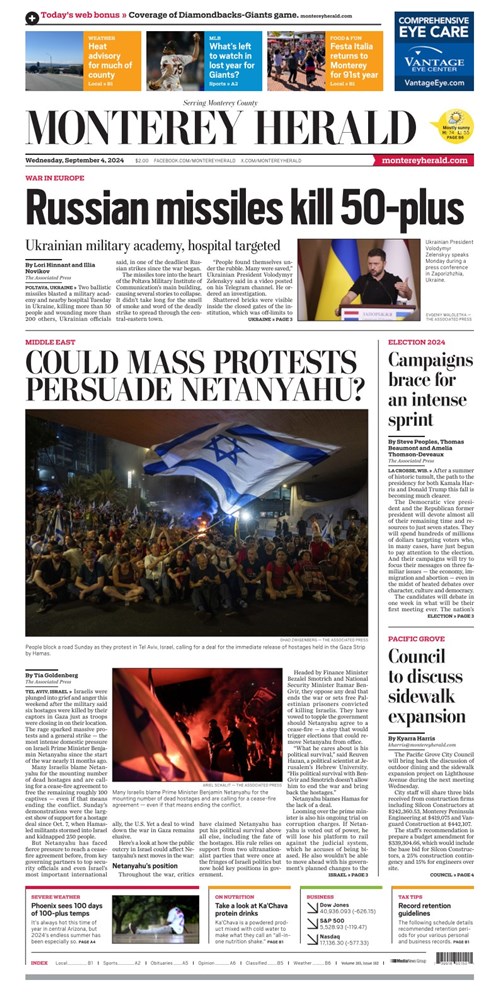
But unlike the presidential campaign, Russian media coverage of this year’s regional elections has been scarce — likely the result of a deliberate government strategy of decreasing voter turnout to a bare minimum of loyal voters, an analysis published by independent election watchdog Golos suggests.
Golos analysts believe that the Kremlin is betting on mobilizing a relatively small number of voters working in the government sector and demotivating all the rest to ensure a smooth victory for its candidates.
To help you understand what else is expected in the upcoming September elections, the Moscow Times has gathered everything known about the vote so far[.]
What will the voting look like?
Multi-day voting, which was first introduced across Russia during the Covid-19 pandemic, will be implemented in most regions for the September 2024 elections. The majority of voters will have two or three days to cast their ballots depending on the region.
Some regional electoral commissions, including in the republics of Chechnya, Tatarstan and Sakha (Yakutia), have chosen to hold voting on one day on Sunday.
Twenty-five regions will allow residents to vote online via the state portal Gosuslugi, while election officials in Moscow have scrapped paper ballots altogether in favor of online voting.
Independent observers have long argued that extended voting periods and online voting make voter fraud more likely, as it becomes harder for independent monitors and poll workers to do their jobs.
Meanwhile, the CEC advised authorities in six southern Russian regions near Ukraine and in occupied Crimea to limit access to online broadcasts from polling stations, citing public safety concerns.
G[ubernatorial] elections
Residents of 21 regions, including the city of St. Petersburg, will vote for their governors.
The ruling United Russia party has struggled to secure strong wins for its candidates in these regions in the past and incumbents hoping for reelection remain largely unpopular among local populations and elites, according to Golos.
The Urals republic of Bashkortostan will also be under the Kremlin’s close watch as Moscow-backed incumbent Radiy Khabirov stands for reelection in the wake of the January protests in support of jailed activist Fayil Alsynov.
Coupled with high numbers of war casualties in Ukraine and a slew of recent corruption scandals involving Khabirov’s inner circle, those protests forced the incumbent’s approval ratings to plummet.
But as in most other regions, the Kremlin mitigated the possibility of a potential blow in Bashkortostan by not allowing a single independent candidate on the ballot.
Regional parliament elections
Members of regional parliaments will be chosen across 11 regions, including the capital Moscow, the republics of Tatarstan and Tyva and the Khabarovsk region.
This year’s election will see the participation of a record-low number of political parties with an average of 6.2 parties represented on the ballot, according to Golos.
Golos said this worrying statistic is a direct result of an unprecedented scale of repression faced by independent politicians regardless of their political views.
“[A politician] can be declared a foreign agent or convicted of extremism to be removed from the elections,” Golos wrote in an analytical report published last month.
“And if they still [manage to] register and win, there is…the possibility of being declared a foreign agent and deprived of his mandate a couple of weeks after the elections,” the watchdog said.
Municipal elections
Elections for city mayors and city parliaments will take place across 22 regions.
Abakan, the capital of the Siberian republic of Khakassia, and Anadyr, the capital of the Chukotka autonomous district, are two of only four Russian cities where mayors are still chosen through direct election.
Mayoral elections had also been set for Ulan-Ude, the capital of the Siberian republic of Buryatia, but the region’s parliament scrapped the procedure in favor of the council electors system in March.
In St. Petersburg, where 1,560 seats in the city’s [municipal district councils] are up for grabs, candidates running from so-called “systemic opposition” parties — namely the Communist Party (CPRF) and the social-liberal Yabloko party — were barred from registering en masse.
And while CPRF managed to get 25% of its original pool of candidates onto the ballot, Yabloko will not have any representation in this year’s [m]unicipal [c]ouncil[s] race.
Occupied Ukrainian and Russian territories
In annexed Crimea, Kremlin-installed head Sergei Aksyonov will stand for reelection and members of the regional parliament and the legislative assembly of the Crimean port city of Sevastopol — its own federal subject — will be voted in.
The Kremlin refused to cancel voting in the Kursk border region, where Ukrainian forces have been carrying out a bold incursion for more than a month, and where Putin appointee Alexei Smirnov is seeking to secure his mandate as governor.
The CEC instead extended the voting period to 10 days and is supplying local election officials with bulletproof vests and helmets.
Kursk regional authorities announced Thursday that nearly 27% of eligible voters [had] already cast their ballots in the [gubernatorial] election.
GROSS: So Trump recently spoke to the Fraternal Order of Police, and he urged them to watch out for voter fraud. Let’s hear what he said.
(SOUNDBITE OF ARCHIVED RECORDING)
DONALD TRUMP: You’re in serious trouble if you get caught trying to find out what are the real results of an election. It’s an amazing thing. Do you ever see that? They go after the people that are looking at the crime, and they do terrible things to them. But the people that committed the voter fraud and everything, they can do whatever they want to do. It’s so crazy. And I hope you, as the greatest people – just as great as there is anybody in our country – I hope you watch for voter fraud.
So it starts early. You know, it starts in a week, but I hope you can watch, and you’re all over the place. Watch for the voter fraud because we win. Without voter fraud, we win so easily. Hopefully, we’re going to win anyway, but we want to keep it down. You can keep it down just by watching because, believe it or not, they’re afraid of that badge. They’re afraid of you people. They’re afraid of that.
GROSS: Nick, is that voter intimidation? He’s telling the police that these fraudulent voters are afraid of police, implying that the police should use that fear to find voter fraud so that Trump can win.
CORASANITI: I think it – certainly, were it to be carried out – would be challenged by voting rights groups, Democrats and probably even some Republicans – that that would amount to voter intimidation. It’s also pretty important to note that a couple states have very specific laws that, you know, outlaw uniformed police officers having a kind of patrolling presence in – at polling places during elections.
And, you know, there’s a very dark history in the Jim Crow South about uniformed police officers and voter suppression within the Black community. So a combination of history and state laws and then the kind of instruction that the former president was giving to these police officers could certainly amount to voter intimidation or possibly even more unlawful behavior.
She had traveled the world, had ambitious plans in business and finance, and worked on Wall Street at a major US bank, but returned to defend Ukraine side by side with her family.
Ukrainian Victoria Honcharuk graduated from the innovative Minerva University in California. Nowadays, however, she is one hundreds of combat medics at the frontline, saving the lives of wounded soldiers as they try to save us.
Ukrainska Pravda: Life recounts how Victoria’s life, full of hope and plans, changed after the outbreak of the full-scale war and how she made her choice for her homeland.
Life before the full-scale war
Victoria grew up in the small town of Baranivka in the Zhytomyr Region in an ordinary family. Her parents never traveled outside of Ukraine, so at the age of twelve she started earning money on her own because she wanted to study abroad. She admits that she could count only on herself to fulfill this desire.
As a teenager, Victoria won a grant from the U.S. State Department’s FLEX cultural exchange program, on which she studied at a high school in the United States and, after graduation, at a university in Lithuania. However, she studied at that university for only a year. Victoria says she realized that she could not spend four years in one place.
That was when she found out about Ukraine Global Scholars, an organization that helps Ukrainian children get a free education at schools and universities abroad, including in the United States.
“I grew up in a small community, and after I learned English and went to America on the FLEX program, I realized that there were so many interesting things outside of Ukraine. I always thought, We are such a big and free country, why can’t we take our resources and use them to become a country we can be proud of?
“I realized that to do this, we needed to learn from the know-how of other countries. That’s why I had a plan to go study, work for a while, gain experience, return to Ukraine, and make it the best country in the world,” recalls Victoria.
At the age of fifteen, she went to study in Texas on the FLEX program, where she lived for a year, and after studying in Lithuania, she enrolled at Minerva University, which Vika calls her “dream university.”
“It’s a university based in California, but the most interesting thing about it is that you travel and live in different countries every semester,” she says.
During her first year of study, Victoria lived in San Francisco. Later, her geography expanded significantly, and she gained knowledge and experience in South Korea, India, the United Kingdom, Germany, Argentina, Taiwan, and elsewhere.
“I had two majors there: computer science and business and finance statistics. I was most interested in combining and using statistics and data science in business and finance.
“During my last two years, I wrote a research paper on M&A (mergers and acquisitions) at large companies. During my studies, I worked in startups as an investment analyst, data analyst, and financial manager. My two specialties have always been intertwined in my work,” says Honcharuk.
After graduating in 2022, Victoria worked with technology companies in Citigroup’s investment banking department, as well as in the investment banking department of Morgan Stanley, a major holding company.
Victoria traveled the world and worked on Wall Street at a major U.S. bank, but returned to defend Ukraine side by side with her family.
From Wall Street to the frontline
When the full-scale war broke out, Victoria’s entire family—her sister, mother and father—decided to join the ranks of Ukraine’s defenders.
In the early months of the Russian invasion, Victoria was involved in volunteer work, throwing her energy into helping her family and the units in which they served.
“My goal was to provide my family and their units with everything they needed. It turned into small project of mine, then into an NGO registered in Britain. That’s what I was doing before I came back to Ukraine,” she says.
Victoria raised funds and was involved in delivering tactical medicine supplies. Thanks to her sister, who worked in medical evacuation, Vika always knew what to deliver and when and where to deliver. However, she could not stay in the United States for long, so in the winter of 2022, she decided that she had to return to Ukraine and “help with her hands.”
She admits that this decision was a “big leap” for her. Mentally, she readied herself for the worst—that she would live “in the open air in a puddle” and not eat anything. Nevertheless, she stresses that she “didn’t think twice” about leaving her warm New York office to help her family and her country.
“I worked on Wall Street at the largest bank in the country. The day before I went to Ukraine, we had a big gala event for clients, and then I got on a plane the next morning, went to Ukraine, put on my uniform and set off. It was winter, it was cold. A very big contrast.
“I had been preparing myself for this, and it was what I really wanted. As soon as I found the opportunity to be on the frontline, to work with my hands, to be part of the units, everything fell into place,” says Victoria after a year of service as a combat medic.
By the way, she acquired the skills for working as a paramedic by training with the Hospitallers. She learned some things from her sister and other combat medics, and the rest was gained on the frontline.
“As soon as I found the opportunity to be on the frontline, everything fell into place,” says Victoria Honcharuk.
The most difficult choice
Victoria serves in one of the hottest areas of the frontline—Bakhmut. Before that, she worked in Avdiivka. Now she is the leader of her crew. For the last six months she has been working as a paramedic in the brigade where her sister serves as an assault rifleman.
As the combat medic explains, there are two stages of evacuating the wounded: “case evacuation” and “medical evacuation.” Case evacuation is the first stage of evacuation from the frontline, when an armored vehicle or pickup truck enters the most difficult areas and evacuates the wounded from the battlefield to a stabilization center.
A medevac unit is a medical crew that takes the wounded from a casevac unit and evacuates them to the stabilization center. Vika initially worked in casevac, before switching to medevac.
“This person often changes. At first, I had a doctor with too much experience, and he was transferred to a stabilization center, and we were given a third person by the battalions we worked with.
“Broadly, we work like a crew, just like mobilized military medics. We are just an additional team. We arrive on the battlefield, take the wounded, and hand them over to experienced medics,” says the paramedic.
According to Victoria, her team has changed several times during her year of service, as the people who make up the team work on a volunteer basis. Many of them have regular jobs, which they alternate with volunteering at the front.
“They are at work for a month, and with me for a month. Right now, the most stable members of my team are my driver and me. My driver’s cousin was my sister’s commander, who unfortunately was killed in August this year, just as we started working with them. The driver and I found common ground and continue to work together. The third person is a doctor,” says Victoria.
Paramedic Victoria Honcharuk
The paramedic also spoke about the most difficult moments she has had to face during her year at the front. According to her, the most difficult thing is to make decisions in circumstances in which other people’s lives depend on them.
“There were moments when we came under shelling and had to decide what we were going to do: move, find shelter, or not evacuate at all. It was a choice between evacuating the wounded or hiding from the shelling. We needed to weigh the chances that we would get injured or that the injured person would die if we didn’t evacuate them,” says Victoria.
There were situations in which they had to approach the battlefield in an unarmored vehicle. They then had to carefully weigh all the risks.
“We drove an ordinary ambulance to within 500 meters of the contact zone. We were on duty together with an armored car and realized that if something hit within twenty meters of us, we were finished.
“My vehicle still has a broken windshield after one of these collisions from ten meters away. After that, we would have to decide what we were going to do, so it can be stressful,” Victoria admits.
According to Victoria, the hardest part is making decisions in situations in which other people’s lives depend on them.
Amid the challenges she faces today, Vika recalls her studies and experience abroad with gratitude, saying that working on Wall Street toughened her up, because sometimes she had to work hard, to the point of exhaustion. She could not sleep for days or even weeks until she got the job done.
“It’s the same here. If the enemy mounts an assault, we don’t sleep—we work. Sometimes you just have to wait, just like waiting four hours on Wall Street for someone to send you a financial model. Here [on the frontline — ed.] you wait for a challenge. Very transferable skills [in English in the original — TRR],” she says with a smile.
Frequent traveling also played a significant role in her “toughening-up.” Thanks to this, Victoria has all the necessary vaccinations.
“It is a very good thing when you are a combat medic, because I come into contact with blood. When your gloves get torn, you can get infected with something. But I lived in India and Korea, so I have all the vaccinations. I can adapt quickly, and I don’t need much to feel comfortable, so I didn’t need to get used to the minimalist life,” she says.
In addition to her work as a paramedic, Victoria is also involved in military tech projects with Ukrainian developers.
“I consider the development, use, and integration of AI into military operations to be one of my main priorities,” she stresses.
At first, Vika worked in “casevac,” before switching to “medevac.”
“Everyone I want to spend my time with is at war”
According to Victoria, she has short leaves from work, but she lives with her crew. She admits that it is hard to see people in the rear who are “disconnected from the war and think that they will be spared.”
“I have literally two or three friends left. Unfortunately, I don’t even want to talk to them now—all the same, I live with my crew. I need one day to see my parents, another day to eat everything I want to eat, and that’s it, I can go back.
“There is no connection due to this. Everyone I want to spend my time with is at war. We have leave for a couple of days, but we come back to civilian life with the people we live with on the frontline, and we live in our own bubble,” says Victoria.
Given how her life and realities have changed, she underscore that she doesn’t regret any of her choices. When asked what advice she would give to her fifteen-year-old self if she could, Victoria said:
“Well done. I don’t have any regrets. I would have worked harder on my physical fitness. (Laughs.) I would have told her that no matter what your profession and lifestyle is, you need to be strong and in the best shape you can be, because it’s physically hard nowadays.”
“There is nothing I regret,” the paramedic stresses.
Victoria’s experience as a woman in the military
According to Honcharuk, women in the army need to work “a little harder” at their positions, as there are gender biases there, as well as in the broader society.
“Every newcomer has to work hard to gain attention, but women have a little more difficulty due to prejudice. But if you don’t give up and show that you are a good fighter, that you joined up for the right reason, that you will work hard, you will get respect from people.
“I think the problems in the army are the same as the problems in society. It’s just a smaller version [of society],” Vika adds.
Vika is convinced that the fight for Ukraine is not only the duty of men.
And yet, she denies that men treat women in the army badly.
“I often hear that men treat women in the army badly, but this is not entirely true. Many women in Ukraine, unfortunately, position themselves as weak and needing protection. But we have to stand up for ourselves, stand up for Ukraine,” the paramedic argues.
She is convinced that the fight for Ukraine is not the duty of men, but of every citizen.
“Love for Ukraine is nurtured, and not necessarily from an early age. It’s not something you can kill. My sister and I are probably a very good example,” says Honcharuk.
The interview was recorded by Veronika Harmash, communications manager at Ukraine Global Scholars, and adapted by Diana Krechetova, journalist at Ukrainska Pravda: Life. All photos are from Victoria Honcharuk’s personal archive.
Packages, parcels, topping up personal accounts, and buying prisoners books and periodical subscriptions are a serious expense. Solidarity Zone pays for all or part of these expenses for 17 people imprisoned for their anti-war resistance.
Some of our beneficiaries have no one to support them outside the prison walls. Others have loved ones who are not financially able to provide for a person in prison. We try to support those prisoners, and provide them with at least the basic necessities.
We spend about €1000 a month on parcels, packages and topping up personal accounts for Solidarity Zone’s inmates.
Now our financial resources are running out, and we don’t have the means to provide our beneficiaries with everything they need in the next month. Therefore, we are launching a fundraiser to replenish resources and continue humanitarian support for prisoners arrested for anti-war resistance. We’re sure: together we can do it!
We are launching a fundraiser for €2000 — that would be enough to continue supporting political prisoners to the same degree in September and October. If we collect more, those funds will be used in the following months. Or perhaps, we’ll be able to support someone else.
Limited edition posters!Abolish! HoodieSolidarity ScarfDerail T-ShirtAbolish! T-Shirt (Grey)Abolish! T-Shirt (Black)Till the end of September you get a pack of three posters when you order any merch
Solidarity Zone has merch and so we are announcing a promotion that runs until the end of September. When you order any of our merch — a t-shirt, scarf or hoodie — you get a pack of three A3-format posters as a gift.
You’ll find more photos of the merch, size charts, and an order form on our website.
All proceeds from sales of our merch go to support the Solidarity Zone collective. We are a horizontal, self-organized initiative and we have no permanent source of funding. So, your support is crucial to us!
The merch is delivered by post from the EU.
For security reasons we do not send merch to Russia and Belarus, nor can we guarantee delivery to Georgia due to the peculiarities of the country’s postal service.
Russian FSB come for 70-year-old mother of imprisoned Crimean Tatar civic journalist Seiran Saliyev (Kharkiv Human Rights Protection Group, September 2nd)
Court in Russia rules that 20-year sentence against Ukrainian POW for defending Mariupol is not long enough (Kharkiv Human Rights Protection Group, September 2nd)
News from the front:
“We will meet the most resistance in Kursk.” The Kursk offensive through the eyes of three Ukrainian servicemen (Ukrainska Pravda, August 27th)
What draft laws for the protection of war victims should be adopted during the new session of the Verkhovna Rada – road map (Zmina, September 3rd)
The team of the film “Songs of Slow Burning Earth” organized an event at the Venice Film Festival to support Ukrainians in captivity (Center for Civil Liberties, September 6th)
“Degradation. Torture. Degradation”. A poetical video project in Kyiv talks about Russian captivity (Center for Civil Liberties, September 3rd)
Our friend Taras Bilous has been awarded the Daniel Singer Prize (Solidarity Collectives, September 3rd)
Savage torture and 11-year sentence for opposing Russia’s occupation of Kherson (Kharkiv Human Rights Protection Group, September 6th)
Cultural genocide is hard to prove, says US professor (Tribunal for Putin, September 6th)
Ukraine lodges war crimes probe after Russians shoot unarmed Ukrainian POWs in the back (Kharkiv Human Rights Protection Group, September 4th)
International solidarity:
On 7 September, our banner, “From Ukraine to Palestine, occupation is a crime”, was on the national march for a ceasefire in Gaza, carried by supporters of the Ukraine Information Group and Unite the Struggles (Ukraine Information Group, 8 September).
This bulletin is put together by labour movement activists in solidarity with Ukrainian resistance. To receive it by email each Monday, email us at 2022ukrainesolidarity@gmail.com. To stop the bulletin, reply with the word “STOP” in the subject field.
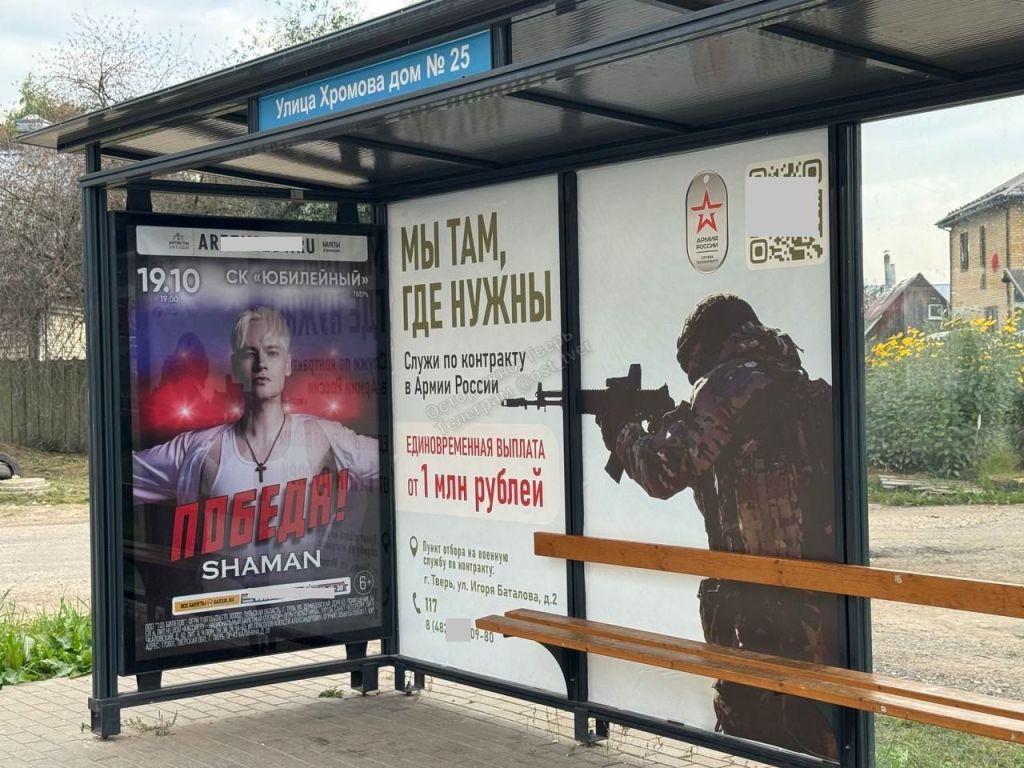
Top: “25 Khromov Street.” Left: “Shaman: Victory!” Right: “We are there where we need to be. Serve as a contract soldier in the Russian Army and get a one-time payment starting at one million rubles.”
Source: Caution, Tver! (Telegram), 1 September 2024. Thanks to Andrey Anissimov for the heads-up. “Basurka” is the faux-Russian nonce word I coined for this distressing post. It was suggested to me by our building’s bilingual garbage bin.||| TRR
Many acquaintances from Russia condemn me for calling for the bombing of Russian factories and supporting the Ukrainian army’s Kursk offensive. They genuinely don’t get how one could wish defeat on one’s own country. Some have quietly unfriended me, while others continue to read my posts but are perplexed and perhaps even offended by them.
They are often the same people who “love (their) country no matter what.” This is where you all and I part ways. You REFUSE to look at reality—you turn away from it in order to love your country without breaking a sweat, as if love were a chain and you’ve been chained to a radiator since childhood. It works differently for me. I make my own decision about whether I like this scene or not. And, if my country jumps from one bloody shitstorm to another like a maniac running in circles, it’s not worthy of my love and I rescind its right to be my country. People are another matter, especially the unborn. It makes sense to fight for them. But it’s secondary to me what the country they’ll live in will be called and how big it will be. If they’ll have a better chance for a decent and safe life in a small country, then we should choose a decent and safe life for them.
Russia is an anti-human phenomenon. It is a threat to the entire world and to the people within the country. Like any rabid macaque with a grenade, it must be stopped. Look reality in the eye at last. Don’t look away. It’s happening right now, and you, with your unadulterated love, are a part of it.
Image number one. A fourteen-year-old girl dressed in white sneakers and a white tank top, sitting on a bench in the yard of her house on an ordinary summer day. It all looks ordinary, but there is one catch: the girl is dead. A fragment of a cluster bomb, which the Russians dropped on Kharkiv on 30 August, tore off the child’s head. Everything happened instantly; no one had time to hide. The girl’s body remained seated on the bench. Perhaps her last thoughts were of her father, who had gone missing in action in the war with Russia. The family knows he was killed, but they can’t get his body back. The worst part is that he gave his life thinking he was protecting his daughter. Russia got to her, though, and so the family’s story is over. Father and daughter are not alive because they were born near Russia. Other Kharkiv residents who were killed in that senseless attack are also “guilty” in this sense.
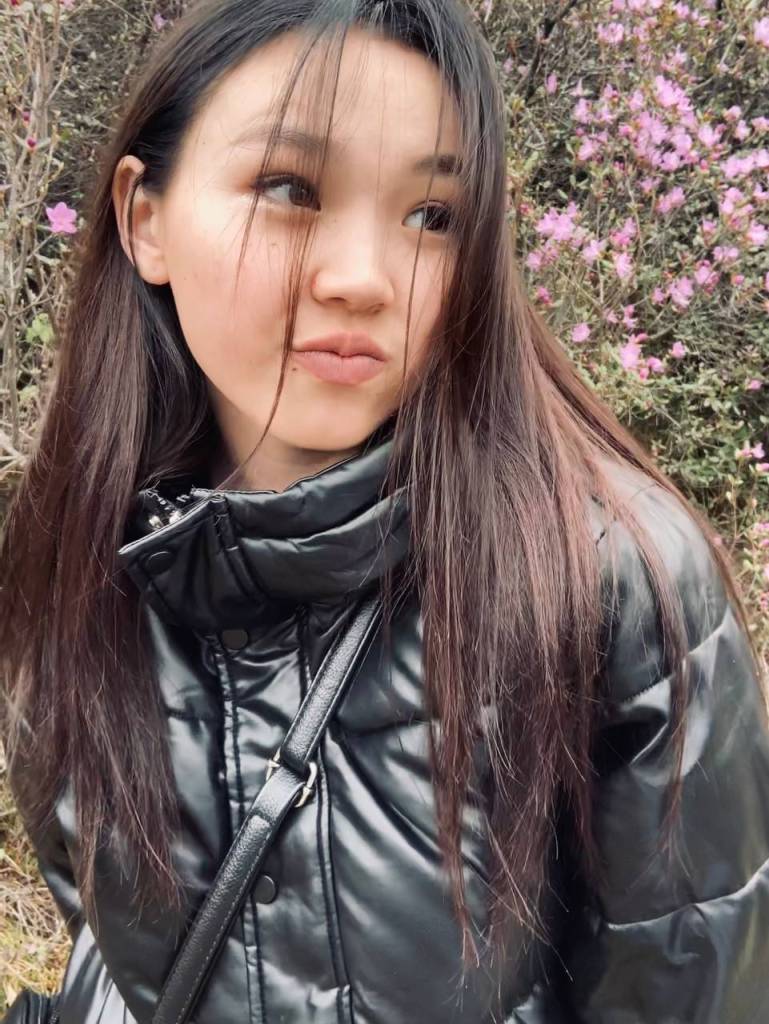
Image number two. A girl again, but from another city. She is fifteen years old and has come to Novosibirsk from the Altai to enroll in the Olympic reserve school. She is quite beautiful, gentle, kind, and has great hopes. She doesn’t understand why her fellow students call her a “dirty, slant-eyed pig.” They secretly pour waste into her backpack and mock her appearance in public. After two years of this terror, which was encouraged by coaches and school officials, the formerly cheerful girl will come to realize that this life is not for her. In her seventeenth year, she will kill herself and leave a suicide note on her Telegram channel. She will say in the note that the unbearable racist bullying was her reason for leaving this life.
The school will then post a touching obituary on their Vkontakte page. They won’t specify the cause of death, of course. All comments expressing outrage over the bullying will be assiduously deleted. Only the wishes of “soft clouds” and broken heart emojis will be left untouched.
Incitement to suicide is a criminal offense, actually. But no one will answer for the death of Ksenia Cheponova because it is not the custom in Russia to punish one’s own kind for a crime against outsiders. “You’re not my brother, black-ass louse,” says the immortalized Russian movie hero. These words are much more than a mere insult: this is how millions of people in Russia understand justice. Moral rightness is not based on your deeds, but on whether you are an insider or an outsider. It doesn’t matter what you did. What matters is whether you are stronger than me at the moment.
Ksenia Cheponova
Image number three. Beslan. September first marked the twentieth anniversary of the mass murder of children by Russian security forces in that ill-fated school. For twenty years, the perpetrators have never been held accountable for lying about “350 hostages.” There were 1,100 hostages, as we know. No one has been held accountable for firing from a tank at the building where the children were. Three hundred and thirty-four people were killed during the assault, including one hundred and eighty children. This terrorist attack might not have happened if Russia hadn’t started a war in Chechnya. The hostages might have lived if the security forces had actually tried to save them. But they were killed and twenty years on their sacrifices are still covered in lies and impunity.
All of those people could have lived if it weren’t for their country, sick with messianism and aggression. And the “it’s like this everywhere” ploy doesn’t work. No country in the world has 60 million lives lost in wars, gulags, and famines under its belt.
The time for saying “no war” has passed. It is clear that where there is a “great Russia,” there will be perpetual war. That’s why we should say no to Russia, and yes to independent Ukraine, Ichkeria, Buryat-Mongolia, and all free nations.
Or is the idea of a united Russia dearer than the lives of your children?
Two ballistic missiles blasted a military academy and nearby hospital Tuesday in Ukraine, killing more than 50 people and wounding more than 200 others, Ukrainian officials said.
The missiles tore into the heart of the Poltava Military Institute of Communication’s main building, causing several stories to collapse. It didn’t take long for the smell of smoke and word of the deadly strike to spread through the central-eastern town.
The strike appeared to be one of the deadliest carried out by Russian forces since the war began more than 900 days ago, with Russia’s Feb. 24, 2022, full-scale invasion.
“People found themselves under the rubble. Many were saved,” Ukrainian President Volodymyr Zelenskyy said in a video posted on his Telegram channel. He ordered an investigation.
Shattered bricks were visible inside the closed gates of the institution, which was off-limits to the media, and small pools of blood could be seen just outside hours later. Field communications trucks were parked along the perimeter. Roads were covered in glass from shattered apartment windows.
“I heard explosions … I was at home at that time. When I left the house, I realized that it was something evil and something bad,” said Yevheniy Zemskyy, who arrived to volunteer his help. “I was worried about the children, the residents of Poltava. That’s why we are here today to help our city in any way we can.”
By Tuesday evening, the death toll stood at 51, according to the general prosecutor’s office.
“My deepest condolences to the families of those killed and injured in the Russian missile attack on Poltava,” Ukraine’s first lady, Olena Zelenska, posted on social media Tuesday. “This is a shocking tragedy for the whole Ukraine.”
Filip Pronin, governor of the region that bears Poltava’s name, announced on Telegram that 219 people were wounded. Up to 18 people may be buried under the rubble, he said.
Ten apartment buildings were damaged, and more than 150 people donated blood, Pronin said.
He called it “a great tragedy” for the region and all of Ukraine, and announced three days of mourning starting Wednesday.
[…]
The academy trains officers in communications and electronics, honing some of the most valued skills in a war where both sides are fighting for control of the electronic battlefield.
“The enemy certainly must answer for all (its) crimes against humanity,” Pronin wrote on Telegram.
The Kremlin offered no immediate comment on the strike. It was not clear whether the dead and wounded were limited to Ukrainian military personnel, such as signal corps cadets, or if they included civilians.
Since it embarked on its full-scale invasion in early 2022, the Russian military has repeatedly used missiles to smash civilian targets, sometimes killing scores of people in a single attack.
Some of the deadliest such assaults included a 2022 airstrike on a theater in Mariupol that killed hundreds of civilians sheltering in the basement and a strike that same year on the train station in Kramatorsk that killed 61. Apartment buildings, markets and shopping centers have also been targeted.
Poltava is about 350 kilometers (200 miles) southeast of Kyiv, on the main highway and rail route between Kyiv and Ukraine’s second-largest city, Kharkiv, which is close to the Russian border.
The attack happened as Ukrainian forces sought to carve out their holdings in Russia’s Kursk border region after a surprise incursion that began Aug. 6 and as the Russian army hacks its way deeper into eastern Ukraine.
The missiles hit shortly after an air-raid alert sounded, when many people were on their way to a bomb shelter, Ukraine’s Defense Ministry said, describing the strike as “barbaric.”
Rescue crews and medics saved 25 people, including 11 who were dug out of the rubble, a Defense Ministry statement said.
The strike came on the day that Russian President Vladimir Putin visited Mongolia. There was no indication that his hosts would heed demands to arrest him on an international warrant for alleged war crimes.
Zelenskyy repeated his appeal for Ukraine’s Western partners to ensure swift delivery of military aid. He has previously chided the U.S. and European countries for being slow to make good on their pledges of help.
He also wants them to ease restrictions on what Ukraine can target on Russian soil with the weapons they provide. Some countries fear that hitting Russia could escalate the war.
“Ukraine needs air defense systems and missiles now, not sitting in storage,” Zelenskyy wrote in English on Telegram.
“Long-range strikes that can protect us from Russian terror are needed now, not later. Every day of delay, unfortunately, means more lost lives,” he said.
Ukraine’s air force said Monday that Russia had launched an overnight barrage of ballistic and cruise missiles and drones at Kyiv as children prepared to return to school. Multiple explosions echoed across the capital early Monday morning as Ukraine’s air defenses shot down many of the weapons, causing damage and fires as the debris fell onto the capital.
Ufa’s Kirov District Court has remanded 20-year-old university student Makar Nikolayev in custody to a pretrial detention center for a month on charges of “promoting terrorism.” The court issued its ruling on 30 August, but it was made public only on Monday, 2 September, as reported by the Telegram channels of Baza and Idel.Realities, who cited sources. The court confirmed Nikolayev’s arrest to news website Ufa1.ru.
In 2020, Nikolayev, then a prep school student, designed an information retrieval method for creating a Russian national archive on the history of the Great Patriotic War. The boy wanted to recover information about his great-grandfather and in the process designed an entire system. His project, “Methodology for Creating a Family Archive,” won the Russian national contest “My Country — My Russia,” one of the projects of the Russia Is a Land of Opportunities presidential platform.
Later, Nikolayev went to Germany to study. According to Idel.Realities, Nikolayev had been studying at a university in Frankfurt am Main in recent years. In August 2024, he came home on holiday to Ufa, where he was detained.
According to police investigators, during his time abroad, Nikolayev wrote comments on social networks supporting Ukraine and urging people to join the Russian Volunteer Corps. The stipulated punishment for violating Russian Federal Criminal Code Article 205.2.2 (“Public calls to carry out terrorist activities; public justification of terrorism or promotion of terrorism, committed using mass media or electronic or telecommunication networks”) is five to seven years in prison.
Saint Pavel? A scene from a march protesting the blocking of Telegram, St. Petersburg, 1 May 2018. Photo: Olga Maltseva/AFP, via Important Stories
French Kiss is an enchanting cabaret show in the style of the Moulin Rouge, as performed by the world-famous Bize Lisu Show Ballet.
The ballet dancers have already conquered the whole world with their performances. They have garnered roaring applause at the birthday of the Prince of Monaco and in the Kremlin Palace, at Europe’s oldest theaters in Malta and the largest modern concert halls in China.
The unique hand-sewn costumes, the sensual dances, the expressive vocals and the compère’s unsurpassed humor are all part of the grandiose performance.
Duration: 2 hours (with 1 intermission) Age limit: 18+
Performers: Bize Lisu Show Ballet Vocals – Yana Radion, Maria Mantrova, Anastasia Radion Compère – Denis Groshev
*Seat numbers 200 to 220, at the buffet tables in the second row of the balcony.
“French Kiss, the Show”
The venue The show French Kiss will take place in one of the most entrancing places in St. Petersburg— the cultural space Gaika Space. And it will be held in LUXURY format [sic], in which the audience is able to choose festive board tables for two to four people.
The original menu, featuring delicious appetizers and exquisite drinks from the bar, will help you not only to enjoy the show, but will plunge you into a world of gastronomic discoveries. Our show will make your evening unforgettable!
Secure free parking is provided to guests of the show for the entire duration of the performance.
Source: Bileter.ru. Translated by the Russian Reader
A very cold welcome awaited Pavel Durov in France, but it increasingly seems this is exactly what Durov was aiming for.
Did he come clean? No, it’s just business
Only a week into the discussion of the Pavel Durov case did commentators begin recalling what kind of person he was, and several stories emerged about his life, which, incidentally, has involved support (including financial support), from the “authoritative” Petersburg entrepreneur Mikhail Mirilashvili. Without this support, Durov’s main business venture, the social network VKontakte, might perhaps not have taken off. (Formally, Mikhail’s son, Vyacheslav, was involved in the business, but the money belonged to Mirilashvilipère.) To complete the picture, it should be remembered that Mikhail Mirilashvili “developed” (as they say) Petersburg’s casinos, for licensing of which the then-deputy mayor of St. Petersburg Vladimir Putin was responsible.
Vladimir Putin (left) and Mikhail Mirilashvili (right)
Vkontakte rose and flourished on pirated content, which is still abundant on the network, despite the fierce efforts to combat it. Business journalists relish recalling how Durov fought for Vkontakte—not in the sense of freedom of speech, but in the sense of the value of his stake in the social network—and won, pocketing 400 million dollars.
For an interpretation of Durov’s arrest and persecution by the French authorities, see Baruch Taskin and Aaron Lea’s column. I would like to reiterate that Durov is first and foremost a businessman, and a very cynical one at that. It suffices to recall [the time Durov threw money out of a window] in Petersburg and Durov’s reaction [to the crowd’s reaction and the public and media backlash]. He laughed, before summarizing his mockery in philosophical terms:
“We refuse to accept a world where people can betray their humanity for money. If there are people who agree to do it, their behavior should be severely ostracized.”
We know nothing about Durov’s involvement with the FSB—all our assumptions are based on circumstantial evidence—but the left-wing albeit decent newspaper Liberation has written about his cooperation with the French security services, quoting Durov’s own statements.
Pavel Durov (center) may even benefit from his arrest in France: the court ruling will be an excuse for Telegram’s transition from a media platform to a crypto-business.
Source: Moscow Times Russian Service weekly newsletter, 1 September 2024. All images and captions were included in the original publication. Translated by the Russian Reader
“Pavel Durov launched money from a window (Vesti report)”
Pavel Durov launched paper airplanes with five-thousand ruble bills on board into a crowd on 26 May 2012, which was St. Petersburg City Day. How the crowd lunged for the five-thousand ruble bills can be seen on the footage recorded by the Kazan Cathedral superview webcam. About ten banknotes were thrown, after which the crowd finally became furious and the amusement was stopped.
The webcam is installed on Nevsky Prospekt. The webcam offers a view of the Kazan Cathedral. On the left in the frame is the house of the Singer company. On the days of city holidays, Nevsky Prospekt in this section becomes pedestrian. Live 24/7 we broadcast the life of our metropolis.
Kazan Cathedral (Cathedral of the Kazan Icon of the Mother of God) is one of the largest churches in St. Petersburg. It was built on Nevsky Prospekt in 1801–1811 by architect Andrey Voronikhin in the style of Russian classicism to store a revered list of the miraculous icon of the Mother of God of Kazan. After the Patriotic War of 1812, it acquired the significance of a monument of Russian military glory. In 1813, the commander Mikhail Illarionovich Kutuzov was buried here and the keys to the captured cities and other military trophies were placed.
Source: Taxi Crew (YouTube), accessed 1 September 2024. Happening upon this livestream of Kazan Cathedral and environs, the neighborhood where I lived for my first two years in Petersburg, was oddly reassuring, and so I left it on in the background as I worked on this “collage” of news and views and images. It was only now, as I was finishing the piece, that I realized that Kazan Cathedral itself is a monument to the centuries-long profound misunderstanding, sometimes tawdry, sometimes violent, that goes by the name of “Franco-Russian relations” in polite society. ||| TRR
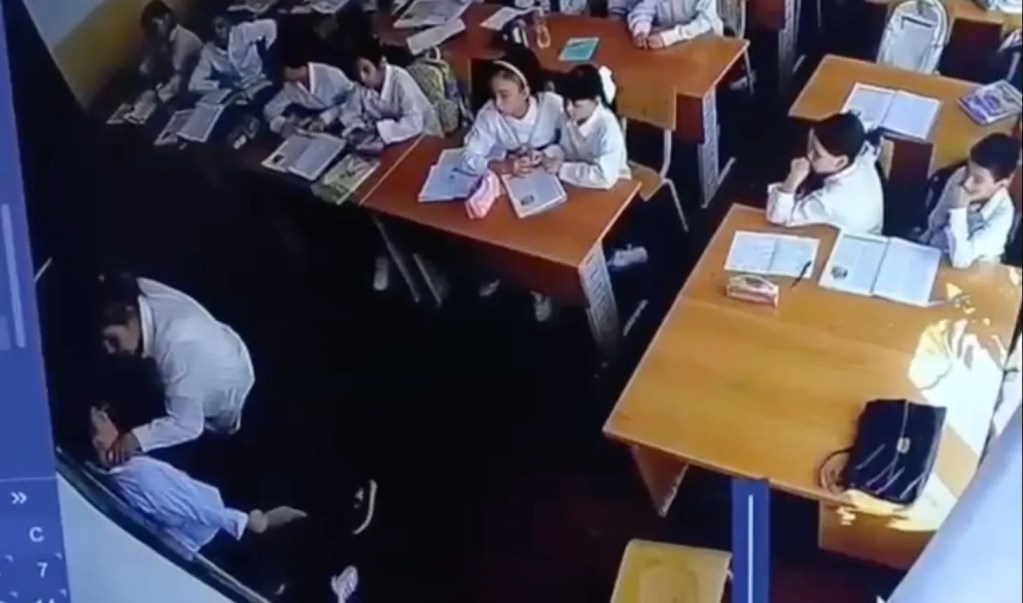
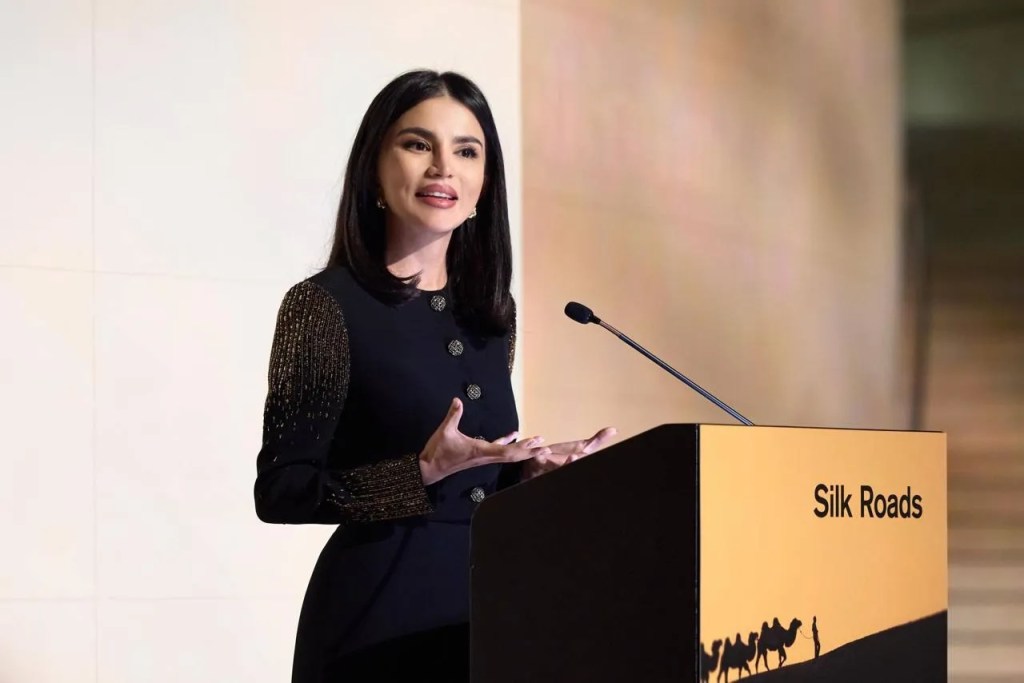
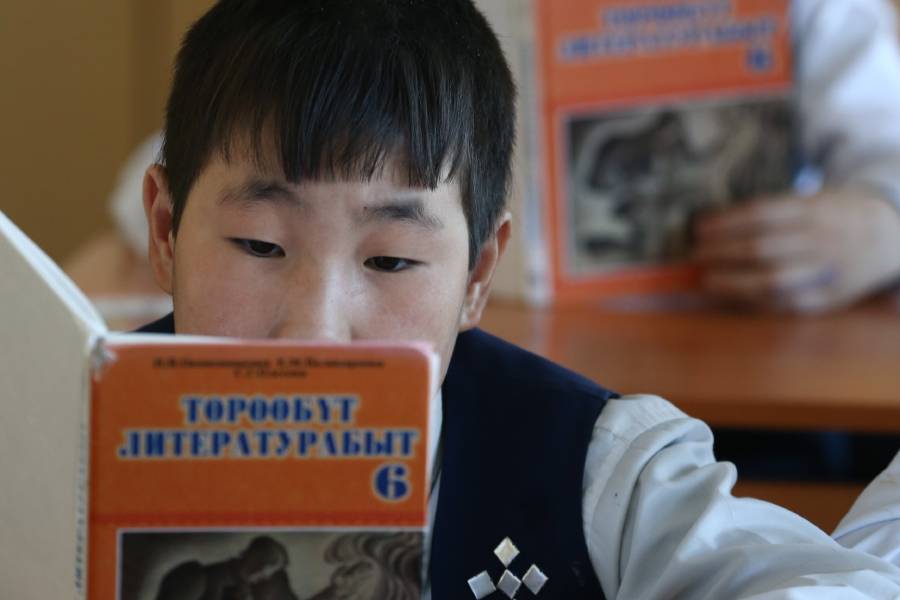
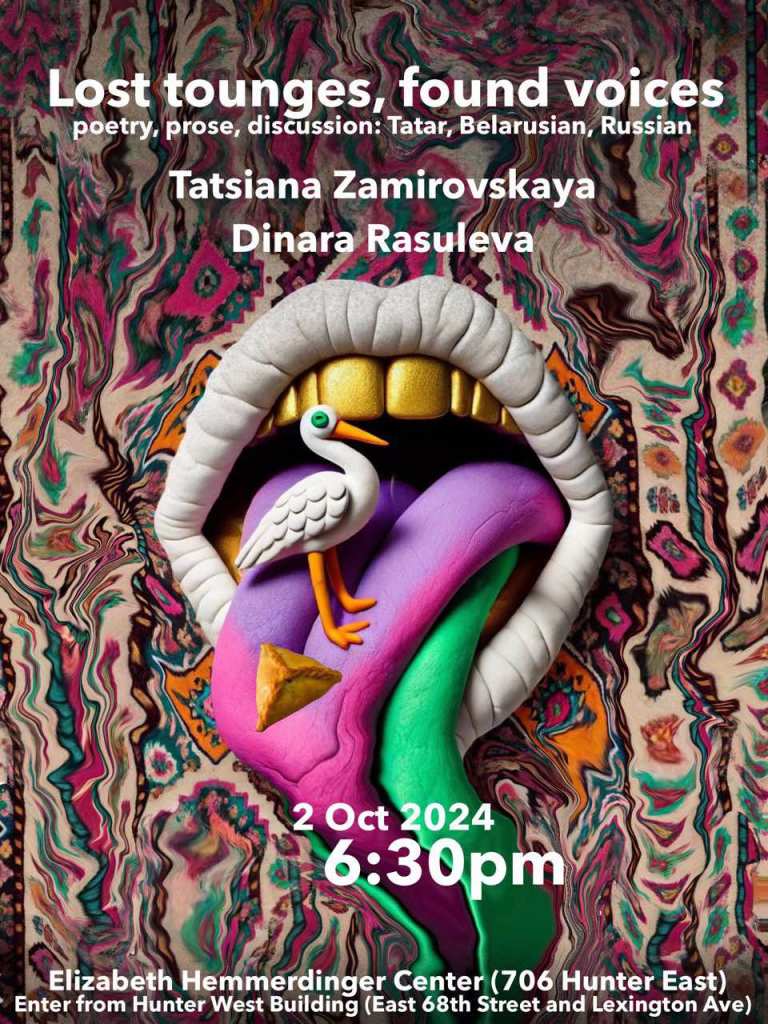


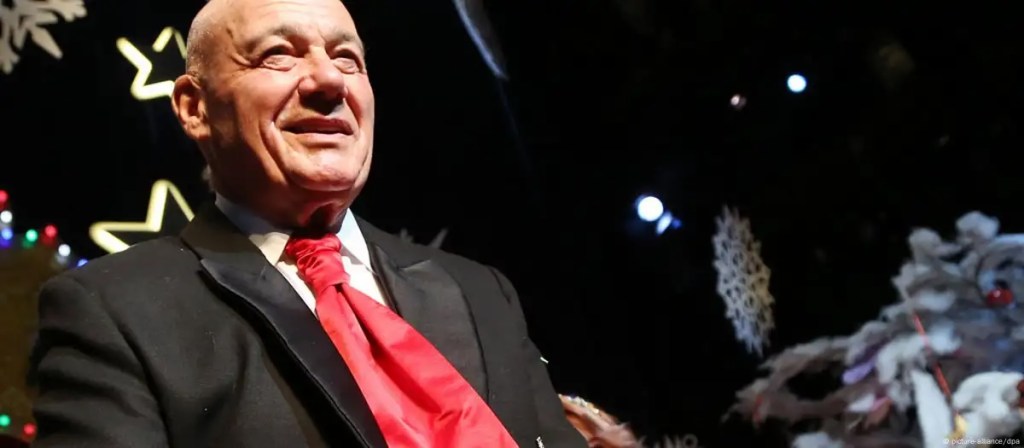
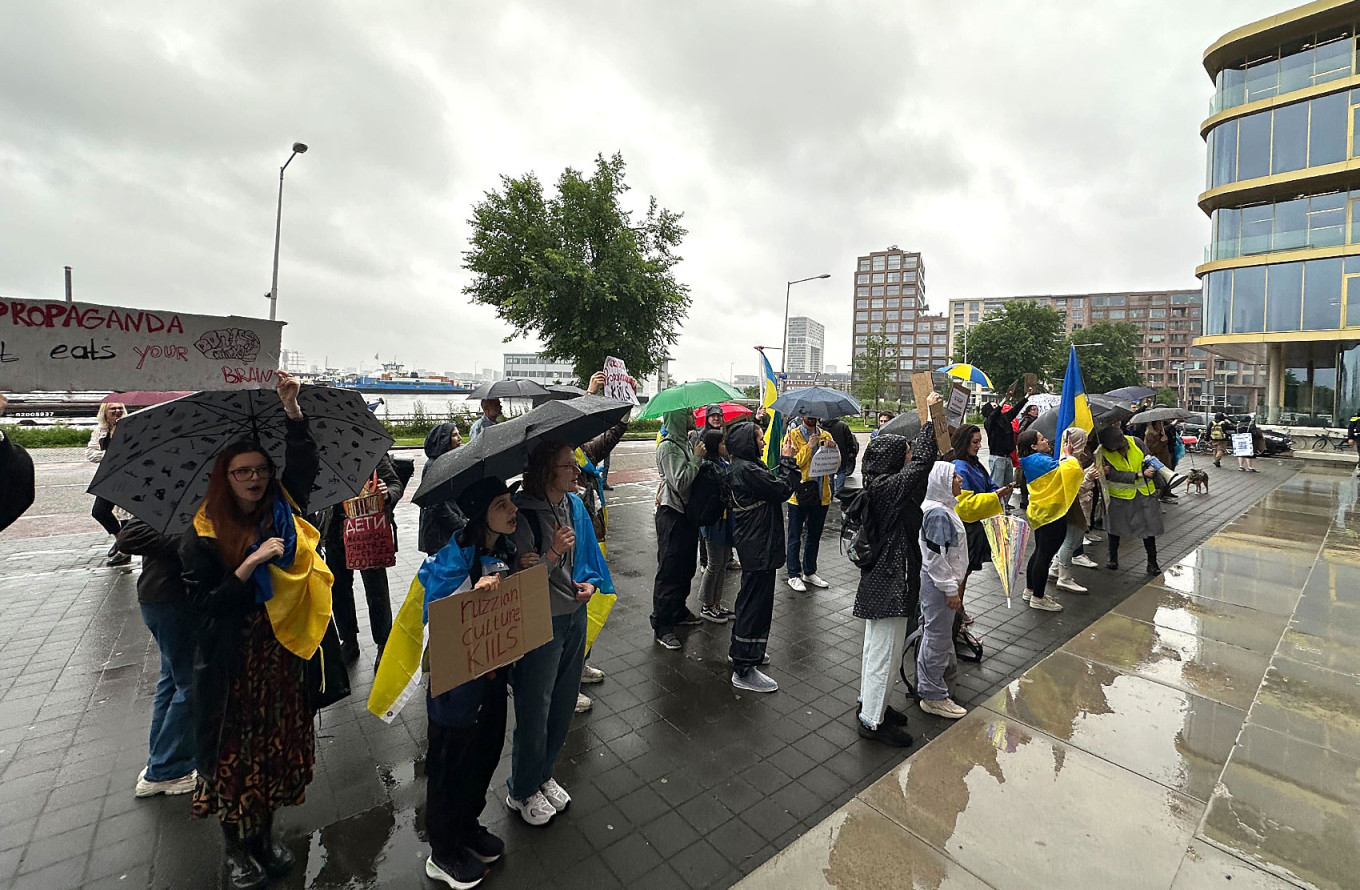

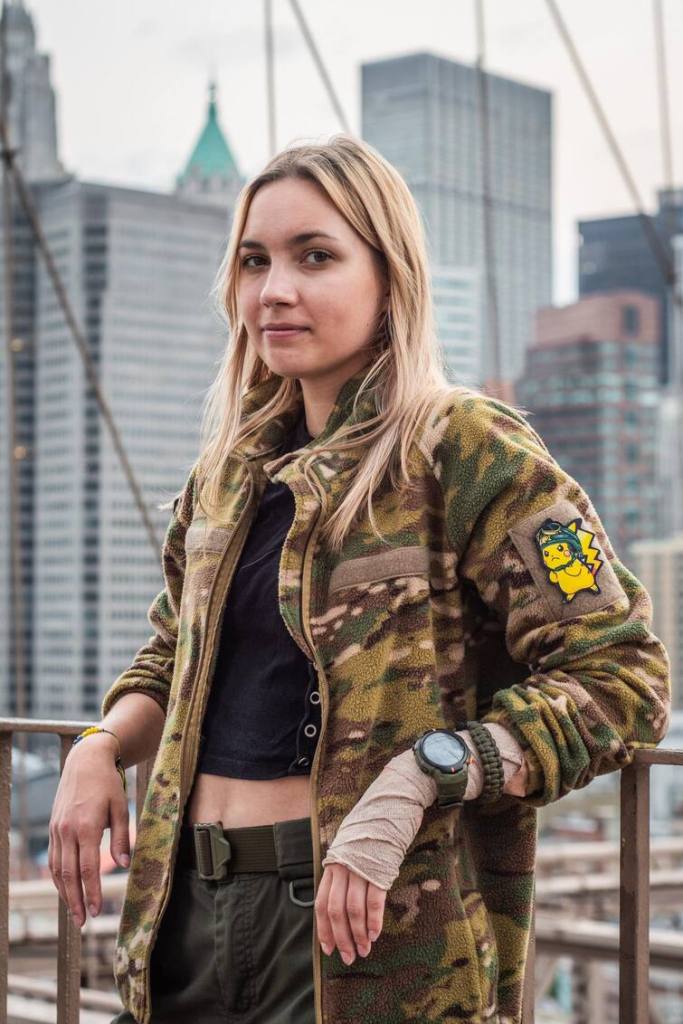

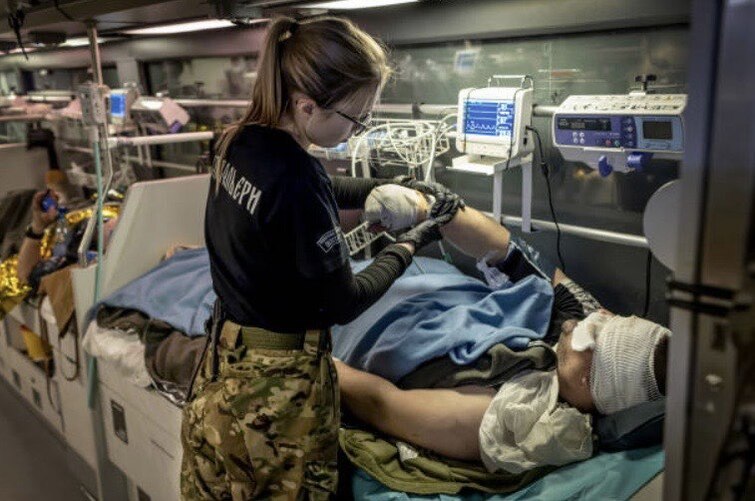

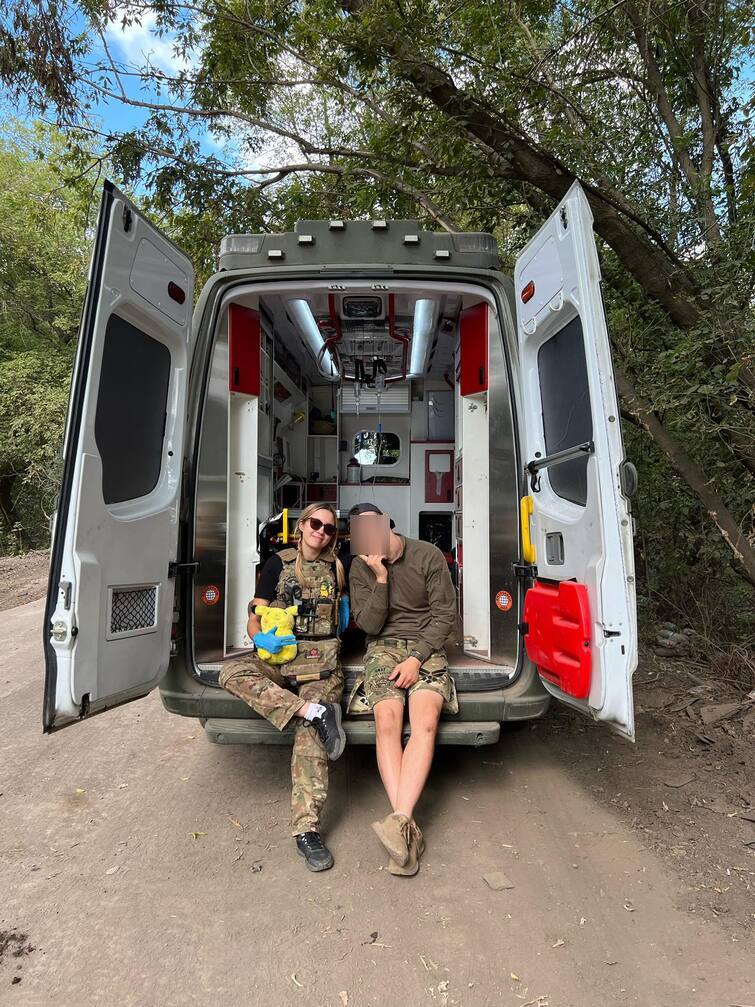

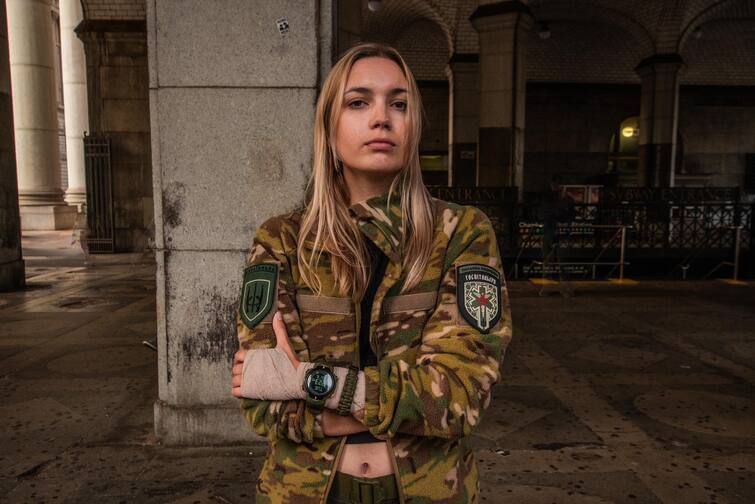

 PayPal: solidarity_zone@riseup.net
 Cryptocurrency:
 Sharing is a way of showing support!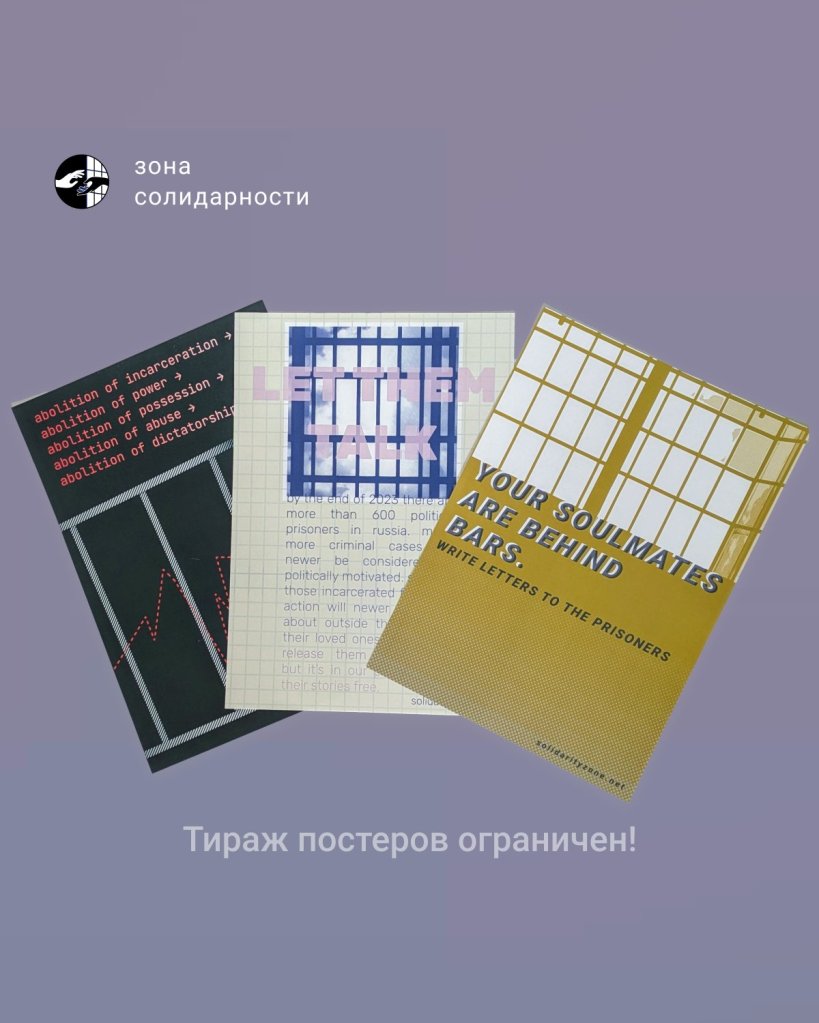

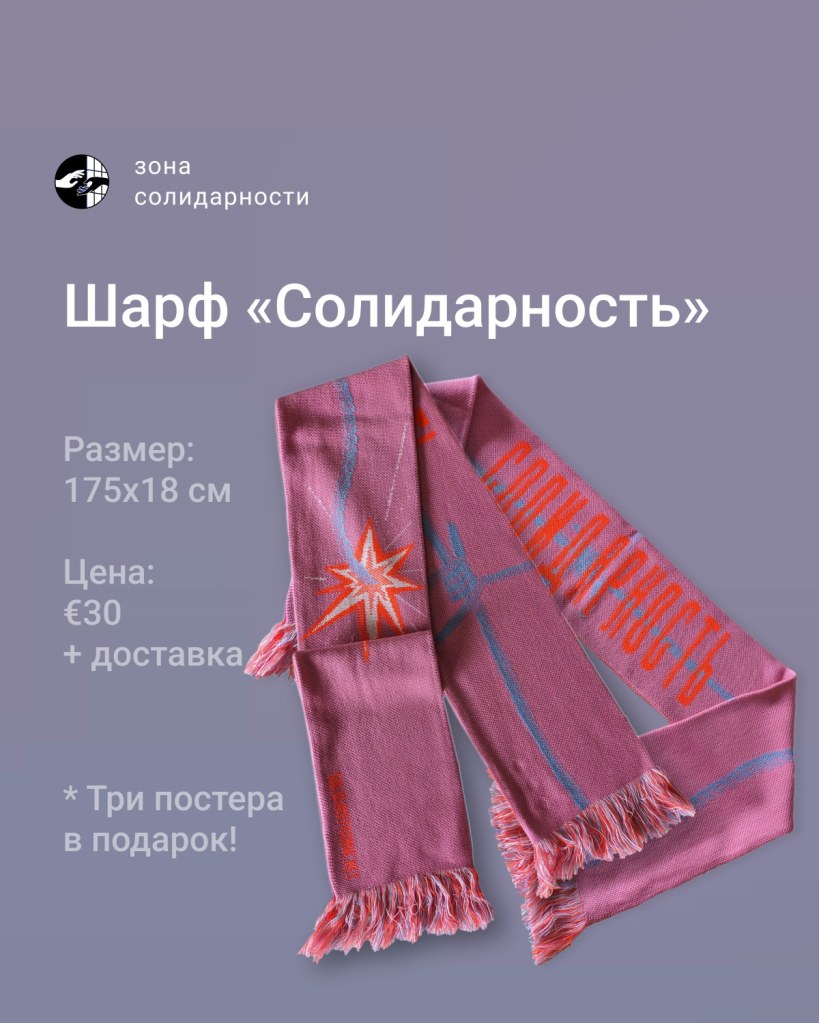
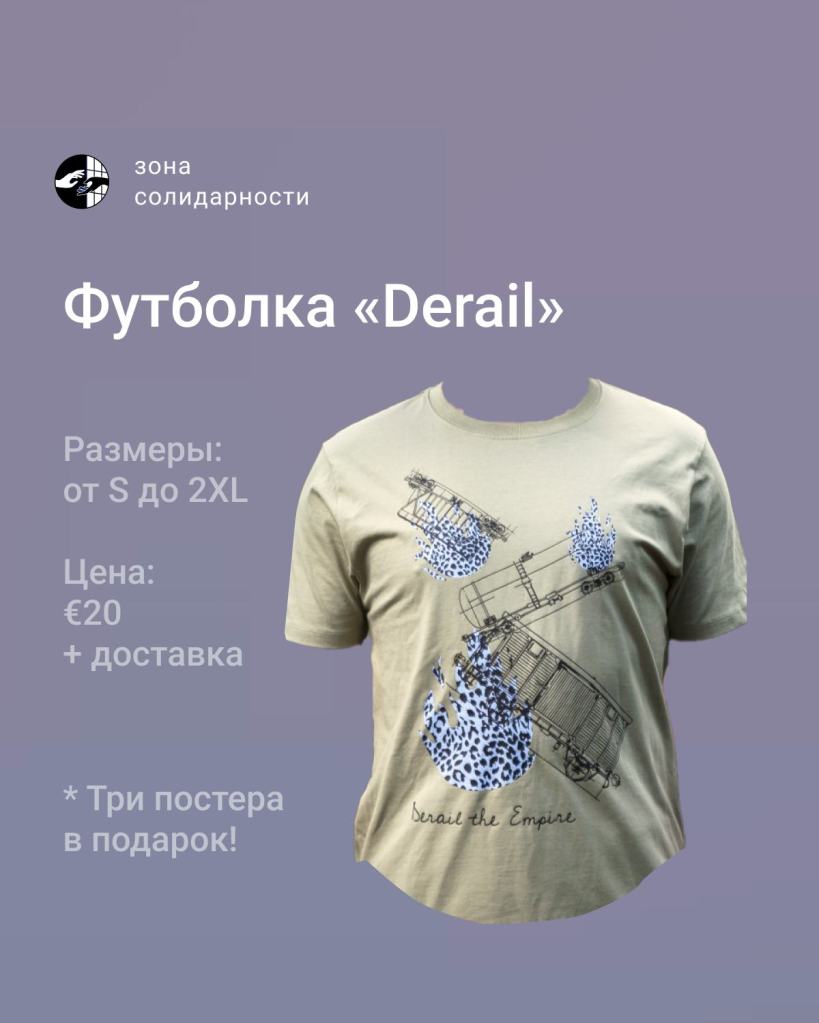
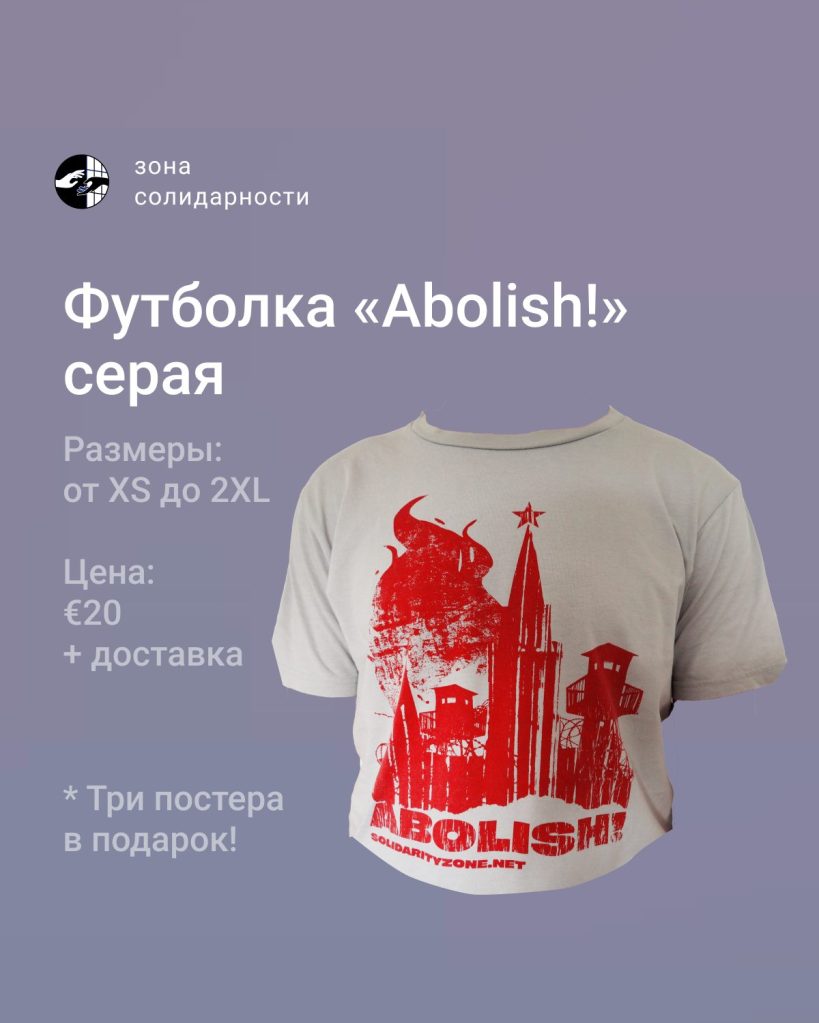
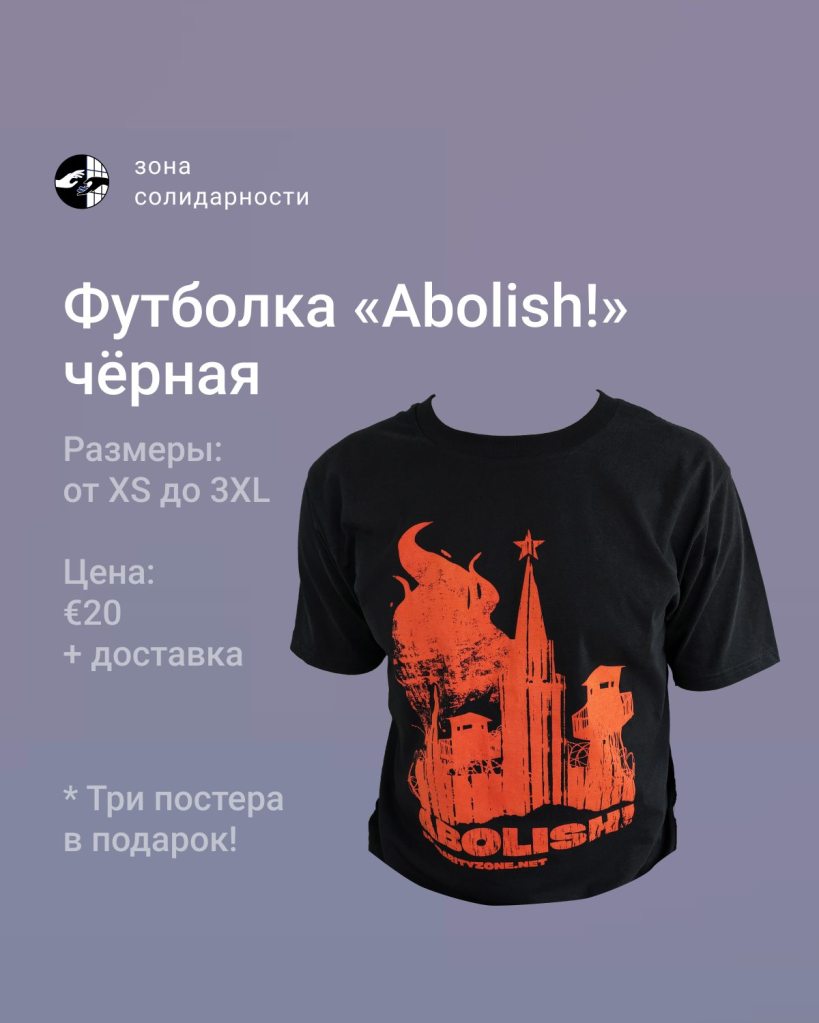
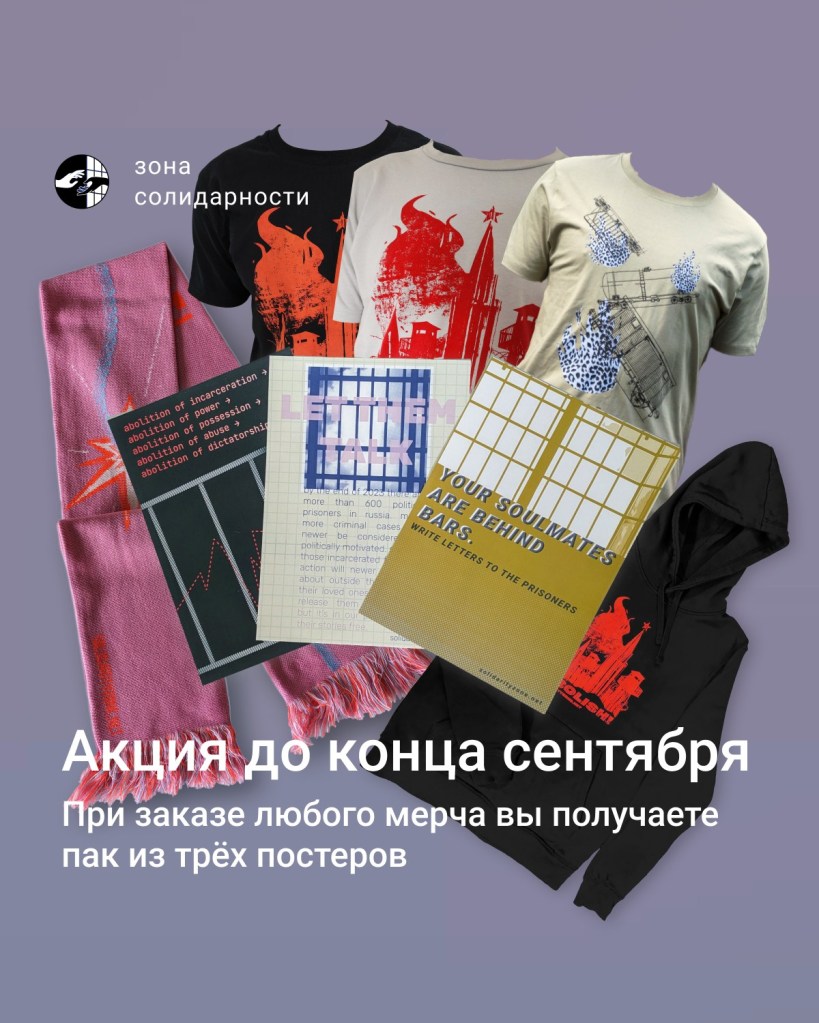
 All proceeds from sales of our merch go to support the Solidarity Zone collective. We are a horizontal, self-organized initiative and we have no permanent source of funding. So, your support is crucial to us!
 The merch is delivered by post from the EU.
 For security reasons we do not send merch to Russia and Belarus, nor can we guarantee delivery to Georgia due to the peculiarities of the country’s postal service.