Twelve Years Ago Today

“Let’s clear the forest of the fascist occupation, 1941-2010.” 28 July 2010, Khimki. Photo courtesy of Antifa FM

It’s the 12th anniversary of the antifa protest in Khimki

Antifa.ru and other channels have recalled the historical date of 28 July 2010, when, at the height of its popularity, the antifa movement in Moscow was involved in solving social issues.

Throughout 2010, progressive Muscovites were extremely agitated about the planned construction of an alternate to the Leningrad Highway through the Khimki Forest in the nearest part of the Moscow Region. A lot of money was riding on the project, but responsibility for fighting the protesters was entrusted to the local Khimki authorities. Judging by their tactics, they were probably quite criminalized.

For antifa, the line was crossed when right-wing football hooligans — neo-Nazis, in other words — were involved in dispersing a tent camp set up in the forest by the protesters.

In late July, a secret concert by the bands Inspection Line and Moscow Death Brigade, popular among the antifa crowd, was advertised on social media. On July 28, Inspection Line vocalist and writer Petya Kosovo famously said to those who had come to the rendezvous point, “I hope there are no rubes here who think they just came to a concert? We’re going to Khimki!”

Several hundred young people exploded: they went to Khimki “to protect the Russian forest from Nazi occupation.”

Upon arriving in Khimki, right at the train station, they asked where city hall was, and the locals happily showed them the way. The protesters immediately produced masks and a banner about the Russian forest, and the crowd of about 400 people headed to the hated city hall, cheerfully chanting as they marched. On a video that circulated at the time, you can clearly see a police jeep fleeing from the determined young people.

It was the weekend, so the protesters were not able to talk with the local administration. The protesters decorated city hall with protest graffiti and shots from trauma pistols. They actually did very little damage to the building.

But this incident was followed by a shellacking. Only not the mythical shellacking of the Khimki City Hall, but the real shellacking of the antifa movement by the so-called law enforcement agencies.

Police raids took place all over central Russia — in Nizhny Novgorod, in Kostroma (where a whole punk-hardcore festival on a riverboat was arrested), not to mention Moscow and the Moscow Region. Hundreds of people were detained and beaten; hundreds fled Russia. Some left forever, while others returned after a year or two. But their spirit wasn’t the same when they came home: they hunkered down. And the movement — that big and formidable movement that had caused a stir in 2010, the movement that had protected workers and refugees from being illegally evicted from dorms and had defended the Khimki Forest — that movement no longer existed. The gloomy era of Bolotnaya Square and the constant stomping of protests, the era of crackdowns, was coming.

[…]

Source: Volja (Telegram), 28 July 2022. Translated by the Russian Reader


Vitaly Shushkevich: “Several hundred antifa and anarchists smashed [sic] the facade of Khimki city hall.
The activists demanded an end to the logging currently underway in the Khimki Forest.” Posted on 28 July 2010.

Valery Rashkin: A Rebel in the Russian Communist Party

Communist MP Valery Rashkin (holding white placard) and comrades protesting the persecution of communists and rank-and-file protesters outside the Presidential Administration building in downtown Moscow, 10 June 2021. Photo: Vadim Kantor/Activatica

And now – against crackdowns!

In 2021, only three forms of street activism have been possible in Moscow: “navalnings” (such as in January and April), “putings” (such as in March) and “rashkings,” named in honor of Communist MP Valery Rashkin, who does not get tired of defying the de facto ban on rallies by holding “meetings with an MP” (that is, with himself), since by law such meetings do not require prior authorization. This spring alone, Volja has written several times about progressive “rashkings” (against infill construction in Kuntsevo; against the planned demolition of the Palace of Young Pioneers; and, no less than four times, against the law banning educational outreach activities; in particular, I published an overall report and a separate remark about provocateurs).

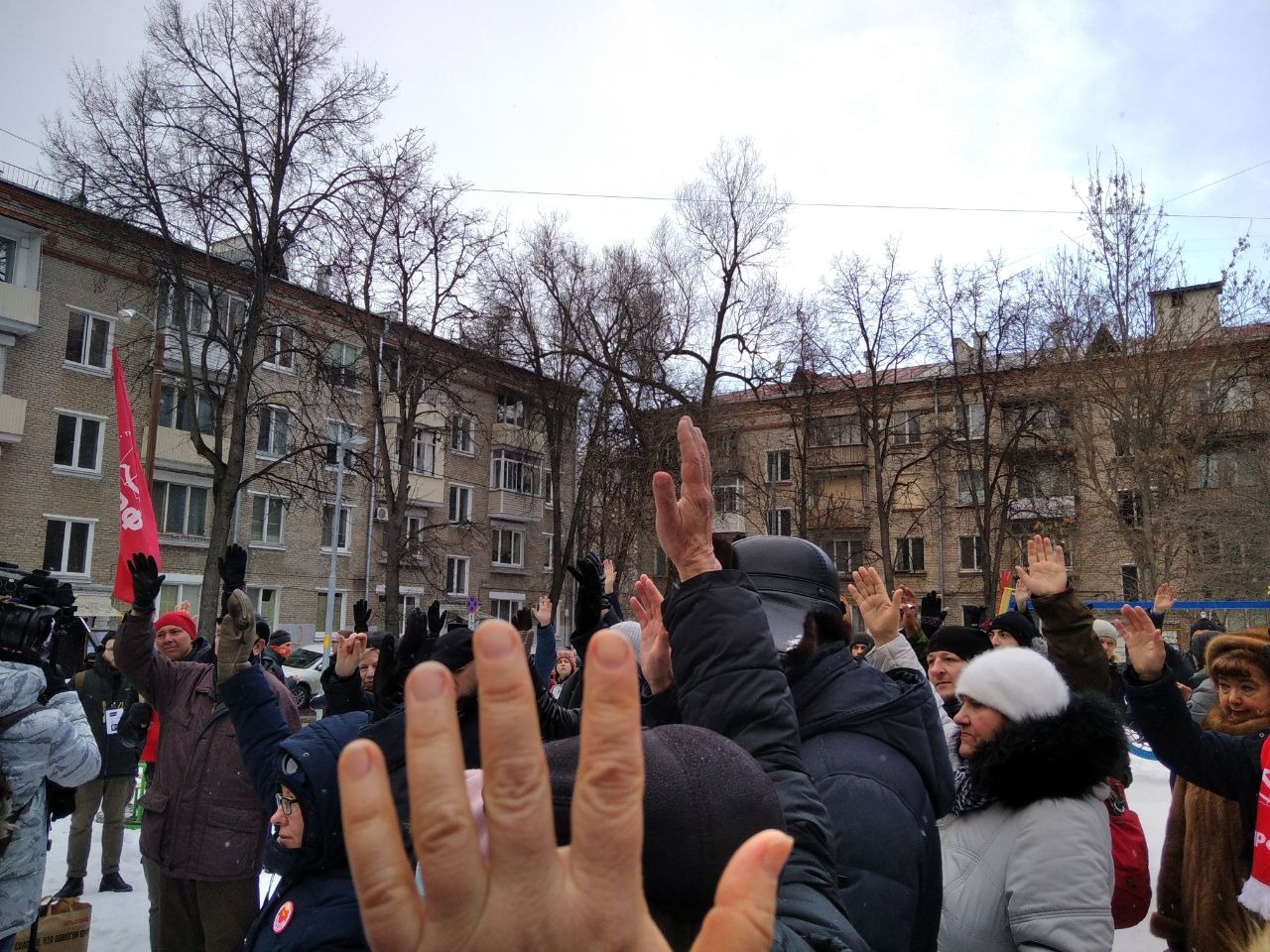
Kuntsevo residents voting against the construction mafia, 6 March 2021. Photo: Vlad Tupikin

Rashkin’s progressive work to ensure freedom of assembly in Moscow, it seems, has not gone unnoticed by the Communist Party leadership and the Presidential Administration. Open Media today published a short article in which, citing sources in the party leadership, they claimed that it was possible that Rashkin would be moved from a surefire first place on the regional party list for the State Duma elections in the autumn to a (second?) place that would make it impossible for him to win re-election. And this, it seems, is exactly what the Presidential Administration, who have soured on Rashkin over his open sympathy for the winter-spring protest rallies (the “navalnings”), wants from the Communist Party leadership.

In the spring, Rashkin, who heads the party’s Moscow city committee, was removed from the presidium of the party’s central committee and now, at the pre-election congress in late June, he could lose his place on the party list.

But Rashkin is not giving up without a fight. At two o’clock in afternoon on Thursday, June 10, he has scheduled another meeting with MPs (that is, he will probably not be alone) outside the reception area of the Presidential Administration building on Ilinka, 23, to protest recent political crackdowns. Mikhail Lobanov, in particular, has written about the meeting, apparently disappointed by today’s confirmation of the sentence meted out to his colleague Azat Miftakhov (six years in prison for breaking the glass in the door at a United Russia party office on the outskirts of Moscow; Miftakhov claims he is innocent).

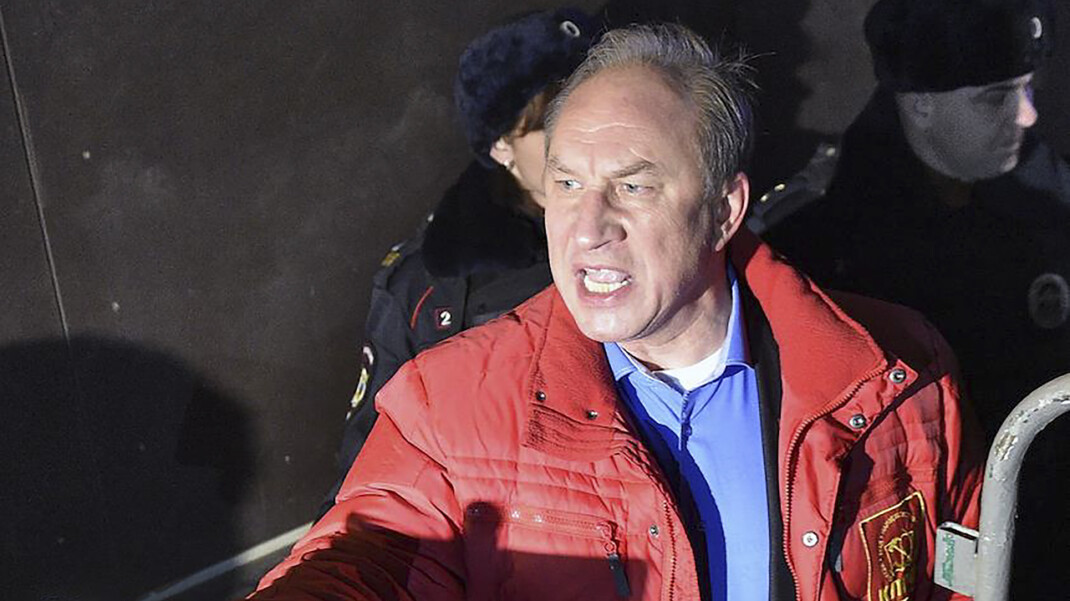
Valery Rashkin. Photo: Pyotr Kassin/Kommersant, courtesy of Open Media

It is clear that the Communist Party as a whole does not arouse much interest among political observers, but it seems that Rashkin is something special. He’ll probably show us all his stuff once again — to begin with, at two o’clock on the afternoon on June 10.

With greetings from Moscow,

Vlad Tupikin

Source: Volja, 9 June 2021. Translated by the Russian Reader

______________________________

Against political crackdowns: a meeting with State Duma MPs

State Duma MPs from the Communist Party of the Russian Federation went to the Presidential Administration building to speak out against the political crackdowns taking place in Russia. They opposed the encroachment of security forces on freedom of thought. First of all, they spoke about the persecution of party members in the regions, who have been prevented from standing in the [autumn 2021] elections in every possible way, and the criminal cases initiated against them. In particular, they voiced their support for Azat Miftakhov and Nikolay Platoshkin.

Yesterday, the Moscow City Court, considering an appeal against the verdict of Moscow State University graduate student Azat Miftakhov, did not overturn the six-year prison sentence handed down to him, although it excluded a couple of incidents from the case. Yesterday, the Basmanny District Court left the four editors of the student magazine DOXA — Armen Aramyan, Natalya Tyshkevich, Alla Gutnikova, and Vladimir Metyolkin under virtual house arrest (they are allowed to leave the house for two hours, from 8 to 10 am, and are forbidden from using the Internet and receiving mail) until September 14.

Vadim Kantor

Source: Activatica, 10 June 2021. Translated by the Russian Reader

Communist MP Valery Rashkin and others protesting outside the Presidential Administration building in downtown Moscow, 10 June 2021