Russia’s Fascist Meltdown: The Cliff Notes Version

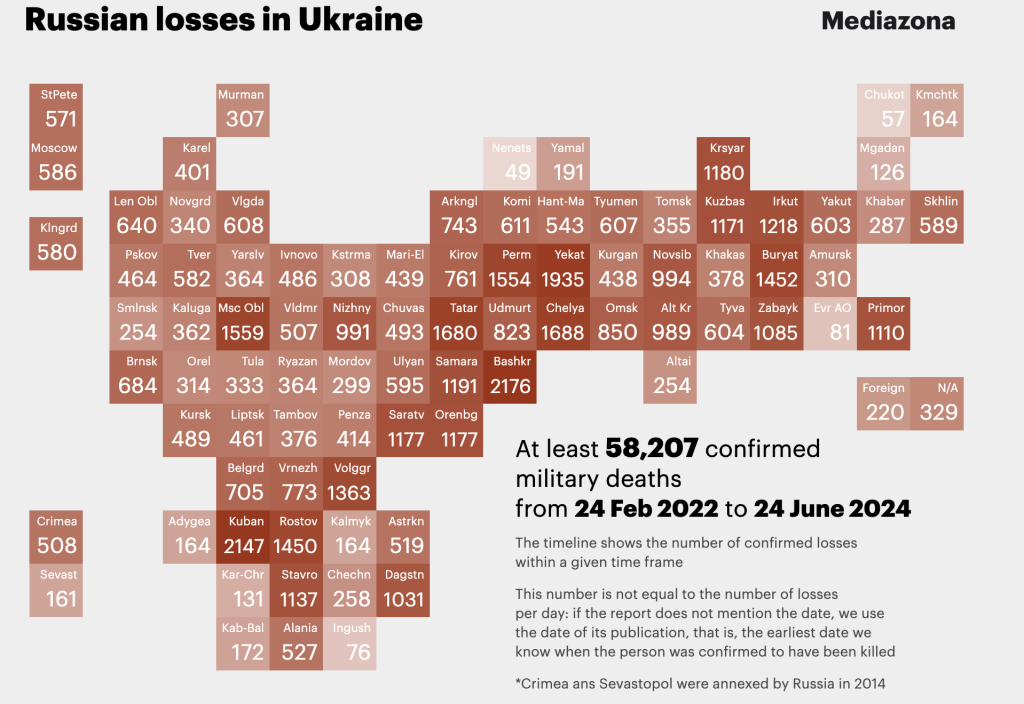
Screenshot of Mediazona infographic, as published here

Russia is losing more and more men in its war against Ukraine.

As of 5 July 2024, Mediazona and its partners in the casualty counting project have ascertained the names of more than 58,000 Russian soldiers killed in action.

The real losses are twice as many, however. Journalists have calculated the actual number of war dead based on information from the probate registry. How they did their work is described in this article by Mediazona. You can read here about how our methodology has been corroborated.

The real losses of the Russian army, including mercenaries, in the war against Ukraine, come to 120,000 dead. The Russian army’s casualties are thus already greater than both the number of US military deaths since the Second World War and all the losses of the Soviet and Russian armies since 1945. Most of the men killed were between the ages of twenty and forty. Those who were younger were usually draftees and prison inmates, while those who were older were “volunteers.”

Seventeen thousand prison inmates recruited by the Wagner Group perished at Bakhmut, according to the mercenary organization’s own documents, as examined by Mediazona. Meanwhile, journalists had estimated that Wagner had lost around sixteen thousand men, which is nearly the same number. Wagner has recruited a total of 48,366 men during the war, meaning that a third of them were killed in the so-called Bakhmut meat grinder.

Prison inmates, “volunteers,” and conscripts, if we judge only by confirmed deaths, have borne the brunt of the losses in the war. At 47.4 percent, they constitute almost half of those who have been killed.

In over two years of war, 3,700 officers of the Russian army and other security forces have been killed, 430 of them in the rank of lieutenant colonel and above.

Between 200 and 250 men are killed every day. This year, the Russian army’s losses have risen dramatically. In 2023, an average of about 120 men were killed every day.

Source: “Every day up to 250 Russians are killed in the war,” WTF? newsletter (Mediazona), 5 July 2024. Translated by the Russian Reader


There are two points of view on Russia during the full-scale war. The first is that Russia has turned into a fascist militaristic state in which everyone marches in step and sincerely hates Ukraine. The second is that cynicism and apathy have won the day in Russia: people don’t care about the war as long as it doesn’t affect them personally. Both of these views are mistaken, according to the authors of “We Have to Live Somehow,” a study from the Public Sociology Laboratory (PS Lab).

The researchers traveled to Krasnodar Territory, Buryatia, and the Sverdlovsk Region, living there for a month and interacting closely with the locals. What they tell us does not fit into either of the two common stereotypes about Russians and the war. Here are a few of the tendencies they observed.

The war is invisible in daily urban life. Residents in the Sverdlovsk Region town of Cheryomushkin (whose name was deliberately changed by the researchers) could not recall a single event in support of (or against) the war during the year. In Ulan-Ude, the capital of Buryatia, the pro-war agitprop consisted of a single poster on a Lenin monument. In Krasnodar, pro-war banners still hung on buildings, but people had long ago removed pro-war stickers from their cars. There is no institutional support for the war at the municipal level: such support is the bailiwick of ideological loners and small groups of pro-war volunteers.

Apolitical Russians justify the war, but arguments like “NATO soldiers” and “defending Donbas” are not of primary importance to them. Rather, they simply want to save face themselves, because they take the accusations directed at their country personally. For this reason, Russians have previously been inclined to justify the actions of the state, even when they do not understand or approve them.

The majority of the populace is not opposed to the war. They may disapprove of it in some respects, but they simultaneously defend the state. For example, in the Sverdlovsk Region, women were outraged by the deaths of young soldiers at the front (“They are sending children to fight! Why?!”) while also parroting the propagandists’ arguments about the war against the “collective West” (“Them United States are hammering civilians!”). Non-opponents of the war argue that Russia has been proactive, defending itself rather than attacking (“Now the Luhansk and Donetsk Republics are part of Russia, but our guys aren’t advancing any further—they’re defending all of it”).

Non-opponents of the war regard the residents of Donbas as Ukrainians, not Russians. They scold Ukrainians from the “Donetsk People’s Republic” and the “Luhansk People’s Republic” (“They don’t defend themselves. They’ll be coming here [to Russia], and what, I’ll have to go fight in their place? I don’t want that”) and do not regard these areas as “their own” (“They are not my blood relatives, they are not my own people”).

While opponents and supporters of the war initially had bitter conflicts, solidarity between them has emerged despite their differences of opinion. Those who generally condone the war are increasingly questioning the official version of events, while those who oppose the war are beginning to listen to their opponents (“I have to build a life and continue living with these people”).

Russians try to pretend that the war has not impacted their daily lives in any way, but its signs still permeate their everyday lives and conversations. In the Sverdlovsk Region, a woman is going to “go to great lengths” to prevent her son from serving as a contract serviceman. In Buryatia, a volunteer says mundanely, “I have eight grandchildren, all boys. And it just happened that four more died at the front.” In Krasnodar, a sociologist’s source says he is glad that the city is not being bombed and that the “Wagnerians” did not come their way, but then confesses in a low voice that the future is hazy and “let’s put it this way: things have become a bit tense.”

The big takeaway, however, is that Russians are pushing the war to the back of their minds. And this is bad news for the Kremlin: it has failed to convince the public, over the past two years, that the invasion was launched in pursuit of noble ends. Even as they justify Russia, its citizens don’t understand what good the war does for them personally.

Source: “How do Russians feel about the war? There seems to be an answer to this question,” WTF? newsletter (Mediazona), 10 July 2024. Translated by the Russian Reader


A week ago, a Moscow court sentenced fifteen-year-old Arseny Turbin to five years in prison after convicting him on charges of “involvement in a terrorist organization.” The security forces accused the schoolboy of aiding the Free Russia Legion, which has been officially banned in Russia.

Convicted 15-year-old “terrorist” Arseny Turbin in slightly happier times. Source: Mediazona

Arseny lived with his mother Irina in the small city of Livny in the Oryol Region. Although he was one of the most successful pupils at the local prep school, he was bullied by his classmates, and yet his teachers did not respond to his complaints. At the war’s outset, Turbin supported the Kremlin’s actions, but later became disillusioned with the government and took an interest in politics, even telephoning [exiled online news channel] TV Rain and telling them that the Conversations about Important Things lessons at school were “utter nonsense.”

In early June 2023, Arseny wrote an email to the Free Russia Legion (an organization we described in detail in a previous newsletter). He wanted to сampaign against the war, but they asked him for too much personal information and he did not send the application form to these strangers. Instead, he started distributing leaflets criticizing the authorities and taking pictures of himself in front of the white-blue-white flag. (The Russian authorities regard this flag as a symbol of the Legion, which has been fighting against Russian forces in Ukraine.)

Meanwhile, a strange thing happened. Turbin made the acquaintance of someone called Maxim, who immediately gave him access to the Telegram channel Occupy Slutophilia 14 (similar names have been used on the Web by the fans of the late Russian neo-Nazi activist Maxim “Tesak” Martsinkevich) and asked him to help with the channel’s content by editing videos. The channel had only a few subscribers, and it featured posts in support of Yevgeny Prigozhin and far-right content revolving around Tesak. Investigators then used Turbin’s involvement in the channel to accuse him of neo-Nazism, despite the fact that the schoolboy’s father was from the UAE, and Turbin himself had been bullied at school due to his dark skin.

At the end of the summer, FSB officers searched the Turbins’ home and summoned Arseny for questioning. It was a very strange conversation: for almost an hour and a half, in different ways, two investigators questioned the schoolboy about his connections with the Free Russia Legion. At the end of the conversation, as Mediazona discovered, they assured the teenager that it was “normal” and “not against the law” to send an application to the Legion, which has been declared a “terrorist organization” by the Russian authorities.

The court was not interested in this peculiar circumstance, however. It was interested in Turbin’s statement, allegedly made during the interrogation, that he had sent the application: this was the basis for the charge that he had “joined” the “terrorist organization.” The thing is that Turbin did not say this. Mediazona has in its possession a full transcript of the conversation, and it simply does not contain mention of Turbin’s sending off the application. The investigators inserted it for their own convenience.

Irina Turbina was present at the interrogation. She says that the investigators retyped the statement three times because of mistakes, and suggests that they could have discreetly amended it after lulling her into a false sense of security.

After seeing the transcript, the investigator, Trunov, had even wanted to close the case. In February 2024, however, the investigation was assigned to another investigator, Irina Simonova. She spun the line about Turbin’s alleged neo-Nazi views, obtaining testimony from the boy’s classmates, who assured her that his “idol was the so-called Tesak,” that he had advocated “exterminating the Ukrainians,” and had supported Alexei Navalny. Irina Turbina does not believe this testimony, producing correspondence in which her son called Tesak a “blockhead” and himself a “liberal.” Turbina argues that her son’s classmates testified against him in exchange for “excellent high school diplomas.”

Due to the increased harassment at school, Turbina transferred Arseny to home schooling. He managed to pass his year-nine exams before the verdict was handed down. On 21 June, the court sentenced Arseny to five years in prison, although the prosecution had requested an even longer sentence of eight years. After the sentence was read, he burst into tears, telling his mother, “Mom, I’m sorry—forgive me for letting you down. But I really didn’t know I was violating any laws.”

No one looked for the mysterious Maxim. The court was also uninterested in Turbin’s conversation with the FSB officers who openly provoked the schoolboy and falsified his statement.

Source: “The story of 15-year-old political prisoner Arseny Turbin,” WTF? newsletter (Mediazona), 27 June 2024. Translated by the Russian Reader


PROMPT: Make an illustration on the theme of “Russia’s Fascist Meltdown”

Creating an illustration on the theme “Russia’s Fascist Meltdown” involves capturing the essence of nationalism, authoritarianism, and geopolitical tension. Here’s a description of an illustration:

The illustration features a powerful and imposing figure symbolizing the Kremlin, with a stern-faced leader resembling Vladimir Putin at the forefront. Behind him, the Russian flag waves prominently, but instead of the usual tricolor, it blends with darker hues suggestive of authoritarian control. The background is a stark urban landscape, reminiscent of Moscow’s skyline, but with ominous shadows and smoke rising in the distance.

In the foreground, there are smaller figures representing dissenters and protestors, their faces obscured in shadows or masked to symbolize anonymity and resistance. They hold signs with slogans advocating for freedom and democracy, contrasting sharply with the dominant figure of Putin. The atmosphere is tense, with a palpable sense of division and discord.

To further emphasize the theme of “meltdown,” the illustration includes elements like cracked ice or fire, symbolizing internal turmoil and instability within Russian society. The color palette leans towards shades of red, black, and grey, evoking a sense of danger and crisis.

Overall, the illustration aims to visually convey the complex and contentious dynamics surrounding Russia’s shift towards authoritarian nationalism, capturing both the gravity of the situation and the resilience of those who oppose it.

Source: ChatGPT
NUMB3RS (Wages of War)

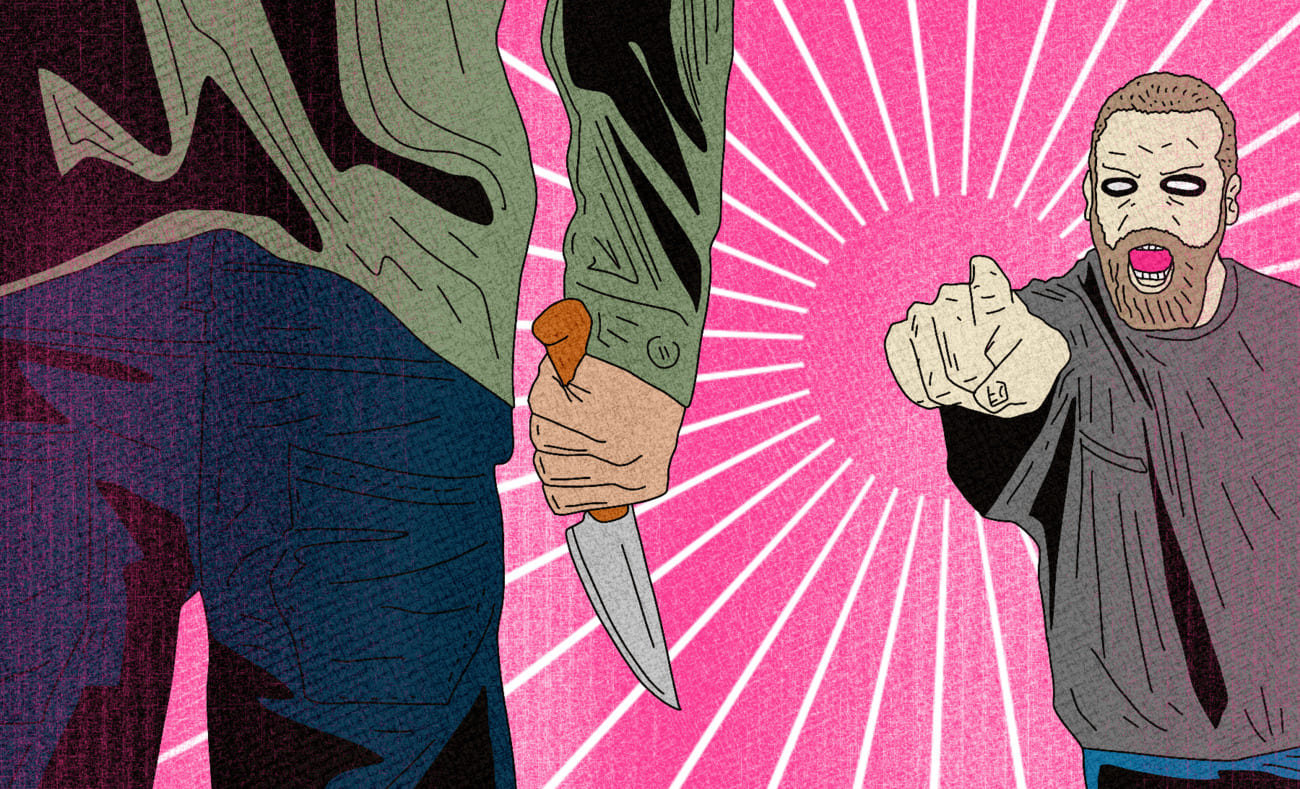
Illustration by Danny Berkovskii for Mediazona. Source: New Tab

Aided by a team of volunteers, journalists at Mediazona and the BBC’s Russian Service have identified 41,731 Russian soldiers killed in the war in Ukraine using open sources. This number includes employees of the Wagner mercenary group, but it does not include those who fought on Russia’s side in military units fielded by the self-proclaimed Donetsk and Luhansk “people’s republics,” the BBC noted in an article published on Friday, 12 January.

According to the article, more than 1,100 Russian military personnel killed in the war were under 20 years of age. Since the State Duma approved amendments to the relevant laws, in April 2023, thus permitting 18-year-old high school graduates to sign military service contracts, 48 Russians born in 2004 and five born in 2005 (who were thus “barely 18 years old” when they enlisted) have perished in the war.

As of 11 January, 2,377 airborne troops, 913 marines, 537 members of the Russian National Guard’s special forces, 450 members of the GRU’s special forces, 206 military pilots, and 77 FSB and FSO officers have been killed in combat operations.

The BBC points out that the number of casualties among those who voluntarily signed a contract to serve in the Russian armed forces has increased in recent months. Thus, volunteers, prisoners, and private mercenary company “recruits” now account for 37 percent of all confirmed losses 0n the Russian side. Another 12 percent of the identified casualties were draftees (of whom 5,005 died in Ukraine and 62 in Russia).

Source: Yevgeny Zhukov, “Journalists have confirmed the deaths of 41,700 Russian soldiers in Ukraine,” Deutsche Welle Russian Service, 13 January 2024. Translated by the Russian Reader


According to Ukrainian intelligence, the Russian forces in Ukraine currently consist of 462,000 military and 35,000 National Guard troops, responsible for the functioning of the occupation regime. This number of troops allows the Russians to carry out rotation — to withdraw units and subdivisions and bring them to the front line.

Source: Monique Camarra, “Jan 13: E-Stories,” EuroFile, 12 January 2024


When looking for a new advertising/PR agency in Ukraine in autumn 2023, PepsiCo made it a condition for a potential partner to exclude any mention of the war, or support for Ukraine and its army in future communications, according to a brief seen by B4Ukraine.

“NO: mention of war, hostilities, aggression, military personnel (from Brand side), Armed Forces of Ukraine. NO: support Ukraine and the army. NO: negative connotation, creating a feeling of ‘unsafe,’” states the “Pepsi restrictions” section of the brief.

The B4Ukraine Coalition contacted Pepsi offices in Ukraine and the US to ask for comment on this article but at the time of publication had not received any response.

In the meantime, the October 17 message on PepsiCo’s Instagram page announced that “PepsiCo volunteers distributed food kits to 1,200 families in the city of Borodyanka, whose homes were destroyed.” The message does not specify who exactly brutally destroyed the homes of these people.

Perhaps because PepsiCo’s Russia net profit increased by 333% to $525 million last year and the company paid about $115 million in taxes to the Kremlin? Treating such contributions as support for the economy of the aggressor state, Ukraine’s National Agency on Corruption Prevention (NACP) in September included PepsiCo in the list of international sponsors of war.

PepsiCo produces soft drinks, juices, chips, snacks, dairy products and other food products under the main brands Chester’s, Chipsy, Lay’s, Mirinda, Pasta Roni, Pepsi, Propel, Sandora, 7Up, Simba, Snack a Jacks, Sonric’s, Tropicana, etc.

The company has 19 factories, about 20,000 employees, 40,000 agricultural workers, and 600 open vacancies in Russia, according to the NACP.

The company announced the cessation of advertising activities and the production of some beverages in Russia in March 2022, while still allowing other products, such as infant formula and baby food to be sold, in order, as PepsiCo put it, “stay true to the humanitarian aspect of its business.” Yet in fact, the company continues the production and distribution of chips, snacks, and soft drinks. According to Bloomberg, PepsiCo’s revenue rose 16% in Russia and profits quadrupled, and the soda maker said operations in Russia accounted for 5% of consolidated net revenue for 2022, up from 4% a year earlier.

Now the iconic Pepsi cola is sold under the Evervess-Cola brand, although regular Pepsi Cola is still easy easily purchasable in Russian supermarkets due to the so-called parallel imports, when goods are imported without the manufacturer’s permission.

At the beginning of September last year, PepsiCo came under fire over its Russian business when the firm’s products were dropped by the Finnish parliament and Scandinavian Airlines’ operator SAS, and already on September 21, ironically, [a] Russian missile damaged a PepsiCo plant near Ukraine’s capital Kyiv.

A global [c]oalition of civil society organizations, B4Ukraine, is calling on PepsiCo to exit Russia ASAP and for the US government to issue a business advisory, warning US businesses of the growing legal, reputational, and financial risks of doing business under military control in Russia.

Source: “‘No support for Ukraine and its army’: PepsiCo restricts mentions of war in its PR,” B4Ukraine. Thanks to Monique Camarra (EuroFile) for the heads-up.


The war has markedly changed the Russian economy. Moscow has had to adjust its policy to fund its armed conflict against Kyiv, maintaining its military apparatus and police force, and integrating the territories it has annexed from Ukraine. These priorities have necessitated significant spending commitments that collectively threaten Russia’s economic stability. The Kremlin will spend six percent of GDP (more than eight percent when combined with spending on national security) on the war in 2024. This is more than the 3.8 percent of GDP that the United States spent during the Iraq war, although it falls short of the prodigious sums the Soviet Union allocated during the years of stagnation and its invasion of Afghanistan (18 percent of GDP).

Military spending has even eclipsed social spending—currently less than five percent of GDP—for the first time in Russia’s post-Soviet history. This pivot toward a militarized economy threatens social and developmental needs. The four annexed regions of Ukraine have already received the equivalent of $18 billion, and in 2024 almost $5 billion is expected to be transferred from the federal budget to regional budgets. No other regions in Russia receive this level of investment, which only increases interregional inequality. Rather than restore dilapidated housing in Russia, the Kremlin prefers to spend money on building houses and roads in annexed territories, to replace the houses and roads that Russian troops destroyed during their brutal invasion.

Russian industry has been transformed, with defense sectors now overshadowing civilian industries. The defense sector’s enterprises are now operating at a fever pitch and, as a consequence, any surge in demand is likely to force prices to rise because of the sector’s inability to increase supply. The military sector is receiving a disproportionately high amount of government spending, and it is also siphoning off labor from the civilian workforce, leading to an abnormally low unemployment rate of 2.9 percent. Before the war, Russia’s unemployment rate typically stood at around four to five percent. The military and public sectors now employ 850,000 more people than in late 2022–23. The invasion of Ukraine also prompted about 500,000 Russians to emigrate in 2022, driving shortages of qualified specialists and blue-collar workers.

Meanwhile, living standards have risen across Russia, and the percentage of Russians living below the poverty line has dropped to 9.8 percent, the lowest since 1992. Naturally, there are regional variations, and areas that have sent a significant number of their men to fight in Ukraine—including Altai Krai, the Altai Republic, Buryatia, Chechnya, and Dagestan—have witnessed the fastest income growth in low-income groups. This relative increase in prosperity can be expected to continue as Moscow disburses funds to the families of the deceased and wounded.

Overall, the Kremlin wishes to maintain an illusion of normality and even increasing prosperity for its citizens. The distortions in the labor market have pushed up salaries in military industry, as well as in civilian manufacturing, because of the need to compete to attract workers from well-paying military plants. Moscow is, meanwhile, making high payments to soldiers and people mobilized to fight in Ukraine, which are driving consumption. At the same time, thanks to a supply of cheap credit, the government is handing out subsidized mortgages, that are, for the moment, shielding families from economic reality.

Source: Alexandra Prokopenko, “Putin’s Unsustainable Spending Spree: How the War in Ukraine Will Overheat the Russian Economy,” Foreign Affairs, 8 January 2024


Elsewhere there are signs that the invasion of Ukraine may have disrupted the Russian economy more severely than the frothy party scene suggests. The Olivier salad, a mayonnaise-drenched confection of root vegetables, sausage and boiled eggs, is a staple at every table during the holidays. This winter the price of eggs suddenly rocketed (no one is quite sure why, but it may have been because farms were short of labour since so many workers have been conscripted or left the country). In some regions people cannot afford a box of six eggs and have to buy them individually. One pensioner even raised this with Putin during the president’s annual end-of-year call-in with the public. Putin promised to look into it.

Source: Kate de Pury, “Gucci is cheap and eggs are pricey in Russia’s surreal economy: War spending has Russians partying like it’s 2021. But some are also stockpiling dollars,” 1843 Magazine (The Economist), 10 January 2024


In the two years that have passed since the start of Russia’s large-scale invasion of Ukraine, residents of Ukraine have become less likely to use the Russian language, according to a press release on the outcome of research done by the Ludwig Maximilian University of Munich in cooperation with the University of Bath and the Technical University of Munich, which was published on Wednesday, 10 January.

Language plays a leading role in the identity of post-Soviet Ukraine, the authors of the study say. Many Ukrainians are fluent in both Ukrainian and Russian. And yet, only a few years ago, 50 to 60 percent of the country’s residents called Ukrainian their principal language of communication. After the Maidan protests in late 2013, sparked by then-Ukrainian President [Viktor] Yanukovych’s refusal to sign an association agreement with the EU, and Russia’s subsequent  annexation of Crimea in 2014, more Ukrainians abandoned Russian.

[…]

The researchers explore this trend in a study published in the journal Communications Psychology. Using artificial intelligence and statistical analysis, they examined more than four million messages posted by 63,000 Ukrainian users on the social network X (formerly Twitter) between January 2020 and October 2022.

According to the study’s authors, users began switching from Russian to Ukrainian even before the large-scale Russian invasion, but this trend increased dramatically after the war began. In their opinion, this change in user behavior was a political reaction to events. Users wanted to distance themselves from both support for the war and Russia as such, so they started using Ukrainian en masse.

Source: Sergei Gushcha, “Ukrainians use Russian less since war began,” Deutsche Welle Russian Service, 10 January 2024. Translated by the Russian Reader


The full-scale war in Ukraine, which began almost two years ago, has led to increased violence in Russia itself. Military personnel with PTSD and criminals recruited into combat return from the front and maim and kill people in civilian life. Sometimes conversations about the war even end in violence. Mediazona and New Tab have uncovered over thirty criminal convictions for assaults and murders that occurred during quarrels about the “special military operation.” (The courts use the official wording for the war as mandated by the authorities.)

In Berdsk, Novosibirsk Region, draftee Khuler Mongush stabbed Nikolai Berezutsky, a passerby. The latter had asked Mongush why he was going to Ukraine. Saying that he was going there “to defend the Motherland,” the mobilized man attacked Berezutsky. Mongush was sentenced to eight years in prison for murder.

In the Irkutsk Region, farmer Maxim Khalapkhanov was drinking with an acquaintance, who began ridiculing the state of the Russian army during the war. Khalapkhanov eventually got angry and killed the acquaintance with a knife, whose handle was decorated in the colors of the Russian flag, and drew the letter Z on his stomach with a fireplace poker. Khalapkhanov was sentenced to seven years in a high-security penal colony.

Anton Rakov, a resident of Orenburg, was drinking with a new acquaintance. They began arguing about the war. Rakov did not like what his interlocutor was saying and killed him. While his victim breathed his final breaths, Rakov recorded a video with the dying man in the background, shouting, “This is what will happen to anyone who disagrees with me!”

Viktor Konnov of Zlatoust beat up a friend who said something nice about Ukraine, while Ivanovo resident Mikhail Vitruk received two and a half years in a penal colony for beating up his girlfriend, who allegedly called him a “Nazi” while they were watching the news.

In 2020, Mikhail Taskin attempted to shoot three people over a parking space and was sentenced to nine years in a penal colony, whence he was freed by the Wagner Group. Taskin spent several months in combat, where he lost a leg, eventually returning to his native village of Nerchinskiy Zavod in the Transbaikal Territory. In August 2023, he got into a fight at a local cafe. Taskin mocked the waitresses and promised to “hump all of them.” The incident ended in a brawl, and the police detained five people, but not Taskin was not among them. His sister and the local authorities argued that the disabled man had been assaulted by “opponents of the war.” But the news website Regnum discovered that two of the detainees were certainly not against the war because they had been involved in patriotic campaigns in the region.

It is not only drinking buddies and casual acquaintances who quarrel and fight over the war. Mediazona and New Tab turned up no less than seven court rulings in cases where the defendants and the victims were members of the same family. Vladimir Tofel from Petropavlovsk-Kamchatsky killed his nephew during an argument about the war. Yuri Makarkin stabbed his son, while Anna Cheremnova, a resident of the Altai Territory, stabbed her husband.

The experts asked for comment by Mediazona and New Tab argue that these are signs of a deep split within society, and the policy of the authorities does not help society to overcome this fissure. On the contrary, the hysterical rhetoric of propaganda only heightens the degree of intolerance, and people are increasingly willing to maim and kill each other.

Source: WTF (Mediazona) newsletter, 10 January 2024. Translated by the Russian Reader

Counting the Dead

The Russian authorities do not talk about the casualties its forces have sustained in the war with Ukraine. The last time the Ministry of Defense reported on them was in September 2022, and even then the official figures diverged considerably from estimates by independent researchers. The Kremlin now says that they trust only the figures from the Defense Ministry. The trouble is that there are no figures from the Defense Ministry.

So how many Russians have been killed since the start of the full-scale war with Ukraine in February 2022?

A new investigation by Mediazona, Meduza, and Dmitry Kobak (who teaches machine learning at the University of Tübingen) provides at least approximate figures.

Journalists at Mediazona and the BBC have been counting losses by monitoring obituaries in local media, posts on social media, and new gravestones in cemeteries. They have compiled a list of names, and while it certainly does not reflect the entire state of affairs, it does give us a rough idea of the number of the casualties sustained by the Russian army and Russian PMCs.

But there is another source of data on deaths in Russia—the registry of inheritance cases, in which notaries register all information about deceased Russians who have left behind an inheritance. Since last year, the number of inheritance cases involving deceased men, especially young men, has increased dramatically. Inheritances cases do not account for everyone killed in the war, but even this increase makes it possible to ascertain the real figures for excess male mortality—that is, the actual number of war dead. The authors of the investigation describe in detail how they have unearthed this data.

The tally takes into account the mortality of men under fifty years of age. There are no women at the front, just as there are almost no servicemen much older than fifty there. The journalists also compared their estimates with obituaries: it turned out that the increase in the number of entries in the register and the number of deaths correlate with each other. Moreover, Rosstat’s information about mortality for 2022 also matches these data. (Rosstat have not yet published any information about mortality rates for 2023.)

So, around 25,000 Russian men under the age of fifty perished in the war in 2022. At the same time, the discrepancy that thus arises with Rosstat’s data on excess mortality is only four percent, which is within the margin of error.

Between 24 February 2022 and 27 May 2023, approximately 47,000 Russian men under the age of fifty were killed in the war.

This figure accounts only for servicemen, mercenaries, and convicts killed. It is impossible to count the number of those killed in the DPR and LPR.

The Russian army has also sustained other casualties, for example, men have been wounded, some of them seriously wounded, which are irretrievable losses.

The number of seriously wounded men has been estimated approximately, and the approximate proportion of them to men who have been killed is one to one-point-seven. This means that, in total, at least 125 thousand Russian servicemen have either been killed or seriously wounded during the full-scale war with Ukraine. This is greater than the losses sustained by the Soviet and Russian armies in all the other wars they have fought, from Korea to Chechnya, since the Second World War.”

Source: I Don’t Get It newsletter (Mediazona), 10 July 2023. Translated by the Russian Reader. The emphasis is that of the authors.

Independence Day

A roadside fireworks stand in Soledad, California, 28 June 2023. Photo by the Russian Reader

When issuing diplomas, colleges in Ingushetia now require graduates to sign a summons to the army or refuse to accept the conscription notice and face possible administrative and criminal charges, Fortanga was told by a source close to one college.

“To get a diploma, you need to sign a conscription notice. Otherwise, you will not receive a diploma no way no how. Either you accept the conscription notice, or you sign a waiver . That is, accepting the notice means you have to join the army, while turning it down means saying ‘Hello, prison, here I come,'” the source said.

According to the source, the practice was introduced after the director of the college in Nizhnie Achaluki reported, at a meeting involving the head of the republic Mahmud-Ali Kalimatov, that thirty students had been drafted from his institution into the army. Subsequently, military enlistment officers and government officials “jumped on the bandwagon,” the source claims.

Students are being forced to come to colleges in person to get their diplomas, the source added. That is, young men cannot receive them by mail or ask that they be handed over to a family member or a proxy.

When the graduate refuses to sign the conscription notice, a report is immediately drawn up and signed by witnesses. First-time offenders face administrative charges under Article 21.5 of the Administrative Offenses Code (i.e., “Non-fulfillment of military registration duties by citizens”) and a fine of 500 to 3,000 rubles. Repeat offenders face criminal charges under Article 328 of the Russian Federal Criminal Code (i.e., “Evasion of military and alternative civil service”) and a fine of up to 200,000 rubles, forced labor, arrest, or imprisonment for up to two years.

Ingush lawyer Kaloy Akhilgov noted that the legality of such a practice “depends on the procedure for issuing a summons.”

“Educational institutions can only serve conscription notices, not issue them themselves. That is, first the military enlistment office must send the notice to a specific citizen, and after that the organization can hand it to the student,” he explained.

For those who want to avoid receiving a military conscription notice , the lawyer recommended that after completing their bachelor’s or master’s degree, they take postgraduate leave until August 31 and file the relevant paperwork with the military enlistment office. “Then they should not be bothered during the [current] spring conscription drive. And such ‘automatic’ draft notices issued along with diplomas lose their significance,” he added.

Source: “Colleges in Ingushetia only issue diplomas with a summons to the army,” Fortanga, 3 July 2023. Translated by the Russian Reader. Thanks to Marina Ken for the heads-up.


[…]

Mark, 26 years old: a former engineer turned waiter in Yerevan
Before I left Russia I was building a career: I was a senior fire and security systems engineer. Such people are needed everywhere: it’s a fairly good position. I worked in government agencies, so I was served my conscription notice directly at work. However, I had never served in the military: I had a deferment due to health reasons.

That was October seventh: I usually have a hard time remembering dates, but this was like in a movie since it divided my whole life into before and after. At night, I packed all my things and moved to another apartment, then I flew to Turkey and from there to Armenia.

It’s amazing: my grandfather is Armenian, but I had never been to Armenia before then. The authorities have even confirmed that I can get citizenship. But if I get it while I’m still eligible for military service, I will have to serve in the Armenian army for two years. And if you evade military service you can be banned from leaving the country or imprisoned. I went to the local draft board, and they told me straight up: come back in a year to get your citizenship. So that’s what I’ll do.

A short time before the mobilization, I was offered the chance to rent an apartment near Rybatskoye subway station in Petersburg for fifteen thousand rubles a month. I was sitting at the dacha, thinking about how I would rent this apartment, how I would invite friends over to my place—everything was good. But the next day the mobilization was announced, and my parents said to me, “Maybe you should leave?” I thought it over for a long time, and didn’t talk to anyone for several days. Then the conscription notice was delivered. Almost all of my friends supported me [in my decision to leave]. I had this conversation in the smoking room with a colleague, who told me, “I’m not going anywhere, I’ll sue. If push comes to shove, I’ll fight within the system.” In the end, he was drafted.

I had savings, so I didn’t work for six months. I tried to get a job as a technician or engineer in my field, but the old boys network is quite strong in Armenia: it is unlikely that they would hire a person off the street, and one who isn’t Armenian at that. And you need to know Armenian for any serious job. For a while I was depressed that I couldn’t find a job, that I had had everything squared away, but here I was nobody. I was a highly qualified specialist, but now I was unemployed. It was a big blow to my pride. At my old job, they waited another six months for me to return.

At first I went to work as a courier at Yandex Delivery. Maybe it is still possible to do the job on scooters and bicycles, but it is absolutely impossible. I had to walk 40-50 kilometers a day. I came home on the third day, soaked my feet in a basin, and sat there for several hours. There is an inadequate system of fines and impotent support staff that knows nothing. All couriers want to protest, both in Yerevan and in Moscow.

The delivery job was so hard on me that I even wanted to go home. I was in such a depressed state that the part of my brain that is responsible for the comfort zone was activated: “Yes, everything is fine, everything has already quieted down, and I have a home there.” I know several people who have returned [to Russia] after working such jobs. I even called my boss in Petersburg and asked if they’d hired someone to replace me, but they already had.

When you’re getting started in a country, I advise everyone to go to work as waiters. You have to carry plates and interact with people, but we all know how to do that. And you have to memorize the menu. I speak to foreign tourists in English or Russian, and I tell Armenians that I am learning the language, and they are always understanding. I tell them, “Come back in six months, and we’ll chat,” and they’re happy that I’m learning their language. Sometimes even Armenians who don’t know Armenian themselves come in and ask for a Russian menu. I even asked once, “How’s that?”

I think I lucked out: I’m treated well, we have a very friendly atmosphere, the cooks teach me Armenian, and everyone is always supportive and understanding. The money is enough to live on. And they treat me well as a Russian. Today, a client, a friend of the owner, gave me a teach yourself Armenian book in a beautiful paper bag printed with Armenian letters.

Very many young researchers and decent specialists have left Russia. This is sad, of course, but it is natural after such actions on the part of the state. It was pretty hard to swallow the whole thing. You can say it was pride, that, like, you’re going have to work in completely different jobs. I don’t like the buzzword “relocatees”—we are all migrants.

I am learning the language and I can already make myself understood: Armenian is not as difficult as it seems. When I learn the language, I will return to my profession, because it will stand me in good stead wherever I go. Naturally, emigration is not at all what I’d imagined. But this is our new home, and we have to learn to live here. Remarque has a book about emigration, Shadows in Paradise. A lot of people who also moved after wars became very strong personalities: it is an incredible experience. It is so intense that when you look through time into the past, you feel so much more mature, so different as a person, that you regard everything differently. So I’m even grateful to fate for these changes.

Source: Masha Koltsova, “‘I recommend everyone become a waiter after moving to a new country’: men who left Russia due to mobilization on changing professions and living a new life,” Current Time (Radio Svoboda), 3 July 2023. Translated by the Russian Reader


A farewell ceremony was held at the Serafimovskoe Cemetery in St. Petersburg for four soldiers of the Neva Battalion who perished during the special military operation, the governor’s press service reported on July 3. The funeral was attended by the city’s head, Alexander Beglov, and the speaker of the St. Petersburg Legislative Assembly, Alexander Belsky.

The deceased men—Mikhail Sokolov, Roman Galinsky, Mikhail Manushkin, and Sergei Isayko—were posthumously awarded the Order of Courage. In his speech, Beglov said that the men had been killed in heavy fighting.

“They are continuers of Russia’s military glory. We are proud of our fellow townsmen. Petersburg shall cherish their memory,” the governor said.

After the start of the special operation, the Smolny’s press service began publishing news about the deaths of Petersburgers in the Donbas, accompanying them with a mention of the condolences expressed by Beglov. Later, the release of such reports was abandoned for a long time. In December, Beglov unveiled a plaque on the facade of School No. 369 in memory of army officer Alexander Zhikharev, who perished in the SMO. In February, the governor and education minister Sergei Kravtsov met with Zhikharev’s relatives, and in March the school was named in his memory.

Source: “Petersburg says goodbye to four volunteers killed in SMO,” ZAKS.ru, 3 July 2023. Translated by the Russian Reader


In the wake of Zhenya and Sveta’s kangaroo court hearing, what I’ve been thinking about for several days is that we forget the golden rule of all convicts—“Don’t believe, don’t be afraid, don’t ask”—and thus hand them the tool for coercing us.

You can’t show them your vulnerabilities or reveal your desires and fears. (Don’t ask!) This information will be used to intimidate and torture you. (Don’t be afraid!) Or it will be used for bargaining: they will promise to go lighter on you in exchange for your cooperation and will certainly deceive you. (Don’t believe!)

Source: Elena Efros (Facebook), 4 July 2023. Translated by the Russian Reader. Ms. Efros, a well-known human rights activist, is the mother of imprisoned theater director Zhenya Berkovich. Thanks to Ivan Astashin for the heads-up.

The Death of Theodor Herzen

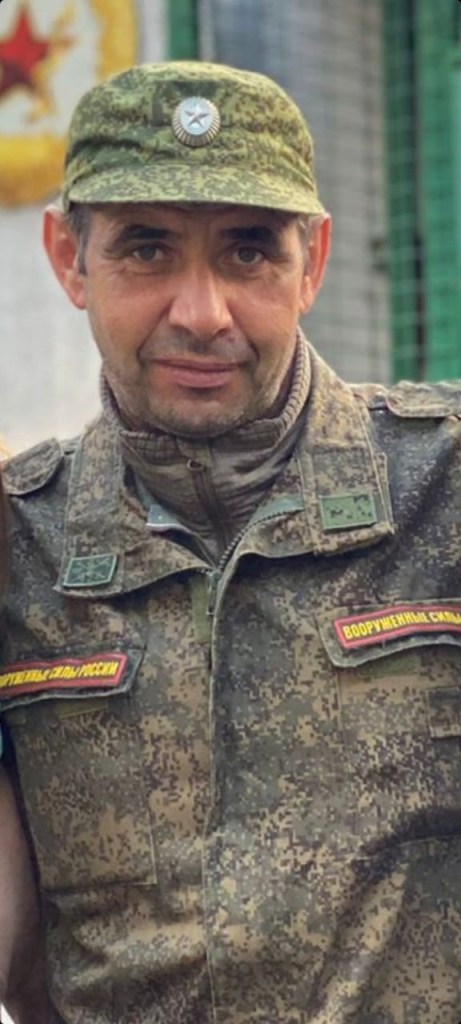
Theodor Herzen

A WAKE for Theodor Herzen will take place at 11:30 a.m., Thursday, 20 April 2023, at the Chernyakhovsk District recreation center in the village of Shchegly.

Source: Chernyakhovsk NEWS (VK), 18 April 2023, via Goryushko (Telegram), 18 April 2023, where Mr. Herzen, a resident of the Kaliningrad (Königsberg) Region, is identified as the 20,700th Russian soldier whose death in combat it has confirmed using open sources. It claims to be publishing this catalogue of war dead “for meditation and as a sedative.”


History Matters, “Why Does Russia Own Kaliningrad?” (2020)
RussianPlus, “Kaliningrad, Russia: Russian People and German Heritage” (2021)

Alexander Yegorov’s Funeral

On May 26, Kirishi bid farewell to Alexander Yegorov, a contract-service marine who was killed in Ukraine. Our correspondent describes Alexander’s funeral and what his loved ones say about his military service and the circumstances of his death.

Alexander Yegorov. Photo courtesy of VKontakte and Bumaga

Groups of people gather outside the Sunrise Youth and Leisure Center in Kirishi. Almost everyone is holding red carnations — they have come to a civil memorial service for guards marine Alexander Yegorov. One of the deceased man’s twenty-year-old friends has brought black roses. Yegorov’s friends and classmates are followed by a group of distant relatives and teachers. Russian National Guardsmen and military servicemen stand each in their separate groups. Gradually, people converge in a long queue. The queue is headed by a boy of about ten years old in a camouflage uniform, combat boots, and beret, along with an old woman wearing a headscarf.

A military band greets those entering the funeral hall. People lay flowers on a table near the coffin, which is upholstered in red cloth. A Russian flag has been draped over the coffin. Yegorov’s father, mother, and twelve-year-old sister are seated near the coffin. People go up to them, express their condolences, and hug them.

Opposite Yegorov’s close relatives stand medal-bedecked military men, solemnly holding their caps in their hands. The ten-year-old boy in camouflage uniform stands in the center of the hall. Like the adults, he holds his beret in his hand. Two young guards armed with machine guns stand on honor duty near the coffin.

Photo: Pavel K. for Bumaga

A local councilman in a suit jacket ushers the father of the deceased to the microphone. It is hard for him to talk. He cries, barely able to stand on his feet.

“He wanted this himself. He went on his own accord — a real man. As they said, he saved a comrade… I have also been in combat, I know what it is like. Our friend, our son, is no longer with us. I can’t say anything more.”

Yegorov’s father is followed by members of the Kirishi district council. The words “demilitarization” and “denazification” crop up often in their speeches. “We watch TV, we know everything,” one of them says. Another ends his speech by repeating the president’s quote from the Gospel: “There is no greater love than if someone gives his soul for his friends.”

A minute of silence follows. Then a vocational college teacher recalls that Alexander was “not a hooligan” as a student. He says that Alexander would have been an excellent welder.

One of the military men haltingly recounts Yegorov’s act of heroism. Alexander “personally knocked out two enemy tanks” and went to provide first aid to a comrade, but died on the battlefield “as a result of hostile artillery fire.” The military man announces that Alexander has been awarded the Order of Courage posthumously by presidential decree for his courage and heroism.

Anton, a close friend of the deceased, is the last to speak. He is wearing an overcoat and black gloves. It was he who brought the black roses.

Alexander Yegorov’s childhood friend Anton. Photo: Pavel K. for Bumaga

Alexander’s friend Anton:

“Sasha loved style and was well-groomed. He always wore black gloves, chains, and watches, and loved expensive whiskey. He was quite pretentious and finicky. He was obsessed with business. He was an unusual guy. Since he was charismatic and handsome, many girls fell in love with him, almost all of them. He should have worked as a model. We’ve known each other for fourteen years, we went to the same school. Then we went to vocational college. Sasha studied to be a welder, while I studied to be an auto mechanic, but we saw each other often. He was really into personal growth. He was interested in relationship psychology, business, and marketing, and was an excellent binary options trader. He was always on the lookout for information and constantly learning things. He liked to read books. He really liked the books The Richest Man in Babylon and Personal Development for Smart People. And he gave me relationship advice and helped me find girls, like a personal psychologist.”

Photo: Pavel K. for Bumaga

In his eulogy, Anton admits that he had a falling out with the deceased a year ago, that he would like to ask him for forgiveness and hopes that all his friends will forgive Alexander and that Alexander will forgive all of them.

Someone in the audience shouts, “What are you talking about, you fucking idiot!?”

The speeches are over. The military band plays. One of the council members invites everyone to travel to the Meryatino cemetery.

Alexander’s friend Anton:

“He wanted to dodge the draft at first, to not join the army, but last year he decided to go. I don’t know exactly what happened. Maybe it was quarrels with friends that incited him. He had begun to behave very rudely and disrespectfully towards me and often had arguments with others. He and I communicated less often — he was a high-maintenance guy.

“In the army, he wrote that he felt abandoned. I would guess that he joined the army for the money, and he needed the money to implement his big plans. He wanted to create his own clothing brand, launch a business of some kind, and get rich himself to help others get rich.

“It is possible that his father urged him to serve in the army, like, ‘it’ll make you a man,’ and his father was an authority figure to him. Not that he actually said, “Go into the army, you need to become a man,” but Sasha took his words to heart. He was always independent. He hadn’t wanted to join the army until the last moment, but either his father said something to him, or he just wanted to avoid the difficulties that could arise when applying for a job [for failing to perform his mandatory military service].

Photo: Pavel K. for Bumaga

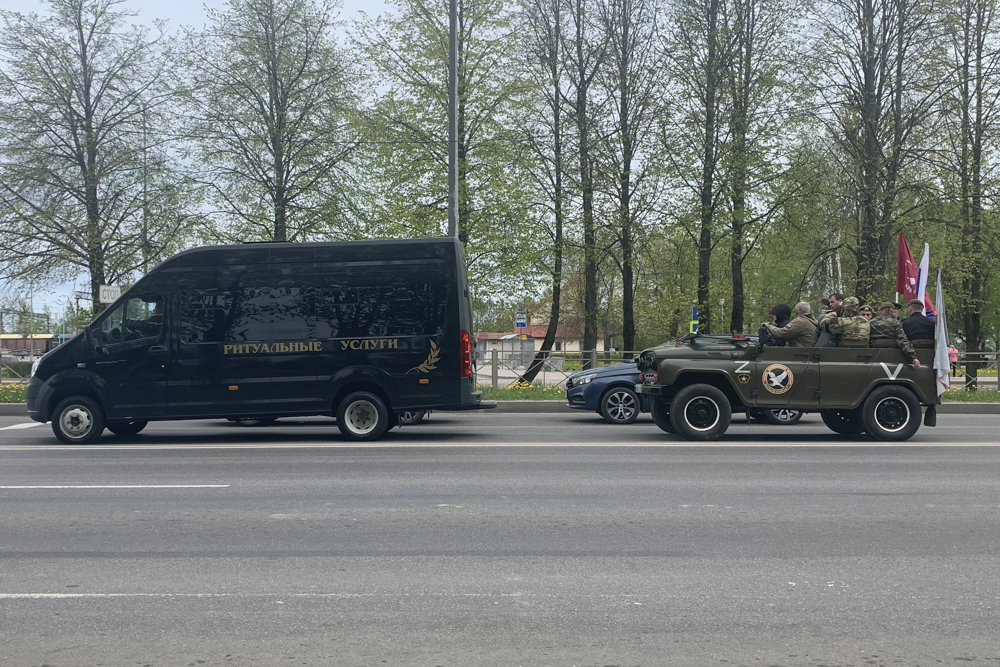
On the way to the cemetery, a military UAZ off-road vehicle with an open top, the letters Z and V pasted on its sides and flying three flags, cruises behind the van carrying the coffin. In the car, among people in military uniform, sits the father of the deceased in civilian clothes, his face turned into the wind.

Photo: Pavel K. for Bumaga

At the cemetery, the zinc coffin’s lid is removed. There is a small aperture around the deceased’s face, and a photo of Alexander in military uniform has been placed on the center of the coffin. We are seemingly given the chance to compare the person before he went into the army and afterwards. People stand by the coffin for a long time, peering at it and saying their farewells.

“Mom, this is our little son!” the father of the deceased screams, turning to his wife. Both of them fall on the coffin, hugging the zinc.

Photo: Pavel K. for Bumaga

The burial rites begin. The father becomes faint and falls over. People prop him up and put him in the military vehicle, where he sits with his eyes half closed. Two girls sing “Christ is risen from the dead, trampling death by dying.” Some people cross themselves. Nearby, a group of military men discuss the circumstances of Alexander’s death in a low voice. One of them has served in Ukraine, apparently.

“A large piece of shrapnel got under his helmet, and small pieces, minor stuff, struck his bulletproof vest. They broke his ribs.”

“And the one he saved, did he survive?”

“I don’t know, he’s in the hospital. They [Ukrainians] were prepared. Everything there is dug up, crisscrossed with trenches. There was preparation.”

The knowledgeable young man continues.

“Not that there are no connections. Using phones is forbidden. There are cellular connections only in certain places. If they [soldiers] go up to a cell tower [to get a better connection], sooner or later [the Ukrainians] get a fix on them, just like our guys get a fix on them.”

Alexander’s friend Anton:

“As I was told, Alexander at first served in Kaliningrad in the motorized infantry, but then he was sent to a repair battalion when they found out that he was a welder. While he was doing his [obligatory] service, he signed a contract [to continue his service as a paid volunteer serviceman], thinking that he would go to Syria. Who knew that the war would begin? He had signed a contract. The war began and [instead of] Syria, he was sent to Ukraine.

“We did not communicate when he was serving in the army, but four months later he called me and apologized for everything. He seemed to have said goodbye to everyone in advance, saying that he would soon be gone. He wrote me big congratulatory ‘poems,’ and said he missed me. And he wrote messages to everyone about how he wanted to see them take off. He told me that he hoped I would become a hotshot masseur. He told a friend that she would be able to become a streamer, and told another friend to find himself. That’s what he is like — a spiritual mentor. Shortly before his death, he wrote a very heartfelt letter to his parents, but no one read it except his father. It was probably quite personal.”

Photo: Pavel K. for Bumaga

The burial rites end, the funeral march plays. The father of the deceased has come to his senses. He approaches the coffin again and hugs his wife. At this moment, everyone shudders as shots are fired. The honor guard is concealed from Yegorov’s relatives and friends by the funeral home van — no one expected the shots. People instinctively duck, and the father covers his ears with his hands.

The coffin is lowered into the grave.

“The Snickers! They forgot to put in the Snickers!” he screams.

People reassure that the Snickers have been put in the coffin, but the father rushes at the grave anyway.

“Forgive me, son, I didn’t want to get you…”

Two comrades try to hold him back by force. The people around him admonish him.

“Your son is a hero, but you…”

Three gravediggers begin filling in the hole. The father escapes and runs up to it again. One of the gravediggers roughly pushes him away. The father falls.

“Someone give him smelling salts.”

Alexander’s friend Anton:

“[Alexander] told me that a phone had been found on someone in his unit. They wanted to arrest the guy, because phones are banned in their unit. But Sasha made an agreement with the person who wanted to arrest him, and gave him his own phone so that there would be no problems for the other guy. Sasha always stood up for his friends. He gave a lot of things away and protected his friends — friends were very important to him. He sacrificed a lot and shared a lot, whether it was money or knowledge. He wanted his friends to be successful too. He wanted to help them grow up and achieve something, to find themselves, to help them start doing something. I told him quite often during his lifetime that I loved him. Many people loved him, and he loved them too.”

Photo: Pavel K. for Bumaga

The gravediggers cover the mound of dirt with fir branches, and then people come up and lay flowers atop the branches. Having calmed down, the father holds his own tiny, intimate ceremony involving church candles. Then he turns to the young people in the crowd, his son’s classmates, and invites them to the wake.

“Aren’t you friends of Sasha? Come with us to the Eden.”

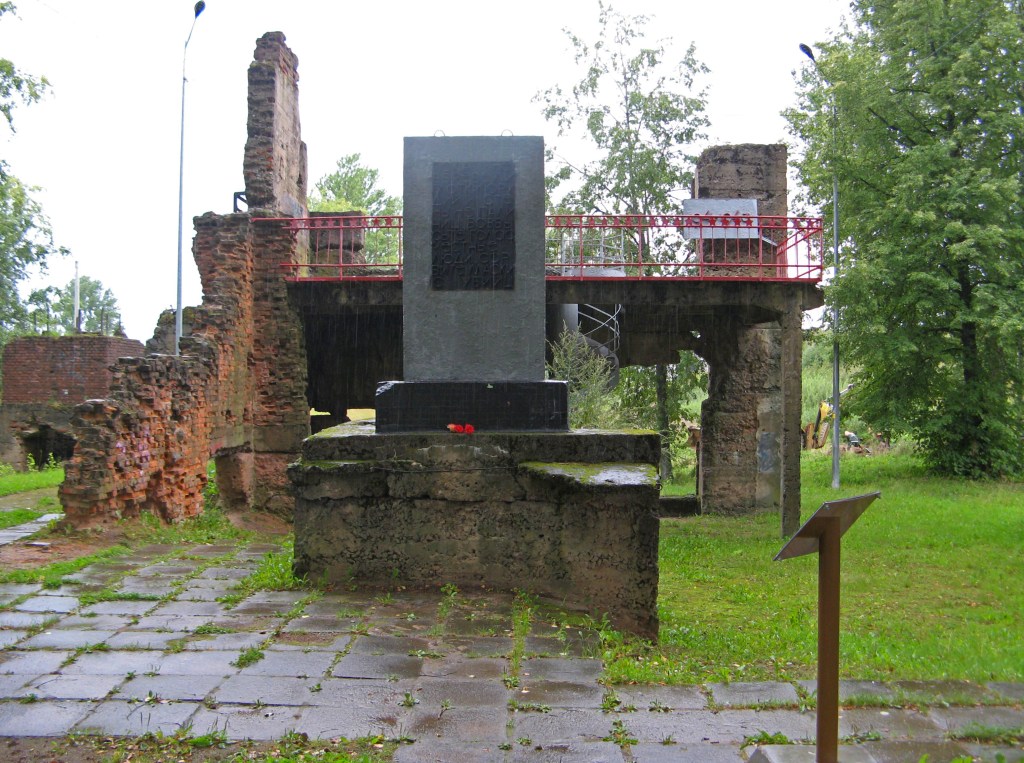
As you leave the town of Kirishi, on the left side of the highway, you see the ruins of a building that has not been completely demolished. Coming closer, you realize that this is the Echo of War monument: the ruins of a pre-war factory boiler room. The description says that the monument serves as a reminder to future generations of war’s horrific consequences.


Source: Pavel K., “‘He said goodbye to everyone in advance, saying that he would soon be gone’: how Kirishi buried Alexander Yegorov, killed in Ukraine,” Bumaga, 28 May 2022. The article’s author (and photographer) is identified here by a pseudonym for reasons of personal safety. Thanks to JG for the heads-up and KA for the encouragement. Translated by Thomas Campbell, who has edited this website for the last fifteen years and has no reason to be afraid of identifying himself, something that he mostly avoided doing during this website’s first twelve years, when it was produced in Petersburg, Russia.


The Echo of War monument in Kirishi, Leningrad Region, Russia. Photo courtesy of Wikipedia, which notes: “During the war, the front line passed through the city of Kirishi. The fiercest battles took place in Kirishi in December 1941, during which most of the town’s buildings were destroyed. The front line constantly passed through Kirishi for about two years.”

“To Become White in the Eyes of Whites”: Astrakhan Kazakhs and the War in Ukraine

Monument to the Kazakh composer Kurmangazy Sagyrbayuly in Astrakhan. Photo courtesy of Wikipedia

According to official statistics, ethnic Kazakhs [so-called Astrakhan Kazakhs] make up 16% of population of the Astrakhan Region. At the same time, 80% of the region’s residents who have been killed in the war in Ukraine and whose deaths have been publicly acknowledged by relatives or the authorities, are members of this particular ethnic group. Idel.Realii talked to several Astrakhan residents to understand why this is the case and what reaction it causes in the local community.

The situation is similar in regions without the status of “republics” — the Astrakhan Region is sending mainly ethnic Kazakhs, not ethnic Russians, to war. According to our figures, the regional and municipal authorities of the Lower Volga have acknowledged, as of today, the deaths of twenty-six natives of the region in the war in Ukraine. Based on the names of the victims and their places of birth, it is possible to say with a high degree of probability that twenty-one of them are ethnic Kazakhs.

Kazakhs are the second largest ethnic group in the Lower Volga after Russians. The 2010 census revealed that around 150 thousand Kazakhs live in the Astrakhan Region. Thus, the ethnic Kazakh population makes up 16% of the region’s residents who indicated their ethnicity. But Kazakhs are in the majority among the acknowledged war dead. Twenty-one out of twenty-six is 80% — that is, the disparity is fivefold.

Fragmentary reports coming from Astrakhan’s rural areas in the early days of the war suggest that the number of the region’s residents killed in Ukraine may be significantly higher than the official data admits. The ethnic imbalance is also noticeable in unconfirmed cases. Reports of war dead appeared mainly in the chats of residents of the Volodarsky District, the only part of the Astrakhan Region where Kazakhs make up the absolute majority of the population.

Idel.Realii talked to several residents of the Astrakhan Region to understand the possible causes of this imbalance and what people in the region think about it. The names of the interviewees have been changed for their safety.

“THE ONLY WAY TO FEED A FAMILY”

“This is not a new story: Kazakhs have always been represented in the uniformed services more than other Astrakhan residents,” says Aisulu from the Volodarsky District. “If you walk around the regional center, you will notice that almost half of the police officers are Kazakh in appearance — which is also much more than the proportion of Kazakhs in the entire population. You see the same picture among contract soldiers in the military.”

She believes that this is due to the fact that Astrakhan Kazakhs have traditionally been settled in small villages in rural areas.

“Many of them are located far from the city. They do not have permanent transport links with the outside world. They are separated from the main roads via one or more ferry crossings,” she says. “There is a high unemployment rate in such areas, and if you have bigger ambitions than working in agriculture, the main ways are rotation work or service in law enforcement and the military. The second option, of course, is regarded as more stable (not to mention respectable), so young guys from villages go en masse into the army and the police. This is often the only way for them to feed their families.”

According Aisulu, Kazakhs also choose to serve in law enforcement and the military more often than ethnic Russians because they have fewer job prospects in large cities: due to xenophobia, many employers prefer to hire a person of Slavic appearance, automatically considering them more competent and presentable. According to Aisulu, this further narrows career choices, motivating Astrakhan Kazakhs to go into voluntary [contract] military service, where ethnicity does not play such a huge role.

“WE DO NOT AND CANNOT HAVE INTERESTS IN UKRAINE”

“In the context of the current war, there may be another factor — ideology. Yes, there are an unusually large number of Kazakhs among Astrakhan military personnel, but they are clearly not the absolute majority. Why do we hear almost only about their deaths? We can assume that the command deliberately sends soldiers of non-Russian appearance to the front line to emphasize the formal justification for the attack on Ukraine: ‘the multi-ethnic people of the Russian Federation’ are fighting ‘fascism,'” says Adilbek, a native of the Narimanov District.

In his opinion, this is ironic.

“This is, allegedly, a campaign by a multi-ethnic people, in which there are Kazakhs, among others, and Putin says, ‘I am Lak, Jewish, Mordvin, Ossetian,’ but this campaign is aimed at expanding the ethnic Russian world and promoting Russian ethnic interests. It has nothing to do with the interests of Laks, Ossetians, or Kazakhs. We do not and cannot have interests in Ukraine at all, we have nothing to do with it. I see a sad irony in this. Russian fascists are waging an aggressive war, leading minorities into battle and taking cover behind fictional anti-fascism. Consequently, our guys are dying for people who actually despise them and are just using them.”

“WE DON’T WANT OUR CHILDREN TO DIE”

Rufina, a relative of an Astrakhan Kazakh who has died in the war in Ukraine, and a native of the Astrakhan Region’s Kamyzyak District, says that many residents of her village have gone to fight. Two other relatives of her parents are currently in Ukraine.

“My mother, grandmother, and other women who remain in the village are rather apolitical people with no coherent system of views. They are, in fact, now opposed to the war, but in their own way: ‘We don;’t want our children to die god knows where and god knows for whom.’ This does not prevent them from chewing out Ukraine and making fun of Zelensky, but they also chew out Putin. The only thing they really want is for all of it to stop and for their children to come home. The men are a little different: my uncle wears a T-shirt emblazoned with a Z, and some people in the village dress up children in these symbols. But I don’t consider this a direct endorsement of the war. In my opinion, their motivation, rather, is just to support their brothers, since they are [in Ukraine],” explains Rufina.

She actively opposes the war and puts up anti-war leaflets in the courtyards of residential areas in Astrakhan, but admits that this stance is not very popular even among her peers — people of high school age.

“Propaganda, unfortunately, does a bang-up job in these parts: many people believe in the ‘special operation’ and despise all Ukrainians. Our Russian-language teacher told us in class about ‘Ukrainian Nazis’ and went to a rally celebrating the ‘reunification’ of Crimea and Russia. I don’t see much opposition from schoolchildren,” says Rufina.

“On the other hand, I met some like-minded women who helped me with leaflets. We made small handwritten posters featuring slogans like ‘Silence is consent,’ ‘No death, no war,’ and ‘Bring flowers, not destruction,’ and pasted them on poles and bulletin boards. They were quickly torn down, however — whether by janitors or ordinary people who didn’t agree with [our message], I don’t know,” says Rufina.

“THE SENSELESSNESS IS STUNNING”

Kanat, who lives in Astrakhan, believes that the region’s residents are gradually losing interest in the events in Ukraine.

“War, like any other topic, cannot grip people’s attention for a long time. During the first month, I heard condemnation and discontent from the people around me and noticed that they were depressed. Now everyone is immersed in their daily problems again,” says Kanat. “There are more of these problems, but for some reason people no longer link them to what the army has been doing at the behest of the authorities. At the same time, it is clear that there is no freedom of speech, there is no criticism of the government and its actions, and we are thinking about how to live with what we have at the moment.”

“A colleague of mine says that when a war is on you must not condemn your country’s army. You can figure things out afterwards, but for now you can only support them. I don’t understand this. If this were a war to defend our own territory, to defend our rights and freedoms, then yes, we could say that, for the moment, we could close our eyes to certain crimes committed by the army or by individuals, and we would get to the bottom of them later. But now the exact opposite — a war of aggression — is happening,” claims Kanat.

According to him, he finds it “strange to see the posthumous medals for Kazakhs.”

“Maybe Kazakhs are not the only soldiers from Astrakhan Region who are getting killed, but I don’t really remember the others, to be honest. The senselessness is stunning. If you believe the rhetoric of the authorities, ethnics Russians are not loved in Ukraine, but ethnic Kazakhs from the Volodarsky District are dying for their interests. But I think that protests in Kazakhstan are more important to them than the rights of Russian-speaking residents of Odesa,” Kanat argues.

“TO BECOME WHITE IN THE EYES OF WHITES”

“Why are Kazakhs and other non-ethnic Russian Russian Federation nationals fighting? I would like to say that it is impossible to explain, but in fact I understand it,” says Rasul, a Kazakhstani national who moved to Russia to study at university. “First of all, these are people from poor regions, for whom the army is a way to move up in life, to become white in the eyes of whites, to become ethnic Russian in the eyes of ethnic Russians, to join something big and supposedly majestic. Secondly, Russian propaganda has this amazing property — it takes all imperial narratives that have existed in this country and fascistizes them to the limit. If you love the Russian Empire, here’s Christ for you. If you love the USSR, here’s the red banner. If you love Russia, here’s the tricolor. Are you a Tuvan who speaks Russian poorly? Here’s the opinion that [Russian defense minister Sergei] Shoigu is the reincarnation of Subutai. Are you a Kadyrovite? Here’s jihad for you. It all affects you, staying somewhere in your head, and when you are sent off to war, you easily find a moral justification for what you are doing.”

Rasul notes that he, perhaps, “would like to denounce ethnic Kazakhs involved in the war, to ‘discharge’ them from the Kazakh people, to say that they are all traitors.”

“From the viewpoint of sharia, they actually are traitors: all muftis, except the pro-Putin ones, have condemned this war. At the Last Judgment, these soldiers will be asked, ‘What did you die for? For Putin and his yacht? Well, then go to hell with them.’ But, to be honest, I feel more sorry for them on the purely human level than for the ethnic Russian guys, because after three years of living in Russia I understood how this propaganda works, how this society as a whole is organized, what the dynamics of interethnic relations are. I myself have many questions for our government, many problems with ethnic Kazakh and Kazakhstani identity, but over these two months I have repeatedly discussed Ukraine with my friends from Kazakhstan — with ethnic Kazakhs, ethnic Russians, ethnic Uyghurs, ethnic Dungans, ethnic Germans, and ethnic Poles — and we have always agreed that if Russia invaded us, we would go to war and shoot at the occupiers. We may speak Russian perfectly and have an excellent grasp of Russian literature, but this is our land, and we don’t need any ‘Russian world’ in it,” the Kazakhstani concludes.

Source: Idel.Realii (Radio Svoboda), 18 May 2022. Thanks to Comrade Koganzon for the heads-up. Translated by the Russian Reader

Buryats and the “Russian World”

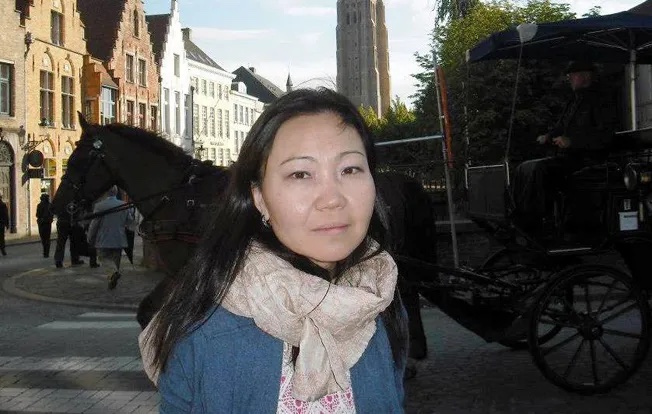
Radjana Dugar-DePonte. Photo courtesy of After Empire

As soon as the march “The Slavic Woman’s Farewell” began to play, my mother would cry. She was eleven years old when the Great Patriotic War began. In the small Buryat village of Khandagai, in the Irkutsk Region, all men between the ages of eighteen and fifty-five went to the front. They were sent off to the strains of “The Slavic Woman’s Farewell.” Few of them came back alive from the war.

Siberian divisions played a key role in the great turning point of 1941, when the enemy was halted outside Moscow. Pride in the deeds of our forebears is a significant part of the Siberian identity, but until recently this pride was suffused with the bitterness of loss. My mother always remembered the price of that victory: she saw them in her mind’s eye, the young handsome lads and men who left forever to the sound of trumpets and timpani. I was told how, in the early 2000s, members of the Buryat diaspora in Moscow were invited to a meeting of battlefield searchers in the Moscow Region to receive a list of dead soldiers whose remains had finally been found, identified, and properly buried. One of the searchers came up to the delegation and said with undisguised respect, “So this is what you are like, Buryats!” It turned out that all the fields near Podolsk, where his search party had worked, were simply littered with the remains of my countrymen.

Someone witty once very aptly called Putin a reverse Midas. The Phrygian king Midas turned everything into gold with a single touch. Putin turns everything he touches into a foul-smelling brown substance. The regime’s appropriation of the May 9th Victory Day is just one example. The celebration of Victory Day in Russia for me is now associated exclusively with pobedobesie [“victory frenzy”], with vulgarity, and with the slogan “We can do it again!”, whose true meaning dawns on us only today, after the invasion of Ukraine and the horrors of Bucha.

The irony of the current situation, in which members of my nation, the Buryats, are involved in this shameful war for Russia, is that images of Russian occupiers with Asian faces are now being injected into the public’s mind, while in the Great Patriotic War the role of the warrior-liberator was reserved exclusively for ethnic Russian soldiers.

Soon after Bucha, fake reportsw spread online that it was Buryats who committed the atrocities there, and these posts were illustrated by photos of Yakut soldiers holding the flag of the Sakha Republic, taken in 2018 in the military garrison in the Russian Far East where they served. Why would anyone want to shift the blame for the massacres to Buryats? My Ukrainian Facebook friend Dmytro Kanibolotskyy answered this question best of all: “Russia’s attempts to declare ‘Ukrainian nationalists’ guilty or to pass off the footage from the Bucha district as ‘staged’ have failed. Satellite images clearly showed that the bodies of the dead were lying in the same places when Russian troops were still in Bucha. The involvement of ethnic Russians in the mass murders is also evidenced by their intercepted conversations and the testimony of local residents. But now Russian propaganda is trying to tell a different story, to Ukrainian readers at least: the Russian Federation’s ethnic minorities, who got drunk and disobeyed orders, are allegedly to blame for the whole thing. It is convenient to encourage Ukrainians to think that their enemies are not ethnic Russians, but Buryats (as well as Yakuts, Chechens, Dagestanis, and other peoples of the Russian Federation), that they must fight not against Russia or ethnic Russians, but against the nations that Russian has colonized.”

The investigation of the war crimes in Bucha and other towns and villages is already underway. Ukrainian presidential advisor Oleksiy Arestovych has spoken unequivocally about the preliminary results: the atrocities in Bucha were committed by “burly Slavic guys,” and not by Buryats, “as they like to say.” I am sure there will be a new Nuremberg trial after the war, and if it transpires that there were Buryats among the war criminals, they will have to be punished. But I hope that there will also be room in the dock for warmongering propagandists, and for the Kremlin’s disinformation agents in Ukraine.

Recently, I have often been asked why so many Buryats are fighting in the “special operation.” There are really a lot of Buryat soldiers fighting in this war. The Telegram channel Mongolian Knot reported that “according to various estimates, there are about ten thousand Buryats at the front.” Other sources report that there are five or six thousand Buryats in combat. Most likely, as a percentage per capita among all the peoples of Russia, the Buryats fighting in Ukraine are in the lead.

I have been told that there is not a single Buryat village that does not have at least a dozen or two dozen contract soldiers at the front. The situation is particularly difficult in the Agin-Buryat District of the Transbaikal Territory. The absence of young Buryat men in public places is striking. There are places where Buryat families go in full force — the so-called countryside and the datsan. There are generally few Buryat men between the age of twenty and forty years in the datsans. According to my relatives, none of the ten Buryat families who came to services at the temple had fathers. In the countryside vacation spots, there were at best two men among every three or four families with children.

Buryats make up only 0.3% of Russia’s population, but they make up 2.8% of the official war dead. In terms of numbers of war dead, Dagestan is ahead of Buryatia, but Dagestan’s population is three times larger. The moderators of the Telegram channel Demography by Raksha looked at the stats for Buryats whose age was known at the time of their deaths in the war, and calculated how many men in Buryatia died on average over the same (fifty-three-day) period during “peacetime” (in 2019-2020). On top of this, they sorted those who have perished in the war in Ukraine into the appropriate age groups.

Thus, only the confirmed cases of combat deaths of men from Buryatia in the war in Ukraine increased the mortality of Buryat men aged 18-45 years by 70%, and the mortality of young men under the age of thirty by 270%. Think about those numbers! There are approximately 462 thousand Buryats in the Russian Federation. What will happen to this nation if it loses so many young healthy men of reproductive age all at once — a tenth of the strong young men who could have raised twenty to thirty thousand children?

The causes of this catastrophic situation can be discussed endlessly. The Buryat territories, consisting of the Republic of Buryatia proper, as well as parts of the Irkutsk Region, the Ust-Orda Buryat District, the Transbaikal Territory, and the Agin-Buryat District, are a large economically depressed region. High unemployment, meager salaries, and the indebtedness of the population have led to the fact that almost the only choice a young man faces in finding a way out of economic impasse is either illegal migration or contract military service.

The traditional upbringing in Buryat families also plays a big role in the conscious choice of a military career. Boys are taught from an early age to be independent, work hard, stand up for themselves, and protect loved ones. Traditional sports are very popular in Buryatia, especially the national form of wrestling, buhe barildaan.

A young guy from a small Buryat village, accustomed to harsh living conditions, hard work, getting up early, and discipline, adapts easily to military life, and after signing a contract, receives a preferential military mortgage (which is almost the most important factor for young families) and a guaranteed salary that is decent by the region’s standards.

Buryat tank crewmen were involved in battles on Ukrainian territory long before February 24 of this year. One of them, Dorzhi Batomunkuyev, who suffered severe burns in the Battle of Debaltseve in 2015, gave an interview to Novaya Gazeta’s Elena Kostyuchenko in which he called Putin “cunning” and admitted that he and his comrades had painted over the numbers of their tanks and removed the chevrons and stripes from their uniforms to “disguise” them before being sent to Donbas.

Dmitry Sapozhnikov, a Russian national and the commander of the DPR’s special forces, told the BBC Russian Service that the role of Buryat tank crews in the battle for the Debaltseve bridgehead had been decisive. Even then, the Buryats were the most combat-ready segment of the Russian army. It was not for nothing that a Buryat crew won the international tank biathlon shortly before our contractor soldiers were deployed to Donbas.

Thus, their professionalism, a respect for elders laid down by their upbringing, their strict adherence to orders, and the way they perform in combat, including their willingness to sacrifice themselves, all make the Buryats excellent soldiers. In 2010, news came of the heroic deed of Aldar Tsydenzhapov, a 19-year-old sailor from the Agin-Buryat District. On September 24, 2010, the crew of the destroyer Bystry was on board and preparing to sail on a combat mission to Kamchatka. Aldar and four of his mates took over the watch. When a fire broke out in the destroyer’s engine room, Aldar rushed to its epicenter and shut a red-hot valve with his bare hands.

The ship and more than 300 crew members were saved, but Aldar was fatally burned and died in a military hospital. The then President of Russia Dmitry Medvedev considered Aldar unworthy of the title of Hero of Russia. Initially, the authorities planned to award him only the Order of Courage. Only after public outrage, a petition campaign on Change.org, and appeals from parliamentarians and party officials, was he posthumously awarded the title of Hero of Russia.

I understand perfectly well that many readers will now accuse me of trying to whitewash my own people. There is most likely some truth to this. I will repeat once again that if it transpires that there are war criminals among Buryats, I will be the first to demand that they be punished. In the meantime, I will give some first-hand evidence of the behavior of Buryat soldiers in occupied Ukrainian territory.

In the first days of the war, in the comments under a post in the Facebook group Buryatia Is Our Home, someone mentioned that the Buryat tank crews were not marauding, but instead were going house to house and trying to buy food from local residents. They said that they were going on maneuvers and had not known about HQ’s plans to cross the border with Ukraine. One Buryat contract soldier said the same thing in a telephone conversation with his family on the eve of the invasion: he had been looking forward to coming home soon, but instead he ended up at war.

A woman from Ukraine, whose brother and niece had spoken with the tank crews, wrote on the Buryat group page that they were hungry since they had been issued dry rations for only one day; they were not aggressive, and wanted to go home. Many of them were conscripts, eighteen- and nineteen-year-old lads who had urgently been “made” contract soldiers. A resident of Chernihiv region wrote about an incident in Mykhailo-Kotsiubynske: “Belarusians, who are stationed there as occupiers along with Buryats and Muscovites, took a horse from a villager, slaughtered it, and ate it. Like in the First World War… And what to do if the Muscovites simply confiscate food? Buryats are the most cultured among the occupiers, they buy [food] for money, while the Belarusians say they are ‘peaceful people.'” (My translation.) There was the testimony from a resident of Bucha that Buryats had tried to warn her to be careful when “they” (probably Pskov paratroopers or Wagner Group mercenaries) came. And in Borodyanka, people said, “The Buryats did not shoot.”

Subsequently, videos with blaring titles like “The Buryats are worse than the Kadyrovites,” etc., were dumped on the web. When you watch the videos, however, it transpires that the most terrible crime of the alleged Buryats (soldiers of Asian appearance, whom the interviewee called “flat–faced”) was shattering a door with an axe, which is not a good thing, of course, but not remotely as bad as torture, rape, and summary execution.

Outright fakes and “crucified boys” have now come into play, like the video featuring a volunteer who allegedly survived Bucha, which was thoroughly and expertly demolished by Dmitro Kanibolotskyy. Such sleaze is manufactured in an attempt to “save face” for ethnic Russian soldiers. This is the point of the image of the savage Buryat, who allegedly slices flesh from live dogs in order to “chow down.” A post containing such outlandish content actually has been making the rounds on social media.

Unfortunately, involvement in an unjust war of conquest eventually hardens and corrupts even the most steadfast and moral people. In such a war, there are no soldiers in clean white jackets, if HQ encourages looting and violence against civilians. The Russian army and the people of Russia are guilty of the aggression unleashed by Putin. The blood of thousands of Ukrainians will remain on our conscience forever. The war has brought shame on Russia. But this inglorious coin has another side. The Russian leadership is responsible not only for criminal aggression against the people of Ukraine, but also for the death of thousands of its own soldiers, especially non-ethnic Russian soldiers whom the Kremlin obviously feels less sorry for, regarding them as cannon fodder that can be dumped on the front line.

It is possible to understand on a personal level the Ukrainians who believe that the majority of war crimes have been committed by Buryats. They are under stress, they are distraught and grief-stricken, they are not up to rational arguments now. Some Russians comport themselves much worse in this situation, and I’m not talking about Putinists and my completely brainwashed fellow citizens. I mean the so-called “cultured” liberal crowd.

Many people today are wondering why so many Buryats are fighting in Ukraine. Video blogger Karen Shainyan even bothered to go to Ulan-Ude to get an answer, where he shot a video that has racked up almost 300 thousand views on YouTube. Shainyan sought out a wide spectrum of experts, only Buryats themselves were not invited to his intellectual symposium. However, we Buryats were still shown in the form of visual aids, as illustrations to the expert opinions of the sahibs. It is simply impossible to imagine a whole ethnic group, outside of Russia, being so unabashedly deprived of its subjectivity.

A few days ago, the Buryat political exile Dorjo Dugarov and I had a chance to speak on the same topic – “Why are Buryats going off to fight for the Russian army?” – on the Ukrainian TV channel FreeDom. I saw Shainyan’s show literally the next day after our broadcast, and I couldn’t help but notice a parallel: Shainyan denies the subjectivity of Buryats in about the same fashion as Putin denies the subjectivity of Ukraine! That is why it is not surprising that Ukrainian TV journalists bothered to invite Buryats to talk about Buryatia, while a Moscow blogger could not or did not want to find a single Buryat in Ulan-Ude! It is the same imperial rationale, the same disrespect for “inferior” nations as Putin’s. And until Russians rid themselves of imperial thinking, Russia will keep stepping on the same bloody rake over and over again.

Alexander Nevzorov, Russian imperialist and erstwhile champion of Russian armed force in Chechnya, but now an idol of the Russian opposition crowd, has since the beginning of the war repeatedly allowed himself statements suggesting that “the Buryats don’t care who they rape.” The views of the flip-flopping hybrid democrat are especially congenial to those who, wrapped in the redesigned flag of “the other Russia, the good Russia,” want to shift the collective blame for all crimes onto the country’s minorities. But no, the shame of this war will have to be shared equally by our whole country, which has gone off the rails.

Source: Radjana Dugar-DePonte, “Buryats and the ‘Russian world’: ‘The shame of this war will have to be shared equally,'” Sibir.Realii (Radio Svoboda), 12 May 2022, and the slightly different version of this article published on the Radio Svoboda website on 17 May 2022. Radjana Dugar-DePonte is a historian and exiled Buryat political activist. Thanks to Comrade Koganzon for the heads-up. Translated by the Russian Reader

In Red River

A spontaneous memorial to those who died in Ukraine has appeared here in Krasnaya Rechka [Red River]. At the moment there are 25 photos, and yet this is far from the largest residential area in Khabarovsk.

Source: Vitaly Blazhevich, Facebook, 15 May 2022. Krasnaya Rechka is a so-called microdistrict (mikroraion) in Khabarovsk’s Industrial district, in the south of the city. Khabarovsk is home to over 600,000 people and is Russia’s twenty-sixth largest city. Translated by the Russian Reader


Ukraine Says Russia is Desperately Hiding True Death Figures – This week, the Security Services of Ukraine revealed that an intercepted phone call exposed how Russia is desperately trying to hide the actual number of Russian soldiers and Ukrainian civilians killed in the conflict in Ukraine.

According to the Ukrainian Security Services, an invading Russian soldier can be heard on the call talking about “makeshift dumpsites” where there are so many corpses piled up that they are around 6 feet high.

“It’s not a morgue, it’s a dump,” the soldier said. “They were just lying one on top of another, it was a dump as tall as a man.”

The soldier, who reportedly sounded tired and dispirited, described how he heard about the mass graveyards from the wife of a soldier who was first reported missing and eventually found at the so-called “dump.”

The wife said that thousands of bodies had been disposed of at the site and that Russians were saying that deceased soldiers left on the site were simply “missing in action.”

Russia Has a Problem – How Many Have Died?

The true number of Russian soldiers killed in the war with Ukraine is unknown, and will likely never be known thanks to the Kremlin’s efforts to hide the figure.

Estimates vary, but reports at the end of April indicated that as many as 25,900 Russian soldiers could have died so far. The number actually came from the same intercepted phone call that revealed how Russia hid the true number of deaths by declaring soldiers missing.

The number was similar to the estimate of 22,800 soldiers offered by Ukraine. The estimate, which was released last month, also suggested that 2,389 armored personnel vehicles, 431 artillery systems, 151 multiple launch rocket systems, and 970 Russian tanks had been destroyed.

As for Ukrainian civilians, the number is also unknown but will likely eventually be determined once the war comes to an end. According to the United Nations Human Rights Monitoring Mission, a total of 7,061 civilian casualties have been verified so far. Among those casualties were 3,381 deaths.

The number, however, is likely to be significantly higher.

“Overall, to date, we have corroborated 7,061 civilian casualties, with 3,381 killed and 3,680 injured across the country since the beginning of the armed attack by the Russian Federation. The actual figures are higher and we are working to corroborate every single incident,” UN spokeswoman Matilda Bogner told a press briefing in Geneva, Switzerland this week.

“We have been working on estimates, but all I can say for now is that it is thousands higher than the numbers we have currently given to you,” Bogner added about Russia’s causality figures.

Source: Jack Buckby, “Putin Is Lying: Russia May Have Lost Nearly 26,000 Soldiers in Ukraine,” 1945, 12 May 2022

Young, Poor, Dead

IStories
Young, Poor, Dead

The war against Ukraine has entered its third month, but there is still no public list in Russia of the soldiers killed. Isolated cases have been reported by the heads of regions or districts where soldiers lived, or by the schools and sports clubs where they studied and trained.

We compiled our list by studying and rechecking reports from open sources. As of this writing, we have confirmed the deaths of 1,855 men.

What we have learned
It is mostly young soldiers who have perished in the war: their average age is 28. More than 80% were between the ages of 18 and 35, and 40% were younger than 25.

Due to the war, the mortality rate among young men in Russia has already increased by more than a quarter, and by several times in those regions with the most war dead. (For example, in Buryatia, the number of deaths of men under 30 has already increased by more than two and half times.)

Russian regions with the highest number of confirmed war dead in Ukraine

Per 100 thousand men between 18 to 45 years old: Buryatia, 46 men; Tyva, 44; North Ossetia, 40; Kostroma Region, 28; Altai, 25; Jewish Autonomous Region, 25; Pskov Region, 21; Dagestan, 19; Transbaikal Territory, 19; Orenburg Region, 18

In absolute numbers: Dagestan, 123 men; Buryatia, 91; Volgograd Region, 75; Orenburg Region, 64; North Ossetia, 52; Chelyabinsk Region, 49; Bashkortostan, 49; Saratov Region, 46; Krasnodar Territory, 44; Stavropol Territory, 43

Source: Istories, Telegram channel Goryushko

The deaths of young men in the war will eventually cause demographic problems for Russia: the birth rate will drop sharply, which means that the population will decrease. Demographer Alexei Raksha argues that in 2023 we may face the lowest number of births in the entire recent history of Russia.

Military service in Russia is an extremely low prestige job, but new people are constantly going into the army. Why?

What is the quality of life in the regions with the largest numbers of war dead in Ukraine?

Read the investigative report on our website.

Source: I(mportant)Stories, email newsletter, 4 May 2022. Translated by the Russian Reader

______________

Most Russians are getting a distorted picture of what Vladimir Putin calls a “special military operation” in Ukraine. Even the use of the words “war” or “invasion” is prohibited and state-controlled TV does not acknowledge that Russian troops are attacking civilians. Russian soldiers aren’t allowed to call home from Ukraine, and the military authorities are tight-lipped, even when their soldiers are taken prisoner. So how can Russian families find out what’s become of their sons? Some search for help through a Ukrainian website, which posts pictures and videos of dead and captured Russian soldiers on the internet. Tim Whewell follows the stories of two Russian families – one from western Russia whose son was taken prisoner in the early days of the war. And one from the very far east whose family worry about how his frame of mind is holding up against the relentless onslaught of anti-Ukrainian propaganda.

Source: BBC Radio 4, 3 May 2022