Every Tree in the Forest Would Understand You
Anastasia Lotareva
Takie Dela
August 11, 2017
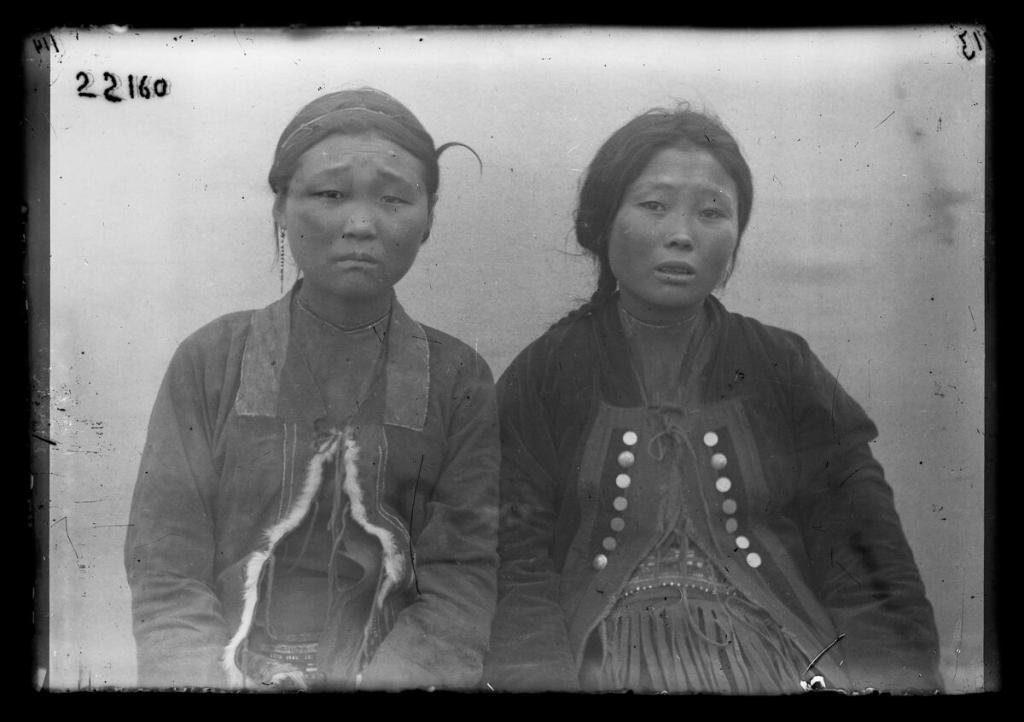
In Russia, there are six people left who can tell tales, sing songs, and simply converse in one of the world’s most ancient languages.
The dialects of the Selkup language are unique. For example, they have retained semantic stress (that is, stress that changes the meanings of words). It was inherited from Proto-Samoyedic, the language spoken in Siberia before our era. Researchers from around the world study the Selkup dialects, and Russian linguists recently were awarded an unprecedented grant to research them. If the language of the southern Selkups disappears before scholars are able to record it, what the language has preserved for thousands of years will disappear forever.
“God got paradise, the Devil got Narym Territory,” laughs an elderly mustached man as he tosses another heavy bag on board the speedboat or kaeski. The boat is moored directly to the shore, since there is no dock. It is loaded with food, parcels, and medicines, as well as children.
“He’s going to his grandma’s. You see that he doesn’t forget to get off at Shpalozavod.”
There are no strangers here at all. The first mate, who sells tickets printed back in Soviet times, regards us with suspicion.
“May I ask where you’re going? To Narym? Whatever for?”
“We’re writing an article about the Selkups.”
“Ah . . . More researchers going to see our Ostyaks.”
He closes the door to the deck. It is strictly forbidden to go on deck when the boat is under speed: the weather is poor, and the boat is badly buffeted. In short order, the small craft jumps right into the middle of the Ob River. On the right is the taiga, on the left is the taiga. For several hours and many kilometers there is nothing but the taiga.
Like Sverdlov and Stalin
There are now less than fifty indigenous minorities in Russia. The list of these peoples was approved at the beginning of the twenty-first century, and it has been constantly revised downward. The Selkups are relatively numerous. There are a few thousand of them in Tyumen Region, fifty in Krasnoyarsk Territory, and nearly two thousand in northern Tomsk Region, where Narym is located. The term Selkup emerged and gradually came into usage in the 1930s. Previously, the names Ostyak and Ostyak-Samoyed were used. They are still used in ordinary, non-scholarly language, and sometimes they seep into official documents. The Selkups tend to call themselves Ostyaks.
 Narym. This building was the police station before the revolution. Photo courtesy of Anton Unitysn/Takie Dela
The Selkups have been divided the last three hundred years or so. There are the northern Selkups, who live along the Taz and Turukhan Rivers, and there are the southern Selkups, the Narym Selkups, who live in the middle basin of the Ob River. They have different folkways, now nearly erased by time and assimilation, and different dialects. If Selkups speak their native tongues, southerners would not understand northerners. Only they do not speak it. The Selkups started to disappear and assimilate as early as the nineteenth century, and the language retreated when the Selkups settled in Russian villages. Their secretive, forest way of life came to an end.
“An airplane flew to Narym once a week, and ships would arrive daily, not just one, like nowadays, but many. But now we’re like Stalin and Sverdlov, like Sverdlov and Stalin. Hey, young folks, do you know who Stalin is?” a female fellow passenger asks us.
Narym was a free land. In the sixteenth century, it was ruled by the Skewbald Horde, a group of four hundred Selkups, according to the written sources, or five million, as a beautiful brochure published by the local authorities claims. The horde was led by Prince Vonya, an ally of Kuchum Khan, ruler of the Khanate of Sibir. Battered by Cossack detachments and tsarist military governors, the khanate fell. The Skewbald Horde surrendered only after construction of Narym Fortress in the late sixteenth century.
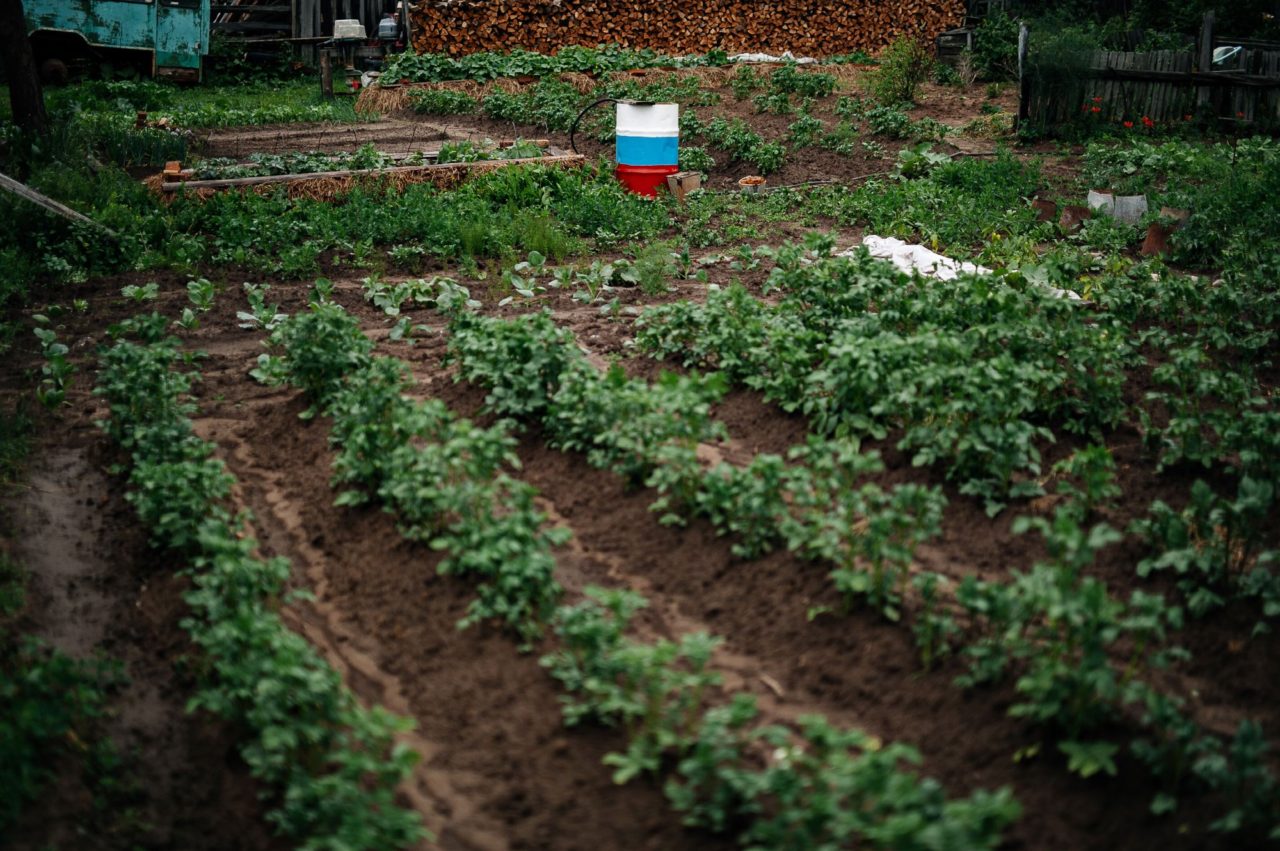 A street in Narym. Photo courtesy of Anton Unitysn/Takie Dela
Narym was no longer a free land. Common criminals and enemies of the regime were exiled there, including the Decembrist Nikolai Mozgalevsky, the Latvian communist Jānis Pieče, the Bolsheviks Yakovlev, Shishkov, and Tomsky, and Stalin and Sverdlov, the latter along with his youngest brother. The political prisoners were not guarded very closely, and many of them managed to escape. Stalin, for example, spent only forty-one days of a five-year exile in Narym before grabbing a steamer to Tomsk and traveling from there to Switzerland, where he resumed his revolutionary career.
Little People
“You Russians distort everything. Ostyakh is not what Selkups called themselves, but what the Khanty called them. It means ‘here I am.’ Or take nyar’m, ‘marsh’ in Selkup. But no, you turn it into Narym.”
We are told this by Ludmila Shadrina, a Narym Selkup and former elementary school teacher.
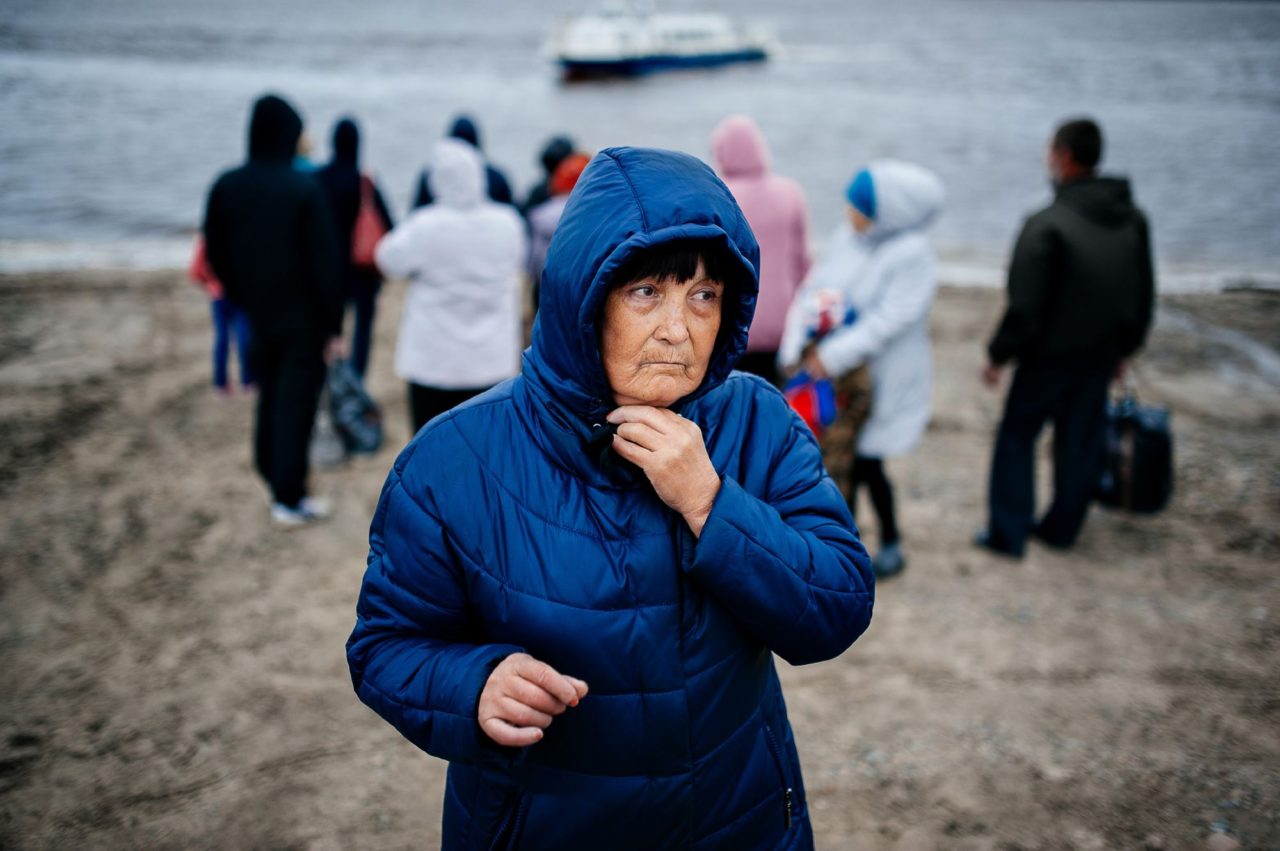 Ludmila Shadrina. Photo courtesy of Anton Unitysn/Takie Dela
Ludmila walks quickly, almost at a run, over the boardwalks that do the work of sidewalks in Narym. It is late and quite cold. The museum, which contains three rooms on political exiles and one room on the Selkups, closed much earlier in the day, but Ludmila has agreed with the people who run it to open it for us.
“Not all Selkups like it when people come and interrogate them.”
“But you like it?”
“My cow has been waiting for over an hour to be milked, and yet I’m running around here. But I realize we have to tell people about ourselves.”
I ask Ludmila why this is necessary.
“Because we exist,” Ludmila says.
In front of the little house of the peasant Alexeyev, where Stalin was quartered, is a karamo, a Selkup dugout. The house is authentic, but the karamo is a reconstruction: the Selkups ceased living in them in the early twentieth century. However, Ludmila says her nephew builds the very same dugouts when he hunts sables. Selkups still also build lean-tos, sheds mounted on piles to keep rodents from pilfering victuals.
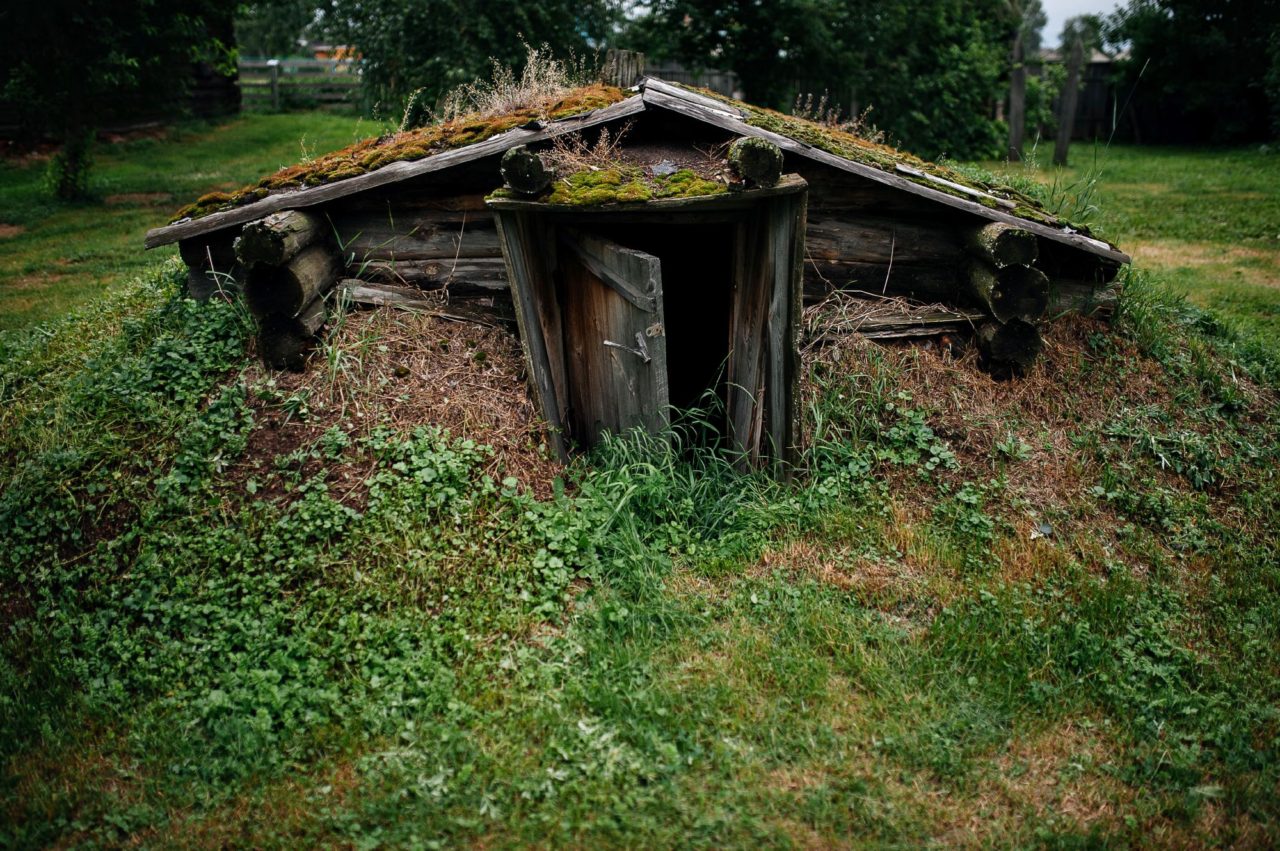 Dugout at Narym Museum. Photo courtesy of Anton Unitysn/Takie Dela
 Exhibits at Narym Museum. Photo courtesy of Anton Unitysn/Takie Dela
Ludmila, whose Selkup father died young, grew up in a small Selkup village with her Russian mother. All traces of the traditional way of life had vanished. The village was dying.
“Dad took me fishing with him,” says Ludmila. “What can you say? He was an Ostyak and fished well. We were still eating dried fish several years after his death. He was ill and that’s why he took me along. He thought if he kicked the bucket, then at least I, a living soul, would go find people and tell them where his body was. When Dad felt weak, he would lie on the sand, half asleep, half breathing. I would lie next to him, gazing at the forest, at all the bugs. The trees would sway, but what was beyond the trees? Bears? People? I was frightened.”
Ludmila takes us to her sister Raisa’s house, telling us on the way that bears have become more frequent in Narym in the past year. Тhey snatch cows, stroll down the street, and rip dogs to shreds. If people guard one side of the village, they will infiltrate it from the other side. Ludmila feared them as a little girl and still fears them as an adult. Bears are inventive, cagey animals. The surrounding area is chockablock with them.
When she greets us at the door, Raisa suggests “freezing” us, that is, getting out cold fish, so-called chush, cut into large rings.
“Do you go far to fish?”
“We fish right here on the creek.”
The “creek” is Raisa’s name for the Ob, Russia’s longest river.
 Narym. Photo courtesy of Anton Unitysn/Takie Dela
Neither Raisa nor Ludmila speaks Selkup. They know only certain words.
“It wasn’t the done thing. Yeah, the old people spoke Selkup. We understood them, but replied in Russian, especially after going to boarding school.”
All the children from the tiny Selkup villages were not sent to a regular school in nearby towns, but to special Selkup schools many kilometers away. They were part of the special welfare system for the indigenous minorities of the Russian North, a system crowned by the Institute of the Peoples of the North, which still functions in St. Petersburg. During the impoverished postwar period, the boarding schools provided their young charges with everything from food to clothing. Being sent to such a boarding school was considered good fortune and a privilege. But this same privilege almost completely destroyed the Selkup language and eroded ethnic self-identity. The children would come back home speaking Russian, but more seriously, they no longer wanted to living in the small, impoverished Selkup villages.
 Narym. Photo courtesy of Anton Unitysn/Takie Dela
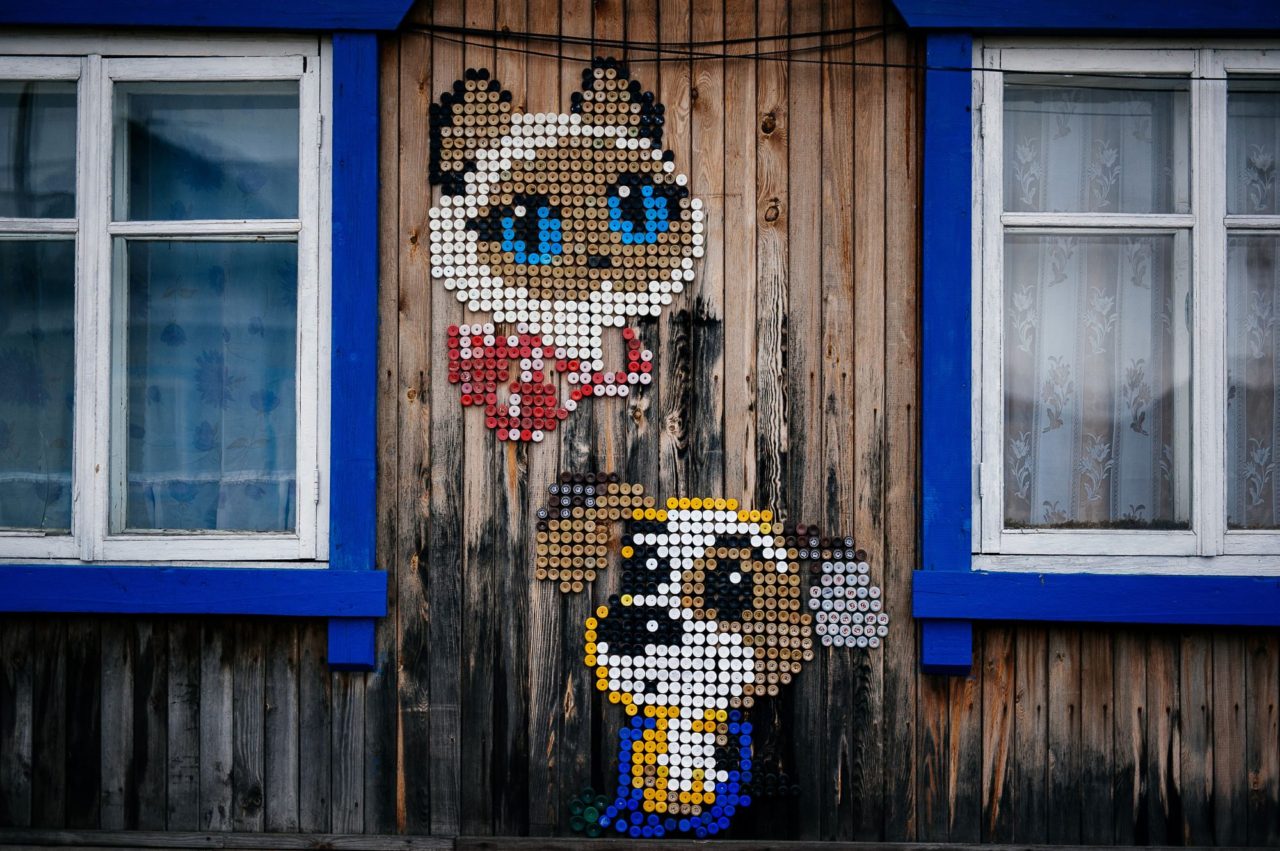 Narym. Photo courtesy of Anton Unitysn/Takie Dela
I ask Ludmila and Raisa whether they liked boarding school. They answered yes without hesitating. Nourishing food, good clothes, and friends, with many of whom they are still in touch.
A minute later, however, Raisa adds something.
“The boarding school influenced us. We got used to getting ourselves out of scrapes. We worked and we studied, and our parents helped us. But our own children are not independent. They are softer. They cannot do the things we did. I always told myself when I had a child I would not give it away to anyone. This is probably because of the boarding school.”
Boarding school students were teased, but Raisa remembers this without malice.
“Well yeah, we were teased, of course, and people said we drank a lot, that we were poor and narrow-minded. Only certain people would get stuck on this, and I would put my arms on my hips and say, ‘Yeah, I’m an Ostyak. What of it?!’ They didn’t know what to say.”
According to Ludmila, many of her fellow villagers are embarrassed of their ethnicity and identify themselves as Russians.
“Then the neighbors say to them, ‘You have passed yourselves off as Russians, but what you going to do with your Ostyak mug? We’re forest people, little people. Everything gives us away, including our faces and figures.”
The Last Native Speaker
Parabel, the district center, is a large, rich village, founded in the seventeenth century on the site of several old Russian settlements. Nowadays, major oil and natural gas pipelines run through it. Gazprom runs a compressor platform and oil pumping station in the village, and so its freshly paved streets are filled with foreign-made cars, and the rooms in certain hotels are never vacant, because there are many business travelers. There is a cinema, a cultural center, and a large museum, which has grown over the nearly thirty years since the Soviet Union’s collapse from a small in-school museum to a large-scale history and ethnography museum.
“When the Selkups organized themselves, culture got involved. What did you expect?” Irina Fokina, head of the local culture department explains. “They said it to me just like that: ‘Irina Petrovna, the time has come to deal with the small peoples.'”
“Did you know anything about the Selkups before this?”
“When I was at school, we didn’t know any Selkups. The Ostyaks, on the other hand, lived with us, and they were sometimes spoken of poorly,” Fokina falters, choosing her words carefully.
 Irina Korobeinikova is the last native speaker of a rare Selkup dialect. Photo courtesy of Anton Unitysn/Takie Dela
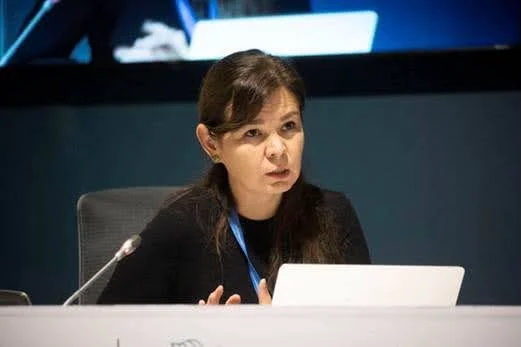
“They called us ‘second class,'” laconically notes Irina Korobeinikova, the last native speaker of the Narym dialect of Selkup and the person who launched the southern Selkup renaissance.
The notion of a “native speaker” is a quite broad concept, a concept with numerous gradations, ranging from people who remember a few words of their native language from childhood to those who converse with household members in their native language as adults. There are no such people left among the Selkups. Irina speaks Selkup fluently and publishes fairy tales and legends in her native tongue, but as reverse translations. First, she recalls a story or reads a Russian transcription of it, as recorded by ethnographers, and only then does she translate it into Selkup. Her children do not know the language. Even her brother, who grew up with her and has heard his fill of Selkup, converses with his sister in Russian.
“But why doesn’t he want to speak his native language?”
“He says he doesn’t want to and that’s that. Who can say?”
Irina spoke only Selkup until the age of seven, mainly with her grandmother, who raised her six grandchildren. Grandmother hunted and fished. Irina’s mother was also a good hunter. She and her sister would bring in two thousand squirrels per season and turn them over to the Soviet state in return for fabric to make a dress or a cashmere scarf. Did the Russian women hunt? Irina says she cannot recall such a thing. It was a purely Selkup practice.
“Did you call yourself Selkups?”
“We called ourselves chomilkups, forest people. Mom and Dad were identified as Ostyaks in their internal Soviet passports, while I was identified as a Selkup. By the way, when I went to the first Congress of Indigenous Minorities, in Kolpashevo, I raised this question when the head of the passport office spoke. I was indignant. Am I not related to Mom and Dad? I was told the academic world had settled on it. This was how our people were now called.”
Irina’s grassroots activism kicked off during perestroika.
“The authorities really supported us then.”
Korobeinikova recalls with pleasure the Congress of Indigenous Minorities of the North, this time held in Moscow, and meeting Mikhail Gorbachev.
 Parabel. Photo courtesy of Anton Unitysn/Takie Dela
 The place in Parabel where the speedboats to Narym dock. Photo courtesy of Anton Unitysn/Takie Dela
“The Yakuts and I went up to him. He had only recently been elected. We congratulated him. He shook our hands, and what soft hands he had. He had only ever held pens and papers in them, not shovels, as we had.”
The Soviet Union’s collapse opened borders, and foreign linguists came to see the Selkups. Irina shows me the first Selkup-Russian dictionary, published in Hungary. She tells me about a trip to Hamburg, where she was invited to translate texts in Selkup, written down by German scholars way back in the late nineteenth century. When I see a photograph of a jolly Japanese woman, dressed in a reconstructed Selkup costume, I cannot stand it anymore.
Hungarians, Germans, and Japanese. Why do the Selkups matter so much to them?
Irina smiles subtly and says, “That is because we’re so interesting.”
Happy People
“One of them just left. She was writing down everything. Either researchers are showing up or Irina comes. They sit down with their laptops and off they go. How did you do this? How did you do that?”
Illarion Ivanovich Izhenbin, a Belomorkanal cigarette dangling from his mouth, pumps the tire on his granddaughter’s bike. He lives in a two-storey stone house. There is a nest in the entryway: five swallow chicks protrude from it. Illarion says it’s a good omen, but the chicks are too loud. Sometimes you can hear them in his flat.
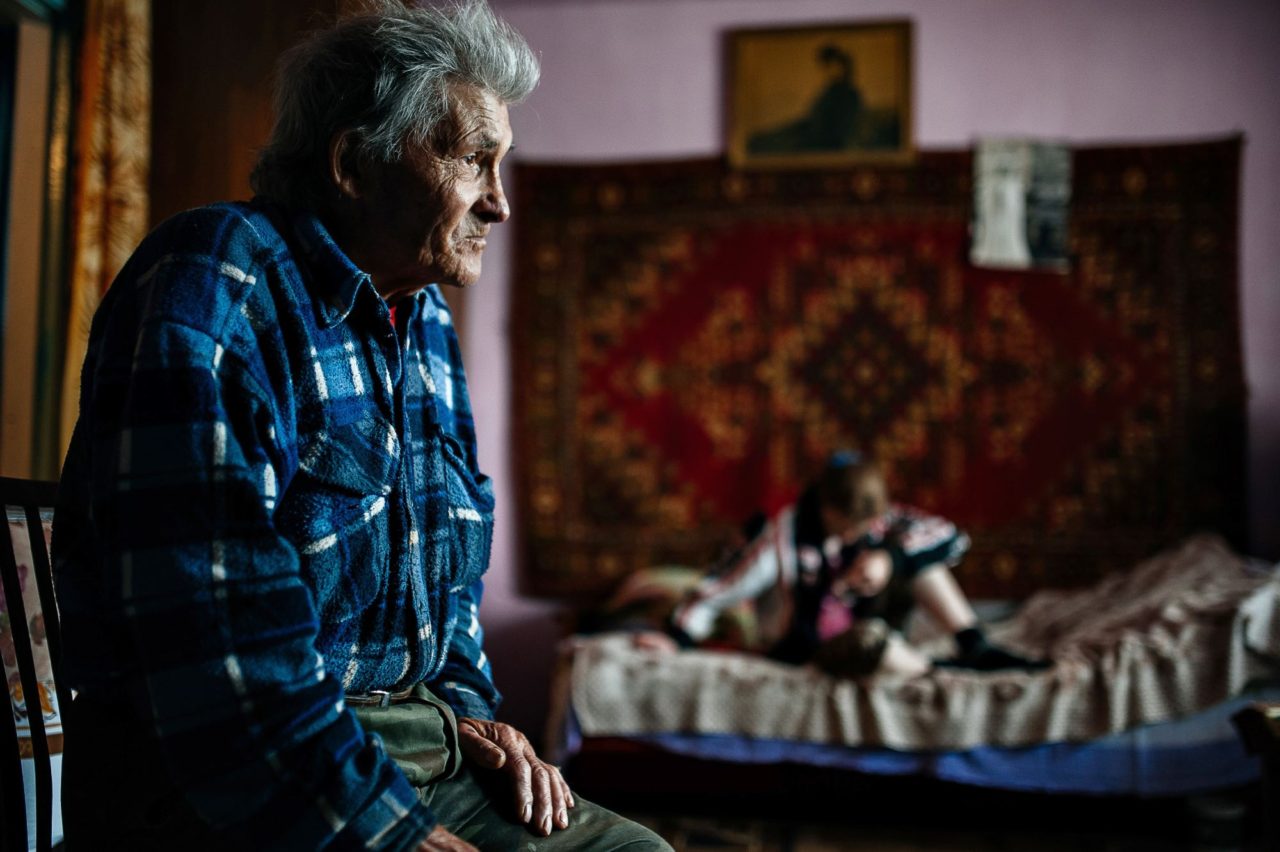 Illarion Izhenbin. Photo courtesy of Anton Unitysn/Takie Dela
“Are you tired of talking with researchers?”
“Would that I could remember something. I have lived among Selkups my whole life. When I go fishing, and it’s quiet and there is no one else round, I look at things and translate them silently. What are the Selkup words for stars, moon, and water? I spoke only Selkup until 1957. Do you know Selkup’s distinguishing trait? It has no foul language.”
“How did people curse?”
“Homo tat! is the most you can say. It means ‘I’m sick of you,’ ‘Go to hell,’ ‘Don’t hang around here.'”
Illarion was also raised by his grandmother. His father was burned to death in a tank near the Reichstag four days before the Second World War ended, while his mother constantly worked in the fishing fleet of small Selkup village. As a boy, he fashioned arrowheads from tin cans, hunted with a bow, set traps, and fished.
“Granny taught me so well that if you left me in the wild with a knife and matches, I could survive,” he says. “She also always told me to look backwards, between my ears, to make sure there were no animals or bad men behind me. The taiga is not evil, but you can’t say the same thing about men.”
Illarion still goes out hunting, but he brings almost nothing back.
“When I catch sight of a squirrel or chipmunk and take aim, I feel sorry for them. After all, I converse with them. If I kill them, with whom will I converse? We are always asked what constitutes our identity, and it is bound up with hunting and fishing. So now my identity has left me, because I almost never kill animals.”
Illarion’s internal passport lists him as Russian, while his military service card identifies him as Ostyak.
“They came up with these Selkups of yours only when Khrushchev ascended the throne,” he says.
“How were Ostyaks treated?”
“Ostyaks were respected everywhere. I have been through the mill, but I was and always will be an Ostyak. When I meet old acquaintances at the police station, they say, ‘Illarion, for the things you were sent down for, you wouldn’t get three days in jail in our day and age.’ I went to prison camp six times.”
“Did the people in prison know you were an Ostyak?”
“Until I was fifty that was my nickname: Ostyak. Afterwards, they started calling me Grandpa. It means my life is over.”
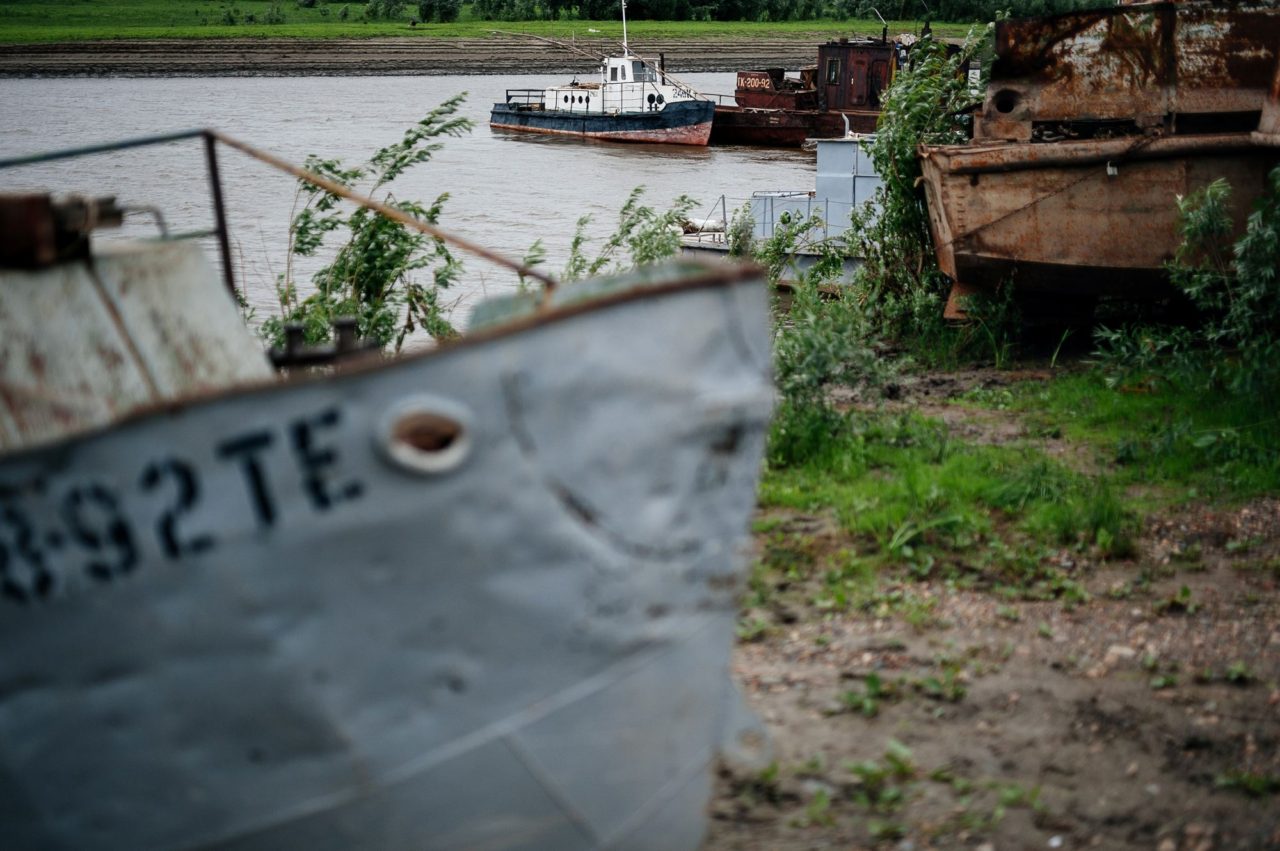 The docks in Parabel. Photo courtesy of Anton Unitysn/Takie Dela
Izhenbin recalls visits by researchers from the University of Vienna and the University of Budapest. There have been lots of Germans.
“I got such a kick from one professor. He and I went fishing. He got himself muddy from head to toe, pulled out some crap half a palm long from the river, and said, ‘Wonderful!’ Do you know what that means in English? The little fish is excellent. Then I took him out to pick pine nuts, and after that we made fish soup and drank vodka. He told me that for him to spend a day like that at home, he would have to work for a whole year, but we live this way all the time. We are happy people.”
Every Tree in the Forest, Every Fish in the River
“There’s a lot of terra incognita in researching Selkups in general and Selkup culture in particular, but you reporters always ask the same questions,” says Grigory Korotkikh, displeased. “For example, why did I, a Russian, take up the study of the Selkup language, and what is written on my t-shirt?”
The slogan on his t-shirt reads, “Every tree in the forest, every fish in the river would understand you if you spoke Selkup.”
Grigory, who is 17, grew up in Seversk, a closed city not far from Tomsk, but we meet in Moscow, where he is attending a linguistics camp.
“I had tried learning different languages of the indigenous minorities of the North. It’s just that I was able to making a living connection with the southern Selkups,” says Korotkikh.
Grigory stresses he is primarily interested in the academic, linguistic aspect, but he almost immediately interrupts himself to say nothing has been done for the Selkup people. There are no books in Selkup, and the language has not been studied in a centralized way.
“We publish academic articles, but only for each other, for other researchers. It means nothing to the Selkups themselves,” he says excitedly. “The Selkups may, in fact, be happy to study their own language, but they have no means to do so.”
Grigory is the Seversk representative of the grassroots organization Kolta-Kup, which promotes the interests of the indigenous peoples of the North. His colleagues predict a big future for him in grassroots activism. There is a lot of work to be done. Local officials say the right things to indigenous peoples, but in practice they are treated as colorful ethnographic attractions, entertainment for tourists, and a means of reporting to higher-ups that the officials have been solving the problems of the local populace. Activists have not even been able to get a full-time position of Selkup language teacher established in the schools. Ludmila Shadrina in Narym and Irina Korobeinikova in Parabel ran their Selkup language and culture clubs at their own behest.
Non-Russian Languages
Tomsk is a university town. When you drive down the city’s main boulevard, still called Lenin Avenue, you pass Tomsk Polytechnic University, Tomsk University of Control Systems and Radio Electronics, and Tomsk State University. Nadezhda Fedotova, a linguist at TSU, tells me how Tomsk and Moscow scholars managed to get the first academic mega grant in the field of linguistics, thus becoming part of an unprecedented program for financing university-level research in Russia.
The linguists’ overarching goal, which they stated in the application for the mega grant, is to describe the languages of Southern Siberia as fully as possible. Andrei Dulzon, a Soviet linguist, ethnologist, and archaeologist, began tackling the problem in the mid twentieth century. Exiled to Tomsk in 1941 as an ethnic German, Dulzon had lost everything from the ability to work in his profession to his unique card catalogue of dialects. In 1943, he was enlisted to work in the mines, but a year later the authorities relented and allowed the researcher to work at the Tomsk Pedagogical Institute. Dulzon had specialized in German dialects in Moscow, but in Tomsk he took up a new area of research, the indigenous peoples of Siberia, and carried out a revolution in the field. He encouraged archaeologists to excavate Siberian burial mounds, and he organized regular ethnographic and linguistic expeditions that collected so much raw data it is still being processed.
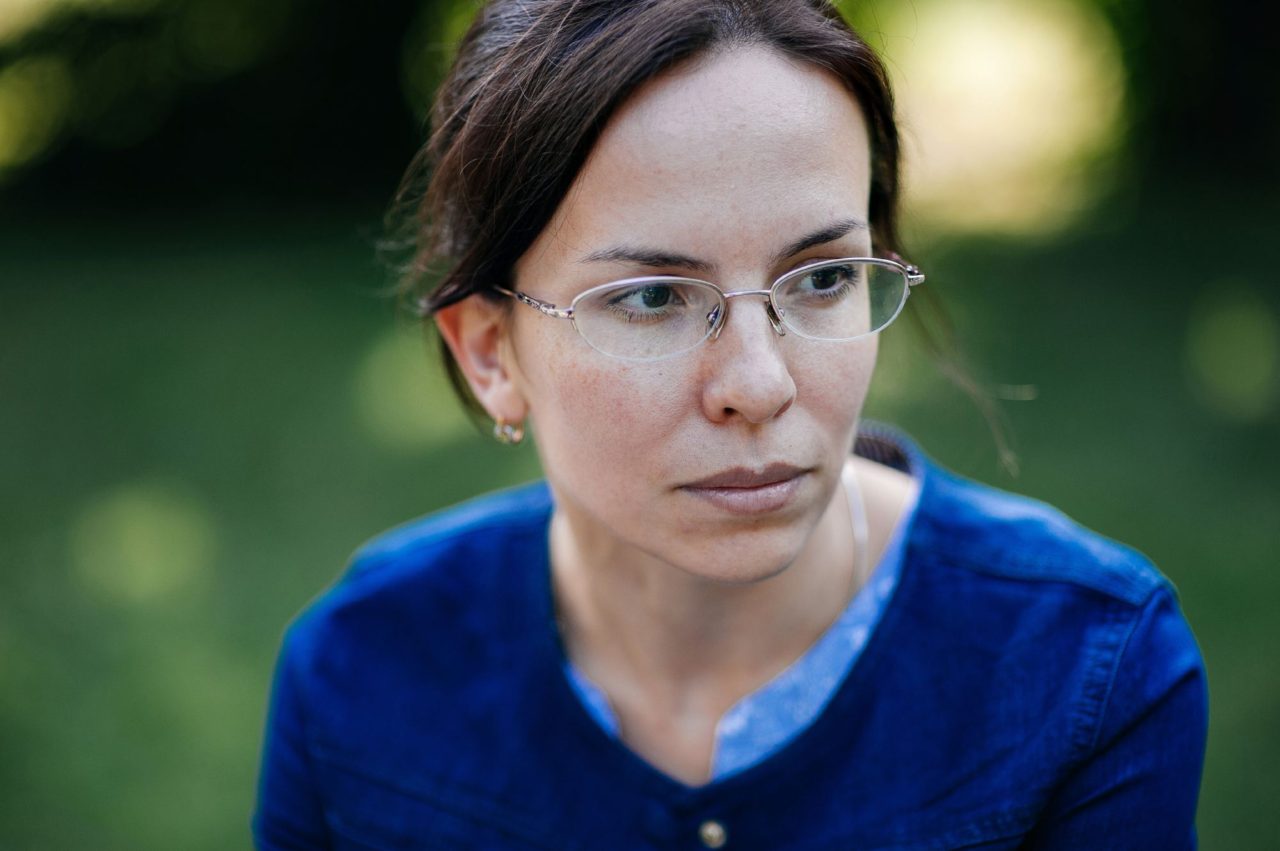 Nadezhda Fedotova, researcher at Tomsk State University’s Linguistic Anthropology Lab. Photo courtesy of Anton Unitysn/Takie Dela
“Our ethnologist colleagues in Tomsk had already won a mega grant, and the tradition of researching minority languages has been a good one,” says Fedotova, “so it was decided to set up a linguistic anthropology lab here under the direction of Anna Dybo. And there she is!”
A corresponding member of the Russian Academy of Sciences, the linguist and Turkologist Anna Dybo rides her bike toward the university library, which houses the lab. It is eight in the evening, but no one is planning to go home, despite the fact the linguists had to attend continuing education lectures all day.
According to Dybo, the lab currently employs seventy people: its funding is incomparable to any research group in the west. The most expensive line item in its budget are the expeditions to meet with native speakers of minority languages, but a lot of money is also spent on processing the data they collect and publishing it in the shape of huge dictionaries and text corpora. A text corpus is a gigantic structured set of texts, selected and processed according to certain rules, which is used to study a language, test statistical hypotheses, and validate linguistic rules. For all this to work, programmers and linguists must engage in a nonstop collaboration. At first, they worked for the sheer joy of it, but nowadays Russian technical designs are a product willingly purchased in the west. In addition to processing material that has already been collected, computer technology is used in field work, for example, a system that catches the way a person perceives a spoken word by tracking certain eye movements.
“Did you know the Selkups have a word meaning all colors at once?” asks Yulia Normanskaya, doctor of philology and head of the university’s Uralic languages department. “Green, blue, yellow, gray . . . Simply put, in their language, grass, the sky, and dandelions are the same color. When you ask them to translate it into Russian, they imagine it as one color.”
 Yulia Normanskaya, senior researcher at Tomsk State University’s Linguistic Anthropology Lab. Photo courtesy of Anton Unitysn/Takie Dela
Normanskaya got interested in minority languages in her youth after she learned her ancestors had translated the Gospels into the Chuvash language. Consequently, nearly all of them were shot during the Revolution.
“In the late nineteenth century, the Russian Orthodox Church set up a Translation Commission to publish books in non-Russian languages,” she explains. “The primary aim was to spread the Word of God among minorities, but they published not only liturgical literature but also dictionaries and children’s tales.”
There were also medical brochures, e.g. “On Cholera,” “On Trachoma,” and there were moral tracts. Many of these publications have been lost irretrievably, although some have been preserved at the Russian National Library in St. Petersburg. Another set was unexpectedly discovered in Finland. Normanskaya was looking through the card catalogue at the Helsinki Library [sic] and found information there about the publications of the Translation Commission. The booklets were simply lying in boxes, unsorted. No one had been making use of them or done any research on them. The find included three large books in Selkup, among them a complete translation of the Old and New Testaments, although the received opinion was that alphabets had been devised for the vast majority of indigenous peoples, including the Selkups, in the 1930s under Stalin. In Soviet times, the books of the Translation Commission were discussed pejoratively and accused of being primitive. However, by working with modern native speakers of minority languages, researchers have shown that, in fact, the books were a quite accurate record of the living languages.
“When you compare a map of native speakers of minority languages in the early twentieth century with the current map, the impression is, of course, completely catastrophic,” says Normanskaya. “Even when Dulzon was active, there were dozens of villages where people spoke only Selkup. Currently, there are six people who can tell tales, sing songs, and generally speak the central and southern dialects.”
 Statuettes in the park at Tomsk State University. Photo courtesy of Anton Unitysn/Takie Dela
The Selkup dialects are unique. For example, they have retained semantic stress (that is, stress that changes the meanings of words). It was inherited from Proto-Samoyedic, the language spoken in Siberia before our era.
“On the one hand, we see an impoverished daily life in which people barely speak their native tongue, and many are ashamed to admit they are Selkups. On the other hand, we find a unique language that has retained ancient features over the millennia, a language that converts into Enets, Nganasan, and other geographically remote languages with mathematical accuracy,” says Normanskaya.
If the language of the southern Selkups disappears, and researchers do not record it in time, what has been passed down through the centuries and preserved in the language for thousands of years will remain unknown forever.
“But if we described these dialects,” adds Normanskaya, “it would be one more proof that languages change in an amazingly systematic way. By converting words from one language into another according to mathematically exact rules, we can restore the pronunciation of the Siberian languages that existed before our era.”
I ask Normanskaya whether we should preserve a language if people do not want to speak it. Norman smiles and, instead of answering my question, recounts how the Soviet linguist Valentin Rassadin invented the Tofa alphabet in 1988. At the time, the Tofas themselved did not converse in their native tongue at all. In the 1990s, actvists in the Tofalar ethnic movement got the Tofa language, as written in Rassadin’s alphabet, on the curriculum of schools and kindergartens, and currently there are whole villages that speak Tofa. The Tofalars consider the linguist Rassadin a national hero.
Translated by the Russian Reader