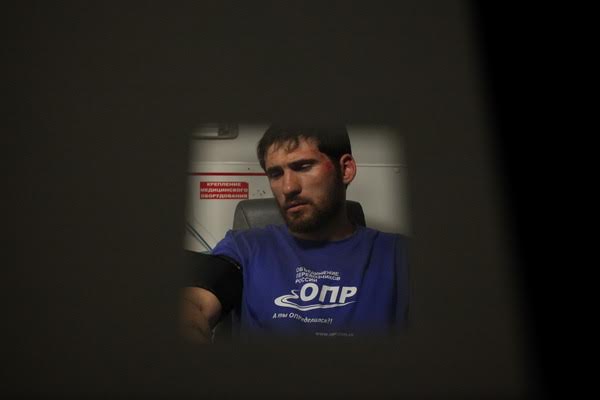
Rustam Mallamagomedov in an ambulance after being beaten. Village of Dorozhnyi, August 22, 2016. Photo by Anna Artemieva
Arrest Dagestani Trucker Refuses to Report to Jail Voluntarily
Dmitry Rebrov Novaya Gazeta
September 16, 2016
The Rostov Regional Court ordered the arrest of a Dagestani trucker who took part in the tractor convoy of Krasnodar farmers, but law enforcement officials “forgot” to detain him.
On September 16, the court considered Dagestani trucker Rustam Mallamagomedov’s appeal of an August 26, 2016, ruling by the Aksay District Court. The court had found the activist guilty of violation of Article 20.2.6.1 of the Russian Misdemeanors Code (involvement in an illegal political rally) and arrested him in absentia for ten days.
The regional court judge confirmed the district court’s ruling, despite the fact that, by law, a ruling of this kind can be issued only in the defendant’s presence. Mallamagomedov was not present at either hearing. According to his attorney, Valentin Pyshkin, this is the source of the conflict. The police “forgot” to detain the trucker preliminarily, so in spite of the administrative arrest issued against him, Mallamagomedov continues to remain at liberty to roam the streets [sic], and has no intention of voluntarily “correcting” the mistake made by law enforcement officers.
“The thing is there no standard procedure as to what the police should do now. An administrative arrest cannot be issued in absentia. This is nonsense. For an individual to be put under administrative arrest he has to be present in the courtroom. At any rate, he is not obliged to report to jail himself. He bears no responsibility for failing to report to jail. Moreover, he cannot be detained and sent there forcibly, either, since this is not stipulated by Russian law,” said Pyshkin.
“Only arrest on criminal charges can be ordered in absentia,” the lawyer stressed.
In this case, the court can issue a detention order before the defendant is detained, Pyshkin explained. But this principle is not valid in the case of administrative [misdemeanor] violations. The lawyer was hard pressed to say what law enforcement officers would do now. In his opinion, it would be easier just to abolish the questionable ruling. That, however, is not what has happened.
“The Rostov Regional Court did not listen to our arguments, nor, when the case was heard on the merits, did it want to examine any of the witnesses we had brought to the hearing. And all our motions were rejected,” said Pyshkin.
When our correspondent asked about the trucker’s current whereabouts, the attorney declined to answer, saying that the telephones could be bugged. He did confirm, however, that Mallamagomedov was currently not in Rostov Region.
Beaten by the police when the tractor convoy was dispersed, the trucker himself does not admit his guilt.
“Aside from the fact we didn’t organize any political rally, it was the police who didn’t let the farmers and us leave our camp. I was elsewhere the day our other comrades were arrested,” Mallamagomedov explained to Novaya Gazeta by telephone.
“On August 22, the day before the convoy was dispersed, I was beaten by the police guarding the camp. After that, I went to the hospital and the Investigative Committee, where I stayed until the evening of August 23. On the morning of the 24th, I went to the police station to find out how the guys were doing. I was detained there, but police did not draw up an arrest sheet. I felt sick while I was sitting there and left again in an ambulance,” he added.
Nevertheless, during his time at the precinct, police officers confiscated the driver’s internal passport without explanation. Apparently, it was then they drew up the charge sheet that was the basis for the Aksay District Court’s August 26 ruling to arrest the missing activist. After receiving medical treatment, the trucker had no intention of returning to the police station voluntarily, since he had been held there without processing of the proper papers, that is, illegally. He could not attend the August 26 hearing, either, because he was undergoing outpatient treatment.
When it is a matter of arrest, the individual is usually detained first, and then taken before a judge. Then he is sent from the courtroom to jail for ten days. The court’s administrative ruling is thus implemented. The majority of truckers and farmers detained during the tractor convoy were taken to the police station and sentenced to jail terms ranging from five to ten days, in that order. They have served their sentences and returned home long ago.
Translated by the Russian Reader. Thanks to Comrade Anatrrrafor the heads-up
According to Jim Jarmusch, director of the film by this name: “Down by law, at the time in the mid-80s, was kind of in use on the streets as meaning a very close connection with somebody. If somebody was down by law, they were close to you or you would protect them. I know that, earlier, in prison slang, if somebody was down by law, and they got out before you, they would contact your family or look after people outside if you needed them to. So it meant something very close or a code. I really liked the contradiction of that, being something that sounds like being oppressed by the law, which of course under that condition is where the slang came from. So, I liked that contradiction of it. And I liked it also in terms of the film being contradictory in that they are oppressed by the law but they also become down by law with each other.”
In Moscow, Farmers Talk about Latest Arrests, Beatings
Anna Bessarabova Novaya Gazeta
September 14, 2016
Nina Karpenko, a farmer from Krasnodar Territory’s Kanevskaya District, told our correspondent that late last week, during the maize harvest, seven men attacked her workers and the assistants of a court-appointed manager. A combine driver, who had earlier spent three days in jail for involvement in the thwarted tractor convoy to Moscow, has now been hospitalized. One of the men attempted to record the attack on a video camera, but he was thrown to the ground, his equipment was broken, and the recording was erased, said Karpenko.
On September 13, Kuban law enforcement officers blocked the car of Alexei Volchenko, leader of the farmers’ protest movement, as he drove to Ryazan to take part in the All-Russian Congress of Farmers and Cargo Haulers.
“They said they wouldn’t let him leave the region, held him up for a while, but then stopped pestering him. But Lyubov Nikishova, head of a farm in the Novokubansk District, has been put under house arrest. She has been charged under Article 119 of the Russian Federal Criminal Code (threat of murder),” explains another outraged farmer, Nikolai Maslov. “You saw her during the tractor convoy: she’s small and thin. She told the deputy presidential envoy in the Southern Federal District about the machinations of Rosreestr (Russian Federal Registration Service) and the attack on her farm. This summer, two palookas entered her house and beat her up, but when she grabbed an ax to defend herself, they photographed it and went to the police. No, she didn’t hurt anyone. It was a set-up.”
Nikiskova herself claims that immediately after the incident she filed a complaint with the Territorial Directorate of the Interior Ministry.
“It was sixteen pages long, and the medical examiner’s report was appended (there were visible traces of the assault on my body), as well as documents about the seizure of land shares and illegal fiddling with the land. 172 pages in all. It is still lying around somewhere. Unlike those marauders, they will put me away, despite the fact I am taking care of my sick mother. She has cancer, but that doesn’t bother anyone. As a criminal, they won’t let me out of the house. They’re afraid I won’t settle down and will go higher up the chain of command.”
According to Elena Dryukova, a farmer from the Kavkazsky District, Krasnodar Territory Governor Veniamin Kondratiev said recently that Kuban’s peasants had no problems, and that the tractor convoy, an attempt by the farmers to make themselves heard to the President of Russia, was an election campaign show.
Translated by the Russian Reader. Thanks toComrade Anatrra for the heads-up. Image courtesy of newsru.com
“They Have Really Gone After Us” After returning to Krasnodar Territory, participants of tractor convoy feel the heat from the very people against whom they complained
Anna Bessarabova Novaya Gazeta
August 28, 2016
The farmers after their tractor convoy was dispersed. They have been sentenced to three to ten days in jail. Not a single independent human rights activist came to their court hearings in the village of Kazanskaya. Photo courtesy of Anna Artemieva/Novaya Gazeta
The farmers were threatened during the convoy. We will stage a second Novocherkassk massacre for you and dice you like cattle in a slaughterhouse, they were told by security officers, who after the protest was dispersed have been zealously carrying out checks of their homes and farms.
Around thirty FSB officers raided Nikolai Borodin’s farm in the village of Kazanskaya, which they turned upside down. The tax inspectorate has been looking into property owned by the relatives of protest leader Alexei Volchenko. Other men have been interrogated by the prosecutor’s office. Nina Karpenko escorted her driver Seryozha Gerasimenko, a young fellow with three small children, to the detention center. He has been jailed for three days. The other men were also issued misdemeanor charge sheets: the authorities even went to the trouble of delivering the documents to their homes. The hearings took place on the weekend (Saturday) in the Kavkazsky District. Sergei Gorbachev was jailed for five days, Slava Petrovsky, for four days, Andrei Penzin and Semyon Smykov, for three. The rest of the protesters are waiting their turn.
“Nearly everyone in the villages has been paid visits by prosecutors and police,” farmer Ludmila Kushnaryova told Novaya Gazeta. No one knows what they are looking for. Or what the charges will be, either. The pressure has not stopped.”
“I cannot believe this is happening to us, in our country. We had no idea it would be so frightening,” said Nina Karpenko. “They have really gone after us. The deputy chief of the district traffic police escorted my tractor drivers and me to the hearings. He followed us for 250 kilometers. Whatever for? There were two people working in the courthouse on Saturday: the judge and the chairman. Didn’t they have anything else to do?”
Nikolai Maslov and Oleg Petrov, two convoy participants jailed for ten days, have been transferred to Novocherkassk.
“Dad called early this morning. He said everything was alright. But who knows. Maybe he just didn’t want to scare us?” said Igor Maslov, worried about his father. “We still haven’t found lawyers for them. How much do you think they’ll gouge us?”
Alexei Volchenko’s colleagues and friends have been looking for him. He has not been answering calls to any of his phones. He is not to be found in his home village. He has disappeared. The last thing the farmers heard was that Volchenko had been fined in Rostov Region. He made it back to Kuban, where he was detained again and sentenced to ten days in jail in Ust-Labinsk. The authorities are now, allegedly, preparing to charge him with extremism.
The Russian government, the Prosecutor General’s Office, and the Russian Investigative Committee have been pretending nothing is happening in Kuban. The official TV channels have been airing election campaign spots about the ruling party’s ability to listen to people, but they have not aired any stories about the events in Krasnodar Territory. They have maintained their silence for a week.
Alexander Popkov, a lawyer with the Agora International Human Rights Group, Boris Titov, federal commissioner for the rights of entrepreneurs, former Federation Council member Ivan Starikov, and Russian Federal Public Chamber chair Georgy Fyodorov have promised to help the participants of the tractor convoy.
“Obviously, the farmers have committed no offenses, and the wild imitation of law enforcement involving riot police and arrests for a ‘rally’ in a cafe are aimed at suppressing a peaceful and reasonable protest campaign,” said lawyer Alexander Popkov. “The first thing we are going to do is file appeals, and then we are going to see whether there is any point in beating our heads against the courts in Russia or whether we should immediately file a class-action complaint with the European Court of Human Rights.”
“I have been in contact with the farmers, their wives, and their children. They are drafting an appeal, and next week we plan to hold a big press conference in Moscow,” Ivan Starikov informed Novaya Gazeta. “Their problem needs to be solved systemically. People’s land shares are being confiscated, and there are around 300,000 victims of this practice nationwide.”
According to Valentin Pyshkin, attorney for convoy participants Nikolai Maslov, Oleg Petrov, and Sergei Vladimirov, the farmers have filed an appealed against the court decisions that sentenced them to ten days in jail.
“But we won’t get an answer earlier than Monday,” the lawyer explained. “On August 26, I was not admitted to the Novocherkassk detention center and allowed to talk with my clients, because, you see, according to their internal regulations, prisoners are entitled to representation by a lawyer only from two to four in the afternoon. It is an odd rule. But at four o’clock I had a court hearing in Aksai. Rustam Mallamagomedov from the Association of Russian Carriers (OPR) was on trial. On August 24, he had gone to the police station on his own to find out what had happened to the detainees, and the police didn’t let him back out of the station.”
Truckers Ready to Fight for Farmers
Andrei Bazhutin, chair, Russian Association of Carriers (OPR):
“We arrived from Petersburg to Moscow, where we were getting ready for a car convoy through Siberia. We learned about the arrest of the tractor convoy on the morning of August 23 and changed our plans. We went to support the tractor drivers. We were stopped by police for eight hours on the Moscow Ring Road, and eight hours in Voronezh Region. Along the way, we were written up for violating Article 20.2 of the Misdemeanors Code [“Violation of the established rules for organizing or holding an assembly, rally, demonstration, march or picket” — Novaya Gazeta], but they did not stop us from traveling further.
“By the time we got to Rostov, two of our activists [who had been with the tractor convoy from the beginning — Novaya Gazeta] had been sentenced to ten days in jail, while another two had been fined 10,000 rubles. Now we are here in Rostov: we have four big rigs and some cars. We are working with the lawyers and human rights activists and trying to help the guys out. We think it is necessary to gather journalists and advance on Krasnodar Territory to draw attention to these court hearings. Center ‘E’ [the Interior Ministry’s Center for Extremism Prevention — TRR] has intimidated everyone here.
“We have also contacted the miners on hunger strike in Gukov and agreed to support each other. Our demands will be voiced at their next picket too.”
Translated by the Russian Reader. Read my previous postings about the protest by Krasnodar farmers and the regime’s crackdown against it.
On this bright Saturday evening, when the sun has finally come out in the former capital of All the Russias after a week of nonstop rain, I want to offer you two tales of two completely different modern Russias, situated unhappily side by side, but God only knows for how long and at what cost.
Both stories have their fictional and literary precedents, as is often the case in this overly verbalized country.
The hero of the first tale, Valery Slesarev, will remind you of the characters and real-life heroes and victims in nineteenth-century writer and human rights activist Vladimir Korolenko’s fictional sketches and muckracking newspaper articles, while the nearly unbelievable promises and high-powered wheeler dealers in the second tale will conjure up Ilf and Petrov’s world of con men and grifters during the NEP period. TRR
____________________
Smack Them Upside the Head Tired of waiting for a promised natural gas tie-in pipeline from local authorities, the Yegorevsk Urban District in the Moscow Region asked Obama for gas
Ekaterina Fomina Novaya Gazeta
June 5, 2016
Valery Slesarev. Photo by Ekaterina Fomina
After collecting 531 signatures in support of his effort, pensioner Valery Slesarev called the US Embassy and asked a specific question.
“How can I get a hold of Barack Obama?”
The embassy promised him to call him back and make an appointment.
Lots of people in Yegorevsk know Valery Slesarev. First, he has tuned and fixed TV sets his whole life, and that is deemed a vital service. Second, he has an artificial skull.
As a child, Slesarev was involved in Pavel Popovich’s Young Cosmonauts Club. One of the activities at the club was parachute jumping from towers. During one such jump, the carabiner from a pull rope slammed Slesarev hard in the head. A year later, a tumor was discovered in his brain, and it was decided to operate. Popovich himself got involved by asking for help from America, where an artificial bone was grown personally for the sixteen-year-old boy. The doctors told his mother he would not survive, but the bone up and took hold.
As the years passed, it transpired that, along with the bone, the doctors had implanted something Soviet people were not supposed to have: a faith in justice and the strength to fight for it.
Initially, the life of the young cosmonaut with the artificial skull rolled down different tracks than it might have, like in a small town in West Virginia: steady, nothing out of the ordinary.
“Maybe the Lord in fact saved me then. Eighty percent of my group at the Young Cosmonauts Club died in Afghanistan. We were all combat ready, you see, and those boys were sent straight to the front,” he says today.
Slesarev studied to be a radio technician, but went to work as a TV repairman. The celestial expanses no longer appealed to him, and he had enough to do down on earth as it was. He drove from village to village fixing TV sets and occasionally chopping firewood for old women.
In the nineties, the business where Slesarev worked fell apart, and he started a small business of his own, a tire repair shop. He called it Autocupola, and indeed the blue, two-storey building housing his shop is crowned by conical metal cupolas. The cupolas, he explains, are in honor of his artificial skull. He is proud of the black swans, carved from tires, out in front of the shop and a gingerbread boy with a painted mug.
Slesarev lives in amazing house, also topped with cupolas, only they are in the shape of little bulbs. The local council has even hung a sign on the house designating it a cultural landmark.
For a time, then, Slesarev was an amusing local landmark. In 2005, however, the Moscow Region began installing natural gas mains in the villages of Yegorevsk. The mains were quickly installed in all public buildings, but ordinary people, those selfsame old women for whose sake the whole program was undertaken, were left without gas. Slesarev says he simply could not look at old women swinging wood mauls anymore. Thus began his fight.
Vladychino
Only twenty-eight people are officially registered in Vladychino, a village in the Yegorevsk Urban District, but around a hundred people live there permanently, most of them people the natives have contemptuously dubbed “summerfolk.” Slesarev is one of the summerfolk too. He has land there, inherited from forebear, and his grandmother’s house, which he has managed to restore and preserve. The entire village stopped by to admire it.
As in the neighboring villages, people in Vladychino buy natural gas in cylinders. A fifty-liter cylinder, which costs a thousand rubles to refill, lasts a month. Arranging privately to have a gas line connected to your house costs at least 500,000 rubles [approx. 7,000 euros].
A spontaneous assembly of local residents has been taking place on the bench in front of Slesarev’s house. You might say he mobilized them.
Grandma Valentina, Grandpa Nikolai, Kolya, who has no front teeth and wears a leather jacket, Nikolai Alexandrovich, and Tatyana have formed a semi-circle. They occasionally get sidetracked and swat a mosquito. It is the height of the season.
“Please forgive my appearance. I came from the garden,” says Tatyana, apologizing as it were for her apron.
“TV Rain came to film, and we all dressed like peasants,” says Valentina, dangling her rubber-slippered feet by way of proof.
“Why are we appealing to Obama? We hope that, if not Obama, some other president will respond,” says Valentina.
“I’ll tell you why,” says Nikolai Alexandrovich, who steps forward, dressed in builder’s overalls. “He is a winner of the Nobel Peace Price, and he is on his way out of office in any case. Let him do one good deed at the end of his term by getting gas installed for us.”
The locals gossip. The village of Rakhmanovo got gas when an MP from the Moscow Regional Duma and a member of the Yegorevsk Board of Deputies moved there. Actually, according to the paperwork, gas lines have been laid to Vladychino and all the other villages too: 300 million rubles [approx. 4 million euros at current exchange rates] from the regional budget was spent on the program. A presidential commission even came looking for the gas, but they did not find it. To be hooked up to gas lines under the regional program, a village must have no less than one hundred residents, so Vladychino was lumped together with neighboring Parykino. Now, according to the schedule for gasification, Vladychino and Parykino should get gas lines no later than 2018. But no one believes it will happen, because dates for gasification of the villages have been postponed annually since 2005. Last year, the residents of Vladychino wrote a letter to Putin, but half has many people signed it as did the letter to the US president.
“He’s not going to help. His term is never going to end. He’s president for life,” says Nikolai Alexandrovich.
“God willing he will be president for life!” responds Valentina. “He lifted the country up! As for gas, well, we need it. Maybe he just has not been told about us. Our board of deputies should be the ones helping us, but they don’t do anything for us. This year, they didn’t even spray the bushes for ticks.”
“This writing to Obama thing is all a joke, a way of getting us riled up and forcing us to think,” explained Nikolai Alexandrovich. “But what do you think? Is America Russia’s enemy? I knew you’d say that! I’m not going to try and educate you or persuade you. Who is threatened by Russia? The Americans, however, are already in Estonia. Those are facts, Katya, facts!”
By local standards, Nikolai Alexandrovich is also one of the summerfolk, although he has lived in Vladychino for four years, since retiring. He worked for twenty-six years in security at the Kremlin. Nowadays, he is an elder at Nativity of Christ Church.
“That is war,” continues Nikolai Alexandrovich. “Was it necessary to drop the bombs on Japan? This is a continuation, just as today’s Russia is a continuation of Soviet life in many ways. Your colleagues from TV Rain were spooked. They were worried lest we go to jail for what we said. We won’t go to jail: we speak the truth!”
“The mosquitoes have already devoured us,” a bored Valentina chips in.
“It’s time for me to milk the cows,” says Kolya.
“Why was she caterwauling yesterday from lunchtime on? She was probably thirsty?”
“She has been yelling because of the bull. I haven’t been putting the pull in with her. He’s been laid low. I called the vet, and he told me over the phone to give the bull vodka. I gave him vodka. Then he told me to give it sunflower oil. I did it: same damn nonsense! Now he tells me to go and buy lactic acid.”
Slesarev outside his Autocupola tire repair shop. Photo by Ekaterina Fomina
“Sufferings, Trials, and Humiliations” Since 2005, when Valery Slesarev began his fight to have the villages gasified, he has kept a list entitled “My Sufferings, Trials, and Humiliations.” It includes such entries as “Arrest, searches of homes and shops. Bombing of Autocupola. Arson at Autocupola.”
In 2010, unknown men in masks armed with crowbars broke into his tire shop. They methodically and cold-bloodedly beat up Slesarev and his daughter. A criminal case was opened, of course, but to no avail. The police wrote off the incident as a “workplace fight.”
Slesarev wrote to Vladimir Zhirinovsky that he was being prevented from doing business. Zhirinovsky promised to look into the case. Apparently, he is still looking.
Moscow Region Governor Boris Gromov once visited Yegorevsk. Slesarev was going to the meeting when he was pulled over by traffic cops, allegedly, for driving with dirty license plates. He spent the whole day in the detention center and was released without having to pay any fines.
Governors have come and gone, but the story has not changed. Slesarev had to fight his way into a meeting with current Moscow Region Governor Andrei Vorobyov at the House of Culture. In the auditorium, he was surrounded by police officers in plain clothes.
“When I stood up to ask a question, they made me sit down. They actually grabbed me by the pants and pulled me down, and everyone was laughing,” Slesarev recalls.
Governor Vorobyov noticed the strange man and asked to speak with him personally after the meeting. As Slesarev tells it now, the governor was so outraged that he promised to dismiss the head of the district the very next day. And he did, in fact, dismiss him. Only, at the next elections, Mikhail Lavrov, ex-head of the district, was elected chair of the Yegorevsk Board of Deputies, a position he occupies to this day.
“Vorobyov left, and the bathhouse we guys in the village had built for the gals burnt down. There was a criminal investigation, of course. But they didn’t catch anyone.”
“The Gas Has Come”
This time, it was the head of the Yegorevsk District and his deputies who were meeting with constituents. Slesarev did not know about the meeting, and so we arrive in the village of Yurtsovo a bit late: the event has ended. But we do find Nina Morsh, head of Yurtsovo Area, surrounded by female assistants, next to the Soviet war memorial. Slesarev knows everyone by sight, all the more so because Morsh was previously head of the Yurtsovo Rural Settlement. But late last year, all the municipalities were abolished when when the Yegorevsky District was redesignated as an urban district. The now-abolished Yurtsovo Rural Settlement included thirty-eight villages. Last year, only four of them had gas mains.
Morsh’s assistants immediately cut us off.
“You’re a little late. The head of the district was at the meeting, and he answered everyone’s questions. Residents who wanted to ask questions got definitive answers. You can ask them yourselves.”
Dressed in a suit with a rose on the chest, Morsh drags me along with her.
“Since 2005, a lot of work has been done on gasification,” she tells me, as if she were reading a report. “First, the central village of Yurtsovo and the main municipal institutions, then, in 2010, the entire residential sector.”
She speaks of natural gas affectionately.
“The gas has come,” she says.
The gas has come to Pochinki, Barsuki, Leonovo, and Polbino. And so it will arrive in Vladychino and Parykino, too, Morsh reassures me. The design plans and specifications are already being drafted.
“You cannot jump higher than the budget lets you,” says Morsh by way of explaining why gasification has taken so long. “This has been explained repeatedly to that man, who doesn’t even live in our area. Whatever emotions he may or may not be experiencing, the program has been well implemented. Just look at our governor.”
It is clear as day the village needs gas, but people have been living without it, getting by with cylinders. Some people even stoke wood stoves. Ninety-year-old Grandma Panya, another resident of Vladychino, signed the petition to Obama, but she is afraid of gas.
“That one woman of ours in Moscow, the one who left to be with her lover, was home alone once, but forget to turn off the gas. She died from carbon monoxide poisoning!”
If it had not been for Slesarev, no one would have the heard the voice of the people of Yegorevsk. But that is how his brain operates under his American skull. If the law says people are supposed to have gas piped into their homes, then that is the way it should be, even it means his having to fight hopelessly for it on his lonesome. Slesarev has lived his whole life this way.
Translated by the Russian Reader
___________________
Will Russia Be First to Build Elon Musk’s Hyperloop?
Peter Hobson The Moscow Times
July 6, 2016
In mid June, Shervin Pishevar, co-founder of Hyperloop One, sat under the high, decorated ceiling of a palace in St. Petersburg.
Men in suits lined the large, rectangular table.
“Eighteen heads of sovereign [wealth] funds and President [Vladimir] Putin. $10 trillion in the room,” Pishevar wrote alongside a photo posted on Facebook. “Then Putin called on me.”
So Pishevar, a burly, bearded Silicon Valley entrepreneur, began to speak. He talked about the Hyperloop trains his company plans to build: Transportation pods levitated by magnets inside an airless tube that could travel at speeds 300 kilometers per hour faster than a passenger aircraft, thanks to the low air resistance. Pods that could whisk goods through Russia from China to Europe in the space of hours, or turn St. Petersburg into a suburb of Moscow.
Putin listened attentively. Then, according to Pishevar, he said, “Hyperloop will fundamentally change the global economy.”
By the time Pishevar left Russia, Hyperloop One had signed its first deal with a foreign government, a partnership with Moscow’s City Hall. It had also been asked by Russia’s transport minister to design a 70-kilometer Hyperloop track in the Russian Far East.
With that kind of support, perhaps the first Hyperloop won’t be built in California, but in Russia.
Dreaming of Innovation
At first sight, all that seems strange. Russia, after all, is suffering its deepest economic crisis for nearly two decades. Much of its infrastructure is hopelessly backward. It is a country in which passengers in slippers shuffle between bunk beds in overnight trains that travel at average speeds of just over 50 kilometers an hour. Freight trains, meanwhile, move at a little over 10 kilometers per hour.
But there are a few things working in Hyperloop’s favor.
First, innovation has once again become a buzzword in government. Officials are, at least in theory, keen to diversify away from the oil and gas industry on which the country currently relies. And they are paranoid that Russia could fall so far behind the technological innovation happening elsewhere that it will never catch up.
That fear has sprouted strategic plans for major infrastructure investment and research into the technology of the future. These plans think big: On the agenda are things like quantum computing, neural interfaces and teleportation. Hyperloop, with its science-fiction-movie tube trains, fits perfectly into that vision.
From Moscow to St. Petersburg in 1.5 Hours
Source: Hyperloop One. View in higher resolution here.
Second, Hyperloop has a powerful Russian investor lobbying its interests, a Dagestani tycoon called Ziyavudin Magomedov.
Tall, handsome and worth $900 million, Magomedov is a true techie. According to Forbes, for his 47th birthday party last year, he hosted a robot-themed ball and gifted each guest a book about Elon Musk, the billionaire inventor who in 2013 launched the Hyperloop concept.
Like Putin, he is emphatically excited about the idea.
“It will kill truck and air transportation at a minimum,” he told Forbes.
Magomedov is also supremely well connected. His investment company, Summa Group, spans businesses from real estate to logistics and has handled orders from state companies worth billions of dollars. He has advised the president and allegedly paid for Putin’s press secretary to honeymoon last year on a super yacht in the Mediterranean. One of Russia’s deputy prime minsters, Arkady Dvorkovich, is an old university friend and, conveniently, oversees the country’s policy on transport, innovation and industry policy, though the two deny any favoritism.
Magomedov invested in Hyperloop One through his $300 million venture capital fund, Caspian VC Partners, and set about bringing it to Russia. Bill Shor, the Russian-speaking American who runs Caspian for him, describes him as “very hands on.”
Magomedov has played the role of Hyperloop One’s deal broker. His Summa Group was a co-signatory on the agreement between Hyperloop One and the Moscow Government, which will create a working group aimed at fitting Hyperloop technology into Moscow’s transport system.
He likely also played a major role in pushing for a Hyperloop to span the 70 kilometers between the Chinese industrial center of Jilin and Zarubino, south of Russia’s Vladivostok, where Summa is investing in port facilities.
Both projects have been billed as revolutionary. In heavily congested Moscow, which is currently ploughing huge sums into expanding its transport infrastructure, Hyperloop One says its technology could potentially “give capital region commuters weeks of their lives back.”
The link with Jilin, meanwhile, would carry 10 million tons of cargo a year, zipping containers to port in minutes, says Russian Transport Minister Maxim Sokolov. He wants Hyperloop One to present a design for the track at an investment forum in Vladivostok in September.
Tapping Into China
The third thing playing in Hyperloop’s favor in Russia is that it could unlock vast amounts of Chinese investment.
The Jilin-Zarubino spur is just the beginning. In the longer term, Hyperloop could create “the heart of the transport infrastructure for the Eurasian landmass,” says Shor. The technology will likely be used for freight before it begins to transport passengers. And the route between China and Europe is one of the world’s busiest trade arteries.
The distance between China’s eastern edge and Central Europe is some 7,000 kilometers. Freight currently navigates that distance by train in around three weeks and by sea in roughly two months. In theory, a Hyperloop could span it in six hours.
Beijing has committed tens of billions of dollars to its “One Belt-One Road” plan to create new infrastructure between it and Europe. Russian authorities have their eyes on some of that money.
“It’s like a tube with an air-hockey table. It’s just a low-pressure tube, with a pod in it that runs on air bearings […] I swear it’s not that hard,” said Elon Musk in 2015. Photo: Patricj T. Fallon / Reuters
Sokolov says he will discuss the Jilin Hyperloop with China’s transport minister at a meeting in August and hopes “we’ll take the next step [in this project] together with our Chinese partners.”
Also, the Russian Direct Investment Fund (RDIF), a $10 billion state-backed investment vehicle, invested in Hyperloop One earlier this year. The amount was “very modest,” according to its chief, Kirill Dmitriev. But the RDIF also happens to run a joint investment fund with China worth $2 billion.
China is already helping to pay for a planned trans-Siberian high-speed rail line that could cost more than $200 billion. Hyperloop’s advocates say their technology be cheaper. According to Sokolov, the Jilin-Zarubino line will cost around 30 billion rubles ($450 million)—almost one-third less than a high-speed rail equivalent.
“We must be serious about this idea,” he insists.
Where’s the Money?
But for all the enthusiasm, few in Russia are prepared to put down real investment just yet.
Hyperloop One is working “very closely” with the Transport Ministry, as well as local governments and “some of the largest Russian corporates,” says Shor. These reportedly include Russian Railways and Gazprom, two giant state corporations. But these partners are contributing expertise and access, not money. All the cash is coming from Hyperloop One and Magomedov’s Summa, which Shor says has “invested quite a bit of resources, financial and otherwise.”
Even Putin, who in St. Petersburg promised support to Hyperloop One, wasn’t talking about financial support, his spokesman later clarified.
The problem is that while the Hyperloop concept is compelling, no one has yet worked out how to build one. Russia seems content to wait for the technology to prove itself with other people’s money.
The Local Contender
It might come as a surprise to discover that one of those working on the technology is Russian. Indeed, it turns out that Russian scientists were on to Hyperloop long before Elon Musk.
A century ago, before it was derailed by World War I, scientists in Siberia began working on a similar scheme, says Sokolov. Now, at St. Petersburg’s University of Transport and Communications, the project has been reborn.
Anatoly Zaitsev is an engineer who was briefly transport minister in the 1990s. At his lab on the Baltic coast, his team of around 20 people have equipment that can levitate transport containers. He says he could “absolutely” build a levitation track to Moscow, 650 kilometers away, if you give him $12-13 billion—significantly less than the cost of high-speed rail.
The only part of Musk’s plan Zaitsev says he hasn’t figured out is how to put his levitating pods in a tube. But that’s the simple part, he insists, “like dressing [the train] in a dinner jacket.”
Zaitsev thinks his technology is more developed than that of his rivals, whose plans remain mostly on paper. Both Shor and Sokolov praise his work. But despite that, Zaitsev is largely ignored by the ministers and local governments now courting Hyperloop One.
The reason why ultimately comes down to money. Hyperloop One has raised more than $100 million to fund research, pilot projects and investor outreach.
Another California company, Hyperloop Transportation Technologies, is also rubbing shoulders with big investors. One of its executives has said it is talking with a Russian private investor and is looking at Hyperloop projects in Russia. Its chief, Dirk Ahlborn, also met Putin in St. Petersburg in June.
Elon Musk proposed the Hyperloop concept in 2013 as a mode of transportation between Los Angeles and San Francisco, California.
These companies can fund relentless global expansion, and they benefit from Silicon Valley’s sheen of success. Russian officials can engage with them at no cost to themselves. No wonder, Zaitsev laughs, that “when a foreigner shows up in Russia at the invitation of a resident billionaire, the music and dances start.”
“The Americans are better at getting money,” he says. “I tip my hat to Musk and his followers who so boldly and aggressively offer the world unfinished technology.” By contrast, Zaitsev has enough money to keep his lab operational, and not much more. If Hyperloop is eventually built, it is unlikely to be Russian-made.
Revolution?
But if Hyperloop really is the future of transport, and Putin jumps on board early, it could be a visionary move.
“Russia has a very good chance [of being the first place to develop Hyperloop],” says Shor. If the government acts quickly on regulation, he says it could happen in the next few years. That could put the country at the forefront of a transport revolution.
On the other hand, the whole thing could be a pipe dream. No one knows if the technology can be made cheaply enough to implement.
Russia, meanwhile, still lacks both money and many basics of a modern transport system, says Mikhail Blinkin, head of the transport institute at Moscow’s Higher School of Economics and an advisor to the Transport Ministry.
Fifteen years discussing high-speed rail has led to a single line between Moscow and St. Petersburg that travels less than 200 kilometers per hour. The country has only 5,000 kilometers of modern expressways, says Blinkin—less than tiny South Korea and not even enough to span Russia from east to west.
The government should focus more on practical improvements to the transport infrastructure and less on visions of Hyperloop tubes criss-crossing the country, says Blinkin. Otherwise, he adds, the officials cheerleading Hyperloop are just the latest versions of Marie Antoinette, the aristocrat who saw French peasants without bread, and supposedly said, “Let them eat cake.”
Center “E” Comes Looking For Performance Artist Who Changed Disabled Orphan’s Dressings Near Kremlin
Natalia Zotova Novaya Gazeta
June 13, 2016
Katrin Nenasheva and Dmitry Zhdanov. Photo: Viktor Novikov/Facebook
Center “E” (Center for Extremism Prevention) officers visited the dormitory room of performance artist Katrin Nenasheva at the Gorky Literary Institute in Moscow on Sunday. Nenasheva reported this on Facebook, referring to the accounts of her dormitory roommates. Nenasheva was not in the dormitory at the time.
A few hours earlier, the artist had staged a performance in Moscow’s Alexander Garden. As passersby looked on, she changed the daily dressings of a former orphanage ward now confined to a wheelchair.
The young man who took part in the performance was Dmitry Zhdanov. He was disabled after jumping from the fifth floor of a building in despair and breaking his back. His brother had been beaten up by other former orphanage wards, who had not been punished for the crime. The criminal case against them fell apart altogether. The performance was dedicated to wards of orphanages and the punishments they suffer.
“It was an exhibition of the body, the real symbol of those very punishments,” Nenasheva explained to Novaya Gazeta.
“Why should I hide the wounds I got from living in this system? Such things must be shown. My body is Russia just as it is today,” Nenasheva quoted Zhdanov as saying.
“Many people avoided us and would not let their kids approach Dmitry. Some people turned away. There was a man who just ran off, clutching his head,” wrote the artist about the performance.
Police did not attempt to detain them. According to Nenasheva, they were confused and did not know what to do.
The performance was timed to coincide with Russia Day (June 12), but was part of the multiday action Punishment (Na–kazanie), dedicated to wards of orphanages.
“One of the most common punishments is sending children to mental hospitals, where various methods are used to limit their mobility, for example, by tying them to the beds,” Nenasheva explained another performance in the action, in which she tied herself to a bed frame and carried it down the street. “Of course, the experience delineates their lives, and it remains with them in one shape or another, as a memory, symbol or just a metaphor.”
Nenasheva has done push-ups on the streets and stood on one leg during the action. These are all punishments meted out to orphans.
The action will last twenty-one days. It is the same number of days that children diagnosed with “mental retardation” at orphanages are sent to mental hospitals, explained Nenasheva, adding the diagnosis is often made for no objective reason.
“I think the topic was touched on too concretely, ” Nenasheva told Novaya Gazeta when asked to comment on law enforcement’s having shown up at her room. “When there are two people, an artist and a real, totally alive, and simultaneously scary character, the message is more assertive, and it really is not clear what to do with it.”
Last year, Nenasheva also staged a multiday performance. She walked around Moscow for a month dressed in a prison uniform, drawing attention to the stigmatization of ex-convicts, who find it hard to adjust to life on the outside. It was then that Nenasheva shaved herself bald on Red Square, for which she was sentenced to twenty-four hours in a special detention center.
While having a gander this morning at how Novaya Gazeta, Russia’s premier liberal newspaper, has been covering the Syrian conflict in recent months, I stumbled across this op-ed piece, essentially an open letter to the British establishment, dated November 6, 2015. Published in the (mostly nonexistent) “English version” of the paper’s website and headlined “Britain must make Vladimir Putin an ally in the disaster that is Syria,” the piece is attributed to “Eygeny [sic] Lebedev, Publisher, The Independent, London.”
To cut to the chase, Evgeny Lebedev (his actual name) who has dual UK-Russian citizenship, it transpires in the piece, wants Britain to make common cause with Russia against the Islamic threat, to wit:
“There may be up to 7,000 Russian nationals who are in Syria as a result of being radicalized. Moscow, not a multicultural city in the way that London is, and run by an administration that is much more militarily decisive because it doesn’t put all big decisions to Parliament [sic], is clear: these terrorists must be killed, before they return to Russia to wreak havoc.
“On that point, Britain and Russia should be of like mind. We, too, know that there are many British citizens who have been radicalised and, for unfathomable reasons, decided to flee to this anarchic region and fight against all the things readers of this newspaper take for granted: democracy, peace, civilization.
“We have common cause with the Russians [sic], a common enemy. The biggest threat to humanity today is cancerous, Islamist ideology that is growing fast right across the world—one that claims, with what truth we don’t yet know, to be behind the weekend’s tragic plane crash in Egypt’s Sinai desert.
“Not for nothing did the head of our [sic] security services say last week that the terror threat in Britain is the highest it has been in his 32-year career.
“Destroying this cancer, or plague, at source could hardly be more worthwhile or urgent; and yet, rather than work with the Russians [sic] to do this, we seem intent on cutting ties instead.
“Britain should not be leaving it to the French to mediate between Russia and the West. For all the greatness of this island nation, for all its hard and soft power, there is a laxity in our [sic] approach to the Syrian crisis.”
If you want to find out more about the exciting life of the fine fellow who penned this, avail yourself of Wikipedia’s bio of the man.
I think your eyes should pop out of your head when you realize that the son of a KGB First Chief Directorate spy and Russian oligarch is nowadays a respectable man about town and media mogul in London, the exact same place where his wealthy dad used to do his spying back in the bad old days. But then again, neither you nor I are as worldly as publisher Lebedev and his dad, so what do we know?
Dr. Yekaterina Chatskaya, a gynecologist at Moscow Municipal Clinic No. 180 and a leader of the Moscow local of trade union Action told Novaya Gazeta what it is like to be a trade unionist when Russia health care has entered an area of turbulence.
Yekaterina Chatskaya is a gynecologist at Moscow Municipal Clinic No. 180. In April 2015, she was involved in a work-to-rule strike by Moscow physicians, meaning that doctors spent as much time with each incoming patient as was necessary and ignored newly introduced, stringent patient-intake standards. Novaya Gazeta found out what happened with the strike and personally with Dr. Chatskaya over the past year.
How did last year’s work-to-rule strike end?
I kept a diary of my patient intakes. We analyzed the standards that took shape during the course of the strike and sent them to the head physician. It turned out our figures were similar to those issued by the Health Ministry. But the problem is that the Health Ministry’s standards are recommendations. They are not obligatory, meaning that they virtually don’t function in practice.
For example, in Moscow, a gynecologist’s standard intake time varies from twelve to fifteen minutes at different hospitals, but the federally recommended initial appointment time is twenty-two minutes. That is a fundamental difference.
In the blogs and appeals written by physicians, they say they are fighting to increase appointment times by three minutes. Do these minutes add up to something in actual practice?
Of course, they do. I have a fifteen-minute limit for seeing a single patient, and I see patients for six hours in a row without a break, meaning this limit does not include a lunch break or even a simple trip to the toilet. Over this six-hour period, according to the standards, I should be able to see twenty-four patients, who have registered in the electronic data base. But it is virtually impossible to keep up with this pace. There are complicated patients, and there are urgent cases. Old women dress slowly. They require a special approach. And you must not hurry pregnant women at all, whether someone is pregnant for the first time or has had a miscarriage in the past. But when the intake period lasts longer than six hours, it is inevitable that doctors make mistakes. Your concentration is reduced, and your eyes are tired.
You really feel by the end of the intake period that you are losing concentration and can make a mistake?
That is exactly why I started thinking about how long it takes to examine a patient in reality. Before the strike, my official intake period lasted seven hours, but in fact it came to eight hours without stopping. After the strike, we succeeded in getting six-hour schedules, while everything is still the same at other clinics.
Has what happened last year changed anything about your team?
At first, a lot of people wanted to support me, but when a group letter was drafted and we took it to other doctors for them to sign it, people got scared. The head physician called me into his office and said it was extremism, that I was going against the regime, although there were no political demands at all in the letter. Certain colleagues stopped speaking to me altogether.
But the turning point came. A year ago, we organized a local of the independent trade union Action (Deistvie). Initially, there were three of us. Now there are six times as many. We managed to stop the introduction of so-called effective contracts. One of the points in the contracts was that incentive pay would be based only on the decision of the clinic or hospital director. My pay consists of 20,000 rubles base salary and roughly the same amount in incentive pay. Under the so-called effective contracts, incentive pay would have included work assignments that are not part of my job description. Theoretically, if I had refused to mop the floors on the orders of the department head, I could have been stripped of my incentive pay. We wrote to the head physician and the prosecutor’s office. The prosecutor’s office acknowledged the decree facilitated corruption and ordered it abolished. This was a victory. But many clinics have switched to the so-called effective contracts.
Your latest protest campaign has targeted the Moscow Health Clinics Standard. What don’t you like about it?
The standard has led to a collapse at work, and not only at our clinic. During the flu epidemic, GPs were working over twelve hours a day. One doctor made a house call to a patient at one-thirty in the morning, and before that she had been seeing patients since eight in the morning, and then went out on house calls. Another colleague of mine worked three weeks without a single day off.
They have begun to drive away specialists. How? For example, a GP has to refer a patient to an endocrinologist. But to do this, he or she has to write up a full justification for the referral, get the chart and referral signed by the department head, and manage all this within the twelve-minute limit for the appointment. Management have been strongly advising GPs not to refer patients to specialists but to threat them themselves. Naturally, the endocrinologist sits there without any work. After some time has passed, management decides that since such a small number of patients come to see him, the clinic has no need of his services. Our clinic fired a mammalogist, a dentist, and an endocrinologist in this way. There is very big queue to see the gastroenterologist. But our clinic immediately set up paid appointments to see him. If you have the money, you will be served right way.
Getting an ultrasound appointment has become a disaster. In late 2014, one ultrasound specialist went on maternity leave, a second was cut, and a third resigned of her own accord. For several months, a single specialist examined pregnant women in the entire district of Mitino. It even came to blows at the terminal when two women fought over an ultrasound appointment voucher. Another big minus of the reforms has been the virtual abolition of the principle of neighborhood health care.
Now you can make an appointment with any primary care physician at a clinic. Is that a bad thing?
In our conditions, it is a bad thing, because it leads to the unavailability of medical care. For example, my primary care neighborhood covers six thousand people, although according to the standards I should be serving two thousand two hundred people. When my appointment bookings for fourteen days in advance open up at 7:30 on a Monday morning, the appointment vouchers are already gone by eight in the morning. Patients can now choose a doctor themselves, and naturally they choose doctors with good reputations. Inevitably, these doctors will be overbooked. Patients assigned to these doctors as their neighborhood doctors are simply unable to get an appointment to see them, although they will be seeing many patients from other neighborhoods.
An absurd situation has developed. The municipal health department monitors the availability of specialists. On our clinic’s overall chart, there is constantly a red light next to my name, meaning that I violate the norm, because patients sign up to see me two weeks in advance. A good doctor is not profitable to a clinic because she or he skews the statistics.
How much do you earn?
My take-home pay is between twenty-five and thirty thousand rubles a month. My last paycheck was 35,000 rubles [approx. 465 euros a month per the current exchange rate—TRR]. I have been working at this salary since April of last years. I am not paid a kopeck more, only the mandatory minimum.
Does the Moscow health department know about this situation?
Yes. We regularly appeal to them. The last appeal by primary care physicians was sent to them on March 31. After that, we got paid a little more.
Doctors are pushed to the limit. Seeing the shiny pictures on the TV, our patients imagine that everything is alright with medical care, and if something is wrong, it is the doctor’s fault. A patient can come and sit outside a doctor’s door for an hour: that means he is a bad doctor. It was that way at first, though now, it is true, patients have begun to realize that if there is a queue, it means the doctor is good. I was reprimanded when an urgent care patient got wedged into my schedule, and I was unable to see another patient before my lunch break. I asked her to wait, but when I came back fifteen minutes later, she was filling out a complaint in the department head’s office. I was reprimanded, even though the patient was seen the very same day after my break.
Would it be easier if the Health Ministry issued strict regulations rather than recommendations?
It would be ideal. We have written several times to the Moscow health department asking them to establish regulations in keeping with the Labor Code and the Russian federal government decree stipulating that a doctor should see patients for no more than thirty-three hours a week. The reply we received was meaningless, as always.
Meanwhile, our head physician issues orders that violate the recommended norms. These two realities do not intersect at all.
For example, hardship pay has been abolished throughout Moscow. Even our radiologists lost additional holidays and pay. But the federal decree clearly stipulates that medical workers who come into contact with HIV and tuberculosis should receive both additional pay and additional holidays.
Crimean Prosecutor General Natalia Poklonskaya, arguing before the Crimean Supreme Court today, April 26, 2016, on why the Mejlis of the Crimean Tatar People should be declared an extremist organization and banned in the Russian Federation.
Crimean Prosecutor General Natalia Poklonskaya. Photo courtesy of Novaya Gazeta
“The Mejlis receives protection and support from international terrorist organizations,” she said. “It is no coincidence that such organizations, which are banned in Russia, as the Gray Wolves, who killed Russian pilot Oleg Peshkov in Syria, and Hizb ut-Tahrir have spoken out in support of the Mejlis.”
According to Poklonskaya, Mejlis leader Refat Chubarov “has not ceased [his] extremist activities even during proceedings on banning the organization, but on the contrary has continued work aimed at violating Russia’s territorial integrity, participating in the formation of the volunteer Crimean Tatar battalion Asker, whose goal is to tear Crimea away from Russia.”
“Today, may it please the court to hear, we are building a world in which every Crimean will live safely and happily, where roses will bloom and grapes grow,” said Poklonskaya. “The Mejlis is trying with all its might to prevent this. Why do we need this Mejlis?”
Finally, the prosecutor quoted from St. John of Kronstadt.
“If we gather everyone’s will into one will, we will stand our ground! If we gather everyone’s conscience into one conscience, we will stand our ground! If we gather everyone’s love for Russia into one love, we will stand our ground!”
The Mejlis was labeled an “extremist organization” and subsequently banned by the Crimean Supreme Court on April 26, 2016. According to Regional Prosecutor General Natalia Poklonskaya, it was banned because its leaders had sought to destabilize Crimea since the 2014 annexation of Crimea by Russia through the “promotion of aggression and hatred towards Russia, inciting ethnic nationalism and extremism in society.” Also on April 26, 2016, the Council of Europe’s Commissioner for Human Rights, Nils Muižnieks, urged the court to reverse the ban since he believed “equating [the Mejlis] with extremism paves the way for the stigmatization and discrimination of a significant part of the Crimean Tatar community and sends a negative message to that community as a whole.” Exiled in mainland Ukraine, the Chairman of the Mejlis, Refat Chubarov, stated the court’s decision was unjustifiable and that “the occupiers in Crimea are doing everything to crush the Crimean Tatars and force everyone to be silent.” Amnesty International stated the ban “demolishes one of the few remaining rights of a minority that Russia must protect instead of persecute.” The Deputy Chairman of the Mejlis, Nariman Dzhelal, vowed the organization would try to continue its work despite the ban, “it will continue working in Ukraine and other countries.”
Source: Wikipedia (slightly adapted for readability)
Rosneft: “Greenpeace Are a Bunch of Corrupt Scum” NSN
March 18, 2016
Greenpeace said the oil company intends to “bite off” part of a future national park. A Rosneft vice-president responded harshly.
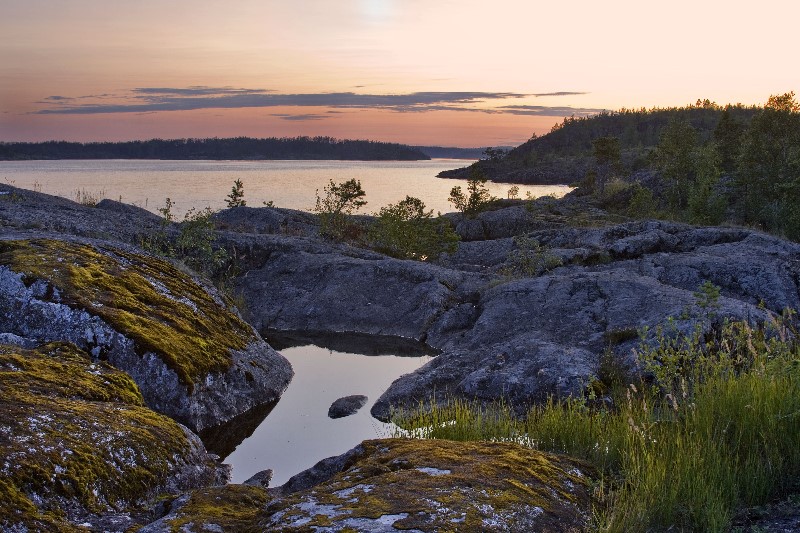
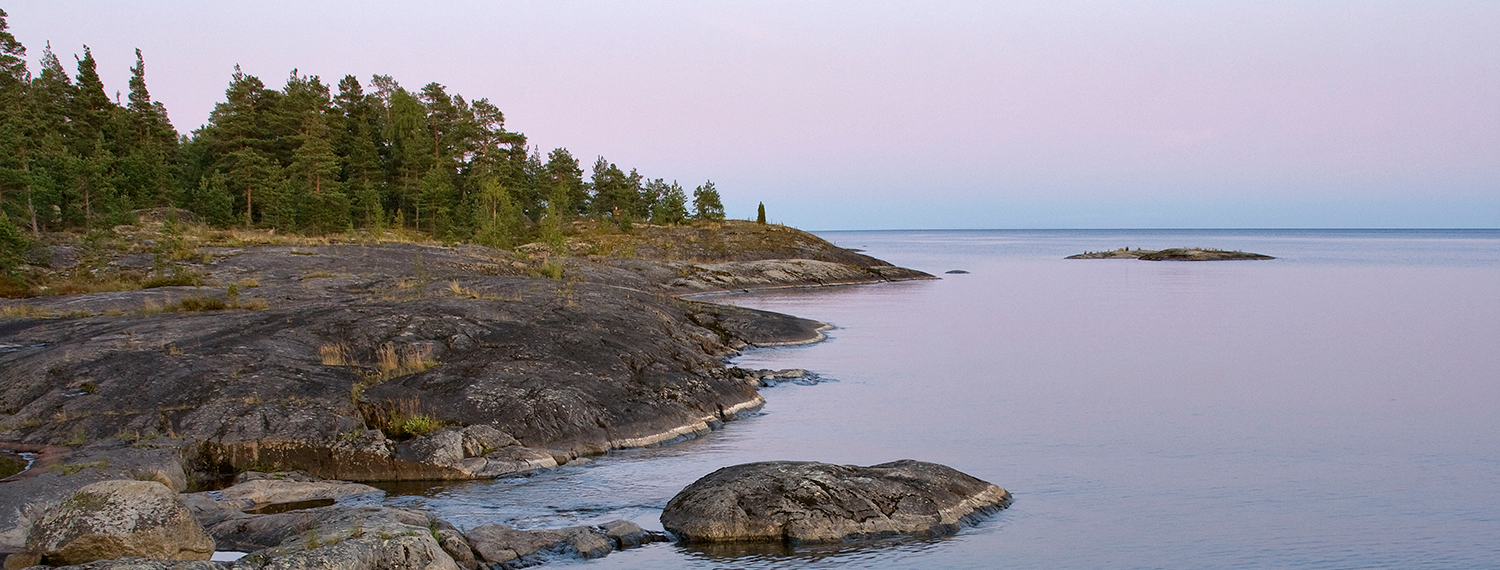
Greenpeace has called on Russians to defend a group of islands on Lake Ladoga from the oil company. In a communique received by NSN, Greenpeace claimed that at the behest of Alexander Hudilainen, head of the Republic of Karelia, the Federal Ministry of Natural Resources plans to transfer nearly 4,000 hectares of the future Ladoga Skerries National Park to the oil company. According to Novaya Gazeta [see translated article, below], Rosneft intends to build a health spa on islands in the protected area.
In an interview with NSN, Mikhail Leontyev, Rosneft’s vice-president for public relations, was categorical.
“Greenpeace are a bunch of corrupt scum. These are people who are paid to attack corporations. I have no desire to service their publicity machine. Spare me from them at least for a day, and better yet permanently,” Leontyev told NSN.
In its appeal to defend the Ladoga archipelago, with its unique Scandinavian landscape, Greenpeace claims the lands the authorities intend to exclude from the park are inhabited by golden eagles, which are on the endangered list, and that seals bask on the area’s shores in the summer.
Alexander Hudilainen has been readying especially valuable forests on the shores of Ladoga for investors
Could a specially protected natural area on the shores of Lake Ladoga be handed over to Rosneft?
At the behest of the government of the Republic of Karelia, the Russian Federal Ministry of Natural Resources is cutting nearly 4,000 hectares from the future Ladoga Skerries National Park for implementation of investment projects. It is believed that the principal interested parties are subsidiaries of Rosneft, which had previously announced plans to build a major health complex in the Ladoga area. The sale of lots included in the protected area, which has has already undergone an environmental impact statement, could theoretically produce a windfall for the republic’s budget, but in reality it would halt work on establishing the national park, which Vladimir Putin has personally asked to be expedited. A final decision on redrawing the national park’s boundaries is expected within the next week.
The Ladoga Skerries are located along the northwest shore of Lake Ladoga in the Lahdenpohja, Sortavala, and Pitkäranta districts of the Republic of Karelia. A number of rocky islands and narrow straits form a unique picturesque landscape not found anywhere else in Russia. Many attempts have been made to preserve the natural environment in these parts, but for various reasons none of the projects for establishing a specially protected natural area has been implemented. Work on establishing a national park was renewed in 2007 amid massive public discontent over the leasing of lots in the skerries to logging and mining companies.
There was no sign of trouble even a month ago. On the contrary, people were confident that the years-long saga of establishing a Ladoga Skerries National Park (the first plans to create a protected area date back to 1989) was coming to a successful conclusion. On January 29, 2016, the Federal Service for Supervision of Natural Resources officially signed off on the findings of a official environmental impact analysis and due diligence review of the grounds for conferring the status of a federal specially protected natural area on the region. The next step should have been a Russian federal government decree establishing the park. But on February 15, a meeting was held at the Russian Federal Ministry of Natural Resources where it was decided to exclude lots totaling approximately 3,750 hectares from the planned Ladoga Skerries National Park in order to accommodate the construction of so-called socially significant facilities. The initiative had come from the Karelian authorities or, rather, personally from head of the Republic of Karelia Alexander Hudilainen, who had in fact made the request to the federal authorities.
Cutting to the quick
According to sources in the Karelian Ministry of Natural Resources and the Environment, nearly all of Rautalahti Peninsula and Sammatsaari Island in the Sortavala District, which are part of the Ladoga Forestry Area, as well as several smaller lots in the Oppola and Helylä Forestry Areas, will be almost wholly removed from the nature reserve. Despite the fact that the total area of the planned reserve is over 120,000 hectares, of which approximately 40,000 hectares are water, while the rest is on forest reserves lands, such a loss would be extremely painful. According to Olga Ilyina, head of the Karelian environmental organization SPOK, during the planning stage, several large chunks of the park were cut out to avoid conflicts with local residents. A further reduction of the park’s area would make it impossible to effectively protect valuable natural sites.
“If you look at a map of the park you see it stretches along the northwest shore of Lake Ladoga, and the excluded lots essentially split it into two unequal parts. Most importantly, the greater part of Rautalahti Peninsula is within the conservation area. It is one of most well preserved expanses of Ladoga forests and has high environmental value,” notes Ilyina. “Formally, the park will lose around 5% of its territory, but the already small size of its protected area would be reduced by nearly a third.”
Sabotage behind the scenes
Alexei Travin, coordinator of the NGO New Ecological Project, who joined the battle to save the Ladoga Skerries back in 2006, says that from the outset Karelian authorities opposed the idea of a national park and did whatever they could to sabotage the process of establishing it.
“Both under Sergei Katanandov and his successor as head of Karelia Andrei Nelidov, the process of preparing and approving paperwork was constantly delayed,” notes the environmentalist. “Positive developments have occurred only under pressure from the Federal Ministry of Natural Resources.”
One of Alexander Hudilainen’s first steps as head of the republic in 2012 was submitting a request to the Russian federal government to establish a national park. (Without a submission from the local authorities it would have been impossible to launch the procedure for establishing a federal specially protected natural area.) According to Travin, however, there is good reason to suspect that the new head of the republic simply did not understand what he had signed back then, which was why one of the republic’s deputy natural resources ministers, who had drawn up the document for Hudilainen’s signature, was dismissed from his post. In 2012, President Putin asked the government to speed up work on Ladoga Skerries National Park and there was no longer any way for the Karelian authorities to back out. But this does not mean they had resigned themselves to the fact that the “golden lands” on the shore of Lake Ladoga had literally slipped through their fingers.
Legal maneuvers
In the light of recent events it seems the Karelian authorities might have been using the process of establishing a national park to their own ends. Nearly all the lands along the shore of Lake Ladoga, including the islands, were leased in 2006 (on the eve of the transfer of powers over forests to the regions) at the behest of the then-current leadership of the Russian Federal Forestry Agency. In 2015, however, the Karelian Ministry of Natural Resources in coordination with the Russian Federal Ministry of Natural Resources had the courts terminate the leases on forest reserve lands in the Ladoga Skerries with the goal of establishing a federal specially protected natural area. In particular, the leases on lots rented by Sortavala Wood and Paper Holding, Ltd., were revoked in January 2015. Meaning that the old tenant’s lots were seized under the pretext of establishing a national park, but Karelian officials are now seizing the same lots on behalf of another investor.
The question of what areas should be excluded from the park has been decided behind closed doors, and at present there is no reliable information about what investors and what projects will be implemented in the area. However, according to sources close to the Karelian Ministry of Natural Resources, it is primarily subsidiaries of Rosneft that have been discussed, which would explain both Hudilainen’s involvement in the problem and the unexpectedly loyal stance adopted by the Federal Ministry of Natural Resources.
No simple interest
Information about Rosneft’s interest in the area emerged in 2014, when the oil company and the government of Karelia signed a strategic partnership agreement. After meeting with Rosneft chair Igor Sechin, Hudilainen said the company had decided to build a large health center on the Ladoga shore. According to a source, the possible allocation of lots within the planned specially protected natural area had begun to be worked out as early as a year ago, but initially did not find support within the Federal Ministry of Natural Resources.
That the ministry agreed to amend the project, despite the fact the environmental impact review had already been completed, confirms that an investor with big lobbying capabilities has gone after the land, potentially allowing it not only to redraw the national park’s boundaries but also to transfer forest lands to another category, a decision that can be made only by the federal government. This turn of events is highly likely. It is worth remembering that, in the past, the current head of Karelia successfully sold off forest lands when he was head of the Gatchina District in Leningrad Region. His role came to light in the well-publicized investigation of the illegal seizure of lands in the Siversky Forest in 2005. However, the scale of the seizures there was considerably less.
According to Olga Ilyina from SPOK, free lots that were no worse in terms of recreation and unencumbered by restrictions on development could have been found on the Ladoga shore. There was no acute need to intrude on the protected area of the park, but the decision to intrude was made all the same, despite the inevitable complications. The option of taking out a long-term lease on the lands removed from the park simply would not justify the effort.
On the other hand, removing forest reserve status from these lots would turn them into extremely profitable assets, whose worth, according to rough estimates, could run into the tens of billions of rubles, if we take into account the going rate for land in the district. This sum, by the way, is comparable to the size of the Republic of Karelia’s annual budget, which was 29.3 billion rubles in 2015 [approx. 388 million euros].
It is unlikely that the deal would be a salvation for the Karelian budget, which has been shrinking because of the economic crisis. It is easier to imagine that the lots allocated for “socially significant projects” would be purchased with earmarked funds and for a tenth of their actual market value, if that much. But for Alexander Hudilainen, whose position deteriorated after he was reprimanded by the president in February, it could be more important to obtain the political dividends.
The Karelian authorities have to account for the investments they have attracted as part of a federal program for the targeted development of Karelia until 2020. Timed to coincide with the republic’s centennial in that same year, the program is now in jeopardy. So a single project with a nominal value of even several billion rubles might prove to be a salvation to Karelian officials.
Sabotaging the park
Whatever objectives the Karelian authorities have been pursuing via the intrigue into which they have drawn the Federal Ministry for Natural Resources, they have planted a bomb under all the plans for the Ladoga Skerries National Park.
Amending the project for the specially protected natural area after it has gone through an official environmental impact review makes it vulnerable in legal terms.
Practically speaking, there are now grounds for challenging the conclusions of that review as well as any regulations adopted on its basis, a challenge that could be mounted by an interested party. In current conditions, according to environmentalists, this could delay the establishment of the park by another two or three years. A second environmental impact review would require money that is not in the budget.
Over this time, the area of the future part could shrink even further, including at the expense of state reserve lands, which were supposed to be included in the specially protected natural area during the second phase of the project. (In the first phase, only lands from the forest and water reserves will be included in the park.) The Karelian government has virtually put these lots up for sale already, although it should have set them aside in order to establish the specially protected natural area. Thus, on a website entitled The Investor’s Republic of Karelia, there is a description of an investment project involving the sale of thirteen land plots, totaling 137.1 hectares, on the eastern half of Sammatsaari Island, for recreational purposes. This particular page is hidden in such a way that it is impossible to find on the site’s main menu.
This may mean that the sabotage of the national park has been planned deliberately, and then the damage would be not be limited to removing the above-mentioned 3,750 hectares from the park. Within two years, the Ladoga Skerries could be ripped to shreds. Or, on the contrary, has Alexander Hudilainen on his own initiative unwittingly provoked a classic conflict of priorities by essentially putting the interests of Rosneft above those of the head of state? This conflict might be resolved in the most unpredictable ways, including for the man who started it.
Translated by the Russian Reader. Photos courtesy ofGreenpeace Russia. Thanks to Comrades AK and SY, as always, for the heads-up. Thanks to Comrade EN for the geography lesson.
Artist Pyotr Pavlensky holding a petrol can in front of FSB headquarters in Moscow. Photograph: Reuters
Pyotr Pavlensky: “The FSB Has Hammered an Iron Curtain Around Itself”
Elena Kostyuchenko and Ekaterina Fomina
December 10, 2015 Novaya Gazeta
An exclusive interview with the arrested artist
He stands accused of vandalism for setting fire to the door of the FSB building. Pavlensky himself has requested he be tried as a terrorist as a gesture of solidarity with convicted terrorists Oleg Sentsov and Alexander Kolchenko. Observing a vow of silence, Pyotr Pavlensky refused to answer the court’s questions. He did, however, answer Novaya Gazeta’s questions.
Pyotr Pavlensky’s Works
Seam, July 2012. Pavlensky sewed his mouth shut with a coarse thread and stood for an hour and a half in front of Saint Petersburg’s Kazan Cathedral holding a placard that read, “Pussy Riot’s performance was a reenactment of Jesus Christ’s famous performance.”
Carcass, May 2013. Absolutely naked and not responding to anything, Pavlensky lay wrapped in barbed wired outside the Saint Petersburg Legislative Assembly. The artist attempted to show the new position Russian citizens had found themselves in after the adoption of repressive legislation.
Fixation, November 2013. Pavlensky nailed his scrotum to a cobblestone on Red Square and sat motionless looking at it. “It is a metaphor for the apathy and political indifference of Russian society,” the artist explained. Pavlensky timed his action to coinicide with Police Day.
Freedom, February 2014. Pavlensky and a group of activists burned around fifty tires on Malo-Konyushenny Bridge in Saint Bridge, thus reconstructing the Maidan in Kyiv.
Threat, November 9, 2015. Pavlensky set fire to the main entrance of the FSB headquarters on Lubyanka Square. The artist stood before the burning door holding a fuel canister.
What is fear?
I think fear is an animal instinct. You find an example of how fear itself turns into an immediate threat to life in Hannah Arendt’s book Eichmann in Jerusalem: A Report on the Banality of Evil. The question she returns to time and again there is, who was more to blame for the death to which a hundred concentration camp prisoners were led, the two guards who escorted them there or the prisoners themselves? Because they went willingly to their deaths, making no attempt to kill the guards or escape. Fear is dangerous because it suppresses free will. Without free will man becomes something like a domesticated beast of burden, which is not finished off and turned into food while there is the need to keep working it.
How and when did you conceive Threat?
[The answer has not been published in keeping with the requirements of Russian federal law.]
What did the preparation involve?
The choice of the site, the date, and time were the main things. When they have been determined, all that remains is the technical preparation, in which I try to do with the most minimal means.
Was Threat successful? What constitutes success? Were the other actions successful?
I find it difficult to talk about, because my access to information is limited. But the fact alone that I managed to do it could be considered a big success.
Is there a common theme running through your works? Have your stance and objectives changed?
Yes, in all my works I talk about the prison of everyday life and the possibility of release from this prison. Seam, Carcass, Fixation, and Segregation are the prison of everyday life. Freedom is the possibility of release. But Threat is the power of coercion in this prison, meaning that it is the main threat to free will.
In most of your actions you haven chosen your own body as the object. Why did you decide to choose an external object this time?
This is not true. I have used my body when talking about the prison of everyday life. The statement about emancipation was constructed completely differently. Freedom was implemented by a collective subject. Now I have discussed the threat hanging over every member of society. This is a direct threat to the manifestation of everyone’s free will. I never said I was doing performance art or body art. I work with the tools of power, and what I do is political art.
Freedom.Photo: Pyotr Kovalyov / Interpress / TASS
Whom are you addressing?
Society. I do not address people in power. I use them as material for undermining the scenery of power. My objective is to call into question the entire façade concealing the ruthless mechanics of control and administration.
Do you identify with the the society you previously depicted (Fixation and Carcass)? If not, where are you?
Well, now I am actually in jail. But if we talk about how much I feel myself to be part of society, then to the extent that we all are part of the same regime. I travel on the same public transportation, I watch the same news, and I hear the same advertisements. The informational field is the same, and I have worked with elements of it. I take something from one context and transfer it to another context. The contexts collide and new meanings are produced. In this way I identify the discrepancy between the scenery and mechanics of power.
Do you know how people have responded to Threat? Can you follow events from jail? How do you get the idea across when discussion of the action itself (the scrotum, the door) becomes primary?
No, I know very little about the reactions. But I did find out about the most interesting reaction: the entrance to Lubyanka was covered in aluminum. I have been told that “Lubyanka behind the iron curtain” is what the authorities called their action. The regime is erecting this curtain around itself with its own hands. No, it is still not easy for me to keep track of what is happening. I am partly cut off from communications. I get letters, and my lawyers can tell me some things. Other prisoners also tell me things, but generally the information is very sketchy.
Segregation. Photo: Oksana Shalygina / Facebook
Some say that the action could have caused harm to employees who were inside the building. Did you think about this?
No, I had no such fears. We could discuss such a threat if I had employed heavy artillery instead of a fuel canister.
You have called the FSB a “terrorist organization.” You see no difference between a suicide bomber at Domodedovo Airport and an FSB employee?
The FSB [excised in keeping with the requirements of Russian federal law] is a militarized, well-equipped, armed organization. And it combats its competitors, people who would like to take its place but who simply lack the resources. I think any state is a political institution that has formed as an outcome of long-term political terror.
Whic actionist artists (past or present) do you like?
There are quite a few artists, and not necessarily actionists. They include the Dadaists, Malevich and Suprematism, the works of Caravaggio, and many others. Chris Burden was one of the few good performance artists. If we talk about actionists, I would include Alexander Brener and the Moscow actionists of the nineties. Voina made a huge breakthrough, followed by Pussy Riot, including their last performance at the Sochi Olympics.
Can art exist separately from politics nowadays?
No, it cannot. Art was forced to served ruling regimes for many centuries. It was an effective apparatus for inculcating ideological paradigms. Art was able to free itself from functional obligations in the twentieth century. But regimes continue to exist, and every year they require thousands of new personnel: they make a lot of effort to produce these units. The very existence of these institutions for producing service personnel is already sufficient demonstration of the link between art and politics.
Carcass. Photo: Sergei Yermokhin / Interpress / TASS
Investigators have on several occasions asked psychiatrists to examine you. Have you ever doubted your own mental competence?
No, I have not yet had any reason to doubt it.
How do you understand the holy fool? Some have called you a holy fool. Can you agree with them?
No, I cannot. I am an artist who does political art. Political art involves methodical research of social responses and sets of codes. Aside from the actions, the work involves dealing with the many tools of the regime: law enforcement, psychiatry, mass media, etc. I do not think you can just call this a way of life. In this sense, early punk culture, the residents of psychiatric hospitals, and hippies like Charles Mansion bore a much greater resemblance to holy fools.
What happened after your arrest?
Everything was fairly by the book: physical detention, handcuffs, searches, the first attempts at interrogation. Usually, during the first twenty-four hours, investigators try to get as much testimony as possible. That is exactly why you have to pay attention during the first twenty-four hours and say nothing at all. The same thing happens with psychiatrists, only they have more power. But much more important is what it means to me. For me, it is a process of defining the boundaries and forms of political art. And what the regimes calls arrest and paperwork procedures is nothing other than a bureaucratic ritual for producing criminals.
What are your conditions like now? Has pressure been brought to bear on you?
There was only one attempt to get me to sign a confession that I had not wanted to harm and threaten the lives of FSB employees. After an hour of back and forth conversation, they were unable to get what they wanted. I went to lockup to relax, and they left.
Why did you ask to be charged with terrorism?
I thought about the action I had carried out and came to the rather interesting conclusion that the action of setting fire to a door was quite similar to what ultimately led to terrorism charges against the s0-called Crimean terrorists and the ABTO group. Only in those cases, the FSB added to these groups people who had made deals with investigators, and as a result of this cooperation, ringerleaders of terrorist organizations and their accomplices emerged. So I decided to demand coherent logic from the court and justice from the judiciary and law enforcement.
Are you going to remain silent in the court?
Yes, I am going to maintain my silence until the lawlessness of the judiciary and law enforcement comes to an end.
Does an action begin when it is actually implemented or afterwards? Is the action still under way now? Do you recognize the state as a co-author?
An act begins during its implementation and ends when the law enforcement system or psychiatrists detain me. But cessation of the action per se marks the beginning of the process by which the boundaries and forms of political art are defined. So we could say that it is not the action that continues but the process of political art.
What do expect from the future? Are you willing to continue living in a stagnated Russia? Have you thought about applying your energies somewhere else? Are you struggling for a better life for yourself or for the country? (And is it a struggle?)
Each of us is responsible for the situation of stagnation. And for this reason alone I do not want to live somewhere else. As for me and my life, it is not a struggle, but the only possible form of existence under state terror. Everything else is personal responsibility for the life of society within the bounds of border and passport control.
P.S. On December 10, Pavlensky was transferred to St. Petersburg, where the case of setting fire to the tires is being examined.
Photo courtesy of the Guardian. Translated by the Russian Reader