Center “E” Surveilled Belgorod Family or Nine Months via Camera Hidden in Flat OVD Info
August 24, 2018
In Belgorod, officers of the Center for Extremism Prevention (aka Center “E”) watched a married couple for nine months using a camera hidden in their flat, reports TV Rain, citing defense attorney Anton Omelchenko.
The couple was suspected of involvement with the Jehovah’s Witnesses. A court gave Center “E” permission to use the camera for three months on three occasions.
“Law enforcement agencies put hidden cameras in homes to record people playing. Criminal charges were filed as a result. One of the cases in Belgorod simply slayed me: a married coupled in a one-room flat who were under surveillance for nine months round the clock. Everything was really noted in the case files. The couple would watch TV and say something negative about the regime, and the field officers would immediately write down, ‘Criticized regime.’ There was a complete transcript of the entire surveillance. I also found this shocking,” Omelchenko told the TV channel.
Since their case has not yet been heard in court, Omelchenko did not name the couple who were under surveillance. It is known they have left Russia.
Police Investigators Request Compulsory Psychiatry Treatment for Joke on VK Social Network OVD Info
20 August 2018
Police investigators in Petersburg have asked a court to commit Eduard Nikitin, a disabled man charged with arousing enmity by posting a joke on the VK social network, to compulsory psychiatric treatment, writes Interfax news agency.
Petersburg’s Nevsky District Court is currently hearing the case in closed chambers.
The charges against Nikitin were filed in 2017. He was accused of violating Article 282 of the Russian Federal Criminal Code for posting a caricature and joke on his personal page on the VK (Vkontakte) social network in 2015.
“He was given a psychiatric evaluation. Police investigators have asked the court not to criminally prosecute him, but to have him committed to compulsory treatment,” Maxim Kamakin, the accused man’s attorney, explained to Interfax.
Forensic examiners discovered “extremism” in a joke in which a character doubts the positive changes after an election, as well as in the use of the word vatnikin a caricature.
“This is the first time I have heard of charges like this being filed for a joke, albeit not the most decent joke and a political one to boot,” Kamakin added.
Nikitin said he was summoned by police investigators as part of an enquiry in 2016. Subsequently, the investigators did not contact him for over a year. In late 2017, however, Nikitin received notification of criminal proceedings.
Mail.ru Group Speaks Out against Punishments for Likes and Reposts Company Proposes Changing the Law and Law Enforcement Practice
Olga Churakova and Yekaterina Bryzgalova Vedomosti
August 6, 2018
Mail.ru Group has repeatedly criticized high-profile law bills and laws affecting the internet. Photo by Yevgeny Yegorov. Courtesy of Vedomosti
Mail.ru Group, which owns the largest social networks in Russia, VK and Odnoklassniki [“Classmates”], has harshly condemned the practice of filing criminal charges against social media users for likes and reposts on social networks.
“Often the actions of law enforcement authorities have been clearly disproportionate to the potential danger, and their reaction to comments and memes in news feeds are inordinately severe,” reads a statement on the company’s website. “We are convinced laws and law enforcement practices must be changed. We believe it necessary to grant amnesty to people who have been wrongly convicted and decriminalize such cases in the future.”
Recently, the number of convictions for posts and reposts on social networks has reached a critical mass, explained a Mail.ru Group employee. Most of the convicitions are not only unjust but also absurd. He would not explain what specific corrections the company was going to propose.
“We believe current laws need to be adjusted, and we are going to make pertinent proposals,” VK’s press service told Vedomosti.
Mail.ru Group has repeatedly criticized high-profile laws and law bills affecting the internet. In 2013, for example, the company opposed an anti-piracy law. In 2015, it teamed up with Yandex to criticize the “right to be forgotten” law. In 2016, it opposed a law bill that proposed regulating messengers and search engines. But punishing people for likes and reposts has become a political issue. Members of the opposition and social activists have often been the victims of Criminal Code Article 282, amended in 2014 to allow prosecution of people for incitment to hatred or enmity while using the internet.
Communist Party MP Sergei Shargunov addressed the problem during the President’s Direct Line in June of this year.
“If Article 282 were taken literally, certain zealots would have to convict Pushkin, Tolstoy, Dostoevsky, and Mayakovsky, and have their works removed,” he said.
Putin agreed it was wrong to reduce such cases to absurdity. Subsequently, he tasked the Russian People’s Front (ONF) and the Prosecutor General’s Office with analyzing how the notions of “extremist community” and “extremist crime” were employed practically in law enforcement.
“Prosecutions for Incitement to Enmity (Criminal Code Article 282 Part 1) in Russia. Numbers of People Convicted, 2009–2017. Source: Trials Department, Russian Supreme Court.” Courtesy of Vedomosti
An Agenda for the Autumn
On June 25, Shargunov and Alexei Zhuravlyov, leader of the Rodina [“Motherland”] party, tabled draft amendments in the Duma that would decriminalize “extremist” likes and reposts. The MPs proposed transferring the violation described in Criminal Code Article 282 Part 1 to the Administrative Offenses Code, where infractions would be punishable by a fine of up to 20,000 rubles or 15 days in jail, while leaving only Part 2 of Article 282 in the Criminal Code. Part 2 stipulates a punishment of up to six years in prison for the same actions when they are committed with violence, by a public official or by an organized group. The government, the Supreme Court, and the State Duma’s legal department gave the draft amendments negative reviews, pointing out that the grounds for adopting them were insufficient. A spokesman for Pavel Krasheninnikov, chair of the Duma’s Committee on Legislation, informed us the committee would start working on the amendments when MPs returned from summer recess.
The ONF, which held a meeting of experts in July, has begun drafting a report for the president. The legal community, the General Prosecutor’s Office, the Interior Ministry, telecommunications watchdog Roskomnadzor, and the Russian Supreme Court must send their proposals to the Kremlin’s control directorate before September 15.
Leonid Levin, chair of the State Duma’s Committee on Information Policy, agreed there was a problem.
“The law is repressive, and there is no misdemeanor offense, although the Supreme Court issued an opinion that different cases should not be treated identically,” he said.
While there has been no lack of proposals, no one is in a hurry to abolish the law completely. A source in the Kremlin said dissemination of prohibited information should be punished. But a way of relaxing the law must be devised and, most important, a means of avoiding random convictions, he added.
A Demand for Liberalization
Recently, VK had been under pressure from the public due to the huge number of criminal prosecutions for posting pictures and reposts, said Pavel Chikov, head of the Agora International Human Rights Group. He argued the statement issued by Mail.ru Group was an attempt to defend the company’s reputation. According to the so-called Yarovaya package of amendments and laws, since January 1, 2018, VK has been obliged to provide law enforcement agencies with information about its users upon request, but the question of the legality of providing information having to do with people’s private lives remains open, since under Russian law a court order is required for this, Chikov noted.
Political scientist Abbas Gallyamov argued political decentralization and moderate opposition were now fashionable.
“Even the most cautious players sense the dictates of the age and have been trying to expand the space of freedom. Mail.ru Group is trying to be trendy,” he said.
Gallyamov predicted that, as the regime’s popularity ratings decline, the screws would be loosened, and the number of people advocating liberalization would grow.
Part of the political elite realizes many things have gone askew, agreed political scientist Alexander Kynev. A number of people hoped the circumstances could be exploited to push the idea of moderate liberalization. This could be a way of showing the regime was ready to talk, he argued.
“A lot will depend on what the autumn brings, on the results of regional elections. Now it would appear to be a topic that is up for discussion, but there are no guarantees. There are people in the government interested in having the topic discussed, but this doesn’t mean a decision has been taken,” Kynev said.
I hadn’t come across this subject before, but it’s completely hellish. It has to do with the conveyor belt of arrests in Barnaul of people who posted memes on social networks. By the by, you read that each of these people, who has been charged with “extremism” for posting funny pictures on VK, is placed on Rosfinmonitoring’s list of people who are, allegedly, accomplices to terrorists.
The list is no joke at all. All your bank accounts and bank cards are blocked, and you cannot open new accounts and get new bank cards. No one can transfer money to you. You cannot be employed anywhere. You cannot take out more than 10,000 rubles [approx. 136 euros] in cash per month from own bank account, so go ahead and live high on the hog.
The kicker is that people are placed on the list without a court order. So, you are charged with a crime and you wind up on the list.
I took a glance at the list: there are 8,507 people on it. Eight thousand five hundred and seven people.* The list really does include “5203. Motuznaya, Maria Sergeyevna, born 26.8.1994, Barnaul, Altai Territory.” Maria Motuznaya is the young woman who broke the story about the Center “E” officers and their informers in Altai Territory.
Of course, Rosfinmonitoring could definitely not care less about the laws on personal information. While you are tortured and fined, they quietly hang you out to dry on their list.
By the way, the list is called the “List of Persons about Whom There is Information of Their Involvement in Extremism or Terrorism,” and its URL is even more telling: http://www.fedsfm.ru/documents/terrorists-catalog-portal-act. So, a state agency, Rosfinmonitoring, labels 8,507 people “terrorists” just like that. It is obvious the majority of them have been placed on the list in the absence of a court ruling, because even when you take into account all the “terrorists” the FSB has dreamt up, actual terrorist cases have probably not amounted to a tenth of this number.
If you’ve been added to the list, there’s no going back. The web page containing the list also features a list of people who have been removed from the list: there are fourten such people. I don’t know whether this is the number of people who have been removed from the list since it was established or over the last year. In any case, it is less than 0.2% of 8,507.
It’s probably no coincidence the number of acquittals in Russian courts is roughly the same percentage.
Anyone can end up on the list merely for posting a meme. There is no investigation, no trial, no explanations. Wham! Just like that you’re a “terrorist,” a lowlife excluded from modern society.
It’s a horrible thing.
* Since Mr. Volkov wrote this post, two days ago, Rosfinmonitoring seems to have added another nine people to the list.
Leonid Volkov is project manager at Navalny’s Team. Thanks to Yevegnia Litvinova for the heads-up. Translated by the Russian Reader
A man picketing outside Moscow City Court, July 26, 2018. His placard reads, “Anna Pavlikova and Maria Dubovik are captives of the cult Putin’s Witnesses. Free the children!” Photo courtesy of Mediazona and Denis Styazhkin
Moscow City Court Affirms Remand in Custody of New Greatness Suspect Anna Pavlikova OVD Info
July 26, 2018
Moscow City Court rejected an appeal of a lower court’s decision to remand in custody Anna Pavlikova, charged in the New Greatness case, It extended her remand in custody to August 13, writesMediazona.
Moscow City Court thus shortened the young woman’s term in custody. Previously, the Dorogomilovo District Court had extended Pavlikova’s remand in custody until September 13.
Mediazona reports Pavlikova took part in today’s appeals hearing via video link from the remand prison. In her appeal, defense attorney Olga Karlova had asked the court to rescind the extension of her client’s remand in custody and impose a noncustodial pretrial restraint.
The defense attorney also drew the court’s attention to the fact that four of the people charged in the case are under house arrest, thus violating the principle of equality before the law. Karlova also claimed Pavlikova was not a flight risk, because both her domestic and foreign travel passports had been confiscated.
In May, Karlova had told the lower court her client’s heart problems had worsened in the remand prison. Pavlikova had developed severe tachycardia and cramps in her legs. In June, it transpired she had been transferred to the remand prison’s hospital. In July, Pavlikova was admitted to a civilian hospital for a day to undergo tests.
In May, a hearing to decide whether to extend Pavlikova’s remand in custody took place at the Dorogomilovo District Court. Pavlikova was not taken to the court, but was driven around in a paddy wagon. During the hearing, the judge read aloud parts of the case file and retired to chambers to make her decision without hearing arguments from the parties to the case. In addition, Pavlikova was not informed of the court hearing. Her lawyer later informed her it had taken place.
In June, the Moscow City Court ruled this was a violation of the procedures for organizing court hearings and returned the case to the lower court.
Ten people have been charged in the New Greatness case. Judging by the case files, New Greatness was an organization established by undercover secret service agents. Six of the suspects are currently in remand prison, while the other four are under house arrest.
All ten suspects have been charged with organizing an “extremist” community (a violation of Russian Criminal Code Article 282.1). However, the prosecution’s case is based on the testimony of three men, none of whom has been arrested. One of them has said he infiltrated the group on the orders of his superiors. The interrogation transcripts of these individuals have mostly been excised from the case files. One of the three individuals drafted the group’s charter, collected money, and rented rooms for meetings.
Law enforcement officers threatened Pavlikova, who was seventeen at the time of her arrest, with violence.
Remember the story of Maxim Shulgin, the Left Bloc activist from Tomsk? He was charged with violating Russian Criminal Code Article 282 for posting songs on the VK social network. When Center “E” officers searched his flat in April and took Shulgin to their headquarters, they beat him up on the way there and pushed him against the heater in their car, causing burns to his body. We published his account.
Other Left Bloc activists were detained the same day. When they refused to testify against Shulgin, they were threatened with violence and told they would be charged with criminal offenses as well. When Shulgin was delivered to Center “E” headquarters with a bandaged arm, they decided the threats were real and answered the investigator’s questions.
Now the witnesses have recanted their testimony, recording a video in which they recounted what happened that day.
Our attorney Andrei Miller has been working on the Shulgin case. We immediately had Shulgin’s beating certified by a physician, and the evidence has been submitted to the Investigative Committe’s military investigation department. However, the issue of whether charges will be filed in connection with Shulgin’s bodily injuries has not yet been resolved.
“‘Guys, I can’t breathe,’ I said. They kicked me and said, ‘Are you alive down there?'”
Maxim Shulgin, a 28-year-old Left Bloc activist from Tomsk, recounted how Center “E” officiers detained him and what happened to him afterwards.
Tomsk Center “E” officers raided the Left Bloc’s offices yesterday.
“We were standing there smoking when a GAZelle van without license plates roared into the yard at full speed. The door opened, and guys wearing masks and caps came running out. I thought it was neo-Nazis who had come to shut us down. But then I realized they don’t drive around in GAZelle vans.”
The Center “E” officers forced the Left Bloc activists to lie face down on the floor. They confiscated their telephones, meaning the detainees had no connection with outside world until later that night and were unable to tell anyone what had happened to them. The detainees were taken to Center “E” headquarters, while Shulgin was handcuffed and taken home for a search of his flat.
“There were four field officers, wearing balaclavas, caps, jeans, windbreakers, and sneakers. They were carrying pistols, and their faces were covered. They addressed one of their number as ‘Pasha’ or ‘Pavel.’
“The worst nightmare was in the van. I lay between the front and back seats, and the men put their feet on me. They deliberately turned on the heater under the front seat, although it was three or four in the afternoon and eighteen degrees Centigrade outside. They did this on purpose, so I would find it hard to breathe, and if I hadn’t put my arm against the heater, one whole side of my body would have been burned. ‘Guys, I can’t breathe,’ I said. They kicked me and said, ‘Are you alive down there? Be patient, bro. We’ll arrive soon, and everything will be okay.’ They also beat the left side of my body. When I took too long answering their questions, they would beat me just like that, apparently because they enjoyed it.
“On the way, they asked about our plans for May Day. They commented that Russian extremists had degenerated. Now I can’t really remember [what they said], because I could not breathe and my arm was burning.”
The Center “E” officers confiscated all the equipment and political campaign materials in Shulgin’s flat. Then they took him to their headquarters, where the other Left Bloc activists were waiting.
“When [the Center “E” officers] saw my arm was burnt, they got a bit scared. I rode in the back seat on the way from my house. One of them said, ‘Sorry, bro.’ Another one laughed and punched me in the side. Good cop, bad cop, in short.”
The field officers and a public defender forced Shulgin to testify, threatening to arrest him. He was shown an order to instigate criminal proceedings, dated April 27. The charge was violation of Criminal Code Article 282 Part 1, allegedly, for saving songs on the VK social network that “incited hatred towards a particular social group, i.e., law enforcement officers.”
“After they thrashed me, my thought was to get out of there first thing. I signed a form releasing me on my recognizance. The idea that policemen are a social group is laughable, of course. Apparently, there is the proletariat, the bourgeoisie, and police officers.”
Along with the charge sheet, Shulgin was shown the results of a forensic examination that concluded that four of the songs on his VK page were “extremist”:
Chetverio, “Fuck, Pigs!”
Dukhi tsekha (Spirits of the Shop Floor), “Cop President”
Lydia Bainova. Photo courtesy of Newsru.com and Tayga.info
FSB Files Charges against Khakassia Woman for Social Media Post Defending the Republic’s Indigenous Population Newsru.com
July 24, 2018
The secret services have opened a criminal investigation into Lydia Bainova, a 30-year-old Abakan resident, after she published a post on the VK social media network. The mother of a young child, Ms. Bainova promotes Khakas culture. Tayga.inforeports she has been accused of inciting ethnic hatred. According to the website, the FSB’s Khakassia office has charged the young woman with violating Article 280 Part 2 of the Russian Federal Criminal Code, which forbids public calls for “extremism” through the media or interent.
Tayga.info quotes the FSB’s indictment, which alleges Bainova “realized her criminal intentions using an Asus brand laptop with access to the internet.”
She posted a text containing the following passage: “At such moments, one feels like organizing a revolution, a coup, giving back power and land to our people, winning them back.”
FSB Investigator Marov decided the passage was a public call for “extremism,” Tayga.info reports.
However, the indictment does not quote Bainova’s entire post, which largely deals with cases of harassment suffered by Khakassia’s indigenous inhabitants. Bainova, for example, told her readers that children were told that only ethnic Russians were allowed in the playroom of an Abakan establishment.
“Some have been lucky not to encounter nationalism. During the twenty-nine years of my life in Abakan, I have encountered it constantly. My mother and father have constantly been the target of trenchant comments, like, ‘You’re Khakas and you got a three-room flat in the center of town,” or, ‘You’re a Khakas woman, but you dress so well,’ and so on,” Ms. Bainova wrote on VK.
Ms. Bainova has denied her guilt. She believes it was her public outreach work that attracted the FSB’s attention. She popularizes Khakas culture, has been involved in an ethnic music festival, and advocates the preservation of Khakas traditions and the Khakas language.
Investigators commissioned a psycho-linguistic forensic examination of Ms. Bainova’s post. The examiners reached the same conclusion as the FSB. Ms. Bainova’s defense counsel said the forensic examination was performed “extremely unprofessionally.”
The maximum penalty for violating Article 280 Part 2 of the Russian Criminal Code is five years in prison. In early June, a court in Tver Region sentenced a local electrician to a two-year suspended sentence for publishing a post against Vladimir Putin. Earlier this year, a resident of Sevastopol was sentenced to two years in prison, while a Petersburg resident was sentenced to ten months in a penal colony on the same charges.
New Greatness is a personal test of your humaneness.
I know you’re really busy with family, work, friends, commitments, and so on.
But are you willing to go on living as you have, knowing the life of the young woman in the photo is being destroyed right now?
You still don’t know who the young women is or why she is being bullied?
This is Anna Pavlikova. She is a suspect in the so-called New Greatness Case. New Greatness is an organization concocted by scum from the secret services. They wrote the group’s charter, recruited teenagers into the group, and made it look as if they had broken the laws on “extremism.”
You ask what Anna did personally? Maybe she mixed Molotov cocktails in a cellar or called publicly for an attack on the Kremlin while standing on Red Square? Maybe she tried to enter the State Duma armed with a gun, set fire to a door on Lubyanka or broke a window in a United Russia Party office?
No, she didn’t do any of those things. She met several times with friends at McDonald’s to talk about politics. She also chatted with them on Telegram.
It was this that triggered Anna’s arrest on March 15, 2018, before she had turned eighteen.
“We’ll put you away for twenty years. When you get out, you’ll be an ugly, forty-year-old hag, and your parents will forget about you in two days!” hefty masked men toting machine guns yelled at the seventeen-year-old girl as they turned her house upside down.
Anna celebrated her transition to adulthood in jail. Before she was taken to a remand prison, she was held in a ice-cold paddy wagon for many hours. She was wearing light indoor clothing. It was minus eleven degrees Centigrade outside. Subsequently, she suffered inflammation of the uterine appendages (adnexitis) and was peeing blood. Her inflammation is now chronic.
“Prison sterilizes women,” the prison gynecologist told her.
Anna will never have children. Did you get that? She can never be a mother. The scumbags and degenerates from the security services, the state’s inhuman inquisition system deprived this perpetually innocent, exceedingly young woman of the opportunity and happiness of being a mother.
You think only the regime is to blame? Or Putin alone is to blame? I think differently.
We are all to blame when innocent people are tortured and maimed in our country. Our silence is to blame. Our indifference is to blame. Our lack of engagement is to blame.
“It’s not happening to me. It’s not happening to my children. Nothing like that would happen to me. I have it good. But what can I do? Maybe she is guilty?”
That is our stance, and it is killing this teenager.
Where does your humanity begin and end? What is your limit? When will you say, “That’s it. I cannot be silent anymore”?
When the person in the photograph is your child or loved one? Are you willing to sit waiting for that moment, as during the Great Terror, saying to yourself over and over again, “What if I get lucky? What if they don’t come for me?”
Are your sure that when the inhuman, mendacious criminal system that has been erected in our country sets to ripping you and your loved ones to shreds, someone will help you? That there will be people who will, at least, write posts like this one about you?
There will be a hearing to appeal the extension of Anna Pavlikova’s remand in custody at 3:00 p.m. on Thursday, July 26, in Room 428 at Moscow City Court.
All you need to do is show up at Moscow City Court (Bogorodsky Val Street, 8) at three o’clock on July 26.
It’s simple, really simple. Please take the time and do it.
Involving Teenagers in Unauthorized Protest Rallies Could Cost as Much as One Million Rubles Experts Say Authorities Won’t Find It Hard to Prove Charges
Olga Churakova Vedomosti
July 11, 2018
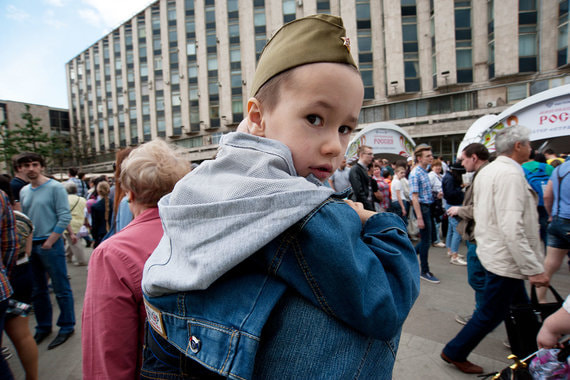
The State Duma plans to introduce hefty finds for involving teenagers in unauthorized protest rallies. Photo by Andrei Gordeyev. Courtesy of Vedomosti
On Tuesday, the State Duma’s Family Affairs Committee gave the go-ahead to a law bill that would introduce penalties for “encouraging” teenagers to attend unauthorized protest rallies. On Monday, the bill was approved by the government’s Legislative Affairs Commission. In its written appraisal of the bill, the Family Affairs Committee recommended clarifying the minimum age at which offenders would be held liable for violations, although the relevant committee reviewing the bill is the Committee on Constitutional Law.
Tabled by Alyona Arshinova, Anatoly Vyborny, and other United Russia MPs, the law would amend the Administrative Violations Code to include penalties of 15 days in jail, 100 hours of community service or a fine of 50,000 rubles for individuals who encourage minors to attend unauthorized protest rallies. Fines for officials would range from 50,000 to 100,000 rubles, while fines for legal entities would range from 250,000 to 500,000 rubles. A repeat violation could send individuals to jail for up to thirty days, while legal entities would be fined as much as one million rubles [approx. €13,800].
“In my experience, there is no such thing as a perfect law bill. As for the current bill, the relevant committee has not yet meet to discuss it,” says Vyborny.
However, Vyborny is certain the amendments are necessary.
“Children cannot resist the negative influence of adults. It matters to them to express themselves, and we hope this bill will deter them from ill-considered actions. Administrative liability will be a deterrent,” he says.
What matters is that young people are not drawn into a culture of legal nihilism, the MP argues. According to Vyborny, the bill does not aim to punish minors, but protest rally organizers. Hence, the age limit is defined in the bill.
OVD Info estimated that ninety-one teenagers were detained on May 5, 2018, in Moscow at an unauthorized protest rally to mark the inauguration of Vladimir Putin as president for the fourth time. According to OVD Info, at least 158 minors were detained nationwide on May 5 at similar protests. OVD Info estimated that a total of 1,600 people were detained that day.
Lawyer Oleg Sukhov says proving protest rally organizers are in violation of the new law would be a piece of cake. Rallies are organized in different ways, including personal contacts and public announcements.
“Our government is planning to deter all means of organizing protest rallies. It realizes this work on the part of the opposition will only intensify over time not only via the web but also through communication with young Russians,” notes Sukhov.
The main point is the government would not have to prove anything, argues Sukhov. Minors will go on attending protest rallies. Whenever they tell police they saw an announcement on the web, the organizers will be charged with violating the law according to a fast-track procedure.
“Clearly, the law will be enforced selectively. It’s a classic manifestation of the so-called mad printer. The terms used in the wording of the bill are not defined at all. For example, what does it mean to ‘encourage’ a teenager to attend a rally? Can teenagers attend rallies? They can. So, how do we figure out whether they attended on their own or were ‘encouraged’? We can’t,” says Navalny’s righthand man Leonid Volkov.
Volkov does not believe the law will be effective since protesters have been paying fines as it is.
“It is no accident this attempt to intimidate young people made the news today, the same day the Investigative Committee released a video about a teenager who goes to prison for reposting [‘extremist’ items] on social media. Of course, this will only produce new Primorsky Partisans,” Volkov concludes.
“Extremism Is a Crime,” a video posted on YouTube on June 25, 2018, by the MultiKit Video Studio. The annotation to the video reads, “A public service video on the dangers of extremism, produced by MultiKit Video Studio for the Russian Investigative Committee’s Altai Territory Office. The video will be shown in schools to prevent such crimes.”
__________________________
__________________________
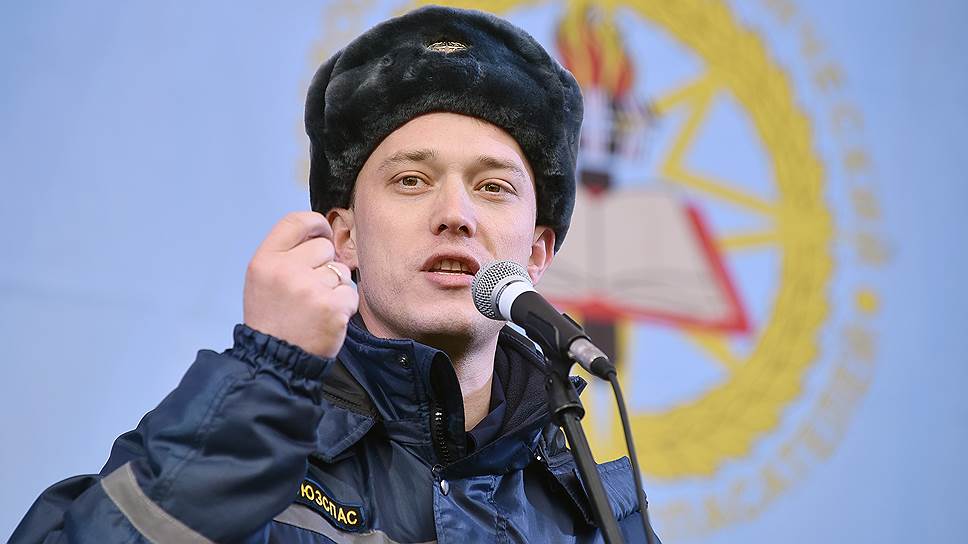
Alexei Avetisov. Photo by Emin Dzhafarov. Courtesy of Kommersant
Youth Policy Finds a Direction Kremlins Finds a Specialist in Subcultures and Extremism
Sofia Samokhina, Maxim Ivanov and Lada Shamardina Kommersant
July 11, 2018
Kommersant has learned Alexei Avetisov, member of the Russian Public Chamber and president of the Russian Student Rescue Corps, could join the Office of Public Projects in the Kremlin. Avetisov has been tapped to head the Department for Combating Extremism among Youth. Ksenia Razuvayeva, head of Rospatriotcenter (Russian Center for the Civic and Patriotic Education of Children and Young People) has been named as a candidate for head of the Department of Youth Policy in the Office of Public Projects. Both candidates would still have to be vetted by the Kremlin.
Alexei Avetisov, member of the Russian Public Chamber and president of the Russian Student Rescue Corps, could head the Department for Combating Extremism among Youth in the Kremlin’s Office of Public Projects. Currently, the Office of Public Projects, which is run by Sergei Kiriyenko, the president’s first deputy chief of staff, has no such department. Our sources say Mr. Avetisov would be tasked with overseeing youth subcultures and decriminalizing the youth scene, in particular, by dealing with the popular AUE network of criminal gangs. The Presidential Human Rights Council discussed the issue with Vladimir Putin in December 2016.
Olga Amelchenkova, head of the Victory Volunteers Movement and member of the Russian Public Chamber, told us there were few organizations in Russia involved in volunteering in emergencies, and Mr. Avetisov was one of the few people who had constantly brought up the subject in the Public Chamber.
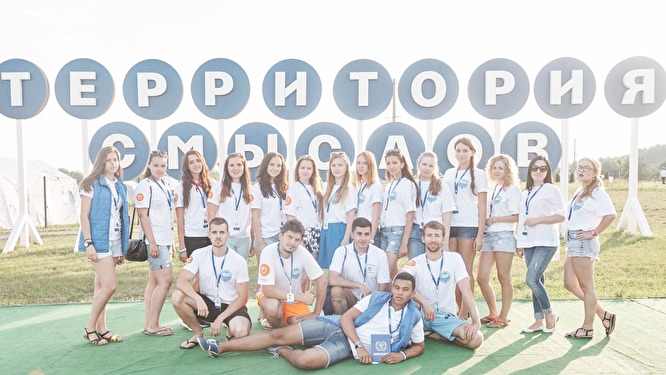
An acquaintance of Mr. Avetisov’s said his Russian Student Rescue Corps had brought many universities together. The organization took part in the first Taurida Camp held after the annexation of Crimea in 2014, an event attended by MPs and high-ranking officials. From 2015 to 2017, Mr. Avetisov was director of Territory of Meanings on the Klyazma, a youth education form, sponsored by Rosmolodezh (Russian Agency for Youth Affairs). His main job at the forum was providing technical support for the camp.
On June 6, Znak.com, citing its own sources, reported law enforcement agences were investigating Territory of Meanings on the Klyazma and, in this connection, “questions for the forum’s ex-director Alexei Avetisov could arise.” The website indicated companies allegedly affiliated with Mr. Avetisov had for several years been awarded “lucrative” contracts for constructing venues at the forum. The firms in question had no experience implementing government contracts. Currently, some of the companies have either gone out of business or are dormant, wrote the website.
Timur Prokopenko, deputy chief of staff in charge of the Office of Domestic Policy in the Kremlin, had been in charge of youth forums in recent years. He also handleded youth policy in his capacity as head of the Office of Domestic Policy. However, on June 14, a presidential decree turned youth policy over to the Office of Public Projects.
Territory of Meanings staffers. Photo from the camp’s VK page. Courtesy of Znak.com
Gazeta.Ru has reported that Rospatriotcenter head Ksenia Razuvayeva could take charge of the Office of Public Project’s Department of Youth Policy. Before taking over the running of Rospatriotcenter, Ms. Razuvayeva ran the Moscow branch of the Russian Volunteers Union and collaborated with the Young Guard of United Russia (MGER), which Mr. Prokopenko ran from 2010 to 2012. Ms. Razuvayeva would not confirm to us that she was moving to the Office of Public Projects Earlier, a source of ours in the Kremlin said she might not make it through the vetting process. Another of our sources noted a possible conflict of interests was at play. Ms. Razuvayeva also told us it was the first time she had heard about Mr. Avetisov’s moving to the Office of Public Projects.
“The vast majority of Young Guardsmen and other pro-regime activists brought up through the ranks in the past decades are supremely focused on their careers. The system simply spits out anyone else,” political scientist Abbas Gallyamov told us.
According to Gallyamov, “Changing colors for the new boss and refusing to have anything to do with people they worshipped only the day before are quite ordinary for this crowd.”
“Therefore, it does not matter whose people they were considered yesterday. They will be loyal to any boss, just because he or she is the boss,” Gallyamov added.
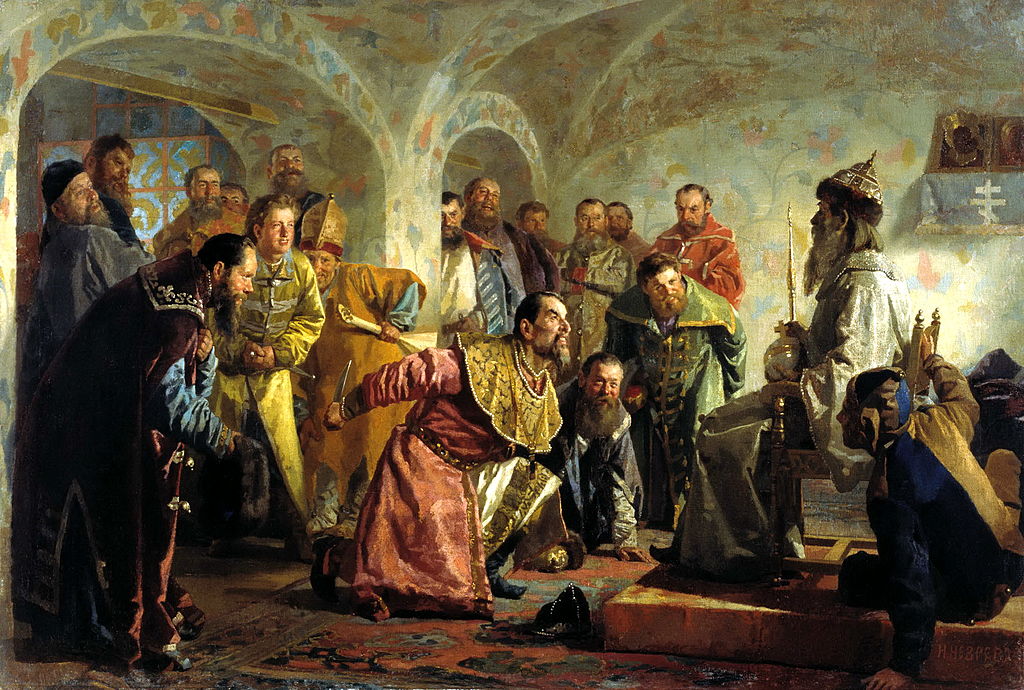
Nikolai Nevrev, Oprichniki, 1870s. Oil on canvas, 102 cm x 152 cm. Courtesy of the Kyrgyz National Museum of Fine Arts. Image courtesy of Wikimedia Commons
Pillaging the Opposition
Valery Rashkin Echo of Moscow
June 21, 2018
The Russian Supreme Court has ruled law enforcement and secret service officers can confiscate without a court order personal property used in the commission of terrorist and “extremist” crimes. The items that can be confiscated include computers, cell phones, and office equipment. This means personal property can be seized without payment of compensation and made the property of the state.
Can you believe it? The times of Ivan the Terrible have resurfaced. Courtesy of the state, Russia’s siloviki have been transformed into oprichniki and robbers. The ruling is completely unlawful, considering what passes for “extremist” crimes. Such criminal cases are usually frame-ups. They are so absurd they make you laugh and shudder at the same time.
The state has mandated law enforcers to hark back to the old system of remuneration (kormlenie, literally, “feeding”): the more “extremism” charges you file, the more iPhones and computers you can get your hands on. It is tantamount to legalized enrichment at the opposition’s expense. Moreover, even if the person who was criminally prosecuted is pardoned, their property will not be returned.
Don’t write nasty things about the regime on the VK social network, my dears, or the regime will fleece the living daylights out of you. Given the importance and high cost of electronic communications devices in our day and age, that is what it amounts to. The top brass, apparently, has decided that if people aren’t afraid of going to jail, they will intimidate them with the threat of robbery. I wonder who hatched this humiliating plan.
The rationale of hitting people in their wallets, enacted several years ago when fines for involvement in “unauthorized” demonstrations were increased precipitously, has gone beyond legal boundaries. Nothing of the sort exists in European countries: after a criminal investigation is wrapped, the accused has their property restored to them, nor are people are tried as felons for writing posts on social networks.
Naturally, the new dispensation is useless when it comes to deterring terrorists. The risks undertaken by an individual who rigs an explosive device and plots a terrorist attack are completely incommensurable with the risks taken by someone who posts a link to a book banned by the Prosecutor General or a satirical picture. In the first case, the criminals knowingly risk their lives and could not care less what happens to their property, while in the second case people do not even realize they are breaking the law.
Considering the vagueness of the anti-“extremist” laws and the way they are liberally interpreted and employed by law enforcement, the confiscation of property belonging to so-called extremists will only exacerbate the confrontation between the security services and ordinary Russians.
The advantages of the new measure are questionable, while the harm it will cause is obvious.
Valery Rashkin is a Communist MP in the Russian State Duma. Thanks to Elena Zaharova for the heads-up. Translated by the Russian Reader


 They’re watching your every word.
 Mail.ru Group has repeatedly criticized high-profile law bills and laws affecting the internet. Photo by Yevgeny Yegorov. Courtesy of Vedomosti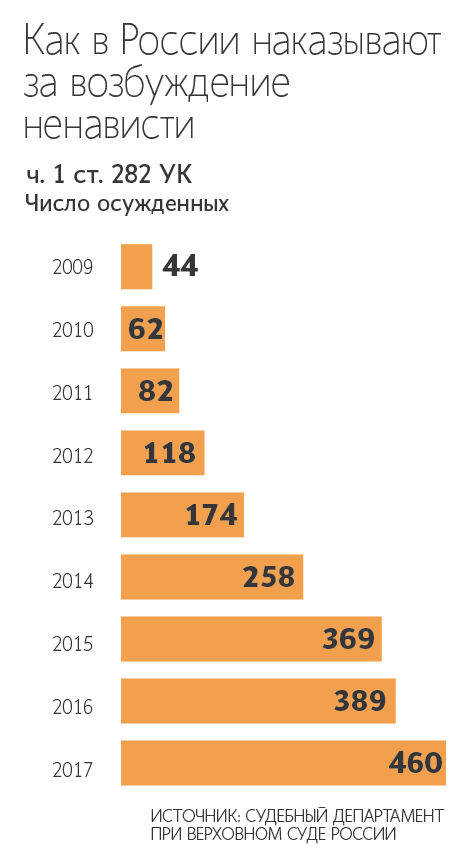
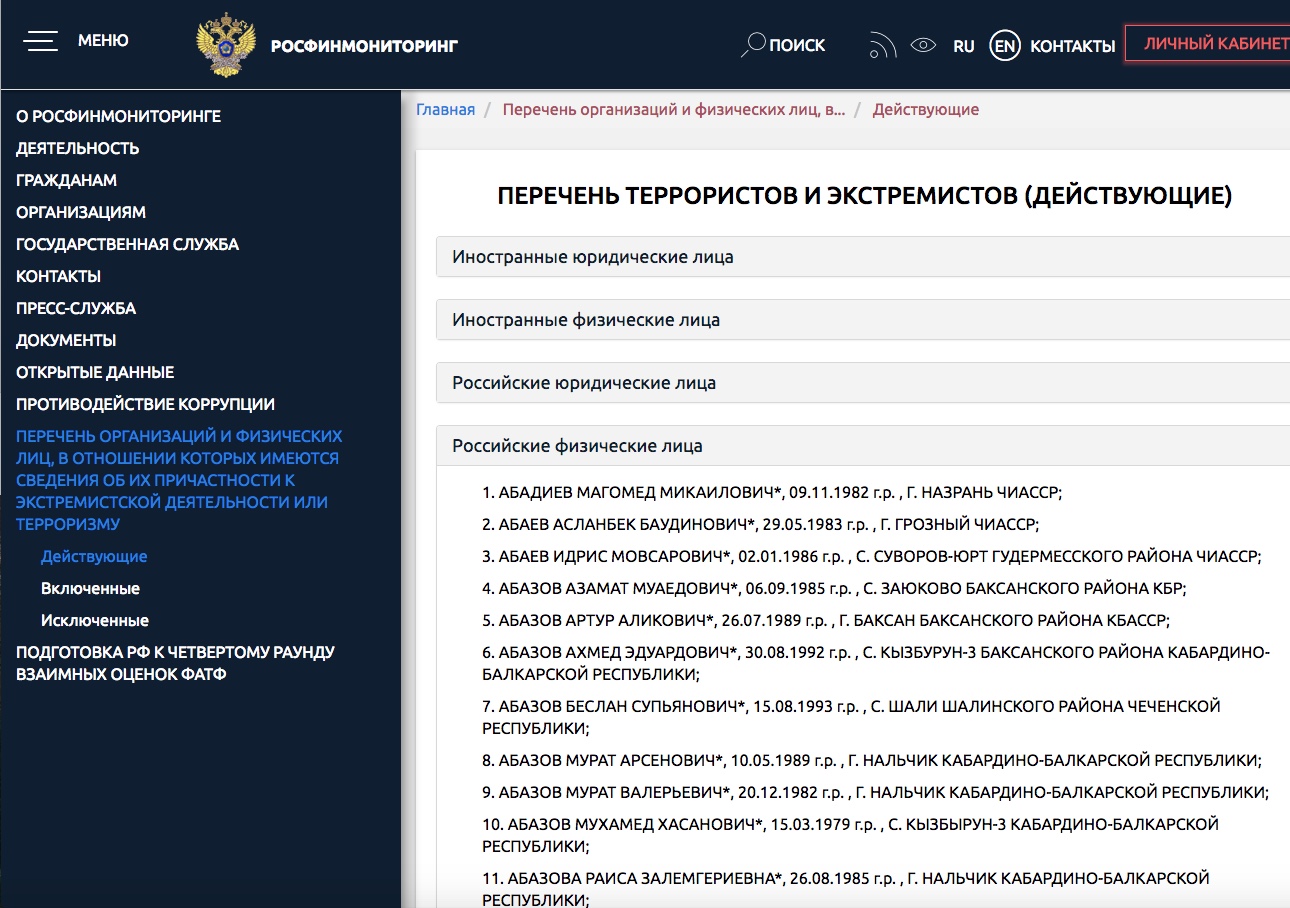 A screenshot of Rosfinmonitoring’s list of “extremists” (5 August 2018)
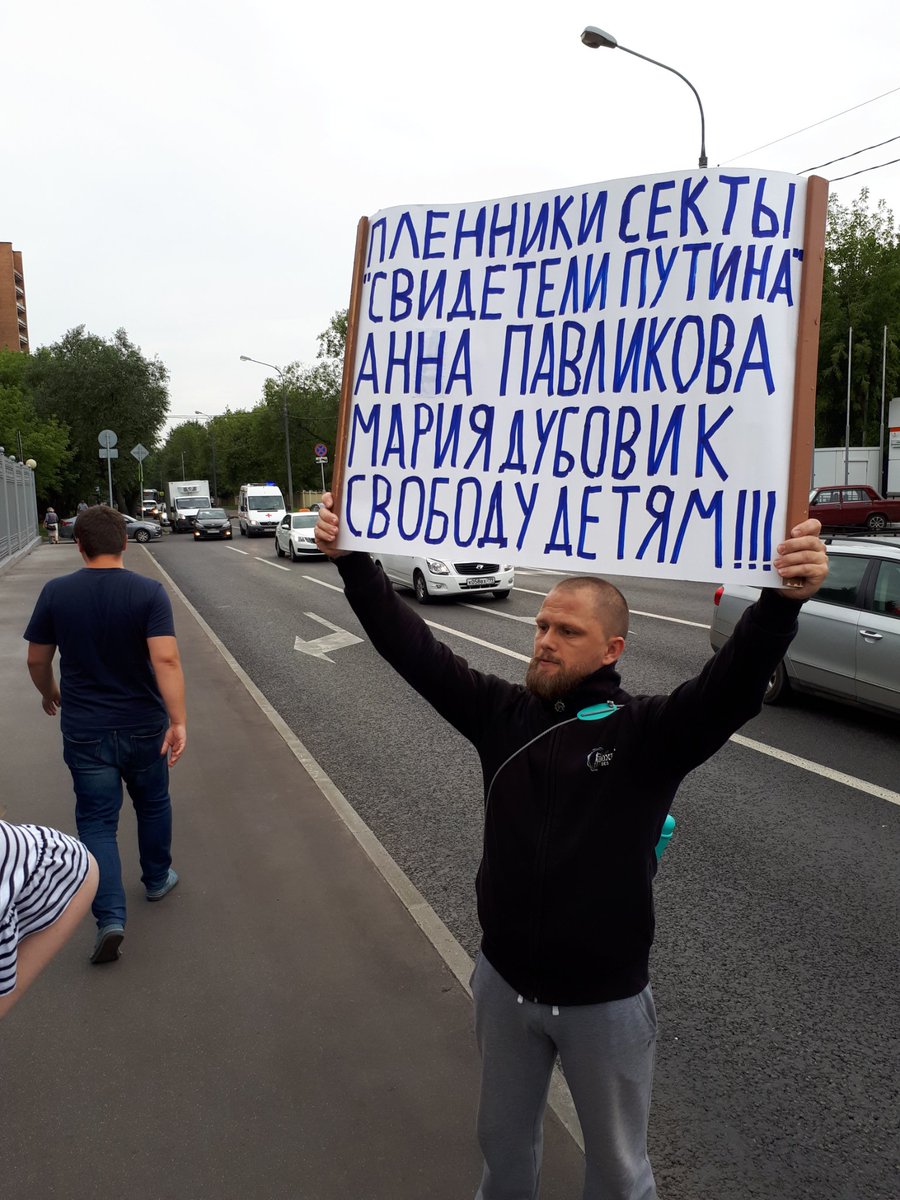 A man picketing outside Moscow City Court, July 26, 2018. His placard reads, “Anna Pavlikova and Maria Dubovik are captives of the cult Putin’s Witnesses. Free the children!” Photo courtesy of
  Maxim Shulgin
 Lydia Bainova. Photo courtesy of Newsru.com and
  Anna Pavlikova
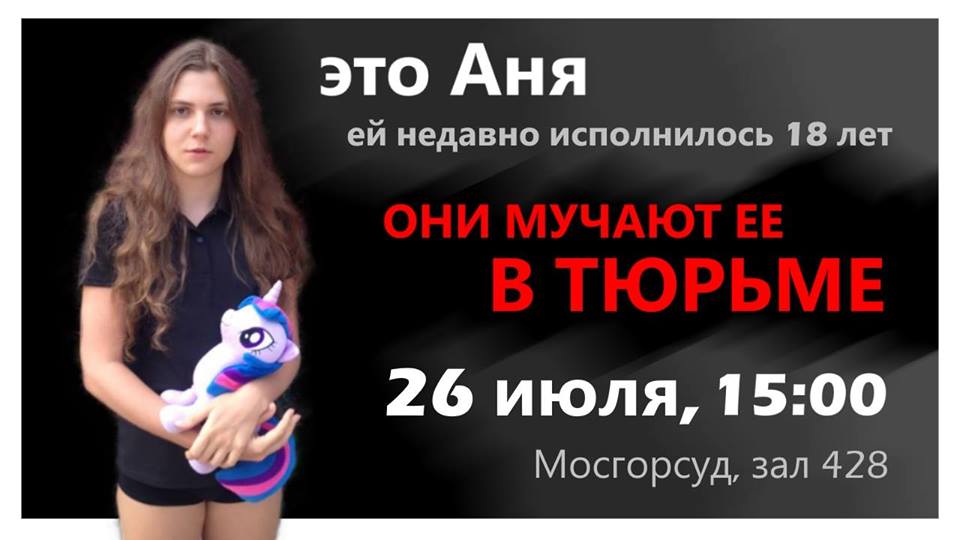 “This is Anna. She recently turned eighteen. They are torturing her in prison. 3:00 p.m., July 26, Room 428, Moscow City Court”
 The State Duma plans to introduce hefty finds for involving teenagers in unauthorized protest rallies. Photo by Andrei Gordeyev. Courtesy of Vedomosti
 Alexei Avetisov. Photo by Emin Dzhafarov. Courtesy of Kommersant
 Territory of Meanings staffers. Photo from the camp’s VK page. Courtesy of Znak.com
 Nikolai Nevrev, Oprichniki, 1870s. Oil on canvas, 102 cm x 152 cm. Courtesy of the Kyrgyz National Museum of Fine Arts. Image courtesy of