Cruel and Unusual

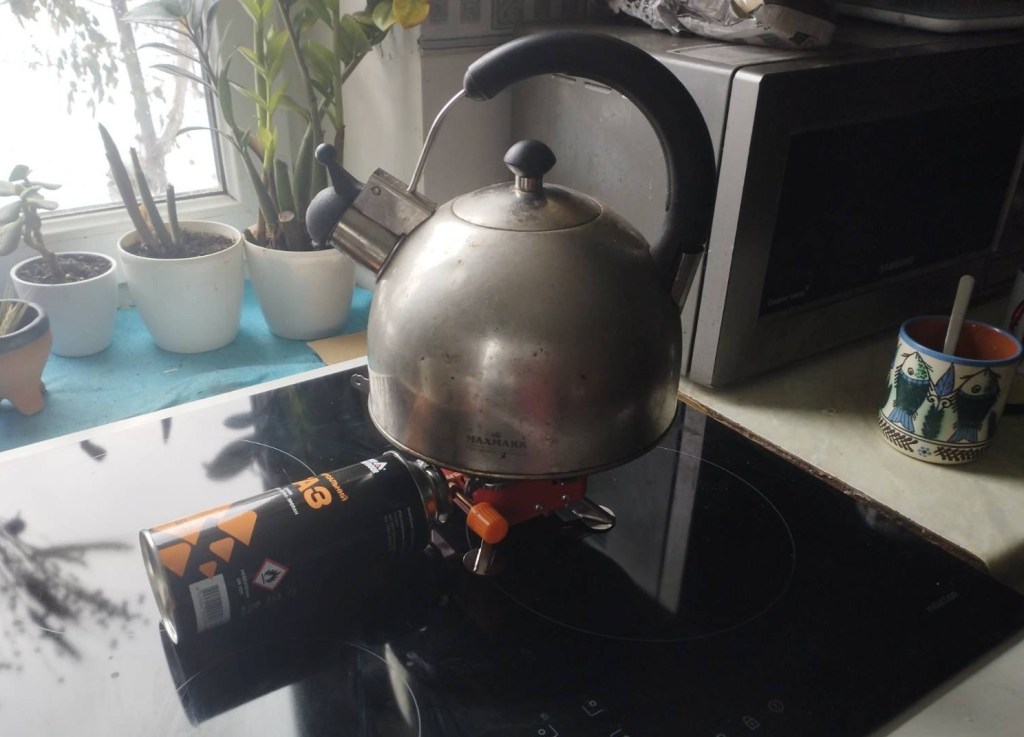
I am heating water for my coffee on a gas burner because there is no electricity.

Kyiv, the Kyiv region, Odesa region, and the Dnipropetrovsk region are in a total blackout — the result of Russia systematically destroying Ukraine’s energy system over the past months.

The Kyiv metro has stopped. There is no water anywhere.

At the same time, Russia’s State Duma Speaker Volodin, speaking on behalf of Russian deputies, openly calls for genocide — urging new strikes on Ukraine’s already devastated energy and heating infrastructure in order to cause mass civilian deaths.

This weekend the temperature drops sharply. Next week, it is expected to reach –30°C.

Meanwhile, ordinary Russians are celebrating on social media that Ukrainians are freezing.

We know this logic well. Their aspiration is simple: to make life here “like it is for them.”

In Russia, even without war, power outages in entire regions are normal.

In a gas-rich country, it is normal for many regions to have no gas at all.

This is exactly what the so-called Russian world aims for — to make us like them, if not through conquest, then through the destruction of our critical infrastructure and the physical extermination of Ukrainians.

Source: Lyuba Yakimchuk (Facebook), 31 January 2026


The number of children in Immigration and Customs Enforcement detention on a given day has skyrocketed, jumping more than sixfold since the start of the second Trump administration. The Marshall Project analyzed data obtained by the Deportation Data Project and found that ICE held around 170 children on an average day under Trump. During the last 16 months of the Biden administration, ICE held around 25 children a day.
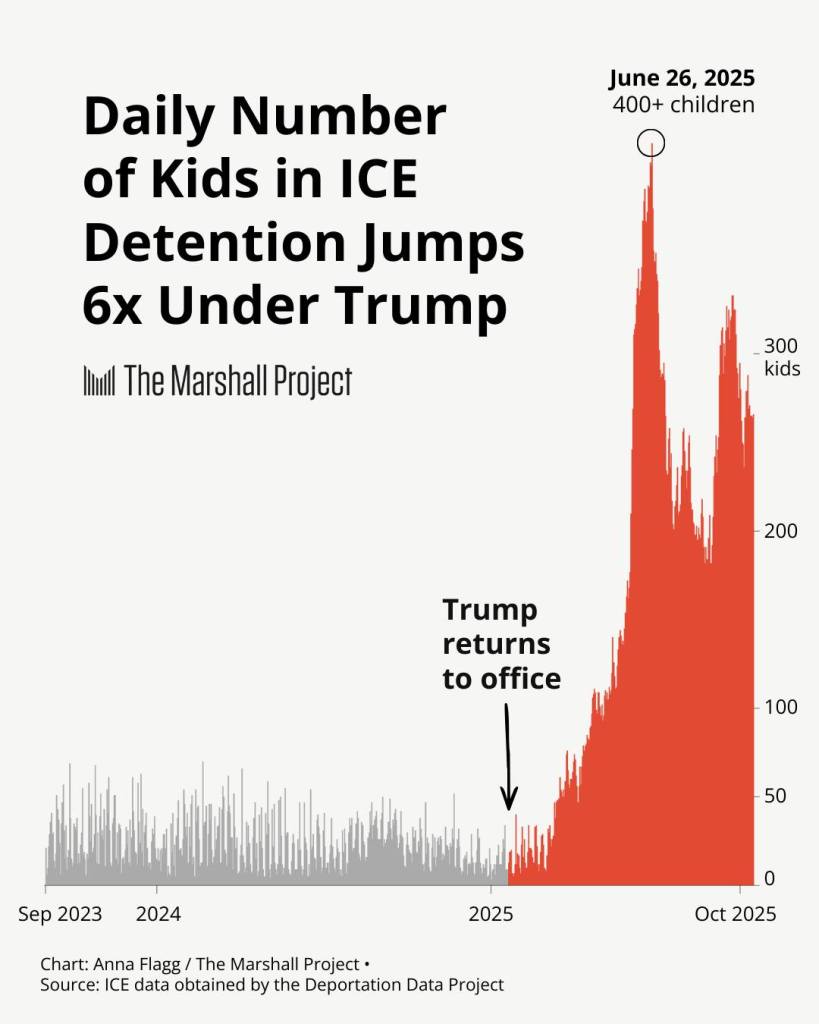
The Marshall Project’s analysis found that on some days, ICE held 400 children or more. The data covers September 2023 to mid-October 2025, meaning it does not include the surge of arrests from recent immigration enforcement operations in Minnesota. Nor does the data include children in the custody of the Border Patrol or the Office of Refugee Resettlement, where children are held without a guardian.

The Dilley Immigration Processing Center in Texas is the main facility for family detention. U.S. Rep. Joaquin Castro spent two-and-a-half hours inside Dilley on Wednesday, visiting parents and children. He said that the 1,100 detainees housed at the facility included a 2-month-old infant. “They are literally being treated as prisoners,” said Castro, a Democrat from San Antonio, in a live-streamed video. “This is a monstrous machine.”

In 2021, Biden largely halted the practice of family detention, and the Dilley facility, which had mostly housed families, closed in 2024. But the Trump administration revived the practice last year, and the facility, which is located about 75 miles outside of San Antonio, reopened.

The detainment of children by ICE has led to protests in recent weeks, both inside and outside Dilley. On Wednesday, state police used pepper spray on people protesting outside.

Immigration attorney Eric Lee was visiting clients at the facility on Saturday when staff abruptly told him to leave. Outside, he could hear a large group of children and women detained inside chanting, “Let us out.” Lee said he later learned that families inside the detention center had gotten news that people across the country were protesting the detainment of 5-year-old Liam Conejo Ramos, whose story went viral amid the backlash against the Trump administration’s recent immigration enforcement surge in Minnesota.

The Marshall Project (YouTube), 28 January 2026

Javier Hidalgo, legal director at the Texas-based immigration advocacy group RAICES said he’s seen many young children like Liam in Dilley. “That’s very much the norm,” Hidalgo said. “That’s what the government is spending taxpayer money on.”

A previous Marshall Project analysis found that ICE has booked at least 3,800 children into detention since Trump took office last year. At least 1,000 children were held longer than 20 days, a court-ordered limit on child detention.

“Every single day that a kid is in a place like this, they deteriorate,” Hidalgo said. “I’ve seen [them] withdraw. They lose weight; they just get physically worse.”

Children being detained with their families as part of immigration raids has become a common occurrence across the country. According to school officials in Columbia Heights, Minnesota, four children, including Liam, have been detained from their district during recent raids.

A 7-year-old in Portland, Oregon, was taken from a hospital parking lot in January with her family, after her parents took her to the emergency room, according to Oregon Live. As ProPublica reported, a 6-year-old boy in Chicago was detained with his mother in a large apartment raid during “Operation Midway Blitz.”

The Marshall Project spoke with three different lawyers representing children who were held with their families at Dilley. They said their clients were often taken into detention during in-person check-ins and had pending cases that could result in them remaining in the country legally. The lawyers believe their clients were detained not because of any danger they posed, but because the Trump administration is trying to deport as many people as possible.

“They’re probably the easiest catch for a lot of immigration officials,” said Veronica Franco Salazar, a Houston-based immigration lawyer.

In court documents, families have described horrific conditions while detained with their children in Dilley. They reported moldy, worm-filled food and foul-tasting, undrinkable water. With little for children to do, some resorted to playing with rocks. Parents worried about the psychological toll of detention, describing children hitting themselves in their faces or wetting themselves despite being potty-trained.

During his visit, Castro said that he heard many families talk about the psychological toll of detention. He spent half an hour with Liam, and said Liam’s father, Adrian Conejo Arias, told him Liam has been depressed and sleeping a lot. Liam remained asleep in his father’s arms during the visit with Castro. Arias said Liam had been asking about his classmates and the bunny hat he was wearing when detained. The congressman said he told the father that children at Liam’s school were still saving a spot for him at his desk.

CoreCivic, the private company running the Dilley facility, declined to answer a detailed list of questions. “Our responsibility is to care for each person respectfully and humanely while they receive the legal due process that they are entitled to,” Brian Todd, a public affairs employee at CoreCivic, told The Marshall Project in an emailed statement. Todd referred all questions to ICE, which did not respond to emails.

Kristin Kumpf, coordinator for the National Coalition to End Family and Child Detention, explained that the public may see videos or photos of the moments people are taken from their homes or snatched off the street, but there is less attention to the conditions children endure in the black box of detention.

“It’s only a matter of time before we see a child die within Dilley or another facility,” Kumpf said.

Hayam El-Gamal and her five children, including 5-year-old twins, have been locked inside Dilley for eight grueling months. Lee, who represents the family, said they’ve received poor medical care and are suffering from psychological stress.

“They’re calling me crying every day,” Lee said. “It’s an unmitigated horror show, and there’s no other way to put it.”

El-Gamal’s husband, Mohamed Sabry Soliman, is facing charges for attacking people at an event in Colorado supporting Israeli hostages in Gaza. At least 13 people were injured in the attack, and one person died, according to prosecutors. Soliman told detectives his family knew nothing of the attack, according to court documents, and an FBI agent testified they were not involved. The family’s lawyer said they are being unfairly punished for crimes they had no part in.

Lee recounted how one of El-Gamal’s children had appendicitis while in detention and “was left writhing on the floor of the facility screaming and in pain.” Lee said facility staff just gave him Tylenol, and it was only when he started vomiting that the child was taken to urgent care.

“Why is this happening to us?” El-Gamal’s eldest daughter, 18-year-old Habiba Soliman, asked in a handwritten statement provided to The Marshall Project by Lee. “It’s very easy to see the truth about this place and about us. The people need to be truthful to themselves and follow the facts.”

Lee said he believes ICE is retaliating against Habiba Soliman for speaking out about her family’s long detention. She was recently moved to a different area of the facility. Lee said the timing of the move, many months after her 18th birthday, but shortly after she spoke to the press about her long detainment, suggested it was punishment. ICE did not respond to questions about the reason for the separation. Lee said she has faced threats of being moved to a different facility altogether if she didn’t behave.

“I will never forget the look of fear and helplessness on my mother’s face as she watched me being taken away and couldn’t do anything to prevent it,” Habiba Soliman wrote in her statement. “We need everyone to step up and say that detaining families for indefinitely long periods should be illegal.”

Source: Anna Flagg and Shannon Heffernan, “‘Why Is This Happening to Us?’ Daily Number of Kids in ICE Detention Jumps 6x Under Trump,” The Marshall Project, 29 January 2026. Thanks to White Rose Resistance for the heads-up.
Anastasia Shevchenko: 174 Days Under House Arrest for Thought Crimes

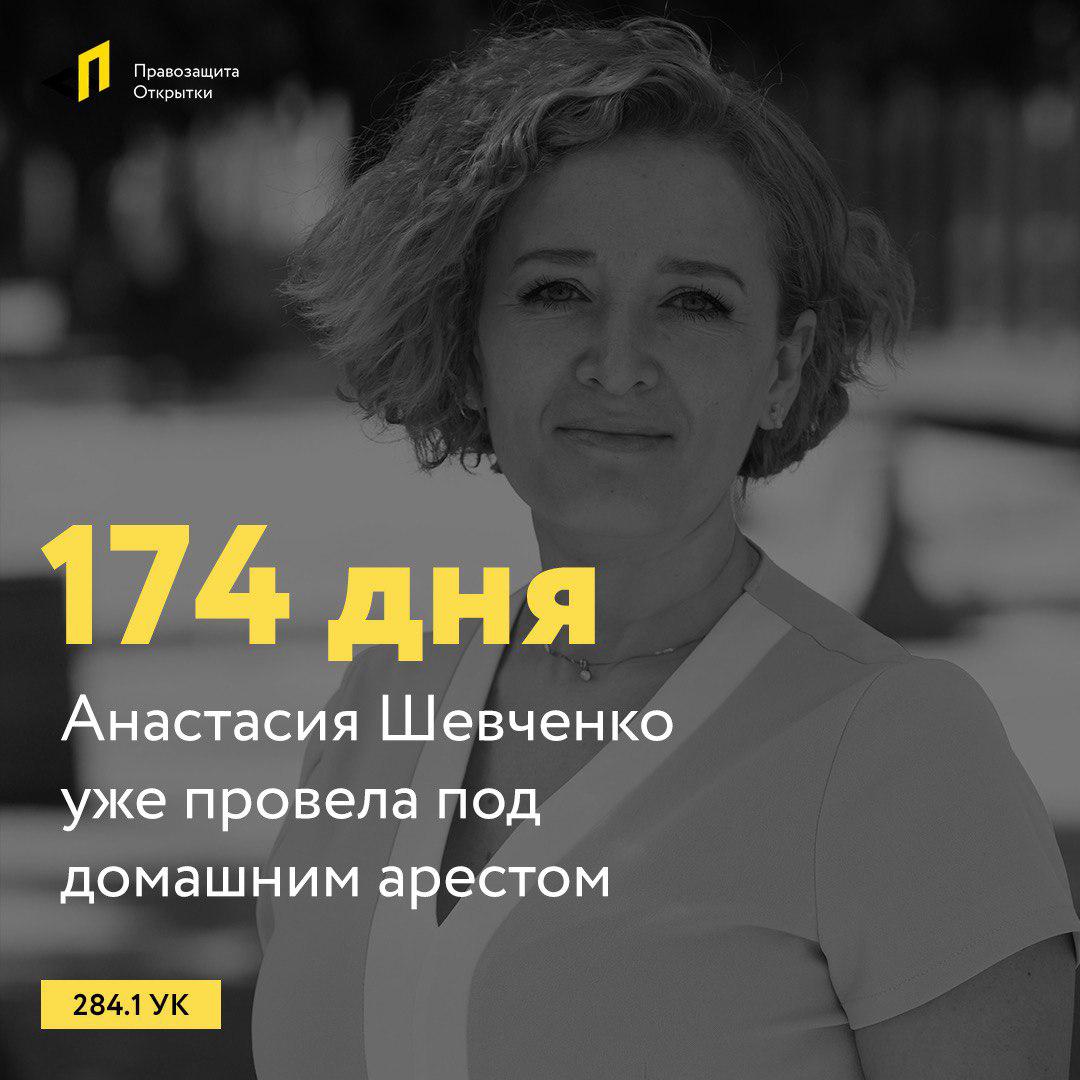
shevchenko“Anastasia Shevchenko has spent 174 days under house arrest.” The boxed caption in the lower lefthand corner (“Criminal Code Article 284.1”) is a reference to the charges on which Shevchenko was indicted. Russian Criminal Code Article 284.1, adopted in 2015, criminalizes “engaging in the work of a foreign or international non-governmental organization that has been deemed undesirable.” Open Russia was declared an “undesirable” organization by the Russian Prosecutor General in April 2017. Shevchenko, an Open Russia activist, is the first person indicted under Article 284.1 since it was adopted. Image courtesy of Pravozashchita Otkrytki, Open Russia’s civil rights project.

Pravozashchita Otkrytki
Telegram
July 16, 2019

The house arrest of Anastasia Shevchenko has been extended again, this time until August 20, 2019.

During a hearing at the Lenin District Court in Rostov-on-Don, the state investigator asked the judge to extend Shevchenko’s house arrest for two months, that is, until September 17, 2019. He claimed there were many forensic examinations that needed to be analyzed. Pravozashchita Otkrytki lawyer Sergei Kovalevich said no new evidence had been entered into the case file during the last six months and no investigation was underway.

The prosecutor supported the state investigator, arguing Shevchenko was a possible flight risk. Pravozashchita Otkrytki lawyer Sergei Badamshin reminded the court, however, that Shevchenko’s foreign travel passport had been confiscated by the state investigator.

The conditions of Shevchenko’s house arrest are the strictest. She cannot go for walks, communicate with strangers, and use communication devices. By comparison, people jailed in Russian remand prisons are allowed regular walks and are not prohibited from communicating with other people.

Translated by the Russian Reader

Anton Mukhachov: Life after Prison

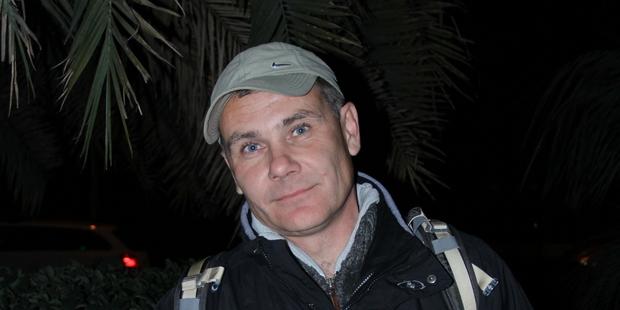
anton mukhachov-facebookAnton Mukhachov. Photo courtesy of his Facebook page

Anton Mukhachov
Facebook
November 26, 2018

Life after Prison: Second-Class Citizens

I’ve already written about how a bank refused to exchange $100 for me.

Today, I was at notary’s office making out an ordinary power of attorney. The tired woman was typing my passport date into the computer when, suddenly, her eyes widened.

“It says here you’re on the list of terrorists!”

I corrected her.

“You probably mean the list of extremists. Rosfinmonitoring’s list and all that. What does it have to do with a power of attorney?” I asked.

“I can’t do anything for you,” she said, adding, “I’m obliged to report you!”

She did not issue me the power of attorney, ultimately. She said the program would not let her go any farther, and that all notaries used the same database.

I asked her what I should do. How can an adult get by in life without notarizing contracts and major transactions?

She shrugged.

Here are my preliminary conclusions. I did time for a crime to which I did not confess. I was released from prison. Now, seemingly, I am a free man, a citizen and taxpayer. But I cannot open an ordinary account in a bank. I cannot ask a notary to notarize a transaction, agreement or deed. Theoretically, I will have problems finding a job due to the fact that it will be impossible for an employer to open a payroll account for me.

What should we call this state of affairs? An incentive to recividism? Or an incentive to emigrate?

P.S. When I asked both the bank and the notary to give me written explanations for their rejections, they claimed they were having technical difficulties with their systems.

P.P.S. When I was in prison, I had no problems drawing up powers of attorney, and I had my own bank account.

Thanks to Vladimir Akimenkov for the heads-up. Translated by the Russian Reader

I have published several articles in the past on Rosfinmonitoring’s list of “extremists” and its crippling effects on people’s lives:

Oleg Sentsov: “Catastrophically Bad”

DSCN0173Dmitry Dinze is Oleg Sentsov’s lawyer. Oleg Sentsov is the Ukrainian filmmaker and political prisoner who has been on hunger strike for eight-six days in the Polar Bear Maximum Security Penal Colony in Labytnangi, Yamalo-Nenetsk Autonomous District, Russian Federation. His only demand has been that the Kremlin release the sixty-four other Ukrainian political prisoners currently held in Russian prisons.

Late last night, Mr. Dinze, one of Russia’s best human rights and criminal defense lawyers, wrote“I’m no fan of rumors, of course. I find facts more interesting, even better, confirmed facts, but in this case the circumstances are different. According to diplomats who have been in contact with Russian officials on resolving the issue of Oleg Sentsov, they have no intention of releasing Sentsov. They are thinking his death should be a lesson to other inmates. If this is true, I don’t know what to say.”

Natalya Kaplan
Facebook
August 8, 2018

Things are not just bad, they are catastrophically bad. Oleg sent me a letter via his lawyer. He almost cannot stand up anymore. He wrote the end was near, and he was not talking about being released from prison. He asked whether anyone was still interested in his hunger strike: he is not given the letters sent to him, none of them. He said was in a news vacuum and had no idea what was happening.

The European Court of Human Rights insisted he be transferred to a civilian hospital, one close to his place of residence. Oleg refused. He said he would simply not survive the trip, and he had been bullied even more in the civilian hospital in Labytnangi, where he was hospitalized in the intensive care ward, than he had been in the prison hospital.

That’s Russia for you. I have no clue what else we can do and how we can save him. Things are really bad.

Natalya Kaplan is Oleg Sentsov’s cousin. Thanks to Yana Teplitskaya for the heads-up. Translation and photo by the Russian Reader

Do the Right Thing

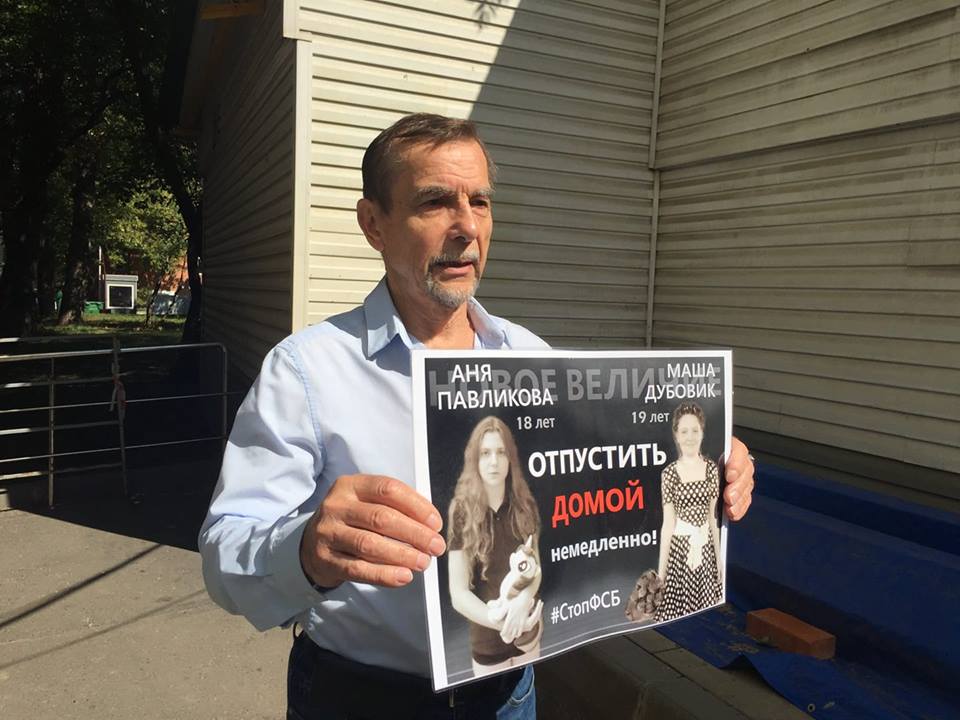
38072215_2021826408147215_5307798211635707904_n.jpgFamous Russian human rights activist Lev Ponomaryov picketing outside the Tverskoi District Court in Moscow on July 31, 2018. His placard reads, “Send Anya Pavlikova, 18, and Masha Dubovik, home immediately! #StopFSB.” Anna Pavlikova and Maria Dubovik are currently under in police custody in a remand prison, charged with involvement in a “terrorist community,” New Greatness, that by all accounts was concocted by undercover agents of the Russian Federal Security Service (FSB) as a means of entrapping the people who attended its political discussions, held, allegedly, in rooms rented by the FSB for the purpose and fastfood restaurants. The fact that two teenage girls are in jail, while four of the ten people charged in the case are under house arrest has outraged many people in Russia, as well as the torture-like treatment meted out to Ms. Pavlikova by the authorities. Photo courtesy of the Support Group for Suspects in the New Greatness Case, a public group on Facebook

My posts on the New Greatness case and related affairs:

_____________________________

Do you remember the controversy that erupted when Spike Lee’s Do the Right Thing was released in 1989? I do, as well as going to a rather heated showing of the film at a cinema in downtown Portland, Ore., at which moviegoers were evenly divided between frightened white liberals and screaming black kids. That was a hoot.

The funny thing is that, when I watched the movie again a year or two ago, I realized that, for all its tremendous performances and stunning cinematography, editing, and directing, the question that plagued Americans in 1989—namely, what was the right thing to do?—was answered quite plainly and simply by one of the main characters at the end of the film. He understood what the right thing to do was and he did it.

When it comes to the Putinist secret police whacking on people who did nothing wrong—people like Oleg Sentsov, Anna Pavlikova, and the eleven young men implicated in the Penza-Petersburg “terrorism” case—there’s no controversy. If we don’t publicize their cases, discuss them aloud, make a fuss, make a lot of noise, show our solidarity, and encourage other people to do the same, they will die in the effort to get other political prisoners released (i.e., Oleg Sentsov) or be tried in kangaroo courts and sent to prisons for many years for thought crimes or no crimes at all (i.e., Anna Pavlikova, her fellow New Greatness suspects, and the eleven Network lads).

Is that you want? It’s not what I want. But I don’t hear many of you making much noise about it. What are you scared of? Looking stupid? So what, “being cool” is more important than doing the right thing? Or do you thinking doing the right thing should make you look cool? In reality, most of the time, doing the right thing either goes wholly unnoticed or makes you look stupid, as in Spike Lee’s film.

There are people, however, who almost always know what the right thing to do is and have learned the simple lesson that solidarity is a two-way street. One of those people is the famous Russian human rights defender Lev Ponomaryov. {TRR}


Anna Pavlikova: Enemy of the Putinist State?

anya pavlikovaAnna Pavlikova

Sergei Ozhich
Facebook
July 21, 2018

Do you know what New Greatness is?

New Greatness is a personal test of your humaneness.

I know you’re really busy with family, work, friends, commitments, and so on.

But are you willing to go on living as you have, knowing the life of the young woman in the photo is being destroyed right now?

You still don’t know who the young women is or why she is being bullied?

This is Anna Pavlikova. She is a suspect in the so-called New Greatness Case. New Greatness is an organization concocted by scum from the secret services. They wrote the group’s charter, recruited teenagers into the group, and made it look as if they had broken the laws on “extremism.”

You ask what Anna did personally? Maybe she mixed Molotov cocktails in a cellar or called publicly for an attack on the Kremlin while standing on Red Square? Maybe she tried to enter the State Duma armed with a gun, set fire to a door on Lubyanka or broke a window in a United Russia Party office?

No, she didn’t do any of those things. She met several times with friends at McDonald’s to talk about politics. She also chatted with them on Telegram.

It was this that triggered Anna’s arrest on March 15, 2018, before she had turned eighteen.

“We’ll put you away for twenty years. When you get out, you’ll be an ugly, forty-year-old hag, and your parents will forget about you in two days!” hefty masked men toting machine guns yelled at the seventeen-year-old girl as they turned her house upside down.

Anna celebrated her transition to adulthood in jail. Before she was taken to a remand prison, she was held in a ice-cold paddy wagon for many hours. She was wearing light indoor clothing. It was minus eleven degrees Centigrade outside. Subsequently, she suffered inflammation of the uterine appendages (adnexitis) and was peeing blood. Her inflammation is now chronic.

“Prison sterilizes women,” the prison gynecologist told her.

Anna will never have children. Did you get that? She can never be a mother. The scumbags and degenerates from the security services, the state’s inhuman inquisition system deprived this perpetually innocent, exceedingly young woman of the opportunity and happiness of being a mother.

You think only the regime is to blame? Or Putin alone is to blame? I think differently.

We are all to blame when innocent people are tortured and maimed in our country. Our silence is to blame. Our indifference is to blame. Our lack of engagement is to blame.

“It’s not happening to me. It’s not happening to my children. Nothing like that would happen to me. I have it good. But what can I do? Maybe she is guilty?”

That is our stance, and it is killing this teenager.

Where does your humanity begin and end? What is your limit? When will you say, “That’s it. I cannot be silent anymore”?

When the person in the photograph is your child or loved one? Are you willing to sit waiting for that moment, as during the Great Terror, saying to yourself over and over again, “What if I get lucky? What if they don’t come for me?”

Are your sure that when the inhuman, mendacious criminal system that has been erected in our country sets to ripping you and your loved ones to shreds, someone will help you? That there will be people who will, at least, write posts like this one about you?

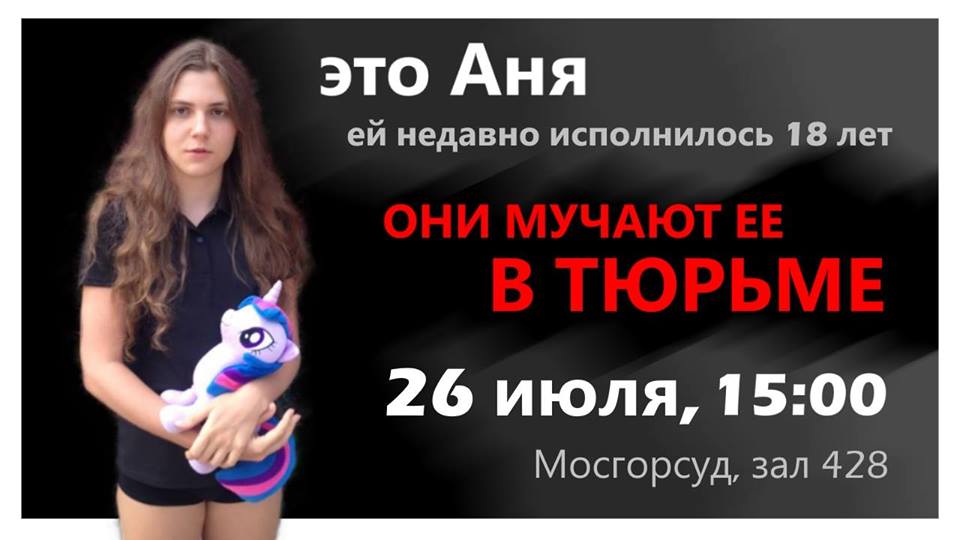
There will be a hearing to appeal the extension of Anna Pavlikova’s remand in custody at 3:00 p.m. on Thursday, July 26, in Room 428 at Moscow City Court.

All you need to do is show up at Moscow City Court (Bogorodsky Val Street, 8) at three o’clock on July 26.

It’s simple, really simple. Please take the time and do it.

Facebook event: https://www.facebook.com/events/831346247055084/

37521576_1629478263844301_7256625770926178304_n“This is Anna. She recently turned eighteen. They are torturing her in prison. 3:00 p.m., July 26, Room 428, Moscow City Court”
#StopFSB
#FreePavlikova
#NewGreatness

Thanks to Elena Zaharova for the heads-up. Translated by the Russian Reader

Socrates Has Not Surrendered: The Plight of Political Prisoner Alexei Sutuga

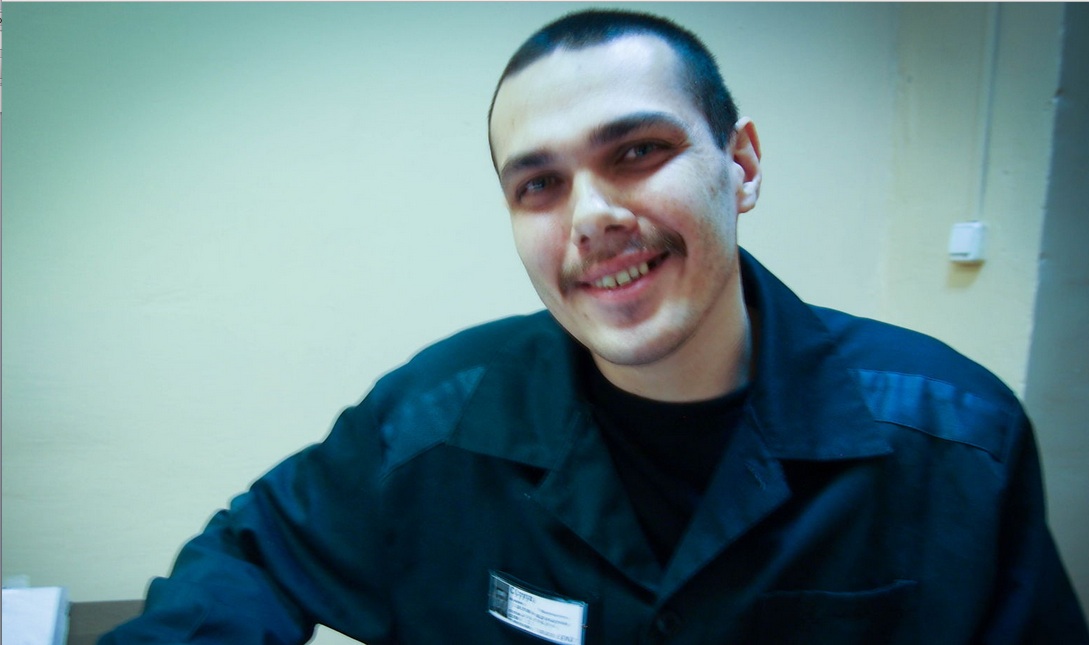
Alexei Sutuga, December 10, 2015. Photo courtesy of Svyatoslav Khromenkov

PERSCECUTION
No medical treatment, no letters, no visits. A political prisoner’s life in a penal colony. Zoya Svetova and Alexei Glukhov investigated the conditions of antifascist Alexei Sutuga’s imprisonment
December 14, 2015
Open Russia

29-year-old Muscovite Alexei Sutuga is an antifascist activist known among antifa by the nickname Socrates. On September 30, 2014, the Zamoskorechye District Court in Moscow sentenced Sutuga to three years and one month in prison for disorderly conduct for his alleged involvement in a fight at a Sbarro restaurant in the city. Sutuga’s defenders believe the criminal case was revenge on the part of Center “E” officers who had already tried to put Sutuga behind bars for his alleged involvement in a fight at the Moscow nightclub Vozdukh, for which he had been amnestied.

The Memorial Human Rights Centre has declared Alexei Sutuga a political prisoner.

In March 2015, the antifascist was sent to Correctional Colony No. 14, a medium-security facility, to serve his sentence. He was soon put in solitary confinement, and two months later he was sentenced to a new type of punishment, a year’s imprisonment in a single-space cell. Now Sutuga is serving his sentence at Correctional Colony No. 2 in Angarsk, Irkutsk Region.

Olga Sutuga, Alexei’s mom, explained to Zoya Svetova how and why her son is being pressured in the colony.

Solitary confinement and single-space cells are forms of penitentiary repression. Is this improvisation on the part of local wardens or are there orders from above? Is there a plan to break your son?

It began in Moscow, when the FSB wanted Alexei to cooperate with them. They came to him while he was still in the remand prison and suggested he collaborate. They said he would serve his sentence in far from the best conditions, in a colony far from Moscow Region. That is what happened: he was sent to Siberia. And there, in the remand prison, he was again visited by two Center “E” officers who suggested he collaborate and promised that in exchange he would do his time in the Irkutsk Remand Prison and get parole. But he did not agree to these proposals.

What exactly do they want from him? To snitch on anarchists?

Apparently, yes, because he knows a lot of people, is a fairly authoritative person in that world, and has his own opinion. Not only anarchists but also other activists listened to him. He is a very inconvenient person for the secret services. He always spoke the truth, and they decided it was vital to break him and force him to cooperate with them.

How do you keep in touch with your son? He is not allowed visits, letters, and telephone calls. How do you find out what is happening with him in the penal colony?

Only through his lawyer. When his lawyer battles his ways through to see him, he finds out that Alexei has not been getting letters from his wife, from me or from his friends. On November 30 he was released from solitary confinement, where he had spent ten days. Now he is in a single-space cell in Correctional Colony No. 2 in Angarsk, Irkutsk Region. He is supposed to spend a year there—until May 2016.

Is he considered a repeat offender of prison rules?

Here are some of the violations he has been charged with: not making his bed, having his nametag torn from his clothing, and sleeping during the daytime while sitting on a stool. For all these things he was deemed a repeat offender. When in late May he was transferred for a year to the single-space cell, the warden of the single-space cell facility told him he would not be getting out of there, that he would be spending the rest of his sentence in the “jug,” that he would not be returning to the medium-security facility, although by the verdict of the court he should be serving his sentence in a medium-security penal colony.

Is Alexei in solitary?

No, there are four people in there.

How can we help him?

He has asked that people do not stop paying attention to the whole situation, because if they do not write and talk about it, the prison wardens will see they can do anything they like and will use even more repressive methods against him.

How long does he have till the end of his sentence?

One year and five months.

Do members of the Public Monitoring Commission (PNC) visit him?

Employees of the PNC come to see him every two or three months. They constantly file complaints about violations of his rights with the Federal Penitentiary Service. But it does not help: no one pays any mind to the complaints.

Those violations of the rules in the remand prison for which he has been punished, were they real or contrived?

It is impossible to comply with all the rules there one hundred percent. Maybe the nametag really was torn off his clothing. But Alexei definitely did not have a shiv, because when he was transferred from the remand prison to the penal colony, six people searched him, and the trip from the prison to the colony takes half an hour. [Angarsk is forty kilometers away from Irkutsk — Open Russia.] So it is completely unclear how he could have got hold of a shiv if he was in a paddy wagon with guards the entire half hour.

When is your next visit with him?

I was authorized to visit him in October but I was unable to go. I will go in late December. I wanted to get to see him during the January holidays. But I am not sure it will work out. When the lawyer went to see the head warden of the colony and find out whether I might be able to get this visit, the warden replied there would be no visits due to the fact that Sutuga was socially dangerous.

Is that even legal?

No, of course not. By law I have the right to visit him. I wrote to the head warden of the colony asking him to give me a visit. If he does not respond to me within fifteen days, then we will file another complaint. Unfortunately, though, complaints have no impact. We write to the Federal Penitentiary Service, the prosecutor’s office, and the court.

How does Alexei spend his time? Is it true he has no books and is unable to get periodicals?

The prison does not accept books sent to him, and it also does not give him the periodicals we subscribed to for him. I wrote to the warden and asked what happened to the periodicals that were sent by mail in my son’s name to the penal colony. After all, we had paid money for the subscriptions. It smacks of petty theft.

What is his mood?

When attorney Svetlana Sidorkina went to see him in October, she said that Alexei was very depressed, sick, and his knees were swollen and painful. He was diagnosed with acute arthritis and tossed out of the infirmary back into the cell. He receives no medical treatment or medical examinations. Sidorkina brought him letters from me and from his friends. That supported him. The local lawyer, who visited him the other day, says that Alexei’s mood has improved. Generally, he is a very active person, and if he has no opportunity to do anything he gets depressed. But now, apparently, he has realized we are fighting for him, his friends wrote that he has not been forgotten, and so his mood has been normal and he is holding up. He will turn thirty on January 24. It’s a big birthday.

How Alexei Sutuga Was Made a Repeat Offender

After his trial in Moscow, Alexei was sent to the Irkutsk Remand Prison. When the prison staff confiscated his personal belongings and letters, Sutuga protested by declaring a hunger strike and demanding to be transferred to a penal colony. Three days later, Sutuga was transferred to Correctional Colony No. 14 in the city of Angarsk, Irkutsk Region.

However, as soon as Alexei arrived at the colony, a shiv was found on him. Sidorkina believes prison colony staff planted the shiv on him.

Before his transfer from the remand prison, Sutuga was undressed completely, all his personal belongings were examined, and the procedure was filmed on a video recorder. No forbidden items were found. The paddy wagon in which he was transported in the company of three guards was also inspected.

At the penal colony, Sutuga was immediately taken to the search room, where in the presence of ten colony staff he was again forced to strip and put all his things on a table. As Sutuga was undressing and simultaneously replying to the questions of penal colony staff, one of them suddenly discovered a sharpened metal object in Sutuga’s cap. Sutuga claimed he had nothing to do with the shiv.

Sutuga was placed in solitary confinement for seven days.

Over the next month, Sutuga received three more disciplinary reprimands: for not wearing a badge, for not reporting to the on-duty guard, and for not cleaning his room.

Due to these clearly fabricated violations, Sutuga was declared a repeat offender of prison rules and was first transferred to a high-security cell, then to a single-space cell.

What Is a Single-Space Cell?

Sutuga is now imprisoned in a single-space cell [edinoye pomeshchenie kamernogo tipa or EPKT] at Correctional Colony No. 2 in Irkutsk Region.

Single-space cells were instituted in penal colonies after July 1997. Previous to this, each penal colony had contained an “internal prison”—a cell-like space [pomeshchenie kamernogo tipa or PKT]. Now single-space cells have been devised that are no longer managed by the particular correctional facility, but by the regional office of the Federal Penitentiary Service. Prisoners placed in single-space cells are often in the process of transfer to another city and sometimes another region. But Alexei Sutuga has been left in the very same city, in Angarsk.

Members of the Irkutsk Public Monitoring Commission reported what they saw at Correctional Colony No. 2 in June 2015.

“There were heaps of construction debris in the yard in front of the entrance to the space. The cells were dimly lit, there was no ventilation, and the radio was not working. The tables were ninety by fifty centimeters, and there were benches ninety by twenty centimeter benches on each side. They were in the middle of the room, so it was problematic for four people to fit in the room at the same time. There was also very little space to move around. The drinking water was poured from the tap into tanks in the rooms.”

Top brass at the Irkutsk Regional Office of the Federal Penitentiary Service reacted to the remarks, but as of October 2015 the construction debris had not been removed. In conclusion, the PMC wrote:

“Slag mixed with ash that is loosened up every day is scattered near the entrance to the building and around the entire perimeter of the room. It is not only that the slag exudes harmful substances (sulfates, phenol, etc.) but also that the dust from the slag and ash gets into the air and from there, through the windows, into the cells and exercise yards, harming the health both of convicts and staff.”

Alexei Sutuga Does Not Receive Medical Treatment in Prison

The antifascist has several ailments that require treatment.

“In October, the public monitors established that Alexei was not being given packages with medicaments: they were being sent back. Staff at the facility explained that they do not let packages through if the permitted number of them is exceeded. And yet they do not look inside to determine whether they contain medicaments or not, but just send them back. They say the sender has to personally come to the facility and submit the package through the infirmary,” recounts Irkutsk human rights defender Svyatoslav Khromenkov.

In the presence of members of the PMC, Sutuga was prescribed an x-ray. At the time of the visit Sutuga was in the facility’s medical solitary confinement cell with a foot injury. According to him, he had an old sports injury, which had flared up after he had struck his foot against a nightstand. Sutuga also complained about lung problems: he said he was having trouble breathing. He believed he had pneumonia.

Lawyer Denis Ivanets says the trauma specialist in the infirmary at Correctional Colony No. 6 diagnosed Sutuga with first- and second-degree severe arthritis in both knee joints. This is a chronic illness. Civilian trauma specialists told the lawyer that, given such a diagnosis, medication was insufficient. Sutuga would also need physiotherapy, including massage, as well as special orthopedic aids.

On December 10, 2015, the public monitors once again visited the antifascist. He said he had been given the package of medicaments that had been brought to the prison personally by his comrades. Sutuga was very happy that he had finally got the pills. According to Sutuga, a doctor, who had told him there was no need for an immediate operation, had examined him and it could wait until his release.

Lawyers and Public Monitors Are Often Not Allowed to See Alexei Sutuga

During the course of the calendar week (five working days) beginning November 25, 2015, lawyer Denis Ivanets and human rights defenders constantly attempted to visit the political prisoner.

Every time the visitors appeared at the headquarters of Correctional Colony No. 2, the Federal Penitentiary Service officers found a pretext to turn them away. Either the warden of the facility, who had to sign the lawyer’s request to visit the convict, was not there (although, as later transpired, he had been in his office having an intercom meeting with the head office), or the warden of the single-room cell facility was gone all day, and he was allegedly the only staff member who could escort the lawyer to the premises behind the barbed wire (although the warden of Correctional Colony No. 2 had signed off on the paperwork for visiting the convict).

Now members of the Irkutsk PMC are appealing in court Correctional Colony No. 2’s ban on holding a personal conversation with Alexei Sutuga under conditions of acoustic isolation from penal colony staff. The law “On Public Monitoring” directly stipulates this right.

Letters and Newspapers Are Not Delivered to Sutuga

According to lawyer Denis Ivanets, “Alexei’s mom says her son does not reply to letters from his spouse, parents, and friends. When I talked to him about it, it turned out that more than two thirds of the letters had simply not got to him! These letters had been sent to Alexei over a month ago.”

According to Article 91.2 of the Russian Federal Correctional Code, letters, postcards, and telegrams sent and received by convicts are censored by the wardens of the correctional facility, after which they must be given to the convicts.

In addition, Sutuga’s relatives took out subscriptions to several newspapers and magazines (Kommersant, Novaya Gazeta, Rossiiskaya Gazeta, GEO, Vokrug sveta), but Sutuga had not been receiving them. Staff in the warden’s office at Correctional Colony No. 2 could not give the lawyer an intelligible answer as to why this had been happening. According to the Article 95.1 of the Russian Federal Correctional Code, convicts are permitted to receive stationery supplies in parcels and packages, purchase literature through retail distributors, and subscribe to newspapers and magazines without limitation at their own expense.

Socrates Has Not Surrendered

Alexei Sutuga was placed in solitary confinement from November 20 to November 30 for his latest “rules violation.” As his lawyers report, the number of reprimands grows with each passing month, and this will make it impossible for him to be paroled.

On December 10, 2015, the members of the PMC were able to chat with Sutuga, who sent greetings to everyone, especially his loved ones, his mom, wife, and child. Sutuga asked for new photographs of them, as well as books on psychology, sociology, and political science.

Translated by the Russian Reader

Yevgeny Vitishko: Freedom or Death

Freedom or Death
Yevgeny Titov
December 12, 2015
Novaya Gazeta

The condition of environmentalist Yevgeny Vitishko, who is on a hunger strike, is critical.

Yevgeny Vitiskho has been on hunger strike for seventeen days in Penal Settlement No. 2 in the Tambov Region’s Kirsanov District. His kidneys hurt and he is suffering from dizziness and low blood pressure. And yet the wardens have not exempted him from hard physical labor. Several hours before he was to be paroled, the prosecutor’s office changed its position, and so the environmentalist launched his protest.

Yevgeny Vitishko. Photo courtesy of Amnesty International

Vitishko was supposed to be released on November 21. The Kirsanov District Court had decided to mitigate his punishment by changing imprisonment to limited freedom. Vitishko was supposed to go home and register with the police. The breakthrough in the case came after Mikhail Fedotov, chair of the Presidential Council on Human Rights and Russia’s human rights ombudsman Ella Pamfilova had communicated personally to President Putin about Vitishko’s imprisonment.

At the court hearing, a spokesman for the penal settlement where Vitishko has been serving his sentence, and the district prosecutor’s office petitioned the court for the environmentalist’s release. But right before the scheduled release, on the evening of November 20, the very same prosecutor’s office sent the court an appeal asking it to overturn its decision. The alleged reason for the appeal was that prosecutors were unclear as to where Vitishko had to register, in his hometown of Tuapse or in Slavyansk-on-Kuban, where he has not lived for almost twenty years. The court will examine this appeal on December 22.

Kuban environmentalists Yevgeny Vitiskho and Suren Gazaryan were sentenced to three years of probation under Article 167 of the Russian Federal Criminal Code (“destruction of other people’s property”). Tuapse District Court Judge Galina Avdzhi ruled the men were guilty of ruining the fence around an elite residence in the village of Bzhid on the Black Sea coast. The fence illegally enclosed a considerable section of public forest, but when the environmentalists filed a complaint with law enforcement authorities, the authorities pointedly ignored the violations.

The residence has been linked to Alexander Tkachyov, former governor of Krasnodar Territory and current federal minister of agriculture. Before the Sochi Olympics, Suren Gazaryan was forced to flee to Estonia, where he received political asylum, while Yevgeny Vitishko’s probation sentence was changed to imprisonment.