Popular Creeps

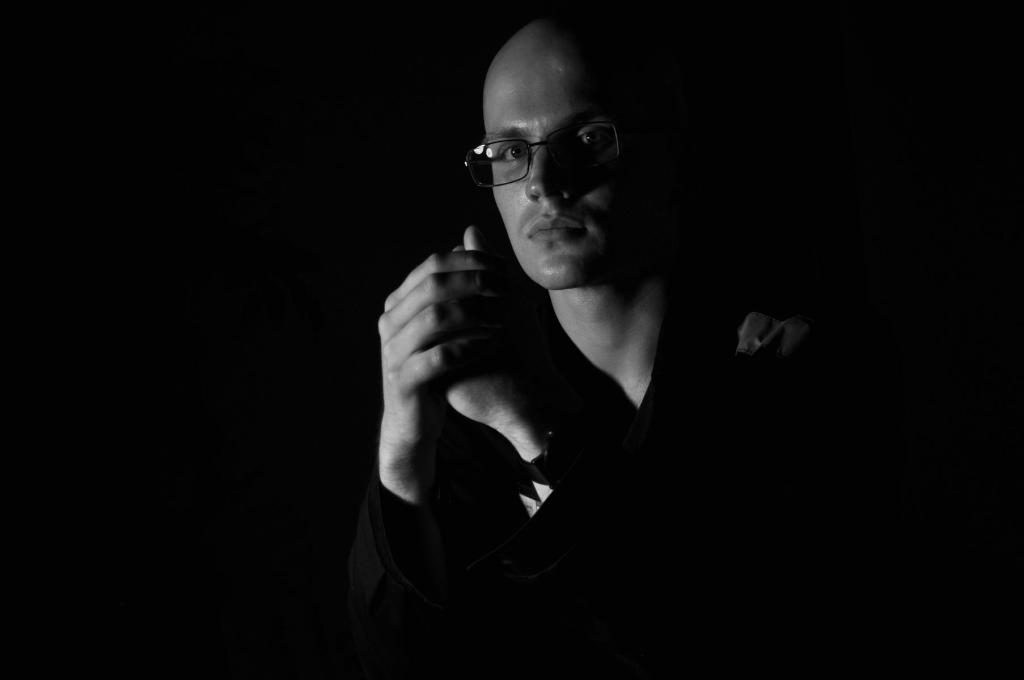
Chris Mars, “Popular Creeps” (1992)

Popular creeps are talking bad about us when our back’s turned….


Russia in Contemporary World History: A Hinge Nation in a Multipolar World?

Putin’s Russia, a successor state to the Soviet Union, is challenging American and Western foreign policy by offering a “Multipolar World Order,” an alternative to Western capitalism, liberal democracy, globalization, and the rules-based liberal order. This ideological vision includes an anti-democratic and populist development model, authoritarian male leadership, reinforcement of the civilizational and religious foundation of the nation-state, and conservative cultural values that privilege an abstract community over individual rights. 
 
Foreign policy experts are aware of Russia’s successful diplomatic outreach in Asia, Africa, the Middle East, Eastern Europe, and Latin America, many of which are built upon Soviet-era (or even pre-Soviet) relationships and a shared critique of Western colonialism and globalization. This conference, “Contemporary Russia in World History” brings scholars together to offer an in-depth exploration of such historical relationships, to periodize, contextualize, and connect contemporary Russia’s place in the rapidly evolving world order, and to create a coherent ideological response to Russia’s global outreach.
 
Most research in American universities perpetuates a Western and Eurocentric understanding of Russian history. The dominant “Russia and the West” paradigm significantly constrains our academic analyses and foreign policy choices while simplifying the complexity of Russia and the so-called “West” as historical actors. This forum builds on the intellectual bedrock of the “Russia and the West,” paradigm that has sustained the field for over a century but seeks to analyze how various states have found common cause with Russia/the Soviet Union over time while advancing national, economic, energy, and technological, and regional interests. Bringing these cases together, we can cast a new light on Russia’s network of multilateral alliances that span the globe, including significant pockets of support within the West itself. Researching Russia’s global entanglements and considering Russia from multiple outside perspectives will allow us not only to move beyond “Russia and the West,” but also to better understand the geopolitical patterns, rivalries, and coalitions of the twenty-first century.   
 
Russia’s changing position on the global stage, from the vanguard of the proletarian revolution to a proponent of the theory of the “civilizational state,” resonates with cultural imperatives, political developments, and economic policies in various parts of the globe. Conference participants will be asked to consider changes and continuities in Russia’s network of alliances over time, and evaluate how they impact the contemporary world order.

Conference Schedule

DAY ONE 

Friday: November 1 

Building/Room: William C. Powers Hall (WCP) 2.302 


9:30 – 10:00 AM – Coffee and Pastries  
 
Panel 1: OPENING DISCUSSION   10:00 – 11:45 AM  
Conference Co-organizers: 
Mary Neuburger (UT Austin) Moderator and Discussant 
Karen Petrone (University of Kentucky, Lexington) Discussant 
Choi Chatterjee (California State University, Los Angeles) Discussant 
 
Russian Perspectives on the Ukraine War and its Origins 
Anatole [sic] Lieven (Quincy Institute)  
 
Russia’s Long Relations with Western Critics of Liberalism 
Jeremi Suri (UT Austin)  
 
The Russian Economy Under Sanctions 
James Galbraith (UT Austin)  
 
Break for Lunch 11:45 AM – 1:00 PM  
 
Panel 2: AFRICA and LATIN AMERICA   1:00 – 2:30 PM  
(Karen Petrone, Moderator)  
 
Anti-Westernism: The Persistent Factor in Russian Relations with Africa 
Thomas Loyd (University of Augusta) 
 
Ghana and Soviet (Russian) Relations from 1957 to the Present 
Nana Osei-Opare (Rice University) 
 
Homeward Bound: Russia’s Return to Latin American and Caribbean Contemporary History 
Sandra Pujals (University of Puerto Rico) 
 
Break 2:30 – 3:00 PM 
 
Panel 3: THE MIDDLE EAST   3:00 – 4:30 PM  
(Choi Chatterjee, Moderator)  
 
The Legacy of Soviet Rhetoric in Middle Eastern Public Discourse 
Margaret Peacock (University of Alabama) 
 
Russia’s Global Outreach to the Dreamworlds of Socialist Modernity 
Alexey Golubev (University of Houston) 
 

DAY TWO

Saturday: November 2 

Room/Building: Robert L/ Patton Hall (RLP) 1.302 E (Glickman Conference Center) 


Panel 4: ASIA    9:00 – 10:30 AM 
(Degi Uvsh, UT Austin, Moderator) 
 
Russia and China: Ideological Allies in the Quest for an Alternative Global Order? Agreement and Divergence. 
Jeanne Wilson (Wheaton College) 
 
Russia’s Relations with Central Asia: Historical and Contemporary Perspectives 
Sarah Cameron (University of Maryland, College Park) 
 
Russia-India: Geopolitical Habit and the Politics of Goodwill 
Sudha Rajagopalan (University of Amsterdam, Netherlands) 
 
Break 10:30 – 11:00 AM 
 
Panel 5: EUROPE   11:00 AM – 12:30 PM  
(Steven Seegel, UT Austin, Moderator) 
 
From “World Language” to the “Russian World”: Russian in Soviet and Post-Soviet International Relations 
Rachel Applebaum (Tufts University) 
 
“Active Measures”: Subterfuge as Foreign Policy 
Faith Hillis (University of Chicago) 
 
Russia’s Influence in Central and Southeast Europe: Before and After the Full-scale Invasion of Ukraine 
Dimitar Bechev (University of Oxford) 
 
Break for Lunch: 12:30 to 2:00 PM 
 
Panel 6: CONCLUDING THOUGHTS     2:00 – 3:30 PM 
Karen Petrone, Mary Neuburger, and Choi Chatterjee 

Source: College of Liberal Arts, University of Texas


In July 2024, leading Western media published texts with disappointing forecasts for Ukraine several times. Initially, more than 60 American analysts demanded that NATO not invite Ukraine to the Alliance, so as not to provoke an even bigger war and conflict between the USA and Russia. On July 10, eight analysts called on the West to start negotiations on ending the war as soon as possible. Both letters were signed by analysts of the American Quincy Institute for Responsible Statecraft. This Institute is an influential think tank that consistently urges not to provoke Russia, to avoid escalation, and to force Ukraine to a ceasefire. In addition, the Institute disseminates theses beneficial to Russian propaganda, which Russians are happy to quote. Babel correspondent Oleksandr Myasishchev researched dozens of works of the Quincy Institute and the biographies of its members and tells where this American think tank came from and why its analytics should be treated with caution.

The Quincy Institute was founded in 2019. Its official goal is to “advance ideas that make US foreign policy less militaristic.” The institute advocates military restraint and peace. It is symbolic that the Institute was named in honor of US President John Quincy Adams, who was against the active participation of the US in European politics and participation in wars on other continents.

“We are building a world where peace is the norm and war is the exception,” the researchers write.

The Institute receives money for its work from donors and philanthropists, mostly charitable funds. The Institute received the first million from the George Soros Foundation and the billionaire Charles Koch Foundation. According to the publication by Texty media, at least three more analytical centers are associated with Koch brothers, which have an isolationist position regarding the war.

“Kochs were the traditional donors of the Republicans, mainly the part of the party that supports traditional capitalism and a cautious, non-military foreign policy. And Soros was donated to the Democrats. But Soros and Koch were united by a common desire to limit the participation of the United States in “endless wars” and to bet “on energetic diplomacy,” Nataliya Kononenko, political scientist and leading researcher of the Department of Political Institutes and Processes of the National Academy of Sciences of Ukraine, explains.

Over the past six months, Quincy Institute has received at least $500,000 each from venture investor Michael Zack, the Peaceshares Fund organization, Charles Kochʼs libertarian Stand Together Trust, and from the largest US donor, Fidelity Charitable. The institute also received funds from the Ford Foundation and the Carnegie Corporation.

The instituteʼs chief analyst on Ukrainian issues is a Briton and professor at the Kingʼs College in London, Anatol Lieven. Lieven has been writing about Russia and its international relations for many years. As a journalist, he covered the wars in Afghanistan and Chechnya. Subsequently, he wrote books about the Chechen wars, the independence of the Baltic states, and in 1999 — the book “Ukraine and Russia: Fraternal Rivalry”. Until 2022, he regularly wrote for the Russian Valdai club, where Putin regularly speaks, and was an expert of this club. He also regularly contributes to the Russia Matters project and has lectured at Russian universities.

Anatol Lieven

The founder of the Institute is historian and colonel of the US Army Andrew Bacevich, who headed it until March 2024. Bacevich is a veteran of the Vietnam War, and his son was killed during the invasion of Iraq. Andrew Bacevich is an ardent opponent of American militarism.

Since March 2024, the Institute has been headed by Steven Heinz. Prior to that, he managed the Rockefeller Brothers Foundation, which holds the assets of the Rockefeller companies and engages in philanthropy, for more than 20 years. Since 2002, the foundation has worked on rapprochement and negotiations between the United States and Iran, and also advocated for the independence of Kosovo. Heinz personally played a big role in this.

“Heinz is focused on cooperation with the centrists of both parties. He is a supporter of realpolitik in foreign policy,” explains Natalia Kononenko from the National Academy of Sciences. It was after Heinzʼs arrival that the Quincy Institute became more influential and began working with Democrats.

The institute has its own online publication Responsible Statecraft, where it publishes its research. Itʼs often quoted by well-known Western media. For example, letters signed by Institute employees were published by The Hill, FT, Politico and The Nation.

Institute representatives regularly distribute typical cliches of Russian propaganda. Lieven doesnʼt call the cause of the conflict in Donbas the Russian invasion, but the “nationalist revolution” and “the violent overthrow of President Yanukovych.” He also called the war in Donbas “a civil one” and said that people there have been seeking autonomy for decades. At the same time, Levin admitted that since 2014, the Russian military has been fighting in Donbas, and the separatists are completely dependent on Russia.

The Institute also repeated the Russian thesis that Ukraine should become a federation — because the differences in language and culture in different parts of Ukraine seem to be too strong.

The first study on Ukraine was published by the Institute in June 2021, against the background of news about Russiaʼs preparations for a new invasion. Then the Institute called on the US and its partners to put pressure on Ukraine and Russia to sign a ceasefire based on the Minsk agreements. The institute proposed to return the occupied parts of Donetsk and Luhansk regions under the control of Ukraine, but under the conditions of autonomy. And postpone the issue of Crimea to “future generations.”

The Institute urged not to expand NATO, in particular not to include Ukraine in any case. It stated that there are almost no important countries left in Europe outside of the Alliance, and NATOʼs expansion will do little. In addition, the accession of Ukraine to NATO would harm the national security of the United States and create a risk of war with Russia for the States. All because of Putinʼs “legitimate concerns” that NATO weapons will be near Russiaʼs border.

Instead, the US should seek complete neutrality of Ukraine. The Institute did not see any other option — they said, “a new war between Ukraine and Russia can only end with the military defeat of the Ukrainians.” Therefore, before the invasion, the Institute also opposed the supply of weapons to Ukraine.

“This is an extremely bad idea. Helping partisans to maim and kill Russian soldiers may well cause an irreparable rift between Russia and the West,” they explained.

On February 24, 2022, the Institute condemned the Russian invasion and supported Ukraineʼs right to self-defense. At the same time, there were calls to impose the strictest sanctions on Russia, to punish and isolate it.

“Regardless of the legitimacy of at least some of Russiaʼs images regarding the policies of the West and Ukraine, nothing can justify this flagrant violation of international law. Although Russia had legitimate reasons to protest against Ukrainiansʼ discrimination of the linguistic and cultural rights of Russian-speakers in Ukraine, nothing justifies President Putinʼs lies about the Ukrainian genocide and Nazism,” wrote Anatol Lieven.

At that time, Lieven predicted a partisan war and only two options for the development of events: either Russia would occupy Kyiv and create a puppet government, or the countries would agree on the expanded Minsk agreements.

When, at the end of March 2022, Ukraine resisted and liberated the north, Lieven admitted that Ukraine was capable of defending itself. However, he doubted that the country was capable of a major successful counteroffensive. Therefore, in order to prevent a protracted losing war, Ukraine should make “painful compromises”, he stated.

At the same time, Russia cannot suffer a major defeat in the war, wrote another institute analyst, William Hartung. Like, it would undermine the Russian regime and give the world a nuclear failed state, so it is necessary to return to diplomacy, “no matter how difficult it is.”

When Ukraine conducted the Kharkiv counteroffensive in September 2022, the Institute was skeptical. The offensive there was called the “liberation of the countryside”, the institute claimed that the successes were exaggerated. They also believed that in the future it would be difficult for Ukraine to liberate cities, in particular Kherson. One of the reasons is that the people there are supposedly culturally and ethnically closer to Russia. Two months after this statement, Kherson was liberated by the Armed Forces of Ukraine — the soldiers were greeted there with flowers and flags.

“Further successes of Ukraine will threaten Russian control over Crimea and create the risk of nuclear war. Territories whose population is actually loyal to Russia were returned to Ukraine,” the analysts explained.

Since the beginning of the war, the Institute has criticized the active armament of Ukraine. It considered this an escalation. The institute representatives said the weapon supply increases the risk of nuclear war and a confrontation between the US and Russia. In addition, weapons will only prolong the war, make it more destructive, and eventually end up on the black market. The Institute also believes that only American arms manufacturers profit from the war.

“If Ukraine were a US state, it would be in 11th place in terms of the amount of federal funding it receives. The question is not whether the US should support Ukraine, but how much Washington should support it,” Hartung wrote.

Negotiations and peace are the main topic for the Institute regarding Ukraine. Analysts constantly say that it is time to start negotiations, regardless of how successfully the Ukrainian armed forces are fighting.

For the first time, Anatol Lieven wrote about this back on March 3, 2022, when negotiations between Ukraine and Russia began in Belarus. Then he offered the Russians to withdraw to their positions by February 24, and Ukraine to officially establish its neutrality. As soon as Russia withdraws its troops, all sanctions should be lifted. Instead, according to Lieven, Ukraine should have given up Crimea and possibly Donbas for the sake of peace.

“Here, respect for international law must be tempered by considerations of reality, prevention of future conflicts, and the interests of ordinary people in the region. Ukraine has already lost Crimea and cannot get it back due to an endless war, which it will almost certainly lose. The fate of the territories should be decided in democratic referendums under international supervision. This should also apply to the separatist republics of Donbas,” Lieven said.

For Ukraine, the Institute promotes the model of Finland in the middle of the 20th century. Then the country lost the war with the USSR, ceded territories, and in 1948 signed an agreement on friendship and neutrality with the USSR. In this version of the future, according to analysts, Ukraine should become a bridge country between Russia and the West and have good relations with both sides.

The Instituteʼs rhetoric became tougher after the 2023 counteroffensive. According to the Instituteʼs analysts, Ukraine is simply not capable of winning. They explain: Russia has become better at fighting, Ukraine has lost “hundreds of thousands of soldiers”, the West is running out, and sanctions have not stopped Russia. Since then, Lieven no longer suggests going to the borders on February 24, but advises to stop right at the front line. He proposes to decide the fate of the occupied territories “in the future” at negotiations under the auspices of the UN.

“Ukraine has already won in key aspects. “Putin has no hope of subjugating all of Ukraine as a vassal state in the foreseeable future,” Lieven says.

The Institute denies that the concessions will provoke Russia to even greater aggression. Lieven says that only those who do not understand history and international politics think so.

“By this logic, Pakistanʼs claim to Kashmir is a prelude to Pakistanʼs invasion of Myanmar, and Argentinaʼs invasion of the Falkland Islands was part of a plan to invade Brazil. “For ethnic, historical, strategic and political reasons, Donbas, Crimea and the geographical location of Ukraine are vital issues for Russia,” he believes.

Due to this position of the Institute, two key analysts left it in June 2022. Namely, nuclear weapons specialist Joe Cirincione and retired General Paul Eaton. The latter was engaged in the training of Iraqi troops in 2003, when the country was controlled by a coalition led by the United States.

Cirincione says he worked in Quincy because he believed in a more restrained U.S. foreign policy, one that would focus on diplomacy rather than military intervention.

“However, I was shocked when the Instituteʼs leaders applied these principles to the Russian invasion,” Cirincione explains in a commentary to Babel.

Cirincione said that for many months he tried to change the position of his colleagues regarding Ukraine. He failed, and the Institute continued to justify Russia. The “diplomatic solution” promoted by the Institute means the transfer of occupied territories and people to Russia. However, in reality, such a decision would undermine Ukraineʼs defense capabilities and greatly weaken its independence, Cirincione explains to Babel.

“The Institute ignores the dangers and horrors of the Russian invasion, focuses almost exclusively on criticism of the USA, NATO and Ukraine. They justify Russiaʼs actions because they believe that they were provoked by US policy,” Cirincione said. According to him, now the Institute has little influence on the decisions of the White House. However, his strategy is to win the favor of the far-right MAGA movement and its isolationists.

When in the middle of 2022 accusations of isolationism and a pro-Russian position poured down on the Institute, they decided to explain their attitude to the war. Then the Institute again condemned Russia for crimes, but repeated that negotiations and a peace agreement are the only option.

Despite these statements, many publications of the Institute are cited by Russian propagandists. In particular, TASS, Vesti and Russkaya Gazeta. The Instituteʼs research is cited there as proof that the Americans are tired of the war, and that Ukraine is incapable of winning and must agree to Russiaʼs demands.

“Everything I see from them is very friendly to the Kremlin. They either deny Russiaʼs imperial ambitions, which led to the invasion, or actively try to promote Putinʼs appeasement,” Peter Dickinson, a researcher at the Atlantic Council, told Babel.

Translated from Ukrainian by Anton Semyzhenko

List of sources:

“Valdai”. Anatol Liven.

Quincy Institute/ Twitter.

Quincy Institute. Overcoming the threat of war in Ukraine: resolving the conflict in Donbas and the Crimean dispute through negotiations.

Quincy Institute. The position of the Quincy Institute on Russia-Ukraine.

Mother Jones. The main anti-war think tank of the USA is cracking down on Ukraine.

Quincy Institute. Avoiding the danger of protracted conflict in Ukraine.

Responsible Statecraft. Ukraine: What Russia wants, what the West can do.

Responsible Statecraft. Why arming Ukrainian “resistance fighters” would be a bad idea.

Responsible Statecraft. Catastrophe in Ukraine.

Responsible Statecraft. Ukraine should adopt the experience of Finlandʼs struggle against Stalin.

Responsible Statecraft. Bidenʼs role in peace in Ukraine is now clear.

Responsible Statecraft. The West must have an end goal in this new economic war against Moscow.

Responsible Statecraft. How to reach peace in Ukraine.

Responsible Statecraft. The war in urban development, which is incited by the West, will most likely destroy the cities of Ukraine.

Responsible Statecraft. Any aid package for Ukraine should focus on humanitarian aid.

Responsible Statecraft. New aid to Ukraine is on the way — and itʼs more than most states receive in a year.

Responsible Statecraft. What Biden must do immediately to start 2023 off right.

Responsible Statecraft. Review of Ukrainian military successes in a cold, hard perspective.

Russia Matters. What the Trump administration would mean for the war in Ukraine.

The Guardian. Itʼs time to ask: what would a Ukrainian-Russian peace agreement look like?

The Nation. The growth and role of Ukrainian ethnic nationalism.

The Nation. Anatol Lieven on how the Ukrainian war can end.

The Hill. Russia is faltering in Ukraine, but it is unlikely to give up the attack.

Source: Oleksandr Myasishchev and Dmytro Rayevskyi, “The American Quincy Institute calls to hand over the occupied Donbas and Crimea to Russia and stop actively arming Ukraine. Why a well-known think tank justifies aggression?” Babel, 18 July 2024

COLA logo

Vixen, Scrubbed


International politics have reached Carmel. Carmel Music Society canceled a November concert featuring Russian pianist Valentina Lisitsa [lisitsa means “vixen” in Russian], who had performances scrubbed in recent years due to her perceived pro-Russia views. Agata Popęda here, the Weekly’s Slavic expert-in-chief, with at least a part of the story.

Lisitsa comes with quite a background. Of mixed Russian-Ukrainian-Polish heritage, she was discovered as a talented pianist by a YouTube audience while living in North Carolina in 2013. The same year, she was described as “the classical pianist with 55 million YouTube hits,” then signed to a label in May, which released her London concert debut—at the Royal Albert Hall—a month later.

While her YouTube videos and most Facebook posts show her life as a musician, Lisitsa mostly uses Twitter (now X) to share her political views. Posts start in the time of the pro-Western Maidan protests in Ukraine, which resulted in the ouster of the country’s pro-Russia president in 2014.

But soon her tweets and retweets became more provoking. “If people are really interested in digging deeper, they can see that I am not pro-Putin, I’m not pro-Russian. I’m an equal-opportunity slanderer,” she said in an interview. She also tweeted: “In a new European Ukraine, the camps will give the subhumans [ethnic Russians] condemned to the gas chambers an opportunity to offset their carbon footprint.”

In 2015, her concert with the Toronto Symphony Orchestra was canceled after controversial comments she made about the conflict in eastern Ukraine. Since then, many venues and organizations have done the same.

In early 2022, when Russia invaded Ukraine, Lisitsa expressed her opposition to what she considered Western interference within Ukraine. On May 9, 2022 she played a concert in Mariupol, Ukraine in commemoration of its control by Russia.

It’s unknown if her Carmel cancellation was directly related to her posts—Carmel Music Society declined to comment on the situation, while Lisitsa had not responded to a request for comment as of press time.

Naturally, this story also presents a free speech issue, and when and where free speech ends. On X? On the streets? In a concert hall? And then, we have questions about artists as political individuals. Do they owe us moral decency because they are in the spotlight?

Source: Agata Popęda, “A Russian pianist who’s had international concerts canceled over her social media posts sees Carmel appearance scrubbed,” Monterey County NOW, 11 October 2024


After embracing Russia’s war on Ukraine, Valentina Lisitsa, a Kyiv-born classical pianist and the self-styled “Queen of Rachmaninoff,” has seen her concerts canceled around the world. But not in Bulgaria’s capital, where the 53-year-old pianist is expected to play twice in April.

The move is sparking backlash and calls for her planned performances to be canceled. Amelia Licheva, a professor of literature in Sofia, told RFE/RL’s Bulgarian Service that she wants recently installed Bulgarian Culture Minister Nayden Todorov, an accomplished musician and conductor who has performed with Lisitsa and still directs the Sofia Philharmonic, to exclude Lisitsa from the April 20 and 23 concerts to celebrate 150 years since the birth of Russian composer Sergei Rachmaninoff.

“The thesis that we should judge the creator by their art and not by their personality is fundamentally important, but not always effective,” Licheva said, calling the Sofia Philharmonic’s invitations “shameful and immoral.” In a time of war, she said, “art must give way to morality.”

Lisitsa’s troubles started in 2015, when her concert with the Toronto Symphony Orchestra was canceled after controversial comments she made about the conflict in eastern Ukraine. Lisitsa lashed out on social media, accusing “haters” of trying to “silence me as a musician.”

Controversial Statements

Among other controversial statements, Lisitsa described Ukraine’s situation after 2014 as a “civil war” and repeated pro-Kremlin talking points such as the prevalence of “neo-Nazi” elements in Ukraine. She touted herself as having become adept at “unmasking fakes published by Western media.”

A few months after the Kremlin’s full-scale invasion of Ukraine in February 2022, Lisitsa performed under Russian occupation in the devastated southern Ukrainian city of Mariupol. A video clip of her playing and her purported rendition of “Victory Day” were used by Russian-backed separatists and pro-Kremlin state media to propagandize for Russian “liberation.” The clip’s timing, May 9, appeared to be symbolic as it fell on the day that Russia marks its victory in World War II over Nazi Germany, further infuriating Ukraine’s defenders on social media.

In May 2022, Budapest’s Margitsziget Theater canceled a planned performance by Lisitsa, citing the Mariupol appearance and, in December of the same year, an invitation to play at the legendary La Fenice opera house in Venice was withdrawn by the organizers.

Born to a Ukrainian father and a mother of Russian and Polish descent, Lisitsa grew up speaking Russian. After graduating from the conservatory in Kyiv she moved to the United States in 1991 with her partner, fellow pianist Aleksei Kuznetsov, whom she later married. A biography on Lisitsa’s website said in 2019-20 that she was splitting her time living between Moscow and Rome.

In 2007, she posted her first video on YouTube of herself playing the piano; by 2012, she was the most popular pianist on the video-sharing platform, with her clips getting millions of views.

The Washington Post’s chief classical-music critic in 2013 hailed Lisitsa as salvaging a “tanking” career to become “a growing star with a big-label recording contract and concert dates with the big orchestras and in the big recital halls of the world.”

Lisitsa has defended some of her social-media posts. “If you wish, please take the time to read my tweets. You may find some of them offensive — maybe. Satire and hyperbole are the best literary tools to combat lies,” she wrote in a 2015 Facebook post.

Despite the other cancellations, the concerts in Sofia appear to be going ahead. Lisitsa last made a guest appearance for the Sofia Philharmonic Orchestra in October 2021, notably performing under Culture Minister Todorov’s baton in a guest appearance.

‘It’s Shameful’

Critics have praised the efforts of Todorov, who was named culture minister in February, to expand the list of guest soloists and collaborators after he took over the Sofia Philharmonic in 2017. It is unclear when the Sofia Philharmonic extended its invitations to Lisitsa for the upcoming concerts and neither the philharmonic nor the Culture Ministry responded to RFE/RL inquiries for this article.

Addressing Todorov, Licheva wrote on Facebook that “inviting her several years ago was possible, today it is not!” Licheva, who teaches at Sofia University’s St. Kliment Ohridski, said that the events “should be canceled urgently; it’s shameful!”

Speaking to RFE/RL, Licheva acknowledged Lisitsa’s talent but said that, by siding with an undemocratic aggressor, “she becomes the object of another type of assessment.” The appeal to around 4,600 Facebook followers sparked more than 170 likes and dozens of comments, but seemingly failed to attract widespread support.

Bulgaria is a member of the European Union and NATO with a history of close ties to Russia. Against a backdrop of institutional political crisis, Bulgarians have grappled with a unified response to Russia’s invasion of Ukraine.

Regarding public perceptions of Russia in Bulgaria, Dimitar Bechev, a visiting scholar at Carnegie Europe and a lecturer at Oxford University, told RFE/RL in October 2022 that “sociological surveys have indicated that one-quarter to one-third of the electorate holds strong pro-Kremlin views,” although adding “that’s about the same percentage of the staunch pro-Western Bulgarians.”

Lisitsa is not the only musician to face repercussions for supporting Putin or failing to criticize Russia’s war on Ukraine. Conductor and Kremlin-loyalist Valery Gergiyev was fired in March 2022 from his position as chief conductor of the Munich Philharmonic. A Kremlin-friendly Russian pianist, Denis Matsuyev, faced cancellations in Austria, the Czech Republic, and Italy, along with Russian opera singers, Ildar Abdrazakov and Anna Netrebko.

Written by Andy Heil based on reporting by RFE/RL Bulgarian Service correspondent Dilyana Teoharova in Sofia

Source: Dilyara Teoharova, “Shunned Elsewhere, Bulgaria To Allow Concerts Of Pro-Putin, Pro-War Pianist,” Radio Free Europe/Radio Liberty, 8 April 2023

Friendly Fire

A map of Russia showing the number of people killed by returning Ukraine war vets in each region.
The leaders are the Kostroma Region, Moscow and the Moscow Region, and the Rostov Region. Source: Vyorstka

Since the outset of the war in Ukraine, Russian servicemen returning from the front have killed 242 people and seriously injured another 227, according to a count made by the online news outlet Vyorstka based on court records and media reports. This brings the total number of victims to at least 469. The victims of these crimes resided in eighty different Russian regions.

A total of 350 criminal cases have been launched in connexion with these incidents. Of these, 114 cases, involving 139 victims, have resulted in charges of murder (per Article 105 of the Criminal Code). Eighty-five Russians were victims of seventy-five former inmates recruited for the war from penal colonies, while another fifty-four died at the hands of thirty-nine [ordinary] servicemen.

Other fatal crimes include sixty-four cases of grievous bodily harm (per Article 111 of the Criminal Code; sixty-four fatalities), twenty traffic violations (per Article 264 of the Criminal Code; thirty-one fatalities), five cases of involuntary manslaughter (per Article 109 of the Criminal Code; five fatalities), two cases of inducement to use drugs (per Article 230 of the Criminal Code; two underage victims) and one case of murder caused by excessive self-defense (per Article 108 of the Criminal Code).

Most of the offenses were committed by 246 former prisoners recruited to the front. The victims were also more often women. Another 180 defendants were ordinary servicemen. Of the 125 pardoned and paroled war veterans who murdered or caused injuries resulting in death, fifty-four had previous convictions for similar offenses, while another three had been convicted of rape.

The majority of the crimes were domestic crimes and occurred due to alcohol consumption. The victims of the Ukraine war veterans are more often people from their surroundings: relatives, neighbors, and acquaintances. The most “widespread” crime was voluntary grievous bodily harm. The journalists at Vyorstka tallied at least 220 such crimes, which resulted in sixty-four deaths and 158 injuries, including disabilities. The sentences in such cases for soldiers recruited in the penal colonies have ranged from four to twelve years in a maximum security penal colony, and from four to ten years in a maximum security penal colony for the other soldiers.

A further sixty-six victims who survived were severely injured due to attempted murder, excessive self-defense, attempted involuntary manslaughter, and traffic violations by war veterans.

One third of all the victims have been women, including minors: thirty-two out of eighty-five (thirty eight percent) were killed by ex-prisoners, and seventeen out of fifty-five (thirty-one percent) were killed by military personnel. Five of the seventeen women killed in the fire at the Kostroma nightclub Polygon were not intentional but accidental victims of serviceman Stanislav Ionkin, who set the blaze.

The sentences of the ex-convicts have ranged from six to fourteen years in a maximum security penal colony, while the sentences for the ordinary military men range from seven to ten years in maximum security. Some “veterans of the SMO” have been handed severe sentences, including life imprisonment. For example, ex-prisoner Viktor Budin was sentenced to nineteen years in a maximum security facility for murdering two retired neighbors, while the first life sentence was given to Grigory Starikov, who killed three acquaintances.

Out of 292 sentences made public, judges did not consider involvement in the war a mitigating circumstance in only fifteen percent of cases. It was even mentioned by the judge who sentenced Starikov. In addition, “state honors,” “involvement in the activities of the RF Armed Forces,” and “unlawful behavior on the part of the victims” were taken into account in some cases. For example, ex-servicemen have usually received minimum or suspended sentences for negligent homicide or in cases where the victims survived.

On the other hand, courts most often ignored alcohol as an aggravating circumstance in their verdicts. For both pardoned convicts and military personnel, it was taken into account in less than a third of the cases.

Source: “Nearly 250 people have been killed by military personnel returning from Ukraine,” Moscow Times Russian Service, 26 September 2024. Translated by the Russian Reader

Policing the Polls

Elections observer who left message on ballot jailed for 5 days

Marina Popova served as an observer during the elections in St. Petersburg. On Sunday, she decided to vote herself. Prior to this, she specially had herself reassigned to Polling Station No. 2213 on Lomonosov Street [where she was working as an elections observer].

Popova told Rotunda that two other people voted after her. A police officer then noticed a ballot in the ballot box on which a pacifist message [“No war!”] had been written. According to Popova, a polling board member wrote out a statement saying that it was Popova who had dropped the ballot with the message into the ballot box.

Consequently, Popova was detained and taken to the police station. There, she was charged with “petty hooliganism” and, later, “discrediting the army.” The first charge sheet says that Popova disturbed the peace because she wrote a pacifist message in large letters in bright blue ink that was seen by people at the polling station.

Popova was taken to the police station on Sunday morning and never returned to the polling station. She was taken to court on Tuesday. When her detention period expired, she went home. She was taken back to court in handcuffs—the police collected her from her home.

At the court hearing, Popova’s lawyer Alyona Skachko told Rotunda, polling board members claimed that the ballot was state property, which the observer had spoiled. As a result, Popova was fined 30,000 rubles [approx. 300 euros] and jailed for five days.

📌 Marina’s husband Dmitry Popov and two people from the United Russia party were the only observers left at the polling station on Lomonosov Street after it closed on the last day of voting. During the vote tally, Popov was forcibly restrained by persons unknown who, as he claimed, tried to strangle him. Eventually, however, the police arrived and detained Popov. At the police station, he was charged with “petty hooliganism.” It is alleged that he used foul language.

Source: Rotunda (Telegram), 10 September 2024. Photo courtesy of Fontanka.ru. Translated by the Russian Reader


Residents of 81 federal subjects of Russia will vote in regional and municipal elections starting Friday. 

The elections mark the second time this year that Russians are heading to the polls following the March presidential election. That vote, which saw Vladimir Putin win a fifth term virtually unchallenged, was marred by widespread reports of vote tampering, restrictions on monitors and pressure on voters. 

But unlike the presidential campaign, Russian media coverage of this year’s regional elections has been scarce — likely the result of a deliberate government strategy of decreasing voter turnout to a bare minimum of loyal voters, an analysis published by independent election watchdog Golos suggests. 

Golos analysts believe that the Kremlin is betting on mobilizing a relatively small number of voters working in the government sector and demotivating all the rest to ensure a smooth victory for its candidates.

To help you understand what else is expected in the upcoming September elections, the Moscow Times has gathered everything known about the vote so far[.]

What will the voting look like? 

Multi-day voting, which was first introduced across Russia during the Covid-19 pandemic, will be implemented in most regions for the September 2024 elections. The majority of voters will have two or three days to cast their ballots depending on the region. 

Some regional electoral commissions, including in the republics of Chechnya, Tatarstan and Sakha (Yakutia), have chosen to hold voting on one day on Sunday. 

Twenty-five regions will allow residents to vote online via the state portal Gosuslugi, while election officials in Moscow have scrapped paper ballots altogether in favor of online voting.  

Independent observers have long argued that extended voting periods and online voting make voter fraud more likely, as it becomes harder for independent monitors and poll workers to do their jobs.

Meanwhile, the CEC advised authorities in six southern Russian regions near Ukraine and in occupied Crimea to limit access to online broadcasts from polling stations, citing public safety concerns. 

G[ubernatorial] elections 

Residents of 21 regions, including the city of St. Petersburg, will vote for their governors. 

Among these, the Far East Zabaikalsky region, the Siberian republic of Altai and the southern republic of Kalmykia stand out as some of the most “troublesome” regions for the Kremlin. 

The ruling United Russia party has struggled to secure strong wins for its candidates in these regions in the past and incumbents hoping for reelection remain largely unpopular among local populations and elites, according to Golos.

The Urals republic of Bashkortostan will also be under the Kremlin’s close watch as Moscow-backed incumbent Radiy Khabirov stands for reelection in the wake of the January protests in support of jailed activist Fayil Alsynov. 

Coupled with high numbers of war casualties in Ukraine and a slew of recent corruption scandals involving Khabirov’s inner circle, those protests forced the incumbent’s approval ratings to plummet. 

But as in most other regions, the Kremlin mitigated the possibility of a potential blow in Bashkortostan by not allowing a single independent candidate on the ballot. 

Regional parliament elections 

Members of regional parliaments will be chosen across 11 regions, including the capital Moscow, the republics of Tatarstan and Tyva and the Khabarovsk region. 

This year’s election will see the participation of a record-low number of political parties with an average of 6.2 parties represented on the ballot, according to Golos. 

Golos said this worrying statistic is a direct result of an unprecedented scale of repression faced by independent politicians regardless of their political views.

“[A politician] can be declared a foreign agent or convicted of extremism to be removed from the elections,” Golos wrote in an analytical report published last month. 

“And if they still [manage to] register and win, there is…the possibility of being declared a foreign agent and deprived of his mandate a couple of weeks after the elections,” the watchdog said. 

Municipal elections

Elections for city mayors and city parliaments will take place across 22 regions. 

Abakan, the capital of the Siberian republic of Khakassia, and Anadyr, the capital of the Chukotka autonomous district, are two of only four Russian cities where mayors are still chosen through direct election. 

Mayoral elections had also been set for Ulan-Ude, the capital of the Siberian republic of Buryatia, but the region’s parliament scrapped the procedure in favor of the council electors system in March. 

In St. Petersburg, where 1,560 seats in the city’s [municipal district councils] are up for grabs, candidates running from so-called “systemic opposition” parties — namely the Communist Party (CPRF) and the social-liberal Yabloko party — were barred from registering en masse.

And while CPRF managed to get 25% of its original pool of candidates onto the ballot, Yabloko will not have any representation in this year’s [m]unicipal [c]ouncil[s] race.   

Occupied Ukrainian and Russian territories 

In annexed Crimea, Kremlin-installed head Sergei Aksyonov will stand for reelection and members of the regional parliament and the legislative assembly of the Crimean port city of Sevastopol — its own federal subject — will be voted in. 

The Kremlin refused to cancel voting in the Kursk border region, where Ukrainian forces have been carrying out a bold incursion for more than a month, and where Putin appointee Alexei Smirnov is seeking to secure his mandate as governor.

The CEC instead extended the voting period to 10 days and is supplying local election officials with bulletproof vests and helmets. 

Kursk regional authorities announced Thursday that nearly 27% of eligible voters [had] already cast their ballots in the [gubernatorial] election.

Source: “The Roadmap to Russia’s 2024 Regional Elections,” Moscow Times, 6 September 2024.


[…]

GROSS: So Trump recently spoke to the Fraternal Order of Police, and he urged them to watch out for voter fraud. Let’s hear what he said.

(SOUNDBITE OF ARCHIVED RECORDING)

DONALD TRUMP: You’re in serious trouble if you get caught trying to find out what are the real results of an election. It’s an amazing thing. Do you ever see that? They go after the people that are looking at the crime, and they do terrible things to them. But the people that committed the voter fraud and everything, they can do whatever they want to do. It’s so crazy. And I hope you, as the greatest people – just as great as there is anybody in our country – I hope you watch for voter fraud.

So it starts early. You know, it starts in a week, but I hope you can watch, and you’re all over the place. Watch for the voter fraud because we win. Without voter fraud, we win so easily. Hopefully, we’re going to win anyway, but we want to keep it down. You can keep it down just by watching because, believe it or not, they’re afraid of that badge. They’re afraid of you people. They’re afraid of that.

GROSS: Nick, is that voter intimidation? He’s telling the police that these fraudulent voters are afraid of police, implying that the police should use that fear to find voter fraud so that Trump can win.

CORASANITI: I think it – certainly, were it to be carried out – would be challenged by voting rights groups, Democrats and probably even some Republicans – that that would amount to voter intimidation. It’s also pretty important to note that a couple states have very specific laws that, you know, outlaw uniformed police officers having a kind of patrolling presence in – at polling places during elections.

And, you know, there’s a very dark history in the Jim Crow South about uniformed police officers and voter suppression within the Black community. So a combination of history and state laws and then the kind of instruction that the former president was giving to these police officers could certainly amount to voter intimidation or possibly even more unlawful behavior.

[…]

Source: Terry Gross, “How Democrats and Republicans are gearing up for a post-election legal fight,” Fresh Air (NPR), 12 September 2024

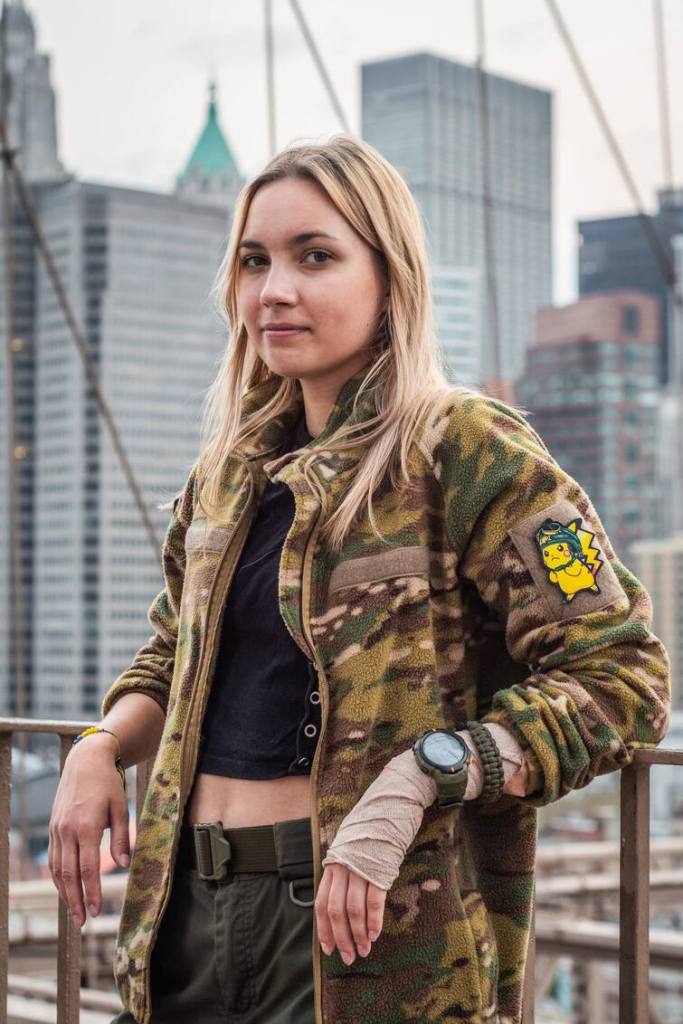
Victoria Honcharuk: Wall Street Investment Banker Turned Ukrainian Combat Medic

Victoria Honcharuk

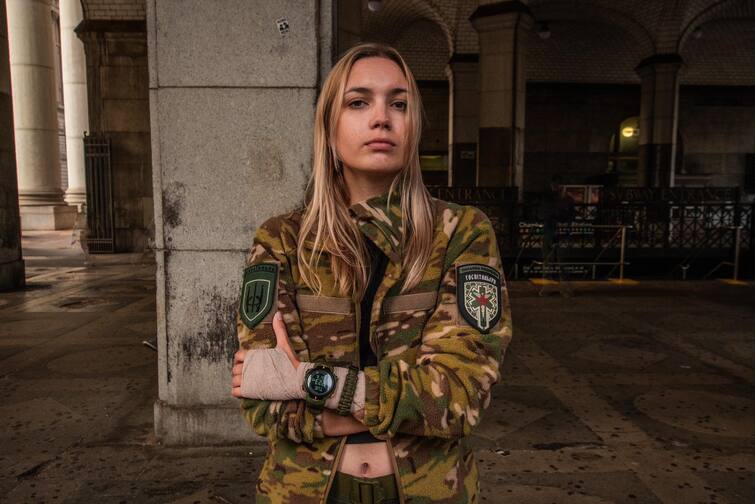
She had traveled the world, had ambitious plans in business and finance, and worked on Wall Street at a major US bank, but returned to defend Ukraine side by side with her family.

Ukrainian Victoria Honcharuk graduated from the innovative Minerva University in California. Nowadays, however, she is one hundreds of combat medics at the frontline, saving the lives of wounded soldiers as they try to save us.

Ukrainska Pravda: Life recounts how Victoria’s life, full of hope and plans, changed after the outbreak of the full-scale war and how she made her choice for her homeland.

Life before the full-scale war

Victoria grew up in the small town of Baranivka in the Zhytomyr Region in an ordinary family. Her parents never traveled outside of Ukraine, so at the age of twelve she started earning money on her own because she wanted to study abroad. She admits that she could count only on herself to fulfill this desire.

As a teenager, Victoria won a grant from the U.S. State Department’s FLEX cultural exchange program, on which she studied at a high school in the United States and, after graduation, at a university in Lithuania. However, she studied at that university for only a year. Victoria says she realized that she could not spend four years in one place.

That was when she found out about Ukraine Global Scholars, an organization that helps Ukrainian children get a free education at schools and universities abroad, including in the United States.

“I grew up in a small community, and after I learned English and went to America on the FLEX program, I realized that there were so many interesting things outside of Ukraine. I always thought, We are such a big and free country, why can’t we take our resources and use them to become a country we can be proud of?

“I realized that to do this, we needed to learn from the know-how of other countries. That’s why I had a plan to go study, work for a while, gain experience, return to Ukraine, and make it the best country in the world,” recalls Victoria.

At the age of fifteen, she went to study in Texas on the FLEX program, where she lived for a year, and after studying in Lithuania, she enrolled at Minerva University, which Vika calls her “dream university.”

“It’s a university based in California, but the most interesting thing about it is that you travel and live in different countries every semester,” she says.

During her first year of study, Victoria lived in San Francisco. Later, her geography expanded significantly, and she gained knowledge and experience in South Korea, India, the United Kingdom, Germany, Argentina, Taiwan, and elsewhere.

“I had two majors there: computer science and business and finance statistics. I was most interested in combining and using statistics and data science in business and finance.

“During my last two years, I wrote a research paper on M&A (mergers and acquisitions) at large companies. During my studies, I worked in startups as an investment analyst, data analyst, and financial manager. My two specialties have always been intertwined in my work,” says Honcharuk.

After graduating in 2022, Victoria worked with technology companies in Citigroup’s investment banking department, as well as in the investment banking department of Morgan Stanley, a major holding company.

Victoria traveled the world and worked on Wall Street at a major U.S. bank, but returned to defend Ukraine side by side with her family.

From Wall Street to the frontline

When the full-scale war broke out, Victoria’s entire family—her sister, mother and father—decided to join the ranks of Ukraine’s defenders.

In the early months of the Russian invasion, Victoria was involved in volunteer work, throwing her energy into helping her family and the units in which they served.

“My goal was to provide my family and their units with everything they needed. It turned into small project of mine, then into an NGO registered in Britain. That’s what I was doing before I came back to Ukraine,” she says.

Victoria raised funds and was involved in delivering tactical medicine supplies. Thanks to her sister, who worked in medical evacuation, Vika always knew what to deliver and when and where to deliver. However, she could not stay in the United States for long, so in the winter of 2022, she decided that she had to return to Ukraine and “help with her hands.”

She admits that this decision was a “big leap” for her. Mentally, she readied herself for the worst—that she would live “in the open air in a puddle” and not eat anything. Nevertheless, she stresses that she “didn’t think twice” about leaving her warm New York office to help her family and her country.

“I worked on Wall Street at the largest bank in the country. The day before I went to Ukraine, we had a big gala event for clients, and then I got on a plane the next morning, went to Ukraine, put on my uniform and set off. It was winter, it was cold. A very big contrast.

“I had been preparing myself for this, and it was what I really wanted. As soon as I found the opportunity to be on the frontline, to work with my hands, to be part of the units, everything fell into place,” says Victoria after a year of service as a combat medic.

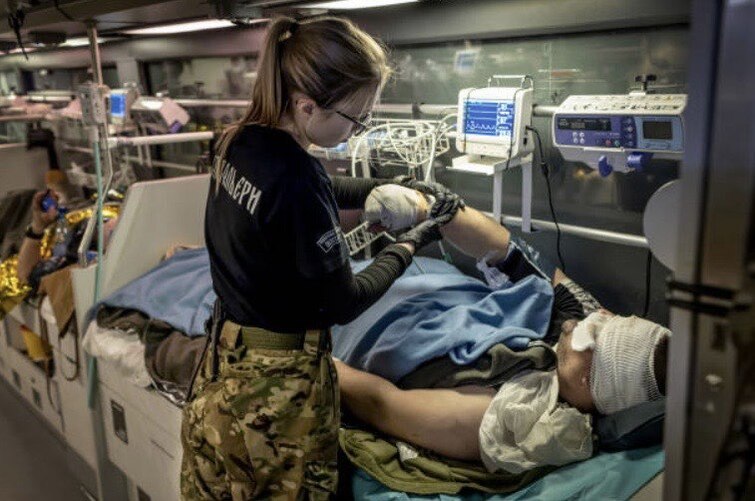
By the way, she acquired the skills for working as a paramedic by training with the Hospitallers. She learned some things from her sister and other combat medics, and the rest was gained on the frontline.

“As soon as I found the opportunity to be on the frontline, everything fell into place,” says Victoria Honcharuk.

The most difficult choice

Victoria serves in one of the hottest areas of the frontline—Bakhmut. Before that, she worked in Avdiivka. Now she is the leader of her crew. For the last six months she has been working as a paramedic in the brigade where her sister serves as an assault rifleman.

As the combat medic explains, there are two stages of evacuating the wounded: “case evacuation” and “medical evacuation.” Case evacuation is the first stage of evacuation from the frontline, when an armored vehicle or pickup truck enters the most difficult areas and evacuates the wounded from the battlefield to a stabilization center.

A medevac unit is a medical crew that takes the wounded from a casevac unit and evacuates them to the stabilization center. Vika initially worked in casevac, before switching to medevac.

“This person often changes. At first, I had a doctor with too much experience, and he was transferred to a stabilization center, and we were given a third person by the battalions we worked with.

“Broadly, we work like a crew, just like mobilized military medics. We are just an additional team. We arrive on the battlefield, take the wounded, and hand them over to experienced medics,” says the paramedic.

According to Victoria, her team has changed several times during her year of service, as the people who make up the team work on a volunteer basis. Many of them have regular jobs, which they alternate with volunteering at the front.

“They are at work for a month, and with me for a month. Right now, the most stable members of my team are my driver and me. My driver’s cousin was my sister’s commander, who unfortunately was killed in August this year, just as we started working with them. The driver and I found common ground and continue to work together. The third person is a doctor,” says Victoria.

Paramedic Victoria Honcharuk

The paramedic also spoke about the most difficult moments she has had to face during her year at the front. According to her, the most difficult thing is to make decisions in circumstances in which other people’s lives depend on them.

“There were moments when we came under shelling and had to decide what we were going to do: move, find shelter, or not evacuate at all. It was a choice between evacuating the wounded or hiding from the shelling. We needed to weigh the chances that we would get injured or that the injured person would die if we didn’t evacuate them,” says Victoria.

There were situations in which they had to approach the battlefield in an unarmored vehicle. They then had to carefully weigh all the risks.

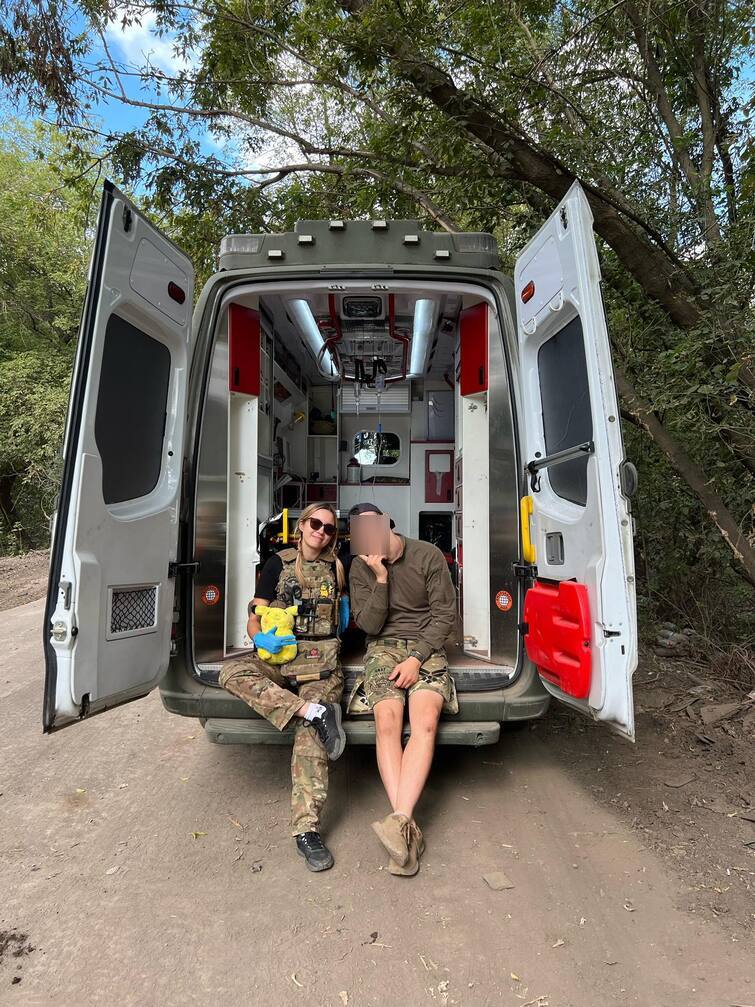
“We drove an ordinary ambulance to within 500 meters of the contact zone. We were on duty together with an armored car and realized that if something hit within twenty meters of us, we were finished.

“My vehicle still has a broken windshield after one of these collisions from ten meters away. After that, we would have to decide what we were going to do, so it can be stressful,” Victoria admits.

According to Victoria, the hardest part is making decisions in situations in which other people’s lives depend on them.

Amid the challenges she faces today, Vika recalls her studies and experience abroad with gratitude, saying that working on Wall Street toughened her up, because sometimes she had to work hard, to the point of exhaustion. She could not sleep for days or even weeks until she got the job done.

“It’s the same here. If the enemy mounts an assault, we don’t sleep—we work. Sometimes you just have to wait, just like waiting four hours on Wall Street for someone to send you a financial model. Here [on the frontline — ed.] you wait for a challenge. Very transferable skills [in English in the original — TRR],” she says with a smile.

Frequent traveling also played a significant role in her “toughening-up.” Thanks to this, Victoria has all the necessary vaccinations.

“It is a very good thing when you are a combat medic, because I come into contact with blood. When your gloves get torn, you can get infected with something. But I lived in India and Korea, so I have all the vaccinations. I can adapt quickly, and I don’t need much to feel comfortable, so I didn’t need to get used to the minimalist life,” she says.

In addition to her work as a paramedic, Victoria is also involved in military tech projects with Ukrainian developers.

“I consider the development, use, and integration of AI into military operations to be one of my main priorities,” she stresses.

At first, Vika worked in “casevac,” before switching to “medevac.”

“Everyone I want to spend my time with is at war”

According to Victoria, she has short leaves from work, but she lives with her crew. She admits that it is hard to see people in the rear who are “disconnected from the war and think that they will be spared.”

“I have literally two or three friends left. Unfortunately, I don’t even want to talk to them now—all the same, I live with my crew. I need one day to see my parents, another day to eat everything I want to eat, and that’s it, I can go back.

“There is no connection due to this. Everyone I want to spend my time with is at war. We have leave for a couple of days, but we come back to civilian life with the people we live with on the frontline, and we live in our own bubble,” says Victoria.

Given how her life and realities have changed, she underscore that she doesn’t regret any of her choices. When asked what advice she would give to her fifteen-year-old self if she could, Victoria said:

“Well done. I don’t have any regrets. I would have worked harder on my physical fitness. (Laughs.) I would have told her that no matter what your profession and lifestyle is, you need to be strong and in the best shape you can be, because it’s physically hard nowadays.”

“There is nothing I regret,” the paramedic stresses.

Victoria’s experience as a woman in the military

According to Honcharuk, women in the army need to work “a little harder” at their positions, as there are gender biases there, as well as in the broader society.

“Every newcomer has to work hard to gain attention, but women have a little more difficulty due to prejudice. But if you don’t give up and show that you are a good fighter, that you joined up for the right reason, that you will work hard, you will get respect from people.

“I think the problems in the army are the same as the problems in society. It’s just a smaller version [of society],” Vika adds.

Vika is convinced that the fight for Ukraine is not only the duty of men.

And yet, she denies that men treat women in the army badly.

“I often hear that men treat women in the army badly, but this is not entirely true. Many women in Ukraine, unfortunately, position themselves as weak and needing protection. But we have to stand up for ourselves, stand up for Ukraine,” the paramedic argues.

She is convinced that the fight for Ukraine is not the duty of men, but of every citizen.

“Love for Ukraine is nurtured, and not necessarily from an early age. It’s not something you can kill. My sister and I are probably a very good example,” says Honcharuk.

The interview was recorded by Veronika Harmash, communications manager at Ukraine Global Scholars, and adapted by Diana Krechetova, journalist at Ukrainska Pravda: Life. All photos are from Victoria Honcharuk’s personal archive.

Source: Diana Krechetova, “From Wall Street to the front line: the story of a paramedic who left her job at a major US bank to defend Ukraine,” Ukrainska Pravda: Life, 19 December 2023. Translated by Alien Bio-Robot from the Future. Thanks to TV Rain for the suggestion. You can follow Victoria Honcharuk on Facebook and Instagram. \\\ TRR

News from Ukraine Bulletin 112

Monterey, California, 5 September 2024. Photo by the Russian Reader

In this week’s bulletin: Kursk offensive as seen by Ukrainian servicemen; plus “occupied education” in Kherson and secret Ukrainian schools in occupied territories; plus Basurka (comments by Russians on the war); plus more evidence of Russian war crimes

News from the territories occupied by Russia:  

Telegram’s muddy money (iStories, 6 September)

Russia fabricates insane charges against Ukrainian partisan first seized in Donetsk 8 years ago (Kharkiv Human Rights Protection Group, September 5th)

“It’s getting harder to hide.” Children living under Russian occupation secretly attend Ukrainian schools (Meduza/iStories, 5 September)

Occupied education. How Russia distorts the minds of Ukrainian children in Kherson (Ukrainska Pravda, 4 September)

Russian propagandist and soldiers openly boast of looting homes in occupied Ukraine (Kharkiv Human Rights Protection Group, September 3rd)

Rustem Osmanov: unlawful, barbaric detention conditions (Crimea Human Rights Group, 2 September)

Russian FSB come for 70-year-old mother of imprisoned Crimean Tatar civic journalist Seiran Saliyev (Kharkiv Human Rights Protection Group, September 2nd)

Court in Russia rules that 20-year sentence against Ukrainian POW for defending Mariupol is not long enough (Kharkiv Human Rights Protection Group, September 2nd)

News from the front:

“We will meet the most resistance in Kursk.” The Kursk offensive through the eyes of three Ukrainian servicemen (Ukrainska Pravda, August 27th)

Ukraine’s Kursk offensive blitzed Russia with electronic warfare and drones (Forbes, 9 August)     

News from Ukraine – general:  

What draft laws for the protection of war victims should be adopted during the new session of the Verkhovna Rada – road map (Zmina, September 3rd)

The team of the film “Songs of Slow Burning Earth” organized an event at the Venice Film Festival to support Ukrainians in captivity (Center for Civil Liberties, September 6th)

“Degradation. Torture. Degradation”. A poetical video project in Kyiv talks about Russian captivity (Center for Civil Liberties, September 3rd)

Our friend Taras Bilous has been awarded the Daniel Singer Prize (Solidarity Collectives, September 3rd)

The historical branch of the Russian Orthodox Church in Ukraine on the path to be banned (European Times, August 25th)

War-related news from Russia:

Rouslan Sidiki talks about his torture (Solidarity Zone, 6 September)

“I wanted to fight this horror.” The growing number of Russian teenagers going to prison on sabotage charges (Meduza, 6 September)

Kaliningrad: the situation before the elections (Posle.Media, 6 September)

Sasha Skochilenko: I just happened to be the winner of the ‘Hunger Games’ (The Art Newspaper, September  4th)

Basurka (some comments by Russians on the war) (The Russian Reader, 4 September)

Fundraiser for parcels – supporting prisoners in Russia who took direct action against the war (Solidarity Zone, 3 September)

Research of human rights abuses:

Savage torture and 11-year sentence for opposing Russia’s occupation of Kherson (Kharkiv Human Rights Protection Group, September 6th)

Cultural genocide is hard to prove, says US professor (Tribunal for Putin, September 6th)

Ukraine lodges war crimes probe after Russians shoot unarmed Ukrainian POWs in the back (Kharkiv Human Rights Protection Group, September 4th)

International solidarity:

On 7 September, our banner, “From Ukraine to Palestine, occupation is a crime”, was on the national march for a ceasefire in Gaza, carried by supporters of the Ukraine Information Group and Unite the Struggles (Ukraine Information Group, 8 September).  

Source: Facebook

This bulletin is put together by labour movement activists in solidarity with Ukrainian resistance. To receive it by email each Monday, email us at 2022ukrainesolidarity@gmail.com. To stop the bulletin, reply with the word “STOP” in the subject field. 

More information at https://ukraine-solidarity.org/. We are also on X, Facebook and Substack, and the bulletin is stored online here. 

Basurka

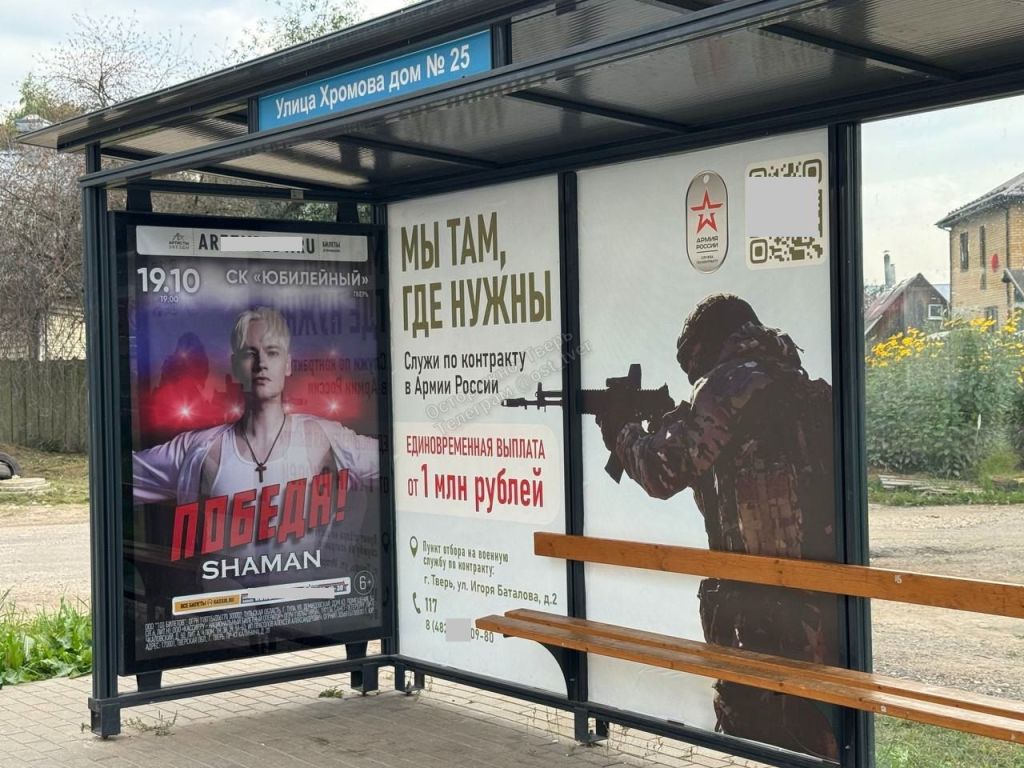
Top: “25 Khromov Street.” Left: “Shaman: Victory!” Right: “We are there where we need to be. Serve as a contract soldier in the Russian Army and get a one-time payment starting at one million rubles.”

Source: Caution, Tver! (Telegram), 1 September 2024. Thanks to Andrey Anissimov for the heads-up. “Basurka” is the faux-Russian nonce word I coined for this distressing post. It was suggested to me by our building’s bilingual garbage bin. ||| TRR


Many acquaintances from Russia condemn me for calling for the bombing of Russian factories and supporting the Ukrainian army’s Kursk offensive. They genuinely don’t get how one could wish defeat on one’s own country. Some have quietly unfriended me, while others continue to read my posts but are perplexed and perhaps even offended by them.

They are often the same people who “love (their) country no matter what.” This is where you all and I part ways. You REFUSE to look at reality—you turn away from it in order to love your country without breaking a sweat, as if love were a chain and you’ve been chained to a radiator since childhood. It works differently for me. I make my own decision about whether I like this scene or not. And, if my country jumps from one bloody shitstorm to another like a maniac running in circles, it’s not worthy of my love and I rescind its right to be my country. People are another matter, especially the unborn. It makes sense to fight for them. But it’s secondary to me what the country they’ll live in will be called and how big it will be. If they’ll have a better chance for a decent and safe life in a small country, then we should choose a decent and safe life for them.

Russia is an anti-human phenomenon. It is a threat to the entire world and to the people within the country. Like any rabid macaque with a grenade, it must be stopped. Look reality in the eye at last. Don’t look away. It’s happening right now, and you, with your unadulterated love, are a part of it.

Image number one. A fourteen-year-old girl dressed in white sneakers and a white tank top, sitting on a bench in the yard of her house on an ordinary summer day. It all looks ordinary, but there is one catch: the girl is dead. A fragment of a cluster bomb, which the Russians dropped on Kharkiv on 30 August, tore off the child’s head. Everything happened instantly; no one had time to hide. The girl’s body remained seated on the bench. Perhaps her last thoughts were of her father, who had gone missing in action in the war with Russia. The family knows he was killed, but they can’t get his body back. The worst part is that he gave his life thinking he was protecting his daughter. Russia got to her, though, and so the family’s story is over. Father and daughter are not alive because they were born near Russia. Other Kharkiv residents who were killed in that senseless attack are also “guilty” in this sense.

Image number two. A girl again, but from another city. She is fifteen years old and has come to Novosibirsk from the Altai to enroll in the Olympic reserve school. She is quite beautiful, gentle, kind, and has great hopes. She doesn’t understand why her fellow students call her a “dirty, slant-eyed pig.” They secretly pour waste into her backpack and mock her appearance in public. After two years of this terror, which was encouraged by coaches and school officials, the formerly cheerful girl will come to realize that this life is not for her. In her seventeenth year, she will kill herself and leave a suicide note on her Telegram channel. She will say in the note that the unbearable racist bullying was her reason for leaving this life.

The school will then post a touching obituary on their Vkontakte page. They won’t specify the cause of death, of course. All comments expressing outrage over the bullying will be assiduously deleted. Only the wishes of “soft clouds” and broken heart emojis will be left untouched.

Incitement to suicide is a criminal offense, actually. But no one will answer for the death of Ksenia Cheponova because it is not the custom in Russia to punish one’s own kind for a crime against outsiders. “You’re not my brother, black-ass louse,” says the immortalized Russian movie hero. These words are much more than a mere insult: this is how millions of people in Russia understand justice. Moral rightness is not based on your deeds, but on whether you are an insider or an outsider. It doesn’t matter what you did. What matters is whether you are stronger than me at the moment.

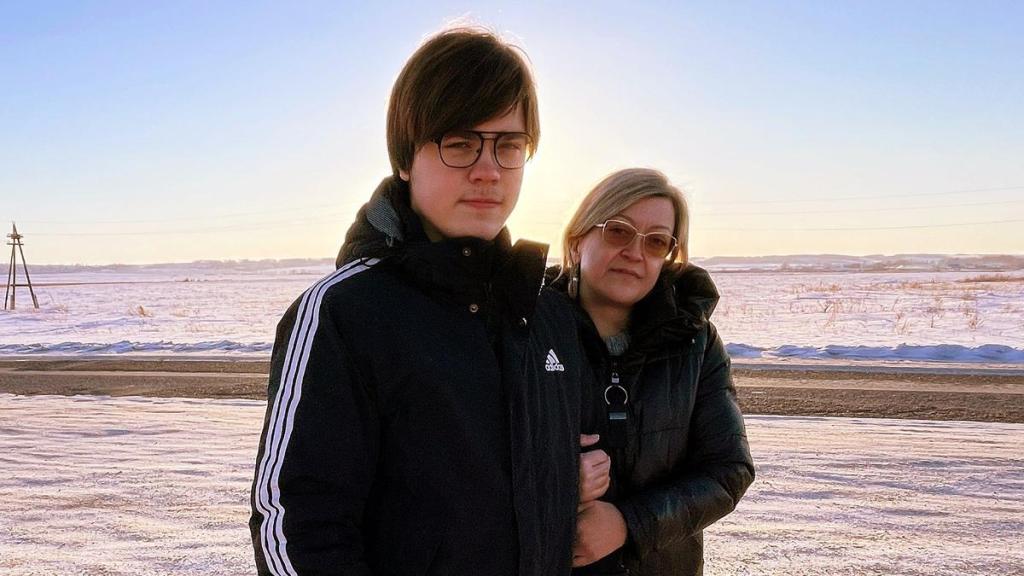
Ksenia Cheponova

Image number three. Beslan. September first marked the twentieth anniversary of the mass murder of children by Russian security forces in that ill-fated school. For twenty years, the perpetrators have never been held accountable for lying about “350 hostages.” There were 1,100 hostages, as we know. No one has been held accountable for firing from a tank at the building where the children were. Three hundred and thirty-four people were killed during the assault, including one hundred and eighty children. This terrorist attack might not have happened if Russia hadn’t started a war in Chechnya. The hostages might have lived if the security forces had actually tried to save them. But they were killed and twenty years on their sacrifices are still covered in lies and impunity.

All of those people could have lived if it weren’t for their country, sick with messianism and aggression. And the “it’s like this everywhere” ploy doesn’t work. No country in the world has 60 million lives lost in wars, gulags, and famines under its belt.

The time for saying “no war” has passed. It is clear that where there is a “great Russia,” there will be perpetual war. That’s why we should say no to Russia, and yes to independent Ukraine, Ichkeria, Buryat-Mongolia, and all free nations.

Or is the idea of a united Russia dearer than the lives of your children?

Source: Julia Khazagaeva (Facebook), 3 September 2024. Translated by the Russian Reader


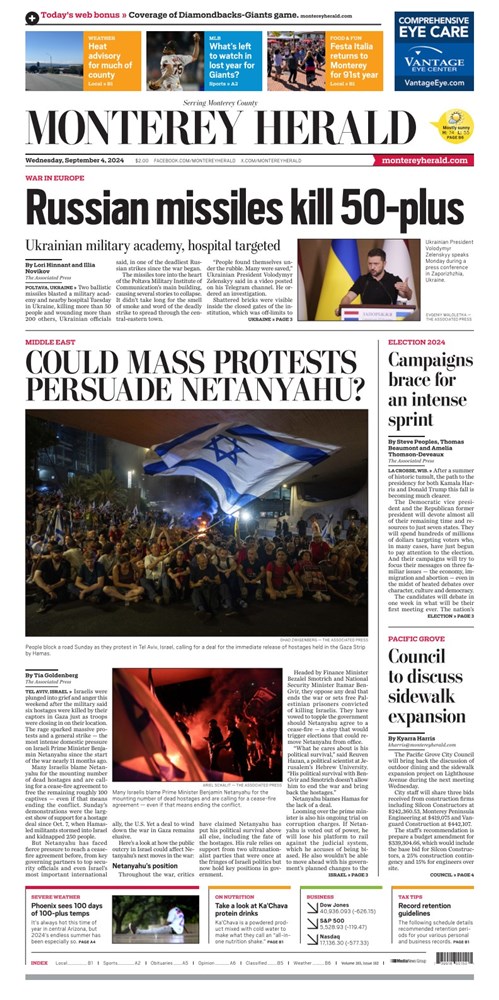
Two ballistic missiles blasted a military academy and nearby hospital Tuesday in Ukraine, killing more than 50 people and wounding more than 200 others, Ukrainian officials said.

The missiles tore into the heart of the Poltava Military Institute of Communication’s main building, causing several stories to collapse. It didn’t take long for the smell of smoke and word of the deadly strike to spread through the central-eastern town.

The strike appeared to be one of the deadliest carried out by Russian forces since the war began more than 900 days ago, with Russia’s Feb. 24, 2022, full-scale invasion.

“People found themselves under the rubble. Many were saved,” Ukrainian President Volodymyr Zelenskyy said in a video posted on his Telegram channel. He ordered an investigation.

Shattered bricks were visible inside the closed gates of the institution, which was off-limits to the media, and small pools of blood could be seen just outside hours later. Field communications trucks were parked along the perimeter. Roads were covered in glass from shattered apartment windows.

“I heard explosions … I was at home at that time. When I left the house, I realized that it was something evil and something bad,” said Yevheniy Zemskyy, who arrived to volunteer his help. “I was worried about the children, the residents of Poltava. That’s why we are here today to help our city in any way we can.”

By Tuesday evening, the death toll stood at 51, according to the general prosecutor’s office.

“My deepest condolences to the families of those killed and injured in the Russian missile attack on Poltava,” Ukraine’s first lady, Olena Zelenska, posted on social media Tuesday. “This is a shocking tragedy for the whole Ukraine.”

Filip Pronin, governor of the region that bears Poltava’s name, announced on Telegram that 219 people were wounded. Up to 18 people may be buried under the rubble, he said.

Ten apartment buildings were damaged, and more than 150 people donated blood, Pronin said.

He called it “a great tragedy” for the region and all of Ukraine, and announced three days of mourning starting Wednesday.

[…]

The academy trains officers in communications and electronics, honing some of the most valued skills in a war where both sides are fighting for control of the electronic battlefield.

“The enemy certainly must answer for all (its) crimes against humanity,” Pronin wrote on Telegram.

The Kremlin offered no immediate comment on the strike. It was not clear whether the dead and wounded were limited to Ukrainian military personnel, such as signal corps cadets, or if they included civilians.

Since it embarked on its full-scale invasion in early 2022, the Russian military has repeatedly used missiles to smash civilian targets, sometimes killing scores of people in a single attack.

Some of the deadliest such assaults included a 2022 airstrike on a theater in Mariupol that killed hundreds of civilians sheltering in the basement and a strike that same year on the train station in Kramatorsk that killed 61. Apartment buildings, markets and shopping centers have also been targeted.

Poltava is about 350 kilometers (200 miles) southeast of Kyiv, on the main highway and rail route between Kyiv and Ukraine’s second-largest city, Kharkiv, which is close to the Russian border.

The attack happened as Ukrainian forces sought to carve out their holdings in Russia’s Kursk border region after a surprise incursion that began Aug. 6 and as the Russian army hacks its way deeper into eastern Ukraine.

The missiles hit shortly after an air-raid alert sounded, when many people were on their way to a bomb shelter, Ukraine’s Defense Ministry said, describing the strike as “barbaric.”

Rescue crews and medics saved 25 people, including 11 who were dug out of the rubble, a Defense Ministry statement said.

The strike came on the day that Russian President Vladimir Putin visited Mongolia. There was no indication that his hosts would heed demands to arrest him on an international warrant for alleged war crimes.

Zelenskyy repeated his appeal for Ukraine’s Western partners to ensure swift delivery of military aid. He has previously chided the U.S. and European countries for being slow to make good on their pledges of help.

He also wants them to ease restrictions on what Ukraine can target on Russian soil with the weapons they provide. Some countries fear that hitting Russia could escalate the war.

“Ukraine needs air defense systems and missiles now, not sitting in storage,” Zelenskyy wrote in English on Telegram.

“Long-range strikes that can protect us from Russian terror are needed now, not later. Every day of delay, unfortunately, means more lost lives,” he said.

Ukraine’s air force said Monday that Russia had launched an overnight barrage of ballistic and cruise missiles and drones at Kyiv as children prepared to return to school. Multiple explosions echoed across the capital early Monday morning as Ukraine’s air defenses shot down many of the weapons, causing damage and fires as the debris fell onto the capital. 

Source: CBS News, 3 September 2024


Ufa’s Kirov District Court has remanded 20-year-old university student Makar Nikolayev in custody to a pretrial detention center for a month on charges of “promoting terrorism.” The court issued its ruling on 30 August, but it was made public only on Monday, 2 September, as reported by the Telegram channels of Baza and Idel.Realities, who cited sources. The court confirmed Nikolayev’s arrest to news website Ufa1.ru.

In 2020, Nikolayev, then a prep school student, designed an information retrieval method for creating a Russian national archive on the history of the Great Patriotic War. The boy wanted to recover information about his great-grandfather and in the process designed an entire system. His project, “Methodology for Creating a Family Archive,” won the Russian national contest “My Country — My Russia,” one of the projects of the Russia Is a Land of Opportunities presidential platform.

Later, Nikolayev went to Germany to study. According to Idel.Realities, Nikolayev had been studying at a university in Frankfurt am Main in recent years. In August 2024, he came home on holiday to Ufa, where he was detained.

According to police investigators, during his time abroad, Nikolayev wrote comments on social networks supporting Ukraine and urging people to join the Russian Volunteer Corps. The stipulated punishment for violating Russian Federal Criminal Code Article 205.2.2 (“Public calls to carry out terrorist activities; public justification of terrorism or promotion of terrorism, committed using mass media or electronic or telecommunication networks”) is five to seven years in prison.

Source: Sergei Kuprikov, “Winner of ‘My Country — My Russia’ contest detained in Ufa,” Deutsche Welle Russian Service, 2 September 2024. Translated by the Russian Reader

The Battle of Kursk

“People to people. Let’s come together to help victims in the Kursk Region. 500 ₽.
500 ₽. Ozon Electronic Certificate of Assistance (500). Buy.”

OZON

Let’s come together to help the people of the Kursk Region

Hello, Thomas!

We have issued an Ozon electronic certificate in the amount of 500 rubles [slightly less than 5 euros, at current exchange rates] to help victims from the Kursk Region.

By buying this certificate, you help residents of the Kursk Region: we will send it to one of those who are now in difficult straits.

After paying, you will receive an email confirming that the certificate has been issued and sent to a victim.

Only the recipient will have access to the certificate’s activation code — no one else will be able to use it. If the certificate is not activated in 21 days, we will refund the money to your card.

Next month, post purchase, we will write about the results of the campaign to everyone who took part: we will tell you how many people were helped and how much money was sent.

Source: Personal(ized) email from Ozon, 25 August 2024. Translated by the Russian Reader. (UPDATED, 26 August 2024) The email also included the following visual inducements (all linked to Ozon’s website) to buy goods and use the company’s other paid services.


KYIV, Aug 26 (Reuters) – Russia launched about 200 missiles and drones at Ukraine on Monday, killing five people and striking energy facilities nationwide, Kyiv said, while neighbouring NATO member Poland reported a drone had probably entered its airspace.

Power cuts and water supply outages were reported in many areas, including parts of Kyiv, as officials said the attack – 2-1/2 years into Russia’s full-scale invasion – targeted power or other critical infrastructure in at least 10 regions.

Russia dramatically stepped up its strikes on the Ukrainian power grid in March in what Kyiv has said looked like a concerted effort to degrade the system ahead of next winter when people need electricity and heating most.

Monday’s missile and drone salvo was Russia’s most intense in weeks, coming as Ukraine is claiming new ground in a major cross-border incursion into Russia’s southern Kursk region while Russian forces steadily inch forward in Ukraine’s east, closing in on the transport hub of Pokrovsk.

“It was one of the biggest combined strikes. More than a hundred missiles of various types and about a hundred Shahed drones. And like most previous Russian strikes, this one is just as sneaky, targeting critical civilian infrastructure,” President Volodymyr Zelenskiy said on Telegram.

[…]

Source: Pavel Polityuk, Tom Balmforth and Yuliia Dysa, “Russia fires huge missile, drone salvo at Ukraine’s power grid,” Reuters, 26 August 2024

When Your Child Is a Political Prisoner

Since the outbreak of Russia’s full-scale war against Ukraine, the country’s repressive apparatus has turned so severe that absolutely anyone can face serious prison time. You can evince complete indifference to events or even support the “special military operation,” but one day it could happen that a family member of yours has been captured by the security forces. Often these family members are minors. They are now being given quite “adult” prison sentences, but they have virtually no chance of being released as part of high-profile prisoner exchanges.

The number of Russians imprisoned for political offenses has been growing, and the situation is unlikely to improve in the near future. We decided to tell the stories of several family members of political prisoners in order to try and answer the simplest questions: why relatives of prisoners often need support themselves, how best to help relatives of political prisoners, what mistakes it is better to avoid making if your relative is detained by law enforcement, and the vital role played by letters to political prisoners. Ivan Astashin, a human rights activist with the project Solidarity Zone and a former political prisoner himself, and two mothers whose sons have been convicted of “terrorism” by the Russian authorities helped us to answer those questions.

Cast of characters:

Anna, Nikita Uvarov’s mother. Nikita Uvarov was a defendant in the high-profile case of the Kansk teens. The three teens charged in the case were detained by law enforcement after posting leaflets on an FSB building and organizing an anarchist “terrorist” group. Uvarov was sentenced to five years in prison.

Tatyana, Yegor Balazeikin’s mother. Yegor Balazeikin, a prep school student, was detained for allegedly throwing a Molotov cocktail at the wall of a military enlistment center in the Leningrad Region which failed to ignite. According to investigators, in February 2023, Balazeikin tried to set fire to military enlistment offices in St. Petersburg and the town of Kirovsk by way of protesting against the military mobilization. He was sentenced to six years in prison.

Ivan Astashin was a political prisoner in the high-profile 2010s criminal case against the so-called Autonomous Combat Terrorist Organization (ABTO). He spent almost ten years in prison. Nowadays, he does human rights work as part of the project Solidarity Zone, which we featured in a previous article.

Arrest and Verdict

Tatyana and Yegor Balazeikin

Tatyana, Yegor Balazeikin’s mother: The telephone rang at 11:40 p.m. on 28 February. It was an unknown number. A woman’s voice said that our son had been detained whilst attempting to torch a military enlistment office in the town of Kirovsk in the Leningrad Region. At the time [of his arrest], Yegor was in the room which we had rented for him [in St. Petersburg]. He stayed there on school days because it was near the prep school he attended. We live in the Leningrad Region, and it was quite complicated to commute there. When I heard what the woman said, I told my husband what happened and that we should get ready to go. We got ready instantly and went there. What were we feeling at that moment? We probably felt that was happening was not real because Yegor had never broken any rules, not at school or kindergarten, not at his sports club, not outside or in public places. We realized that something out of the ordinary must have happened to move him to do what he did.

We were not allowed to see Yegor when we arrived: he was with the police, the FSB, or the Investigative Committee. I don’t know exactly who was in the room with him, as none of those people introduced themselves to us. We talked with the juvenile justice officer, who took our statements. Yegor at that moment was in a separate room with law enforcement officers, and I was let in there to see him only when another juvenile justice officer had taken his statement, which either his father or I was supposed to sign. Only when Yegor had made his statement was I let into the room.

What was the hardest thing for us during the process? There were a lot of hard things, but the hardest thing was understanding that this was an injustice and that we were powerless, that we had no way to fight back and prove that an injustice was taking place. The verdict was one of the hardest stages. And for me it was not the verdict that was the scariest, but the prosecutor’s oral arguments, when he asked the court to sentence Yegor to six years. That was horrible. It was during the trial, and I had a very hard time coping with my emotions. I started crying, taking sedatives, and drinking water, because my oral arguments were next. I had to put myself together and make my speech. These six years requested by the prosecutor were the most terrible thing.

Nikita and Anna Uvarov

Anna, Nikita Uvarov’s mother: It all began on 6 June 2020. Five teens were detained in Kansk around five o’clock in the evening, and my son Nikita was amongst them. Their telephones were immediately confiscated and they were taken to the Investigative Committee. Among them was the Marxist-leaning grandson of the former mayor of Kansk, Nadezhda Kachan, and a guy who associated himself with antifa and had met the other boys online shortly before their arrests. He was the first to be approached by a police detective and asked to set up a meeting. Those two immediately turned witnesses, while Denis, Bogdan and Nikita were identified as suspects, although only two people had pasted up the leaflets. An FSB detective called me and told me that my son had been detained and that I needed to come to the Investigative Committee. When I arrived there, Nikita and five officers were sitting in an office. There, I learned that Nikita and Denis, who had asked to spend the night at our place, on the night of 5 June, after waiting for me to fall asleep, had pasted a leaflet on the treasury building that read “Their luxury guarantees your poverty!” and next to it, on the FSB building, a leaflet that read “Hands off the anarchists — the state is the main terrorist!” and included four photos of political prisoners.

I was told to sign a form giving consent to a search of our apartment and voluntarily hand over leaflets and other items. At the apartment, Nikita turned the leaflets and the sugar substitute (?) over to them, while a detective went through his notebooks and computer, which was then also confiscated. Then there was another interrogation by a detective from the department for combating extremism and terrorism, in which after examining the contents of the phones he began to ask questions about the Molotov cocktail, and Nikita’s reply that they had just been fooling around didn’t satisfy the detective.

Then there was an interrogation involving investigators and a bunch of FSB guys with a readymade record of the interrogation, which even included the date of the alleged bombing of the FSB, or the Interior Ministry. My son and I refused to sign it, and then they began to write up the arrest. It was horrible, as I realized I could do nothing to help Nikita. I couldn’t get my head around what was happening and what would happen next.

And then there was the arraignment, at which the judge read out terrible character references from the school, while the juvenile justice inspector, who had never been to our apartment and never spoken with our neighbors, nevertheless tried to describe our living conditions. After eleven months, my lawyer Vasin and I managed to get the remand in custody changed, and Nikita was free for nine months. But the lawyer immediately said that the sentence would most likely involve actual prison time, so throughout that whole time it was hard and scary for my son. The verdict was the hardest, because I had hoped for a suspended sentence, even if it was minimal, thinking that due to his age they would take pity on him, because there had been no such instances involving actual prison time, it seems, before Nikita, and these kids had already been punished for their views. The case was an obvious frame-up, and I think the judges saw that too, but they didn’t give the defense much room to make its case, and many of its motions were overruled. Still, I thought to myself that now everything would be over and we would be free at last…. The verdict was meant to make an example of my son, because he hadn’t pleaded guilty or asked for mercy.

Problems and Challenges

Ivan Astashin: Of course, it is better to learn about the problems faced by relatives of political prisoners from them. For my part, as a human rights activist, I can emphasize the fact that after a person is arrested, their relatives often either do not know where to turn, or are afraid to go anywhere for help. This is a big problem, as the initial hours and days are crucial in many respects.

Ivan Astashin

Anna, Nikita Ugarov’s mother: My main difficulties now are emotional fatigue and constant worries about Nikita, his health, and the attitudes of both the prison staff and the people serving time with him. After all, prison is a terrible place, and my son should not be in there. He has a good heart: he is not bitter now, and forgave everyone long ago. We are still coping financially: ordinary, caring people help a little, and I am very grateful to them for this. They write to me and support me, which makes me feel better. Nikita receives a lot of letters, which help him a great deal to hold on and not get discouraged. Thank God, I have not encountered bullying or stigmatization from others. No one cares at all here in Kansk. I get mostly sympathy and understanding from neighbors and the people I know, and many of them ask me to send Nikita their regards.

Tatyana, Yegor Balazeikin’s mother: There are a lot of difficulties we have faced along the way, actually. First of all, getting a decent medical examination, to which Yegor is entitled by law, because he has autoimmune hepatitis, because he has a disability, and he is entitled to certain medical care. It is very difficult to make this happen. We have struggled to get this done while he has been in the pretrial detention center in St. Petersburg. I can’t even imagine what will happen when he goes to the penal colony, because every three months he has to take tests to monitor his health.

Looking at all the political prisoners who have health problems, some of whom are already serving time, I assume that this will be very difficult to achieve. It’s probably even impossible. Psychologically, it is quite difficult, because you go through all the stages. First is the denial stage: “No, it can’t be happening, it can’t be happening to us.” Then there is the hatred stage, in which you hate everybody, just not understanding at all how it could have happened. The acceptance stage, I guess, has come to us a little bit, that is, we have accepted this situation, although we don’t agree with it. And then there is the feeling of powerlessness, the feeling that you are just a speck in this world, that you can’t protect your own child, you can’t defend his rights, you can’t prove in court that his actions were not offenses under Criminal Code Article 205 [“committing a terrorist act”], but offenses under Article 167 [“intentional destruction or damage of property under aggravating circumstances”] at most. They don’t even listen to you, because they already have their marching orders from above. And they have to execute these orders, because they have to maintain the picture they want to create—a picture of universal support for the “ruling party” and universal support for the so-called special military operation. And there is no way to fight it.

As for financial challenges, it is quite difficult financially to support a political prisoner, especially a child, given that Yegor shares a cell with boys who are often from orphanages or dysfunctional families, and they do not get care packages. We have been going to the pretrial detention center for fourteen months, and we bring a very large care package every week, which is meant not only for Yegor but also for the other five boys. Because we know that in order for our child to eat one apple from the care package, we need to pack five more apples, so that each of the boys eats an apple, and the same goes for all the other products. They are children. And we can’t feed only our own child and leave the other five hungry, so we certainly bring very large care packages, once a week. Each care package costs about seventeen to twenty thousand rubles [approx. 200 euros], and financially it is quite difficult. So, I think that financial difficulties are not the least of our difficulties either, actually.

Letters to Inmates

Ivan Astashin: Letters and correspondence are first of all personal interactions. A person in prison often does not have a telephone or internet, and is very limited in terms of personal interactions: they have their cellmates (although sometimes people are in solitary confinement) and the prison staff—that’s it. And their lawyer, if they have one, who visits them. Therefore, correspondence should be used first of all as a tool for personal interaction. In the first letter, it is better to tell them a little about yourself and your interests, so that in the future general topics for personal interaction can take shape. You can write almost anything, but the best option is to tell the inmate about your own interests, and ask them what they would be interested in finding out. Often people are interested in the news, and they have interests in a particular area. This should all be taken into account individually. And of course, you shouldn’t write anything that could harm a person by discrediting them or giving additional information to the prosecution

Anna and Nikita Uvarov

Anna, Nikita Ugarov’s mother: I would very much like people to not stop writing letters to Nikita: this aid should be the highest priority. I would advise people who would like to help political prisoners and their families to write letters to political prisoners, and if they want to find a connection with their relatives to communicate with them. Information about political prisoners is available on the Telegram channels Memorial: Supporting Political Prisoners and Solidarity Zone.

Support for Relatives

Ivan Astashin: You have to act differently in different cases. In some cases, the families need financial support to pay a lawyer or spend care packages. In other cases, this is not an issue, but emotional support is needed. I think it is always needed, in fact. In my experience, when you telephone the relatives of political prisoners, those conversations often last longer than is strictly necessary for discussing practical matters. People need to speak their mind, to share their feelings with someone. Often, they do not live in an environment in which they can share, as they are often ordinary people who don’t run inb activist circles. Emotional support is thus quite important.

Anna, Nikita Uvarov’s mother: The support of others is actually quite important, because when a person is left alone with this trouble, they can probably go crazy. I don’t know what would have happened to me if the case had not been publicized. I remember those six months of silence and fear, when there was no one I could tell and with whom I could consult, in order to feel that I was not alone…. And then I felt, I recognized how many of us there were, both those who were in such situations ourselves and people who understood everything we were going through and were willing to help and support us!

You can find information about what support Nikita Uvarov and his family need on the Telegram channel Case of the Kansk Teens.

You can send letters, books and articles to Nikita at the following address:

Uvarov Nikita Andreyevich (born 2005)
10 Krazovskaya ul., IK-31
Krasnoyarsk 660111 Russian Federation

You can also send letters to Nikita via the online service ZT and the volunteer-run project RosUznik.

Yegor Balazeikin’s parents, wearing t-shirts that say “Common cause.”

Tatyana, Yegor Balazeikin’s mother: The support of others is the most important thing we have. We have the support of our son. You wouldn’t believe it, but he manages to support us whilst he is in prison! We support him in every way we can, and he supports us. He gives us the energy to go on with our lives. But at the same time, the support of the people around you is quite important, because you realize that you are not alone in this fight, and the people around you, they understand how unjust the court’s decision is, how unjust and unfair the sentence they passed is.

In fact, we have not dealt with any direct harassment in the wake of Yegor’s criminal case from family or friends. There are people whom we don’t know who write all sorts of nasty things about both Yegor and us in the feedback chat of Yegor’s Telegram channel, but there hasn’t been any large-scale bullying. Thank God, we’ve managed to avoid that. For the most part, people support Yegor and us. They write messages of support and comments that support Yegor and us.

What advice can I give to people who would like to help? To write letters, of course: it is safe, it is inexpensive, and it can be done from anywhere in the world. And, probably, to provide financial assistance to the families of political prisoners. Because it is quite dangerous to send packages or parcels without vetting them with the families, since a prisoner may not be given a care package that their family planned if someone suddenly sends one without vetting it first. And financial assistance is quite important, because relatives know what they sent in the last care package, what they need to send in the next one, and how many kilograms they have left to send. For the time being, this does not concern Yegor: he is a minor, so there are no restrictions on care packages to him. But on 6 August he will turn eighteen and the number of care packages he can get will be strictly limited. Generally speaking, letters and financial support are absolutely necessary. But nothing should be sent to political prisoners without the consent of their support groups or their families.

You can find information about what support Yegor Balazeikin and his family need on the Telegram channel The Yegor Balazeikin Case.

You can send letters to Yegor at the following address:

Balazeikin Yegor Danielevich (born 06.08.2006)
Primorsky rayon, pos. Talagi, d. 112, FKU Arkhangelskaya VK UFSIN Rossii po Arkhangelskoi oblasti
Arkhangelsk 163530 Russian Federation

You can also send letters to Yegor via the online service ZT and the volunteer-run project RosUznik.

Mistakes to Avoid

Anna, Nikita Ugarov’s mother: I was shocked when Nikita was detained. You see, when I’d gone to bed, the kids were home and I didn’t even suspect they had done something. I asked the police officers right then and there what would happen to the kids, and they replied that they would get off scot-free since they were minors. This reassured me and so I didn’t bother to do anything, but now I very much regret that I didn’t immediately retain counsel. I was completely stunned, at the arraignment, when they read out the statements by Bogdan and Denis (Ugarov’s “accomplices” in the case — Ed.), in which they requested that Nikita be remanded in custody since they feared for their lives because they were cooperating with the investigation. It was quite hard and hurtful that Nikita was betrayed by people he considered friends. The boys had been pressured by their mothers into signing the statements, and persuaded by the investigators, who had told them that due to their age no one would been punished. They had signed confessions, on which the investigators and FSB officers had worked very hard, running back and forth between interrogation rooms and adjusting the boys’ statements so that they coincided down to the last gramme when one of the boys didn’t know or remember a particular detail. Since Nikita refused to confess, he was made the main villain, and the confessions were the basis of the charges against him. Later, though, the mothers understood the mess they had made. They hired good lawyers and we all started sticking to the same position.

Ivan Astashin: It happens that a family turns down the services of civil rights lawyers, entrusting themselves instead to the court-appointed attorney and the lead case investigator, and naturally this harms the defendant. The case of Ilya Podkamenny is a perfect illustration of this. His mother decided that telling everything straight was the best thing to do. She told the authorities that her son had been storing petrol and was also planning to torch a military recruiting office. Ilya was ultimately charged with two more crimes, including planning to torch the military recruiting office. I don’t know whether Ilya also said anything about this or not, but it’s a fact that you don’t have to say anything, especially since Article 51 of the Constitution gives you the right to refuse to testify not only against yourself but also against your close relatives. You can say nothing at all. As we know, any testimony can be used against you and your relatives.

Or there’s the case of Alexei Rozhkov, who was released on his own recognizance in 2022 and could have left Russia. His relatives were opposed to this and tried to talk him out of it. He ultimately left the country but only a few months later. After he left he had to wait several months in Kyrgyzstan for an entry visa to Europe. Whilst he was waiting he was abducted by the security forces and taken back to Russia. It is hard to talk about what “might have been,” but it is possible that, had he left Russia earlier, he would have been able to leave for Europe more quickly and would not have wound up back in a Russian remand prison. But now he’s facing over twenty years in prison.

Source: Veniamin Volin, “When Your Child Is a Political Prisoner,” Activatica, 25 July 2024. Translated by the Russian Reader. Thanks to Simon Pirani for the heads-up.

The Death of Vladislav Yurchenko

Vladislav Yurchenko

Vladislav Yurchenko, an anarchist from Russia who stood up in defense of the peoples of Ukraine, has died in battle

You may have recently read about an anarchist from Russia with the call sign Pirate who was fighting against Putin’s troops in the ranks of the Siberian Battalion. He is 22-year-old Vladislav Yurchenko. He was killed on 9 August during an amphibious assault on the occupied Kinburn Spit, according to the Telegram channel Anarchist Сombatant.

In July, the Resistance Committee published Vladislav’s remarks about his motives for fighting on the Ukrainian side.

“I have always had a heightened sense of justice. That was why, when Putin launched his imperial war against Ukraine, I decided to take up arms to defend the freedom of the Ukrainian people, and the freedom of Russian citizens and the Indigenous peoples enslaved by Russia.

“When I was 24 years old [Yurchenko changed his age to protect his identity — I.A.] I took an interest in the ideals of anarchism. It was then I realized I was living in a fascist state. I started going to rallies in support of political prisoners, but quite quickly was disillusioned with this way of fighting the regime. I studied a maritime profession and was employed on sea vessels. I had a good salary, and had something to lose, but when the war started, I could not in good conscience continue to lead my ordinary life and turn a blind eye to the crimes committed by the Russian army. That is why I am here,” Yurchenko wrote.

On 9 August 2024, Siberian Battalion soldiers took part with other units in an amphibious assault on the Kinburn Spit, which is occupied by Russian troops. Yurchenko was wounded in the battle. His comrades tried to evacuate him, but his boat was hit by an ATGM (anti-tank guided missile) fired from the Russian side, and Yurchenko was killed.

Yurchenko left behind a letter to be published in the case of his death.

“Hello to all our comrades. My name is Vladislav, call sign ‘Pirate.’ I decided to leave behind this letter in case I perished in the war against the imperial Russian regime, the war against the country in which I was born and grew up, the war against the dictator who usurped power before I was born. I want this letter to remain as a historical document of the involvement of revolutionary anarchists in the Ukrainian people’s resistance to the Russian tyranny. Like all sensible citizens of the Russian Federation, I was shocked by this war’s beginning, by the terrible injustice and crimes committed by the Russian army on Ukrainian soil. From the first days of the full-scale invasion, I thought only about what I could do to combat this injustice, how I could stop the madness that my own people were committing. When I learned that there were military units in the Armed Forces of Ukraine which had begun to sign up Russian nationals, I immediately realized that I must fight for the freedom of the Ukrainian people and our ideals in this way, under arms. And even if I don’t live to see the Ukrainian people’s victory over the occupiers, the bright anarcho-communist future, and justice and freedom for all people on Earth, I still believe. I believe that this future will definitely dawn; as long as our comrades continue to fight, totalitarianism, authoritarianism and fascism will not engulf humanity. I wish my comrades the same confidence in the fight for freedom.

“Revolution is immortal!”

Source: Ivan Astashin (Facebook), 19 August 2024. Translated by the Russian Reader