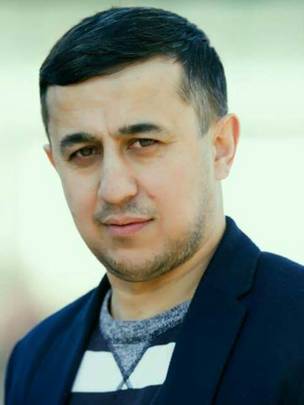
The Strange Trial of Valery Brinikh

Judge Refuses to Return Case of Environmentalist Accused of Extremism to Prosecutor
OVDInfo.org
January 26, 2016

Maykop City Court has refused to return the case of environmentalist Valery Brinikh, accused of inciting hatred against the Adyghe people, to the prosecutor’s office for further investigation. This happened on January 26 at the first hearing in Brinikh’s trial. Lawyer Alexander Popkov, Brinikh’s defense attorney, told OVD Info that the reason for the motion to return the case to the prosecutor were the violations of criminal procedural law that have surfaced during the case. According to Popkov, the case files which the police investigator allowed them to examine did not match the case files submitted to the court.

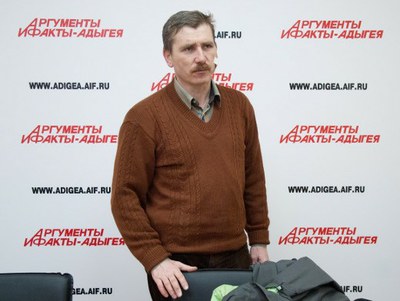
Valery Brinikh
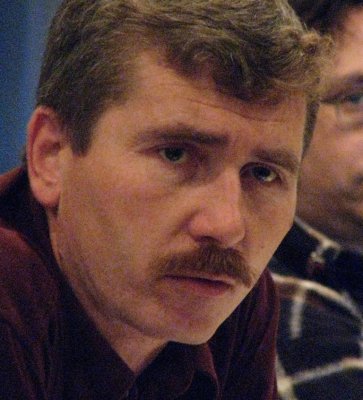
Valery Brinikh

“The dates of the inspection protocols of the items seized during the search [of Brinikh’s home] have been changed,” Popkov explained.

According to him, during the investigation, he and his client discovered that the inspection protocols  had been drawn up before the items were confiscated. After they pointed this out, protocols that were formally drawn up later than Brinikh and Popkov reviewed them were submitted to the court.

Brinikh told OVD Info that the court had refused to admit two defenders to the case: retired judge Oleg Alexeev and Zaurbiya Chundyshko (an ethnic Adyghe), chair of the Maykop grassroots organization Adhyge Khase. The presiding judge has refused to call to the stand the witnesses and experts whom Brinikh and his attorney had asked to testify, including the people who performed the computer and linguistic forensic examinations during the investigation. The defense has a number of questions for them.

According to police investigators, in the fall of 2014, Valery Brinikh produced a piece of extremist matter: the article “The Silence of the Lambs,” which dealt with the environmental problems cause by a hog farming facility in Adygea’s Teuchezhsky District. It was founded by Vyacheslav Derev, the Federation Council member for Karachaevo-Cherkessia.

Translated by the Russian Reader. Photo courtesy of Cogita.ru

Please read my previous posts on the Brinikh case:

Travel Tip

Mostly homebound folks like me learn a lot by going on illustrated and narrated trips to various parts of Russia and the former Soviet Union with graphic reportage artist extraordinaire Victoria Lomasko. Her recent “Trip to Dagestan,” now published in English in Drawing the Times, is no exception. In fact, it will blow your socks off if you read it all the way through. 

01_bazarweb-1024x706
Victoria Lomasko, Elmira, A Kumyk Woman, 2015. Courtesy of the artist and Drawing the Times

It’s Dangerous to Quote Voltaire: The Case of Valery Brinikh, Part 3

It’s Dangerous to Quote Voltaire
ovdinfo.org
January 10, 2015

Valery Brinikh
Adygean Environmentalist Valery Brinikh

In Adygea, Valery Brinikh, chair of the regional branch of the All-Russian Society for Nature Conversation (VOOP), has been charged with aiding and abetting extremist activity and subjected to travel restrictions. According to investigators, Brinikh “aided unidentified persons in disseminating information aimed at abasing the dignity of a person or group of persons on the basis of ethnicity and origin by creating extremist material.” Abasement of dignity charges (Russian Federal Criminal Code Article 282.1) were filed in December 2014. They were occasioned by publication of the article “The Silence of the Lambs” on the website For Krasnodar! The article details the environmental damaged caused to Adygea’s Teuchezhsky District by pollution from an industrial pig-breeding facility. The company that runs the facility, Kiev0-Zhuraki Agrobusiness JSC, was founded by Vyacheslav Derev, who represents Karachay-Cherkessia in the Federation Council, Russia’s upper house of parliament.

Several days after the charges were filed, the article was deemed extremist. According to Brinikh’s defense attorney, Alexander Popkov, the [next-to-last] sentence in the article, which quotes Voltaire’s argument that God helps those battalions that shoot best, could have been the main reason it was deemed extremist.

“The word ‘shoot’ is forbidden; it is an awful word. ‘Battalions’ is also an awful word. And Voltaire was a freethinker,” Popkov says ironically.

Brinikh was for a long time officially regarded as a suspect in the case. According to Popkov, investigators have no proof that it was his client who wrote the article, but they claim he aided “persons unknown” in disseminating it.

The indictment does not make clear exactly whose dignity was abased by the article. Popkov recounts that, initially, investigators said that Brinikh “had offended public officials.” Ethnic motives were also discussed.

In the written petition, filed by the Adygea Prosecutor’s Office, asking the court to deem the article extremist, it says that “according to the findings of the linguistic analysis carried out by the Main Directorate of Internal Affairs in Krasnodar Krai (No. 17/7-119i, dated September 15, 2014), the text of the article ‘The Silence of the Lambs’ contains statements negatively evaluating a group of persons, united on the basis of ethnicity, the Adyghe (identified in the text as ‘cowards,’ ‘persons who lack self-esteem,’ and ‘lambs’).”

The article’s authors complains about the passivity of the local populace, who refuse to defend their own interests.

Popkov notes Brinikh would not have wanted to humiliate the Adyghe.

“On the contrary,” says Popkov, “he advocated for them and visited them.”

The prosecutor’s petition also claims the article contains “statements that could be understood to incite ethnic Adyghe to take actions, probably involving violence, against a group of persons, i.e., the local authorities.”

According to Popkov, Brinikh’s aiding and abetting persons unknown “is supposedly confirmed by a phonoscopic examination: he allegedly spoke by telephone about posting the article on the Web.”

However, since the article was posted on the Web before criminal charges were filed and before it was declared extremist, it follows that Brinikh’s telephone was bugged before these events took place.

“The question arises: on what basis were they bugging him?” asks Popkov.

Translated by the Russian Reader

Editor’s Note. The following day, January 11, ovdinfo.org reported that Valery Brinikh’s trial on the above-mentioned charges would begin in Maykop City Court on January 19.

Please read my previous posts on the Brinikh case:

Zarina Yunusova: “I Will Never Forgive What They Did to Me”

Zarina Yunusova: “I Will Never Forgive What They Did to Me”
Anora Sarkorova
BBC Russian Service
November 27, 2015

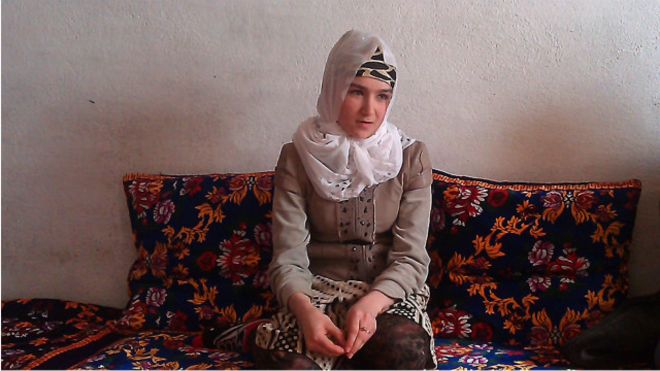
Зарина Юнусова
Zarina Yunusova: “I still remember holding him in my arms, feeling the warmth of his body, and seeing him smiling at me.”

Zarina Yunusova, the mother of the five-month-old baby who died in Petersburg after he was forcibly removed from his parents by Russian police officers, has called on the Russian authorities and concerned Russian citizens to conduct an objective investigation into the causes of her child’s death and reconsider previous decisions in the case.

In addition, the young woman has appealed to the Tajik authorities, who, according to her, should be bolder in defending the interests of Tajikistani citizens.

After returning home and burying her son, Yunusova has gone back to her parents’ home in the remote mountain village of Kandak, in Obi-Garm, in the east of Tajikistan.

Relatives and friends of the young woman that it will thus be easier to survive the loss of the child and rid herself of the painful memories of what she has experienced over the last month and a half.

“I constantly rewind that accursed day in my mind. I remember how the authorities came to our place at six in the morning, how they took the child from me. I did not want to give him up. I fought back, I screamed, I cried, I begged,  and I dragged me on the floor, but they removed the child anyway. I still remember holding him in my warms, feeling the warmth of his body, and seeing him smile at me. I will never forget it and never forgive those who did this to me,” says Yunusova.

Jail Cell, Fine, Deportation
When I met Yunusova at the gate of her house, I noticed that the quite emaciated young woman was limping a little. Her relatives explained that two of her toes were injured at the Petersburg police station where she and the child were taken.

“It happened when they were taking the child. While she was fighting for little Umarali, Zarina injured two toes. For some reason, the Russian Interior Ministry made public only video footage showing a female officer cradling the child, not the part where the child was removed. They should show the whole world how they did it,” says Nazar Boboyerov, a relative of Yunusova’s.

Five-month-old Umarali Nazarov died under mysterious circumstances in the early hours of October 14 after he was removed from his mother, 21-year-old Zarina Yunusova, detained for immigration violations, at a police station in Petersburg’s Admiralty District.

The woman was placed in a temporary holding cell. The same day, the court fined Yunusova 5,000 rubles and ruled that the Tajik migrant should be expelled from Russia.

According to Yunusova’s relatives, she tried to find her son, but the police did not give her the address of the medical center where the baby had been taken.

A day later, the parents were informed of Umarali Nazarov’s death.

Cause of Death

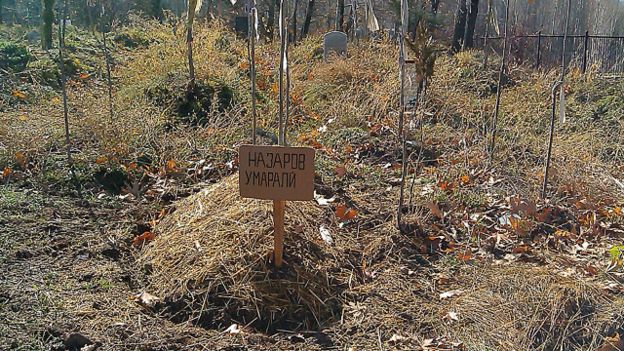
Могила Умарали Назарова
Umarali Nazarov was buried November 15 in the village of Boboi Vali in the Faizobod District.

According to the Petersburg Bureau of Forensic Medicine (BSME), the cause of five-month-old Umarali’s death was a generalized cytomegalovirus infection.

The child’s relatives categorically disagree with the official finding. The parents have numerous medical documents from the clinic where the infant was periodically examined. They suggest that the boy was perfectly healthy.

Umarali was Rustam Nazarov and Zarina Yunusov’s firstborn child. The young people had not met before their wedding. The bride was found on the advice of relatives.

As is typical in many Tajik families, a few months after the wedding festivities, Nazarov went to Russia to work, and later he was joined by his wife.

“We really wanted children. I joined my husband, got pregnant in Russia, and had the child in Saint Petersburg. I took care of the baby, associated only with members of our family, and almost never left the house. I went to the medical clinic where the baby had his examinations only with my husband. I know nothing about immigration laws, rules, and violations. My husband handled all these problems,” recalls Yunusova.

“There Is No Hate, Only Resentment”
Zarina Yunusova grew up in a large family.  She has nine brothers and a sister. She was unable to finish school. The school is located five kilometers from their house. Children have to spend nearly three hours getting to school on mountain slopes, so many children in the village do not attend school.

The majority of girls who do not attend school live in remote rural regions. While the numbers of girls and boys are approximately even in the lower grades, there are many fewer girls in the upper classes, say local teachers. Often parents decide that after the obligatory ninth grade a daughter should quit school and prepare for an early marriage.

At the same time, illiterate brides are valued in rural areas. They are meek, humble, and completely financially dependent on the husband’s family.

Zarina Yunusov went to Russia to be with her husband without fear. Until she traveled to Russia, she knew very little [about the country], but she could not have guessed that anything bad would happen to her.

“After what happened, I will never go to Russia again. How can I forget what they did to me, how treated me? There is no hatred, but the resentment will last a lifetime,” says Yunusova.

The Authorities Did Not Arrive
The body of five-month-old Umarali Nazarov was flown to Dushanbe on November 15. He was buried the same day in the village of Boboi Vali in the Faizobod District, in the east of the country, where the baby’s father comes from. Only several foreign and independent local journalists were on hand to meet the family.

The baby’s relatives waited several hours for officials from the Tajik Ministry of Health, Interior Ministry, and General Prosecutor’s Office, but none of them arrived to meet the Nazarov family, despite promises from the Tajik Consulate in Saint Petersburg that they would be met at the airport and a forensic medical examination would be performed.

Officials from Dushanbe visited Zarina Yunusova several days after her arrival.

At the request of the Tajik Interior Ministry, Yunusova gave blood for a blood test, whose outcome will be known within a week.

In addition, the Tajik police took a statement from Yunusova in which the young woman asks for a criminal investigation into the death of Umarali Nazarov and that the Russian police officers and doctors at the Tsimbalin Children’s Hospital responsible, in her opinion, for his death be brought to justice.

In her suit, Yunusova also asks for 10 million rubles [approx. 141,00 euros] in financial compensation from the Russian side.

“I want to know the cause of my child’s death. The Tajik Interior Ministry explained to me that I had to give blood so they could put an end to all the rumors and prove that I am healthy and that the baby was healthy. When we asked them why the relevant agencies did not show up the day we flew in and conduct an independent examination,  we were told they had not known about the family’s arrival in Tajikistan,” says Yunusova.

Hush Up the Case, Hide the Perpetrators

Каримджон Еров
Karimjon Yerov says that Dushanbe is attempting to hush up the Umarali Nazarov case.

The major case squad in the investigative department of the Tajik Interior Ministry declined to comment on the particulars of the case to the BBC Russian Service while the investigation was still underway.

According to Karimjon Yerov, president of the Russian non-profit partnership ETMOS (Ethnic Tajiks for Responsible Migration by Compatriots), the results of a forensic examination of Umarali’s death would change nothing.

“Russia has never recognized medical records from Tajikistan. All the certificates that Tajik citizens get at home have not been recognized by the Russian side, despite an agreement to that effect. But in this case Russia will recognize an outcome that the parties could have agreed in advance, an outcome that blames the family and helps save face in the name of the so-called strategic partnership,” argues Yerov.

According to Yerov, Dushanbe is also not interested in getting to the bottom of the case and is now doing everything it can to hush the case up.

“The Tajik Consulate in Petersburg repeatedly stated its intention to conduct an independent forensic medical examination. Later, however, people from the Tajik Embassy claimed that such promises had never been made to the Nazarov family. A few days ago, a man identifying himself as an employee of the Tajik Interior Ministry and declared that he had arrived to detain and send home the Tajik nationals who had organized the protest rally outside the Tajik Consulate in Petersburg. I am not certain that Tajik nationals need a Tajik-Russian partnership based on humiliation, disempowerment and the deaths of Tajik nationals,” says the president of ETMOS.

Karimjon Yerov speaking at a November 14, 2015, protest rally at the Field of Mars in Petersburg, demanding an objective investigation of Umarali Nazarov’s death (in Russian). Around a hundred people attended the rally.

The Prosecutor General’s Office told the BBC that the supervisory authority had not opened a criminal case in the death of the Tajik baby and was not currently involved in any investigation of the matter.

“In terms of government agencies, the Tajik side is quite dependent on the Russian side, so it is hardly worth expecting a conflict between them, even over the mother of the deceased child. As for punishing the guilty in Russia, the course of the investigation clearly displays an unwillingness to do this. The mother’s deportation, for example, speaks volumes. It may well turn out that departmental interests will prevail over the rule of law and basic human values. If we don’t manage to insist on a proper investigation of the Umarali Nazarov case now, then in the future we might see numerous such cases throughout Russia,” stresses political scientist Anton Yevstratov.

__________

My previous posts on Umarali Nazarov’s death:

__________

An Example of Senseless Brutality 
Why the Story of the Death of 5-Month-Old Umarali Nazarov Becomes No Less Important over Time 
Maria Eismont
Vedomosti
November 26, 2015

I want to tell you how Zarina Yunusova is doing. Yunusov is the mother of the five-month-old boy Umarali Nazarov, who in mid-October suddenly died in a Petersburg hospital after he was taken from his mother at a police station. Yunusova still hardly eats or sleeps, and she cries constantly. Journalists from the Tajik news website Asia-Plus, who visited her at her parents’ home, where she has lived since she was expelled from Russia, describe her as terribly emaciated and depressed. Yunusova has still not met with a psychologist. The trip to the village is long and hard, and she is not permitted to go anywhere alone without her husband. Her husband, meanwhile, has stayed in Petersburg, where he has been trying to gain recognition as an injured party in the case of his son’s death. The independent forensic examination of the body in Tajikistan they were promised was never performed, but Yunusova herself was recently summoned to the Tajik Interior Ministry, where they took a sample of her blood without really explaining why.

Yes, and the current news agenda is completely different. The Russian public has been discussing the Russian bomber downed by the Turkish air force on the Turkish-Syrian border and the response of the Russian side. Before that, there was news of the deaths of Russian civilian pilots at the hands of terrorists in Mali, and a mere three days before the bloodbath in Bamako, the Russian authorities had officially recognized the Kogalymavia plane crash in the Sinai as a terrorist attack. Convoys of angry truckers have been lining the roadsides and threatening to move on Moscow. Crimea has been plunged into darkness due to the explosion of a power line in Ukraine, and the Military Collegium of the Supreme Court upheld the tellingly cruel sentence (twenty years in prison) against Ukrainian filmmaker Oleg Sentsov, accused of terrorism.

So why I am talking today about Yunusova when Umarali Nazarov died a month and a half ago, was buried ten days ago, and the decision to expel his mother was made long ago and has been carried out? Because however long ago it happened, whatever dramatic and frightening events have filled our lives since then, the Tajik baby’s death has shocked a huge part of active society. Nearly 150,000 people have signed a petition demanding a thorough investigation of Umarali’s death, and dozens of people still ask me how they can help the family and what can be done so that something like this never happens again.

Because Umarali’s story is special. It is an example of pure, completely senseless inhumanity manifested publicly by the system towards the most defenseless people in the total absence of extreme necessity and all political expediency. At each stage of this story—from the Federal Migration Service officers who raided the Nazarov apartment and decided not wait until Umarali’s grandmother brought them the family document’s and did not let Yunusova put a cap on the baby, to Judge Elena Shirokova, who made the final decision to deport the dead baby’s mother—one person with a heart might have entered the picture and everything would have been different. But no such person was to be found.

Neither Yunusova nor her husband, with whom no one has been able to get in touch for several days, can fight for their rights in this case. So it is we who have to demand an objective investigation and punishment for the guilty.

Translated by the Russian Reader

Arseny’s Childhood

You Have the Oyat at Your Back, Young Arseny
Viktor Smirnov
47news
November 23, 2015

Arseny, a third-grader from the Podporozhye District, crosses a river in a boat on his way to school. On the weekends, he serves as an altar boy at a church. His father abandoned Arseny and his mother, a real estate agent conned them, but the authorities know the score. At school, he got two zeroes for conduct when he had no pencils or shoes on September 1, the first day of school. 47news journeyed to the backwoods of the Leningrad Region and spent a day with Arseny’s family.

Every weekday at 7:40 a.m., 9-year-old Arseny Prokhorov and his mom Irina Prokhorova ford the Oyat River in a rubber boat. They are hurrying to school.

The Oyat River, which has its source in the Vologda Region, is 266 kilometers long and flows into the Svir River. It has a strong current and contains rapids. Its course has not changed for at least a thousand years.

“It is especially frightening in the mid season, when the ice sets and the current pulls along whole sheets of it. We make a point of carrying the boat higher upstream. And in the spring, the current carries the slush produced by the ice, and the water rises a lot,” Irina Prokhorova told me.

Last spring, she was crossing the river alone when the boat capsized and she fell into the water. But she swam ashore pulling the boat out with her. Arseny stood on his side of the river and cried.

Believe me, he is quite grown up. Incidentally, the only two zero marks for conduct he has had this year were on September 1 and September 2. He had no notebooks, pencils or shoes. Children’s protective services came after that and inspected the house, but nothing has been heard on this shore from social services since then.

The boy and his mother have lived in the village of Gribanovskaya in the Vinnitsy Rural Settlement of Podporozhye District for four years. The village is situated on the right bank, but seven houses have stood on the left bank for a long time. No one lives in six of them during the winter: they belong to summertime cottagers.

The school bus picks Arseny up at 7:50 a.m. The school itself is four kilometers away, in the village of Vinnitsy. On the weekends, the only way to get there from Gribanovskaya is on foot. Irina uses an old bike to get there or she and Arseny walk there together. The commuter bus runs three times a week: Mondays, Wednesdays, and Fridays.

The village of Gribanovskaya is 350 kilometers from Petersburg and 76 kilometers from the district center, the town of Podporozhye. The village contains around ten households and three dozen inhabitants. The first census of Gribanovskaya was taken in 1873.

That House There

After our phone call, the mistress dashes out of the house, climbs down a steep bluff, unties the boat, and drags it to the water. Plying the oars in a masculine fashion, she sails towards us.

origin_UDK65rLA785a29C6bK0B

A petite woman jumps nimbly from the craft. She is dressed neatly, but is nervous. We clamber aboard the boat. The first to go aboard is Father Vladimir, rector of the local church. He helps the family any way he can. I, the correspondent from afar, get on the boat second. We have to step from the sloping ice into the boat’s soft bottom. The black water, the tiny oars, and the air temperature do not inspire me with optimism. I begin to doubt whether the boat will bear our weight. The priest is not having such a smooth time of it on the oars. We begin to drift.

The backyard is depressing. Irina gets right down to business. They will soon run out of firewood. Father Vladimir frowns.

origin_d1uTsI78jtIR19lbUPrY

I am given a brief, simple tour of the local way of life. Irina and Arseny once had rabbits and a couple of pigs. They slaughtered them out of necessity. The garden and the potatoes they grow there are their salvation.

Arseny’s diet is as basic as that of a postwar child: oatmeal in the morning, soup for lunch, and buckwheat kasha or macaroni for supper. The family lives on 2,500 rubles a month [approx. 35 euros], which Arseny’s grandmother sends them. Irina’s oldest daughter from her first marriage helps them out by sending produce.

“Once every two weeks we sail to the mobile shop,” says Irina.

She would be glad to work, but jobs are nowhere to be found, neither in Vinnitsy nor, especially, in Gribanovskaya.

Irina is from Petersburg. She has two daughters from her first marriage, aged 17 and 27. She and her new husband moved to Vinnitsy. They had decided to get away from the noise of the city. Arseny was born there. In 2012, their house burned down. Since Irina was officially registered as a resident of Petersburg, she was refused assistance by the local authorities. With this incident in the back of her mind, she does not ask the authorities for anything nowadays. She had to sell her share in an apartment in Petersburg and buy the house in Gribanovskaya. Moreover, the real estate agent, who showed them the house in winter, did not mention there was no bridge or ferry. Nor did Irina ask. Then her husband hit the bottle and left the family. In parting, he gave Arseny a lifejacket.

We go into the house. Only of one of the three floors is inhabited. It contains a kitchen with a brick oven and a double room. It is warm and cozy inside, not at all like it is outside. Arseny comes out. He shows us his desk, books, and drawings. He gets Bs and As at school, although he recently got a D in shop. He did not bring glue and cardboard to class. His mother did not have the money to buy them. On the other hand, he is a champion at reading contests.

Arseny takes weekly lessons with a painting teacher in Vinnitsy. Once again, Father Vladimir has helped him out with this. Arseny says his dream is to be an artist and see the Coliseum and the Louvre one day.

Arseny Prokhorov
Arseny Prokhorov

The family has a plan to this end: to finish the first four grades and enroll in the Russian Academy of Art’s Ioganson State Academic Art Lyceum in Saint Petersburg.

Arseny’s hobbies included books and chess, which he has played since the age of six. He also likes the SpongeBob SquarePants cartoons.

When asked whether he knows who Bobby Fischer was, he confidently replies, “I saw a book about him, but I haven’t read it yet.”

Right at this moment, a film about the life of the brilliant American chess player is showing in Petersburg theaters. I doubt that most young people would have responded to my question as Arseny has.

There is a computer in the house with Internet access. Although his mom does not encourage it, Arseny has his own page on the VKontakte social network and is interested in the news. Among the latest news, he remembers the crash of the Malaysian Boeing the most. Arseny has the sense the world is ruled by God, and that Vladimir Putin reigns on earth. True, at first the lad misspoke himself, calling the president “Alexander.” He also knows about important people “somewhere out there.” But the ticks and vipers in the backyard are more real to him. He makes no bones about the fact he is afraid of them.

A tick bit him this past spring. It turned out to be carrying encephalitis. The doctors kept Arseny in hospital five days and then sent him back home with his mother. Since then, Arseny has periodically had a temperature.

This is bad, because earlier the boy had suffered from barely noticeable disabilities that had almost disappeared through the efforts of his mom. The boy has been exempted from attending physical education classes. Which is just as well, since every day he does chores at home like an athlete. Now Irina worries whether the encephalitis will affect his nervous system.

“The school requires a written waiver exempting Arseny from transfer to boarding school. But how can I give him up?” wonders Irina.

Father Vladimir supports her. He booms that it would be wrong to send the boy from his child’s bed, with his mom nearby, to a state-sponsored cot.

And There is a Church Nearby

We get ready to go to the local church. Arseny serves there as an altar boy, helping with the mass. As we get ready to go, it transpires that the most burning question will soon be the question of winter boots. Arseny simply does not have any. The boots donated to him two years ago have fallen apart. Despite their problems, mother and son look neat and self-possessed. We have to cross the river again.

We take Father Vladimir’s Zhiguli to Our Lady of Smolensk Church in Vinnitsy. We go into the church, which smells of oven, wood, and incense. There is a stand-up piano in the corner. After the icy snow, drizzle, and darkness, I immediately feel sleepy. Arseny assists the priest for two hours.

It is getting on towards nine in the evening. There is neither a single soul nor a single car on the streets of Vinnitsy and, especially, Gribanovskaya. We have returned to the ford. The road was utterly muddy, and snow mixed with rain is coming down. In the darkness, descending the steep bank to the boat is completely unpleasant. We bid farewell to the squeaking oars. We cannot see the boat all. Just in case, we say goodbye again. We hear a reply. It is like a film about the war, as if they are going off on a recon mission.

I finished my work in Gribanovskaya around nine in the evening. Father Vladimir gave me a lift to Vinnitsy and set off to administer extreme unction to a local woman. In her youth she is said to have practiced witchcraft.

There was no sign of cars on the street, so my logistics hit a dead end. The local police saved the day. A call to Podporozhye District Deputy Police Chief Dmitry Vladimirov asking to facilitate my not kicking the bucket was understood loud and clear. His guys saved the day. Police officer Andrei (who, incidentally, was supposed to be finishing his shift) drove me 75 kilometers through a blizzard and over potholes to Podporozhye. Along the way, his wife called, worried.

Suddenly, in a place where the thicket had almost overgrown the road, a healthy white wolf with gray markings crossed the road in front of us. The beast stopped, flashed its eyes, and vanished. Perhaps it was surprised to see people at such a time in such a place.

P.S.  Of course we talked with Arseny and his mother. You can soon read about Arseny’s dream on 47news. In the meantime, think about this article.

Translated by the Russian Reader. Videos and photos courtesy of 47news

The Silence of the Lambs

A New Round in the Crackdown against Adygean Environmentalist Valery Brinikh
Adygea Supreme Court Upholds Decision Declaring Article “The Silence of the Lambs” Extremist
March 22, 2015
Environmental Watch on North Caucasus

On March 20, 2015, the Supreme Court of the Republic of Adygea heard an appeal filed by Valery Brinikh, chair of the Adygean branch of the All-Russian Society for Nature Conversation (VOOP), against a December 17, 2014, decision by the Maykop City Court in which Judge Irina Ramazanova had ruled Brinikh’s article “The Silence of the Lambs” extremist. The Supreme Court rejected Brinikh’s appeal.
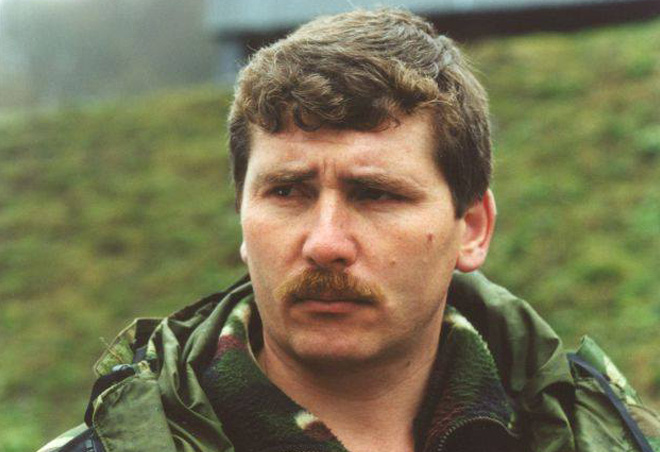
f2d0e74c0b73Valery Brinikh

The article, published in August of last year, dealt with the environmental problems caused by Kievo-Zhuraki JSC, a pig-breeding facility located in Adygea’s Teuchezhsky District. Vyacheslav Derev, who represents Karachay-Cherkessia in the Federation Council, Russia’s upper house of parliament, founded Kievo-Zhuraki JSC. The publication of “The Silence of the Lambs” served as a spurious pretext for launching a crackdown against Valery Brinikh and stopping his environmental work by any means possible. All of the republic’s law enforcement agencies, working in concert, as if on orders and following a unified plan, started a campaign of persecution against Brinikh. The republic’s FSB office and the Russian Interior Ministry’s Extremism Prevention Department (Center “E”) in Adygea led the investigation. The Adygean Prosecutor’s Office filed the lawsuit requesting that the article be ruled extremist, while the Investigation Department of the Russian Investigative Committee in the Republic of Adygea filed extremism charges against Brinikh under Article 282 of the Russian Federal Criminal Code. Only the timely intervention of the Presidential Human Rights Council and its chair, Mikhail Fedotov, who made a special trip for the purpose to Maykop, helped alleviate the attack on Brinikh to some extent. However, the ruling made by the Adygean Supreme Court on March 20 shows that the authorities have decided to proceed with the criminal case against Brinikh.

Judge Vera Meister presided at the first hearing of Brinikh’s appeal on March 10. However, a decision was not rendered in the case. Brinikh managed to sow doubts as to the admissibility of the only piece of the evidence in the case, a certified linguistic analysis of the article “The Silence of the Lambs,” which was produced by the criminal investigation. Brinikh pointed out that according to Russian Federal Constitutional Court Decision No. 18-O, dated February 4, 1999 (“On a Complaint by Citizens M.B. Nikolskaya and M.I. Sapronov That Their Constitutional Rights Had Been Violated by Individual Provisions of the Federal Law ‘On Criminal Investigations'”), the results of a criminal investigation cannot be admitted as evidence in court; they can only be admitted as such only after they have been secured through due process. The judge decided to postpone examination of the appeal for ten days, summoning the expert who conducted the linguistic analysis, Police Lieutenant Colonel Sergei Fedyayev, and questioning him in court. Judge Meister obviously crossed paths with forces that needed a fast and definite decision from the judge. Therefore, at the next hearing, on March 20, Brinikh’s appeal was heard by a new panel of judges. The presiding judge was Olga Kulinchenko, who is deputy chair of the Adygean Supreme Court and chair of the republic’s Council of Judges.

Despite this lofty status, Judge Kulinchenko violated procedural requirements from the outset of the hearing. The expert witness invited to give testimony was not removed from the courtroom prior to being questioned, and he was not made to sign an acknowledgement that he had been warned about criminal liability for perjury. During questioning, the chief expert from the Forensic Center of the Main Directorate of Internal Affairs in Krasnodar Krai was unable to explain why he had been assigned the analysis by the deputy head of the Federal Security Service (FSB) in the Republic of Adygea, and not by the head of the Forensic Center, as stipulated by the Law “On State Forensic Expertise in the Russian Federation.” To explain how the package containing the material for linguistic analysis had been delivered to him in Krasnodar by guarded courier post from Maykop in five minutes (a trip that takes between ninety minutes to two hours by car), Fedyayev claimed that his working day began at 7 a.m. (According to the certified linguistic analysis, the work on it was begun at 9:05 a.m. on March 15, on orders, dated March 15, from the deputy head of the Federal Security Service in the Republic of Adygea.) In keeping with this line of argument, when he signed the accompanying letter on March 15 in Maykop, the deputy head of the Federal Security Service’s office in Adygea would have had to have been at work in the wee hours of Monday morning, March 15, as would have his clerk, who registered the letter. Therefore, the method of the ultra-fast delivery from Maykop to Krasnodar of the package containing the publication remains a mystery. These discrepancies did not trouble Judge Kulinchenko, however. During closing arguments, she constantly interrupted Brinikh, preventing him from fully stating his case and hurrying to finish the spectacle, whose ending was predetermined. The two other judges on the panel were flagrantly bored, since, apparently, they knew in advance how it would all turn out.

And that is what happened. The hearing, a shameful episode for the Russian judicial community, ended with the judges rejecting Brinikh’s appeal against the lower court’s ruling. Thus, as of March 20, the article “The Silence of the Lambs” is officially deemed extremist.

Now we should expect an abrupt reactivation of the investigation into the charges filed against Valery Brinikh on December 11, 2014, under Article 282.1 of the Russian Federal Criminal Code (“incitement to hatred or hostility, and humiliation of human dignity on the basis of ethnicity”). The investigation can now base its conclusions on the Maykop City Court’s ruling, which is now final and legally binding, something that it previously had critically lacked to legitimize this critical case.

The purpose of all these actions is obvious: to railroad, through the combined efforts of the local offices of the FSB, the Interior Ministry’s Center “E,” the Investigative Committee, the prosecutor’s office, and the courts, one of Russia’s most active conservationists, a man who prevents corrupt officials and unscrupulous businessmen from living peacefully.

For more information, call +7 (918) 425-8435

____________________

“The silence of the lambs”: why the smell of manure must be endured
Elena Borovskaya
December 23, 2014
openrussia.org

How an Adygean environmentalist “fomented hatred” and “incited” locals “to action” in his fight against a Federation Council member’s pig farm

Criminal charges have been filed against Valery Brinikh, head of the Adygean branch of the All-Russian Society for Nature Conversation for an article he published on the Internet, “The Silence of the Lambs.” Brinikh has been accused of inciting hatred and calling for extremist actions under Article 282.1 of the Russian Federal Criminal Code. Observers have linked the persecution of the environmentalist to his long campaign against a pig farm owned by Russian Federation Council member Vyacheslav Derev, which has been polluting the surrounding area with manure.

The article “The Silence of the Lambs” was published on the website For Krasnodar! on September 8, 2014. Currently, the article has been deleted from the site and is available only in search engine caches. In the article, Brinikh describes his meetings with residents of the villages of Gabukay and Assokolay in the Teuchezhsky District, who had complained of the stench from the Kievo-Zhuraki JSC pig-breeding facility and other environmental problems. Local authorities made note of the trip there undertaken by Brinikh and his environmentalist colleagues. In Assokolay, they were greeted by prosecutors, policemen, and Center “E” officers instead of villagers. Sharing his impressions in the article, Brinikh criticizes the passivity of local residents in defending their rights and their “fear of tsars,” quoting aphorisms by Voltaire, and Russian and Adyghe proverbs in the process.

On November 20, the Adygea Prosecutor’s Office petitioned the court to rule the article “The Silence of the Lambs” extremist on the basis of an examination performed in conjunction with the local office of the Federal Security Service (FSB).  According to the document, a linguistic analysis performed by the Main Directorate of Internal Affairs in Krasnodar Krai showed that the article contained statements “that could be understood on the basis of ethnicity [and] origin [sic] to promote the degradation of the human dignity” of a group of persons (the Adyghe), as well as statements “that could be understood to incite [the Adyghe] to take actions probably related to violence against a group of persons, [i.e.,] ‘representatives of the local authorities.'”

On December 17, the Maykop City Court satisfied the request by the Adygea Prosecutor’s Office and ruled the article “The Silence of the Lambs” extremist. At the previous court hearing, on December 12, Brinikh became ill and was taken by ambulance to the Republican Hospital. After he underwent medical procedures, Brinikh was taken into custody by police, who informed him he had been charged under Article 282 of the Russian Federal Criminal Code and took him to his residence to conduct a search. Brinikh was then questioned by the Investigation Department of the Russian Investigative Committee in Adygea and released on his own recognizance. However, investigators attempted to prevent lawyer Ludmila Alexandrova from seeing Brinikh, writes the website Environmental Watch on North Caucasus.

The same day, police investigators arrested Vitaly Isayenko, moderator of the website For Krasnodar! in Krasnodar and took him to Maykop for questioning in the “Silence of the Lambs” case. Lawyers did not know his whereabouts for a long time. According to activist Alexander Yesipyonok, investigators questioned Isayenko through the night, after which he was hospitalized in serious condition due to an aggravation of his diabetes.

Yesipyonok is convinced there are no statements in the article “The Silence of the Lambs” that could be construed as extremist or offensive.

“Rather than supporting Valery Brinikh in his fight to preserve a clean environment, the law enforcement authorities of the Republic of Adygea have organized his criminal prosecution by arbitrarily interpreting the laws, committing numerous procedural violations, and engaging in flagrant psychological pressure,” he wrote in a letter to the editors of Open Russia.

Observers have linked the criminal case against Brinikh to his fight against violations of environmental law by Kievo-Zhuraki Agribusiness JSC, an industrial pig-breeding facility owned by Vyacheslav Derev, Karachay-Cherkessia’s representative in the Federation Council. Brinikh’s confrontation with Kievo-Zhuraki has lasted for several years. According to environmentalists, the facility has caused a permanent stench in the surrounding villages, and discharges of manure have repeatedly killed off fish and seedlings in the fields. After a series of articles by Brinikh, Kievo-Zhuraki management filed a lawsuit to protect its commercial reputation, but the court sided with the environmentalist. In addition to environmental issues, Brinikh has written about corruption: about the ties between Derev and Adygean authorities, and abuses during construction of the pig-breeding facility.

The Presidential Human Rights Council has announced it will be monitoring the Brinikh case. Council chair Mikhail Fedotov and Greenpeace Russia’s executive director Sergei Tsyplenkov studied the situation when they visited Adygea during a field meeting of the council in Krasnodar Territory from December 15 to 17.

♦♦♦♦♦♦♦♦♦♦♦♦♦♦♦♦♦♦♦

In dealing since 2012 with the problems caused by the illegal operations of Kievo-Zhuraki Agribusiness JSC, I have often met with local residents who complained to me about the stench from the pig sheds. However, despite the increased activism of our organization in the Teuchezhsky District, at present there is not a single member of the All-Russian Society for Nature Conservation in this municipality. It has just so happened that the main core of our organization in the republic is made up of residents of Maykop and the Maykop District, while there are almost no members of the Society in Adygea’s ethnic districts.

To remedy this situation, I had asked my Adyghe friends to organize meetings with local residents in the villages of the Teuchezhsky District. We needed to look for assistants in our environmental work. The negative impact of Kievo-Zhuraki Agribusiness JSC’s pig-breeding facility on the environment and people’s health was a good occasion for such meetings. It would be interesting to hear directly from the people who lived next door to the pig-breeding facility whether they enjoyed having such a neighbor or not. It was also interesting to see whether we could count on the villagers of the Teuchezhsky District in our fight with the polluting pig producers, who had been violating Russian law and people’s right to a healthy environment.

From long years of personal experience I knew how hard it was encourage ordinary folk in our country to engage in more vigorous actions. Since Soviet times, our people have been used to letting off steam in the kitchen, in narrow circles of likeminded people, while in public they approve any moves made by the authorities, however idiotic. Still, I nourished a glimmer of hope that they had not all grown accustomed to the smell of pig manure, that not everyone was happy with the fact that fish were going belly up in the local ponds, and that the authorities would not lift a finger to improve the situation.

But the reality proved harsher, both to me and to my hopes. First, we stopped at Gabukay, which is located literally right next to the buildings of the pig farm. The village was not crowded on that quiet August evening. In the center, right on the square, about a dozen mainly elderly men were relaxing and playing chess on benches. Among them was the man whom my good friend Kasei Khachegogu had brought me to meet. After introducing myself, I asked the villagers how they liked living next to the pig farm. And immediately it was like something in those people exploded. It turned out they felt there was nothing good about having such a neighbor. But they smelled the stench from the fields and sensed the indifference of the authorities, both local and Adygean, in solving the problems of the village of Gabukay. For, as it transpired, the village had many other environmental problems. For example, back in the day the authorities had altered the course of the river Pshish, and now there were problems with the old riverbed. According to local residents, the authorities had skimped on reclamation works. To put it simply, they had stolen part of the funds allotted, so the work was done not to plan but catch-as-catch-can. Consequently, the old riverbed has become overgrown and has not been irrigated. It has thus become a breeding ground for snakes right on the outskirts of the village. And there is plenty of garbage in the vicinity of Gabukay, just as near any rural settlement in Adygea, because the only authorized solid waste landfills are outside of Maykop and Adygeisk.

After chatting with people and handing out application forms for joining the All-Russian Society for Nature Conversation, we hurried on to the village of Assokolay. Frankly, we were hoping we would find more people there. Especially because we had given the residents of Assokolay prior warning through fellow villagers that we would be coming to meet with the people and survey them about pressing environmental problems. However, as soon as they drove into the village, my comrades met a woman they knew hurrying home from the center. She told them that people were already waiting for us near the local House of Culture; only they were not village residents, but police and prosecutors from Adygeisk. And the people who had been there to meet us had simply been dispersed to their homes. The woman advised us not to go there, but to return to Maykop. It was all the same, she said, because we could not talk to anyone but law enforcement officers.

We decided to go all the way to the end: as they say, to drink the cup to the dregs. The square outside the club really was crowded. Waiting for us there were Lieutenant Colonel Ruslan Akhidjak, head of the Adygeisk intermunicipal police department, his deputy, and a dozen of his officers, including several patrol cars. Also in attendance were the Teuchezhsky interdistrict deputy prosecutor, an officer from the extremism prevention department, and several more “men in black.” The local residents were in the minority: around ten to fifteen people in all. As soon as we got out of our vehicles, we were immediately showered with reproaches. Why hadn’t we notified the authorities of our arrival? We tried to explain that we had not been planning any public events, but had only wanted to talk to the villagers, ask them about problems, and suggest that they join the All-Russian Society for Nature Conservation. The fact is that in this case our organization would have a greater chance of defending the rights and interests of local residents, including protecting them from the negative impacts of Kievo-Zhuraki Agribusiness JSC’s pig farm.

In the end, I insisted that, since we had come all the way from Maykop, we would talk to however many people showed up. That is just what we did: under the watchful eye of police officers and prosecutors, and with a female officer from the Adygeisk police department standing next to us with a tape recorder turned on. Basically, the conversation was a repeat of the conversation we had had in Gabukay. The only difference was that there were two elderly men present who had gone with me to the court hearings in Adygeisk when our organization had been in a lawsuit with Kievo-Zhuraki Agribusiness JSC last spring. Thus, the conversation was more heated. We were accused of not having scored any victories in our campaign against the law-breaking pig producers. I had to explain that we have won victories, albeit small ones, and that in conditions of total corruption it would be pointless to expect quick and easy victories in the fight against dirty businessmen. That it would be much easier for me if in the district as a whole and in every village and farm we had active assistance. It is one thing when two or three witnesses come to a court hearing and testify that it stinks where they live, and quite another if hundreds of people would gather in the square outside the court and demand that Kievo-Zhuraki Agribusiness JSC stop poisoning people’s lives. Perhaps the judge, even if he or she had been “inspired” by their superiors, would find it much more difficult morally to hand down an unjust ruling.

And I also said that Kievo-Zhuraki Agribusiness JSC had stocked up on all sorts of certificates and evaluations approving their operations, and that was all the officials who inspected them needed to see. In reality, nobody had really inspected the pig producers and punished them. I see all the violations; I know how to punish the guilty parties and, most importantly, how to remedy the situation. But I am a social activist, and I am not authorized to do this, while those who do have the authority do not wish to use it. The regime despises the people, and the people despise this regime. They despise it and fear it. It is a vicious circle. To paraphrase the famous saying, every people deserves the regime it tolerates.

I was saying all this while secretly mulling over the thought that the authorities in Adygea feared any independent opinion, any unauthorized sigh. Look, a whole flock of them had flown into Assokolay, not even begrudging going to work on a Friday evening, right before the weekend. Apparently, local law enforcement was under strict orders from the Adygean government to prevent the opposition (and all real social activists and environmentalists are always in opposition to any government) from meeting with the local population. I recalled the anti-corruption rallies that had not been held because of the authorities, and the rally we had wanted to hold on June 5, World Environment Day, which had been dispersed by police. They clearly know who butters their bread.

Speaking of fat, I have always wondered why it was decided to place the pigsties amid the Adyghe villages and not somewhere in the Russian-speaking region of Adygea. Why is Kievo-Zhuraki Agribusiness JSC planning to raise cows outside of Maykop while it breeds pigs in the Teuchezhsky District? You find yourself involuntarily wondering whether Adygea’s current authorities have not done this on purpose. Because in practical terms, excuse my use of jargon, the Muslim population has been “punked,” meaning it has been humiliated to the point where people have lost their self-esteem. Humiliated people are easier to manage: you can wrap them round your little finger. And that is what is done to them. As Khazret Bogus, a local farmer and born columnist from the village of Krasnoe, wrote, there is an Adyghe saying: If you have tackled shit, hold on tight, because you have been soiled all the same. The Holy Quran forbids the faithful from eating pork, except in cases when they are forced to eat it. But who or what has forced the Adyghe to breathe manure-polluted air and swim in ponds poisoned by sewage? Nothing but cowardice and a lack of self-esteem. How does living in filth differ from the consumption of pork? For, according to the Quran, the pig is considered a dirty animal, because it lives in filth. But the residents of the Teuchezhsky District also, as a matter of fact, live in filth. It turns out that the stench from Kievo-Zhuraki Agribusiness JSC’s pig farm poisons not only people’s bodies but also their souls.

People used to sing, “No one will grant us deliverance, / No god, no tsar, no hero. / We will win our liberation, / With our very own hands.” Now they sing completely different songs, songs tolerant of the powers that be and the shit they generously reward people for their obedience. And they themselves place their hope in God, fear the tsar, and hope a hero will save them. No hero will save you, my dear fellow countrymen, until you cease being afraid of tsars. And God will not help you until you roll up your sleeves. The Russians have a saying: “God helps those who help themselves.” And the great French thinker Voltaire argued that God helps those battalions that shoot best.

So when are we going to start shooting better, villagers?