“It’s Too Late for Me to Be Afraid”: Olga Nazarenko’s Solo Anti-War Protests

Olga Nazarenko: “I’m a Russian citizen who opposes the war. Send Putin to The Hague!”

Olga Nazarenko, a lecturer at medical university in Ivanovo, got involved in protests supporting Ukraine back in 2018. Since February 24 of this year, she has gone on an anti-war picket almost every week. Over this time, five cases have been opened against her for administrative offenses. Recently, Nazarenko was fined 150 thousand rubles [approx. 2,350 euros] for an anti-war picket. Only a few people in Ivanovo support the lecturer, so she usually stands alone with a placard. There are incomparably more people in her city who disagree with her position. Once, when Nazarenko was returning home, a passerby doused her face with spray paint on a dark street. People have written the Z symbol and the words “Ukrainian scum” on the associate professor’s mailbox. Nazarenko paints over the insults with yellow and blue flowers.

Nazarenko spoke to Radio Svoboda about her resistance to the war.

– What was February 24 like for you?

– I didn’t believe until the last moment that war was possible. I can describe my reaction to the news about the outbreak of war with Ukraine only with obscene language. That same day, I went on a solo picket with an anti-war placard, and the next day too. Since then, I have been going on pickets every week, sometimes once every two weeks.

– You have already been convicted once for “discrediting the armed forces.” Why do you risk being prosecuted?

– My conscience won’t let me do otherwise. In the twenty-first century, problems in interstate relations are not solved by war. It’s barbaric. This war is an injustice on Russia’s part, and I cannot remain silent when I see injustice. A [solo] picket is now the only way to voice one’s stance publicly. Yes, most passersby do not voice their opinion in any way while I am picketing. But at each picket I see that two or three people support me. I understand that it is vital for each of them to see that they are not alone. Also, I have friends and acquaintances living in Ukraine. I worry about them, of course, and I know that for them my support — at least in the sense that I am not silent — is also vital.

– What was the trial at which you were fined 150 thousand rubles like?

– On February 27, I went out with a placard that read, “I’m a Russian citizen who opposes the war. Send Putin to The Hague!” Half an hour later, I was detained after a disgruntled passerby denounced me to the police. In April, the court recognized that my right to a defense had been violated due to the fact that my lawyer was not given the charge sheet to sign. The police appealed this decision, and the court found me guilty under Article 20.2 of the Russian Federal Administrative Offenses Code for, allegedly, “organizing a public event” and fined me 150 thousand rubles. I told the court about my anti-war stance and that our courts are cemented into the power vertical, and so they make the rulings that the Russian authorities need them to make. I also told the court that Russia is waging an unjust war against Ukraine, that people are dying, and that I opposed it. In my opinion, the judge’s ruling had been made in advance.

– Do passersby often react aggressively to your anti-war pickets?

– Of course, there are people who react aggressively to my position. They drew the Z symbol and wrote “Ukrainian scum” on my mailbox. I painted over the inscription with yellow and blue flowers, making it beautiful. Once on the street late at night, a young man doused my face and clothes with spray paint. Fortunately, my glasses protected my eyes from injury, while my clothes turned a golden color. My down jacket even became beautiful, iridescent, but only on one side, sadly. Once, at a picket in support of the boys from the Network Case, a man came up and said that people like me should be shot. He tried to take my placard away and hurt my finger in the scuffle. But I kept him from getting my placard.

– At what point did you decide to go on pickets?

– I have been actively voicing my position since 2014. I was outraged that Russia, at a difficult moment for Ukraine, committed a treacherous act against it by annexing Crimea. This was the first thing that angered me, and the second was the lies that supported it. I realized that in such circumstances I could not remain silent. At first, I went to various protest rallies and marches. But they were held rarely and I wanted to voice my civic stance more often. At first, I was bashful about going out on solo pickets. But on social media I saw that people were doing solo pickets. At some point I decided to try to picket too and got sucked into it.

I have been going on pickets in support of Ukraine since 2018. A friend of mine and I protested for the release of the Ukrainian filmmaker Oleg Sentsov. After all, a hybrid war had essentially been waged since 2014, and I had always opposed it. I was brought up on the principle that you couldn’t take what doesn’t belong to you, which also applied to international relations. Crimea is Ukrainian by all international standards. I could not approve of Russia’s interference in the affairs of a sovereign state, and from that moment I took an unambiguous stance. On February 24, everything became completely transparent.

– In February of last year, you hung a large banner that read “The FSB is a disgrace to Russia” on a railway bridge. What made you decide to do this protest?

– I believe that the FSB now holds all the power in our country, because Putin is from the FSB. So, the FSB lets itself break any law and torture people with impunity — such as, for example, the defendants in the Network Case. I think it important to voice my negative attitude to this. The banner hung for about half an hour until police officers arrived and tore it down.

I was detained right there and taken to the police department, where they took my statement and released me. This is not the first time I have publicly condemned the actions of the FSB. For example, I picketed against the Network Case outside the FSB headquarters in Ivanovo.

Olga Nazarenko

– Aren’t you afraid to publicly criticize the FSB?

– Yes, that organization has a lot of power, but I have no respect for it.

– I know that you sued Center “E” last year. Please tell us how that happened.

– I was doing community service at the zoo for a video in which I had talked about the problems of our region and called for peaceful protest. I was charged with “organizing an unauthorized event” for these actions. Right when I was cleaning the bird cages, a Center “E” officer came and videotaped me without my permission. The video was posted on the Telegram channel “A Cop’s Life: Ivanovo,” along with what they imagined was a funny comment. I decided that the Center “E” officer had violated my right to privacy. I filed an administrative lawsuit against the Interior Ministry, but my suit was dismissed.

– Not long ago, you were accused of resisting the police because you tried to help a friend at an anti-war picket. What did you do then?

– A female acquaintance decided to go on a picket on February 24 and asked on a chat for support. I responded to this request and arrived at the picket site. As soon as the young woman held up her placard, a policeman approached her and tried to detain her. She was opposed to being detained, so I got between her and the policeman. Consequently, we were both detained. The next day, I was taken to the police department, charged with resisting the police, and sentenced to 80 hours of community service. I’ve already done them. But soon I will have to do another 180 hours for a fresh administrative offense related to publicly voicing my anti-war position.

– How do the heads of the medical school where you work look at your pickets and court hearings?

– They are still relatively friendly to me at work. The bosses said that I could do anything as long as it was not during working hours. I never engage in activism to the detriment of my work: I don’t lobby anyone in the classroom. So I have no problems at the university now. For the time being I can juggle work and activism.

– Does your family support your anti-war position?

– My loved ones worry about me, but they don’t try to dissuade me. My husband and I try not to talk about politics. His point of view runs counter to mine, and we don’t discuss politics to avoid spoiling our relationship. As it is, there are so many situations in which I have to get harsh to defend my position, but at home I want to live in peace and tranquility. My little son and adult daughter worry about me and support me emotionally.
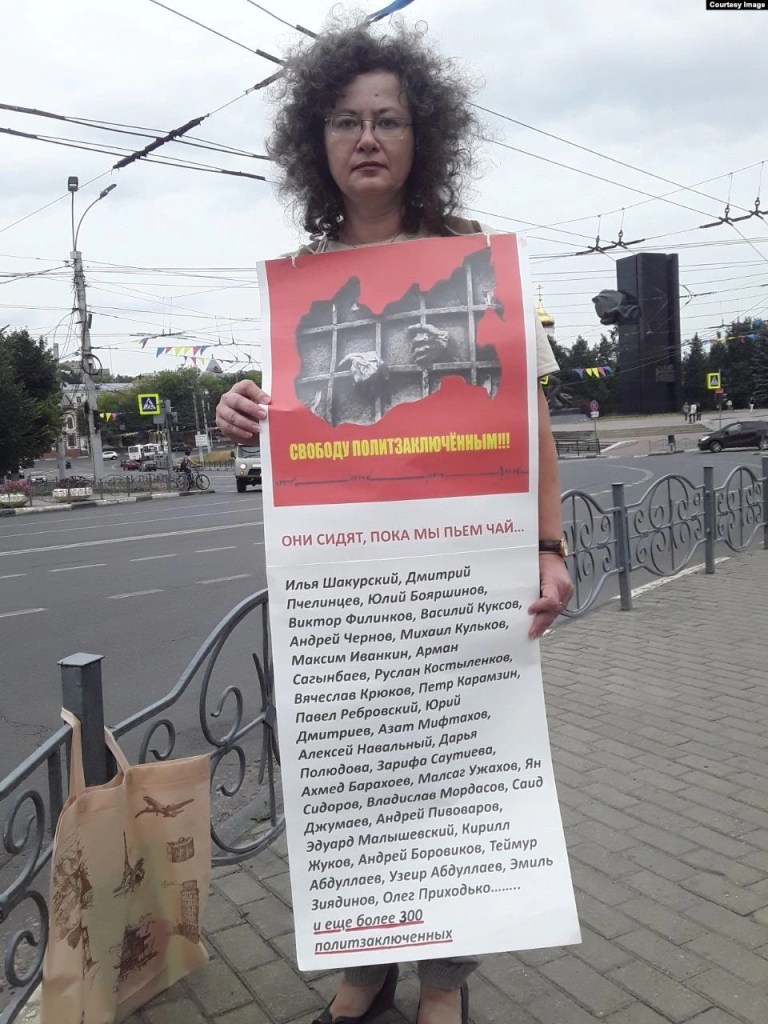
Olga Nazarenko, holding a placard that reads, “Free political prisoners!!! While we drink tea, they’re in prison.” It features a long list of current Russian political prisoners, nearly of all whose cases have been covered on this website.

– How are you going to pay the 150 thousand ruble fine?

– Friends and friends of friends helped me to pay the previous fine of 75 thousand. I don’t know yet how I will raise this amount. I’ll probably have to turn to public organizations for help.

– Putin recently passed laws that give [law enforcement] even more possibilities to crack down on grassroots activists. Aren’t you afraid to continue going on pickets when this is the reality?

– It’s too late for me to be afraid. If the security forces want to sanction me, they have enough material against me. I have already passed the phase of being afraid.

– Do you think your numerous pickets have affected the attitude people in Ivanovo have toward the war with Ukraine?

– Everything in society has only gotten worse over the years. In the big scheme of things, such protests cannot change a thing. They matter only to the person who does them and to people who think the same way, as well as for those supported by them.

– Why are you taking such a big risk in this instance?

– I just act on the principle that you do what you have to do, come what may. This is how I was brought up as a child. I realize that there could be unpleasant consequences for me, but I don’t think about it.

– How exactly were you brought up?

– My parents are teachers. They are decent people who shaped my principles, such as the literature I read as a child. My favorite books were Alexandra Brushtein’s trilogy The Road Goes Off into the Distance.

– But many Russians have read those books. Aren’t you angry that so few Russians protest publicly?

– I am a little annoyed, rather, that people cannot act in keeping with their conscience. And I realize that if more Russians had openly voiced their position when it was not less dangerous, the situation would be slightly different now.

Most people let their personal interests outweigh [other things], and this is normal. My instinct for self-preservation is a little dull, and perhaps this is not entirely normal. I don’t condemn Russians, but still I think that, in the current situation, it is impossible to remain silent.

– Now, after almost five months of war in Ukraine, many Russian activists complain of burnout and fatigue. Do you have such problems?

– I don’t have burnout and depression, but nor do I have any hope that things will change quickly. Perhaps in a hundred years our great-grandchildren will be able to change something — if we manage to raise our children the right way, and then they raise their children the right way. At some point, there will be enough people to change things here. But my generation won’t live to see it.

– Are you not planning to leave the country if a criminal case is opened against you?

– I’m not going anywhere. Russia is my country: it doesn’t belong only to those in power and their supporters. I won’t let anyone kick me out of my own country. I’m ready for a possible prison sentence. If it happens, I will serve my time, and then I will get out and continue my pickets. I’m not too afraid of prison: people somehow live in there too. You can’t jail everyone, and you can’t shut everyone up.

Source: Darya Yegorova, “‘It’s too late for me to be afraid’: Olga Nazarenko’s solo pickets,” Radio Svoboda, 16 July 2022. All images courtesy of Ms. Nazarenko via Radio Svoboda. Thanks to Comrade Koganzon for the heads-up. Translated by the Russian Reader
Kronotsky Nature Reserve Employees Sentenced to Long Prison Terms

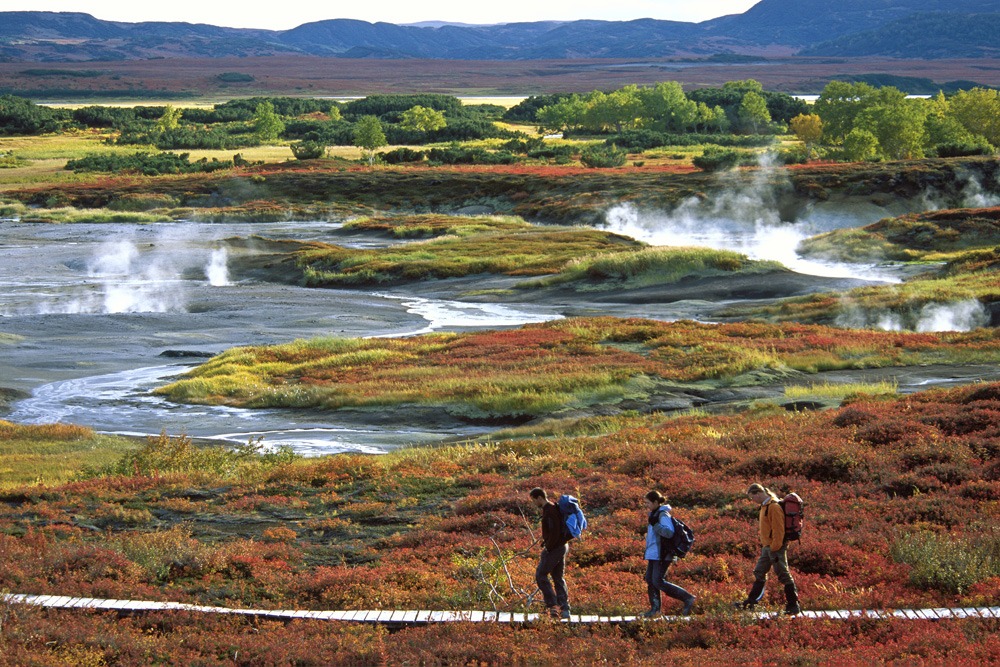
The Uzon caldera in the Kronotsky Nature Reserve: Photo: Igor Shpilenok/Kronotsky Nature Reserve

Greenpeace Russia strongly disagrees with the charges against the nature reserve employees.

On July 15, the Petropavlovsk-Kamchatsk City Court found employees of the Kronotsky Nature Reserve guilty of embezzlement in the amount of [454] million rubles [approx. 7.9 million euros]. The money had been allocated from the federal budget to eliminate accumulated environmental damage.

Darya Panicheva, head of the reserve’s scientific department, was sentenced to four years and six months in prison. The court sentenced Roman Korchigin, deputy director for science and educational tourism, to five years in prison. Oksana Terekhova, deputy director for financial and legal support, was sentenced to five years and six months in prison. Nikolai Pozdnyakov, a former employee of the reserve, was also convicted and sentenced to three years in prison. All of them were taken into police custody in the courtroom.

The court also sentenced all the convicted persons to compensate in full the financial damage indicated in the charges and to pay large fines.

None of the reserve employees of the reserve has admitted any wrongdoing. The defense will petition a higher court to review the verdict, seeking to have the charges completely dropped and obtain an acquittal.

The director of the Kronotsky Reserve, Pyotr Shpilenok, commented on the court’s decision.

“I’m in shock,” he said. “Innocent employees have been taken into custody for doing their official duties. We will continue to fight on their behalf — otherwise we wouldn’t know how to go on living and working. There is now only one recourse for us — to go to higher courts and seek the complete dismissal of charges against them. In addition, the reserve is now literally in a state of emergency: it won’t be able to function as before without these key employees. The specialists sent to prison were responsible for the most important areas of work: science, tourism, and economic support. Kronotsky will now have to urgently make some difficult decisions to keep nature protected.”

The Kronotsky Reserve employees were charged with embezzling over 454 million rubles from the federal budget and being involved in an organized criminal group. The money was earmarked for and spent on cleaning up the reserve and eliminating accumulated environmental damage. The Investigative Committee, however, believes that this money was stolen. On June 27, the prosecution requested that the court sentence the accused reserve employees to six to eight years of imprisonment, multimillion-ruble fines, and overall damages of 454.6 million rubles.

The charges caused a massive public outcry, and the trial came to be called the “Clean-Up Case.” The team at the Kronotsky Reserve publicly posted materials that testify to the innocence of the reserve’s employees: paperwork, photos and video footage, witness statements, and official findings by scientific institutions, Rosprirodnadzor, and the Russian Ministry of Natural Resources. They clearly show that there are many discrepancies in the case.

“The Clean-Up Case,” a 21-minute exploration of the case by persons unknown, posted on YouTube on 23 June 2022.
The video is in Russian, without subtitles in other languages.

“I personally know the accused reserve employees and can confirm that they are some of the best and most dedicated specialists in the reserve system,” says Mikhail Kreindlin, project manager for specially protected natural areas at Greenpeace Russia. “Basically, the employees are accused of conscientiously and competently performing their work in assessing the damage caused to the reserve earlier, while the investigation is trying to prove the existence of an organized criminal group by pointing to the organizational structure of the institution that manages the reserve.”

Greenpeace Russia considers the sentence imposed on the employees of the Kronotsky Reserve unfair. Over years of cooperation, the reserve employees have proven themselves to be exceptionally honest and professional people, dedicated to their work.

Source: Greenpeace Russia, “Kronotsky Nature Reserve Employees Sentenced to Up to 5 1/2 Years in Prison,” 15 July 2022. Thanks to Darya Apahonchich for the heads-up. Translated by the Russian Reader
Dmitry Lyamin: Hero of the Resistance

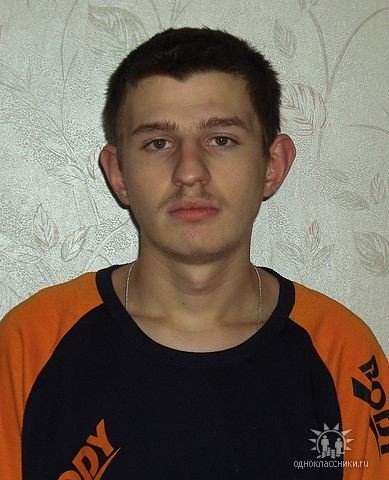
Dmitry Lyamin’s headshot from Odnoklassniki.ru (“Classmates.ru”

If there is an actual “Russian anti-war movement,” this is what it looks like: Dmitry Lyamin, accused of torching a military conscription office in Shuya, the third largest town in the Ivanovo Region. Lyamin has been transferred from Ivanovo to the notorious Butyrka remand prison in Moscow, allegedly, so that he can undergo a psychiatric examination at the equally notorious Serbsky Institute. According to former political prisoner Ivan Astashin, who now spends all his waking hours helping the new wave of political prisoners in Russia and publicizing their cases, there are rumors among the legal community that the criminal charge Lyamin faces will be changed from “destruction of property” (Article 167 in the Russian Federal Criminal Code) to “terrorist act” (Article 205), a much more serious charge that carries a penalty of up to twenty years in prison.

Source: Ivan Astashin, Facebook, 29 June 2022

Darya Apahonchich: “The Russian State Is Afraid of Feminism and Sex Education” (The Yulia Tsvetkova Case)

In June, the prosecutor’s office asked the court to sentence the artist Yulia Tsvetkova to three years and two months in a penal colony for “distributing pornography.” She was charged with this crime for posting drawings of vulvas on the Russian social media website VKontakte.

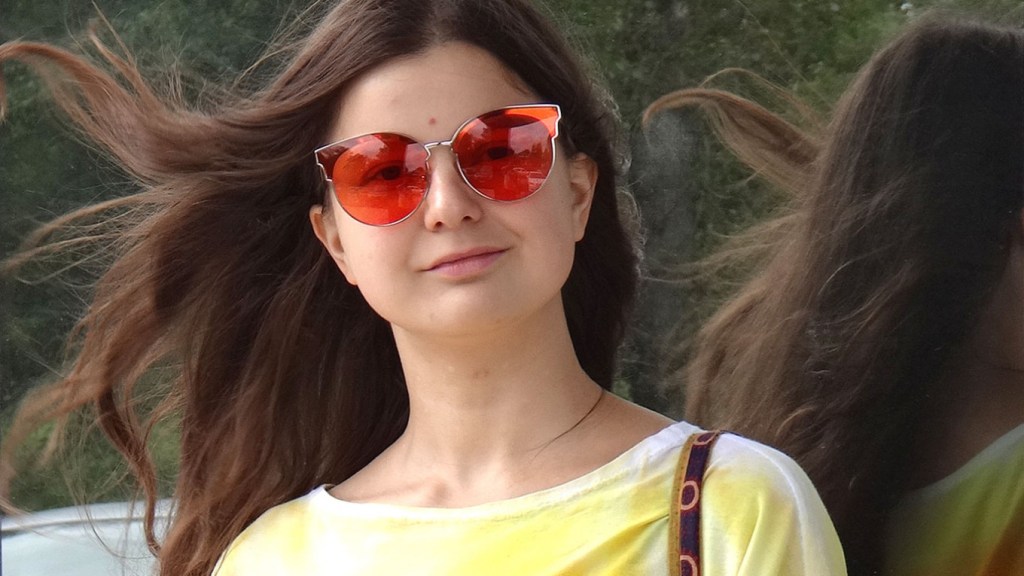
Yulia Tsvetkova. Photo courtesy of her VKontakte page and the Moscow Times

If I had to make a list of the methods used by the Russian state to make the life of grassroots activists unbearable, the list would be long. It would include such dirty tricks as endlessly postponing court hearings, delaying investigations, forensic examinations, and official inquiries, and encouraging right-wing “morality watchdogs” to persecute activists by telephoning them, threatening them, and intimidating them. And then the police throw up their hands, because, allegedly, they do not see anything criminal in the actions of these pseudo-Orthodox (but in fact criminal) figures.

All these methods also nicely illustrate the fact that the authorities are not content with merely complicating, or even paralyzing, the work of civil society in Russia.

The current Russian regime also finds it vital to avoid responsibility. Rather than punishing people directly for dissent, it seeks = far-fetched grounds to punish them. Rather than imprisoning them immediately and for a long time, it draws out investigations as much as possible, so that, on paper, the number of political prisoners is not too large, but their persecution considerably discourages other activists.

Even if I listed all these methods, the list would not be long enough to describe everything that the artist and activist Yulia Tsvetkova from Komsomolsk-on-Amur has faced. Children from her theater workshop were summoned for questioning, her home was searched, she was under house arrest, her lawyers were not admitted into the courtroom to defend her, and recently she was declared a “foreign agent,” although it is completely unclear how an activist from a small provincial town could work as a “foreign agent” and in the interests of which foreign countries she could do this work. This campaign of political persecution has been going on for three and a half years, and Yulia has been accused of violating several laws, including “promoting LGBT” among minors and “distributing pornography” by posting schematic drawings of genitals on a educational outreach community page on Vkontakte.

It is quite difficult to believe that all this has been happening in reality, that it is really for her work in a children’s theater workshop and for body-positive and educational pictures that Tsvetkova has faced such an unprecedented onslaught. I cannot get my head around the fact that an entire army of civil servants (police officers, forensics experts, judges, prosecutors, social workers, etc.) have spent so much time trying to find evidence of the artist’s guilt. At this point, of course, it is a pity that we don’t have access to the files in the government accounting office. How interesting it would be to find out how many man-hours have been spent on this “job.” How much paper has been wasted on all the absurd paperwork? What are the salaries of all the officials involved in this political case, and how have they directly benefited from it? Who got a promotion? Who got an apartment? A new office? A bonus?

No one can give back the most valuable thing that the artist and her mother have lost — time. Three and a half years spent in endless court hearings, under house arrest, under travel restrictions, under relentless pressure — it is impossible to compensate them for this time lost by making apologies or giving them money.

But the most terrible thing is that this story has not ended and the court has not yet made a decision. The prosecutor’s office has asked it to sentence Tsvetkova to three years in prison.

It is a wildly inappropriate sentence for pictures that no one would label pornography.

Everyone who has ever heard about the Yulia Tsvetkova has has probably asked themselves: why her? And why have the authorities pursued the case with such cruelty? How has it happened that a huge repressive apparatus has dispatched so many forces to persecute a female activist from a distant provincial town?

It is very important to closely examine the work of Yulia Tsvetkova, because this is a rare case when the authorities have been extremely honest. The Russian government does not like what feminist activists do, because their work is aimed at emancipating women and sexually educating young people, so that the country’s culture of violence weakens, and respect, tolerance, and acceptance of different people within the same community becomes the new cultural norm.

The state-sponsored system of patriarchy opposes sex education, because it does not want young people to grow up independent and capable of making decisions about their sexuality and choosing whether to become parents or not.

But the most important point is that the modern Russian government is against any form of self-organization, because it sees self-organization as a threat to its legitimacy. Free, educated people naturally want the authorities to represent their interests and share their values. The Putin regime does not like independent people, and it opposes grassroots initiatives and diversity.

So, the question of why the Russian authorities targeted Yulia Tsvetkova to demoralize and frighten the grassroots community is useful for thinking about what exactly we can oppose to the Russia’s self-reproducing system of state violence. Feminism, LGBT activism, sex education, and outreach work with teenagers — this is what the state patriarchate fears and this is what will enable us to defeat it.

Source: Darya Apahonchich, “‘The State Is Afraid of Feminism and Sex Education’: Why a Female Artist from Komsomolsk-on-Amur Has Been Targeted for Persecution,” Moscow Times, 17 July 2022. Translated by the Russian Reader. Ms. Apahonchich is an artist and feminist activist who was herself declared a “foreign agent” by the Russian Justice Ministry in December 2020. She has lived in exile since the summer of 2021.

“To Become White in the Eyes of Whites”: Astrakhan Kazakhs and the War in Ukraine

Monument to the Kazakh composer Kurmangazy Sagyrbayuly in Astrakhan. Photo courtesy of Wikipedia

According to official statistics, ethnic Kazakhs [so-called Astrakhan Kazakhs] make up 16% of population of the Astrakhan Region. At the same time, 80% of the region’s residents who have been killed in the war in Ukraine and whose deaths have been publicly acknowledged by relatives or the authorities, are members of this particular ethnic group. Idel.Realii talked to several Astrakhan residents to understand why this is the case and what reaction it causes in the local community.

The situation is similar in regions without the status of “republics” — the Astrakhan Region is sending mainly ethnic Kazakhs, not ethnic Russians, to war. According to our figures, the regional and municipal authorities of the Lower Volga have acknowledged, as of today, the deaths of twenty-six natives of the region in the war in Ukraine. Based on the names of the victims and their places of birth, it is possible to say with a high degree of probability that twenty-one of them are ethnic Kazakhs.

Kazakhs are the second largest ethnic group in the Lower Volga after Russians. The 2010 census revealed that around 150 thousand Kazakhs live in the Astrakhan Region. Thus, the ethnic Kazakh population makes up 16% of the region’s residents who indicated their ethnicity. But Kazakhs are in the majority among the acknowledged war dead. Twenty-one out of twenty-six is 80% — that is, the disparity is fivefold.

Fragmentary reports coming from Astrakhan’s rural areas in the early days of the war suggest that the number of the region’s residents killed in Ukraine may be significantly higher than the official data admits. The ethnic imbalance is also noticeable in unconfirmed cases. Reports of war dead appeared mainly in the chats of residents of the Volodarsky District, the only part of the Astrakhan Region where Kazakhs make up the absolute majority of the population.

Idel.Realii talked to several residents of the Astrakhan Region to understand the possible causes of this imbalance and what people in the region think about it. The names of the interviewees have been changed for their safety.

“THE ONLY WAY TO FEED A FAMILY”

“This is not a new story: Kazakhs have always been represented in the uniformed services more than other Astrakhan residents,” says Aisulu from the Volodarsky District. “If you walk around the regional center, you will notice that almost half of the police officers are Kazakh in appearance — which is also much more than the proportion of Kazakhs in the entire population. You see the same picture among contract soldiers in the military.”

She believes that this is due to the fact that Astrakhan Kazakhs have traditionally been settled in small villages in rural areas.

“Many of them are located far from the city. They do not have permanent transport links with the outside world. They are separated from the main roads via one or more ferry crossings,” she says. “There is a high unemployment rate in such areas, and if you have bigger ambitions than working in agriculture, the main ways are rotation work or service in law enforcement and the military. The second option, of course, is regarded as more stable (not to mention respectable), so young guys from villages go en masse into the army and the police. This is often the only way for them to feed their families.”

According Aisulu, Kazakhs also choose to serve in law enforcement and the military more often than ethnic Russians because they have fewer job prospects in large cities: due to xenophobia, many employers prefer to hire a person of Slavic appearance, automatically considering them more competent and presentable. According to Aisulu, this further narrows career choices, motivating Astrakhan Kazakhs to go into voluntary [contract] military service, where ethnicity does not play such a huge role.

“WE DO NOT AND CANNOT HAVE INTERESTS IN UKRAINE”

“In the context of the current war, there may be another factor — ideology. Yes, there are an unusually large number of Kazakhs among Astrakhan military personnel, but they are clearly not the absolute majority. Why do we hear almost only about their deaths? We can assume that the command deliberately sends soldiers of non-Russian appearance to the front line to emphasize the formal justification for the attack on Ukraine: ‘the multi-ethnic people of the Russian Federation’ are fighting ‘fascism,'” says Adilbek, a native of the Narimanov District.

In his opinion, this is ironic.

“This is, allegedly, a campaign by a multi-ethnic people, in which there are Kazakhs, among others, and Putin says, ‘I am Lak, Jewish, Mordvin, Ossetian,’ but this campaign is aimed at expanding the ethnic Russian world and promoting Russian ethnic interests. It has nothing to do with the interests of Laks, Ossetians, or Kazakhs. We do not and cannot have interests in Ukraine at all, we have nothing to do with it. I see a sad irony in this. Russian fascists are waging an aggressive war, leading minorities into battle and taking cover behind fictional anti-fascism. Consequently, our guys are dying for people who actually despise them and are just using them.”

“WE DON’T WANT OUR CHILDREN TO DIE”

Rufina, a relative of an Astrakhan Kazakh who has died in the war in Ukraine, and a native of the Astrakhan Region’s Kamyzyak District, says that many residents of her village have gone to fight. Two other relatives of her parents are currently in Ukraine.

“My mother, grandmother, and other women who remain in the village are rather apolitical people with no coherent system of views. They are, in fact, now opposed to the war, but in their own way: ‘We don;’t want our children to die god knows where and god knows for whom.’ This does not prevent them from chewing out Ukraine and making fun of Zelensky, but they also chew out Putin. The only thing they really want is for all of it to stop and for their children to come home. The men are a little different: my uncle wears a T-shirt emblazoned with a Z, and some people in the village dress up children in these symbols. But I don’t consider this a direct endorsement of the war. In my opinion, their motivation, rather, is just to support their brothers, since they are [in Ukraine],” explains Rufina.

She actively opposes the war and puts up anti-war leaflets in the courtyards of residential areas in Astrakhan, but admits that this stance is not very popular even among her peers — people of high school age.

“Propaganda, unfortunately, does a bang-up job in these parts: many people believe in the ‘special operation’ and despise all Ukrainians. Our Russian-language teacher told us in class about ‘Ukrainian Nazis’ and went to a rally celebrating the ‘reunification’ of Crimea and Russia. I don’t see much opposition from schoolchildren,” says Rufina.

“On the other hand, I met some like-minded women who helped me with leaflets. We made small handwritten posters featuring slogans like ‘Silence is consent,’ ‘No death, no war,’ and ‘Bring flowers, not destruction,’ and pasted them on poles and bulletin boards. They were quickly torn down, however — whether by janitors or ordinary people who didn’t agree with [our message], I don’t know,” says Rufina.

“THE SENSELESSNESS IS STUNNING”

Kanat, who lives in Astrakhan, believes that the region’s residents are gradually losing interest in the events in Ukraine.

“War, like any other topic, cannot grip people’s attention for a long time. During the first month, I heard condemnation and discontent from the people around me and noticed that they were depressed. Now everyone is immersed in their daily problems again,” says Kanat. “There are more of these problems, but for some reason people no longer link them to what the army has been doing at the behest of the authorities. At the same time, it is clear that there is no freedom of speech, there is no criticism of the government and its actions, and we are thinking about how to live with what we have at the moment.”

“A colleague of mine says that when a war is on you must not condemn your country’s army. You can figure things out afterwards, but for now you can only support them. I don’t understand this. If this were a war to defend our own territory, to defend our rights and freedoms, then yes, we could say that, for the moment, we could close our eyes to certain crimes committed by the army or by individuals, and we would get to the bottom of them later. But now the exact opposite — a war of aggression — is happening,” claims Kanat.

According to him, he finds it “strange to see the posthumous medals for Kazakhs.”

“Maybe Kazakhs are not the only soldiers from Astrakhan Region who are getting killed, but I don’t really remember the others, to be honest. The senselessness is stunning. If you believe the rhetoric of the authorities, ethnics Russians are not loved in Ukraine, but ethnic Kazakhs from the Volodarsky District are dying for their interests. But I think that protests in Kazakhstan are more important to them than the rights of Russian-speaking residents of Odesa,” Kanat argues.

“TO BECOME WHITE IN THE EYES OF WHITES”

“Why are Kazakhs and other non-ethnic Russian Russian Federation nationals fighting? I would like to say that it is impossible to explain, but in fact I understand it,” says Rasul, a Kazakhstani national who moved to Russia to study at university. “First of all, these are people from poor regions, for whom the army is a way to move up in life, to become white in the eyes of whites, to become ethnic Russian in the eyes of ethnic Russians, to join something big and supposedly majestic. Secondly, Russian propaganda has this amazing property — it takes all imperial narratives that have existed in this country and fascistizes them to the limit. If you love the Russian Empire, here’s Christ for you. If you love the USSR, here’s the red banner. If you love Russia, here’s the tricolor. Are you a Tuvan who speaks Russian poorly? Here’s the opinion that [Russian defense minister Sergei] Shoigu is the reincarnation of Subutai. Are you a Kadyrovite? Here’s jihad for you. It all affects you, staying somewhere in your head, and when you are sent off to war, you easily find a moral justification for what you are doing.”

Rasul notes that he, perhaps, “would like to denounce ethnic Kazakhs involved in the war, to ‘discharge’ them from the Kazakh people, to say that they are all traitors.”

“From the viewpoint of sharia, they actually are traitors: all muftis, except the pro-Putin ones, have condemned this war. At the Last Judgment, these soldiers will be asked, ‘What did you die for? For Putin and his yacht? Well, then go to hell with them.’ But, to be honest, I feel more sorry for them on the purely human level than for the ethnic Russian guys, because after three years of living in Russia I understood how this propaganda works, how this society as a whole is organized, what the dynamics of interethnic relations are. I myself have many questions for our government, many problems with ethnic Kazakh and Kazakhstani identity, but over these two months I have repeatedly discussed Ukraine with my friends from Kazakhstan — with ethnic Kazakhs, ethnic Russians, ethnic Uyghurs, ethnic Dungans, ethnic Germans, and ethnic Poles — and we have always agreed that if Russia invaded us, we would go to war and shoot at the occupiers. We may speak Russian perfectly and have an excellent grasp of Russian literature, but this is our land, and we don’t need any ‘Russian world’ in it,” the Kazakhstani concludes.

Source: Idel.Realii (Radio Svoboda), 18 May 2022. Thanks to Comrade Koganzon for the heads-up. Translated by the Russian Reader

Buryats and the “Russian World”

Radjana Dugar-DePonte. Photo courtesy of After Empire

As soon as the march “The Slavic Woman’s Farewell” began to play, my mother would cry. She was eleven years old when the Great Patriotic War began. In the small Buryat village of Khandagai, in the Irkutsk Region, all men between the ages of eighteen and fifty-five went to the front. They were sent off to the strains of “The Slavic Woman’s Farewell.” Few of them came back alive from the war.

Siberian divisions played a key role in the great turning point of 1941, when the enemy was halted outside Moscow. Pride in the deeds of our forebears is a significant part of the Siberian identity, but until recently this pride was suffused with the bitterness of loss. My mother always remembered the price of that victory: she saw them in her mind’s eye, the young handsome lads and men who left forever to the sound of trumpets and timpani. I was told how, in the early 2000s, members of the Buryat diaspora in Moscow were invited to a meeting of battlefield searchers in the Moscow Region to receive a list of dead soldiers whose remains had finally been found, identified, and properly buried. One of the searchers came up to the delegation and said with undisguised respect, “So this is what you are like, Buryats!” It turned out that all the fields near Podolsk, where his search party had worked, were simply littered with the remains of my countrymen.

Someone witty once very aptly called Putin a reverse Midas. The Phrygian king Midas turned everything into gold with a single touch. Putin turns everything he touches into a foul-smelling brown substance. The regime’s appropriation of the May 9th Victory Day is just one example. The celebration of Victory Day in Russia for me is now associated exclusively with pobedobesie [“victory frenzy”], with vulgarity, and with the slogan “We can do it again!”, whose true meaning dawns on us only today, after the invasion of Ukraine and the horrors of Bucha.

The irony of the current situation, in which members of my nation, the Buryats, are involved in this shameful war for Russia, is that images of Russian occupiers with Asian faces are now being injected into the public’s mind, while in the Great Patriotic War the role of the warrior-liberator was reserved exclusively for ethnic Russian soldiers.

Soon after Bucha, fake reportsw spread online that it was Buryats who committed the atrocities there, and these posts were illustrated by photos of Yakut soldiers holding the flag of the Sakha Republic, taken in 2018 in the military garrison in the Russian Far East where they served. Why would anyone want to shift the blame for the massacres to Buryats? My Ukrainian Facebook friend Dmytro Kanibolotskyy answered this question best of all: “Russia’s attempts to declare ‘Ukrainian nationalists’ guilty or to pass off the footage from the Bucha district as ‘staged’ have failed. Satellite images clearly showed that the bodies of the dead were lying in the same places when Russian troops were still in Bucha. The involvement of ethnic Russians in the mass murders is also evidenced by their intercepted conversations and the testimony of local residents. But now Russian propaganda is trying to tell a different story, to Ukrainian readers at least: the Russian Federation’s ethnic minorities, who got drunk and disobeyed orders, are allegedly to blame for the whole thing. It is convenient to encourage Ukrainians to think that their enemies are not ethnic Russians, but Buryats (as well as Yakuts, Chechens, Dagestanis, and other peoples of the Russian Federation), that they must fight not against Russia or ethnic Russians, but against the nations that Russian has colonized.”

The investigation of the war crimes in Bucha and other towns and villages is already underway. Ukrainian presidential advisor Oleksiy Arestovych has spoken unequivocally about the preliminary results: the atrocities in Bucha were committed by “burly Slavic guys,” and not by Buryats, “as they like to say.” I am sure there will be a new Nuremberg trial after the war, and if it transpires that there were Buryats among the war criminals, they will have to be punished. But I hope that there will also be room in the dock for warmongering propagandists, and for the Kremlin’s disinformation agents in Ukraine.

Recently, I have often been asked why so many Buryats are fighting in the “special operation.” There are really a lot of Buryat soldiers fighting in this war. The Telegram channel Mongolian Knot reported that “according to various estimates, there are about ten thousand Buryats at the front.” Other sources report that there are five or six thousand Buryats in combat. Most likely, as a percentage per capita among all the peoples of Russia, the Buryats fighting in Ukraine are in the lead.

I have been told that there is not a single Buryat village that does not have at least a dozen or two dozen contract soldiers at the front. The situation is particularly difficult in the Agin-Buryat District of the Transbaikal Territory. The absence of young Buryat men in public places is striking. There are places where Buryat families go in full force — the so-called countryside and the datsan. There are generally few Buryat men between the age of twenty and forty years in the datsans. According to my relatives, none of the ten Buryat families who came to services at the temple had fathers. In the countryside vacation spots, there were at best two men among every three or four families with children.

Buryats make up only 0.3% of Russia’s population, but they make up 2.8% of the official war dead. In terms of numbers of war dead, Dagestan is ahead of Buryatia, but Dagestan’s population is three times larger. The moderators of the Telegram channel Demography by Raksha looked at the stats for Buryats whose age was known at the time of their deaths in the war, and calculated how many men in Buryatia died on average over the same (fifty-three-day) period during “peacetime” (in 2019-2020). On top of this, they sorted those who have perished in the war in Ukraine into the appropriate age groups.

Thus, only the confirmed cases of combat deaths of men from Buryatia in the war in Ukraine increased the mortality of Buryat men aged 18-45 years by 70%, and the mortality of young men under the age of thirty by 270%. Think about those numbers! There are approximately 462 thousand Buryats in the Russian Federation. What will happen to this nation if it loses so many young healthy men of reproductive age all at once — a tenth of the strong young men who could have raised twenty to thirty thousand children?

The causes of this catastrophic situation can be discussed endlessly. The Buryat territories, consisting of the Republic of Buryatia proper, as well as parts of the Irkutsk Region, the Ust-Orda Buryat District, the Transbaikal Territory, and the Agin-Buryat District, are a large economically depressed region. High unemployment, meager salaries, and the indebtedness of the population have led to the fact that almost the only choice a young man faces in finding a way out of economic impasse is either illegal migration or contract military service.

The traditional upbringing in Buryat families also plays a big role in the conscious choice of a military career. Boys are taught from an early age to be independent, work hard, stand up for themselves, and protect loved ones. Traditional sports are very popular in Buryatia, especially the national form of wrestling, buhe barildaan.

A young guy from a small Buryat village, accustomed to harsh living conditions, hard work, getting up early, and discipline, adapts easily to military life, and after signing a contract, receives a preferential military mortgage (which is almost the most important factor for young families) and a guaranteed salary that is decent by the region’s standards.

Buryat tank crewmen were involved in battles on Ukrainian territory long before February 24 of this year. One of them, Dorzhi Batomunkuyev, who suffered severe burns in the Battle of Debaltseve in 2015, gave an interview to Novaya Gazeta’s Elena Kostyuchenko in which he called Putin “cunning” and admitted that he and his comrades had painted over the numbers of their tanks and removed the chevrons and stripes from their uniforms to “disguise” them before being sent to Donbas.

Dmitry Sapozhnikov, a Russian national and the commander of the DPR’s special forces, told the BBC Russian Service that the role of Buryat tank crews in the battle for the Debaltseve bridgehead had been decisive. Even then, the Buryats were the most combat-ready segment of the Russian army. It was not for nothing that a Buryat crew won the international tank biathlon shortly before our contractor soldiers were deployed to Donbas.

Thus, their professionalism, a respect for elders laid down by their upbringing, their strict adherence to orders, and the way they perform in combat, including their willingness to sacrifice themselves, all make the Buryats excellent soldiers. In 2010, news came of the heroic deed of Aldar Tsydenzhapov, a 19-year-old sailor from the Agin-Buryat District. On September 24, 2010, the crew of the destroyer Bystry was on board and preparing to sail on a combat mission to Kamchatka. Aldar and four of his mates took over the watch. When a fire broke out in the destroyer’s engine room, Aldar rushed to its epicenter and shut a red-hot valve with his bare hands.

The ship and more than 300 crew members were saved, but Aldar was fatally burned and died in a military hospital. The then President of Russia Dmitry Medvedev considered Aldar unworthy of the title of Hero of Russia. Initially, the authorities planned to award him only the Order of Courage. Only after public outrage, a petition campaign on Change.org, and appeals from parliamentarians and party officials, was he posthumously awarded the title of Hero of Russia.

I understand perfectly well that many readers will now accuse me of trying to whitewash my own people. There is most likely some truth to this. I will repeat once again that if it transpires that there are war criminals among Buryats, I will be the first to demand that they be punished. In the meantime, I will give some first-hand evidence of the behavior of Buryat soldiers in occupied Ukrainian territory.

In the first days of the war, in the comments under a post in the Facebook group Buryatia Is Our Home, someone mentioned that the Buryat tank crews were not marauding, but instead were going house to house and trying to buy food from local residents. They said that they were going on maneuvers and had not known about HQ’s plans to cross the border with Ukraine. One Buryat contract soldier said the same thing in a telephone conversation with his family on the eve of the invasion: he had been looking forward to coming home soon, but instead he ended up at war.

A woman from Ukraine, whose brother and niece had spoken with the tank crews, wrote on the Buryat group page that they were hungry since they had been issued dry rations for only one day; they were not aggressive, and wanted to go home. Many of them were conscripts, eighteen- and nineteen-year-old lads who had urgently been “made” contract soldiers. A resident of Chernihiv region wrote about an incident in Mykhailo-Kotsiubynske: “Belarusians, who are stationed there as occupiers along with Buryats and Muscovites, took a horse from a villager, slaughtered it, and ate it. Like in the First World War… And what to do if the Muscovites simply confiscate food? Buryats are the most cultured among the occupiers, they buy [food] for money, while the Belarusians say they are ‘peaceful people.'” (My translation.) There was the testimony from a resident of Bucha that Buryats had tried to warn her to be careful when “they” (probably Pskov paratroopers or Wagner Group mercenaries) came. And in Borodyanka, people said, “The Buryats did not shoot.”

Subsequently, videos with blaring titles like “The Buryats are worse than the Kadyrovites,” etc., were dumped on the web. When you watch the videos, however, it transpires that the most terrible crime of the alleged Buryats (soldiers of Asian appearance, whom the interviewee called “flat–faced”) was shattering a door with an axe, which is not a good thing, of course, but not remotely as bad as torture, rape, and summary execution.

Outright fakes and “crucified boys” have now come into play, like the video featuring a volunteer who allegedly survived Bucha, which was thoroughly and expertly demolished by Dmitro Kanibolotskyy. Such sleaze is manufactured in an attempt to “save face” for ethnic Russian soldiers. This is the point of the image of the savage Buryat, who allegedly slices flesh from live dogs in order to “chow down.” A post containing such outlandish content actually has been making the rounds on social media.

Unfortunately, involvement in an unjust war of conquest eventually hardens and corrupts even the most steadfast and moral people. In such a war, there are no soldiers in clean white jackets, if HQ encourages looting and violence against civilians. The Russian army and the people of Russia are guilty of the aggression unleashed by Putin. The blood of thousands of Ukrainians will remain on our conscience forever. The war has brought shame on Russia. But this inglorious coin has another side. The Russian leadership is responsible not only for criminal aggression against the people of Ukraine, but also for the death of thousands of its own soldiers, especially non-ethnic Russian soldiers whom the Kremlin obviously feels less sorry for, regarding them as cannon fodder that can be dumped on the front line.

It is possible to understand on a personal level the Ukrainians who believe that the majority of war crimes have been committed by Buryats. They are under stress, they are distraught and grief-stricken, they are not up to rational arguments now. Some Russians comport themselves much worse in this situation, and I’m not talking about Putinists and my completely brainwashed fellow citizens. I mean the so-called “cultured” liberal crowd.

Many people today are wondering why so many Buryats are fighting in Ukraine. Video blogger Karen Shainyan even bothered to go to Ulan-Ude to get an answer, where he shot a video that has racked up almost 300 thousand views on YouTube. Shainyan sought out a wide spectrum of experts, only Buryats themselves were not invited to his intellectual symposium. However, we Buryats were still shown in the form of visual aids, as illustrations to the expert opinions of the sahibs. It is simply impossible to imagine a whole ethnic group, outside of Russia, being so unabashedly deprived of its subjectivity.

A few days ago, the Buryat political exile Dorjo Dugarov and I had a chance to speak on the same topic – “Why are Buryats going off to fight for the Russian army?” – on the Ukrainian TV channel FreeDom. I saw Shainyan’s show literally the next day after our broadcast, and I couldn’t help but notice a parallel: Shainyan denies the subjectivity of Buryats in about the same fashion as Putin denies the subjectivity of Ukraine! That is why it is not surprising that Ukrainian TV journalists bothered to invite Buryats to talk about Buryatia, while a Moscow blogger could not or did not want to find a single Buryat in Ulan-Ude! It is the same imperial rationale, the same disrespect for “inferior” nations as Putin’s. And until Russians rid themselves of imperial thinking, Russia will keep stepping on the same bloody rake over and over again.

Alexander Nevzorov, Russian imperialist and erstwhile champion of Russian armed force in Chechnya, but now an idol of the Russian opposition crowd, has since the beginning of the war repeatedly allowed himself statements suggesting that “the Buryats don’t care who they rape.” The views of the flip-flopping hybrid democrat are especially congenial to those who, wrapped in the redesigned flag of “the other Russia, the good Russia,” want to shift the collective blame for all crimes onto the country’s minorities. But no, the shame of this war will have to be shared equally by our whole country, which has gone off the rails.

Source: Radjana Dugar-DePonte, “Buryats and the ‘Russian world’: ‘The shame of this war will have to be shared equally,'” Sibir.Realii (Radio Svoboda), 12 May 2022, and the slightly different version of this article published on the Radio Svoboda website on 17 May 2022. Radjana Dugar-DePonte is a historian and exiled Buryat political activist. Thanks to Comrade Koganzon for the heads-up. Translated by the Russian Reader
The People You Meet

Prison camp acquaintances, of course, slightly tweak the picture that can take shape when you read only anti-war media.

I talked to a friend from Krasnoyarsk today. He is currently doing time in a camp in Mari El (he was transferred there from Krasnoyarsk). He says, “A lot of people have left Mari El [for the war].” “Voluntarily?” I ask. “Voluntarily. And why not, the money is good, so they go. Plus there’s looting: they drag things back from there too.” In response to my remark that they might come back home in a coffin, he tries to explain, although he himself does not approve of their actions. “Well, a one-way ticket… People have been pushed to the limit. There’s nothing to live on. But there you can make decent money.”

Basically, you can’t argue with the material attractiveness of going to fight in the war. Here, in the countryside, some earn 20 thousand rubles a month [approx. 300 euros], but there they are promised 200 thousand [approx. 3,000 euros]. Plus looting. And there is seemingly nothing you can do about it. If they are paid, they will go. Especially because it has become harder to survive.

Source: privately posted social media entry whose author is afraid that it could be grounds for charging them with violating Russian Criminal Code Article 207.3. (‘”Public dissemination of knowingly false information about the use of the Armed Forces of the Russian Federation.” The new law provides for a prison sentence of up to 15 years for knowingly disseminating false information about the Russian Armed Forces.’) Photo and translation by the Russian Reader

In Red River

A spontaneous memorial to those who died in Ukraine has appeared here in Krasnaya Rechka [Red River]. At the moment there are 25 photos, and yet this is far from the largest residential area in Khabarovsk.

Source: Vitaly Blazhevich, Facebook, 15 May 2022. Krasnaya Rechka is a so-called microdistrict (mikroraion) in Khabarovsk’s Industrial district, in the south of the city. Khabarovsk is home to over 600,000 people and is Russia’s twenty-sixth largest city. Translated by the Russian Reader

Ukraine Says Russia is Desperately Hiding True Death Figures – This week, the Security Services of Ukraine revealed that an intercepted phone call exposed how Russia is desperately trying to hide the actual number of Russian soldiers and Ukrainian civilians killed in the conflict in Ukraine.

According to the Ukrainian Security Services, an invading Russian soldier can be heard on the call talking about “makeshift dumpsites” where there are so many corpses piled up that they are around 6 feet high.

“It’s not a morgue, it’s a dump,” the soldier said. “They were just lying one on top of another, it was a dump as tall as a man.”

The soldier, who reportedly sounded tired and dispirited, described how he heard about the mass graveyards from the wife of a soldier who was first reported missing and eventually found at the so-called “dump.”

The wife said that thousands of bodies had been disposed of at the site and that Russians were saying that deceased soldiers left on the site were simply “missing in action.”

Russia Has a Problem – How Many Have Died?

The true number of Russian soldiers killed in the war with Ukraine is unknown, and will likely never be known thanks to the Kremlin’s efforts to hide the figure.

Estimates vary, but reports at the end of April indicated that as many as 25,900 Russian soldiers could have died so far. The number actually came from the same intercepted phone call that revealed how Russia hid the true number of deaths by declaring soldiers missing.

The number was similar to the estimate of 22,800 soldiers offered by Ukraine. The estimate, which was released last month, also suggested that 2,389 armored personnel vehicles, 431 artillery systems, 151 multiple launch rocket systems, and 970 Russian tanks had been destroyed.

As for Ukrainian civilians, the number is also unknown but will likely eventually be determined once the war comes to an end. According to the United Nations Human Rights Monitoring Mission, a total of 7,061 civilian casualties have been verified so far. Among those casualties were 3,381 deaths.

The number, however, is likely to be significantly higher.

“Overall, to date, we have corroborated 7,061 civilian casualties, with 3,381 killed and 3,680 injured across the country since the beginning of the armed attack by the Russian Federation. The actual figures are higher and we are working to corroborate every single incident,” UN spokeswoman Matilda Bogner told a press briefing in Geneva, Switzerland this week.

“We have been working on estimates, but all I can say for now is that it is thousands higher than the numbers we have currently given to you,” Bogner added about Russia’s causality figures.

Source: Jack Buckby, “Putin Is Lying: Russia May Have Lost Nearly 26,000 Soldiers in Ukraine,” 1945, 12 May 2022

“Monkey”

Ailama Cesé Montalvo. Photo courtesy of the Lokomotiv Volleyball Club’s press service

Andrei Voronkov, the coach of the volleyball club Lokomotiv Kaliningrad, called a player on the competing team a “monkey” during Lokomotiv’s championship final match against Uralochka-NTMK. His remark has sparked a scandal, with the sports community demanding that the winning club’s skipper at least apologize.

On May 12, during a timeout in the decisive match, Voronkov chastised his players for losing the initiative and getting behind in the score. He turned to blocker Valeria Zaitseva and shouted, “Why are you trying to catch that monkey again?” Viewers of the match’s broadcast thought that the coach had directed his remark at Uralochka’s Cuban striker Ailama Cesé Montalvo, who is an important part of the Sverdlovsk team’s offensive line.

A screenshot of a video of the scandalous conversation between Coach Voronkov and player Valeria Zaitseva, as posted on Uralochka’s VK page. You can listen to Voronkov’s “pep talk” there. He does indeed audibly say what he is accused of saying.

In conversation with E1.ru, Uralochka-NTMK CEO Valentina Ogiyenko stressed that the insult could not be put down to the emotionally charged atmosphere during the Super League’s decisive match. She is sure that public apologies and the volleyball federation’s reaction will help to remedy the situation.

“Emotions are no excuse. Nikolay Vasilyevich Karpol worked [as Uralochka’s coach] for many years, but he never did such a thing, although there were much more serious and emotional matches in his career. Even at the Olympics, I have never heard such a thing from any coach. But we have three coaches in our country who excel at this behavior. […] I think that Andrei Voronkov should make a public apology in the same format as the insult was inflicted. […] He should not call Ailama and whisper ‘Sorry, dear’ in her ear. [His apology] should be broadcast on a national TV channel,” Ogiyenko said.

Uralochka’s press service also stated that the club expects an apology from the Lokomotiv coach. And the disciplinary commission, which monitors unsportsmanlike behavior during the championship, should put the matter to rest, reports Sports.ru.

Sports commentator Dmitry Guberniev has been the most categorical of all. On his Telegram channel, he called Andrei Voronkov a “racist” and a “disgrace,” saying that the Lokomotiv coach should be demonstratively banned from the profession.

The general director of the Kaliningrad team, Alexander Kosyrkov, has not yet evaluated the incident in any way.

“This is the first time I’ve ever heard about it. I was sitting in the stands and didn’t hear the break. I didn’t see that moment at all. I’m not up to reviewing videos and anything else right now. I’m not going to review the match yet. I’m a little bit not up to it now,” he told the newspaper Sport Ekpress.

Uralochka missed winning the heavily fought five-set match only on the tie-break. For the first time in six years, the team took second place in the Russian Volleyball Championship. But the Cuban athlete Ailama Montalvo will leave the team: the Ural climate does not suit her. She will continue her career at another club.

Source: “Opposing coach called Uralochka volleyballer a ‘monkey’, sports community demands punishment,” Vse novosti, 13 May 2022. Translated by the Russian Reader


Russia’s Crusade Against Jehovah’s Witnesses and Muslims Continues

Caucasian Knot reports that a court in Sochi has extended the remand in custody of Jehovah’s Witness Danil Suvorov until June 13. Suvorov’s defense counsel Sergei Yanovsky said that he had appealed the decision.

Danil Suvorov has been charged with involvement in an extremist organization (punishable under Part 2 of Article 282.2 of the Criminal Code), as well as recruiting for an extremist organization (punishable under Part 1.1 of Article 282.2 of the Criminal Code). According to criminal investigators, Suvorov attempted to recruit people to join the Jehovah’s Witnesses, “using his authority as a spiritual leader.”

The accused man’s mother, Gulnara Suvorova, was able to communicate with her son in the courtroom for the first time in over nine months.

“My son has been languishing in prison for nine months running for nothing. Or rather, for the fact that he read the Bible aloud to a person who had asked him about it. But, of course, it was just an easy excuse for law enforcement officers to catch a ‘criminal’ and earn a promotion for such a serious charge as extremism,” she told Caucasian Knot.

Suvorov’s defense moved to have the case dismissed, because, according to an expert witness, there was no extremism in the believer’s actions.

Suvorov was detained on 18 August 2021, the same day that his home and the homes of other Jehovah’s Witnesses in the Krasnodar Territory were searched. Electronic devices, personal diaries, postcards, and literature were seized from believers.

In 2017, the Russian Supreme Court ruled that the Administrative Center of Jehovah’s Witnesses in Russia was an extremist organization. It dissolved the Center and banned it from operating in Russia. Later, all Jehovah’s Witnesses branches in Russia were added to the list of banned organizations. Subsequently, a flood of criminal prosecutions against members of the confession began.

Source: OVD Info, 14 May 2022. Translated by the Russian Reader


The Mahal Mosque in Nizhny Tagil. Photo: IslamTsentr

On 12 May 2022, it transpired that in April, the Tagilstroyevsky District Court of Nizhny Tagil fined Fanis Galeyev (spelled “Galiyev” in some sources), the imam at the Mahal Mosque, under Article 20.29 of the Russian Federal Administrative Code (“distribution of extremist materials”).

An inspection conducted by the prosecutor’s office found twenty-books books included in the Federal List of Extremist Materials in the imam’s possession.

According to Galeyev, he had collected the books only to study and later destroy them.

“There is a fine line. Today these are not extremist books, but tomorrow they will be extremist. This can be determined by a spiritual person, not a secular one. These books that have been discovered cannot simply be thrown away. They must either be buried or burned.”

The imam is a member of the Nizhny Tagil Council for Combating Extremism.

There is no information about the books in question, but we should note that we consider many cases of banning Islamic literature to be unlawful.

Sources:

“Case Card No. 5-512/2022,” website of the Tagilstroievsky District Court of Nizhny Tagil, Sverdlovsk Region, May 2022 [the embedded link was inaccessible from my IP]

“Nizhny Tagil imam fighting extremism is convicted of distributing extremist literature,” 66.ru, 12 May 2022

“Nizhny Tagil imam punished for extremist literature,” Vse novosti, 12 May 2022

Source: SOVA Center, 13 May 2022. Thanks to OVD Info for the heads-up. Translated by the Russian Reader