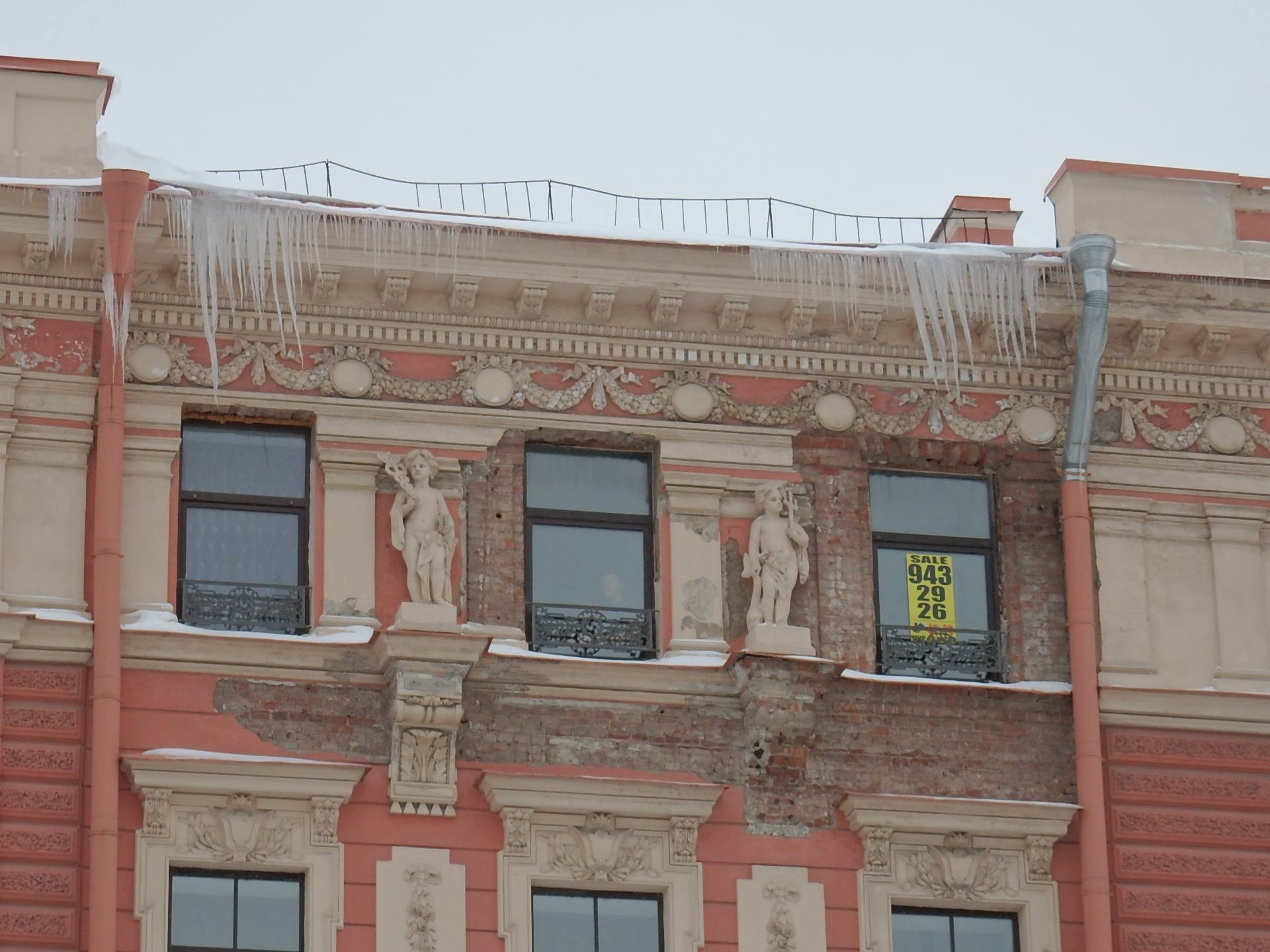
‘The cast is a collection of privileged, mournful lishnii cheloveks (as the “superfluous men” in 19th-century Russian literature were known) in late middle age, squabbling in rural exile, wondering what the world is coming to and regretting the past.’
‘We are all lishnii cheloveks.’
— Guardian Weekly, 4 February 2022, p. 57
Pushkin Square, on Pushkinskaya Street in Petersburg’s Central District. Photographer (or artist?) unknown. Thanks to Sveta Voskoboinikova for pointing it out to me. Our house is on the right side at the end of the street, and I miss it and the view from it (which includes the square) very much. I’m prejudiced, but I think our Pushkin is the most fitting monument to Russia’s national poet because he is the most human and humane of the ones I’ve seen. Our Pushkin stands above us, of course, but he’s also our neighbor rather than a (literal) titan towering over us. ||| TRR
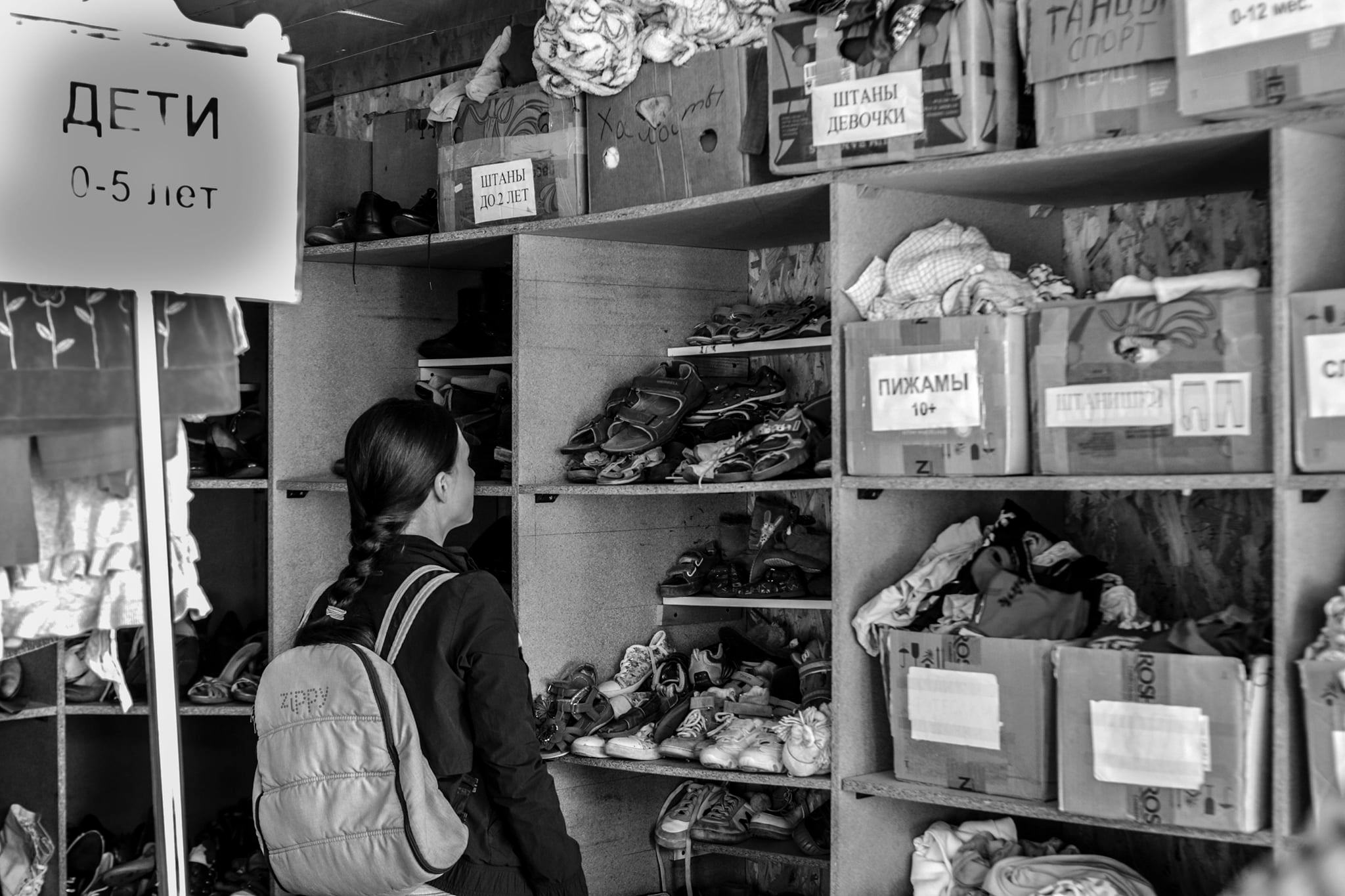
It’s quite shameful to talk about one’s own experiences of the war, which are minor compared to the experiences of people who found themselves in the war’s meat grinder. But I just wanted to say where it was that I got the strongest impressions of Ukraine’s new wartime reality . Not at the war museum in Kyiv (where the captured “export” tanks are located), not at the military hospital where I spoke with the wounded, not at the checkpoints or when I saw the aftermath of shelling in Stanytsia Luhanska and other places. And not even from the stories of survivors of the (torture) basements or the shelling. What was probably hardest for me back in 2016 was visiting the aid center for displaced persons in Kyiv, where people who had sometimes fled the war with only the clothes on their back could get basic things they needed and receive various forms of assistance. There is no forgiveness for those who killed tens of thousands of people and made millions of Ukrainians refugees.
Photo by Vadim F. Lurie. Translated by the Russian Reader
THIS MESSAGE (CONTENT) HAS BEEN CREATED AND (OR) DISSEMINATED BY A FOREIGN MASS MEDIA OUTLET FUNCTIONING AS A FOREIGN AGENT AND (OR) A RUSSIAN LEGAL ENTITY FUNCTIONING AS A FOREIGN AGENT.
I have been planning for so many days to write something good and proper about the fact that I (we) oppose war, that I (we) oppose the Russian government’s sending the army (soldiers, tanks) to the borders of Ukraine. (Is it just a scare tactic? Or is it really planning to attack?)
But everything that I could say here has been said a thousand times already, and this is especially scary. Russia is constantly anticipating war, waging wars, provoking conflicts, supporting armed groups outside its territory, bombing Syria, and sending “little green men” to other countries.
It was a revelation to me how calmly the school textbooks discuss this: “Russia borders sixteen countries and four unrecognized states.” Damn, what is this epidemic of unrecognized territories and why do they pop up next to Russia?
It makes me very sad and scared to see how even a minimal public discussion has been crushed and silenced now. In the spring of 2014, we took to the squares to march against the war. Yes, there were other, triumphant (shamefully triumphant) marches in support of Crimea’s annexation, but voices against it were also audible.
And although it is so little compared with the little that was earlier, I want to write (since Russia considers me a media outlet) at least here in my personal media outlet that I disagree with this state of affairs. I and we were not asked whether we wanted war, whether we wanted increasing tension on the border, whether we wanted a buildup of arms.
No, we don’t want war. And we have talked about it many times as we voted against Putin and his government, monitored elections to prevent vote rigging, organized solidarity actions and demonstrations, and did protest actions, performances, and exhibitions. We were against war and we continue to be against it. Alas, there are many people in Russia who watch TV and believe the propaganda, and there are also people who stubbornly fail to notice anything. It’s a shame not to notice these things, and it’s bad to notice them and keep quiet. But war is definitely not needed by anyone.
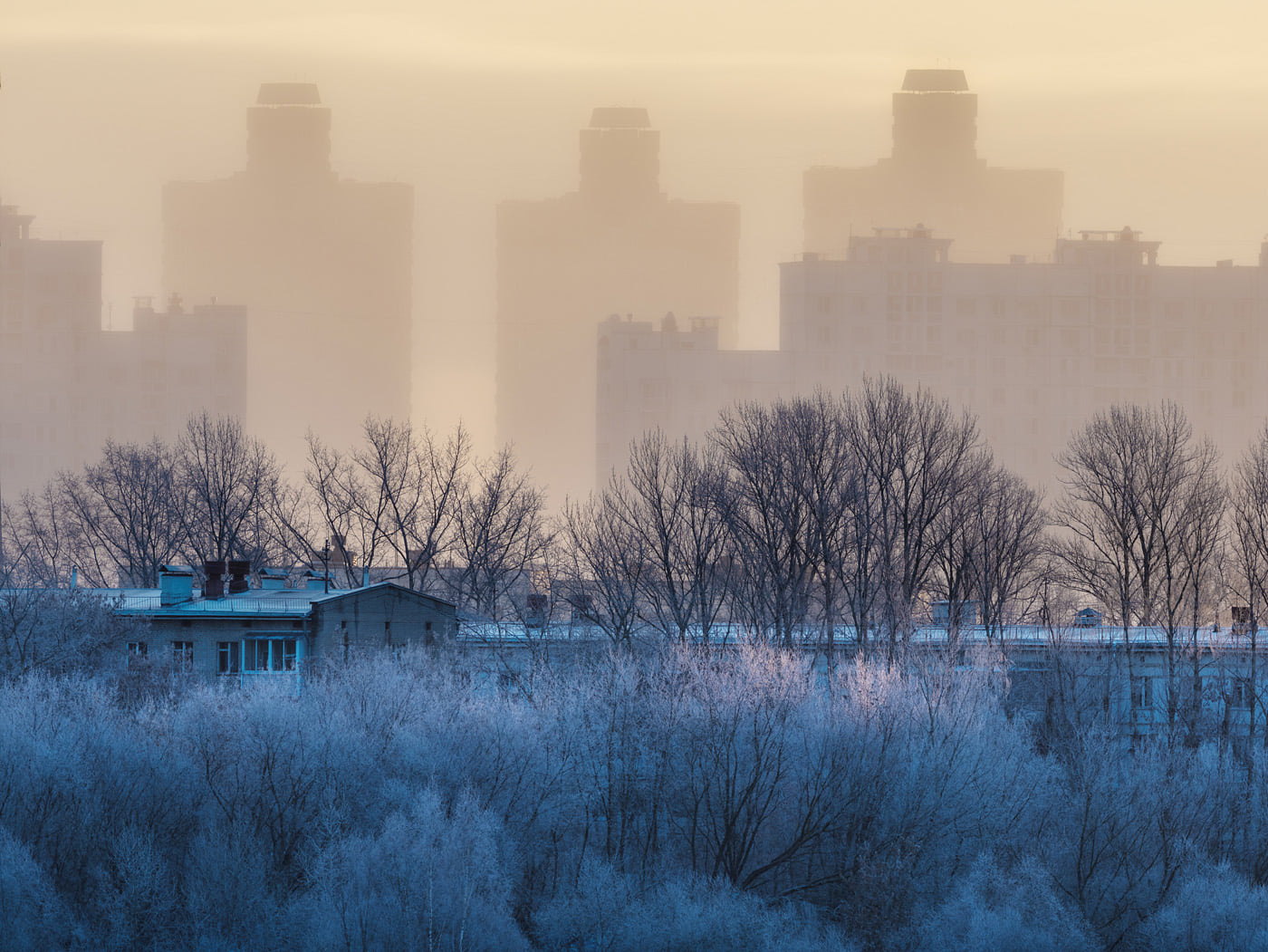
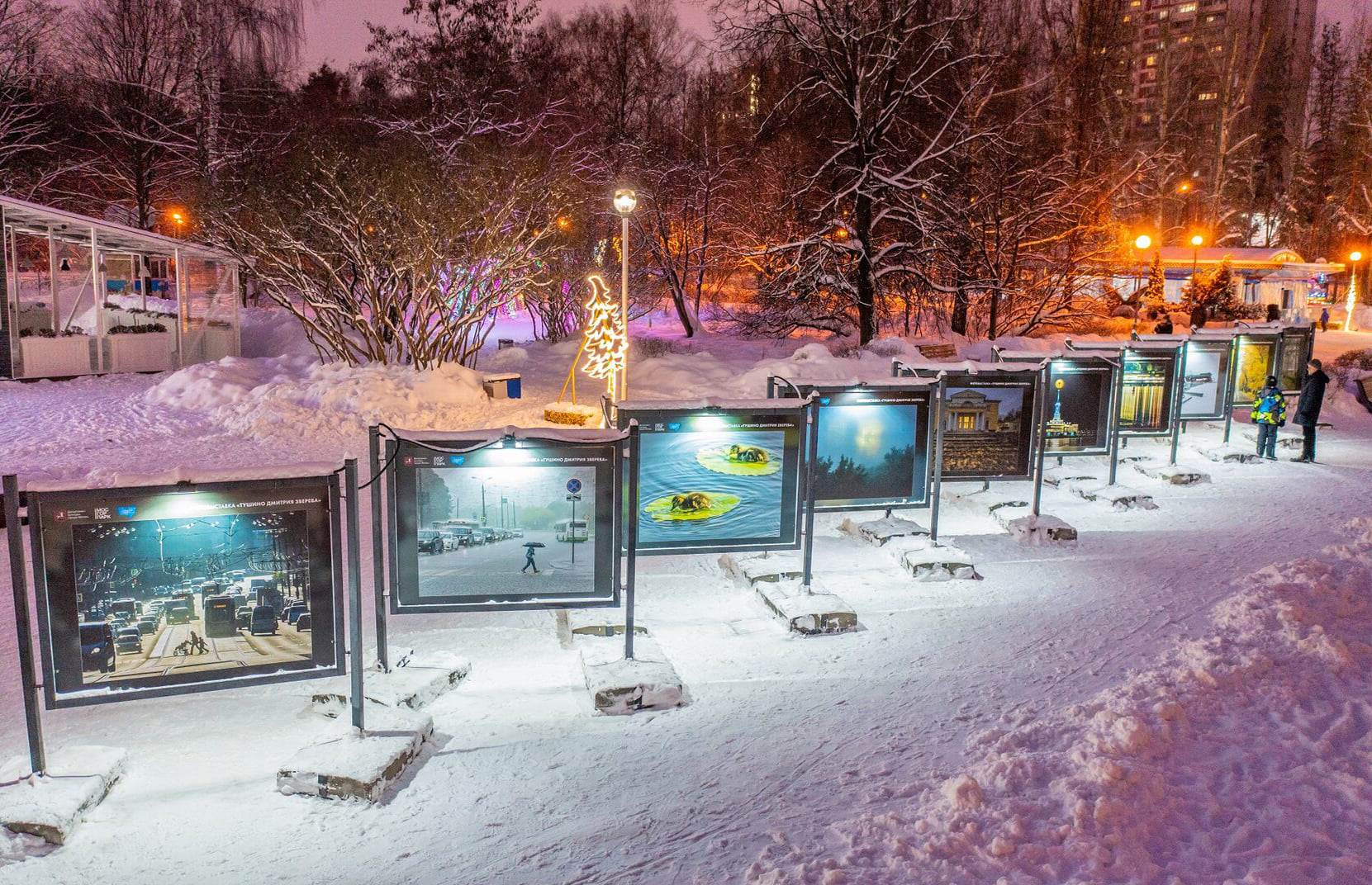
Dima Zverev, “A view of three high-rise apartment buildings on Lodochanaya Street on a frosty day”
Dima Zverev makes gorgeous photographs. Three years ago, he returned home to Tushino, a district in the northwest of Moscow. His photographs of the neighborhood will be on display at the Northern Park there until February 28. (See the album of photos in his announcement, below, for directions.) ||| TRR
Dima Zverev, Solo exhibition in Northern Park, Tushino, Moscow. Exhibition view
Petersburg, February 2, 2018. Photo by the Russian Reader
_____________
Just “for practice,” the Russian media, backed by Russian-language social media, has been lying for years about how Russian children and parents are treated by child welfare services in Finland. In most of these instances, their sole witness has been Finnish “human rights activist” Johan Bäckman, who has fed the baseless horror stories to the Russian media, many of them “reputable” outlets (e.g., Echo of Moscow).
The Russian media has published and broadcast them as was with absolutely no corroboration and without making any attempt to double-check Bäckman’s “facts.”
From time to time, to make it seem as if there really were something going on in nefarious Finland, the absurd Russian federal children’s ombudsman Pavel Astakhov (who played the judge on the first Russian court show) has fulminated against the Finnish authorities or made some demands or gone on a “fact-finding mission” there.
A few years ago, when Bäckman pushed too many people’s buttons at the same time, there was a brief period when a couple of Russian media outlets (including, unbelievably, Izvestia) ran pieces exposing Bäckman as a dangerous fraud. Then “polite people” brought Crimea back into the fold, and all was forgotten and forgiven when it came to Bäckman.
We now see that this was all a dry run for the full-scale Russian media attack now being waged on Germany in the name of Islamophobia and racism.
What puzzles me is why both the generals and the foot soldiers think there is not going to be any blowback from their hateful little escapade. Do they really think everyone but them is such a gullible pushover? ||| TRR, February 2, 2016
“Any action that dispels the illusions of order and resignation is a spell for more of the same.” Photo by the Russian Reader
________
Вообще, ходить вокруг соседа, помахивая битой и приговаривая «че ты дергаешься-то, че дергаешься, я еще ничего не сделал» – так же отвратительно.
________
В правильном мире из братской могилы на Пискаревском кладбище поднялись бы тысячи рук и разорвали бы этого лицемера на атомы.
The fact is that hovering around a neighbor, waving a bat, and saying “Why you so jumpy? Why you so jumpy? I ain’t done anything yet” is just as disgusting.
________
In a proper world, thousands of hands would have risen from the mass grave at Piskaryovskoye Cemetery* and torn this hypocrite into atoms.
________
* Piskaryovskoye Memorial Cemetery (Russian: Пискарёвское мемориа́льное кла́дбище) is located in Saint Petersburg, on the Avenue of the Unvanquished (Проспект Непокорённых), dedicated mostly to the victims of the Siege of Leningrad.
[…]
The memorial complex designed by Alexander Vasiliev and Yevgeny Levinson was opened on May 9, 1960. About 420,000 civilians and 50,000 soldiers of the Leningrad Front were buried in 186 mass graves. Near the entrance an eternal flame is located. A marble plate affirms that from September 4, 1941 to January 22, 1944 107,158 air bombs were dropped on the city, 148,478 shells were fired, 16,744 men died, 33,782 were wounded and 641,803 died of starvation.
I don’t know why, but I have come across ladies with dogs so many times that I could do an entire exhibition on the subject. And yet, for example, I have never encountered an old man with a cat! That’s as good a topic for a large-scale sociological study as any other! 🤓
________
Real “popular opinion” is what people say and do unrehearsed and uncoerced — not the dodgy sentiments that the Kremlin, Levada Center, and self-appointed Russia experts put in their mouths. ||| TRR
Social media posts translated by the Russian Reader
________
Update (27.01.2022). This, apparently, was the subtext for Ms. Vvedenskaya’s remarks, above:
Photo of the day: Vladimir Putin came to lay flowers at the Piskaryovskoye cemetery in St. Petersburg in honor of the 78th anniversary of the complete liberation of the city from the fascist siege. The Siege survivors themselves were not allowed into the cemetery — they were left standing behind the fence. Photo: Alexander Demyanchuk / TASS
I’m not sure what you get if you place the winning bid on this photograph by the fantastic Pskov photographer Dmitry Markov. (An NTF? A .jpeg file? A real print?) It should be in a museum. Source: OpenSea
⊕ ⊗ ⊕ ⊗ ⊕
Revolt Pimenov:
A quote about the first months of a certain war:
“I tried to read in the faces of the thousands what was in their minds this Easter day. But their faces looked blank. Obviously they do not like the war, but they will do what they’re told. Die, for instance.”
Perhaps worth noting: Putin hasn't personally commented on Ukraine since Dec. 23. His annual Tatiana's Day Q&A with students came and went today without a question on current events. Last year, one of the students asked him about his purported Black Sea palace.
It strikes me of note (not that this has any bearing or reflection on Putin's actual decision making) that there's very little sense in Moscow of people having any idea or interest in fact that their country may be days away from launching a devastating invasion of a neighbor
My dear Ukrainian friends! I want to express my support to you in connection with numerous reports about a possible Russian invasion of Ukraine. You should know that the vast majority of my friends in the art profession are not only against such aggressive behavior, but also strongly condemn it. We see that by increasing its military presence on the border, the Kremlin hopes to intimidate Ukraine and push Europe. This gang of people in power has long ago lost all sense of decent behavior, having completely turned into goons in terms of their mindset. The only deterrent for them is a united stance by the western countries on this issue. I really hope that after seeing this unity, they will crawl back to their lair, not daring to unleash hostilities. In any case, please accept my words of support and know that there are a lot of people in Russia who have not supported and are not going to support this government and its insane aggressive ambitions.
Translated by the Russian Reader
Update (28 January 2022):
The Pig Hut, as this exhibit is known, is the work of Rosemarie Trockel and Carsten Höller, and they, like Herr Weinberger, have an explanation for this work. Pigs and humans have similar nervous systems, they say, so they probably feel the same things. The stream has no way to know the psychomedical part of the reasoning. It approaches under the auspices of art and so it recognizes the pigs as readymades: humble, ordinary objects imported into this festively aesthetic space and thus invested with the condition of “art” by the mere fact of occupying its domain. By the same token, of course, the reflection in the glass renders the visitors themselves into readymades, making the corrupted stream even dirtier as it flows on toward the first of Documenta’s official buildings, Kassel’s Fridericianum.
Masha Ivashintsova, Red Cavalry Street, Leningrad, Winter 1977. Shot with a Zeiss Ikoflex 6×6. Courtesy of Facebook
When your weary mind
loses its balance,
when the steps of this staircase
give way beneath your feet
like a ship’s deck,
when your nocturnal solitude
doesn’t give a hoot about humanity,
you can
reflect on eternity
and doubt the purity
of ideas, theories, modes
of art appreciation
and, interestingly, the conception
by Madonna of her son Jesus.
But it’s better to worship what’s given
with its deep graves.
Later,
many years from now,
they shall seem so dear.
Yes, better worship what’s given
with its short roads.
Later, you’ll find them
strangely
large,
wide,
dusty,
strewn with compromises.
They’ll seem like large wings.
They’ll seem like large birds.
Yes, better worship what’s given
with its wretched standards.
Later, to the nth degree,
they’ll serve as a railing
(though not a particularly clean one),
keeping your hobbling truths
in balance
on this chipped staircase.
1959
Original text. Thanks to Katya Vidre for the suggestion. Translated by the Russian Reader
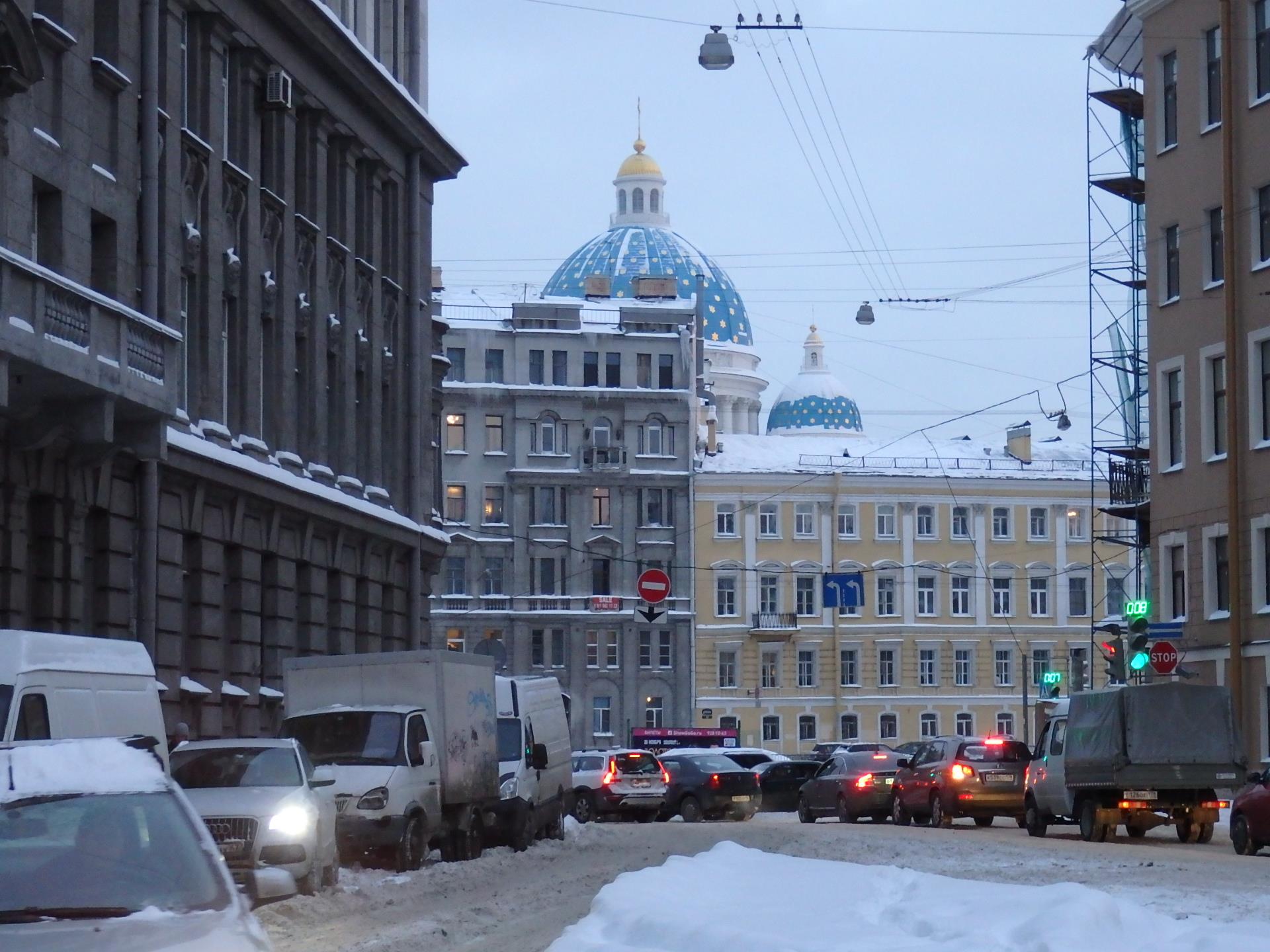
Corner of Bolshaya Podyacheskaya Street and Nikolsky Lane at the Fontanka River in Petersburg, with a view of the Trinity Cathedral of the Izmailovо Life Guards Regiment in the background, 11 November 2016. Photo by the Russian Reader
11 November 2021
Officials Decide to Send Network Case Convict Viktor Filinkov to Single-Cell Room, Then to Punitive Detention Mediazona
November 11, 2021
Prison officials have decided to send Viktor Filinkov, convicted in the [Network] case, who was sent to Orenburg Correctional Colony No. 1 in August, to a single-cell room for a month, and then to a punitive detention cell for ten days. His public defender Evgenia Kulakova reported this turn of events to Mediazona.
According to Kulakova, yesterday the prison’s disciplinary commission decided to send Filinkov to a single-cell room [abbreviated EPKT in Russian, this is a prison within a prison for the most “unruly” or “dangerous” inmates] because of razor blades that, as the prisoner noted, had been planted [in his cell] by Federal Penitentiary Service officers on his birthday. The second penalty was imposed on the young man for “inter-cell communication.”
Filinkov was delivered to Orenburg Correctional Colony No. 1 in August after 45 days in transport. Since then, he has spent only three days in the general population. He has spent the rest of the time in a punitive isolation cell or strict conditions of detention.
On October 6, Filinkov received a month-long reprimand for his [alleged] refusal to sweep the exercise yard in the colony and transferred to a single-cell room. He was also put on a watch list as someone “prone to systematic violation of internal regulations.” Kulakova also said that on October 30, Political Prisoners Day, he went on a hunger strike.
Filinkov demanded freedom for all political prisoners and that he be moved from solitary confinement. A few days later he added a new demand — that books, newspapers and writing materials be brought to his cell. He ended his hunger strike on November 9.
In 2020, the Second Western District Military Court, sitting in St. Petersburg, sentenced Filinkov to seven years in a penal colony in the Network case. He was found guilty of involvement in a terrorist community (punishable under Article 204.5.2 of the Criminal Code). Filinkov was the first of the young men charged in the case to report that he had been tortured by the security forces.


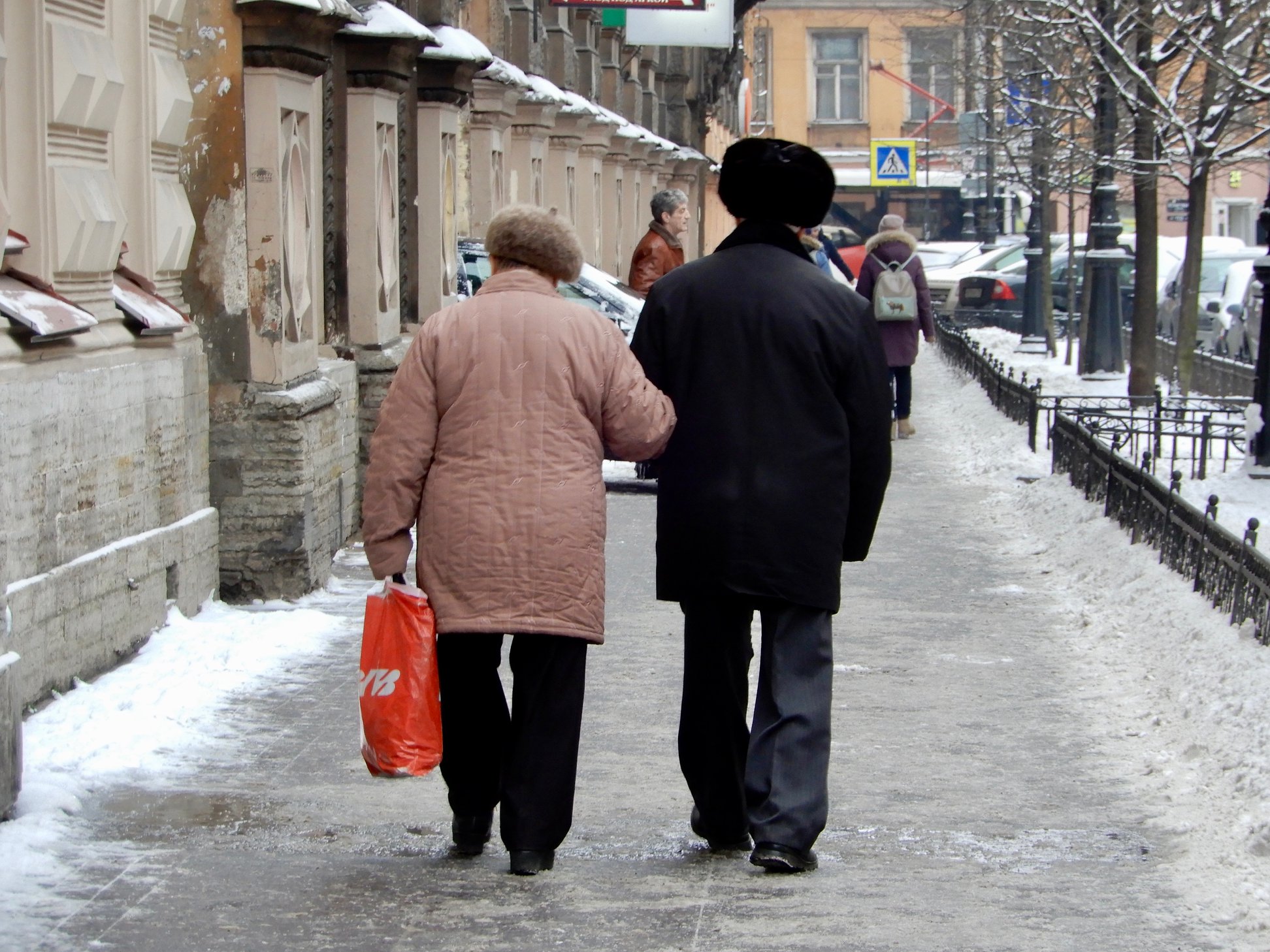


 Somewhere in the far south of St. Petersburg, 29 November 2015. Photo by the Russian Reader