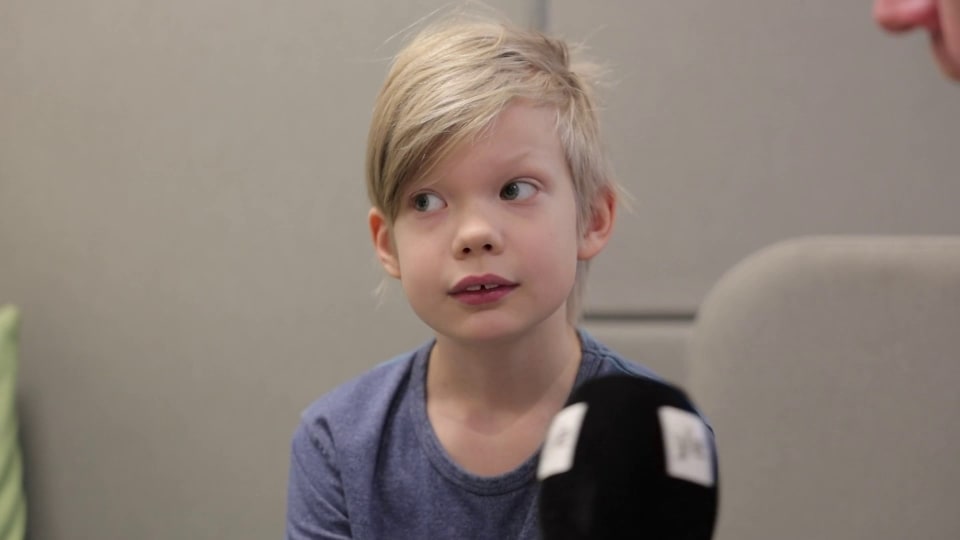
The Russian language has been popular for years at the Lauritsala School in Lappeenranta. Earlier this year, it was still uncertain whether Russian classes could be set up due to a shortage of applicants. In February, nine-year-old Aleksi Liuttu told Yle that he would be ready for Russian lessons.
In Lappeenranta, there has been insufficient enrollment to offer the Russian language as as elective starting in the fourth grade.
This is a rare situation, because for at least the last nine years, schoolchildren in Lappeenranta have been able to study Russian as an elective A2 language from the fourth grade.
Yle reported in February that the Russian language’s popularity in primary schools has plummeted rapidly in several cities. The decline was evident in the languages chosen by third-graders this spring, about a year after Russia began its invasion of Ukraine.
Spanish was the most popular language
No French groups will be formed in Lappeenranta this year either. Instead of Russian and French, fourth-grade students in Lappeenranta can elect to study Spanish and German as A2 languages.
Spanish was by far the most popular language. This was the first time that Spanish was offered as an elective in all primary schools in Lappeenranta. The language elective will be implemented in five schools, whereas previously it could only be pursued in two schools.
German groups will start at seven schools. There were almost equal numbers of those who chose French and Russian, but they were so scattered around the city that it was impossible to set up a group at any one school.
A language group is established when at least ten pupils have elected to study the same language.
“Brainwashing” California-style, from my morning post
“Brainwashing”, “an old Soviet tradition,” and the absence of inconveniences: why are Russian speakers in no hurry to get vaccinated against the coronavirus?
The share of native foreign-language speakers among the unvaccinated residents of Finland continues to grow. The Yle newsroom found Russian speakers who had not been vaccinated against COVID-19, and found out their reasons
With the advent of omicron, the Finnish authorities expressed particular concern for the republic’s foreign-born residents: there are many infections among them and a noticeable number of people who have refused vaccination.
Special attention paid to native foreign-language speakers
The vaccination rate continues to grow in Finland, including among residents whose native language is not the official Finnish, Swedish, or Sami. According to estimates by THL (Department of Health and Social Development), this indicator does not differ much among Russian speakers than from other native foreign-language speakers.
At the same time, the proportion of native foreign-language speakers among the unvaccinated has increased.
“In October, people who speak foreign languages [as native languages] accounted for 21% of all unvaccinated people in Finland. In mid-December, this figure rose by a couple of percent points,” said Natalia Skogberg, research director of THL’s group on COVID-19 among people of foreign origin.
Skogberg notes that the reasons for refusing to be vaccinated can be very different: doubts about the safety of the vaccines, confidence in one’s own health and the lack of risk from the virus, distrust of public officials, difficulties with the Finnish language, and the inability to distinguish misinformation from reliable information. She argues that the opportunity to get answers in one’s native language is a “big plus.”
“The authorities have published a lot of information in different languages. Information and recommendations have varied depending on the stage of the epidemic and, for example, the level of vaccination,” Skogberg assured us.
A Finnish health service video about coronavirus vaccines with Russian voiceover
THL’s travel recommendations in Russian have been viewed 16,000 times during the pandemic. More than 4,000 people have viewed its Russian-language page about the coronavirus, and a video about the vaccines with a Russian voiceover has garnered almost 1,700 views. THL noted that they have been trying to convey information through Russophone organizations and targeted advertising on social networks.
Russophone anti-vaxxers have their say
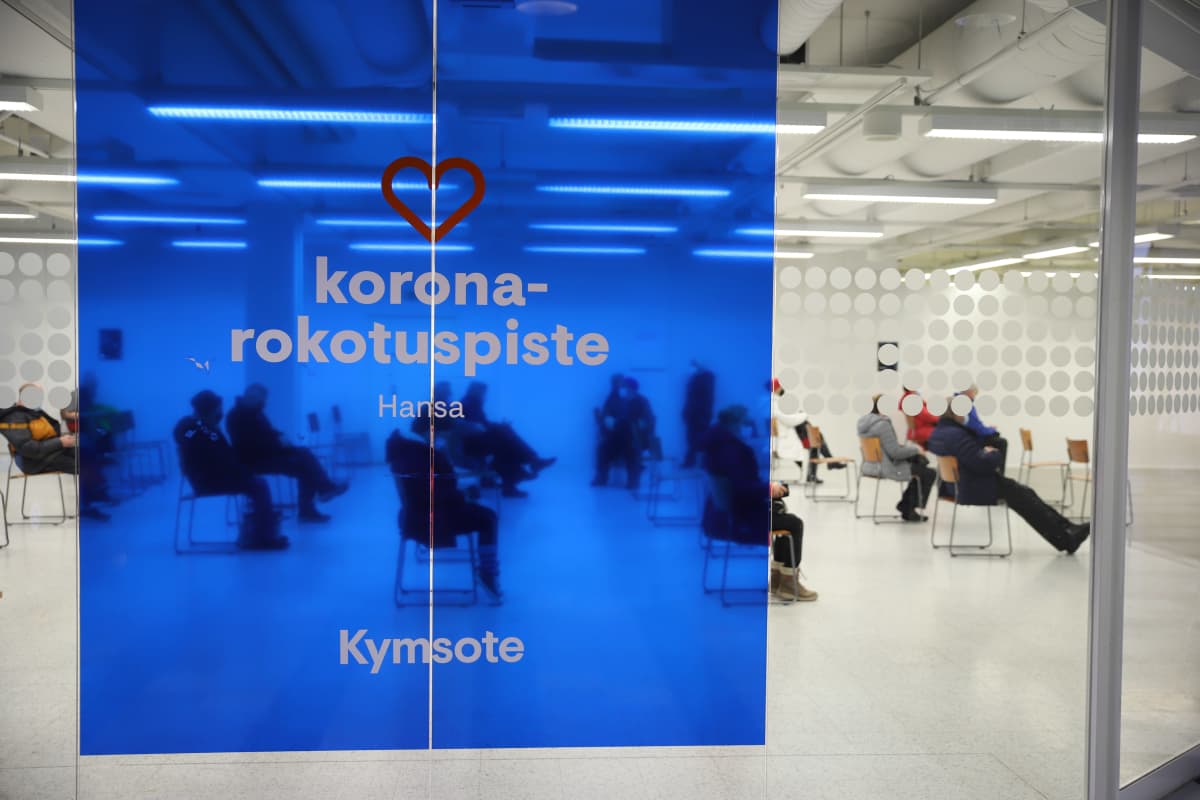
A vaccination center at a shopping mall in Kouvola. Photo: Antro Valo / Yle
The topic of vaccination is raised not only in THL bulletins. Heated debates for and against vaccinations take place on forums and online communities for Finland’s Russian-speaking residents. A Yle News journalist sent dozens of messages to those who opposed vaccination on the internet, asking them to substantiate their position for this article. Many of them turned us down. One person explained that they had rejected our request because our questions about vaccinations were “quite provocative.” Another person said they did not want to be involved in “brainwashing.” A third person called the work of the authorities and the media during the pandemic “one hundred percent misinformation” and “a crime against [human] rights and humanity.” One of our interlocutors was hospitalized with the coronavirus during our correspondence.
However, there were also those who were willing and able to express their opinions.
Tatyana (her surname has been withheld at her request), who is a Finnish citizen and lives in Kuopio, said that she did not want to be vaccinated “for personal reasons.”
“I’m not going to get vaccinated either in Finland or in any other country. […] I believe that before they are vaccinated, people with certain health problems or with a history of heart surgery should at least be given a complete physical” said the woman, who works in the cleaning industry.
According to her, this decision has already begun to affect her work, as her boss had threatened to cut her hours. In other areas of life, she did not feel any problems, since she had “no need of pubs and discos.” The woman also noted that she did not need information about vaccination in Russian, as she speaks Finnish.
Vladimir, an information and communications technology specialist living in Porvoo, has also refused to be vaccinated. (He also requested that his last name be withheld.)
“The vaccine is new and the side effects in the long term are unknown, as well as the number of vaccinations that will need to be done,” the young man said when asked to substantiate his position.
He also pointed out that even with three vaccinations, one can get sick with COVID-19, and a vaccinated person can infect people with whom they come in contact.
“I think it is more important to be able to do a test and be sure that you don’t have the virus, that you don’t have the asymptomatic form and won’t infect anyone. I consider [good] hygiene and a medical mask sufficient precautions,” Vladimir argued.
He also pointed out that being unvaccinated did not cause “critical inconveniences” to life in Finland. Among recent difficulties, the ICT specialist recalled that he was not able to eat at a particular restaurant due to the QR-code mandate. The man found a way out: he went instead to a nearby fast food outlet, where he was not asked for a code.
Vladimir argued that dividing people into “the vaccinated with their privileges” and the unvaccinated did not encourage them to sign up for vaccination in any way. He admitted that his position would change only if his employer “obliged” him. The man noted that some of his friends had been vaccinated for this reason.
“News about the coronavirus has turned into background noise, I don’t follow it in detail,” said Vladimir, adding, however, that he had read official recommendations and Yle’s news reports.
THL responds and even agrees
Yle asked THL chief medical officer Hanna Nohynek to comment on the stance of our unvaccinated protagonists. She even agreed with some of their points.
Thus, one of THL’s main COVID-19 spokespeople said that mRNA vaccines were not in widespread use until 2021. At the same time, she noted that the technology itself had been researched for about twenty years, and today hundreds of millions of doses of mRNA vaccines had already been produced.
“Detailed safety monitoring is carried out, so even rare side effects are known. And there has been constant reporting,” Nohynek assured us.
According to her, some restrictions were made for safety reasons. People under the age of forty are better off not getting adenovirus vector vaccines (AstraZeneca, for example), and the Moderna mRNA vaccine is not recommended for men under the age of thirty.
Nohynek also acknowledged the truth of the claim that even with three doses of the COVID-19 drug [sic], one can get sick.
“This is true, but the vaccinations are primarily aimed at preventing severe forms of the coronavirus. […] None of us can know how badly they will suffer from the disease when faced with omicron,” THL’s chief medical officer argued.
Nohynek said that having a medical examination before getting a vaccination was an “old Soviet tradition” that is not considered necessary in Finland. However, she noted that it was important to be aware of allergies. Perhaps it was not worth getting an mRNA vaccine if one had them.
THL’s chief medical officer commented on a specific problem that, judging by the discussion on the internet, Russians face. If a person has already been vaccinated with Sputnik V, can they be vaccinated in Finland?
“It is effective and safe to use different vaccines. Of course, when a large number of doses is involved, more local symptoms may occur, such as short-term fever, muscle pain, and fatigue.”
Nohynek concluded by saying that the protection provided by the vaccine is considerable even for healthy young people.
Thanks to Tiina Pasanen for the heads-up. The lead image, courtesy of Montage Health, was not part of the original article. Translated by the Russian Reader
Yle’s Finnish translation of its original Russian-language article is a brilliant example of what I would call “reverse” language localization. Here is a telling passage:
THL:n ylilääkäri Nohynek: rokotteet ovat turvallisia ja niiden tärkein tehtävä on suojata vakavilta tautimuodoilta Novosti Yle pyysi THL:n ylilääkäri Hanna Nohynekiä kommentoimaan Tatjanan ja Vladimirin väitteitä. Nohynek kertoo, että mRNA-rokotteita ei ole ollut laajassa käytössä ennen vuotta 2021, mutta itse tekniikkaa on kuitenkin tutkittu jo parikymmentä vuotta. Tähän päivään mennessä mRNA-rokotteita on annettu satoja miljoonia annoksia.
This is my English translation of this excerpt:
THL chief medical officer Nohynek: the vaccines are safe and their main function is to protect against severe forms of the disease Novosti Yle asked THL’s chief medical officer Hanna Nohynek to comment on Tatyana and Vladimir’s claims. Nohynek explains that mRNA vaccines were not in widespread use until 2021, but the technology itself has been studied for some twenty years. To date, hundreds of millions of doses of mRNA vaccines have been administered.
Here is the “same” passage in the original Russian article:
THL отвечает и даже соглашается Редакция Yle попросила главного врача Ведомства здравоохранения и социального развития Ханну Нохинек прокомментировать позицию наших невакцинированных героев. С некоторыми пунктами она даже согласилась. Так, один из главных спикеров THL по вопросу COVID-19 сообщила, что вакцины, произведенные с использованием технологии мРНК, не были в широком использовании до 2021 года. При этом она отметила, что сама технология изучалась около 20 лет, а на сегодня сделаны уже сотни миллионов доз мРНК-вакцин.
This is my English translation, as above:
THL responds and even agrees
Yle asked THL chief medical officer Hanna Nohynek to comment on the stance of our unvaccinated protagonists. She even agreed with some of their points.
Thus, one of THL’s main COVID-19 spokespeople said that mRNA vaccines were not in widespread use until 2021. At the same time, she noted that the technology itself had been researched for about twenty years, and today hundreds of millions of doses of mRNA vaccines had already been produced.
We don’t ever think. We just have a small collection of tapes we stick in slots in the back of our heads when the need to say something “smart” arises.
* * * * *
Russian speakers living in Finland are not a homogeneous group, but one thing unites them strongly: a large number of them regard asylum seekers with a grain of salt.
“I relate to the phenomenon negatively. I think the people coming here do not have the necessary information on how people live here. They are trying to come here with their own traditions and customs, and at the moment this hinders their adaptation,” say Gleb Ulanov, who lives in Helsinki.
[. . .]
Despite the fact that the Russians themselves are immigrants, they do not want to compare themselves to the people now arriving from the Middle East. Russian speakers are of the view that they do not have similar adaptation problems.
“The biggest difference is the mentality. Most Russian speakers adapt,find work, and respect Finnish customs and celebrations. In my experience, only a small minority of people from the east does this. They prefer to form their own communities,” says Grigory Berkinfand, who lives in Helsinki.
[. . .]
Many Russian speakers fear that Finns have a naive attitude toward the asylum seekers, and do not properly distinguish those who are genuinely in need of protection.
Just like Finns, Russians are primarily concerned about safety. Many say that traditionally peaceful Finland is changing at a rapid pace.
Gleb Ulanov, who in Soviet times lived for about a year in the Caucasus, is of the opinion that merely integrating the refugees is not enough. In addition to telling the asylum seekers about Finnish customs and laws, Finns should also tell the refugees about culture and how they should behave around them.
[. . .]
Even a man from Russian Karelia who is living in a reception center and applying for political asylum questions the motives for coming to Finland of many of the people living with him. The man wished to remain anonymous.
“I can see what is happening here. They do not appreciate either the local culture or the help they receive. The majority are of the opinion that the Finns are obliged to help them. Many of them say that one can live here without working, and everything is given free of charge. They are quarrelsome if they notice they have not been given something and they complain about conditions. For example, I am really satisfied with everything here. Ihave not received such a warm reception in my own country,” he said.
Yle, the Finnish public broadcaster, asked four recent immigrants to Finland, people who are still in the process of studying Finnish and integrating into the society, to interview representatives of the country’s main political parties in the run-up to parliamentary elections, which will take place there on April 19.
The catch was that Yle also asked the parties to send as interviewees party members who were immigrants and had themselves learned Finnish as adults or teenagers. Among other things, the interviewees were asked to explain how they had come to join the particular parties they now represented.
Interestingly and unsurprisingly, the Finns Party (Perussuomalaiset), notorious for its anti-immigrant views, was unable to provide an interviewee for the program.
The Left Alliance (Vasemmistoliitto) sent as its representative Suldan Said Ahmed, a young entrepreneur and politician originally from Somaliland. (Somaliland is an autonomous region of Somalia that seeks recognition as an independent country from the rest of the world, but as yet hasn’t got it.)
According to Said Ahmed, solidarity, community, and internationalism are the three words that best sum up the Left Alliance for him.
If like me, you are someone studying Finnish, you should love listening to Said Ahmed, because his Finnish is much easier to understand and “correct” than that spoken by “real” Finns, what with their variety of local dialects and reliance on puhekieli (conversational language), which is often shockingly at variance from the “proper” textbook Finnish we foreigners and immigrants learn on courses.
It seems Said Ahmed has political ambitions in his native Somaliland as well. He would like to become the youngest MP there and is planning to stand, apparently, in this year’s upcoming parliamentary elections there.
Said Ahmed would also like sometime in the future to be president of Finland, but that job, alas, is constitutionally only open to native-born Finns. (So far, I would like to think for his sake.)
I find all of this so fascinating in part because, just last week, I had to go verbally postal on a few of my classmates in the advanced Finnish course I have been taking here in the former capital of All the Russias. For the second or third time this semester, they regaled the rest of us with dark tales of how Somalians like Said Ahmed are ruining the fair country of Finland by moving there in droves to become—yes—welfare scroungers. Meanwhile, the government has decided, allegedly, not to let more Russians to move to Finland, even though generally it wants to encourage more immigration to the country to help care for its aging population, etc.
You get the drift.
It might rock my classmates’ world to find out that one of the interviewers in the “Let’s Meet the Parties” program (along with a man from the Philippines, a woman from Lithuania, and a woman from South Korea) is Svetlana Siltanen, who emigrated to Finland from Russia last year.
Svetlana Siltanen. Photo: Mikko Kuusisalo / Yle
My “dream a little dream” today would be to put Yle in charge of public broadcasting for a year in Russia. What a difference that could make to people’s outlooks here.
Helsinkiin putosi monta pommia talvisodan ensimmäisenä päivänä. Kuvassa Teknillinen korkeakoulu. Kuva: YLE Kuvapalvelu
Suomalaiset ovat muistaneet talvisodan alkamista. Talvisota alkoi tasan 75 vuotta sitten. Talvisota alkoi, kun Neuvostoliitto eli Venäjä hyökkäsi Suomeen marraskuun 30. päivä vuonna 1939.
Monet suomalaiset muistavat vielä talvisodan pommitukset. Venäjän armeijan lentokoneet pudottivat pommeja Suomen kaupunkeihin jo sodan ensimmäisenä päivänä. Esimerkiksi Helsinki kärsi suuria vahinkoja.
Talvisota loppui maaliskuussa 1940. Rauhansopimuksessa Suomen täytyi antaa Neuvostoliitolle suuria alueita. Suomi menetti esimerkiksi Viipurin, joka oli Suomen toiseksi suurin kaupunki.
Talvisota oli osa toisen maailmansodan tapahtumia. Suomi ja Neuvostoliitto sotivat myös vuodesta 1941 vuoteen 1944. Tuota aikaa sanotaan jatkosodaksi.
[Photo caption: Many bombs fell on Helsinki on the first day of the the Winter War. The Helsinki University of Technology is pictured here. Image: YLE Photo Service]
Finns have remembered the start of the Winter War. The Winter War began exactly 75 years ago. The Winter War began when the Soviet Union or Russia attacked Finland on 30 November 1939.
Many Finns still remember the Winter War bombings. Russian military aircraft dropped bombs on the cities of Finland already on the first day of the war. For example, Helsinki suffered major damage.
The Winter War ended in March 1940. Under the peace treaty, Finland had to cede large areas to the Soviet Union. For example, Finland lost Vyborg, which was Finland’s second largest city.
The Winter War was part of the events of the Second World War. Finland also fought against the Soviet Union from 1941 to 1944. This period is called the Continuation War.