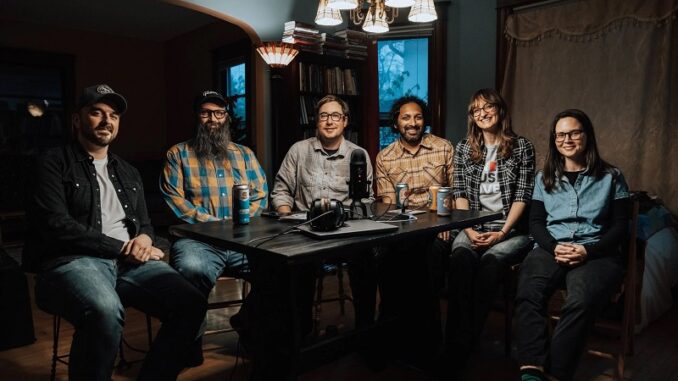
The Gated Community. Photo: Tom Smouse (via Americana UK)
In the face of violence in the streets and unlawful detention what can a musician do, really? They can document what’s going on, make their point and try and raise awareness (and maybe the odd dollar) of the organisations that are protecting citizens from their own law enforcement. Read that sentence, and notice just how screwed up it is to describe daily life in the “shining city on a hill”.
Which brings us to today’s song from The Gated Community. It’s a new recording of a very recently written song, written in response to events in Minneapolis, as singer and songwriter Sumanth Gopinath explains: “After Renee Nicole Good’s murder by ICE agent Jonathan Ross here in Minneapolis on January 7, 2026, I began writing songs that more explicitly address the situation we’re in. I find the ‘protest song’ challenging, as it requires a directness that I tend to avoid in my songwriting. This is my third serious attempt as of late and the one with the most rousing, energizing chorus of the bunch. I am so moved and inspired by the bravery, intelligence, and steadfastness of my fellow Minnesotans in the Twin Cities who, against the odds, are acting tirelessly on behalf of our most vulnerable community members. This song is for them.”
The song is available on Bandcamp, it has a price and there’s an option to add a little more to support the people organising for decency: everyone involed in the recording donated their time and all of its proceeds will be donated to local aid organizations including Minnesota Immigrant Rights Action Committee (MIRAC) — an organization supporting individuals and families impacted by unjust immigration laws and deportations.
And who are The Gated Community? Well, this band that has been described as a Marxist Bluegrass band (you don’t get a lot of them to the pound) was originally a vehicle for Sumanth’s political songs, but has evolved over nineteen years, expanding in size and scope to include many roots music styles and more personal songwriting. It was formed when Sumanth moved from New Haven to Minneapolis to begin working as a professor of music theory at the University of Minnesota, and now features six singers, with the band combining professors like Sumanth (vocals, acoustic guitar, keyboards) and Beth Hartman (vocals, percussion), and artists from various parts of the Twin Cities scene like Rosie Harris (vocals, banjo, cello), Paul Hatlelid (vocals, drums, acoustic guitar), Cody Johnson (vocals, bass), and Nate Knutson (vocals, guitars, mandolin).
thanks and much love to our families, friends, and fans
All proceeds from this recording will go to one or more organizations resisting the occupation of our cities by ICE and providing aid to our community. Everyone involved generously volunteered their time and resources to this project.
Thank you to Tom Campbell, Eva Cohen, Carl and Ina Elliott, Jim and Sara Harris, Marcus dePaula, Michael Gallope, Gabrielle Gopinath, John Miller, Mark Nye, Daniel Owens, Matt Rahaim, Ian Rans, Ellen Stanley, Ryan Stokes, Dean Von Bank, and our families, friends, and neighbors.
Source: The Gated Community (Bandcamp). I would strongly encourage you to buy this digital record (paying as much as you wish) in support of the embattled people of Minnesota, my home state. ||| TRR
Abkhazia is a country (some would argue an occupied region) with which it is impossible to work without ignoring the political context. It is an unrecognized state that in the 90s separated from Georgia, wanting to gain independence. Independence that came at the cost of war, brutality on both sides, historical trauma and nationalist myths. Most of the international community calls those events the Georgian-Abkhazian conflict, while Abkhazians themselves believe that it was the Patriotic War, singing about the victory in traditional music. Unrecognized, but actual separation from Georgia became possible due to participation of North Caucasian volunteers, and after that, assistance from Russia. Today there are Russian military bases in Abkhazia, so Georgia perceives Abkhazia as an occupied region, although similar thoughts can be voiced on the other side of the Georgian-Abkhazian border.
Given the painful past, ambiguous present and shaky future of Abkhazia, any project with its culture can be perceived as a political statement. Especially if the project is made by a North Caucasian label with residence in Germany and an independent nomadic director. That is why we are happy that we are releasing films 12 years after they were recorded: we had time to think and choose our words.
While filming on Gagra beach, a local TV station caught him for a story titled “Wow, a French filmmaker came in search of a unique culture,” quite typical of regional media in the Caucasus. The journalist then asked Vincent if Abkhazians have well preserved their musical heritage.
[Vincent laid it on thick.]
“It is very bad. You have the most beautiful music, but it is very difficult to talk about its preservation and development. If everything goes on like this, you will lose everything. You need more work.”
This was a very important and thoughtful reaction for us. European attention to Caucasian cultures sometimes perpetuates oriental clichés and deceptively reassures locals: “Europeans are coming to us in search of lost antiquity, so everything is fine. We are still ancient and unique.” In this sense, Vincent’s response was both sobering and provocative. And even total disagreement with the brash Frenchman is also a good option. It’s either work or don’t listen to those who learned about your culture yesterday.
In addition, in interviews, and in general during the course of the project, we said a lot that it was important to document the diversity of Abkhazian music. While we were trying to find the most ancient and ‘authentic’ forms of folklore, Vincent insisted on recording everything from state choirs to late patriotic songs.
Today it seems to us that this is the political and social meaning of the project: to start a living archive with different music from Abkhazia. Music that is not limited to the war for independence and the defense of political freedom before a new ally. Before the 90s, Abkhazians had bright moments in history and battles sung in songs.
Besides, in 2013 we could only meet folklorists, bearers of tradition and rare indifferent officials who were interested in working on the project. Today we are releasing this release with the support of the cultural center SKLAD in Sukhum. It is not enough for young curators and artists to preserve culture and revel in nostalgia. Instead, they are creating a new context. 12 years ago such initiatives were hard to find. Now they are a visible voice of contemporary Abkhazia. Our films and recordings are intended, among other things, to make such voices audible.
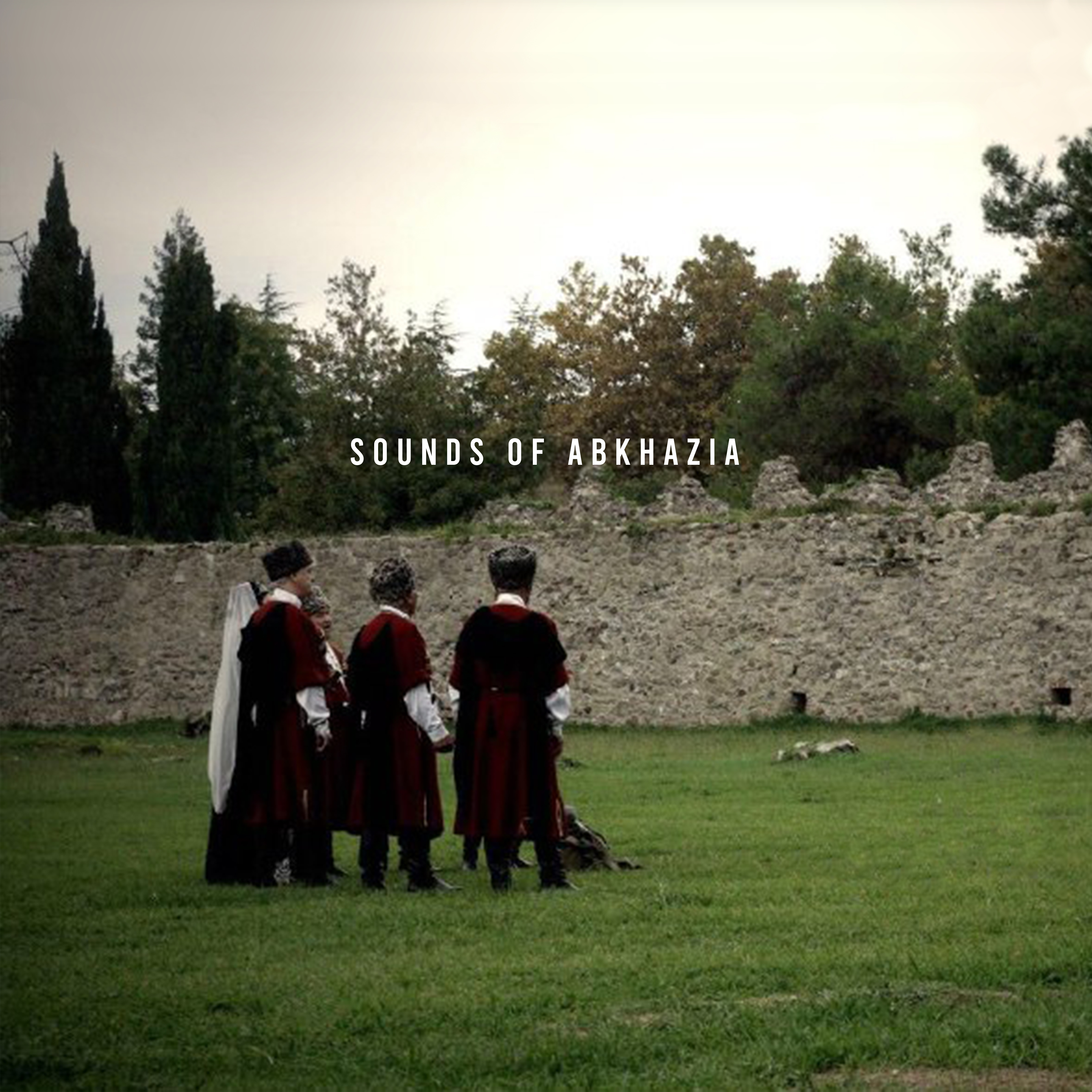
A collection of ten short films recorded in Abkhazia, an independent republic bordering the Black Sea. Filmed by Vincent Moon and produced by Petites Planètes in collaboration with Ored Recordings. Listen to the album on https://oredrecordings.bandcamp.com/album/sounds-of-abkhazia
“When an empire falls, does it make a sound? And who is there to hear it?” – so read the opening line of the call for papers for this issue in October 2021. Looking back at that text from the vantage point of 2025, that sounds far too optimistic and premature. Shortly after that call was published, the empire in question made a whole lot of noise about its unwillingness to stay fallen. The shadow of Russia’s brutal war of conquest in Ukraine hangs over this issue – as it has over any project that deals with the post-Soviet since February 2022 – determining both its shortcomings and, in a perverse way, its urgency.
That the full-scale invasion came to many of us as a shock is the result of complacency and unwillingness to listen to the comparatively quieter rumblings that have been shaking the region over the past two decades. To the fact that the invasion commenced already in 2014 with the occupation of Crimea and Russian military support for separatist forces in Donetsk and Lugansk. To the 2008 week-long war with Georgia that concluded with Russian occupation of the disputed territories of Abkhazia and South Ossetia. To the forceful integration of Belarus into Russia that began as soon as the Belarusian dictator Lukashenka came to power in 1994 and intensified with the establishing of the so-called “Union State” in 1999. Not even to mention the Russian imperial ventures in Africa and the Middle East.
The world refused to listen until the noise became impossible to ignore – the noise of bombs and artillery shells falling on Kyiv, Kharkiv, Mariupol, Odesa, Dnipro, Zaporizhzhia and many more. Yet even these sounds fall on deaf ears far too often: many among the anti-imperialist left, enamored by the platonic ideal of a multi-polar world, seem to prefer listening to Putin’s propaganda, just as many left-leaning intellectuals were similarly entranced by Soviet propaganda during the Cold War. And many across the political spectrum – including the sitting US president – who campaign against military aid to Ukraine seem to prefer the comfortable silence of subjugation to the noisy cacophony of resistance.
What, then, can a niche academic publication on sound(s) from the post-Soviet realm – in itself a controversial designation tinged with colonial history – hope to achieve? Especially one edited by a Russian-Jewish academic based in Western Europe, with all the problematic positionality this brings? Perhaps nothing. Or perhaps, the promise of a sonic epistemology long held as a keystone of sound studies – that of attuning and entangling oneself with the object of listening as opposed to holding it in a distancing gaze – could be fulfilled at least to some extent here, opening some ears and minds to the politics of the region.
In the video installation Repeat after Me by the Ukrainian artist collective Open Group – arguably the most important sound artwork of this decade and the centerpiece of the last Venice biennale – Ukrainian war refugees recount their experiences of the invasion while recreating its soundscape with their voices: the sounds of shelling, explosions, war planes and drones, air raid sirens, etc. A row of microphones in front of the screen and onomatopoeic subtitles in the video invite the public to join in and voice those sounds in karaoke fashion as a “gesture of togetherness” (Keylin 2023: 128). The playful format allows participants to empathize with the refugees’ traumatic experiences from the safe distance of Verfremdung (estrangement), while making them acutely aware of the very safety and distance that they enjoy. In this way, Repeat after Me attunes the audience both to the (sonic) reality of the war and to their own positionality.
Hence, the aspiration of this issue: to make the post-Soviet realm audible – not as a continuous, homogenous soundscape far too often conflated with Russia, but as a cacophony – decidedly not a symphony – of diverse cultures, identities, aesthetics, and political programs; to sound out both the connections that gave the Second World its identity against the First and Third ones and the contradictions that made it fall apart. In the hope that listening – from a safe distance – to the sounds of the post-Soviet realm can attune the reader’s ear to the voices coming from it.
A multitude of limitations – some fundamental, some situational – work against this aspiration. First, the diversity of sound cultures and the complexity of political relationships within the post-Soviet space are far too vast to address comprehensively in any single publication. Second, the discipline of sound studies has only begun to establish itself in the region over the past decade, often lacking institutional support and publication venues. Moreover, much of this emerging discourse, especially in Russia, orients itself more towards Western academic scholarship than towards the post-Soviet realm and its own sound practices (e.g., the History of Sound book series at the New Literary Observer press, which in large part consists of translations of key anglophone works). One important exception that has to be mentioned here is the 2018 multilingual special issue of the Topos journal, P.S. Soundscapes,edited by Benjamin Cope and Pavel Niakhayeuand dedicated to sound and music in contemporary Eastern Europe. All of this greatly limits the pool of potential authors for this issue, to the extent that half of the texts included here are written by Western scholars. Finally, the war itself had an obvious impact, delaying this issue by over two years and leading several prospective authors, particularly those hailing from the post-Soviet realm itself, to withdraw their texts. Not a perfect issue, then, but hopefully still capable of opening the space for a dialogue.
Listening to the Subaltern Empire
Despite recent post- and decolonial turns in sound studies that shift focus away from Eurocentrism and acknowledge the global diversity of sounding and listening practices, the post-Soviet space remains largely a sonic terra incognita. The few exceptions that prove the rule include the sound experiments of the Soviet avantgarde – owing to Andrey Smirnov’s monumental study Sound in Z (the title’s correspondence to the current Russian military symbol is an unfortunate prophetic coincidence) – and the overtone singing traditions of the Far East. However, the academic attention that both these phenomena received does not stem from any specific interest in the region, but from their attachment to more famous “brands”: the historical avantgarde and Tibetan spirituality respectively.
The post-Soviet world falls into the cracks between the Global North and the Global South, persistently absent from the sonic maps of either realm. It tests the limits of post- and decolonial frameworks, which were largely developed to address the relationships between European empires and their overseas colonies. Political scientist Viatcheslav Morozov describes Russia’s peculiar position in this coordinate system as a “subaltern empire” that, “while remaining a sovereign state,” has “colonized the country on behalf of the global capitalist core” (Morozov 2015: 32) into which it was integrated on unequal, subordinate terms. As a result, Russian political consciousness is built on an unsolvable paradox of holding in suspension Eurocentrism and Euroscepticism: the aspiration to be an equal part of the Global North and the resistance to its cultural influence. In a twist of fate that the academic community still struggles to wrap their heads around, Morozov was arrested in January 2024 in Estonia and later plead guilty to spying for Russia. Although this fact may cast a shadow on Morozov’s academic work, the notion of the subaltern empire has been crucial to the postcolonial discourse on the post-Soviet realm.
In his influential – if controversial – book Internal Colonization, cultural historian Alexander Etkind similarly approaches the Russian imperial project as one of self-colonization that inevitably results in self-othering. “The state was engaged in the colonization of foreign territories and it was also concerned with colonizing the heartlands,” he argues, leading “peoples of the Empire, including the Russians” to develop “anti-imperial, nationalist ideas in response” (Etkind 2011: 2). Etkind’s work was rightfully criticized (as I will discuss below) for sidestepping Russia’s actual colonial conquests – its subjugation of Siberia, Caucasus, East Asia, or Belarus and Ukraine – and its colonial subjects. It is, however, notable for pointing out the “reversed, internal orientalism” (Etkind 2011: 16) suffusing modern Russian culture – one that simultaneously construes Russia itself as a colonial other to the enlightened West and conceives a colonial other within Russia in the form of its uneducated and uncivilized narod (a word that literally means “people”, but more often than not is used to denote peasants and commoners).
Two articles in this issue demonstrate how this contradictory mentality unfolded in the experimental music and sound art scene in 1980s Saint Petersburg, a city originally designed as a flagship for the Europeanization of Russia, but which came to be known in the twenty-first century as a hub of Russian nationalism and fascism. Giada Dalla Bonta’s article “Sounding the dissolution from a Cosmic Space” introduces the universalist trend typified by the electronic music duo New Composers, Valeriy Alakhov and Igor Verichev. Bridging avantgarde legacies and rave culture, the pair’s work was informed, on the one hand, by the avantgarde concept of vsyochestvo (from the root vsyo – “all, everything” – and the suffix combination -chestvo that typically refers to “practice”), of an inter- and postmedia approach to art taken to extremes. On the other hand, their work was rooted, in the holistic worldview of Russian Cosmist philosophy, rhymed with the everyday mythology of the Soviet space program. Dalla Bonta’s article pursues two lines of inquiry: first, it reassesses the role and influence of sonic practices on the late Soviet underground art. Second, it examines the New Composers’ idiosyncratic blend of aesthetics and philosophies through the lens of Kodwo Eshun’s notion of sonic fiction (1999) and Jean-Luc Nancy’s relational theory of sound (2007), revealing how they expressed a politics of togetherness characteristic of late Soviet underground culture.
New Composers, “Exactly Today and Exactly Now” (1989)
Dalla Bonta acknowledges an ostensibly paradoxical ideological shift towards conservatism and nationalism in the underground art scene following the dissolution of the Soviet Union but purposefully limits the timeframe of her account to the 1980s to focus on liberatory impulses in the New Composers’ early work. Conversely, Sam Riley’s article “A Butterfly Akin to a Bird: Imagining New Jazz in Leningrad” examines how the roots of this shift can be found already in the late Soviet period. The text focuses on two other emblematic figures of underground sonic experimentalism: composer and pianist Sergey Kuryokhin and critic Efim Barban. Through a reading of Barban’s book Black Music, White Freedom, which initially circulated in Samizdat and laid the theoretical foundations for the late Soviet experimental music scene, Riley explicates the racism inherent in Barban’s theory and Kuryokhin’s practice as they strived to disentangle jazz from its Black American origins, formulating a purportedly superior Soviet-Eurocentric “new jazz” idiom. The late Soviet sonic underground thus aligned with progressive and conservative trends simultaneously: both emancipatory – in resisting the authoritarian state and its ideology – and reactionary – in reinforcing the Eurocentric cultural hegemony under the guise of Enlightenment-style universalism.
Belliphonic Relationalities
The principal critique of the theory of Russia’s self-colonization, as presented in Etkind’s work, addresses two fundamental issues. The first concerns how its focus on internal colonization obscures the external conquests of the Russian Empire. The second, more insidious issue relates to what exactly is construed as the internal territory being self-colonized. As literary scholar Vitaly Chernetsky points out, “in his argument about Russia’s internal colonization, […] Etkind’s frame of reference is constituted by the events that took place and the phenomena that existed in Ukrainian and Belarusian territory. Thereby Etkind perpetuates the aspects of Russian colonialist ideology that he apparently internalized to an extent that makes them invisible to him” (Chernetsky 2007: 43). Etkind’s blind spot is indicative of a key characteristic of the Russian imperialist mentality: an unselfconscious refusal to see Ukrainians and Belarusians as anything other than inferior Russians. The lack of racial difference between these peoples is weaponized to conceal the reality of colonial difference. This denial of self-determination undoubtedly drives much of Russia’s expansionist politics: the forceful integration of Belarus and the violent invasion in Ukraine – clear attempts to replay the history of the not-so-internal colonization. In this context, it would hardly be controversial to say that the three texts dedicated to the current political soundscapes of these two countries, as they are conditioned by Russian aggression, form the core of this special issue.
In “Warbound: Collective Audio Streaming from Ukraine,” Olya Zikrata directly addresses the sonic dimension of the ongoing Russian invasion in Ukraine and the Ukrainian resistance. Her article revolves around the 2022 project Listen Live consisting of five online broadcasts by sound artists from different parts of Ukraine that together weave a multifaceted soundscape of living in the middle of a violent invasion. Building on – but also challenging – J. Martin Daughtry’s notion of “belliphonic” as the agglomeration of war-related sounds (2015), Zikrata argues that the sonic experience of the war in Ukraine is not reducible to a catalogue of explosions and sirens but rather includes the totality of acoustic environments affected and effected by the invasion. In stark contrast to the sound design of war movies, the streams of Listen Live focus on the quieter aspects of war: the digging of trenches, the life in frontline cities in between bombings, the refugee experience in western Ukraine. Zikrata approaches them as acts of acoustic witnessing, a “collectively developed sonic intelligence,” revealing the situated relationalities that bind together the land and its human and non-human inhabitants living through the invasion.
The themes of witnessing, testimony, and acoustic relationality also suffuse my interview with Sashko Protyah, an independent filmmaker from war-torn Mariupol, as he reflects on the past 15 years of his career. His early influences, including experimental music and sound poetry, shaped his affinity for sound as compositional material rather than mere accompaniment to visuals, which has resulted in a number of collaborations with experimental musicians, sound artists, and beatboxers. The evolution of Protyah’s artistic trajectory took him from playful absurdism to politicized documentary storytelling, underscoring an approach to sound and cinema as tools for reflection and resistance, gaining a particular urgency under the condition of war.
Finally, Pavel Niakhayeu’s article (bordering on a short monograph in its breadth and detail) “Voices, Noises, and Silence in the Political Soundscape of Belarus” is a meticulous sonic ethnography of Belarusian political life, covering the period from 2020 to 2023. The 2020 election, in which the dictator Alyaxandr Lukashenka once again fraudulently declared himself the winner, catalyzed a peaceful protest movement. It quickly became the largest protest in modern Belarusian history before being violently quelled with Russian backing, forcing protesters into hiding or emigration. Combining field recordings and soundwalks, sociological interviews and media analysis, Niakhayeu’s article documents how these phases unfolded in the acoustic dimension: from the political soundscapes of the protest itself – suffused by poetry, folk songs, and the sound of Belarusian language – to the “sonic violence continuum” of the authoritarian state’s reaction and the silence(s) that followed. These soundscapes may also be called belliphonic – both in the sense of Putin using Belarus as a launching site for his attack on Ukraine, and in the sense of Belarus itself being the object of a hybrid warfare of sorts.
Soundscapes of the “South of the Poor North”
Whereas Russian imperialism in Ukraine and Belarus was (and is) driven by the ostensible non-distinction of their peoples, other forms of Russian colonial conquest relied on familiar constructions of the racialized colonial other. One of the critiques levied at Etkind by the decolonial theorist Madina Tlostanova is that, in his focus on the internal, self-othering Orientalism of the Russian elites, he fails to notice the more obvious, outward Orientalism “directed against Russia’s South – the Caucasus, and its Orient – Central Asia” (Tlostanova 2014: n.p.). A linguistic quirk that would be amusing if not for the oppression that it represents: While in English, the term “Caucasian” connotes “white,” in (post-)Soviet vernacular Russian, “Caucasian” (kavkazets – formed from the bureaucratese “person of Caucasian ethnicity”) is a term of racialization and othering, coding the members (or presumed members) of any of the diverse Caucasian nations as decidedly non-white.
Tlostanova’s own theory proposes that the post-Soviet realm neither fits within nor breaks off from the colonial North-South dichotomy, but rather mirrors and complicates it. She conceptualizes Russia as “the poor North,” separated from the global (rich) North by imperial difference, as well as from its own “South of the poor North,” by colonial difference (Tlostanova 2011). The “imperial difference […] refers to various losers that failed to succeed in or were prevented by different circumstances and powers from fulfilling their imperial mission in modernity. These losers took second-class places and became intellectually, epistemically or culturally colonized by the winners” (Tlostanova 2011: 71). Consequently,
Russia projected its own inferiority complexes onto its non-European colonies in the Caucasus and Central Asia through its self-proclaimed modernizer and civilizer role. The Russian colonies either felt the double dictate of coloniality of knowledge in its modern Western and Russian/Soviet versions, or, regarding themselves as standing higher on the human scale (within the same Western modern epistemic system, grounded in taxonomizing people into those who have the right and the ability to produce knowledge and those who are doomed to act as objects of study and consumers of theories produced in the West) than the Russian subaltern empire, have refused its dictate and negated its epistemic authority, choosing a direct European influence instead and dreaming to become at some point fully integrated. (Tlostanova 2015: 47)
Brian Fairley addresses the sonic experience of such a paradoxical positionality through the example of Georgian Orthodox chant in his article “Singing at Your Own Funeral: Overdubbed Intimacy and the Persistence of Tradition in Soviet Georgia.” Counted among the oldest Christian denominations in the world, the Georgian Orthodox Church was first subordinated to the Moscow Patriarchate following the integration of Georgia into the Russian Empire, then persecuted and all but banned (along with all other religious practices) under Soviet rule. Fairley discusses amateur tape recordings of Georgian requiem chants made in the 1960s by the singer Artem Erkomaishvili, which were later played at his own funeral. The article weaves together the sonic history of Georgian indigenous musical culture under colonial rule and the media history of anti-Soviet dissent. Fairley likens Erkomaishvili’s recordings to magnitizdat, a dissident practice by which censored music – most often rock music bootlegged from the West – found unofficial circulation in amateur tape recordings. This case study thus exemplifies the complex entanglement of contradictory indigenous, Soviet, and Western vectors characteristic of the sound cultures in “the South of the poor North.”
Tlostanova does not make a principal distinction between the imperial projects of tsarist Russia and the Soviet Union. This position, however, is not universally shared, particularly among historians of Central Asia. Adeeb Khalid, for example, argues that the Soviet project consisted in “homogeniz[ing] populations in order to attain universal goals” (Khalid 2006: 233), a strategy associated with the modern state rather than a colonial one, which would conventionally be built on perpetuating difference. Historian Botakoz Kassymbekova, on the other hand, points to the futility of classifying the USSR as either a modern state or a colonial empire, as its “cultural policies […] were contradictory and entailed elements of both modern(izing) and colonial rule […] Blurring boundaries between imperialism and socialism, colonialism and state building, the Soviet political design combined ideas and mechanisms of liberation and oppression, universalism and difference” (Kassymbekova 2016: 15, 17). Pointing out that most Central Asian societies have never thought of themselves as colonized or postcolonial, ethnographer Sergei Abashin similarly suggests that the culture and politics of the region are better described as a complex and site-specific entanglement of local and metropolitan forces that act at times in accord and at times in conflict with each other (Abashin 2015: 44).
In my interview with the Kazakhstani “imaginary art institution” Krëlex zentre, its members Ruthia Jenrbekova and Maria Vilkovisky discuss how such localities facilitate highly idiosyncratic sonic idioms that can be described as a kind of creole. The duo lists among their influences Soviet radio, Western classical and experimental music, punk, electronica and techno, and the soundscapes of Almaty’s industrial suburbs, all of which coalesce into an equally eclectic practice incorporating sound poetry, experimental theatre, and installation art, among many other things. They describe themselves as pirates, plundering the global cultural archive in order to challenge the ethnicization and genderization of artistic identities.
Finally, Phoebe Robertson’s article “The Chanting Flute: Uncovering Russian Orthodox and Shamanic Sounds in Sofia Gubaidulina’s …The Deceitful Face of Hope and of Despair (2005)” traces a similar creole-esque aesthetic in the works of the late Sofia Gubaidulina. Of Tatar ancestry and Russian Orthodox faith, working in the European New Music paradigm, and hailed as the most important Russian composer of the past century, Gubaidulina exemplifies the contradictions that permeate the sound cultures of the post-Soviet realm. Robertson examines how the composer brings together musical references from Russian Orthodox and Siberian shamanic chants within the European concerto genre – an act that in other contexts could amount to cultural appropriation. In the post-Soviet context, however, both the eastward and westward cultural vectors point to a shared history of repression and dissent, one that Gubaidulina’s work highlights.
The eight diverse texts collected in this special issue throw into sharp relief a point I made in passing in the opening section: that the (post-)Soviet is emphatically not a symphony. The region’s political and cultural history is one of contradictions, holding many familiar dichotomies – of the East and the West, the progressive and the reactionary, the colonial and the emancipatory – in a superposition, a dissonant cluster defying harmonic resolution. (Post-)Soviet sound thus demands a mode of listening that is attuned to these contradictions and that attends to the region not as a monolithic soundscape but as a collection of idiosyncratic localities, each resonating their own sets of frequencies.
References
Abashin, Sergey (2015). The Soviet Kishlak: Between Colonialism and Modernization [Советский кишлак: между колониализмом и модернизацией]. Moscow: New Literary Observer.
Chernetsky, Vitaly (2007). Mapping Postcommunist Cultures: Russia and Ukraine in the Context of Globalization. Montreal: McGill-Queen’s Press.
This is a single release of the song “Hand in the Air,” which is the first track on our forthcoming sixth album, Goodbye Work (2025).
This song is an ode to the nerdy child who raises their hand when the teacher asks a question in class. An impressionistic, autobiographical song about the awkward years in junior high.
The picture in the window Lights up from behind The richer is the meadow That we seek but fail to find
chorus: Was it you Was it you Was it you On the landing? (Too demanding?)
Was it you Was it you Was it you With your hand in the air?
The poster isn’t yellow Maybe orange, maybe green When a man starts to bellow One makes sure not to be seen
A chair in the corner To pretend to try to hide A face getting warmer So it turns to the other side ______________________
Rosie Harris: lead vocals Sumanth Gopinath: backing vocals, acoustic guitar, Hammond organ Beth Hartman: backing vocals, egg shaker Cody Johnson: bass guitar Nate Knutson: electric guitars Paul Hatlelid: drums
music by The Gated Community, lyrics by Sumanth Gopinath
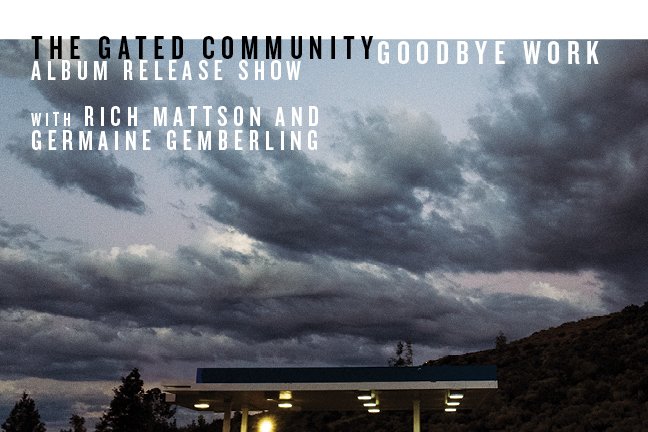
Much beloved Minnesota Americana band The Gated Community celebrate the release of their sixth full-length studio album, Goodbye Work! Special guests acclaimed musicians Rich Mattson and Germaine Gemberling (aka “Rich and Germaine”) of Rich Mattson and the Northstars open the night.
The Gated Community is an Americana band with a nearly twenty-year history. Formed in 2006 in Minneapolis’s storied West Bank neighborhood, the band is known for its gripping original songs, beautiful vocal harmonies, and multiple lead singers. Led by South Asian American singer/songwriter Sumanth Gopinath (aka Sonny), the band’s music is eclectic in style, encompassing country, folk, bluegrass, and rock. Born in Chicago and raised in Louisiana, Gopinath relocated to the Twin Cities in 2005, after stints in Texas and Connecticut.
Current members have been in the band for a decade or more. Their lineup includes Sumanth Gopinath (acoustic guitar), Rosie Harris (banjo), Beth Hartman (percussion), Paul Hatlelid (drums), Cody Johnson (bass), and Nate Knutson (electric guitar). Everyone in the band sings lead and plays multiple instruments. They perform in a range of configurations, including as small as a duo or trio.
The Gated Community is thrilled to hold this album release show at The Parkway Theater. After placing in the venue’s first-ever “Battle of the Bluegrass Bands” in 2019, the band later headlined The Parkway that same year. Six years and a global pandemic later, the band returns again to the theater with renewed energy and purpose amid the chaos of the present.
The Holy Bible (1994) was a remarkably coherent and thoughtful, if violent and unreasonable protest against the ‘end of history’ that had been declared a couple of years earlier – theirs was the 1994 of Srebrenica and Rwanda, not of Fukuyama or Anthony Giddens. Musically, while hardly avantgarde, The Holy Bible had a newly acquired postpunk angularity and a disdain for the American marketplace. Subjects were political (‘Revol’, a bizarre song speculating on the sex lives of Soviet leaders), historical (two songs about the Holocaust, hugely ill-advised in theory but surprisingly tactful in practice), or concerned different forms of personal collapse, told in the first-person, as in the staccato, self-undermining assertions of ‘Faster’, or ventriloquised through female narrators, such as the depressive sex worker of ‘Yes’ and the anorexic teenager of the exceptionally disturbing ‘4st 7lb’.
Manic Street Preachers, The Holy Bible (1994)
These songs asserted physical and intellectual self-control to the point of psychosis, as a means of armouring the self against a terrifying and repugnant outside world. The Holy Bible is striking not just for Jones’s and, especially, Edwards’s punishingly moralistic and sometimes surreal lyrics, but for the fact that Bradfield and Moore were able to crowbar them into rock anthems, of a sort. The results can still send shivers up the spine, as when the brutal, unforgiving words of the disgust-filled, misanthropic ‘Of Walking Abortion’, or ‘Archives of Pain’, a Foucault-inverting paean to the guillotine, are bellowed as stadium rock choruses. In these songs Bradfield didn’t sing so much as ‘bark phonemes’, as Tom Ewing put it of the breathtaking ‘Faster’. Bradfield had managed to turn the amusicality of his two lyricists into a virtue, and ‘I am an architect; they call me a butcher’ into my personal favourite first line of a rock single.
It was an incredible performance, bearing no apparent resemblance to what the Manics had originally aimed to do – this wasn’t selling sixteen million copies in any lifetime – but there was no failure, now. The Manics had set out, to quote a Ballard interview sampled midway through the album, to ‘rub the human face in its own vomit, and then force it to look in the mirror’, and that’s what they did. There is still nothing in rock music quite like it, and it was practically impossible to follow.
Aotearoa singer/songwriter Marlon Williams (Kāi Tahu, Ngāi Tai) performs an intimate concert to a small group of fans at the RNZ studio to celebrating 20 years of NZ Live on RNZ National. Marlon performs five tracks and chats to RNZ’s Jesse Mulligan about making his fourth solo album, ‘Te Whare Tīwekaweka’ and the process of songwriting in te reo Māori. […] Tracks as they appear in the session:
Watch Ambika Mod read from Heart Lamp, the #InternationalBooker2025-shortlisted novel written by Banu Mushtaq and translated by Deepa Bhasthi. In twelve stories, Heart Lamp exquisitely captures the everyday lives of women and girls in Muslim communities in southern India. In the titular story, Mehrun, a young mother, despairs at the way her life has unfolded.
Filmación de los históricos conciertos en el Estadio Nacional que marcaron el retorno triunfal de Los Prisioneros después de casi 10 años de separación. Grabado los días 30 de noviembre y 1 de diciembre de 2001.
A recording of birdsong made in the late afternoon of 30 April 2025 at George Washington Park in Pacific Grove, California, by Comrade Koganzon using the Merlin Bird ID app. The following birds can be heard on this recording: Hutton’s vireo, oak titmouse, yellow-rumped warbler, American crow, lesser goldfinch, acorn woodpecker, bushtit, American robin, dark-eyed junco, California towhee, Anna’s hummingbird, chestnut-backed chickadee, house finch, spotted towhee, and song sparrow. ||| TRR
Future History of Earth’s Birds
Amie Whittemore
—after Alexander Lumans and Jennifer Ackerman
Among them, a common language of alarm.
Also, rapture.
Know that when zebra finches felt the first pinch of climate change, they chirped to their offspring, still shelled, to warn, to insist, they hatch smaller and fiercer. Dawn’s chorus is a peace-making operation. The birds with the biggest eyes sing first. Thus light is the first part of song.
Some birds create barriers of pinging notes—golden bells dangling
in the air, alarms and warnings. Does it matter
what kind of birds did this? They’re all dead now.
In bird language, there’s a call for mobbing, a call for fleeing.
To avoid danger, sometimes you must approach it.
In the shell, a bird recognizes its parents’ voices. In love, mates sing duets they invent together. On death, the survivor must learn a new tune.
There are such things as universal truths.
Some kites drop fire onto the earth to scare up dinner. Some kites,
dropping fire, taught humans their first warm meal.
Neither ice nor snow lived long enough to hear the last bird sing—just wind,
which carried those notes as far as it could before they slipped from its palms—
There is a common language of alarm.
Source: poets.org. Originally published in Poem-a-Day on May 11, 2025, by the Academy of American Poets.
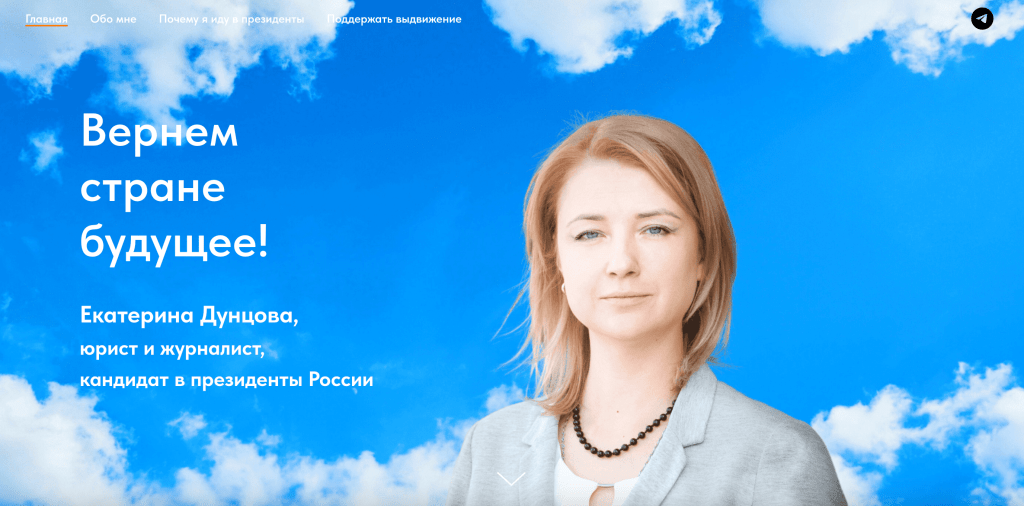
Journalist and politician Yekaterina Duntsova, whose candidacy in the upcoming presidential election was rejected by the Russian Central Election Commission (the Russian Supreme Court later upheld this decision), released a New Year’s address on Instagram.
“I promise you that I will do everything that depends on me to return our country’s life to a normal direction without special operations and political crackdowns, with a government accountable to us that will work to grow the economy and improve the well-being of ordinary families,” she said, wishing that 2024 would bring Russians “self-confidence, long-awaited peace, and more basic human happiness.”
Duntsova said that the New Year is “when we live in peace with ourselves and our neighbors,” and people who are dear to us are with us, and not “somewhere far away, risking their lives performing missions whose purpose cannot be explained to us.”
Duntzova also promised that the new political party she announced earlier would be “an association of people who just want to live peacefully.”
Source: Deutsche Welle Russian Service. Translated by the Russian Reader. This post was made possible by a generous donation from Sumanth Gopinath.
On 27 December 2023, the Supreme Court of the Russian Federation dismissed the suit filed by Yekaterina Duntsova, a journalist from Rzhev, against the Russian Central Election Commission (CEC), which had refused to register Duntsova’s initiative group for collecting signatures in support of her run as an independent candidate for the Russian presidency.
Duntsova was thus practically left with no chance to run in next year’s presidential elections as an independent. DW has compiled all the most important facts we know about her.
Ekaterina Duntsova is forty years old. She was born in Krasnoyarsk. She graduated from high school in Rzhev, Tver Region. She has two university degrees, in law and journalism. Duntsova studied law at Tver State University and also studied directing at the St. Petersburg State Institute of Cinema and Television. Russian state media note that she studied at both universities by correspondence.
Duntsova works as a journalist and is the coordinator of the Sova (“Owl”) volunteer search and rescue team in Rzhev. On the Web, many people refer to her as “radio operator Kat” — that’s Duntzova’s call sign on the team. Many liberal internet users have compared her with ex-Belarusian presidential candidate Svetlana Tikhanovskaya. State media have dubbed Duntsova “the fugitive oligarch Mikhail Khodorkovsky’s pet project.”
In 2003, Duntsova worked for about a year at the Rzhev municipal television company, then for many years headed the school television studio Friday the 13th and was editor-in-chief at RIT Independent Studio, a television company founded in 2003 by Duntsova’s husband Roman Nagoryansky. RIT closed in 2022. Duntsova has three children: two daughters and a son. The eldest daughter is studying in Tokyo. Duntsova and her husband separated in 2021.
In 2014, Duntsova ran as an independent for a seat in the sixth Rzhev City Duma but failed to win. Duntsova served in the seventh Rzhev City Duma, which sat between 2019 and 2022.
How Duntsova announced her run for the Russian presidency
On 16 November 2023, Duntsova announced on VKontakte that she would run as a candidate in the Russian presidential election and unveiled her campaign website, duntsova2024.ru. At the time of her nomination, she was the only woman to declare her desire to compete for the Russian presidency.
Duntsova’s candidacy was supported by Our Headquarters, a project created by the staff of Ark, a support group for Russians who have left the country over the war with Ukraine (in cooperation with the Russian Anti-War Committee). Posts about Duntsova’s nomination went out on many Telegram channels.
Duntsova explained her decision to run for president by arguing that “for the last ten years the country has been moving in the wrong direction: we have been pursuing a policy not of growth but of self-destruction.” Duntsova said she favors an end to the war in Ukraine, democratic reforms, and the release of political prisoners, particularly Alexei Navalny. “We have to abolish all inhumane laws and restore relations with the outside world. We have to change budget priorities by spending money on improving the lives of citizens, not on new tanks,” she noted.
“Why Yekaterina Duntsova was not allowed to run in the election,” Deutsche Welle Russian Service, 23 December 2023
At the same time, the journalist was cautious in her comments about Russia’s invasion of Ukraine. “Unfortunately, I cannot afford to delve deeply into this topic while I am in Russia,” she said. In order to remain on the right side of the law, she said that she would refer to the fighting in Ukraine as the “special military operation.” For the same reason, Duntsova declined to comment on the fate of the annexed territories in a future possible peace deal between Russia and Ukraine.
And yet, Duntsova argued that Russians should shed their “collective guilt complex.” She also avoided direct criticism of Vladimir Putin, stressing that she did not want to get personal, adding, however, that “it is possible to criticize the policies of the current government, it is possible to criticize certain laws and decisions made.”
Duntsova’s nomination campaign
On November 20, Duntsova was summoned to the prosecutor’s office in Rzhev to discuss the social media post about her intentions to run for the Russian presidency. “They asked what I thought about the [special military operation]. I invoked Article 51 of the Russian Constitution [which stipulates that no one is obliged to give evidence against themselves]. Apparently, they also wanted to find whether my intentions were real,” the journalist said at the time in a conversation with DW. In early December, Duntsova reported that VTB Bank had blocked transfers to her account after she appealed to supporters to back her campaign financially.
On December 20, Duntsova submitted the paperwork to the CEC to register her initiative group, which had to have at least 500 people. As an independent candidate, she also needed to gather 300,000 signatures in at least forty regions of the Russian Federation. The Central Election Commission had to review the package of documents and make a decision within five days. There were no grounds for refusing to register the initiative group, Duntsova argued.
However, on December 23, the CEC did not register the group, claiming that it had uncovered more than one hundred errors in Duntsova’s paperwork. As an example, it cited a document in which the patronymic “Valeryevna” had been written “Valerievna.” In addition, the CEC claimed that the notary who certified the documents, in particular, erroneously reported the [internal] passport number of the organizer of the initiative group’s meeting. Earlier, inspectors from Russian Justice Ministry paid this notary a visit.
On December 25, Duntsova appealed the CEC’s refusal to allow her to collect signatures in support of her campaign for the Russian presidency by filing suit with the Supreme Court. According to Duntsova, the CEC supported its arguments “solely with an internal memo. The law does not stipulate the use of such a document in principle, so it cannot be used as the basis for the decision.”
On December 27, the Russian Supreme Court dismissed the journalist’s lawsuit against the CEC, thus making it practically impossible for Duntsova to register as a candidate for the presidential election. Theoretically, she could ran as some party’s candidate. Duntsova has already called on the Yabloko Party to hold a congress and nominate her as their presidential candidate. The party responded that they do not nominate “random individuals about whom nothing is known.”
Duntsova said she intends to consider nominations from other parties as well. She also declared her plans to create her own political party: “The party I propose to create is not the Yekaterina Duntsova party. It will be the party of all those who are in favor of peace, freedom and democracy. My goal is to launch our self-organization [sic], which will be built around many new faces, around people who share our views. In the near future we will publish a program and work on it together.” Earlier, the journalist also spoke about her willingness to join forces with presidential contender Boris Nadezhdin.
Whose candidates have been nominated to run in the presidential election
The presidential election in Russia will be held 15–17 March 2024. The incumbent head of state Vladimir Putin is running as an independent. The Liberal Democratic Party of Russia (LDPR) nominated its leader Leonid Slutsky as a candidate for the highest state office. The Communist Party of the Russian Federation (CPRF) nominated Nikolai Kharitonov, while Civic Initiative nominated Moscow Region MP Boris Nadezhdin, and New People nominated State Duma deputy speaker Vladislav Davankov.
DW News [in Russian], 23 December 2023. The anchor interviews Yekaterina Duntsova live on air, starting at 15:44
The conservative Russian All-People’s Union decided to nominate its leader Sergei Baburin as a candidate in the upcoming presidential election. In addition, a meeting was held in Moscow to nominate Igor Strelkov (Girkin), a reserve FSB colonel and former “defense minister” of the Donetsk separatists, who has been in pretrial detention since July 2023 on charges of calling for extremist activity. Strelkov’s initiative group gathered 566 signatures from nomination meeting attendees, but the notaries did not arrive to certify them.
Independent Russian presidential candidate Yekaterina Duntsova will not be permitted to appear on the ballot in the March 2024 vote after the Central Election Commission (CEC) rejected her nomination documents.
Duntsova, 40, a journalist and local politician from the Tver region northwest of Moscow, announced her bid for the presidency in November on a pro-peace, pro-democracy platform.
This week, she secured the endorsement of an initiative group of more than 500 supporters as is required for candidates not running as part of a political party.
At a meeting Saturday, the Central Election Commission (CEC) rejected her documents, saying it found over 100 typos and other errors, the Ostorozhno Novosti Telegram news channel reported.
“We have carefully studied the documents, and we have the impression that they were filled out in haste without complying with legal standards,” the BBC’s Russian service quoted CEC member Yevgeny Shevchenko as saying at the commission’s meeting.
If the CEC had accepted her documents, she would have then needed to collect 300,000 unique voter signatures from at least 40 regions of Russia to be able to appear on the ballot.
Following the meeting, Duntsova said she plans to appeal the commission’s decision in court and intends to ask the liberal Yabloko party to nominate her as a candidate.
“I want us all to believe that we will be able to take another chance. Don’t lose faith, don’t lose hope,” she said.
Duntsova’s campaign has reported several instances of pressure since she announced her bid for the presidency.
She was summoned to the prosecutor’s office to discuss her campaign and attitude toward Russia’s actions in Ukraine shortly after announcing her campaign.
One of Duntsova’s supporters was detained in the Siberian city of Krasnoyarsk after returning from the nomination meeting, according to women’s activist group Myagkaya Sila (Soft Power). The supporter, who is also a member of Myagkaya Sila, was reportedly accused of falsely filing a complaint against a police officer.
She has also faced speculation that she could be a Kremlin-endorsed spoiler candidate.
The state-run RIA Novosti news agency claimed this week without evidence that Duntsova had the financial backing of Mikhail Khodorkovsky, a former oligarch turned exiled Kremlin critic.
President Vladimir Putin, 71, is expected to handily win re-election to a fifth term — keeping him in power until at least 2030 — in the March 2024 vote after the elimination of virtually all opposition.
“Yekaterina Sergeyevna, you are a young woman, you still have everything ahead of you. Any minus can always be turned into a plus. Any experience is still experience,” CEC chief Ella Pamfilova told Duntsova at the end of Saturday’s meeting.
Known as Minnesota’s favorite Americana band of the 99%, The Gated Community celebrates the release of their highly anticipated new album The Honor and Glory of The Gated Community. Showcasing beautiful harmonies, multiple lead singers and virtuosic soloists, this 5th album from the folk/country cult favorites shows the band stepping out of their Marxist bluegrass band box to create poignant songs of personal and collective loss — many of which were written just a few blocks from where Minneapolis Police Department’s 3rd Precinct station was burned and abandoned following the murder of George Floyd.
Living just a few blocks from the 3rd Precinct, frontman Sumanth Gopinath (vocals, guitar) and his partner Beth Hartman (vocals, percussion) were filled with a particular anxiety and dread. “We went through a lot during the uprising itself, but we also feared repeat occurrences of violence at various points – like the November 2020 election, January 6, the inauguration and the Chauvin trial,” Gopinath says. “Moreover, family and friends died or nearly died from COVID-19. My retired colleague David Bernstein passed in March 2020, my aunt died in June 2020, and my uncle was in the hospital for months.”
Although The Gated Community started tracking some of the album in 2019 and early 2020, an electrical failure (caused by the 2020 unrest) fried the studio’s primary and backup hard drives. Left with only a few tracks and a whole new whirlwind of emotions stirred up by the pandemic, George Floyd’s murder, subsequent protests and the rise of fascism in America, the band reworked old songs and arranged new ones written by Gopinath during the pandemic. “Not being able to make music with the other five band members during 2020, I began composing classical music again for the first time in 25 years,” Gopinath says. “I also continued to write songs for the band until we were finally able to do some very distanced outdoor rehearsals in fall of that year.”
With various health concerns among band members, they worked safely and slowly, rehearsing and recording the new tracks with John Miller at Future Condo Studio in Minneapolis. Mastered by Bruce Templeton at Microphonic Mastering, the album was finally done in 2022. Their most ambitious yet, it includes 13 originals with powerful lyrics and thoughtful arrangements. Although still marked by the playfulness that have won them such a loyal following, these songs have less punk urgency and more of the laid-back folk and country vibes of some of their songwriting heroes – from the Ralph Stanley-inspired a capella song “To the Sea Once More” (written for Kobe Dimock-Heisler, a young man of color on the autism spectrum who had just been murdered by police in Brooklyn Center, MN, on Aug. 31, 2019) to the Terry Allen-esque “Mariia” (about the alleged Russian spy and current politician Maria Butina) to the Townes Van Zandt-sounding “Another Fire” (written following the nightly fires that erupted in South Minneapolis after George Floyd’s murder) to the beautiful simplicity of Gillian Welch exhibited in “The Life From My Eyes” (about domestic violence towards women). The album also features the heartfelt playing of recently retired fiddler Teresa Gowan.
Once thought of as a niche novelty outfit, The Gated Community show their evolution into a sophisticated band that mixes social commentary with emotionally rich songwriting. They are incredibly proud to bring this album into the world after the collective traumas of the past three years and are finding solace in playing together once more.
——————
credits
released February 3, 2023
The Gated Community is Sumanth Gopinath, Cody Johnson, Teresa Gowan, Paul Hatlelid, Rosie Harris, Beth Hartman, and Nate Knutson
with special guest Adrienne Miller
words by Sumanth Gopinath, music by The Gated Community
produced by The Gated Community and John Miller
recorded at Future Condo Studio by John Miller
mixed by John Miller
mastered by Bruce Templeton, Microphonic Mastering
thanks and much love to our families, friends, and fans
special thanks to Tom Campbell and Adam Zahller
in memory of the family members and friends we lost over the past few years, including Liz Adams, Stan Adler, Shekhar Bal, David Bernstein, Josette Bethany, Max Bromley, Jason Christenson, Karen Dresser, Marian Gopinath, Gwen Hartman, Dave Hoenack, Qadri Ismail, Chad Marsolek, Jim McDonald, Ryan Muncy, Rita Elizabeth Nye, Peter Schimke, and Jerold Marvin Schultz