Juneteenth

A view of the fire watch tower on Snively’s Ridge, Garland Ranch Regional Park, Carmel Valley, California, 19 June 2023.
Photo by the Russian Reader

The supposed ‘trial’ has begun in Rostov[-on-Don] (Russia) of 22 Ukrainian prisoners of war, many of whom, though not all, are members of the Azov Battalion who were seized while defending Mariupol against the Russian invaders in 2022. Moscow is using a baseless, and post-dated, ruling claiming the Azov Battalion to be a ‘terrorist organization’ as its excuse for violating international law and trying men and women for defending their own country against an invading enemy. The photos from the first hearing on 14 June suggest that at least the Ukrainian men are being held without enough to eat and probably in conditions which are, in themselves, a breach of the Geneva Conventions.

This legal travesty is to take place at the same Southern District Military Court which has been passing politically motivated sentences against Crimean Tatar and other Ukrainian political prisoners since 2014.  That, however, is not the only similarity, since Russia is effectively using identical charges as those used to pass sentences of up to 19 years’ imprisonment against political prisoners from occupied Crimea, most of them Crimean Tatar civic journalists and activists.

The charges against the Ukrainian POWs are, firstly, of involvement in an organization recognized in Russia (and nowhere else) as ‘terrorist, under Article 205.5 of Russia’s criminal code.  All of the men and women, however, were taken prisoner before Russia’s Supreme Court declared Azov to be ‘terrorist’ on 2 August 2022, making the charges illegal even according to Russian law.  The second charge is more incredible.  All are accused of ‘actions aimed at violent seizure of power or violent retention of power and violation of Russia’s constitution’.  Even if, as is possible, the Russian Investigative Committee is claiming that the Ukrainians were seeking ‘to overthrow’ Russia’s proxy ‘Donetsk people’s republic’, this could still not begin to justify such a charge since Mariupol was not within this pseudo formation until Russia bombed and destroyed around 90% of Mariupol’s infrastructure in order to gain control of it.  Those convicted, and the ‘court’ in question invariably passes only those sentences demanded of it, face sentences of from 15 years to life imprisonment. 

It was originally reported that 24 men and women were to go on trial, however on 14 June, it was learned that two POWs — David Kasatkin and Dmytro Lablinsky — had been released in an exchange of prisoners.

Most reports call all of the 22 remaining members of the Azov Battalion, however the Russian newspaper Kommersant has indicated that several were either members of Ukraine’s National Guard or were seized in Mariupol, but had served in the Azov Battalion long before Russia’s full-scale invasion.  The eight (perhaps nine) women were, Kommersant asserts, cooks for the Azov Battalion and, purportedly, all signed ‘confessions’.  It is possible that those ‘confessions’, making it possible for claims that some ‘admit guilt’, are the reason why Russia has included them in the ‘trial’, as well as their assertion that they were only there because they needed a job, etc.

From the reports available, it would seem that many of those whom Russia has put on ‘trial’ should, in fact, be treated as civilians. Those who were defending Mariupol and the Azovstal Steelworks are prisoners of war who are protected, under the relevant Geneva Convention, from prosecution merely for taking part in hostilities.  The only exception is if they are found guilty of war crimes.  It is telling that Russia has thus far used its proxy ‘Donetsk and Luhansk people’s republics’ to stage any supposed ‘trials’ on war crimes charges.  These illegal entities are not recognized by the international community and one of the many reasons why Freedom House earlier rated the two entities together as almost on a par with North Korea was the total lack of rule of law and mechanisms for a fair trial.  There are absolutely no grounds for believing that the men sentenced to terms from 12 to 25 years by these quasi ‘republics’ were guilty of the crimes alleged, or indeed, that the supposed war crimes even took place.  Among these ‘sentences’ was the 13-year term of imprisonment against well-known human rights activist and journalist Maksym Butkevych.  He is known to have been denied access to a lawyer, and there is evidence that he was not even in Donbas when the ‘war crime’ was alleged to have taken place.

The farcical nature of such ‘court’ stunts was, in fact, seen and condemned by the international community when the so-called ‘Donetsk people’s republic’ ‘sentenced’ two Britons (Shaun Pinner and Aiden Aslin) and Moroccan Brahim Saadoun to death, claiming them to have been ‘mercenaries’ although all were contract soldiers in Ukraine’s Armed Forces and, unequivocally, prisoners of war.

Russia first showed its contempt for the lives of Ukrainian and other prisoners of war, and for international law, when, on 29 July 2022, as many as 50 Azovstal defenders and other Ukrainian POWs were killed in an unexplained explosion at the Russian-controlled Olenivka Prison.  While Russia followed its usual policy and blamed Ukraine, it also actively blocked investigations by the UN and International Red Cross which made sense only if they were behind this effective mass murder of men protected under international law.

The ’trial’ now underway is presumably for internal consumption as the images of emaciated Ukrainian prisoners of war are shocking, as is the cynical lawlessness of the charges against the Ukrainian men and women.

Source: Halya Coynash, “Russia begins illegal show ‘trial’ of Ukrainian POWs for defending Ukraine in besieged Mariupol,” Human Rights in Ukraine, 16 June 2023. Thanks to News from Ukraine Bulletin No. 51 for the heads-up.


This story starts — but certainly doesn’t end — in 19th century Maryland, when John Townshend updated his will.

Townshend grew convinced at the end of his life that God would punish him if he did not free the enslaved people he owned and give them all of his property. But Townshend’s relatives challenged his final wishes in court, arguing that his decision had been the result of a delusion.

That 1848 case was the first U.S. appearance of what became known as the “insane delusion rule,” which remains grounds for contesting wills to this day. And Townshend v. Townshend itself has been cited in at least 70 other cases across the country — from New Hampshire to California — over the years, as recently as 2007.

It’s one of thousands of cases involving enslaved people that lawyers and judges continue to cite as good precedent, more than a century after the 13th Amendment abolished slavery in the U.S.

Justin Simard, an assistant professor at Michigan State University’s College of Law, estimates there are about 11,000 such cases out there — and about one million more that use them to back up their arguments.

“I’ve done some analysis just with a sample of cases and concluded that 18% of all published American cases are within two steps of a slave case, so they either cite the slave case or cite a case that cites a slave case,” Simard tells NPR. “The influence is really, really extensive.”

Simard has spent years documenting them, with the help of some two dozen law students.

The result is the Citing Slavery Project, a comprehensive online database (and map) of slave cases and the modern cases that cite them as precedent. They expect to add the last of their nearly 9,000 collected cases to the website this summer.

The project aims to push the legal profession to grapple with its links to slavery, an overdue reckoning that Simard hopes will start with lawyers and judges acknowledging their use of the troubling precedents.

He says 80% of the time judges don’t mention that these cases involve slavery at all, either because they’re unaware or uncomfortable.

“We’re not saying don’t cite them,” he explains. “All I’m asking people to do is just don’t cite them without acknowledgement, without thinking through whether it actually makes sense to cite them, which I think is a pretty reasonable thing to ask.”

[…]
Source: Rachel Treisman, “Slave cases are still cited as good law across the U.S. This team aims to change that,” NPR, 14 June 2023

Oleg Vazhdayev: A War Resister on Trial for “Terrorism” in Rostov-on-Don

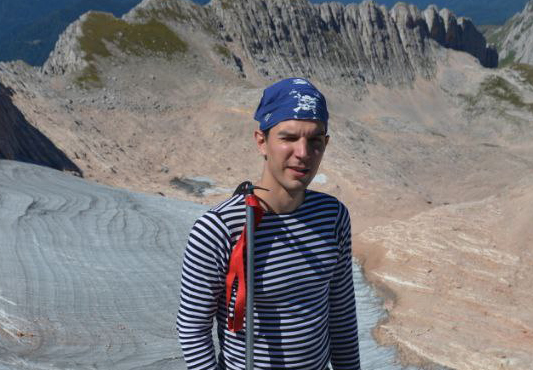
Oleg Vazhdayev. Photo courtesy of Solidarity Zone

Oleg Vazhdayev has been transferred to Rostov-on-Don, where the court will begin to try his case the day after tomorrow.

Vazhdayev, an auto mechanic, was detained in late September on charges of attempting to set fire to a military enlistment office in Krasnodar. After his arrest, the police tortured him, demanding that he confess to receiving funding from Ukraine.

The building in which the military enlistment office is housed was not damaged, but this did not stop the security forces from charging Vazhdayev with committing a “terrorist act” (per Article 205.1 of the Russian Federal Criminal Code). He faces ten to fifteen years in prison if convicted.

The criminal case against Vazhdayev has been submitted to the Southern District Military Court, and he was recently transferred from the Krasnodar pretrial detention center to Rostov-on-Don.

The trial of the case on the merits should begin the day after tomorrow. Come to the trial!

🕑 2:00 p.m., 31 May 2023

📍 Southern District Military Court (Judge Maxim Mikhailovich Nikitin), 75B Mechnikov Street, Rostov-on-Don

❗️If you are going to the trial, don’t forget to bring your internal passport with you and leave all blades and means of self-defense at home.

You can also write to Oleg or send him a package.

💌📦 Address for letters and parcels:

Vazhdayev Oleg Igorevich (born 1988)
219 ul. Maksima Gor'kogo, SIZO-1
Rostov-on-Don 344022 Russian Federation

(It is possible to send emails via the service Zonatelecom.)

Solidarity Zone is supporting Oleg Vazhdayev and his family.

Source: Solidarity Zone (Facebook), 29 May 2023. Translated by the Russian Reader. People living outside Russia will find it impossible to use the Zonatelecom service. It is also probably impossible to send parcels to Russian detention facilities from abroad. But you can ask me (avvakum@pm.me) for assistance and advice in sending messages to Russian political prisoners.

“Our People Are Not Terrorists”

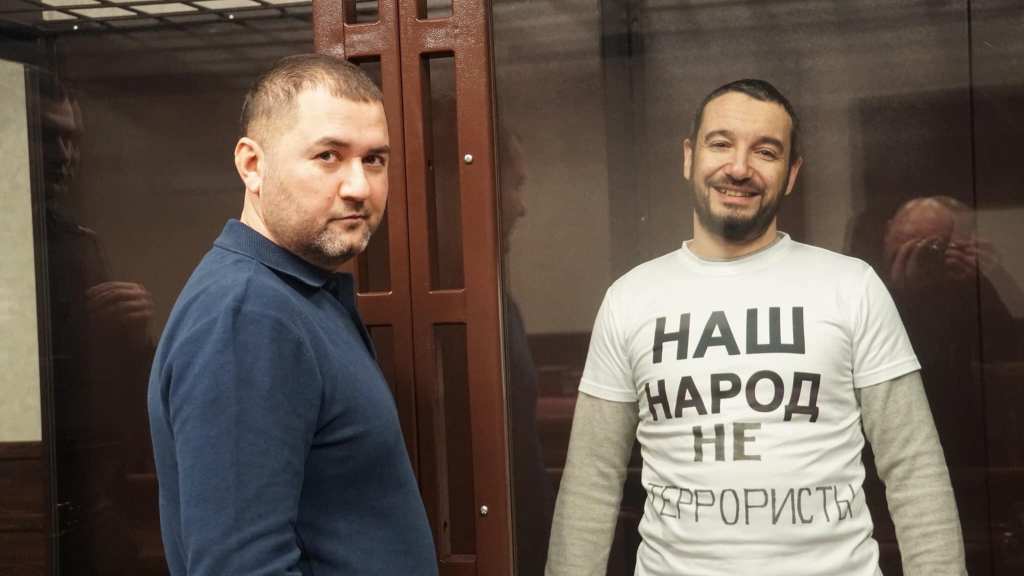
Defense attorney Edem Semedlyaev and Crimean Tatar political prisoner Raif Fevziev, Rostov-on-Don, Russia, 12 January 2023. Imam Fevziev’s t-shirt reads, “Our people are not terrorists.” Photo courtesy of Imam Fevziev and Crimean Solidarity via Mumine Saliyeva

In one of his interviews from the dungeons of the Rostov pretrial detention center, Dagestani journalist Abdulmumin Hajiyev commented on the everyday lives of inmates: “Lately, I’ve been thinking about taking cooking lessons. For some reason, there has been a skilled cook in every cell I’ve inhabited since Makhachkala. Sirazhutdin (Kumyk), Magomed (Avar), Rutem and Alim (Crimean Tatars) — I always admired the enthusiasm and care with which those guys spent several hours every day cooking something delicious for their cellmates with only a bucket and an immersion hot-water boiler to hand. Hajiyev also mentions Alim Karimov, a defendant in the Crimean Hizb ut-Tahrir case, with whom he has shared a cell for a over year a year. Over this time, Alim has learned Arabic.

Yesterday, a Russian court sentenced Karimov and four other defendants, among whom there are pensioners with disabilities, to thirteen years in prison each. The two years it took to try the case on the merits were memorable in several ways. There was an ambulance present at the hearings, but its crew did not provide qualified medical care to the defendants, who were forbidden to speak Crimean Tatar during the proceedings. Putting old men in the dock for talking about Islam had nothing to do with the letter of the law. Instead, it speaks to Islamophobia cloaking itself in the law’s guise, and to the disgrace of the foot soldiers who executed this drama.

A few days ago, my fellow journalist had the opportunity to hand over to me his new articles, one of which tells the story of Ernes Ametov, a cellmate from Crimea, who was sentenced to eleven years in prison by a military court in late December because he would not do a deal with a lie.

Today, Russia’s Southern District Military Court again handed down a verdict to a Crimean Tatar religious figure. Imam Raif Fevziev was sentenced to seventeen years in a high-security penal colony (with the first three years to be served in an ordinary prison) for having a seventy-minute conversation about religion. His trial took place at the same time as the trial of Crimean defendants in another criminal case. Friends and colleagues of Fevziev’s — the religious figures Ismet Ibragimov, Vadim Bektemirov, Aider Dzhapparov, and Lenur Khalilov — had earlier been sentenced to brutal terms of imprisonment by the very same court. These are textbook political persecutions: the NKVD used the same methods, in the past, to eradicate and destroy religious and public figures who had influence among the people.

It is quite difficult to cope with such a merciless chronicle of crackdowns. But when you see and feel what kind of regime you have come face to face with, and how the political prisoners, their families, and a whole people wisely and peacefully oppose it, you have no choice but to recharge your batteries, be more resilient, and go on working, while believing ever more fiercely that change will come.

I read in a book that a system based on segregation and tyranny is a large-scale manmade disaster. The people involved in perpetuating it may well understand that the breakdown of such a “juggernaut” is inevitable, and that they themselves, collectively, are causing the breakdown. But each of them assumes that it’s not their own personal fault, but everyone else’s. Each of them, on the contrary, believes that they are trying to save it — through cruelty, by cracking down on those dubbed “enemies” and “undesirables.” Ultimately, however, they fail to save it.

Source: Mumine Saliyeva, Facebook, 12 January 2023. Translated by Hecksinductionhour

The Story of Igor Paskar, Who Threw a Molotov Cocktail at the FSB’s Offices in Krasnodar

Igor Paskar. Photo courtesy of Vot Tak (Belsat)

On October 28, the trial of Igor Paskar began in the Southern District Military Court in Rostov-on-Don. He is accused of throwing a Molotov cocktail at the FSB’s offices in Krasnodar, and also of setting fire to a [pro-war] “Z” banner. Paskar explains his actions as a protest against the war: after the alleged attempted arson at the FSB, he painted his face in the colors of the Ukrainian flag of Ukraine. The FSB has classified the protest as “terrorism,” and the burning of the banner as “vandalism.” Paskar faces ten to fifteen years in prison if convicted.

To Moscow and Back

Igor Paskar was born and lived until the age of thirty-five in a workers settlement in the Volgograd Region. He came of age in the 1990s, turning eighteen in 1994. After school, he enrolled in the administrative and industrial buildings maintenance program at the Volgograd Institute of Architecture and Civil Engineering, but had to quit his studies in his first year after he was drafted into the army. After two years in a construction battalion, Paskar returned to his native village and immediately began working odd jobs — on construction sites, as a loader, and as a courier.

In 1998, when Paskar was twenty-two, he was first sentenced to five years probation on charges related to drug trafficking. In 2001, he received two years of actual prison time for theft and possession of hashish. He was last convicted of a criminal offense — one and a half years probation for possession of marijuana — in 2006. The last ten years, Paskar told Vot Tak, he has been clean — he completely gave up using light drugs.

In 2013, Paskar moved to Moscow. At various times in the capital, he worked as a courier at Samokat, as a loader, and as a furniture assembler. He also sold rare items on Amazon.

He became interested in politics in 2018 — as his case investigator would later write, he became an “adherent of radical liberal opposition ideas.” In 2021, Paskar was detained in Moscow for taking part in a protest rally called by Team Navalny after the politician’s arrest.

In the summer of 2021, the activist returned to Volgograd, where he got a job as a courier. During one of the interrogations about this period, he said: “I was still interested in the work of the Anti-Corruption Foundation, and I supported Alexei Navalny. I publicly voiced my opinions among people I know, including at work, and I posted my opinions in messengers and chats.”

The FSB on Fire

In February of this year, before the start of the Russian invasion, Paskar responded to an ad and took in a lost dachshund. According to the activist, stray dogs tried to attack the pooch several times, so he bought a flare gun to scare them away. He soon left his village in the Volgograd Region with his dog for work: he had found an unusual vacancy on the internet — picking strawberries in Adygea. Paskar was unable to start the job, however. There was a conflict in the workers’ accommodations over the dachshund, and he fired the flare gun at the ceiling. Paskar himself called the police, and the court sentenced him to five days in jail. After his release from a special detention center, Paskar left for Krasnodar.

In a letter, he describes this period as follows: “I have had a whole series of failures in life over the last three months. When the special operation began, I was unable to transfer money from abroad after the SWIFT system was switched off. I had an Amazon account on which I traded rare items. After the start of the special operation, I lost my earnings. I could not get a job in Volgograd and decided to go to Krasnodar for seasonal work, but there were a number of failures. I was angry at my plight and decided to sacrifice myself for what I believe in — peace.”

Paskar held his first anti-war protest in downtown Krasnodar on June 12, Russia Day. It was then that he threw a lighted bottle of gasoline at a banner featuring the letter Z and the slogan “We do not abandon our own.” No one paid attention to his actions, the banner quickly went out, and Paskar was not detained.

Paskar then decided to carry out a protest action at the FSB’s Krasnodar offices. He did not plan to go into hiding and prepared for his arrest by selling his phone and packing a bag for the pretrial detention center. “My criminal experience has left its mark on me. When a person has [this experience], they are no longer afraid to go to prison. They already know that you can live there too — not very well, but you can do it. It is not hell. This has an impact not so much on radical decisions as on accepting one’s fate,” Paskar noted in a letter to your correspondent.

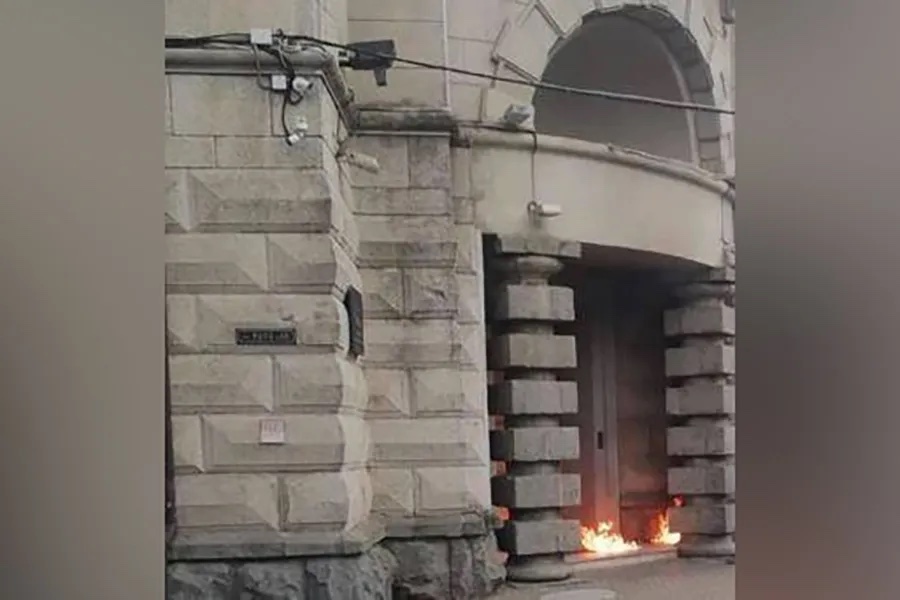
On June 14, Paskar went to the FSB’s offices on ulitsa Mira [“Peace Street”] in Krasnodar. A Molotov cocktail flew [sic] onto the building’s stone porch. The activist then painted his cheeks yellow and blue and waited for passersby to react and for the authorities to detain him. He hoped that someone would record the protest on their phone and post the video on the internet. Passersby avoided the scene, however. FSB officers came out of the building after a few minutes and detained the activist.

The moment when the fire flared on the porch of the FSB offices in Krasnodar: Source: Baza. Courtesy of Vot Tak (Belsat)

A Burnt Rug

Paskar calls his protest symbolic, emphasizing that his actions could not have caused serious damage — only a rug was burned on the stone porch. Despite this, a criminal case was immediately launched against Paskar under Article 205 (“Terrorism”) of the Russian Federal Criminal Code, which stipulates a penalty of ten to fifteen years in prison.

On October 28, the Southern District Military Court began considering the case — according to the amendments to the law adopted in 2014, only four district military courts [in Russia] can try terrorism cases. The court extended Paskar’s term in the pretrial detention center for six months, and ruled that the trial would be open to the public. The first hearing on the merits in the case was scheduled for November 10.

In 2016, for setting fire to the door of the FSB headquarters in Lubyanka Square [in Moscow], the performance artist Pyotr Pavlensky was sentenced to pay a fine of 500 thousand rubles under Article 243 of the Russian Federal Criminal Code (“Destruction or damage to objects of cultural heritage or cultural artefacts”). And yet, at the trial, the artist demanded that his actions be reclassified as terrorism.

Earlier, the [exiled opposition] politician Gennady Gudkov said that Paskar’s actions could be deemed disorderly conduct: “In any civilized country, such a thing is regarded as disorderly conduct and is punished with a warning or a fine.” And gallery owner Marat Guelman called Paskar’s act activism.

Paskar is being aided by the human rights initiative Solidarity Zone, which previously announced a fundraiser to pay for Paskar’s lawyer.

Source: Ivan Astashin, “‘He became an adherent of radical liberal ideas’: the story of Igor Paskar, who threw a Molotov cocktail building at an FSB building,” Vot Tak (Belsat), 31 October 2022. Translated by the Russian Reader


Vot Tak has published an article about Igor Paskar, who is accused of throwing a Molotov cocktail at the FSB offices in Krasnodar and setting fire to a “Z” banner. He did this to drawn attention to the war and voice support for the people of Ukraine.

On October 28, the Southern District Military Court began trying Paskar’s case.

Solidarity Zone has been providing comprehensive assistance to Paskar.

We are now raising funds to pay for Igor’s lawyer.

Fundraiser details:

💳 Sberbank card

4276 5500 2065 1710 (Zlatislava)

🪙 PayPal: solidarity_zone@riseup.net (marked “for Paskar”).

🥷 Cryptocurrency (be sure to email us at solidarity_zone@riseup.net if you transfer cryptocurrency to support Igor Paskar)

bitcoin: bc1qfzhfkd27ckz76dqf67t0jwm4gvrcug49e7fhry

monero: 86565hecMGW7n2T1ap7wdo4wQ7kefaqXVPS8h2k2wQVhDHyYbADmDWZTuxpUMZPjZhSLpLp2SZZ8cLKdJkRchVWJBppbgBK

ethereum: 0xD89Cf5e0B04b1a546e869500Fe96463E9986ADA3

other altcoins:

https://nowpayments.io/donation/solidarityzone

#solidarity#nowar#prisoners

Source: Solidarity Zone, Facebook, 31 October 2022. Translated by the Russian Reader