
The FSB has opened a criminal case on charges of “high treason” against artist and former Mediazona publisher Pyotr Verzilov. The details of the case are not yet known, but as part of their investigation, law enforcers raided the homes of a number of artists and activists across Russia. Many of those whom the law enforcers raided are not personally acquainted with Verzilov.
In the early hours of Tuesday morning, people identifying themselves as FSB officers searched the home of Petersburg artist Katrin Nenasheva and her girlfriend Natasha Chetverio. Nenasheva was taken away for questioning, while Chetverio was released, but both had their electronic devices confiscated. The homes of artist Sasha Blot, Party of the Dead activist Kristina Bubentsova, illustrator Vladlena Milkina, and architect Alexandra Kachko were also searched in St. Petersburg.
Law enforcers simultaneously raided the apartments of Verzilov’s mother Yelena, members of the art group Yav, actionist Anastasia Mikhailova (an associate of the artist Pavel Krisevich), and Pussy Riot members Rita Flores, Olga Pakhtusova, and Olga Kuracheva. The latter two were involved in the action “The Policemen Enters the Game”: along with Verzilov, they ran out onto the field of a Moscow stadium during a World Cup match there.
In Moscow, a female acquaintance of the artist Philippenzo (who is now in exile) was taken from her flat. The Yekaterinburg artist Ilya Mozgi and the Ulyanovsk artist Ilya Kholtov were both taken away for questioning after their homes were searched. Nizhny Novgorod artists Artem Filatov and Andrei Olenev were questioned. Samara artist Denis Mustafin’s home was searched. Although he was not at home, his mother’s computer was confiscated.
Some of these have already been released from interrogation (Nenasheva and Kholtov, for example), while others are still being questioned. It is known that most of them have now been designated as “witnesses” in the case against Verzilov. Many of them were asked about their connection to Verzilov: many did not know him personally and had never had much contact with him. Kristina Gorlanova, the former director of the Urals branch of the Pushkin State Museum of Fine Arts, located in Ekaterinburg, whose home was also searched, said that she had “heard nothing” about the “artist” who occasioned the search.
It is still unclear what gave rise to the criminal case. Under new legislation, however, switching to the enemy’s side during a war can be considered “state treason” can be considered as switching to the enemy’s side during a war. In an interview with Yuri Dud last year, Verzilov admitted that he had originally traveled to Ukraine as a documentary filmmaker, but now he was at the front “as a military man.”
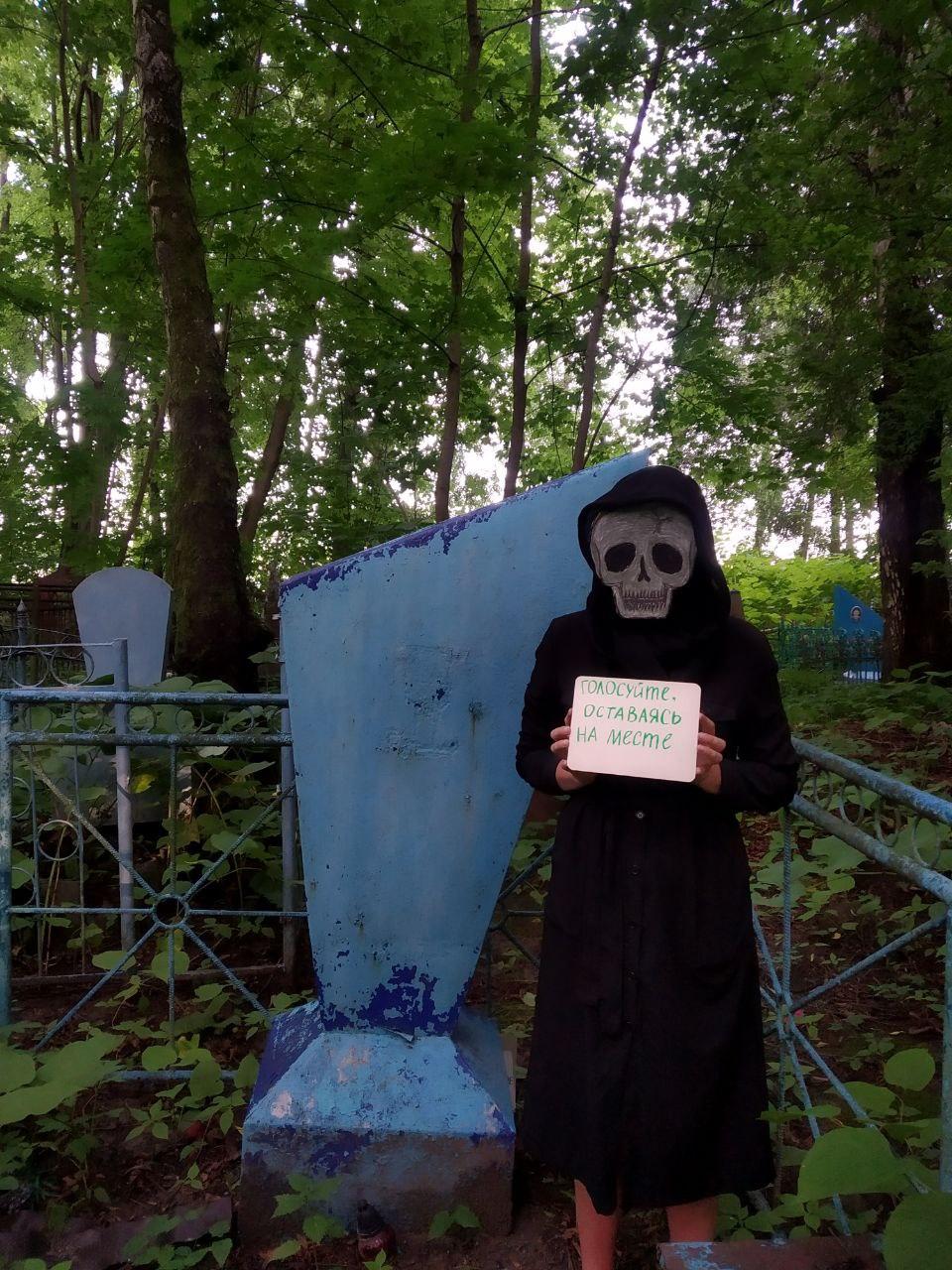
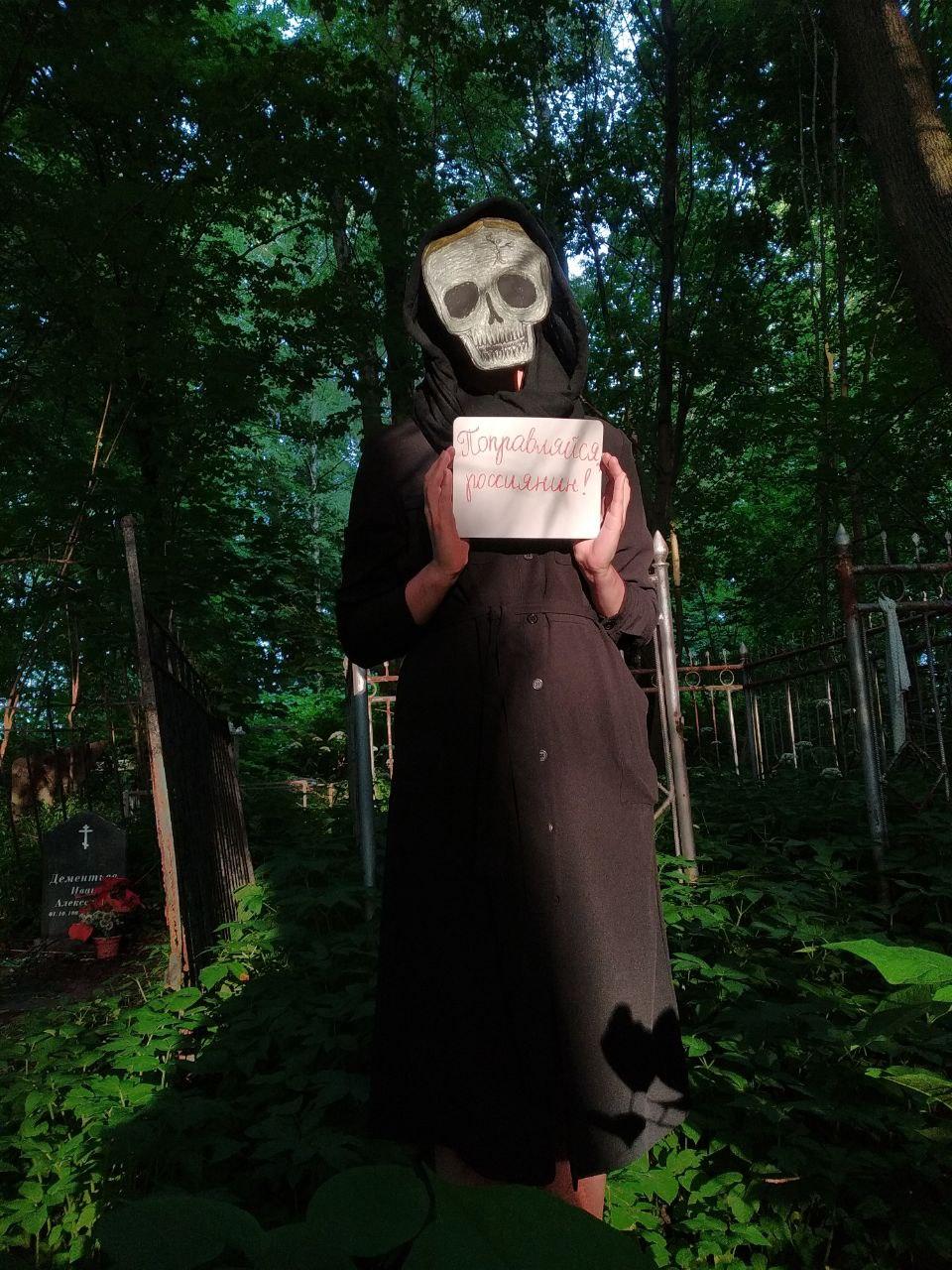
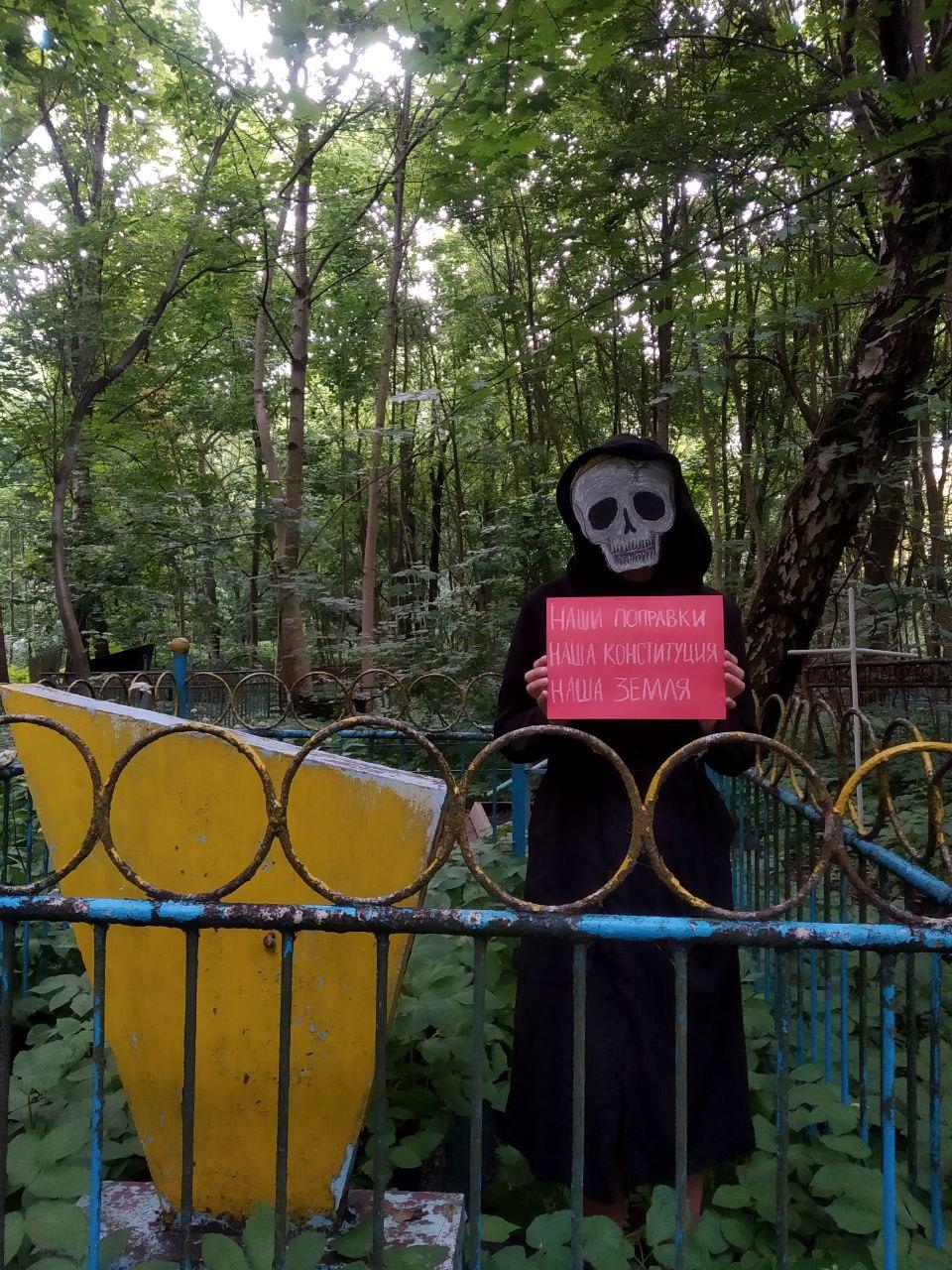
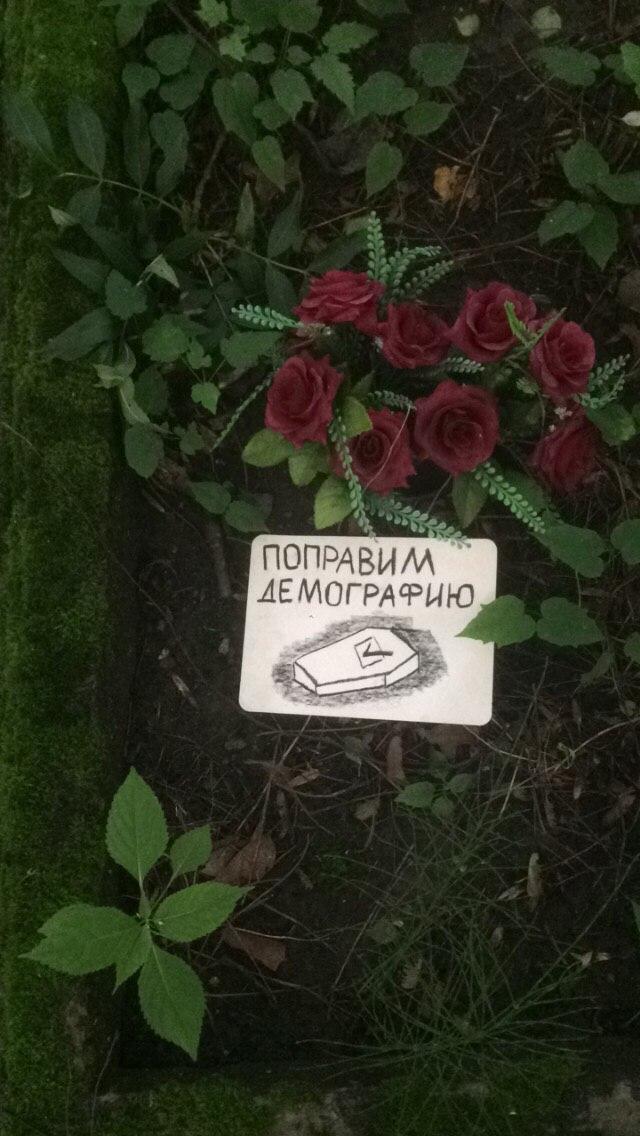
Many of the artists whose homes were raided may never have been involved in Verzilov’s activities, but they themselves have produced works about current events in Russia and Ukraine. We wrote last year about the works of Yav and Philippenzo. Mustafin was fined for flying a a Russian flag inscribed with the phrase “Today is not my day” outside the Ministry of Defense in Moscow on 12 June 2022. Milkina made a public art piece about “people who are scared” on a Petersburg square and T-shirts with the word “Peace” on them.
Source: “Law enforcers raid homes of artists and actionists on eve of elections,” WTF? newsletter (Mediazona), 12 March 2024. Translated by the Russian Reader
Petersburg artists find ways to get their messages across even amidst strict censorship. They mount underground apartment exhibitions, “tiny pickets” on city streets, and exhibitions and performances in the woods. It all smacks of the Soviet guerrilla art and actionism from which the international stars of post-Soviet conceptualism later emerged.
Bumaga explores how street art shows have gained popularity in Russia, how guerrilla art has changed in recent decades, and how today’s actionists resemble the organizers of the notorious Bulldozer Exhibition.

Street exhibitions have been around since the 1960s. One of the first such projects was dubbed “the Soviet Woodstock”
Guerrilla street exhibitions in Russia date back to the so-called unofficial art scene of the 1960s and 1970s. Pursuing the idea of coupling art and ideology, the authorities forced undesirable artists out of public art life.
In 1962, Nikita Khrushchev cracked down on the exhibition 30 Years of the Moscow Union of Artists, at the Moscow Manege. The Soviet premier wanted to expel all of its participants from the CPSU and the Union of Artists, although almost none of them were Party or Union members. Artists and connoisseurs reacted to political censorship in the USSR by forming an artistic underground, meaning that the most progressive art was exhibited at apartment exhibitions and in salons.
The 1970s witnessed open confrontation between the art and the world authorities. The most flamboyant members of the artistic underground were the Lianozovo school, who gathered and held exhibitions in a barrack in Moscow’s Lianozovo neighborhood. The leader of the group, Oscar Rabin, organized one of the most infamous guerrilla street exhibitions in the history of Russian art, which later became known as the Bulldozer Exhibition. On 15 September 1974, the artists staged a show of paintings in a vacant lot in Moscow’s Belyayevo Forest. The authorities sicked police on the participants and attendees and destroyed the show with bulldozers.
This crackdown on artistic expression triggered an international uproar, and the Soviet authorities made concessions. Two weeks later, the artists were allowed to hold an officially sanctioned exhibition featuring an expanded list of participants in Moscow’s Izmailovo Park.
This time the police were tolerant towards the artists and their guests: no one was detained. The exhibition lasted for several hours and, thanks to the beautiful weather, it turned into a big picnic. Western journalists dubbed the event “the Soviet Woodstock.”
Soviet unofficial artists continued this tradition, and one art group published 14 volumes documenting their activities
However, the underground’s victory at the Bulldozer Exhibition was not unequivocal. Unofficial art continued to defend its right to exist at an exhibition in the Beekeeping Pavilion at VDNKh (February 1975), at the Preliminary Apartment Previews for the All-Union Exhibition (spring 1975), and at an exhibition in the House of Culture Pavilion at VDNKh (September 1975).
These exhibitions were sanctioned, but the authorities still created a number of organizational obstacles for the artists. For example, only those artists who had a Moscow residence permit were allowed to show their work at the House of Culture. In addition, the authorities made the condition in which the artists worked unbearable: during the mounting of the show, the temperature in the pavilion topped forty degrees Celsius. Thirty-eight works were banned by the censorship commission. It is not known how many works were exhibited, ultimately, but a total of 145 artists participated in the show.
After the scandals provoked by the “unofficial” artists’ public appearances, the authorities began pursuing a policy of legalizing alternative art. In May 1976, the Painting Section of the Graphic Artists Committee was established, primarily to monitor and control the ideologically dangerous underground.
We should keep in mind that we do not have information about every single Soviet-era guerrilla exhibition. Many were held without leaving any trace in contemporary newspapers and other documents.
Collective Actions, a group led by Andrei Monastyrsky, did a huge amount of work in this sense. The artists compiled fourteen volumes documenting their Trips to the Countryside — actions during which various events took place in particular landscapes, including installations, performances, and minimalist interventions in nature. By going outdoors, the artists showed that art could be implicated in the space outside galleries and museums. Another important feature of the performances was the inclusion of viewers in the works: their participation and reactions were part and parcel of the conceptual actions. The way the actions were staged encouraged the spectators to focus on the processes of anticipating and comprehending the happenings. That is, the spectacle itself was an occasion for reflection, a statement meant to spark a dialogue.
In [1977], for example, Collective Actions simply hung a red banner between trees in the woods. The banner read: “I HAVE NO COMPLAINTS AND I LIKE EVERYTHING, ALTHOUGH I’VE NEVER BEEN HERE AND KNOW NOTHING ABOUT THESE PARTS.”

Guerrilla exhibitions are still organized nowadays, many of them dedicated to political prisoners
As a rule, guerrilla exhibitions and actions have a political agenda, so their organizers can be punished quite severely, even by Russian standards.
Nevertheless, there is activity in this field. For example, on 5 August 2023, Petersburg activists mounted an open-air exhibition on the Sestroretsk Ecotrail on the Day of Remembrance of the Victims of Sandarmokh [sic], a tract in the forests of Karelia where victims of the Great Terror were shot and buried in mass graves. Fifty works hung in the open air for a record time — almost an entire day.
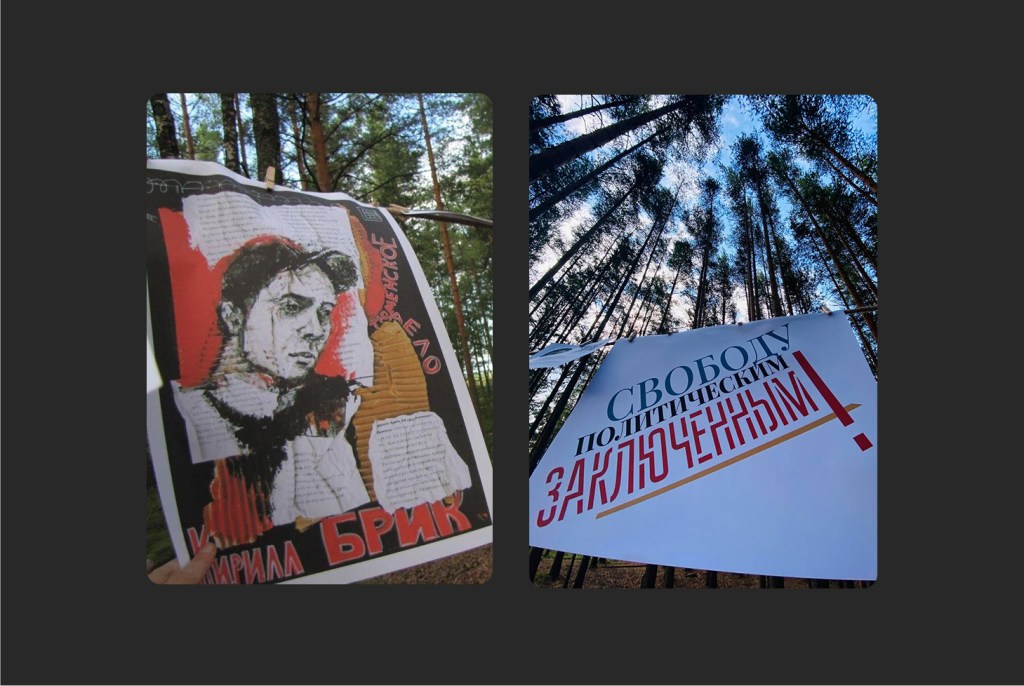
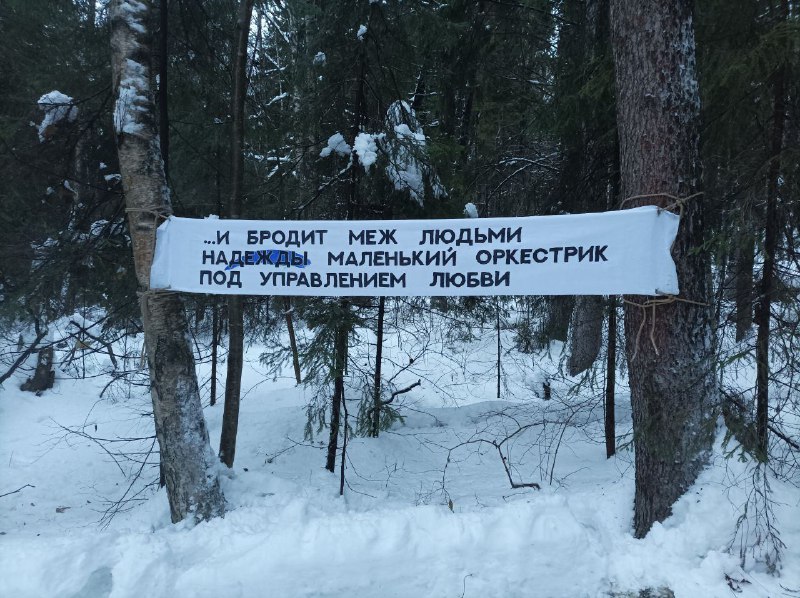
Several placards were also hung in the woods outside Petersburg this winter — for example, on December 10, Human Rights Day, the work I Dissent, Therefore I Am. And in January, an installation featuring a quotation from the Bulat Okudzhava song “Hope’s Little Band” was mounted outside the city.
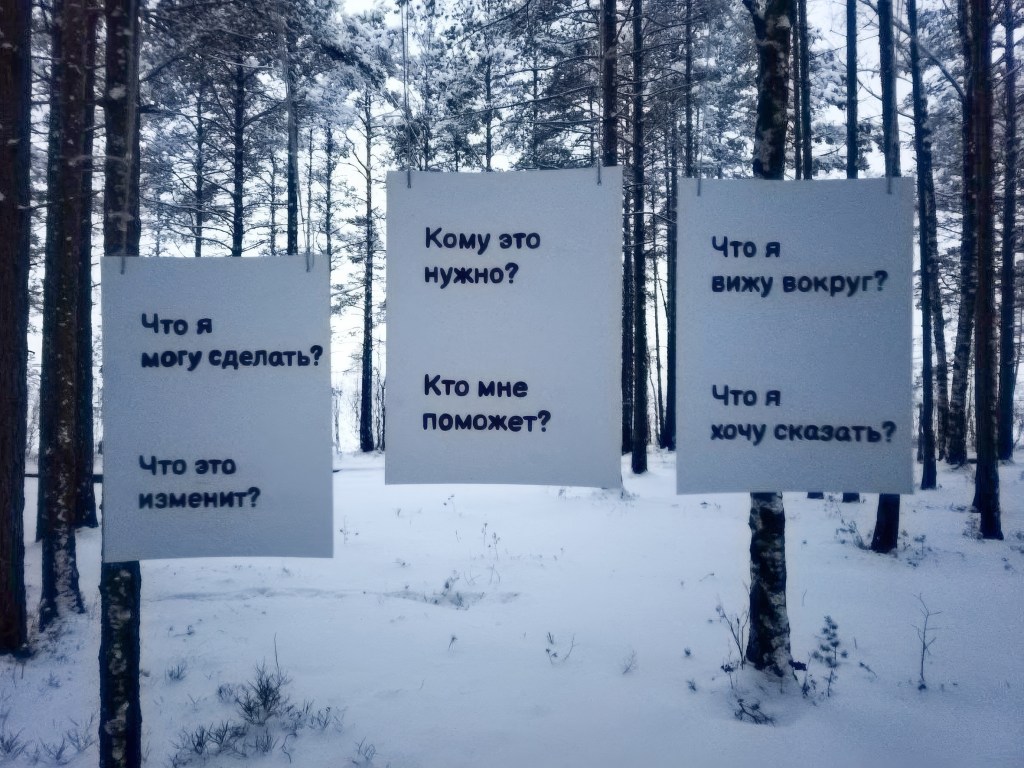
In 2022, Petersburg hosted Carte Blanche, an international guerrilla street art festival. In addition to street works, a stationary exhibition at the abandoned Sailors Palace of Culture on Vindavskaya Street attracted great attention; it featured over twenty artists, including Vladimir Abikh, Maxim Ima, and Slava PTRK. That same autumn, Petersburg hosted the underground exhibition Continuity, dedicated to political prisoners of the past and present, including the victims of the Great Terror and those caught up in the Network Case. Some of the works were made by political prisoners themselves using improvised means and materials while they were incarcerated in pretrial detention centers and penal colonies.
Contemporary street exhibitions continue the Soviet tradition, but the state’s reaction to them has become tougher
Today’s guerrilla exhibitions in many ways are a continuation of the Soviet and post-Soviet tradition. The Bulldozer Exhibition can hardly be called an artistic event also. It was also a political event. It was a challenge to a repressive regime, “the first and most significant collective performance,” as art historian Yevgeny Barabanov wrote.
Since 2022, such exhibitions also have not only aesthetic but also political goals. Although in the Soviet and post-Soviet years, “unofficial” exhibitions, albeit with certain restrictions, could be legitimated [sic], since 2022, the state does not even attempt to compromise with artists.
Moreover, crackdowns against artists who voice alternative opinions have reached a new level. In 1991, the Moscow actionist Anatoly Osmolovsky and his group E.T.I. used their bodies to spell an indecent word for the phallus [khui] on Red Square. After the action, Osmolovsky was detained and threatened with charges of “malicious disorderly conduct.” However, thanks to the petitions submitted to the authorities by his art world colleagues and the Memorial Society, Osmolovsky was soon released.
Nowadays, petitions and statements of support are not enough to get artists acquitted. Sasha Skochilenko was sentenced to seven years in prison on charges of disseminating “fake news” about the Russian army. The young woman replaced price tags at a Perekrestok chain grocery store with anti-war messages.
Source: “Placards in the woods and art shows in flats: how this differs from Soviet guerrilla art,” Bumaga, 12 March 2024. Translated by the Russian Reader

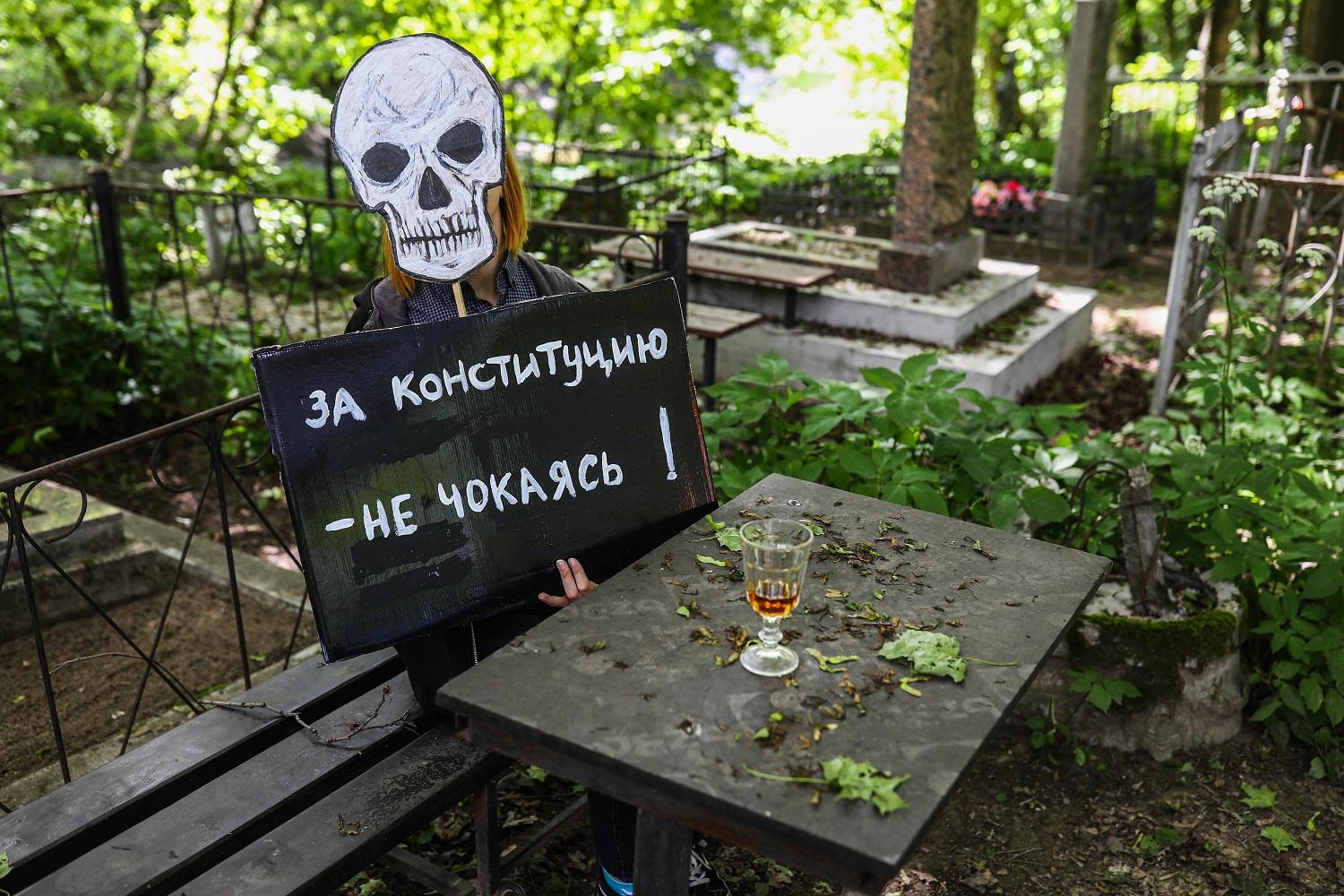




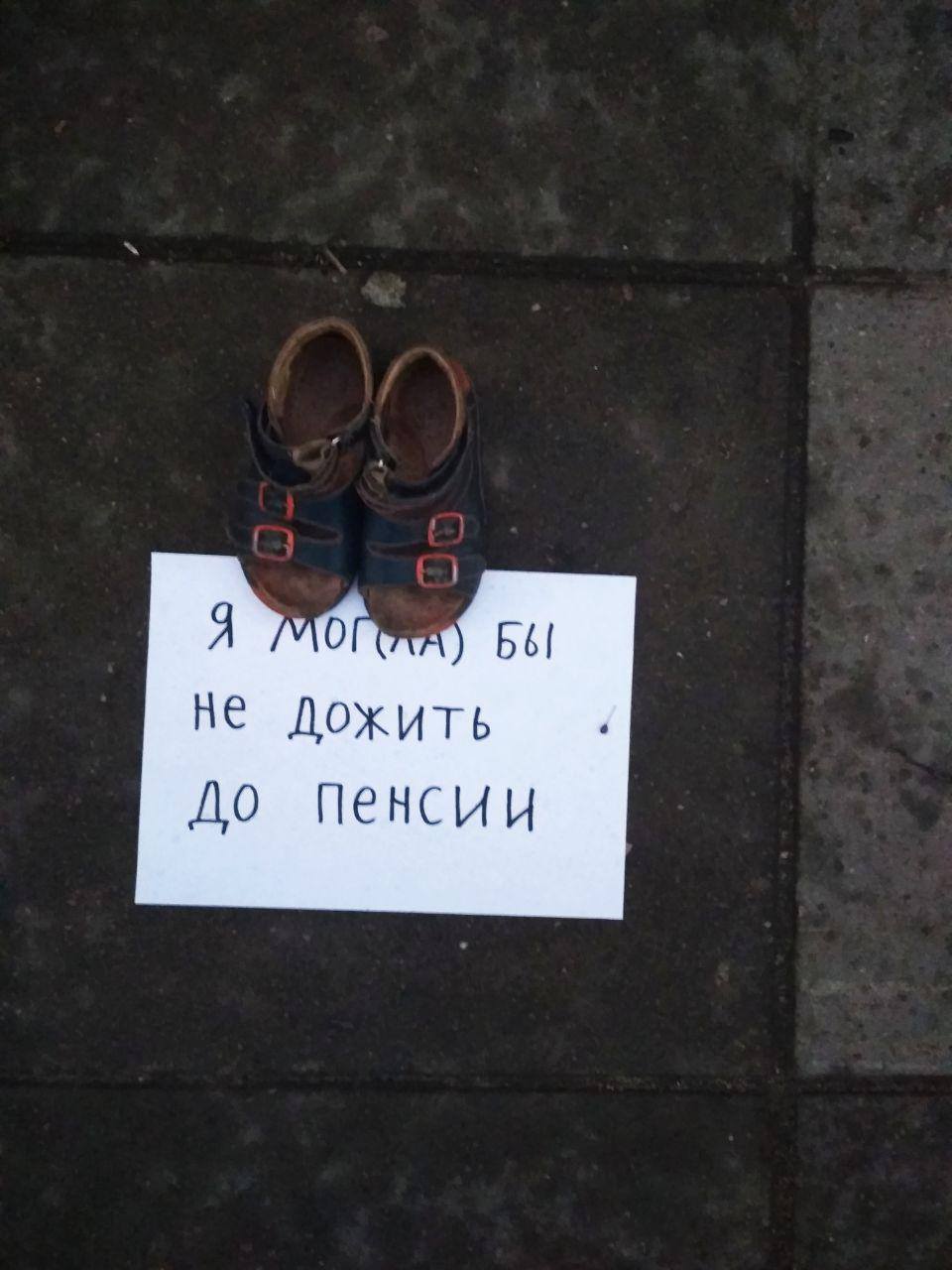

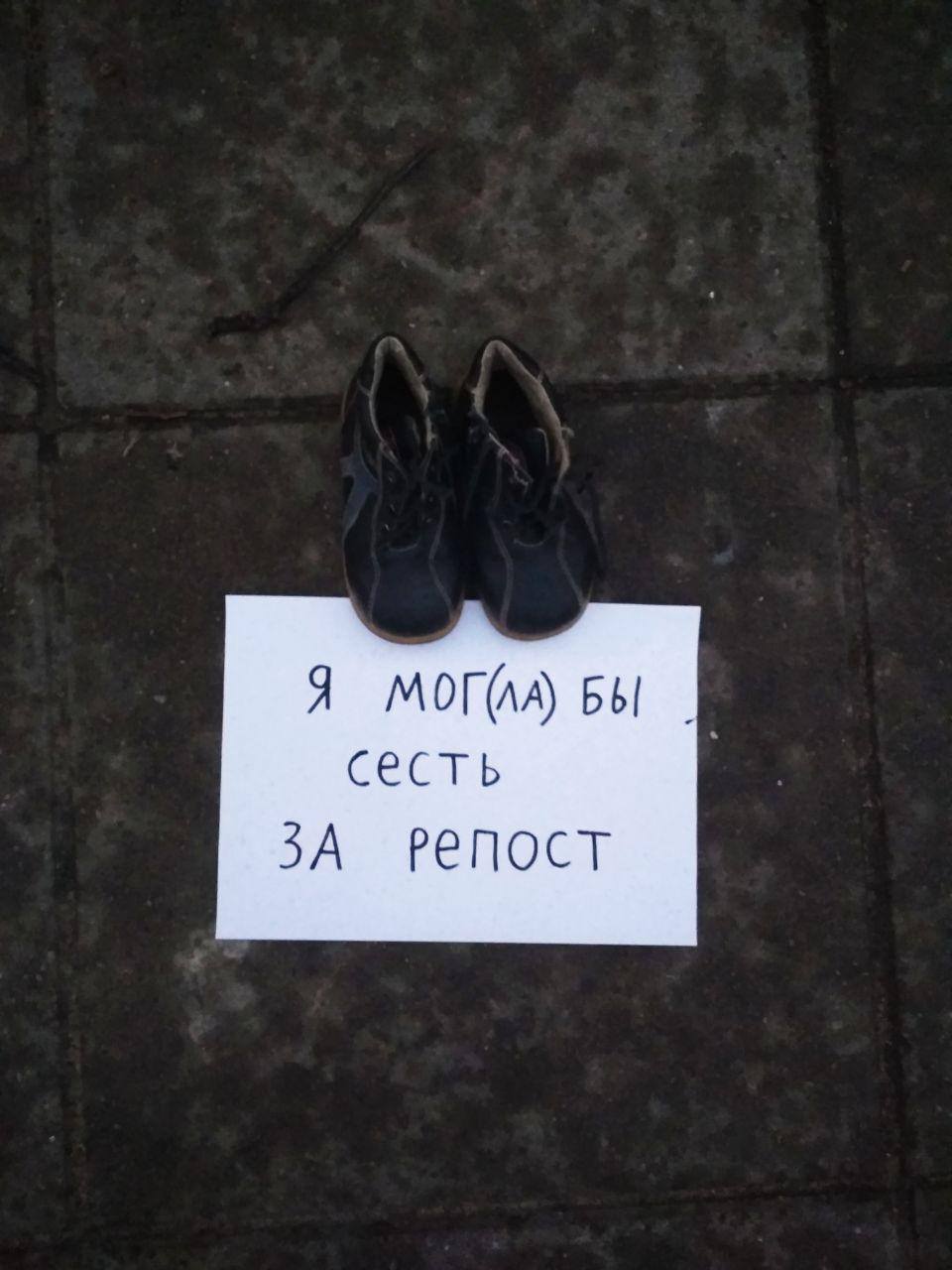
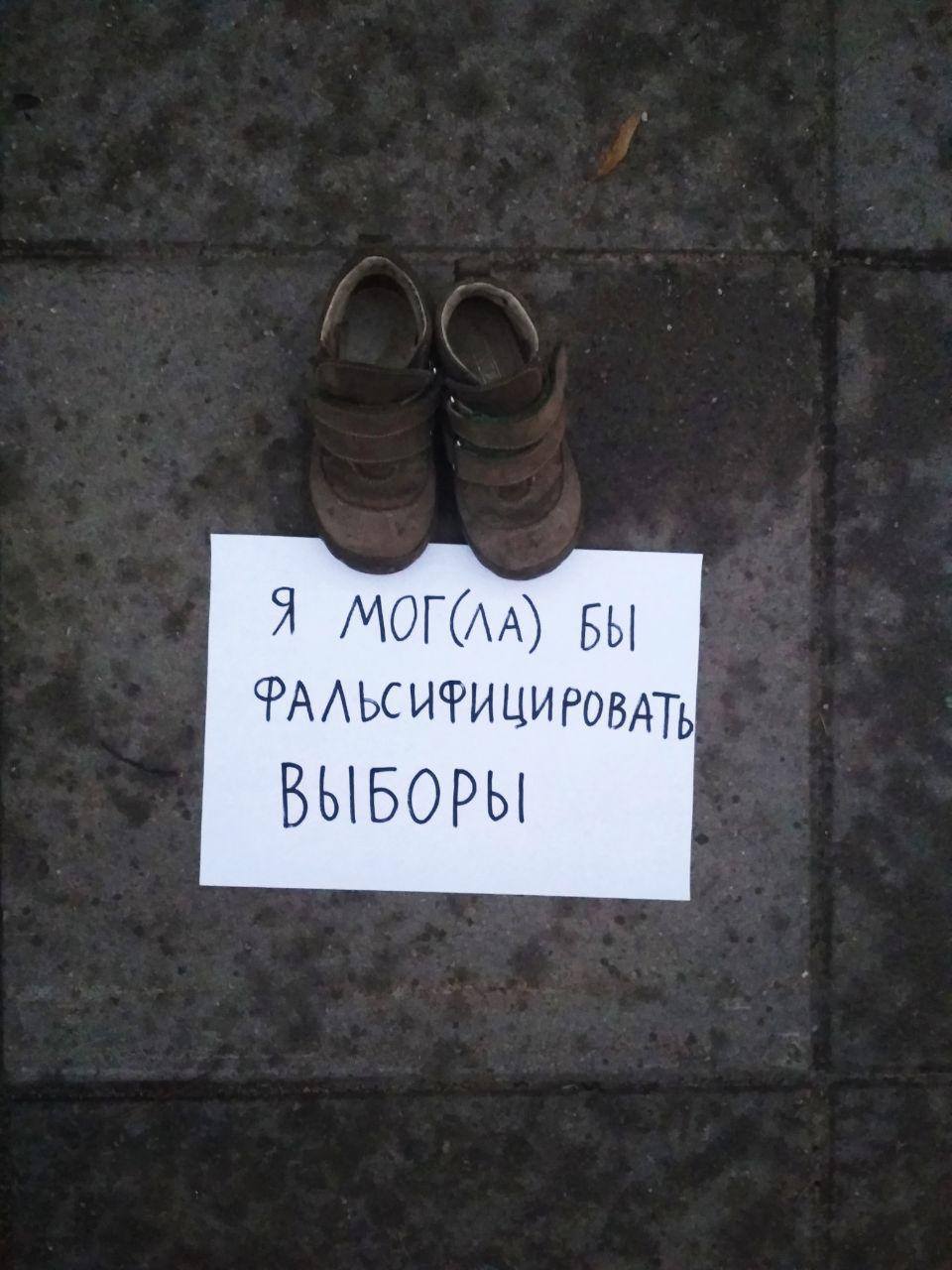
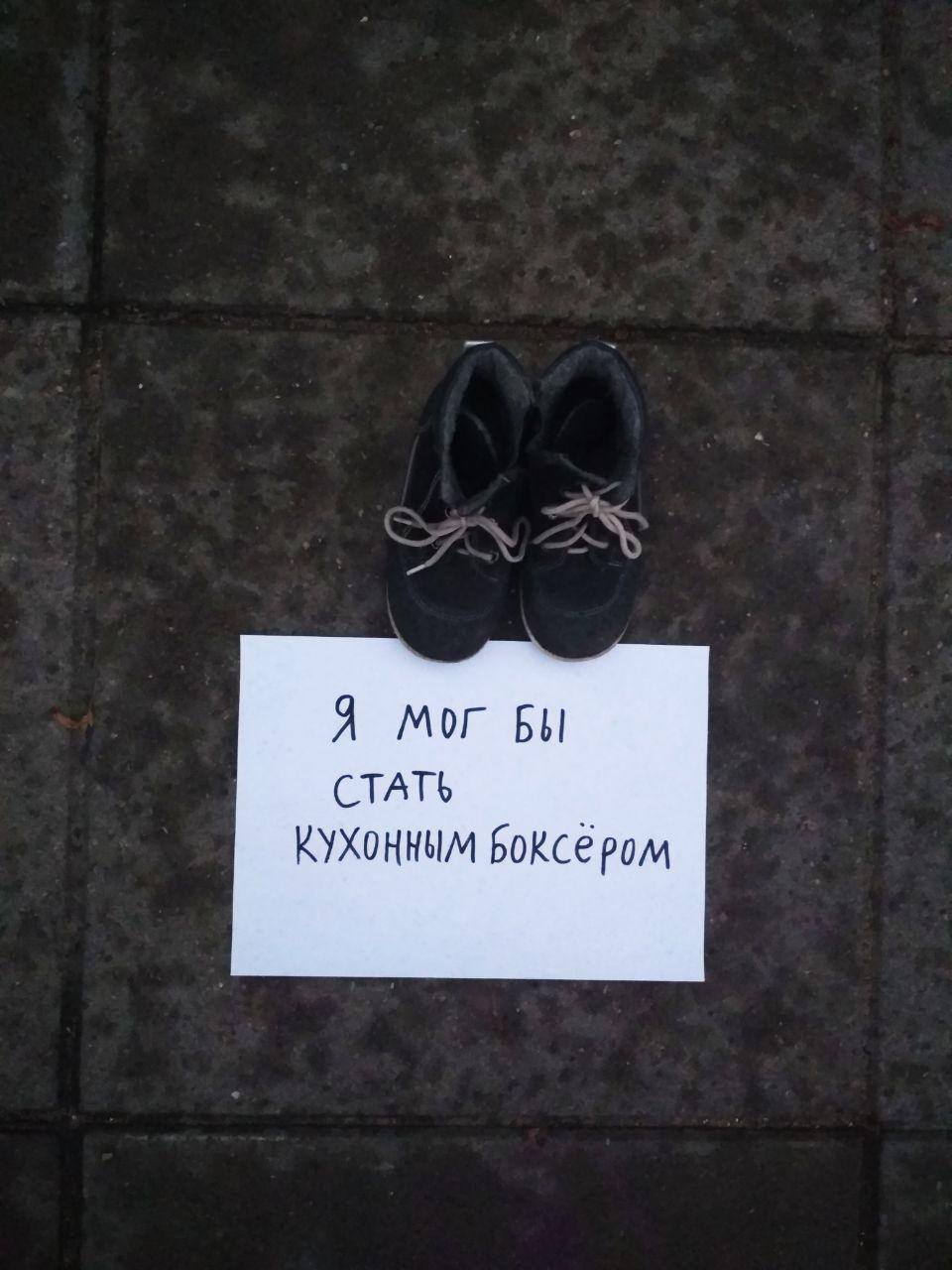
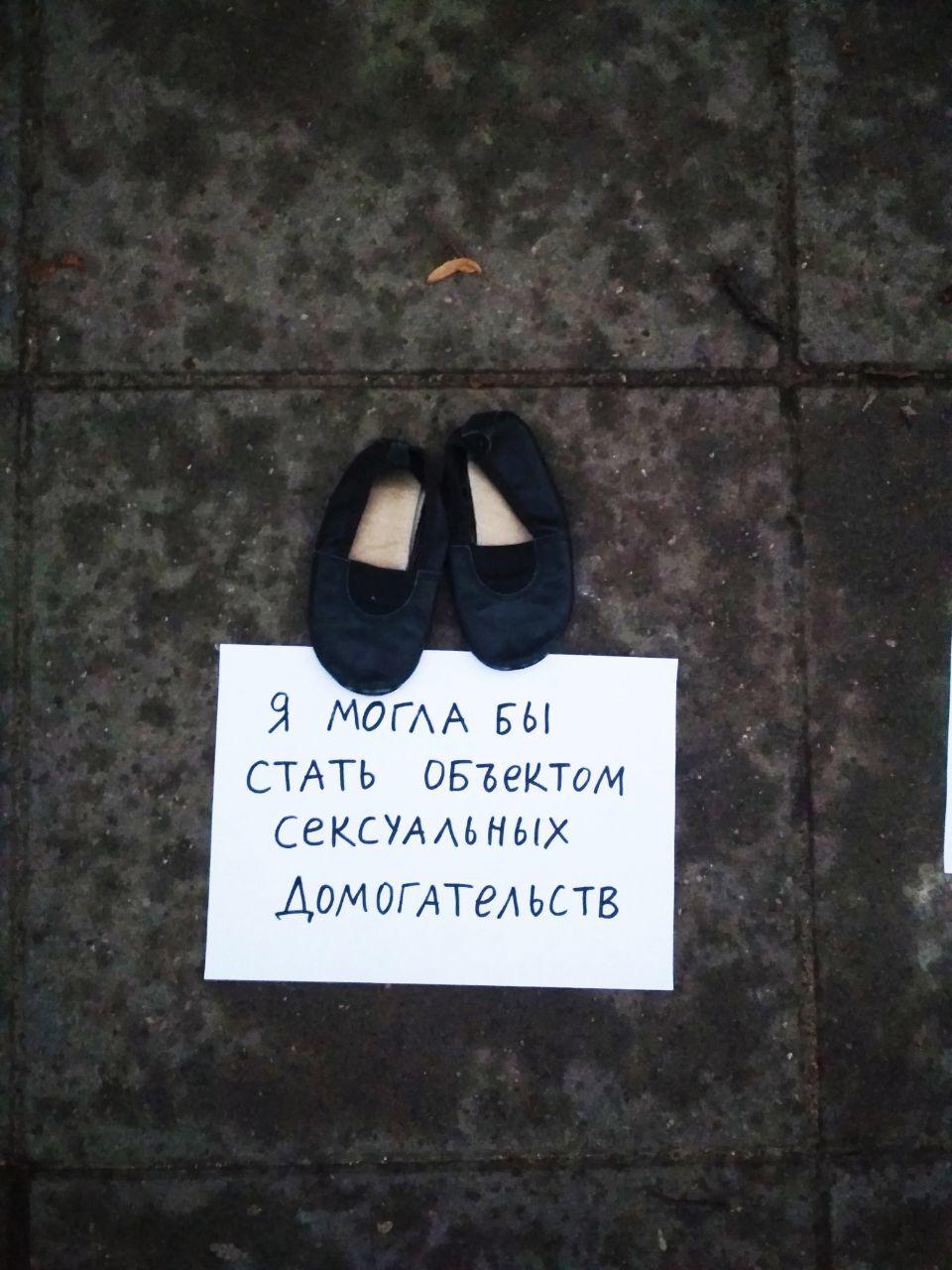
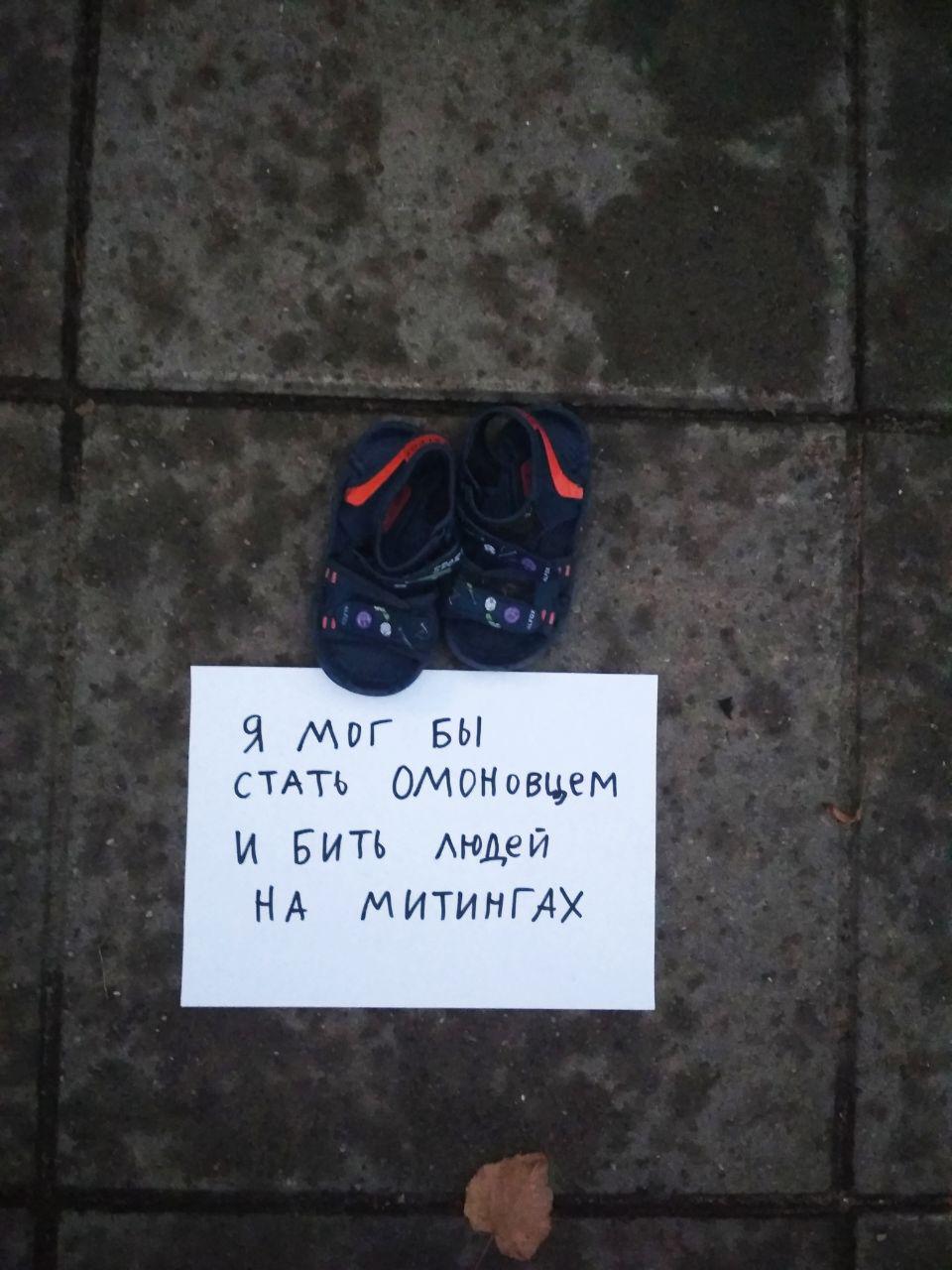
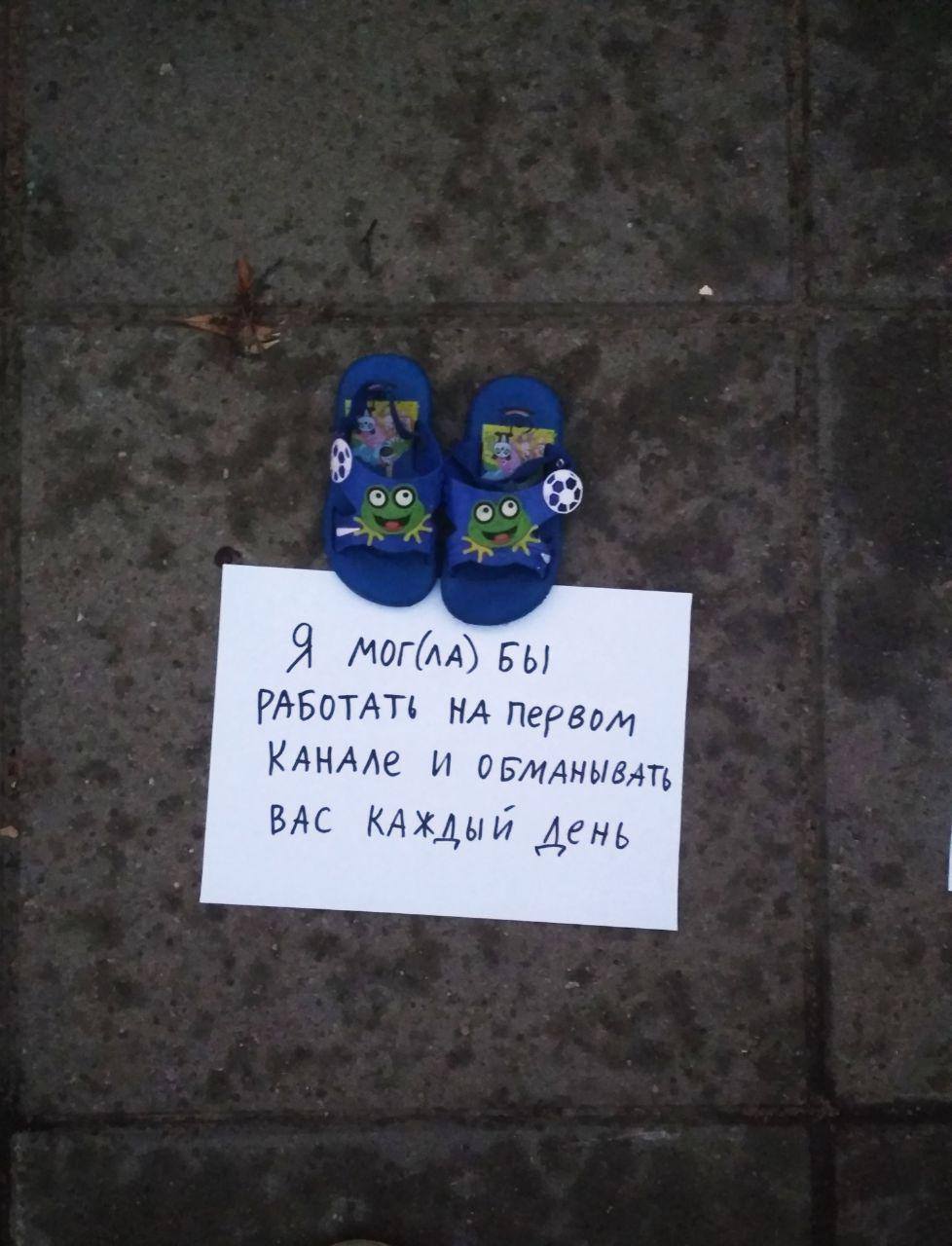
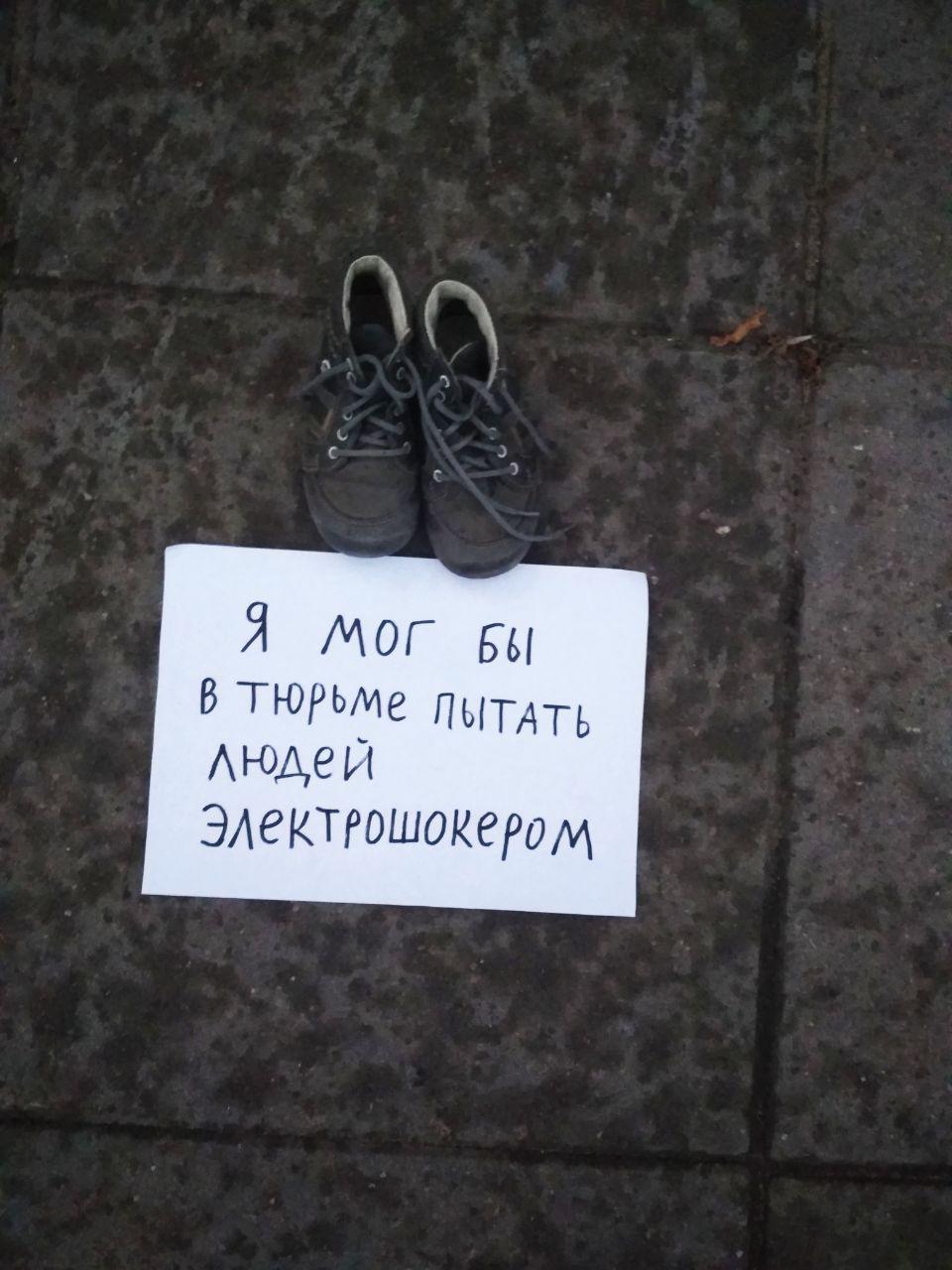
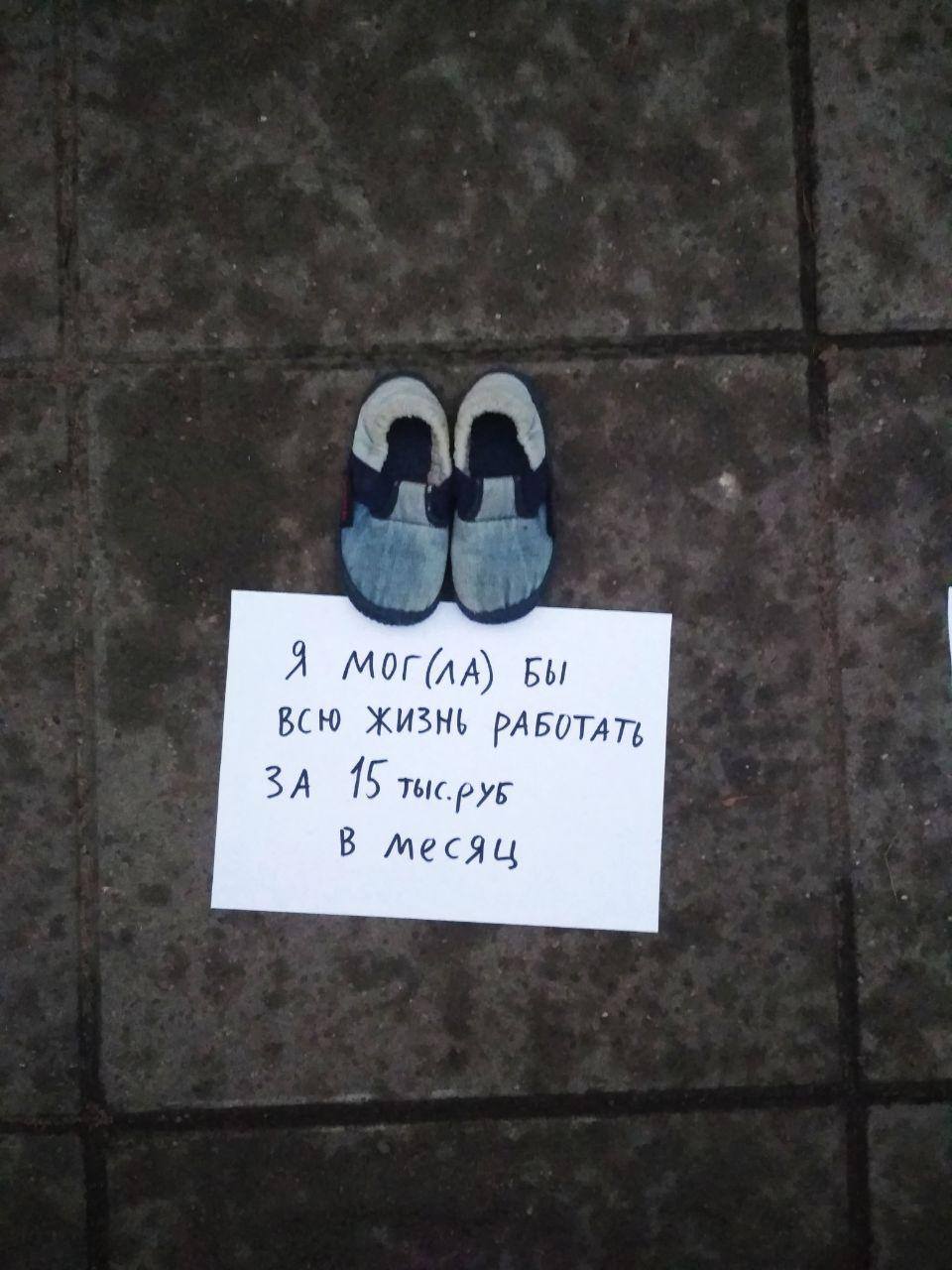
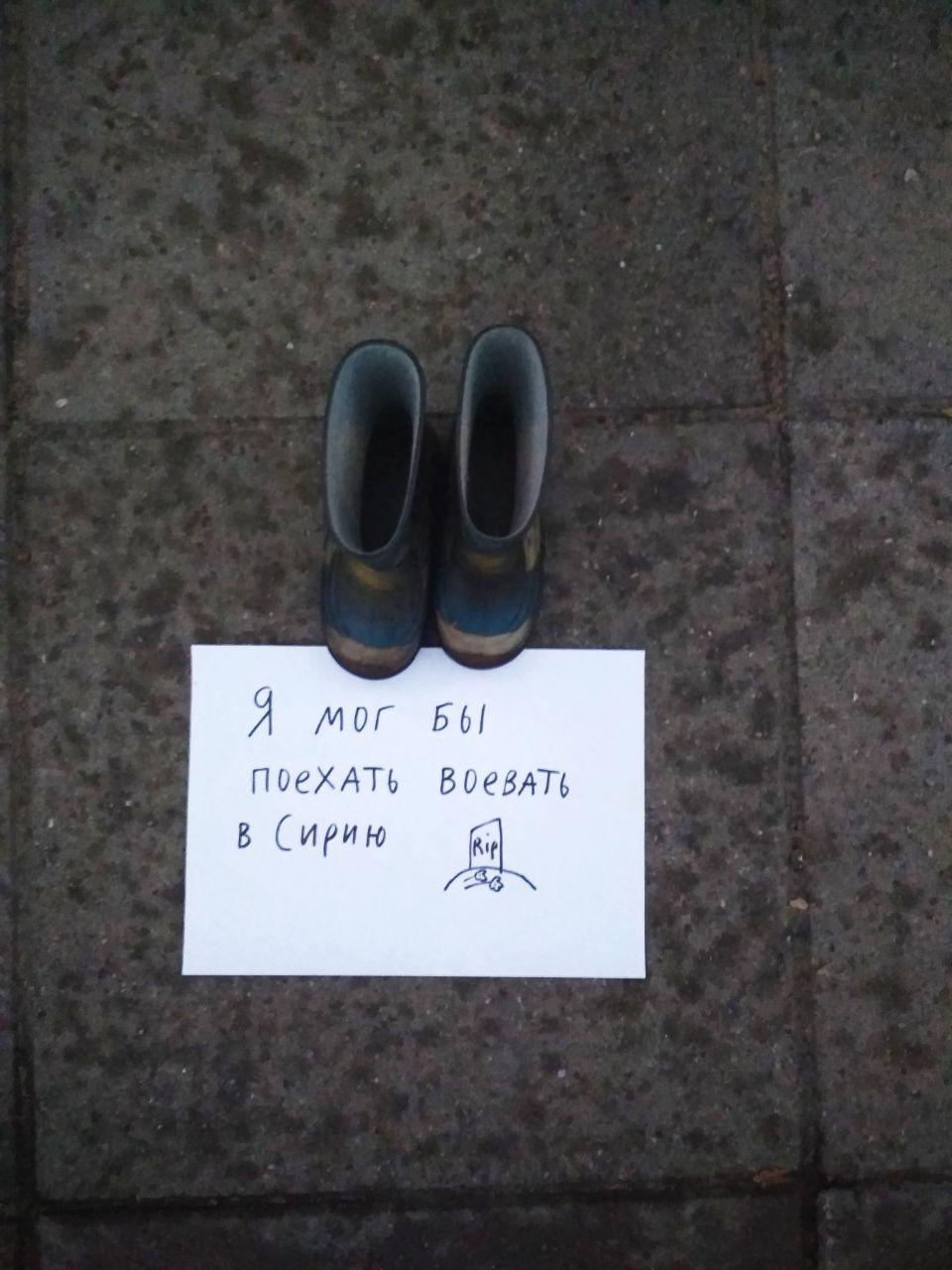
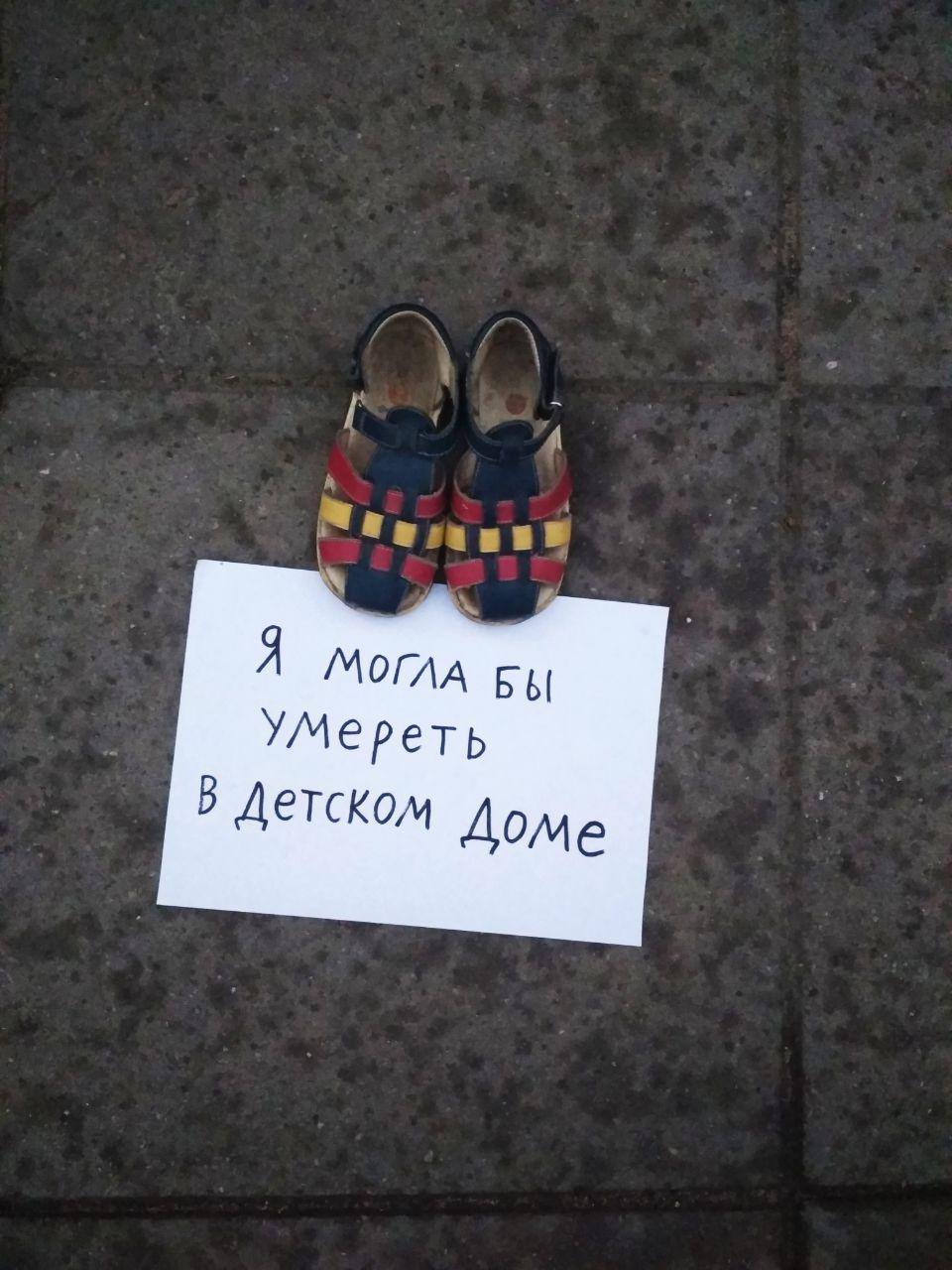
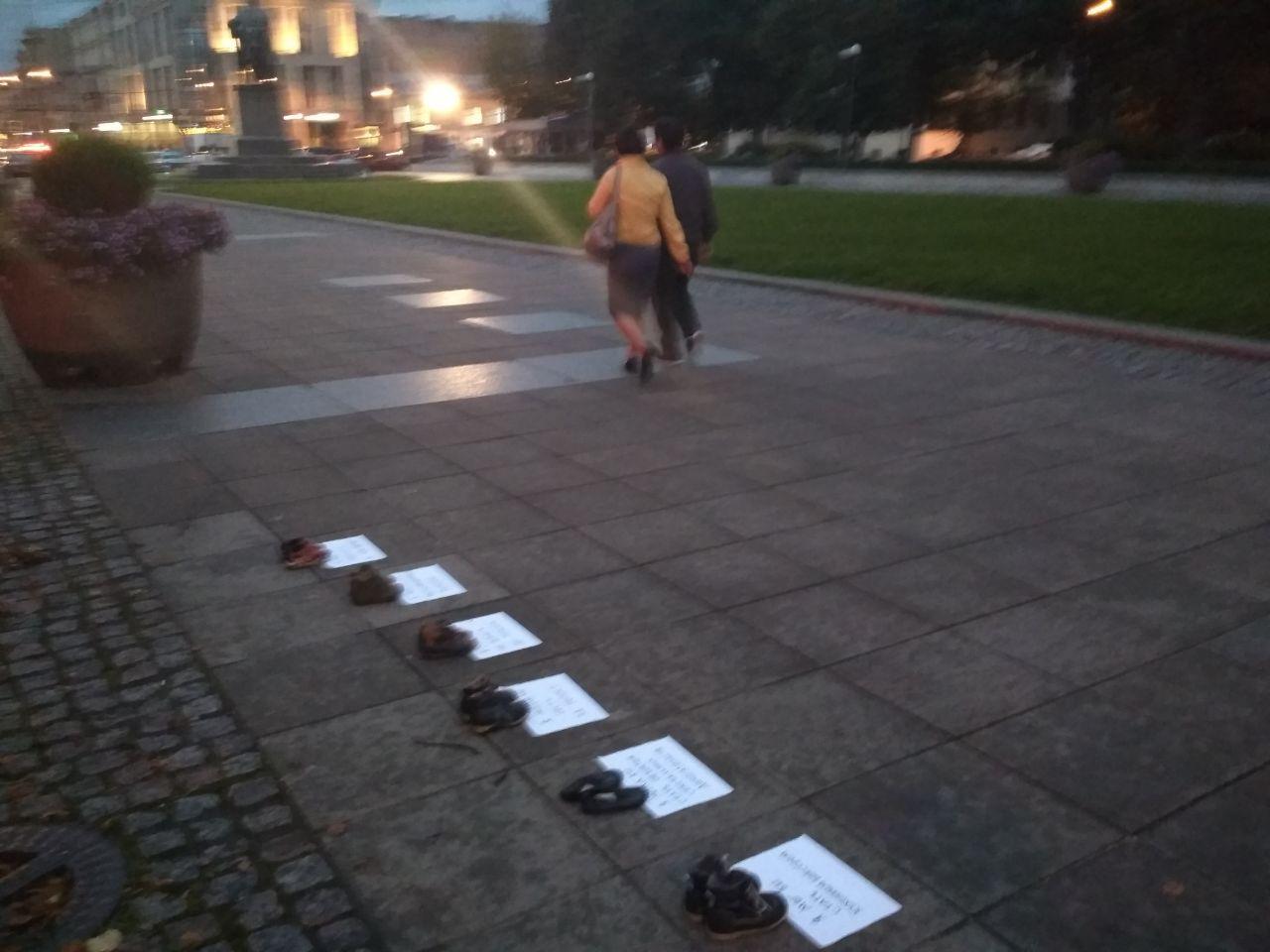 A view of the silent protest on Pioneer Square in Petersburg’s Central District