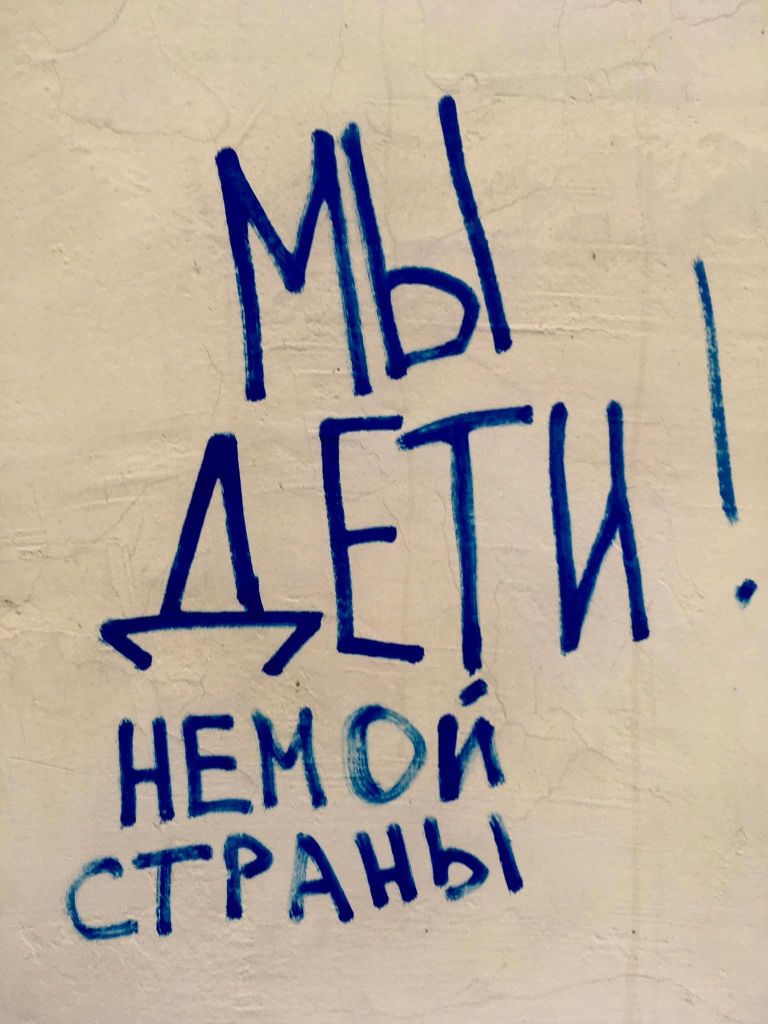
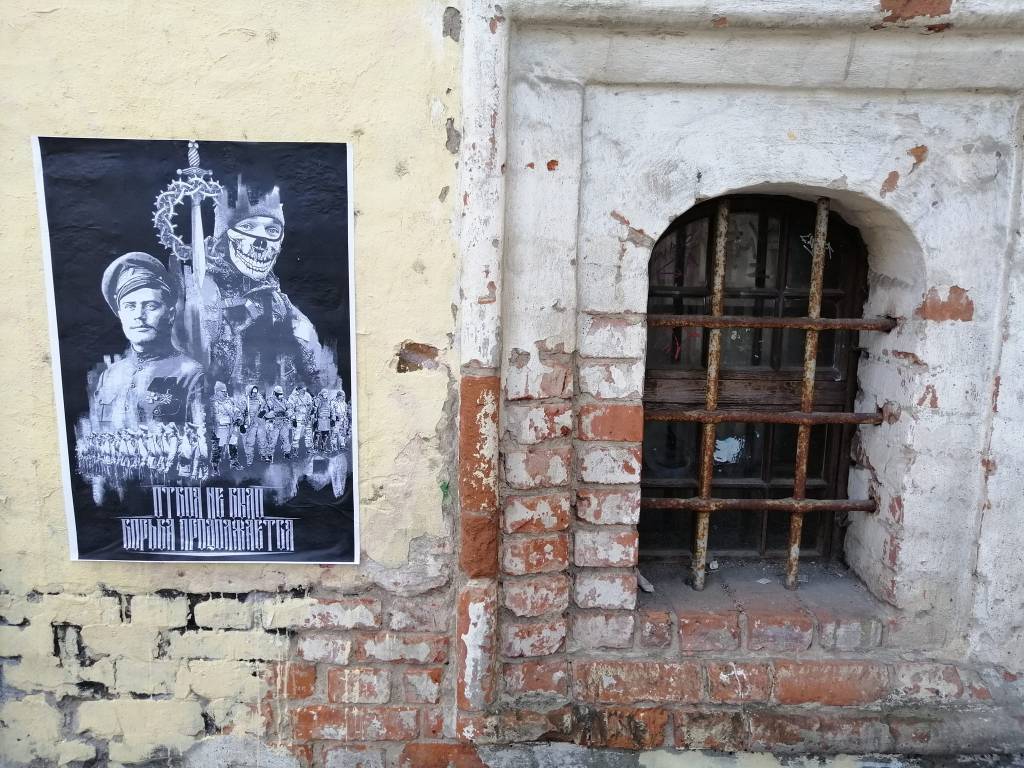
“We are children of a mute country.” Graffiti on a wall in Petersburg, 11 February 2024. Identity of photographer suppressed for their own safety.
Last night I dreamt I was taking a long exam to see whether I “met the standards of the biological species.” The examining committee was chockablock with priests, Cossacks, and members of the ruling party.
A bust of Stalin stood on the table. The flag was hung upside down, meaning, that is, that it was the Serbian flag. The anthem played, with the Soviet lyrics, but everyone was staring at their smartphones.
I wrote my answers along with other candidates for the title of human being. Then a female robot arrived, introducing herself as Marusya. She collected the answer sheets and shook hands with everyone. The sheets were fed into something that looked like a coconut with eyes. It was an artificial intelligence, and it was the chief examiner.
The scores popped out almost instantly. To qualify as a human being, you had to get 75% of the answers right. I didn’t do so well: 28%. Everyone was divided into two groups—those who had passed the exam and those who hadn’t. Both groups walked one by one to different doors. Those who passed were congratulated and immediately accepted into the party, while those who failed had their passports confiscated and were issued a green (?) certificate identifying them as “second-class sentient beings.”
We walked out the door. The new party members went to a banquet hall, while the “beings,” me included, took off their clothes and donned identical uniforms, which were also green. The words “second class” were embossed on the breast pocket.
“‘The Arab world is not just beautiful ethnic costumes, exquisite dishes, and other One Thousand and One Nights-type stuff, but also brutal dictatorships, poverty, a high tolerance of violence, and sometimes outright racism and religious fanaticism. According to my observations, however, this second facet is almost always bracketed off by Europeans when describing the countries of the “global South” or is guiltily dished up as a consequence of the traumatic colonial past.’ Essayist Andrei Sapozhnikov (“Department of Culture”) connects the abnormally high support for Hamas’s invasion of Israel in the Western world with this peculiarity.”
Source: Email newsletter from the online Russian magazine Republic, 8 November 2023. Translated by the Russian Reader
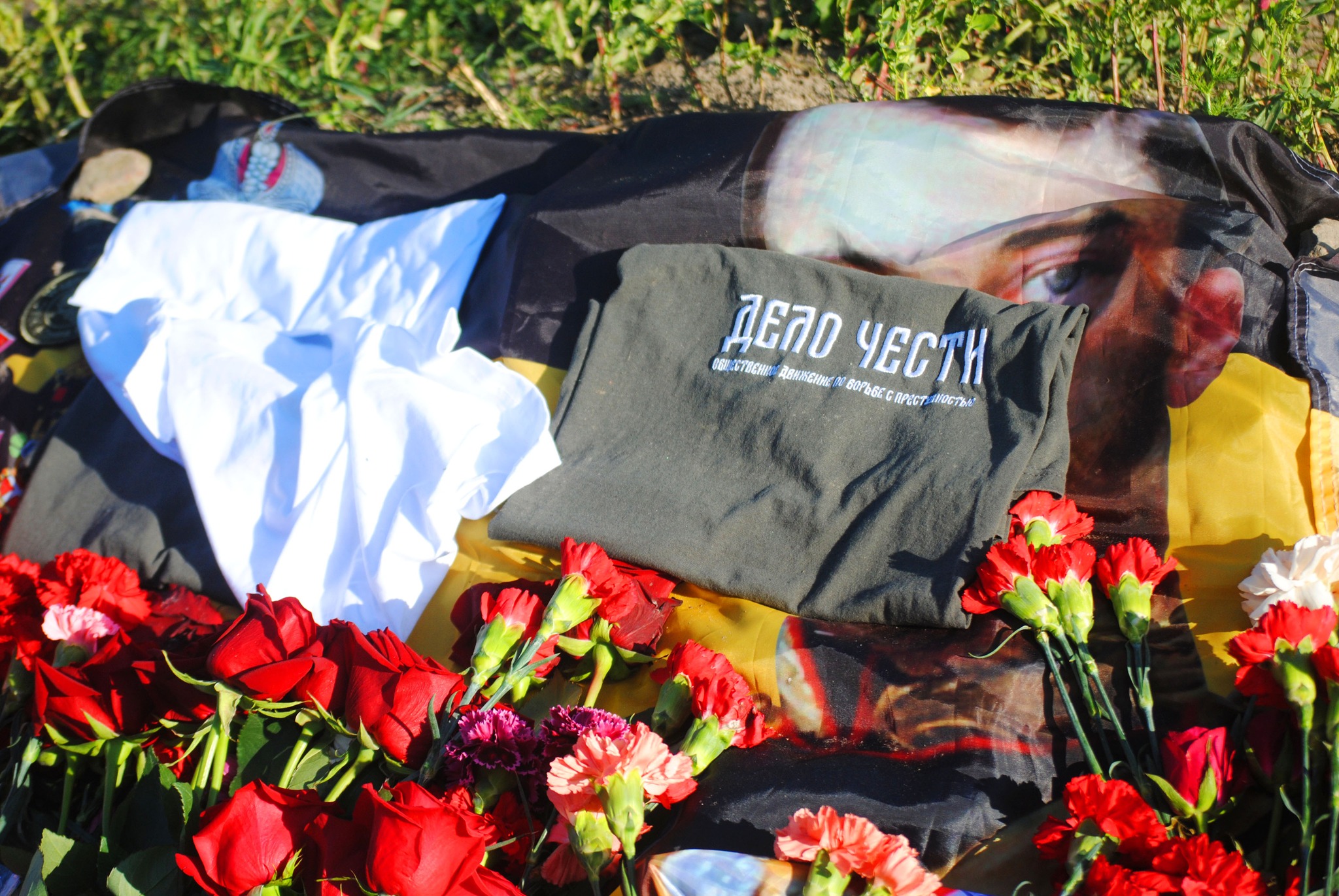
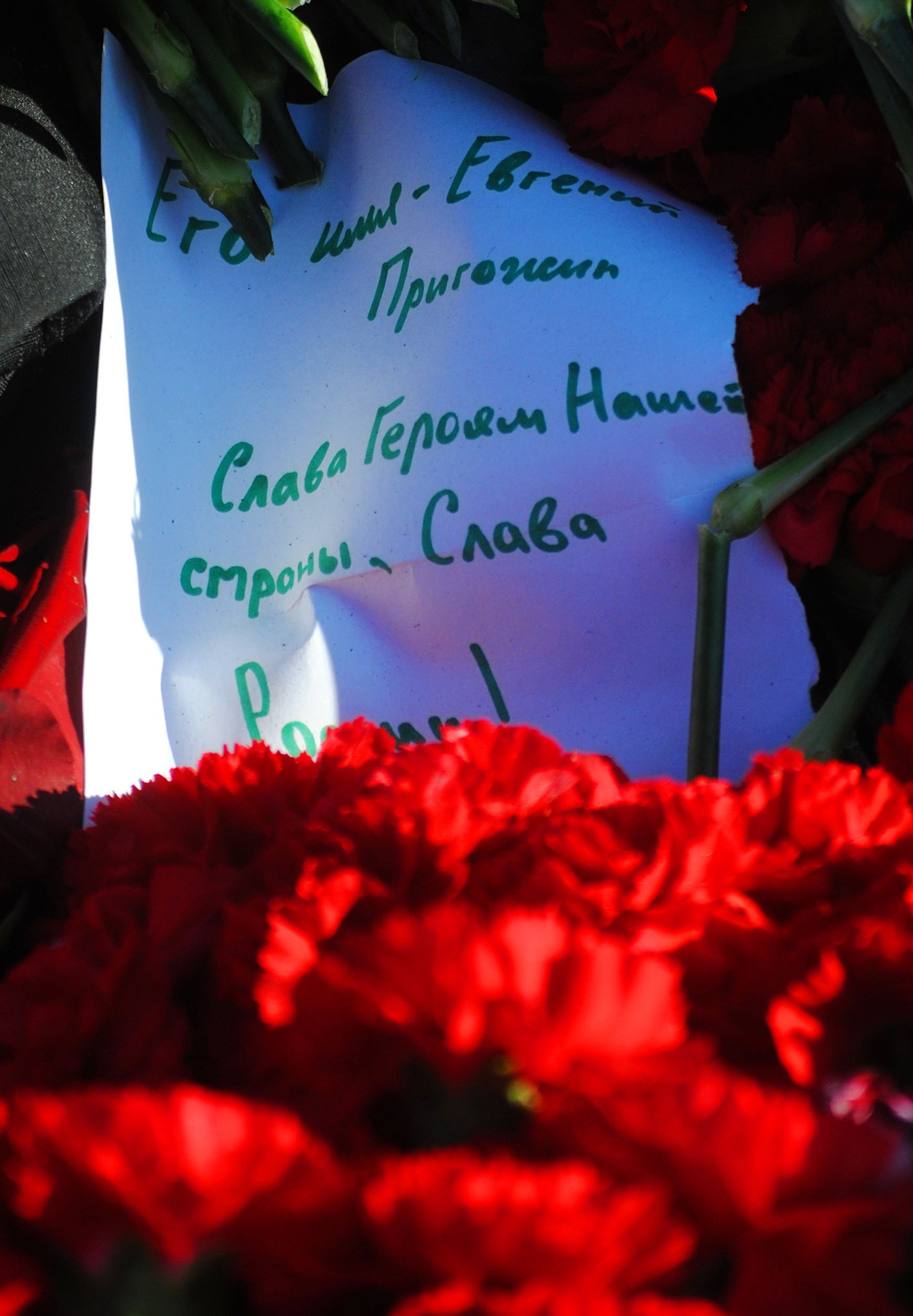
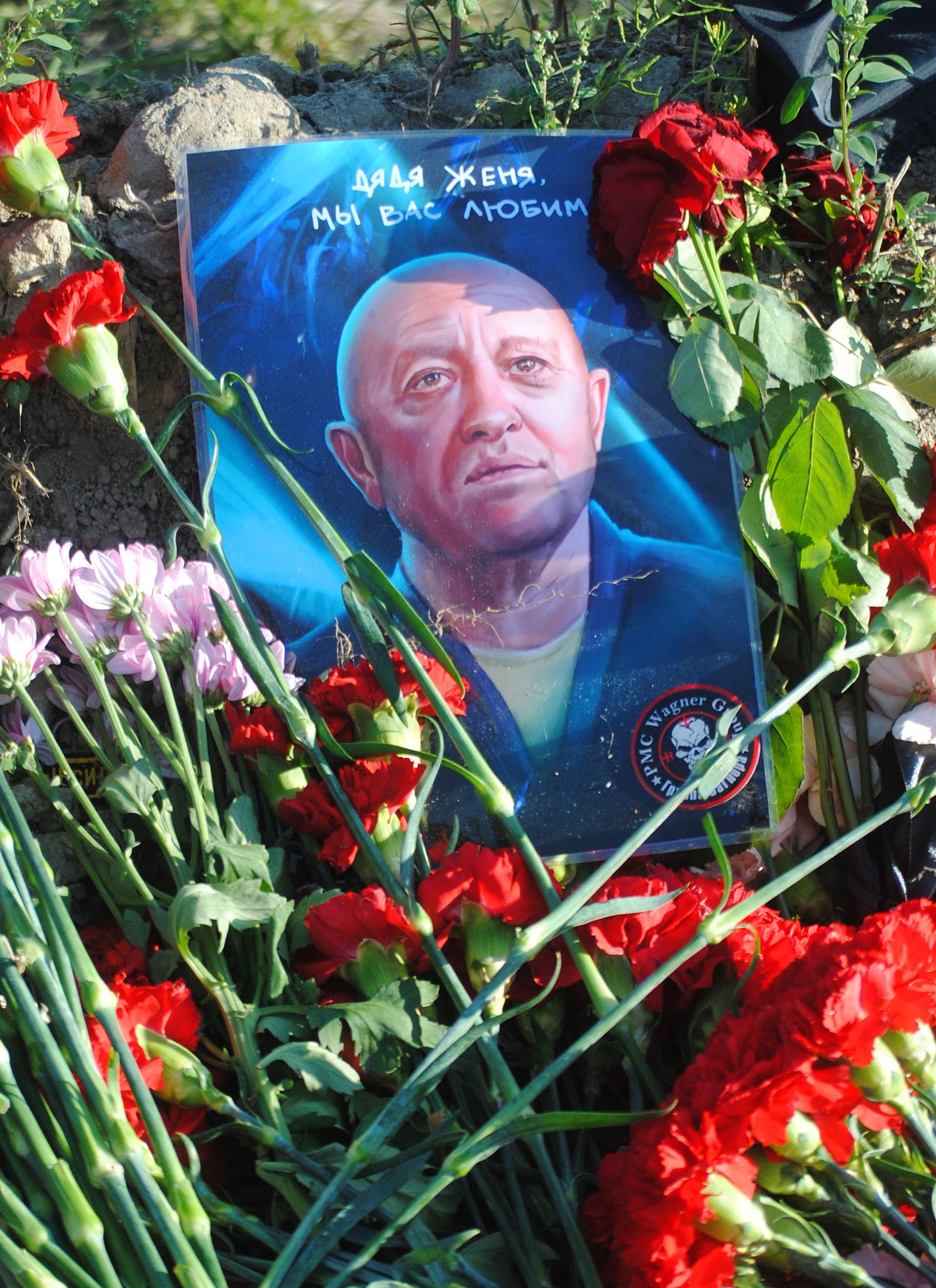
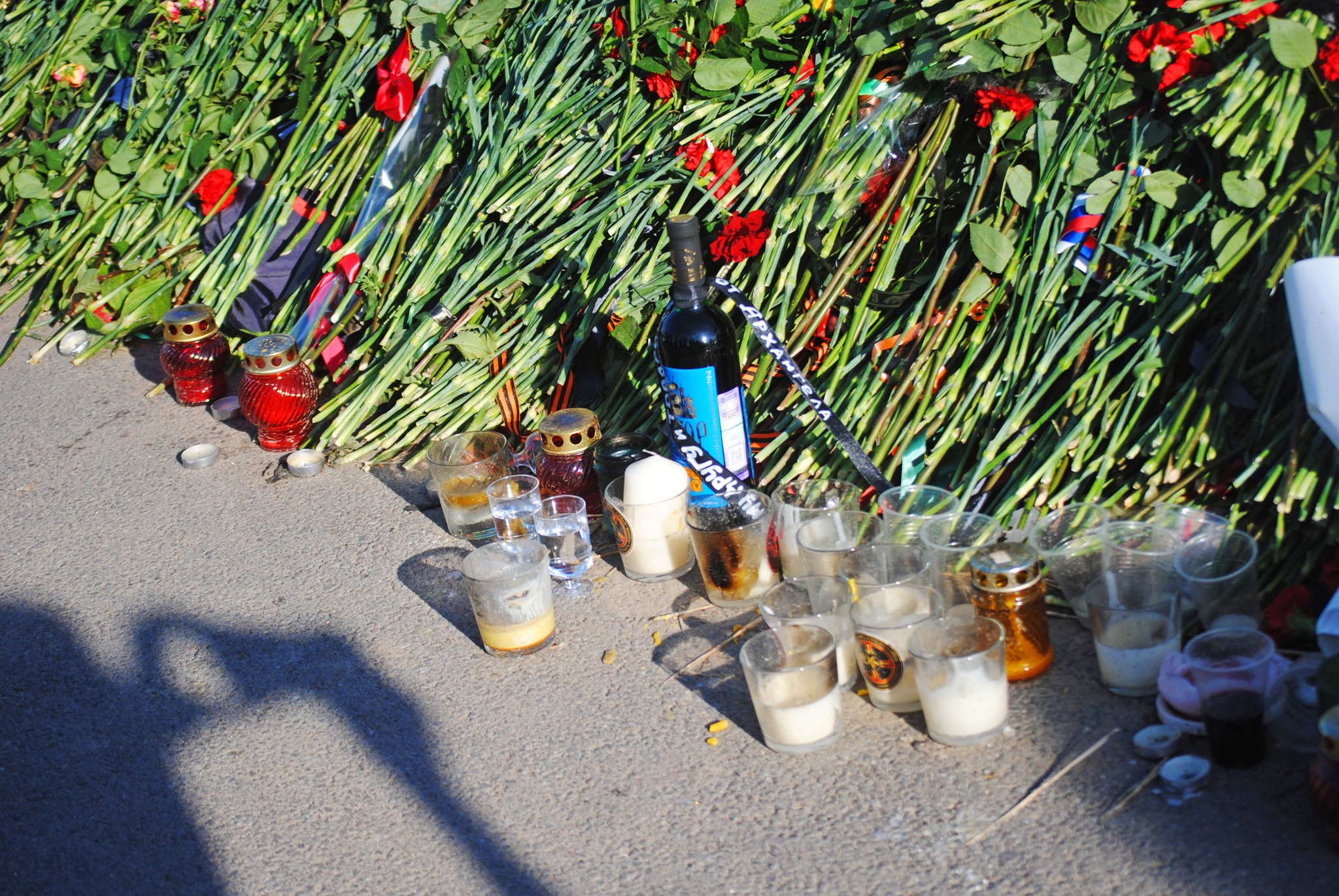
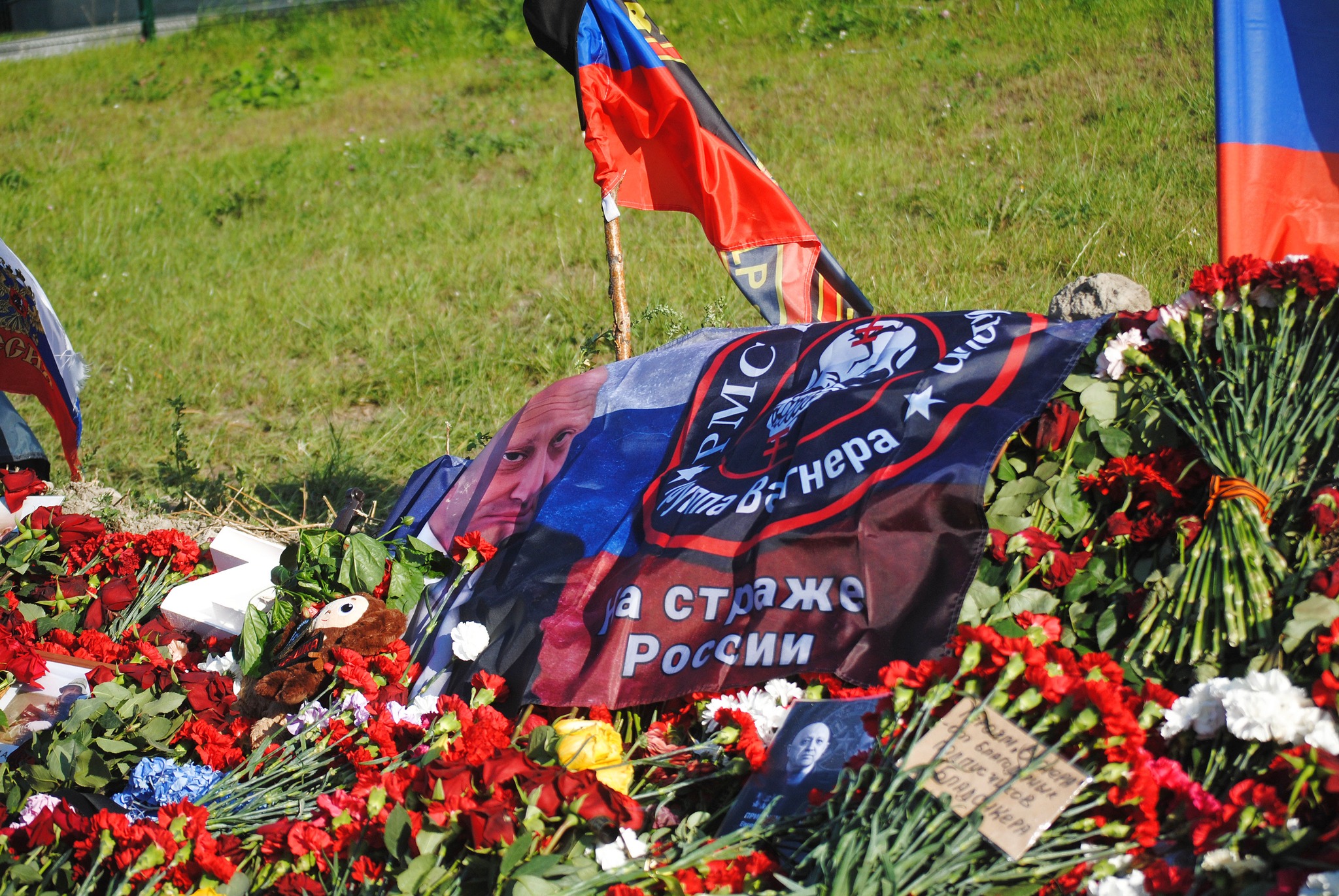
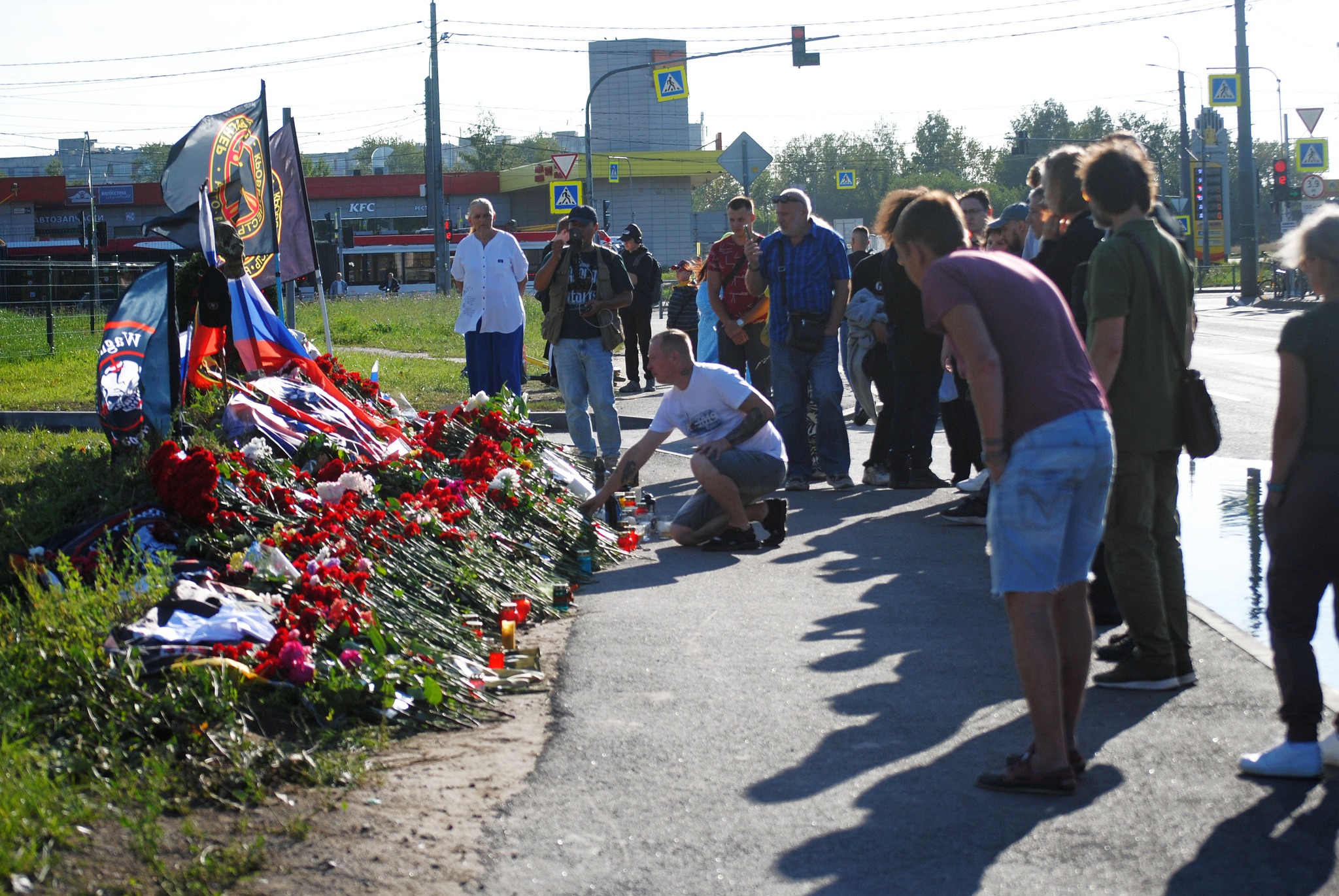
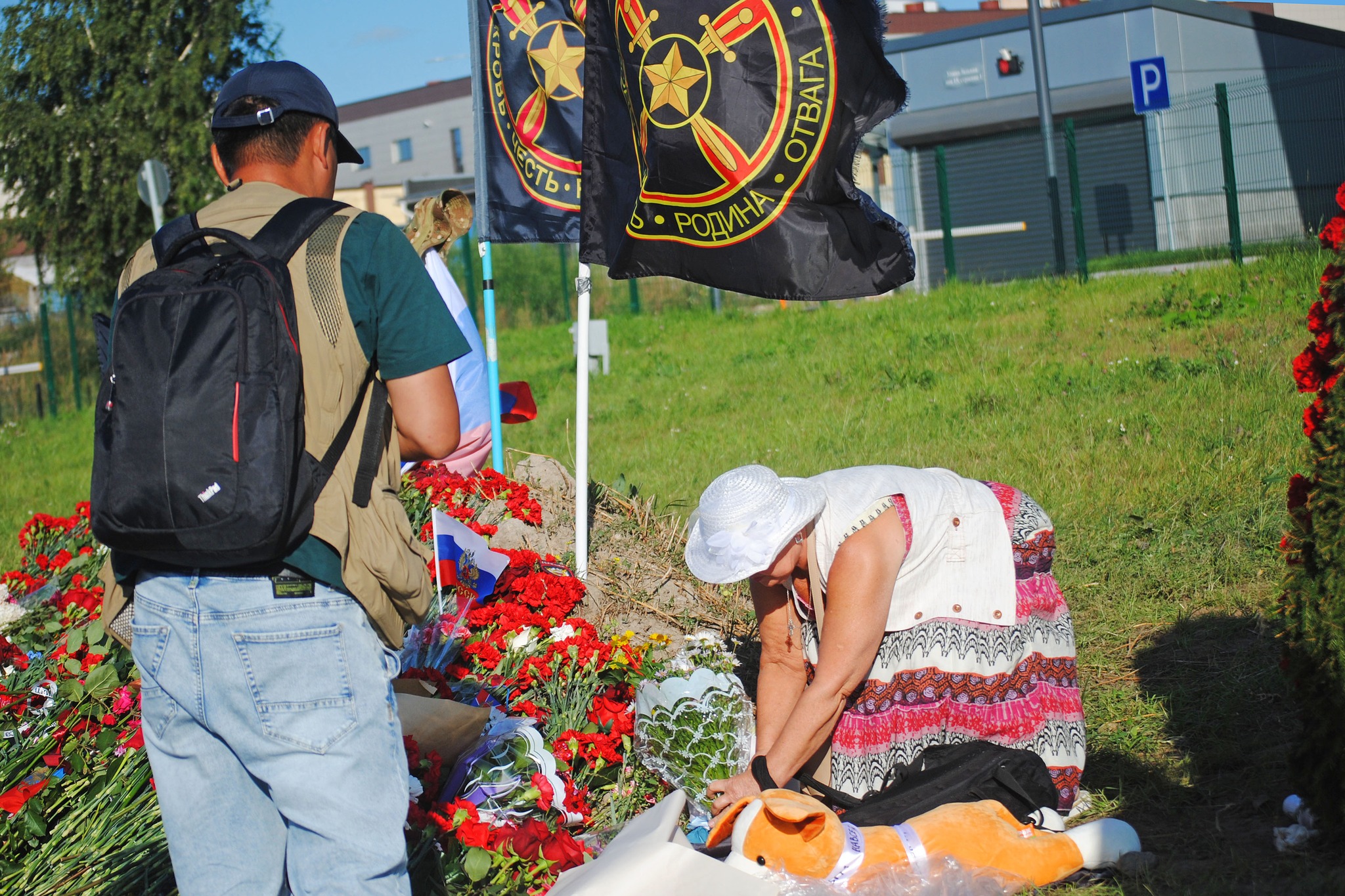
I went to see the spontaneous memorial to Prigozhin on Zolnaya [“Ashes”] Street [near the former (?) Wagner Center office building in St. Petersburg]. I have to say that what I saw impressed me. People kept coming and coming—young dudes and girls, men who were slightly older, and some people even had their kids with them. They brought flowers. They stood and looked for a long while. Some got down on their knees, and this one young dude crossed himself and genuflected. A Chinese guy was videotaping the whole scene and talking in Chinese, but it troubled no one. That’s him sporting a rucksack and filming point-blank the woman in the hat who is putting what looks like a whole bush of roses in a vase.
Hello, dear Moscow Times readers! This is your weekly newsletter, and we’re kicking off with the (near-certain) death of Yevgeny Prigozhin, the man dubbed Vladimir Putin’s “chef.”
However, Prigozhin gained notoriety not for his culinary talents, but for his business ventures. He set up several enterprises that were extremely vital to the Russian authorities. The most well known were the private military company Wagner and the “troll factory” in Olgino, a suburb of Petersburg, which was used as a tool for influencing the information space in the Russian Federation and the world.
Trolls are fantastic creatures, and they vanished of their own accord, you might say, but apparently it was Vladimir Putin who put the kibosh on Wagner. The rowdy band of freewheeling mercenaries, who took their orders from god knows whom, has come to end.
We should recall, of course, that Prigozhin took a long time admitting that Wagner and the Olgino trolls worked for him. He acknowledged this obvious fact only in the midst of the war, and this was the first step toward the mutiny of 23 June and his (near-certain) death on 23 August. The public owner of an effective resource can either use it or give it up. Prigozhin didn’t feel like giving Wagner away—that is, transferring it to the command of the Defense Ministry (and take an oath, as Vladimir Putin has now ordered)—and so the strange mutiny that had such supremely serious political consequences happened, and, later, the Embraer jet plane crashed in the Tver Region. (It was the first time this type of plane had an accident involving fatalities.)
We interviewed people in the know about the moods among Russia’s elites to find out how they were taking the “chef’s” demise. We went further, though, asking several people who kept a close eye on Prigozhin’s rise and (alas, literal) fall to explain the meaning of the story that has unfolded before our eyes.
The first explanation comes from an observer in civil society who claims that the plane crash was caused by underlings going farther than they had been ordered to go. In fact, this observer argues, Putin did not want Prigozhin dead. Without his trolls and without Wagner, which had ceased to operate in the RF and had begun to be transferred to Defense Ministry-controlled outfits in Africa, Prigozhin was no threat to Putin. However, there were people (in the GRU, most likely) who believed that Putin would be pleased if they brought him the mutineer’s head on a plate.
The risks are the same as in the case of the late [Boris] Nemtsov [assassinated near the Kremlin in 2015]. After his untimely death, Prigozhin’s significance as a symbolic figure could increase and thus serve as a consolidating factor. We cannot rule out the possibility that Prigozhin’s memory will lead to the creation of something bigger than what emerged around the man during his lifetime.
The second explanation comes from an observer in the defense sector, who argues that we’re seeing a repeat not of Nemtsov’s murder, but of the death of Polish president Lech Kaczyński in 2010. (The official Polish Tu-154 plane carrying him and other Polish officials crashed while attempting to land in Smolensk, Russia. Many Poles believe that the plane was brought down by a bomb planted onboard by the Russian secret services.)
The hit squad didn’t go too far. On the contrary, [Prigozhin’s plane crash] was a carefully planned operation that was brought off nearly flawlessly. Although we can claim that such things don’t get done without Putin’s consent, there is no way to prove it.
The third explanation comes from a political spin doctor and frequent guest on YouTube channels. He wonders why everyone has decided that the passenger manifest and the presence of his personal effects [at the crash site] is sufficient to prove that Prigozhin was killed. We cannot rule out the possibility that Prigozhin and Putin made a deal and that Yevgeny Viktorovich will be the Kremlin’s secret weapon. I’m joking on this point, of course. But Russian realities are such that a man dies he shakes off all the bad stuff that happened in his life, and people focus on his admirable qualities. Look at Stalin: his bloodthirstiness and lack of principle have been forgotten, and no one remembers the terrible mistakes he made while running the country. He’s a winner, a victor. Stalin and Prigozhin cannot be compared, but nor can we deny that Prigozhin has been the most auspicious commander in the Ukraine war.
The fourth explanation comes from an opinion journalist and writer who asks us to the recall the Russian fairytale about the vixen and the thrush. The vixen terrorizes the thrush by threatening to kill its fledglings. First the vixen asks the thrush to give it something to drink, and then it asks the thrush to feed it, so the thrush helps it to steal food and beer. (The analogy here with the “chef” is obvious.) The sated and drunken predator then orders the thrush to make it laugh, and so the thrush alights on the heads of two peasants, father and son, who cripple (and even kill) each other whilst trying to beat the thrush. (Thus recalling the Olgino trolls and their work on the US elections, for example.) After the vixen has laughed its fill, it says to the thrush, Now scare me! The thrush raises a mutiny against the fox—oh, sorry, it gets hunting dogs to attack the vixen. Depending on which version of the fairytale you find, the vixen either gets killed or escapes the attack, but it is genuinely frightened.
Vladimir Putin wanted to have an alternative both to his own generals and to the supremely dangerous Kadyrovites. He came to count on Prigozhin to carry out sensitive missions both in Africa and the RF, but failed to take into account the man’s ambitions and got carried away. When Putin was faced with Prigozhin as an actual threat, he had to defend himself in earnest.
Russian Media Monitor, “Propagandist blames US, Ukraine and NATO for Prigozhin’s crash,” 24 August 2023 Thanks to Monique Camarra (EuroFile) for the heads-up)
Mykola Honchar lives in a crumbling stone house in what is left of a tiny hamlet of eastern Ukraine. The town was attacked by Russian forces in June of last year, as the Wagner mercenary forces were spearheading a renewed offensive.
Even before the Kremlin set Wagner loose to wreak havoc in Ukraine, the Russian campaign was notable for its brutality. But from the moment Wagner forces entered the war in April 2022, they earned a special reputation for bloodlust from civilians and soldiers alike.
To Mr. Honchar, the death this week of Wagner’s leader, Yevgeny V. Prigozhin, responsible for so much carnage in the war, would be fitting — a violent end to a violent life.
“He has blood on his hands,” said Mr. Honchar, 58. “If there is a god, god will figure out what to do with him.”
Even in a war in which civilians were shot dead in the Kyiv suburb of Bucha, and the town of Mariupol was bombed into oblivion, Wagner and Mr. Prigozhin cultivated an image of brutality.
A video was promoted across Wagner-affiliated social media of the execution of one of Mr. Prigozhin’s own soldiers with a sledgehammer after he was captured and then released by the Ukrainians in a prisoner swap. While in custody, the prisoner had taped an interview saying he did not believe in Russia’s war.
“A dog receives a dog’s death,” Mr. Prigozhin said in the video.
By the time Ukraine regained Mr. Honchar’s village of Bohorodychne, Mr. Honchar was one of only two people left living in the village, once home to around 800 people.
The other person was Nina Honchar, his 92-year-old mother. He had stayed there despite the danger to take care of her. She died earlier this month.
He does not know if Wagner fighters were among the occupiers. “I did not ask for their documents,” he said. But he recalls seeing Russian fighters, who appeared to be on drugs, wandering around town in their underwear, their bodies covered with prison tattoos.
Wagner amplified its force by recruiting prisoners. After Wagner left the battlefield in June of this year, the Russian military continued the use of convicts as part of newly formed “Storm Z” units along the most dangerous front line positions.
To Mr. Honchar, it hardly matters under what banner the soldiers fought. The legacy of Wagner and Russian forces, he said, are one and the same: death, destruction and ruin.
“My brother and his wife were torn apart by shells,” Mr. Honchar said. Before he could bury them, he had to collect their body parts. “There was no skull, his hands were scattered,” he said of his brother.
Once he collected what he could find, he wanted to bury them in the local cemetery but it was under constant attack and too dangerous. He laid their remains in a trench and covered them with dirt.
When his 80-year-old neighbor died, he buried her in the crater of the shell that killed her.
Looming over the village is the Church of the Holy Mother of God, ‘Joy of All Who Sorrow.’ With its sky blue walls visible for miles around and majestic golden domes, it was once a draw for tourists and pilgrims.
Now its walls are blasted apart, one dome has tumbled to the ground and the gold leafing blasted away from another.
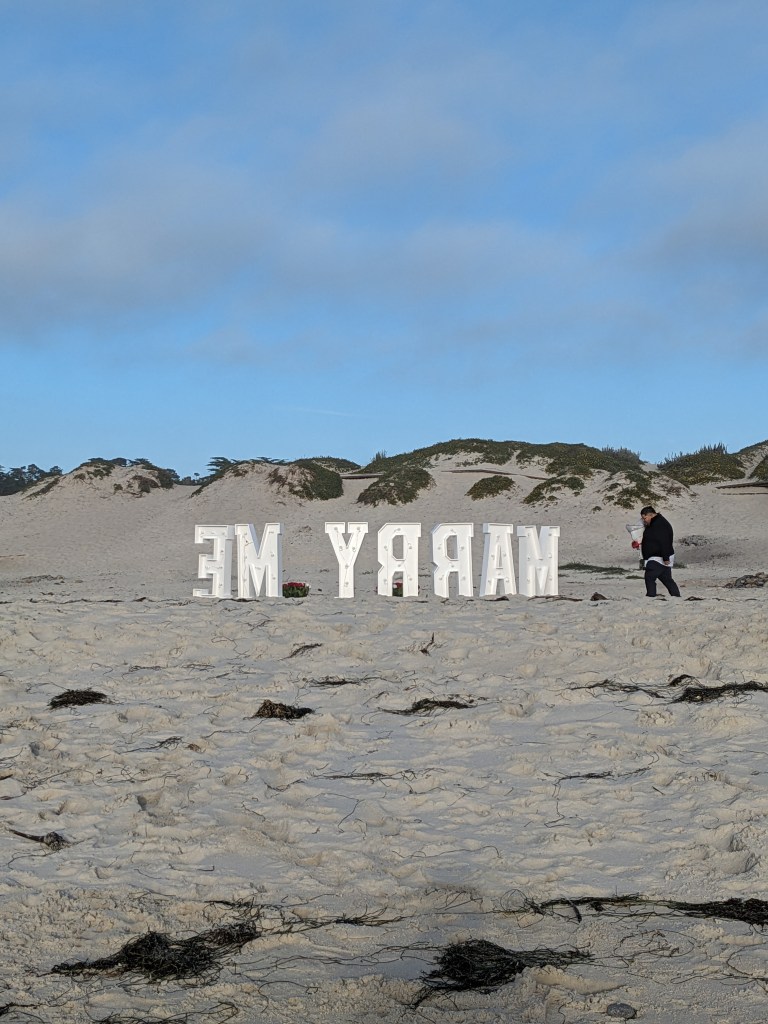
Asilomar State Beach, 21 July 2023. Photo by the Russian Reader
Who is Girkin?
Igor Girkin (Strelkov) is an ethno-fascist FSB officer and the warlord who prepared the ground and then launched the war in Donbas in 2014. He stated that without him, “there wouldn’t be any war”. He is also responsible for ordering the execution of numerous civilians, for which he still face justice. He was sentenced to life imprisonment in absentia by the International Criminal Court on November 17, 2022 as perpetrator of the downing of Malaysian Airlines 17 and the murder of 298 people—a war criminal.
Stunning drone footage has revealed details of the Batagaika crater, a one-kilometer-long gash in Russia’s Far East that forms the world’s biggest permafrost crater.
In the video two explorers clamber across uneven terrain at the base of the depression, marked by irregular surfaces and small hummocks, which began to form after the surrounding forest was cleared in the 1960s and the permafrost underground began to melt, causing the land to sink.
“We locals call it ‘the cave-in,'” local resident and crater explorer Erel Struchkov told Reuters as he stood on the crater’s rim. “It developed in the 1970s, first as a ravine. Then by thawing in the heat of sunny days, it started to expand.”
Scientists say Russia is warming at least 2.5 times faster than the rest of the world, melting the long-frozen tundra that covers about 65% of the country’s landmass and releasing greenhouse gases stored in the thawed soil.
After the court hearing [in his criminal case], Oleg Orlov read out a long list of names of people convicted of “disseminating fake news” or “discrediting the army.” He mentioned Alexei Gorinov, Dmitry Ivanov, Samiel Vedel (aka Sergei Klokov), Vladimir Kara-Murza, Ilya Yashin, Maxim Lypkan, and many others.
“I am not imprisoned, and I can say what I deem necessary. I can answer your questions. But how many of my and your kindred spirits are deprived of this opportunity,” Orlov reminded. “I consider it my duty to read out the list. These are only some of the people who have been imprisoned for their anti-war stance.”
After reading out the names, Orlov cited data from OVD Info. “634 people from 78 regions [of Russia] have faced criminal charges for anti-war protests, for words and statements,” the human rights activist said. “And 200 of them have already been incarcerated. Let’s remember these people.”
Orlov stressed that he was fighting not only for his own sake. “Both my lawyer Katerina Tertukhina and my public defender Dmitry Muratov — we are fighting like this and trying to prove the nullity of the charges [against him], the nullity of the [prosecution’s] expert witness analysis, because we are trying to fight for all people.”
Crimean Tatar-led underground movement is already active behind Russian lines and hundreds of young Tatar men are ready to take up arms to liberate the occupied peninsula, a veteran community leader has said.
Mustafa Dzemilev, widely seen as the godfather of the Crimean Tatar rights movement, pointed to operations by the Atesh guerrilla group, comprising Crimean Tatars, Ukrainians and Russians, in Crimea and other occupied Ukrainian regions.
Atesh, which means “fire” in Crimean Tatar, was created in September last year, primarily to carry out acts of sabotage from within the ranks of the Russian army. It claims more than 4,000 Russian soldiers have already enrolled in an online course on how to “survive the war” by wrecking their own equipment.
There is no evidence linking the group to the latest attack on the Kerch Bridge, early on Monday morning, but the group has claimed a string of smaller-scale attacks, blowing up Russian checkpoints, assassinating Russian officers, setting fire to barracks and feeding sensitive information to Ukrainian intelligence. It recently accused Russian sappers of laying mines in the Krymskyi Titan chemical works in Armiansk, northern Crimea. An explosion there could spread an ammonia cloud across the land bridge between the peninsula and mainland Ukraine.
“Atesh is very deep underground,” Dzhemilev, 79, told the Guardian in an interview in Kyiv. “There was not a single arrest among Atesh members, but they are working inside Crimea territory blowing up targets.”
Hello! This is Alexandra Prokopenko with your weekly guide to the Russian economy — brought to you by The Bell. In this newsletter we focus on the Kremlin’s decision to seize the Russian assets of two major foreign companies and what it means for the business climate and the other Western businesses who cannot — or will not — leave Russia. We also look at Friday’s interest rate hike and new Western sanctions on Russia.
Nationalization of Western assets heralds broader property redistribution
Finland’s Fortum and Germany’s Uniper saw their Russian assets seized by the Kremlin earlier this year. This week was the turn of France’s Danone and Denmark’s Carlsberg. It feels like we are witnessing the final chapter in the history of Western business in post-Soviet Russia. If the transfer of Fortum and Uniper’s energy assets to external management was explained as a response to the European Union’s treatment of Russian energy companies, there is no such obvious reason for the behavior toward Carlsberg and Danone and it likely reveals the Kremlin’s real intentions. This is direct nationalization — and opens the door to a new distribution of property in Russia.
The Arkhangelsk Region has allocated 800 million rubles to the occupied Ukrainian city of Melitopol, which will be used to repair the city, which has suffered from Russia’s invasion. However, the region itself does not have enough money to repair its own housing. Arkhangelsk is considered the capital of the Russian North, but has been informally dubbed the “capital of dilapidated housing.” Many people live in substandard housing: the city is chockablock with barracks and crumbling wooden houses. Watch Valeria Ratnikova’s report on how the region copes with a budget deficit while its money is spent on the war.
00:00 Opening 02:15 Ruins, barracks, and crumbling houses 06:00 Brevennik Island: expensive prices and derelict housing 10:56 Natalia Zubarevich about the lack of money in the region 12:04 The campaign against waste haulage to the region 16:18 The authorities are taking revenge on opposition activists opposed to landfills 31:35 Denunciations and criminal cases for statements about the war 33:22 One of the protesters went to the war 36:15 What residents say about the war 38:26 Getting fired for criticizing the war 39:40 A female student fled to Lithuania — the authorities wanted to jail her for talking about the war 46:25 The region’s environmental problems 49:10 Journalists detained during Putin’s visit 51:11 How the war has affected life in the region
People ask how things are going for me on the professional/international front. My answer: nowhere fast. For two reasons.
Firstly, the clusterfuck in which “our village” (c) has become entangled, imposes certain restrictions. By working with foreign galleries and submitting works for international awards, I risk getting branded a “foreign agent.” You can’t explain to the comrade major from the secret services that France is the birthplace of photography, and that the photo fair at the Grand Palais in Paris is the most important event in the world. It’s not even the status of “foreign agent” as such that scares me, but the possible consequences for the people and organizations with whom I work.
Let’s be realistic, though: if they want to brand me a “foreign agent,” they’ll do it all the fucking same, so let’s move on to the second, more important reason.
Publications, exhibitions, and awards abroad put plenty of wind in your sails and boost your self-esteem. I am grateful to destiny for every such encounter on my professional journey. It was an important stage in my work, but I think I’m past it. International recognition is cool, but it still doesn’t compare to being liked and understood at home. Seriously: when people come up to you on the street to shake your hand, it’s worth a lot.
A connoisseur can correctly break down a creator and their work, but in order to fully experience what was happening at the time a photo was shot, you need a personal context. Roughly speaking, to appreciate the beauty of a picture taken in a bedroom district, I would argue that you have to live in a bedroom district. My social media stats show that the majority of my subscribers are Russian nationals in their thirties and forties, that is, people with the same background and cultural code as me. Eight out of ten of these people have nothing to do with photography, and these are probably the most valuable viewers, since I had the honor to introduce them to documentary photography.
When a stranger says that my photos rhyme with their feelings and memories, I experience (how should I put it?) a connection with something greater. This is probably the miracle of art: a moment in life that lasts one thirtieth of a second enables strangers to understand something fundamentally vital about each other. Ultimately, these pictures are mine as much as they also belong to each of the people who caught sight of something personal in them. Maybe not everyone will be able to appreciate my compositional techniques and artistic devices, but fuck them. They are just tools for conveying a message, and the message is the only thing that matters.
The simplest and, simultaneously, the most difficult thing is to understand your time, your place, and your metier. It seems I have succeeded in doing this: my photos get attention, and my books sell so well that every year I have to reprint them. So I just want to keep doing what I’m doing for as long as I can—here.
P.S. By the way, whereas earlier, according to my stats on (extremist) Instagram, Paris was in third place, after Moscow and Petersburg, in terms of numbers of followers, nowadays Chelyabinsk is in third place! This is definitely a sign of success.
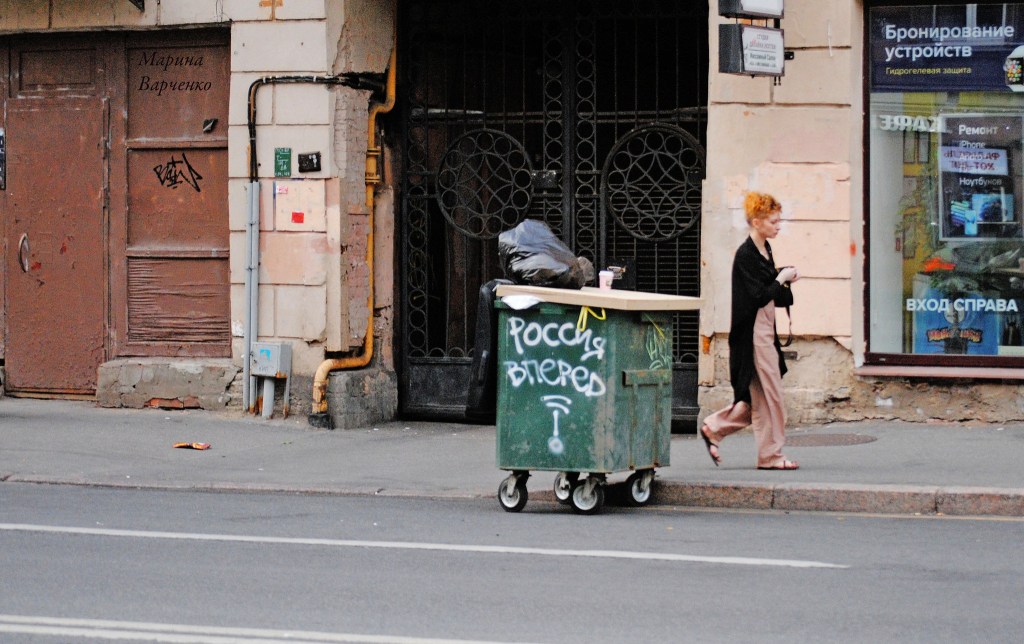
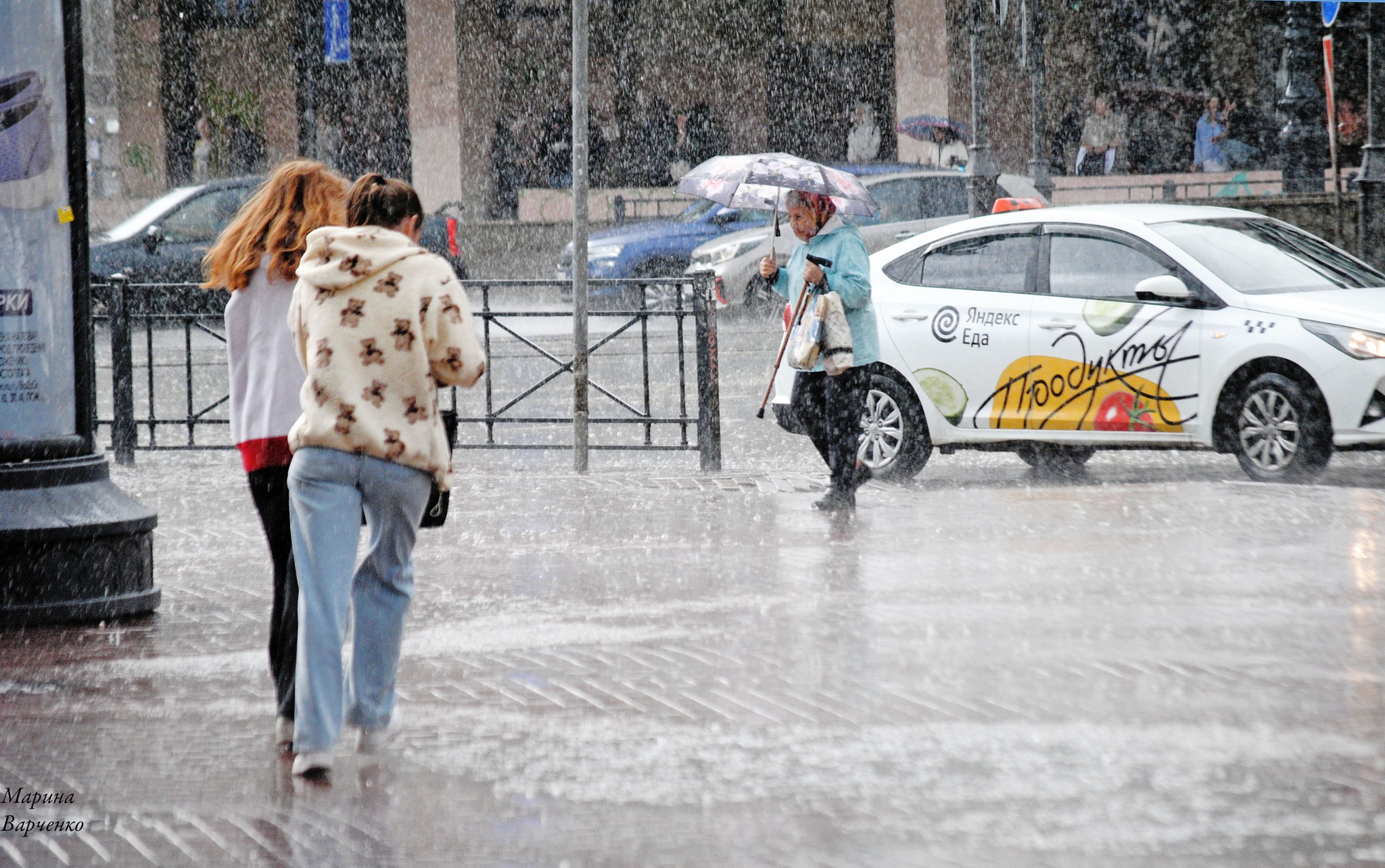
Source: Marina Varchenko (Facebook), 3 July 2023: “A downpour on Ligovka.” Ihave spent so much time on “Ligovka,” i.e., Ligovsky Prospekt, and on the corner pictured here in particular, that I’m nearly sure it’s permanently imprinted on my brain. I’ve probably been in more than one summertime evening downpour on that very same corner. ||| TRR
The Russian security forces have been increasingly organizing dragnets to sweep up potential army recruits. This is occurring amidst a full-scale war with Ukraine in which the Russian army has suffered heavy losses.
There are more and more accounts of these roundups. Mediazona, for example, details how a 25-year-old Muscovite, employed in the IT business in Moscow City, was lured to a meeting with police officers and military enlistment officers through the classified ads website Avito, on which the young man was selling headphones. He was quickly sent to serve in the Moscow Region, despite being diagnosed with bronchial asthma.
The Movement of Conscientious Objectors recounts how the police simply broke into the apartment of conscripts Yevgeny Komarov and Ivan Dubenko and sent them to the assembly point. Dubenko was first strangled, and then, threatened with rape, forced to sign his military service card, as required for conscription.
Another story relayed by the Movement involves a young man with hypertension and anxiety-depressive disorder who went to the military enlistment office to undergo a medical examination and get a postponement, but instead was sent to the assembly point the very same day. Mahmudjon Nurov, on the contrary, was simply detained at the Izmailovskaya metro station and immediately sent to the military enlistment office. In the Kursk Region, the military commissars took an even simpler approach: they allegedly assembled everyone whom the medical commission had declared unfit for service, confiscated their telephones, and sent them off to serve in the army.
The Russian army needs conscripts: during this draft, which lasts until July 15, the authorities have been charged with drafting 150,000 thousand men, and so the military enlistment officers have teamed up with the police to go out and catch potential recruits. The practice is, in fact, illegal, and the prosecutor’s office has repeatedly confirmed this, but the law has not prevented police officers from going to factories and shops in search of young men allegedly fit for service. Fortunately, so far no one has received electronic draft notices through Gosuslugi [the Russian state services website]: they should begin to be issued during the next conscription campaign.
Here is how you can protect yourself as much as possible in the current circumstances:
• Do not go to the military enlistment office in person. Everything you need to learn from them can be done by mail or by an acquaintance with a power of attorney.
• If you are served a draft summons in person (military enlistment offices retain this right), refuse to take it.
• Don’t sign anything and seek legal assistance. You can file a lawsuit appealing mobilization and conscription orders through the bot “I’m Not Going!” While the court is considering your suit, you cannot be inducted into the army.
• Fill out an application for alternative civilian service in advance. Both those who have been served with draft notices and those who have been mobilized have such an opportunity.
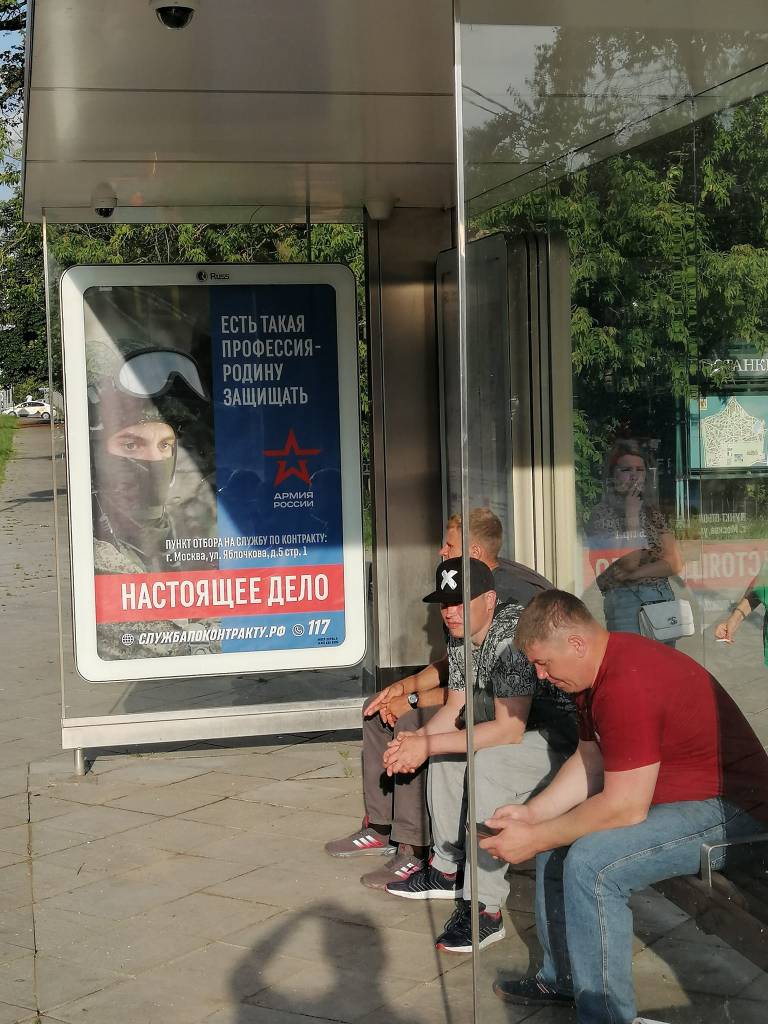
“Defending the Motherland is a profession — a real job.” Frequent TRR contributor Sergey Abashin photographed this Russian army recruiting poster (and several others) in Moscow earlier today.
Riders!
The cavalry charges on knotted legs, bucking their backs!
Confucius-handed and Buddha-headed
People with arms and torso
Move across the tundra
Other same-sex creatures walk around and whistle…
A light downpour pours and pours
Pitter-patter
And
Pitter-patter
And
Pitter-patter
And
Pitter-patter
And
Pitter-patter
Softly, softly, as if it isn’t water, but happiness
Under the bright sun
Of historical materialism…
Everyone is free to go.

* * *

Riders Horsemen Scouts!
The delegation from the nearby islands,
So near so near, by the edge of the red peacock,
Oohed and aahed nearby and then fell silent… Basically, we're doing great!
Buzz off, I’m a married woman, as they say.
The delegation from the islands considered the problem of
“The oppression of ethnic minorities.” It was a fruitful meeting.
Henceforth many streets will be called “avenues,”
But “rain” and “cream-colored” will remain.
It will seem odd to you, but songs shall also be sung,
And internal resources employed…
The delegation did not approve what is called “freedom.”
They started saying it was “anarchy.”
Well, of course we went for our knives… the carnage lasted for a long while!
It’s inhumane to finish off the wounded, they…
All belong to the people.
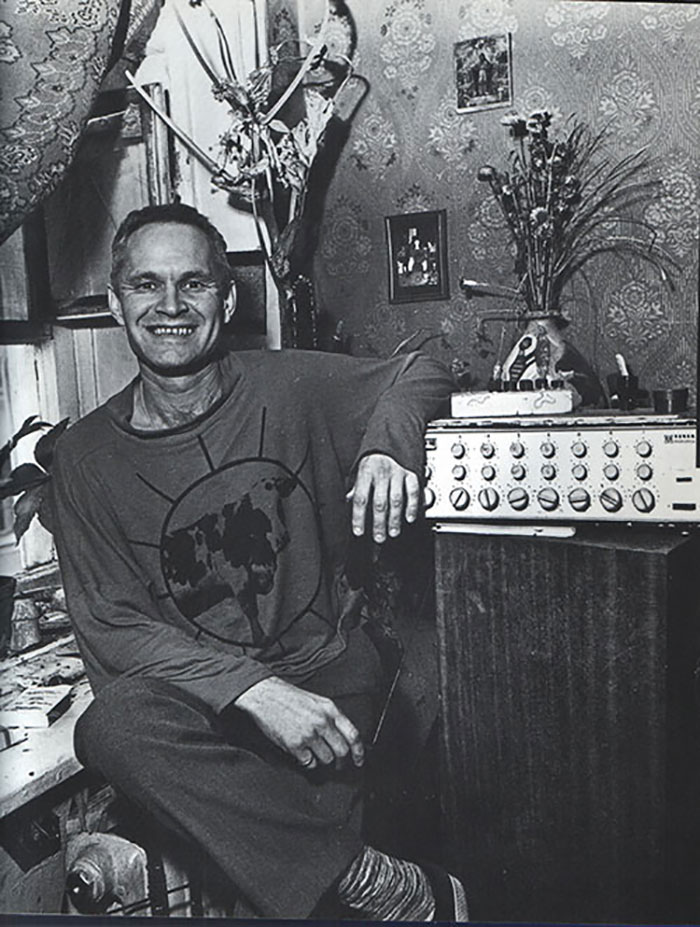
Vadim Ovchinnikov in his studio at Pushkinskaya 10 in Petersburg, early 1990s Photo by Boris Smelov. Courtesy of ov-ov.com
Born in Pavlodar (Kazakh SSR), Vadim Ovchinnikov (1951–1996) was a Leningrad/Petersburg-based artist who worked in a number of media, including painting, watercolor, collage, animation, mail art, conceptual literature, and music. His works can be found in the collections of the Russian Museum (Petersburg), the Moscow Museum of Modern Art, the Art Museum of Pavlodar, and Kai Forsblom Gallery (Helsinki). For more information on Ovchinnikov’s art and life, see the website ov-ov.com. The two poems by Mr. Ovchinnikov, above, were originally translated by Thomas Campbell for the exhibition catalogue The New Artists (Yekaterina Andreyeva and Nelly Podgorskaya, editors; Moscow Museum of Modern Art, 2012). These translations have been revised for publication here.
anatrrra, from the series “Petersburg in April,” 2023 You can see the entire series on their LiveJournal
I just spent many hours roaming around Kolomna. I love the neighborhood: it soothes my soul, if only for a short time.
I came upon two dudes approximately my age sitting on a bench and drinking beer. From what I heard them saying it was clear as a bell that they had listened to Kinchev, Sukachov, and Butusov in their youth.
“That’s where such old scum comes from. But they used to be regular guys—bright eyes, rock and roll, the whole deal.”
“They drank, shot up, and snorted away their conscience, but money doesn’t smell, supposedly.”
“It stinks like hell nowadays.”
I was going to walk past them, but I turned around.
“Excuse me,” I said, “but I accidentally overheard what you were saying. I think they were like that from the get-go. They just adopted a stage persona in their youth. It was cool then, the niche was open, and you could no longer go to prison for things like that (unlike now). It was a beauty way to go.”
The men looked up at me, exhaled, and shook their heads.
“If that’s so, it’s even worse,” one of them said.
I apologized again, and went on my way. My back already turned, I heard one of them say:
“Check it out. Our people are still roaming these parts…”
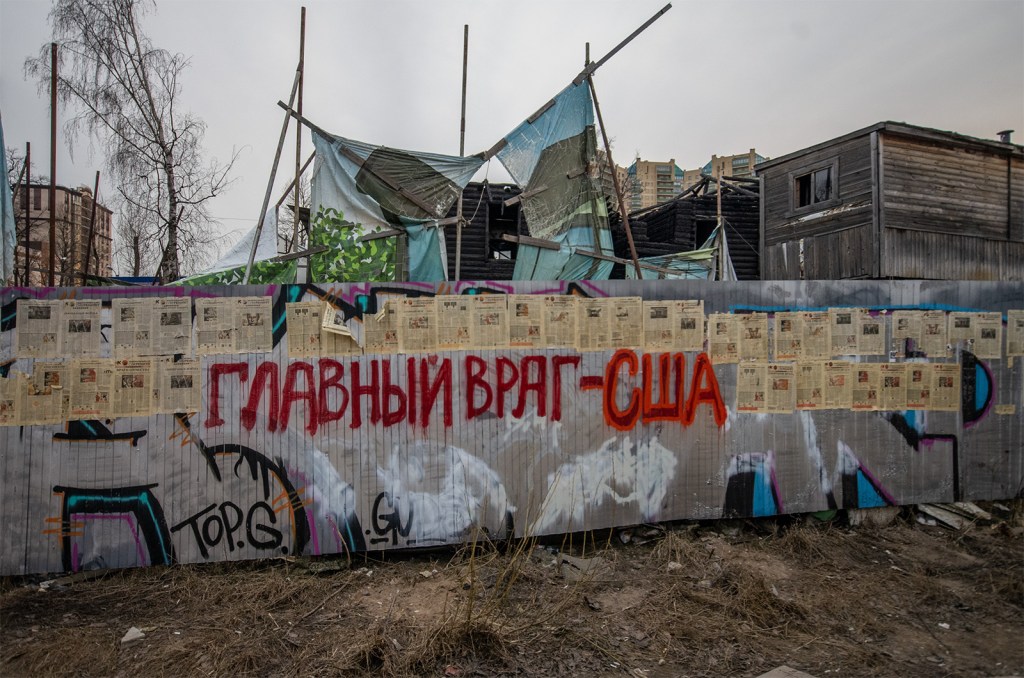
“The USA is the archenemy.” This photo was taken by my friend M. on a recent walkabout in Petersburg.
I had a dream before finally waking up today.
My husband telephoned, saying that he had been working in Pushkin today (which never happened, but okay), and couldn’t come home. I asked why he couldn’t—it was just past six in the evening, according to the clock.
“Just you take a look at the sky,” he replied. “It’s as black as pitch. It’s impossible to travel, you can’t see a thing. It’s probably a shitstorm—a big one, the final one.”
I looked at the sky, and it actually was black. Incredibly low fluffy white clouds floated past, lit up from within by something. Right under these clouds a building was being built; it was already six floors tall. Little devils rode on the clouds, grimacing and pulling up people who were clinging to the edges. The entire scene seemed quite tiny to me.
I told my husband what I saw.
“What is that huge thing they’re building?” I asked. “And who are those people clinging to the clouds?”
My husband was quite surprised.
“They’re building a fence around our beautiful motherland, the tallest fence in the world. Those are people who didn’t leave in time. The little devils are having fun with them by picking them up, but no one knows where they’ll throw them off. They just hope it’s on the other side of the fence.”
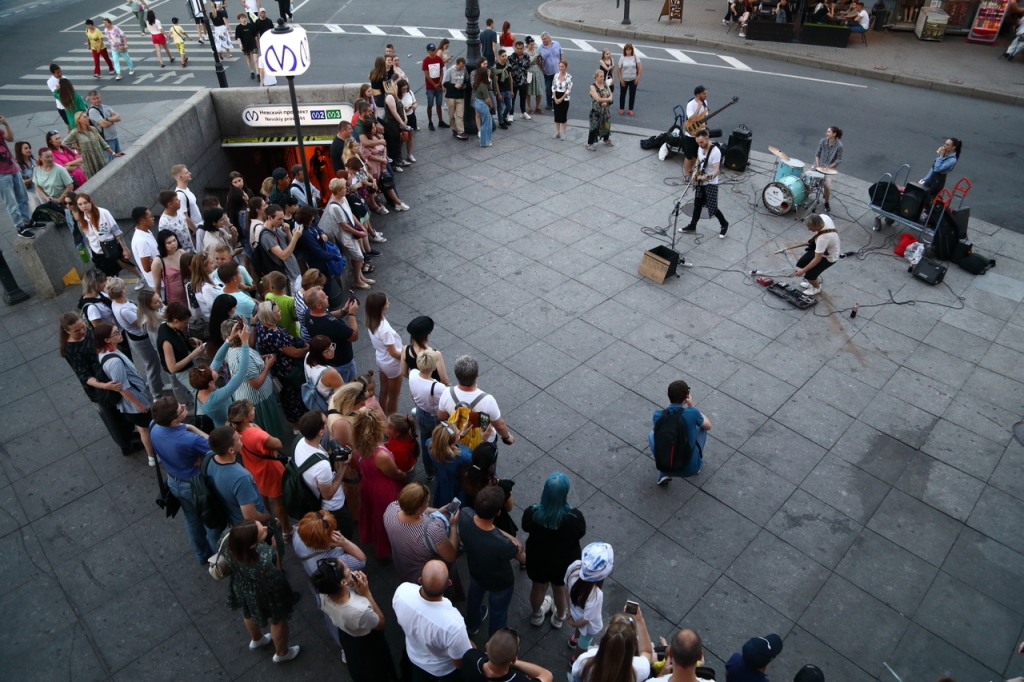
Buskers playing on Nevsky Prospect in downtown Petersburg, date unknown. Photo courtesy of ZAKS.ru
A draft regulation for the authorization of street performances was published on the website of the Government of St. Petersburg on April 11. The new rules should take effect from May.
Musicians will be obliged to notify the district council of their desire to perform ten business days before the concert. If they are going to play without percussion instruments and amplification, the deadline is three business days before the concert.
They can apply by using the Public Services in St. Petersburg app or via the websites of the district councils. To fill out the application, they will have to enter their passport details or information about a letter of proxy authorizing someone else to act on their behalf if the musicians are not seeking permission for the performance independently. In addition, they will have to provide a layout of stage and technical equipment and a list of sound amplifying equipment.
Legal entities will have to attach a copy of their charter, signed and stamped by its management, as well as a document confirming its representative’s authority to act on its behalf.
An approval already issue can be invalidated if necessary. It is planned to notify musicians about the decision of officials via SMS, e-mail, the Public Services portal, or social networks. The notification method will be chosen by the applicants themselves.
The project is undergoing an anti-corruption assessment. Earlier, the Petersburg district administrations presented lists of places where it was planned to allow street performances.
Yesterday, a man who was well over sixty was seated opposite me in a trolleybus going down Nevsky. He clutched a one-hundred-ruble bill.
“Has it been a long time since conductors stopped selling tickets?” he asked. “How do I pay the fare? I haven’t been on Nevsky for over forty years. And I haven’t been on public transport. I have a vintage Lada. That’s what I drive.”
“But your pension is probably transferred directly to your bank card,” I said. “Press it against that doodad to pay your fare.”
The man got up and pressed his Mir card to the validator. His eyes lit up with surprise and delight, as if he’d seen a magician pull a rabbit from a hat. I was сonsumed with envy toward him.
We continued our journey. Seated next to me was a fairly young woman, in her early forties, I think.
Looking disapprovingly at the man, she asked, “How is it that you haven’t been on Nevsky for forty years? What about the Immortal Regiment?”
“I don’t go,” the man said guiltily. “I came to Leningrad in 1979 and rented room on 1st Soviet Street. That’s where my wife was murdered. I moved to Vasilyevsky Island, and came to hate Nevsky. I haven’t shown my nose here since.”
The woman chuckled angrily.
“That’s no defense.”
We rode on in silence. I wanted to ask the man what had brought him to Nevsky today. But then I looked at him — in his striped sailor’s shirt, his face quite patriotic — and decided against it.
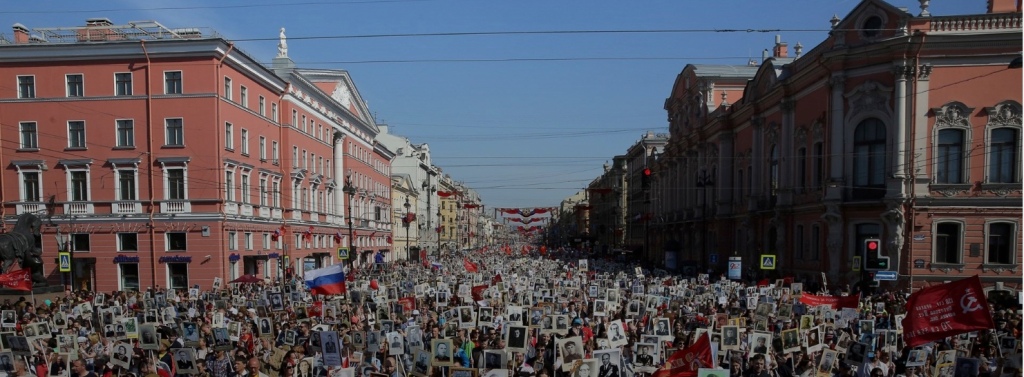
People marching down Nevsky as part of the Immortal Regiment event. The source and date of the photo are unknown. UPDATE (19 April 2023). This year’s Immortal Regiment processions have been canceled Russia-wide.








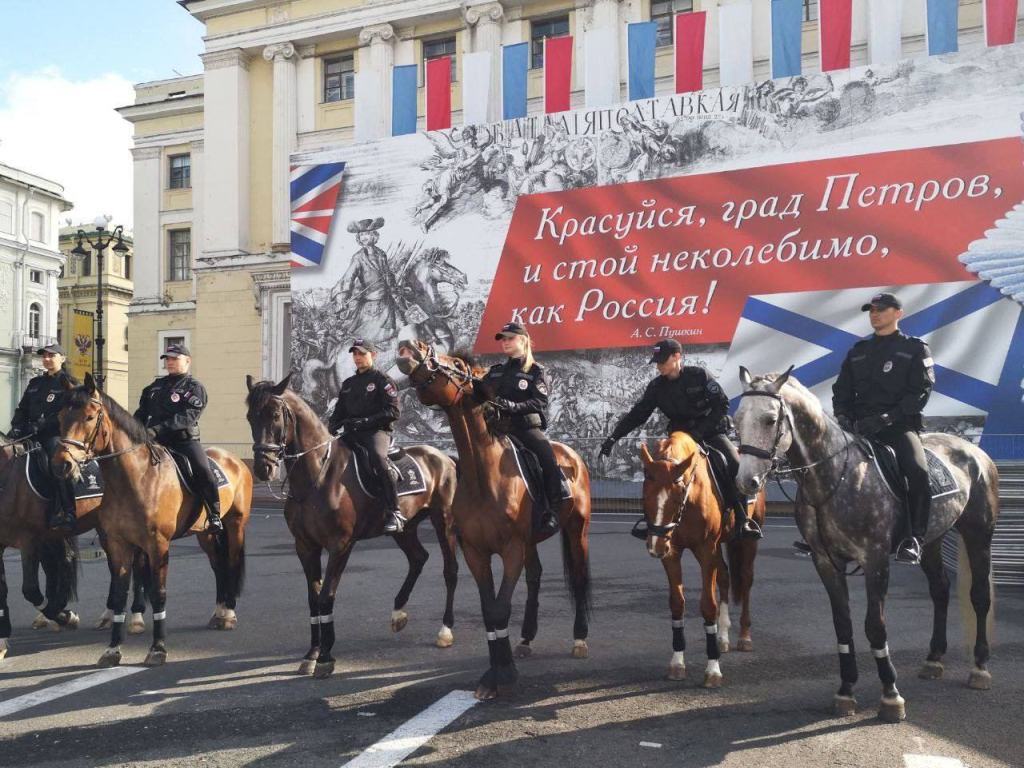
 Mounted police have returned to the streets of St. Petersburg.