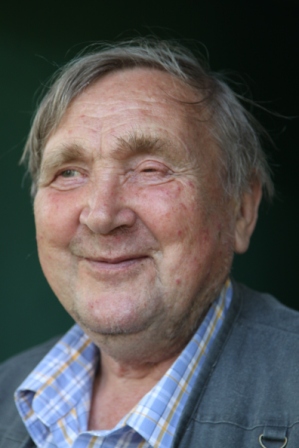
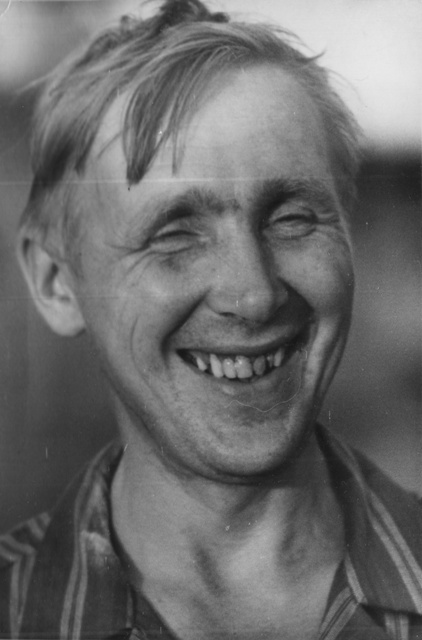
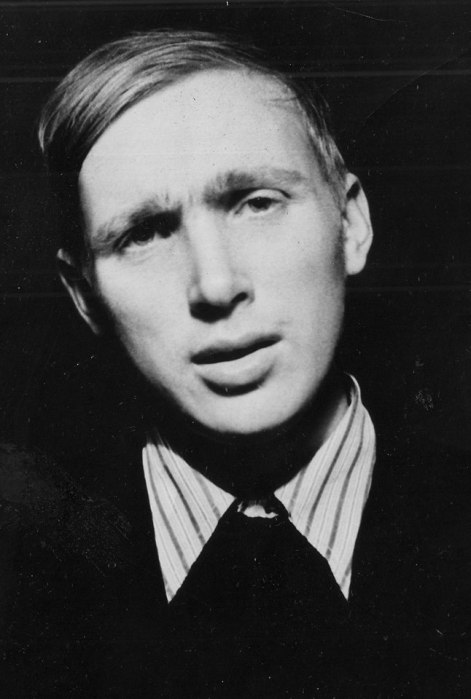
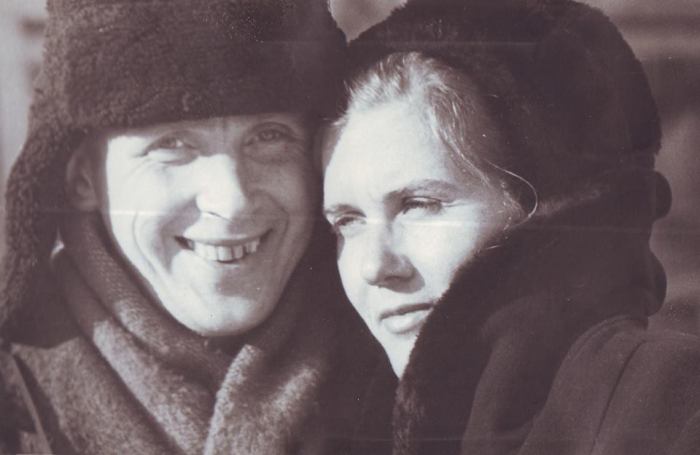
A new criminal case, on charges of “involvement in a terrorist community,” has been opened against former Soviet dissident and Russian political journalist Alexander Skobov, who has been detained for over a month on charges of “condoning terrorism.” This news was reported on Saturday, 18 May, on Skobov’s official Facebook account by his wife, Olga Shcheglova.
Shcheglova said that she visited her husband on 14 May in the pretrial detention center in Syktyvkar, where he had been transferred from St. Petersburg. During a conversation with him, his lawyer and local police investigators, she learned that Skobov has also been charged with “condoning terrorism” and “involvement in a terrorist community.” The dissident’s wife is convinced that these two charges stem from her husband’s affiliation with the Free Russia Forum.
According to Shcheglova, on 21 May, Skobov will be sent to the regional psychiatric hospital in Komi for a forensic psychiatric examination. Skobov himself has stated that he would not participate in the investigation and forensic expertise, and he would appear in court only if his mother were present at the hearings. Skobov’s defense has filed an appeal, which will be heard by the court on 22 May.
Skobov’s Persecution in the USSR and Russia
On 22 March 2024, Russian authorities designated Skobov a “foreign agent.” According to the Justice Ministry, he had “disseminated unreliable information” about the decisions of public officials, opposed the war, “identified the Russian Federation with a terrorist organization,” been involved in the work of an “undesirable organization,” and produced and distributed “foreign agent materials” [sic], the human rights project OVD Info reports.
In 1978, Skobov was arrested over his active involvement in the Left Opposition group and the samizdat publication of an anti-government magazine. He was later sentenced by the court to undergo treatment at a psychiatric hospital, from which he was released in the summer of 1987.
This time around, the political journalist was arrested on charges of “condoning terrorism.” Skobov was detained in St. Petersburg on 2 April 2024. In protest, the dissident refused to take with him to jail his diabetes medication and his glasses, despite his poor eyesight. According to the Telegram channel Memorial Support for Political Prisoners, the real reason for his arrest was “a [social media] post condoning the bombing of the Crimean Bridge.”
Source: Asya Miller, “New criminal case opened against dissident Skobov,” Deutsche Welle Russian Service, 18 May 2024. Translated by the Russian Reader
In early April, 66-year-old dissident Alexander Skobov was arrested for allegedly “justifying terrorism” in his posts online. For his friends and family members, the arrest came as no surprise.
Skobov, a long-time dissident who was made to spend seven years in a psychiatric ward after taking part in protests against the Soviet authorities in the 1970s, had published multiple posts condemning Russia’s actions in Ukraine since 2014. In March he was named a “foreign agent”, and since then people close to him said his arrest had seemed inevitable.
“He and I talked a hundred times about the fact that he would be arrested — if not today then tomorrow,” said Skobov’s friend Yuly Rybakov, a human rights activist and former deputy in the State Duma, Russia’s lower house of parliament. “People have been imprisoned for much less.”
Skobov’s 90-year-old mother, whom he lives with and cares for, said she had been having nightmares about his arrest for months before it happened, and Rybakov recalled that Skobov himself said he “didn’t understand” why the authorities hadn’t come for him yet.
Skobov’s children, who moved abroad long before Russia’s invasion of Ukraine, urged their father to flee the country when they saw him in Istanbul in early March. Other friends have also tried to convince him to leave and avoid arrest, citing his many health issues, including severe diabetes, hepatitis C, chronic obstructive pulmonary disease and near blindness.
But, Rybakov said, Skobov was resolute, telling him that he “wanted to be part of his own judicial process” when he was inevitably arrested.
Rybakov said that Skobov had been “driven to despair” by what had been happening in Russia in recent years and “felt that someone had to be radical”.
Another friend, Mikhail Sedunov, said that trying to convince Skobov to change his course of action was like “grabbing the wing of a plane that was already accelerating down the runway”.
On 2 April, masked policemen arrived at Rybakov’s flat, where Skobov had been staying. When Rybakov left to take the dog for a walk, the police reportedly entered the property, threw Skobov to the ground, twisted his arms and handcuffed him. According to Rybakov, Skobov “defiantly” refused to take either warm clothing, his diabetes medication, or his glasses with him, intending these gestures as an “act of protest”.
Skobov’s wife, Olga Shcheglova, managed to buy him replacement medication and glasses, which she brought to him ahead of his interrogation by Russia’s Investigative Committee. But Skobov refused to accept them — a reaction Shcheglova said she had “expected” from her husband.
Resistance to the authorities and a fight for justice had defined Skobov’s life for more than four decades. His first foray into political activism was in 1976, when he and other university students in St. Petersburg scattered leaflets calling for the “establishment of true humane socialism” and the “overthrow of the tyranny of officials” ahead of a meeting of the Communist Party of the Soviet Union. The students were expelled from university and brought before a court, and some, like Skobov, were then sentenced to compulsory treatment in psychiatric hospitals because, according to Rybakov, it was believed that “only crazy people could dislike the Soviet regime”.
Skobov’s radical spirit remained unquelled when he was finally released from hospital in 1981, however, and he immediately joined the Free Inter-Professional Association of Workers, a dissident group that led the first attempt to create an independent trade union in the USSR. In 1982 he was arrested for his involvement with the group and sent back to hospital, where he spent another three years.
In the early 1990s Skobov taught history at a secondary school for gifted students, writing and publishing his own award-winning textbooks. But later in the decade political activism again became the focal point of his life as he took part in protests against the Chechen wars.
When Russia annexed Ukraine in 2014, Skobov took to social media to rail against the regime, openly supporting Ukraine and condemning Russia’s military action. The same year, two unidentified men armed with knives attacked him outside his home in what his friends and family members say they are sure was retribution for his criticism of the regime.
Even this did not deter him, however, and his friends said his statements opposing Putin’s rule became “even sharper, more unrestrained, and more radical”. Speaking last year at the Free Russia Forum, an opposition conference held biannually in the Lithuanian capital Vilnius, Skobov condemned the regime more harshly than any of the other attendees, despite being one of the only participants still living in Russia.
Another friend of Skobov, Nikita Yeliseyev, said he doubted Skobov would survive the 7.5-year sentence that he is almost certain to receive.
“He is an old man,” Yeliseyev said. “And he has a number of very serious illnesses.”
Sedunov said all of Skobov’s actions stemmed from a desire to “struggle, as vigorously as possible, against the obvious evil represented by the current Russian government”.
“This is the way he was brought up: he wanted to fight evil any way he could. And this was the only way left,” Sedunov said.
Aleksandr Skobov has been a thorn in the side of authoritarian governments for more than four decades, from the Soviet era to President Vladimir Putin’s long rule. And now, in pretrial detention in St. Petersburg and facing prison, he is in no mood for compromise.
“On principle I refuse to comply with fascist laws,” he told RFE/RL late last month, shortly after the Russian government designated him a “foreign agent” on March 22. “I don’t intend to get into debates with the government. I will not try to prove my innocence. I will not label my writings, and I will not write any financial reports for them.”
“A criminal case could be launched at any moment,” he concluded.
He was right: On April 3, the 66-year-old was arrested and charged with “justifying terrorism” for a social-media post about the Ukrainian attacks that damaged the Crimea Bridge that links Russia with the Ukrainian region of Crimea, which Moscow occupied in 2014. The following day, a St. Petersburg court ordered Skobov held in pretrial detention for at least two months.
“If you take any of my articles or YouTube videos, you can find a whole bouquet of possible charges,” Skobov said in the March 31 interview. “Discrediting the army. Inciting hatred and enmity. Justifying terrorism. The rehabilitation of Nazism. I directly equate the actions of the Stalin regime with those of Hitler’s during World War II.”
Another reason for Skobov’s prosecution, his supporters believe, is his leadership role in the Free Russia Forum, a group of mostly exiled opposition figures founded by former world chess champion Garry Kasparov and activist Ivan Tyutrin in 2016 that has been declared “undesirable” in Russia. If he is charged with participation in an “undesirable” organization, he could face up to six years in prison.
“I am a member of the forum’s council, and I regularly participate in its broadcasts,” Skobov told RFE/RL. “I help write its statements and official pronouncements. Several of them I have written myself. I am actively involved, and I do not intend to stop.”
Skobov said he was drawn to the group because “it was the only opposition organization that categorically rejected the idea of the peaceful transformation of Putin’s dictatorship toward democracy using the procedure established by that dictatorship.”
“It was the only organization that, beginning with the annexation of Crimea, unambiguously stood by Ukraine as a victim of aggression,” he added. “We try to help the Ukrainian Army and the Russian volunteer formations that are fighting with them.”
Writing on Facebook after Skobov’s arrest, writer and critic Mikhail Berg said Skobov suffered from “an unbearable fear of being afraid.”
“And that is why he chooses the most painful forms of criticizing the authorities,” he wrote. “He shouts even though the authorities have long been destroying people for whispering or even for just opening their mouths.”
Parallel Lives
Born in Leningrad, as St. Petersburg was called then, in 1957, Skobov participated in his first anti-government protest when he was 19. He and other members of an underground organization threw about 100 flyers calling for “humanistic socialism” from the roof of a downtown building on the eve of the 25th congress of the Soviet Communist Party. Several of the protesters were kicked out of their universities, but Skobov — a first-year history student at Leningrad State University — got off with a disciplinary meeting of the Komsomol youth group.
In October 1978, he was arrested for publishing an underground, anti-government magazine called Perspectives. He spent half a year in a KGB prison before being sentenced to forced psychiatric treatment.
“In the late 1970s and early 1980s, political prisoners in Soviet psychiatric hospitals were rarely forcibly medicated, although there were such cases, of course,” Skobov said. “But I was treated more or less OK. Most of the doctors that I encountered tried to avoid playing the role of executioners or stranglers.”
He spent three years in confinement.
In 1982, he was again sentenced to psychiatric treatment, this time for a samizdat article he wrote defending Chile’s former socialist president, Salvador Allende, who died in unclear circumstances in 1973, and criticizing the rightist dictator General Augusto Pinochet. That article was deemed “anti-Soviet propaganda.”
This time, Skobov spent five years in the hospital before being released in the summer of 1987 during the initial phase of Soviet leader Mikhail Gorbachev’s liberalization campaign.
In many ways, Skobov and Putin led parallel lives during this period. Putin was born in Leningrad almost exactly five years before Skobov and studied at Leningrad State University just before him. But as Skobov became drawn into a life of opposition to authoritarianism, Putin joined the KGB secret police.
The president’s official biography insists that Putin always worked for the KGB’s First Directorate, which carried out counterintelligence operations. However, rumors have persisted for years that he worked for some time in the Fifth Directorate, which was responsible for suppressing internal dissent and prosecuting political dissidents. At the time, a senior figure in that department was Viktor Cherkesov, a longtime member of Putin’s inner circle who served as his deputy when he headed the Federal Security Service — the KGB successor organization — in the 1990s and who died in 2022.
In 2022, journalist and researcher Konstantin Sholmov published a photograph of a KGB archival document from 1976 that he said was on display at the Political History Museum in St. Petersburg. The document, a protocol of a search of the residence of Leningrad artist and dissident Oleg Volkov, named “Lieutenant Putin” as one of the officers carrying out the search.
In 2013, a series of photographs emerged showing a 1989 Leningrad protest during which KGB operatives roughly detained dissident Valery Terekhov. One of the men in the photograph resembles Putin. The Kremlin later denied that the man was Putin, saying the future president had already been sent to East Germany by 1989.
Prominent human rights activist Aleksandr Cherkasov of the banned rights group Memorial told the news outlet Agentstvo earlier this month that he believes Putin was involved in the investigation of Skobov. He said Skobov had told him Putin staked out his Leningrad apartment in November 1982 when prominent dissidents gathered to celebrate Skobov’s birthday.
Despite the danger growing around him after he was designated a “foreign agent,” Skobov refused to consider emigration.
“I’m not going to quit,” he said.
“Today anyone in Russia who disagrees with Putin’s Nazi regime is taking a risk,” he added, “even if he doesn’t really stick out or act publicly. Since the regime has already made the transformation from ‘hybrid totalitarian’ to totalitarian, it demands not just silence from its loyal subjects, but active participation. And even avoidance can be dangerous.”
Opposition leader Aleksei Navalny’s suspicious death in prison on February 16 was “to be expected,” Skobov said.
“Navalny constantly laughed in [Putin’s] face, and a dictator cannot stand that,” he added. “Unfortunately, I don’t think it will be the last death of a political prisoner in Putin’s Russia.”