Russia’s Federal Security Service (FSB) is preparing a new case, for high treason, against Ruslan Siddiqi, the Russian-Italian anarchist serving a 29-year sentence for sabotaging a train carrying munitions to the Ukrainian front.
Siddiqi wasconvictedin May last year, and the Military Court of Appealupheldthe sentence on 1 July this year. In 2023 he blew up railway tracks in the Ryazan region, derailing a freight train carrying munitions, and organised a drone attack on the Dyagilevo military airfield.
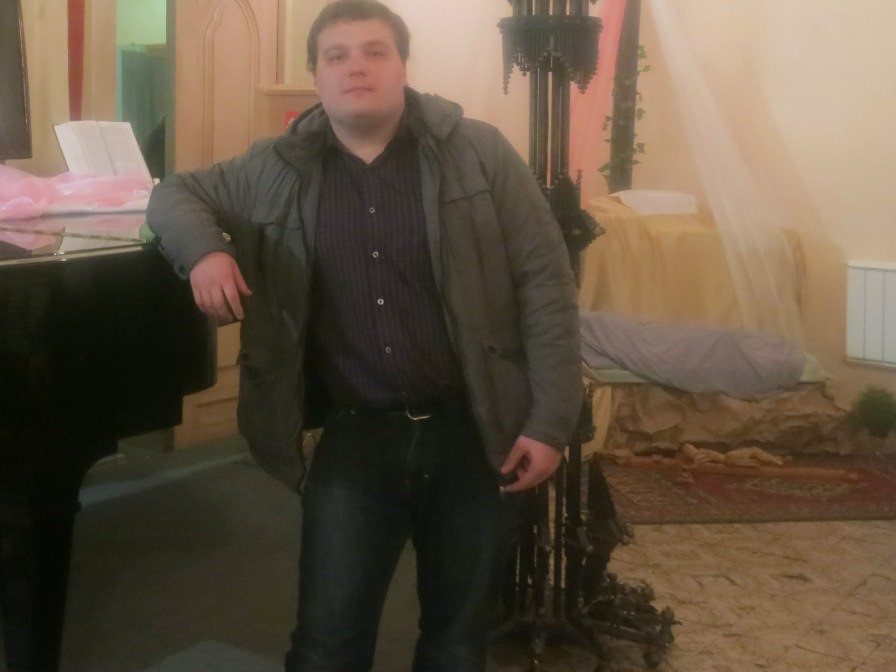
Ruslan Siddiqi in court last year
Siddiqi confessed to these actions and told the court he sees himself as a partisan, opposing Russia’s war on Ukraine. He denied a further charge of preparing another attack. He was tortured extensively during questioning, but the authorities have refused to investigate.
Fires of Freedom, who give legal and other support to Siddiqi,saidthat, although he should have been transferred to prison after conviction, he is being held at a pre-trial detention centre (SIZO) in Ryazan. Transfer has now been delayed because of the new case.
Here isa Facebook postabout the new charges by Ivan Astashin, who campaigns in defence of political prisoners, translated by Giuliano Vivaldi:
“Isn’t that enough for them?” is the first thought that automatically springs to mind upon hearing the news of a new criminal case against anarchist Ruslan Siddiqi, who has already been sentenced to 29 years in prison for two anti-war acts of sabotage and has now also been charged with treason.
And yet for the security forces, everything is much more mundane, has a more practical raison d’etre. The sentence itself plays no role here.
It was the Investigative Committee [a federal agency answerable directly to the Kremlin] who took on the first case against Ruslan. And not just some district department, but the central bureau of the Investigative Committee — or, to be precise, the department for investigating war crimes, genocide, and the rehabilitation of Nazism, which [Investigative Committee chairman Aleksandr] Bastrykin established in 2022.
At the same time, under the Code of Criminal Procedure, only the Federal Security Service (FSB) can investigate cases of high treason. So if the Investigative Committee had “discovered” signs of high treason in Ruslan’s actions, it would have had to hand the case over to the security services.
Naturally, the Investigative Committee did not want to give such a juicy case to anyone else, so they “didn’t discover” high treason, but only terrorism, terrorism, and once again terrorism … which the Investigative Committee has the right to investigate on an equal footing with the FSB.
At the same time, the version that Ruslan was cooperating with Ukrainian military intelligence, which has now become the basis of the treason charge, was always foregrounded. Indeed, it was one of the central elements of the prosecution’s case.
The investigation explicitly proceeded on the assumption that Siddiqi coordinated his actions with representatives of Ukraine’s Chief Directorate of Intelligence. It was precisely through this framework that his actions were classified, among other things, as having been committed by an “organised group”.
So the evidence on which the FSB is now building a new treason case was already there in the materials of the first case. But turning this evidence into a separate charge based on the violation of Article 275 [on high treason] would have meant transferring the case to another agency, the FSB.
The central office of the Investigative Committee took on a high-profile case, “investigated” it itself, gathered the “evidence” itself, brought nine (!) criminal charges, and saw the case through to a conviction. There was absolutely no reason for it to hand such a case over to another agency.
Now the Investigative Committee’s work is finished. The verdict has been handed down; the appeal has been heard. And this is where the baton is already passed to the FSB Directorate for the Ryazan region.
For them, it’s a perfect case. The accused is already in custody. The skeleton of the case has been assembled by colleagues from another agency. All that remains is to rewrite the Investigative Committee’s material to fit the structure of the article of the criminal code on treason, and receive a ready-made crime against state security that has already been “solved”.
I have already told a similar story about Aleksander Leleko: he was convicted as a teenager for setting fire to railway relay cabinets, and several years later the FSB began reworking those same events into a new treason case. [Leleko, from the small Siberian town of Sharypovo, was arrested in 2023, then aged 16, and sentenced to six-and-a-half years. In April this year it was reported that he was in prison hospital, and being administered psychtropic drugs, while investigators sought to put together the new case.]
Therefore, the question “Really, is 29 years not enough for them?” hardly makes sense here. It’s not about the sentence, but about the crime-solving rate, which our investigative authorities so badly need to improve. Especially now, when generals are being blown up and shot at home.
This situation illustrates my point very well that a repressive system has rules. It can produce an utterly monstrous result, but internally it still remains a bureaucratic machine with jurisdictional boundaries, departmental interests, reporting requirements, and its own rules.
An all-powerful security official cannot simply take any desirable article of the Criminal Code and put it into his casework. Even when the decision to imprison someone has already been taken, you still have to properly document who exactly is supposed to imprison them and under which article.
Perhaps, in Ruslan’s case, there also exists a more personal motivation on the part of the Ryazan security services officers. They could not find Ruslan after the first action, caught him only three weeks after the second, and subjected him to brutal torture.
But a much more mundane and so perhaps more frightening mechanism is quite enough to explain the emergence of a new case: the agency needed a criminal case of its own; a ready-made defendant was available with a “body of evidence” already sitting on their desk.
For the security agencies, the people involved in these cases are primarily numbers in a report, not human beings.
□ Fires of Freedom, which supports Ruslan, is on Telegram (Russian only). In English, there are reports on Ruslan Siddiqi’s case, and information about how to give support, on the Autonomous Action site e.g. here, here and here. Ivan Astashin was interviewed here.
□ Ruslan Siddiqi’s final statement in court, and letters describing his anti-war action and arrest, are included in the book Voices Against Putin’s War, free to download here. The letters were published by the Russian Reader here.
Georgy Pirogov. Photo: FSB Public Relations Centre/TASS/ZUMA Press/Scanpix/LETA via Novaya Gazeta Europe
Two years ago, Georgy Pirogov, a Russian man who had moved abroad after the full-scale invasion of Ukraine, disappeared in Uzbekistan. He later resurfaced in a Moscow pre-trial detention centre. In July 2026, he was convicted of treason, and last week, the Federal Security Service (FSB) announced that the verdict had entered into force. The agency accused Pirogov of spying for Polish military intelligence and providing financial support to Ukraine’s military. According to the human rights group Department One, Pirogov says he was injected with an unknown substance before his removal from Uzbekistan. Novaya Gazeta Europe examines what we know about the case.
In early July, the Moscow City Court sentenced Georgy Pirogov to 23 years in prison followed by two more years of movement restrictions and a fine of 800,000 rubles (€8,100). Pirogov had left Russia via the United Arab Emirates after the full-scale invasion of Ukraine and settled in Georgia, where he worked as an industrial climber before travelling to Uzbekistan for work. His relatives lost contact with him on 6 July 2024, and his abandoned car was later found in the Uzbek city of Nukus. Just two days later, on 8 July 2024, a Moscow district court sent him to pre-trial detention.
According to an FSB press release, Pirogov “independently established contact” in April 2022 with a representative of Polish military intelligence and was tasked with gathering classified information about advanced weapons systems used by Russian forces against Ukraine. Russian investigators allege he obtained data on missile systems, as well as personal details of individuals with access to state secrets, through defence industry contacts. Prosecutors also claim he transferred cryptocurrency to fund Ukraine’s military, purchased military equipment, and arranged its delivery from Poland to Ukraine.
Information about Pirogov’s life is hard to come by. Two videos of him are publicly available: one from 2024, filmed in Uzbekistan, in which he describes the harsh conditions of his work, and another, undated, that shows him after his arrest ”confirming” to FSB interrogators that he had gathered information.
Novaya Gazeta Europe reviewed the social media profiles of several of Pirogov’s relatives and found no political posts, aside from a petition his sister shared five years ago on Change.org concerning a small-scale land dispute near Moscow. Records from Georgia’s National Statistics Office indicate that, until 2024, a man named Georgy Pirogov served as director and co-owner of the Namaste Hostel in Tbilisi. The hostel’s Facebook and Instagram pages feature photos and videos of a man closely resembling the Pirogov convicted in Moscow, and the accounts stopped updating around the time of his disappearance, though the hostel itself continues to operate. Its representatives did not respond to a request for comment.
Novaya Gazeta Europe found three documents connected to Pirogov’s case in a public legal database: two attempts by his lawyer to appeal his pre-trial detention order before the Moscow City Court, and a separate appeal against the seizure of his property. None of the motions succeeded.
Court documents show that Pirogov has elderly parents, holds a university degree, is unmarried, and had no prior criminal record. His lawyer said that Pirogov had “actively assisted in uncovering and investigating the crime” and had confessed, and that, contrary to the prosecution’s portrayal of him as a Polish spy stealing data for Ukraine’s armed forces, “no socially dangerous consequences” had resulted from his actions.
“The entire case behind the accusation [that he was working for Polish intelligence] was built on an FSB sting operation. Agents posed as one of his acquaintances and communicated with Pirogov under that person’s identity; the authorities later classified those exchanges as treason,” Yevgeny Smirnov, a lawyer with Department One, told Novaya Gazeta Europe. He said it remains unknown to what extent the FSB coordinated Pirogov’s abduction in Uzbekistan with the country’s own security services.
“They took him the simplest way possible — FSB officers flew in, detained him, injected him with some substance, and brought him to Moscow,” Smirnov said, adding that this account came from Pirogov himself, who gave it to explain how he ended up back in Russia after his arrest. The account raises questions: the substance would presumably have been meant to make Pirogov compliant with his abductors’ instructions, yet he would also have needed to appear sufficiently lucid to avoid arousing the suspicion of Uzbek border guards as he boarded the plane.
Smirnov noted that the charge brought against Pirogov has become commonplace in Russia. “[Charges of] treason in the form of espionage are extremely widespread right now — photographing military sites, sending data about military personnel, these things are now classified as treason,” he said.
The legal framework inside Russia has undergone a fundamental shift since the expansion of wartime legislation.
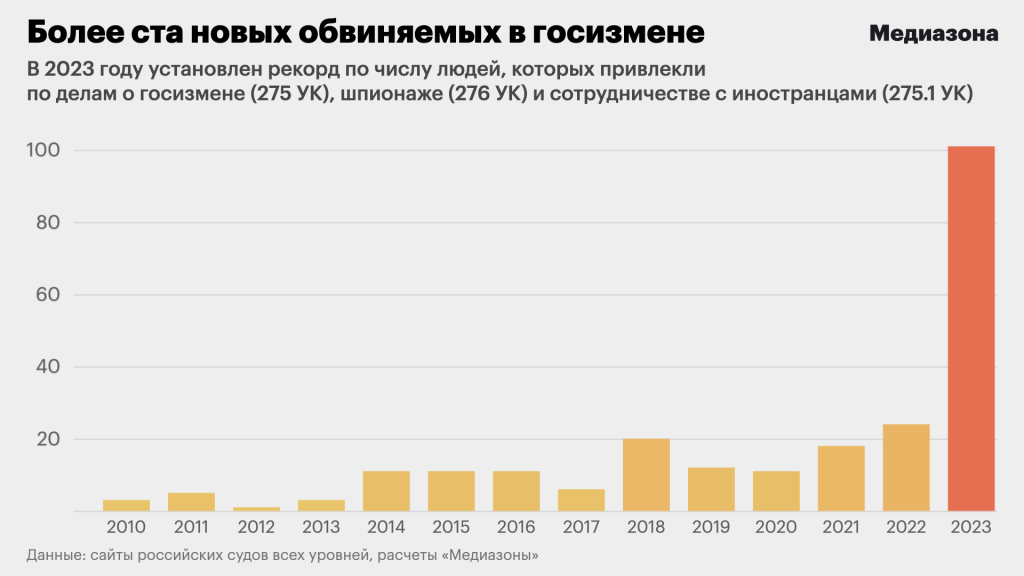
Charges of high treason and espionage, once rare, are now systematically deployed as standard instruments of domestic policy. The handling of these cases by the Russian judiciary is characterised by near-total secrecy, with the vast majority of trials held behind closed doors and resulting in lengthy penal colony sentences.
This data compiled by @one_dept documents the accelerating rate of these convictions. While the individual metrics are detailed in the slides, the broader picture reflects a judicial system restructured to neutralise dissent.
Polina Yevtushenko with daughter Alisa in court, August 2024
Polina Yevtushenko had deleted the social media posts for which she was tried prior to criminal charges being brought against her, she did not commit high treason, and her so-called crimes were victimless. And yet, she has been in a pretrial detention center for almost three years, and the prosecution asked the court to sentence her to eighteen years in prison. According to her lawyers, this would have been the longest sentence ever handed down to a woman in post-Soviet Russian history for a nonviolent crime that was not even committed. Today, the Central District Military Court found Yevtushenko guilty as charged and sentenced her to fourteen years in prison.
“This case is totally fabricated and unfounded. It’s completely unfounded, and the recordings that do exist and were submitted to the court speak to Polina’s innocence. In them, she repeatedly tries to dissuade her acquaintance Komarov from joining the Free Russia Legion. He made her acquaintance specifically so that this vile criminal case would be brought against her. This is a provocation,” say Polina’s acquaintances who attended the trials. (We are not naming them for their own safety.) “Polina is a courageous person. She’s a fine woman and never loses heart. It’s simply monstrous that she has been given such a long sentence for no reason.”
“I thought they were taking me to be killed”
Polina Yevtushenko, who is from the city of Togliatti, in the Samara Region, is twenty-seven. In July 2023, she was arrested for allegedly “inciting a Samara [city] resident to commit treason by defecting to the enemy, namely by joining the armed group the Free Russia Legion in order to take part in hostilities against the Armed Forces of the Russian Federation on Ukrainian soil” (per Article 30.1 and Article 275 of the Criminal Code of the Russian Federation: “preparation of terrorism”).
On that day, she took her daughter Alisa to kindergarten, and when she left, more than a dozen plainclothes security forces officers were waiting for her.
“They put cable ties on my hands and threw me into the car as if I were a sack of potatoes. Then these men got into the car and placed their feet on me. They didn’t explain anything. I thought that they were gangsters and that they were taking me to be killed. I screamed and called for help,” Yevtushenko later recounted.
After Yevtushenko was arrested, she was charged with five more crimes: publicly calling for terrorism on the internet (a violation per Article 205.2.2 of the Russian Federal Criminal Code), publicly calling for extremism, also on the internet (Article 280.2), disseminating knowingly false information about the deployment of the Russian Armed Forces, motivated by political hatred (Article 207.3.2.e), and condoning Nazism (Article 354.1.4). According to the FSB’s Samara office, she persuaded an acquaintance to go and fight in the Free Russia Legion, carried out “propaganda work,” and “posted instructions for Russian military personnel on how to surrender.”
Seven dates and “high treason”
Polina Yevtushenko
In this photo, Yevtushenko is a slender young woman with blue hair like Malvina’s, wearing a t-shirt and pink jeans. She raised her young daughter alone and painted pictures, which she posted on her Instagram and VKontakte accounts. She also publicized her anti-war views on these social media accounts, republishing a petition demanding Putin’s resignation over the war he unleashed in Ukraine, posts from the Free Russia Legion (at the time, it had not yet been deemed a “terrorist organization” by the Russian Supreme Court and was not yet banned), and instructions on how to surrender in order to survive the war. She was always quite sociable and interested in all kinds of people, easily meeting new people and making friends, according to her acquaintances.
Nikolai Komarov wrote to Yevtushenko on VKontakte. He said she was very pretty and drew beautifully, and that he really wanted to meet her and date her. What is more, her page said that she used to work at a Yota store, and he had a question he couldn’t figure out himself, so maybe she could help? He lived in Samara, she lived in Togliatti, an hour away by bus, but that was not a problem—he would come to Togliatti.
“They had a total of seven dates,” says a [male] friend of Yevtushenko’s. “He always told her how much he liked her. He invited her out to eat. They went for bike rides, went bowling, and sang karaoke together. He asked her about her pictures and her daughter. That is, he made it patently clear that he was interested in her as a woman and that he was courting her.”
It later transpired that the only dates with Yevtushenko which Komarov didn’t record on a dictaphone were the first two.
“He would constantly tell her that he was afraid of getting drafted and wanted to leave Russia, and asked her to advise him where to go, what to do, and how to make a living,” Polina’s friend continues.” She would reply that if he was so afraid, he should go to China or Kazakhstan, open a Wildberries or Ozon outlet there, and not worry. But he kept bringing up the subject again and again, asking her about the Free Russia Legion, whose posts she shared on social media. Polina told him that they were fighting Putin and that was why she supported them, that she had Ukrainian blood and opposed the war. At the trial, recordings were played of Polina telling Komarov many times that he should not go there and get involved, of her trying to talk him out of it. But Komarov kept at her: ‘I want to join the Legion, let’s choose a “street name” for me.’ (That was his term for ‘call sign.’) She communicated with him in a friendly manner and did not want to get closer because the conversations were always the same.”
Yevtushenko was later asked why she had not immediately pegged Komarov as a provocateur. She replied that she had believed “the FSB would not employ such dimwits.”
In court, Komarov testified that he had independently recorded Yevtushenko’s conversations on a dictaphone, but then became frightened by what she was saying and decided to hand the recordings over to the FSB because he thought she could get him into trouble. The recordings show signs of editing, with conversations cut short, Yevtushenko said in court. During the investigation and the trial, her defense demanded access to the complete recordings, but they allegedly do not exist. Komarov claimed that he had long since sold both the dictaphone and the laptop from which he transferred the recordings to discs for the FSB at a flea market. The court took him at his word.
Center “E” operative, FSB agent, or just a criminal on the hook?
In 2009, Nikolai Komarov was sentenced to two years’ probation for stealing a Sony Ericsson mobile phone, Kholod has discovered. While his probation was still in force, Komarov was caught again and charged with seventeen counts of theft of cable and internet equipment. In May 2011, he was convicted and sent to prison for two years and one month, but in April 2012, he was released on parole, after only eleven months in prison.
“He can actually be sweet, handsome, and charming. He knows how to get under your skin, and girls usually like him. He’s a bit of a con artist,” says a friend of Komarov’s.
You would thus never suspect that Komarov had had run-ins with the law. On the contrary, he maintained a Twitter account on which he demanded that the Samara municipal authorities fill in a pothole and finally resolve the issue of an open manhole cover, and he came across as a caring person and even a grassroots activist. This was before the war in Ukraine, however.
In 2017, Komarov showed up at the Navalny organization’s field office in Samara and introduced himself as a lawyer.
“He was a very active member [sic] of the field office. He wanted to be friends with everyone. He would invite people to barbecues, suggest that we drink vodka, hang out at the office all the time, and willingly do whatever needed doing—if we needed to buy water, he would go buy it without question. He took part in our campaigns and protest rallies,” says Marina Yevdokimova, who was a staffer at Navalny’s Samara field office at the time. In 2021, after the organization’s field offices were shut down across the country, she fled Russia.
In 2019, during the COVID pandemic, Yevdokimova was the field office’s social media manager.
“We had just reached the peak of the outbreak, which we wrote about in a post on Telegram. We also wrote that doctors had no PPE. An administrative case was brought against me. The police were staked out near my home. They would knock on my door, but I wouldn’t open it, so then they would go to my neighbors and question them,” Yevdokimova continues. “There was a court hearing in May, and Kolya Komarov was a witness for the prosecution, to my surprise. He hadn’t been at the Navalny field office for a long time. He was upset with us because we hadn’t gone along with his strange proposals. He had then become friends with the Communists and NOD (National Liberation Movement) members, posted photos of himself with them, and participated in their rallies.”
Denis Shepelsky (left), NOD’s “chief of staff” in Samara, and Nikolai Komarov. Source: Komarov’s VK page
At Yevdokimova’s trial, Komarov testified that he had seen her walking through the market in Microdistrict 15 and had allegedly heard her discussing on the phone that she would post this particular message on Telegram.
“I heard about her criminal intentions and could not fail to report them to law enforcement,” he told the court.
“Strangely enough, I was acquitted,” says Yevdokimova. “The lawyer asked [Komarov] simple questions that [he] couldn’t answer properly: ‘Where do you live? How did you end up in the market at that time?’ This was during the pandemic and no one could move freely around town. Besides, many people had access to our Telegram channel, so it was impossible to prove that I was the one who had posted it.”
Yegor Alasheyev, another former staffer at Navalny’s Samara field office, also emigrated from Russia.
“In March 2017, we held a rally called ‘Dimon Will Be Held to Account,’ at which twenty-three of our supporters were detained,” Alasheyev recalls. “We appealed all the fines [imposed on them as punishment] and they were later overturned. Komarov was also detained, but he turned down our assistance, saying that he was a lawyer himself and ‘knew what he was doing.’ It later transpired that he had pleaded guilty and been sentenced to pay a fine. At first, he kept quiet about the situation, then he telephoned our office and asked us to pay the fine. (At that point, he had already stopped hanging out with us.) I told him that we needed to talk to the lawyers and come up with a plan. But he refused to talk to them, and two weeks later, a video was released on TV featuring a ‘disenchanted Navalny volunteer.’ Soon after, he started attending NOD rallies. We looked into Komarov and learned that he had been convicted of stealing cable, but we had suspected that he was here for a reason even prior to that. He always hung around the office and listened carefully to what we were saying. But we didn’t pay much attention to it—he had seemed harmless. We understood of course that someone would inevitably be planted in our midst and that we were being watched.”
In 2022, Protocol Samara discovered that Alexander Melikhov, whom Komarov had befriended, had been planted in the local Navalny field office. Melikhov was a lieutenant colonel in the police, and his surname and passport had been changed for the sake of this operation. Yevtushenko’s acquaintances do not rule out the possibility that both men infiltrated the organization at the same time.
During Yevtushenko’s trial, it transpired that another criminal case had been opened against Komarov. He had been charged with thirty-seven crimes under Article 173.1.2.b of the Russian Criminal Code (“illegal creation of legal entities or provision of documents”). He was sentenced to 330 hours of compulsory community service.
“It seems that he has long been firmly ‘on the hook’ of Center ‘E’ (the Russian Interior Ministry’s office for combating ‘extremism’ and ‘dissidents’—Sever.Realii) and the FSB, but they cover for him. He created thirty-seven fake companies and only got community service,” says a lawyer working in Russia.
A new method of recruiting?
In July, it will have been three years since Yevtushenko was jailed in a pretrial detention center. In June 2025, she was found guilty of “violating” the center’s rules for passing store-bought cookies to a neighboring cell. In July of the same year, she was sent to solitary confinement for ten days because she had described her court hearings in her letters. All this time, she has only been able to see her daughter through glass; the judge has allowed them one-hour visits. Yevtushenko’s parents have been raising Alisa.
“Visits take place through glass over a telephone and last one hour. During this hour, I talk alternately with my mother and with Alisa. During the last visit, I brought a sketchbook with me in which I draw pictures for Alice. She really liked it,” wrote Yevtushenko from the detention center. “Before that, I showed Alice some old photos of us from the time before my arrest, but she started crying, so I decided not to do that again… Of course, conversations through glass can hardly be called visits, but we are grateful for what we have. I really miss hugs. I want to hug and kiss Alisa, but I can’t.”
“Polina gets plenty of letters at the detention center. Many people support her because they understand the injustice of what has been happening to her. She doesn’t get discouraged, she rejoices in every little thing, and she has been learning English by mail,” says a friend of Yevtushenko’s who has attended all the court hearings in her case. “How do we usually imagine sting operations carried out by the special services? They involve persuasion, bribery, blackmail—the classics of the genre. But a new method has supposedly emerged in Polina’s case, which we learned of when FSB expert Tatyana Naumova was cross-examined at the trial. According to her, in a new manual developed by FSB criminologists, which has not been made available to the public, a new method of recruitment is [defined]: it is deemed ‘propaganda’ and ‘recruitment’ when someone praises something—for example, when someone claims that the Free Russia Legion has good equipment. Polina’s defense asked to review this secret manual, but the judge turned down their request. The defense lawyer then asked the judge to examine them himself and confirm that everything was indeed written that way there. But the judge refused to do so. Naumova also said that Komarov was ‘a person conducting covert operations.’ In other words, she effectively admitted in court that the special services had organized a sting. From the point of view of the European Court of Human Rights (ECHR), this is a gross violation of the right to a fair trial (per Article 6 of the European Convention on Human Rights). Evidence obtained in this way is considered inadmissible by the ECHR. And Russia, until it ceased to be a party to the Convention due to the war it unleashed in Ukraine, had been repeatedly punished for this” (e.g., in Vanyan v. Russia, 2005, and Lagutin and Others v. Russia, 2014—Sever.Realii).
An excerpt from Polina Yevtushenko’s closing statement at trial
“Your Honor, you have known me for almost two years. I am confident that during these two years you have been persuaded that I pose no danger to the community and that I can be released.
“For two years, I have only been able to see my daughter through glass and cannot even hug her. I did not see her at all during the first year [in police custody]. Last year, Alisa started first grade, and this year, on March first, she will turn eight years old. She needs her mother’s love, care, and help, and I need even more to be with her, to see her grow up, to raise her, to take care of her. I need to make sure she becomes a decent person—well-mannered, smart, well-read, and fond of our Motherland.
“Your Honor, I ask you to release me so that I can raise my daughter. Be a conduit of happiness for two loving hearts—those of a mother and her child. I have never committed treason. I love my Motherland, Russia, and would never do anything to harm her. If I have made any mistakes or committed violations, then being in prison for almost three years is more than enough punishment for me.
“I have come to grips with everything [I have done] and promise you that from now on I will behave in such a way that you shall never be ashamed of me. I ask you to make a just decision and release me to be with my daughter.”
According to a study by the human rights project First Department, between February 2022 and mid-December 2024, 792 people in Russia were charged with treason (per Article 275 of the Russian Federal Criminal Code), espionage (Article 276), and secret cooperation with a foreign state (Article 275.1). In 2024, 359 people were found guilty and sentenced to actual prison terms on these charges, and four more were sentenced to compulsory psychiatric treatment. Of these 359 people, 224 were found guilty under Article 275, 38 under Article 275.1, and 101 under Article 276. A total of 536 people have been convicted of violating these criminal code articles since the start of the war; Russian courts have not handed down a single acquittal. According to First Department, a significant number of these cases were based on sting operations carried out by FSB officers or persons associated with them.
I am going to tell you about a political prisoner who seemingly no one has written about yet. I came across information about him quite by accident.
His name is Gordey Nikitin. Thirty-two years old and a native of Ryazan, Gordey worked at an oil refinery before his arrest. According to Gordey, he has been interested in politics and held opposition views since 2014. When the full-scale war [against Ukraine] broke out, Gordey went into shock. He was in this state of shock when he wrote several comments on Telegram.
As Gordey found out when reviewing the files in his criminal case, it was precisely because of these comments that, three years later, FSB officers would come after him, calling him on Telegram and introducing themselves as Ukrainian intelligence.
A few conversations with the “GUR” (actually, with the FSB) sufficed to charge him with and convict him of high treason and sentence him to seventeen (17) years in a maximum security penitentiary facility.
Gordey did not testify at his trial and he refused to make a closing statement to the court. He also did not bother to appeal the verdict, and so he will soon be transferred to a penal colony.
Gordey is currently being held in a remand prison in the town of Ryazhsk, Ryazan Region. He writes that the worst thing about the remand prison is the library: “Mostly third-rate military science fiction.” In the eight months he has spent in the prison, Gordey has only come across six decent books—by Remarque, Dostoevsky, and Chuck Palahniuk.
You can write a letter to Gordey. And if you use a digital service, a New Year’s miracle may occur, and he will receive the letter on January 30. In the worst case, it will arrive after the holidays.
Write to Gordey at the following address:
Russian Federation 391999 Ryazhsk, Ryazan Oblast • ul. Krasnaya, d. 1a, SIZO-2 • Nikitin Gordey Andreyevich (d.o.b. 28.09.1993)
You can also send letters through the online services F-Pismo, Zonatelecom, and PrisonMail.Online (the last should be used by foreign bankcard holders).
Source: Ivan Astashin (Facebook), 26 December 2025. Translated by the Russian Reader. Since letters to Russian prisoners are vetted by prison censors, they must be written in Russian or translated into Russian, something that can done more or less decently using an online machine translator like Google Translate. ||||| TRR
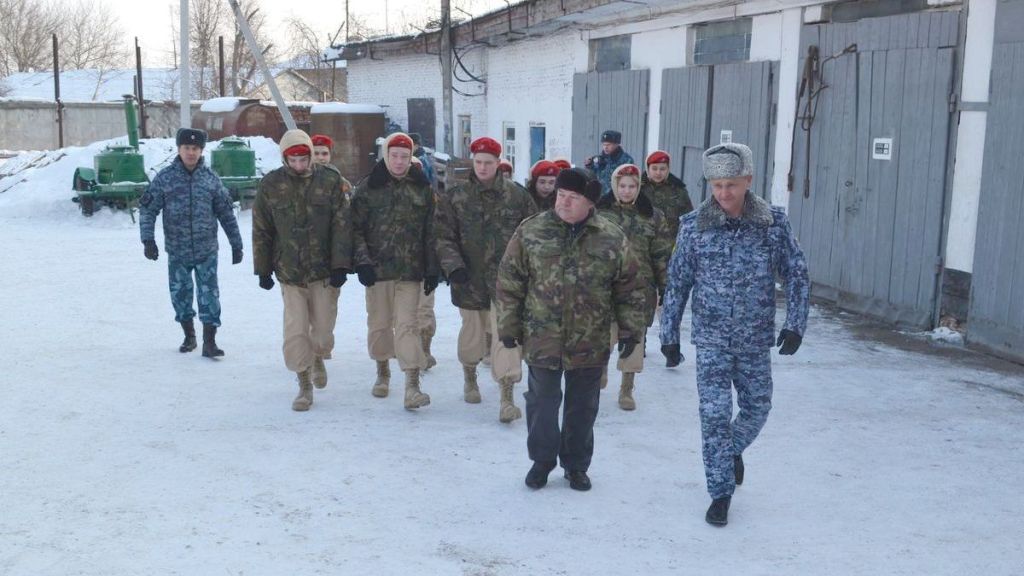
On 22 February [2023], scheduled tactical and drill exercises were held at Ryazhsk Remand Prison No. 2 (Ryazan Region, Russian Federal Penitentiary Service).
Remand prison staff practiced negotiating procedures, organizing combat groups, dealing with the aftermath of mass disobedience, and repelling attacks on the correctional facility.
The exercises were observed by Young Army cadets from Ryazhsk High School No. 3. Remand prison staff showed the kids their weapons and equipment. The boys and girls were able to try on bulletproof vests and hold automatic rifles and pistols. At the end of the tour, the schoolchildren were treated to hot porridge and tea.
“Today, the students got a closer look at the penal system,” said Alexei Ogurtsov, acting chief warden at Remand Prison No. 2. “Our staff demonstrated their professional skills, equipment, and weapons to the students and answered their questions. Perhaps some of them will choose to enlist in our service in the future.”
Mikhail Loshchinin and his mother, Olga. Courtesy of RFE/RL
More and more Russians face trumped-up charges of “high treason.” Anything whatsoever—from commenting on a banned organization’s social media post to wiring a paltry sum of money to a relative or acquaintance in Ukraine—can occasion these charges. Foreign nationals who have retained their Russian citizenship have also faced prosecution. It has become ever more dangerous for them to travel to Russia to visit loved ones.
This past summer, Mikhail Loshchinin, a 48-year-old dual Belgian-Russian national, decided to visit his father, who had suffered a heart attack, and headed to Petersburg.
In recent years, Loshchinin had been living in Germany while working as a database manager in Luxembourg. On 1 July 2025, he crossed the Latvian border on a motorcycle with a German license plate and stopped at the Ubylinka border-crossing station, in the Pytalovo District of Russia’s Pskov Region. He was carrying a Russian federal passport, which he presented to the Russian border guards.
“They staged a provocation at the border”
“Sometime around 2020, before the war, Misha traveled to Russia by motorcycle. He made it there and back just fine. He had good memories [of the trip], and so he decided to repeat his ‘feat,'” says Loshchinin’s mother Olga, who now liveas in Poland. “The goal was to visit his father, who had undergone heart surgeries and had been feeling quite poorly after a heart attack; there was a risk the visit would be their last. [Mikhail] decided to travel with his Russian passport so as not to have bother getting a visa. (As a Russian national, Loshchinin does not need a visa to enter Russia—Sever.Realii.) He’d spent the last twenty-five years in Europe: his mindset had changed, he’d been Europeanized. He’d come to rely on the system’s accountability, on the fact that laws were obeyed.”
According to Olga, the border guards asked to check Mikhail’s telephone, on which they apparently found numerous Ukrainian contacts. Before his trip, Mikhail had not deleted anything from his WhatsApp account, as he did not consider corresponding with friends in Ukraine to be a crime.
“There were no grounds to detain him, so they staged a provocation at the border,” says Olga. “He had been waiting there for a long time for the inspection to end when he asked where he could buy some water. They told him to follow them on his motorcycle to the local store, that they would show him the way. He followed them, but they suddenly made a funny turn and detained him for crossing the border. In other words, they had deliberately lured him there to have a legal reason to detain him.”
Mikhail grew up in a large family: the four Loschinin children were born in the Soviet Union but later moved away. Mikhail had been living in Europe since 1999. His sister became a citizen of Ukraine, and he often visited her. He had many friends and acquaintances in Ukraine. Their contact details were stored in his phone, naturally.
Mikhail had always been apolitical, and his arrest has no connection with his work, says Olga.
“It is, rather, a matter of his being in the wrong place at the wrong time, and the police investigator admitted as much to him. . . . Misha has always had an excellent reputation, and his employers have valued him. He’s also a well-rounded fellow: he’s a biker, plays the guitar, and sings and does the lighting for productions by small Russian-language theaters. He bought the [lighting] equipment with his own money and promotes Russian culture among his western friends and acquaintances any way he can: he hasn’t lost his connections with his roots. . . . He falls in love easily, and has had several marriages, but now he’s a bachelor. He has a daughter from his second marriage.”
After Mikhail set off for Russia, he constantly telephoned with his sister and mother, who now live in Poland, but they lost touch with him on July first. Three days later, he called from someone else’s phone and told them he had been detained.
“At 10:27 a.m. on July fourth, there was a call from an unknown Russian number. It was our Misha. He said that Dmitry, an FSB officer, had given him a phone to make the call, that he was under guard at the Hotel Dubrava in the border town of Pytalovo, that they’d confiscated his papers and the keys to his motorcycle, and that the motorcycle itself was parked outside the hotel,” Olga recalls.
Mikhail told his loved ones that he had been given a choice: either he would be sent to a basement somewhere, where he would sit and wait until they decided what to do with him and his papers, or he could go to a hotel and wait there, at his own expense.
“No one wants to sit in a basement, naturally,” Olga continues. “He had some money, and since the rooms were inexpensive, he chose the hotel. They confiscated his telephone, his passport, and the papers for his motorcycle, and they posted guards without whom he wasn’t allowed to leave his room. They had to get the go-ahead for every trip outside the hotel. They escorted him when he would go out to the store and the post office.”
Mikhail spent nearly a month at the Dubrava Hotel.
“Misha’s money was running out. We were by then terribly anxious and contacted a lawyer, who arrived at the hotel on the evening of August first and was able to see Misha and speak with him. On August second, a group of persons unknown took him to an undisclosed location. Those were the roughest days for us. As later transpired, he had been transported from Pytalovo to Stary Oskol, in Belgorod Region, and the journey had taken several days. Misha later told us that along the way they had passed through Smolensk; he had managed to catch sight of that. It turns out that, in his correspondence for 2022, an ex-girlfriend of Mikhail’s had asked him for financial help. Her profile picture now has a Ukrainian symbol on it, but it wasn’t there in 2022.”
The lawyer traveled to Stary Oskol, Olga recounts, but at the local pretrial detention center he was told that they had “no such person” in custody. The lawyer then filed a formal appeal with the prosecutor’s office, the FSB, and the Investigative Committee, asking them to figure out what had become of Mikhail. On 21 August 2025, Mikhail telephoned Olga himself—from Pretrial Detention Center No. 1 in Pskov. The call was again made from an unknown number.
“Judging by how his voice sounded, he wasn’t himself. He was clearly under duress and kept asking whether it was alright to talk now, meaning that the call was made in someone else’s presence,” says Olga. “He said that he had been accused of ‘high treason’ per Article 275 of the Russian Federal Criminal Code: ‘financing representatives of a foreign state hostile to the Russian Federation.’ We got a call from someone named Denis, who introduced himself as Misha’s attorney. He called us again and warned us not to hire anyone else, claiming our own attorney wouldn’t even be admitted to the remand hearing. We recorded the call but of course we didn’t do what he asked; he had no right to say that to us, and our own attorney did attend the hearing. Since then, Misha has been in custody at the Pskov detention center. He’s under investigation.”
Later, Mikhail said that, in Stary Oskol, he had been placed in a specialized facility for Ukrainian prisoners of war.
“He was tortured and abused, both mentally and physically, there” says Olga. “First of all, they took away his glasses. He has terribly poor eyesight, minus eight, and he practically lost his sight. He could only walk with his head down, bent over. They stripped him naked and beat him. He told his lawyer about all of it. He was completely crushed, and of course this was done deliberately to squash any hope that he might be released and to make him agree to sign whatever papers they put in front of him. They forced him to sign a paper stating that he had been gallivanting freely around Russia until August twenty-first. He told us this recently. But we have a document stating that he was in Stary Oskol, and it is unlikely that he could have traveled freely around Russia without papers or a means of transport and without informing his relatives. There are many inconsistencies in their ‘body of evidence.'”
“I am horrified by what has happened to my son”
On 10 November, Mikhail Loshchinin celebrated his forty-eighth birthday in the Pskov detention center.
“I am horrified by what has happened to my son,” says Mikhail’s mother. “I’ve been doing a lot of soul-searching, since I didn’t expect the authorities to behave as they have behaved. And yet I didn’t have full faith in Russian law enforcement. My grandfather was in prison in 1937. He had been an officer in the White Army. The family was then living in Grozny, and my mom was small. Several former [White] officers lived in the vicinity. They would get together for readings and go on picnics; they were cultured folk. The entire group was arrested. Grandfather was the only one of them to survive because he didn’t sign anything [i.e., a confession]; the rest of them were shot. He never told anyone what price he had paid for this. My mom, still a kid then, brought care packages to him in prison.”
Olga has carefully researched Article 275 of the Russian Federal Criminal Code and argues that it has simply been “misapplied to a completely peaceful, innocent man.”
“We have a really good, tight-knit family. Although [Mikhail’s] dad lives in Petersburg, and we’re divorced, we have a decent relationship, and we’ve even started conversing more often now. And all the kids are tight-knit. Misha was always quite kind; we even wanted him to become a doctor, since kindness is quite valuable in a doctor. But he chose a different path in life. He wanted to be a programmer, and he’s been successful at it,” says Olga.
According to her, many of Mikhail’s friends in Luxembourg, where he had worked in recent years, are now deeply concerned about him.
“He always had a good head on his shoulders, and he became quite well known in Russian diaspora theatrical and cultural circles, and not only in those circles. He even did the sound for the Orthodox Church of Luxembourg,” says Olga. “There are videos on YouTube of him playing ‘Under the Blue Sky’ on the guitar in concert and his boss, a Frenchman, singing it in Russian. It is an ironic twist of fate that a person like can be destroyed so simply. . . . Summer is the time when theaters get ready for the high theatrical season, and right then Misha vanished. A support group has emerged, all of his friends. I honestly had no idea that there were so many of them.”
Mikhail’s friends have been writing petitions requesting his release from police custody, which his relatives have been passing on to his lawyer.
“Although Mikhail lived in Luxembourg, he visited us quite often recently. He has a girlfriend in Slovakia, and when he went to see her, he found ways to come through [Poland] and see us,” says Olga.
According to Loshchinin’s family, Mikhail has begun to suffer from retinal detachment while in custody.
“In 2024, he visited an ophthalmologist, who informed him that surgery was not necessary at the time, but that it would have to be performed immediately if he began seeing flashes in his line of sight. Now he has been seeing those flashes,” Olga explains. “It is hard to get proper medical care in prison, and I’m afraid that he may simply go blind in there. I can’t imagine that my son, who has done nothing nasty in his life, is now being treated as one of the most dangerous criminals, and all because he hadn’t cut off his ties with Russia. If you take someone’s phone and check their messages, every other person could be under suspicion.”
“Thousands of people across the country are being held without charge”
Loshchinin’s defense attorney declined to comment for this article because he is bound by a non-disclosure agreement.
According to our count, at least 148 people in Russia faced criminal charges of treason, espionage, and clandestine collaboration with foreigners in 2023, and at least 88 such cases were brought before the courts. The trend continued in 2024 and 2025. According to statistics on court rulings for the first half of 2025, as published by the Judicial Department of the [Russian] Supreme Court, 115 high treason cases were instigated, which was twice as many as in the first half of 2024. At the same time, according to data from Department One, the Supreme Court has underestimated the number of convictions in such cases by at least threefold.
“Mikhail Loshchinin wired money to a private individual in Ukraine,” explains Smirnov. “According to the security forces, this is a form of high treason, and it has existed for over ten years: providing financial assistance for activities contrary to the security of the Russian Federation. The FSB often takes advantage of this. They might have claimed, for example, that the young woman to whom Mikhail wired money works for the SBU [Security Service of Ukraine] or is involved in the Territorial Defense Forces. Something like that. And that wiring her money was thus a criminal offense.”
The attorney is not surprised that Mikhail was detained in Pytalovo for a month without charges, staying in a hotel at his own expense and under guard.
“There are thousands of people across the country being held without charge. Some are under administrative arrest, while others are in former hotels refitted as [detention] centers, or in actual hotel rooms. Most often, police investigators need the time to get the go-ahead to file criminal charges. Moscow gives the go-ahead for such cases.”
“There is no good outcome in these situations,” Smirnov notes.
“They might sentence him up to thirteen years in prison. The only hope for release is through a prisoner exchange, and that would involve a political decision,” argues Smirnov. “How many people in Russia have been released in the last ten years via prisoner exchanges? A couple dozen, probably. And how many political prisoners are there in the country currently? Ten to fifteen thousand. [Mikhail’s] chances are a bit greater since he’s a Belgian national, of course. There are not so many Belgian nationals [in Russian prisons], and if Belgian politicians get involved in the campaign to secure his release, the chances will grow for sure.”
Olga, Mikhail’s mother, says that Belgian consular officers have tried on several occasions to get permission to visit him in the detention center but were turned down.
“He’s a Russian national, but Russia doesn’t recognize his Belgian citizenship,” says Smirnov. “Most countries don’t recognize dual citizenships: it’s a normal practice. So, Belgian consuls aren’t being allowed to see him. It’s been the usual practice for decades.”
Smirnov argues that people living abroad should not travel to Russia unless absolutely necessary “because it’s a big risk.” If travel is unavoidable, you should prepare in advance by purchasing a separate telephone, planning your itinerary with care, seeking advice from those in the know, and being ready for the fact that the border guards will question you and search all your devices.
“My friends died at the hands of Russian soldiers. Why can’t I talk about it?”
This question will cost Varvara Volkova 7 years in a Russian penal colony. Here’s her story.
Varvara was a flight attendant, not an impassioned political activist. In a neighbourhood chat, she stated the obvious: Russian forces are killing civilians in Ukraine. The prosecution framed it as “fake news” motivated by hatred toward the armed forces, and the court accepted it.
The mechanism used to go after her relies on a Soviet-style culture of snitching: a Russian tank driver complained about her comments, then a professional informer, who intentionally hunts dissidents, amplified the case and demanded she be jailed.
In fact, there’s a whole network of these informers — they call themselves “SMERSH.” For those who don’t know Russian history, it is a reference to Stalin’s WWII counter-intelligence service. It means “Death to Spies” — a direct revival of the terror methods of the 1930s. They published screenshots of her messages everywhere trying to ruin her life; claimed she called the soldier a “fascist”; said she offered to make tea for Ukrainian soldiers if they reached the Moscow region. For words spoken in anger, the system decided to smash her life to pieces.
There is a grim irony in this tragedy: the regime destroyed Varvara to protect the “honor” of the military and her accuser. But the tank driver who reported her is already dead: he was killed in the war earlier this March.
Observers abroad often underestimate the price of resistance in today’s Russia. It is not just a fine anymore, but years and years of one’s life. Varvara Volkova shows us the true bill — and it is devastating.
I track the consequences of speech in modern-day Russia, make sure to follow for more updates.
Preface by the Editorial Board: Below we publish the translation of an article of our Russian comrades about state repression in their country. The article reports, among others, about the situation of comrade Felix Eliseev. He has been in prison for 2.5 years as part of a 14-year prison term. Felix was sentenced for “treason” as he was accused of making propaganda against Putin’s imperialist war against Ukraine and sending money to Ukraine to buy weapons. While the prison authorities do everything to break him, Felix does not lose his spirit and endures his imprisonment stoically. (See https://www.thecommunists.net/rcit/felix-eliseev-a-revolutionary-communist-in-russian-prison/)
We call readers to support Felix by spreading this information about a communist and anti-fascist serving an unjust sentence!
According to the human rights organization Memorial, there are currently over 1,000 political prisoners in Russia, while other groups estimate the number could be as high as 2,500. This number is three times higher than in 2020, more than twice as high as in 2022, and continues to grow. In 2025, there was a sharp increase in criminal cases under articles on “justification of terrorism,” “sponsoring terrorist activity,” and “treason.” This is not due to increased terrorism, but to the fact that the security forces, having perfected their repression mechanisms, have begun to intensify their crackdown on “sponsorship” cases, such as those of the FBK (Anti-Corruption Foundation, recognized as an extremist organization in Russia) or cases related to money transfers to the Ukrainian army, which occurred back in 2022. The term “terrorism” itself has become so vague that even the average person doesn’t always understand what it actually means.
Among political prisoners are many individuals with progressive leftist views, serving time for anti-war activities or “inaccurate” public statements online. The “Foundation for Support of Left-Wing Political Prisoners” provides support to at least some of these individuals. Among them are: defendants in the “Tyumen Case”; defendants in the “Chita Case”; Anton Orlov, a trade union and leftist activist, coordinator of the independent medical workers’ union “Action” in Bashkortostan; Daria Kozyreva, an activist from St. Petersburg known for her anti-war protests and criticism of the Russian army; Gagik Grigoryan, a young activist imprisoned in 2023 at the age of 17; Azat Miftakhov is a Russian mathematician and anarchist, sentenced in 2021 to six years in prison for allegedly setting fire to the United Russia office in 2018. After serving this sentence, he was arrested again in 2023 on charges of “justifying terrorism” in a private conversation with a prison cellmate and sentenced to four years in prison; defendants in the “Kansk teenagers case”; defendants in the “Network case”; Boris Kagarlitsky is a left-wing publicist known in many parts of the world; Ruslan Ushakov is the author of articles published on opposition Telegram channels, sentenced to eight years in prison for posts in a public chat.
The case of the communist Felix Eliseev
Another political prisoner is Felix Eliseev, a Russian communist, blogger, and administrator of the Telegram channels “She Fell Apart” and “Kolkhoznoye Madness.” He was arrested in December 2022 and charged with justifying terrorism. According to investigators, Eliseev posted two anti-war posts on his Telegram channel, one of which endorsed a Ukrainian Armed Forces helicopter strike on an oil depot in Belgorod. The charges were later upgraded, and Eliseev was charged with “treason”. The court alleges that he transferred funds through a cryptocurrency account to a “curator,” who used the funds to purchase equipment and weapons for Ukrainian Armed Forces soldiers.
Felix, like many other political prisoners convicted of “terrorist and extremist” offenses, is serving his sentence under intense pressure from the prison administration. He is regularly placed in solitary confinement cells, where they do everything they can to break him mentally and physically.
However, political repression in Russia involves more than just horrific criminal cases of “terrorism,” “treason,” and other “betrayals of the nation.” It also includes the persecution of undesirable and dissenting youth who dare publicly speak out against the war and the ruling elite, thereby gathering many other concerned young people around them.
The “Stop Time” case
One example of such government abuse is the “Stop Time” case. The “Stop Time” case concerns the persecution by Russian authorities of members of the St. Petersburg street music group “Stop Time” – Diana Loginova (pseudonym Naoko), Alexander Orlov, and Vladislav Leontyev – for their participation in impromptu concerts, including one near the Ploshchad Vosstaniya metro station, where they performed anti-war songs by artists designated by the authorities as “foreign agents.” On October 16, 2025, Loginova was arrested and sentenced to 13 days of administrative arrest for performing a song by an artist unpopular with the authorities. The other members of the band were also arrested and sentenced to 12-13 days. These events resonated in the media (both pro-government and opposition) and society, becoming a topic of discussion in the context of artistic freedom and the tightening of censorship in modern Russia.
On October 29-30, the musicians received another 12-13 days of arrest, and on November 11, two of them were arrested for another 13 days. On November 23, the musicians were released from arrest. The lead singer and one of the band members left Russia that same day.
In many Russian cities, street bands followed “Stop Time’s” example and performed opposition songs by artists-foreign agents to large audiences in public squares. They also faced pressure from the authorities and harassment from Z-Neanderthals.
Also, recently, spiders in a jar have started eating each other. Criminal cases have been brought against several well-known military Z-bloggers for discrediting the army! More than two years after Strelkov’s imprisonment and Prigozhin’s murder, a new steamroller of repression is purging those loyalists who are too undesirable.
All of the above demonstrates that Russian society has no legal means to publicly express its attitude toward the events unfolding around it. For any word “against,” the sword of Damocles of Russian justice hangs over every citizen. Despite this, concerned Russians, especially young people, are finding ways to rally together and show the world that not all is lost in this country.
Meanwhile, cowardly security officials and government officials tremble at the mere thought that the masses will sooner or later awaken from their slumber and rise to deliver justice to the imperialist oppressors in the Kremlin. In Russia, literal punishments are being introduced for thought crimes. Thus, in September of this year, an administrative law punishing “searching for extremist materials” came into force. This law allows the FSB to view any citizen’s internet search history, and if it contains views of materials deemed extremist or terrorist, the user faces a visit from masked officers and a fine. The first cases under this law have already been filed.
Furthermore, the country is introducing a so-called “white list” for the internet—only those websites approved by Roskomnadzor are permitted to be accessed; others are inaccessible, and VPNs cannot be connected. So far, in the spirit of Russian tradition, this system is poorly functioning and flawed, but the day is not far off when Russian society will find itself locked in a “cheburnet.” (*)
Freedom for political prisoners!
For freedom of speech, conscience, and the internet!
Down with political repression!
Radical democratization of the country, not the fascist regime of a dictator!
All power to the working class and the working masses, not to a handful of oligarchic monopolists!
(*) Cheburnet is a mixture of two words: Чебурашка (Cheburashka) and internet. Cheburashka is a character from Soviet cartoon for children. Despite it is kind and helpful, in modern mass consciousness it is associated with Soviet censorship. So cheburnet basicaly means internet under the censorship of Russian government and intelligence agencies.
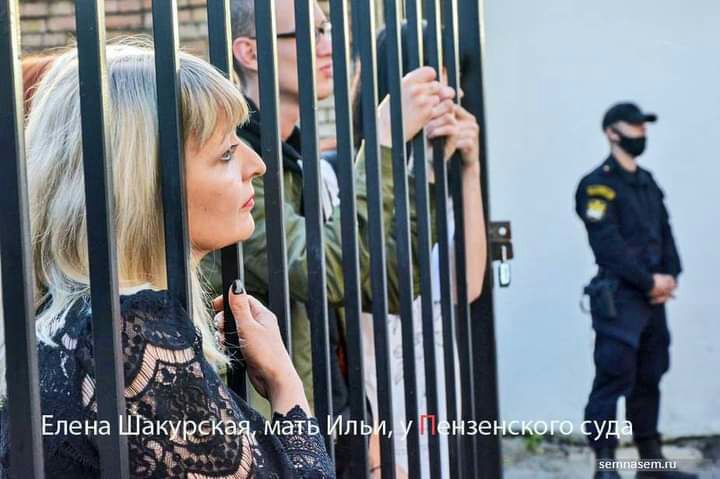
My name is Elena Nikolaevna Bogatova, and I am the mother of political prisoner Ilya Alexandrovich Shakursky. I am crying out for help to save my son so that he does not rot away in solitary confinement.
They took my only son away when he was twenty-one years old. He is now twenty-nine. He has been tortured. He has serious health problems that we still cannot solve. He still has eight years to serve, and they could turn him into a disabled person. I cannot help him on my own, so I am asking all caring people to help us.
It is impossible for a mother to know that her child is being destroyed, and that she cannot save him!
Although he committed no crime, he is in prison under the harsh Article 205 [of the Russian Criminal Code; Article 205 proscribes “terrorist acts”], enduring all the hardships of prison life, without ever receiving any encouragement; we cannot even hope for parole. Right now, [the prison authorities] want to turn him into repeat offender so that he cannot have any visits, phone calls, letters, or packages. They want to take everything away from him.
I ask you to write an appeal. I understand that there are many of us now, and everyone is exhausted. But we must stand together for the sake of our loved ones, for the sake of the younger generation, which is currently being destroyed. Hear the cry of a mother who cannot bear the pain for her son and for all those behind bars. If we push with our shoulders, the walls will collapse….
OVD-Info Faces a Critical Situation: We Have Lost All Our Ruble Donations
26.11.2025
Russian payment services have refused to continue working with us, without providing any explanation, and have cut off our ability to accept one-time and recurring donations. This has severed our connection to our main source of support—the 12,000 individuals who regularly transfer money to OVD-Info.
The services’ refusal to cooperate with us is one of the many manifestations of state pressure on human rights organizations and independent media. Some of them even had to close due to the loss of donations in rubles.
This is a severe blow to our work. With these donations we were able to pay for the work of defense lawyers and legal experts, travel to the regions, maintain our free hotline, and help those who are politically persecuted in Russia. Furthermore, regular donations allowed us to plan our long-term work and development.
We do not plan to close or reduce the scope of our work, because repression is not diminishing. Any political activity, expressing a view against the invasion of Ukraine, or criticism of Putin instantly becomes grounds for persecution. We simply cannot abandon Russians to face this brutal, repressive system alone. We are defending over 90 defendants in criminal cases, almost every day we send lawyers to police stations, courts, searches, penal colonies, and pre-trial detention centers. We answer dozens of messages and calls daily—and we want to continue doing this.
However, now everything depends on whether we can find another 12,000 people who will regularly support OVD-Info.
Yulia Lemeshchenko. Photo from the Memorial website
The Second Western Military District court in Moscow last week sentenced Yulia Lemeshchenko to 19 years’ imprisonment for high treason, sabotage, and preparing and training for an act of terrorism.
Yulia, 42, is a Russian citizen, born in Staryi Oskol, in Belgorod region. She lived in Voronezh in southern Russia, until 2014. Then she moved to Kharkiv, Ukraine, with her son and her husband, who had found work there. Later on the couple separated.
Yulia took up powerlifting and in 2021 was named Ukrainian women’s champion.
In 2024 Yulia did military training in Kyiv – firearms, explosives and flying drones – and returned to Russia, via a third country. She sabotaged power transmission infrastructure near St Petersburg, and in Voronezh conducted surveillance on Aleksei Lobodoi, an air force commander responsible for bombing Kharkiv.
Yulia was arrested in January this year. She did not deny the facts outlined in the prosecution case, but told the court that “from a moral standpoint” she considered herself not guilty. This is a translation of her final statement to the court, published by Mediazona.
=
Ukrainian Champion in a Russian Court: Yulia Lemeshchenko’s Final Statement
As you see, I don’t have any sheets of paper and I haven’t especially prepared, but I think I will improvise. I will now probably say a few things that were already said during this hearing, but let this be a sort of summing-up, in a monologue.
So I already spoke here about the fact that, in any war, two sides clash, and each side insists that it is right and that its cause is just. I took one of these sides. I am not a citizen of the country for which I decided to fight, but, all the same, for me, Ukraine is home. I love that country. And I love Kharkiv, with all my heart.
There is a district in Kharkiv called Severnaya Saltovka. About 500,000 people lived there. Half a million. A few people I knew lived there. My hairdresser lived there. After the Russian shelling and bombing, not a single house in that district was left undamaged. Not a single one. And I am not just talking about a few broken windows. I am talking about whole blocks of flats in ruins.
Right next to the block where I lived, there were explosions. In my block, on the ground floor, my neighbour Anya lived with her four-year-old son Nikita. A shell exploded right under their window. Their apartment was completely destroyed. What has happened to Anya and her son I don’t know. I don’t know whether they are still alive.
Friends of mine have died in this war, one relative – my second cousin – and colleagues of mine. War is monstrous. I could not stand aside. When war comes, people who are affected can either try somehow to fight, or they can flee. People flee – I don’t know – maybe because they are cowardly or weak. I don’t consider myself to be a cowardly or weak person. So I decided to fight back – to fight against Russian military aggression.
It is possible that, by saying these things, I am getting myself still deeper into trouble. But my honour, and my conscience, are important to me. I did what I believed to be necessary. I did what I could. To regret, to repent – who knows, maybe I will do that on my deathbed. But for now, what will be, will be. I have nothing further to say.
=
When the court hearing began, Mediazona reported that the judge, Vadim Krasnov, read out evidence that Yulia gave after being arrested in January. After the all-out Russian invasion of Ukraine in 2022, Yulia at first moved to Germany. In 2023 she returned to Ukraine and made contact with the “Free Russia” legion, but did not join.
In 2024, when she did her military training, the instructors – who did not answer questions about which part of the armed forces they served in – said that, by way of payment for her work, she could receive Ukrainian citizenship.
The judge asked if she had done so, to which she replied, with a smile, “not yet”.
During the hearing, Judge Krasnov asked Yulia why she had chosen such a radical method of struggle, rather than, for example, providing medical help to the wounded.
“I can only answer that question with another, rhetorical question”, she replied. “Why did Russia decide to use violent methods to destroy Ukrainian cities? A war had started. Do you understand?”
The judge responded that, by 2022, the war had already been underway for eight years. Yes, but it had become frozen, Lemeshchenko said. After the invasion, she wanted to help Ukraine however she could, and was invited to become a saboteur.
“How far were you prepared to go?” asked the judge. “I did not want to do anything that would take human lives”, Lemeshchenko replied. “They accepted that point. On that we had an agreement.”
The judge said that the sabotage Lemeshchenko carried out near St Petersburg left hospitals without electric light. She replied that the aim had been to paralyse a drone factory, that she was sincerely sorry if anyone in Petersburg had suffered. And that she and her son had many times sat in their apartment, without light, when Kharkiv was being bombed.
Lemeshchenko also told the court that, during interrogation, agents of the federal security service (FSB) had threatened to murder her, and pushed her head against a wall. She had tried to tell them the truth. She said that she did not retract her evidence – and nor would she complain about her treatment, as she did not believe that those responsible would be punished.
□ Here is Yulia’s statement in court, recorded with English interpretation. Yulia is recognised as a political prisoner by Memorial, and her case was reported by the Kharkiv Human Rights Protection Group.
□ The last word in court by Anton Khozhaev, a trainee officer accused of desertion to the Ukrainian side, and more on Russian anti-war protesters
Convicted Russian anti-war activist Andrei Trofimov. Photo: Mr. Trofimov’s Vkontakte page, via Mediazona
In 2023, Andrey Trofimov, an anti-war activist from Tver, was sentenced to ten years in a maximum security penal colony on several charges [to wit, disseminating “fake news” about the Russian army, calling for “extremism,” and attempting to join the Free Russia Legion]. In his closing statement at trial, he called Vladimir Putin a “dickhead” [khuilo] and “heartily endorsed” Ukraine’s attacks on the Crimean Bridge and the Kremlin. This statement was the grounds for the second criminal case against Trofimov, this time on charges of “condoning terrorism” and “defaming the army.”
Today [6 May 2025], Judge Vadim Krasnov of the Second Western District Military Court lengthened Trofimov’s sentence to thirteen years. Prosecutor Andrei Lopata had petitioned the judge to impose a longer sentence of fifteen years.
Before the verdict in his first trial was read out, Trofimov had petitioned the court to impose the maximum penalty. Now he has suggested that he be charged with the more serious offense of high treason, claiming that he has been involved in the information war on the Ukrainian side.
Below, Mediazona has published a slightly abridged version of Trofimov’s statement during oral arguments at the [second] trial.
* * * * *
Your honor, the factual circumstances of my actions, which the investigation has categorized as crimes, are correctly stated in the indictment and have been fully investigated during the court hearing.
In my statement I would like to dwell on the reasons for these actions, on my goals, to review in detail, charge by charge, my response to the allegations—that is, to explain my motives for not pleading guilty. And, in my conclusion, I would like to petition the court as to what to do with me next.
I was living quietly at the dacha with my cats and was a bother to no one. My life changed drastically on 24 February 2022. The reason for both the first criminal case and the current criminal case [against me] was Russia’s invasion of Ukraine. I will further explain why I regarded this event in this way.
I am in prison for what I have said, after all. I took no action in either the first case or the second. But this has been my way of being involved in the events, because it was physically impossible for me to leave the country, and I had no desire to stay silent in this situation. I mean, it is my life.
Why have I done this? I must respond to your remarks yesterday to the effect that my statements, including in court, could harm my own interests. Your honor, I have no interest in a shorter sentence. I am already imprisoned.
What is the purpose of what I am doing? Writ large, it is a matter of self-preservation. It is just that I understand the instinct of self-preservation not as the preservation of the body per se, of its physical health, because I am not my body alone. I want to preserve my conscience in this difficult situation, my ability to tell black from white, and lies from truth, and, quite importantly, my ability to say out loud what I believe to be true.
This thing of mine did not start in 2022. I have always tried to live this way. It is just that my desire to preserve this ability in such situations—meaning, the ability to tell the truth, to maintain my conscience— is what causes such actions.
What actions have we observed? We have witnessed concrete evidence of crimes with which I have not been charged, evidence of the violation of Article 278 of the Russian Federal Criminal Code—that is, the forcible seizure or the forcible retention of power. I am referring to Vladimir Putin, who has held the highest official post in the Russian Federation for exactly a quarter of a century. During this entire time, the Constitution of the Russian Federation has contained the principle of succession of power, set out in the guise of the two-term rule [for Russian presidents]. We have witnessed a direct violation of this rule—that is, the forcible retention of power.
In what has occurred since 24 February, we see concrete evidence of a violation of Criminal Code Article 353—that is, the planning, preparation, unleashing, and waging of a war of aggression.
What have I done in this situation? Publicly, in the mode of a solo picket (just a protracteed one), I have demonstrated the Russian state’s insanity. Look, the prosecution is asking for fifteen years in total—the sentence given for murder, but even for murder, sentences are often shorter. And yet my deeds harmed no one nor caused any damage.
I am not just talking about the period covered by these criminal cases. I have never laid a finger on anyone, never stolen a penny, in my entire life. Nevertheless, [the prosecutor wants to send me down for] fifteen years. I believe that this is a demonstration of the state’s insanity. The state happily displays this quality using me as an example.
What have I done in response? I have shown fortitude. This is vital, because I hope that what I have been doing is seen by Ukrainians. Look at this: they arrested him. He was convicted and given a dozen years of maximum security. Judge the effect in terms of the second case. Did you do a good job of convincing me [of the error of my ways]? That is, have I stopped doing what I was doing? Has my voice become less audible? No, it has not.
We have witnessed the same thing on the military front. For four years running, the Russian state has been spilling blood in a neighboring country. Ukraine has not surrendered and will not surrender.
Among the things that I have not exactly been charged with, but which have been repeated in the indictments and in the evidence presented at trial is my insulting Vladimir Vladimirovich Putin by using the foul word “dickhead.” What have I done? It is called desacralization.
Because the sacredness of supreme power is one of the foundations of the Golden Horde method of governance. When I publicly, repeatedly, and daily, at the first trial, at the second trial, in the pretrial detention center, perform this trick, I am desacralizing Vladimir Putin. This is important, because this regime will end all the same, and I very much want to hasten its end. I hate this man. And what the prosecution says about the “motive of political hatred” is the sacred truth. I can confirm that.
The audience I am addressing by these actions is not in Russia, because Russian society is dead and it is useless to try and talk to it. Ukraine is my audience.
As for the charges against me, I do not plead guilty to either count of violating Criminal Code Article 205.2. At issue is one and the same text, simply posted on the internet and spoken aloud in the pretrial detention center. Because I do not consider the incidents which I chose to include in my closing statement at trial to be “terrorist acts.” I chose them on purpose.
What is at issue are the two attacks on the Crimean Bridge. The Crimean Bridge is a vital transport artery which supplies the Russian federal armed forces in Crimea. An attack on a military installation is an instance of armed hostilities. The attack was carried out by the armed forces of Ukraine.
Why was it categorized as a “terrorist attack”? I know perfectly well why. This was done in order, first, to use it in Russian propaganda to dehumanize the enemy. In other words, the Russian Federation is at war not with the armed forces of Ukraine, which are stipulated under Ukrainian law and are doing their constitutional duty, but with terrorist gangs of “Banderites” and “Ukronazis.” To support this agenda, decisions are made to launch criminal proceedings on charges of “terrorism” over instances of armed conflict.
As for the second incident I mentioned, the attack on the Kremlin on 3 May 2023, what do we know? The communique from the Investigative Committee, which the prosecutor quoted yesterday, states outright that the attack was carried out against the residence of the President of the Russian Federation, who is the commander-in-chief of the Russian federal armed forces. Moreover, the Ukrainians also hit the building of the Senate, which is in the section of the Kremlin closed to tourists and where one of Putin’s offices is actually located. Excuse me, but this was not a terrorist attack. It was a Ukrainian combat operation, and a failed one at that.
I must say loudly and out loud that I do not condone or support terrorism, and that I have never condoned terrorism, nor do I intend to condone terrorism. I have a categorically negative attitude to the ideology and practice of terrorism.
Let us move on to [the charges under] Article 280.3 of the Criminal Code. This article is brand-new: it was adopted after the start of what we call the “special operation.”
This is a pure example of persecution for telling the truth. Because a situation has arisen where it has been necessary to shut the mouths of the war’s opponents, but it is impossible to charge them with violating, say, my beloved Criminal Code Article 207.3. How can you charge a person with “disseminating fake news” if they simply voice their attitude to current events? This is how Article 280.3 and the notion of “defamation” emerged, which is quite poorly conceptualized legally.
I have been told that my phrase “Ukraine is a victim of aggression on the part of the country of Russia” defames the Russian federal armed forces. What do we have? We have the UN General Assembly’s 2014 resolution saying that Russia “annexed” Ukraine. Those are not my words. This is a General Assembly resolution: there is no veto power there [as there is on the UN Security Council], so it was passed by a decent majority [of member states]. This is the position of international law.
Similarly, we have a March 2022 UN General Assembly resolution, in which the events of February 24 are labeled an “aggression.” And we have a UN General Assembly resolution on Russia’s incorporation of the Ukrainian regions of Donetsk, Luhansk, Zaporizhzhya and Kherson which labels these actions “annexation.”
I should note that the statements of, say, Foreign Ministry spokesperson Masha Zakharova are not a source of international law. Statements by Russian Foreign Minister Lavrov are not a source of international law. UN General Assembly resolutions are, on the contrary, a source of international law, and so my assessments are based on international legal documents.
But my phrase about “Putin’s scumbags” is also part of the “defamation” charge against me, of course. First, from your viewpoint, “Putin’s” cannot be defamatory, because as you see it, Putin is good. As for the second word [in the phrase], yes, this is my personal opinion, and it does not apply solely to Russian servicemen who carry out unlawful orders. Yes, there are also people in the Russian armed forces who do not carry out unlawful orders, but they are not the only ones fighting there.
Excuse me for characterizing in this way people who murder the soldiers of a neighboring country for money. This is my personal judgment, and it is based on [their] actions.
I will summarize this part of my statement. The Russian federal constitution contains Article 29, [which guarantees] the right to free speech, including the right to gather and disseminate information. This is what I have actually been doing. That is, I have not overstepped Article 29 of the Constitution by a single millimeter. But at the same time I certainly have violated these two current articles of the Criminal Code.
How can this be the case? It can be the cacse because the articles under which I have been charged are unconstitutional. If Russia had a real Constitutional Court, these articles would have ceased to exist long ago.
I cannot fail to mention my report to Prosecutor Zhuk, which was not part of the charges against me, but nevertheless we heard witnesses talk about it yesterday. It does not contain the text of [my] closing statement [at the first trial]. It makes no mention of terrorism or any violent acts at all. I did not say a word about the armed forces either.
The point is that this second case is the result of my statement to the prosecutor’s commission. Because the case file contains two resolutions by FSB investigator Lieutenant Colonel Sergey Vyacheslavovich Yerofeev to dismiss the case—that is, by the investigator in my [first] case, with whom I have a very good level of mutual understanding and who understands exactly what I have been doing and what I have been trying to achieve. He tried to dismiss this case twice.
In the final part of my statement, I turn to the correct characterization of my actions. I am involved in the war on the Ukrainian side. It just that this involvement takes place without weapons, because war is such an extraordinarily multidimensional event. Apart from the fighting in the steppes of Donbas, in the Black Sea, and in the skies above Ukraine, it is fiercely fought in the information space by state entities, by Russian bodies. On the Ukrainian side, for example, interesting entities are also involved.
I am an information warrior. In what sense? On 9 October 2022, I wrote and sent an email to Ukrainian President Volodymyr Oleksandrovych Zelensky asking him to grant me Ukrainian citizenship. I am entitled to it because of my ancestry. All my grandparents hailed from Ukraine. Ukrainian law says that I have the right to [Ukrainian] citizenship.
I was able to enter a screenshot from Kasparov.ru into the record and have it examined in court. What does it confirm? The fact that, apart from publishing my closing statement at trial, Kasparov.ru has published me on a regular basis. What does this confirm? That what I am being tried for now was, in fact, just an instance of my work, which I have not ceased.
I will also mention, of course, Novaya Gazeta, whose website also published my letters. And my latest achievement in this wise is that I have been officially designated a political prisoner, because that is what I call myself at the pretrial detention center, and that is how I sign my petitions to this honorable court. But it was still a kind of self-designation as it were.
On 14 April of this year, the Council on Political Prisoners of the Memorial International Human Rights Defense Center published a decision[designating me a political prisoner]. As part of my work, I have used the criminal cases [against me], the first and the second case, as publicity opportunities.
The information war is a real thing. I am involved in it, and I am trying to prove this now. Informationally, I support Ukraine and the armed forces of Ukraine. In fact, I have defected to the enemy side in an armed conflict involving the Russian Federation. This is the essence of the crime defined in Article 275 of the Russian Federal Criminal Code—high treason.
I ask the court to send my criminal case back to the prosecutor, as the factual circumstances indicate that there are grounds for charging me with a more serious crime. Try me for treason: I betrayed your deranged state.
* * * * *
Address for letters:
Trofimov Andrei Nikolayevich (born 1966)
141 ul. Bagzhanova, FKU SIZO-1 UFSIN po Tverskoi oblasti
Tver,  Tver Oblast 127081 Russian Federation
You can send letters to Mr. Trofimov and other Russian political prisoners via ZT, F-Pismo, and PrisonMail.online. (The last of these services accepts payments made with non-Russian bank cards.)
The FSB has opened a criminal case on charges of “high treason” against artist and former Mediazona publisher Pyotr Verzilov. The details of the case are not yet known, but as part of their investigation, law enforcers raided the homes of a number of artists and activists across Russia. Many of those whom the law enforcers raided are not personally acquainted with Verzilov.
In the early hours of Tuesday morning, people identifying themselves as FSB officers searched the home of Petersburg artist Katrin Nenasheva and her girlfriend Natasha Chetverio. Nenasheva was taken away for questioning, while Chetverio was released, but both had their electronic devices confiscated. The homes of artist Sasha Blot, Party of the Dead activist Kristina Bubentsova, illustrator Vladlena Milkina, and architect Alexandra Kachko were also searched in St. Petersburg.
Law enforcers simultaneously raided the apartments of Verzilov’s mother Yelena, members of the art group Yav, actionist Anastasia Mikhailova (an associate of the artist Pavel Krisevich), and Pussy Riot members Rita Flores, Olga Pakhtusova, and Olga Kuracheva. The latter two were involved in the action “The Policemen Enters the Game”: along with Verzilov, they ran out onto the field of a Moscow stadium during a World Cup match there.
In Moscow, a female acquaintance of the artist Philippenzo (who is now in exile) was taken from her flat. The Yekaterinburg artist Ilya Mozgi and the Ulyanovsk artist Ilya Kholtov were both taken away for questioning after their homes were searched. Nizhny Novgorod artists Artem Filatov and Andrei Olenev were questioned. Samara artist Denis Mustafin’s home was searched. Although he was not at home, his mother’s computer was confiscated.
Some of these have already been released from interrogation (Nenasheva and Kholtov, for example), while others are still being questioned. It is known that most of them have now been designated as “witnesses” in the case against Verzilov. Many of them were asked about their connection to Verzilov: many did not know him personally and had never had much contact with him. Kristina Gorlanova, the former director of the Urals branch of the Pushkin State Museum of Fine Arts, located in Ekaterinburg, whose home was also searched, said that she had “heard nothing” about the “artist” who occasioned the search.
It is still unclear what gave rise to the criminal case. Under new legislation, however, switching to the enemy’s side during a war can be considered “state treason” can be considered as switching to the enemy’s side during a war. In an interview with Yuri Dud last year, Verzilov admitted that he had originally traveled to Ukraine as a documentary filmmaker, but now he was at the front “as a military man.”
“Verzilov: Inside [the] War,” vDud, 5 October 2023. In Russian, with English subtitles
Many of the artists whose homes were raided may never have been involved in Verzilov’s activities, but they themselves have produced works about current events in Russia and Ukraine. We wrote last year about the works of Yav and Philippenzo. Mustafin was fined for flying a a Russian flag inscribed with the phrase “Today is not my day” outside the Ministry of Defense in Moscow on 12 June 2022. Milkina made a public art piece about “people who are scared” on a Petersburg square and T-shirts with the word “Peace” on them.
Petersburg artists find ways to get their messages across even amidst strict censorship. They mount underground apartment exhibitions, “tiny pickets” on city streets, and exhibitions and performances in the woods. It all smacks of the Soviet guerrilla art and actionism from which the international stars of post-Soviet conceptualism later emerged.
Bumaga explores how street art shows have gained popularity in Russia, how guerrilla art has changed in recent decades, and how today’s actionists resemble the organizers of the notorious Bulldozer Exhibition.
Street exhibitions have been around since the 1960s. One of the first such projects was dubbed “the Soviet Woodstock”
Guerrilla street exhibitions in Russia date back to the so-called unofficial art scene of the 1960s and 1970s. Pursuing the idea of coupling art and ideology, the authorities forced undesirable artists out of public art life.
In 1962, Nikita Khrushchev cracked down on the exhibition 30 Years of the Moscow Union of Artists, at the Moscow Manege. The Soviet premier wanted to expel all of its participants from the CPSU and the Union of Artists, although almost none of them were Party or Union members. Artists and connoisseurs reacted to political censorship in the USSR by forming an artistic underground, meaning that the most progressive art was exhibited at apartment exhibitions and in salons.
The 1970s witnessed open confrontation between the art and the world authorities. The most flamboyant members of the artistic underground were the Lianozovo school, who gathered and held exhibitions in a barrack in Moscow’s Lianozovo neighborhood. The leader of the group, Oscar Rabin, organized one of the most infamous guerrilla street exhibitions in the history of Russian art, which later became known as the Bulldozer Exhibition. On 15 September 1974, the artists staged a show of paintings in a vacant lot in Moscow’s Belyayevo Forest. The authorities sicked police on the participants and attendees and destroyed the show with bulldozers.
This crackdown on artistic expression triggered an international uproar, and the Soviet authorities made concessions. Two weeks later, the artists were allowed to hold an officially sanctioned exhibition featuring an expanded list of participants in Moscow’s Izmailovo Park.
This time the police were tolerant towards the artists and their guests: no one was detained. The exhibition lasted for several hours and, thanks to the beautiful weather, it turned into a big picnic. Western journalists dubbed the event “the Soviet Woodstock.”
Soviet unofficial artists continued this tradition, and one art group published 14 volumes documenting their activities
These exhibitions were sanctioned, but the authorities still created a number of organizational obstacles for the artists. For example, only those artists who had a Moscow residence permit were allowed to show their work at the House of Culture. In addition, the authorities made the condition in which the artists worked unbearable: during the mounting of the show, the temperature in the pavilion topped forty degrees Celsius. Thirty-eight works were banned by the censorship commission. It is not known how many works were exhibited, ultimately, but a total of 145 artists participated in the show.
After the scandals provoked by the “unofficial” artists’ public appearances, the authorities began pursuing a policy of legalizing alternative art. In May 1976, the Painting Section of the Graphic Artists Committee was established, primarily to monitor and control the ideologically dangerous underground.
We should keep in mind that we do not have information about every single Soviet-era guerrilla exhibition. Many were held without leaving any trace in contemporary newspapers and other documents.
Collective Actions, a group led by Andrei Monastyrsky, did a huge amount of work in this sense. The artists compiled fourteen volumes documenting their Trips to the Countryside — actions during which various events took place in particular landscapes, including installations, performances, and minimalist interventions in nature. By going outdoors, the artists showed that art could be implicated in the space outside galleries and museums. Another important feature of the performances was the inclusion of viewers in the works: their participation and reactions were part and parcel of the conceptual actions. The way the actions were staged encouraged the spectators to focus on the processes of anticipating and comprehending the happenings. That is, the spectacle itself was an occasion for reflection, a statement meant to spark a dialogue.
In [1977], for example, Collective Actions simply hung a red banner between trees in the woods. The banner read: “I HAVE NO COMPLAINTS AND I LIKE EVERYTHING, ALTHOUGH I’VE NEVER BEEN HERE AND KNOW NOTHING ABOUT THESE PARTS.”
Guerrilla exhibitions are still organized nowadays, many of them dedicated to political prisoners
As a rule, guerrilla exhibitions and actions have a political agenda, so their organizers can be punished quite severely, even by Russian standards.
Nevertheless, there is activity in this field. For example, on 5 August 2023, Petersburg activists mounted an open-air exhibition on the Sestroretsk Ecotrail on the Day of Remembrance of the Victims of Sandarmokh [sic], a tract in the forests of Karelia where victims of the Great Terror were shot and buried in mass graves. Fifty works hung in the open air for a record time — almost an entire day.
Placards in support of Tyumen Case defendant Kirill Brik (left) and the release of political prisoners (right) at 2023 guerrilla exhibition in suburban Petersburg. Photos courtesy of 123ru.net via Bumaga
Several placards were also hung in the woods outside Petersburg this winter — for example, on December 10, Human Rights Day, the work I Dissent, Therefore I Am. And in January, an installation featuring a quotation from the Bulat Okudzhava song “Hope’s Little Band” was mounted outside the city.
“…and wandering amongst people / is hope’s little band, / conducted by love.” Photo: Bumaga reader
“What can I do? What would it change? Who would care? Who would help me? What do I see when I look around? What do I mean?” Part of the installation I Dissent, Therefore I Am. Photo: a Bumaga reader
In 2022, Petersburg hosted Carte Blanche, an international guerrilla street art festival. In addition to street works, a stationary exhibition at the abandoned Sailors Palace of Culture on Vindavskaya Street attracted great attention; it featured over twenty artists, including Vladimir Abikh, Maxim Ima, and Slava PTRK. That same autumn, Petersburg hosted the underground exhibition Continuity, dedicated to political prisoners of the past and present, including the victims of the Great Terror and those caught up in the Network Case. Some of the works were made by political prisoners themselves using improvised means and materials while they were incarcerated in pretrial detention centers and penal colonies.
Contemporary street exhibitions continue the Soviet tradition, but the state’s reaction to them has become tougher
Today’s guerrilla exhibitions in many ways are a continuation of the Soviet and post-Soviet tradition. The Bulldozer Exhibition can hardly be called an artistic event also. It was also a political event. It was a challenge to a repressive regime, “the first and most significant collective performance,” as art historian Yevgeny Barabanov wrote.
Since 2022, such exhibitions also have not only aesthetic but also political goals. Although in the Soviet and post-Soviet years, “unofficial” exhibitions, albeit with certain restrictions, could be legitimated [sic], since 2022, the state does not even attempt to compromise with artists.
Moreover, crackdowns against artists who voice alternative opinions have reached a new level. In 1991, the Moscow actionist Anatoly Osmolovsky and his group E.T.I. used their bodies to spell an indecent word for the phallus [khui] on Red Square. After the action, Osmolovsky was detained and threatened with charges of “malicious disorderly conduct.” However, thanks to the petitions submitted to the authorities by his art world colleagues and the Memorial Society, Osmolovsky was soon released.
Nowadays, petitions and statements of support are not enough to get artists acquitted. Sasha Skochilenko was sentenced to seven years in prison on charges of disseminating “fake news” about the Russian army. The young woman replaced price tags at a Perekrestok chain grocery store with anti-war messages.
Vyacheslav Luthor, as seen in his online CV at Careerist.ru
The Second Western District Military Court in Moscow sentenced Vyacheslav Luthor, a bank clerk from St. Petersburg, to ten years in prison after finding him guilty of charges of high treason, secret collaboration with the representative of a foreign power, and involvement in a terrorist organisation, over his alleged attempt to join the [pro-Ukrainian] Free Russia Legion. Despite the fact that the courts usually hear such cases in closed chambers, our correspondent was able to attend one of the hearings. Thus, it transpired that last summer Luthor had been contacted by a recruiter who promised him a new job, a high salary, and assistance moving abroad.
Born and raised in Krasnoyarsk, Vyacheslav Luthor is thirty-three years old. According to his CV, he graduated from the local affiliate of the Moscow State University of Economics, Statistics and Informatics (MESI) in 2014, before working as an accountant in the local state statistics bureau and as a manager in real estate and trading companies. After moving to Petersburg, he took a job at Bank Saint Petersburg, which is also listed as Luthor’s place of work on his hidden VKontakte page.
The case against the bank clerk came to light last summer. On 29 July 2023, Mediazona found a record of his arrest on the website of Moscow’s Lefortovo District Court. At that time the charges of high treason and involvement in a terrorist organisation were listed there. Apparently, the charges were updated during the investigation, and so the Second Western District Military Court was asked to try Luthor on three charges: attempted high treason, confidential cooperation with the representative of a foreign power, and involvement in a terrorist organisation.
Previously, “high treason,” as defined by Article 275 of the Russian Criminal Code, was rarely charged, but after the outbreak of the full-scale war, involvement in combat on the Ukrainian side (or an attempts to go there to fight) and donations to the Armed Forces of Ukraine were equated with “high treason.” Also, a new article on “confidential collaboration” with foreigners—Article 275.1—was inserted into the Criminal Code.
2023 was a banner year in Russia for charges of “high treason,” according to Mediazona.
Last year, as Mediazona has discovered, at least 107 people were accused of high treason (Article 275), espionage (Article 276), or collaboration with foreign powers or organisations (Article 275.1). Many such cases are classified, so the actual number of people charged with these crimes may be higher.
The human rights project Department One wrote that sixty-three high treason cases and seven cases of collaborating with foreigneers were submitted to lower trial courts. Verdicts have already been handed down in thirty-seven cases. All of them were guilty verdicts.
Unlike the high treason cases of previous years, which were mainly transferred to Moscow, courts in the regions began hearing these cases in 2023, human rights activists note. According to our calculations, more than seventy percent of such cases are now being heard outside Moscow, in the places where the crimes were allegedly committed, but the arrests and indictments are usually made in the capital.
This is what happened to Vyacheslav Luthor. Before he was placed in a pretrial detention centre, he had been jailed twice on administrative charges: on 11 July 2023, for minor disorderly conduct (Luthor was accused of “using foul language, shouting loudly, and waving his hands” at the airport) and on 14 July 2023, for disobeying police officers (Lutor was jailed for fifteen days for allegedly refusing to show his passport to law enforcers). He was to be released from the special detention centre on the day he was sent to the pretrial detention centre on the criminal charges.
“He asked me to keep my fingers crossed for him”: the testimony of coworkers
The Second Western District Military Court began hearing the case against Vyacheslav Luthor on 5 February. The state’s case was made by prosecutors Igor Potapov and Dmitry Nadysyev.
Trials on charges of treason are held in closed chambers and members of the public are not allowed to attend them, but our correspondent was able to get inside the courtroom at the only open hearing. That day, the court questioned the prosecution witnesses’s from Petersburg via video conference, and it was from these interrogations of Luthor’s former colleagues that it transpired that the bank clerk was accused of having ties with the Free Russia Legion and attempting to leave the country to fight on the Ukrainian side. Luthor himself has denied his guilt.
Luthor’s boss described her attitude to her former employee as “neutral.” She said that last summer Luthor had asked for time off from 10 July to 19 July in order to fly to his hometown of Krasnoyarsk to deal with “family problems.” According to the investigation, Luthor had probably planned to leave Russia on these dates.
Responding to a question from Prosecutor Nadysyev, the defendant’s former supervisor said that she had never spoken to Luthor about politics or the war in Ukraine.
“Tell me, did Luthor ever come to work dressed in military-style clothing?” the prosecutor asked.
The supervisor replied that he came to the bank in regular clothes — a shirt and trousers. When asked by defence lawyer Yulia Kuznetsova whether Luthor had talked about the Free Russia Legion and his desire to leave to fight in Ukraine, she also answered in the negative.
“I didn’t know what this organisation was doing and didn’t pay much attention to it,” the witness said.
“Did Vyacheslav Alexandrovich inform you that he was going to be involved in combat?” the defence counsel clarified.
“No,” the witness replied, and then she added that the word “legion” made her suspicious, as it could be associated with military action.
A female colleague of the defendant said that Luthor had asked her to come with him, but she had turned him down. The woman noted that she had advised him to refrain from the trip, although she did not completely believe that he would dare to go, as she regarded Luthor as a “wallflower.” The prosecutors then petitioned the court to have the testimony given by the same witness during the investigation read aloud due to “significant discrepancies.” The defence counsel objected. Luthor himself, a large man with short hair and dressed in a warm jacket, supported all of his defence lawyer’s motions and answered the court’s questions briefly.
The court granted the prosecutors’ testimony. In her [original] testimony to investigators, the witness had described her correspondence with Luthor in more detail. In it, he said that he had been contacted by a representative of the Free Russia Legion, who had offered him a high salary, and explained his offer to her to go with him by the fact that the recruiter needed two people. In addition, Luthor had specified to her that he would be working in the “frontline zone.” Then he asked if she had acquaintances at the Almaz-Antey military plant [he probably had in mind the company’s Obukhov Plant in St. Petersburg], and afterwards advised her to stay away from it. Luthor himself confirmed in court that he had written this to the witness.
Another colleague of Luthor’s who was questioned in court could not remember what exactly he wrote to her, apart from the fact that he had been invited to work for the Free Russia Legion. Consequently, her [original] testimony during the investigation was also read out in court. When questioned, she had said that in late June 2023, Luthor wrote to her that while he was on sick leave, he had been contacted by “a certain organisation” that offered him a job in Poland. He later clarified that his contact in the “legion” told him that he needed to leave Russia, where a “civil war was about to kick off.” He explained that he was being “actively recruited” and had been asked to “go work in reconnaissance.”
On 5 July, he asked her to “keep [her] fingers crossed for him so that he comes back safe and sound.” The witness said that she “disliked” Luthor. She did not take what he said seriously, thinking he was making things up. Luthor once again confirmed that he had sent the messages.
Human rights activists from Department One have written that people accused of high treason are often “provoked” by Russian law enforcers themselves.
“FSB officers and field agents find those who are subscribed to the Legion’s social media channels (not only the real ones, but also fake ones), and [ask them to] send them messages via bot or fill out a questionnaire to join.”
The provocateurs then introduce themselves as members of the Free Russia Legion, the Russian Volunteer Corps, or the SBU [Security Service of Ukraine], and ask the victim to do something: to take pictures of a military recruitment centre or an FSB building, to paste up [anti-war] leaflets, to set fire to a military recruitment centre or buy equipment, and then to fly to Turkey via a particular airport.
“The FSB denies they are involved in these provocations,” wrote Department One. “The[ir] official position in the courts is that it was allegedly done by the Ukrainian special services.”
The human rights activists also noted that the provocateurs sometimes write even to random people who have not voiced their opinions about the war on social networks. They “initiate friendly chats, introduce themselves as people who work on behalf of Ukraine, and ask [their correspondents] to do something.”
“He was constantly being provoked”: the mother’s testimony
“I’m alarmed — I haven’t seen my son for eight months,” was the first thing the defendant’s mother said when the judge asked how she was feeling.
Luthor’s mother, an energetic red-haired woman, had flown to Moscow from Krasnoyarsk to testify in the first hearing. In court, despite the fact that she had a hard time hearing the questions posed to her, she described Luthor’s childhood and their home life in detail. Even the prosecutor’s provocative question about her attitude to the “special operation” did not trip her up. Clearly understanding where Prosecutor Potapov was going, she said that she and her son considered what had occurred inevitable, but both of them were in favour of a peaceful end to the conflict between the two countries.
“What is your relationship with your son like?” the judge asked.
“It’s very good,” the woman assured him.
According to Luthor’s mother, her son has “a total aversion to violence, so there were problems with that at school.”
“He was constantly being provoked, and he asked his father to help him with it, but [he] has a father who believed that he had to defend himself,” the witness said.
According to his mother, Luthor did not serve in the army due to illnesses, and was not interested in military affairs or martial arts.
“We tried to send him to wrestling as a child, but after two classes he was kicked out for skipping. He just can’t hit [another] human being,” she said.
“My son never wanted to fight, he was afraid of it. He dreamed of travelling around the country and the world, even buying a trailer and driving it,” the witness said.
She said her son has hypertension, “a high degree of vascular and cardiac complications,” a stomach ulcer, and occasional panic attacks. Both she and Luthor’s father had medical conditions “galore”: [the father] had his knee joint replaced with an implant and was scheduled to have the other one replaced soon, but due to his small pension he still had to work despite his aching knees.
“He’s very nice,” the witness continued her account of her son. “He and I are close, and in terms of our views as well. He and I are not of this century: we are very trusting. He couldn’t pass a single beggar by.”
She added that Luthor had been afraid of [the military] mobilisation, although “there were no grounds [for this fear],” and he was not against leaving [Russia] if he had the opportunity.
She said that around the beginning of July he had stopped answering her calls, although they usually contacted each other every day. The mother went to the police and was told that Luthor had been detained for using foul language at the airport, although, according to her, Luthor did not swear as a matter of principle.
The witness said that her son liked his job at the bank and was very fond of Petersburg, where he had gone on her advice. She said that she did not know about his plans to travel abroad and that she was even going to visit him in August.
The prosecutor’s questions made it clear that at some point Luthor had asked his parents to help him pay off a debt.
“Tell me, what was the story when fraudsters allegedly stole money from your son’s [bank] card and you had to sell your property to cover the debts?” asked the prosecutor.
“‘Property’ is too strong a word, but we had to [sell] part of it. It was at MTS Bank,” Luthor’s mother replied. “We sold the garage and just part of that sum—”
“Well, what was the amount? Was it large?” asked the judge, interrupting her.
“Approximately two hundred [thousand rubles],” she replied.
“And did you discourage your son from filing a law suit or going to law enforcement [to tell them] a fraud had been committed?” the judge asked.
“Well, yes, I said it was useless,” she replied.
After the judge sighed heavily, the witness repeated that they were very gullible and she herself had fallen victim to fraudsters.
“Did you contact law enforcement?”
“Yes. They managed to recover part [of the money].”
“You see,” added the prosecutor.
“The rest is being earned back by my husband,” the witness said in conclusion. She was dismissed from the stand, and the journalists were asked to leave the courtroom.
Luthor’s trial took only five hearings, four of which were held in closed chambers. On 28 February, the prosecution asked the court to sentence Luthor to fifteen years in a high-security penal colony. The very same day, the court handed down the sentence: ten years of imprisonment, of which Luthor will spend the first two years in a closed prison, serving out the remaining eight years in a high-security penal colony.
A digger wandering in a passageway under Moscow in 2012
Pavel Chikov Don’t Film That! You’ll Go to Jail Snob.ru
May 4, 2016
A new trend has emerged in Russia that is a logical sequel to the state’s policy of intimidation. Diggers, roofers, base jumpers, bloggers, and other curious folk who like going to places and, especially, filming places not everyone goes and films are under threat of investigation and prosecution. Law enforcement’s arsenal includes heavy fines, arrest, and criminal charges for disseminating state secrets, followed by up to eight years in prison.
In late April, activist Yan Katelevsky was jailed for twelve days after videotaping outside the Ramenskoye police station in Moscow. He wanted to broach the topic, on his YouTube channel, of how policemen illegally park their police vehicles and personal vehicles, but it transpired he had been filming a “sensitive facility” and had “resisted the lawful order of a police officer” when he refused to stop filming.
A few days earlier, Meshchansky District Court in Moscow sent digger Gennady Nefedov to a pre-trial detention facility for “contacts with the media” (!) and with other defendants in his criminal case. Nearly a year and a half ago, Nefedov and five other guys had wandered into an underground passage in the Moscow subway in downtown Moscow. They were initially fined for “trespassing on a secured, restricted site” (Article 20.17 of the Russian Federal Administrative Offenses Code). A year later, they were detained and charged with “illegally obtaining and disseminating information constituting a state secret” (Article 283.1 of the Russian Federal Criminal Code).
Article 20.17 of the Administrative Offenses Code demands special attention. As they say, keep your eyes on the ball. On the first working day of 2016, Russia’s official government newspaper Rossiiskaya Gazeta published a largely unnoticed article bearing the prophetic headline “Freeze! It’s 15 Days for You: If You Sneak into a High-Security Site, You’ll Go to Jail.” Its topic was something its author dubbed the “diggers’ law,” meaning a set of amendments to the Criminal Code and Administrative Offenses Code that have considerably stiffened the punishments for trespassing on restricted-access areas. The fine has been raised from 300 rubles to 200,000 rubles (i.e., 666 times), and punishment now includes confiscation of “the weapon [sic] used in the commission of the offense, including photo and video equipment.” In addition, fifteen days in jail has been stipulated as possible punishment “as long as the act does not contain evidence of a criminal offense.” In the worst case, diggers, roofers, base jumpers, and bloggers can face the above-mentioned Article 283.1 and eight years in prison.
It is noteworthy that one of the people who drafted the diggers’ law was Tatyana Moskalkova, who would become Russia’s human rights ombudsman a few months later. In the same article in Rossiiskaya Gazeta, the author complains that diggers and “just plain thugs” are not spooked by restrictions, but unnamed sources in law enforcement explain to him that fifteen days in jail is not a soft punishment “but, so to speak, a mere makeweight to a whole passel of other criminal charges [including] disseminating state secrets, resisting arrest, theft, and property damage.”
No sooner said than done. In 2016, a schoolgirl who took a stroll on the roof of the Mariinsky Place, home of the Saint Petersburg Legislative Assembly, roofers and just plain tipsy young people who climbed the TV towers in Tver and Arzamas, respectively, and schoolchildren in Astrakhan who decided to take a selfie at the airport next to a TU-134 passenger jet and jumped the fence to do it have all been written up for “trespassing on restricted-access sites.” And these are just the incidents that have been reported in the media.
Thus, the Russian Federal Interior Ministry’s Inter-Municipal Directorate for Closed Jurisdictions at Important and Sensitive Sites in the Moscow Region (the Vlasikha Inter-Municipal Directorate of the Russian Federal Interior Ministry) has reported that from April 12 to April 19 of this year, it had uncovered six incidents of “trespassing a secured, restricted-access site.” If such statistics are being recorded, it usually means there is an order from the higher-ups to push up the numbers.
For example, according to his attorney, Vitaly Cherkasov, Petersburg digger Andrei Pyzh has already been charged with six administrative violations, including two for trespassing on secured sites: Engineering Design Bureau Center JSC and the Naval Academy’s experimental model basin.
The climax so far has been the case of the Moscow diggers. The authorities have followed the classic pattern for implementing their plans. Laws are amended right before a big holiday. They are tested out at the local level, and then a landmark, high-profile criminal case is staged to teach everyone else a lesson. Because even if you have been fined for the administrative offense of trespassing on a restricted site, it is far from certain that FSB officers will not burst into your home a year later and charge you with criminal violations such as “Illegal Entry into a Secured Site” (Article 215.4, amended December 30, 2015; punishable by up to four years in a penal colony) or “Illegal Acquisition and Dissemination of Information Constituting a State Secret” (Russian Federal Criminal Code Article 283.1). No one will pay any mind to the fact that “dissemination,” as in the case of the Moscow diggers, amounted to reposting a photograph of the Moscow underground on the VKontakte social network, and that the “state secret” was something the accused would have no way of knowing by definition, since they had no physical access to it and were not privy to it. Moreover, it will sound like a legal travesty in such cases when prosecutors argue there were no signs of high treason and espionage (Articles 275 and 276 of the Criminal Code, each punishable by twenty years in a penal colony) in the actions of the accused. Meaning the creative scope, range, and freedom that law enforcement can exercise in such cases will be complete and unconditional.
Lawyer Dmitry Dinze said that a colleague told him the story of his client while they were waiting in line at the Lefortovo pre-trial detention facility in Moscow. The client had been arrested for photographing clearings in the woods near Bryansk and charged with treason. It turned out the place was an abandoned military airfield.
Also, considering how investigators and prosecutors juggle articles of the Criminal Code, various forms of “daching” and investigations involving drones and video cameras will be at risk. It is safe to say that the case of the Moscow diggers is the first harbinger and, unfortunately, it clearly won’t be the last.
A new element in the establishment of a police state has thus been born. There is a clear understanding in law enforcement that orders have come down to suppress attempts at photographing and filming special facilities and sites, moreover, in the broadest sense of these words, and posting what you have shot on the web. This is probably due to the latest secret report on a study of the Internet and the popular video hosting websites and social networks where such matter is usually posted. Under the guise of prudent counter-terrorism and maintaining public safety, the authorities have apparently ratcheted up the requirements for guarding sensitive facilities. True, so far, it seems, they are more inclined to use the traditional methods of intimidation and arrest. What is sad is that they deem even a vacant parking lot outside a police station a “sensitive” facility.
Pavel Chikov is chair of Agora, an association of Russian human rights lawyers and activists that was ordered shut down by a court in Tatarstan in February 2016. Translated by the Russian Reader. Photo courtesy of Russian Beyond the Headlines, from a now-hilarious article entitled “Moscow diggers reveal secrets of the underground world.” Oh well, goodbye to all that.

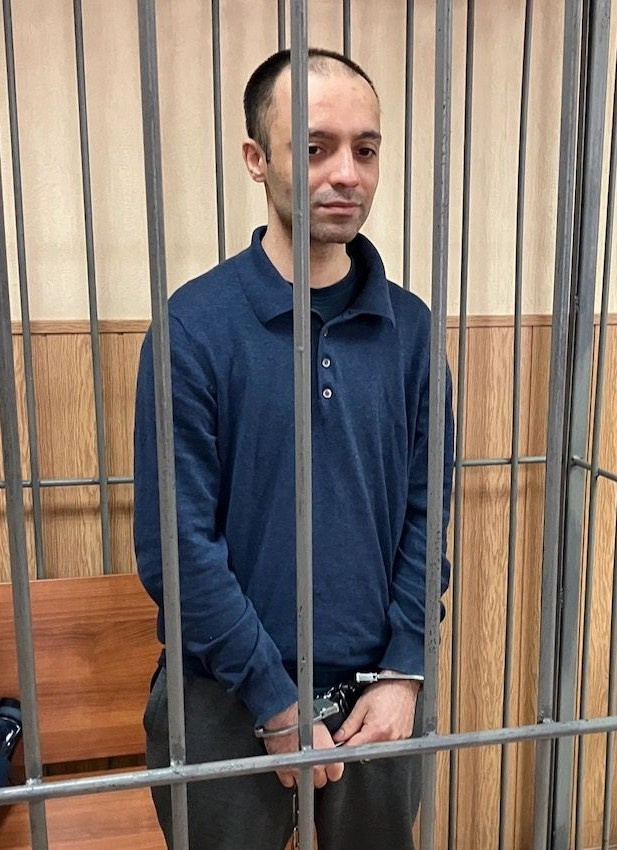


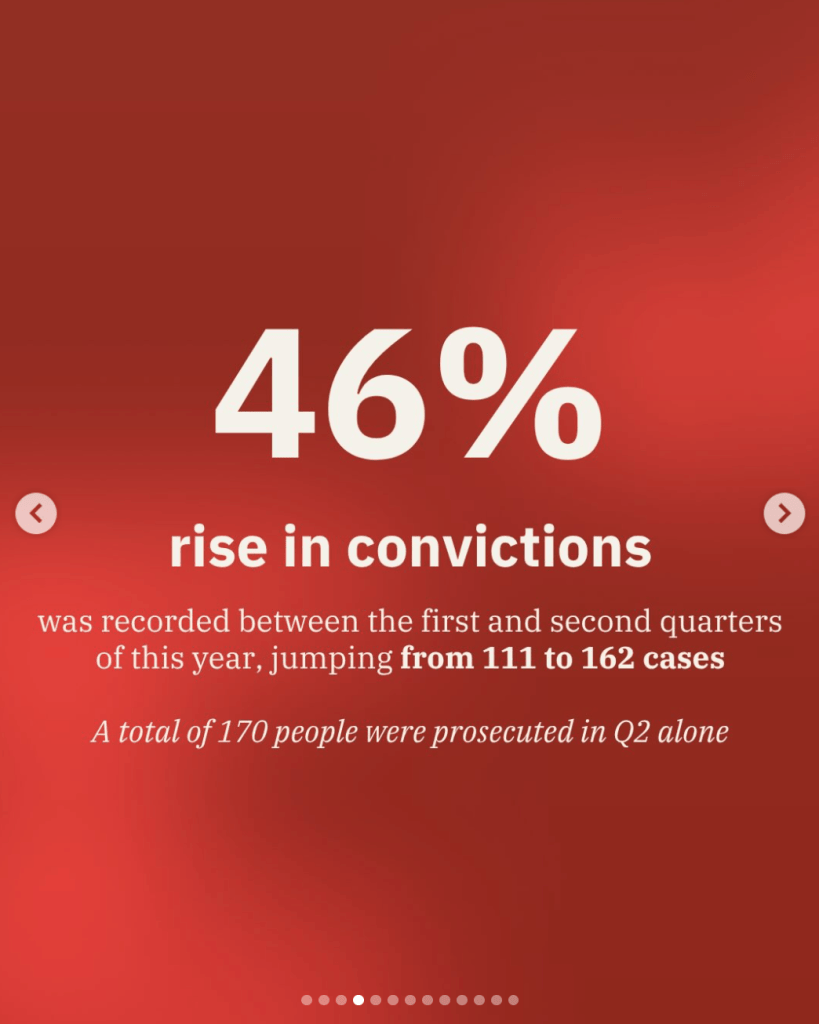

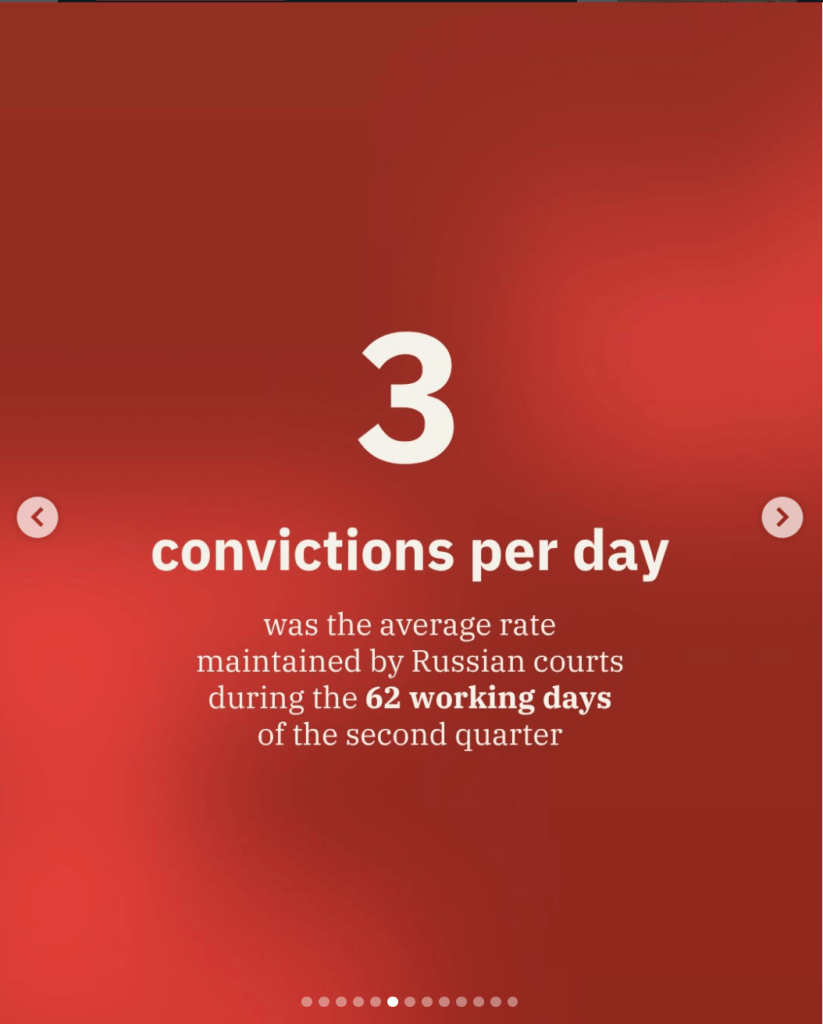

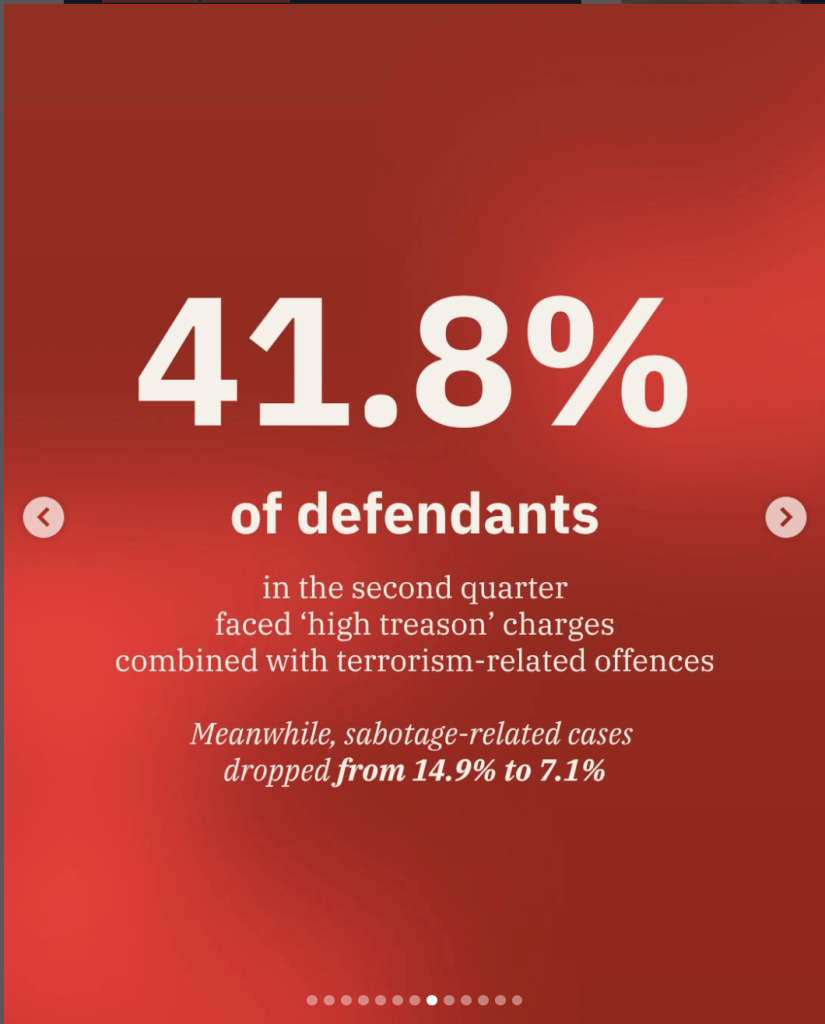
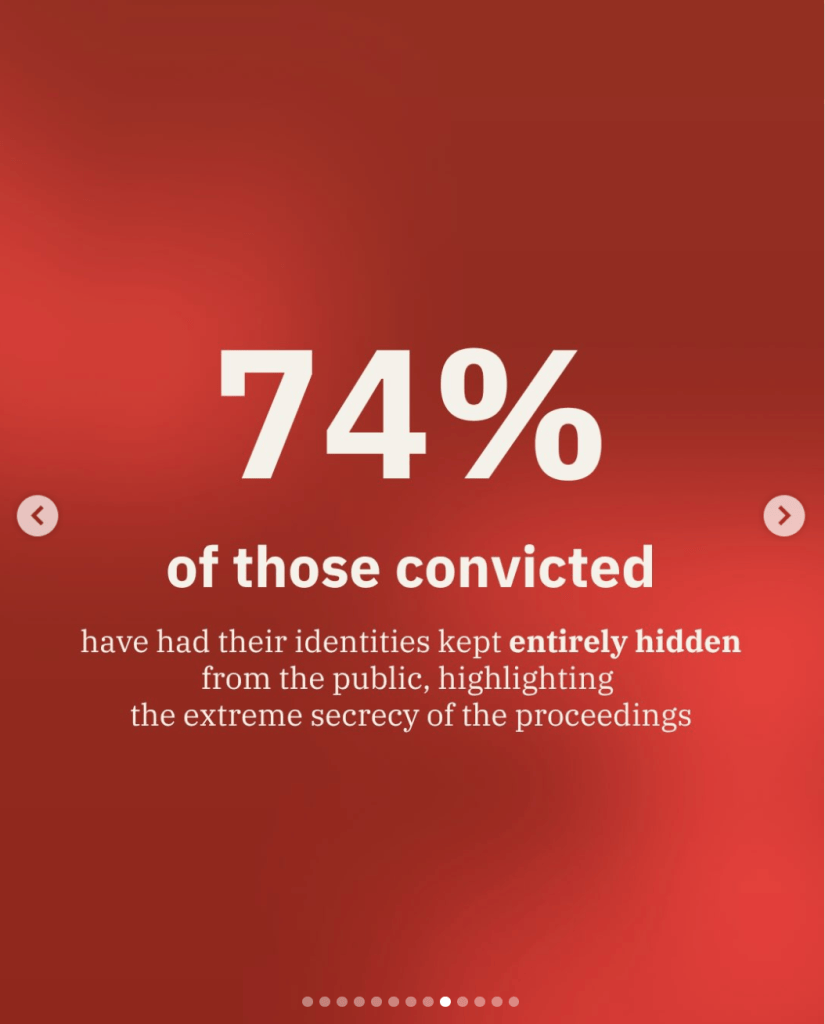


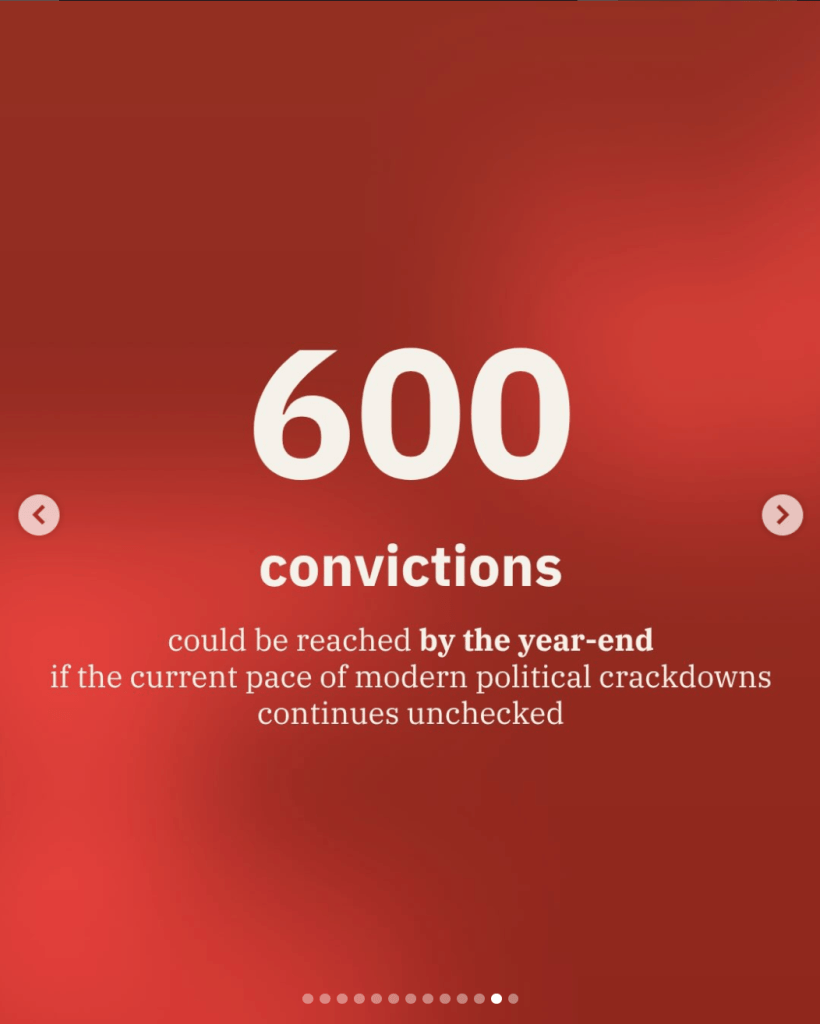

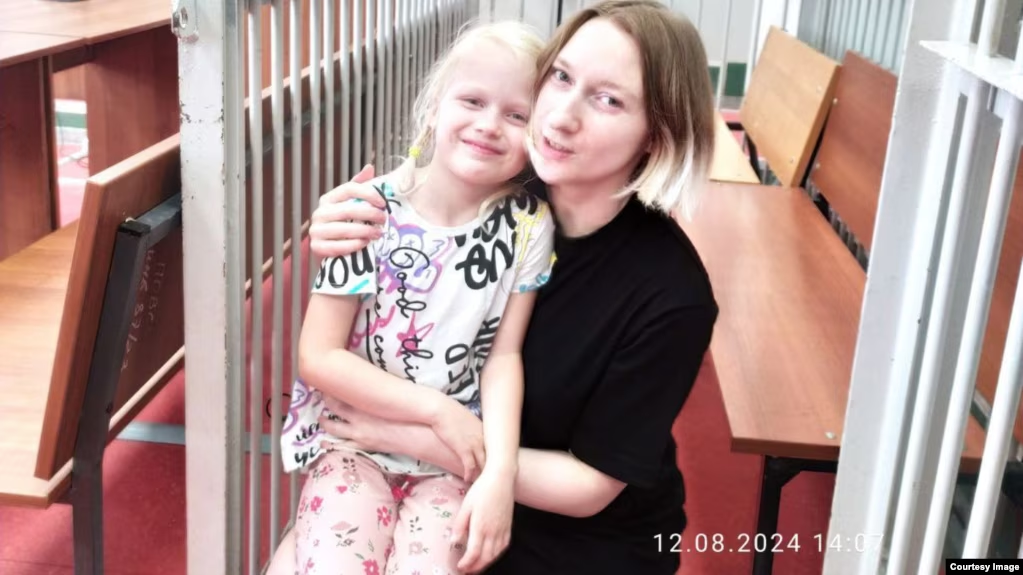

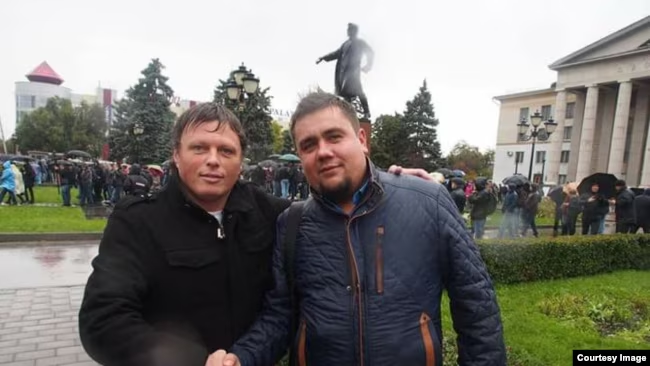
 Write to Gordey at the following address:
 You can also send letters through the online services