Timur Saifulmulyukov: “When You Start Doing Something, There Is No Fear Anymore”

On September 24, the day Putin announced a military mobilization, Timur Saifulmulyukov walked into traffic on Tomsk’s main street, maneuvering between the streams of moving cars and waving an anti-war poster. A couple of minutes later he was detained. The police confiscated the poster and drew up an arrest report, charging him with violating traffic rules and discrediting the Russian army. He talked about what prompted him to take the action, his attitude to the mobilization, and how he sees his future in Russia in an interview with Siber.Realii.

Timur Saifulmulyukov is thirty-five years old, married, with one child, and works as a fire safety and video surveillance systems installer. He had not been involved in protests before September 24.

Timur Saifulmulyukov, shouting “No war!” in downtown Tomsk on 24 September 2022

– What were you doing February 24 and how did you feel when you learned that war had broken out?

– On February 24, I didn’t know that the war had started. I overlooked it. I found out only the next day. There was nothing devious about it. I had followed the news before the war, and I saw that Russia was amassing troops. Other countries asked what was going on, and our officials dismissed their concerns. It’s always like this in Russia: you file any complaint and it gets dismissed everywhere. And just as Russia spat on the rights of its own citizens, so it spat on the rights of the citizens of Ukraine.

It wasn’t a depression that afflicted me, but a kind of apathy. A feeling of hopelessness. You feel incapable of doing anything, you don’t feel what your role is in all of this. I knew about those who disagreed with the Putin regime, I knew that criminal cases were being launched against them and that they were being imprisoned. It was an ambivalent, you know, feeling. On the one hand, you think that nothing can be done, and on the other, that something has to be done.

– And that’s why you decided to go protest using the slogans “No war!” and “Give our children a free and peaceful life”?

– I had never been involved in political protests before. But I now realized that something had to be done to support people who were more proactive than me and the people around me. I made myself a poster and chose an anti-war slogan to attract attention, but at the same time there were as few reasons [for the police] to find fault as possible. Of course I want a peaceful life to children and people in general.

– And what did you do next?

– I went to Novosobornaya Square, but I saw that the police weren’t even letting the people (who had came out to protest against the mobilization — SR) just stand there. The point of the protest was to voice our stance, but we couldn’t even stand there for two minutes. There was no effect, but there was punishment. I started looking for protesters — I thought that journalists would definitely be photographing and filming some of them. The police stopped me immediately and checked my documents. I decided that I would definitely not do anything in such circumstances. I thought about what to do and shook a little: I felt completely vulnerable.

I thought that I had to take a little break, to gather my wits about me. I walked around and looked at what was happening. It was clear that some people had already been detained. I thought it was time for me to go home, but also that I had to do something, ultimately. To overcome my fear, I went to a store to buy water and chocolates — in case I was detained. And cigarettes: I don’t smoke myself, but I thought they would come in handy in a paddy wagon or a jail cell. And then the idea occurred to me to block traffic. I wrote to my wife that I’d made up my mind and off I went.

– So your wife supported your action?

– No, she’s afraid. It’s psychologically difficult for her. We used to talk about personal responsibility for what was happening in our country. And we came to different positions: that I felt responsible, and she, maybe, felt a little responsible, but thought that nothing could be done. That she had no levers of influence, and didn’t want to risk her life. I don’t want to either, but I’ve read and watched so much about people who do things, and then are railroaded for the rest of their lives. Pressure is put on them, but they still go out and protest.

– And how do the people around you generally feel about the war?

– I think they mostly passively support it. It’s not that they hated anyone very much or believed the propaganda. But it is convenient for them to adopt the position taken by the “strongman”: it seems to them that our state now has a strong position. And whoever is stronger is right. If it occurred to them that this was abnormal, they would have to explain these contradictions to themselves. And they don’t want to take risks. If [protesters] hadn’t been at obvious risk now, more people would have come out. Many people think this way: that the effect [of protests] is zilch, but the risks are numerous.

– What were the minutes before you were detained, during which you walked in traffic, like? How did others react?

– I didn’t see any negative reactions. People were looking at me, and some of them tried to film or take pictures of me on their phone. But I was trying not to get hit by a car and attract as much attention to myself as possible.
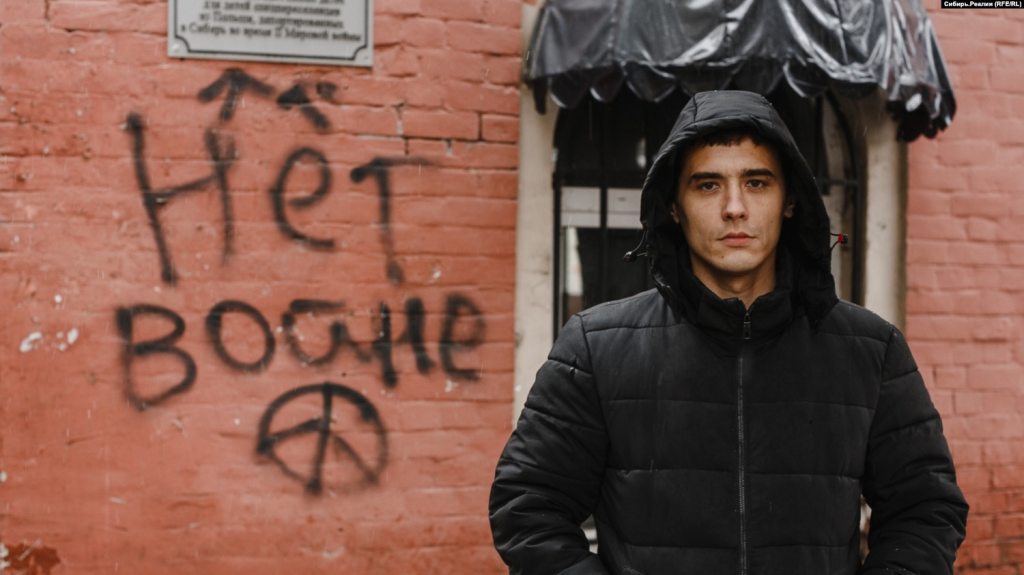
Timur Saifulmulyukov, standing in front of a wall painted with a “No war!” slogan. Courtesy of RFE/RL

– How did the police treat you?

– I was lucky that I was detained by a traffic police patrol. That’s why I didn’t sit in a paddy wagon for several hours like the other detainees. They didn’t put my hands behind my back. They put me in a car and took me to the police department. As we were driving, they were honking at everyone [to get out of the way], so I took advantage of this and showed my poster through the window. When we arrived, they confiscated my phone and started writing me up. They charged me with traffic violations, and I thought they would let me go. But then they took me to the fifth floor and made me give a statement. One person interrogated me, but two others were constantly in the room. None of them introduced themselves. When I asked for their names, they said we’d meet again and I’d find out then. They never did introduce themselves. And they constantly interrupted me.

– What they did ask you about?

– Did I make the poster myself? What time did I leave the house? Did I know about the Vesna Movement and the [local Tomsk opposition] Telegram channel Velvet Street? I had recently changed my [internal] passport, so I was also asked why I had a new passport. They asked me if I knew where the troops were, and what my attitude to the war was. I replied that this was my personal opinion, and I would not say it out loud. It’s clear what they wanted, but I tried not to talk about it.

Then I was taken to another office and given a charge sheet, this time for “discrediting.” I looked at it, but I overlooked one paragraph, which I noticed later. In this paragraph, written by a third person, it stated that I had violated Article 20.3.3 of the Administrative Offenses Code (“discrediting the Armed Forces of the Russian Federation”) and that I agreed with the charge.

– Were you scared?

– When I stepped into traffic holding the poster, it was no longer scary. When you start doing something, there is no fear anymore — there is a confidence, a willingness to do whatever it takes. It’s like they’re torturing you and torturing you, and then it doesn’t matter anymore what they do.

– You have no desire to leave Russia?

– I don’t want to go anywhere. My wife and I have already discussed this. War or no war, we’re not going anywhere.

– And if you get a [mobilization] summons?

– I’m not going to the war. I don’t want to be involved in this massacre, I don’t see the point in it. And it doesn’t matter to me if I just pushed papers instead of being directly involved in combat. Nor do I think that the majority supports the mobilization. It’s just that people don’t want to go to jail. They think that maybe it will pass. Or they hope for the best. Or a friend or a brother has been killed [in combat], so they think, What, am I going to try and dodge the draft? I’ll go get killed too.

– Wars end sooner or later. What do you think will happen then between Ukraine and Russia?

– I think that the relationship will be very difficult, because relations between countries are based on some kind of background, and the background is terrible. Something like 150 years will have to pass for a semblance of tolerance to emerge. Such things don’t fade away just like that.

– And how do you see your own future?

– I think that after holding the referendums and annexing [the occupied Ukrainian territories], they will introduce martial law. Otherwise, why all this fuss? Ukraine will not retreat and will win back its territories. And a complete mess will ensue. But I am relatively prepared for it.

Source: “‘When you start doing something, there is no fear anymore’: stepping into traffic in the name of peace,” Sibir.Realii (Radio Svoboda), 4 October 2022. Translated by the Russian Reader.


This is my 3,000th dispatch on this beat, as filed on this website, which I launched fifteen years ago, in October 2007, and its shorter-lived sister blog, Chtodelat News, which was my main venue for broadcasting news and views from the other Russias and other Russians between 2008 and 2013.

Timur Saifulmulyukov’s story, above, is a perfect example of the kind of stories about Russia and Russians that definitely weren’t getting told anywhere else in English fifteen years ago. They are told only marginally better nowadays, despite everything (mostly bad, but occasionally good) that has happened in and around Russia since then.

In one measurable way, this project has been a success. As of today, I’ve had a combined total of 1,115,195 views since October 2007, including over 180,000 this year alone so far! Would that I had a penny or two for each of those views.

If you find these stories valuable, you can support my work by sharing them on social media with friends and colleagues. You can also donate money via PayPal or Ko-Fi to help me pay overhead costs (such as internet fees, hosting charges, and online magazine subscriptions) and somehow compensate me and my guest translators for our considerable work.

This labor of love takes as much time as my paying jobs, which have become less dependable recently. I would rather continue filing dispatches on the Russian Reader as frequently as I have in the past fifteen years, but for that to happen I need much more serious financial support than I’ve enjoyed in the past. If you have solid tips about where I could seek such support, I would appreciate hearing them as well. ||| Thomas Campbell, publisher, editor, writer, researcher, and lead translator of the Russian Reader since October 23, 2007
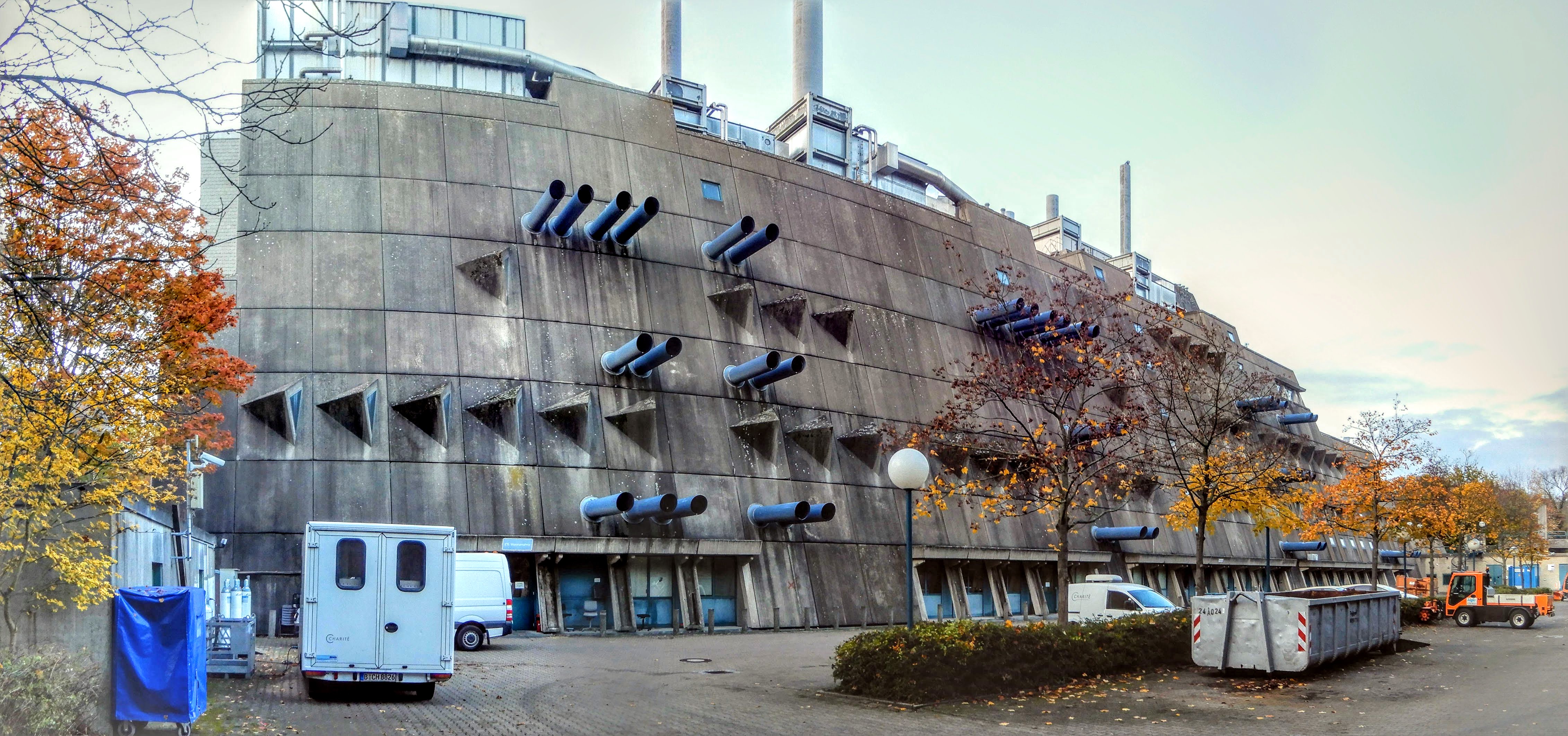
Fourteen Years Before the Mast

“I grew up really appreciating a curated journey.”
– Young pop star, “Weekend Morning Edition,” NPR, 23 October 2021

It was fourteen years ago today that I began my own “curated journey” in blogging. For my first post, I translated this little gem of paradoxical “geopolitical” thought by the artist and writer Pavel Pepperstein.

Since that day, there have been 2,945 more entries (including this one) on this website, a very long detour on Chtodelat News, which I edited and almost completely wrote for over five years, generating another 793 posts in the process, and Living in FIN, a place for my occasional forays into Finnish poetry and South Karelian living, where I’ve made an even 200 scratch marks on the wall so far. So quite soon, maybe this year even, I will have reached out to the wide world 3,000 times in this peculiar roundabout way.

Knowing that these anniversaries were around the corner, I’ve been making speeches in my head, some more structured and constructive, others more grandiloquent and sentimental. But now that one of these anniversaries has actually dawned, I don’t feel like preaching to the choir. If you’re already here, it means you get it, whatever “it” is.

That means you might want me to keep making this website. How can you help me do that?

1. Ensure a steady flow of new “Russian readers” by getting the word out via social media. Every time any of you reposts what I write here, I immediately see the number of readers double, triple, quadruple and so forth. Last year, for whatever reason, you and I were grooving on the same inner plane more often than not, and I had nearly 175,000 views at the end of it. This year, though, the reposting — and thus the influx of new readers — has seemingly dried up, so I’ll be lucky to reach a third of last year’s encouraging audience numbers.

2. Donate money to me via PayPal or Ko-Fi. In addition to paying for hosting, internet and subscriptions to the Russian independent media I read and share here in translation, I would like to be able to pay the occasional guest translator a fee as well. And, if there is money left over, even pay myself a bit. Making this website, especially the translating, is a lot of work.

3. Follow me on social media (Facebook, Telegram, Twitter, Ello, Tumblr) and repost those heads-up whenever you can, thus getting more folks hooked on this funny website and letting me know that what I do here has value for more than just me and a few other people.

Thanks for your support!

Photo and text by the Russian Reader

The 1600th: Futurama

This is my 1600th entry since I started translating and writing articles about modern Russian politics, society, economics, art and culture, history, social movements, grassroots endeavors, and everyday life on this website nearly ten years ago.

My first post, dated October 23, 2007, was a translation of an excerpt from Viktor Mazin and Pavel Pepperstein’s fantastic 2005 book The Interpretation of Dreams. Provocative and surprising as ever, Mr. Pepperstein argued that

[o]nly the interim between Soviet socialism and capitalism was ecological. It was a time of crisis: the factories stood idle, and the air became cleaner. It is a pity, but those days (the nineties) came to an end, and now (under cover of patriotic speeches) our country is becoming a colony of international capitalism. They try and persuade us this is success, but it is not true. We should (my dreams tell me, and I believe them) put our beautiful country to a different use, for example, by turning it into a colossal nature and culture reserve. (After all, our country, like Brazil, produces the most valuable thing on Earth: oxygen.) We should close the borders to foreigners (but let anyone leave as they like), carry out a program of deindustrialization, and limit the birth rate.

Shortly thereafter, I was offered the job of editing another website, Chtodelat News, where I volunteered for nearly five years, publishing 740 posts and slowly figuring out what I wanted to say with this hybrid of translation,  editorializing, and media collage, and how I could say it.

After the long stint at Chtodelat News, I revived the Russian Reader, trying to make it as pluralistic, polyphonic and, occasionally, as paradoxical as I could, while also fulfilling the brief I have tried to keep to the fore from the very beginning: covering stories about Russia which no other Anglophone media would bother with (although they thus miss tiny but vital chunks of the big picture) and giving my readers access to Russian voices they would not otherwise hear.

I had meant to celebrate my 1500th post on this beat, but that make-believe anniversary came and went without my noticing it. It was all for the best, however, since now nearly ten years have passed since I set out on this unpredictable journey.

Like the very first post on this blog, my 1600th post is a glimpse into Russia’s possible futures, as imagined by Grey Dolphin (aka Vladimir Gel’man), his fellow scribbler Grim Reminder (yours truly), Russian rappers GROT, and my friends at the Moscow Times. TRR

__________________

Russia: It Can’t Be Improved So Destroy It, or It Can’t Be Destroyed So Improve It?
Grey Dolphin
September 27, 2017

Grey Dolphin

The discussions about Russia’s prospects, currently underway among the conscious segment of Russian society, despite their public nature, in many respects resemble similar debates about the Soviet Union’s destiny, held in the kitchens of members of the intelligentsia and among politicized émigrés during the so-called stagnation. Relatively speaking, it was a debate between two parties. One party, the moderate optimists, grounded their expectations on hopes the country’s leadership would change course for one reason or another (or would itself change), and there would be a chance to change the Soviet Union for the better. (There were different opinions about what “better” meant and how to achieve it.) The other party, which included both moderate and radical pessimists, argued it was no longer possible or fundamentally impossible to improve the Soviet Union, and changes should be directed towards its total elimination. Time seemed to be on the side of the optimists, whose chances at success appeared realistic at perestroika’s outset, but in fact it was working inexorably on behalf of the pessimists. By the time the optimists seemingly got their chance, opportunities to improve the Soviet Union had largely been frittered away. History does not tolerate the subjunctive mood, and we do not know what turn events could have taken had perestroika been launched ten or fifteen years earlier. Those ten or fifteen years, however, passed only in conversations around kitchen tables, while the country’s leaders strove to prevent any change whatsoever. When the changes kicked off, the energies of both parties—the supporters of improving the Soviet Union, and the supporters of destroying the Soviet Union—had not exactly been exhaused in vain, but they had not been used very effectively.

Despite all the political and economic differences between the early 1970s and the late 2010s, the current conjuncture in Russia is not so remote from what it was then in the Soviet Union. Moderate optimists have proposed seemingly reasonable projects for improvements to the authorities and the public, but they themselves do not believe they can be realized “in this lifetime.” The moderate pessimists, if they had believed earlier in the possibility of improvement, have lost faith, while the radical pessimists never believed in improvements as a matter of principle. The optimists are waiting to see whether they will get the chance to improve at least something (and if so, when), while the pessimists are ready at a moment’s notice to exclaim, “Lord, let it burn!” For better or worse, however, so far there are no obvious “arsonists” in the vicinity who could and would want to demolish the current Russian political and economic order nor have any appeared on the distant horizon. Once again, as during the stagnation, time inexorably works on behalf of the pessimists. Sooner or later, yet another former optimist or, on the contrary, a person not involved in these debates will say something like, “Today’s Russia cannot be improved. It can only be destroyed.” (Essentially, this was what happened in the Soviet Union towards the end of perestroika. Of course, there were a different set of causes and other mechanisms in play then. What I have in mind is the rationale of transformation itself.) If and when the number of people supporting the verdict “destroy” reaches a critical mass, then the first of the questions posed in my post’s title will irreversibly be answered in the affirmative, occluding the second question altogether. The more news about events in Russia transpires every day, the more inevitable this outcome seems.

Translated by the Russian Reader

___________________________

GROT, “Fire”
If God wants to punish a man, He strips him of his reason.
I often think the whole country has been punished.
As in a fantasy story, I can see a light glowing over people’s heads.
This is not a sign of holiness.
It is a sign of moral decay,
Decay of beliefs, principles, and ideas.
The nostrils are already used to the rotting smell,
And there are cadaver spots on the faces of children and adults.
Self-destruction at the mental level,
The nation jumps into the abyss with a cry of “Keep off me!”
We will soon go extinct like the mammoths.
Young mothers with Jaguars and Parliaments.
People will have coming to them the trouble they stir up
Everyone will be punished according to their whims.

Fire!
Will purify gold from impurities.
Fire!
Those who believe in the truth will stand their ground.
Fire!
Will purify gold from impurities.
Fire!
Those who believe in the truth will stand their ground.

An ancient serpent lashes the sky with a crimson tongue,
Its breath ripples over the television networks.
Through TV screens it animates the golem and generates ghosts.
In the skulls of those who ate their souls
And vomited them out indifferently with counterfeit vodka
In the snow in winter or summer in the dust.
Two abused dudes filmed it on a mobile.
Look online, search for the tags “degenerates,” “masturbate,”
“Suck,” “come,” “sex with babies.”
I’m waiting for the last fire, but you better run.
Nothing can be fixed here now. Lord, let it burn!

Fire!
Will purify gold from impurities.
Fire!
Those who believe in the truth will stand their ground.

Source: rap-text.ru

Translated by the Russian Reader

___________________________

Russia could ban Facebook next year if it fails to comply with a 2015 law requiring companies to store Russian citizens’ personal data on local servers, the state media censor said on Tuesday.

The U.S. social network would follow in the footsteps of LinkedIn, the social platform for professionals that was banned in Russia last year after a September 2015 law requiring companies to store Russian users’ personal data on localized servers.

The head of Russia’s state media watchdog Roskomnadzor warned that “there are no exceptions” to compliance with the data storage law seen by some observers as unenforceable.

“We will either ensure that the law is implemented, or the company will cease to work in Russia,” Roskomnadzor chief Alexander Zharov was cited as saying by the Interfax news agency.

He said the watchdog is aware of Facebook’s popularity, with an estimated 14.4 million monthly and 6 million daily users in Russia as of last year.

“On the other hand, we understand that this is not a unique service. There are other social networks.”

Twitter, Zharov said, has agreed to transfer by mid-2018 its Russian users’ data to Russian servers.

“We have no plans to investigate Facebook in that regard until the end of 2017,” he added. “We will think about it in 2018. Maybe we will investigate.”

[…]

________________________


Grim Reminder

There are no technical or legal justifications for banning Facebook in 2018, only political considerations. The principal political consideration would be the need to find ways of “celebrating” Putin’s auto-reinstallation as president for “another six-year term” (i.e., for life).

As a tyrant who brooks no opposition to his illegimate rule, Putin would have to celebrate his hollow victory by instituting a series of crackdowns against his foes, as he did after formally returning to the presidency in 2012.

One of these crackdowns could involve banning Facebook in Russia, as is strongly suggested by the article I have quoted, above.

But that would be the least of everyone’s worries once Putin essentially crowned himself tsar as a gift to himself for his stunningly bad performance as the country’s leader for eighteen years.

Since his entire reign has orbited not around solving the country’s problems, but around imbricating himself and his clique of “former” KGB officers into every corporate and institutional nook and cranny in Russia (and beyond) while stealing everything he can get his hands on and rewarding his satraps with the booty “for a job well done,” he has not had much time to solve any real problems.

Hence the constant need to designate enemies and cripple, vanquish, jail, disappear or murder them, be they Facebook, Jehovah’s Witnesses or Boris Nemtsov.

Anyone who does not explicitly support Putin—and by definition only members of his clique really support him, in the sense that members of a mafia clan are loyal to their boss—is de facto opposed to him.

This might be especially true during the upcoming election, because, I would imagine, the majority of Russian voters are, at very least, quite weary of Putin and his oppositionless electoral “victories” by now and would be inclined to stay home on election day, even if they are not willing to march in the streets. (That might require too much effort.)

But a low turnout would still be a slap in the face to a man whose whole schtick the last eighteen years or so has been his alleged “wild” popularity, a schtick supported by the mainstream Russian press, corrupt Russian pollsters, foreign media covering Russia, and “Russia experts,” most of whom have no other gauge for measuring or probing “Russian public opinion,” so they rely on rigged, astronomically high popularity ratings.

If something around ten percent of voters in the two capitals (Moscow and Petersburg) and the non-ethnic regions showed up on polling day, the myth of Putin’s popularity would be dealt a near-fatal blow.

Putin would take his humiliation out on his treacherous non-constituency by unleashing a panoply of crackdowns, adopting a whole new raft of repressive laws at lightning speed, as happened in the wake of his 2012 re-election, and, perhaps, arresting a prominent figure from the opposition, such as Alexei Navalny, sending him down for hard time. Or worse.

Author photos courtesy of cetacea.ru and the Russian Reader

This Is Hell

Kolomenskaya Street, Petersburg, July 6, 2017. Photo by the Russian Reader

Here’s a sunny existential question for a Sunday morning.

How can it be claimed that a person sees events “through Russian eyes” if that person is not Russian is any sense of the word, has not set foot in the country for years, has not lived in the country for years at a time, and garners their knowledge of the country and its politics only from the sources available to everyone else who doesn’t actually live in Russia, namely, the media?

And yet cutting-edge radio program This Is Hell! claims to have found just such a person for its latest broadcast.

I would very much encourage you all to listen to the program. My blog, the Russian Reader, is meant as an antidote to the casual Orientalism of almost everything uttered by hegemonic or would-be hegemonic American mouths when it comes to Russia, whether those voices aspire to be liberal or leftist, Russophilic or Russophobic.

And while you’re listening to the new edition of This Is Hell!, keep in mind that, over the past month or so, I’ve been seriously contemplating sending the Russian Reader on permanent hiatus (like its predecessor Chtodelat News, which died a cold, hard death because it was emphatically not supported by the group it nominally represented).

After a year in which I saw a steady and welcome rise in the number of readers on this website, my stats have dropped precipitously in the last two months, even though I have been trying, as always, to see events in Russia through the eyes of Russians, although I’m not Russian in any way and would never have the chutzpah to claim to be Russian, much less have “Russian eyes.”

My method has always to been to “collage,” as I like to put it, numerous and wildly different Russian points of view on what I think are the key topics in modern Russian politics, economics, society, and culture. I have done this by translating the words of hundreds of courageous, thoughtful and very different Russians, almost all of them in the thick of the events they describe and analyze in the magazine and newspaper articles, essays, Facebook posts, and informal reflections that make up most of what I publish on the Russian Reader.

The other five percent of the Russian Reader is given over to my satirical ruminations and, once in a while, serious editorials. I have never claimed they represent “a” or “the” Russian point of view since, I repeat, I am not Russian in any sense of the word.

I’ve been doing this for almost ten years now with no financial support and, if truth be told, very little other real support from anyone else. Yet I have been told by a fair number of smart and even influential people whose opinion I respect that my blog is invaluable and unique and needs to keep chugging along.

Maybe that is so, but if no one is reading it, quoting it, and especially sharing the articles published here with colleagues, friends, and opponents, there really is no point in going on with this.

It’s been a lot of work. Hard work should be rewarded in some way. Stony silence and precipitously falling numbers are not a reward for invaluable, unique work no one else is doing.

If you would not like to see the website go into a permanent coma, especially if you’re willing to support the Russian Reader in a meaningful way (one of the best ways is volunteering to translate things I could publish), let me know either in the comments under this post or via the email address listed in the left margin of this website.

Thanks for listening to my gripes. With any luck, we can get the site back on track in short order, but that will happen only if I hear a more or less loud mandate from you, my mostly anonymous and silent Russian readers. TRR