
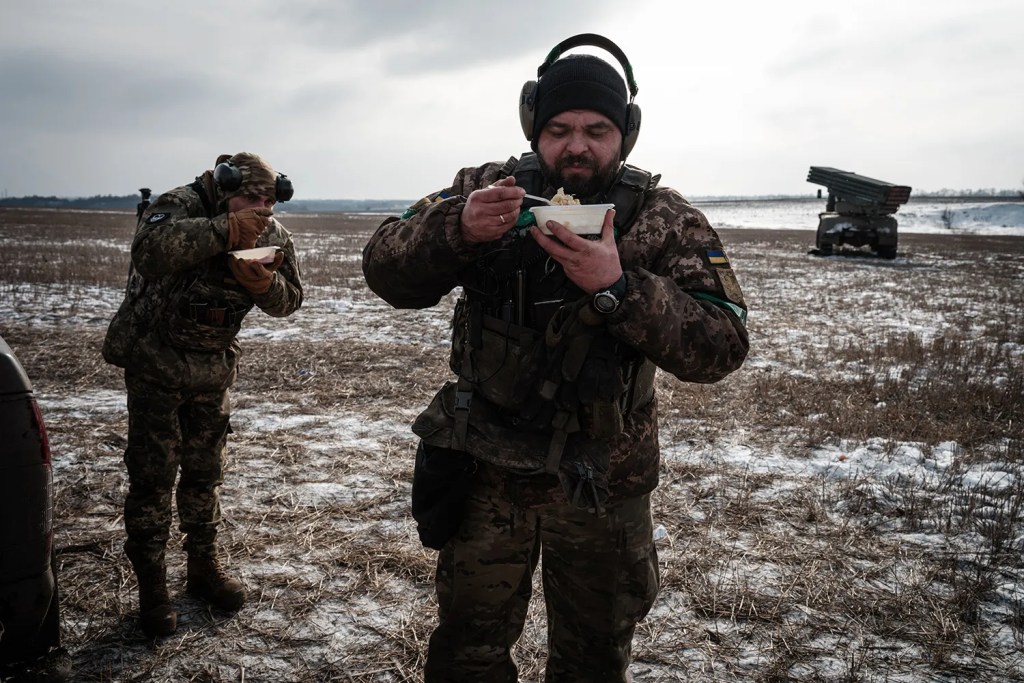
Photo: Yasuyoshi Chiba/AFP/Getty Images
At the entrance of Inshi Cafe in downtown Lviv, Ukraine, stood a full-size cardboard likeness of the country’s best-known chef, Yevhen Klopotenko. In immaculate kitchen whites, the 39-year-old was immediately recognizable by his handlebar mustache and eccentric coif: the right side of his head shaved close, with an unruly mop of curls thrown over his left ear. This is an updated take on the hair art of the ancient Ukrainian Cossacks, a nomadic warrior people central to Ukrainian identity. Likewise, Klopotenko seeks to modernize traditional Ukrainian cuisine, especially borsch, a beet-based soup that, he claims, is as Ukrainian as the Cassocks themselves.
“Sure, there’s borsch in other countries in Eastern Europe,” Klopotenko, who co-owns Inshi—which he closed a month ago—and another restaurant in Kyiv, explained in a phone interview. But, he went on to say, nowhere is borsch (the preferred Ukrainian spelling [sic]) so variegated and central to a country’s diet and culture as in Ukraine.
Klopotenko, widely considered Ukraine’s borsch aficionado, has turned the dish into his life’s work. In 2022, when Russia’s full-scale invasion captured one-sixth of Ukraine, Klopotenko raced to fast-track the process of enshrining Ukrainian borsch-making on UNESCO’s list of cultural heritage in urgent need of safeguarding. To help establish the dish’s distinct national roots, Klopotenko co-founded the Institute of Culture of Ukraine, which collected over 700 pages of evidence, including recipes and historical records from across the country. Borsch was inscribed on the UNESCO list that July.
Klopotenko’s field research is explicitly political: He strives to reconnect Ukrainians with their ancestors, building on the national renaissance that took off with independence in 1991 and was turbocharged by the Russian invasions. He wants to show that Ukraine is a full-fledged nation with deep roots and age-old traditions—in stark contrast to Russian President Vladimir Putin’s fiction that Ukrainians are really Russians, and thus a legitimate target of reconquest. For Klopotenko and many other Ukrainians, the country’s borschs are a critical element in the complex cultural tapestry that constitutes national identity.
Likes its kaleidoscope of borschs, the country of Ukraine is a patchwork of different traditions. Ukraine is made up of Jews, Hungarians, Roma, Tatars, Moldovans, and, yes, Russians, among others. Many speak in other languages at home and seamlessly switch to Ukrainian in public. Regionally, Ukraine is also a smorgasbord: Its constituent territories were for centuries divided among the Russian, Austrian, Mongolian, and Polish empires, as well as other foreign lords.
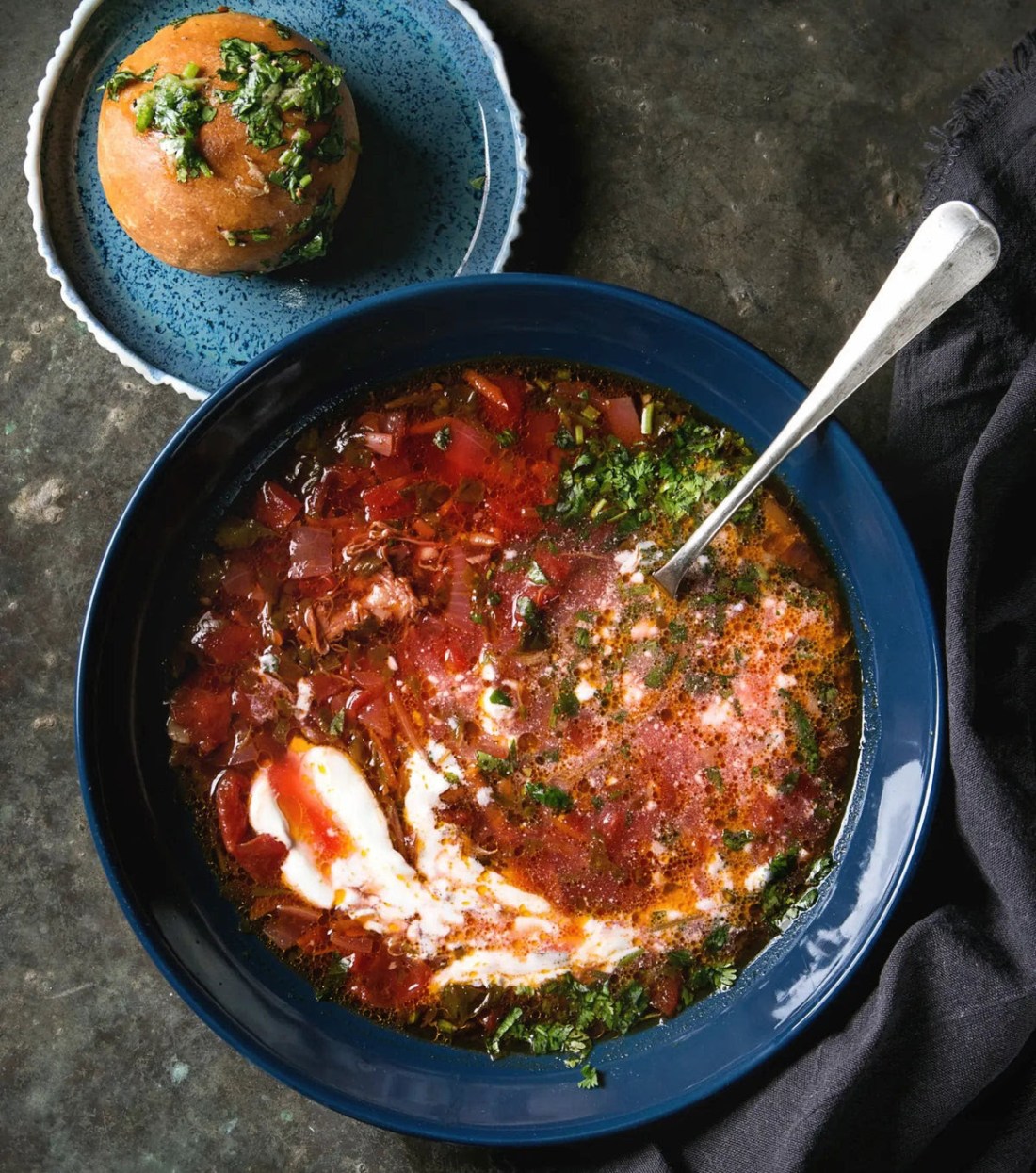
But borsch, whose name comes from the Slavic word for beet, is a passion of all stripes of Ukrainians. Most borschs today include some combination of beets, cabbage, onions, carrots, potatoes, tomatoes, and broth. The first thing that strikes one, even before a bowl is in sight, is the soup’s earthy, tangy fragrance, often accentuated by fresh dill. Its audacious color usually (but not always) takes on a spectrum of vibrant reds and deep purples. The spectacular sweet-and-sour tango that borsch performs on your taste buds is the juxtaposition of its core ingredient, beet kvass—a fermented juice made by soaking beets for days—and the sweetness of the tomatoes. A fulsome dollop of sour cream on top balances the acidic and savory flavors.
Ingredients beyond the basics vary widely, which one learns quickly after striking out to explore Ukraine’s culinary landscape. Central Ukraine, around the historical [Cossack] city of Poltava, boasts a classic Ukrainian borsch: The broth can be beef-, pork-, or poultry-based, with generous chucks of smoked rib meat floating in a bouquet of root veggies. A home-style variation includes halushky, or small dumplings, that swim in the broth.
Central Ukraine is probably where borsch made its debut about a thousand years ago, according to the research of the Institute of Culture of Ukraine, one of the many until-now-unknown facts about the dish. It did not have the name “borsch,” and this was long before the likes of tomatoes or even potatoes appeared in European gardens. The earliest first known written mention of the word borsch dates to the 16th century, concocted out of fermented sorrel and wild grasses, notably hogweed. The borsch Ukrainians know today, Klopotenko said, hails back about two centuries. Ivan Kotliarevsky’s 1798 “Eneida,” a mock-heroic poem considered the first piece of literature published entirely in Ukrainian, mentions various traditional Ukrainian dishes consumed by Cossacks and Ukrainian peasants, including borsch.
In northwestern Ukraine’s Volyn region, along the Polish borderlands, borsch is sometimes cooked with the blood of wild boars. To the south, along the Hungarian border, ethnic Magyars spice up the dish with smoked paprika (a staple of many Hungarian dishes) created by roasting red peppers over a fire. In eastern Ukraine, borsch is often so thick that a spoon can stand up in the dark red stew. And, along the Black Sea, borsch can boast fish rather than meat, Klopotenko said.
Klopotenko’s restaurant in Lviv offered four kinds of borsch, including one flavored with red wine and another that contains wild mushrooms. His signature borsch is known for its smoky, rich flavor and features baked beets, plums, and smoked sour cream. (It also includes pork ribs, but all of his borschs also come in vegetarian versions, a rare courtesy in Ukraine.) But a locality’s truest borsch, Klopotenko said, is served in homes. His mother’s recipe was incomplete without pork ribs, celery root, and smoked dried pears.
Klopotenko contends that Russia’s occupation of Ukrainian territories and the displacement of Ukrainians there threaten the survival of gastronomical traditions. Indeed, many experts, including those from Human Rights Watch, say that Russia targets cultural heritage in a deliberate strategy to erase Ukrainian nationhood and rewrite regional history. In Moscow’s thoroughgoing Russification of the occupied territories, everything Ukrainian—language, symbols, history—is snuffed out or labeled as Russian, including culinary staples.
On the Azov Sea, where all Ukrainian port cities are in Russian hands, Mariupol-style borsch traditionally features sprats, gobies, or other fresh fish. The local bychky (similar to dumplings) are pan-fried and then dropped into the broth shortly before the dish is served. Mariupol was occupied by Russia in 2022 and “cleansed” of Ukrainian culture, including gastronomy, so it’s unclear how common the dish is today. It isn’t that specific types of borsch were literally made illegal to prepare, but rather that the occupying forces erased the variety and identity of Ukrainian food, replacing it with monolithic Russian fare. Sure, Russians eat borsch, too, Klotopenko said, but with nothing of the Ukrainian flair.
Whether Crimean Tatars, also under Russian occupation, still cook borsch in massive kettles and with slabs of roasted lamb and ample coriander, is unknown. There are simply many fewer Tartars there than were in 2014, when Russia annexed the peninsula. Since then, hundreds of thousands of ethnic Russians have moved into Crimea, substantially altering its culture. Crimea is a Russian police state, and there is little truck between the peninsula and free Ukraine. But Crimean-style borsch can still be found in the homes of Tatars who have left Crimea. Around 25,000 Tatars relocated from Crimea to mainland Ukraine after 2014. Today, community groups preserve their culture in exile, convinced that they will return one day to a Ukrainian Crimea.
Russia’s onslaught continues to threaten the cultural fabric of the eastern parts of Ukraine, including the factory city of Dnipro, which boasts a tightly knit community of Ashkenazi Jews. Their borsch is pink, lighter than most variations of the dish, and of course, kosher: no pork, with cows and sheep slaughtered according to ritual. For now, at least, two restaurants at the community’s Menorah Center in downtown Dnipro serve kosher borsch; lemon juice replaces kvass, celery root replaces cabbage. The broth is simmered for four to five hours to induce a rich, concentrated taste. And it is almost always served with out-of-the-oven pampushka: soft white buns smothered in garlic butter. Ukrainian President Volodymyr Zelensky, who is Jewish and was born in Kryvyi Rih, the next city over from Dnipro, probably grew up with a borsch like this.
On the other side of Ukraine, roughly 500 miles to the west, the people of the Carpathian Mountains, who live along the Romanian border, raise their children on white borsch, concocted with fermented white sugar beets and pork, seasoned with dill, parsley, and green onions. This is the favored meal of the Hutsuls, an eastern Slavic people descended from shepherds.
Last December, my Hutsul friend invited me into the homestead of the Makivnychuk family in Verkhovyna, a Carpathian town considered a Hutsul stronghold. There I was honored to attend a 12-course Christmas Eve dinner. The family borsch—cooked on a wood stove and served in candlelight because the Russians had knocked out the electricity—is a marker of identity. Marie Makivnychuk can trace her recipe back six generations, to a time when mountain folk ate what grew on their rock-strewn slopes. White beetroot grows best in the mountain’s cool climate.
Most Ukrainians, Kletopenko said, are aware that borsch is not uniform across the country, but they’re oblivious to the universe of borschs and the rich, historic backstories. And why should they bother, when their mother’s borsch is the most wonderful of all?
SOURCE: Paul Hockenos, “The Battle for Borsch,” Foreign Policy, 17 July 2026
This is Yana Boretska, Operations Manager for the Kyiv Independent Store. So many of you have asked us for a Ukrainian borshch recipe, so here it is at last — my family recipe, the one I make for my family, my friends, and sometimes simply for my own enjoyment.
In 2022, the culture of Ukrainian borshch cooking was added to UNESCO’s List of Intangible Cultural Heritage in Need of Urgent Safeguarding, recognizing its importance as a part of Ukrainian cultural heritage. At the Kyiv Independent, we celebrate the dish with our Borshch collection, which features the ingredients of borshch illustrated by Ukrainian illustrator Albina Kolesnichenko on T-shirts, sweatshirts, aprons, and tote bags.

Ingredients
For the broth:
- 1-1.5 lbs. (500g-700g) beef on the bone
- 1-2 bay leaves
For the borshch:
- 0.5-1 lb (300-500g) boneless beef
- 1 onion, diced
- 1 carrot, grated or julienned
- 2 medium red beets, grated or finely chopped
- 2 tbsp tomato puree (or 3–4 fresh tomatoes)
- 1 tsp sugar
- 1 tsp vinegar or lemon juice
- 3-4 potatoes, diced
- 11oz (300g) cabbage, shredded
- 2-4 cloves of garlic, finely chopped
- Fresh dill and parsley, finely chopped
Serves 6-8
Preparation time 2-3 hours
Secret ingredient: Make it in our borshch apron!
Method
First, make the broth. Put the beef on the bone in a large pot and cover with about 4-5 pints (2.5–3 liters) of cold water. Bring to a boil and carefully skim off any foam that rises to the surface. Add the bay leaves and a little salt, then reduce the heat to low and simmer gently for 60–90 minutes, partially covered, until the broth becomes rich and flavorful.
While the broth is cooking, cut the boneless beef into medium-sized pieces. Heat a little oil in a large frying pan or heavy-bottomed skillet over medium-high heat. Add the beef and sear it well, stirring occasionally, for approximately 25–30 minutes, until it has a deep golden-brown crust. Once browned, set the beef aside.
Add a little more oil to the pan. Add the diced onion and cook for 4-5 minutes, until softened, then add the carrot and cook for another 3-4 minutes. Add the beets, and cook for 5-7 minutes, stirring regularly. Then, add the tomato paste, a small amount of water or broth, the sugar, and vinegar or lemon juice, and simmer everything together for another 5-7 minutes. Set aside.
When the broth is done, remove the beef on the bone from the broth. The meat can be removed from the bone, cut into pieces, and returned to the broth if you want.
Bring the broth back to a gentle simmer, add the fried beef, and cook for 5-10 minutes. Then add the potatoes and cook for another 10 minutes or so. Add the shredded cabbage and cook for another 5-7 minutes, depending on how soft you like it.
Add the sautéed vegetables to the pot, stir well, and simmer for another 8-10 minutes. Season with salt and black pepper to taste. Avoid a very aggressive boil— a gentle simmer helps preserve the beets’ beautiful red color.
In the last couple of minutes, add the garlic and fresh herbs. Turn off the heat and taste the borshch — adjust the salt, pepper, sugar, and vinegar/lemon juice if necessary.
Cover the pot and let the borshch rest for at least 30 minutes before serving, an hour if possible.
To serve
This is the most important part. Serve the borshch hot with a generous spoonful of sour cream directly in the bowl. Sour cream adds creamy richness and perfectly balances the acidity of the beets and tomato.
Finish with fresh dill and parsley, and with bread on the side — garlic bread works well. And to really go all out, why not wear a Borshch T-shirt while you eat?

(Photo by: Natasha Breen/REDA/Universal Images Group/Getty Images)
For me, borshch has always been about that feeling of home, warmth, and comfort. It carries a taste of Ukraine that is incredibly difficult to forget.
If you decide to try my version of borshch, I would genuinely love to hear how it turns out! If you have any questions while making it, simply reply to this email (<store@kyivindependent.com>), and I’ll be happy to answer personally and help with any details.
With love from Kyiv,
Yana, Operations Manager, The Kyiv Independent Store
SOURCE: “The recipe you’ve been waiting for: traditional Ukrainian borshch,” Kyiv Independent Store email newsletter, 5 November 2026. I just ordered a Kyiv Independent borshch apron and tote bag to go along with the Kyiv Independent borshch t-shirt which I’ve been wearing proudly the last few years. ||||| TRR
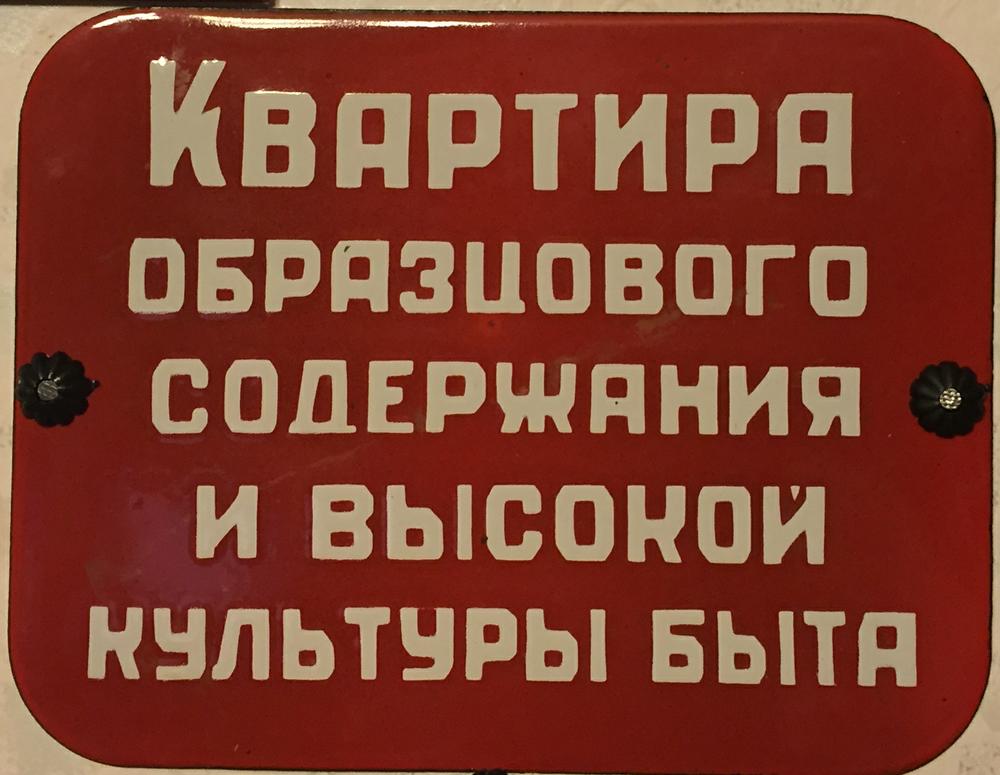 “Ideally maintained apartment and refined household.” Photo courtesy of