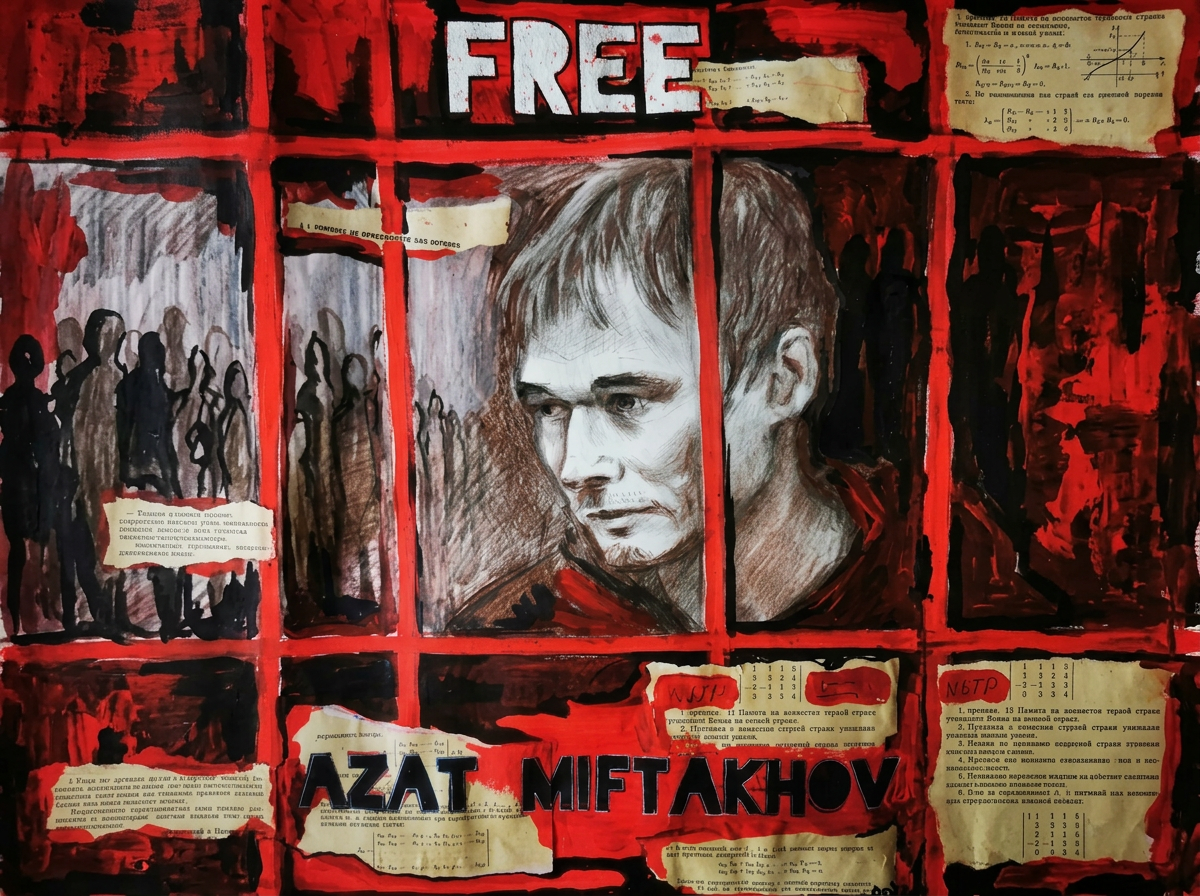
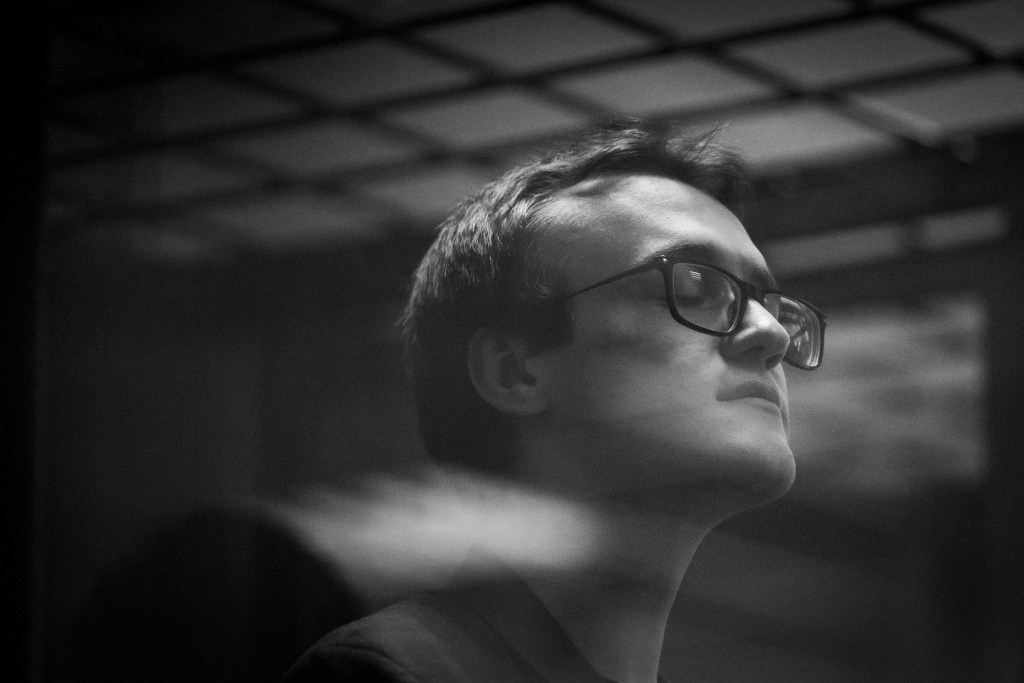
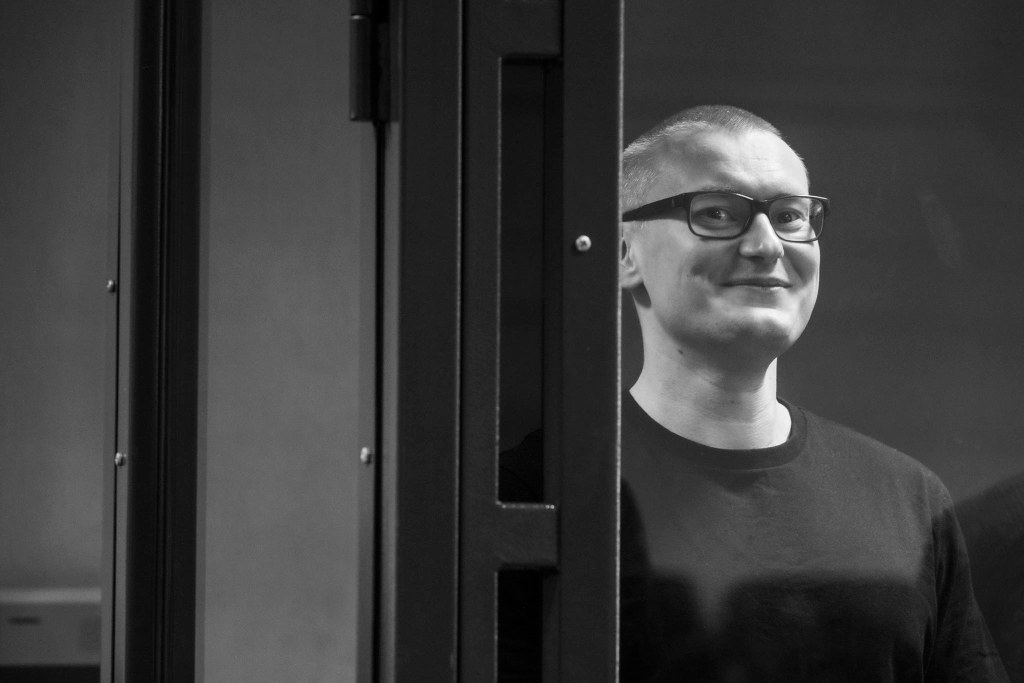
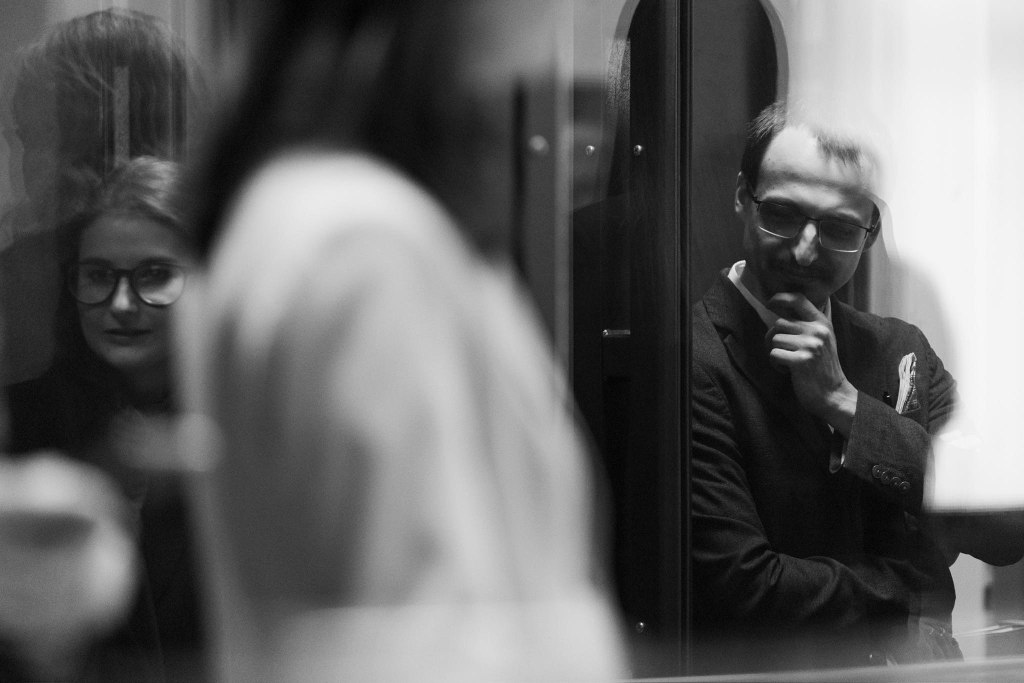
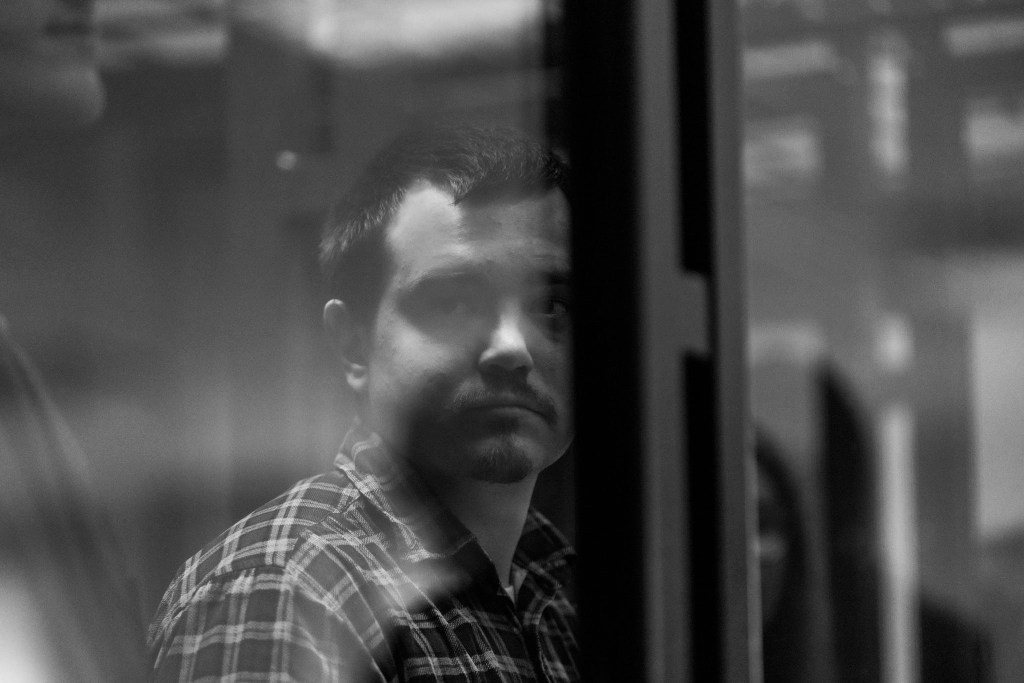
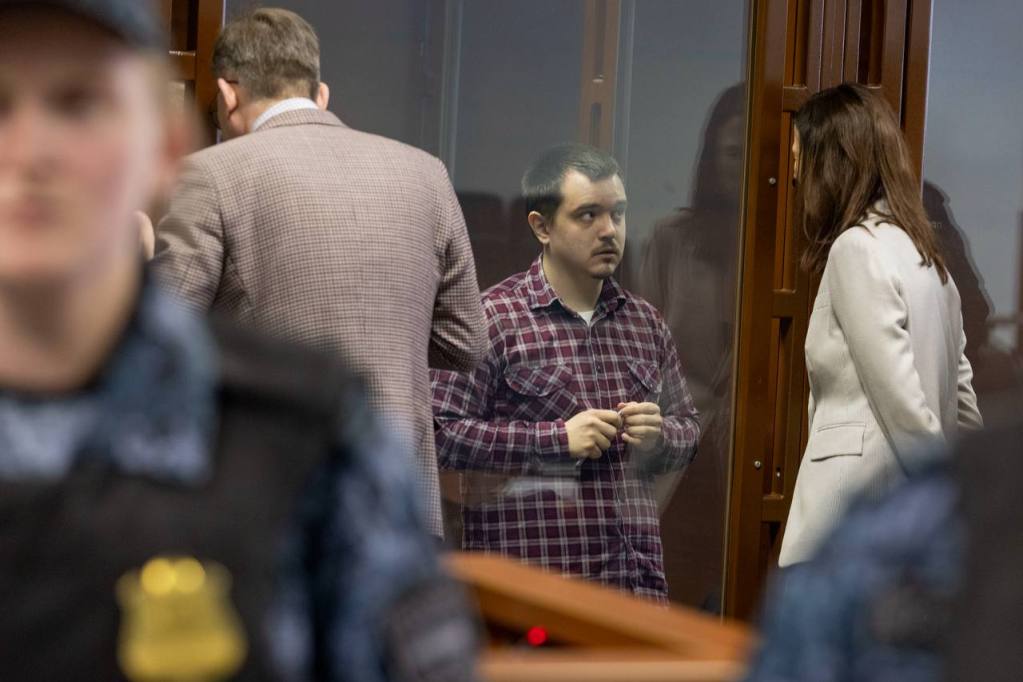
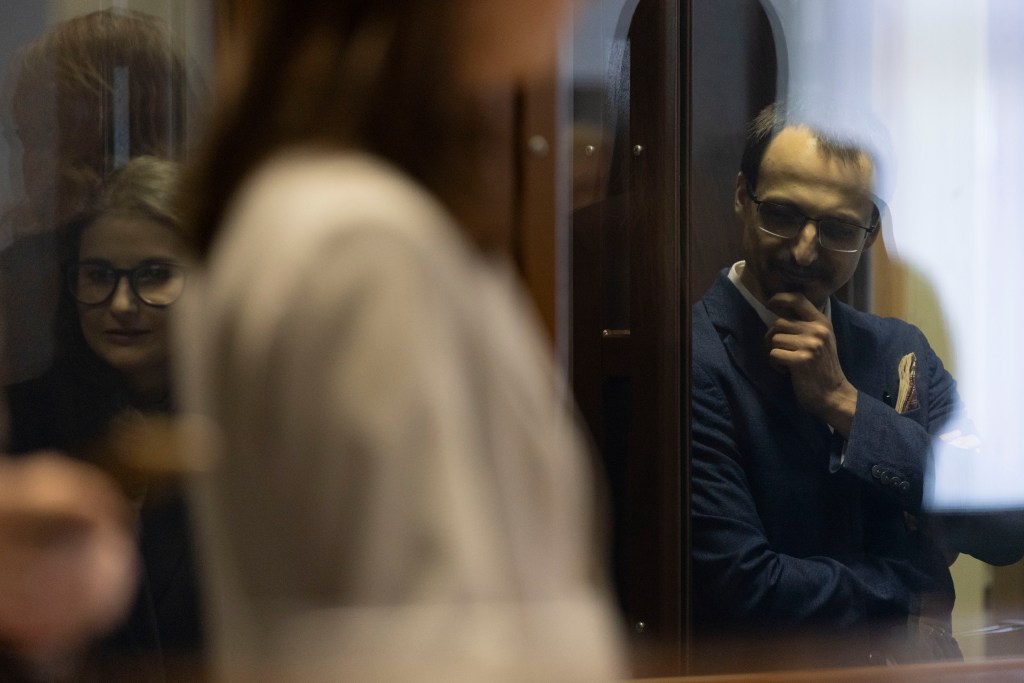
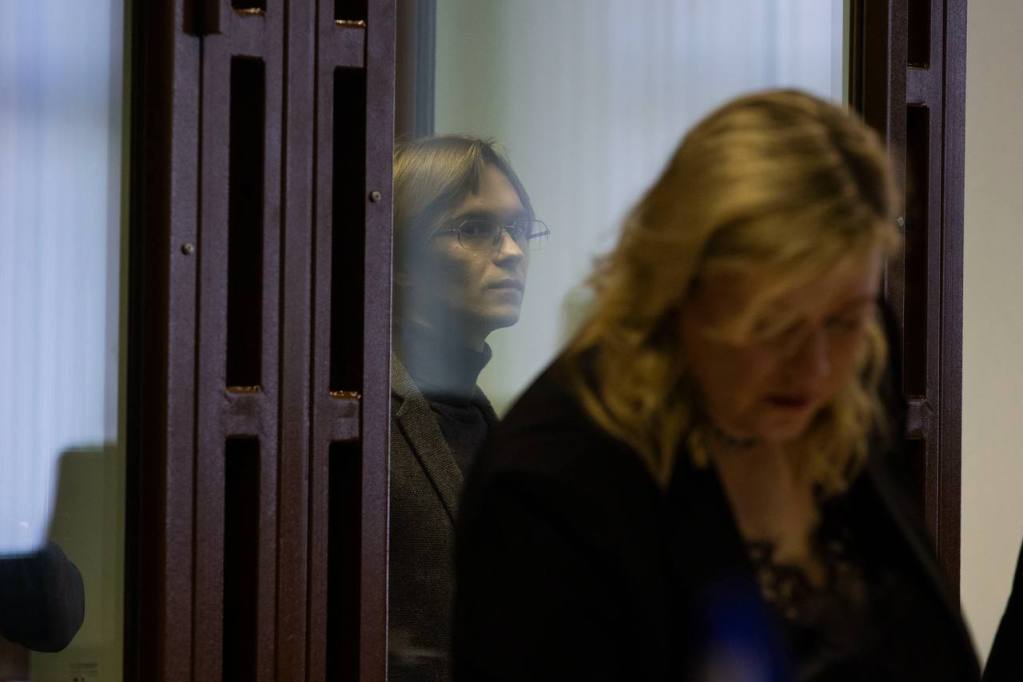
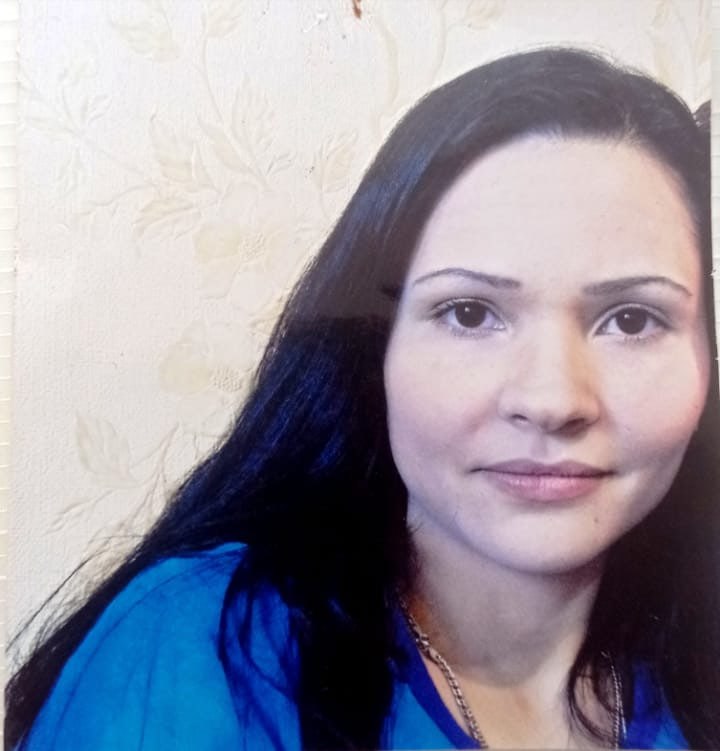
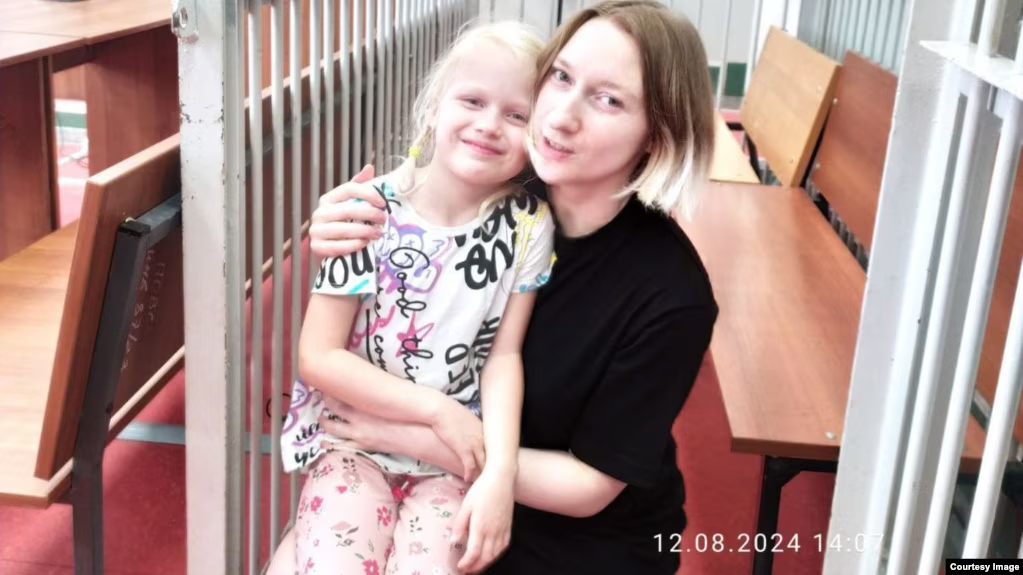
Azat Miftakhov is being transferred to the colony where Alexei Navalny was murdered
Anarchist, mathematician, and political prisoner Azat Miftakhov was sentenced on March 28, 2024, to 4 additional years in prison. On September 4, 2023, he was detained upon leaving IK-17 [Correctional Colony No. 17] in Omutninsk, Kirov region, where he had already served his first sentence—allegedly for breaking a window at a United Russia office in Moscow’s Khovrino district. The basis for the new prosecution for “justifying terrorism” was (allegedly) comments Azat made while watching a TV program with other inmates about anarchist Mikhail Zhlobitsky, who carried out an explosion at the FSB office in Arkhangelsk. Testimony against Azat was given by fellow prisoners and a prison employee.
Recently, the political prisoner was transferred from a prison in Dimitrovgrad, Ulyanovsk region. In a letter dated April 19, Azat reported on his transfer from Kirov to Vorkuta:
“I’m writing to you from Vorkuta. And as you understand, I’m heading to Kharp. I think no further comments are needed.
“Two days on the train have worn me out quite a bit. The toilet—once every 4 hours, hot water—three times a day, there’s no room to turn around in the compartments, my bones ache from constantly lying on a hard bunk and the shaking of the train. So the stop in Vorkuta is very welcome. Tomorrow morning we depart, and we’ll arrive in Kharp the same day. It seems I’ll go straight from the train to the camp without intermediate stops (apparently there are no detention centers there).”
The prisoner’s support group comment[ed] on this news:
“It is quite obvious that transferring Azat to Kharp is nothing other than a desire to take revenge on him for his firm stance. It is both a threat that his life depends on the will of the security apparatus and the creation of significant hardship for the remaining 1.5 years of his sentence.
“Kharp is one of the northernmost places of detention in Russia; it is located beyond the Arctic Circle, in permafrost conditions. It was established in 1961 on the basis of preserved buildings of a former camp unit of the Gulag’s Construction Site No. 501.
“In addition to Alexei Navalny, who was unable to leave the colony alive, well-known political prisoners held in Kharp include Platon Lebedev (2005–2006) and Oleg Sentsov (2017–2019).”
“As his lawyer, I visited Azat monthly in the Ulyanovsk region, spending under 10,000 rubles (circa 110 euros) on travel (or not much more, depending on circumstances). Now I understand that a trip to the Yamalo-Nenets Autonomous Okrug will cost closer to 40,000 (circa 440 euros): 5000 for two nights in a hostel, 12000 and 20000 for flights… (12000 is with a middle-of-the-night layover and worst possible service).
“I’ll also have to cross the Ob River to and from the airport. And I hope I won’t have to open and close the swimming season immediately… since, according to a hostel worker, ice crossing is still operational.
“Maybe later I’ll figure out how to make these trips cheaper, but it’s unlikely I’ll manage without expensive flights… after all, two days by train one way, especially when trains don’t run daily, is not something you can do regularly.
“Oh, and if Azat ends up specifically in the colony in the village of Kharp, and not in Labytnangi (the nearest city), then it seems there’s no electronic mail there. That already borders on torture.”
On [5 August 2025] Russia’s Supreme Court rejected the final appeal for Azat Miftakhov, a mathematician and anarchist serving his second politically motivated prison sentence. His latest conviction, for “justifying terrorism,” rests entirely on the testimony of a fellow inmate who claimed Miftakhov had praised an attack on the security services. For over six years, Miftakhov has navigated two coexisting identities in Russia’s brutal penal system: that of a political prisoner and a member of the “obizhennye”, or the “degraded”—the untouchable caste at the bottom of the prison hierarchy. In letters from behind bars, he tells Mediazona how he survives.
Azat Miftakhov, 31, was a graduate student in mathematics at Moscow State University when he was first arrested in February 2019.
Initially accused of making explosives, he was beaten and tortured by security service agents who threatened to rape him with an electric screwdriver. Another detainee was tortured with an electric shocker by security forces who demanded he incriminate the mathematician. After his detention, Miftakhov attempted to slit his wrists but gave no confession.
Bespectacled, short and soft-spoken, the anarchist has not yielded to this day, despite pressure from the FSB and a second fabricated terrorism case.
Back in February 2019, when the security forces failed to find evidence that the young man had been making explosives, Miftakhov was accused in a case concerning a window broken a year earlier at a ruling United Russia party office in Moscow’s Khovrino district.
The pressure campaign continued inside the prison. Officers from the FSB informed other inmates of Miftakhov’s bisexuality. The move was a calculated effort to have him ostracised and forced into the “degraded” caste, a group subject to constant humiliation, violence, and forced labour. Miftakhov did not deny the officers’ words; back in 2019, intimate photos of him were published by Telegram channels linked to security services and later by the state-run TV channel Rossiya-1.
A vigorous public campaign in support of Miftakhov began from the first days of his arrest, so he could not hide his status as a political prisoner from other detainees, though he did not deliberately advertise it.
“During mail call, the whole prison section is standing in formation,” he explains. “An activist comes up with a stack of letters. The first is for me, the second for me, the third, the fourth… In the end, only two or three letters go to other inmates. The rest are mine.” He often received letters and postcards from France, Germany, and Sweden, something extraordinary for other prisoners. “They’re writing even from America!” they would marvel. The camp’s population changed, but newcomers would often approach me and ask: “Is it true that Oxxxymiron wrote a song about you?”
—
In the winter of 2021, Azat Miftakhov was sentenced to six years in a penal colony. A secret witness, interrogated a year after the case was opened, claimed to have identified Miftakhov among the group that broke the United Russia office window and threw a smoke bomb inside, recognising him by his “expressive eyebrows.” The anarchist himself denied any involvement in the action.
After his time in Moscow’s pre-trial detention centres, Miftakhov was transferred in August 2021 to serve his sentence at Penal Colony No. 17 (IK-17) in Omutninsk, Kirov region. The prison was “red”, or tightly controlled by the administration through “activists” from among the prisoners.
Although severe physical violence had become a rarity there in recent decades, the colony’s reputation for torture dated back to the late 1980s, especially as punishment for refusing to prepare for official holidays. For many years, the most important of these was Victory Day, and all prisoners without exception were required to participate in preparations for a “parade” featuring models of military equipment.
“It was considered an absolutely mandatory thing, and to refuse meant condemning yourself to unimaginable torment: torture with shockers, bleach, and the punishment cell,” recalls Timur Isayev, who was incarcerated in IK-17 at the same time as Miftakhov. He was serving a sentence for organising an escort agency. After his release, Isayev left Russia.
Miftakhov impressed Isayev immediately upon his arrival at the colony. The inmates learned that during quarantine, security officers had offered the mathematician the chance to “hide” his “degraded” status in exchange for cooperation, but he refused.
“He told them: ‘Chief, you protect laws and rights, yet you speak to me in some kind of criminal jargon that you yourself are supposed to fight against. I don’t recognise your stinking ponyatiya. I don’t recognise this division of people either. Do what you think is necessary.’ The cops were just stunned by such audacity and directness,” Isayev recalls.
Thus, from the perspective of the other prisoners, Miftakhov had essentially “defined” himself as “degraded”, since he had the opportunity to hide his status, explains the source to Mediazona. Therefore, each of [the] muzhiki, or “the men”, regular prisoners, had to decide for himself whether it was appropriate to communicate with him. Isayev says he spoke with him without regard for others: “He had a normal social life in the zone, he was treated very well—not like the others in that caste, with whom he could still interact. He had a completely special position.”
From Azat Miftakhov’s letter to Mediazona (abridged)
You can’t get “infected”’ by talking to someone who is “degraded”, but it’s considered improper for one of “the men” to hang around a “degraded” person for too long. You won’t be “called to account” for it, but you might catch ridicule and taunts from others, even provocations. They might suggest that a “man” “share” living quarters with the “degraded” since he gets along with them so well.
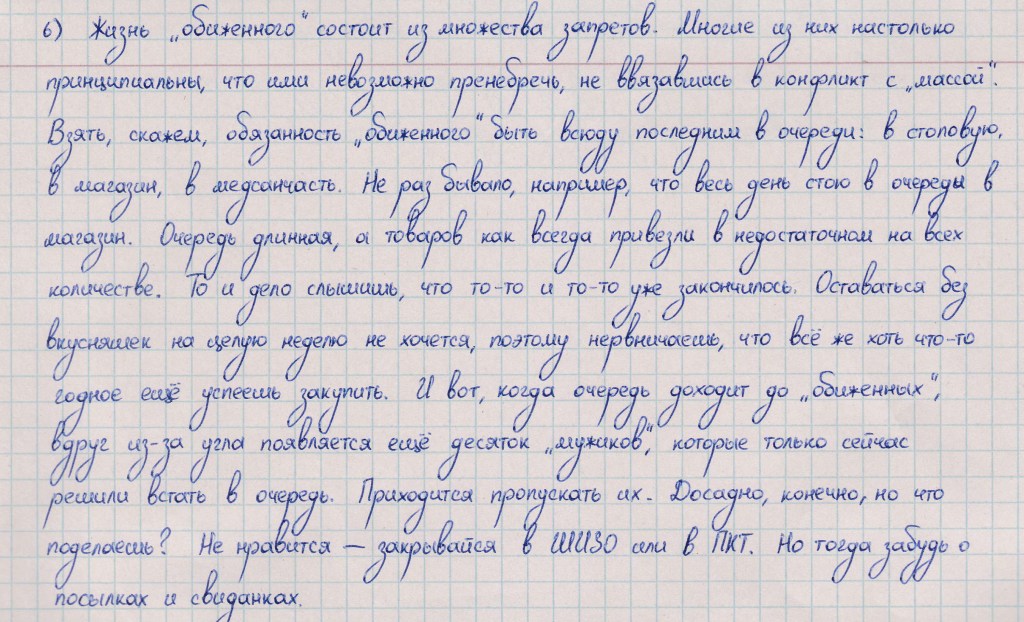
The life of a “degraded” person consists of many prohibitions. Many of them are so fundamental that they cannot be ignored without getting into a conflict with “the men”. Take, for example, the obligation for the “degraded” to be last in every queue: for the canteen, the shop, the medical unit. It happened more than once, for instance, that I’d stand in line for the shop all day. The queue is long, and as always, they’ve brought in an insufficient amount of goods. Every now and then, you hear that this or that has already run out. And then, just as the queue reaches the “degraded” inmates, a dozen more of “the men” suddenly appear from around the corner, having only just decided to join the line. You have to let them go first. It’s frustrating, of course, but what can you do? If you don’t like it, you can get locked in a punishment cell or a cell-type unit. But then you can forget about parcels and visits.
There is only one prohibition that I refuse to accept—the ban on fighting one of “the men”. If someone tries to humiliate my human dignity with an insult or by forcing me to do something, I consider it my sacred right to respond with force. The only thing I have to be wary of when exercising this right is punishment from the activists or the criminal elites. They can beat you severely for it, causing serious injury. However, I value my human dignity too highly to allow it to be debased, even under the threat of injury. Prison is a place where you’d better not “swallow” humiliation. If you “swallow” it once, you convince those around you that you can “swallow” it again and again. It’s better to nip it in the bud. That’s my philosophy on the matter.
I have had to fight “the men” several times, and each time it was over my status. It didn’t always lead to a scandal. Sometimes we managed to make peace with my opponent afterwards. A couple of times, a “case” was brought against me. The “trial” took place in a storeroom. Activists and various influential people as “judges” would cram in there, along with both sides of the conflict, meaning me and my “victim”. Witnesses were also called. Some “judges” seemed eager to pass a harsh sentence, which could have been carried out on the spot. I had to be prepared for such a turn of events and at the same time maintain my composure while justifying my position. Although according to the “prison” law, I was already in the wrong from the start, so my universal human arguments were unlikely to work there.
Fragment of Miftakhov’s letter to Mediazona
—
Miftakhov’s principles faced a major test in the spring of 2022, as the colony prepared for its annual Victory Day parade.
When Miftakhov saw other prisoners painting the “Z” and “V” symbols of the Ukraine invasion onto military props, he informed his detachment chief he would not participate. He expected to be sent to a punishment cell, but the administration, wary of his high profile, opted for a different strategy.
The day before the parade, Miftakhov was summoned; he expected to be tortured there, but instead, an inspector led him to a windowless room hidden deep within the medical unit, furnished only with a bed, a bedside table, and a toilet. Soon, the head of the operational department arrived. He explained that the room would temporarily become a “safe place” for the political prisoner.
From Azat Miftakhov’s letter to Mediazona (abridged)
“We’ve received information that some convicts are unhappy with your position,” the officer told me. “They want to teach you a lesson.”
“Therefore,” he continued, “it was decided to provide you with a safe place. Due to the threat to your health.”
“And how long will I be in this safe place?” I asked.
“Well,” the officer seemed to ponder, “I don’t know. Maybe a month, maybe a year. Or maybe until the last convict who wants to beat your ass is released.”
After talking with me a little more, he left, and I remained in that room. That’s how I began to learn what a “safe place” was. And I must say, it was the best gift the IK-17 administration could have possibly given me.
From then on, I didn’t have to go to work. I could spend all day on self-development, solving math problems and reading books. But most importantly, I could rest from the constant hustle and bustle of the common area. I wished it could last until my release. However, my happiness was not destined to last long. A week later, some random people were asked to sign off that the threat against me was gone. I had to return.
—
It was in IK-17 that Miftakhov formed a friendship with Evgeny Trushkov, another “degraded” prisoner serving a long sentence for charges including group rape. This friendship would prove to be his undoing. As Miftakhov’s release date in September 2023 approached, the FSB scrambled to build a new case against him. Trushkov became their star witness.
He testified that Miftakhov had “justified terrorism” in conversations with him, allegedly praising Mikhail Zhlobitsky, a teenager who bombed an FSB office in 2018. “I admire the actions of Mikhail Zhlobitsky, who was not afraid to lay down his life in the fight against Putin’s regime,” Trushkov claimed Miftakhov had said.
From Azat Miftakhov’s letter to Mediazona (abridged)
In the two years we knew each other, I received nothing but support from him. Sometimes he would tell me how he wanted to help me evade the FSB’s attention, that he was even willing to postpone his own freedom for it. Some of his suggestions were naive, which only convinced me of their sincerity. So when I found out that Trushkov had testified against me, I didn’t believe it at first. Only gradually, as I got acquainted with my new criminal case, did I begin to understand that he had betrayed me.
I do not think Trushkov initiated the criminal case, as he claimed in court. I am sure his story about how he, out of patriotic feelings, went to report the alleged crime to the detachment chief was fabricated to make the prosecution’s evidence seem coherent.
I believe this is what happened. On July 20, he was presented with a choice: either you give us the testimony we need against Azat, or you get “spun up” with him on a terrorism charge, but a more severe one. And they probably made it clear that the necessary witnesses for such a charge would be found. From there, I see two possible scenarios. First: he got scared for himself. Second: he made a deal with the FSB for my own good. I do not rule out either of these options, nor do I justify them.
Making deals with the FSB is a losing game from the start. One should not think that you can outsmart them this way, gaining more than you lose. Such underestimation of the enemy is extremely dangerous. Once you make one concession to them, they will force you to make a second, a third, and so on, until you give them your soul. In my conversations with him, I noticed this naive underestimation of the special services.
—
On the day he was due to be freed, Miftakhov was met at the prison gates by FSB agents who immediately re-arrested him. In a new trial based on his friend’s testimony, he was sentenced to another four years for “justifying terrorism.”
He is now held in a high-security prison in Dimitrovgrad, mostly in solitary confinement. His mental health has declined sharply. Trushkov, meanwhile, was released from the colony to fight for [the Wagner Group] in Ukraine. In a phone call to Miftakhov’s wife from the front, he slurred, “Get the kid out of there,” knowing Dimitrovgrad prison’s reputation.
Miftakhov is not scheduled for release until September 2027.
From Azat Miftakhov’s letter to Mediazona (abridged)
“There are no friends in prison,” as the inmates say. I don’t like such generalisations, but there is a certain amount of truth in it. Inmates are inherently placed in a vulnerable position. One wants to be released as soon as possible, another hopes for an unscheduled visit with his wife, and all of this depends on the goodwill of the administration. The administration knows the value of these benefits and sells them for special services. Snitching and betrayal are among them. And yes, prison status has no meaning here: “snitches” are found among both the “degraded” and “the men”. And you can’t say that the proportion among the former is noticeably different from the proportion among the latter.
Nevertheless, I managed to get burned by my friendship with Trushkov. Well, I have to admit that I am apparently a poor judge of character. This incident has significantly affected my perception of people in places of detention. When I meet a new person, I can’t help but start to assess whether he is capable of refusing the chekists if they try to force him to testify against me with threats and promises.
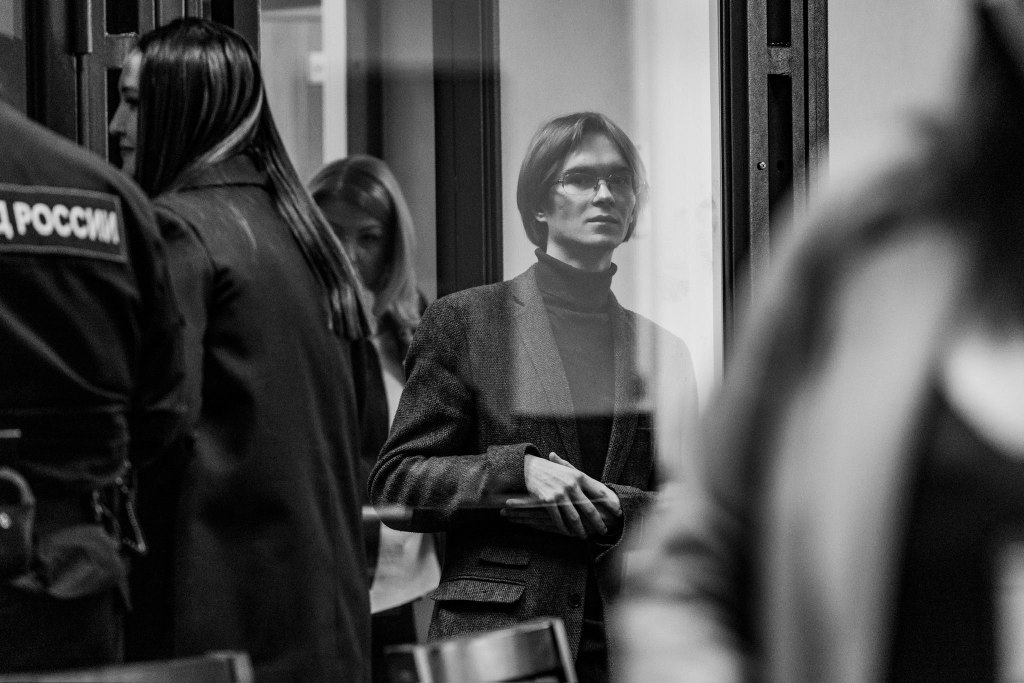
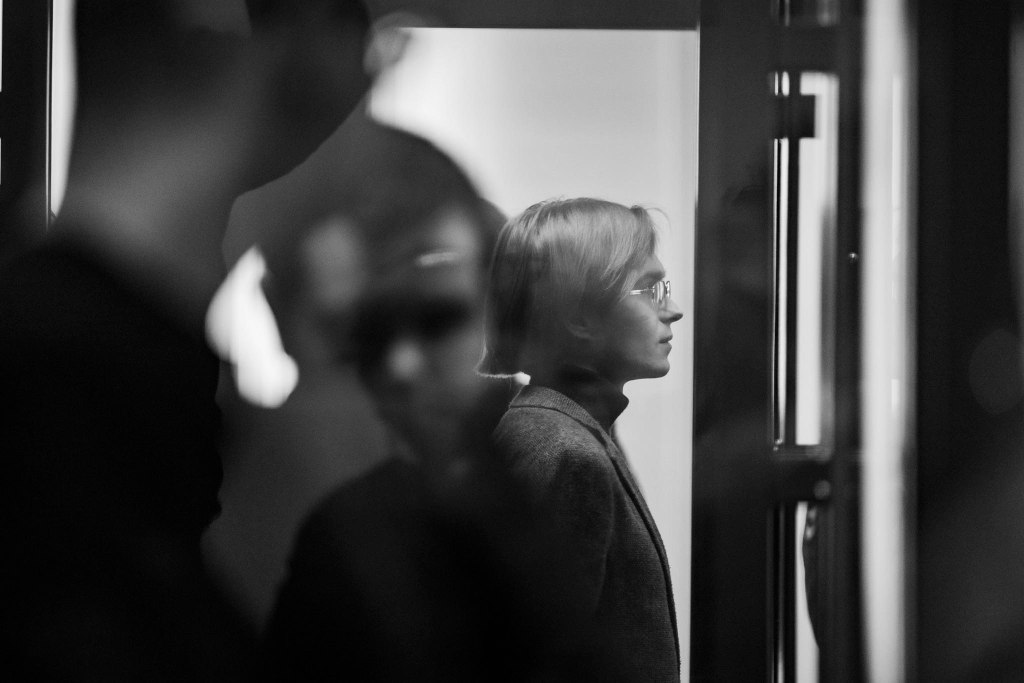
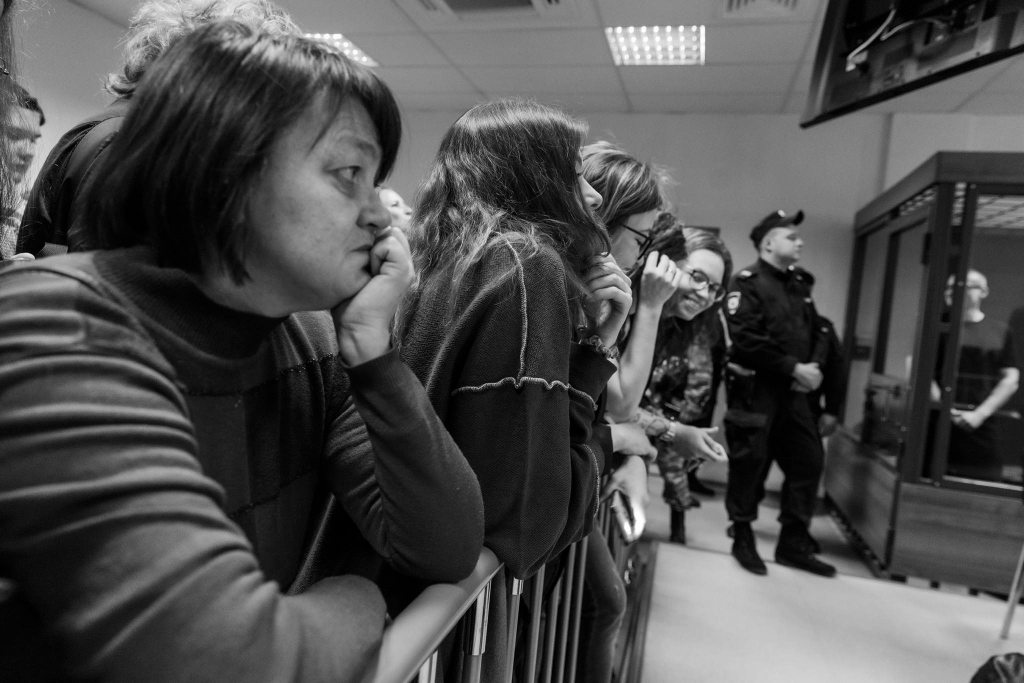
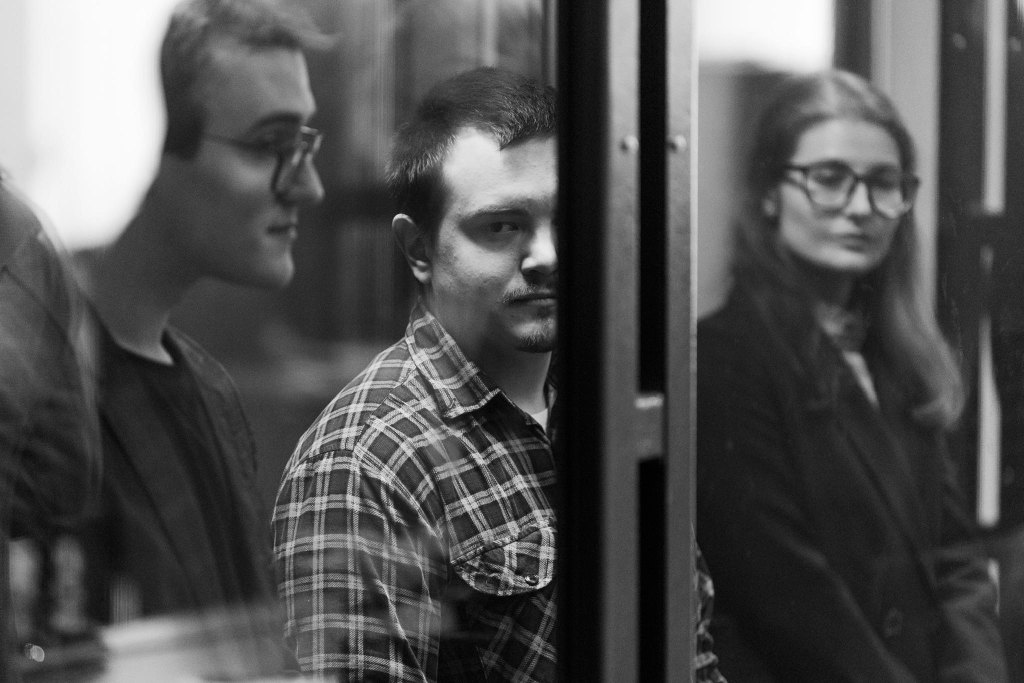
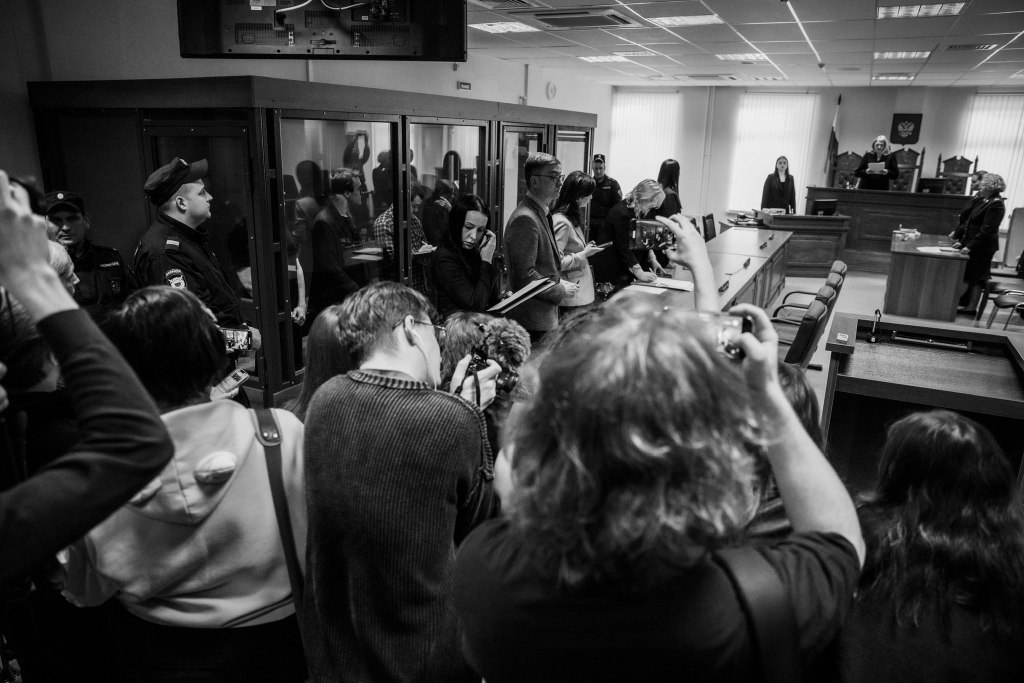
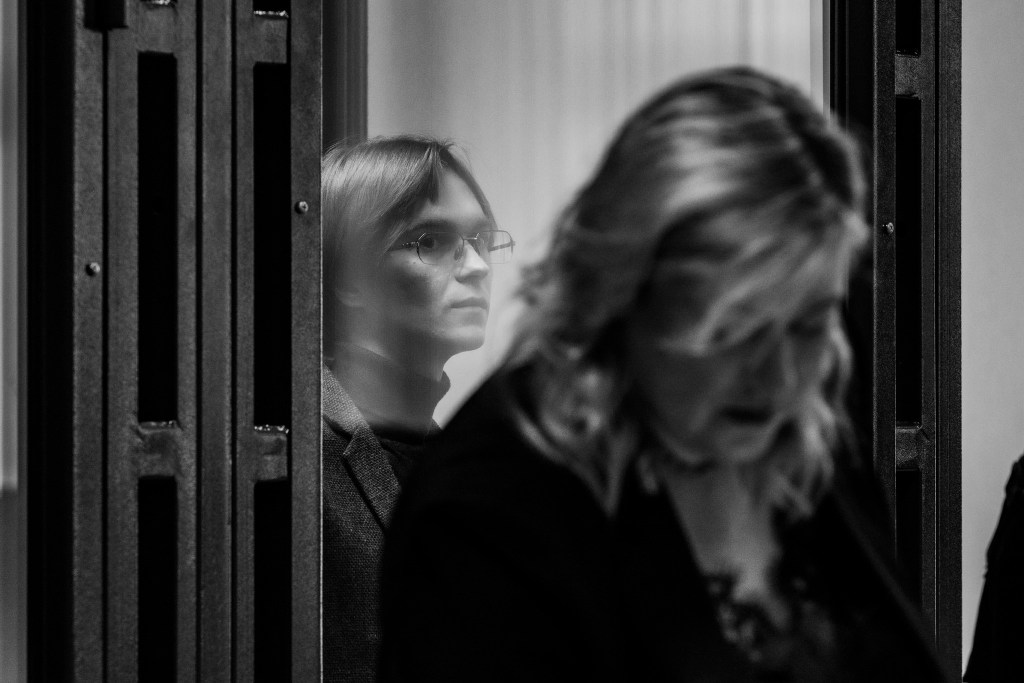
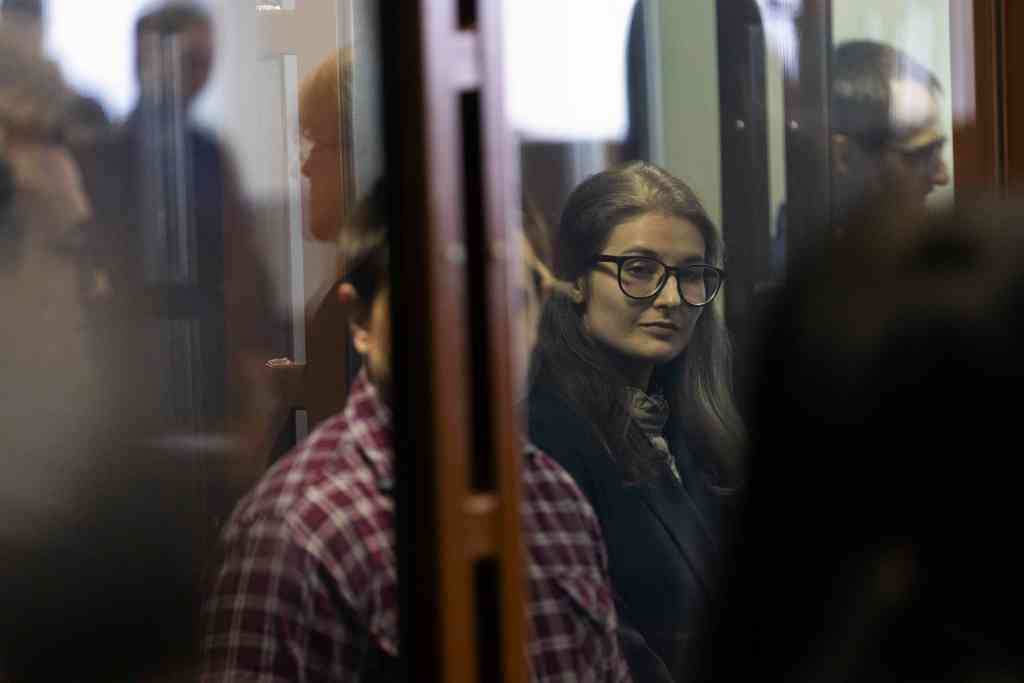
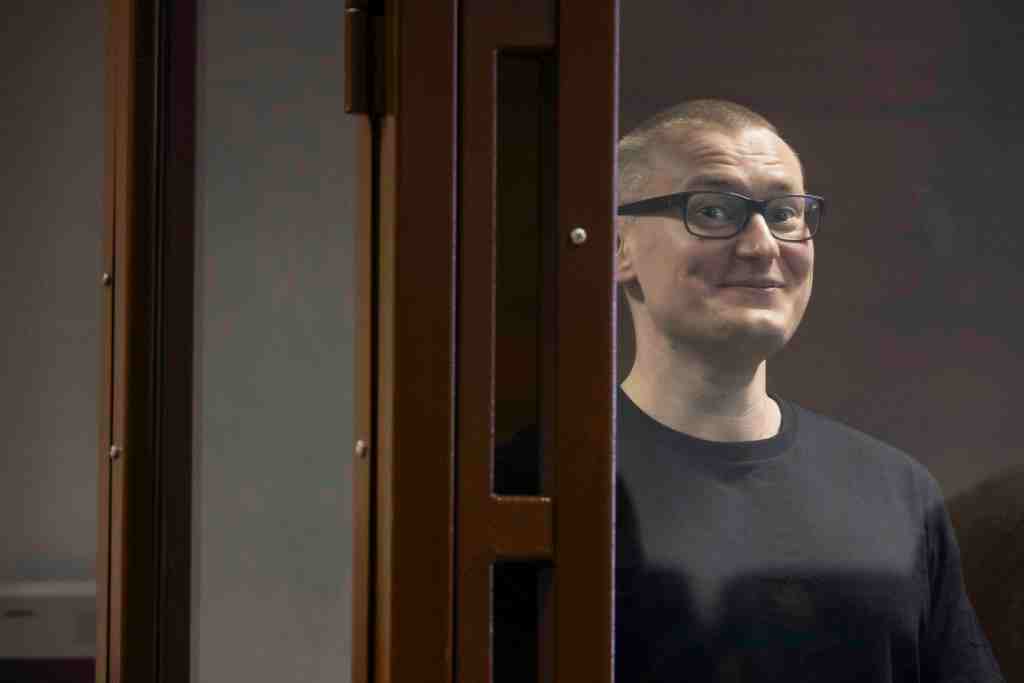
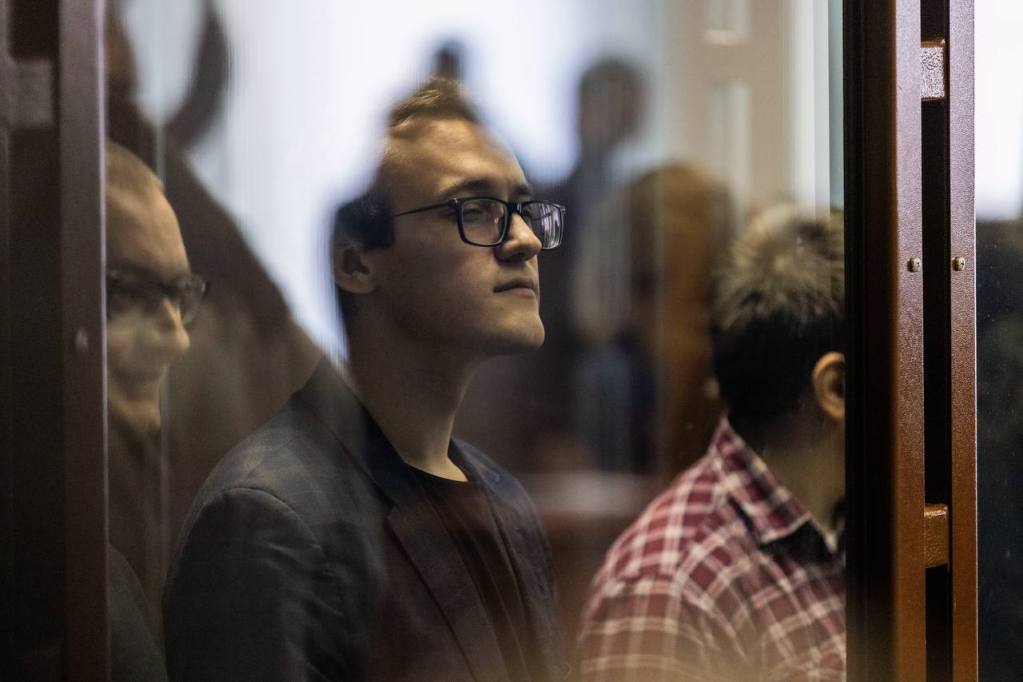
A verdict was handed down in the Vesna case in Petersburg today. In 2018, members of this movement, which Russia designated “extremist” and “hostile” (or something along those lines, “undesirable,” etc.), held a protest: a funeral for Russia’s future. It turned out to be a long process: burying the future, imprisoning spring… Today is a bad day. The activists were convicted and sentenced to extremely long prison terms! The only female defendant, Anna Arkhipova, was sentenced to twelve years in prison; Yan Ksenzhepolsky, to eleven years; Vasily Neustroyev, to ten years; Pavel Sinelnikov, to seven and a half years; Yevgeny Zateyev, to six years and two months. Valentin Khoroshenin was also sentenced to six years and two months in prison despite the fact that he had testified against his comrades while in jail. It didn’t do him any good…. Look at his face today. He is the only one who looks lost to me. The other defendants were calm and dignified.
I may be naive, but I still believe that the future isn’t buried, that spring will come, that the gloom and the cold will simply fade away. It will happen naturally because that’s how the world works, and I believe this especially during Holy Week. “Wind and weather [will] change direction,” and spring will arrive.
I hadn’t taken photos in a courtroom for nearly nine months. Today was tough. I can recall only one case which dragged on longer than the Vesna case—the trial of the twenty-four fighters from the Azov Regiment. My sister Lizka has provided a detailed account of the Vesna case and the young people sentenced today. Give it a listen and/or a read! [See the embedded YouTube video and translation of the Mediazona article below—TRR.]
The natural flow of life suffices to make spring come, but to ensure that the earth hasn’t been depopulated by the time it does come—so that there is someone other than the beasties left to welcome that spring—we must remain human beings: we must know what is going on, empathize, and help out.
A judge in St. Petersburg on Wednesday sentenced six former members of the democratic youth organization Vesna to prison sentences of varying lengths after they were found guilty of charges including extremism and spreading “war fakes.”
The activists, including one woman and five men, were no longer members of Vesna at the time of their arrests in June 2023.
Vesna, which means spring in Russian, was founded in St. Petersburg in 2013. After the full-scale invasion of Ukraine, it staged anti-war rallies in Russian cities, shortly after which it was designated as an “extremist” organization.
The human rights group Memorial recognized the six former members sentenced to jail on Wednesday as political prisoners.
St. Petersburg’s City Court found all six guilty of organizing an extremist group, mass unrest, disseminating “fakes” about the Russian army, calling for actions that undermine national security and rehabilitating [sic] Nazism.
The longest prison sentence of 12 years was handed to Anna Arkhipova, followed by 11 years for Yan Ksenzhepolsky and 10 years for Vasily Neustroyev.
Pavel Sinelnikov was sentenced to 7.5 years in prison, while Yevgeny Zateyev and Valentin Khoroshenin each received six years and two months.
State prosecutors had requested prison sentences between eight years and 13 years.
The former activists initially pleaded not guilty in October 2024, but last July, Khoroshenin provided a “full confession” and testified against his co-defendants.
Arkhipova later said that Khoroshenin had told her after giving his confession that “what really matters isn’t what actually happened, but how the investigator wrote it up.”
Vesna declined a request for comment when contacted by the Moscow Times.
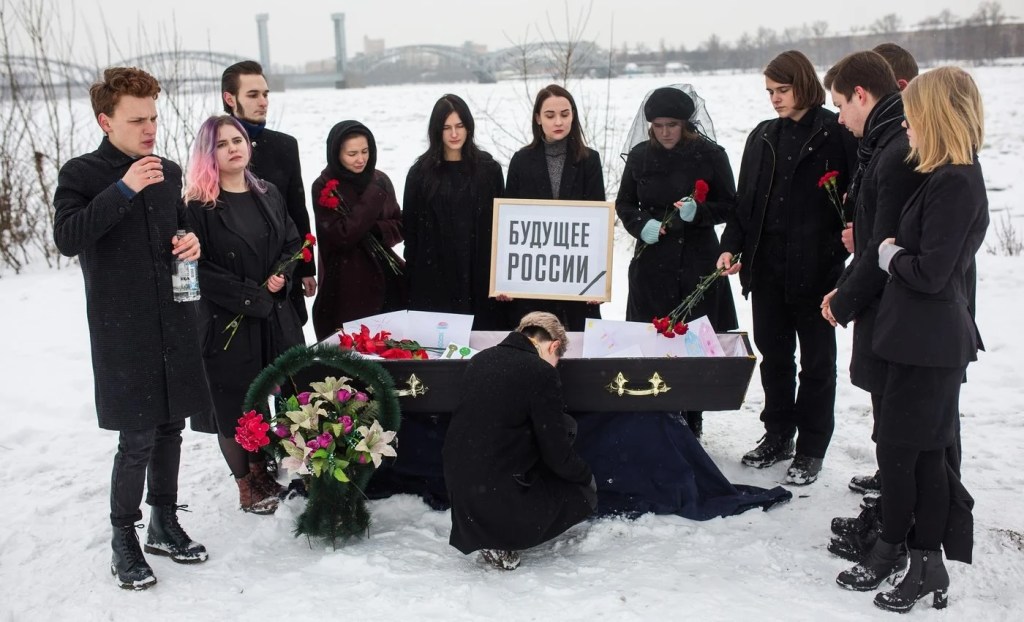
“Russia’s Future”: a 2018 protest action by Vesna. Photo: David Frenkel/Mediazona
Saint Petersburg City Court has handed down sentences to six former activists in the Vesna movement: Yevgeny Zateyev, Vasily Neustroyev, and Valentin Khoroshenin, of Petersburg; Yan Ksenzhepolsky, of Tver; Anna Arkhipova, of Novosibirsk; and Pavel Sinelnikov, of Barnaul. They were sentenced to stints in prison ranging from six to twelve years. In total, the case involves twenty-one suspects from thirteen regions. One of the defendants unexpectedly testified against his comrades in court. Mediazona offers its readers this brief overview of one of the most wide-ranging and dramatic trials against dissidents in recent years.
The democratic youth movement Vesna came to life with spirited, theatrical street protests in Petersburg over a dozen years ago. It came to an end in 2022 when it was banned, followed by the launching of a criminal case against it, leading to the arrests of some activists, and the exile of others.
“They made up their minds that [Vesna] was something along the lines of [Alexei Navalny’s] Anti-Corruption Foundation, I suppose,” muses one former Vesna member. The young woman asked not to be named, even though she had stepped away from politics before the movement was officially deemed “extremist.” She continues to live in Russia and hopes that the security services will “continue to overlook her.”
The playbooks for dismantling the Anti-Corruption Foundation and Vesna are indeed broadly similar:
The prosecution of Vesna activists began with searches warranted under an obscure criminal law statute concerning the creation of NGOs which infringe on people’s personal and civil rights. Charges of violating this very same statute had also formed the core of the case against the Anti-Corruption Foundation.
As happened with the Anti-Corruption Foundation, the security forces got Vesna designated an “extremist” organization. Following this, any public activity that police investigators deemed as “continuing” the movement’s work, such as posting on its social media, was regarded as a punishable offense.
In both cases, a wave of police searches of activists’ homes swept across various regions of Russia, and this was followed by a series of arrests.
Vesna’s most prominent figures were designated “foreign agents.” Many of them fled Russia and were placed on the wanted list. The security forces then took their revenge on those who remained behind.
The trial of the six Vesna activists in Petersburg had dragged on since the summer of 2024 and been one of the most high-profile political trials in wartime Russia, owing both to the steadfast stance taken by some of the defendants and to the dramatic about-face by others.
Vesna was founded in February 2013. The new movement consisted of approximately fifty activists, many of whom hailed from the Petersburg branch of Youth Yabloko, which had dissolved a short time earlier. The goals Vesna voiced at the time were far removed from radicalism: “increasing the level of political engagement among young people” and “participating in Petersburg’s legislature and local government through elections.”
In their hometown, Vesna’s theatricalized processions and pickets quickly became a familiar fixture on the cultural and political scenes.
In the summer of 2015, Vesna held an anti-war protest on Nevsky Prospekt, [Petersburg’s main thoroughfare]. Five activists stood holding signs that read “Write kind words to Ukraine” and a box where anyone could drop a postcard with words of support for the Ukrainian people.
In May 2016, Vesna marched through the city holding a banner reading “Circus, go away!” Opposition activists had not been permitted to hold May Day marches on Nevsky Prospekt, even though the country’s ruling United Russia party had been granted permission to march down the same route without any issues. In protest, Vesna activists staged an alternative procession in guise of a carnival: a young woman in church vestments with a fake belly demanded a ban on abortions, while another waved a censer by way of blessing a silver “Rogozin 1” rocket. Behind them walked a man with a TV set instead of a head. Someone carried a huge saw with the slogan “I support embezzlement!” Another carried a cello case stuffed with banknotes.
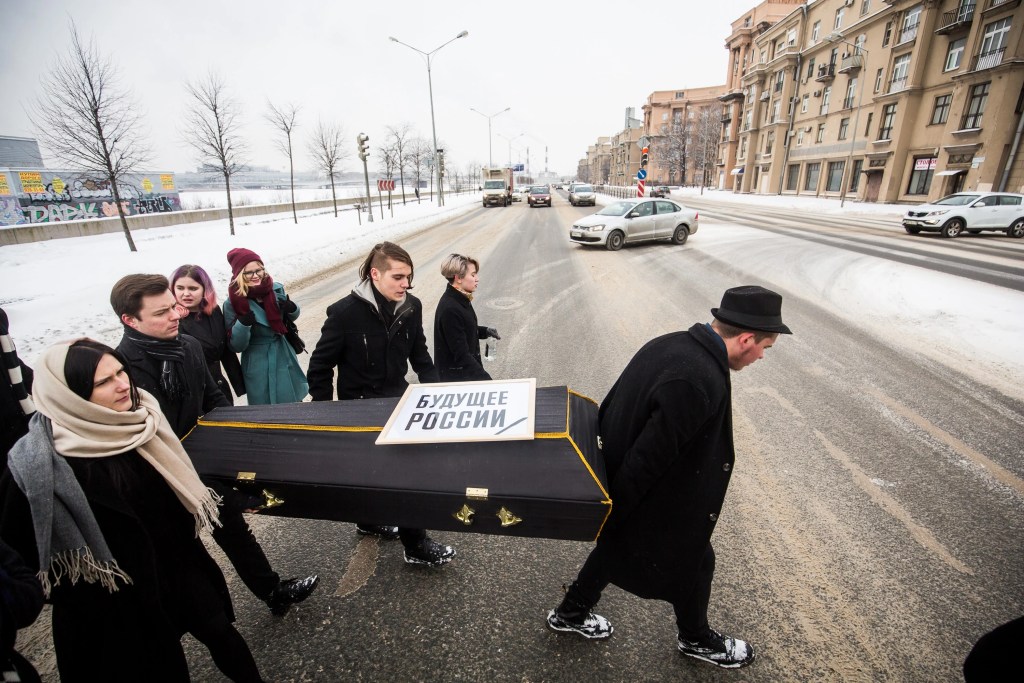
“Russia’s Future”: a 2018 protest action by Vesna. Photo: David Frenkel/Mediazona
In January 2018, Vesna staged a mock funeral for Russia’s future: people dressed in mourning attire and with sorrowful expressions on their faces carried a coffin through the streets, adorned with children’s drawings that symbolized hopes for life in a free, democratic country.
Photo: David Frenkel/Mediazona
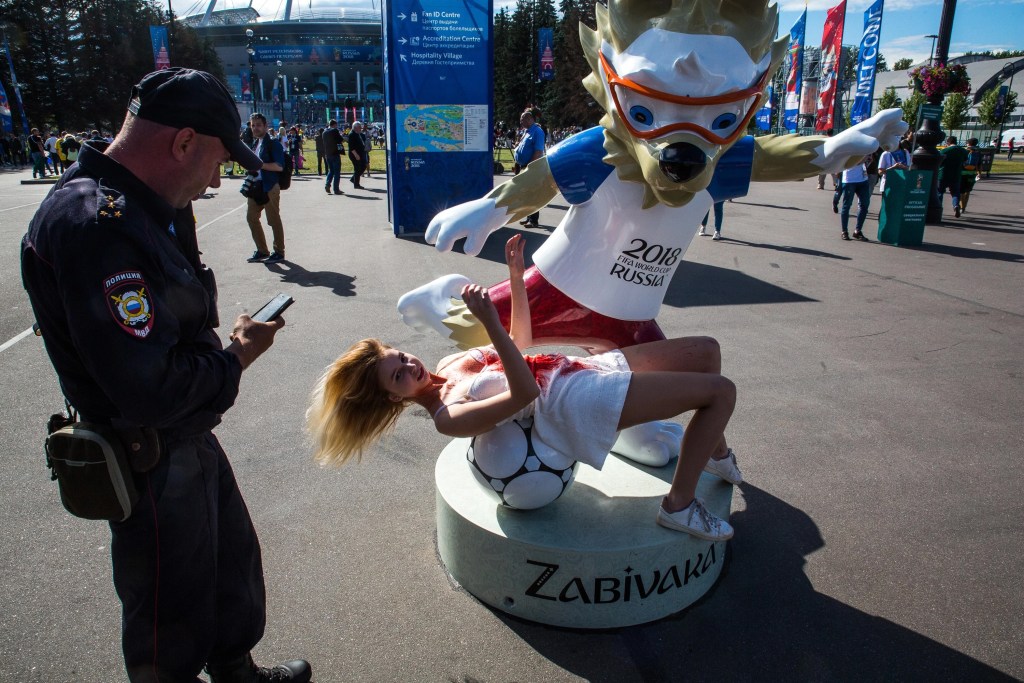
In the summer of 2018, when Russia was hosting the FIFA World Cup, Vesna activists unfurled a banner reading “This World Cup Is Filled with Blood” on Palace Bridge in Petersburg. Vesna timed another protest against [torture in police custody] to coincide with the World Cup—a young woman, doused in red paint, lay down on a pedestal beneath a replica of the tournament’s official mascot, the wolf Zabivaka.
Photo: David Frenkel/Mediazona
The movement grew rapidly. Regional chapters emerged, and by 2018 there were already around a dozen of them. By the late 2010s, Vesna was the most prominent youth organization in the Russian opposition’s ecosystem. No major protest took place without its activists being present. And yet, Vesna activists emphasized their commitment to legal methods of campaigning, as stated in their charter: “The movement pursues its work in accordance with the current laws of the Russian Federation.”
Vesna during the war: the first raids and interrogations
After Russia invaded Ukraine, the price of political dissent in Russia skyrocketed for all opponents of the government, and Vesna activists were no exception. On 3 May 2022, the movement announced the campaign “They Didn’t Fight for This,” calling on dissenters to attend the Immortal Regiment marches on 9 May (WWII Victory Day) but to carry anti-war placards at them.
A few days later, Vesna activists Yevgeny Zateyev and Valentin Khoroshenin, of Petersburg, and Roman Maximov, of Veliky Novgorod, who had already quit the movement, were targeted with searches of their homes. All three men were taken to Moscow for questioning and held in a temporary detention center pending trial.
These were the first steps in the investigation against Vesna activists. It was then that law enforcement authorities launched a criminal case into the setting up of an NGO that infringes on the personal rights of citizens.
The same day, search warrants were executed in Petersburg at the homes of the parents of Bogdan Litvin, Vesna’s federal coordinator, who had already left Russia, and activist Polina Barabash, as well as at the homes of former movement members Alexei Bezrukov and Artem Uimanen. In Moscow, searches were conducted at the homes of Timofei Vaskin, Angelina Roshchupko, Daria Pak, and Ivan Drobotov.
On 10 and 11 May 2022, the court issued restraining orders against Vaskin, Drobotov, Angelina Roshchupko, Maximov, Zateyev, and Khoroshenin, prohibiting them from certain actions. Soon after, Litvin and Drobotov were placed on the wanted list, as they had managed to leave Russia.
This did not stop Vesna, however. In September 2022, the youth activists announced protests against the military mobilization across Russia. Less than a month later, the Justice Ministry added the movement to its list of “foreign agents,” and the Saint Petersburg City Court ruled Vesna an “extremist” organization on 6 December 2022.
The charges and the trial
On 5 June 2023, the Investigative Committee opened a new criminal case, which later came to be known simply as the “big Vesna case.”
Searches were carried out the following day in Barnaul, Novosibirsk, Petersburg, and Tver. Six people were detained and taken to Moscow: Zateyev, Pavel Sinelnikov, Anna Arkhipova, Vasily Neustroyev, Yan Ksenzhepolsky, and Khoroshenin. On 8 June, a Moscow court remanded them to pretrial detention.
During the same pretrial detention hearing, the prosecution listed five charges: organizing and participating in an extremist group, desecrating the memory of defenders of the Fatherland, spreading “fake news” about the army, and calling for actions contrary to national security.
A year later, when the Saint Petersburg City Court began hearing the case against the six activists on its merits, there were seven charges. Incitement to mass unrest and the creation of an NGO infringing on citizens’ rights (the very same charge under which the activists’ homes had initially been searched in 2022) had been added to the bill of particulars.
The investigation assigned the role of leader and ideological instigator to Vesna’s federal coordinator Bogdan Litvin, who had managed to flee the country. According to law enforcement officials, it was Litvin who had driven the movement toward “extremism.”
Most of the charges were related to posts on Vesna’s social media accounts. Entered into the recorded were ninety posts made in Vesna’s name at various times on various platforms. When presenting evidence in court, the prosecution primarily read these posts aloud, listed the names of Telegram channels, cited viewer statistics, and read out the comments.
The indictment placed particular emphasis on a comment posted by a user known as “Kanoki Nagato,” on 1 May 2022. On one of Vesna’s Telegram channels, he suggested that Russians would one day start “killing the pigs, just like the Ukrainians did at Maidan.” According to the prosecution, the appearance of such a comment proved that Vesna was inciting dangerous actions. None of the defendants knows who “Kanoki Nagato” is, and law enforcement officials have not been able to identify this person either.
They did examine the personal accounts of the six defendants, however. Some of their Instagram accounts were found to be private. Speaking in court, the prosecutor called this “an attempt to conceal information from the investigation.”
When the prosecution presented its evidence in court, some of the hearings were held in closed session at the prosecutor’s office’s request, and members of the public and journalists were not allowed in the courtroom. Those involved in the proceedings are not permitted to disclose what they heard behind closed doors, but it is known that during at least some of these sessions, the court examined the results of intelligence operations—a term used in the Code of Criminal Procedure to refer, among other things, to wiretapping, undercover operations, and the interception and vetting of correspondence.
When it was the defense attorneys’ turn to present evidence, Arkhipova’s support group issued a public appeal: “The defense now urgently needs witnesses—people who actually took part in peaceful anti-war protests between February and May 2022 and have already suffered administrative penalties for doing so.”
Witnesses who responded to this post testified in court.
“To my mind, every citizen took to the streets out of a sense of duty and conscience. It was an entirely peaceful demonstration,” said one of them.
Another witness recounted that she was detained at an Immortal Regiment rally while holding up a portrait of her great-grandfather, and an administrative charge was filed against her for “discrediting” the army.
“I came out of my own free will. I’d participated in Immortal Regiment rallies before as well. At the time I made my decision, I hadn’t seen any notices on Telegram channels,” she explained.
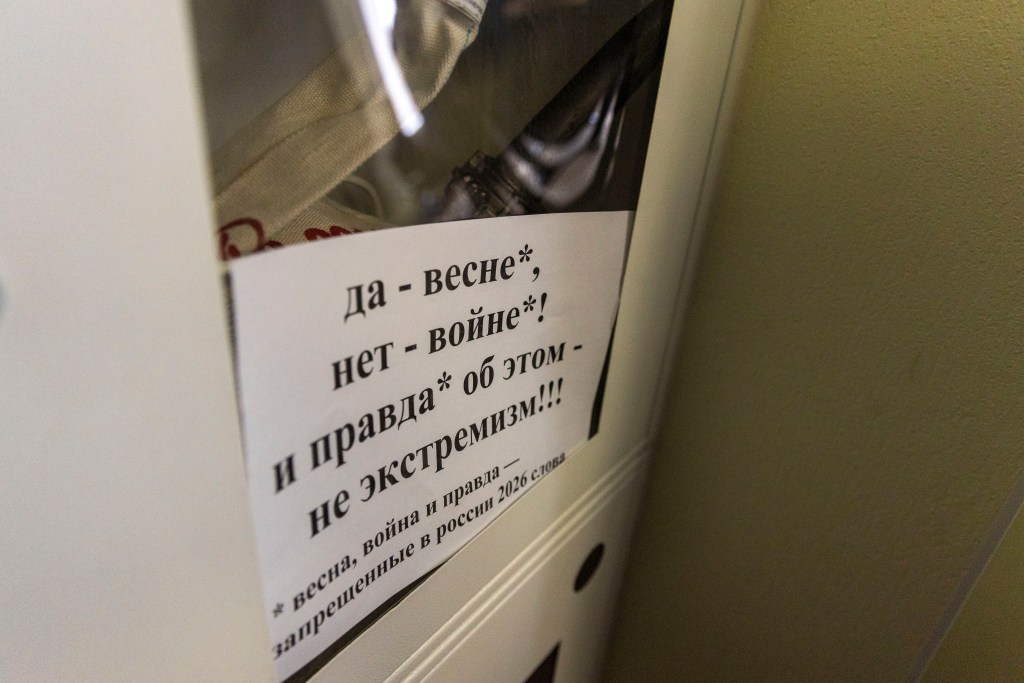
A placard hung in the courthouse on the day the verdict in the Vesna trial was read out: “Yes to Vesna,* / No to war*! / And the truth* about them / is not extremism. / *Vesna, war, and truth are words forbidden in Russia in 2026.” Photo: Mediazona
At nearly every hearing in the trial, the defense insisted that the prosecution had no evidence that the accused activists were involved in posting most of the messages mentioned in the case file. Moreover, some of the defendants not only did not know each other prior to their arrest, but were also not members of Vesna at the time it was classified as an “extremist” organization.
Who’s who in the Vesna case
Yevgeny Zateyev. Photo: Mediazona
Yevgeny Zateyev, 24 years old
A resident of Petersburg, Zateyev was charged with violating Article 354.1.4 (“condoning Nazism”) and Article 282.1.1 (“establishing an extremist community”) of the Russian Federal Criminal Code. The charge that he had violated Article 239.2 (“organizing an association that infringes on the personhood and rights of citizens”) was dropped due to the statute of limitations. The prosecutor asked the court to sentence Zateyev to ten years in a penal colony. The actual sentence was six years and two months.
Zateyev served as the press secretary for the Vesna movement’s Petersburg branch. In court, he insisted that his duties were limited to local topics: news about life in Petersburg, announcements of lectures, and film screenings.
He viewed the outbreak of the war as a “personal tragedy.”
“Vesna tried to prevent further destruction and loss of life on both sides of the border—among both civilians and military personnel—through peaceful means. I still regard this goal in an entirely positive light,” Zateyev said in court.
He was one of the first Vesna activists to face criminal charges in the spring of 2022. Some of his comrades left Russia, but Zateyev stayed behind and wound up in a pretrial detention center a year later.
In the summer of 2023, Zateyev wrote a letter from jail explaining why he had decided against fleeing the country.
“I made a very difficult and very painful choice. Was it a painful choice? Of course it was. I find it hard to imagine, though, how I could have left everything behind, gone away, and watched as my friends and acquaintances were imprisoned. This choice was easy for some, but I don’t judge them.”
In the same letter, Zateyev asked that his family not be judged for failing to “change [his] mind.”
In November 2023, Zateyev partially admitted his guilt in the hope of having his pretrial detention conditions eased. He was concerned about his family, especially his grandmother, who was seventy-seven years old at the time of his arrest. Zateyev was not released from pretrial detention, and so he withdrew his confession.
In January 2024, Zateyev’s grandmother died. Four months later, his mother also died, from cirrhosis of the liver.
Zateyev’s pretrial detention was extended once again shortly thereafter. Addressing the court, he mentioned the deaths of his loved ones. Judge Irina Furmanova interrupted him.
“Please do not try to pressure the court by bringing up the deaths of your relatives.”
“I am not putting any pressure on the court. I am simply stating the facts of my life.”
“We are familiar with them. You can merely note what you’ve been through. There’s no need to pressure us like that.”
“Your Honor, pressure—”
“Everyone has, or some people no longer have, a mother. There’s no need to pressure us in that regard. I’ll say it again. Let’s continue.”
In his closing statement, Zateyev said that he was forgiving the investigators, prosecutors, and judges.
“I caution against the false belief that forgiveness absolves one of responsibility. It does not. I do believe, however, that through forgiveness, we can understand the reasons behind what is happening—why and for what purpose. By ridding ourselves of an age-old evil, learning to treat one another with understanding, we can finally find love. I believe that this is possible and even inevitable in Russia. Spring [vesna] is inevitable. The season, of course. What did you think I meant?”
Mailing address for letters:
Russia 196655 St. Petersburg, Kolpino Kolpinskaya St., d. 9, str. 1 Pretrial Detention Center No. 1 Federal Penitentiary Service of Russia for St. Petersburg and the Leningrad Region Yevgeny Artemovich Zateyev, born 2001
Bank card number for donations: 2200 7009 1119 8470
Anna Arkhipova. Photo: Mediazona
Anna Arkhipova, 28 years old
A resident of Novosibirsk, Arkhipova was charged with violating Articles 282.1.1 and 282.1.2 (“organizing an extremist community”), Article 354.1.4 (“condoning Nazism”), Article 280.4.3 (“discrediting the Russian armed forces”), Article 212.1.1 (“repeatedly violating the law on public assemblies”), and Articles 207.3.2.b and 207.3.2.e (“disseminating knowingly false information about the Russian armed forces”) of the Russian Federal Criminal Code. The charge that she had violated Article 239.3 (“organizing an association that infringes on the personhood and rights of citizens”) was dropped due to the statute of limitations. The prosecutor asked the court to sentence Arkhipova to thirteen years in prison. The judge sentenced her to twelve years in prison instead.
Arkhipova joined Vesna in February 2021 to “take a civic stand, engage in publicly vital work, and meet new people.” She wrote posts for the movement’s social media accounts but quickly grew tired of “conflicts within the group” and left in May 2022.
Once the war in Ukraine had kicked off, Vesna’s work became “random and certainly not organized,” according to Arkhipova.
“Everything happened naturally,” Arkhipova said in court. “I felt the need to protest the war, as I regarded it and continue to regard it as a great catastrophe and tragedy. That is why I took part in a street protest in Novosibirsk on 24 February 2022.”
Of the ninety posts listed in the criminal indictment, she wrote one.
“I was involved in the publication dated 29 April 2022, [as charged] under Article 207.3, but I find it difficult to say exactly what role I played. [The text] was discussed at great length, and I didn’t really want to have anything to do with it at all. Either I acted as the author, after which it was heavily edited, or another person was the author, after which I heavily edited it,” the young woman explained in court.
Arkhipova’s support group runs a Telegram channel where her letters to the outside world are posted sometimes. In the “Cell Librarian” section, she talks about the books she has read in pretrial detention.
She also writes about the health problems typically experienced by prisoners. Due to poor nutrition, all women in the detention center lose their hair, and even a simple cold is dangerous.
“The worst part is that you’re not permitted to make your bed during the day, so you’re freezing and shivering, and all you have to cover yourself with is a towel. Illnesses are illnesses, but we still have to follow the prison rules!”
Arkhipova is a vegan. It is difficult to follow this diet in pretrial detention. She is very dependent on care packages, which arrive with considerable delays. Her support group secured permission to send her plant-based milk substitutes, but the detention center declined to accept them, stating, “We don’t even allow dairy products for mothers with children.”
“My motivation is simple: I oppose the war. I want a better future for Russia. I have tried to act on my conscience all my life, even though I haven’t always succeeded. When the war began, it was my conscience that wouldn’t let me stand idly by. People on both sides of the border deserve peace: soldiers should be with their families, not in foxholes, and those who were killed should have lived. I feel the same pain for everyone, regardless of their uniform,” said Arkhipova in her closing statement.
Mailing address for letters:
Russia 195009 St. Petersburg 11 Arsenalnaya St. Pretrial Detention Center No. 5 Federal Penitentiary Service of Russia for St. Petersburg and the Leningrad Region Anna Nikolayevna Arkhipova, born 1997
Bank account numbers for donations: 2200 7008 6021 1167 (T-Bank) • 2202 2071 9921 3904 (Sberbank)
You can follow the latest news on the Telegram channel of Arkhipova’s support group.
Vasily Neustroyev. Photo: Mediazona
Vasily Neustroyev, 30 years old
A resident of Petersburg, Vasily Neustroyev was charged with violating Article 280.4.3 (“publicly threatening national security”), Article 212.1.1 (“repeatedly violating the law on public assemblies”), Article 354.1.4 (“condoning Nazism”), Article 282.1.1 (“organizing an extremist community”) and Articles 207.3.2.b and 207.3.2.e (“disseminating knowingly false information about the Russian armed forces”) of the Russian Federal Criminal Code. The charge that Neustroyev had violated Article 239.2 (“organizing an association that infringes on the personhood and rights of citizens”) was dropped due to the statute of limitations. The prosecution asked the court to sentence Neustroyev to twelve years in prison, but the judge sentenced him to ten years instead.
According to the prosecution, Neustroyev was on Vesna’s federal audit commission and was one of its leaders. Neustroyev himself stated in court that he did not make any decisions within the movement. He did not even have access to social media and could not have published any of the posts ascribed to him. He met most of his “accomplices” only after his arrest. Before his arrest, he was acquainted only with Khoroshenin and Maximov, and knew Zateyev only by sight.
When asked about Litvin—whom investigators consider the leader of Vesna and under whose influence the movement allegedly turned into an “extremist organization”—Neustroyev laughed and said that the main topic of their conversations had been cats.
“Since the autumn of 2018, we’ve been the owners of cats—brothers from the same litter, which we got from the same source,” Neustroyev explained. “Since then, Bogdan Gennadyevich has left his cat with me to look after two or three times. You could say that we became something like in-laws through the cats. The cats were the main topic of our conversations in the years leading up to my arrest.”
The Petersburger did not renounce his anti-war views in court.
“I consider the actions of Vladimir Vladimirovich Putin not only a crime against both Ukraine and Russia in equal measure, but also a great folly.”
And yet, Neustroyev “remained skeptical of mass street protests.” He was a member of Petersburg Yabloko’s council and was heavily involved in elections work for a long time. He coordinated election monitoring, and since 2020 had been a voting member of one of the city’s Territorial Election Commissions.
In a letter from the detention center, Neustroev voiced deep regret that he had not yet managed to finish his university education. He had just resumed his studies before his arrest, and if not for the criminal case, he might already have a degree.
“Nevertheless, I still plan to eventually obtain a formal tertiary degree and put this source of anxiety behind me.”
He spoke about Russia in his closing statement.
“Russia is strong. Russia will survive all tyrants and dictators, just as it has done before. I know that Russia will be peaceful, Russia will be happy, Russia will be free. And all of us will be peaceful, happy, and free along with her.”
Mailing address for letters:
Russia 196655 St. Petersburg, Kolpino Kolpinskaya St., d. 9, str. 1 Pretrial Detention Center No. 1 Federal Penitentiary Service of Russia for St. Petersburg and the Leningrad Region Vasily Petrovich Neustroyev, born 1995
You can follow the latest news on the Telegram channel of Neustroyev’s support group.
Pavel Sinelnikov. Photo: Mediazona
Pavel Sinelnikov, 24 years old
A resident of Barnaul, Pavel Sinelnikov was charged with violating Articles 282.1.1 and 282.1.2 (“organizing and participating in an extremist community”) of the Russian Federal Criminal Code. The prosecution had asked the court to send him down for ten years, but instead the judge sentenced to him to seven and a half years in prison.
Sinelnikov served as Vesna’s executive secretary for several months but left the movement in 2021, long before it had been designated “extremist.”
“The work isn’t hard: you just sit there and write. But taking all those minutes is time-consuming and quite boring. So I really feel for the court clerk,” Sinelnikov explained in court.
He was baffled how the same person could be accused of both establishing an “extremist community” and participating in it, and he made no secret of the fact that the arrest had come as a shock to him.
“I didn’t expect at all that some police investigators would actually fly all the way from Moscow to Barnaul just to get me. As far as I’m concerned, the police search itself is a form of intense coercion, especially the way it’s done. They force their way into your life while yelling and shouting, don’t even let you get dressed, push you face-down on the floor, and then turn everything upside down while cracking high-school-level jokes,” Sinelnikov recalled.
He confessed immediately after his arrest, but later recanted his testimony.
“You can’t take away people’s opinions, but it’s easy to take away their freedom of speech. That’s what happened to me, even though I’m just a binnocent eyestander.”
In court, Sinelnikov explained that he had been fascinated by science and maths at school. He often traveled to academic competitions, and became interested in politics during one such trip to Moscow. He described himself as an introvert and a loner, and his mother even called her son a “slacker” in court.
“Well, Mom knows best,” Sinelnikov replied.
Sinelnikov began his closing statement by admitting that he didn’t really have much to say. But then he called the charges politically motivated and the trial “abhorrent.”
“There was no criminal extremist group. No one planned any crimes, no socially dangerous actions were committed, and there were no socially dangerous consequences either. No harm was done either to society or the public interest. We didn’t even have any motives for or intentions of doing so. Do I deserve ten years in prison for that?”
Mailing address for letters:
Russia 196655 St. Petersburg, Kolpino Kolpinskaya St., d. 9, str. 1 Pretrial Detention Center No. 1 Federal Penitentiary Service of Russia for St. Petersburg and the Leningrad Region Pavel Nikolayevich Sinelnikov, born 2001
Bank account number for donations: 2200 7019 7373 4749
You can follow the latest news on the Telegram channel of Sinelnikov’s support group.
Yan Ksenzhepolsky. Photo: Mediazona
Yan Ksenzhepolsky, 25 years old
A resident of Tver, Yan Ksenzhepolsky was charged with violating Article 280.4.3 (“discrediting the Russian armed forces”), Article 212.1.1 (“repeatedly violating the law on public assemblies”), Article 354.1.4 (“condoning Nazism”), Article 282.1.1 (“organizing an extremist community”), and Articles 207.3.2.b and 207.3.2.e (“disseminating knowingly false information about the Russian armed forces”) of the Russian Federal Criminal Code. The charge that he had violated Article 239.2 (“organizing an association that infringes on the personhood and rights of citizens”) was dropped due to the statute of limitations. The prosecution had asked the court to send him down for twelve years, but instead the judge sentenced to him to eleven years in prison.
Ksenzhepolsky joined Vesna’s federal coordinating council in August 2021. According to him, by October–November of that year his involvement in the council had become “nominal” due to his work commitments. He was employed as a welding production specialist at the National Welding Control Agency and served as an aide to a deputy in the Tver Regional Legislative Assembly.
“I realized that the Vesna movement made a lot of noise but didn’t accomplish anything tangible,” Ksenzhepolsky said in court. “Meanwhile, I was involved in real institutional politics at the Legislative Assembly and could actually influence things—or at least try to.”
On paper, however, Ksenzhepolsky remained a member of Vesna until the summer of 2022.
Ksenzhepolsky is accused of posting on the movement’s Telegram channels, although, according to him, he had access to only one of them, “Tver Vesna,” which had sixteen subscribers. He handed over the password to the new administrator in November 2021, when he left the organization.
In court, Ksenzepolsky reiterated that he believes street protests in Russia are ineffective.
“I believe these actions are completely pointless and do more harm than good.”
In September 2022, when Russia announced a military mobilization, Ksenzhepolsky, according to his own testimony, was on holiday in Georgia but returned home—after Vesna had been declared an “extremist” organization.
“In any case, I know that we will ultimately be vindicated in the eyes of society, history, and the Last Judgment. After all, everything was forever, until it was no more. This regime will come to an end too, and within our lifetimes, something tells me. If not, then the Kingdom of Heaven is not a bad consolation prize,” said Ksenzhepolsky in his closing statement.
Mailing address for letters:
Russia 196655 St. Petersburg, Kolpino Kolpinskaya St., d. 9, str. 1 Pretrial Detention Center No. 1 Federal Penitentiary Service of Russia for St. Petersburg and the Leningrad Region Yan Alexandrovich Ksenzhepolsky, born 2000
Bank account number for donations: 2200 2479 5715 1401
You can follow the latest news on the Telegram channel of Ksenzhepolsky’s support group.
Valentin Khoroshenin. Photo: Mediazona
Valentin Khoroshenin, 24 years old
A resident of Petersburg, Khoroshenin was charged with violating Article 212.1.1 (“repeatedly violating the law on public assemblies”) and Article 354.1.4 (“condoning Nazism”) of the Russian Federal Criminal Code. The charge that he had violated Article 239.2 of the Criminal Code was dropped due to the statute of limitations. The prosecution asked the court to send Khoroshenin to prison for eight years, but he was sentenced to six years and two months behind bars.
A co-founder of the now-shuttered Fogel lecture bar in Petersburg, Khoroshenin was the sole defendant who not only pleaded guilty to the charges but also testified against the other defendants in the case and many other Vesna activists.
The names mentioned by Valentin Khoroshenin in his testimony: Vladimir Arzhanov, Yekaterina Alexandrova, Makar Andreyev, Nikolai Artemenko, Anna Arkhipova, Yekaterina Bushkova, Alexander Vereshchagin, Yekaterina Goncharova, Timofei Gorodilov, Anastasia Gof, Lev Gyammer, Semyon Yerkin, Yevgeny Zateyev, Semyon Zakhariev, Anastasia Kadetova, Vladimir Kazachenko, Alexander Kashevarov, Gleb Kondratyev, Semyon Kochkin, Yan Ksenzhepolsky, Ilya Kursov, Maria Lakhina, Nikita Levkin, Bogdan Litvin, Andrei Lozitsky, Alexandra Lukyanenko, Yelizaveta Lyubavina (Sofya Manevich), Ilya Lyubimov, Timofei Martynchenko, Daria Mernenko, Anzhelika Mustafina, Anna Nazarova, Vasily Neustroyev, Maxim Potemkin, Konstantin Pokhilchuk, Kira Pushkareva, Lilia Safronova, Pavel Sinelnikov, Yevgenia Fedotova, Anastasia Filippova, Artur Kharitonov, Alexei Shvarts
Khoroshenin’s testimony came as a surprise to everyone in court. He requested that the testimony be heard in closed session and asked that the public and the press be removed from the courtroom, but the judge turned down his request.
Khoroshenin did not merely agree with the charge of “extremism.” He called Vesna “a sort of incubator for Navalny.” His testimony suggested that the movement’s branches were directly linked to the opposition politician’s field offices, where distinguished young activists would then “move up the ranks.” Khoroshenin mentioned the “grant support” that Vesna received, including from “undesirable organizations,” and complained that rank-and-file activists “spent the night in a back room, while Litvin bought himself a new apartment.”
“We systematically violated the law. We held protests and placed ourselves above the law. There were also slogans about undermining the country’s defense capabilities and justifying the use of violence. We organized events that violated existing laws but looked good on the surface,” Khoroshenin said in court.
“I have always believed that everything I am involved in should bring something positive to people. The Vesna movement was perhaps the only exception to this rule,” he argued, adding that he no longer supports any of the points in Vesna’s platform except for the one regarding support for “family and motherhood.”
Toward the end of his court testimony, Khoroshenin urged the other defendants to plead guilty—“to change their stance on the charges against them and set aside ideological pretense.”
“Don’t dig your own graves, colleagues!” he said.
In a letter from the detention center, Anna Arkhipova later quoted the words Khoroshenin had spoken after the hearing: “What really matters isn’t what actually happened, but how the investigator wrote it up.”
In his final statement, Khoroshenin lamented that his former comrades in Vesna had made him look like “some kind of Luntik,” once again acknowledged his guilt, asked for forgiveness “from society and especially from his family,” and voiced his hope that the court would allow him “to return to a normal life for constructive self-realization for the benefit of society.”
Mailing address for letters:
Russia 196655 St. Petersburg, Kolpino Kolpinskaya St., d. 9, str. 1 Pretrial Detention Center No. 1 Federal Penitentiary Service of Russia for St. Petersburg and the Leningrad Region Valentin Alexeyevich Khoroshenin, born 2001
Bank account number for donations: 4476 2461 7307 7443
You can follow the latest news on the Telegram channel of Khoroshenin’s support group.
Daria Egereva, a decolonial activist and spokeswoman for the Selkup, an indigenous ethnic minority in Siberia, has been accused of “involvement in a terrorist organization” as part of a major criminal case against ten individuals and “other persons,” according to an appellate ruling by the Moscow City Court that has been uneartherd by Mediazona.
Egereva was detained and remanded in custody in December 2025. Decolonial activists then reported that she had been accused of involvement with the Aboriginal Forum [aka Aborigen Forum], an association of experts on the indigenous peoples and ethnic minorities of the Russian North. The organization was banned twice in Russia in 2024.
According to the appellate ruling, Egereva faces eight criminal charges: disseminating “fake news” about the Russian army; calling for separatism; participating in an “extremist” organization; inciting hatred or enmity; condoning Nazism; creating and participating in a terrorist community and a terrorist organization; and desecrating the Russian flag or coat of arms.
One of the well-known individuals implicated in the case is Petersburg journalist Maxim Kuzakhmetov. He was arrested in absentia and placed on the wanted list.
What specifically prompted the criminal case against Daria Egereva is unclear. The Moscow City Court’s ruling states that the activist’s defense team denies the charges.
Today, March 12, Moscow’s Basmanny Court held another hearing on Daria Egereva’s pretrial detention. The court extended her pretrial detention for three months, as requested by government investigators. The hearing was held in public and was attended by diplomats from several embassies, her husband, and her children. She is facing 20 years in jail on terrorism charges.
“Being held in a Russian prison is a tremendous ordeal for anyone. I spent five days in this nightmare in 2021. For me, it’s like five years of my life. Daria has already been held for 86 days, and her sentence was extended by 92 days. This is terrible, unlawful, a violation of rights. Demand Daria Egereva’s release!” – Andrei Danilov, Saami Indigenous representative.
“Last time, Daria Egereva’s detention was extended by a month; now it’s been extended to three. Despite appeals from Indigenous representatives from various countries, Daria remains in custody. It’s heartbreaking to see how the solidarity of people around the world in this situation is simply ignored.” – Aivana Enmynkau, Nuvuqaghmiit Indigenous representative.
On December 17, 2025, a large-scale, coordinated wave of repressive actions against Indigenous Peoples and their human rights defenders occurred in Russia. On that day, Darya Egereva, an ethnic Selkup, was arrested in Moscow. She is a co-chair of the International Indigenous Peoples Forum on Climate Change (IIPFCC) and a long-standing participant in the international Indigenous rights movement. Daria’s colleagues and the international civil society connect her detention to climate change activism.
The website and the petition supporting Daria Egereva were launched as a part of the International Solidarity Campaign calling to #FreeDariaEgereva, where you can send a letter to Daria or find other ways to support her.
The International Committee of Indigenous Peoples of Russia (ICIPR) strongly condemns the new wave of repression against Indigenous human rights defenders in the Russian Federation, including their prosecution on fabricated charges of “extremism” and “terrorism” brought by the Russian authorities.
ICIPR considers these actions to constitute a deliberate misuse of anti-extremism and counter-terrorism legislation aimed at suppressing peaceful human rights work. We further regard them as a serious violation of the international obligations of the Russian Federation as a Member State of the United Nations, including its obligations under the UN Charter, the International Covenant on Civil and Political Rights, and the United Nations Declaration on the Rights of Indigenous Peoples — in particular the prohibition of reprisals for cooperation with United Nations mechanisms.
On 17 December 2025, Ms. Daria Egereva was arrested in Moscow. She is an Indigenous Selkup human rights defender, Co-Chair of the International Indigenous Peoples’ Forum on Climate Change (IIPFCC), and a member of the United Nations Indigenous Peoples’ Coordinating Body (UN ICB). She has been charged with participation in the activities of a so-called “terrorist organization,” an offence carrying a potential sentence of 10 to 20 years of imprisonment.
These charges are based on her alleged association with the Indigenous human rights defenders’ network Aborigen Forum, as well as on her many years of human rights work with the Centre for Support of Indigenous Peoples of the North (CSIPN). Notably, CSIPN was explicitly identified in UN Human Rights Council resolution 60/21 of 7 October 2025 among organizations subjected to forced closure and persecution by the Russian Federation.
The Aborigen Forum network, of which CSIPN was a member, was designated an “extremist organization” by the Russian authorities in July 2024, despite the fact that its members have never engaged in any acts of violence that could meet the definition of terrorism. At all times, the activities of the network and its members were peaceful, lawful, and focused on human rights advocacy, carried out exclusively through non-violent means and aimed at the protection of the rights of Indigenous Peoples, including through engagement with United Nations mechanisms.
Following its designation, the network decided to immediately dissolve and cease its activities; nevertheless, in December 2024 the Russian authorities included Aborigen Forum in the list of terrorist organizations.
On the same day, 17 December 2025, another human rights defender was arrested in Moscow under the same terrorism-related charges.
At the same time, beginning on 17 December 2025, the Federal Security Service of the Russian Federation (FSB) launched a series of coordinated searches and interrogations targeting Indigenous activists and human rights defenders across the country, including in the Altai Republic, Tomsk, Murmansk and Kemerovo Oblasts, Altai Krai, Taimyr and Krasnoyarsk Krai, the Republic of Sakha (Yakutia), and the city of Saint Petersburg. These operations targeted members of Indigenous communities, including Selkups, Tubalars, Chulyms, Shors, Kumandins, Dolgan, Yukaghirs, Evenks, Sámi, and Nganasans.
On the same day, a separate search was conducted in Murmansk Oblast at the home of Ms. Valentina Sovkina, a member of the Sámi Indigenous People and of the United Nations Permanent Forum on Indigenous Issues (UNPFII).
According to currently available information, at least 17 Indigenous leaders in different regions of the Russian Federation have been searched and interrogated by FSB. All their electronic devices have been confiscated.
ICIPR views these developments as politically motivated persecution and as a continuation of the systematic criminalization of peaceful Indigenous human rights work, including cooperation with international human rights mechanisms and participation in the work of the United Nations.
Call for International Solidarity
In light of this sharp escalation of repression against Indigenous Peoples, ICIPR hereby announces the launch of an international solidarity action by Indigenous Peoples and allies worldwide in support of Indigenous Peoples in Russia who are being targeted by state repression, including Indigenous human rights defenders.
We call upon Indigenous Peoples’ organizations and movements worldwide, UN bodies and mechanisms, including Special Procedures, States, academic institutions, and human rights organizations and civil society actors to speak out against these reprisals, to demand the immediate cessation of politically motivated prosecutions, and to uphold the fundamental principle that engagement with the United Nations must never be criminalized.
Solidarity is not optional — it is a shared moral responsibility.
We urge all partners to mobilize in solidarity. Further details on modalities and next steps will be shared shortly.
Svetlana Savelyeva. Photo courtesy of Mediazona via Sever.Realii and the Savelyeva family
A translator from the Irkutsk Region wanted to visit her boyfriend in Ukraine. She was detained, tortured, and sentenced to fifteen years in prison.
A court in Kursk has found Svetlana Savelyeva guilty of attempted treason and conspiring to cross the border illegally.
Savelyeva was detained in October 2024 in the Kursk Region and then held under administrative arrest until mid-December on the pretext that she had disobeyed the police’s orders. In December, she was remanded in custody to a pretrial detention center on criminal charges.
According to the FSB investigators, Savelyeva had undergone “military training” in Kazakhstan, after which she planned to join the Ukrainian army during its partial occupation of the Kursk Region.
The translator herself said that she wanted to travel to Ukraine to reunite with her boyfriend, a Ukrainian army soldier named Alexander.
“We tried many ways to get her here to where I was. When Ukrainian troops entered the Kursk Region, Sveta was in Armenia, if I’m not mistaken. And then suddenly she says, Here I am, I’ll try to get into the area controlled by Ukraine. The biggest mistake was that I did, after all, let her go to Kursk,” the Ukrainian soldier told reporters.
FSB officers tortured Savelyeva to obtain a confession: they kept her naked in a cold room, beat and choked her, subjected her to electric shocks, and threatened her with murder and sexual violence.
In addition to Savelyeva, criminal charges were filed against driver Igor Sandulyak, who agreed to drive her to the front line. The regional court fined him 150,000 rubles [approx. 1,600 euros].
Source: Mediazona (Facebook), 2 April 2026. Translated by Thomas Campbell, who asks our fellow translators, wherever they are, to share this post in solidarity with Ms. Savelyeva.
In a strongly worded decision this week, a federal judge ordered that the Voice of America — its mission to provide news for countries around the world largely shut down for the past year by the Trump administration — come roaring back to life.
Whether or not that actually happens is anybody’s guess.
The government filed notice Thursday to appeal U.S. District Court Judge Royce C. Lamberth’s order two days earlier to put hundreds of VOA employees who have been on paid leave the past year back to work. Lamberth had ruled on March 7 that Kari Lake, who was President Donald Trump’s choice to oversee the bureaucratic parent U.S. Agency for Global Media, didn’t have the authority to reduce VOA to a skeleton.
The Voice of America was established as a news source in World War II, beaming reports to many countries that had no tradition of a free press. Before Trump took office again last year, Voice of America was operating in 49 different languages, heard by an estimated 362 million people.
Trump’s team contended that government-run news sources, which also include Radio Free Europe/Radio Liberty, were an example of bloated government and that they wanted news reporting more favorable to the current administration. With a greatly reduced staff, it currently operates in Iran, Afghanistan, China, North Korea and in countries with a large population of Kurds.
Lamberth, in his decision, said Lake had “repeatedly thumbed her nose” at laws mandating VOA’s operation.
Time to turn the page at VOA?
VOA director Michael Abramowitz said legislators in both parties understand the need for a strong operation and have set aside enough funding for the job to be done. “It is time for all parties to come together and work to rebuild and strengthen the agency,” he said.
Don’t expect that to happen soon. “President Trump was elected to eliminate waste, fraud and abuse across the administration, including the Voice of America — and efforts to improve efficiency at USAGM have been a tremendous success,” said White House spokeswoman Anna Kelly. “This will not be the final say on the matter.”
Patsy Widakuswara, VOA’s White House bureau chief and a plaintiff in the lawsuit to bring it back, said that “restoring the physical infrastructure is going to take a lot of money and some time but it can be done. What is more difficult is recovering from the trauma that our newsroom has gone through.”
It’s an open question whether the administration wants a real news organization or a mouthpiece, said David Ensor, a former Voice of America director between 2010 and 2014. “We don’t know — maybe no one does at the moment — what the future holds,” he said.
The administration’s efforts over the past year to bolster friendly outlets and fight coverage that displeases them offer a clue, even though Congress has required that Voice of America be an objective and unbiased news source. This week it was announced that Christopher Wallace, an executive at the conservative network Newsmax who had previously spent 15 years at Fox News Channel, will be the new deputy director at VOA. Abramowitz didn’t know he was getting a new deputy until it was announced.
Widakuswara wouldn’t comment on what Wallace’s appointment might mean. “I’m not going to pass judgment before seeing his work,” she said.
While Lamberth ordered more than a thousand employees on leave to go back to work, it’s not clear how many of them moved on to other jobs or retired in the past year. The judge also said he did not have the authority to bring back hundreds of independent contractors who were terminated.
One employee who left is Steve Herman, a former White House bureau chief and national correspondent at VOA and now executive director of the Jordan Center for Journalism Advocacy and Innovation at the University of Mississippi. Despite the court decisions, he questions whether the Trump administration would oversee a return to what the organization used to be.
“I’m a bit of a pessimist,” Herman said. “I think it’s going to be very difficult.”
An administration loath to admit defeat
Besides fighting to shut it down, Trump is loath to admit defeat. Last week, the White House nominated Sarah Rogers, the undersecretary of state for public diplomacy, to run the U.S. Agency for Global Media, putting it more firmly within the administration’s control. Her nomination requires Senate approval.
“Is Marco Rubio’s State Department going to allow objective journalism in 49 languages?” Herman asked. “I don’t think so. I would want that to happen, but that’s a fairy tale.”
In the budget bill passed in February, Congress set aside $200 million for Voice of America’s operation. While that represents about a 25% cut in the agency’s previous appropriation, it sent a bipartisan message of support, said Kate Neeper, VOA’s director of strategy and performance evaluation. Besides being a plaintiff with Widakuswara in the lawsuit to restore the agency, she has helped some of her colleagues deal with some of their own problems over the past year, including immigration issues.
“There is a lot of enthusiasm for going back to work,” she said. “People are eager to show up on Monday.”
The hunger for information from Voice of America in Iran when he was director was a clear example of what the organization meant, Ensor said. Surveys showed that between a quarter and a third of Iran’s households tuned in to VOA once a week, primarily on satellite television. Occasionally the government would crack down and confiscate satellite dishes, but Iranians could usually quickly find replacements, he said.
“I believe in Voice of America as a news organization and as a voice of America,” Ensor said. “It was important, and it can be again.”
KSPB, Pebble Beach, 91.9 FM is a commercial-free, student-run, radio station, that has been broadcasting from Stevenson School in Pebble Beach for over 40 years.
The station is student run and includes staff positions, from webmaster to program director. Before applying for a live show on air, each student is required to take a class to learn about Federal Communications Commission (FCC) regulations, and how to operate the station independently. The students decide the genre of music for their specific show, but the general programming is alternative rock with specialized shows featuring hip-hop and international music. However, some students prefer to run their own talk shows.
With its connection to the Public Radio Satellite System (PRSS) the station fills out its schedule with content from the BBC World Service, American Public Media, and other public radio producers such as WAMC (Albany) and KCRW (Santa Monica). It also obtains content from its affiliation with the Public Radio Exchange (PRX).
KSPB has listeners in five counties in California – Monterey, Santa Cruz, San Benito, Santa Clara and San Mateo – with a potential total listenership of more than 1 million. Also, with the recent addition of streaming, KSPB is now available worldwide!
R.E.M. disbanded back in 2011. But the seminal indie-rock group is back with new five-track EP “Radio Free Europe 2025,”containing previously unreleased tracks and a new remix of the song. Proceeds from the vinyl pressing will benefit the U.S. government’s Radio Free Europe and Radio Liberty, which are under attack from the Trump administration.
The EP, coming more than four decades after the 1981 release of “Radio Free Europe” on college radio, coincides with the 75th anniversary of Radio Free Europe/Radio Liberty as well as World Press Freedom Day (which falls on May 3). Radio Free Europe/Radio Liberty was established 75 years ago and currently broadcasts news and information in 27 languages to 23 countries where a free press is either banned by the government or under threat.
Members of R.E.M. said the mission of promoting free expression has always resonated with the band.
“Whether it’s music or a free press — censorship anywhere is a threat to the truth everywhere,” Michael Stipe, lead singer and founding member of R.E.M., said in a statement. “On World Press Freedom Day, I’m sending a shout-out to the brave journalists at Radio Free Europe.” Bassist Mike Mills added, “Radio Free Europe’s journalists have been pissing off dictators for 75 years. You know you’re doing your job when you make the right enemies. Happy World Press Freedom Day to the ‘OG’ Radio Free Europe.”
Despite the song’s name, Mills says in the liner notes to the two-disc edition of R.E.M.’s “And I Feel Fine… The Best of the I.R.S. Years 1982–1987” that it has “nothing to do” with the broadcaster: “We just liked the title.”
Radio Free Europe/Radio Liberty president and CEO Stephen Capus said in a statement, “To me, R.E.M.’s music has always embodied a celebration of freedom: freedom of expression, lyrics that make us think, and melodies that inspire action. Those are the very aims of our journalists at Radio Free Europe — to inform, inspire, and uphold freedoms often elusive to our audiences. We hold dictators accountable. They go to great lengths to silence us — blocking our websites, jamming our signals, and even imprisoning our colleagues.”
On Friday, the heads of Radio Free Europe/Radio Liberty, Radio Free Asia and Middle East Broadcasting Networks sent a letter to Trump officials urging them to restore funding “immediately.” That came as Radio Free Asia laid off most of its staff. “Our journalists are terrified that the withdrawal of support from their employers will lead to harassment, prison, and worse,” they said in the letter, per CNN. “We urge you to restore our funding immediately before further irreparable reputational harm is done to the United States — and before innocent lives are needlessly and recklessly lost.”
R.E.M.’s “Radio Free Europe 2025” is available to stream and download now. A limited-edition, 10-inch orange-vinyl pressing is available for pre-order now exclusively via the official R.E.M. store and independent record stores; it will be released Sept. 12. Proceeds from all vinyl sales will go to RFE/RL, an editorially independent nonpartisan and nonprofit corporation.
Released through Craft Recordings, the “Radio Free Europe 2025” EP was overseen by the band’s original producer Mitch Easter. The record opens with the 2025 remix by Grammy-winning producer Jacknife Lee (U2, Snow Patrol, Taylor Swift, The Killers), who also produced R.E.M.’s final two studio albums, “Accelerate” and “Collapse Into Now.” Lee “gives the track a fresh take while staying true to its indie-rock DNA,” according to Creative Recordings. Rounding out the EP are four of Mitch Easter’s original 1981 recordings: the Hib-Tone single mix of “Radio Free Europe,” its flip-side “Sitting Still,” the “Wh. Tornado” demo, and Easter’s never-before-released 1981 remix “Radio Free Dub.”
In 2009, “Radio Free Europe” was inducted into the Library of Congress’s National Recording Registry for “setting the pattern for later indie-rock releases.”
Formed in 1980 in Athens, Georgia, R.E.M. had a three-decade run of multi-platinum sales before amicably disbanding in 2011. Over the course of their career, R.E.M. released 15 studio albums, won three Grammys, and were inducted into the Rock and Roll Hall of Fame (2007) as well as the Songwriters Hall of Fame (2024).
Here’s the track list for the new EP:
Radio Side
Radio Free Europe 2025 (Jacknife Lee Remix)*
Radio Free Dub (Mitch Easter 1981 Remix)*
Liberty Side
Radio Free Europe (Original Hib-Tone Single)
Sitting Still (Original Hib-Tone B-Side)
Wh. Tornado (From Cassette Set) **
* Never before released ** First time on digital and vinyl
R.E.M., “Radio Free Europe 2025 (Jacknife Lee Remix) RFE/RL Dispatch” (2025)
In the 1970s, at the height of Soviet jamming of the BBC, the most coveted short-wave radios in the USSR were made by the VEF factory in Latvia – which was then part of the Soviet Union.
A generation of young Russians grew up learning how to twist the dial with great precision, to find whichever BBC signal had somehow bypassed the howling and whistling of the jammers. When you found it, it a window opened into a whole other world – of uncensored news, literature and western pop music, all coming to you live from London.
Those days are long gone. The jamming stations have all closed down. The VEF factory doesn’t make radios anymore. And Latvia is now an independent country. But since the start of Putin’s full-scale invasion of Ukraine in 2022, the information space in Russia has been shrinking.
A new generation of Russians are now having to fight to stay connected to the world. And our team has to battleinternet blocking and shutdowns to keep on reaching them. Four years ago, the Russian Service Moscow newsroom had to leave Russia but their work continues in exile, and their new home by a twist of fate just happens to be in Latvia.
Over the past eighty years history often seems to have repeated itself.
Take the first ever Russian Service radio news bulletin from 24 March 1946. The news reader was the splendidly named Mrs Sonia – Betty – Horsfall. The top story was all about Iran – and the ongoing negotiations for Soviet troops to withdraw after their wartime occupation.
Now it’s the US-Israeli war on Iran that’s dominating the news. And to reach audiences in Russia in 2026, we have to tell the story in a myriad of ways across different platforms. Our website is blocked in Russia – as are YouTube, Instagram, Facebook Tiktok, and WhatsApp. The messenger app Telegram used to be our only uncensored way of getting information in and out of Russia. But not any more.
These days Russians can only reach the BBC website and social media channels – and many other banned sites – by using VPNs – virtual private networks, which allow them to bypass the censors. Everyone from young people to the shortwave radio generation has had to learn how to do it. “But what will we do if they start blocking VPNs and shutdown internet access altogether?” one of our team asked the other day.
It’s a question we often ask our colleagues in BBC News Persian, who are now reporting the war on their country despite an almost complete internet blackout in Iran. We have so much to learn from them – and increasingly, sadly, so much in common with them.
We had to leave Russia in 2022 because it was no longer safe for our staff to continue doing their jobs there. Even calling Putin’s ‘special military operation’ in Ukraine a war, was against the law.
Getting nearly 50 shell-shocked BBC Russian journalists, their families and their pets out of Russia and into Latvia now feels like the easy bit. Building new lives, learning a new language, and finding new ways to keep reporting Russia from the outside has been a much tougher challenge.
“The thing that’s really helped is knowing we’re all in this together and we can all support each other,” says one of our team.
But everyone has paid the price for carrying on. No-one can travel safely back to Russia. Home and family have become unreachable. Reunions have to happen in third countries.
And even in exile our staff are still being pursued. Eight have been designated ‘foreign agents’ by the authorities in Russia – required by law to put disclaimers on all their published work, taken to court and fined in absentia for failing to comply, heading inevitably towards criminal prosecution.
“If I get a criminal record in Russia, then the list of places where I can safely meet my Mum is going to get even shorter,” one colleague told me the other day.
There have already been cases of Russians discovering too late that they’re on the international wanted list in countries friendly to Moscow.
When the Russian Service first went on air, Winston Churchill had just made his famous post-war speech warning that an iron curtain was coming down over Eastern Europe. In 2026 a digital version of that iron curtain has come down again.
The post-revolutionary emigres and the Cold War exiles who lead the Russian Service in those earlier radio days, have now been replaced by a new generation who never thought that one day it would be their turn to leave.
“The Russia I grew up in has completely disappeared,” says one of our ex-Moscow team. “In the blink of an eye the freedom, the possibilities, and the excitement have all gone. I don’t want to think that I’ll never go back,” she adds “But right now it’s hard to believe.”
Russians clearly want more than their state-controlled news media is currently giving them and after 80 years, I hope our first newsreader Mrs Horsfall would be proud to see how many of them still trust the BBC.
This story was broadcast on ‘From Our Own Correspondent’, on BBC Radio 4 on 21 March 2026.
Ukrainian political prisoner faces new ‘trial’ and life sentence for opposing Russia’s occupation of Crimea (Kharkiv Human Rights Protection Group, March 11th)
Occupiers are blackmailing the families of prisoners of war by demanding they register Starlink terminals in their names (Kharkiv Human Rights Protection Group, March 10th)
10-year sentence for love of Ukraine against 71-year-old pensioner under Russian occupation (Kharkiv Human Rights Protection Group, March 10th)
Crimean Tatar political prisoner with a malignant brain tumour forced to sign a fake ‘clean bill of health’ (Kharkiv Human Rights Protection Group, March 9th)
“Change is inevitable” and Free Iryna Danylovych: the ZMINA team joined the Women’s March to become the voice of women prisoners held by the Kremlin (Zmina, March 8th)
‘We work to gather coal’: Ukraine’s mines are war’s second frontline (Sianushka writes, March 7th)
Wednesday 15 April, 6.0-7:30 pm. Try Me for Treason: Voices Against Putin’s War – Part of the Think Human Festival 2026 Actors will perform extracts from speeches made from the dock by Russian oppositionists who have been tried for sabotage for actions taken against the Russo-Ukrainian war Clerici Building, Clerici Learning Studio, Oxford Brookes University, Headington Campus, Oxford.
This bulletin is put together by labour movement activists in solidarity with Ukrainian resistance. To receive it by email each Monday, email us at 2022ukrainesolidarity@gmail.com. More information at https://ukraine-solidarity.org/. We are also on Twitter, Bluesky, Facebook and Substack, and the bulletin is stored online here.
In the labour movement and civil society organisations in the UK, support for Ukrainian resistance to Russian imperialism is countered by those who argued that Ukraine is only a proxy of western powers.
The underlying idea, that the only “real” imperialism is western – and that resistance to Russian or Chinese imperialism, or their puppets in e.g. Syria or Iran, is therefore illegitimate – has its roots in twentieth-century Stalinism. But it retains its hold, in part, because the western empire’s crimes are so horrific. It is Gaza, and climate change, that angers young people in the UK above all.
This “campism” (division of the world into a US-centred “camp” and other, not-so-bad camps) transmits itself, in part, through activists who seek simple principles on which to build social movements.
It has reared its ugly head again during the US-Israeli war on Iran this month, treating the theocratic, authoritarian regime as the victim rather than the Iranian people caught between that regime and the murderous US-Israeli onslaught.
This article is a plea to avoid such simplicity. It has grown out of an email, written last year to one such activist, who told me I was wrong to support the provision of arms to Ukrainians resisting Russian aggression. I asked him these five questions, and I still hope he will reply.
1. What is the character of Russian imperialism, and what is its relationship to Ukraine?
We often hear, or read, on the “left” that the war in Ukraine is an “inter-imperialist war”. I don’t agree. There’s certainly an inter-imperialist conflict that forms the context, but the actual war is between Russia (an essentially imperialist country) and Ukraine (clearly not an imperialist country). I’ll come back to the character of the war below (question 2). But I think we agree that Russia is essentially imperialist. What sort of imperialism?
For all socialists in the 19th and early 20th centuries, Russia was the most fearsome empire and Ukraine was its oldest, and largest, colony. Throughout the Soviet period, as far as I know, none of the versions of socialism or communism, however exotic, argued that Ukraine and the other 13 non-Russian republics had somehow disappeared or lost their right to self-determination.
As far as extreme Stalinists were concerned, that right was guaranteed by the Soviet constitution and all was fine. There were plenty of arguments about the extent to which the speaking of Ukrainian in Ukraine, Kazakh in Kazakhstan, Azeri in Azerbaijan etc should be implemented. But as far as I’m aware, not even when Stalinist nationalities policy zig-zagged into extreme insanities, did anyone suggest that these were not nations with their own language and culture.
Russia emerged from the Soviet period as a severely weakened empire, or a would-be empire, but still an empire. The large stock of nukes and gigantic army made up for what Russia lacked in terms of its economy.
A large part of Putin’s project is to strengthen the Russian empire. That was what the incredibly brutal wars in Chechnya in the 1990s and early 2000s were about, and a large part of what the Russian intervention in Syria was about. In my view, this is essentially what the war in Ukraine is about too.
What about Ukraine? The friend I was arguing with wrote to me: “we’re not talking about an ‘oppressed people’ in the sense we may talk of resistance in Palestine, we’re talking about an advanced capitalist state’s army, which is supported by NATO powers and in a war with another state’s army, with all the consequences that brings”.
Let’s unpack this. Of course there’s no comparison, in Ukraine or anywhere else, to the long-running history of violent ethnic cleansing in Palestine, let alone the genocide now being carried out. It would be analytically meaningless, and I’d say morally dubious, to try to make a comparison. So let’s not try.
I would not compare Ireland’s situation to Palestine either, but I would say that Ireland – which also has an “advanced capitalist state”, right? – and Ukraine are both examples of countries that have historically been subject, by Britain and Russia respectively, to long-term forms of imperial domination.
Some people think that in the post-Soviet period, Russian domination of Ukraine has been fading away. I myself thought that in the early 2000s, and how wrong I turned out to be.
Certainly the Ukrainian bourgeoisie tried to carve out for itself an independent economic path (or rather, a path towards closer economic integration with Europe), with some success. Other republics took distance, economically, from Russia: Azerbaijan towards Turkey, some of the central Asian states towards China. But Ukraine’s aspirations took a crushing blow from the 2008-09 financial crisis. Russia attempted to reassert control through local politicians, but found itself in a cul-de-sac in 2014. The Kremlin then opted for military subversion.
2. What caused the war (which is relevant to how it might be stopped)?
The standard explanation of the 2014 invasion by campists and “realists” is that Putin’s hand was forced by NATO. To my mind (i) that’s a heap of happy horse manure, and (ii) while there was strand of thinking (albeit not consistent or dominant) in the NATO powers that Putin should be more tightly controlled, it is just deceptive to present this as the cause of the invasion. Actually, Yanukovich was forced out by a popular movement – extremely politically heterogenous, but a movement all the same – and Putin felt forced to act.
I remember going to Kyiv literally the day after Yanukovich left. I met a friend. She said: “the Russians are going to invade”. I said: “no they won’t. That would be madness, it would ruin all they have been trying to do with the economy for years”. It was madness, it did ruin Russia’s economic strategy, but they did it anyway.
Why? I was then working at the Oxford Institute for Energy Studies, in which context I had to interact with Russian business people and researchers. I spent several years asking them: why did they think the Kremlin did it? The best answer I got was: “Because they could, given the confusion in Ukraine at that moment. And because if they had not taken the opportunity, they would have had to answer to the military, and to the nationalists, as to why they had not done it.” (A forthcoming book by Alexandra Prokopenko answers a slightly different question, i.e. why didn’t the Russian elite, most of whom saw the war as a disaster, do more in 2022 to stop it.)
What was the social reality of the initial invasion in 2014? What were Russian troops and the Russian-supported forces in Donetsk and Luhansk up to in 2014-21? The “campists” and “realists” have little or nothing to say about this. The answer is that they were terrorising people who disputed their right to set up tinpot dictatorships, jailing trade unionists, putting in place an arbitrary, dictatorial legal system, attempting to stop people speaking or teaching kids the Ukrainian language, and so on.
It’s estimated that as well as wrecking the economy, these bastards managed to reduce the population by half between 2014 and 2018 or so. Many people who were young and able to leave, left.
Surely this was not an inter-imperialist war? And without understanding this, it’s impossible to claim seriously that the conflict post-2022 is an inter-imperialist war. Militarily, it’s a war between Russia and Ukraine, and grew out of the 2014-21 war. No matter how much support is being given to Ukraine by the western powers – and it’s actually pretty small scale by historical standards – this is not a conflict between two imperialist armies.
3. Are there circumstances in which, against a background of inter-imperialist conflict, socialists would take the side of one state against another?
Of course there are – which is another hole, or a crater, more like – in “campist” and “realist” arguments.
Sure, there’s an inter-imperialist conflict going on. But I would say socialists are justified in supporting Ukraine because we stand for nations’ right to self-determination, free of imperialist bullying.
An example of this is Iran, which is surely as much an “advanced capitalist state” as Ukraine, and also surely close geopolitically to Russia and China. Does that mean that as socialists we are indifferent to the attack on Iran by the US and Israel? Of course not. Neither were we indifferent to the attack on Iraq in 2003.
In fact I can think of examples of socialists actually supporting a capitalist, perhaps would-be imperialist, power invading another country. One such is the Indian invasion of Bangladesh in 1971, when Pakistan was threatening to crush the Bangladeshi independence movement militarily. I wrote to an Indian socialist friend to ask about this, and she replied:
I am not sure if it’s correct to refer to India at that time as a “would-be imperialist power”, although it certainly was the dominant power in South Asia. But you are right in thinking that Indian socialists, including the Communist Party of India and the Communist Party of India (Marxist), with the exception of the Maoists, supported the Indian intervention to halt what I would subsequently call a genocidal assault on East Bengal, with an especially horrifying number of rapes. No doubt [the Indian prime minister] Indira Gandhi was being opportunistic, and, as I found later when I visited Bangladesh, workers there had no illusions in her or in India. But the rapes and killings had to be stopped, and she did it.
If we go back to the 1930s and 40s there are numerous examples of socialists supporting the supply of weapons to states, and quasi-state formations, by imperialist countries. Socialists in the UK and across Europe supported the supply of weapons by British and American imperialism to the French resistance, which was led by a bunch of reactionary bourgeois politicians, who after the war led reactionary bourgeois governments. I do not know what Irish socialists thought of the supply of weapons to the IRA by Nazi Germany, but certainly they made no vocal demands that the arms be sent back.
Of course there are political reasons to be cautious about focusing on the supply of weapons, to do with our larger attitude to militarism and our attitude to the state. (I have mentioned these in this related article.)
But let’s again consider Ukraine specifically. In his email, my friend contrasted Palestinians (an “oppressed people”) to Ukrainians (who have “an advanced capitalist state’s army”). What difference does this make?
In my view, the absence of a Palestinian capitalist state with weapons is a key factor that has allowed the genocide to proceed in Gaza. It’s no accident that the Israeli right has spent the last quarter of a century making sure that no steps are taken in the direction of the formation of such a state (the “two state solution”).
If only Palestinians had had that advanced state with an army, that Ukrainians have!
To see what happens to people attacked by Russia without a fully-fledged state and army to protect them, we have only to look to Chechnya, which was subject to a war of mass extermination as a result.
4. Is there a difference between the manner of social control in Russia on one side, and Ukraine, Poland and other eastern European countries on the other? And does this make any difference?
Last year, I picked a polemical argument with people who talk about the war in Ukraine being a confrontation between authoritarianism and democracy, because I think that that folds too easily into the western imperialist powers’ narratives. But the issue of bourgeois democracy is not irrelevant.
In Ukraine, however dire the situation, it is still possible – as we saw, dramatically, with the “anti-corruption” demonstrations last summer – for people to demonstrate, to criticise the government in the media, etc, in other words to exercise the rights of free speech and assembly – with a risk of repression that I suppose is comparable to the UK, i.e. low.
In Russia, this is obviously not the case. We have seen no movements involving street demos since 2022, and the standard punishment for criticising the war on social media is seven or eight years in prison. Numerous people have been killed for opposing the government. Our socialist and anarchist friends and comrades are either in jail, or have left the country, or, if they can not do so, have stopped doing any public political activity or organising.
Does this difference matter? Does it mean that some of the considerations that were discussed in the 1940s – that the axis powers, i.e. not only Germany which was fully Nazi but also fascist Italy and fascist Spain – represented a threat to democracy that was qualitatively different from the threat posed by the British, French and American bourgeoisies? I think it matters, and I think that again has implications for whether socialists favour the Ukrainian side in the war.
5. Can we make clear that we favour the use of weapons by the capitalist state for one thing (defending Ukrainian people) but not another (general rearmament)?
In his email, my friend said he would find it difficult to justifying arms deliveries to working-class Brits who are faced with monstrous spending cuts. We need to discuss this seriously, analytically.
I think it’s obvious that there are some uses of force by the state that we favour, and some we don’t. If we were on a counter-demo against a bunch of fascists outside a hotel being used to house migrants, and were significantly outnumbered, and all that was protecting the hotel was a line of cops, we would not be urging the cops to go away, would we? We would not lambast their defence of the hotel in the same terms that we lambast many other things that police officers do, would we?
Obviously we would hope not to be in that situation, and we would put all the emphasis on mobilising to ensure that the counter-demos were bigger.
But working-class Ukrainians never hoped to be in the situation they are in either.
This argument can easily be extended to examples of military force. I asked some Argentine comrades about the Malvinas war of 1982. Many in the largely-underground labour movement urged the military dictatorship, which had killed, tortured and imprisoned many thousands of their friends and comrades, to divert its resources to fight the armed forces sent by Margaret Thatcher to the islands. One comrade wrote to me that the Argentine Trotskyist organisations
held a critical position, differentiating the Malvinas cause (which they supported) from the military leadership of the military junta, which they considered a genocidal dictatorship that used the war to remain in power.
Sections of the left proposed the nationalisation of British-owned properties, the confiscation of British assets, and the non-payment of the external debt to Great Britain, seeking to make the war “popular” and not directed by the military junta.
The Argentine left maintained a position of national sovereignty over the islands, denouncing the British occupation since 1833. It criticised the dictatorship’s handling of the war, viewing the conflict as a way in which the military junta sought to perpetuate its power. The general approach is sovereigntist and anti-imperialist, differentiating it from the positions of the center-right or liberal sectors.
Were the Argentine socialists right to support the war, and to call for it to be “made popular”, even in the face of a brutal, inhuman dictatorship?
Why, now, should we not put demands on the racist, anti-working-class, genocide-supporting Starmer government to step up UK arms shipments to Ukraine?
My friend said in his email that he “simply could not face [working class people in dire circumstances], or the people I work with around [climate impacts] and defend the absurd amount of money which has gone to continuing this bloody stalemate”.
I would suggest to him that he could say to his comrades: the state can fund this stuff if it has the will to do so. The state can tax the rich, or whatever. It’s not an either/or. It’s a matter of principle.
Conclusion
The damage done by western “leftists”’ cynical attempts to delegitimise Ukrainian resistance has already been done. At least since 2014, and rising to a crescendo in 2022. Always wrapped up in earnest-sounding, empty words about “anti imperialism”. The damage is not to Ukrainian people – that is done by Russian bombs, and by the gangsters and torturers that the Kremlin has put in charge of Donbas – but rather damage to socialism, damage to its development as a movement.
Polina Yevtushenko with daughter Alisa in court, August 2024
Polina Yevtushenko had deleted the social media posts for which she was tried prior to criminal charges being brought against her, she did not commit high treason, and her so-called crimes were victimless. And yet, she has been in a pretrial detention center for almost three years, and the prosecution asked the court to sentence her to eighteen years in prison. According to her lawyers, this would have been the longest sentence ever handed down to a woman in post-Soviet Russian history for a nonviolent crime that was not even committed. Today, the Central District Military Court found Yevtushenko guilty as charged and sentenced her to fourteen years in prison.
“This case is totally fabricated and unfounded. It’s completely unfounded, and the recordings that do exist and were submitted to the court speak to Polina’s innocence. In them, she repeatedly tries to dissuade her acquaintance Komarov from joining the Free Russia Legion. He made her acquaintance specifically so that this vile criminal case would be brought against her. This is a provocation,” say Polina’s acquaintances who attended the trials. (We are not naming them for their own safety.) “Polina is a courageous person. She’s a fine woman and never loses heart. It’s simply monstrous that she has been given such a long sentence for no reason.”
“I thought they were taking me to be killed”
Polina Yevtushenko, who is from the city of Togliatti, in the Samara Region, is twenty-seven. In July 2023, she was arrested for allegedly “inciting a Samara [city] resident to commit treason by defecting to the enemy, namely by joining the armed group the Free Russia Legion in order to take part in hostilities against the Armed Forces of the Russian Federation on Ukrainian soil” (per Article 30.1 and Article 275 of the Criminal Code of the Russian Federation: “preparation of terrorism”).
On that day, she took her daughter Alisa to kindergarten, and when she left, more than a dozen plainclothes security forces officers were waiting for her.
“They put cable ties on my hands and threw me into the car as if I were a sack of potatoes. Then these men got into the car and placed their feet on me. They didn’t explain anything. I thought that they were gangsters and that they were taking me to be killed. I screamed and called for help,” Yevtushenko later recounted.
After Yevtushenko was arrested, she was charged with five more crimes: publicly calling for terrorism on the internet (a violation per Article 205.2.2 of the Russian Federal Criminal Code), publicly calling for extremism, also on the internet (Article 280.2), disseminating knowingly false information about the deployment of the Russian Armed Forces, motivated by political hatred (Article 207.3.2.e), and condoning Nazism (Article 354.1.4). According to the FSB’s Samara office, she persuaded an acquaintance to go and fight in the Free Russia Legion, carried out “propaganda work,” and “posted instructions for Russian military personnel on how to surrender.”
Seven dates and “high treason”
Polina Yevtushenko
In this photo, Yevtushenko is a slender young woman with blue hair like Malvina’s, wearing a t-shirt and pink jeans. She raised her young daughter alone and painted pictures, which she posted on her Instagram and VKontakte accounts. She also publicized her anti-war views on these social media accounts, republishing a petition demanding Putin’s resignation over the war he unleashed in Ukraine, posts from the Free Russia Legion (at the time, it had not yet been deemed a “terrorist organization” by the Russian Supreme Court and was not yet banned), and instructions on how to surrender in order to survive the war. She was always quite sociable and interested in all kinds of people, easily meeting new people and making friends, according to her acquaintances.
Nikolai Komarov wrote to Yevtushenko on VKontakte. He said she was very pretty and drew beautifully, and that he really wanted to meet her and date her. What is more, her page said that she used to work at a Yota store, and he had a question he couldn’t figure out himself, so maybe she could help? He lived in Samara, she lived in Togliatti, an hour away by bus, but that was not a problem—he would come to Togliatti.
“They had a total of seven dates,” says a [male] friend of Yevtushenko’s. “He always told her how much he liked her. He invited her out to eat. They went for bike rides, went bowling, and sang karaoke together. He asked her about her pictures and her daughter. That is, he made it patently clear that he was interested in her as a woman and that he was courting her.”
It later transpired that the only dates with Yevtushenko which Komarov didn’t record on a dictaphone were the first two.
“He would constantly tell her that he was afraid of getting drafted and wanted to leave Russia, and asked her to advise him where to go, what to do, and how to make a living,” Polina’s friend continues.” She would reply that if he was so afraid, he should go to China or Kazakhstan, open a Wildberries or Ozon outlet there, and not worry. But he kept bringing up the subject again and again, asking her about the Free Russia Legion, whose posts she shared on social media. Polina told him that they were fighting Putin and that was why she supported them, that she had Ukrainian blood and opposed the war. At the trial, recordings were played of Polina telling Komarov many times that he should not go there and get involved, of her trying to talk him out of it. But Komarov kept at her: ‘I want to join the Legion, let’s choose a “street name” for me.’ (That was his term for ‘call sign.’) She communicated with him in a friendly manner and did not want to get closer because the conversations were always the same.”
Yevtushenko was later asked why she had not immediately pegged Komarov as a provocateur. She replied that she had believed “the FSB would not employ such dimwits.”
In court, Komarov testified that he had independently recorded Yevtushenko’s conversations on a dictaphone, but then became frightened by what she was saying and decided to hand the recordings over to the FSB because he thought she could get him into trouble. The recordings show signs of editing, with conversations cut short, Yevtushenko said in court. During the investigation and the trial, her defense demanded access to the complete recordings, but they allegedly do not exist. Komarov claimed that he had long since sold both the dictaphone and the laptop from which he transferred the recordings to discs for the FSB at a flea market. The court took him at his word.
Center “E” operative, FSB agent, or just a criminal on the hook?
In 2009, Nikolai Komarov was sentenced to two years’ probation for stealing a Sony Ericsson mobile phone, Kholod has discovered. While his probation was still in force, Komarov was caught again and charged with seventeen counts of theft of cable and internet equipment. In May 2011, he was convicted and sent to prison for two years and one month, but in April 2012, he was released on parole, after only eleven months in prison.
“He can actually be sweet, handsome, and charming. He knows how to get under your skin, and girls usually like him. He’s a bit of a con artist,” says a friend of Komarov’s.
You would thus never suspect that Komarov had had run-ins with the law. On the contrary, he maintained a Twitter account on which he demanded that the Samara municipal authorities fill in a pothole and finally resolve the issue of an open manhole cover, and he came across as a caring person and even a grassroots activist. This was before the war in Ukraine, however.
In 2017, Komarov showed up at the Navalny organization’s field office in Samara and introduced himself as a lawyer.
“He was a very active member [sic] of the field office. He wanted to be friends with everyone. He would invite people to barbecues, suggest that we drink vodka, hang out at the office all the time, and willingly do whatever needed doing—if we needed to buy water, he would go buy it without question. He took part in our campaigns and protest rallies,” says Marina Yevdokimova, who was a staffer at Navalny’s Samara field office at the time. In 2021, after the organization’s field offices were shut down across the country, she fled Russia.
In 2019, during the COVID pandemic, Yevdokimova was the field office’s social media manager.
“We had just reached the peak of the outbreak, which we wrote about in a post on Telegram. We also wrote that doctors had no PPE. An administrative case was brought against me. The police were staked out near my home. They would knock on my door, but I wouldn’t open it, so then they would go to my neighbors and question them,” Yevdokimova continues. “There was a court hearing in May, and Kolya Komarov was a witness for the prosecution, to my surprise. He hadn’t been at the Navalny field office for a long time. He was upset with us because we hadn’t gone along with his strange proposals. He had then become friends with the Communists and NOD (National Liberation Movement) members, posted photos of himself with them, and participated in their rallies.”
Denis Shepelsky (left), NOD’s “chief of staff” in Samara, and Nikolai Komarov. Source: Komarov’s VK page
At Yevdokimova’s trial, Komarov testified that he had seen her walking through the market in Microdistrict 15 and had allegedly heard her discussing on the phone that she would post this particular message on Telegram.
“I heard about her criminal intentions and could not fail to report them to law enforcement,” he told the court.
“Strangely enough, I was acquitted,” says Yevdokimova. “The lawyer asked [Komarov] simple questions that [he] couldn’t answer properly: ‘Where do you live? How did you end up in the market at that time?’ This was during the pandemic and no one could move freely around town. Besides, many people had access to our Telegram channel, so it was impossible to prove that I was the one who had posted it.”
Yegor Alasheyev, another former staffer at Navalny’s Samara field office, also emigrated from Russia.
“In March 2017, we held a rally called ‘Dimon Will Be Held to Account,’ at which twenty-three of our supporters were detained,” Alasheyev recalls. “We appealed all the fines [imposed on them as punishment] and they were later overturned. Komarov was also detained, but he turned down our assistance, saying that he was a lawyer himself and ‘knew what he was doing.’ It later transpired that he had pleaded guilty and been sentenced to pay a fine. At first, he kept quiet about the situation, then he telephoned our office and asked us to pay the fine. (At that point, he had already stopped hanging out with us.) I told him that we needed to talk to the lawyers and come up with a plan. But he refused to talk to them, and two weeks later, a video was released on TV featuring a ‘disenchanted Navalny volunteer.’ Soon after, he started attending NOD rallies. We looked into Komarov and learned that he had been convicted of stealing cable, but we had suspected that he was here for a reason even prior to that. He always hung around the office and listened carefully to what we were saying. But we didn’t pay much attention to it—he had seemed harmless. We understood of course that someone would inevitably be planted in our midst and that we were being watched.”
In 2022, Protocol Samara discovered that Alexander Melikhov, whom Komarov had befriended, had been planted in the local Navalny field office. Melikhov was a lieutenant colonel in the police, and his surname and passport had been changed for the sake of this operation. Yevtushenko’s acquaintances do not rule out the possibility that both men infiltrated the organization at the same time.
During Yevtushenko’s trial, it transpired that another criminal case had been opened against Komarov. He had been charged with thirty-seven crimes under Article 173.1.2.b of the Russian Criminal Code (“illegal creation of legal entities or provision of documents”). He was sentenced to 330 hours of compulsory community service.
“It seems that he has long been firmly ‘on the hook’ of Center ‘E’ (the Russian Interior Ministry’s office for combating ‘extremism’ and ‘dissidents’—Sever.Realii) and the FSB, but they cover for him. He created thirty-seven fake companies and only got community service,” says a lawyer working in Russia.
A new method of recruiting?
In July, it will have been three years since Yevtushenko was jailed in a pretrial detention center. In June 2025, she was found guilty of “violating” the center’s rules for passing store-bought cookies to a neighboring cell. In July of the same year, she was sent to solitary confinement for ten days because she had described her court hearings in her letters. All this time, she has only been able to see her daughter through glass; the judge has allowed them one-hour visits. Yevtushenko’s parents have been raising Alisa.
“Visits take place through glass over a telephone and last one hour. During this hour, I talk alternately with my mother and with Alisa. During the last visit, I brought a sketchbook with me in which I draw pictures for Alice. She really liked it,” wrote Yevtushenko from the detention center. “Before that, I showed Alice some old photos of us from the time before my arrest, but she started crying, so I decided not to do that again… Of course, conversations through glass can hardly be called visits, but we are grateful for what we have. I really miss hugs. I want to hug and kiss Alisa, but I can’t.”
“Polina gets plenty of letters at the detention center. Many people support her because they understand the injustice of what has been happening to her. She doesn’t get discouraged, she rejoices in every little thing, and she has been learning English by mail,” says a friend of Yevtushenko’s who has attended all the court hearings in her case. “How do we usually imagine sting operations carried out by the special services? They involve persuasion, bribery, blackmail—the classics of the genre. But a new method has supposedly emerged in Polina’s case, which we learned of when FSB expert Tatyana Naumova was cross-examined at the trial. According to her, in a new manual developed by FSB criminologists, which has not been made available to the public, a new method of recruitment is [defined]: it is deemed ‘propaganda’ and ‘recruitment’ when someone praises something—for example, when someone claims that the Free Russia Legion has good equipment. Polina’s defense asked to review this secret manual, but the judge turned down their request. The defense lawyer then asked the judge to examine them himself and confirm that everything was indeed written that way there. But the judge refused to do so. Naumova also said that Komarov was ‘a person conducting covert operations.’ In other words, she effectively admitted in court that the special services had organized a sting. From the point of view of the European Court of Human Rights (ECHR), this is a gross violation of the right to a fair trial (per Article 6 of the European Convention on Human Rights). Evidence obtained in this way is considered inadmissible by the ECHR. And Russia, until it ceased to be a party to the Convention due to the war it unleashed in Ukraine, had been repeatedly punished for this” (e.g., in Vanyan v. Russia, 2005, and Lagutin and Others v. Russia, 2014—Sever.Realii).
An excerpt from Polina Yevtushenko’s closing statement at trial
“Your Honor, you have known me for almost two years. I am confident that during these two years you have been persuaded that I pose no danger to the community and that I can be released.
“For two years, I have only been able to see my daughter through glass and cannot even hug her. I did not see her at all during the first year [in police custody]. Last year, Alisa started first grade, and this year, on March first, she will turn eight years old. She needs her mother’s love, care, and help, and I need even more to be with her, to see her grow up, to raise her, to take care of her. I need to make sure she becomes a decent person—well-mannered, smart, well-read, and fond of our Motherland.
“Your Honor, I ask you to release me so that I can raise my daughter. Be a conduit of happiness for two loving hearts—those of a mother and her child. I have never committed treason. I love my Motherland, Russia, and would never do anything to harm her. If I have made any mistakes or committed violations, then being in prison for almost three years is more than enough punishment for me.
“I have come to grips with everything [I have done] and promise you that from now on I will behave in such a way that you shall never be ashamed of me. I ask you to make a just decision and release me to be with my daughter.”
According to a study by the human rights project First Department, between February 2022 and mid-December 2024, 792 people in Russia were charged with treason (per Article 275 of the Russian Federal Criminal Code), espionage (Article 276), and secret cooperation with a foreign state (Article 275.1). In 2024, 359 people were found guilty and sentenced to actual prison terms on these charges, and four more were sentenced to compulsory psychiatric treatment. Of these 359 people, 224 were found guilty under Article 275, 38 under Article 275.1, and 101 under Article 276. A total of 536 people have been convicted of violating these criminal code articles since the start of the war; Russian courts have not handed down a single acquittal. According to First Department, a significant number of these cases were based on sting operations carried out by FSB officers or persons associated with them.
The Gated Community. Photo: Tom Smouse (via Americana UK)
In the face of violence in the streets and unlawful detention what can a musician do, really? They can document what’s going on, make their point and try and raise awareness (and maybe the odd dollar) of the organisations that are protecting citizens from their own law enforcement. Read that sentence, and notice just how screwed up it is to describe daily life in the “shining city on a hill”.
Which brings us to today’s song from The Gated Community. It’s a new recording of a very recently written song, written in response to events in Minneapolis, as singer and songwriter Sumanth Gopinath explains: “After Renee Nicole Good’s murder by ICE agent Jonathan Ross here in Minneapolis on January 7, 2026, I began writing songs that more explicitly address the situation we’re in. I find the ‘protest song’ challenging, as it requires a directness that I tend to avoid in my songwriting. This is my third serious attempt as of late and the one with the most rousing, energizing chorus of the bunch. I am so moved and inspired by the bravery, intelligence, and steadfastness of my fellow Minnesotans in the Twin Cities who, against the odds, are acting tirelessly on behalf of our most vulnerable community members. This song is for them.”
The song is available on Bandcamp, it has a price and there’s an option to add a little more to support the people organising for decency: everyone involed in the recording donated their time and all of its proceeds will be donated to local aid organizations including Minnesota Immigrant Rights Action Committee (MIRAC) — an organization supporting individuals and families impacted by unjust immigration laws and deportations.
And who are The Gated Community? Well, this band that has been described as a Marxist Bluegrass band (you don’t get a lot of them to the pound) was originally a vehicle for Sumanth’s political songs, but has evolved over nineteen years, expanding in size and scope to include many roots music styles and more personal songwriting. It was formed when Sumanth moved from New Haven to Minneapolis to begin working as a professor of music theory at the University of Minnesota, and now features six singers, with the band combining professors like Sumanth (vocals, acoustic guitar, keyboards) and Beth Hartman (vocals, percussion), and artists from various parts of the Twin Cities scene like Rosie Harris (vocals, banjo, cello), Paul Hatlelid (vocals, drums, acoustic guitar), Cody Johnson (vocals, bass), and Nate Knutson (vocals, guitars, mandolin).
thanks and much love to our families, friends, and fans
All proceeds from this recording will go to one or more organizations resisting the occupation of our cities by ICE and providing aid to our community. Everyone involved generously volunteered their time and resources to this project.
Thank you to Tom Campbell, Eva Cohen, Carl and Ina Elliott, Jim and Sara Harris, Marcus dePaula, Michael Gallope, Gabrielle Gopinath, John Miller, Mark Nye, Daniel Owens, Matt Rahaim, Ian Rans, Ellen Stanley, Ryan Stokes, Dean Von Bank, and our families, friends, and neighbors.
Source: The Gated Community (Bandcamp). I would strongly encourage you to buy this digital record (paying as much as you wish) in support of the embattled people of Minnesota, my home state. ||| TRR
This year’s Berlin Film Festival is showing only one film from Ukraine: the documentary film Traces was tapped to represent the country. Traces tells the stories of women who survived rape and violence during the war in Donbas and Russia’s full-fledged invasion of Ukraine.
The Traces team on the stage of the Haus der Berliner Festspiele, 16 February 2026. Source: Berlinale
“I always wished one thing for my pupils: that they would never be forced to take up arms,” Liudmyla Mefodiivna, a teacher of Ukrainian language and literature, says in an interview with Deutsche Welle.
The elderly woman, who taught school for forty-five years, was tortured and raped by a soldier after pro-Russian militias arrived in her village. As he was leaving, her tormentor left a bullet on the table as a warning and a threat: “I’ll come back and kill you if you so much as peep.” The teacher’s story, along with [five] other stories of violence and horror, is recounted in the documentary film.
“The occupiers came, and the majority of my pupils rose to Ukraine’s defense. Many of them have been killed, while others have been taken captive or returned from the front severely wounded. It’s terribly painful to witness and survive this. Ukraine is now flowing with blood, and mothers weep over the bodies of their sons, husbands, and family members. Four men have been killed in our family alone, leaving behind young children,” says Mefodiivna.
She recalls that she was unable to talk about her experience for a long time. Her family insisted, though, that her testimony of the atrocity must be heard.
“They beat me, choked me, cut me, knocked out my teeth, and broke my ribs,” Mefodiivna says. “They robbed me of my health. Thanks to the support of these wonderful women I met, I was finally able to start talking. I began to tell my story. I want the whole world to know about the crimes Russia has been committing, about how it has tortured and abused Ukrainians.”
Directors Alisa Kovalenko and Marysia Nikitiuk, along with six of the film’s protagonists, have traveled to the Berlinale to present the film, a testament to their pain. All of them are members of SEMA Ukraine, an organization which helps women who have survived violence. As they sit down for interviews, it is particularly noticeable how nervous they are: their hands are shaking.
Olga from Kherson spent one hundred days in captivity with her son and her husband.
“I was ashamed to talk about [the Russians] did to me. Getting to know the organization was like a breath of fresh air for me,” Olga says. “Now we help other women, and men too. Because men have also been victims of sexualized torture, and yet this is hardly ever discussed.”
Seventy-two-year-old Nina is the most emotional during the interview. She almost immediately begins to weep as she recalls how the war first destroyed her home, and then her life.
“I thought I would have a quiet life in the village, planting trees and waiting for grandchildren. But then the tanks came and the earth burned. And then the monsters came. . . .”
Nina’s face is wracked by sobbing, shame, and grief.
The voice as a weapon
It is shame that prevents victims of violence from testifying against their aggressors, meaning that wartime victims of sexual violence are effectively ignored in the official statistics. When talking about civilian casualties, the focus is usually on those who have been killed, wounded, or taken prisoner.
“Those who have survived sexual assault, including in captivity, often go unnoticed and do not receive housing, medical, or mental health assistance from the state. Many suffer from stigmatization, and some cannot cope with what they have experienced,” says the SEMA Ukraine booklet.
The women are fighting to be heard.
“Our voices are the weapons that will punish the perpetrators,” the organization tells victims of violence.
“When I started talking about what I’d survived (this was before the full-scale invasion), I often encountered people seemingly switching off. When I would try to tell them about the most terrible things which had happened to me, their eyes would go blank. They would stop hearing what I was saying. It was like an internal defense mechanism, when what you’re listening to is too painful and unpleasant that you just don’t take on board what’s being said. I believe that this film can break down this barrier, and that after seeing it, people will no longer be able to shut their ears again,’ says SEMA Ukraine founder Iryna Dovhan.
The film opens with Dovhan’s story. In 2014, she was captured by pro-Russian armed groups in Donbas for aiding Ukrainian soldiers. After torturing and abusing her for several days, the pro-Russian militiamen tied her to a pole in downtown Donetsk, wrapped her in an Ukrainian flag, and hung a sign on her that read, “She is murdering our children.” The city’s residents visited the captive to hit, spit on, and insult her.
Dovhan was lucky in some sense: a picture of the helpless woman tied to a pole was taken by a western photographer covering the conflict in Donbas. The photograph was picked up by international media outlets, and Dovhan’s captors were forced to release her.
“I hope that the world will stand with us. I hope that the world will understand that we don’t need sympathy—‘oh, those poor women’—but a joint campaign to make sure this does not happen again in the future and the perpetrators are punished. Otherwise, evil will return again and again,” says Dovhan.
After what she survived, she found the strength to unite and support other women who had suffered.
How the film Traces came to be
The film’s co-director Alisa Kovalenko was also tortured and raped, but she found help at SEMA Ukraine.
“My journey to this film took twelve years. In 2014, I was captured in Donbas and suffered violence. For a long time, I couldn’t talk about it. When I first gave my testimony to human rights activists from the Helsinki Group, I asked, ‘Have you heard many stories like this before?’ They replied, ‘No. You are the first’. It was a shock. I knew there were many more of us, the people whom I had seen with my own eyes in captivity—both men and women.”
The filmmaker describes meeting other women who had gone through the same ordeal as a turning point.
“We sat down together for the first time and started talking. We experienced healing. We felt that we were not alone. And we began to break down the wall of silence step by step.”
It became clear that the traces of the atrocities had to be preserved, but for the filmmakers—Alisa Kovalenko was soon joined by Marysia Nikitiuk—it was extremely important to settle on the right narrative form to preserve the dignity of the victims and not traumatize viewers. Many things in the hours-long filmed accounts of torture, rape, and humiliation did not make it into the final cut.
“We wanted to shove all the worst things in the audience’s faces and shout, ‘Look what they’ve been doing to us!’ But we tried to strike a balance. This film is not meant to shock the viewer. It’s about dignity, about the light that is born in spite of evil. We learned to talk about it the right way, without retraumatizing either the protagonists or the audience. It’s a victim-centered approach,” says Kovalenko. “Some stories were left out due to limited running time—for example, how women in captivity were starved and would share one dumpling a day between four of them, or were forced to sing the Russian national anthem to be allowed to go to the toilet. But these testimonies exist—in books, in human rights reports, in memory.”
Laying the foundations for memory was the goal of the filmmakers. That is why, in Berlin, the women come onstage and recount their experiences once again to the audience, thus overcoming their pain.
“The war gradually fades into the background. Tragedy turns into statistics, and statistics become routine, and that is terrifying,” the filmmakers note. “Traces resurrects the names. They are no longer numbers, but flesh-and-blood women who look the viewer in the eye and speak. A tragedy should have names, not be turned into statistics.”
Why do we write letters? In the words of Maria Ponomarenko, sentenced to six years in prison for anti-war posts:
I’ve already explained it multiple times that the letters are highly valuable to all of us who are unjustly imprisoned. But I’m ready to repeat it again and again, even 1000 times!
Your letters inspire us, give us strength and confidence that there will be a dawn and the changes are inevitable.
Your letters serve as a support — solid ground beneath our feet.
Your letters are uplifting and help distract us from the unpleasant realities of the Russian penitentiary system.
Write letters to political prisoners! Write, even in the absence of feedback!
The letters are also very important because they demonstrate to the authorities and other inmates that the political prisoner has support outside the prison and is not alone. That we have not been abandoned and have not been forgotten!
Political prisoners find themselves in physical, social and informational isolation. Thanks to the letters, prisoners feel supported and that they are not alone. In pre-trial detention centres, prisons and colonies, it is not often possible to find like-minded people, but letters give prisoners a chance to be heard and a much-needed connection with one another.
In addition, in prison a person quickly ceases to understand what is happening on the outside, so letters are also a way to stay informed about external events: they can be about big news or something less significant, but important for the political prisoner himself (for example, about changes in countries or what is happening in his work\interest spheres, and so on).
Finally, when prisoners receive regular letters, it is an indicator to prison and colony staff that the world outside is paying attention to them, so the risks of pressure are reduced.
This is safe
It is legal and safe to send letters to political prisoners. It is important to remember that all letters go through a censor, but if you follow certain rules you will be safe.
However, there is a list of topics to avoid.
– Do not write about war and combat, such letters will almost certainly not pass the censor.
– Do not write about the details of their criminal case: this may be a painful topic for discussion, but on the other hand, such correspondence may harm them legally.
– Do not write anything about LGBTQ+ people, as based on the history of cases this may harm the political prisoner in the eyes of homophobic prisoners and prison staff.
– Do not write direct insults to the authorities and their representatives or calls to overthrow the government.
– Avoid any topics related to what law enforcement agencies may consider extremism and terrorism.
– In addition, do not use obscure abbreviations, ciphers, foreign words – anything that the censor may not understand or find suspicious. Finally, do not use foul language in your letters.
Where to start
First, you need to decide who you want to write to. You can write to political prisoners whose stories you already know from the news, but it is important that not only media figures receive letters: there are many lesser-known prisoners who need support just as much. You can find their names and stories on our website (general list and religious list of political prisoners), and you can also find addresses where you can write to them. A great reason to start a correspondence would be, for example, a birthday greeting.
What to write about in the first letter
Introduce yourself and tell about your experiences, so that the political prisoner understands who he is communicating with. If you do not want to use your real name, you can sign with a pseudonym – the main thing is that your addressee can later recognize you among other interlocutors.
In an interview with Novaya Gazeta, Elena Efros – founder of the letter-writing project “Tales for Political Prisoners” says: “It’s just the way to write it, a standard text like: Hi, I learned about your case from the media or the Internet, do you want to correspond with me, if yes, what topics are interesting to you. And don’t worry – if you don’t get a reply, just write to someone else.”
How to send letters
The fastest way would be to send one online. Our colleagues from ‘Memorial France’ have launched a service for sending letters to political prisoners in Russia and Belarus.
The website itself is still only available in French, but you can write to political prisoners in different languages: French, English, Belarusian, Russian, and any other are also accepted for translation.
Choose any political prisoner from the lists of Mémorial or Viasna.
Write a letter and paste it into the online form
Our colleagues will translate the text and send it to the addressee
When and if the inmate responds, they will send you their letter
The service has more detailed instructions for each step, as well as recommendations on what to talk about and what to avoid in letters.
You can also use one of the following services available in English:
Letters Across Borders is an OVD-Info project to collect letters to Russian political prisoners in English (or other languages) and translate them for free. You can support the project with a donation.
PrisonMail (payment with international bank cards)
ZT – payment by Russian card only, but the service works in more colonies;
RosUznik – a volunteer project that sends letters in Russian for free or for a donation (you can write from abroad if you translate your letter yourself).
You can also send a paper letter and put something that will please the prisoner: photos, printed pictures, extracts from a magazine, herbarium and so on. You can put unsigned postcards so that the prisoner can send them to their loved ones. Please note that the weight of the letter mustn’t exceed 99 grams and letters in languages other than Russian are highly unlikely to reach the recipient.
Write legibly so that your handwriting can be understood by both the addressee and the censor. When sending a letter, put not only the address but also the full name of the institution on the envelope and write the year of birth after the addressee’s name. If you want a reply, put a blank sheet of paper, another envelope and stamps in the envelope with the letter.
To receive a reply letter, a reply form must be paid for. Usually, the censor sends a scan of the letter to the email address you specify, but it is worth bearing in mind that Prisonmail does not cooperate online with all colonies – then the website when you send the letter will say that you can only receive a reply in paper form.