Old Deaf Joke

A Russian and a Cuban and an American were on a train
It quickly came to pass that the Russian took out a bottle of vodka and after a few swigs he tossed it out the window
The other two men exclaimed why throw still have vodka good waste why
The Russian opened his fur coat and showed them rows and rows of bottles and he said there Russia vodka plenty
The two men said oh and settled back in their seats
After a while the Cuban took out a cigar and after a few puffs he tossed it out the window
The other two men exclaimed why throw still have left good cigar waste why
The Cuban opened his suit and showed them rows and rows of cigars and he said there Cuba cigars plenty
The two men said oh and settled back in their seats
After a while a young man came whistling into the car from the next one
The American grabbed him by the collar and belt and tossed him out the window
The other two men exclaimed why throw still young good man waste why
The American made an expansive sweep with his hands and said here America hearing people plenty
The two other men said oh and settled back in their seats
Apart from a detailed peace plan to end Russia’s invasion of Ukraine, President Volodymyr Zelenskiy has a less conventional idea for ending geopolitical crises like these: let dogs run the world.
In the rare downtime he gets as a wartime leader, Zelenskiy, speaking to Reuters by video link on Wednesday, suggested man’s best friend might fare better when it comes to getting along on the global stage.
“Sometimes I’m … looking at all these wars or looking at all the crisis, Middle East crisis. It’s not only Ukraine, everywhere in Africa and the Middle East.
“Sometimes I’m looking at this and think that the best way (is) if this planet will be the planet of dogs,” he said at the Reuters NEXT conference in New York, responding to a question about what still makes him laugh.
The Kremlin’s war in Ukraine, now in its 21st month, has upended Europe’s security architecture and sent ripple effects through Africa and Asia, which have seen food shortages thanks to Russia’s de facto blockade of the Black Sea.
Kyiv’s Western partners have provided crucial financial and military support, but are now also dealing with the conflict in Gaza.
Along the front line, Ukrainian forces have been fighting for months to reclaim Russian-occupied territory in a counteroffensive but have made only incremental gains.
Zelenskiy, who is promoting a 10-point peace proposal, said his dogs provide much-needed relief when he spends time with his wife and children, and are “always funny”.
“Sometimes I don’t understand people, really,” Zelenskiy added with a smile.
Today we ask you to support one specific and very important project — Navalny’s Propaganda Machine. It functions very simply: volunteers telephone people in Russia and talk with them, persuading them to turn from Putin supporters into doubters, and from doubters into opponents of Putin and the war.
The more people in Russia start asking questions and stop tacitly supporting everything that the Putin regime is doing, the better for our country. The volunteers of Navalny’s Propaganda Machine are working on this right now.
You can become a volunteer by sending an email to antiwar@navalny.com or supporting the project with a donation. A one-minute call costs two cents. That is, your $10 will turn into 500 minutes of conversation. And $20 is a thousand minutes of conversation with actual residents of Russia, who, thanks to you, can learn the truth and get motivated to fight. Make your contribution at https://acf.international.
Thank you for being on our side! The Navalny Team
“Navalny has been in prison for 1,025 days”
Source: email newsletter from the Navalny Team (Anti-Corruption Foundation), 9 November 2023. Translated by the Russian Reader
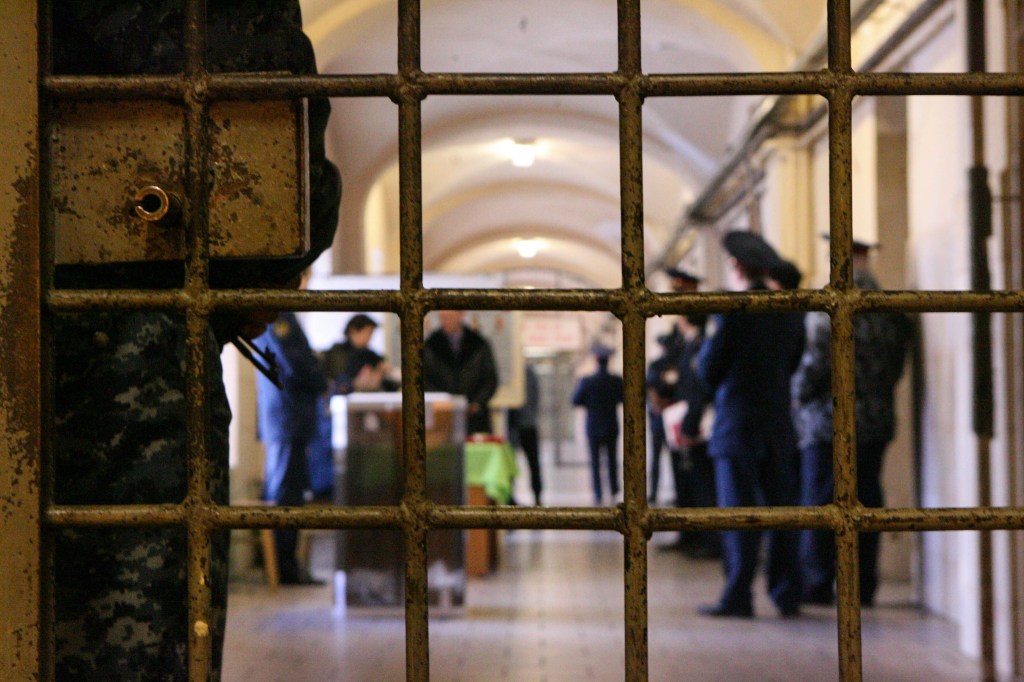
Voting in prison is not a bad form of entertainment. Dozens of prisoners are escorted to the ballot boxes simultaneously, providing a rare opportunity to chat and exchange news with your neighbors.
We were assembled in the “gully” and launched in pairs into a room equipped for a polling station. The convicts had fun arguing who to vote for. Mostly, of course, there were juicy quotes from Leningrad’s song about elections….
“Elections! Elections! The Candidates Are Buggers!” The song, written by Alexei Kortnev for the theater production Election Day (2003), was performed in the eponymous film (2007) by Sergei Shnurov and Leningrad
With a clear conscience, I wrote “FOR RUSSIA WITHOUT PUTIN” on my ballot paper. After that, I conducted a spontaneous exit poll at the prison polling station, thanks to which it transpired that most of the inmates had voted for anyone, just not for [ruling party] United Russia. Only one of them admitted that he had ticked the box for [incumbent Moscow mayor Sergei] Sobyanin. The guy, however, is a United Russia activist himself: he embezzled a factory and is now serving a sentence for fraud. So it all makes sense.
And I also saw and hugged Sergei Klokov (Vedel) for the first time in several months. For a year and a half, the man has been doing time for a telephone conversation with relatives, bugged by the security services, during which the murders in Bucha were discussed. He looks tired and misses his family, including his two young children. But he is slightly encouraged by the news that Ukraine is willing to exchange its collaborators for Russian political prisoners. I hope Sergei will be released soon. He’s a good guy.
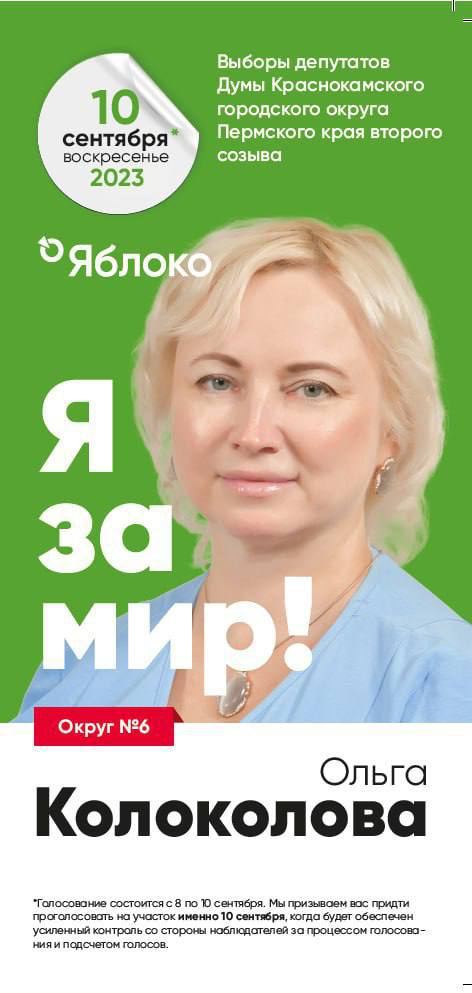
Olga Kolokolova’s campaign poster in the 10 September 2023 elections in Krasnokamensk (Perm Territory): “I’m for peace!” Image courtesy of Igor Averkiev
Olga Kolokolova, the head of the Perm regional branch of the Yabloko Party for many years, won the elections to the City Duma in Krasnokamsk (a satellite city of Perm). Moreover, she won running on the slogan “I’m for peace!”
Having received 55.2% of the votes cast, Olga Arkadyevna was returned to the Krasnokamsk City Duma, of which she was a deputy from 2005 to 2018.
Kolokolova is a veteran of the Perm loyal democratic opposition. (I say this without the slightest hint of judgment: the loyal opposition has its own positive mission, especially during periods when the regime relaxes the rules.) She is one of the most well-known politicians in Krasnokamsk, and the most consistent and most well-known Yabloko Party activist in the region.
Despite her status as a member of the loyal opposition, the election of Olga Kolokolova as a deputy in our time, and running on such a slogan, is really an unusual event, a kind of relic or vestige of the Putin regime’s bygone hybridity. In any case, it is impossible not to be happy for Olga Arkadyevna.
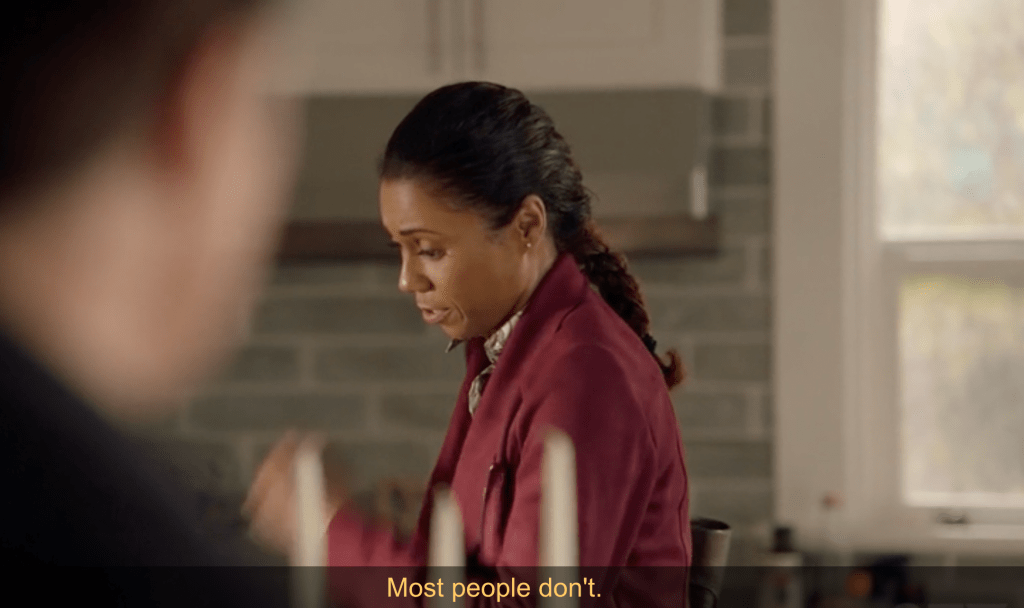
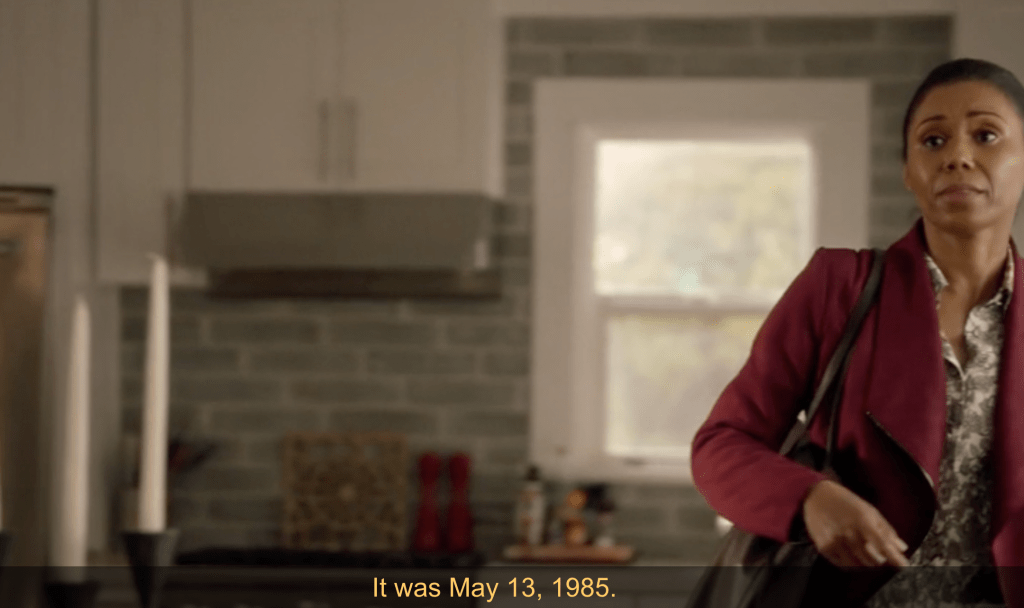
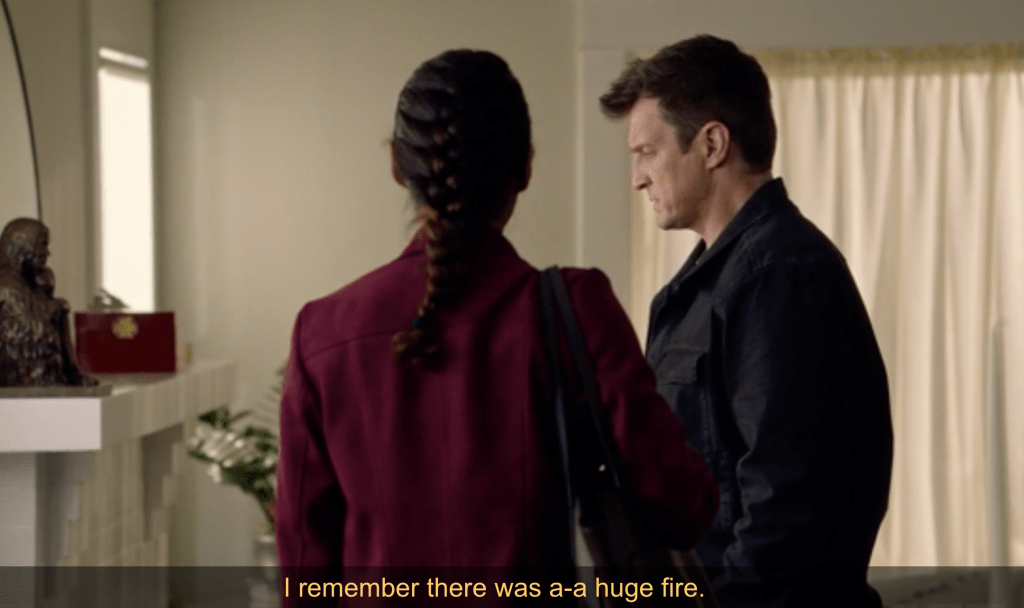
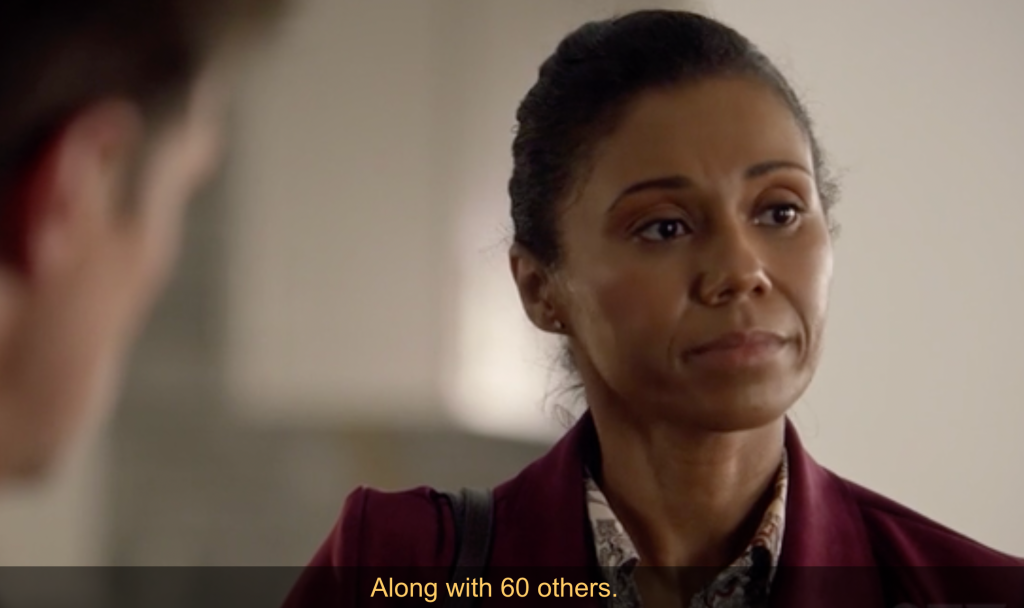
Professor Ryan mentions the events of May 13, 1985. On that day, about 500 police officers arrived at a row house at 6221 Osage Avenue in West Philadelphia to serve arrest warrants against several members of the militant black anarcho-primitivist group MOVE which has been called a terrorist organization by city officials and which had been in conflict with neighbors. After refusing to surrender to police, officers lobbed tear gas into the house and fired more than ten thousand rounds of ammunition in the house with residents returning gunfire. After a long standoff, the police commissioner ordered that the compound be bombed, in part because of fear there was a fortified gun bunker on the roof of the building. Six adults and five children died in the fire that followed.
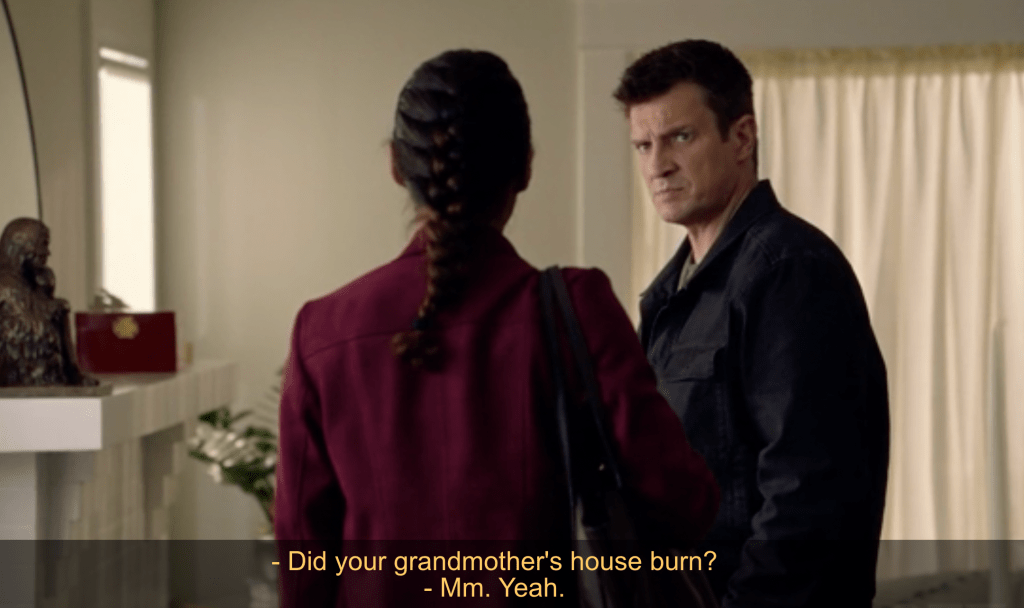
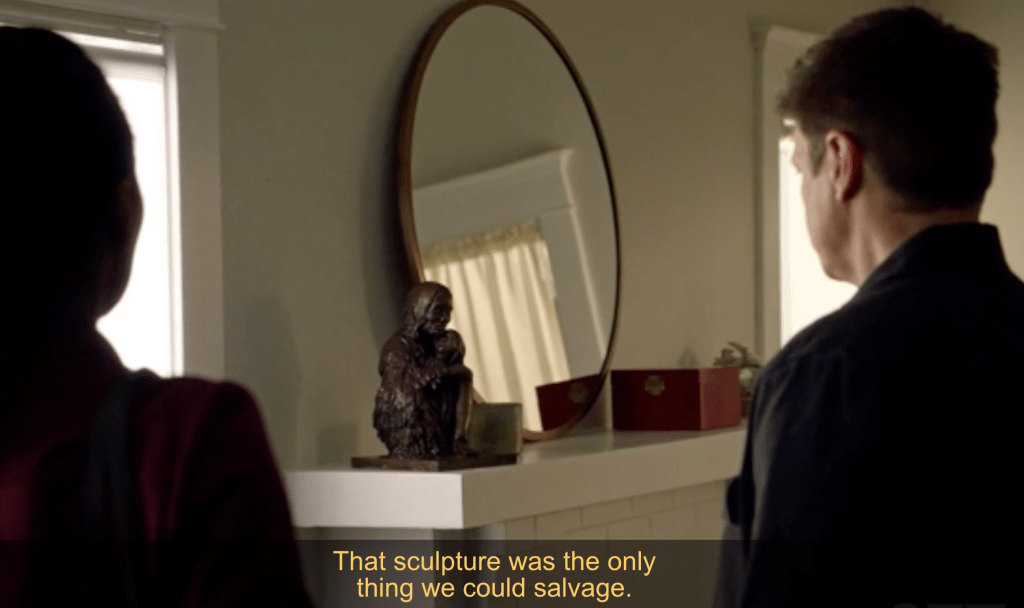
In the aftermath of the bombing, the police and fire department let fires burn out of control for almost one and a half hours at the order of the Mayor which destroyed sixty-five houses in the neighborhood. Professor Ryan mentions that her grandmother’s house was one of those that was destroyed by these fires.
A commission instituted to investigate the events found that dropping a bomb on an occupied row house was unconscionable. While no one involved was criminally prosecuted, the city was later ordered to pay $1.5 million to the survivors of the bombing and $12.83 million to other residents displaced by the bombing and the fires. In November 2020, the Philadelphia City Council approved a resolution to formally apologize for the MOVE bombing.
Daniil Bazel, candidate for the Zaporizhzhia regional Duma in Russian-occupied eastern Ukraine Social media photo via Important Stories
The Russian authorities plan to hold “elections” in the parts of Ukraine they have annexed—the parts of Kherson and Zaporizhzhia regions held by Russia, and the so-called people’s republics of Donetsk and Luhansk—on September 8–10. The “lawmakers” elected to the parliaments thus formed will appoint the heads of the regions and municipalities. Local residents will play no part in this process.
The “elections” will be held on the basis of party lists, which Important Stories and the Conflict Intelligence Team (CIT) perused together. On those lists we found collaborators, acting members of the Russian State Duma, corrupt officials, and even mobilized men. For example,
One of the candidates is State Duma member Igor Kastyukevich, who is running as United Russia’s number two candidate in the elections in the Kherson region. Kastyukevich has been implicated in the deportation of Ukrainian children to Russia. A year ago, he recounted how he had assisted in moving over fifty children from the Kherson Children’s Home to Crimea.
Roman Batrshin, the appointed head of the Zaporozhzhia regional court, is running for the Zaporizhzhia regional duma. Previously, Batrshin was acting head of the Smolensk court. He became a “local” in the occupied region quite recently.
When our correspondent called Batrshin’s number, the voice on the other end of the line sounded like Batrshin’s. When asked about the elections he said, “It’s not me you’re talking to. He’s not here.”
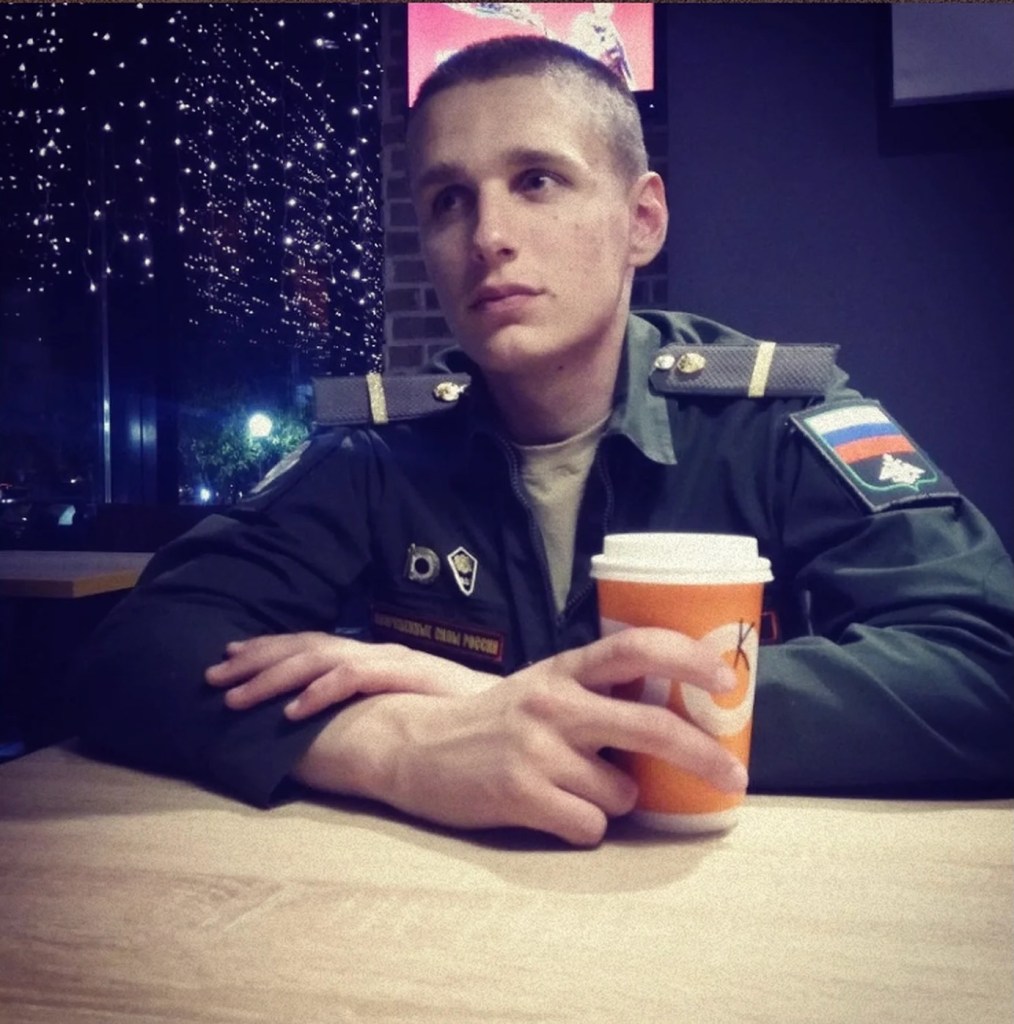
Among them is Daniil Bazel, a 23-year-old mobilized soldier. In Moscow, he worked in the one of the arms of the Russian National Guard, but is now trying his hand at entering the Zaporizhzhia regional “parliament.”
“I’ve decided to run because I’ve come to like the region a lot,” Bazel told Important Stories. “It has to be developed. I myself am a mobilized soldier. I spent eleven months in Zaporizhzhia and and now I am directly performing tasks related to the service in the Zaporozhzhia region [sic]. I saw it all from the inside and I wanted to help fix everything.”
It is apparent from the candidate lists that the main problem faced by the organizers of the “elections” was finding people willing to run. Thus, 27% of LDPR’s candidates are pensioners and housewives far removed from politics, while such people make up nearly half of the candidates on the CPRF and A Just Russia lists.
LDPR is also running several serial candidates, that is, people who have run in dozens of elections at various levels but who have never once been elected. But there is one federal politician on the LDPR list—party chair Leonid Slutsky, who is running simultaneously in all four occupied regions.
The General Radio Frequency Center, which is subordinate to Roskomnadzor, and the company Crib Room, which develops solutions for locating and analyzing destructive content on the internet, have drafted a white paper entitled “Russia’s Gaming Industry.” The authorities see online gaming communities as a channel for communicating with young people and “a tool for state information influence on society.” According to the paper, the state can use games “to promote political ideas, brands and attitudes among young people,” which may require the development of technological tools for working with gaming communities.
Market participants note that the authorities’ growing interest in the industry creates problems for companies negotiating with foreign studios to launch games in Russia. Foreign companies do not want to deal with excessive regulation and censorship. “The Russian market is already small in global terms, and foreign studios were beginning to restore a cautious interest in it, but [the Russian authorities] are trying to regulate it rigidly, while the economic feasibility of such an approach is not broached by the people behind the initiative,” stresses Vasily Ovchinnikov, CEO of VIDO [the Videogame Industry Development Organization].
Hello, Moscow Times readers! This is your weekly newsletter, which will shed light on:
a time of rapid price growth in Russia
how Africa feels about free Russian cheese grain
why Vladimir Putin remained standing.
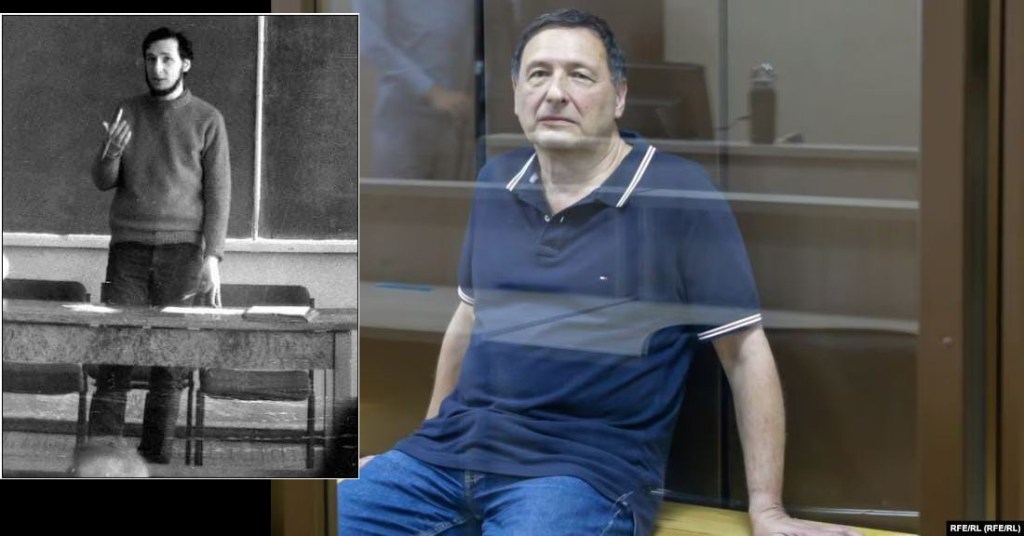
But first we will discuss a seemingly not too high-profile event—the arrest of the Soviet dissident and prominent Russian leftist Boris Kagarlitsky.
Boris Kagarlitsky was jailed by the Soviet regime, and now he’s been jailed by the Putin regime too.
On the face of it, it looks like yet another trumped-up “condoning terrorism” case! Zhenya Berkovich and Svetlana Petriichuk were also arrested under this article and are currently in pretrial detention.
But Boris Kagarlitsky is not a great theater director chockablock with interesting creative ideas. He is a veteran anti–American and anti-globalist. Few people remember how vigorously Kagarlitsky supported Russia’s invasion of Georgia, how he spoke as critically as possible about the Ukrainian Maidan of 2013, and how later he consistently criticized what he saw as Volodymyr Zelensky’s “puppet” government. And he lent his support to the “separatists” in the Donetsk and Luhansk regions.
In other words, Kagarlitsky has generally been an ideological ally of the Russian regime, and his criticism of the Kremlin is based on the argument that the regime has been insufficiently consistent in its anti-Americanism and anti-globalism, in its fight against the global financial monster and its ubiquitous outstretched tentacles.
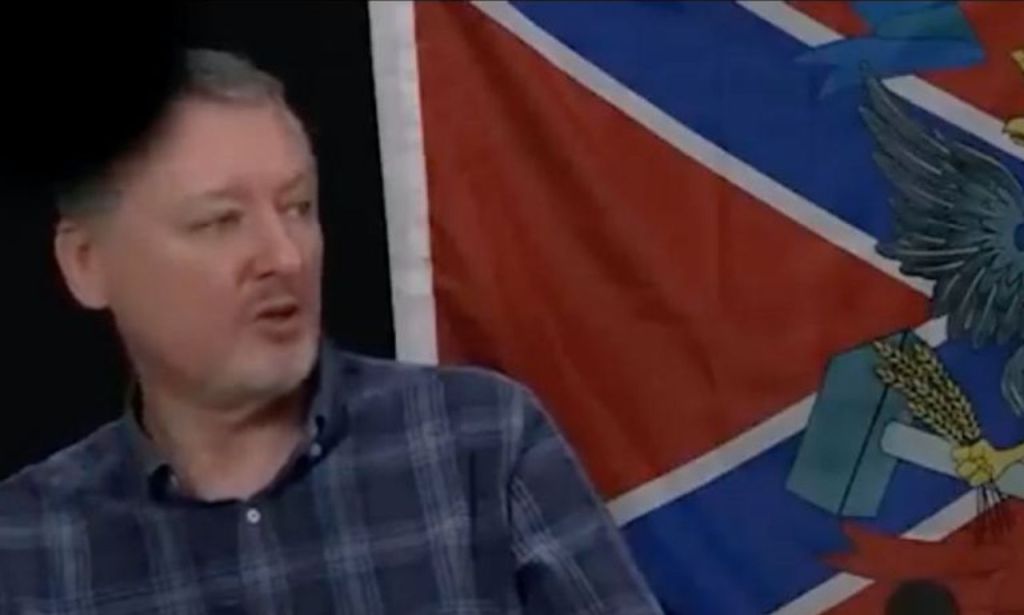
Does that remind you of anyone? That’s right: Igor Girkin-Strelkov. The arrested leader of the so-called Russian World likewise did not just support the Kremlin’s plans for conquering Ukraine. He onstantly stressed the insufficient efforts and inconsistency evinced by the Russian authorities in its “final solution” of the “Ukrainian question.”
Igor Girkin accused Putin of indecisiveness.
Thus, in the wake of Yevgeny Prigozhin’s rebellion (but not necessarily because of it, although this could be the case), the authorities, realizing that liberals no longer pose any danger, have gone after political opponents of a different stripe—after fellow travelers who rabidly dared to tell them what to do. Prigozhin did something similar, but he bit his tongue after his pseudo-mutiny. Unlike Kagarlitsky and Girkin, he stands for no ideology other than self-enrichment, and this stance is is something the Kremlin can comprehend and even adore.
What matters is that Kagarlitsky’s arrest, hard on the heels of Girkin’s arrest, shows that the regime is at a total ideological impasse. Its amorphous anti–western rhetoric has no clear conceptual basis, and hence anyone who espouses something resembling a real concept is an indubitable threat.
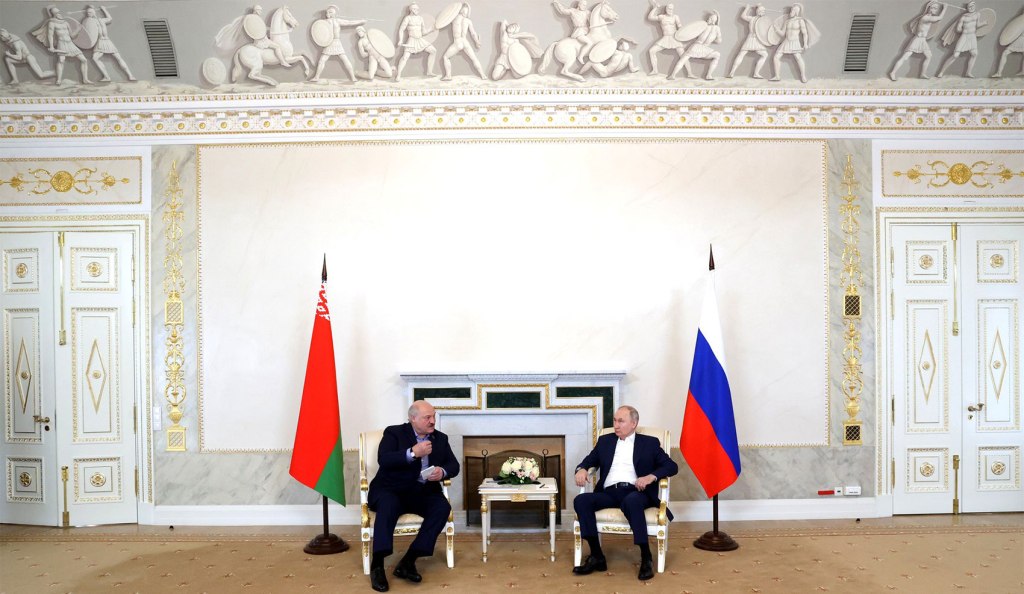
Putin’s only real ideological ally remains Alexander Lukashenko, a politician who has an immense arsenal of ridiculous arguments for explaining away the actions of his aggressive Moscow meal ticket.
The Belarusian pretender always points out where the attack is coming from.
[…]
Alexei Navalny also made a very unexpected public statement. He stood up for Girkin-Strelkov and even counted him among his fellow political prisoners. Note that from a formal point of view, the herald of the Russian World, who has the blood of many people on his hands, cannot be classified as a political prisoner.
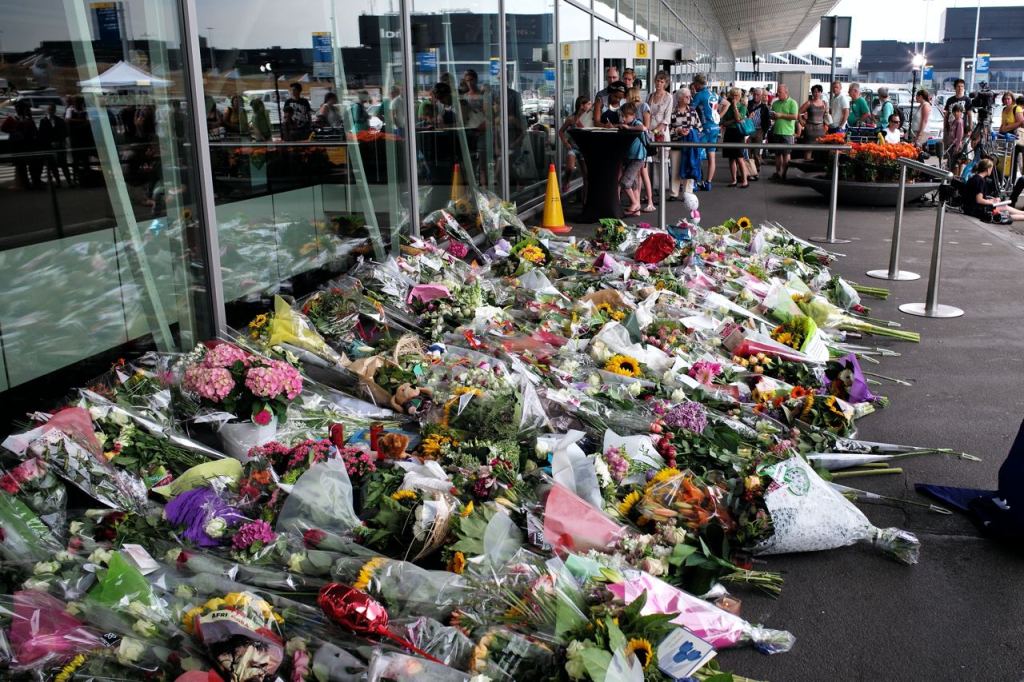
Игорь Гиркин осужден за сбитый Boeing Гаагским судом
Vladyslav Starodubtsev, historian – contribution to debate on Boris Kagarlitsky, antiwar activism in Russia and more:
“Its just very hard to agitate for person, who called for occupation of your land and promoted and helped, including monetarly, people who kill your friends. Calling this “a difference of opinions” doesn’t seem a right thing. In 2014 he took huge effort to align far-right and far-left in support of Russian war against Ukraine, and got Presidential grant for it. Had strong connections with both Putinist elite and Russian neo-nazi criminals in Donbass. And before — justifying need to invade Georgia https://rabkor.ru/columns/debates/2008/09/09/debate-53/…
“It is not surprising that the Western left, having no illusions about the order prevailing in our country, unanimously supported Russia. The blow inflicted on the United States has global implications and opens up new perspectives for their struggle. It would be naive, to say the least, to maintain power. This is not our government, and it will never be ours. But you need to take advantage of the situation. And if the government nevertheless did something that meets our own requirements, this should be treated as a success, and this success should be developed.
We have always been against NATO, against orientation towards the United States. We have always opposed the WTO. These are our fundamental positions.
It would not only be foolish to miss the chances that history offers us today. That would be criminal!” – Boris Kagarlitsky in times of Russian invasion in Georgia
The person who not only called, but participated in promoting violence and occupation, using millions given directly by Putin’s office, then helping monetarly to occupational forces and using any possible platform to promote campism and pro-Russian views amongst the Western left. He justified terrorism. And he become the architector of his own fate. The power that he critically supported in his nationalist crusade against “The West”, against Georgians and Ukrainians, now consumed him. It seems that he relied that connections with Putinist elite will save him. But after Wagner coup, Russia represses everyone. It doesn’t make these people political prisoners. I won’t agitate for any morally compromised
He by definition is not a political prisoner, so agitate for his release doesn’t make much sense. In the biggest – agitate to his extradiction to Ukrainian court. Organize media campaigns for any of it would be pretty absurd.
“3.3. A person is not to be regarded as a political prisoner, if, under the above circumstances, the person has committed:
a violent offence against persons, except in cases of self-defence or necessity;
a hate crime against a person or property; or the person has called for violent action on national, ethnic, racial, religious or other grounds.”
That is why I never called for release of any nazi in Russia, even if they had the change of heart, either because of elite reshuffle in Putin’s office, and their allies falling down, or because they understood what horrible monstrosity they helped to build and in what they participated, under tens of thousand people were killed by Russia’s full-scale invasion. Why nobody thinks from perspective who Kagarlitsky agitated to roll over on tanks? And yes, it is a part of bigger problem, that all the left is crazy when Russian left-nationalist Kagarlitsky is arrested, after a year of being allowed to criticize Russia, but the genuine activists, who aren’t xenophobic – ignored.”
Stand with all antiwar protest -stop Russia – tell the whole story Ukraine Socialist Solidarity Campaign: “Many people on this FB page are familiar with Russian leftist commentator and intellectual Boris Kagarlitsky. He has been a controversial figure for good reason. He supported the annexation of Crimea and the war in Donbass in 2014. He is a friend of Girkiin, the committed war criminal.
For reasons unknown he chose to stay in Russia while many of his colleagues fled. And this week he was detained by the FSB in Moscow, taken to a pre trial detention center where he will stay until the end of September when he will face charges on “justifying terrorism” for his criticisms of Russia’s invasion of Ukraine. A petition is being circulated calling for his freedom, along with other anti war Russians. Supporting Kagarlitsky as a political prisoner does not in any way imply an endorsement of his extremely objectional views. As Ilya Budraitsis writes in the statement below, Kagarlitsky’s arrest is part of a new wave of repression against any critics of the war.
The following statement was released by Russian socialist and anti war dissident Ilya Budraitskis and other comrades. Please see the petition below and sign/share if you support it.
Two days ago in Moscow, FSB officers detained well-known leftist theorist, activist and commentator Boris Kagarlitsky. At present, Boris has been transferred to the pre-trial detention center in Syktyvkar, where he will stay at least until the end of September. Kagarlitsky was charged with “justifying terrorism”, for which he could face up to 7 years in prison. At the same time, in Moscow, Yekaterinburg and Penza, searches were carried out at the homes of Kagarlitsky’s associates on the YouTube channel Rabkor. It is obvious to us that the arrest of Kagarlitsky is part of a new large-scale repressive campaign by the authorities aimed at completely clearing the political space of any critics of the war. Since February 2022, Boris has taken a pronounced anti-war stance, and we are sure that this was the only real reason for his arrest.
Boris’s personal political trajectory began more than 40 years ago and has not always been flawless. In the early 1980s, Kagarlitsky was a member of the underground group of “young socialists” and was subjected to repression by the KGB, and since the early 1990s he played a prominent role in the left opposition, first to the Yeltsin and then to the Putin regime. His numerous books and public speeches had a great influence on several generations of the Russian left, and that is why his responsibility for certain assessments remained exceptionally high. In 2014, Kagarlitsky actively supported the annexation of Crimea and the creation of the so-called. “People’s Republics” in eastern Ukraine. And this support, unfortunately, played a role in disorienting part of the Russian left. These, like many other moments in Kagarlitsky’s activities, are completely unacceptable for the members of the “After” team. And now our fundamental differences have not gone away, and we will certainly discuss them with Boris – but only after his release.
It must also be acknowledged that after the start of the full-scale invasion, Kagarlitsky was one of the few Russian leftists who, while remaining in the country, continued to publicly condemn the war on the part of Russia. It can be assumed that only the wide popularity of Kagarlitsky has kept the authorities from arresting him until now. Now that this has happened, it has become clear that repression is reaching a new level and the number of activists in the immediate risk zone has increased significantly. That is why we call for an international campaign in support of Kagarlitsky and all political prisoners in the Russian Federation”.
I’ve always liked a certain phrase from our fellow countryman, the philologist Professor Lotman. In one of his university lectures he said: “A person is always in an unforeseen situation. And here they have two legs: conscience and intellect.”
This is a very wise thought, I think. And a person must rely on both of those legs.
Relying on your conscience alone seems intuitively right. But abstract morals that fail to take into account human nature and the real world will devolve into either stupidity or evil-doing, as we’ve seen more than once in the past.
Then you have reliance on the intellect without conscience—which is exactly what lies at the foundations of the Russian state today. At first this idea seemed logical to the elites. Using petroleum, gas and other resources, we’ll build a conscience-free, but very clever, modern, rational and merciless state. We’ll become richer than the tsars of the past. And we have so much gas that even the populace will get a little something. Making use of the contradictions and vulnerability of democracy, we will become leaders and be respected. And if not, then feared.
But what happens is what happens everywhere. The intellect, unfettered by conscience, whispers: seize, steal. If you’re stronger, then your interests are always more important than the rights of others.
Not wishing to rely on the leg of conscience, my Russia made several big leaps, pushing everyone else around, but then slipped and came crashing down, destroying everything all around it. And now it is floundering in a pool of either mud or blood, its bones broken, its population destitute and robbed blind, while all around lie tens of thousands of people killed in the stupidest and most senseless war of the 21st century.
But sooner or later, of course, Russia will rise again. And it’s up to us what [leg] it will rely on in the future.
Russian prosecutors have requested a 20-year prison sentence for jailed Kremlin critic Alexei Navalny on a new string of “extremism” charges, his team reported Thursday.
Navalny, 47, has been charged with creating an extremist community and an organization that infringes on the rights of citizens; financing extremism; making calls to extremism; and involving minors in dangerous acts and the rehabilitation of Nazism.
He and his allies have denied the charges as “absurd” and politically motivated.
If convicted, the trained lawyer and Putin opponent will spend a total of 29 years in prison.
In his final word in a prison court before his sentencing, Navalny slammed the invasion of Ukraine and expressed his hope for Russia’s future.
“My Russia made several big jumps, pushing everyone around, but then slipped and with a roar, destroying everything around, collapsed,” Navalny said, according to a statement published by his team.
“And now it is floundering in a pool of either mud or blood, with broken bones, with a poor and robbed population, and around it lie tens of thousands of people killed in the most stupid and senseless war of the 21st century.
“But sooner or later, of course, it [Russia] will rise again. And it’s up to us what it will rely on in the future,” he added.
His verdict is expected to take place on August 4.
The European Union added the chief of the Russian prison camp holding Navalny to its sanctions list as prosecutors requested the 20-year sentence.
Navalny was jailed upon his January 2021 return to Russia after recovering from a near-fatal poisoning with what Western scientists determined was Novichok, a banned military-grade nerve agent developed by the Soviets.
Russian officials outlawed Navalny’s political and activist organizations as “extremist” organizations later that year, prompting nearly all of his close associates to leave the country.
“For our series of reports on relations between Finland and Russia, we head to the border area. The two neighbours were strong trading partners until the 2022 invasion of Ukraine led Helsinki to cut off business ties. Russian tourists are no longer welcome and with EU sanctions in place, Finland is on the frontline in checking goods crossing its 1300 km long border with Russia. FRANCE 24’s Julien Sauvaget and Clovis Casali report.” France 24 (YouTube), 14 June 2023.
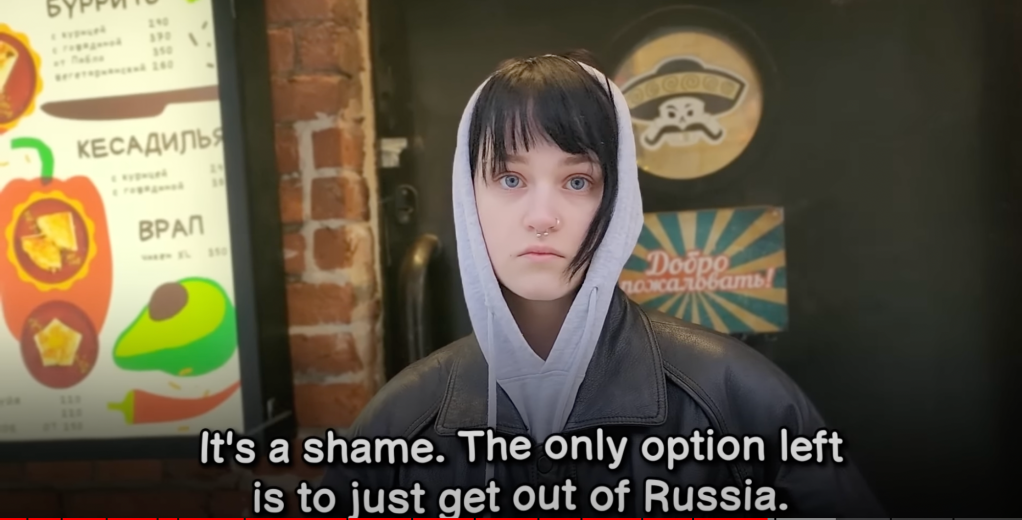
People in Russia don’t have time to think about world events, explains a Russian young man at the Vaalimaa border crossing. There are plenty of goods in St. Petersburg, despite the sanctions. This kind of me-centric luxury does not exist for Ukrainians.
If I were an autocrat, I would provide these border crossers with a thorough guided tour of the massacres in Mariupol and Bucha. The price would include a night of experiences, i.e., a month-long air raid simulation every night. I could think of a lot of other empathy exercises, though I don’t think they’ll do any good.
This is a comment on the news report, above, by a Finnish friend of mine, living near the Finnish-Russian border, who wishes to remain anonymous. Translated, from the Finnish, by the Russian Reader
“Steak House”: a still from yesterday’s episode of the MCU, supposedly set in Moscow but clearly not filmed there.
Navalny, as a politician, is making a systemic mistake by hoping to turn people against the war in three to four months, because in a fascistic society the tools of democracy (canvassing, persuasion, solidarity campaigns ) just don’t function.
These tools presuppose democracy, and Navalny has not been a candidate standing for elections for a long time, but a political prisoner. And yet behaves as if it’s 2018 and his team will go door to door campaigning against the war.
“Let’s fantasise a little,” writes Navalny, “if every tenth of the 1.5 million who left the country since the beginning of the war […] and [the] 1 million who stayed in Russia but are not afraid, joined the campaign against candidate War, then this army of 400,000 canvassers could reach 12 million citizens per month […] Such a strong canvassing machine would dramatically change the public mood in the country in three or four months.”
To this end, Navalny wants to recruit “100 pioneer volunteer canvassers” ready to act “according to the laws and techniques of good election campaigns [b]y polling everyone, targeting hundreds of different groups, finding an approach to each and every one of them, identifying the waverers and persuading them to change their minds.”
Navalny is going to defeat the manipulators of public opinion on their own field by using a “canvassing machine” and counter-manipulation (finding an approach, targeting, and persuading), as if it were a matter of finding the right tools of influence and the right political strategies.
These are the illusions of a systemic politician who still hopes to win by following the rules for running elections and interacting with his electorate aboveground, in the open. But there is no “electorate,” no “elections,” and no conditions for “canvassing” in Russia right now. The fascist reality is completely different.
It would have been rather strange to call on “brave Germans” to go door to door canvassing against the war and the Fuehrer in 1943. Heroic people (we know their names) tried to do this in Berlin by scattering leaflets, and they were finished off by the Gestapo. They were heroes, of course, but the effectiveness of persuading people with words and leaflets in a fascizoid society is zero.
Only the regime’s defeat by outside forces, when the failure of the state is translated into “pain and suffering” for the so-called common folk, can reformat Zombieland.
History knows no other way to impact the zombified brains of the “common folk.” The task of the opposition in Russia, therefore, is to call for the destruction of the state and defeat in the war as soon as possible. We need to donate money to the Ukrainian Armed Forces and raise funds for the transfer of cutting-edge weapons to Ukraine, because crazy “Russian women” (the wives and mothers of war criminals) will not be persuaded by leaflets and conversations, but by coffins and funerals.
The losses suffered by the occupiers are the only key to peace.
And the dreams of the systemic politician (with all due respect to Navalny’s steadfastness) cannot come true. The mythical “army of canvassers” will simply end up in adjoining jail cells, like the brave picketers who protested on the streets.
In fact, Navalny proposes to his thousands of supporters the model of behavior he followed when he bet on the system’s sticking to rules of the game when he returned to Russia. By that time, however, there were no rules (as the FSB’s Novichok should have convinced him). We all remember what end his faith in the system (the ability to defend oneself in open court and hold large-scale protest rallies, and reliance on the power of aboveground regional organizing hubs) came to.
Playing at systemic politics with fascism ended with a “life” term in prison. Unfortunately, neither Navalny nor Yashin draw the right conclusions. They are free to make their own decisions for themselves, but daydreaming about “canvassers” who will go out and agitate among the common folk in keeping with the “laws of good election campaigns” is tantamount to being divorced from reality.
Unfortunately, it is clear why. The systemic opposition in Russia still clings to the illusion of “persuading” Russian society without defeating the state. But betting on the “internal forces” of the rotten imperial óchlos (which calls itself a society) is another illusion that renders the opposition’s politics toothless.
Alexei Navalny has launched a big political campaign against Putin and the war. Using modern technology we will create a real truth machine that will help us reach out to Russians.
In this video, Leonid Volkov explains how the campaign will be set up and how you can get involved.
[…]
Source: Alexei Navalny (YouTube), 20 June 2023. The video, above, includes English subtitles, which can be turned on by toggling the "CC" button on the bottom of the screen. Even more curiously, the annotation, above, is also in English.
Hi, it’s Navalny.
Today marks the beginning of yet another trial, which will greatly increase my total sentence. However, I don’t want to use this day simply to draw sympathy for myself and other political prisoners. I want to call everyone to action, and use this day to announce our new, very important project. The big propaganda machine. The truth machine. We don’t just intend to make it, we will definitely create it in order to join forces against Putin’s lies and the Kremlin’s hypocrisy. We really need you. Join us.
Why is today the right day for this announcement? Because my trial itself proves the rightness and necessity of such a project. What is the most important thing about this trial? Not lawlessness, not “phone justice”, not the obedience of unscrupulous judges and prosecutors. The main thing is its format: it is a trial inside a prison. Putin doesn’t shy away from jailing the innocent, and he’s not afraid that I might be taken back by rebellious mobs during a court session in Moscow. However, he is afraid of what I have to say. Even if they are obvious words known to all. He is afraid of the word. Not just mine, of course, which is why Kara-Murza and many others were also tried in a closed trial.
Putin is afraid of any word of truth, he hates speeches that turn into Internet memes, he is furious at the “last words” [i.e., the closing statements of defendants at political trials] that get an audience of millions. In essence, the task of strengthening and prolonging Putin’s power is accomplished by shutting up those who dare to speak the truth. This goal is the subject of almost everything that has been done in Russian politics over the last few years. And since the start of the war, the regime has not thought about anything else. People get jailed for their posts, for defamation, for spreading misinformation, there are endless arrests and blockings, everyone gets labelled as “foreign agents” or “undesirable organisations”. Why not let people talk though? When the government fights rallies that it considers dangerous, there is some logic to it, but what exactly is the problem with chatter on the Internet or even over the phone?
It may even seem that this way, discontent goes to waste. Keyboard warriors spend their time leaving likes instead of building barricades. But that’s not really how politics works.
Putin has proven to be a fool in the military sphere, a talentless military leader, but he is no fool when it comes to politics. He knows that the backbone of any political action is an idea and a word. Canvassing and persuasion. This is very evident during elections, especially those that are highly competitive. Whatever the specifics of the state, its political traditions and agenda issues, during elections it still comes down to canvassers going door-to-door, making phone calls, persuading people on social media and messengers. And during every US presidential election, with all their high technology and huge budgets, the candidates themselves volunteer at call centres to encourage their supporters to also come there and call, explain and persuade.
Because in terms of the power of persuasion, nothing has or will ever beat the most basic kind of campaigning – simply talking to people, providing them with examples and arguments.
People like to claim that they are not influenced by election campaigning, that they already know exactly what they want and that they cannot be persuaded. But this is not true. A large part of the electorate makes their choice at the polling station, so a good canvasser can sow doubt, persuade, and change their minds. This has long been proven. And we ourselves have conducted experiments in this field.
So what is there to campaign for when there is no election? There is actually plenty to campaign for, and the stakes are very high. We will campaign against the war. And against Putin. That’s right. We will conduct a long, hard, exhausting, but fundamentally important campaign to turn people against the war.
Against war and everything related to it. Against the deadlock that Putin so madly and stupidly spiralled into on February 24, 2022: deaths, casualties, mobilisation, war crimes, isolation, sanctions, tens of thousands dead and millions leaving the country. Degradation of the economy and decline in living standards, criminals fighting at the frontlines and penniless mobilised soldiers, lots of wounded and killed.
This is a very precise task, and I have no doubt that our work will be successful. Here is the most important table and the main figure from one of our surveys:
Every fifth person has relatives or acquaintances who died in this war. Sadly, these figures will only continue to grow, changing public perceptions. Tens of thousands of wounded and disabled people. Hundreds of thousands of mobilised men who have seen Putin’s war for themselves: the talentless thieving generals, the shortage of everything from socks to shells. They return home, their stories are listened to and retold. This does not at all mean that these people automatically become anti-war activists. But it certainly means that they can become them with our help. We have a good reason to talk to them about important issues, and many will be willing to talk.
We will change many people’s minds and raise doubts in almost all of them. This is a campaign against the candidates War and Putin. And we will do it according to the laws and techniques of good election campaigns. By polling everyone, targeting hundreds of different groups, finding an approach to each and every one of them, identifying the waverers and persuading them to change their minds.
I strongly doubt the huge numbers of “war support” reported by Kremlin sociologists. The main reason is that it is unclear what the term “support for the special military operation” actually means. I ask to be sent everything that Strelkov and Prigozhin write and say, I read it very thoughtfully. Are they pro-war? Of course they are. But despite all their mutual dislike, I can’t find any clearer anti-Putin and anti-Kremlin statements from anyone else. And frankly, some of their statements are already close to anti-war. Have you seen Prigozhin’s interview? As savage as it is, it’s still anti-war. Putin’s cook says expressly the war is already lost. A scenario of victory – in his words, the “optimal” scenario, in which we manage to keep what we have already grabbed – is hardly possible. The elites have stolen everything and their children are abroad. The generals are stupid thieves. Our weapons are bad, there are no shells. This is actually the style that the ACF has always spoken in, but now this comes from the main supporter of the war and one of its main commanders who is speaking.
So whenever a voter repeats all this to us, our task is to ask him ingratiatingly: well then, maybe to hell with this war? Why did we even start it? Yes, many people dislike not war itself, but a lost war, or a meaningless war. OK, any anti-war campaign relies on that too, as was the case with the Vietnam and Iraq wars.
I agitate the cops the best I can over here. Naturally, they say they are pro-war. That’s to be expected: our conversations are recorded on their body cams. It is useless to talk to them about war crimes, Bucha, aggression, and sanctions. They do not care about those suffering. But when I ask: “Where are the shells though? Where has your Putin, who has been in power for 23 years, having a ton of money, wasted all the shells, socks, bulletproof vests and quadcopters?” – they have no answer. “It wasn’t me who asked about the shells first. It was your Prigozhin, whom you were kowtowing to when he came here to recruit prisoners for the war. And if your government is so fucked up that there’s no intelligence, no commanders, no border, no air defence, no shells, no socks – then why the hell did you start this war? To bury a million people in the ground?” They don’t put me on a pedestal after such talk, but they do start thinking and having doubts.
So we are going to find a personal approach to everyone, without using the same language to talk to a programmer from Moscow, a young mother from Orel, and a retired serviceman from Chelyabinsk. This is a campaign against candidate War, and it can only be conducted successfully with the support of an army of tens, and preferably hundreds of thousands, of motivated, diligent, hard-working people who believe in success. People who don’t burn out every five minutes, who don’t faint when their interlocutor tells them to piss off, who don’t get demotivated when facing an average voter and don’t expect them to be logical, intelligent, educated, polite, and quick to change their minds. This is a smart, subtle and difficult long term job, and I encourage those who want to do some real work and make a real contribution, rather than endlessly whining on Facebook and Twitter where we try to re-convince ourselves, to join us.
We already oppose the war, there are already several million of us, we have already learned how to organise and finance our own actions. Let’s fantasise a little: if every tenth of the 1.5 million who left the country since the beginning of the war and mobilisation, 1.5 million who left after 2014 and 1 million who stayed in Russia but are not afraid, joined the campaign against candidate War, then this army of 400,000 canvassers could reach 12 million citizens per month, even if each of them only makes one contact a day, i.e. does not overwork in the slightest. Such a strong canvassing machine would dramatically change the public mood in the country in three or four months.
But let us stop imagining things now. Because this is not likely to happen in practice. People are lazy, they have their own things to do. The most vociferous of them, those who demanded “real action”, will be the first to disappear. The idlers, as always, will find excuses for themselves along the lines of “that’s no real action, I would gladly derail some trains, but this is rubbish”. And they will concentrate on criticism without ever derailing a single train. And so on. These things happen during any election campaign. Nevertheless, we do realise that there are tens of thousands of people who are prepared to devote at least one hour a day to work diligently and persistently for the common good. This is a colossal force. It will not be easy to organise such a canvassing machine – one of the largest in the world. However, all things are difficult before they are easy. I am confident that we can set ourselves the first task of reaching 10 million voters with our campaign against the war and Putin. That will already guarantee a noticeable shift in public opinion. No one can predict what effect this will have on the political situation. But our work will certainly not be in vain.
Let’s move on to specifics. What instruments of persuasion are available to us within Russia? Rallies or pickets – no. Door-to-door visits – no. Calls from one’s own phone if the caller is inside Russia – no. Call centres inside Russia – no. As you can see, the basic arsenal of traditional election campaigns is not available to us. We rationally acknowledge this.
However, there are new opportunities, new technologies. Offshore call centres, decentralised call centres. Messengers – campaigning through them can be amazingly effective, given that every granny already has WhatsApp and Telegram. Campaigning on Kremlin-controlled social networks is also possible if the risks are properly avoided. Thus, a rough description of the campaign machine that we will be building is as follows: it will be a system that will allow you (the canvassers) to join it at any convenient time, from anywhere, and (while preserving your anonymity if you wish) communicate with voters within Russia that fit the required parameters (gender, age, city, occupation, etc.) by voice or text. The system will teach you how to canvass, drawing on previous experience and suggesting a pattern of conversation, facts and phrases. In a way, it’s like creating and training artificial intelligence. We have to create and train a system of collective intelligence, convincing voters to oppose the candidates we hate – War and Putin.
«Woah!», — you might say.
Well, yes, it is an ambitious task. However, it is nothing unrealistic or previously unseen. Marketers, advertisers and political strategists have been doing this for decades. All those cold calls, warm contacts and sales funnels are well known to all. It is just that, more often than not, marketers do not go to prison for such things. Our activities, of course, will be declared illegal and subversive. All the forces of the state apparatus will be rushed to combat it. Very well, we will throw all our energy into the fight against the apparatus of war, corruption and stupidity.
There is a lot of technical work to be done. Nothing like this exists yet. The system must be very flexible and have qualities that would appear to be mutually exclusive. It should be a user-friendly database of contacts, but it must be designed in such a way that would rule out any possibility of it leaking out and causing problems for people. Anyone should be able to get involved quickly, but we need to be able to weed out the provocateurs, the crooks, the stupid, the hotheads and so on as quickly as possible. A large number of one-time accounts will have to be created, but this should not turn into a spam machine. The propaganda machine should be able to adapt instantly to blockages and any opposition, and be as creative as possible. My colleagues and I have been doing or trying to do some elements of such a thing since 2012 – old-timers may remember the Good Truth Machine project, which I announced at one of the rallies back in the day.
However, the scale of this project is such that there has always been a lack of time, knowledge, money and staffing. I think this is one of my biggest political mistakes: I did not make the Good Truth Machine a priority and we did not manage to build it after the 2013 elections, being constantly distracted by other things. And now we simply don’t have a choice. Neither political (what could be more important than stopping a war and a government living a war?) nor organisational (hundreds of thousands of the most active and literate citizens have been forced into emigration). They are ready to do something, but what? We get thousands of messages: “Guys, give us some work, useful work that can be done from abroad or in Russia, but without too much risk.”
So, we start inventing, we start building, we start hiring, we start raising money. We need you very much. First and foremost, we need those who understand the technical, logistical and organisational side of what I have described. We are collecting opinions, expertise and ideas. We will soon organise hackathons in various cities. And, of course, we need the most resilient and the most patient, the most understanding, those who will become the heart and essence of this system. A technical shell is being built, but must be filled with people.
In order to campaign successfully, we need to have conducted thousands of hours of conversations by the time we build and launch a full-fledged machine. We need to listen through them and analyse them, determine micro-targeting parameters, create, try, modify and improve hundreds of scripted conversations for different target groups.
We’re looking for 100 pioneer volunteer canvassers who are ready to tackle this awesome, but challenging, task, especially amidst the inevitable chaos and mess of the first steps.
Email antiwar@navalny.com if you are:
– an IT specialist willing to invest a lot of time into creating technology solutions for our campaign system;
– a marketer, sociologist or political scientist willing to invest a lot of time into creating conversation scripts, engagement funnels, etc.;
– a supporter willing to donate a substantial amount of money to this particular canvassing project;
– a volunteer willing to be in the first hundred people who will invest a lot of time conducting conversations, working out scripts and finding the words and approaches that take voters away from candidate Putin and candidate War.
Write about yourself in sufficient detail, stating where you are from, where you live now and how much time you have for this job. We will get back to you shortly.
This is a long-term project. Putin’s military defeat is inevitable. But no one knows what it will look like or what its consequences will be. Those at the very top of power, the ones who are ready to wage war for the sake of money and strengthening their position, are not going anywhere. They will not pack up and fly off to the moon. Their response to a lost war will be hysteria and preparation for a new war. That is what they will brainwash the citizens with. No one but us can enter this fight for the hearts and minds of our fellow citizens. So, we must enter it and win it.
While thousands of Ukrainians were fleeing their submerged homes after a catastrophic dam explosion last week, high-society Russians gathered for a glitzy restaurant festival in the Black Sea resort of Sochi, just 500 miles away from the devastating flooding.
The event, called Gastreet, saw some 5,000 citizens pay up to $2,000 dollars for the opportunity to listen to some of Russia’s top businessmen, restaurant owners, and influencers over the course of five days. The event also included concerts, lavish nightlife experiences, and gourmet dinners.
If there’s one thing that was made clear at the Sochi resort, it’s that no amount of Western sanctions, Kremlin restrictions, or spillover violence within Russia can stop the country’s rich and famous from living large—despite the raging war in neighboring Ukraine.
Take Ksenia Sobchak, Putin’s rumored goddaughter and one of the VIP Gastreet guests who spoke at the Sochi resort last week. The Russian influencer—who reportedly made over $3 million from her media holding company, Careful Media, last year—has continued to promote products on her Instagram page in the lead-up to the event, even though the app has been banned in Russia.
One of her latest marketing campaigns is for Primepark, a luxury real estate complex in the heart of Moscow.
“Just imagine, valet meets you in the parking lot, bellmen carry your shopping bags to your apartment, housekeepers help with all your routine around the house—I always said that comfort is made by details,” Sobchak wrote under photos of herself in designer outfits, wandering around luxury apartments. (The comment sections are flooded with responses blasting Sobchak with “reminders” of the countless missiles descending on Ukraine.)
“Mikhail Ivanov: ‘A million have left. 139 million stayed,'” Tell Gordeeva (YouTube), 20 June 2023. In Russian, with no English subtitles
Mikhail Ivanov is a star of the Russian book market and the subject of the new episode of Tell Gordeeva. Ten years ago, he reinvented the old Soviet bookstore Subscription Editions and made from St. Petersburg fashionable. Why write, read and sell books in a world where there seems to be no cultural values left anymore? And who needs books when a war is underway? We talk with Ivanov about why he continues to live and work in Russia and on whose behalf he does it.
Contents:
00:00 How Misha visited the store he now owns for the first time 2:48 “Books smell of danger, freedom, and freshness” 4:27 “On my fifth birthday I ran away from home to see the battleship Aurora” 5:47 “She likes it, but she didn’t believe it until the bitter end”: how Misha’s grandmother handed him control of Subscription Editions 7:27 “It was hard for me to concentrate on reading” 9:24 Harry Potter’s graphic art secret 13:46 Subscription Editions’ business model 14:59 “Here you could drink tequila from someone’s navel right at the bar”: what happened to Subscription Editions in the 2000s? 17:02 “Mom and Grandma gave me 2.5 million rubles to buy the store in 2013” 18:12 How to get round all the restrictions 20:57 “I’m Mikhail Ivanov: I work in a bookstore and publish books. I have nothing to do with it” 24:30 “I promised to stay with my employees. I can’t leave” 26:12 “We know who owns what fur coats, buildings and planes, but we were not offered an alternative”: on the opposition 28:03 “I am a citizen of Russia, I pay taxes here. But I don’t associate myself with the Russian Federation” 30:09 “How can you do public opinion polls when they can inform on you?” 32:26 “I’ve been dreaming of going to a Monatik concert for 10 years” 33:22 Top 5 books of 2022 in Russia 34:09 Why do some bookstores hide books by “foreign agents” and do they have to do this by law? 37:26 “The employees of Subscription Editions treated me like my grandmother’s grandson” 40:30 Who Katerina Alexandrovna is and why her favorite books are important to us 42:12 “4,000 people come to our store every day” 43:02 “We had our biggest earnings in March and April 2022” 44:27 “We will close the libraries and smuggle out the books” 48:02 “Where to find a haystack?”: how Subscription Editions’ unique Instagram is created 52:18 What did people do in the bookstore behind a closed grate? Yes, yes! 53:08 “We are a catalogue of the good books published in Russia” 55:05 “We are from Petersburg, and only then from Russia” 1:00:04 Installing a lift in a bookstore for 6 million rubles: what???!!!! 1:02:42 “Our growth strategy doesn’t allow us to stumble”1:04:05 “Do your job and sell books” 1:06:45 “A long strange courtyard that no one knows about”: Mikhail Ivanov gives a tour of Petersburg’s pass-through courtyards 1:08:36 “We show that you can live differently” 1:12:02 St. Petersburg’s Books Quarter 1:15:05 Why is Margarita Simonyan’s book selling so badly? 1:17:24 “I won’t say and do things I don’t believe in” 1:20:01 “How can I lose the meaning of what I am myself?”: on emigration 1:21:09 How Ivanov came up with the postcard “From Petersburg with apathy and indifference” 1:23:55 “There is a separate room with padded walls for bookmen in paradise”
Open Telegram and keep up with the news.
Rate this year in terms of its nineteenthirtysevenness.
Take a look at it, at its wooden hands,
At its iron cheeks, splotched with new partings.
This is a theater being demolished, a theater in which there is neither audience nor actors.
This is a theater being demolished, a theater in which there are only fishes and corpses.
Take a look at it and set aside your New Year's fun.
Rate the extent of this city's Stalingraditude.
Wave to the harlequins, dragons, and princesses,
And look at it, monitor the process without blinking.
Hang on to it: it will be both lamentation and reward.
Preserve its shadow if you like.
On second thought, forget it.
A video of a read-through of “Finist the Brave Falcon,” the play for which Russian theatrical director and poet Zhenya Berkovich was detained in Moscow earlier today on suspicion of “condoning terrorism.” Here is a link to a website where you can download the (Russian) text of the play, by Svetlana Petriichuk, who was also detained today. Thanks to Sergey Abashin for the heads-up.
Many have nearly forgotten the criminal case against the theater director Kirill Serebrennikov and his colleagues, who were tried several years ago. That affair was dubbed the Theater Case. Apparently, there will be another Theater Case in Russia: director Zhenya Berkovich (a former student of Serebrennikov’s, by the way) and playwright Svetlana Petriichuk have been detained in Moscow.
The criminal investigation is centered on the theatrical production Finist the Brave Falcon, which premiered in 2020. The play was staged as part of the theater project SOSO Daughters, which is run by Berkovich. It is based on the criminal trials of [Russian] women who married radical Islamists. They came to know the men online and, having never met them in person, went to live with them in Syria.
“Zhenya Berkovich’s staging of Svetlana Petriichuk’s provocative, documentary style play, tells the story of a Russian woman who befriends and is seduced by a member of an Islamic radical sect online, goes to Syria, marries him, and upon her eventual return to Russia is tried as a terrorist. In recent years, there have been hundreds, if not thousands of such cases in Russia, Kazakhstan and Uzbekistan. From what are these women running? What is driving them to abandon their friends, relatives, universities and workplaces for the promise of some shadowy paradise? All this takes place in the metaphysical space of the Russian fairy tale “Finist the Brave Falcon,” in which the heroine Maryushka seeks and cannot find her betrothed, the mysterious hero, whose face she has never seen and will never see, but is ready to sacrifice everything in order to meet him.” [This annotation has been edited slightly to make it more readable.]
The Investigative Committee claims that the production “publicly justified terrorism,” which is a criminal offense per Article 205.2 of the Criminal Code and punishable by up to seven years in prison. The details of the case are still unknown. Berkovich and Petriichuk spent the entire day undergoing interrogation as witnesses in the case, and it had seemed that they might be released, but as of evening both were still in police custody.
Last year, Finist the Brave Falcon won two Golden Mask Awards—for best playwright and for best costumes. Costume designer Ksenia Sorokina handed over her award to Petersburg artist Sasha Skochilenko, who has been in jail since April 2022, charged with disseminating “fake news” about the Russian army. (Skochilenko is alleged to have replace price tags in a grocery store with information about the war.)
Zhenya Berkovich has also not made a secret of her anti-war views, including in her poetry. A collection of her poems was published in Israel earlier this month.
“Open Telegram and keep up with the news. / Rate this year in terms of its nineteen-thirty-seven-ness,” one of them begins.
According to Berkovich, her grandmother, the 88-year-old writer Nina Katerli, was worried about her granddaughter, even going so far as to tell her, “Zhenya, be quiet for a while.” Actually, the director explained that she had decided to stay in Russia, no matter what, because she had to take care of her sick grandmother.
“It is to a large extent a necessity, due to all sorts of family obligations,” Berkovich said in December. “If it were now a question of going to prison or taking care of my grandmother, then of course I would leave, because I wouldn’t be able to take care of my grandmother from prison. But right now this is not the choice I’m facing.”
“Zhenya Berkovich: Why I have stayed in Russia and how to go on living”: Berkovich interviewed by journalist Liza Lazerson, as posted in on YouTube in December 2022 (in Russian)
This morning, the security forces searched Berkovich’s grandmother’s apartment. Berkovich and Petriichuk will spend the night at a temporary detention facility, and tomorrow a court will decide whether to remand them in custody or subject them to other restrictions.
In this tragic hour, we declare our strategic goals to be the cessation of aggression against Ukraine and the creation of a free, law-governed, federated Russia. To accomplish this, we deem it necessary to coordinate our actions more vigorously. We declare our commitment to the following principled positions:
1. The war against Ukraine is criminal. Russian troops must be withdrawn from all occupied territories. Russia’s internationally recognized borders must be reinstated. War criminals must be brought to justice, and compensation must be paid to the victims of the aggression.
2. The Putin regime is illegitimate and criminal. Therefore, it must be eliminated. We envision Russia as a country in which the rights and freedoms of individuals are guaranteed, and in which the possibility of usurping state power is excluded.
3. The pursuit of imperialist policies inside and outside the country is unacceptable.
4. Political prisoners and prisoners of war should be released, forcibly displaced persons should be able to return home, and abducted Ukrainian children should be returned to Ukraine.
5. We express our solidarity with those Russians who, despite the monstrous crackdown, have had the courage to publicly voice anti-Putin and anti-war stances, and with those tens of millions who refuse to be accomplices in the regime’s crimes.
The signatories of the Declaration espouse the values of a democratic society and respectful discussion. They acknowledge human rights and freedoms and the principles of diversity and equality, and they reject discrimination.
The signatories refrain from public conflicts within the democratic and the anti-war movements.
We commit ourselves to supporting this Declaration until our common strategic goals have been achieved.
Berlin, 30 April 2023
Signed publicly by:
La Asociación de Rusos Libres (Spain)
Stuttgart Activist Group
The Flame of Freedom Movement
Мedia Partisans
Russie-Libertés (France)
Mikhail Khodorkovsky, politician
Yevgeny Chichvarkin, member of the Russian Action Committee
Garry Kasparov, co-founder of the Free Russia Forum, Russian Action Committee
Boris Zimin
Yevgenia Chirikova
Anastasia Burakova, founder of the Ark
Sergey Aleksashenko
Yulia Latynina, writer, journalist
Alfred Koch
Mark Feygin
Sergei Guriev
Dmitry Gudkov, politician
Yevgeny Kiselyov
Kirill Rogov
Ivan Tyutrin
Maxim Reznik
Elena Lukyanova
Andrei Illarionov
Leonid Gozman
Demyan Kudryavtsev
Yuri Pivovarov, historian
Marat Guelman, SLOVONOVO Forum of Russian Culture in Europe
[and 64 other signatories]
Source: Change.org. Thanks to Boris Romanov for the heads-up. Translated by the Russian Reader
Cheap Trick, “Surrender” (1978)
[Intro]

[Verse 1]
Mother told me, yes, she told me
I'd meet girls like you
She also told me, "Stay away
You'll never know what you'll catch"
Just the other day I heard
Of a soldier's falling off
Some Indonesian junk
That's going 'round

[Chorus]
Mommy's alright
Daddy's alright
They just seem a little weird
Surrender
Surrender
But don't give yourself away
Hey, hey

[Verse 2]
Father says, "Your mother's right
She's really up on things
Before we married, Mommy served
In the WACS in the Philippines”
Now, I had heard the WACs recruited
Old maids for the war
But Mommy isn't one of those
I've known her all these years

[Chorus]
Mommy's alright
Daddy's alright
They just seem a little weird
Surrender
Surrender
But don't give yourself away
Hey, hey

[Verse 3]
Whatever happened to all this season's
Losers of the year?
Every time I got to thinking
Where'd they disappear?
But then I woke up, Mom and Dad
Are rolling on the couch
Rolling numbers, rock and rollin'
Got my KISS records out

[Chorus]
Mommy's alright
Daddy's alright
They just seem a little weird
Surrender
Surrender
But don't give yourself away
Hey, hey
Away
Away

[Outro]
Surrender (Mommy's all right)
Surrender (Daddy's all right)
But don't give yourself away
Surrender (Mommy's all right)
Surrender (Daddy's all right)
But don't give yourself away
Surrender (Mommy's all right)
Surrender (Daddy's all right)
But don't give yourself away
Surrender (Bun E.’s alright)
Surrender (Tommy’s alright)
But don't give yourself away (Robin’s alright, Rick’s alright)
Surrender (We’re all alright)
Surrender (We’re all alright)
But don't give yourself away (We’re all alright, We’re all alright)
Surrender (Mommy's all right)
Surrender (Daddy's all right)
But don't give yourself away
Surrender (Mommy's all right)
Surrender (Daddy's all right)
But don't give yourself away
I have been behind bars for almost eight months and increasingly I come across across a question in the letters people write to me. Was it worth it? they ask. Do you regret staying in Russia? Admit it: if you could turn back time, you would prefer emigration over prison.
To be honest, this way of posing the question stumps me. What am I supposed to regret?
I feel tremendous support from people, and my life is filled with meaning. I understand that the truth is on my side, and everyone around me understands this, including my fellow prisoners and my jailers. I am gaining experience in life that makes me stronger, wiser and, oddly enough, kinder. And most importantly: I live in harmony with myself.
Yes, of course, the day-to-day discomfort can be annoying. Yes, I want to hug my loved ones. I can’t go out in nature and I’m bereft of social contacts and certain small domestic joys. But I know for certain that if I had fled, I would have ended up an unhappy and emotionally crippled person, devoid of self-respect.
Everyone chooses for himself
A woman, a religion, a road.
To serve the devil or the prophet,
Everyone chooses for himself.

Everyone chooses for himself
A word for loving and a word for praying
A rapier for dueling, a sword for doing battle
Everyone chooses for himself.

Everyone chooses for themselves.
Shield and armor. Walking stick and patches.
A measure of final reckoning.
Everyone chooses for themselves.

Everyone chooses for themselves.
I choose too, as far as I am able.
I have no gripes with anyone.
Everyone chooses for themselves.
P.S. I am still in Pretrial Detention Center No. 4 Medved, where you can write to me via the FSIN-Pismo service:
Yashin Ilya Valeryevich (born 1983)
63 ul. Vilyuiskaya, SIZO-4 Medved
Moscow 127081 Russian Federation
Source: Ilya Yashin (Facebook), 6 March 2023. Translated by the Russian Reader. People living outside Russia will find it difficult, if not impossible, to use the Russian Federal Penitentiary Service’s FSIN-Pismo service. But you can send letters — translated into Russian (if you don’t know a competent translator, you can use a free online translation service such as Google Translate) — to Ilya Yashin and other Russian political prisoners via the free, volunteer-run service RosUznik. You can also ask me (avvakum@pm.me) for assistance and advice in sending such letters.
Here is a translation of the letter that I just sent to Mr. Yashin via RosUznik:
Dear Ilya,
My wife and I remembered now that we attended a public event that you were at in St. Petersburg many years ago. We don’t remember what it was about, but after you made a fiery speech, you led all of us onto the roadway of Nevsky, where we stood for a few minutes, blocking traffic. Then we just as peacefully and amicably left the roadway. The most amazing thing is that there was not a single policeman there! You still inspire us, and I hope that sometime in the near future we will be able to meet again peacefully on Nevsky. Thinking about this meeting in the past and new meetings in the future, today I translated the Levitansky poem that you quoted recently on FB and published it on my website, where I have already told my readers about you many times. Strength to you and all the best!
Source: 1420 by Daniil Orain (YouTube), “Do you support Putin? 100 Russians,” 28 January 2023. A huge thanks to Tiina Pasanen and Outi Salovaara for the heads-up.
My name is Daniil Orain. I’m a YouTuber from Russia, and I run the channel 1420. In my videos, I try to create a montage of everyday Russians and a transparent representation of what they believe.
Since the start of the conflict in Ukraine, people from all over the world have come to my channel to try and understand how Russians think.
Before I started the channel about 2 years ago, I had some skewed thoughts about the world.
At the time, I was working as a software engineer with a three-hour commute, and my perspectives changed when I began to watch on-the-street interviews with people in faraway cities during those rides. Those videos showed me how people from different places and cultures thought, and they played a big part in my self-education.
I started to wonder: Why isn’t there something like this on YouTube but with people from Russia, like me? That’s when my friend and I created 1420.
People often ask me for the story behind the channel’s name, but there’s no secret meaning. It’s just the name of the school we went to together. Our whole goal with the channel was to go out on the streets of Moscow and ask people questions that interested us — things like, “Do you believe in God?” or, “What do you think about Americans?”
When the conflict in Ukraine began, we suddenly saw a huge increase in viewers.
Our increase came from around the world — not just Europe and America, which had been our main audience. With the increase in viewership, I decided to double down and try to publish videos daily.
To get enough material for a full video, we have to ask a large number of people. Given the nature of our topics at the moment, a lot of people decline to participate.
When shooting the Zelenskyy video, for example, we had 124 people decline to answer. Only 28 people agreed. Even when they do agree, they often hold back from giving their full thoughts.
Making these videos is risky, but we haven’t had any problems so far.
Unlike with TikTok and Instagram, access to YouTube is still normal in Russia. In the videos, I’ve always muted certain words (but kept the subtitles) to avoid censorship.
For example, you’re not allowed to say “war” when referring to the situation in Ukraine. We have to say “secret operation” instead. So if someone does say “war,” we mute that word.
Some people in the comments have accused me of being a Russian propaganda channel, so I’ve had to find new ways to show that I’m not. For example, in one recent video, we blurred the faces and changed the voices of the people in it so that they could be honest without fear of repercussions. Also, we started showing longer continuous clips of the interviews so that the viewers didn’t think we purposely cut them to tell a certain narrative.
I have seen a change in how people view not only our channel since the war started — but also our participants.
Just recently, the comments on my YouTube videos said things like, “Russians are just like us.” But as the situation in Ukraine has progressed, they now tend to be more like: “Russians are brainwashed.”
I’m glad people are watching the videos because I know from my experience how helpful YouTube can be. We’re lucky to be able to learn online.
You’ll notice that in my videos, there’s a pretty clear divide between the answers coming from people who grew up in Soviet times and the younger people. When the older generations were growing up, they got their education only from books or teachers — they didn’t have access to the world like people my age do. The position that I’m in, running this channel, wouldn’t have even existed back then.
Today, you can learn things from websites, videos, and even comments.
Just last week, on one of my own videos, one viewer wrote: “You are not scared, not because you are fearless, but because you just haven’t been scared yet.”
That blew my mind. I know what I’m doing is risky, but maybe I don’t feel worried about it because I’ve never actually been that worried. But at the same time, I’m just the storyteller. A lot of people direct-message me asking for my opinion on various topics, but I don’t answer them.
I see my role as being the person who helps tell people’s stories, and I’ll continue to do so to show how and what Russians feel.