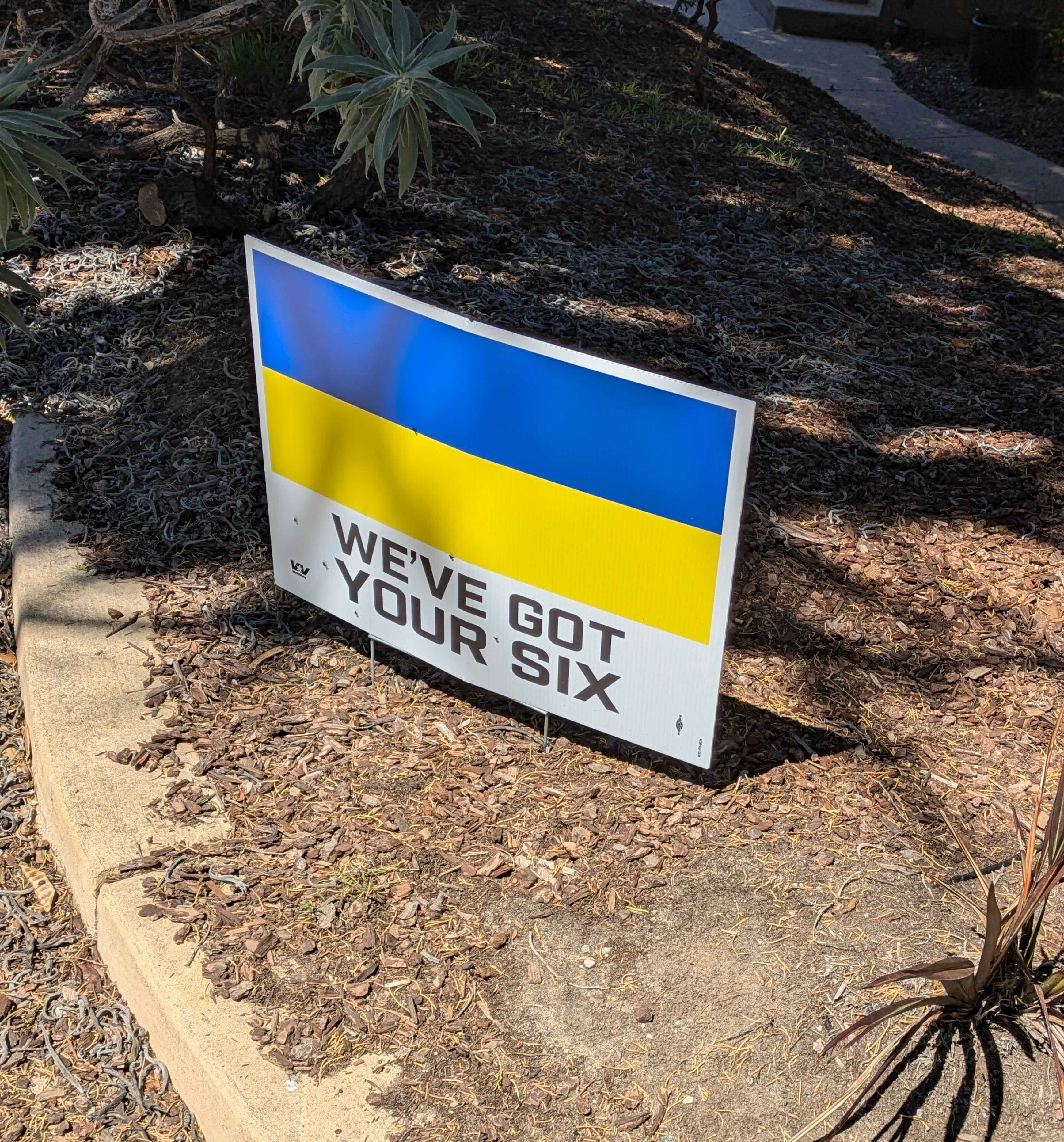
Tomorrow in Ukraine, Russian soldiers will attack Ukrainians. Russian drones and bombs and rockets will target Ukrainian homes. A criminal war of aggression will continue.
Tomorrow in Saudi Arabia, Russian officials will discuss the future of Ukraine with a handful of Americans, delegated by a president who sympathizes with the Russian view of the war. The Russians will have the luxury of talking about Ukraine without the presence of Ukrainians.
The headlines are about “peace negotiations.” But what is really going on? How should we think about this unusual encounter in Saudi Arabia?
Here are ten suggestions, drawn from years on working on relations among the three countries, and from some recent personal observations at the Munich Security Conference.
1. Be critical of the words on offer. Question the word “peace.” The term used in the media is “peace negotiations.” The United States and Russia are not at war. Russia is at war with Ukraine, but Ukraine is not invited to these talks. Russian authorities, for their part, do not generally speak of peace. They present the talks with the United States as a geopolitical coup, which is not the same thing. The highest Russian officials have repeatedly stated that their war aims in Ukraine are maximalist, including the destruction of the country. Informed observers generally take for granted that Russia would use a ceasefire to distract the United States and Europe, demobilize Ukraine, and attack again. This is not a plan that the Russians are working very hard to disguise. It is a simple point, but always worth making: there could indeed be peace tomorrow in Ukraine, if Russia simply removed its invasion force.
2. Consider the horrid negotiating tactics of the United States. They are are so disastrously bad that they call into question whether these talks can even really be considered negotiations. Trump and everyone around him keeps emphasizing that the United States is in a hurry. But no negotiator would so this. Admitting urgency grants to the other side the easy move of dragging their feet to get concessions. And these are already on offer! Members of the Trump administration and Trump himself keep conceding essential points to Russia in advance of any actual talks and in public (territory, NATO membership, timing of elections, even the existence of Ukraine) — issues that are not only essential to Ukraine but elemental to Ukrainian sovereignty. The only way such American behavior makes sense is if we consider that the Americans are negotiating as Russians. But if everyone in Saudi Arabia is on the same side, these are not negotiations. “Talks” is safer.
3. Don’t forget that law and ethics are part of reality. The United States has chosen to negotiate with the aggressors (the president of the Russian Federation has been indicted for war crimes) rather than support the victims. By reaching out to Vladimir Putin, Donald Trump has ended the Russian leader’s international isolation. By speaking of Putin as someone who supposedly wants peace rather than as the aggressor in the bloodiest war since 1945, or as someone who has been indicted for war crimes, Trump is seeking to cleanse the the moral stain from the person who broke the most fundamental of international laws by invading another country. Even if the talks have no other consequences, Trump’s rehabilitation of Putin is a meaningful one for Russia.
4. Emphasize the absence of Ukraine. It is a truism of international history, as well as simple common sense, that if you are not at the table then you are on the menu. Discussions with Russia about Ukraine without Ukraine create a structural situation in which the basic interests of Ukraine and Ukrainians cannot be represented. No historical analogy is perfect, of course; but precedents for such treatment in Europe include the Munich accords of 1938 and the Molotov-Ribbentrop pact of 1939. A longer record can be found in the history of colonialism.
5. Remember that Ukraine is a sovereign state and the victim of the war. The combination of pageantry and mystery around such talks elevates their participants to the central actors of the story. If summitry storytelling is done carelessly, it can create the impression that Russia and the United States somehow have the authority to decide the future of Ukraine. It is very possible that they will try to do force Ukraine to do things, using coercion or blackmail, and it should be made clear that is implied in any agreement about Ukraine without Ukraine. No agreement between Russia and the United States has legal application to Ukraine. It is certainly worth knowing and mentioning that Ukraine has patiently built consensus around its own peace formula. It is worth reviewing, if only for background knowledge of the basic issues.
6. Consider what we know about power. In war, there are winners and losers. Aggressors make peace when it appears to them that their aggression is no longer in their interest. Talking is incidental to this. It is rather surprising to hear the Trump people, who talk so much about strength, repeatedly making the left-wing summer-camp point that all we really need for peace is to get together and talk. If the Trump administration were serious about getting to peace in a hurry, they would apply pressure to Russia and accelerate support for Ukraine. Since they are doing neither of these things, they either misunderstand power or they are not aiming for peace.
7. Resist Russian propaganda. For Russia these talks are an occasion to spread their line. Russian propagandists will have things to say about the legitimacy of the Ukrainian state, the patterns of Ukrainian history, the people who govern Ukraine, and so on. The talks will be their occasion to try to get international reporters to repeat those claims.
8. Be critical of American propaganda as well. The Russians have liked to spread stories about supposed waste in Ukraine. The Trump people have their own use for this. It fits their sense of grievance, which is how they approach every subject. Trump’s people focus on the idea of “recouping the costs” of U.S. aid to Ukraine. This is unserious and misleading. The main US budgetary problem is that the wealthy do not pay their share of taxes. All talk by this billionaire-dominated administration of recouping costs is dubious for that reason alone. Most of the American military contribution to Ukraine stays in the United States, keeping factories running and paying American workers. In general the weapons the US has sent to Ukraine were obsolescent and would have been destroyed, at costs to the US taxpayer, without ever being used. The U.S. has contributed less to Ukraine than has Europe. As a percentage of GDP, the U.S. lags far, far behind the countries that the Trump people relentless criticize. The effective cost to Europeans has in fact been far higher, since sanctions on Russia mattered far more to European economies than to the U.S. economy. The essential costs of the war in Ukraine have been paid by Ukrainians, not only in huge economic losses, but in millions of forced migrations, hundreds of thousands of injuries, and tens of thousands of lost lives. In resisting Russia, Ukraine has also provided tremendous economic and security benefits to the United States. What the United States has learned from Ukrainians about modern warfare — and that is just one of many benefits — easily justifies the costs, even in the most narrow security terms.
9. Weigh Trump’s vulnerabilities. For decades now, Trump has tended to repeat what Soviet and then Russian leaders say. He speaks to Putin regularly and has expressed his fascination. He repeats Russian talking points on the war. The notion that the war is costly to the United States is a point where Putinist and Trumpist propaganda overlaps, and seems targeted to one of Trump’s obsessions, that he is being ripped off. Ukraine, of course, is the party that has suffered the economic costs. But redefining the war as an opportunity for the United States to make money seems designed to manipulate Trump.
10. Reflect on colonialism. Russia’s war against Ukraine has been obviously colonial, in every sense of the word. Moscow denies that Ukraine is a state, that Ukrainians are a people, that their elected leaders are legitimate. A war cloaked in such colonial ideology enables the exploitation of stolen Ukrainian resources, right down to and including stolen children. In recent weeks, the Americans have begun to speak with great interest of Ukraine’s mineral resources. At the Munich Security Conference, Americans asked the Ukrainian president to concede half of his country’s mineral wealth forever in exchange for a pat on the head today. It could well be that the United States intends to use the threat of Russian violence in order to seize Ukrainian wealth— “we could stop the war, but we need your resources first.” A protection racket, in other words.
So: in repeating the notion of “peace negotiations” might we not be contributing to a charade? From the facts noted above, three possible framings of the Russian-American talks emerge. First, the Americans sincerely want peace but are just stunningly incompetent. Second, the incompetence is by design; the game is rigged to generate an agreement between Russia and the U.S. that is unacceptable to Ukraine. Third, Putin and Trump have already worked out common plans for the colonial domination of Ukraine, and the talks just provide cover.
Source: Timothy Snyder, “Peace or Partition?” Thinking about…, 17 February 2025. The text above has been lightly edited to eliminate obvious typos.
The concept of appeasement in international relations, notably highlighted by the historical failure of the Munich Agreement in 1938, serves as a stark reminder of the dangers inherent in yielding to an aggressor’s demands. This historical lesson finds a chilling echo in contemporary geopolitics, particularly in the context of U.S. President Donald Trump’s interactions with Russian President Vladimir Putin regarding the ongoing conflict in Ukraine.
In 1938, British Prime Minister Neville Chamberlain believed that by acquiescing to Adolf Hitler’s demands over the Sudetenland, he could prevent a larger conflict. He returned from Munich proclaiming “peace for our time,” a sentiment that was soon shattered when Germany invaded Poland in 1939, catapulting the world into another devastating war. The lesson here is clear: appeasement often emboldens aggressive leaders, signaling weakness rather than strength.
Drawing parallels to today, Donald Trump’s approach to Vladimir Putin, especially concerning the conflict in Ukraine, has been criticized for echoing Chamberlain’s strategy. Trump has expressed admiration for Putin, described his annexation of Crimea as “genius,” and has suggested that he could negotiate an end to the war in Ukraine swiftly, often without clear conditions favorable to Ukrainian interests. His rhetoric and actions have suggested a policy of conciliation towards Russia, often at the expense of traditional U.S. allies and international norms.
Critics argue that Trump’s strategy, much like Chamberlain’s, might encourage Putin’s aggression rather than curb it. For instance, Trump’s reluctance to commit to NATO’s collective defense principle or to uphold sanctions against Russia could be seen by Putin as a green light to continue his territorial ambitions. This is particularly evident in Trump’s statements and actions that seem to prioritize a personal rapport with Putin over a consistent condemnation of Russian actions in Ukraine.
Moreover, Trump’s advocacy for direct negotiations between the U.S. and Russia, potentially sidelining Ukraine itself, mirrors the Munich Agreement’s exclusion of Czechoslovakia from discussions about its own fate. This approach undermines Ukrainian sovereignty and could set a precedent where international law and state integrity are negotiated away in backroom deals between superpowers.
The dangers of this strategy are manifold. Just as the Munich Agreement only delayed and escalated the conflict in Europe, Trump’s potential concessions could lead to a more entrenched Russian presence in Ukraine, encouraging further territorial grabs or aggressive actions not just in Eastern Europe but potentially elsewhere. This could destabilize the region, much like how appeasement in the 1930s destabilized Europe.
Furthermore, the global perception of U.S. leadership might suffer if Trump’s policies are seen as capitulating to autocratic aggression. Allies might question the reliability of the U.S. as a defender of democratic values and international law, thereby weakening the Western alliance’s cohesion. This could parallel how Chamberlain’s appeasement led to a loss of trust among European nations, ultimately affecting their collective response when war did come.
In conclusion, the lessons from 1938 are clear: appeasing an aggressor can lead to greater conflict and suffering. Trump’s interactions with Putin, especially in the context of Ukraine, should be critically examined against this historical backdrop. The cost of peace through appeasement might not only be the temporary cessation of hostilities but the long-term erosion of international norms and stability, potentially paving the way for larger conflicts. As with Chamberlain, the narrative of peace might be short-lived, overshadowed by the reality of increased aggression and global instability.
Source: Myk Mowczan, “”From Munich to Moscow: The Perils of Appeasing Power Hungry Potentates,” Myk’s Substack, 14 February 2025. Thanks to Two Grumpy Old Men on Ukraine for the heads-up.
Ukrainian President Volodymyr Zelenskyy says he directed his ministers not to sign off on a proposed agreement to give the United States access to Ukraine’s rare earth minerals because the document was too focused on U.S. interests.
The proposal, which was a key part of Zelenskyy’s talks with U.S. Vice President JD Vance on the sidelines of the Munich Security Conference on Friday, did not offer any specific security guarantees in return, according to one current and one former senior Ukrainian official familiar with the talks.
Zelenskyy’s decision not to accept the proposal, at least for now, was described as “short-sighted” by a senior White House official.
“I didn’t let the ministers sign a relevant agreement because in my view it is not ready to protect us, our interest,” Zelenskyy told The Associated Press on Saturday in Munich.
The proposal focused on how the U.S. could use Kyiv’s rare earth minerals “as compensation” for support already given to Ukraine by the Biden administration and as payment for future aid, the current and former senior Ukrainian officials said, speaking anonymously so they could speak freely.
Zelenskyy insists on security guarantees
Ukraine has vast reserves of critical minerals that are used in the aerospace, defense and nuclear industries. The Trump administration has indicated it is interested in accessing them to reduce dependence on China but Zelenskyy said any exploitation would need to be tied to security guarantees for Ukraine that would deter future Russian aggression.
“For me is very important the connection between some kind of security guarantees and some kind of investment,” the Ukrainian president told AP.
Zelenskyy did not go into details about why he instructed his officials not to sign the document, which was given to Ukrainian officials on Wednesday by U.S. Treasury Secretary Scott Bassent on a visit to Kyiv.
“It’s a colonial agreement and Zelenskyy cannot sign it,” the former senior official said.
White House National Security Council spokesman Brian Hughes did not explicitly confirm the offer, but said in a statement that “President Zelenskyy is being short-sighted about the excellent opportunity the Trump administration has presented to Ukraine.”
The Trump administration has grown weary of sending additional U.S. aid to Ukraine and Hughes said a minerals deal would allow American taxpayers to “recoup” money sent to Kyiv, while growing Ukraine’s economy.
Hughes added that the White House believes “binding economic ties with the United States will be the best guarantee against future aggression and an integral part of lasting peace.” He added: “The U.S. recognizes this, the Russians recognize this, and the Ukrainians must recognize this.”
Ukrainians worry about securing mineral sites from Russian attacks
U.S. officials in discussions with their Ukrainian counterparts in Munich were commercially minded and largely concentrated on the specifics of exploring the minerals and how to form a possible partnership to do that with Ukraine, the senior official said.
The potential value of the deposits in Ukraine has not yet been discussed, with much unexplored or close to the front line.
The U.S. proposal apparently did not take into account how the deposits would be secured in the event of continuing Russian aggression. The official suggested the U.S. did not have “ready answers,” to that question and that one of their takeaways from discussions in Munich will be how to secure any mineral extraction operation in Ukraine involving people and infrastructure.
Any deal must be in accordance with Ukrainian law and acceptable to the Ukrainian people, the senior Ukrainian official said.
“Subsoil belongs to Ukrainians under the constitution,” Kseniiia Orynchak, founder of the National Association of Mining Industry of Ukraine, previously told the AP, suggesting a deal would need popular support.
Zelenskyy and Vance did not discuss the details of the U.S. document during their meeting Friday at the Munich conference, the senior official said. That meeting was “very good” and “substantive,” with Vance making it clear his and Trump’s main goal was to achieve a durable, lasting peace, the senior official said.
Zelenskyy told Vance that real peace requires Ukraine to be in a “strong position” when starting negotiations, stressed that the U.S negotiators should come to Ukraine, and that the U.S., Ukraine and Europe must be at the negotiating table for talks with Russia.
No Europeans at the negotiating table?
But Gen. Keith Kellogg, Trump’s special envoy for Ukraine and Russia, all but cut Europeans out of any Ukraine-Russia talks, despite Zelenskyy’s request.
“You can have the Ukrainians, the Russians, and clearly the Americans at the table talking,” Kellogg said at an event hosted by a Ukrainian tycoon at the Munich conference. Pressed on whether that meant Europeans won’t be included, he said: “I’m a school of realism. I think that’s not going to happen.”
Ukraine is now preparing a “counter proposal” which will be delivered to the U.S. in “the near future,” the official said.
“I think it’s important that the vice president understood me that if we want to sign something, we have to understand that it will work,” Zelenskyy told the AP.
That means, he said, “it will bring money and security.”
The Lord is American
The world undresses
its wounds. It wounds. This Father—
His memory, torn
clouds: forgetful weather.
God’s goodness licks
bowls bone-clean. Our fingers
twist crumbs from air.
We are hungry children
abandoned by our country
for bombs. For Rockets’ Red glare. How
could we ever be patriots?
My father is my flag.
The national anthem is
every word, every single word
my mother could not whisper—
could not say,
could not say:
her father colonized her.
Made her mother nasty with jealousy.
Could not say: she can’t stay
In this world of touching.
It maims.
It elects evil.
It is two gendered.
It kneels on Sunday.
The Lord is
American &
aims His rifle
at us, His children
once beggars
rise into guerrillas.
About this Poem
“I rarely felt safe as a child. The closest I’ve felt to safety was hanging with my cousins or being by my older sisters’ side[s]. Even then, I felt danger huffing about, stalking me. As a child whose parents suffered premature deaths due to America’s inadequate healthcare and mental health systems, I’m often thinking about children and how they are wrestled down by adult failures. The world’s cruelty shows itself to children through adults, even before they learn words like war, ceasefire, and later, genocide. I believe we owe children a world that loves them, and we must struggle for it at any cost.”
—W. J. Lofton
Source: Poets.org. Copyright © 2025 by W. J. Lofton. Originally published in Poem-a-Day on February 17, 2025, by the Academy of American Poets.
A Digest of News from Ukrainian sources
In this week’s bulletin: Ukraine’s war economy/ How Crimea human rights movement began/ Xenophobia in Russian schools/ Russia’s deadly torture/ Execution of POWs/ UN expert urges medical care for Crimean prisoners
News from the territories occupied by Russia:
Toddlers in occupied Ukraine forced to draw ‘thank you’ cards to Russian invaders (Kharkiv Human Rights Protection Group, February 14th)
Russia sentences Ukrainian to 8.5 years for donation as a teenager to Ukraine’s Azov Regiment (Kharkiv Human Rights Protection Group, February 14th)
“Letters to Free Crimea” campaign will continue until all political prisoners are released: results of the campaign summarised in Kyiv (Zmina, February 12th)
From savage Russian repression to Crimean Solidarity (Kharkiv Human Rights Protection Group, February 11th)
Ukrainian seized in Crimea and sentenced to 12 years for donations to Ukraine’s defenders (Kharkiv Human Rights Protection Group, February 10th)
Son of ousted president Yanukovich makes millions on coal from occupied territories (iStories, 4 February)
The situation at the front, and peace talks:
“Has Trump made the first move in Ukraine end game”, The Observer, 16 February 2025
Weekly war summary: Ukraine counter-attacks near Pokrovsk (The Insider, 15 February)
News from Ukraine – general:
Statement by human rights organizations on sanctions against Poroshenko, Zhevago, Kolomoisky and Bogolyubov (Kharkiv Human Rights Protection Group, February 14th)
Ukraine’s Constitution in question as believers sentenced to three years for refusing to fight (Kharkiv Human Rights Protection Group, February 13th)
Killed by Russia: a project to commemorate deceased cultural figures has been launched in Ukraine (Zmina, February 11th)
The Home Front: Ukraine’s War Economy and the Spirit of Defiance (Europe’s Futures, 18 December)
Documenting Environmental Changes Caused by the Destruction of the Kakhovka Reservoir (Documenting Ukraine, January 31st)
War-related news from Russia:
Drafted soldiers coerced to sign as contractors (Meduza, 13 February)
Russia: Xenophobia and schools (Posle.Media, 12 February)
The talk show producer who avoids sanctions (The Insider, 11 February)
Solidarity Zone proclaimed to be a “foreign agent” (Facebook, February 11th)
‘Some people leave the country, others turn to explosives’ In letters from jail, a Russian-Italian anarchist recounts how he turned to sabotage to combat the Kremlin’s war (Meduza, February 10th)
Russian accused by Ukraine of torture and killings in Bucha given high-ranking post in Russia (Kharkiv Human Rights Protection Group, February 10th)
Russian courts flooded with 20,000 missing or dead claims in 2024. A huge portion of them filed by military commanders (Mediazona, February 4th)
“They call me a scumbag, but they haven’t seen the film”. Russian teacher who filmed his school’s descent into propaganda showing the film at Sundance (Mediazona, January 30th)
Analysis and comment:
With Munich hitting the headlines, we renew our calls for Russian troops to leave Ukraine (Ukraine Solidarity Campaign , February 15th)
The Betrayal (Russian Reader, February 15th)
UN torture expert calls for urgent medical care for Crimean prisoners (UN High Commissioner for Human Rights, February 10th)
Putin has ground down Soviet military stockpiles (The Insider, 3 February)
Parliamentary Early Day motion: British companies and the transportation of Russian liquefied natural gas (17 January 2025)
Research of human rights abuses:
Tortured to death by Russian invaders, sentenced to 10 years or abducted, whereabouts unknown (Kharkiv Human Rights Protection Group, February 12th)
Alarming Rise in Executions of Captured Ukrainian Military Personnel (UN High Commissioner for Human RIghts, February 3rd)
Treatment of POWs (UN High Commissioner for Human RIghts, June – August 2024)
Upcoming events:
Tuesday 18 February, 12.00 Kyiv time. “Unmasking Russian propagandists” – a Youtube livestream from Kyiv, by human rights defenders
Saturday 22 February, 12.00, Demonstrate at the Russian embassy. Assemble 12 noon – St Volodymyr statue, W11 3QY Rally 1pm – Russian embassy, W8 4QP. Flyers are available for distribution – email info@ukrainesolidaritycampaign.org and ask for them.
Wednesday-Thursday 26-27 March. Left solidarity with Ukraine conference in Brussels, supported by the European Network for Solidarity with Ukraine
Monday 24 February – Monday 3 March. Call for a week of action by Solidarity Collectives
This bulletin is put together by labour movement activists in solidarity with Ukrainian resistance. To receive it by email each Monday, email us at 2022ukrainesolidarity@gmail.com. To stop the bulletin, reply with the word “STOP” in the subject field. More information at https://ukraine-solidarity.org/. We are also on Twitter, Bluesky, Facebook and Substack, and the bulletin is stored online here.
Source: News from Ukraine Bulletin No. 134 (17 February 2025)
The Boykos are an [ethnolinguistic] group of Ukrainians from the central Carpathian belt. Their land is known as Boykivshchyna: in Ukraine, it includes several districts in the southwest of the Lviv region, most of the Kalush and Ivano-Frankivsk districts in the Ivano-Frankivsk region, and adjacent territories of the Zakarpattia region; in Poland, it includes the southeast of the Subcarpathian Voivodeship.
Tracks 1-3 are carols performed by Rozalia Strutynska from the village of Stary Lysets near Ivano-Frankivsk. On track 1, she is accompanied by her grandson Iwan on a hurdy-gurdy. Recorded by Ivan in January 2025.
Tracks 4-14 are performed by Boyko musicians from different districts and recorded on the streets of the town of Turka in the Lviv region and in its environs during the Boykivska Vatra festival in August 2017. These tracks are extracted from the videos.
Released February 8, 2025

Source: Antonovka Records (Bandcamp). The text above has been lightly edited to eliminate obvious typos.
