I’d like to say I was first drawn to Russia by a fascination with late Soviet politics under Gorbachev, or the great works of Russian literature. But for me the initial interest was the language itself, as taught by an eccentric but effective teacher called Mr Criddle. Short and bearded, even a little gnome-like, he usually dressed in sandals and socks and ran his classes at Worcester Sixth Form College with old-fashioned discipline. Before we started the course, he had handed out copies of the thirty-three character Cyrillic script at our college open day with instructions to learn it or not bother turning up for class.
Mr Criddle had learned his own Russian in the mid-sixties at the Liverpool College of Commerce, taught by a graduate of a Cold War creation known as the Joint Services School for Linguists (JSSL). The JSSL had taken around 5,000 conscripted men from military boot camps in the 1950s and produced a whole generation of Russianists. The kadety, as the students called themselves, were trained to be high-level interpreters, ready to interrogate Soviet prisoners, decipher classified documents and run counter-propaganda operations should the USSR ever invade. As it never did, many ended up teaching the language in UK universities and schools.
The JSSL method was fast, deep and tough, with heavy emphasis on repetition and rote-learning. Its students had a skukometer, a made-up word from the Russian for boredom, to measure how brain-numbing a class was, and I would come to know how they felt. Mr Criddle had picked up the JSSL military style from his own teacher. Ignoring any official syllabus, he had a giant library of homemade flash cards which he used to drill us relentlessly. He’d cut all the images out of magazines and glued them to one side of the cards, writing the correct adjective endings or verb declensions on the back. He kept them in recycled envelopes at the back of the room. It was the exact opposite of how I’d learned French and German, where we chose a ‘foreign’ name and then role-played trips to the bakery or camp-site shop. For Russian, Mr Criddle had us create our own carefully indexed grammar books and then he dictated every page. It was a whole year before we learned anything practical like how to introduce ourselves perhaps partly because no one was planning a summer holiday in the Soviet Union, but we could soon form the genitive plural in our sleep.
Source: Sarah Rainsford, Goodbye to Russia (2024)
The Booker Prize: “Nonso Anozie reads from ‘James’”
Watch Nonso Anozie read from Booker Prize 2024-shortlisted James, written by Percival Everett.
The story so far: It’s 1861 and Jim, a slave and soon-to-be companion of Huckleberry Finn on a dangerous journey along the Mississippi River, is a man driven by a fierce instinct to survive and to protect his family. This includes teaching his own and other children the behavioural and language skills needed to avoid antagonising the white people who have made their lives hell.
All traces of Ukraine are being expunged. Schools have switched to the Russian curriculum, and Russian youth and paramilitary organisations work in the territories. Repression combined with Russification aims to transform the social and political fabric of the territories, says Nikolay Petrov, the author of a new report for the German Institute for International and Security Affairs.
“I dreamed that I was talking in my dream and to be safe was speaking Russian. (I don’t speak any Russian, and also I never talk in my sleep.) I was speaking Russian so that I wouldn’t understand myself and no one else would understand me either.”
The percentage of schoolchildren in the Russian Federation studying in native tongues other than Russian halved between 2016 and 2023. Instruction in thirty-eight languages ceased altogether. Experts argue that this situation was caused by a whole slew of problems, including a downturn in interest in native languages, a decrease in the number of lessons taught in them, a shortage of teachers, and an estrangement from foreign partners due to sanctions.
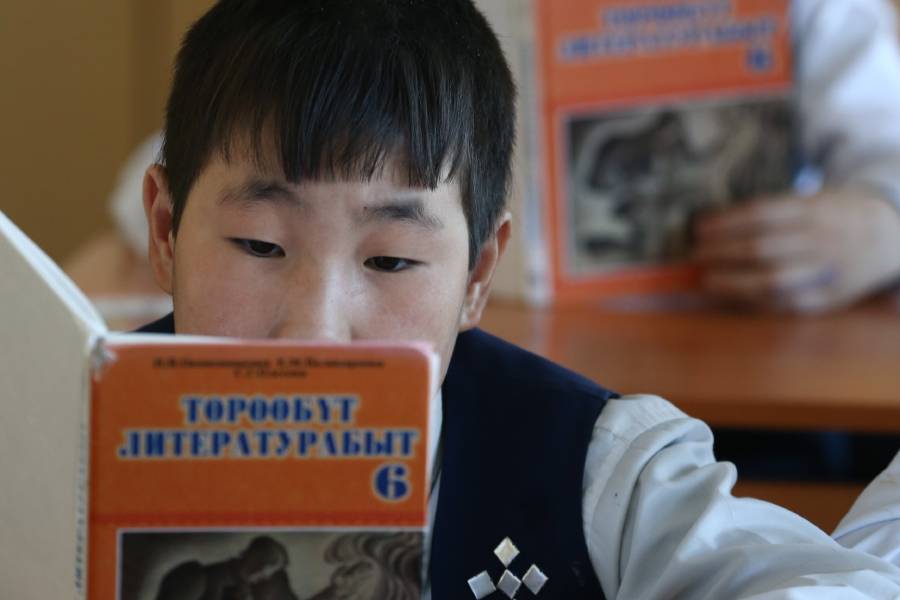
Pupils at a rural school during a Yakut literature lesson. Photo: Alexander Ryumin/TASS
According to the Institute of Linguistics of the Russian Academy of Sciences, there are 155 living languages in the Russian Federation, thirty-seven of which have the status of official languages in the republics, meaning that they should be used in those regions on an equal footing with Russian. In Russia’s comprehensive education system, native languages are studied in three forms: as separate subjects, as electives, or as complete substitutes for Russian in all classes.
Based on data from the Ministry of Education, Takie Dela has calculated that between 2016 and 2023, the percentage of schoolchildren who study entirely in their native languages fell from 1.98 to 0.96 — the lowest figure for this period. The number of such pupils fell from 292,000 to 173,500, although the number of children in school increased by 3.2 million over those same seven years.
The share of those who studied native languages at clubs decreased from 0.7 to 0.4 percent. During the same period, the share of pupils who were taught their native languages as a separate subject increased from 10.41 to 10.56 percent. But the overall engagement of children in learning their native tongues decreased from 13.08 to 11.92 percent.
During the same period, instruction in thirty-eight languages, including Altai, Buryat, and Ingush, ceased completely. In 2016, there were still children in Russia who studied general subjects in those languages. There were no more such pupils left by 2023.
“Where the language is spoken at home, it provides an opportunity to master the written norms. This is vital to preserving people’s identity, to making them feel comfortable in society,” says sociolinguist Vlada Baranova.
According to the law, learning a native language in Russia is voluntary, so it is up to parents to decide how exactly it will be taught to their children and whether it will be taught at all.
Margarita Kilik, chair of the Association of Teachers of Native Languages of Kamchatka, argues that the decrease in the number of pupils studying their own languages is due to the desire of parents. “Fewer and fewer people are staying in the region,” she says. “They are leaving to study in the big cities, in Moscow and St. Petersburg. So there is simply no need for mother tongues.”
Which languages Russian schoolchildren studied as mother tongues in 2023. Drag your cursor arrow over each circle to see the total number of children who were studying that particular language as a native language. By clicking the “cog” icon in the lower righthand corner, you can access two sets of toggles that alter the map: 1) Форма изучение (“Form of instruction”), which shows whether a language was taught as a separate subject (pink) or used as a language of instruction (powder blue); and 2) Сколько детей узучают язык (“How many children study the language”), which alters the map to visualize the relative weight of the numbers and percentages of children who studied languages other than Russian in 2023. Source: Ministry of Education of the Russian Federation/Takie Dela.
And yet, interest in mother languages persists and often awakens with age, when it is more difficult to learn them, Kilik concedes. Natalia Antonova, editor-in-chief of the Karelian-language newspaper Vedlozero Windows, agrees with her. “It is difficult to get schoolchildren interested in something, especially studying minority languages. Often people who have already matured, whose parents have passed away, have regrets that they have been left without a linguistic thread linking them,” she says.
According to census data cited by the To Be Accurate project, the number of speakers of all of the Russian Federation’s official languages except Russian, Chechen, Tatar, and Tuvan declined between 2002 and 2020. But many textbooks of minority languages are designed for children who can speak them, even though the textbooks themselves have not been updated for a long time.
“Children who don’t know their native languages enter school. There are good textbooks structured to teach [these] languages as foreign languages, but these are more exceptions,” says Baranova.
In the Russian Federation, native languages are studied mainly in elementary and middle schools, while in grades 10 and 11 most teenagers switch to Russian, according to statistics from the Ministry of Education. “Graduates need to sit for the Unified State Exam, and general subjects taught in native languages won’t help them much,” says Vladislav Savelyev, a former Yakutia Education Ministry official.
Initiatives by the regions to produce a Unified State Exam in their native languages were never adopted. Meanwhile, the number of hours allocated for studying native languages at school has been reduced, activists have pointed out. “These issues are regulated by the federal educational standards, and, of course, the number of hours for teaching Yakut has been reduced in favor of priority subjects, such as mathematics,” says Savelyev.
Instruction in native languages in the Russian Federation. The numbers of children who studied in 2016–2023 in their native languages is indicated by the lavender bars, while their percentage within the overall school population is shown by the pink line and dots. Source: Ministry of Education of the Russian Federation/Takie Dela.
Savelyev also notes that schools are switching to a five-day school week and “optional” subjects like mother tongues are the first to have their hours cut from school schedules.
Another reason why the languages of Russia’s peoples may eventually disappear is the shortage of teachers specializing in them. According to data from the Institute for Statistical Research and Knowledge Economics at the Higher School of Economics, the number of native language teachers in Russian schools fell from 22,000 in 2009 to 15,500 in 2023. There are even fewer who can teach mathematics and history in languages other than Russian. “Seventy percent of the school teachers in the Koryak Autonomous District are from other regions. How can they know our languages? The situation is the same in many other regions,” Kilik points out.
The circumstances surrounding the teaching the official languages of the republics and the languages of minority Indigenous peoples differ greatly, however.
“We have several such languages in the Kamchatka Territory, and some of them even belong to different [linguistic] groups. A significant number of the teachers of these languages, as well as the speakers, are at least fifty-five to sixty years old. Who will teach the languages when they retire?” wonders Kilik.
Some languages, such as Aleut, have disappeared altogether in Kamchatka: Russia’s last speaker of the language, Gennady Yakovlev, died in 2022. Russian Aleuts used to cooperate with American Aleuts in preserving their language and culture, but this has now become impossible. “There are obstacles on both sides: our side says that America is an enemy country, while their side imposes sanctions on Russia,” says Kilik.
The situation is similar in Karelia, the only republic in the Russian Federation where the language of the titular nation does not have official language status. This is due to the fact that the Karelian alphabet is based on the Latin alphabet, while official languages in Russia must be written in the Cyrillic script alone.
According to official statistics, less than 500 children study the Karelian language at school, while 340 children study Vepsian. Instruction in these languages has been preserved only at specialized university departments and partly in kindergartens, says Antonova. “There are a couple of dozen kindergartens where the native language is learnt. But it’s more about the showy aspect of the language used in songs, costumes, and festivals,” she adds.
Since the Soviet Union collapsed, Russian Karelians have been assisted by Finnish Karelians in studying and preserving the Karelian language: textbooks have been published jointly, and language courses have been held jointly. “The break with Finnish organizations will certainly affect the opportunities for learning the Karelian language. Although it is not so noticeable yet, because little time has passed,” Antonova explains.
According to Antonova, Karelian is currently studied in clubs and courses at libraries, language centers and NGOs. Some of these organizations even receive state support, she adds.
Russian lawobliges the state to preserve the languages of the peoples living in the Russian Federation and to promote their study.
‘This is a very divergent movement, and the situation depends very much on the region. In some places the authorities support languages, while in other places, on the contrary, they see their widespread use as going hand in glove with ethno-nationalism. But the policy is generally more aimed at Russification and reducing the use of minority languages,” explains Baranova.
Baranova notes that there is a downside to the fact that studying mother tongues is voluntary, as stipulated by law. In villages inhabited by speakers of endangered languages it is often possible to muster only one first grade class, and it will always be a Russian-speaking class.
“Because there will always be parents who want their child to be taught in Russian, and this is also their free choice. You can, of course, try to defend your position and demand that the school provide for another first grade class in the other language, but you’ll come across as suspicious and dangerous,” says Baranova.
Antonova also says that it has become more difficult to assert one’s linguistic rights.
“If campaigning for language revival was a common trend in the nineties, nowadays you can be accused of extremism and separatism, and the authorities will regard you with suspicion.”
Despite all this, there are ways to study native languages in Russia, says Baranova.
“Other forms and grassroots initiatives that get children and adults involved in using the language in different areas are also effective. They turn out to be a good way to keep the language alive.”
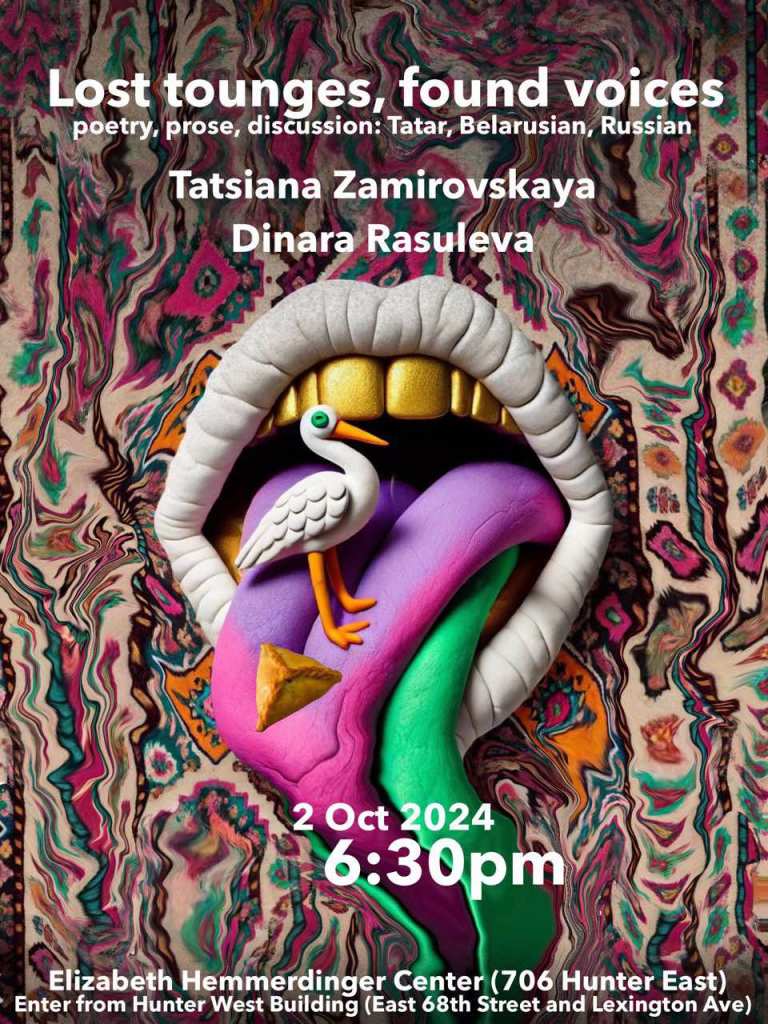
DINARA RASULEVA & TATSIANA ZAMIROVSKAYA “Lost Tongues, Found Voices, Decolonizing Languages: A Multilingual Reading and Conversation” Wednesday, October 2, 6:30 pm Hunter College CUNY Elizabeth Hemmerdinger Center (706 Hunter East Bldg) Free and open to the public
Join Belarusian writer Tatsiana Zamirovskaya and Tatar poet_ess Dinara Rasuleva for a discussion on the loss and revival of languages. Dinara will talk about why languages of indigenous peoples colonized by Russia fade and how they are being brought back, sharing her translingual poems from the Lostlingual research series. Tatsiana will talk about why some Belarusian writers write in Russian, while still remaining Belarusian-identified authors, about her experience writing in a mix of Russian and Belarusian, and the challenges of translating colonized voices accurately. Both writers will reflect on the intersections of language and identity in their lives and works.
Dinara Rasuleva (she/they) is a poet_ess based in Berlin and born in Kazan, Tatarstan. She writes in Tatar, Russian, English and German — the languages she uses everyday. Dinara’s poetry was described and analyzed as decolonial and feminist writing, as expressionist poetry and performance poetry. In 2020 Dinara started a feminist writing laboratory for russian-speaking immigrant FLINTA community. In 2022 their first book of poems Su was published by Babel publishing house. Since 2022 Dinara started the Lostlingual Project, an investigation of the loss of her native Tatar language through translingual abstract poetry. In 2023, in collaboration with Berlin library Totschka, Dinara started TEL:L laboratories: writing in native forgotten or stolen languages.
Tatsiana Zamirovskaya is a Belarusian author who moved to Brooklyn in 2015. She writes metaphysical sci-fi about memory, ghosts, hybrid identities and borders between empires and languages. She is the author of three collections of short stories and a novel Deadnet, published in Moscow in 2021, receiving great critical acclaim and shortlisted for several Russophone literary awards. She is a recipient of fellowships from Macdowell, Djerassi and VCCA. Currently Tatsiana is finishing her new collection of short stories about women going through unbearable events and how these events influence language and perception. She currently writes in belarusified Russian, russified Belarusian and broken English.
Directions: At the reception desk of the Hunter West Building, please present your ID to get a pass. From there, take the escalator to the 3rd floor, turn right and walk across the sky bridge to the Hunter East Building, then take the elevator to the 7th floor. Hemmerdinger Center is at the end of the hallway past the turnstiles.
Tamizdat Project is a 501(c)(3) not-for-profit organization with a tax-exempt status: donations and gifts are deductible to the extent allowable by the IRS. You can donate online, via Venmo (@Tamizdat-Project), PayPal or Zelle using our email tamizdatproject@gmail.com, or by check. Please don’t hesitate to contact us, and thank you for your support!
Source: Tamizdat Project newsletter, 21 September 2024
Movements in Central Asia have become large-scale and permanent, involving all social groups, rich and poor, women and men, young and old. They move around their own countries and among countries. Some go for several weeks or months and come back, while others live far from their place of birth for years, only occasionally visiting their homelands. Still others leave forever, breaking all ties. Some travel in search of a new homeland, so to speak. Others go to make money, study or receive medical treatment. Still others go for fun and excitement.
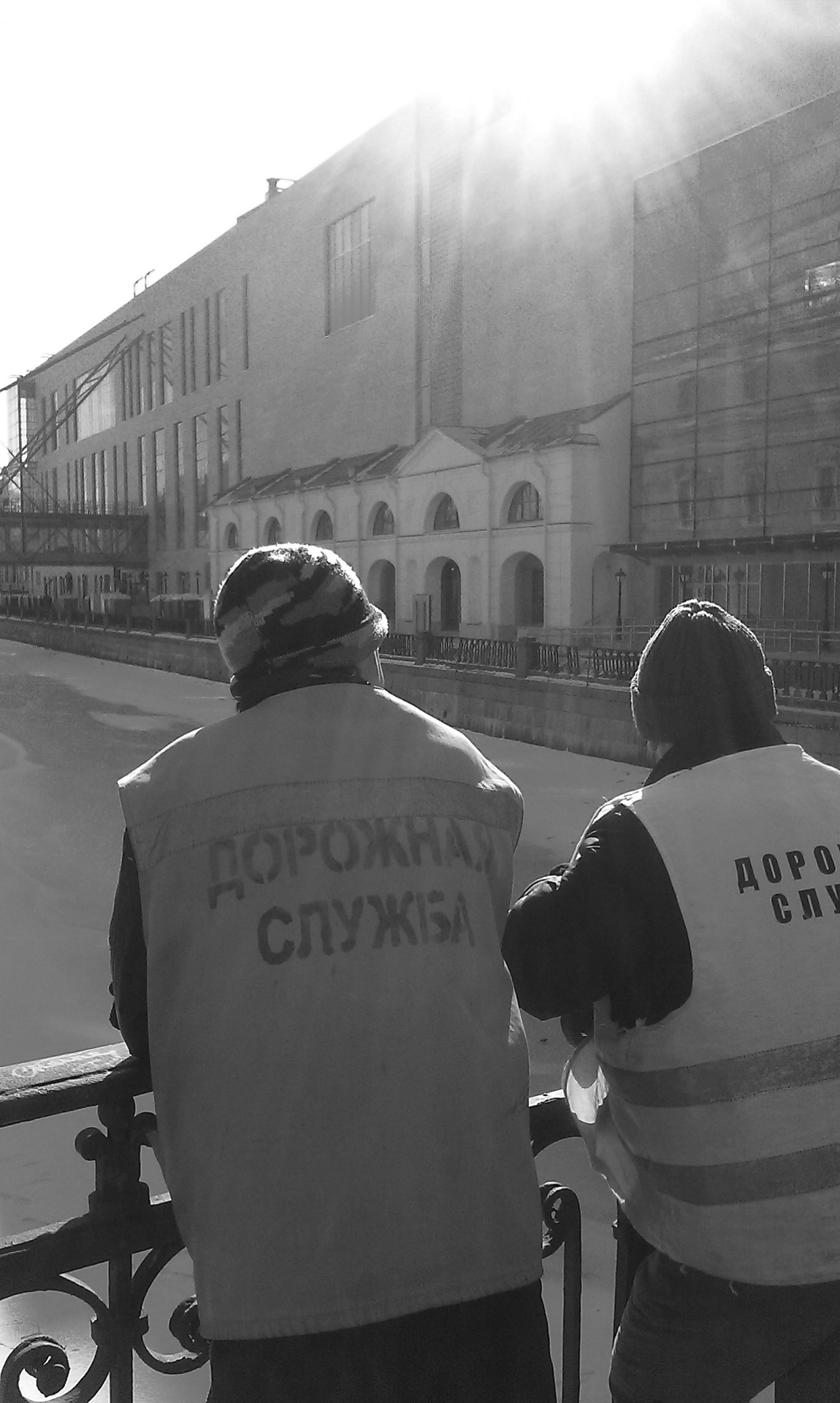
Immigrant road maintenance workers gaze at the newly completed second stage of the Mariinsky Theater. Kriukov Canal, Petrograd, March 15, 2013. Photo by the Russian Reader
All this movement has come as a surprise to experts and politicians. I still remember the debates in the Soviet Union in the 1980s as to why the people of Central Asia were reluctant to travel outside their region. Even then officials and academics in Moscow, observing the beginnings of the demographic decline in Russia itself, were planning to relocate people from borderlands with an excess labor force to the central regions of the then still-unified country. These plans failed, because few people wanted to leave their homes. Only organized and, in fact, involuntary labor recruitment and military labor brigades partly solved the increased need for labor power. The weak affinity that Uzbeks, Tajiks, and Kyrgyz felt for voluntary mobility was proclaimed, on their part, an inherent and incorrigible attachment to family, community, and the hot climate. However, all these explanations were put to shame only a decade after the collapse of the Soviet Union, when millions of people from the titular Central Asian nations felt an irresistible urge to hit the road, leaving and, sometimes, literally abandoning their homes.
Let us try and make sense of these circumstances, to understand why movement in the region has suddenly become a vital life strategy among a considerable number of people. The answer only seems to be lying on the surface. Yes, of course, the collapse of the Soviet system has led to the dismantling of all previous social and economic policies, which kept the population in place through social programs and investment in sometimes loss-making manufacturing enterprises. An abrupt, almost catastrophic decline in living standards, often accompanied by political turmoil and increased feelings of uncertain life prospects, could not fail to provoke an outflow of those wanting to find new prosperity and new stability outside their former worlds. Unemployment and negligibly small wages and pensions have pushed people into new labor markets in countries where even small incomes, by local standards, are much higher than the incomes Central Asians can expect to earn at home.
The future also looks ambivalent, depending on the forecaster’s optimism and pessimism. Some argue that economic, social, and political degradation in Central Asia will continue, becoming chronic, and the movements, therefore, will not stop but might even become even more intense, prolonged, and irreversible. Others, however, argue that sooner or later the situation will improve, investments and jobs will emerge at home, incomes and quality of life will increase and, consequently, outward migration will gradually dwindle.
This approach to movement as a consequence of degradation simplifies, in my view, the picture of events, distorting our perspective by ignoring and failing to analyze many important causes, factors, processes, and attitudes. If we look more broadly at the context in which human mobility in Central Asia has been growing, the first thing we see is an increase in the scope, range, and frequency of movement throughout the entire post-Soviet space and the world as a whole. Second, we see the unconditional link between mobility and the current stage of capitalism, which is sometimes called globalization, sometimes postindustrialism, and sometimes postmodernism. Viewed from this perspective, the picture of Central Asia appears in a somewhat different light than as a mere reflection of the disastrous state of affairs in the region’s newly independent countries. Spatial flows are not only a compulsory means of survival but also an impetus for distributing and assembling people, capital, information, and skills in new social configurations. The latter have a logic and meanings that do not depend directly on the characteristics of a particular country but are subject to wider trends and patterns.
What additional meanings can be attributed to the movements of people in Central Asia aside from as a reaction to post-Soviet degradation?
I think the situation can be described in terms of the momentum of the connections and mutual dependencies between Central Asia and Russia (and other lands) that developed and strengthened over at least a century and a half of coexistence within a single state. Usually, this kind of relationship is characterized as imperial or, if observers want to emphasize a distinctly unequal exchange, colonial. It is believed that empires inevitably fall, to be replaced by liberated nations. In this simple teleological scheme, which now dominates post-Soviet ideologies, much is not entirely clear, but one of the most controversial questions that many postcolonial critics ask is whether empire has actually disappeared or has adopted new shapes in which nations—i.e., constructs actually generated by empire—perform the old functions of borderlands, still pumping resources into the former metropoles in return for patronage and oversight. If we accept this argument, and there are many grounds for doing so, the massive movement of people from Central Asia to Moscow, Petersburg, and other Russian regions appears to be a post-imperial situation in which the circulation of labor power, money, practices, ideas, and information continues, acquiring new tempos and vectors. This movement establishes a new division of labor between the former “heartlands” and “borderlands,” and their hierarchy and mutual need for each other, even if the rhetoric has been dominated by harsh rejection of the newcomers.
Another implication of the movement of people in Central Asia is also quite obvious, although it is little remarked and little analyzed. The large-scale mobility—a significant (if not the lion’s) share of which consists of rural residents going to work abroad—is tantamount to a rather classic proletarization of a still largely agrarian Central Asian society. Soviet modernization attempted in its own way to organize this process by gradually transforming the locals into an agricultural working class while preserving the private agricultural sector and the corresponding rural practices, attitudes, and outlook in the region as a kind of compensation for semi-forced labor. The collapse of the Soviet Union also entailed the collapse of this transformative model. Consequently, the standard version of capitalist development, involving the ruin of the peasants, their impoverishment and exodus to the cities, where they are transformed into ruthlessly exploited proletarians, was inevitable. In other words, what is perceived as degradation is, in fact, a shift in the socio-economic order, not a return to old ways of life, as it sometimes has seemed, but accession to a completely new stage or form of community.
Proletarization has not been subject to discussion because, in particular, its course and effects have been concealed in a strictly ethnic view of the movement. In the countries of origin, the departed are considered traitors, victims or breadwinners. In the host countries, they are considered threatening outsiders or, again, victims. The emphasis, often cultural and racial, on their departure or arrival is more important than the social essence of movement. However, as soon as we remove our ethnic glasses we сan easily identify the class character of mobility. Its specificity consists only in the fact that the system in which class interaction takes place is not limited to particular countries and even regions but is non-national in scale. This system includes, first of all, the post-Soviet space as the nearest and most comprehensible space, a space that has, as I have already said, a history of a common existence and unequal relations of domination and subjugation between heartlands and borderlands. But mobility has already gone beyond the scope of the post-Soviet, spreading into new spaces of global capitalism and incorporating itself into a truly global order.
The other significance of the movement in Central Asia I would like to discuss is the mastery and appropriation of global space, infrastructures, and communication and transportation technologies. Let me explain this with a very simple example. Once upon a time, at the turn of the nineteenth and twentieth centuries, Russian imperial officials built a railroad that linked Central Asia with Russia’s central regions. The railway was built in no small measure to transport troops in the event of local uprisings and conflicts with other world powers, as well as for resettling Russian peasants, who were to colonize the new imperial lands. The railroad was also built to export the region’s cotton to the Ivanovo textile mills and import grain back to Turkestan, where the arable land was to be busy growing cotton. However, whatever objectives Petersburg officials pursued by allocating funds for the railroad’s construction, the end result was new transport infrastructure that made it possible to move large quantities of people and goods quickly, a means that had been available to different groups of people in different historical periods, and could be used for purposes that the said officials could not even imagine. Consequently, a hundred years later, the railway has become one of the main means of transporting millions of people of Central Asia to Russia and all over the world. This shift of functions and tasks might be dubbed mastery of new technologies and appropriation of completely new mechanisms for interacting with space, mechanisms which themselves define the impetuses and trajectories of movement. If we add highways and air travel to the railroads, we find ourselves with a huge network of possibilities that people transform into an element of their everyday practices and plans. The ease with which one can reach the other end of the world in a short time and gain access to new goods itself compels people to travel.
Here I would add the mastery of technologies for obtaining information about the world and communicating at great distances. They help create and maintain images and networks of acquaintances, which are also included in processes of movement and ensure its stability, direction, and reversibility. In a broader sense, I would also include here not only phones, internet, cars, and planes but also knowledge of languages, mastery of global systems of food and clothing, of finding and gaining employment, and so on. The penetration and expansion of such technologies and infrastructures in Central Asia and training oneself in the habits of using them shapes the demand for mobility as a distinct need and, sometimes, as a pleasure.
Finally, I want to use the notion of the migration of peoples for interpreting current movements. Despite the risks of drawing analogies between quite different historical periods, I think it vital to point out the temporal depth, continuity, and cyclical nature of movements, on the one hand, and, on the other, the gradual tectonic shifts in the spread of cultures, languages, and even genetic characteristics, shifts that may not always be visible from the perspective of several decades. I think we must keep sight of this prospect, too, because it is here that new mixtures and hybridizations happen, new cultural types and preferences are constructed, and new communities and identities are shaped. Marriages between locals and newcomers, children of newcomers who are born and grow up in the new land and speak the local language, shifts (back and forth) in musical and culinary tastes that are suggested by the newcomers and turn into new fashions, etc., are the individual and ephemeral symptoms of such transformations. They coalesce to form global trends that become visible after some time and only at a remove from the chaos of the present. The non-obvious nature of this tectonic shift and the uncertainty of its impact do not mean, however, that we do not sense, sometimes as vague and irrational fears and anxieties, the inevitability of this process by which completely new cultural forms emerge and acquire their own force and logic.
2. Migrants
I deliberately did not use the terms migration and migrants in the first part of my text, although in their original sense they are synonyms of movement and people in movement. However, the primarily recent negative usage of the word migrant in Russia, the destination of most Central Asians, has caused me to regard it as a discrete category, which indicates the particular circumstances in which people in movement find themselves. We can easily notice that the word is used selectively in the public debate and generally does not cover all types of movement, for which additional features and criteria are introduced. Why and how do certain people in movement end up in the exceptional circumstances of migrants?
The paradox of the present age is that the more massive and rapid the movement of people has become, the more societies and countries have established legal, political, social, and cultural obstacles and rules, including in the realm of ideology and ideas, for regulating and directing mobility. Having become an important feature of (post)modernity, movement has not changed the social order, which has remained hierarchical and antagonistic. But movement imparts to these hierarchies and antagonisms another, migratory dimension, which has become an important element in the allocation of status, wealth, and opportunity. More precisely, there are many such dimensions, and I will try to spell them out, based on the classification of the causes of increased mobility that I have proposed above. In particular, I mentioned post-imperialism, capitalization and proletarization, the appropriation of global space, and the migration of peoples.
The most obvious is the post-imperial or post-colonial conjuncture. The former distinctions between heartlands and borderlands, which in the past had a tangible and geographically measurable value, have been preserved, having forfeited, however, their sense of spatiality. The parts of the formerly united empire, fused over many decades and centuries, continue to need each other, even after the collapse of the unified state, in terms of resources, finances, labor power, military assistance, technologies, and ideas to maintain their existence and legitimacy. As before, mutual dependence has its own imbalances, which after the Soviet Union’s demise have not only not decreased but also in many ways have even increased. In the past, common imperial Russian and Soviet citizenship certainly served as tools of colonization and Russification, but aside from subordination, they contributed other modernizing and emancipatory consequences and effects. As the residents of the modernized and emancipated regions have flocked to the heartlands, depriving them of a common citizenship and, generally, of a stable legal status has been the new strategy for dominating the borderlands and its inhabitants. Earlier educational and Kulturträger aspirations have finally yielded to cold calculation: utopianism has become an unnecessary expense.
The status and label of the illegal (nelegal) has replaced the former terms aboriginal (tuzemets) and ethnic (natsmen) as the new tool of colonization. Illegality, which in its various shapes accompanies the majority of immigrants from Central Asia throughout their journey to Russia and other countries, is simultaneously a means of overexploitation and replacing distance (which in the past separated the residents of the heartlands from the populace of the borderlands, generating informal relations of “senior” and “junior”) with a new means of distancing. While reproaching the arriving hordes for illegality, Russia does everything possible to maintain this gray zone, which is a prerequisite of postcolonial welfare and subjugation and brings only material and symbolic benefits. Of course, the possibility of becoming a citizen and occupying a top position in the new circumstances remains for the illegal immigrant, just as once upon a time the aboriginal and ethnic could become a tsarist general or a member of the Central Committee, but this career requires stupendous effort, the overcoming of numerous obstacles, and repeated demonstrations of loyalty.
The proletarization of rural dwellers is accomplished not just as a movement from countryside to city but also as a movement from one country to another. This generates not only the possibility of doubly exploiting migrants as workers and, at the same time, as disenfranchised foreigners, but also impedes the formation of a pronounced class identity and class resistance among the new proletarians. Moreover, self-recognition as a working class occurs neither in the country of origin nor the host country.
In Russia, where migrants work and generate surplus value, they are considered guest workers and slaves who are not an electoral force, allegedly hinder the development of the local economy, skew the labor market by working for low wages, and increase crime rates. That is, they generate lots of so-called problems and threats. Even local leftist parties are not willing to recognize them as their own constituency, whose rights and class mobilization should be their concern. In Central Asia itself, where the migrants return with the money they have earned, they do not perceive themselves and are not perceived by others as a proletariat. Rather, they function as a kind of middle class who have successfully completed a business deal somewhere abroad. At home, the guest workers carefully maintain and reproduce all the attributes of prestige characteristic of the rural rich, community members, and supporters of a “traditional” lifestyle, albeit in contrived form. This method of joining the capitalist world prevents immigrants from Central Asia from recognizing their interests as proletarians and fighting for them, which only aggravates their oppressed position in their new circumstances.
Here I want to clarify an important point. Movement itself is not only proletarian in its import. The people involved in it also include businessmen, who attempt to preserve and capitalize their savings abroad; urban educated youth, hoping to enter the cohort of white collar workers; and cultural producers and academics, who are looking for freedom of inspiration and recognition in other countries, and so on. But these groups of Central Asians are often overlooked amidst the public phobias, are not identified as guest workers, and even occupy quite high-status positions in the new society. However, many of them are also under constant threat of ending up living their lives according to a proletarian logic. Subjugation, which cannot be reduced merely to proletarization but has a wider context, assigns people to different categories, leaving them very little choice in determining their own legal, professional, and social trajectories, eventually pushing them into the niche of disenfranchised workers, from which it is difficult to extract themselves.
Another factor associated with access to the infrastructures and technologies of mobility also generates its own limitations and hierarchies. The latter include abilities, skills, and psychological capacities, as well as, I intend to emphasize, the availability of the necessary financial means and connections for implementing this access. An important condition is the availability and number of intermediaries between the individual and the means of mobility.
The hierarchy begins to take shape the moment the decision is made who is personally capable of setting out on the long, distant journey. This decision predetermines who will be the breadwinner, and who, the dependent; who, by taking on heightened risks, will receive more of the symbolic and moral bonuses, and how roles and statuses will be allocated in the future within the family and the community. Depending on the availability of funds and skills, the emigrant chooses between strategies of searching for happiness individually or, more often, of joining a network. Within the network, each person is assigned a certain place, and strict limitations are imposed on all manifestations of independence. The network mediates between the individual and technologies. It gives him or her money for their first steps. It protects and insures them. It explains where they should go and what they should do. The societal network, which guides the individual down the beaten path, provides guarantees and confirms the usual order of relations, and reproduces its own forms of domination and subjugation among elders and youngsters, men and women, pioneers and followers, wise guys and foot soldiers. The technologies and infrastructures of globalization are for many people, paradoxically, a means of reproducing and even reinforcing so-called traditional collective practices and beliefs.
I want to note also that networks, by defining what each of its members should do and how they should do it, exacerbate the stigmatization of these people as illegal immigrants and guest workers. When he or she joins a network, the individual immediately ends up in a social niche already freighted with a given set of obligations and rights, symbols and identities. The Central Asian whom an older relative or acquaintance puts on a plane, then transports to a place of work and so on, is doomed to be a migrant, as no other roads remain open to him or her.
And, finally, the migration of peoples. I have spoken about the fact that this process leads to the invention and cultivation of new hybrid cultural forms and types. And yet the fabrication and materialization of these forms and types happens via alignment with a hierarchy, through assignment to specific superior or inferior positions in social classifications, through application of a whole set of rules and techniques for recognition and exclusion. In particular, in these processes, references to culture, religion, and race, alone or in various combinations, are turned into a necessary attribute for identifying migrants as a discrete category of people in movement.
Migrants are persons necessarily endowed with the signs of aliens. Their physical appearance, faith and religious practices, and cultural habits must be alien. Central Asians with Caucasoid and Mongoloid features are termed “blacks” (chornye). The Central Asian cultures, which experienced a large-scale modernization with the Russian Empire and Soviet Union for nearly a century and a half, are described as almost archaic and “traditionalist.” Central Asian Islam, which has just been recreated after an atheistic era and bears the stamp of eclecticism and internal inconsistency, already figures as a potential, homogenous “threat” both to Christians and atheists. The discursive racialization, and cultural and religious stigmatization to which a significant number of people traveling between countries are exposed is a condition for entering the new situation of constant movement. New generalizing identities and derogatory nicknames legitimize, albeit negatively, the redistribution of space currently underway. At the same time, endowment of legal, professional or class status is made dependent on cultural and biological characteristics. Despite the apparent relativization of culture in movement, the essentialization of these characteristics has only been amplified and has moved from the level of individual countries and regions to the global level.
I want to conclude my short essay on movement and migrants in Central Asia not with a series of conclusions but with something like an inquiry. The new era has opened up many new opportunities for people, but at the same time it has generated new types of dependence and subjugation. How will these opportunities be used? Have we recognized all the risks? I think that when answering these questions we must choose a particular point of view that opens onto a wider temporal and spatial context, that does not focus on details, whatever feelings of pride or resentment they might cause, and that would not be attached to a particular ethnic loyalty and affiliation. Depending on how this works out or whether it works out at all, we can hope for the emergence of a new dialogue about the new era, a dialogue that for the time being we sorely lack.
* My research was conducted with support from a grant by the Russian Humanities Academic Fund (“Problems of Intercultural Interaction between Migrants from Central Asia and Russian Society,” No. 11-01-00045а).
________
Sergey Abashin is British Petroleum Professor of Migration Studies at the European University in Saint Petersburg. His most recent book is Sovetskii kishlak: Mezhdu kolonializmom i modernizatsiei [The Soviet Central Asian village: between colonialism and modernization], Moscow: Novoe literaturnoe obozrenie, 2015.
This essay was originally printed, in Russian, in STAB Almanac No. 1: Regain the Future, edited by Georgy Mamedov and Oksana Shatalova. Published by the School of Theory and Activism Bishkek (STAB) in 2014, the almanac can be accessed in full (in Russian) here. This is the first in a series of new posts dealing with Central Asia, Central Asians, and immigration. Translated by the Russian Reader
Beautiful Village – Ugly Fate The houses in the villages of Akonlahti are bigger and grander than those in Viena generally. The village was a wealthy one. Conditions were favorable for farming, fishing and hunting, and the proximity of the border made trade fruitful as well.
Before the border was closed, the villagers of Akonlahti dealt with the people in the Finnish village of Rimpi on an everyday basis. Even after the border was officially closed in the 1920s, contact between the villages continued for some time. During the Continuation War (1941-44), the villages of Akonlahti were occupied by the Finns, and not all of the people succeeded in leaving the village before it was occupied. Life continued – as normally as possible under the circumstances – but when the war ended, many of the villagers moved to Finland, fearing that they would be accused of collaboration with the Finnish enemy if they stayed in Russia.
After the War, life in the villages continued around the collective farm that had been established in the area. The post-War population comprised former permanent residents of the village, returning evacuees, and people from villages whose houses had been destroyed in the conflict. Efforts were made to concentrate habitation in the village of Akonlahti proper.
When the Soviet Union began the process of destroying small villages in the late 1950s and early 1960s, Akonlahti came to be considered a village “without perspective”. Vis-à-vis the district center it was on the periphery; it was difficult to maintain the roads leading to the village and to arrange the transport of food and other goods there. The main reason, however, for the village falling into disfavor was its proximity to Finland: it was a stone’s throw from the border at the height of the Cold War.
The destruction of the village was extraordinarily violent, although various explanations have since been advanced to tone down the harshness of the event. In 1958, the authorities responsible for liquidating the village sent in airplanes, which landed on the ice of Lake Kiitehenjärvi. The villagers were given a few hours to gather their belongings. And then it was time to leave. Children, the elderly and calves were taken by plane to Uhtua; everyone else had to walk there with the livestock. Yet virtually every family had to slaughter their animals, because there was no hay or other fodder for them where they were going. To seal the village’s fate, all of the houses were then burnt to the ground, so that no one would have the remotest chance of returning.
Fortunately, Väinö Kaukonen and Vilho Uomala had photographed Akonlahti and its surroundings during the War. Future generations will at least have these images to help them appreciate the village that played the most significant role in the Karelian building tradition.
When Finland and the Soviet Union established a “Park of Friendship” in 1991, the Akonlahti area became part of a nature preservation area. When the Park was first founded, only researchers were allowed to go to the shores of Lake Kiitehenjärvi. Later, however, Park administrators and the Folklore Villages Project, set up to preserve and revitalize the culture of the song-lands of the Kalevala, reached an understanding whereby buildings can once again be built in the Karelian style in Akonlahti and the village will be opened up to travellers interested in culture and nature.



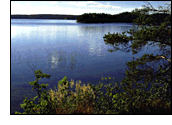 The houses in the villages of Akonlahti are bigger and grander than those in Viena generally. The village was a wealthy one. Conditions were favorable for farming, fishing and hunting, and the proximity of the border made trade fruitful as well.
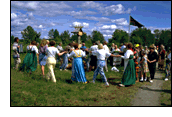 When Finland and the Soviet Union established a “Park of Friendship” in 1991, the Akonlahti area became part of a nature preservation area. When the Park was first founded, only researchers were allowed to go to the shores of Lake Kiitehenjärvi. Later, however, Park administrators and the Folklore Villages Project, set up to preserve and revitalize the culture of the song-lands of the Kalevala, reached an understanding whereby buildings can once again be built in the Karelian style in Akonlahti and the village will be opened up to travellers interested in culture and nature.