First, if you know someone who might like this newsletter, please forward it to them.
Next, the story. I know many people this week are focused on the killing of Russian blogger Vladlen Tatarsky in St Petersburg. We are working on that (stay tuned).
But I want to talk about the long-term impact of Russia’s war on Ukraine and the social crisis it has caused in my country.
In this case, it’s about Ukraine’s teachers, who are facing serious salary cuts against a backdrop of high inflation, prices, rents and costs of basic services.
It’s a story about who is paying the price of Russia’s war, which has caused hundreds of billions of dollars of direct and indirect damage to Ukraine.
To do it, I spoke to teachers, local officials and trade union activists to find out how the Ukrainian government is being forced to pursue austerity – and what that means for hard-working people across the country.
I found that some local authorities are managing to pick up the shortfall in central grants – while others just can’t do it, as tax income has dropped off following the invasion.
Either way, local officials know it’s political suicide to fire people en masse, and have to scramble and scrape to get through the funding shortfall.
But it feels like a crisis postponed – rather than solved.
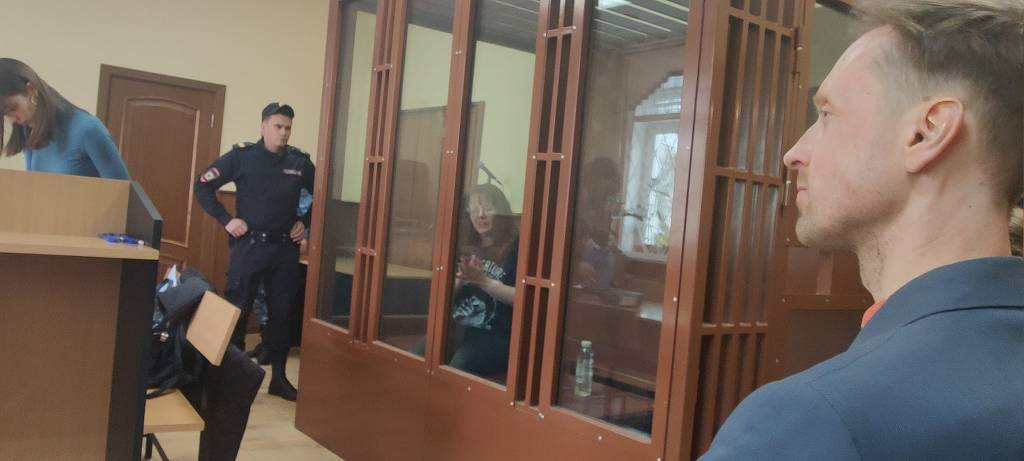
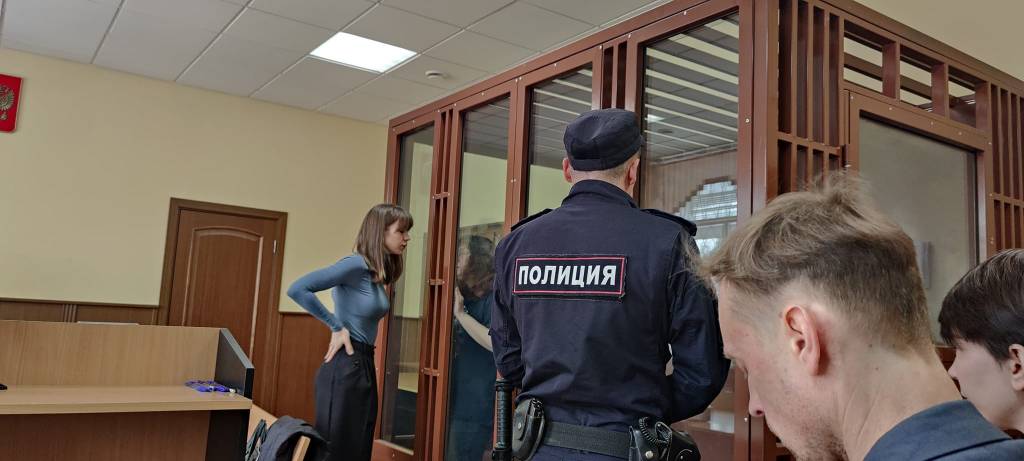
“Fun times” today at the trial of Olga Borisovna Smirnova. The escort guard pushed the defense lawyer, Zyryanova, and ripped a phone from her hands, injuring her fingers. As soon as the ambulance arrived, the doctors took Olga’s defense attorney downstairs to the vehicle and drove her away.
At the trial itself, the prosecutor read out a bunch of papers for three hours regarding the searches of the homes of Olga’s associates. In each instance the investigator wrote that none of this evidence was entered into the case file, whereas earlier she herself had insisted on urgent searches without a court order, which were carried out.
The only variety in these boilerplate search and inspection reports was provided by the descriptions of apartments and rooms. And, for some reason, the prosecutor always says “kitCHEN table,” with the stress on the second syllable.
But there is nothing [“incriminating” in these reports?] except literature in Ukrainian (the prosecutor reads the title in Ukrainian and then the Russian translation, as supplied by Yandex Translate) and placards whose slogans the prosecutor was occasionally ashamed to read aloud, claiming that the slogan “Free political prisoners” was “obscene,” and the slogan “Putin resign” was “illegible.” What sort of sharp practice is it to fill the criminal case file, under the guise of evidence, with stuff that has nothing to do with the case and even according to the investigator is not evidence? Is the prosecutor trying to generate an overall fogginess?
While there is a break in the trial, people wait in the hallway. More than twenty people have come to hearing, including a group of supporters and journalists.
When Olga is escorted out now, the bailiffs close the door to the stairs, where people are standing, apparently so that they won’t be able to shout out words of support to her.
As our correspondent reports, at the latest hearing in the trial of activist Olga Smirnova, in the Kirovsky District Court, the prosecution made public the contents of the nine posts on VKontakte which occasioned criminal charges of disseminating “fake news” about the Russian army.
The posts listed by the prosecution were made on the public social media page of the movement Democratic Petersburg.
A post with a link to a video titled “We will never be brothers,” in which it is reported that the Russian army is “reducing Ukrainian cities to ruins.”
A post with a link to a video that concludes with the words [in Ukrainian], “Glory to Ukraine, glory to the defenders, death to the enemy.”
A post with a link to a video titled “We show Russians photos from Ukraine. The reaction of Russians to the war in Ukraine.” In the video, “the assertion is made” that the photos show Ukrainian cities destroyed by Russian shelling.
A post featuring a photo of a placard on which “the assertion is made” that the Babyn Yar Holocaust Memorial Center was damaged by Russian bombing.
A link to a video titled “No war with Ukraine.”
A post titled “Chronicles of the war, March 9,” in which it is reported that over 1,300 civilians were killed in Mariupol, most of whom were Russian-speaking.
A post titled “Chronicles of the war, March 9, continued,” which reports that Russian troops continue to bomb Kharkiv’s civilian infrastructure facilities.
A post which”sarcastically” reports on a battle between Kadyrovites and Ukrainian National Guardsmen on the premises of the Zaporizhzhia nuclear power plant, claiming that goal of the Kadyrovites is to seize the nuclear power plant in order to “blackmail the whole of Europe with radioactive contamination.”
A post titled “Anti-war pickets: greetings and glory to Ukraine,” which reports that supporters of peaceful resistance in Petersburg came out to protest against the criminal war which Russia is waging against Ukraine.
Due to the absence of witnesses, the prosecution moved to postpone the trial until March and the court granted the motion.
Olga Smirnova is a grassroots activist. She is one of the founders of Strategy 18, an ongoing campaign in support of the Crimean Tatars. She is also a a member of the Petersburg movement Peaceful Resistance, which, according to its own description, “spreads the truth about the Russian Federation’s large-scale criminal war against Ukraine.”
Until 2014, Smirnova worked as an architect, but after Crimea was occupied, she devoted herself to grassroots activism. In 2021, her home was searched due to Strategy 18’s protest campaign, as part of a criminal investigation into “condoning the activities of a terrorist organization banned in Russia.”
The Petersburger faces up to ten years in prison if convicted. You can write to Olga Smirnova in jail: Bumagaexplains how to do it.
Source: Bumaga, “What posts by Petersburger Olga Smirnova does the prosecution consider ‘fakes’ about the Russian army?” 20 February 2023. Translated by the Russian Reader. You can send letters — written in or translated into Russian (if you don’t know a competent translator, you can use a free online translation service such as Google Translate) — to Olga Smirnova and other Russian political prisoners via the free, volunteer-run service RosUznik. You may ask me (avvakum@pm.me) for assistance and advice in sending such letters.
I have been behind bars for almost eight months and increasingly I come across across a question in the letters people write to me. Was it worth it? they ask. Do you regret staying in Russia? Admit it: if you could turn back time, you would prefer emigration over prison.
To be honest, this way of posing the question stumps me. What am I supposed to regret?
I feel tremendous support from people, and my life is filled with meaning. I understand that the truth is on my side, and everyone around me understands this, including my fellow prisoners and my jailers. I am gaining experience in life that makes me stronger, wiser and, oddly enough, kinder. And most importantly: I live in harmony with myself.
Yes, of course, the day-to-day discomfort can be annoying. Yes, I want to hug my loved ones. I can’t go out in nature and I’m bereft of social contacts and certain small domestic joys. But I know for certain that if I had fled, I would have ended up an unhappy and emotionally crippled person, devoid of self-respect.
Everyone chooses for himself
A woman, a religion, a road.
To serve the devil or the prophet,
Everyone chooses for himself.

Everyone chooses for himself
A word for loving and a word for praying
A rapier for dueling, a sword for doing battle
Everyone chooses for himself.

Everyone chooses for themselves.
Shield and armor. Walking stick and patches.
A measure of final reckoning.
Everyone chooses for themselves.

Everyone chooses for themselves.
I choose too, as far as I am able.
I have no gripes with anyone.
Everyone chooses for themselves.
P.S. I am still in Pretrial Detention Center No. 4 Medved, where you can write to me via the FSIN-Pismo service:
Yashin Ilya Valeryevich (born 1983)
63 ul. Vilyuiskaya, SIZO-4 Medved
Moscow 127081 Russian Federation
Source: Ilya Yashin (Facebook), 6 March 2023. Translated by the Russian Reader. People living outside Russia will find it difficult, if not impossible, to use the Russian Federal Penitentiary Service’s FSIN-Pismo service. But you can send letters — translated into Russian (if you don’t know a competent translator, you can use a free online translation service such as Google Translate) — to Ilya Yashin and other Russian political prisoners via the free, volunteer-run service RosUznik. You can also ask me (avvakum@pm.me) for assistance and advice in sending such letters.
Here is a translation of the letter that I just sent to Mr. Yashin via RosUznik:
Dear Ilya,
My wife and I remembered now that we attended a public event that you were at in St. Petersburg many years ago. We don’t remember what it was about, but after you made a fiery speech, you led all of us onto the roadway of Nevsky, where we stood for a few minutes, blocking traffic. Then we just as peacefully and amicably left the roadway. The most amazing thing is that there was not a single policeman there! You still inspire us, and I hope that sometime in the near future we will be able to meet again peacefully on Nevsky. Thinking about this meeting in the past and new meetings in the future, today I translated the Levitansky poem that you quoted recently on FB and published it on my website, where I have already told my readers about you many times. Strength to you and all the best!