“Don’t You Know What’s Going On?”

Spoiled by grocery delivery services, I am rarely in supermarkets these days and don’t see all of life’s nitty-gritty.

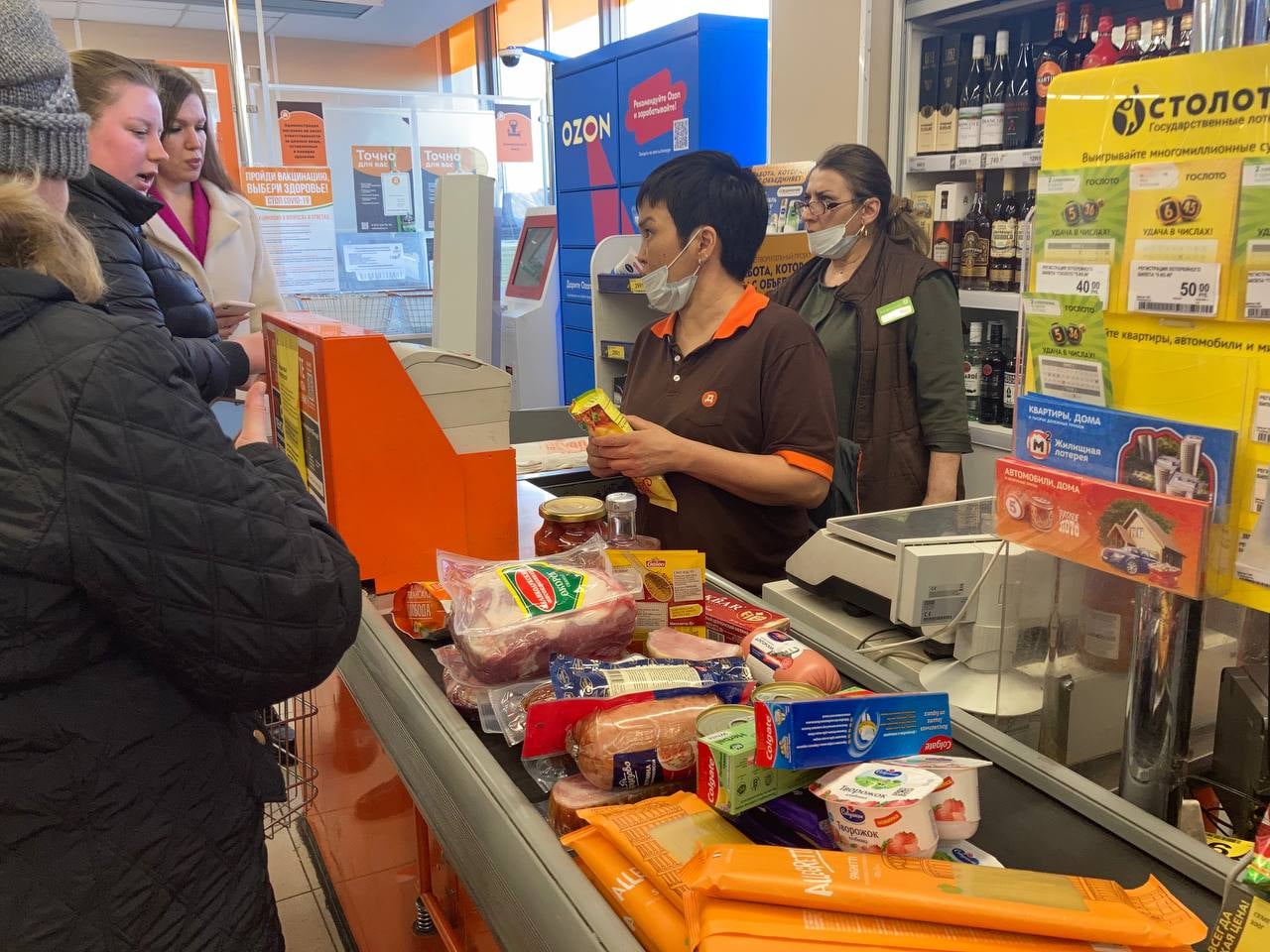
Today I went into the Dixie [a Russian discount supermarket chain] near my house. Everything seemed pretty normal. I went along the shelves, but I really like buckwheat groats [a staple cereal grain in Russia] and wanted to buy some, and there was no buckwheat. I didn’t need sugar but when I saw there was no buckwheat I looked at the sugar shelf — no sugar. Also there were no Always pads, and I needed some. Probably there was lots of other stuff missing too, but I didn’t have time to make a thorough study. I put some of what was there into my basket and got into line for the register. I never remember prices, alas, so I didn’t particularly notice whether anything had gotten more expensive over the last month. But this would be cleared up shortly.

A woman and her friend come running into the store, right up to the register, and she starts complaining loudly that she bought ketchup for 146 rubles [$1.33 today (3/15/22) — trans.] as per the shelf tag, but at the register they charged her 194 rubles [$1.77], which she only noticed when she got home and checked the receipt.

“Why would I want ketchup for 194 rubles! You have to sell it for the price that’s written on the tag. Give me my 48 rubles back!”

“We’re not giving you anything back: our prices don’t match the shelf tags. You can return the ketchup and we’ll give you your money back.”

“What do you mean, the prices don’t match? You are obliged to show them!”

“On your website it still says that ketchup costs 146 rubles,” the woman’s friend interjects.

“The prices are changing every other day here, you think we’re going to go around pasting up the new ones all the time?! Don’t you know what’s going on?” screams the cash register lady.

“We’re not the ones setting the prices. They change by themselves in the system. They don’t even send us shelf tags: we just scan everything here at the register!” adds another cashier supportively.

“Why is the store management suddenly changing the prices?” I ask.

The line, the cashiers, and the woman with her friend all look at me with stern incomprehension and even an element of disapproval.

“What, you don’t know,” someone mutters angrily, and everyone again looks away, down at the floor or at the checkout conveyer belt.

Everyone knits their brows in silence. The older cashier quietly tells the younger one how to do a return, take cash and calculate the correct change, because many people’s bank cards aren’t working.

No one says out loud that President Putin is waging war in Ukraine or that “NATO-the Americans-who knows who” is to blame. No one discusses why the prices are higher and why there’s no buckwheat. No one says anything at all and everyone looks at the floor.

Only the man who was standing behind me went back to the shelves and grabbed a third bottle of vodka.

Source: Alexandra Polivanova, Facebook, 14 March 2022. Translated by the Fabulous AM with the author’s permission. Photo by the author

“People Are to Blame”

Alexander Kynev: “A moment of patriotic joy. I don’t know if there is anything more bogus. Even the Young Pioneer line-ups of my childhood were more natural.”

The video Mr. Kynev has embedded on his Facebook page is entitled “Zapolarye Za Mir” — “The Arctic for Peace.” The activists identify themselves as “residents of the Murmansk Region” (and, indeed, are standing on a hill overlooking Murmansk itself.) In addition to the newfangled Russian “Z” swastika, the hoodies sported by the lead troika of “activists” are also emblazoned with the “We Don’t Abandon Our Own” slogan that featured heavily in Russia’s first invasion of Ukraine in 2014 and has been revived for the new invasion. ||| TRR

__________


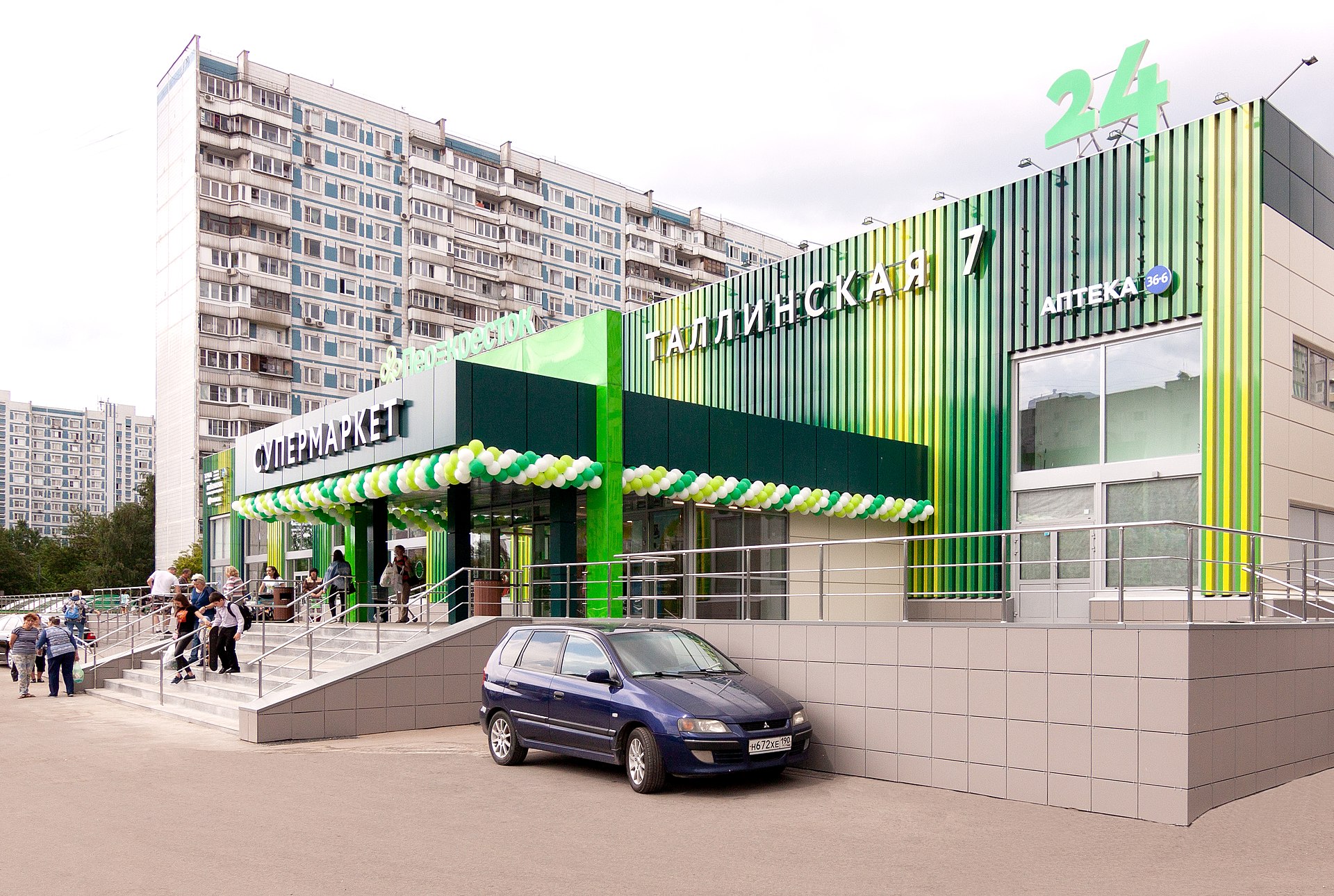
A Perekrestok chain supermarket in Moscow. Photo courtesy of Wikipedia

“People are to blame…”

I stopped by Perekrestok and was blown away. Bananas were 140 rubles a kilo, pre-washed carrots were 100 rubles a kilo.

The hypermarket itself is open until eleven p.m. nowadays, not around the clock.

“Prices have really gone up. Is this all because of the w*r?” I say to the middle-aged woman at the checkout.

“No, it’s not just because they’ve attacked the neighbors. It’s because of the people.”

“The people who unleashed it all? I hope they will be held responsible…”

“No, because of the people, all of us, who allowed this gang to take over Russia. And each of us will bear our share of responsibility for this. And bananas at 140 a kilo are still just icing on the cake… We are to blame for what happened. Everyone who let this happen. Everyone who ‘wasn’t interested in politics.'”

Source: Alexei Sergeyev, Facebook, 15 March 2022. Translated by the Russian Reader

A Message of Solidarity with Ukraine from the White Helmets in Syria

This is a message of solidarity with Ukraine from Raed Al Saleh, the head of The White Helmets humanitarian volunteers. Today, on the 11th anniversary of the Syrian revolution, it drives home why a democratic Syria – free from dictatorship and tyranny – is part of a global cause that must prevail.

[…]

As Ukrainians come under brutal attack by Putin, it is chilling to see Russia using the same strategy and playbook in Ukraine as they use in Syria – attacking fleeing civilians, controlling humanitarian corridors, bombing hospitals and spreading disinformation.

Our volunteer first responders have saved more than 125,000 civilian lives in Syria since 2014, many from direct Russian attacks, and it’s heartbreaking to witness the same tragedies being repeated over and over again. We know the scale of horror that Russian bombings can inflict: no one and nothing is off limits.

In Syria, a concerted Russian disinformation campaign spreads fabricated claims attacking White Helmets volunteers to cover up war crimes. Now Russia is using the same methods to legitimize its attack on the Ukrainian people – using social media to sow doubt about atrocities committed against civilians.

When I saw the aftermath of Russian airstrikes on the maternity hospital in Mariupol last week, including Russia’s immediate disinformation efforts online, it was as if history was repeating itself.

We have witnessed these same horrific scenes and lies during attacks on Syrian hospitals. It angers me to see companies such as Twitter continue to allow accounts to spread falsehoods – and I urge you to join me in calling on Twitter to shut down all accounts, including Russian government accounts, being used to spread harmful disinformation.

A few days ago I spoke to the Washington Post and shared what we have learnt from our experience in case it can be of any help to our brothers and sisters in Ukraine. I told them that the GoPro camera is the best way to fight Russian disinformation and report the reality on the ground.

A White Helmets volunteer in Aleppo carries an injured child after an airstrike. Beha el Halebi/Anadolu Agency/Getty Images/NPR

I also warned against sharing GPS locations of medical facilities with the United Nations. In Syria the Russians used that information to target hospitals. Ukrainians should also establish small medical and civil defense outposts in secret locations around the city to take the pressure off larger hospitals and mitigate the risk of targeting first responders.

There is no doubt Putin has been emboldened by the impunity he enjoyed in Syria. If Putin is not held accountable for his invasion of Ukraine the whole story will repeat itself again.

Today, we need actions not words from the international community. They must pursue justice relentlessly so no dictator can feel able to shamelessly commit such atrocities.

For the last seven years, the Syrian people have stood up to Russia and have yet to be defeated – so we believe Ukrainians can do so as well. At the end of the day, it is the will of the citizens that is the strongest weapon, even against the mightiest militaries in the world.

In solidarity,

Raed Al Saleh

Source: Email newsletter from The Syria Campaign, 15 March 2022. I inserted the Netflix documentary and the photo of the White Helmets volunteer in Aleppo, as well as the links to the articles by the Washington Post and the Intercept about the organization. ||| TRR

Grigory Sverdlin: This Isn’t Goodbye

Good day, dear friend!

It is very difficult for me to write this letter. I don’t want to say goodbye at all. To my great regret, I was forced to leave Russia and resign as the director of Nochlezhka. Of course, I will help my colleagues remotely as much as I can, but it would be strange to try and run everything from afar. Danya Kramorov, our longtime volunteer, coordinator, and until recently the head of fundraising and PR, will replace me as head of our organization.

Twenty years ago, I came to Nochlezhka myself as a volunteer, and in 2010 I became an employee. Back then it was a lovely and proud little organization. That hasn’t changed, but the scale of our work has. Currently, we are helping 480-490 people in Petersburg and Moscow every day. Together we have opened free showers, laundries, warming-up spots, and rehabilitation shelters. In our approach to helping people in need, we have grown into providing psychological assistance, employment programs, training in new professions, and a dedicated rehabilitation shelter for homeless people suffering from alcohol addiction. Just as twenty years ago, everyone who comes to us for help or provides assistance in any of our current projects is treated like a human being. I’m confident that things will always be like this at Nochlezhka. It is a huge effort by many people, and if you are reading this, you are one of them. I would very much like to list everyone by name, but only last year Nochlezhka was supported by donations from over 20,000 people. Thank you very much!

Nochlezhka’s 2013 This Side of Life campaign hasn’t lost its relevance. Photo courtesy of Nochlezhka

Nochlezhka is much bigger than Grisha Sverdlin. Nochlezhka is my colleagues, a wonderful, professional team of eighty people. Nochlezhka is the hundreds of volunteers from all over the world who respond to our call. Nochlezhka is the thousands of people who donate money and medicines, food and clothes to us, who read our news and don’t believe the stereotypes [about homeless people and homelessness]. Nochlezhka is the companies that provide their services for free. Nochlezhka is you.

With the help of this huge cool team, just last year we helped 8,165 people in need. No matter what happens, this year we will definitely keep all our projects running so that anyone who turns to us can keep their health and dignity and return to a normal life. Moreover, this summer we will be opening a shelter for elderly homeless people in the Leningrad Region, and in late March we will launch the long-awaited restaurant Street Entrance, where the residents of our rehabilitation shelters will master new trades that will enable them to continue getting their lives back together.

I’m terribly sorry that I won’t be at the grand opening. I had planned to spend most of my salary at our restaurant. It’s incredibly cozy and the food is very, very tasty. But  enjoy yourselves there for me, please! And I will wait for the day when we can meet at the bar and discuss the good news.

Nochlezhka will continue to operate even if the earth crashes into the celestial axis. And I will continue to classify myself as a Nochlezhkin, remaining a volunteer and donor of this organization so dear to my heart. Unfortunately, more and more people will need our help in the coming months. And since that is the case, we will continue to help them, of course.

Yours,

Grisha Sverdlin

Source: Nochlezhka email newsletter, 15 March 2022. Translated by the Russian Reader. I was a volunteer at Nochlezhka and its (now defunct) “street newspaper” Na Dne (The Depths) in the mid-nineties. Although I included the original link in Mr. Sverdlin’s letter to Nochlezhka’s donations page, it would seem that people outside Russia can no longer donate money to the organization, as they could only a short time ago. I tried just now to donate 1,000 rubles using a European-issued MasterCard, but the transaction was declined. However, I immediately got a message from Nochlezhka saying that they could see that I had tried to donate but that something had gone wrong on their bank’s end. I write this not by way of soliciting donations for Nochlezhka but to illustrate the difficulties charitable organizations in Russia now find themselves in. And, although he doesn’t mention this in his letter, Mr. Sverdlin has written on social media that he left the country because several reliable sources told him that he was in danger of arrest. ||| TRR

UPDATE (3.15.22) Nochlezhka’s project coordinator has written to me to confirm that, indeed, it is no longer possible to make donations to them using non-Russian bank cards and non-Russian payment systems. She cited the advice to donors that Nochlezhka published on its website earlier today.  The last two paragraphs of that advice read as follows:

Payment via Google Pay, Samsung Pay and Apple Pay has been blocked for Visa and Mastercard cardholders. This means that one-time and regular donations that were issued in this way are no longer valid. Please re-register your donation if it has been made using one of the methods listed. You can manually sign up for a new donation payment using the form on our website.

Currently, bank cards from foreign banks cannot be used to donate money for our work. We are no longer receiving money transferred through Global Giving and PayPal. We will look for new ways [to donate] for anyone who does not have a Russian bank card, and we will definitely inform you as soon as we find them.

Money Talks

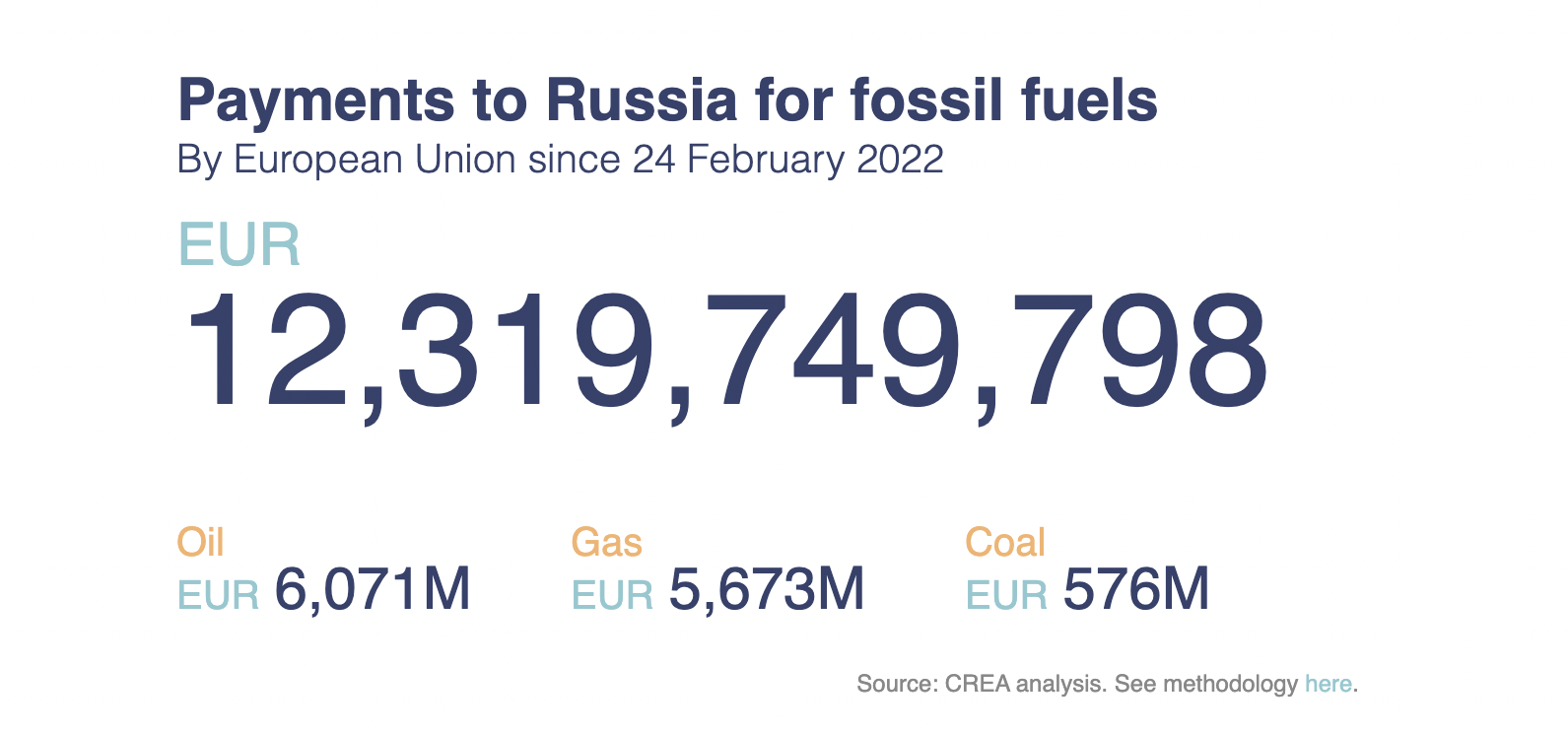
Screenshot of the Russian Fossil Fuels Tracker made at 6:14 a.m. GMT on 15 March 2022


Statement on the Invasion of Ukraine

Members of the Europe Beyond Coal campaign stand in solidarity with the Ukrainian people, and condemn Vladimir Putin’s unconscionable war.

This attack by the Russian leadership is leading to a devastating loss of lives, and a humanitarian and refugee crisis in Ukraine. The Russian government is threatening peace and safety for all Europeans and beyond, and has proven that it fundamentally stands in opposition to everyone who values peace, civil cooperation, and social democratic ideals. Its actions must be firmly, resolutely, and permanently rejected.

The fingerprints of coal, gas, and oil are all over this invasion. We are literally funding the war through our continued burning of fossil fuels imported from Russia. It is therefore the moral duty of European political and business leaders to make every effort to urgently end Russian, and all fossil fuel dependence in our economies. Transitioning our energy systems to be more efficient and based completely on renewable sources is an overriding priority.

With the IPCC’s dire update of climate science coming the same week, there can be no more half measures. This is the moment for brave decisions on energy. We can allow no more citizens to be shelled because of fossil fuels, nor any person to face a dangerous and uncertain future due to inadequate action on climate change.

Renewable power and energy savings promote peace. Sanctions and severing ties to the Kremlin’s fossil-fuel economy, coupled with emergency plans to mobilise extraordinary budgets and policy measures to rapidly insulate, heat, repower, and further interconnect EU member states, as well as neighbouring European countries, will help Ukraine by cutting money flows to Putin’s regime, while building energy security and resiliency for all European citizens – including Ukraine.

Every heat pump, every lowered highway speed limit, every new LED street lamp and insulated house, every solar panel and wind turbine, every bicycle ride replacing a trip with a car, every reduced train fare protects citizens from high energy costs and gas shocks in the near term, while promoting peace for Europe and globally.

Europe is united against Russian government aggression – as are many Russian citizens. The best way for us all to stop empowering warmongers like Putin is to work together to end fossil fuel use completely.

Source: Europe Beyond Coal. Thanks to Activatica for the heads-up. ||| TRR

Vox Pop

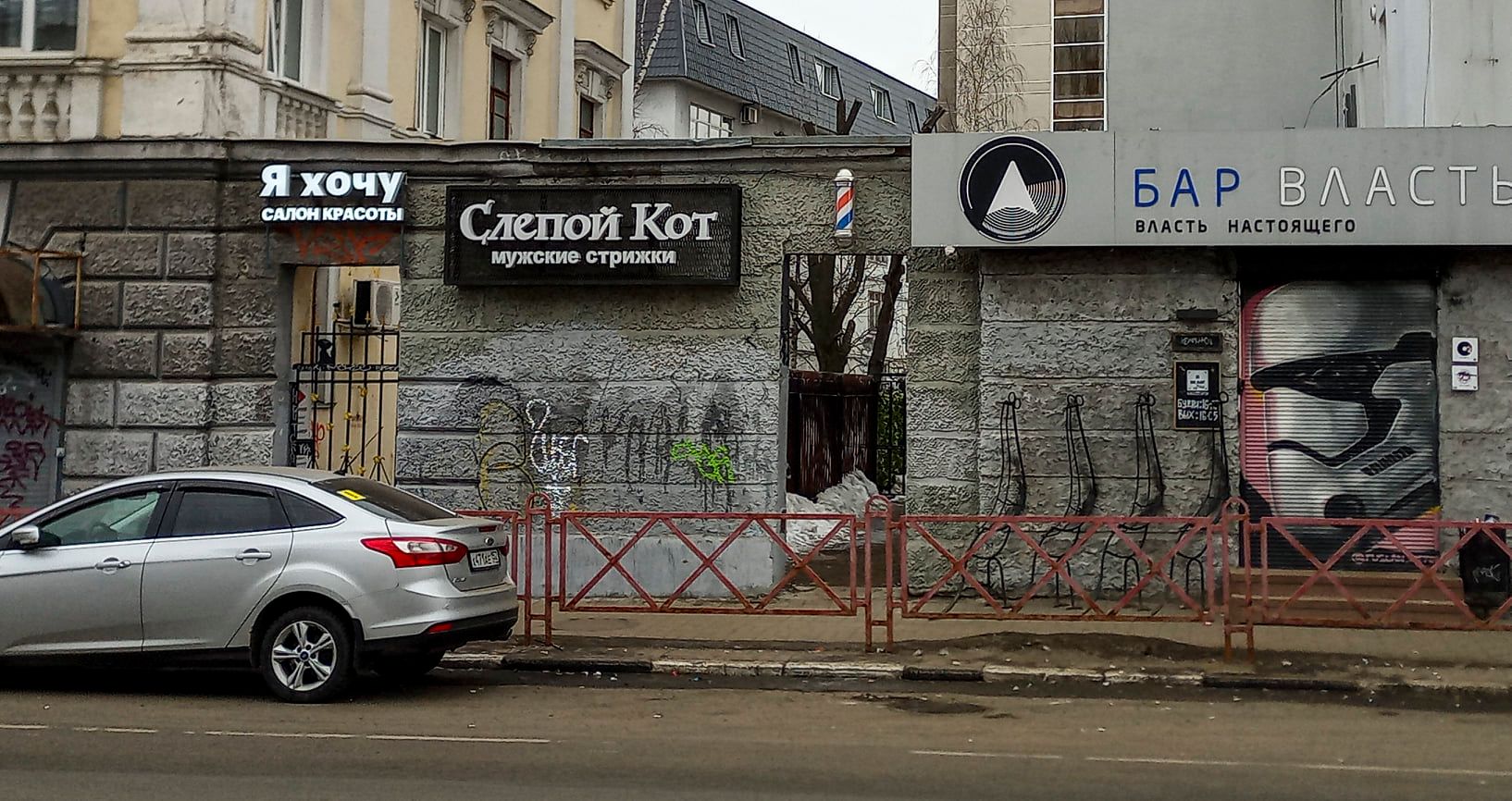
Vadim F. Lurie, Yaroslavl, 13 March 2022. From left to right, the shop signs read, “I Want It Beauty Salon,” “Blind Tomcat Men’s Haircuts,” and “Power Bar: The Power of the Present.” Reprinted with the photographer’s kind permission

The biggest surprise for me (and my biggest miscalculation) has been the number of people supporting Putin.

I had expected something else after two years of idiotic measures against the pandemic (measures that caused the deaths of more than a million people), after the [economic] crisis and the pension reforms.

This support cannot be explained solely in terms of propaganda. The regime’s propaganda is eclectic: it doesn’t supply people with a holistic worldview or logical arguments. It supplies them with mind-numbing slogans. The Russian Federation still has a fairly educated population, with a relatively broad outlook inherited from the Soviet education system. Over the years, I have learned from my own experience as an activist how difficult it is to convince such people using slogans alone.

In all the conversations [about the war] that I have had with people, it was they who initiated the conversations, vigorously advanced their positions, and went on the attack. This is completely atypical. Usually, it’s the other way around.

In all cases, the conversations boiled down to “we don’t know the whole picture” and “there must be good reasons,” segueing to “we don’t decide anything” and “it’s all completely pointless anyway.” A friend said that mothers refusing to look for their sons killed in combat have been saying, “There is no point, [the authorities] won’t give us anything.” A colleague at work ended our conversation [about the war] by saying, “Over in Khabarovsk they protested in defense of [Sergei] Furgal for three months and what of it? It’s completely useless.”

Now I have the feeling that people are very alarmed. They expect the worst and manifest the “social instinct” typical of post-Soviet society — siding with the strongman and rallying round “our guys” whoever they are.

That is, it is not propaganda that encourages them to support [the war], but “instinct.” Propaganda, on the other hand, only satisfies the demand for an explanation after the fact, the need for an indulgence and an analgesic.

Probably we should have expected something like this because the Russian Federation has been living in “counter-terrorist operation” mode for twenty years with berserk cops and crazed lawmakers. Nevertheless, I expected something different.

I don’t see any positive prospects yet. To do something, you need an organization, resources, intelligence, bases of support, media, and experience in underground work, finally. None of this exists. We are now in circumstances resembling those faced by the White Rose — only the authorities are not killing us yet, they can only send us to prison for ten years. And we don’t have the slightest preparation for working in such conditions.

The worse the situation in the country, the more people will consolidate. No introspection or arguments will break through the barrier generated by fear, guilt, and the imperial complex. Partisans [guerrillas] must have the support of the populace, but we don’t have it. One-off heroic actions would simply send crowds armed with pitchforks and torches to the houses where the heroes’ relatives live.

On the other hand, there are admirable examples of protesters mobilizing. They have also been consolidating and learning self-organization and mutual support. (Their leaders have all been jailed.) Theirs is not a left-wing mobilization, nor is likely to become one.

The left had a mobilization two years ago and we wasted it on another round of party-building projects.

These reflections were posted friends-only on social media by an experienced and extraordinarily thoughtful Russian grassroots activist whose day job as a tradesperson brings them into contact with Russians from all walks of life on a daily basis. They have kindly permitted me to translate their remarks and publish them here. Translated by the Russian Reader

The Fog of War

The “fog of war,” or, why Slate needs to hire a fact-checker:

On Feb. 24, the day the fighting in Ukraine began, more than 130,000 protesters were arrested; about 30 of them now face criminal charges, with maximum prison sentence of up to five years, according to OVD-Info, a protest-monitoring group.

https://slate.com/technology/2022/03/russia-protesters-arrests.html

According to the real (not imaginary) OVD Info, 1,965 protesters were detained by Russian police on February 24 — not 130,000!

https://ovdinfo.org/articles/2022/02/25/net-voyne-itogi-akcii-protiv-voyny-s-ukrainoy-24-fevralya

The emphasis is mine. Photo by the Russian Reader

The Black Square

An Open Letter from Russian Culture and Art Workers

Art and culture workers across Russia have been signing an open letter for peace in Ukraine.

This page once contained an open letter from culture and art workers, stating their opinion on the “special military operation,”* which had been signed by more than 18,000 people. On March 4, 2022, the “law on fakes” was adopted, stipulating a fine or a term of imprisonment [for publicly speaking the truth about Russia’s invasion of Ukraine]. The process of collecting signatures has now been suspended, and the text of the letter and signatures have been concealed for the safety of all signatories.


* The government forbids us from using any other term for the “special military operation.”

We remind you that according to Article 54 of the Russian Federal Constitution, “[a] law introducing or aggravating responsibility shall not have retrospective effect,” and “[n]o one may bear responsibility for [an] action which was not regarded as a crime when it was committed.”

Source: Spectate.ru. Translated by the Russian Reader

“It’s Terrifying to Be Here Amidst This Hell”

I’m a translator, an academic, and a US citizen. Over the past week I have received many dozens of emails from people all over Russia who are desperate to leave and looking for any way out of Russia and into a stable academic or arts-related position.

The one I’ve translated here (with permission from the author, whose personal information has been removed) is both characteristic and particularly exhaustive, and reveals a lot about the situation in Russia now. Just as the prospect of a “war in Europe” and “World War III” has activated memories of the Second World War, in Russia the new crackdown on free media and civic protest has dredged up a lot of cultural trauma around Stalin-era repressions, particularly among the intelligentsia. Postmodern apocalypse rules, with totalitarian concentration camps and 1984 rubbing shoulders (see also Nadia Plungian’s piece analyzing the 20th-century’s death-grip on the modern-day cultural imagination in Russia).

The specters of the twentieth century are additionally deleterious in the way they constantly bring back and elevate specifically Russian suffering. While this suffering is linked to real, undeniable and still largely unprocessed trauma, it feeds into the self-absorption and political passivity that underpins the state of things in Russia today (I don’t have to point out certain parallels with the US and mainstream American culture). It’s not my place to blame Russian citizens for what their insane government is fomenting in Ukraine; there is just clearly much work to be done to build civic consciousness and a functioning society.

Hello.

Although I was born and have spent my whole life in Russia, I am, ethnically speaking, half Russian and half Ukrainian: my grandparents are from Ukraine, and even quite recently I was thinking about applying for Ukrainian citizenship in order to move to a normal, free country, all the more so since I have roots there, but I took too long to decide and now the war has canceled all of those plans. What’s happening right now in Ukraine puts me literally into a state of shock, and what’s happening in Russia makes my hair stand up on end from horror and the realization that this is not a bad dream or nightmare that one might at least eventually wake up from.

This inhumane and senseless war that Putin is waging against Ukraine, which the Russian governmental media insist on calling a “special operation” (while using the word “war” carries the threat of criminal charges), this is only half of the hell, the other half is happening inside Russia. In downtown [city’s name redacted; it is not a capital city], I witnessed the police arresting he small number of people protesting the war. The police used truncheons to shove a grandma holding a “NO WAR!” sign into a paddy wagon. I can’t get my head around the fact that being pro-peace is a crime now. But there are very few protests, the people capable of thinking, the ones who understand how absurd what’s happening is, they’re spooked and scared of protesting lest they end up crippled or have fabricated criminal charges pinned on them.

But the worst thing is that many people, including my former colleagues from the theater, absolutely support this hell that Putin is creating right now in Ukraine, this totally unprovoked and unjustifiable, senseless and bloody slaughter. A huge majority of people has been zombified by the propaganda on TV and are openly welcoming this war, thoughtlessly reproducing the TV propagandists’ fascist, misanthropic slogans. And it’s impossible to convince them otherwise, they brand any rational argument a “fake” and hate the people who argue with them. Today, near my building, I saw that my neighbors had painted the “Z” symbol on their cars, this new swastika that marks the Russian military equipment going to attack Ukraine. They’re all in favor of the hellishness, the blood and death, the war. It’s so scary.

The most absolute insane and absurd madness is being fomented, madness that has no sense and virtually no grounds. Besides this bloody war, besides the sanctions that the entire civilized world has imposed on Russia, here inside the country right now the most severe censorship is being implemented, the last free media outlets that covered the last alternative points of view are shutting down. This is the end. They have been destroyed simply because they called the war a war. There are new laws being passed that threaten fifteen years in prison for telling the truth, and who knows how long it will take before they bring back the firing squad for any kind of freethinking. The prime minister already voiced his support for [restoring] the death penalty. Every day things get worse and worse, and the end is nowhere in sight.

This is a surreal nightmare! Reality just all of the sudden lost its mind. In the blink of an eye everything turned from a vague sort of dictatorship into a totalitarian concentration camp along the lines of Orwell’s 1984, and this is no exaggeration. Soon nothing will be left here besides crowds of insane, poverty-stricken people, completely turned to morons by fascist propaganda, their last bit of reason lost, roaring bloodthirsty slogans, and they will simply destroy anyone who allows themselves to think differently.

I just don’t know how to go on living in this concentration camp that Putin is building here in Russia. Before the start of the war, one could at least try to live one’s life, to be free, to make a living through one’s art and not engage with the universal vector of militarization and dumbing down, to have some kind of hope and plans for the future, but now that’s over, there is no hope left. Navalny is in prison, the opposition has been totally crushed, and the state media, radio and TV, all without exception just repeat one and the same lies, lies, lies and nothing but lies, while the non-governmental sources of information are either already closed or are being destroyed and persecuted. The state is mercilessly rooting out even the weakest rudiments of free speech and of rational thinking in general. It’s terrifying to be here amidst this hell.

While I was writing this I got the news that PayPal and Payoneer announced that they would not be doing business in Russia anymore, and that means I will literally be left without any source of income for my creative projects, while working as an actor in this country involves propaganda in one way or another, because free creative activity has not been possible here for a long time. I became convinced of this myself when I left a theater whose management literally threatened the acting troupe to get us to vote for the candidate they wanted.

I’d like to just live peacefully, make art, learn new things, create beauty, and work to build a bright and joyful future. But now wanting peace will just get you beaten up and thrown in prison. I don’t know what to do and how to go on living.

Translated and prefaced by the Fabulous AM. Photo by the Russian Reader
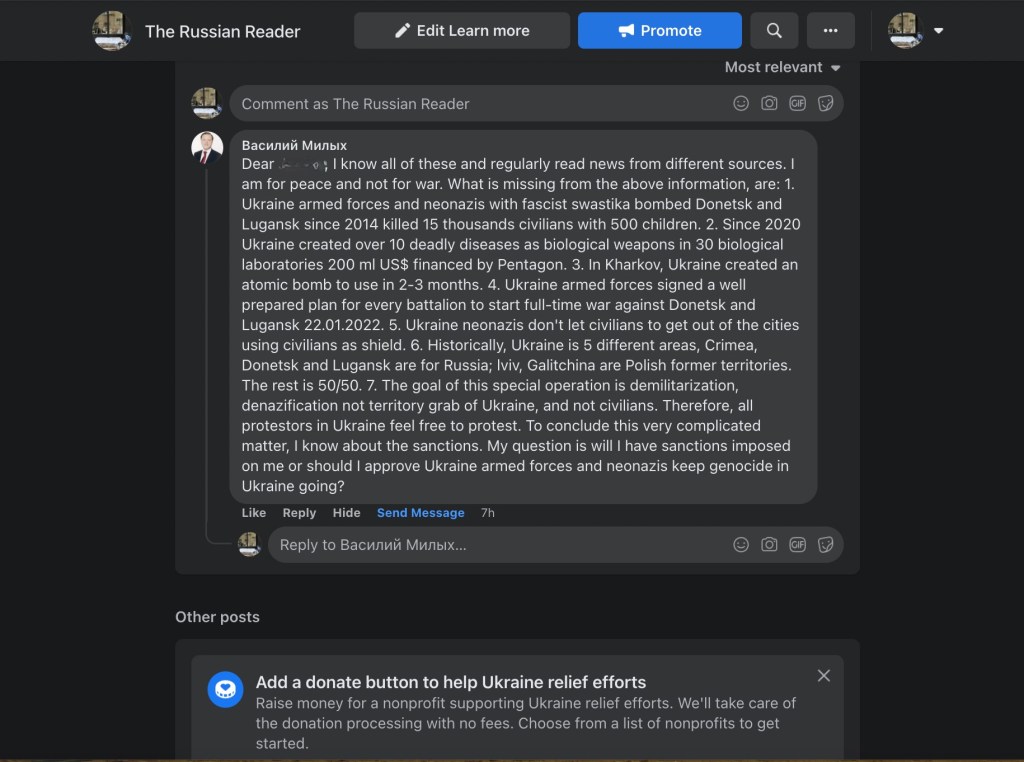
“Dese funny folks. Glad I aint none of em.”

This comment, addressed to a friend of mine who had liked the original post (a link to this dispatch from Petersburg), was made last night by a Vasily Milykh on The Russian Reader Facebook page. My friend confirmed that Mr. Milykh is a real person, whom they had met many years ago while raising money for a very worthy charitable cause in Russia.
This is a snapshot of Mr. Milykh’s Facebook page. He is a former vice president at Alfa Bank, a former analyst at CSIS (Center for Strategic & International Studies), and was educated at Harvard and the University of Wyoming, among other places. I hope this gives the lie to the common prejudice that Putin’s “base” is the unwashed, uneducated provincial hoi polloi. ||| TRR